Tag: asia

  • AirAsia Japan files for bankruptcy in latest Covid casualty

    AirAsia Japan files for bankruptcy in latest Covid casualty

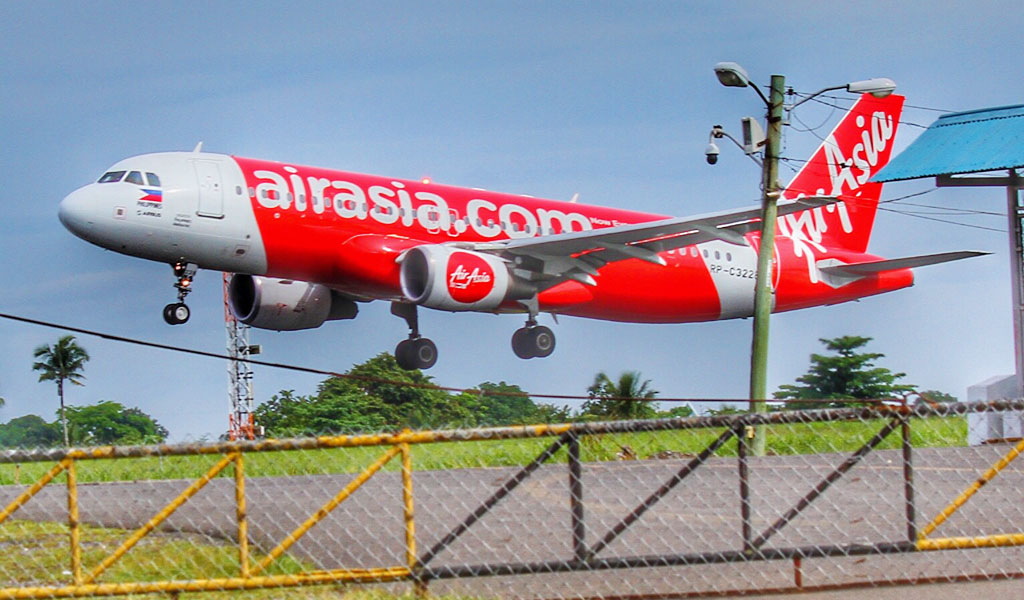
    AirAsia Japan Co has filed for bankruptcy with the Tokyo District Court after flagging last month it would cease operations in the country, as the coronavirus pandemic that’s wiped out travel globally took its toll.

    Flights between Japan and destinations such as Bangkok will continue to be operated by other AirAsia carriers.

    The Japanese arm of Malaysia’s AirAsia Group Bhd received a provisional administration order from the court Tuesday, it said in a statement.

    “Given AirAsia Japan’s current financial position, we regret to inform that AirAsia Japan is currently unable to settle the outstanding refunds,” the statement said. “We sincerely apologize for any inconvenience caused to customers who have used or booked AirAsia Japan flights.”

    AirAsia, which reported its largest loss on record in the second quarter ended June 30, has been under immense pressure this year as Covid-19 roils the aviation industry. Airlines globally have been plunged into crisis, with many cutting thousands of jobs and trying to secure funds for survival. Some, pushed to the brink, have gone out of business.

    The low-cost airline has also stopped funding its Indian affiliate, leaving the future of AirAsia India Ltd largely dependent on its majority shareholder, Indian conglomerate Tata Group. Long-haul budget arm, AirAsia X Bhd, isn’t faring much better, earlier this month submitting a new debt restructuring proposal to creditors.

    AirAsia Japan had already canceled all flights, including one between Nagoya and Taipei. Services operated to Japan by AirAsia’s other carriers in places like Thailand and the Philippines won’t be affected. International services to Japan from Malaysia, Thailand and the Philippines will resume as travel restrictions are eased and borders reopen, the airline said Tuesday.

    Customers who have booked AirAsia Japan flights can apply for a refund, which should be available from April next year, or they will receive a credit that can be used on any other AirAsia-operated flight.

  • Nike gets local with new Nike Unite retail concept

    Nike gets local with new Nike Unite retail concept

    Adding to Nike House of Innovation, Nike Rise and Nike Live concepts, Nike introduces Nike Unite. Built to help locals connect more closely with sport, Nike Unite creates new in-and-out-of-store experiences, rooted in serving people the most valuable sport destination in their community.

    Read on for what to know about Nike’s latest retail concept.

    Nike Unite exists to serve and celebrate the people in each local community, and each store is designed to be a reflection of their heart and spirit. Consumers are welcomed by an in-store community wall highlighting the store team and local partnerships, and design elements throughout the space also look to tell the story of the community. From local landmarks to hometown athletes, the design allows the local residents to feel represented in the space.

    The products in each Nike Unite door are also reflective of what the community is interested in: locally curated, every-day essentials at the best price, matched with the newness of select seasonal offerings. Additionally, Nike Unite doors reflect Nike’s commitment to hiring people who live in the local community.

    In order to help protect the future of sport, sustainable offerings like reusable shopping bags are available at stores like Nike Unite – Namyangju, or at Nike Unite – East Kilbride, with takeback services like Nike Reuse-a-Shoe.

    Online or offline, Nike Unite doors deliver new ways to gear up and get moving together. Whether serving athletes in the digital spaces that speak to them, supporting local schools and nonprofits that give children more opportunity to stay active through Made to Play or participating in the Nike Community Ambassador program (which trains Nie store employees to be coaches), these measures allow Nike Unite doors to bring members closer to sport, and closer to one another.

    New Nike Unite stores are now open to the public in the following locations, with additional doors opening soon:

    Namyangju (South Korea)
    Portland, Ore. (United States)
    East New York (United States)
    San Antonio (United States)
    East Kilbride (UK)

    Coming Soon:
    South Chicago (United States)
    Atlanta (United States)
    Beijing – Jingliang (China)
    Beijing – Jingzang (China)

  • Dire forecast for global luxury goods sales

    Dire forecast for global luxury goods sales

    Sales of luxury goods worldwide are set to fall by 23 percent to US$258 billion this 12 months, their largest ever drop and first since 2009, as a result of fallout from the coronavirus pandemic, in line with consultancy Bain.

    The anticipated decline, regardless of a powerful sales recovery in China, is on the decrease finish of a 20 percent to 35 percent vary which Bain’s carefully adopted business forecast had predicted in May.

    That is because of an even bigger than anticipated rebound in the course of the summer season when lockdown measures had been lifted or eased internationally and shops promoting high-end purses, garments, jewelry, and watches had been reopened.

    However, a resurgence of the pandemic in Europe and the United States since October has led to new restrictions and store closures whereas uncertainty linked to the US elections additionally weighed on client sentiment.

    The solely vivid spot is China, the place sales have surged because it started to emerge from the well-being disaster within the spring. Sales in mainland China are seen rising by 45 percent at present trade charges to $52 billion this 12 months.

    “We have a two-speed world, with Europe and the US strongly hit by the second wave and by social and political uncertainty, while China is relentlessly accelerating day after day,” Federica Levato, a companion at Bain, mentioned.

    Fourth-quarter sales are anticipated to drop by 10 percent, though the decline may very well be larger relying on how a lot of the brand new shutdowns hit the essential Christmas season.

    Revenues for the likes of Louis Vuitton proprietor LVMH, Hermes, and Prada ought to partly recuperate in 2021, though Bain says it is going to take till the top of 2022 and even 2023 to return to final 12 months’ ranges.

    The coronavirus disaster has accelerated three developments, Bain mentioned, with purchases on-line nearly doubling from 12 percent in 2019 to 23 percent in 2020, and e-commerce set to turn into the main channel for luxury purchases by 2025.

    International journey curbs have led to folks shopping for extra of their dwelling nations, whereas buyers born from 1981 onwards now account for nearly 60 percent of complete purchases.

  • Suria KLCC revamps its food court

    Suria KLCC revamps its food court

    Suria KLCC in the heart of Kuala Lumpur has unveiled its newly refurbished food court, which was designed to adapt to the Covid-19 era.

    Incorporating the space formerly occupied by department store Parkson, the Signatures food court boosts seating to more than 1500 while still ensuring enough space to comply with physical distancing requirements.

    Dining options have also been expanded with 23 food court outlets, six kiosks and seven restaurants. The revamped food court is equipped with a 5G infrastructure, and sports device-charging sockets.

    “A lot of thought and effort went into improving Signatures to what it is now,” said Andrew Brien, CEO of Suria KLCC.

    “Nothing has been left to chance, from the standard operating procedures to ensure hygiene, all the way to aesthetics capable of satisfying new norms for a long time.”

  • Puma signs pop star Dua Lipa as ambassador for its womenswear range

    Puma signs pop star Dua Lipa as ambassador for its womenswear range

    The German sportswear giant announced today that it signed a multiyear deal with the singer-songwriter, who will be the face of its women’s business. Aside from boosting the profile of Puma’s women’s business unit, Lipa will work to “help inspire women around the world” through global campaigns and “important inclusive initiatives close to her heart.”

    “From performance rehearsals to hiking in the hills, it’s important to feel comfortable & look good. I’ve got so many ideas for the projects and campaigns I’ll be taking part in and look forward to bringing them all to life with my Puma family,” Lipa said in a statement.

    Aside from revealing the deal, Puma stated Lipa will star in its “She Moves Us” campaign, which was created to inspire women to achieve and connect through sport and culture.

    “We were drawn towards her creativity, passion, drive and the way in which she resonates with the young female consumer. But most importantly, we were moved by her authentic passion to close the gender gap and look forward to supporting her through several brand initiatives we have planned together. We think she embodies what today’s consumer is looking for in a role model,” Puma global director of brand and marketing Adam Petrick said in a statement.

    To kick off the partnership, Puma said it will be the presenting sponsors of Lipa’s “Studio 2054” virtual performance. Not only will the pop star and her dancers be in Puma head-to-toe, but the brand is also offering a limited amount of tickets for the performance at a discount to her fans.

    The athletic powerhouse has been busy in recent months adding to its ambassador roster. In September, Puma signed UFC champion Israel Adesanya and soccer star Neymar Jr. And in October, it added promising soon-to-be NBA rookie LaMelo Ball.

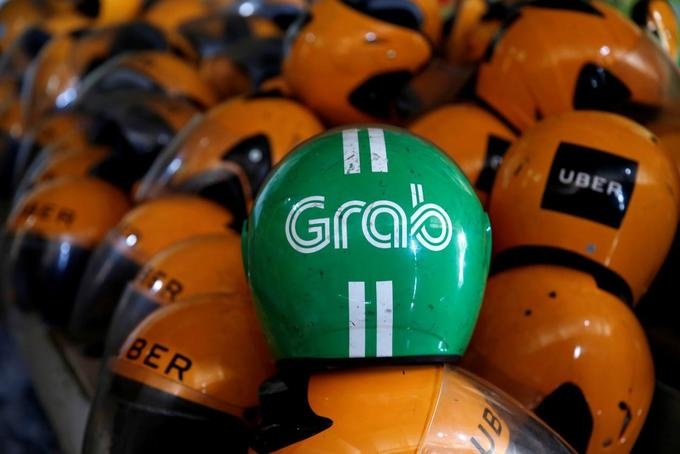
  • Taxi associations complain to NA about Grab

    Taxi associations complain to NA about Grab

    Taxi associations in the country’s three biggest cities have taken their grievances against Grab to the National Assembly. According to the associations representing operators in Hanoi, Da Nang and Ho Chi Minh City, Grab’s current operating model allows it control over fares. It is only registered as a technology company in Vietnam, they said.

    Based on a decree on the transportation business, ride-hailing firm Grab should be designated as an auto transport business and only allowed to operate once licensed by the Department of Transport, they said.

    So it is now operating illegally since it does not have a license and is violating the decree, they added.

    They also pointed to Grab’s inadequate display of electronic contract information, lack of logo on its app interface and other shortcomings.

    While it operates in a similar manner to traditional taxis, it does not have to declare its fares, and could inflate them by 200-300 percent at certain times in the day, whereas they have to declare whenever their new fares whenever they adjust them following changes in fuel prices, they complained.

    Grab drivers only pay 3 percent value-added tax and 1.5 percent income tax as against 10 percent VAT and 20 percent income tax paid by other transport businesses, they said.

    They wanted the National Assembly chairman to inspect Grab’s entire operations to detect violations and inadequacies to ensure objectivity, fairness and transparency in the transport industry.

    This is not the first time that taxi associations are complaining to authorities about ride-hailing services.

    Grab said the decree has helped ride-hailing businesses like Grab offer better services to Vietnamese customers and optimize social resources. “Grab has been licensed in accordance with its registered form of service.”

    It always works closely with the Ministry of Transport and the Department of Transport in cities and provinces to ensure strict compliance with the decree’s provisions, it claimed.

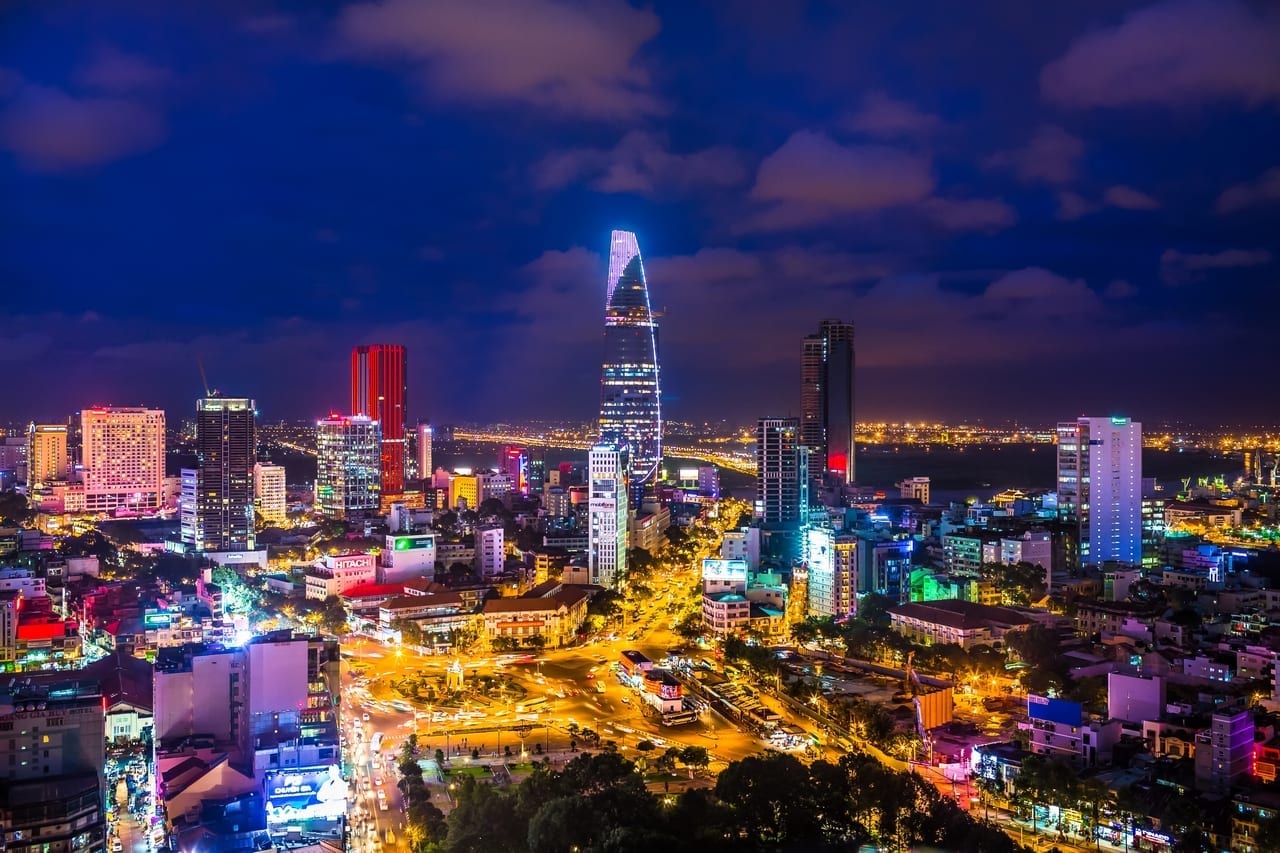
  • Apartment prices continue to rise in major cities

    Apartment prices continue to rise in major cities

    Apartment prices in Hanoi and Ho Chi Minh City continued to rise in the third quarter, going up by 0.24 percent and 0.35 percent from the previous quarter. According to the Ministry of Construction, lower-end apartments in Hanoi, often built in developing suburban areas like Dong Anh, Gia Lam, and Ha Dong, have a high absorption rate of around 70 percent.

    Mid- and high- priced projects, especially luxury apartments, sell much slower, and since the onset of Covid-19 many projects have seen little or no demand.

    Hanoi’s Q3 new apartment supply fell 60 percent year-on-year to a five-year low of 3,100 units as Covid-19 hampered new launches, according to real estate consultancy firm Savills Hanoi.

    The ministry said in HCMC a shortage of apartments led to rising prices along with high absorption rates, and developers, therefore, had to turn to suburban districts, leading to surging land prices in Binh Chanh, Go Vap, and Cu Chi Districts.

    Supply is down around 60 percent due to the impact of the pandemic and slows licensing by the city authorities.

    Figures from the ministry show apartment prices were VND24.8-37.7 million ($1,068-1,626) per square meter in Hanoi; VND30-50 million in HCMC, VND23-27 million in the northern province of Quang Ninh, VND30 million in northern Hai Phong City, VND30-38 million in southern Binh Duong Province, and VND19-60 million in southern Can Tho City.

    Vietnam’s Q2 real estate loans grew 10.2 percent over the first to VND580.17 trillion ($25 billion), showcasing a recovery in demand.

    Compared to the quarter-on-quarter growth of just 0.88 percent in the first quarter, showcasing a sluggish real estate market, the Q2 figure is a marked improvement, reflecting a resurgence after the nationwide social distancing campaign ended in late April, the construction ministry said.

    Of the total, 25.9 percent of the real estate loans were for construction and maintenance of existing housing units or to acquire property deeds, it said.

    The report also said that most real estate companies have resumed operations after two Covid-19 outbreaks were contained.

    Foreign direct investment in real estate was $2.35 billion in the third quarter, four times that of the second, which is a good sign for the industry, the ministry said.

  • CapitaLand Secures Green Loans in India

    CapitaLand Secures Green Loans in India

    The Singapore-based property developer has secured its first three green loans in India, from DBS and HSBC, totaling INR 17 billion ($230 million).

    CapitaLand’s first foray into sustainable finance in India will be used to finance the development of its green-certified International Tech Parks in Chennai, Gurgaon and Pune, it announced in a statement on Wednesday.

    The four-and-a-half-year INR 6.25 billion ($84 million) and three-year INR4.25 billion ($57 million) green loans provided by DBS will be used to finance the development of Phase 1 of International Tech Park Chennai, Radial Road, and Phase 1 of International Tech Park Gurgaon respectively. The four-year INR6.5 billion ($87 million) green loan provided by HSBC India will be used to finance the development of International Tech Park Pune, Kharadi.

    The securing of the first green loans in India demonstrates CapitaLand’s commitment to grow our business in a responsible manner as we create long-term value for our stakeholders, Vinamra Srivastava, CEO, Business Parks, CapitaLand India, said in the announcement.

    DBS head of institutional banking Tan Su Shan said that India is a promising market with ample opportunities to go green.

    We see immense potential for growth in Asia’s sustainable financing market as companies look to further their sustainability agenda through responsible financing practices. In becoming the first Singapore bank to finance green loans in India, we are also establishing Singapore as a regional sustainable financing hub with the expertise and experience to forge meaningful partnerships for a more sustainable Asia, Tan said in a separate announcement.

    CapitaLand owns and manages a global portfolio worth about S$133.3 billion ($99.13 billion) as at 30 September 2020. The company has a strong presence in India, with a portfolio of over 20 business and IT parks, industrial, lodging and logistics properties across seven cities – Bangalore, Chennai, Goa, Gurgaon, Hyderabad, Mumbai and Pune.

  • HSBC Allows Up to Four-Day WFH Option

    HSBC Allows Up to Four-Day WFH Option

    HSBC is the latest bank to allow extensive work-from-home options for workers as the pandemic continues to deeply uproot traditional business models.

    The British lender has changed its human resources guidelines to allow home-based remote working for as many as four days a week, according to a «Bloomberg» report, depending on an employee’s role and discussions with managers.

    This follows earlier prompting by HSBC chief financial officer Ewen Stevenson who said the bank was considering further digitization of operations and hybrid working models.

    Remote working, according to Stevenson, could help reduce expenses as part of a broader overhaul to cut $4.5 billion of costs by 2022 and ax 35,000 jobs globally.

    According to the new guidelines, a one-off allowance of up to HK$2,500 ($322) to purchase equipment will be made available for employees who commit to work at least two days per week from home for a minimum of 12 months.

    The allowance can be used for items such as ergonomic work chairs, computer monitors and desks.

    The wave of banks considering permanent work-from-home measures is growing due to continued uncertainty regarding the pandemic and growth outlook.

    Earlier this week, DBS said it would allow its 29,000-strong workforce to work from home for up to 40 percent of the time as part of broader hiring and work measures announced. Last week, UOB said it would allow the majority of its 26,000 works the option to work remotely for two days a week. Similar measures are being rolled out at Standard Chartered globally.

    But not all are convinced about the approach in the long-term with some Wall Street heavyweights underlining potential risks.

    A J.P. Morgan spokesperson said that productivity was down and that younger employees could miss out on learning opportunities. The bank’s chief executive Jamie Dimon reportedly said last month that he expected serious social and economic damage from prolonged remote working conditions.

    Separately, Blackrock CEO Larry Fink also expressed concerns about lacking productivity and collaboration.

  • Rivian CEO Eyes Smaller Electric Vehicles For China, Europe

    Rivian CEO Eyes Smaller Electric Vehicles For China, Europe

    Electric vehicle startup Rivian, which is backed by Amazon and Ford Motor Co, on Wednesday said it plans to follow up its first two products, a full-size pickup and SUV, with smaller models targeted at China and Europe where it may eventually build some vehicles.

    While Rivian plans to begin selling the SUV in Europe in 2022 and China soon after, “what will really drive volume in those markets is the follow-on products” that are smaller and tailored for overseas customers, Rivian founder and Chief Executive R.J. Scaringe told Reuters.

    The smaller models, which are expected to share key components with the pickup and SUV, will “fit some of those other markets really well, in particular China,” Scaringe said.

    “To really scale in those markets as we bring on follow-on products, having a production footprint outside the U.S. is going to be important,” he said. “That’s a ways off.”

    Scaringe added: “We wouldn’t be serious about building a car company if we weren’t thinking about China and Europe as important markets long term.”

    The company’s first plant in Normal, Illinois, has begun pilot production ahead of next year’s launch of three models – the R1T pickup and R1S SUV, which Scaringe described as “halo products” for Rivian, and a large electric delivery van for Amazon.

    Speaking from a room overlooking the assembly line, Scaringe said the former Mitsubishi Motors plant reflects an unusual degree of vertical integration, with room for building motors and battery packs for the vehicles and for further expansion.

    Rivian has said deliveries of the pickup would start in June 2021, while those of the SUV would begin in August. Launch editions of the vehicles are priced at $75,000 (GBP 56,454) and $77,500, respectively, with a 300-mile (480 km) driving range for both.

    The electric pickup market will soon be crowded as Ford, General Motors Co and Tesla Inc, as well as several other startups, are developing similar models. Numerous automakers also are rolling out electric SUVs.

    In July, Rivian, founded in 2009, boosted its war chest with a $2.5-billion investment round led by T. Rowe Price, raising total investment in the startup to $6 billion. Investors include Soros Fund Management, Fidelity and BlackRock, as well as Saudi auto distributor Abdul Latif Jameel Co (ALJ).

    Amazon, which has relationships and deals across the auto industry, led a $700 million investment round in Rivian last year.

    The e-commerce company also ordered 100,000 electric vans from Rivian. The first Amazon vehicles go into production in Normal in late 2021, with all deliveries to be completed by 2024.

    Scaringe said Rivian has begun setting up service centers and will deploy mobile units to handle maintenance and repair work on Amazon’s vans, as well as Rivian vehicles for retail customers.

  • Amazon US launches online pharmacy in new contest with drug retail

    Amazon US launches online pharmacy in new contest with drug retail

    Amazon.com Inc on Tuesday launched an online pharmacy for delivering prescription medications in the United States, increasing competition with drug retailers such as Walgreens, CVS and Walmart.

    Called Amazon Pharmacy, the new store lets customers price-compare as they buy drugs on the company’s website or app. Shoppers can toggle at checkout between their co-pay and a non-insurance option, heavily discounted for members of its loyalty club Prime.

    The move builds on the web retailer’s 2018 acquisition of PillPack, which Amazon said will remain separate for customers needing pre-sorted doses of multiple drugs.

    Over the past two years, Amazon has worked to secure more state licenses for shipping prescriptions across the country, which had been an obstacle to its expansion into the drug supply chain, according to analyst notes from Jefferies Equity Research.

    The company founded as an online bookseller has disrupted industries including retail, computing and now potentially pharmaceuticals, drawing criticism of its size and power from labor groups and lawmakers along the way.

    TJ Parker, PillPack’s CEO and vice president of Amazon Pharmacy, said in a statement the retailer aimed to bring “customer obsession to an industry that can be inconvenient and confusing.”

    Amazon faces entrenched competition from Walgreens Boots Alliance Inc, CVS Health Corp, Walmart Inc, Rite Aid Corp , Kroger Co and others. Take-up of online ordering of drugs has been low, according to market research from J.D. Power.

    Should Prime members prefer buying in person, Amazon said its discounts on non-insurance purchases apply at more than 50,000 brick-and-mortar pharmacies – including those run by rivals. Inside Rx, a subsidiary of Cigna Corp’s Evernorth, administers that benefit, Amazon said.

    Still, the pandemic may help bring drug orders online. E-commerce has surged this year as governments told people to stay home to stave off infections of COVID-19, and Prime members – more than 150 million globally – may be receptive to buying medication online now that it’s from Amazon.

    The company said Prime subscribers get up to 80% off generic and up to 40% off brand drugs when they pay without insurance, as well as two-day delivery.

    Amazon’s online pharmacy is not yet available in Illinois, Minnesota, Louisiana, Kentucky, and Hawaii, a spokeswoman said.

  • Dell quits retail in Singapore, Malaysia moving online only

    Dell quits retail in Singapore, Malaysia moving online only

    It appears retail stores in Malaysia and Singapore will not be carrying Dell products in the near future. According to an official statement from the company, Dell will “transition out of the retail market in Singapore and Malaysia,” though that doesn’t mean you cannot buy a Dell laptop anymore in these two markets.

    This news was first shared by Lowyat.NET, which has received an internal memo sent to Dell retailer partners in Malaysia and Singapore. According to the memo, Dell is exiting the retail market in these two countries after the company reviewed its presence in a number of regions. As such, effective immediately, Dell will no longer accept new orders from retail stores.

    Of course, any form of an existing contractual agreement between Dell and its retail partners – as well as customers – will still be honored despite this move.

    Now, it’s worth noting that this does not mean retail stores will immediately cease the sales of Dell products. You can still head to your local retail store and pick up a Dell laptop, but if you want the latest product offerings from the company, you can only get them from Dell’s Malaysian online store.

    Speaking of which, that will be the only channel to get new Dell products – for those in Malaysia and Singapore – moving forward. These include the latest XPS 13 and XPS 13 2-in-1 with Intel’s 11th generation Tiger Lake processors. Basically, retail stores will only be carrying older Dell products from now on.

    In the grand scheme of things, this does not affect the availability of Dell products in Malaysia and Singapore; you can still purchase them directly from the company on its online store. Of course, this does mean you won’t be able to try out new Dell laptops at retail stores in the near future.

  • Eslite opening mega store in KL, Malaysia

    Eslite opening mega store in KL, Malaysia

    Eslite Spectrum Corp (誠品生活), which runs the Eslite bookstore chain in Taiwan and abroad, yesterday inked an agreement with Malaysia’s YTL Corp Bhd to open a branch in downtown Kuala Lumpur in 2022.

    The two sides signed the partnership via a teleconference to launch the Taiwanese bookstore brand in YTL’s mixed-use property The Starhill in Bukit Bintang, a central business district in the Malaysian capital.

    Despite the company’s aim to grow its business abroad, Eslite Spectrum chairwoman Mercy Wu (吳旻潔) said that she was initially hesitant about expanding to Malaysia when the world was in the grip of a pandemic.

    “I decided to take the step at the urging of YTL Corp, the largest conglomerate in Malaysia whose founder, Yeoh Tiong Lay (楊忠禮), was an immigrant from Kinmen and had long supported Chinese culture and education,” Wu told a news conference in Taipei.

    Joseph Yeoh (楊恭賢), vice president of YTL hotels and property wing, said from Kuala Lumpur he was confident that Eslite would succeed in Malaysia, as many people there would still prefer in-person shopping once the COVID-19 pandemic is over.

    YTL has a global footprint with nine shopping malls in different parts of the world and the collaboration with Eslite could lead to other partnerships in the future, Joseph Yeoh said.

    “We will first focus on the current project,” he said.

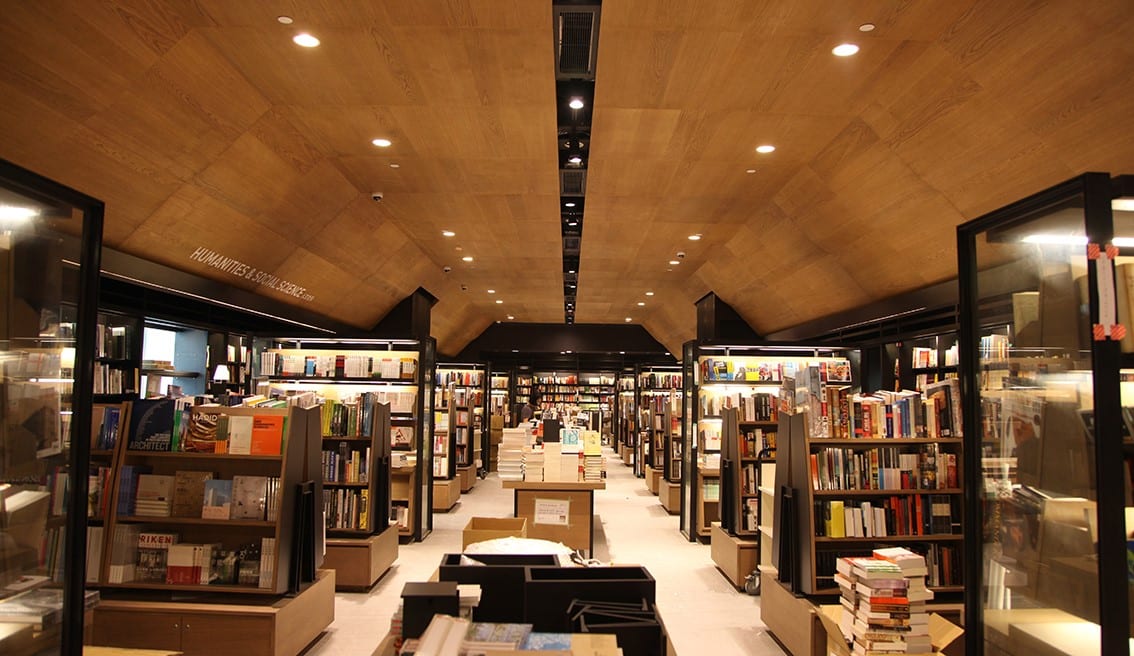
    The upcoming flagship Eslite branch at The Starhill would be a 2,000 ping (6,600m2) space featuring a bookstore, as well as retail, food and beverage sections, Wu said.

    A Taiwanese team is in charge of its interior design, in line with the company’s mission to integrate the humanities, arts and creativity into life, Wu said.

    “Our initial hesitation stemmed from our insistence on doing the best we can to live up to a reputation of being the top cultural brand across Chinese societies,” Wu said.

    Kuala Lumpur, dubbed the World Book Capital City by the UN, is an ideal destination for expansion, as Malaysia has topped the list of foreign visitors from Southeast Asia for the past 10 years, she said.

    Malaysians have long embraced cultural diversity, with Chinese constituting the second-largest ethnic group, making Malaysia a major export market for Taiwanese books, she added.

    The new Eslite branch is expected to help drive cultural tourism in Malaysia and benefit the two partners, Wu and Yeoh said.

  • Singapore and Philippines to Boost Data Connectivity

    Singapore and Philippines to Boost Data Connectivity

    Bangko Sentral ng Pilipinas and the Monetary Authority of Singapore have agreed to promote the adoption and implementation of policies to aggregate, store, process, and transmit data across borders for banks and non-bank financial institutions.

    While the increasing use of data in financial services and the increasing use of technology to supply financial services offer a range of benefits, they also pose new and complex risks for markets and challenges for policymakers and regulators, the two sides said in a joint announcement on Monday.

    Data mobility in financial services supports economic growth and the development of innovative financial services, and benefits risk management and compliance programs, by enabling stronger supervision of cross-border money laundering, terrorist financing patterns, and proliferation financing while strengthening defense against cyberattacks and allowing the regulators to manage and assess risk on a global basis, the statement noted.

    The two regulators said that covered institutions should be allowed to transfer data, including personal information, across borders by electronic means to facilitate business activities, and the location where covered institutions can store and process their data should not be restricted as long as BSP and MAS have full and timely access to the data necessary to fulfill their regulatory and supervisory mandate.

  • Audi S5 Sportback Added To The Company’s Official Website Ahead Of Launch

    Audi S5 Sportback Added To The Company’s Official Website Ahead Of Launch

    Audi India, which is all set to launch the S5 Sportback this month, has listed the upcoming coupe sedan in its official website. The carmaker announced the arrival of the S5 Sportback last month, at the launch of the new Audi Q2, with a teaser image confirming a November 2020 launch. However, the fact that the company has now added the car to its website, indicates that the launch is imminent. The new Audi S5 Sportback will be the sixth and last launch from the Ingolstadt-based carmaker in India for the year 2020.

    In line with the company’s current trend, the upcoming Audi S5 Sportback will also be petrol-only model, and it will be powered by a 3.0-litre TFSI engine that delivers 349 bhp and 500 Nm of peak torque. The engine comes mated to an eight-speed Tiptronic automatic transmission, propelling the coupe sedan to sprint from 0-100 kmph in about 4.5 seconds. The Audi S5 Sportback also comes with sport suspension, along with standard Audi drive select with four different modes – comfort, auto, dynamic and individual.

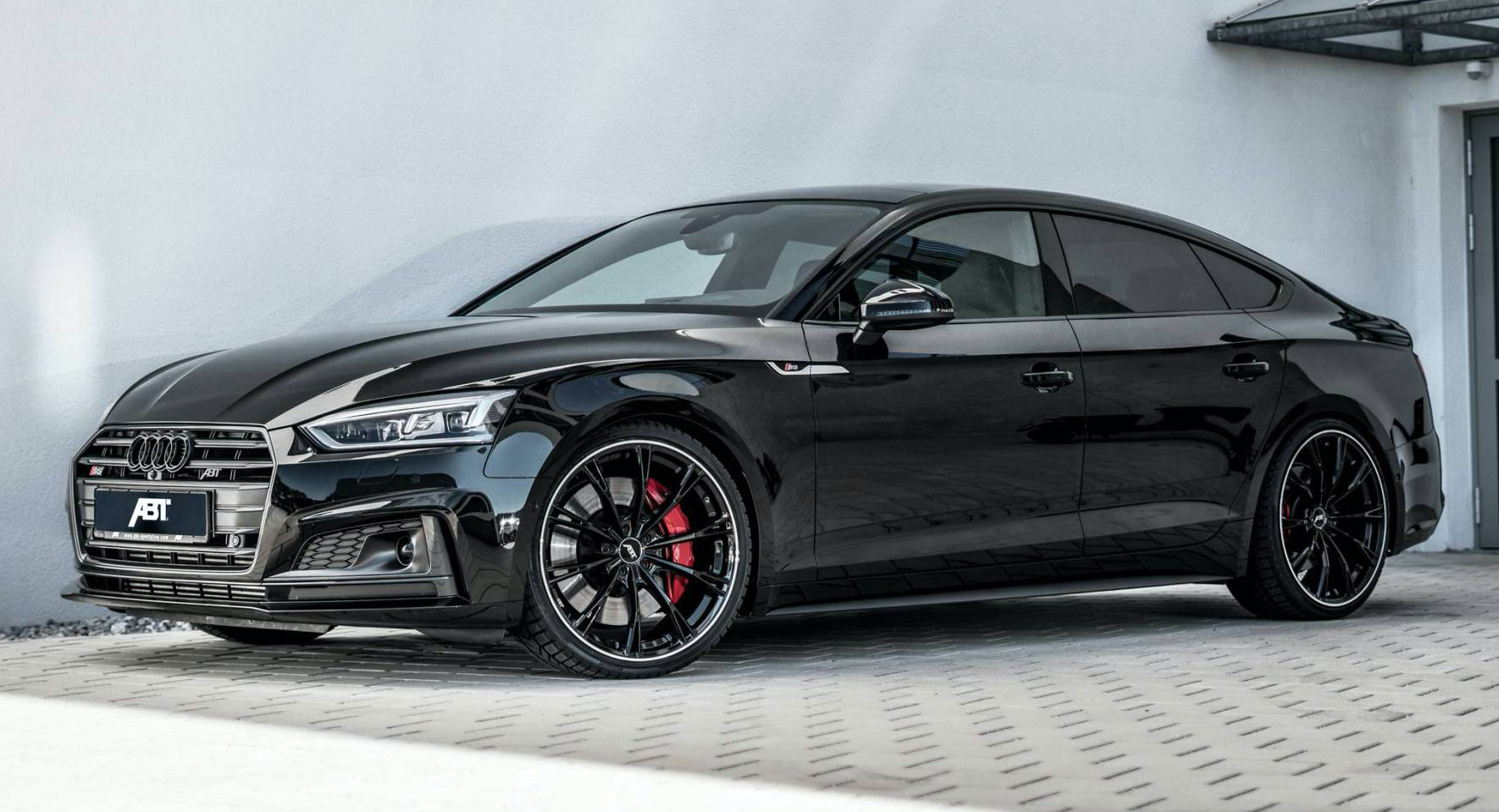
    Visually, the new S5 Sportback will come with the company’s signature single-frame grille with large honeycomb pattern design, flaunting the four-ring logo and the S5 badging. The grille will be flanked by sleek LED headlamps that come with LED daytime running lamps, and blue elements. The S5 Sportback runs on set 19-inch 5-arm-pylon design wheels and the signature sloping roofline that seamlessly merges into the boot lid. The car will also come with blacked-out ORVMs and black inserts on the bumper. At the rear, the car comes with sharp spoiler, sleek LED taillamps with smoked details and a muscular bumper with black rear diffuser and a quad exhaust system.

    The cabin of the new Audi S5 Sportback will feature an all-black interior with a sporty flat-bottom steering wheel, a larger stick-out display for infotainment, and a fully digital inclement cluster with virtual cockpit. The cabin also comes with wide aircon vents, electrically adjustable front seats with memory function, signature Audi-style automatic shifter lever with paddle shifters, and sport seats.