Tag: asia

  • Omni-channel focus rescues Central Retail’s bottom line

    Omni-channel focus rescues Central Retail’s bottom line

    It’s a snowy Saturday in Chicago, but Amy, age 28, needs resort wear for a Caribbean vacation. Five years ago, in 2011, she would have headed straight for the mall. Today she starts shopping from her couch by launching a videoconference with her personal concierge at Danella, the retailer where she bought two outfits the previous month. The concierge recommends several items, superimposing photos of them onto Amy’s avatar. Amy rejects a couple of items immediately, toggles to another browser tab to research customer reviews and prices, finds better deals on several items at another retailer, and orders them. She buys one item from Danella online and then drives to the Danella store near her for the in-stock items she wants to try on.

    As Amy enters Danella, a sales associate greets her by name and walks her to a dressing room stocked with her online selections—plus some matching shoes and a cocktail dress. She likes the shoes, so she scans the bar code into her smartphone and finds the same pair for $30 less at another store. The sales associate quickly offers to match the price, and encourages Amy to try on the dress. It is daring and expensive, so Amy sends a video to three stylish friends, asking for their opinion. The responses come quickly: three thumbs down. She collects the items she wants, scans an internet site for coupons (saving an additional $73), and checks out with her smartphone.

    As she heads for the door, a life-size screen recognizes her and shows a special offer on an irresistible summer-weight top. Amy checks her budget online, smiles, and uses her phone to scan the customized Quick Response code on the screen. The item will be shipped to her home overnight.

    This scenario is fictional, but it’s neither as futuristic nor as fanciful as you might think. All the technology Amy uses is already available—and within five years, much of it will be ubiquitous. But what seems like a dream come true for the shopper—an abundance of information, near-perfect price transparency, a parade of special deals—is already feeling more like a nightmare for many retailers. Companies such as Tower Records, Circuit City, Linens ’n Things, and Borders are early victims—and there will be more.

    Every 50 years or so, retailing undergoes this kind of disruption. A century and a half ago, the growth of big cities and the rise of railroad networks made possible the modern department store. Mass-produced automobiles came along 50 years later, and soon shopping malls lined with specialty retailers were dotting the newly forming suburbs and challenging the city-based department stores. The 1960s and 1970s saw the spread of discount chains—Walmart, Kmart, and the like—and, soon after, big-box “category killers” such as Circuit City and Home Depot, all of them undermining or transforming the old-style mall. Each wave of change doesn’t eliminate what came before it, but it reshapes the landscape and redefines consumer expectations, often beyond recognition. Retailers relying on earlier formats either adapt or die out as the new ones pull volume from their stores and make the remaining volume less profitable.

    Like most disruptions, digital retail technology got off to a shaky start. A bevy of internet-based retailers in the 1990s—Amazon.com, Pets.com, and pretty much everythingelse.com—embraced what they called online shopping or electronic commerce. These fledgling companies ran wild until a combination of ill-conceived strategies, speculative gambles, and a slowing economy burst the dot-com bubble. The ensuing collapse wiped out half of all e‑commerce retailers and provoked an abrupt shift from irrational exuberance to economic reality.

    Today, however, that economic reality is well established. The research firm Forrester estimates that e-commerce is now approaching $200 billion in revenue in the United States alone and accounts for 9% of total retail sales, up from 5% five years ago. The corresponding figure is about 10% in the United Kingdom, 3% in Asia-Pacific, and 2% in Latin America. Globally, digital retailing is probably headed toward 15% to 20% of total sales, though the proportion will vary significantly by sector. Moreover, much digital retailing is now highly profitable. Amazon’s five-year average return on investment, for example, is 17%, whereas traditional discount and department stores average 6.5%.

    What we are seeing today is only the beginning. Soon it will be hard even to define e-commerce, let alone measure it. Is it an e-commerce sale if the customer goes to a store, finds that the product is out of stock, and uses an in-store terminal to have another location ship it to her home? What if the customer is shopping in one store, uses his smartphone to find a lower price at another, and then orders it electronically for in-store pickup? How about gifts that are ordered from a website but exchanged at a local store? Experts estimate that digital information already influences about 50% of store sales, and that number is growing rapidly.

    As it evolves, digital retailing is quickly morphing into something so different that it requires a new name: omnichannel retailing. The name reflects the fact that retailers will be able to interact with customers through countless channels—websites, physical stores, kiosks, direct mail and catalogs, call centers, social media, mobile devices, gaming consoles, televisions, networked appliances, home services, and more. Unless conventional merchants adopt an entirely new perspective—one that allows them to integrate disparate channels into a single seamless omnichannel experience—they are likely to be swept away.

    Why will digital retailing continue to grow so fast? Why won’t it peak sometime soon, or even implode the way it did the last time around? Anyone who has shopped extensively online knows at least part of the answer. The selection is vast yet remarkably easy to search. The prices are good and easily compared. It’s convenient: You can do it at home or at work, without using gasoline or fighting to park. Half of online purchases are delivered free to U.S. consumers—up 10 percentage points over the past two years. Many returns are free as well. Product reviews and recommendations are extensive. Little wonder that the average American Customer Satisfaction Index score for online retailers such as Amazon (87 points) is 11 points higher than the average for physical discount and department stores.

    The advantages of digital retailing are increasing as innovations flood the market. For instance, Amazon has already earned valuable patents on keystone innovations such as 1-Click checkout and an online system that allows consumers to exchange unwanted gifts even before receiving them. Digital retailers drive innovation by spending heavily on recruiting, wages, and bonuses to attract and retain top technical talent. They were also among the first to utilize cloud computing (which dramatically lowers entry and operating costs) and to enhance marketing efficiency through social networks and online advertising.

    Customers are out in front of this omnichannel revolution. By 2014 almost every mobile phone in the United States will be a smartphone connected to the internet, and an estimated 40% of Americans will use tablets such as the iPad. If you doubt whether consumers are ready for technology-driven retail solutions, find a “dumb” video display in any public location and look for fingerprints on the screen—evidence that people expected it to be an interactive touchscreen experience.

    Meanwhile, traditional retailers are lagging badly. Online sales account for less than 2% of revenue at Walmart and Target. Nor are traditional retailers pioneering digital innovations in other channels, such as mobile shopping and call centers, or seamlessly integrating these technologies in their most important channel—physical stores.

    It’s not surprising that these retailers are bring­ing up the rear. As a consultant, I often walk through stores with senior retail leaders whose knowledge of physical retailing is impressive: They know precisely where a fixture should be, exactly how lighting is likely to affect sales, and which colors work best in which departments. As a group, however, they are shockingly subpar in computer literacy. Some retail executives still rely on their assistants to print out e-mails. Some admit that they have never bought anything online. Technophobic culture permeates many great retail organizations. Their IT systems are often old and clunky, and knowledgeable young computer geeks shun them as places to work.

    But it isn’t just computer illiteracy that holds traditional retailers back. Four other factors are at work as well.

    Retailers were burned by e-commerce hype during the dot-com bubble.

    Many created separate online organizations to maximize valuations. The separate organizations targeted different customer segments, inhibited collaboration, and created serious frictions and jealousies. When the predictions of dot-com domination proved wildly optimistic, overpriced acquisitions began failing, and store organizations smugly celebrated. A decade later, real collaboration between retailers’ store and digital operations remains rare.

    Digital retailing threatens existing store economics, measurement systems, and incentives.

    Traditional retailers live and die with changes in same-store sales, in-store sales per labor hour, and compensation systems based on such metrics. That was fine when online sales were 2% to 3% of revenues, but the whole system falls apart when that number reaches 15% to 20%.

    Retailers tend to focus on the wrong financial metric: profit margins.

    If a change dilutes margins, it’s bad. But Bain’s research shows that retailers’ stock prices are driven by return on invested capital and growth rather than by margins. Amazon’s five-year operating margin is only 4%—far below the 6% average for discount and department stores. But with faster inventory turns and no physical store assets, Amazon’s return on invested capital is more than double the average for conventional retailers. As a result, Amazon’s market value, $100 billion, is roughly equivalent to that of Target, Best Buy, Staples, Nordstrom, Sears, J.C. Penney, Macy’s, and Kohl’s combined.

    Conventional retailers haven’t had great experiences with breakthrough innovation.

    They are most comfortable with incremental improvements and with following the well-known dictum “Retail is detail.” Too many store reinvention programs have launched with great fanfare, only to die unceremonious deaths. Propose a more novel approach and retailers will ask why, if it’s such a good idea, nobody else is doing it.

    Retailers tend to believe that their customers will always be there. But as customers grow more comfortable with omnichannel shopping, they grow less tolerant of what they encounter in stores. Sales associates are hard to find. When you find one, he or she doesn’t know much about the merchandise. Stockouts are frequent, checkout lines long, returns cumbersome.

    An omnichannel world, in short, represents a major crisis for traditional retailers. Customers are passing them by. Online players are gaining. To keep up, existing retailers will need to create an omnichannel strategy—and pick up the pace of change.

    Redesign Shopping from Scratch

    The first part of any such strategy is facing reality. Retailing executives must acknowledge that the new technologies will get faster, cheaper, and more versatile. They need to forecast the likely digital density in their categories and prepare for the effects. What should I do differently today if I believe that 20% of our sales will soon come from digital retailing—and that 80% of our sales will be heavily influenced by it? Should we be opening any new stores at all? And if so, how different should they be? How should we adjust to a world of greater price transparency? What happens when traffic-building categories shift online and no longer pull customers into our stores?

    Situations like these call for start-from-scratch, across-the-board innovation. In the book Idealized Design: How to Dissolve Tomorrow’s Crisis…Today, coauthor Russell L. Ackoff recounts a similar turning point at Bell Labs in 1951. The vice president in charge of the labs asked a group to name the organization’s most important contributions to telephonic communications. The VP pointed out that each one, including the telephone dial and the coaxial cable, had been conceived and implemented before 1900. He challenged the group to assume that the phone system was dead and had to be rebuilt from scratch. What would it look like? How would it work? Soon Bell’s scientists and engineers were busy investigating completely new technologies—and came up with concepts for push-button phones, call waiting, call forwarding, voicemail, conference calls, and mobile phones. Retailers need the same start-over mentality.

    The design specifications of omnichannel retailing are growing clearer by the day. Customers want everything. They want the advantages of digital, such as broad selection, rich product information, and customer reviews and tips. They want the advantages of physical stores, such as personal service, the ability to touch products, and shopping as an event and an experience. (Online merchants take note.) Different customer segments will value parts of the shopping experience differently, but all are likely to want perfect integration of the digital and the physical.

    The challenge for a retailer is to create innovations that bring the vision to life, wowing those customers and generating profitable growth. Let’s see what this might mean in practice.

    Pathways and pain points.

    Retailers traditionally defined their job with three simple imperatives: Stock products you think your target customers will want. Cultivate awareness of what’s in the store. When prospective customers enter the store, make it enticing and easy for them to buy. The job in an omnichannel world is more complex. Products themselves can more easily be customized to the preferences of individuals or small groups. Shoppers’ awareness depends not solely on company-generated marketing efforts but also on online expert reviews or recommendations from friends on Facebook and Twitter. The shopping experience includes not just visiting the store but searching for various vendors, comparing prices, quick and hassle-free returns, and so on.

    Retailers today have a variety of precision tools that they can apply to discrete parts of these shopping pathways. Consider the job of creating awareness, which in the past relied mostly on mass-market advertising, promotions, and the like. Today marketers can send coupon codes and offers to customers’ mobile devices. They can optimize search terms and location-based promotions. They can provide targeted offers to customers who check in to stores through external platforms like Foursquare. The list of possibilities is getting longer by the day.


  • SK Telecom’s 11Street to let shoppers buy from Amazon

    SK Telecom’s 11Street to let shoppers buy from Amazon

    SK Telecom Co., South Korea’s largest mobile carrier, said Monday it is partnering with Amazon.com, Inc. to allow South Koreans to have easier access to products on the U.S. e-commerce giant’s platform.

    The carrier said users of its e-commerce unit 11Street Co. can directly purchase the U.S. company’s products on its platform. It did not provide a specific time frame for the service’s launch.

    SK Telecom said it has also made an agreement with Amazon so that the U.S. tech giant has the right to acquire a stake in 11Street based on the South Korean e-commerce company’s progress in the local market.

    The announcement comes as SK Telecom is currently planning an initial public offering (IPO) for 11Street.

    The carrier said in its third-quarter conference call that the e-commerce unit is among its list of subsidiaries, such as new mobility spinoff T map Mobility Co., that will pursue IPOs.

    The e-commerce unit’s sales reached 135.7 billion won (US$122.7 million) in the third quarter, up 8 percent from a year earlier, according to SK Telecom.

  • VN-Index sees biggest losing session in two weeks

    VN-Index sees biggest losing session in two weeks

    The VN-Index plunged 1.60 percent to 950.79 points Monday, its biggest single-session loss since October 28. The Ho Chi Minh Stock Exchange (HoSE), on which the VN-Index is based, saw 305 tickers lose and 146 gain. Total trading volume was at this year’s highest point at VND10.23 trillion ($442.39 million), compared to last month’s average of VND8-9 trillion.

    The VN30-Index for the stock market’s 30 largest caps slumped 1.64 percent, with all but one ticker losing. HPG of steelmaker Hoa Phat Group was the only ticker in the group to close in the green by 0.9 percent.

    Topping losses were MSN of food conglomerate Masan Group, down 6.9 percent, VIC of private conglomerate Vingroup, down 5 percent, and TCH of truck dealer Hoang Huy Group, down 2.9 percent.

    Other major losers included PNJ of jewelry retailer Phu Nhuan Jewelry, down 2.3 percent, VHM of real estate developer Vinhomes, 2.2 percent, SBT of agricultural firm TTC-Sugar, 2.2 percent, and POW of electricity generator, 2 percent.

    Private banks were also among the loss-makers. HDB of HDBank dropped 2.5 percent, STB of Sacombank 1.8 percent, VPB of VPBank 1.4 percent, TCB of Techcombank 0.4 percent, and EIB of Eximbank 0.3 percent.

    State-owned banks fared slightly better with losses of lesser magnitude. VCB of Vietcombank was down 1.3 percent, BID of BIDV 1 percent, CTG of VietinBank 0.2 percent, and MBB of mid-sized Military Bank, 1.3 percent.

    The HNX-Index for the Hanoi Stock Exchange, home to mid- and small-caps, was down 0.95 percent, but the UPCoM-Index for the Unlisted Companies Market gained 0.23 percent.

    Foreign investors were net sellers again to the tune of VND400 billion on all three bourses, with selling pressure mostly on HDB of HDBank and CTG of VietinBank.

  • Apple suppliers have started testing foldable iPhone prototypes

    Apple suppliers have started testing foldable iPhone prototypes

    Samsung and Motorola have been selling foldable smartphones to the public for quite some time, but Apple is still in the development phase. However, according to one report, Apple’s foldable prototype testing has now started.

    Economic Daily News claims Apple recently sent out prototype foldable iPhone units to assembly partner Foxconn with the aim of releasing the final version of the device as soon as September 2022, presumably alongside the iPhone 14 series.

    The focus of testing, per sources familiar with the matter, is the foldable display. Apple is evaluating the use of either OLED or micro-LED tech, as well as their respective assembly methods.

    Before heading into mass productions, laptops like the MacBook Pro need to be opened and closed between 20,000 and 30,000 times. With the foldable iPhone, Apple has asked Foxconn to evaluate everything over 100,000 opening and closing tests.

    Apple has relied on Samsung for recent iPhone OLED panels and it appears the South Korean company has been chosen to supply foldable iPhone panels too. Whether there will be other suppliers too remains to be seen.

    The overall design of the product wasn’t described in today’s report. However, tipster Jon Prosser previously revealed that early prototypes offer a Microsoft Surface Duo-like design with separate displays and a slim forehead for Face ID.

  • Volvo Cars Drops New Cars From 30 Metres. Here’s Why

    Volvo Cars Drops New Cars From 30 Metres. Here’s Why

    Volvo Cars, in what can only be described as the most extreme crash test yet, is dropping all-new cars from a height of 30 meters. It’s all research though and this extreme test will allow rescue services to prepare for any possible crash scenario and to simulate the forces that erupt in the most extreme crashes, beyond what can be simulated with ordinary crash testing.

    For the first time, it dropped several new Volvos multiple times from a crane, from a height of 30 meters. This approach helped create enough damage to adequately simulate the damage found in the most extreme crash scenarios: think of single-car accidents at very high speed, accidents whereby a car hits a truck at high speed, or accidents whereby a car takes a severe hit from the side.

    In such situations, people inside the car are likely to be in a critical condition. Therefore the priority is to get people out of the car and to a hospital as quickly as possible, using hydraulic rescue tools.

    All findings from the crashes and the resulting extrication work will be collected in an extensive research report. This report will be made available free of use to rescue workers elsewhere, allowing them to benefit from the findings and further develop their life-saving capabilities.

    Usually, rescue workers get their training vehicles from scrapyards. But these cars are often up to two decades old. And in terms of steel strength, safety cage construction and overall durability, there is a vast difference between modern cars and those built fifteen to twenty years ago.

    This makes it crucial for rescue workers to constantly update their familiarity with newer car models and review their processes, in order to develop new extrication techniques. In other words, these training sessions can mean the difference between life and death. So at the request of the rescue services, Volvo Cars decided to step things up a notch.

    A total of ten Volvos, of different models, were dropped from the crane several times. Before the drop, Volvo Cars safety engineers made exact calculations about how much pressure and force each car needed to be exposed to, in order to reach the desired level of damage.

  • Tesla Launches World’s Largest Supercharger Station

    Tesla Launches World’s Largest Supercharger Station

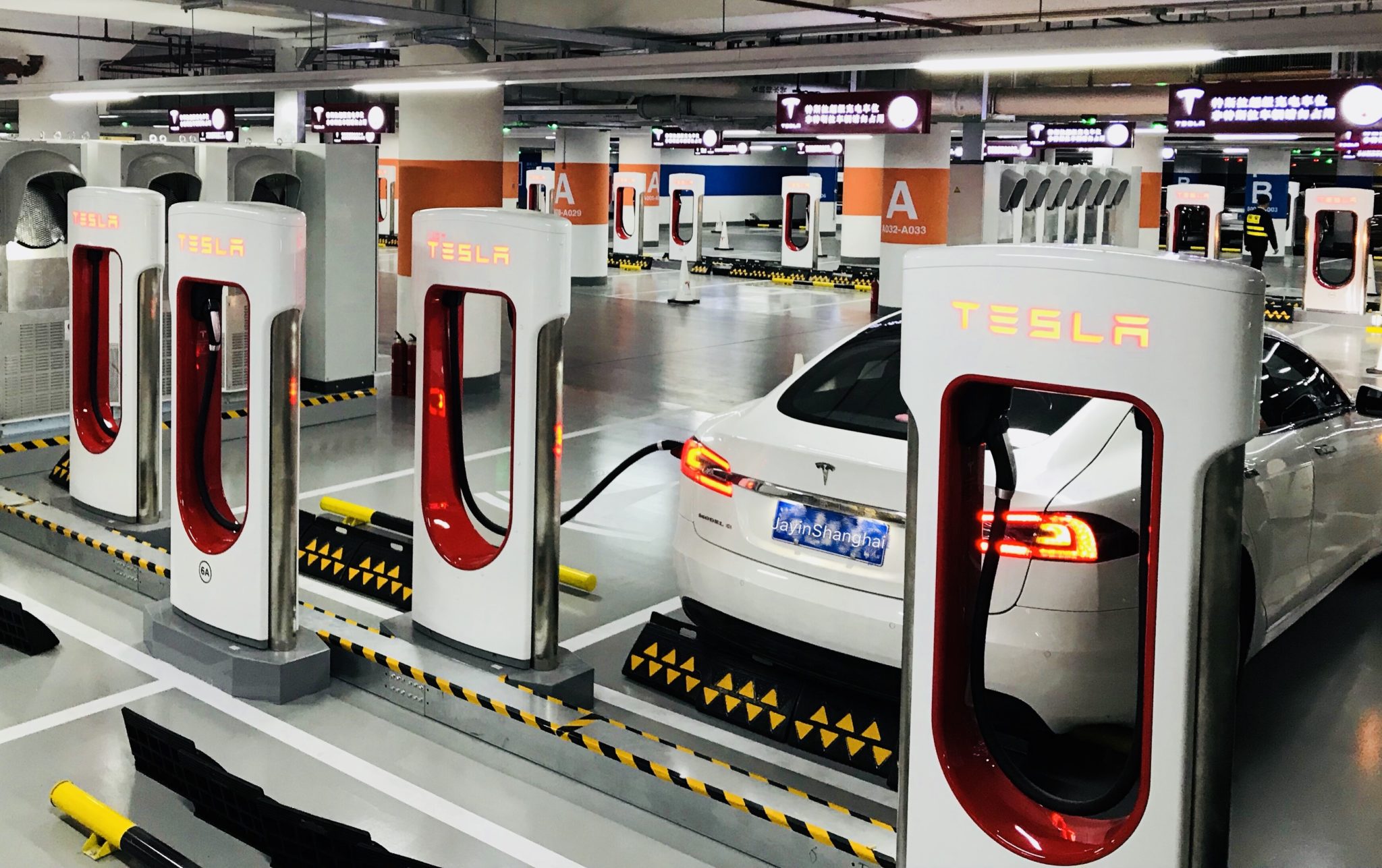
    Tesla has been expanding its supercharger network at a rapid pace and now the world’s most valuable automaker has unveiled the world’s largest supercharger station in Firebaugh, California. This supercharger station has been in development for a couple of months and it will have 56 supercharging stalls. In China, Tesla already has stations with 50 stalls, 56 is a new record.

    This is going to make the supercharger station significantly larger than the average station Tesla has in the US. The station is located between the Bay Area and Los Angeles which is obvious as Elon Musk himself stays in Los Angeles and Tesla’s original market was predominated by people in Silicon Valley and Hollywood. These two also represent the two largest markets for the electric car maker.

    Tesla has also built solar canopies, a restaurant and convenience stores at the location which makes the charging pitstop a little more engaging. The solar canopies are meant to provide shade to the vehicles while also helping power the supercharger station.

    This comes after the company has launched a new self-driving beta which improves the autonomous capabilities of its cars. It also comes at a time where the company has unveiled new models of the Model 3 and Model Y which have a greater range.

  • Nissan Magnite Pre-Bookings Begin At Dealer Level

    Nissan Magnite Pre-Bookings Begin At Dealer Level

    Nissan India will be launching the Magnite Subcompact SUV in India on November 26, 2020. It is one of the highly awaited subcompact SUVs in India. We have now learnt that select dealerships in Mumbai and Delhi are accepting unofficial bookings for the 2020 Magnite for a token amount of ₹ 25,000. The carmaker has already revealed key specifications and features of the car. Recently, the variant-wise prices of the SUV were leaked online, suggesting that it will get a starting price of ₹ 5.5 lakh (ex-showroom).

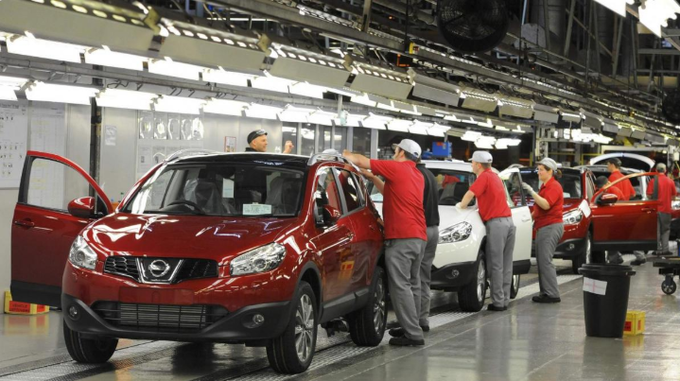
    The upcoming Magnite will be Nissan’s first subcompact SUV in India which will be pitted against the likes Kia Sonet, Maruti Suzuki Vitara Brezza, Hyundai Venue, Mahindra XUV300 among others. The company commenced the production of the subcompact SUV at its manufacturing facility, in Oragadam, Chennai. The same facility will be used for catering domestic and export markets.

    The exterior appeal of the SUV will be highlighted by a large chrome bordered grille featuring sleek headlamps and LED projector lights with LED daytime running lamps. It will also 16-inch dual-tone alloy wheels, silver roof rails, silver faux skid plates, wheel arches, underbody cladding, LED tail lights, dual-tone roof option and much more. The car will be based on Renault-Nissan Alliance’s CMF-A+ platform. The new Nissan Magnite will be offered in four key trims – XE, XL, XV Upper and XV Premium.

    On the inside, the Magnite SUV will get all-black interior which will be complemented by several features like 7-inch fully digital instrument cluster, 8-inch infotainment system with Apple CarPlay and Android Auto support, multi-functional steering wheel, automatic AC, electrically adjustable and foldable ORVMs, push-button start, wireless charging, segment-first 360-degree camera and much more. As for safety, the SUV will be equipped with ABS with EBD, dual airbags and anti-roll bars, vehicle dynamics control, hill start assist, traction control and Tyre Pressure Monitoring System.

    The soon-to-be-launched Nissan Magnite SUV will come in two petrol engine options – the 1.0-litre naturally aspirated motor and the new 1.0-litre turbocharged petrol engine. The former will be tuned to produce 71 bhp and 96 Nm of power figures, while the latter will churn out 99 bhp and 160 Nm of peak torque. Transmission options will include a 5-speed manual and a CVT automatic transmission.

    The naturally aspirated petrol variant will return 18.75 kmpl of mileage, while the manual variant with 1.0-litre turbo-petrol engine will offer a mileage of 20 kmpl. However, the and CVT version with turbo-petrol will provide 17.7 kmpl of mileage.

  • Volkswagen To Invest 1 Billion Euros In Slovakia Plant

    Volkswagen To Invest 1 Billion Euros In Slovakia Plant

    Volkswagen plans to invest 1 billion euros ($1.18 billion) in its Slovak plant, including 500 million euros to produce next-generation Passat and Skoda Superb models, VW Slovakia Chairman Oliver Gruenberg said on Monday.

    The German carmaker’s investment will be in projects across the model range made in Slovakia and will create 2,000 jobs in the coming years, personnel chief Sebastian Krapoth said.

    The auto industry, led by Volkswagen and three other carmakers, is the backbone of Slovakia’s manufacturing and export sectors.

    Skoda had announced on Friday that production of its higher-end model, Superb, would move to Slovakia. The Superb and Passat share the same platform and many parts.

    That followed the cancellation of plans to source production in Turkey. It also upset unions at Volkswagen’s Czech unit, Skoda Auto, home to the Superb brand over the past two decades.

    “Total investments for Bratislava are being planned in the range of 1 billion euros,” Gruenberg told a news conference broadcast live on television. “It is an investment across the entire model range at Volkswagen Slovakia.”

    He said the plan will not add overall production capacity at the plant, which made 377,750 cars last year. The plant, which mostly produced top-end models such as the Audi Q7 and Porsche Cayenne, exports more than 99% of its output.

  • Rolls-Royce supplies power solutions for SpaceDC’s first Indonesian green focused data center facility

    Rolls-Royce supplies power solutions for SpaceDC’s first Indonesian green focused data center facility

    Space officially launched its new ID01 25.45MW data centre campus with Rolls-Royce technology on 4 November 2020. It is the first green-focused data center in Indonesia. With innovative design and infrastructure, SpaceDC enables a power usage effectiveness (PUE) of 1.3, which is changing the industry’s approach to carbon footprint and ensures uptime for the users. Three MTU gas and diesel systems from Rolls-Royce with the latest exhaust after-treatment technology provide efficient and clean base load and emergency power as well as cooling.

    “There is a growing demand for local data centres in Southeast Asia, even more since the Covid-19 crisis”, says Darren Hawkins, CEO of SpaceDC. “With the trend of decarbonization, new concepts of power supply for data centres are at the forefront.” SpaceDC is a data centre provider who aims to lower the environmental impact of data centres. “This company philosophy fits very well with Rolls-Royce’s goal of continuously enhancing the eco-friendliness of our drive and energy systems and bringing them closer to CO2 neutrality,” explains Andreas Görtz, Vice President Power Generation at Rolls-Royce Power Systems.

    For the JAK2 facility in Jakarta, Rolls-Royce supplied three containerized gas and diesel systems.

    The diesel systems, which secure the power supply of the data centre, comprise two MTU 20V4000 DS3300 gensets in a 40 ft container with SCR systems to reduce emissions.

    “Reliable backup power is the lifeblood for any data centre – and it is absolutely fundamental in creating a world class facility,” said Darren Hawkins. “In designing our JAK2 data centre, we selected Rolls-Royce, with its MTU products, as our partner because they provide the best in market technology and power efficiency for this data centre, which is aligned with our vision of meeting international standards as part of the overall value proposition to our customers in the region and beyond.”

    A 20-cylinder MTU Series 4000L64 FNER gas genset in a 40ft container is installed as CHP (Combined Heat and Power) application with a total efficiency of above 90%. The system will provide baseload electricity and cooling via an absorption chiller utilising the exhaust gas heat to provide cooling. The MTU gas systems offer best in class power density and have been designed specifically to withstand hot and humid conditions. This is especially crucial for the facility in Jakarta where the climate is tropical almost year-round. The MTU power solutions offer an extended Time Between Overhaul (TBO) of 84,000 hours, requiring less maintenance and overhaul intervals for maximum productivity and reliability.

    “Deploying generators in a tropical environment like Indonesia comes with a unique set of challenges, especially for a data centre environment where uptime is absolutely critical. We’re proud that our Series 4000 generator sets will help SpaceDC meet the special demands of the location and ensure the highest levels of reliability for their customers,” said Andreas Görtz.

    “Working with Space, we’ve seen great synergy in developing complete power generation solutions that are market-leading in terms of efficiency and reliability. And we are proud that they chose us as a partner to support them with our sustainability service and backup power”, said Waluyanto Sukajat, Acting Managing Director, PT. MTU Indonesia.

  • Mastercard Advances Multi-Rail Strategy to Modernize Business Payments

    Mastercard Advances Multi-Rail Strategy to Modernize Business Payments

    Mastercard continues to deliver on its multi-rail strategy with the addition of Account-to-Account (A2A) payments functionality to Mastercard Track™ Business Payment Service.

    This launch represents the next phase in Mastercard’s journey to modernize business payments by solving persistent pain points that Buyers and Suppliers experience today.  Building on the success of card payments within Mastercard Track Business Payment Service, businesses can now have a similar experience for A2A payments – exchanging data with greater efficiency and facilitating payments across multiple payment rails including Real Time Payments (RTP) and the Automated Clearing House (ACH) in the United States.

    The Account-to-Account payments functionality in Track Business Payment Service is now available in the U.S. and will be available in all regions by the end of 2021. Cross-border payments are also on the roadmap for next year.

    Track Business Payment Service gives businesses greater control of their payments and supports rich data exchanges and the ability to automate payments without the need to share sensitive bank account information. About 80% of mid-size and large Suppliers view the sharing of bank account data as a business risk, according to Mastercard research.1 The risk of bank account data being compromised is reduced because Suppliers no longer need to share their confidential bank account details with Buyers, nor do Buyers need to store those details.

    Today, the vast majority of B2B payments are made through bank account transfers.  Extending Mastercard Track Business Payment Service to support these transfers is a step on our way to building out the best and most secure B2B payment network in the world,” saidJames Anderson, Executive Vice President of Global Commercial and B2B Solutions at Mastercard. “Our commitment to supporting multiple payment rails has always been about helping customers operate more efficiently and effectively leveraging all the capabilities available in the market with as little change as possible. This milestone is another step in the journey away from paper-based frustration, incomplete data and manual reconciliation work and toward a fully digitized business payments process.”

    Modernizing B2B Payments Across New Geographies and Partners

    In May 2020, Mastercard announced the commercial launch of Track Business Payment Service for U.S. card payments. Today, businesses of all sizes can use this service to pay and get paid with card through new distribution partners around the world including: bzPay, Gardenia Technologies, Girasol Payment Solutions, Network International, Pendo Technologies Corp., Plastiq, Today Payments, Inc., Transcard, Ukheshe, and Yak Pay.

    Now, through Track Business Payment Service, commercial businesses have access to more control and greater simplicity in how they pay and get paid across multiple payment types.

    “B2B payments terms and delays can create debilitating negative cashflow dilemmas for business. bzPay helps with a practical way to reduce debt, accelerate payments and optimize cashflow through a single payments platform. Mastercard’s Track Business Payment Service multi-rail solution provides a New Payment Platform enablement and a scalable payment solution for our customers. By enabling payment flexibility options, Mastercard paves the way for a globally connected eCommerce solution.” – Aleks Kostadinovic, CEO bzPay Pty Ltd.

    “Our company is focused on delivering data-driven working capital solutions including advanced analytics and finance to corporates. Mastercard Track Business Payment Service offers much-improved visibility into the source-to-pay and order-to-cash processes, as well as critical insights into payments for financial products and transactional reporting.” – Rupert Schneider, Co-Founder, Gardenia Technologies

    “Payment behavior in the B2B market space is a crucial pain point in the Caribbean, mainly due to complex processes from different business cultures. As our company focuses on facilitating the business payment ecosystem with innovative technologies, it is our mission to add value to the way business payments are made. Mastercard Track Business Payment Service solution allows us to adopt global payment standards and add value by increasing transparency and providing rich reconciliation/remittance data in a secure trusted environment on both cards and A2A payment rails.” – Marwan Rozier, Chief Operating Officer, Girasol Payment Solutions

    “We are delighted to be among the first partners in the Middle East and Africa to launch the Mastercard Track Business Payment Service solution that will address long-standing pain points in the B2B payment sector by creating an innovative service that responds to the industry’s urgent need for seamless and automated collection and reconciliation. We anticipate that Track Business Payment Service will act as a game changer, providing the scale and capability that will support our clients’ business needs.” – Samer Soliman, Managing Director – Middle East, Network International

    “Pendo focuses on disruptive technologies and innovation leveraging business and technology trends to develop innovative solutions that alleviate many payments process pain points that both big corporations and small- and medium-sized enterprises encounter every day. We are delighted to partner with Mastercard Track Business Payment Service to help businesses reduce costs, increase speed, improve efficiencies and create healthier cash flow.” –  Oscar Uribe, Co-Founder & Chief Commercial Officer, Pendo Technologies Corp.

    “Businesses are in constant need to access new forms of working capital and streamline their payments. Plastiq’s ability to help businesses do more with their commercial cards is very aligned with Mastercard Track Business Payment Service’s global vision for making B2B payments frictionless. We’re excited to partner with Mastercard to help offer businesses more optimized payment solutions.” – Sameer Gulati, President & COO of Plastiq

    “Suppliers/Billers need rich data exchanges, including itemized revenue transaction data, not just batch deposit summaries afforded them via direct connect banking. Track Business Payment Service magnificently delivers this expanded data. Our Today Payments API, an award-winning software innovation, automates the process of recording the rich, complex data efficiently. We are thrilled to provide this cutting-edge solution for all B2B transactions in what I consider to be the most real-world, revolutionary enhancement to business payments with the Track Business Payments Service.” – Leigh Cook, CEO, Today Payments, Inc.

    “Traditional approaches to making and receiving B2B payments are inefficient, unnecessarily complex and risky. The combination of the Mastercard Track Business Payment Service and Transcard’s integration platform eliminates friction in B2B payments by digitally connecting buyers and sellers and facilitating touch-free real-time payments and the exchange of rich remittance information directly between trading partner ERPs and banks.” – Greg Bloh, CEO of Transcard

    “Ukheshe, a digital banking platform focused on addressing financial inclusion in Africa, demands world-class partners and solutions that can address real customer concerns. With Mastercard Track Business Payment Service, we are able to ensure the secure transmission of payment details to multiple bill presenters, giving peace of mind to all parties involved.” – Mike Smits, Co-Founder, Ukheshe

    “After seven years of processing B2B payments for thousands of our small business clients, we are on a mission to make their payments easier, faster and more secure. Yak Pay is delighted to be working with Mastercard to help achieve this, and Mastercard Track Business Payment Service is an excellent example of innovation helping small businesses operate more efficiently, profitably and securely.” – Sam Plowman, CEO of Payment Logic and Yak Pay

  • Singapore to Raise Standards for Issue Managers

    Singapore to Raise Standards for Issue Managers

    The Association of Banks in Singapore has announced revised due diligence guidelines for companies planning to list on the Singapore Exchange, with immediate effect.

    Last revised in 2016, the new set of guidelines set out expectations and recommendations on due diligence work that issue managers and full sponsors carry out during the initial public offer (IPO) / reverse takeover (RTO) and listing process.

    They were developed in close collaboration with the Singapore Exchange Regulation (SGX RegCo).

    Key updates include: An increased focus on the assessment of the adequacy and effectiveness of the issuer’s internal controls to meet its business needs and challenges as a listed company; the assessment of the sustainability and viability of the issuer’s business; and targeted guidelines for due diligence on issuers operating in specialized, restricted or niche industries, and/or in higher-risk jurisdictions.

    Ong-Ang Ai Boon, director at the Association of Banks in Singapore (ABS), said the revised guidelines are necessary to ensure they are relevant to the constantly changing economic climate.

    With the increase in issuers from more nascent sectors such as technology that are seeking equity capital, it becomes especially important for issue managers, full sponsors and their professionals to adapt due diligence practices that address the particular needs of

  • France Says Japanese Tyremaker Bridgestone To Shut Bethune Plant

    France Says Japanese Tyremaker Bridgestone To Shut Bethune Plant

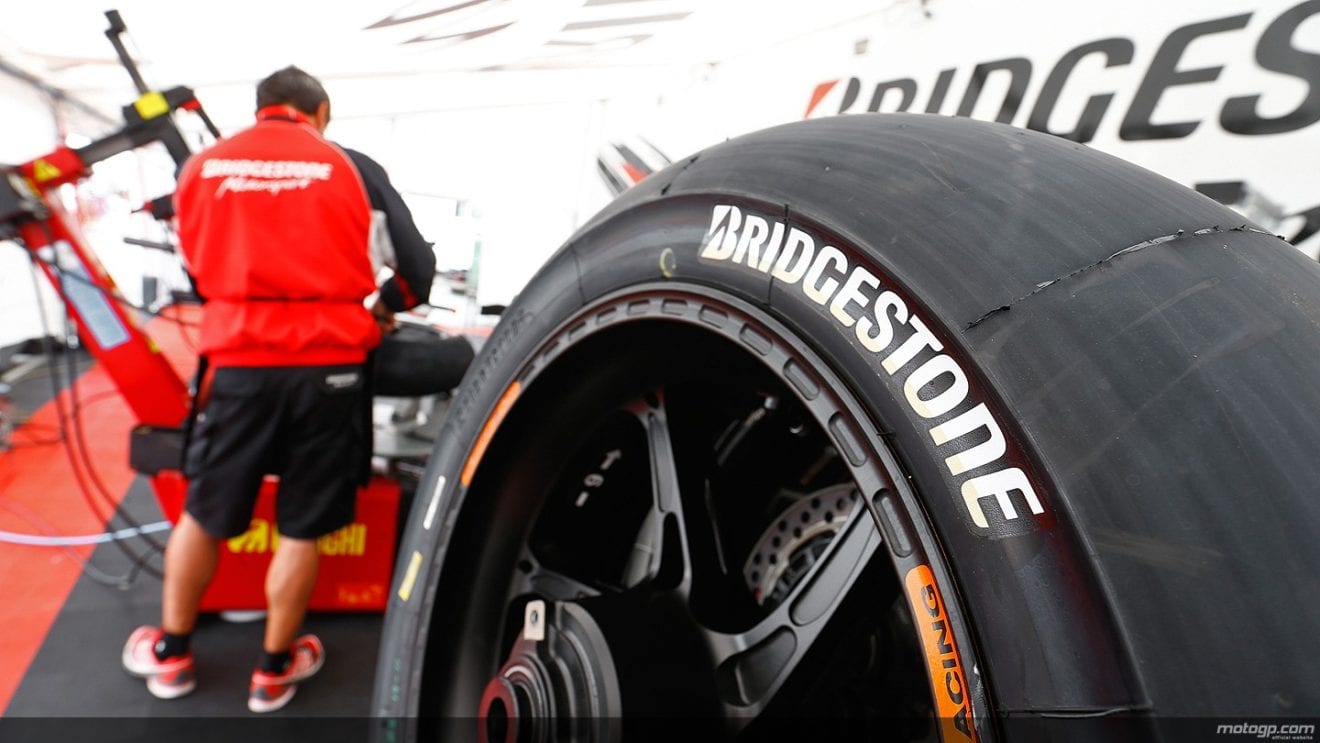
    Japanese tyremaker Bridgestone has decided to “close the door” on its Bethune plant in northern France, Junior Economy Minister Agnes said on Thursday.

    Bridgestone said in September it wanted to close the factory in the face of low demand for its main product, low-profile tyres.

    The government will, however, fight to ensure it remains an industrial site and will work on possible new offers for the site, Pannier-Runacher said after meeting Bridgestone and plant representatives in Bethune.

    “Bridgestone leaves the Bethune site. We’ll be there alongside the employees to find the best possible solutions”, Pannier-Runacher told reporters, adding that the tyremaker did not want to invest in the plant due to overcapacity.

    With 863 employees, the factory has a daily production capacity of about 17,000 tyres.

  • 18th U.S. Takata Death Reported, First In A BMW

    18th U.S. Takata Death Reported, First In A BMW

    A U.S. auto safety regulator said on Thursday it identified the 18th U.S. death tied to a Takata airbag inflator rupture after the review of a recent BMW crash. The National Highway Traffic Safety Administration (NHTSA) said it had concluded a Takata airbag inflator rupture during a September crash in Arizona had led to fatal injuries of the driver. This was the first reported Takata death in a BMW vehicle after 15 U.S. deaths in those of Honda Motor Co and two in Ford Motor Co vehicles since 2009.

    BMW said its “engineers will work closely with federal investigators to inspect the vehicle and to understand the details of the incident.”

    The German automaker added it had “been working diligently to identify and contact owners of these older vehicles equipped with recalled Takata airbags.”

    The defect, which leads in rare instances to airbag inflators rupturing and sending metal fragments flying, prompted the largest automotive recall in U.S. history of about 63 million inflators. Worldwide, about 100 million inflators by 19 major automakers were recalled.

    More than 290 U.S. injuries are also tied to faulty Takata inflators and at least 27 deaths worldwide. The issues especially affects older vehicles with long-term exposure to hot, humid conditions. A number of the deaths have occurred in Arizona. Millions of unrepaired airbags remain in cars on U.S. roads.

    NHTSA said in a statement Thursday the “incident underscores the importance of replacing every recalled Takata airbag. When notified of a safety defect, we urge vehicle owners to immediately contact their automaker’s local dealer to schedule a free repair.”

  • Pinduoduo sales beat expectations

    Pinduoduo sales beat expectations

    Pinduoduo, China’s largest e-commerce platform for agricultural products, has expanded its online grocery ordering service to most provinces since introducing it in the cities of Wuhan and Nanchang in August.

    Duo Duo Maicai, as the grocery feature is called, was introduced in response to the surging demand for buying groceries online following the onset of Covid-19 in the first quarter. The pandemic-related lockdowns forced many households to seek alternative ways to buy their food and essential supplies as brick-and-mortar shops were closed and movements severely restricted.

    But even after the coronavirus was brought under control and restrictions were lifted, a survey by GlobalData found that 56% of Chinese consumers were buying food and groceries online more frequently than before the lockdowns.

    By 2025, nearly half of China’s grocery shopping is expected to take place online, up from 20% currently, according to Goldman Sachs. The online grocery market is projected to reach 7 trillion yuan in five years, the bank said.

    “We are seeing sustained consumer behavior post-pandemic and expect a further shifting from wet markets to structured retail, together with multiple models and build-out of cold-chain logistics to drive ongoing online share gains in” the fresh and FMCG categories, Goldman Sachs said in a report.

    The boom in online grocery shopping in China is a marked change for a society where going to the local market is woven into the fabric of daily life for many households. But with an increasingly fast pace of life, especially in the bigger cities, more and more consumers are availing themselves of the option to buy their groceries online and picking them up the following day.

    Sensing a seismic shift in consumer preference, internet companies have poured resources into catering to this growing need. Other companies that have gone into the online grocery business include Alibaba, Meituan and Didi, the ride-hailing giant.

    “We believe that grocery shopping in China is undergoing similar structural changes in consumer behavior that we saw in other sectors a few years ago,” Chen Lei, Chief Executive Officer of Pinduoduo, said in the company’s post-results conference call on Thursday. “The presumption that most consumers still prefer to go to the wet markets or supermarkets for their daily essentials has been challenged over the past few months.”

    Pinduoduo reported its first quarterly profit since its IPO in 2018. The company has garnered 731.3 million active buyers in the space of five years, an unprecedented feat for an e-commerce company.

    With Duo Duo Maicai, consumers can place their orders before 11 pm each day and pick up their agriculture products the next day from 4 pm onwards at designated pick-up points. Duo Duo Maicai is available as a mini-program and on the main Pinduoduo app.

    This trend of “planned consumption” is driving a surge in agricultural sales, which are estimated to double this year to at least 250 billion yuan in GMV on Pinduoduo. The company said earlier this year that GMV from agriculture could surpass 1 trillion yuan in five years.

    Logistics

    To ensure that supply can keep up with this increased online demand requires a sophisticated supply chain. China’s agricultural supply chain is characterized by small farms, multiple distribution layers, and wastage at various stages. As a result, distribution costs for agricultural products typically account for 40% of the total cost (60% for fresh produce), compared with about 10% in developed economies.

    To improve the supply chain efficiency, Pinduoduo has invested in optimizing key areas including logistics, warehousing and delivery. The company has developed a nationwide and regional agricultural logistics system to cater to the different needs of consumers.

    In the fast-changing consumer and e-commerce industries in China, companies must stay nimble and cater to their users to survive.

    Comparing the shift in grocery shopping habits to the apparel industry five to seven years ago, Chen said: “No one could have imagined then that a significant number of consumers would use online shopping to choose, try out, and return clothes.”

    “But that’s exactly what we are seeing today.”

  • Airasia.com Super Sale returns with a flurry of bargain offers

    Airasia.com Super Sale returns with a flurry of bargain offers

    airasia.com has launched a second Super Sale via its ‘super app’, offering a range of deals starting from as low as RM1.99 (US$0.48) from 16 to 22 November

    The airasia.com Super Sale made its debut last month, superseding the hugely popular AirAsia Free Seats sale.

    The airasia.com super app offers a range of products and services, including fresh produce, groceries, food deliveries, travel & lifestyle products, Muslim-friendly services, and health & wellness packages.

    airasia.com can be accessed via website or mobile app and customers can use BigPay Checkout for a seamless payment experience across all product lines.

    Throughout the airasia.com Super Sale period, shoppers can enjoy up to -50% off from selected merchants on airasia Fresh with a RM1 delivery fee. They can also get 50% off from selected merchants via airasia Food, the online food ordering platform which runs on a zero-commission model.

    Other deals include Buy 1 Free 1 for selected skincare, cosmetics, accessories and more on airasia Shop; -50% off with an additional -5% discount with the promo code ‘SUPER5’ for Unlimited Deals; -10% off Aqiqah Abroad and Aqiqah Makkah on Ikhlas; an aesthetics bundle from RM299 (US$73) on airasia Health and many more.

    airasia.com CEO Karen Chan said: “Since the launch of airasia.com as an Asean super app in October, we have continued to expand our market reach and diversify our product range across the region. We have recently launched the AirAsia Unlimited Pass in the Philippines, Thailand and Indonesia, and introduced airasia Health in Malaysia – a platform that provides end-to-end medical services.

    “We are also working on expanding our eCommerce presence within Asean through strategic partnerships and collaborations with technology providers, merchants and vendors.

    “The airasia.com Super Sale this time offers even more exciting deals as we have included more products and merchants. Through the Super Sale we are able to help further revive the many businesses that have been affected by the effects of the pandemic. We hope everyone will have an enjoyable time shopping and finding the best deals for travel, activities, food, rewards and more,” she added.

    On top of the discounts, shoppers can also earn 3x BIG Points when they pay with the AirAsia credit card during the airasia.com Super Sale. BIG members also have the option of paying using BIG Points.