Tag: asia

  • AirAsia X makes creditor status concession to Malaysia Airports

    AirAsia X makes creditor status concession to Malaysia Airports

    AirAsia X has agreed to classify Malaysia Airports as a secured creditor, as it seeks to expedite its massive debt restructuring program.

    “After consultation, AirAsia X has accommodated [Malaysia Airports] and made certain clarifications and revised the scheme under two separate classes ’A’ and ‘B’,” says the carrier in a statement.

    “Class A shall consist of creditors who are considered critical or essential and who may have secured and/or other rights. Class B shall consist of creditors who do not fall within Class A.”

    In a separate stock exchange filing, AAX states that Malaysia Airports’ legal challenge contended that as a secured creditor it has the right to detain aircraft, parts, accessories, vehicles, and other equipment.

    AAX adds that it makes the status change “in the interest of time,” a reference that it hopes to come to an agreement with creditors in the first quarter of 2021. Announced on 6 October, AAX’s proposal calls for restructuring MYR63.5 billion into an “acknowledgment of indebtedness” for up to MYR200 million payable over the next five years at a 2% interest rate.

    Following the airline’s proposed debt restructuring on 6 October, Malaysia Airports filed a legal challenge protesting its being lumped in with unsecured creditors. Malaysia Airports is also suing AAX for MYR78.2 million ($19 million) in unpaid passenger service charges (PSC) – the subject of a long-running dispute between the two parties.

    The airline also notes that Malaysia Airports has threatened to take legal action against its directors in their personal capacity over the PSC issue, which it claims is “intimidatory in nature.”

    “AirAsia X also wishes to report that major creditors have all demonstrated great maturity, professionalism, constructive engagement and commercial realism in dealing with the debt restructuring exercise,” it says.

    “Though the process is on-going and a common consensus remains to be reached, AirAsia X looks forward to being able to present the revised scheme for all creditors to vote on early in the first quarter of 2021.”

    Assuming 75% of creditors go along with AirAsia X’s proposal and other approvals are obtained, AirAsia X basically aims to start afresh in 2021, initially operating a pair of A330s, and working up to a full network by the end of next year.

    Creditor BOC Aviation has also opposed the restructuring via legal means, with a challenge in the High Court of Malaya on 14 October. In September, before AAX announced its restructuring, the lessor filed a claim against the carrier for nearly $23 million in a London court.

    AAX, lossmaking even before 2020’s coronavirus pandemic, faces an existential crisis owing to the collapse in international air traffic to and from Malaysia this year. In the second quarter, operating losses widened to MYR323 million on revenues of MYR91.4 million, which were down 91% from a year earlier. Its cash and cash equivalents at 30 June stood at MYR212 million, down 31% from three months earlier.

    The airline operates 41 A330s, of which 18 are leased. It also has orders for 116 Airbus jets comprising 76 A330neos, 10 A350-900s, and 30 A321XLRs.
  • Bossini tells landlords it close stores if rents not reduced

    Bossini tells landlords it close stores if rents not reduced

    Local clothing chain Bossini said it has suffered a loss of more than HK$367 million in its last financial year and warned that it may have to close some of its stores in the city unless landlords agree to provide more “reasonable” rent relief and reduction.

    The clothing chain’s reported loss is almost three times more than the loss it incurred in the previous fiscal year.

    It said the economy of its core markets, such as Hong Kong, had been hampered by the Sino-US trade tensions, social unrest last year, and the ongoing Covid-19 pandemic which affected local and tourist consumption in the SAR.

    It also laid the blame on the fact that several landlords have been unwilling to reduce rents despite the harsh business environment.

    “Social distancing, lockdowns, curfews and changing quarantine requirements have created immense challenges for our retail operations,” the company said on its outlook.

    “As the overall shop rental expenses remain at a very unreasonable level, we are renegotiating with landlords across all our core markets, particularly in Hong Kong and Macau, to seek rent relief and reduction.”

    “Where landlords are reluctant to respond reasonably to our requests, we will go ahead and close those shops.”

  • UOB to Allow Partial Remote Work Post-Covid

    UOB to Allow Partial Remote Work Post-Covid

    The bank plans to give the majority of its 26,000-strong workforce the choice to work remotely two days a week once COVID-19 restrictions are lifted.

    UOB made the announcement on Friday, following a six-month review of work patterns, workspaces and workforce technology tools, which revealed that 65 percent of the bank’s roles, all of which are non-customer facing, were suited to remote work.

    The bank also cited broader community sentiment where 80 percent of people across ASEAN said they wanted some form of flexible work arrangement from their employer.

    At the same time, UOB will accelerate its infrastructure improvement plan across the region, which enables more agile team-based work and deeper collaboration across different functions.

    Two days of remote working per week ensures «the right balance between professional fulfillment of the individual and their mental well-being, as employees need to maintain a sense of connection with colleagues and the company, UOB said in the announcement.

    We believe that the future of the workplace is a hybrid one where employees choose how to manage their work commitments based on the space and place they can be most effective. Working from home during COVID-19 has been instructive due to the speed and intensity of the change but we must look beyond the present and define a future of work that is more sustainable,»  Dean Tong, UOB’s head of group human resources, said.

    Last week, we reported that Standard Chartered is planning to permanently offer flexible work options to around 90 percent of its 85,000-strong staff by 2023, as well as near-home workspaces for staff – in addition to offices, and work-from-home arrangements

  • Masan injects $215.7 mln into VinMart controlling unit

    Masan injects $215.7 mln into VinMart controlling unit

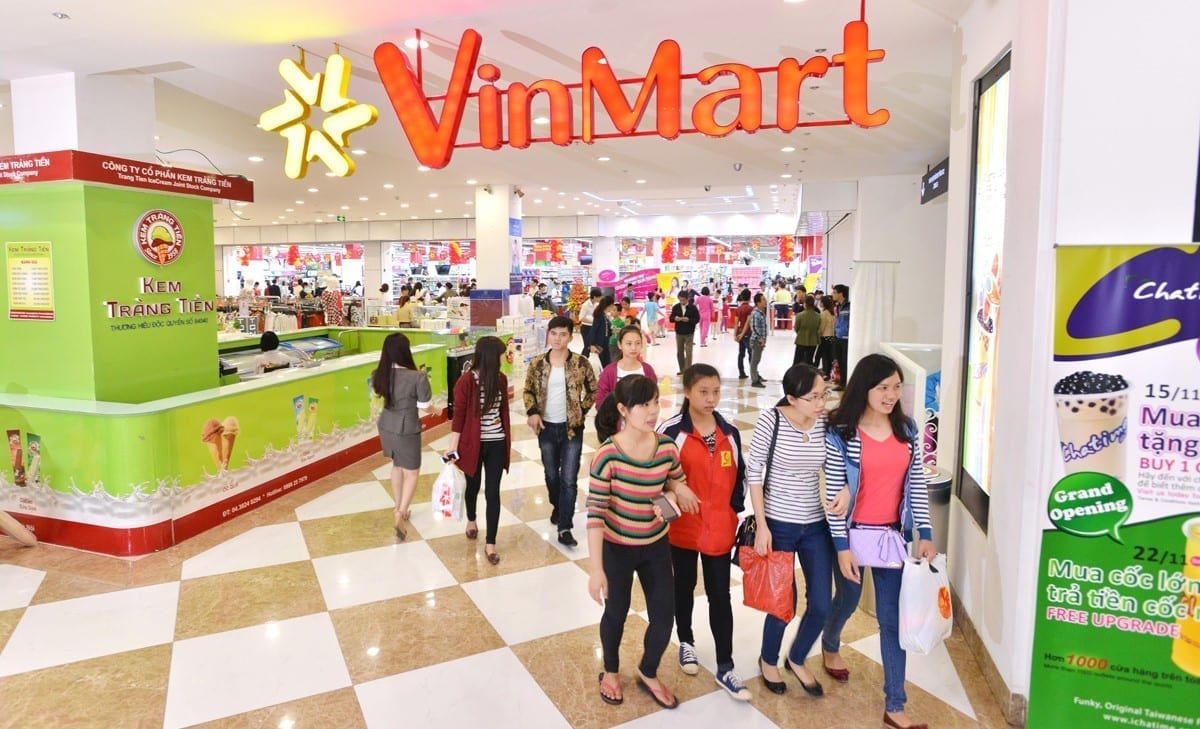
    Conglomerate Masan Group will invest VND5 trillion ($215.7 million) in the subsidiary that controls its VinMart retail chain to help expand it.

    The investment would quadruple the charter capital of The Sherpa to VND6.5 trillion, it said in a statement.

    Through the company, Masan indirectly owns 71 percent of VinCommerce, which operates VinMart+ convenience stores and VinMart supermarkets.

    Masan acquired VinCommerce from Vietnam’s largest private company, Vingroup, in January this year.

    Masan earlier announced it plans to have over 300 VinMart supermarkets and nearly 10,000 VinMart+ convenience stores by 2025, up from 122 and 2,524 at the end of September.

    Masan closed 433 VinMart and VinMart+ stores in the first nine months of this year to cut losses and forecast VinCommerce to break even this quarter.

  • US doubles purchase of Vietnamese mangoes

    US doubles purchase of Vietnamese mangoes

    The U.S. has imported double the quantity of Vietnamese mangoes in Jan-August 2020, showing potential for further growth in this market.

    The value of mango imports rose 99.9 percent year-on-year to $2.79 million, according to a report by the Agency of Foreign Trade under the Ministry of Industry and Trade, citing U.S. official figures.

    The average import price was $2,064.8 per tonne, up 6.7 percent year-on-year. Most of the imports were of fresh and frozen fruit.

    In terms of volume, Vietnam was the 12th largest mango import market for the U.S. in the said period, accounting for 0.3 percent of the total.

    The Agency of Foreign Trade said the large demand for mango, especially fresh fruit, in the U.S. is an opportunity for Vietnamese companies to expand.

    However, they need to ensure all strict standards on farming, packaging, and origin tracing are met, it added.

    Vietnam exported its first batch of mango to the U.S. in April last year.

    The surge in Vietnam’s mango exports to the U.S. is a rare bright spot in the nation’s plunging fruits exports scenario, primarily as a result of the Covid-19 pandemic.

    In the first nine months, fruit export value fell 19.1 percent year-on-year to $1.7 billion, with shipment figures of lychees, durians, and bananas plummeting, the agency said.

  • Government greenlights Long Thanh International Airport

    Government greenlights Long Thanh International Airport

    The first phase of the Long Thanh International Airport project, costing over $4.6 billion, has been approved by the government. The decision approving the airport, designed to become an important regional international air transit hub, was signed Wednesday by Deputy Prime Minister Trinh Dinh Dung.

    The first phase will have one 4km long runway with a width of 75 meters and a system of taxiways and apron, and a 373,000 sq.m passenger terminal designed to serve 25 million passengers and 1.2 million tons of cargo per year. The work is expected to be completed in 2025.

    The work will be divided into four sub-projects: the headquarters of state management agencies, flight management services, essential airport facilities, and other items.

    Essential airport facilities will include buildings, airport apron, passenger terminals, and cargo terminals. This task has been assigned to the Airport Corporation of Vietnam (ACV), which operates 21 airports in the country. ACV will raise its own capital for the construction, the decision says.

    The Long Thanh International Airport will apply modern and open technologies so that they can be easily updated with the most advanced construction, management and operational technologies in accordance with international standards.

    The project’s investment plan was approved by the National Assembly in mid-2017. The parliament also issued a resolution on compensation, support and resettlement for land clearance to build the airport.

    Early last month, the government had directed Dong Nai Province to urgently hand over building sites so that construction can begin early next year.

    The airport will have three phases that are expected to be completed in 2040. By then, it will have four runways, four-passenger terminals and auxiliaries to accommodate 100 million passengers and 5 million tons of cargo every year.

    Lying 40 kilometers east of HCMC, the airport is expected to take up the overflow from the largest existing airport in the country, the Tan Son Nhat International Airport.

  • Japanese supermarket Meidi-Ya opening flagship in Singapore

    Japanese supermarket Meidi-Ya opening flagship in Singapore

    Japanese supermarket Meidi-ya will be opening its second outlet at Millenia Walk on November 25, 2020, with a grand opening on November 28, 2020.

    The two-story flagship outlet spans 24,000 square feet. The first floor will comprise a bakery and food hall. The Japanese supermarket will be located on the second floor.

    Meidi-ya at Millenia Walk also has a wine and liquor store which is already open to the public. It boasts 700 kinds of liquor from various countries. Its sake selection alone has 270 types, including Dassai sake imported from Yamaguchi.

    There are several notable features in this Meidi-ya outlet. It will have a Japanese Cafe and Bar on the first floor which seats 88. It serves popular Japanese dishes and beverages.

    The Hokkaido Dosanko Plaza will feature products like snacks, ice cream, and bento sets imported from Hokkaido. These products come with the label Dosanko to signify that they originate from Hokkaido.

    This is what the Hokkaido Dosanko Plaza at the Great World City outlet looks like.

    The Gokoku Japanese Bakery hails from Kobe. This will be its third outlet in Singapore — the other two being in Great World City and Jurong Point.

    The bakery offers rather hearty bread with a Japanese twist like Potato Mentaiko, Peanut Shio Butter Pan, Matcha Cream Pan, and Malt Kurumi Bun.

    Meidi-ya at Millenia Walk will also have a Food Hall which offers a variety of authentic Japanese food both cooked and raw (sashimi). The sashimi in particular are directly brought in by Nakajima Suisan, Japan’s largest fish supplier.

    Meidi-ya at Millenia Walk is located at 9 Raffles Boulevard, Millenia Walk #01-65, #01-51 to 56, #02-26 to 36. It opens daily from 10am – 10pm.

  • Printemps to close seven luxury stores in aftermatch of virus

    Printemps to close seven luxury stores in aftermatch of virus

    French division retailer chain Printemps, a magnet for overseas consumers looking for high-end items in Paris, will close some of its operations in France because it struggles to address the coronavirus pandemic, the CGT union stated.

    Retailers have been hit laborious by government-enforced lockdowns to curb the virus and people who rely upon vacationer flows have struggled to get well as a result of worldwide journey stays restricted.

    Printemps, which sells make-up and garments for high-end manufacturers like Burberry and Gucci, and is owned by Qatari buyers, is especially uncovered to vacationer flows, particularly at its Paris Haussmann flagship retailer.

    Four of the group’s 19 division stores underneath the “Printemps” banner will probably be shut down, together with one in the northern metropolis of Le Havre and in Strasbourg in the east of the nation, in accordance to the corporate’s discussions with unions, the CGT stated.

    One of the Printemps’ offshoots in a Paris mall has additionally been earmarked for closure, and three of the broader group’s sportswear Citadium stores will close.

    Some 450 jobs, or roughly 15 percent of all Printemps staff, at the moment are in danger, the CGT stated, together with store assistants and workers on the firm’s headquarters.

    Printemps couldn’t instantly be reached for remark. Le Monde newspaper quoted a spokeswoman who stated the measures have been geared toward stemming operational losses.

    Many French retailers have been already struggling earlier than the pandemic hit, due to transport strikes earlier this 12 months that hit footfall in stores, and a wave of anti-government protests final 12 months that compelled them to close on some weekends.

    They are additionally dealing with elevated competitors from on-line rivals.

    Luxury manufacturers have managed to offset some of the aches by means of their retailer networks abroad, together with within China, the place demand for high-end items stays robust.

    Printemps, based in 1865, is one of the oldest division stores in France together

  • Foreign streaming firms earn $43 mln in Vietnam, pay no tax

    Foreign streaming firms earn $43 mln in Vietnam, pay no tax

    Foreign streaming companies like Netflix and Apple TV have earned combined revenues of nearly VND1 trillion ($43 million) so far but have not paid any tax on them.

    Minister of Information and Communications Nguyen Manh Hung said the figure was arrived at from the fact they have one million subscribers.

    “Vietnamese companies have to abide by tax and content regulations while foreign firms do not pay tax and do not follow the laws, which is unfair competition,” he said at a National Assembly Q&A session Tuesday.

    There are 35 local TV and Internet streaming companies with 14 million subscribers.

    Some foreign companies have flouted regulations related to the history and sovereignty of the country, violence, drug use, and sex, Hung said.

    U.S.-owned Netflix said in a statement last month it was working with Vietnamese authorities to set up a mechanism for tax collection.

    The Cybersecurity Law requires all foreign businesses which earn an income from online activities in Vietnam to store their data in the country, but Netflix is unwilling to place its servers locally or open an office in Vietnam.

    Other Southeast Asian countries have also been making moves to tax Netflix and other Internet giants. Indonesia imposed a 10 percent value-added tax on sales on technology firms including Amazon, Netflix, Spotify, and Google in July, while Singapore has since January required subscribers to Netflix and other overseas digital services to pay a 7 percent goods and services tax.

  • Avaloq Expands Cloud Service With U.S. Tie-Up

    Avaloq Expands Cloud Service With U.S. Tie-Up

    The banking software firm is adding Google to its offering of cloud services. Zurich-based Avaloq is partnering with Google Cloud, it said in a statement on Tuesday. The move means Avaloq’s bank clients can run the software on Google’s cloud computing service.

    The partnership complements an initial deal between Avaloq and IBM on a Swiss-based cloud service. The area represents an area of heated competition, with Swiss operators including Swisscom and Inventx offering solutions, in addition to foreign players like Microsoft and Cognizant as well as Google and IBM.

    Avaloq said the pandemic’s effect on digitization within firms spurred the move. «That includes financial services institutions, which are increasingly seeking to use critical IT infrastructure and platforms in a cloud-based environment,» Avaloq technology boss Thomas Beck said.

    The partnership means banks will be able to store their data close to home, the two firms said – a key factor in adhering to data requirements in Switzerland. Google notably works with Temenos, one of Avaloq’s biggest competitors. UBS and Credit Suisse works with Microsoft while rival software firm ERI Bancaire, like Avaloq, works with IBM.

  • HAGL boss to sell 35 million shares to restructure loan

    HAGL boss to sell 35 million shares to restructure loan

    Chairman Doan Nguyen Duc of agricultural giant Hoang Anh Gia Lai (HAGL) will sell 35 million shares to restructure a company loan.

    The shares, registered under the ticker HAG, amount to a 3.8 percent stake in the agricultural firm, approximately. They will be sold via the put through option, according to filings with the Ho Chi Minh Stock Exchange (HoSE). They will be transferred to undisclosed buyers on November 12-13.

    Based on the current market price of HAG shares, the value of the deal is estimated at over VND157 billion ($6.77 million). If it goes through, Duc’s ownership will be reduced to 342 million shares, or 36.85 percent of Hoang Anh Gia Lai’s capital.

    The HAGL chairman had bought 50 million HAG shares through the put-through option on October 29. The order was executed at VND4,800 ($0.21) per share for a total value of VND240 billion.

    At the end of Wednesday’s trading session, HAG shares were trading at VND4,470, down 1.11 percent compared to the previous day.

    In the past three months, HAGL has recorded a net revenue of VND700 billion, up nearly 26 percent year on year, thanks to bigger fruit harvests. However, losses incurred in selling goods and a sharp decline in financial activities led to an after-tax loss of VND568 billion, the biggest quarterly loss in a year. It was also the company’s sixth consecutive loss-making quarter.

    HAGL’s cumulative revenue for the first nine months this year was VND2.17 trillion, up 47.3 percent over the same period last year, and the after-tax loss of over VND700 billion was down 14.9 percent.

    Fruit continued to account for the biggest proportion of its revenue structure at 80 percent, followed by services, rubber, and other products, according to the group’s latest financial statements.

    HAGL, once the leading real estate firm in Vietnam, has been growing fruits and vegetables since 2016. It mainly grows passion fruit, bananas, dragon fruit and chili. Its main markets are China and Thailand.

  • Alibaba shoppers shatter Singles Day record

    Alibaba shoppers shatter Singles Day record

    Singles Day on Nov. 11 is an unofficial Chinese holiday. The holiday has surpassed Cyber Monday as the largest online shopping day of the year globally.

    What Happened: Alibaba Group Holding owns the trademark to Singles Day and is the largest participating retailer.

    Yahoo Finance reports that Alibaba has added three additional days to the 2020 Singles Day holiday shopping season. The added dates are Nov. 1, 2 and 3.

    Shoppers can also get an early look Saturday with a countdown gala.

    Alibaba had over 1.3 billion orders in the 24-hour event in 2019.

    Rival JD.com holds a similar Singles Day event. JD.com reported Singles Day sales of $29.2 billion in 2019 spread out over 11 days.

    An estimated 300 million new users are expected to participate in the shopping event in 2020. Alibaba segment Tmall Global is expected to add 2,600 new brands for the event including Prada, Cartier and Chloe.

    Alibaba adding several days could break records.

    A survey from AlixPartners suggests spending will rise, with 39% of consumers saying they would spend more than in 2019.

  • Hanoi short of premium office space

    Hanoi short of premium office space

    Companies in Hanoi are struggling to find Grade A office space in the downtown area because of limited supply.

    Major Grade A office buildings in the downtown district of Hoan Kiem are recording 95-100 percent absorption rates due to high demand in the capital city, according to a recent report by real estate consultancy Savills.

    These buildings include the BIDV Tower with an occupancy rate of 100 percent, ConerStone Building, 99 percent, Hanoi Towers, 97 percent and Pacific Place, 96 percent.

    The Covid-19 pandemic has not caused major impacts on office demand in the capital city, with the absorption rate in the third quarter falling just 1 percentage point to 90 percent, the report said.

    Demand for office from foreign direct investment companies is set to rise in the future, Savills expects. Hanoi posted the highest GDP growth in the country in the first nine months at 3.3 percent, said Le Tuan Binh, head of Hanoi commercial leasing at Savills.

    The real estate consultancy said it has received many requests for new office space in the city, especially from foreign companies with deep pockets that are expanding or establishing their factories in the country.

    Hanoi’s overall office supply rose 4 percent year-on-year to 1.9 million square meters in the third quarter, and Savills forecasts that addition of over 60,000 square meters will enter the market in the last quarter.

  • UBS Private Equity Head Joins Fintech

    UBS Private Equity Head Joins Fintech

    The head of private equity at the wealth management of UBS is joining a Berlin-based investment platform.

    The CVs of the staff at Moonfare, a German private-equity-investment platform, include some serious heavy-weight experience: KKR, Apax Partners, J.P. Morgan, Blackrock, Amazon, Microsoft, Angellist, N26, and Google.

    Since this November, Swiss bank UBS is also part of the list of former employers of the Moonfare staff. The German startup has hired Winson Ng as its chief investment officer.

    He will work with managing director Magnus Grufman to develop the fund offering of Moonfare. The company is busy expanding the offering from private equity to new asset classes, according to a statement released on Wednesday.

    Ng will remain based in London and join the investment committee of Moonfare. He will play a key role in the positioning of the firm in digital private markets investing and growing its presence in the U.K.

    Experience From UBS and GIC

    Ng was head of the wealth management private equity team of UBS. At UBS and in senior roles at GIC, the Singapore state fund, Ng oversaw large allocations to growth, middle-market, and large-cap buyout funds as well as investments in funds focused on mezzanine capital, credit, infrastructure, and venture capital.

    A native of Hong Kong and Malaysia, Ng has an MBA from INSEAD and graduated with a medical degree from the University of London.

  • Bamboo Airways licensed to fly directly to the US

    Bamboo Airways licensed to fly directly to the US

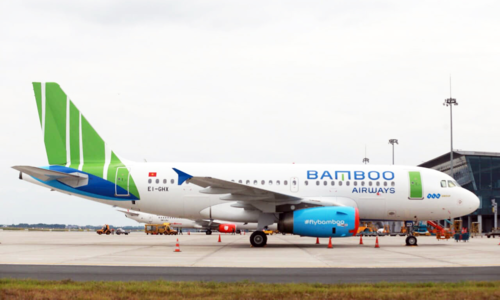
    Bamboo Airways has received a permit from the U.S. Department of Transportation to carry passengers and cargo to that country.

    It has been allowed to use the wide-body Boeing 787-9 Dreamliner to fly directly from Hanoi and Ho Chi Minh City to places like Los Angeles and San Francisco.

    Bamboo Airways is the second airline to get permission after Vietnam Airlines.

    It is set to begin direct service to the U.S. at the end of 2021 or early 2022, and will next seek licenses from the Federal Aviation Administration (FAA), the Transportation Security Administration and other relevant agencies in the U.S.

    The FAA granted a Category 1 rating to the Civil Aviation Authority of Vietnam under its International Aviation Safety Assessment program last February, which meant the latter met safety standards to operate flights to the U.S.

    There are currently no non-stop routes between the two countries, and passengers have to transit through East Asia, taking 18-21 hours in all. A direct flight would bring the travel time down to 14-16 hours.

    Americans are among the top foreign visitors to Vietnam, with 687,226 arrivals last year, while an ethnic Vietnamese population of over 2.1 million in the U.S. is also expected to be a steady source of travel demand.