Tag: asia

  • AEON Thailand Foundation supports the Cardiac Children Foundation of Thailand in Congenital Heart Disease project

    AEON Thailand Foundation supports the Cardiac Children Foundation of Thailand in Congenital Heart Disease project

    Ms. Suporn Wattanavekin (right), Chairman of AEON Thailand Foundation donated 500,000 Baht to the Cardiac Children Foundation of Thailand under the Royal Patronage of H.R.H. Princess Galyani Vadhana Krom Luang Naradhiwas Rajanagarindra in support of the “Children with Congenital Heart Disease Surgery Project”. The donation, received by Dr. Thanarat Layangool (left), President of The Cardiac Children Foundation of Thailand, will go towards surgeries and cardiac catheterizations outside office hours for up to 14 pediatric patients.


  • LINE Pay and LINE Financial Recognized at Good Design Award 2020

    LINE Pay and LINE Financial Recognized at Good Design Award 2020

    LINE Corporation announced today that it received two awards at the Good Design Award 2020. LINE Pay’s rebranding project was selected in the “Best 100” category while LINE Financial received a “Good Design Award” in the application category.

    Operated by Japan Institute of Design Promotion, the Good Design Award is considered a globally renowned design accolade, receiving more than 4,700 entries from around the world this year alone. Winners are allowed to use the “G Mark” logo on their products in recognition of their excellence.

    Both designs were produced by the BX Design Team at LINE Plus. The LINE Pay rebranding project was chosen for its sleek and scalable design, offering familiarity for users while increasing business potential. The LINE Financial services logos were recognized for their intuitive and easy-to-understand icons that are suitable for users of all ages. More information about both awards can be found on the Good Design Award website.

    LINE Pay Corporation, the operator of LINE’s digital wallet service, carried out a rebranding to refocus the company’s messaging, emphasizing how is evolving with society and becoming “The Next Payment Platform.” The rebrand also added visibility and simplicity to the LINE Pay logo, with the rebranded logos having a positive impact on both merchants and users, leading to an increase in the installation of the LINE Pay point of sales materials (POSM) in stores.

    LINE Financial has been introducing a range of financial services, including insurance, investment services, loans, and a credit scoring service, with the aim of bringing people and finance closer by creating new financial experiences. The brand design of these financial services captured a simpler user experience while also presenting a unified identity.

    With these awards, LINE Plus BX Design Team has been now recognized for its excellence in design by three of the most renowned international design awards: by the iF Design Award 2019, Red Dot Award 2020, and Good Design Award 2020.

  • HKMA Lauds Ant’s Role Despite IPO Pullout

    HKMA Lauds Ant’s Role Despite IPO Pullout

    Despite a halted dual listing, Ant Group will continue to play an important financial role in Hong Kong, according to officials from the city’s central bank.

    The Hong Kong Monetary Authority (HKMA) expressed continued confidence in the city’s fintech industry and specifically named Ant as a firm that would remain important in the market.

    According to Nelson Chow, HKMA’s chief fintech officer, the was no reason to question Ant’s presence in Hong Kong despite the sudden pullout from an IPO.

    This is one player, but many players are in town as well, so they are competing against each other to offer better services, said Chow, according to a report.

    On the eight newly launched virtual banks which includes one operated by Ant, Chow described progress as «good», highlighting strong business models for funding small and medium-sized businesses through the use of alternative data.

    The HKMA will need some time to observe the existing players, Chow said when asked about the possibility of issuing more virtual bank licenses.

    On Hong Kong’s capital markets, Chow stressed that he believed that Ant’s IPO pullout would have no material effect on investor appetite.

    The tone is very upbeat, he said. Investors see Asia and particularly Hong Kong as one of the major places where we’ll see a lot of fintech development.

    And on mainland China’s digital yuan, Chow said that the HKMA would welcome any decision from Beijing, adding that it would «stand ready to cooperate.

  • Samsung launches improved version of Galaxy S20 FE 5G

    Samsung launches improved version of Galaxy S20 FE 5G

    Samsung fans who haven’t yet caved and bought a Galaxy S20 FE are given another alternative if they’re still in the market for one. The South Korean giant has just revealed an improved version of the Galaxy S20 FE that will go on sale this week.

    The new Galaxy S20 FE announced today packs 256GB storage, as opposed to the original model that offers just 128GB of internal memory. Apart from the fact that it comes with double the memory, the new Galaxy S20 FE retains all the features of its twin brother.

    The Galaxy S20 FE 5G with 256GB of storage will be available for purchase starting November 6 for $770. It will go on sale in Cloud Navy at select carriers, but Samsung will also offer the smartphone unlocked through its online store.

    Customers who choose to buy the unlocked version from Samsung can get it for $320 or $13.34 a month with eligible trade-in value up to $450. According to Samsung, this is a limited time offer, so those of you looking to grab one might want to hurry.

  • Alibaba E-commerce sales sky high

    Alibaba E-commerce sales sky high

    Alibaba Group beat third-quarter revenue estimates, driven by e-commerce growth after China emerged from coronavirus lockdowns, and said it was assessing the suspension of its affiliate Ant Group’s listing.

    China’s surprise suspension of Ant Group’s planned $37 billion Shanghai initial public offering (IPO) was seen by some analysts and investors as an attempt by Beijing to cut founder Jack Ma and his financial services empire down to size.

    Alibaba CEO Daniel Zhang said during an earnings call that added that Alibaba is “actively evaluating” the impact of the Ant Group IPO’s suspension on its business and will “take appropriate measures accordingly”.

    Ant Group said separately it would decide whether to restart its IPO after fully reviewing and evaluating relevant measures.

    Alibaba’s results also coincided with markets awaiting the outcome of the US presidential election results, with Democrat Joe Biden edging closer to victory.

    Under Donald Trump, the world’s top two economies have clashed over trade, forcing some Chinese companies to put off US IPOs and list on exchanges close to home.

    Revenue at Alibaba’s cloud computing business, a focus area for the company, jumped 60 percent to 14.9 billion yuan (US$2.25 billion), while sales from its core e-commerce business rose 29 percent to 130.92 billion yuan in the reported quarter.

    Net income fell 63 percent to 26.52 billion yuan, as Alibaba had booked a one-off gain last year from its 33-per-cent stake in Ant Group.

    Revenue rose 30 percent to 155.06 billion yuan in the quarter ended September 30, compared to estimates of 154.74 billion yuan, according to IBES data from Refinitiv.

  • Dairy Farm announced difficult third quarter

    Dairy Farm announced difficult third quarter

    Dairy Farm International Holdings Limited today issues its Interim Management Statement for the third quarter of 2020. The Group’s overall performance in the third quarter improved relative to the first half.  While the Group’s results continued to be affected by the COVID-19 pandemic, the impact was partially offset by the receipt of government support.  Grocery Retail performance continued to be supported by operational improvements as part of the Group’s multi-year transformation program, as well as changing customer behaviors as a result of the pandemic. Reduced sales and profit in Health and Beauty and Maxim’s, however, continued to impact the Group’s overall performance.

    The Group’s Grocery Retail businesses reported strong like-for-like sales growth, which led to strong profit growth.  In Southeast Asia, changing customer behaviors, as well as the ongoing execution of the Group’s multi-year transformation plan, supported strong profit growth in Singapore and Malaysia.  Performance in Indonesia, however, was impacted in the period by government restrictions on movement and significantly reduced traffic into hypermarkets and malls.

    The Group’s Convenience businesses reported improved like-for-like sales performance compared to the first half of the year.  However, 7-Eleven Singapore continued to be impacted by reduced footfall.  Better sales performance drove higher profitability compared to the first half.

    The performance of the Group’s Health and Beauty businesses were significantly impacted by the effects of the measures taken by governments to counter the pandemic, as well as the continuing lack of custom from overseas tourists in Hong Kong.  In North Asia, whilst like-for-like sales performance improved compared to the first half, the profitability of Mannings continued to be materially impacted by the lack of tourists.  In Southeast Asia, like-for-like sales were affected by reduced footfall in malls which, in turn, impacted profitability.

    Sales in the Home Furnishings business were higher than the equivalent period last year and like-for-like sales improved compared to the first half.  Strong e-commerce growth and the annualization impact of new stores opened in the prior year more than compensated for the impact of pandemic-related measures on customer visits.  Profitability also improved compared to the equivalent period last year, as a result of lower pre-opening expenses and improved gross margins resulting from the lower cost of goods sold.

    The Group’s 50%-owned associate, Maxim’s, continued to be impacted by government restrictions on movement, as well as a reduction in the number of restaurant customers.  However, mooncake sales performance during the Mid-Autumn Festival was encouraging.  Yonghui’s underlying performance in the third quarter was impacted by reduced sales, while Robinsons Retail’s underlying performance was affected by government lockdown restrictions on its discretionary retail formats.

    The launch of Yuu Rewards, Hong Kong’s largest loyalty program, at the end of July was a significant milestone in driving the Group’s digital transformation.  The popularity of the program has exceeded the Group’s own expectations, with two million members joining in the first month.  High membership engagement has supported the performance of the program sponsors.

    On 16th October 2020, the Group announced it had signed an agreement to deepen its partnership with Philippines-listed multi-format retail group Robinsons Retail Holdings Inc. (‘RRHI’) and to build a leading pharmacy business in the Philippines by combining the Group’s interest in wholly-owned Rose Pharmacy Inc. with RRHI subsidiary South Star Drug Inc.  This transaction, which included the sale of Dairy Farm’s direct interest in Rose Pharmacy Inc, completed on 30th October 2020.

    The well-being of our employees and customers remains a top priority, and the Group continues to take a number of measures to mitigate the impact of the pandemic, including the adoption of a range of health and safety measures.  Given the extraordinary circumstances, we would like to express our deep gratitude for the continuing dedication and resolve of team members in putting customers first during these difficult times. 

    Dairy Farm remains committed to its multi-year transformation which is delivering sustainable improvements to the business over time and continues to pursue the strategic initiatives which will drive medium- to long-term growth.

    Dairy Farm is a leading pan-Asian retailer.  The Group, together with its associates and joint ventures, operates over 10,000 outlets – including grocery retail, convenience stores, health and beauty stores, home furnishings stores, and restaurants – employing some 240,000 people, and had total sales in 2019 exceeding US$27 billion.  Dairy Farm International Holdings Limited is incorporated in Bermuda and has a standard listing on the London Stock Exchange, with secondary listings in Bermuda and Singapore.  It is a member of the Jardine Matheson Group.

  • StanChart to Rollout Flexible Working Option

    StanChart to Rollout Flexible Working Option

    Standard Chartered is reportedly planning to permanently offer flexible work options to around 90 percent of its 85,000-strong staff by 2023.

    Some form of hybrid work arrangement will be made available to around half of its staff from early 2021 and the program will extend to 75,000 works in 55 markets by 2023.

    While we have been thinking through the issues around the future workplace for some time, it’s inevitable that recent events provided a catalyst,» said Standard Chartered’s human resources head Tanuj Kapilashrami, according to a «Bloomberg» report citing an internal memo.

    In addition to flexible work options, the bank will also provide «near-home» workspaces for staff – in addition to offices, and work-from-home arrangements – with an unnamed third party workspace provider.

    According to Standard Chartered, hybrid work is something that has gained widespread acceptance across the bank with about two-thirds of Singapore staff favoring the option. The figures rises with respondents in western locations including 76 percent in the U.K. and 79 percent in the U.S.

    It is anticipated most employees will fall into a hybrid pattern, ie some days in the office and some days working from home, the bank said.

  • Apple Watch picks up another update today

    Apple Watch picks up another update today

    Today is a happy day for Apple fans, as the Cupertino-based company is rolling out new software updates for three of its popular products: iPhone, iPad, and Apple Watch. If you’re rocking one of the first two, you should be able to download iOS 14.2 today.

    On the other hand, Apple Watch owners can download watchOS 7.1, a rather important update that brings some interesting new features for select users. The first one is the ability to be notified when your headphone level could impact your hearing.

    Then, we have a fix for an issue that prevented some users from unlocking Mac with Apple Watch. Another fix included in the update should address an issue where the screen may be dark on wrist raise for some people using the Apple Watch Series 6.

    The next two new features are specifically aimed at Apple Watch users in two countries: Korea and Russia. Those users living in one of the two countries will finally get support for the ECG app on Apple Watch Series 4 or later, as well as support for irregular heart rhythm notifications.

    Make sure that you check your Apple Watch app via your iPhone to see whether or not the new watchOS 7.1 update is available for download. You should find it by heading to General / Software Update.

  • US claims Vietnamese tires subsidized by weak currency

    US claims Vietnamese tires subsidized by weak currency

    The U.S. has slapped preliminary countervailing duties of 6.23-10.08 percent on Vietnamese tires, alleging they are subsidized by an undervalued currency. The duties, which apply to imported passenger vehicle and light truck tires, were announced by the Commerce Department on Thursday, after United Steelworkers, a trade union with members across North America, filed a petition in May claiming domestic production was hurt by Vietnamese products.

    There will be a final determination on the case in March next year.

    This is the first time that the U.S. has imposed countervailing duties based on currency value.

    The U.S., under President Donald Trump, has in recent years been accusing Vietnam of manipulating its currency to gain an unfair trade advantage and a large trade surplus.

    Vietnamese authorities have repeatedly said their exchange rate policies are not aimed at helping exports to the U.S.

    Deputy Foreign Ministry Spokesman Duong Hoai Nam said at a press briefing Thursday that Vietnam has been following this investigation since it was launched.

    “Vietnam will continue to coordinate with U.S. authorities to clarify and better understand the situation and protect the legitimate interests of Vietnamese businesses in accordance with World Trade Organization regulations.”

    Central bank governor Le Minh Hung said last month that the country “has not intended and will not intend to use monetary policies in general and exchange rates, in particular, to create unfair competitive advantages in international trade.”

    The U.S. is also conducting anti-dumping duty investigations related to light vehicle tires imported from Vietnam, South Korea, Taiwan, and Thailand, and will announce the preliminary results next month.

    Vietnam’s passenger tire exports to the U.S rose by 14 percent last year to $469.6 million, according to the U.S. Census Bureau.

    “The Trump Administration remains vigilant against foreign actors that take advantage of American workers and businesses, and we will continue addressing this issue to ensure American industry competes on a level playing field,” Secretary of Commerce Wilbur Ross said in a statement.

    Experts have expressed concern that more countervailing and anti-dumping duties will be imposed on Vietnamese goods based on allegations of currency manipulation should Trump win the ongoing presidential election.

    The Trump administration has initiated 297 anti-dumping and countervailing investigations, a 271 percent increase from the comparable period during the previous one.

  • HSBC Sues Hin Leong Owners

    HSBC Sues Hin Leong Owners

    The bank, which is owed some $600 million by embattled oil trading firm Hin Leong, is the firm’s largest creditor and first to take legal action to recover losses.

    HSBC is suing Hin Leong owner Lim Oon Kuin and his two children to recover $85.3 million (S$115.8 million) of the $111.7 million they received using fake invoices and documents, according to a report last Friday.

    The bank, which is also suing Serene Seng Hui Choo, a manager of the corporate affairs department at Hin Leong, filed the suit in the High Court on October 21, a report said.

    Some 23 banks reportedly lent a total of $3.85 billion to the troubled oil trader, with HSBC reportedly believed to have the largest exposure. The oil trader overstated the value of assets by at least $3 billion by transferring money between bank accounts to create a false impression that accounts receivables were collected when no payments was actually received, according to a report.

    In September, the firm’s judicial manager PwC took action against Lim, his son Evan Lim Chee Meng and his daughter Lim Huey Ching, who are both executive directors at the company, accusing them of fraudulent trading and breaching their fiduciary duties as directors.

    According to the suit, the outstanding amount of $3.5 billion are Hin Leong’s debts, which the Lim family are personally responsible for, without limitation of liability

  • Hong Kong and Singapore Split on Crypto Future

    Hong Kong and Singapore Split on Crypto Future

    Asia’s two marquee global financial hubs have hit a fork in the road of crypto assets and they appear to be heading in different directions.

    Last year, the local chief securities watchdog, Ashley Alder, also chose the FinTech Week to reveal a so-called «opt-in» regime for crypto asset trading platforms, which allowed operators to choose whether or not they wanted to be regulated by the Securities and Futures Commission (SFC). This was due to the fact that some crypto assets cannot be strictly classified as securities.

    This is about to change, Alder said earlier this week, also during the FinTech Week.

    Today, the Government proposed a new licensing regime under the Anti-Money Laundering Ordinance for platforms that trade any type of crypto-asset, even if none are classified as securities. So if they are operating in Hong Kong, or target Hong Kong investors, they would need to apply for an SFC license. Failure to do so would be an offense.

    In addition to licensing, the proposed rules will also ban retail investors from trading crypto assets, limiting access to professional investors which includes the requirement to have a minimum of $1 million.

    Given the risks involved, the proposal is that they should offer their services to professional investors only, at least initially, Alder said.

    Simply speaking, we will require all virtual asset trading platforms to be operating transparently, like working under the sunlight, added Christopher Hui Ching-yu, Hong Kong’s secretary for financial services and the treasury.

    Meanwhile, Singapore continues to take a liberal approach to allow operators to develop more freely and organically.

    Although there were moments when the Monetary Authority of Singapore (MAS) stepped in to rein in on the market – in 2018 it returned funds to Singapore-based investors of an unnamed initial coin offering (ICO) which it considered a security – the regulator has yet to issue licenses to operators nor has it taken a strict stance, unlike Hong Kong, on crypto assets that aren’t classified as securities.

    Even major exchanges like Coinbase and Binance operate in the city-state and have been granted temporary exemptions from holding a license.

    MAS: Investor Responsibility

    On investor protection, Hong Kong authorities made the choice to decide for retail investors when or if access would be appropriate. This is an area where the MAS has also taken a decidedly different route, preferring to promote investor responsibility while encouraging more education and prudence.

    In fact, the MAS’ Capital Markets assistant managing director Lee Boon Ngiap provided a simple and straightforward warning: The public should be aware that there is no regulatory safeguard if they choose to trade on unregulated digital token exchanges or invest in digital tokens that fall outside of the remit of MAS rules.

    And under the MAS’ regulatory, Singapore has rapidly emerged as a global leader in the crypto asset industry.

    It is currently home to 234 entities involved in blockchain including Mastercard, VISA, Ant Financial, Tencent-backed WeBank, Facebook-backed Libra, and more with Ripple now shortlisting the city-state for its headquarter relocation. Even Singapore’s largest lender, DBS, is reportedly cooperating with regulators to potentially launch a cryptocurrency trading with retail access.

    The subsequent outcome has been the rapid establishment of Singapore as a global crypto market leader. Despite having a population of just 6 million, Singapore is second worldwide in the number of ICOs and ICO value ($2.5 billion), according to data from ICObench, only behind the U.S.

  • Amazon Singapore Launches Holiday Shopping Season with Holiday Gift Guides, Early Deals and More

    Amazon Singapore Launches Holiday Shopping Season with Holiday Gift Guides, Early Deals and More

    Customers can shop and save now as Amazon Singapore begins its holiday shopping season with new Holiday Gift Guides launching on Amazon.sg today. Customers can shop the Holiday Toy Store, browse curated lists of Top 100 Toys and Top 100 Board Games, and enjoy early holiday savings on Amazon.sg with discounts and thousands of deals from brands including Bioderma, Laneige, LEGO, Star Wars, and more — making it easy to check friends and family off the gift list earlier than ever. In addition, Prime members can enjoy fast, free shipping on their holiday shopping to arrive in time for celebrations.

    Delivering smiles to those in need, Amazon is expanding its collaboration with Children’s Wishing Well by pledging a donation of S$5 with every order above S$50 spent on products purchased from the Children’s Wishing Well’s Gift Guides. Amazon.sg will donate a minimum of S$10,000 to Children’s Wishing Well through this initiative to help the charity fundraise for underprivileged children*. This collaboration is in addition to the recently launched Amazon X Retail for Good Wishlistcampaign, which supports donations to the wishlists of nonprofits. Singapore Children’s Society is the latest nonprofit to join in this campaign alongside Blessings in a Bag, Children’s Wishing Well, Club Rainbow (Singapore), The Food Bank Singapore, Singapore Red Cross, and SOSD.

    Early Holiday Shopping Deals

    With the new Holiday Gift Guides, Amazon is making it easier than ever to find great gifts at amazing prices ahead of the holiday hustle. The deals included below, and many more, will be available on various dates and times beginning today, while supplies last.

  • Volvo Cars Thailand launches an expansive new warehouse in Thailand

    Volvo Cars Thailand launches an expansive new warehouse in Thailand

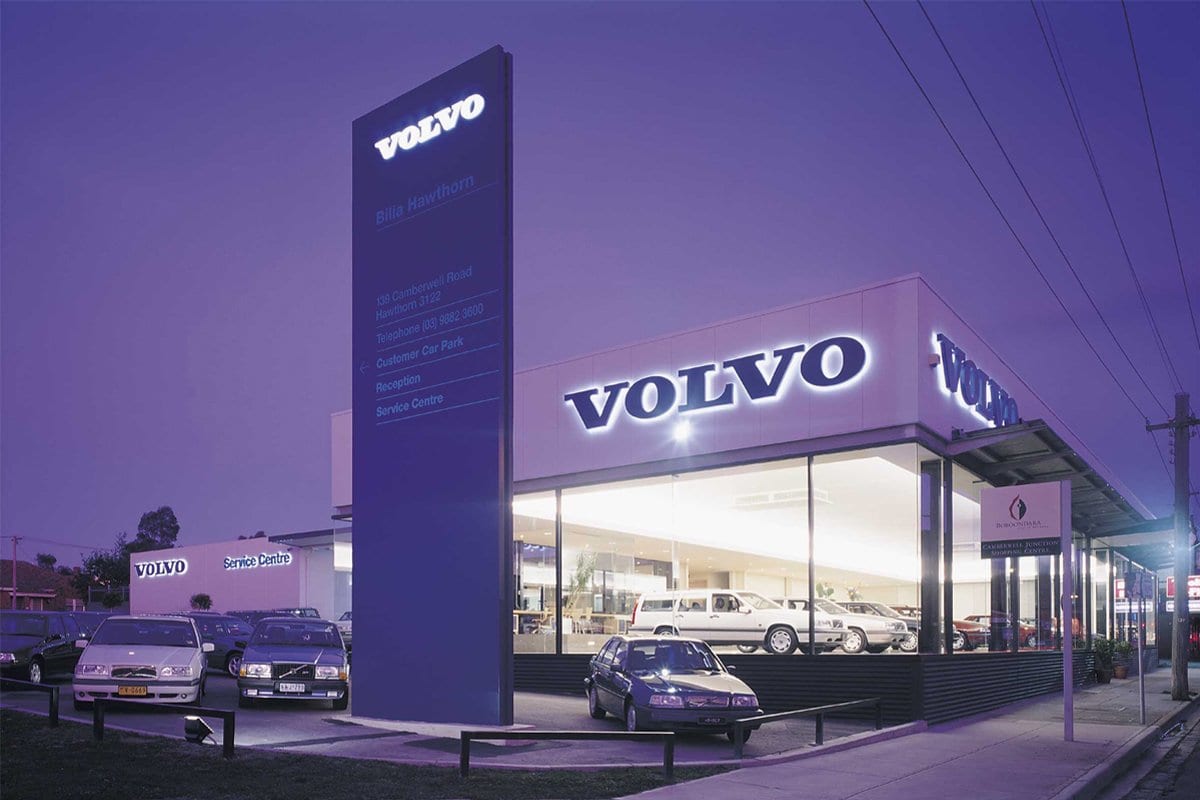
    Volvo Cars Thailand officially launches an exciting and innovative new dedicated Volvo warehouse for the first time in Thailand. The “VOLVO CAR THAILAND CENTRAL DISTRIBUTION & TRAINING CENTER” (VCT CDTC) on Bangna-Trad Road Km 23, Samut Prakan Province, spread over an area of 23,331 square meters, is set to become Volvo’s one-stop hub in ASEAN and is the result of an investment of over 1 billion baht. The warehouse can store up to 550 Volvo cars with efficient spare parts management. There is also a comprehensive vehicle condition inspection department with world-class technology ensuring that every Volvo delivered to dealers across the region, and for direct delivery to customers, is in perfect condition. In addition, there is an international training center and a dedicated performance-testing center for the press. This warehouse has been developed to support future growth and expansion for Volvo’s business in Thailand and is in line with Volvo’s strategic plan and vision of becoming a regional leader in the premium car business.

    Mr. Chris Wailes, Managing Director, Volvo Car (Thailand) Limited, said, “Our new Volvo Car Thailand Central Distribution & Training Center, or VCT CDTC warehouse, is specially designed for Volvo Cars Thailand, in collaboration with our partners, the WHA Group. It is equipped with cutting-edge technology to manage warehouse and spare parts stock and has been designed to support our long-term strategic plans for Thailand. Our focus, as always, is on quality; all our new cars undergo a thorough quality check and steps before being delivered to our retailers and customers. This level of care and attention ensures every vehicle that leaves the warehouse is in perfect condition for the customer. We have also planned ahead and installed a new battery charger for recharging cars the electric cars we will be launching next year. We are confident that this new warehouse will play a major role in moving Volvo’s business forward in the future.”

    Volvo Car Thailand Central Distribution & Training Center (VCT CDTC) covers an area of 23,331 square meters, this expansive warehouse has been Built-to-Suit in cooperation with WHA Corporation Public Company Limited. Volvo has a comprehensive warehouse management plan developed to be the center of five key Volvo business units:

    • Distribution Center: a large distribution center equipped with a high-tech management system conveniently located to facilitate easy transportation access and enable Volvo cars to be efficiently delivered to customers and distributors across the region.
    • Pre-Delivery Service (PDS): this service provides Volvo vehicle condition inspection services that meet our stringent world-class standards, with a software station for ensuring that all software and systems are in perfect condition before the car leaves for delivery and is the first of its kind to be launched in Thailand. This dedicated software program has been developed specifically for Volvo cars only, ensuring each and every car that leaves the center is in perfect conditions, this adds an additional level of confidence for distributors and customers across the region.
    • Parts Distribution Center: providing the management and distribution of Volvo car parts and accessories supported by the latest in warehouse technology so as to enhance the efficiency of both before and after-sales services as well as supporting the lifetime warranty for Volvo parts and accessories (Customer Lifetime Parts Warranty).
    • Training Center: the new Volvo mechanic and sales consultant training center, operated by a team of experienced professionals from Volvo Cars (Thailand) Co., Ltd. The training center has been transformed into a modern new workshop under the concept of Volvo Personal Service (VPS) with an atmosphere that is elegant, airy, and resplendent in Scandinavian style, reflecting the aesthetic found at all Volvo car centers throughout the country.
    • Press Car Center: developed specifically for the testing and performance of Volvo cars for the press, all coordinated under the supervision of the PDS Center (Pre-Delivery Service Center) and the Press Car staff, so as to provide Volvo car test drives for the media. With VCT CDTC’s extensive space, there is ample private parking space for the press with a 24-hour a day security system, including a lounge area, and Volvo staff on hand to give professional and informed advice on all cars and services.

    Volvo Cars always prioritize the customer experience and know it is one of the most important factors when it comes to owning a Volvo and as such makes every aspect of Volvo’s operations, from warehouse to showroom, align with this concept.

    “Our goal is to provide a streamlined, efficient, and advanced experience for all our staff whose job it is to coordinate all sectors of our business, including working with all our distributors, customers, and the media. Volvo can clearly see the great potential for current and future growth in the premium car sector in Thailand. The opening of this new and expansive one-stop warehouse is an integral part of Volvo’s vision to become a true leader in the premium vehicle business in this country and is part of our infrastructure plans to make Thailand Volvo’s future business center in the region.” Mr. Chris Wailes added.

  • DBS Profits Fall in Third Quarter

    DBS Profits Fall in Third Quarter

    The bank will issue an interim one-tier tax-exempt dividend of 18 cents per share, for which the scrip dividend scheme will be applicable, for the third quarter of 2020 DBS Group reported net profit of S$1.30 billion ($960 million) for third-quarter of 2020, according to financial results released on Thursday.

    This is 20 percent lower than the same period a year before (S$1.63 billion), but 4 percent up on-quarter on the back of improved business momentum. During the quarter, DBS also set aside S$554 million in allowances for potential bad loans and lower net interest income, bringing total allowances for the nine months this year to S$2.49 billion.

    The bank noted improved business momentum as fee income rebounded 17 percent to pre-Covid levels of S$798 million, led by wealth management and card fees, which softened the impact of lower interest rates as well as a decline in trading income from a high base.

    Due to the higher allowances, the bank’s net profit for the nine months declined 24 percent from the year before to S$3.71 billion.

    DBS said it expects a strong economic rebound in Asia from the current low base to support mid-single-digit loan growth and double-digit fee income growth in 2021.

    The accelerated build-up of allowances has strengthened our ability to meet the challenges of an uneven economic recovery in the coming year. In the longer term, Asia’s fundamentals remain undiminished, Piyush Gupta, chief executive, said.

  • Malaysia Airlines and AirAsia, once contrasting, now face same crisis

    Malaysia Airlines and AirAsia, once contrasting, now face same crisis

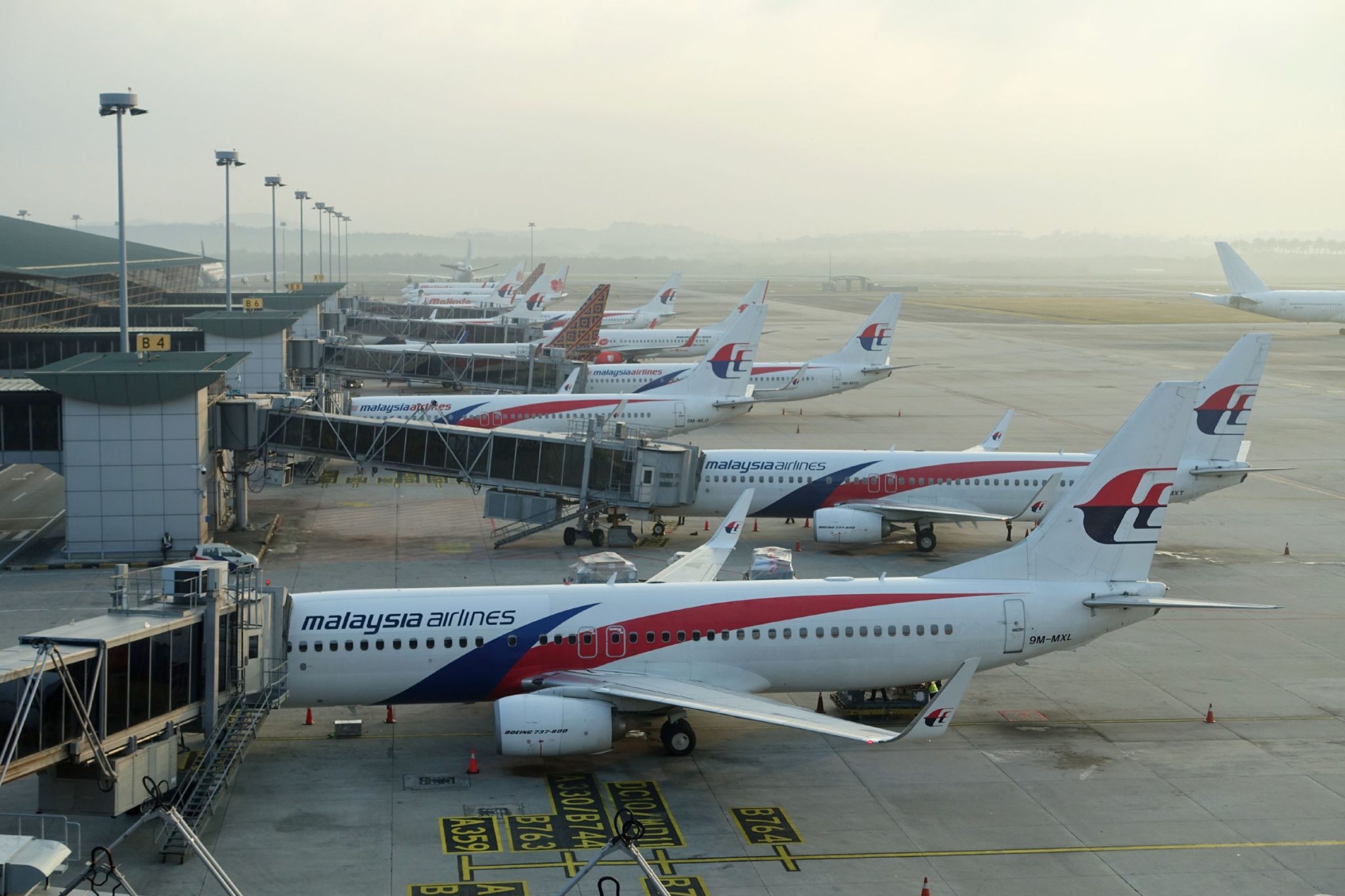
    Struggling flag carrier Malaysia Airlines’ previous attempt turn itself around collided with low-cost local rival AirAsia Group’s rise. Now, both companies have run into the same turbulence.

    Malaysia Airlines, which has yet to recover from two 2014 tragedies that made global headlines, faces a growing risk of being forced to halt flights unless it secures aid. But the state has frowned on the idea of another bailout.

    A group of creditors recently rejected a proposal by Malaysia Airlines to restructure its 16 billion ringgit ($3.85 billion) in liabilities. This comes after the company made deep pay cuts for management and pilots, as well putting staff on unpaid furloughs to reduce costs as the coronavirus pandemic paralyzed global air travel.

    This disruption has also clouded the prospects for leaner AirAsia Group, which together with the flag carrier holds a majority market share in the country.

    “Our partners and creditors will have to sacrifice for the better of the future,” Izham Ismail, group CEO of Malaysia Airlines, told The Edge Malaysia newspaper in mid-October. “If they don’t want to help themselves to survive, I have no choice but shut it down.”

    Malaysia Airlines revealed that it entered into debt restructuring negotiations with creditors in early October. The airline called on leasing companies and suppliers to cooperate with the turnaround effort. If the creditors had agreed, the restructuring would have been completed within the next few months, according to Malaysia Airlines’ plan.

    The government has expressed its unwillingness to embark on another public-sector bailout of the national carrier, which is fully owned by the sovereign wealth fund Khazanah Nasional.

    “The Ministry of Finance will not be injecting any cash or any capital into Malaysia Airlines through Khazanah,” said Finance Minister Tengku Zafrul Aziz. A proposal has been floated to liquidate the airline and transfer a portion of the assets and staff to Firefly, the group’s low-cost carrier.

    Khazanah first took over Malaysia Airlines in 2001 following the ravages of the Asian financial crisis, holding a stake of 69%.The carrier’s fortunes turned again in 2014, when flight MH370 disappeared mysteriously en route from Kuala Lumpur to Beijing. This was followed months later by flight MH17 being shot down over Ukraine.

    The two tragedies drove away passenger traffic, prompting Khazanah to acquire the remaining shares in Malaysia Airlines and fully nationalize the carrier. Malaysia Airlines laid off roughly a third of its staff in a bid to revive its earnings.

    This previous restructuring effort never bore fruit because of competition from powerful rival AirAsia. The budget carrier made great strides in the 2000s with its low fares, eventually gaining control of half the domestic market.

    Malaysia Airlines, meanwhile, has lost money since 2011. Part of the problem is Malaysia’s unstable political situation. Former Prime Minister Mahathir Mohamad’s government sought capital and operational tie-ups with foreign carriers after determining that Malaysia Airlines could not heal itself. Japan Airlines was seen as a leading candidate to sponsor a turnaround due to the company’s experience recovering from bankruptcy.

    But Mahathir abruptly resigned and was succeeded by Muhyiddin Yassin this March. Not only has the pandemic sapped the finances of any potential sponsors, but Muhyiddin has his hands full maintaining his hold on power. Malaysia Airlines’ restructuring took a back seat.

    “None of the restructuring went deep enough,” said Brendan Sobie, an independent analyst. He added that it is too early to tell if the proposed debt restructuring plan would be sufficient.

    “All airlines face an incredibly challenging outlook,” Sobie said. “A lot will depend on how quickly the market recovers and if it fully recovers.”

    AirAsia planes sit at Kuala Lumpur International Airport on Oct. 6. The budget airline has not been immune to the effects of the pandemic   © Reuters

    Because Malaysia Airlines is the flag carrier, observers believe the government will ultimately be forced into a new bailout. But the damage to corporate value may have already been done by the drawn-out restructuring process.

    Other flag carriers in the region have been faster to rehabilitate. Singapore Airlines, which is majority-owned by government investment group Temasek Holdings, came out with a $10.5 billion fundraising plan in March that leans on existing shareholders. Thailand, which holds 51% of Thai Airways International, signed off on a court-supervised rehabilitation process for the carrier in May.

    Long profitable private-sector carrier AirAsia has not been immune to the effects of the pandemic, and it has sought to steer out of its slump.

    The group founded by CEO Tony Fernandes won Malaysian state backing of a 1 billion ringgit loan in October. Early that month, the group’s long-haul carrier AirAsia X applied in court for a debt forgiveness plan that would slash 63.5 billion ringgit in liabilities, including aircraft purchase commitments, to just 200 million ringgit.

    The plan still needs the approval of creditors holding 75% of the debt. AirAsiaX said the debt relief is needed “to avoid a liquidation and to allow the airline to fly again.”

    AirAsiaX — which offers flights to Australia, Hawaii and other Asia-Pacific destinations — operated at a loss in the most recent two years.

    AirAsia Group said in October it would end its Japan operations, and analysts expect further cutbacks in scale. The group posted a 992 million ringgit net loss for the April-June quarter on a 96% plunge in revenue.

    “AirAsia was a profitable airline and was potentially sustainable had it not added capacity rather recklessly,” said Nungsari Ahmad Radhi, ex-executive chairman of the Malaysian Aviation Commission. “It got to the point where the seat growth probably outstripped demand growth. The pandemic was a fatal blow.”