Tag: asia

  • McDonald’s launches new growth strategy; beats profit estimates

    McDonald’s launches new growth strategy; beats profit estimates

    It will also debut a “McPlant” line of plant-based menu items, though it declined to say which suppliers it would use for faux burger, faux chicken and breakfast items. It previously tested a vegan “P.L.T.” burger by Beyond Meat in Canada.

    The world’s biggest burger chain beat revenue and profit estimates for the third quarter on Monday as customers in the United States ordered more hamburgers and fries in drive-through outlets and on delivery apps to avoid dining out during the pandemic.

    Overall, global sales fell 2.2% in the quarter, an improvement over the previous quarter’s drop, as McDonald’s had already announced in an October update.

    The company’s limited-time promotional deal with rapper Travis Scott, which caused shortages of some ingredients, and other marketing investments also helped sales bounce back from pandemic lows.

    Through 2022, the chain plans to spend about $2.3 billion (£1.7 billion) on capital expenditure, about half of which will build new stores, with some of the rest used for remodels stalled by the pandemic.

    Next year, McDonald’s will focus on core products such as burgers, coffee and chicken, including a new Crispy Chicken Sandwich – something some franchisees have long sought in order to compete with the success of similar products at Popeyes, a unit of Restaurant Brands International and Chick-fil-A.

    It will also redesign its packaging globally. And soon, it will launch another growth driver that other chains have long had — a loyalty program.

    “MyMcDonald’s” digital program will allow customers who sign up to get tailored offers, the company said. A loyalty rewards program using the MyMcDonald’s program will start as a pilot in the coming weeks in Phoenix and next year across the United States.

    Finally, it will build some locations without any dining rooms to focus on carryout, drive-through and delivery only.

    Despite some sales recovery and better-than-forecast margins, the company is still pressured in key markets outside the United States, including France, Germany and Britain by new lockdown restrictions due to a spike in coronavirus cases.

    McDonald’s total revenue fell about 2% to $5.42 billion in the three months ended Sept. 30, largely recovering from the over 30% plunge posted in the second quarter.

    Analysts on average had estimated revenue of $5.40 billion, according to IBES data from Refinitiv.

    Net income surged 10% to $1.76 billion, helped by gains from the sale of a part of McDonald’s stake in its Japanese affiliate.

    Excluding those gains, the company earned $2.22 per share, beating estimates of $1.90.

  • China’s Xiaomi takes third place in Vietnam smartphone market

    China’s Xiaomi takes third place in Vietnam smartphone market

    China’s Xiaomi grabbed a 12 percent market share in the third quarter to surpass Vivo and become the third-largest smartphone brand in Vietnam.

    Xiaomi reported sales growth of 114 percent year-on-year despite Covid-19 impacts, Singaporean technology market analysis firm Canalys said in a recent report.

    South Korea’s Samsung stayed on top with a 33 percent market share, followed by China’s Oppo (15 percent); but sales of both brands dropped sharply at 6 percent and 21 percent year-on-year respectively.

    VinSmart, a subsidiary of Vietnam’s largest listed company, Vingroup, was fourth with a 9 percent market share.

    VinSmart had launched its first product at the end of 2018, and produced its first 5G smartphones in collaboration with U.S. chip giant Qualcomm last month. The brand is focusing on the low-end segment with 12 offerings all priced at below VND5 million ($212).

    China’s Vivo also grabbed a market share of 9 percent in the third quarter after growing 75 percent.

    Almost 10 smartphone brands have been vying for third place in recent years, with Apple, Xiaomi, and Vivo the most notable names. No brand has remained in that position for more than six months.

    According to We Are Social, a social media marketing and advertising agency, around 75 million people, or almost 80 percent of the country’s population, use smartphones.

  • Google Maps Street View might soon allow users to upload their own photos of places and streets

    Google Maps Street View might soon allow users to upload their own photos of places and streets

    Google Maps is now one of the most popular navigation and exploration tools, and a new feature coming to its Google Street View might soon allow people to upload photos to make sure hardly reachable areas of streets or cities can be visible in Google Street View. The feature to upload images will be present in the standalone app Google Street View, which will allow you to use your smartphone to contribute to Google Maps.

    In the beginning, in order to be able to place you on a street in Google Maps, Google had cars that went about with big 360-degree cameras that took photos of the streets. This later helps anyone who needs more precise navigation or to get a feel of the streets in Google Maps and Google Street View to virtually place themselves in the middle of the street and look around.

    Now, to further this capability and make previous unavailable-for-visualization places accessible, Google’s Street View will have a feature that can use your smartphone to take photos of the place as you drive. Reddit user -J-G- spotted the feature in Google Street View Driving mode. Additionally, Google might need to use some image processing and software to merge the photos together for a 360-angle view.

    As expected, the app will blur faces and vehicle plates, protecting the privacy of everyone while at the same time providing more images and visualization to Google Street View in places unreachable for Google alone.

  • VF Corp adds Supreme to its stable in US$2.1 billion deal

    VF Corp adds Supreme to its stable in US$2.1 billion deal

    VF Corp pays US$2.1 billion to purchase streetwear attire firm Supreme, including one other standard model to the Vans shoe maker’s portfolio. VF Corp, which additionally homes manufacturers reminiscent of The North Face and Timberland, mentioned it might make a further fee of up to $300 million, topic to satisfaction of sure post-deal closing milestones.

    Shares of VF Corp surged about 13 percent to $78.94 in afternoon buying and selling.

    The firm mentioned present buyers Carlyle Group and New York-based personal fairness agency Goode Partners had been promoting their stakes in Supreme, based by American-British businessman James Jebbia in 1994.

    Known for its pink field emblem with “Supreme” written in white, the model has gained a following amongst “hypebeasts,” or followers of the streetwear model, with product launches of the whole lot from hoodies to burner telephones promoting out in minutes and folks lining up outdoors its 12 shops worldwide for hours.

    The perceived shortage has helped Supreme to purchase a cachet amongst younger folks and allowed it to cost far increased costs than different streetwear manufacturers like VF’s Vans and Nike.

    “This scarcity, novelty and strong social influence model supports meaningful pricing power resulting best in class profitability,” VF Corp CEO Steve Rendle mentioned.

    VF Corp estimated the broader streetwear market to be a roughly $50 billion world alternative and that Supreme was on the epicenter of this market, he mentioned.

    The firm mentioned the Supreme deal will assist bolster its e-commerce enterprise, which has change into extra pressing for attire and footwear makers due to the Covid-19 pandemic.

    Supreme, which has collaborated with many outstanding style names together with Louis Vuitton in addition to Nike, Levi and Vans, will get over 60 percent of its income from the net enterprise.

    The deal, which is predicted to be accomplished late this 12 months, is anticipated to contribute a minimum of $500 million of income and adjusted earnings per share of 20 cents in fiscal 2022.

    Supreme doesn’t present group gross sales or revenue figures however its UK-based European arm is obliged to publish annual accounts and these have confirmed speedy development and industry-leading margins in current years.

    In the 12 months to the top of January 2019, Supreme’s European enterprise racked up the income of 100 million kilos ($130 million) regardless of having simply two shops and a revenue margin, earlier than curiosity bills, of 44 percent – a number of of the margins earned by different streetwear manufacturers like Vans, Abercrombie & Fitch and even luxurious manufacturers like Gucci, firm filings present.

    Analysts have questioned whether or not Supreme will probably be in a position to preserve its premium pricing as its merchandise change into extra ubiquitous, however, had been extra sanguine after Monday’s announcement.

    “Supreme is a strong streetwear brand …. and while the brand has built its appeal on scarcity, we believe the market will be excited at the margin and growth profile and its contribution to VFC,” Bernstein analyst Jaime Merriman mentioned.

  • Vietnamese startup acquires US mobile testing platform

    Vietnamese startup acquires US mobile testing platform

    Vietnamese tech startup Kobiton has acquired U.S.-based mobile testing platform Mobile Labs Inc after raising $14 million for the purpose. Kobiton, which provides a platform for app developers to test their products, said in a statement that the acquisition would help customers deliver apps of higher quality faster by utilizing artificial intelligence.

    The acquisition was funded by U.S.-based investment funds BIP Capital and Fulcrum Equity Partners.

    Ha Ngoc Vinh Du, director of Kobiton in Vietnam, said that the acquisition was also positive news for the Vietnam tech industry as it confirms the talent of Vietnamese tech engineers among the global tech community.

    Jim Douglass, the partner at Fulcrum Equity Partners, said that companies are increasingly reliant on their mobile channels to improve revenues, and they need new ways to test their apps on real devices without sacrificing quality.

    Kobiton, with offices in Ho Chi Minh City and Atlanta, U.S., was founded by Vietnam-based KMS Technology in 2016. It has over 50 IT engineers and developers in its employ. Its platform is used by over 60,000 developers worldwide.

  • Hyundai Looks Ahead To New SUVs In 2021 And Urban Air Taxis By 2028

    Hyundai Looks Ahead To New SUVs In 2021 And Urban Air Taxis By 2028

    South Korean automaker Hyundai Motor Co is supercharging its product portfolio next year with the introduction of several new SUVs, while looking even farther out to the launch of its first urban air taxis toward the end of the decade, the company’s top U.S. executive said on Monday.

    “We are all-in on autonomous vehicles,” as well as electric vehicles, said Jose Munoz, president and CEO and Hyundai Motor North America, at an Automotive Press Association teleconference.

    His remarks come at a time when investment in robo-taxis has slowed, even as the global pandemic has spurred interest in personally-owned vehicles, especially trucks and SUVs. Hyundai hopes to tap that interest next year with the all-new Santa Cruz, a compact utility vehicle with a pickup bed, and the Ioniq 5 crossover, the first in a series of new all-electric models.

    Early next year, the redesigned Tucson compact crossover goes into production at Hyundai’s Montgomery, Alabama plant, which also will begin building the Santa Cruz in late spring as part of a $410 million expansion. Munoz said Hyundai will work with the new Biden administration to develop infrastructure to support battery-electric and hydrogen-electric vehicles.

    He seemed most excited by Hyundai’s work with Motional – its $4 billion (£3 billion) self-driving technology joint venture with Aptiv PLC and its partnership with Uber Technologies on urban air taxis, which Munoz predicted would be in operation at such major U.S. airports as LAX in Los Angeles and JFK in New York “by 2028, maybe earlier.”

    Hyundai already is developing “flying devices” powered by electric motors and batteries that can transport five to six passengers from highly congested urban and suburban centers to those airports, Munoz said. “We see a lot of opportunities ahead of us in autonomous vehicles,” including air taxis, he said.

  • Tesla Is Looking To Move to AMD Navi Chips For The Media Control Units On Its Cars

    Tesla Is Looking To Move to AMD Navi Chips For The Media Control Units On Its Cars

    While Tesla has moved away from Nvidia’s silicon for its self-driving autonomous car capabilities, it still uses Nvidia’s Tegra mobile chips for the media control unit or MCU on its vehicles. It seems like Tesla wants to fully break up as it is considering AMD’s new Navi chips which form the basis for its new GPUs and the GPUs AMD has supplied both Microsoft and Sony for the Xbox Series X and PlayStation 5.

    Tesla has already switched to Intel-based x86 processors for its MCU on many vehicles and AMD’s Navi system on chips will have the same x86 architecture which will make the transition less painful. Patrick Schur has shared a document on Twitter which indicates that Tesla is particularly looking to move to AMD’s Navi 23 chip.

    Announced in October, AMD’s latest chips are said to match Nvidia’s GPUs in performance and outflank Intel’s CPUs in the same department while being significantly cheaper than products from the two companies.

    “Groundbreaking AMD RDNA 2 gaming architecture delivers up to 2X higher performance and up to 54 percent higher performance-per-watt compared to AMD RDNA-based graphics cards,” AMD says in a press statement describing its new Navi chips which are based on the RDNA 2 architecture.

    Tesla has also been hiring game developers which could mean that the world’s most valuable automaker could be very serious about gaming inside the vehicle. It is a strange choice but GPU compute these days is regardless more important than GPU compute for even AI tasks.

    This chip is said to be more powerful than Nvidia’s chips.

    Tesla has been at the forefront of this trend – it developed its own self-driving chip which it claims is better than Nvidia’s Xavier platform. For this, it even hired legendary chip designer Jim Keller, who has had stints at Intel, AMD and Apple. Jim Keller left Tesla in 2019 to join Intel but his stint at the iconic Santa Clara-based company also came to an end in June of this year.

  • Virgin Hyperloop Tests First Hyperloop With Humans Aboard

    Virgin Hyperloop Tests First Hyperloop With Humans Aboard

    Virgin Hyperloop has become the first company dabbling in Hyperloop which is an ultra-fast mode of grounded transportation, with humans aboard. This test took place this Sunday at the company’s DevLoop test track in the desert outside Las Vegas, Nevada. The Hyperloop featured two passengers.

    The first two passengers were Virgin Hyperloop’s chief technology officer and co-founder Josh Giegel, and its head of passenger experience Sara Luchian.

    The Hyperloop pods dubbed the Pegasus was transferred into an airlock as the air inside the enclosed vacuum tube was removed. The pod then accreted at 160 kmph down the length of the track.

    Virgin Hyperloop was founded in 2014 after the original concept for the Hyperloop was shared by Tesla and SpaceX founder and CEO Elon Musk. Musk’s original concept claimed that Hyperloop would be able to achieve a top speed of 1,223 kmph in nearly airless tubes.

    The DevLoop track is just 500 metres in length and 3.3 meters in diameter which is also one of the reasons why the top speed wasn’t as extreme. The company now claims that it has completed over 400 tests.

    “No one has done anything close to what we’re talking about right now,” said Jay Walder, CEO of Virgin Hyperloop, told The Verge. “This is a full scale, working hyperloop that is not just going to run in a vacuum environment but is going to have a person in it. No one has come close to doing it,” he added.

    Giegel has revealed the acceleration of the Hyperloop will be similar to a plane taking off. The pod is propelled by magnetic levitation, a type of technology already used in MagLev trains in China which can achieve speeds of up to 480 kmph.

    The pod which is called Pegasus was designed with the help of danish architect Bjake Ingels. This is actually a scaled-down version of the pod that Virgin Hyperloop plans on commercializing. It weighs 2.5 tons and measures 15-18 feet long.

  • L’Oreal turns to Google as coronavirus spurs virtual make-up shift

    L’Oreal turns to Google as coronavirus spurs virtual make-up shift

    Shoppers searching Google for cosmetics will be able to try them on virtually through a deal with L’Oreal, as the French group looks to make up for lost store sales caused by coronavirus lockdowns by expanding online.

    Maybelline maker L’Oreal, which returned to comparable sales growth in the third quarter when coronavirus restrictions eased, has sped up some of its web initiatives as a result of the pandemic, its digital chief Lubomira Rochet said.

    “There’s been an acceleration in all our partnerships due to COVID-19,” Rochet said in an online presentation on Thursday.

    The Google GOOGL.O partnership relies on technology designed by ModiFace, a Canadian augmented reality specialist acquired by L’Oreal in 2018, and will also extend to the U.S. group’s YouTube video sharing platform, Rochet said.

    People seeking lipsticks or eye shadows by L’Oreal brands, which include Lancome and Urban Decay, who come across their adverts on Google or YouTube can then try them online.

    YouTube is one of the go-to sites for cosmetics users who often seek out make-up tutorials online, or want to learn from others how to curl their hair.

    L’Oreal, which already had a ModiFace partnership with social media site Facebook FB.O, has seen the usage of virtual make-up tools rise fivefold during COVID-19 lockdowns this year, and the conversion rate from an advert to purchase was three times higher with the try-ons, Rochet said.

    Consumers used it to mimic hair dye colors in particular during coronavirus shutdowns, Rochet added.

    Many countries in Europe including France and Belgium have now re-entered lockdown, forcing beauty chains and hair salons to close, and hitting travel retail sales. Online sales of beauty products, especially in China, have made-up for part of the losses and Rochet expects half L’Oreal’s sales are likely to come from the web within the next three to seven years, up from around a quarter now.

  • Tesco Thailand takeover gets regulatory nod

    Tesco Thailand takeover gets regulatory nod

    Thailand’s competition regulator has given the nod for British retail giant Tesco to sell its supermarket businesses to the Charoen Pokphand Group, despite monopoly concerns.

    The $10.6 billion sale to Thailand’s biggest conglomerate was first flagged in March and also covers Tesco’s operations in Malaysia.
    “The majority of commissioners agreed that the merger of those businesses (could create) market dominance… but it’s not a monopoly,” Thailand’s Office of Trade Competition Commission said in a statement on Friday.

    The regulator said CP Group is not allowed to pursue other retail merger deals during the next three years.

    Thai Retailers and Wholesalers Association president Somchai Pornrattanacharoen, who was on the regulator’s vetting committee, last month publicly expressed concerns that the deal would grant CP Group a monopoly, according to local media.

    It is a boomerang sale of sorts — Tesco has nearly 2,000 grocery stores across Thailand which it bought from CP Group during the Asian financial crisis in 1997-1998.

  • Pagerie releases what it bills as world-first luxury accessories for dogs

    Pagerie releases what it bills as world-first luxury accessories for dogs

    The brand, which bills itself as the world’s first “luxury fashion house for pets”, makes each piece by hand using sandy-hued, full-grain French leather and marine-grade stainless steel normally reserved for making yachts.

    “I just always found it odd when I’d see people dressed immaculately but then their dog is sporting a bright red plastic leash from a chain pet store,” founder Mandy Madden Kelley told Dezeen.

    “Our pets are a reflection and extension of ourselves and I realized there was such a gap in the market for products that live up to that connection.”

    The Sahara collection shuns an overly cutesy or utilitarian look in favor of a minimalist design and form-fitting silhouette reminiscent of equestrian equipment.

    “Everything about Pagerie’s styles, shapes cuts, and patterns is meant to conform to the shapes and contours of our dogs,” said Kelley.

    “Other pet accessories tend to be too sporty, masculine or they tend to cover the pet’s entire body. What I was looking for was something more sensual. I wanted to create designs that highlight the gracefulness and elegance that pets have.”

    At $380, the Dórro collar is the cheapest item in the collection and comes with a buckle that can be adjusted to its wearer on first use.

    From then on, the collar can be fastened and unfastened in a process “as seamless as opening and closing your Birkin”, Kelley explained, simply by closing the steel turnlock and securing it by flipping down the hook at the center.

    The matching Tascher leash can be set to three different lengths and used for two dogs simultaneously. It also comes with a cylindrical pouch for doggie bags or treats, rendered in the same sand-colored leather as the other pieces.

    As the most expensive piece, the $720 Babbi harness is modeled after a horse’s saddle and even comes with a removable, quilted lining similar to the saddle pads worn by horses.

    Kelley, a former lawyer and current beauty influencer, argues the collection’s price tag is justified because it will encourage slower, more considered consumption.

    “I would be shocked walking into someone’s homes if they had several different leashes and collars simply because they weren’t able to come across something high quality that they love,” she said.

    “Quality costs more but it can last a lifetime. When my team and I developed the designs for Pagerie, we made them to be timeless, high-quality pieces that would never go out of style or need to be disposed of or replaced.”

    The Sahara collection is the first release by pet wear label Pagerie

    Choupette, the famed cat of late fashion designer Karl Lagerfeld, also made its first foray into pet accessories this year, releasing a woollen, hammock-style cat bed in collaboration with German brand LucyBalu.

    Elsewhere, Asif Khan’s contribution to the Architecture for Dogs exhibition at London’s Japan House saw the British architect add a circular crater to the top of a felt-covered table to allow dogs to snuggle up in it.

  • Non-performing loans surge due to pandemic

    Non-performing loans surge due to pandemic

    Most banks have seen non-performing loans rise by at least 30 percent in the first nine months as the Covid-19 pandemic hit businesses and individuals. Of 15 commercial banks that have published their third-quarter results, 14 reported a surge in non-performing loans by 30 percent or more.

    State-owned VietinBank posted the highest rise of 66 percent to VND17.95 trillion ($779.36 million), followed by TPBank at 60 percent and MB Bank, 39 percent.

    BIDV, the largest bank in Vietnam by an asset, saw non-performing loans rising 16 percent to VND22.5 trillion, the highest among all lenders.

    Bank leaders say that the rising number of low-quality debt is unavoidable amid the Covid-19 pandemic when many businesses went into financial difficulties due to social distancing measures and dwindling demand for goods and services.

    Nguyen Dinh Tung, CEO of Orient Commercial Bank (OCB), said although the value of non-performing loans has surged, the ratio of it over total debt is still under control.

    But economists say that these figures will continue to worsen next year.

    Economist Nguyen Tri Hieu said that a circular issued by the State Bank of Vietnam in March has allowed banks to lower or cut interest rates on loans to support borrowers amid the pandemic and allow them to delay their payback time.

    Although this circular has given businesses more time to recover from Covid-19 impacts, the loans they had acquired will eventually have to be paid and those unpayable will be turned into bad debts for banks, he said.

    “Banks cannot escape from losing some of their loans in the future.”

    As the global situation of Covid-19 is still intense globally, Vietnamese businesses will still have financial difficulties in this and next year, and therefore the central bank should prolong its low-interest credit program to support local companies, Hieu said.

    Banks, meanwhile, should increase their provisions for doubtful and bad debt to protect themselves from unavoidable risks in the future, he added.

  • Volvo Recalls 54,000 U.S. Vehicles For Airbag Defect After One Death

    Volvo Recalls 54,000 U.S. Vehicles For Airbag Defect After One Death

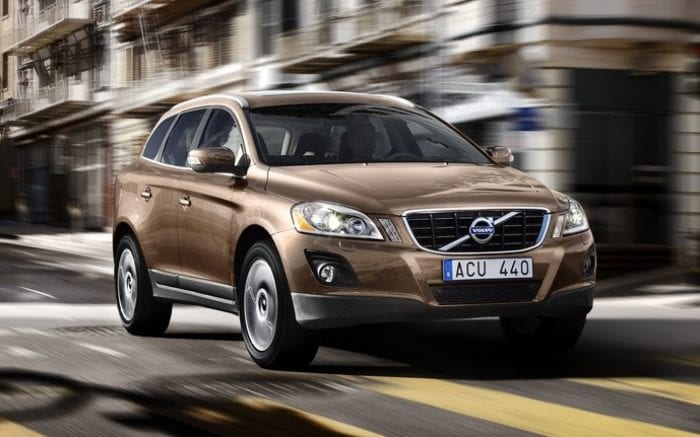
    Volvo Cars is recalling 54,000 U.S. vehicles for an airbag defect after one crash death tied to the issue, according to a filing with U.S. regulators. The unit of Geely Automotive is recalling 2001-2003 model S80 and S60 vehicles sold or registered in high humidity U.S. states because the driver side frontal air bag inflator may rupture, sending metal fragments flying, when the airbag is deployed.

    According to the Volvo filing with the government, Volvo will replace the inflators with a modern propellant and inflator. Parts are expected to be available by March.

    The National Highway Traffic Safety Administration (NHTSA) said Saturday it confirmed one person in the United States was killed when a ZF/TRW FG2 twin driver airbag inflator containing the propellant 5AT-148N exploded.

    The issue has been the subject of NHTSA and Volvo meetings since August 2019. The agency said the fatal incident was the only known rupture incident for this type of inflator around the world. NHTSA and Volvo are gathering and reviewing data about other vehicles with this inflator to determine if additional actions are needed, the U.S. agency said.

    Volvo did not immediately comment on Saturday. ZF Group said Saturday it was first notified by Volvo in August 2019 of the incident and it “promptly informed NHTSA and, together with Volvo, began investigating the incident.”

    ZF added it “will continue to work closely with NHTSA and Volvo on this issue.”

    NHTSA has investigated for years other airbag inflator ruptures. The largest automotive recall in history involves about 100 million inflators produced by another parts maker Takata that have been recalled by 19 major automakers worldwide and linked to 26 deaths.

  • Deloitte Ex-Partner Wants Appeal Heard

    Deloitte Ex-Partner Wants Appeal Heard

    A former star consultant of Deloitte in Switzerland is seeking to revive an appeal of his dismissal. He was let go last year amid accusations of bullying and expense irregularities.

    David Joseph, a Dutch-born forensics expert who was let go by Deloitte last year, wants a court to revive his challenge to his forced retirement, according to legal blog Law 360. A spokesman for Joseph couldn’t immediately be reached for comment.

    The case is noteworthy because it revealed the inner workings of a highly secretive, lucrative industry which has become indispensable to Swiss banks. Joseph reportedly earned Deloitte more than $200 million in fees as the point person for Credit Suisse’s efforts to cleanse itself of U.S. tax cheats from 2012 until relatively recently last year.

    Joseph was reportedly first cautioned back in 2015 for taking a belligerent attitude towards colleagues and acted entitled to expense reimbursements for top performers of his team. The consultant denied all of the accusations, arguing Deloitte had treated him unfairly and unjustly.

    He is now haggling in a British court over whether he asked Deloitte for a review of his dismissal too late. Joseph previously argued he couldn’t be physically present at the time due to illness, but had lodged a written memorandum listing his objections.

  • UnionPay Makes Waste Reduction Fashionable with Jay The Rabbit Collaboration

    UnionPay Makes Waste Reduction Fashionable with Jay The Rabbit Collaboration

    UnionPay, a global payment brand, collaborates with Jay The Rabbit, one of Thailand’s favorite cartoon characters with over 1 Million followers across social media platforms to produce re-usable bags aim at reducing one-time plastic bags usage.

    UnionPay Cardholders with a minimum spend of 1,500 Baht* can redeem a UnionPay x Jay The Rabbit canvas bag worth 899 Baht from now till 6 December 2020 at 10 participating department stores in Bangkok which include Central Chidlom, Central @ Central World, Central Ladprao, Central Bangna, Central Pinklao, Siam Paragon Department Store, The Emporium and EmQuartier, The Mall Bangkapi, and The Mall Bang Khae. There are over 4,000 bags to be redeemed. UnionPay X Jay The Rabbit on-ground activities will also take place at Central World on 14 & 15 November 2020.

    Huiming Cai, General Manager of UnionPay International Southeast Asia said, “We hope that these specially designed limited-edition re-usable bags enhance the shopping experience of consumers while raising awareness on reducing the usage of single-use plastic bags.”

    In Thailand, UnionPay partners Bangkok Bank, Bank of China, ICBC Bank, Kasikorn Bank, Kiatnakin Bank, Krungthai Bank, LH Bank and Krungthai Card Company to provide a wide array of payment products and services.