Tag: asia

  • BMW 4-Series Convertible Unveiled

    BMW 4-Series Convertible Unveiled

    The BMW 4-Series broke cover in June this year and was followed by the M4 earlier this month. Now, we get to see the 2021 convertible version of the BMW M4 which looks even sexier, and somehow the grille looks relatively better on the convertible as compared to the coupe of performance coupe from which it’s been carried over. This time around, the 2021 BMW M4 Convertible gets a soft-top which is 40 percent lighter compared to the hard-top in its predecessor. Now that has also liberated 34 liters more space in its boot at 255 liters and marginally more headroom as well.

    The roof can open or close within 18 seconds and at speeds of up to 50 kmph. The M440i also gets a remote key function for the roof as standard while it’s optional on the 430i. The top is finished in black as standard and you also have the option of a moonlight black top that has a metallic shimmer, which looks more stylish. Other than its marginally reduced height thanks to the soft top, the convertible measures equal to the coupe in other dimensions. Then, BMW has given it some updates to up its torsional rigidity like stiffer side skirts, an Aluminium shear panel at the front, and reinforced transmission tunnel, and a rigid rear floor plate. The engineers also put attention into extra noise reduction with a focus on the intake system, engine cover, and underbody.

    The engines are carried over from the 4 coupe range as well. The 430i gets a 2.0-liter, four-cylinder, turbocharged engine that belts out 252 bhp 400 Nm of peak torque. The rear-wheel-drive convertible clocks triple-digit speeds in 5.9 seconds while the top speed is limited at 209 kmph which can be further increased to 249 kmph. The range-topping M440i has a 3.0-liter, inline six-cylinder, turbocharged engine which is coupled with a 48-volt mild-hybrid system and it develops 377 bhp and 500 Nm. The rear-wheel-drive model clocks triple-digit speeds in 5.0 seconds while even here the top-speed is limited to 209 mph as standard while can be upgraded to 249 kmph. Both engines are mated to an eight-speed automatic transmission while the M440i also gets a M Sport rear differential as standard.

  • Banking-as-a-Service Startup to Expand in Singapore

    Banking-as-a-Service Startup to Expand in Singapore

    Singapore-headquartered fintech RootAnt has raised $1.46 million in a seed investment round, led by Linear Capital and co-investor KZM Group.

    The funds will be used for expansion in Singapore, the rest of Southeast Asia, and Japan, with an aim to provide both anchor corporates and SMEs with new and enhanced solutions on its platform, as well as R&D and the development of its multi-tier financing platform the startup announced on Thursday.

    RootAnt operates a cloud transaction banking engine and specializes in embedded financing for enterprises, connecting financial institutions with new tech solutions, data sources, enterprise systems, blockchain networks, and business partner platforms.

    The company said it is also planning to launch other financial solutions this year that will cover verticals such as SME finance, green finance, Islamic finance, and supply chain finance.

    The entry of digital-only banks into the market, along with increased challenges among SMEs to make payments while ensuring healthy liquidity has prompted a need for more innovative and relevant digital banking solutions has become a priority.

    We aim to address the financial challenges faced by businesses caused by COVID-19, and also to create avenues for business sustainability, growth, and continuity, Lincoln Yin, RootAnt CEO and founder, said about the seed funding.

    We aim to become a key player in this industry to continue supporting businesses with their financing demands as they recover from the impact of COVID-19, Yin added.

  • Wirecard Ordered to Cease Activities in Singapore

    Wirecard Ordered to Cease Activities in Singapore

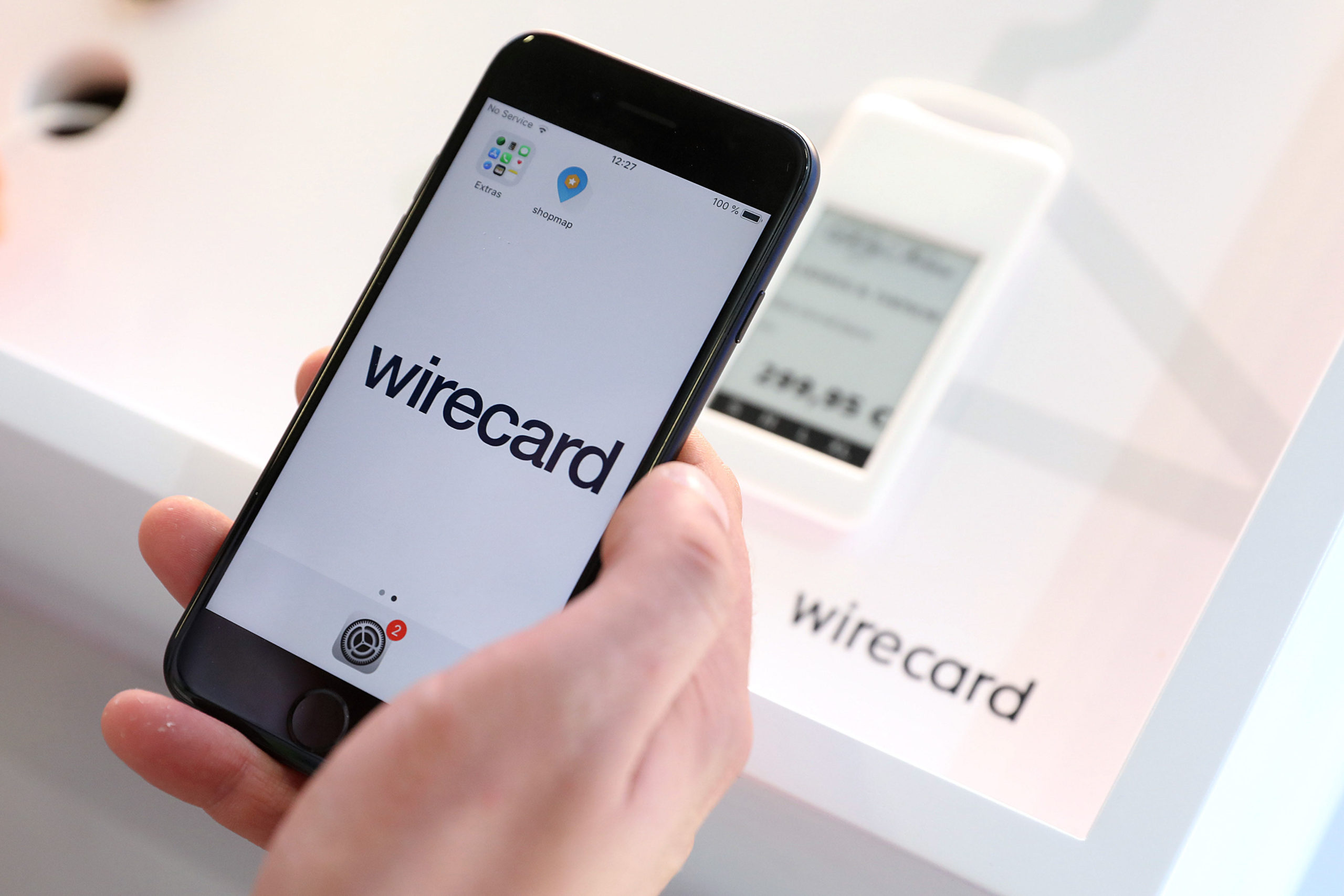
    The ability of its Singapore entities to continue providing payment services here has been affected, following its parent company’s insolvency filing in Germany.

    The Monetary Authority of Singapore (MAS) has ordered Wirecard Singapore to cease payment services in the country and to return all customers’ funds by 14 October 2020, the regulator said in an announcement on Wednesday.

    As a result, Credit card payments at merchants using Wirecard Singapore’s services, as well as usage of pre-paid cards issued by Wirecard Singapore, will be affected, and customers are advised to look for alternative service providers.

    MAS has assessed that it is in the interest of the public for Wirecard SG to cease its payments services and promptly return all customers’ funds. This provides the greatest certainty to customers on their appropriate course of action, including seeking alternative service providers, the announcement said.

    The firm is at the center of one of the region’s biggest corporate accounting scandals in recent years, having admitted that €1.9 billion is missing from its financial accounts. The firm’s CEO Markus Braun as well as other top executives have been arrested, while former operating chief Jan Marsalek remains missing.

    The collapsed German fintech’s sacked operating chief went to an extreme – and adventurous – lengths to bamboozle auditors, according to a German report.

    So far, one Singaporean has been indicted – a director of a local accounting firm that allegedly helped Wirecard falsify letters about the funds held in its escrow accounts.

  • Hong Kong retail sales fall again in August

    Hong Kong retail sales fall again in August

    Hong Kong retail sales plunged 13.1 percent year on year in August, as the coronavirus pandemic continued to batter the struggling sector, marking a 19th consecutive month of contraction. Consumer spending dropped to HK$25.6 billion (US$3.2 billion) in August, contributing to sales for the first eight months of the year falling 30 percent from the same stretch in 2019, according to provisional figures released by the Census and Statistics Department on Wednesday.

    The monthly year-on-year decline was not as steep as recorded recently, but that was mainly attributed to the data comparison with last August when the city was gripped by anti-government protests.

    “I hope everyone can understand that and won’t be misled by the figure,” said Annie Tse Yau On-yee, chairwoman of the Hong Kong Retail Management Association, adding this August’s slump reflected a serious situation for the industry.

    The total value of retail sales in the city between January and August this year was HK$213 billion, compared with HK$305 billion for the same period last year.

    Most retailers continued to suffer a contraction in sales in August, with supermarkets once again among the exceptions, a trend Tse linked with residents staying in to cook during the city’s third wave of Covid-19.

    All eyes are on how retail businesses perform between October 1 and October 4, which is traditionally a peak period for sales because of the National Day holidays, popularly known as “golden week”.

    Previously, millions of mainland Chinese would travel domestically and overseas during the break but would be kept away from Hong Kong this year by the city’s travel restrictions for the pandemic.

    Tse noted that sales might improve for those selling goods relating to people’s daily lives, such as furniture and food, due to the long weekend in Hong Kong overlapping with the Mid-Autumn Festival.

    “But everyone predicts it will help boost the footfall rather than sales. Maybe due to the ease of pandemic, then the foot traffic, in general, will be better… the sales will still remain weak,” she said.

    “The help for sectors which had continued to record a decline in sales would be minimal.”

    A government spokesman said as economic conditions remained under pressure and inbound tourism was unlikely to recover in the short term, the business environment would continue to be difficult.

    “Nonetheless, local consumption sentiment may further improve if the recent stabilization of the local epidemic situation sustains,” he said.

    After the third wave of infections intensified in July, evening dine-in services were banned in Hong Kong restaurants for nearly 1½ months, only reopening in late August. Most entertainment premises such as bars and karaoke lounges also remained closed in August, dampening consumer sentiment across the city.

    The ongoing global lockdown also played a role in subdued consumption, as tourist arrivals to the city collapsed 99.9 percent, with fewer than 4,500 people in August.

  • Celine pop up store in Shanghai at Plaza 66

    Celine pop up store in Shanghai at Plaza 66

    French luxury fashion brand CELINE has opened a new concept pop-up store in Shanghai at thePlaza 66 Mall. The store which has been entirely designed by Creative Director, Hedi Slimane, features women’s footwear, handbags and other leather accessories.

    There is also a selection of Celine’s fragrances. Even the furniture was personally designed by Hedi Slimane. CELINE is fully owned by LVMH, which is also the owner of Plaza 66 Mall, one of the most prestigious in China.

    CELINE new pop-up store in Shanghai at Plaza 66 Mall


  • Payments Platform PPRO Enters Indonesia

    Payments Platform PPRO Enters Indonesia

    The cross-border payments specialist is integrating e-wallet leaders Doku and Ovo into its global portfolio. The new integrations help to accelerate market entry and boost conversion for businesses hoping to tap on Southeast Asia’s largest e-commerce market, where credit card penetration is less than 5 percent of the population, the company said in an announcement.

    PPRO’s local payments platform-as-a-service provides partners with the ability to accept locally preferred payment methods through one contract and one API. Its integrations feature a total of four payment types: e-wallet, internet banking, bank transfers, and cash for consumers who prefer to pay at ATM and convenience stores.

    Indonesia is a strategic market for our top-tier customers and their merchants, who are being pressed to globalize faster than ever in the wake of the pandemic. Indonesia is also one of the world’s most complex regions regarding compliance, regulations, and consumer preferences, Kelvin Phua, PPRO global head of payment networks, said.

    Indonesia’s e-commerce market is set to grow 50 percent year-over-year to $35 billion in 2020, with many consumers using online shops for the first time this year due to the pandemic, PPRO said, citing a recent survey by management consulting company Redseer

    Founded in 2006, PPRO is backed by the likes of PayPal, Citi Ventures, and HPE Growth Capital. The company currently works with Alipay, WeChat Pay, GrabPay, Bancontact, iDEAL, BLIK, Boleto Bancario, and other local payment methods on its platform.

    In 2019, the company began its push to increase global coverage with the expansion of its Asia-Pacific (APAC) operations out of Singapore and partnered GrabPay to support its payments and e-commerce solutions in Singapore.

  • South Korean retail sales surged in August

    South Korean retail sales surged in August

    South Korea’s non-store retailers including online shopping and delivery operators raised a record 46.2 trillion won ($39.1 billion) in sales in the first six months of the year as consumers relied much on non-face-to-face businesses amid coronavirus fears.

    According to data from Korea Small Business Institute and Statistics Korea on Monday, non-store retail sales jumped 19.4 percent year over year to an all-time high of 46.2 trillion won in the January-June period. The amount was 13 percent more than the second half of last year and more than doubling 22.6 trillion won in the first half of 2015.

    It was the first time for the bi-annual amount of non-store sales to jump more than 7 trillion won on year from the previous six-month period. The previous record increase was 4.8 trillion won in the first half of last year.

    The rapid increase was largely attributed to the outbreak of COVID-19 as non-store retailers gained huge popularity for its convenience of being able to allow consumers to purchase goods without having to visit offline stores amid social-distancing measures to contain coronavirus. Many companies also advised employees to work from home.

    According to Woowa Brothers, the operator of the country’s largest food delivery app Baedal Minjok, the number of mobile orders jumped 176 percent on year in the January-June period. The surge has further accelerated during the coronavirus outbreak.

    Amid growing demand for non-store shopping due to the virus scare, retailers have turned aggressive in selling products via online and home shopping channels.

    As more people opt for non-store shopping, sales at department stores fell 13.4 percent on-year to 12.9 trillion won in the first six months of the year and those of specialty retailers 10.3 percent to 61.1 trillion won. Sales of duty-free stores especially plunged 37.1 percent during the cited period as board-crossing traveling was virtually impossible.

    Sales at large discount stores, supermarkets, and convenience stores increased in the first half of the year from a year ago but growth was smaller than those of non-store retailers.

    Large discount stores raised 16.2 trillion won in sales in the January-June period, up 1.1 percent from a year ago. Sales at convenience stores increased 2.8 percent to 12.7 trillion won and supermarkets 6.8 percent to 23.2 trillion won.

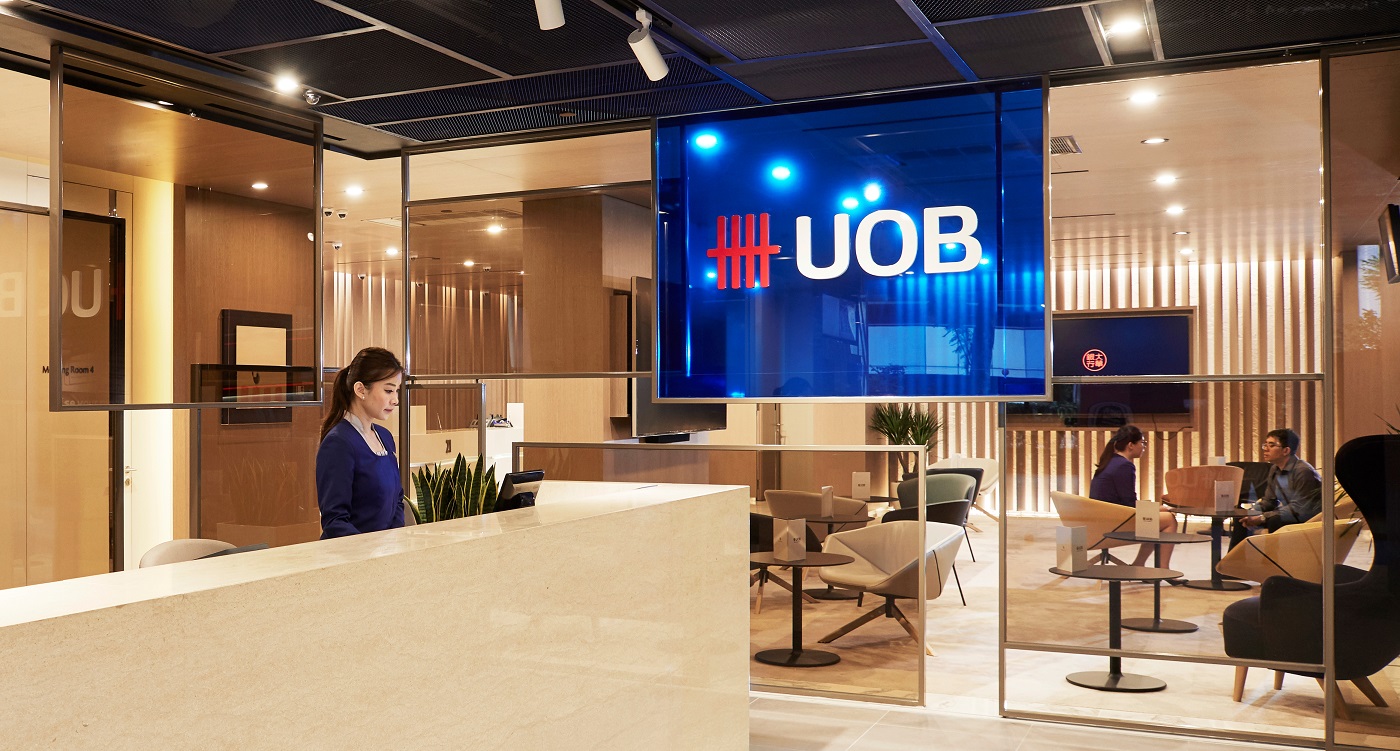
  • UOB Launches Platform for Corporate Clients

    UOB Launches Platform for Corporate Clients

    The new platform aims to transform the digital banking experience for corporate clients and manage their banking needs in a simpler, smarter, and more personalized manner.

    Customers will be able to manage a range of domestic and cross-border banking activities on UOB Infinity, which aims to streamline business banking by integrating features such as cash management and trade finance, as well as real-time payment receipt confirmation at the beneficiary bank and information on charges for the cross-border transaction, including those from the intermediary bank.

    In addition, its app allows clients to make a wide range of payments – from local bill payments to making domestic and cross-border fund transfers – through services such as PayNow, FAST, and telegraphic transfers.

    The platform will be rolled out across the region, beginning with Singapore, the bank said in an announcement on Wednesday. Users of BIBPlus, the bank’s existing business internet banking platform, can use Inifinity with the same credentials.

    The design of Inifinity, such as its customizable desktop, comes amid rising demand for personalized digital experiences and increased use of electronic payments for business transactions.

    The result is «an experience that is intuitive for corporate clients and enables them to access the financial intelligence they need quickly and easily,» So Lay Hua, UOB head of group transaction banking, group wholesale banking, said.

  • Android 11 update roadmap for Nokia smartphones leaks

    Android 11 update roadmap for Nokia smartphones leaks

    HMD Global did a little blunder recently when it decided to tweet the Android 11 update roadmap for Nokia smartphones and then delete it quickly afterward. That usually means that the company is not ready to commit to those dates highlighted in the document, so take the information with a grain of salt even if it comes through official channels.

    As many Nokia fans already know, HMD Global usually updates all its smartphones, regardless of the hardware inside. That being said, it’s no surprise that we’re seeing devices like Nokia 1 Plus and Nokia 1.3 on the list of devices eligible for an Android 11 upgrade.

    You can check the picture above to see when exactly your Nokia smartphone will receive Android 11, or you can read below if what’s in the image isn’t too clear for you. Just like every other year, HMD Global will push Android 11 in waves, so here is a quick rundown of the situation:

    • Nokia 2.2, Nokia 5.3, Nokia 8.1, Nokia 8.3 5G: Q4 2020 and early Q1 2021
    • Nokia 1.3, Nokia 2.3, Nokia 2.4, Nokia 3.4, Nokia 4.2: Q1 2021
    • Nokia 3.2, Nokia 6.2, Nokia 7.2: Q1-Q2 2021
    • Nokia 1 Plus, Nokia 9 PureView: Q2 2021

    Since HMD Global decided to take down the document maybe some of the estimates will be modified. Well, at least we have an idea of what to expect from the Finnish company when it comes to Android 11 updates.

  • Microsoft’s OneDrive updated with several new features for iOS 13 and 14 users

    Microsoft’s OneDrive updated with several new features for iOS 13 and 14 users

    The last time OneDrive for iOS was updated, the app received a couple of new features specifically designed for iOS 14. This time Microsoft is rolling out a slew of new features aimed at both iOS 13 and 14 users.

    First off, we have a brand new OneDrive widget available only for iOS 14 users. Then, there’s a new Home tab that should make it easier for OneDrive users to pick up where they left off. The new Home tab features a user’s Recent view for easy access to files, as well as an Offline Files section that lets you access and manages files already downloaded for offline access. The new Home tab is available now for all iOS users.

    Microsoft also revealed that OneDrive personal users will get On This Day featured at the top of the new Home tab. Finally, the update makes it easier for users of OneDrive at work or school to get their Shared Libraries from the Home tab.

    Besides the new features related to the Home tab, Microsoft made two improvements to OneDrive for iOS. Firstly, it fixed an issue with an unexpected dialog showing up when users would tap the widget to sign into a personal account. Secondly, it improved the widget to make it look even better.

    The new OneDrive for iOS 12.0.2 is already available for download via the App Store, so you might want to update your app to benefit from all these nifty improvements.

  • Firefox for Android to get some useful extensions soon

    Firefox for Android to get some useful extensions soon

    After Firefox for Android received a major redesign one month earlier, now Mozilla is working on improving the user experience on the mobile browser even more. The company is now going to add some welcome browser extensions, however, these are first coming to Firefox Nightly for testing.

    The company says that the new extensions will be available in the release version of Firefox for Android in November, that’s why they are currently being tested out on the browser’ Firefox Nightly version (used to be called Firefox Preview).

    The new extensions the mobile browser is getting include some quite useful features. The first one, called Video Background Play Fix will keep videos playing in the background when you switch to a new tab. The browser will also get Image Search Options, a tool that will help you dig deeper into web content and find images more easily.

    In the privacy department, the browser will get the extensions FoxyProxy, which is a proxy management tool, and Bitwared, a password manager tool.

    Keep in mind that these extensions are for now only available in Firefox Nightly (if you want to test them, you can install Firefox Nightly) and will be available in the official Firefox for Android in November.

  • Starbucks struggles to beat Vietnamese coffee chains

    Starbucks struggles to beat Vietnamese coffee chains

    Despite recording double-digit growth last year, the American coffee chain Starbucks remained in third place in revenues behind two local competitors.

    Its 2019 revenue of VND780 billion ($33.6 million), up 32 percent year-on-year, was behind market leader Highlands Coffee at VND2.2 trillion and The Coffee House at VND863 billion.

    This makes the international coffee shop chain rank third in revenues for the second year in a row after securing second place behind Highlands Coffee in 2017.

    It also stood in the third place in terms of growth rate behind Phuc Long’s 65 percent and Highlands Coffee’s 35 percent. Although Starbucks, the only foreign brand in Vietnam’s top five coffee chains, has been established in the country for seven years, the number of outlets in four localities (60) remains small compared to main competitors. Highlands Coffee has 336 outlets and The Coffee House has over 150.

    The number of outlets is less than one-fifth of its presence in other Southeast Asian markets. Starbucks Thailand has 336 outlets and Starbucks Indonesia more than 320. In terms of gross margin, Starbuck’s rate of 19 percent is smaller than 60-70 percent for Highlands Coffee and The Coffee House and 35 percent for Phuc Long.

    One of the reasons for the lower margin is that Starbucks sources its coffee from the U.S. to ensure the same quality globally, so its costs are higher than those making local procurements.

    The brand, however, is among a few that remain in the market even as several other foreign brands have left, including Australia-headquartered Gloria Jean’s Coffees and Singapore’s New York Dessert Coffee (NYDC).

    Another foreign brand, U.S.-based The Coffee Bean & Tea Leaf, saw revenues in Vietnam dropping 30 percent year-on-year to VND71 billion last year.

  • Singapore’s market undervalued because of the problems in 2020

    Singapore’s market undervalued because of the problems in 2020

    Financial experts have noted that because of the fact that Singapore did pretty badly in 2020 for various reasons, it is undervalued and a lot of people do not pay attention to it. Even though it has been a bad period for the Asian Tiger, it is a good idea to buy the market in Singapore.

    This trend was not typical for Singapore only, as China and North Korea also experienced the same very heavily amid the coronavirus pandemic. Singapore’s Straits Times Index is among Asia’s worst performing indexes by far in 2020. It is still down more than 21% year to date.

    Huge allocation of funds from the government

    About 8 billion Singapore dollars ($5.8 billion) to support the economy to overcome the consequences of the coronavirus was allocated by the Singapore government, Deputy Prime Minister and Finance Minister Heng Swee Keat declared that on August 17.

    The minister said in a televised address that as a result of the damage brought by the coronavirus, the economic consequences were serious. He also added that “the global economy remains very weak,” and the recovery “will depend on how well countries are at containing the spread of the virus.”

    Because of the crisis in the country, the Forex industry was also affected and forex trading brokers in Singapore expressed their fears about the upcoming period as well.

    The government has allocated an additional S $187 million (US $136.5 million) in assistance to the airline industry; it also provides cash payments to unemployed Singaporeans or those who have lost significant income, as well as workers with low wages.

    Meanwhile, the new measures also include S $20 million in “travel loans” to Singaporeans to encourage domestic tourism.

    The Southeast Asian country last week reported a 13.2% decline in its gross domestic product in the second quarter compared to the same period last year, the worst ever, according to official statistics.

    According to official figures, the Singapore government expects the economy to contract 5-7% this year, the worst recession on record.

    Economic growth contracted 41.2% due to the coronavirus pandemic.

    Singapore’s economy plunged into recession in the second quarter. Economic growth contracted 41.2% from the previous quarter, according to the BBC.

    According to local authorities, this recession is one of the worst in the country’s history since independence from Malaysia in 1965. One of the reasons is the coronavirus pandemic, which has affected business and trade in the city-country.

    Official data show that Singapore’s GDP contracted 12.6% in the second quarter over the previous year. Before that, there was a drop in GDP in the first quarter by 2.2%.

    The coronavirus pandemic has significantly impacted the country’s trade, especially its exporters. The construction industry is also experiencing record rates of decline.

    Singapore is not the only Asian country to experience serious economic problems due to the coronavirus pandemic. Japan’s GDP in the second quarter contracted by 20% compared to the previous period. But the data for China indicate its return to economic growth.

    In Singapore, the total number of coronavirus cases was more than 56,000. The death toll stands at 27.


  • Russian ride-hailing app makes Vietnam debut

    Russian ride-hailing app makes Vietnam debut

    Russia’s InDriver has become the latest entrant in Vietnam’s growing but fiercely competitive ride-hailing market, joining several foreign and domestic firms in the fray.

    Starting this month, the company is offering car and motorbike ride-hailing services in the central province of Thua Thien Hue, the southern city of Can Tho, and the northern city of Hai Phong.

    It now has 260 car and 300 motorbike driver-partners. The company currently does not charge any fee from drivers, allowing them to receive in full the amount that customers pay.

    The biggest difference between InDriver and other ride-hailing apps is its real-time deal feature, which allows customers to offer an initial fare for the ride and send it to nearby drivers, who have the option to either accept the fares or propose a higher one.

    While other companies automatically select drivers, InDriver allows customers to manually choose one based on their proximity, reviews and price offers.

    A company spokesperson said this feature goes against popular algorithms which automatically increase fares during peak and high-demand hours.

    InDriver has over 50 million users worldwide. Its main competitors in Vietnam are currently Singapore’s Grab, domestic player Be, and Indonesia’s Gojek.

    U.S.’s ABI Research estimates Grab dominates the Vietnamese market with a 73 percent share, followed by Be with 16 percent and Gojek with 10.3 percent.

    In July, domestic player GV Taxi became a new player in the ride-hailing market, aiming to have 8,000 partner drivers in six months.

    Vietnam’s ride-hailing market was the fourth largest in Southeast Asia last year behind Indonesia, Singapore, and Thailand, according to a report by Google.

  • HTC’s foldable smartphone is awkward rather than exciting

    HTC’s foldable smartphone is awkward rather than exciting

    Many companies have already jumped on the foldable phone bandwagon, but it may take years for the market to reach maturity. As such, the first companies to have their own foldable smartphones available on the market have a big advantage over those who didn’t have the courage or resources to come out with such products yet.

    Even though these foldable smartphones are still crazy expensive, there seems to be an audience for these. It remains to be seen how large this audience really is and whether or not foldable smartphones will become a thing, unlike 3D phones that disappeared very fast.

    After Samsung, Motorola, and Huawei, it looks like HTC is readying its own foldable smartphone. Although HTC’s foldable smartphone exists just on paper at the moment, the Taiwanese company seems to be interested in the concept.

    HTC filed a patent for a new foldable smartphone late last year. The patent was published back in August by the WIPO (World Intellectual Property Office) and judging from the sketches, HTC’s device doesn’t look too good. The technology behind it needs to be streamlined, that’s for sure.

    The hinge mechanism is the first weird thing noticeable in the pictures. It protrudes outwards and while it might offer an additional layer of sturdiness to the phone, it’s quite unpleasant for the eyes. But the biggest question mark is that HTC’s device folds outwards, so the display will always be on the outside.

    HTC’s foldable smartphone doesn’t seem to feature a secondary display like Motorola’s new RAZR, but because it folds outwards, it should allow users to operate the phone without having to open it, at least in theory.

    LetsGoDigital made a handful of renders based on the patent drawings filed by HTC, but the final device might not look like what we’re seeing in these images. It’s hard to say if HTC is still determined to launch its own foldable smartphone, but if it does, let’s hope it comes up with a better concept.