Tag: asia

  • Vinpearl loss triples as pandemic hits tourism

    Vinpearl loss triples as pandemic hits tourism

    Vinpearl Jsc, the hospitality and entertainment arm of conglomerate Vingroup, saw first-half losses triple year-on-year due to the impacts of the coronavirus pandemic.

    The operator of premium resorts and theme parks recorded a loss of nearly VND5.1 trillion ($220 million), up from VND1.69 trillion.

    Its debt to equity ratio rose to 22.57 at the end of H1 from 2.2 a year earlier.

    The rising loss and debts were the result of the pandemic crippling the tourism and hospitality industries in Vietnam since the first quarter.

    In March Vinpearl shut down some of its resorts and golf courses amid travel restrictions and dwindling demand.

    The company recently raised VND865 billion through three-year bonds. In 2018 and 2019 it had issued a total of VND14.3 trillion worth of bonds.

    The company operates 43 resorts and hotels nationwide with over 17,000 rooms, golf courses, theme parks, and a safari park.

  • Lotte seeks to carve TGI Friday’s out as part of restructuring excercise

    Lotte seeks to carve TGI Friday’s out as part of restructuring excercise

    Lotte is moving to divest its TGI Friday’s restaurant chain rights in South Korea as it restructures its business portfolio. Lotte will split the business and sell off shares to new investors, having already spun off the chain’s assets and debts. The group has been badly affected by the Covid-19 pandemic, with a sales drop equivalent to US$140.4 million during this year’s second financial quarter, 18.2 percent down from last year’s results. Of all Lotte GRS chains, only Lotteria seems to be making profits, according to observers in the industry.

    The groups’ flagship Lotte Shopping will close up to 120 physical outlets under various brands this year during its retail business restructure, while its online business continues to expand.

    “It is time for a self-scrutiny on our business practices so far, and CEOs must aware that the priority is streamlining their current business processes,” said Lotte Chairman Shin Dong-bin. “While doing so, companies should make greater efforts to make innovations in a long-term perspective.”

    Lotte has operated TGI Friday’s within the territory since 2002, opening venues within the group’s shopping malls. There are currently 21 outlets in operation, less than half that were running at the peak of its popularity back in 2013.

  • TikTok picks Oracle over Microsoft as possible candidate

    TikTok picks Oracle over Microsoft as possible candidate

    With Tuesday’s deadline forcing TikTok parent company ByteDance to divest itself of the short-form app’s U.S. operations or get banned in the states, Reuters reports that a group led by U.S. tech firm Oracle has been chosen by TikTok to buy the U.S. version of the very popular app for an undisclosed amount. Just before Oracle was announced as the winner of the contest, Microsoft said that it had been informed by ByteDance that TikTok would not be sold to the software giant. The company was originally the front runner in a deal that was estimated to be valued at $20 billion dollars and up.

    Walmart was also expected to be part of the Microsoft bid and it is unclear whether the retailer still has an interest in TikTok. In a statement announcing that it is bowing out of the battle for the U.S. operations of TikTok, Microsoft said, “We are confident our proposal would have been good for TikTok’s users while protecting national security interests. To do this, we would have made significant changes to ensure the service met the highest standards for security, privacy, online safety, and combatting disinformation, and we made these principles clear in our August statement. We look forward to seeing how the service evolves in these important areas.”

    TikTok, with over 2 billion installs worldwide, has 100 million monthly users in the states, up from 11 million in early 2018. The app, which has a large community of teenage users, shows community created videos of 15 or 60 seconds in length. Content includes lip-syncing, pranks, dancing, and more. During the pandemic, when teens and others were locked up in their homes, TikTok becomes even more popular than ever. And that popularity got the Trump administration worries that the Communist Chinese government could obtain personal information from TikTok users and send it to Beijing. ByteDance says that the U.S.operations of TikTok have only two servers in operation with one in the states and the other in Singapore. The next step requires the Committee on Foreign Investment in the U.S. (CFIUS) and the White House to get approval for the deal. People familiar with the transaction say that it should satisfy fears that some participants had about the security of data obtained by TikTok in the U.S.

    China almost threw a last-second issue into the deal when the Chinese government added new export restrictions that banned the U.S. from receiving certain information created by artificial intelligence. These algorithms are used to determine which videos TikTok users get to see and are considered the app’s “secret sauce’” they were believed to be part of the negotiations of the deal. President Trump announced an executive order back on August 6th, giving ByteDance 45 days to divest TikTok before demanding that its U.S. operations be banned. The White House considers the app to be a national security threat.

    Microsoft, as we mentioned earlier, was originally the front runner and had decided to take on Walmart as a partner. The original plan called for both to acquire TikTok’s operations in the U.S. along with those in Australia, Canada, and New Zealand. For the deal to close, ByteDance will need to get approval from both the U.S. and Chinese governments.

    This isn’t the first time that the U.S. government has gotten itself involved in a messy takeover battle involving China. In March 2018, the president blocked Singapore chipmaker Broadcom from purchasing Snapdragon chip designer Qualcomm for $117 billion. The U.S. was reportedly concerned that the deal would weaken Qualcomm thus giving power to the Chinese. A few months later, Qualcomm’s bid to acquire Dutch company NXP Semiconductors NV was blocked by Chinese antitrust regulators.

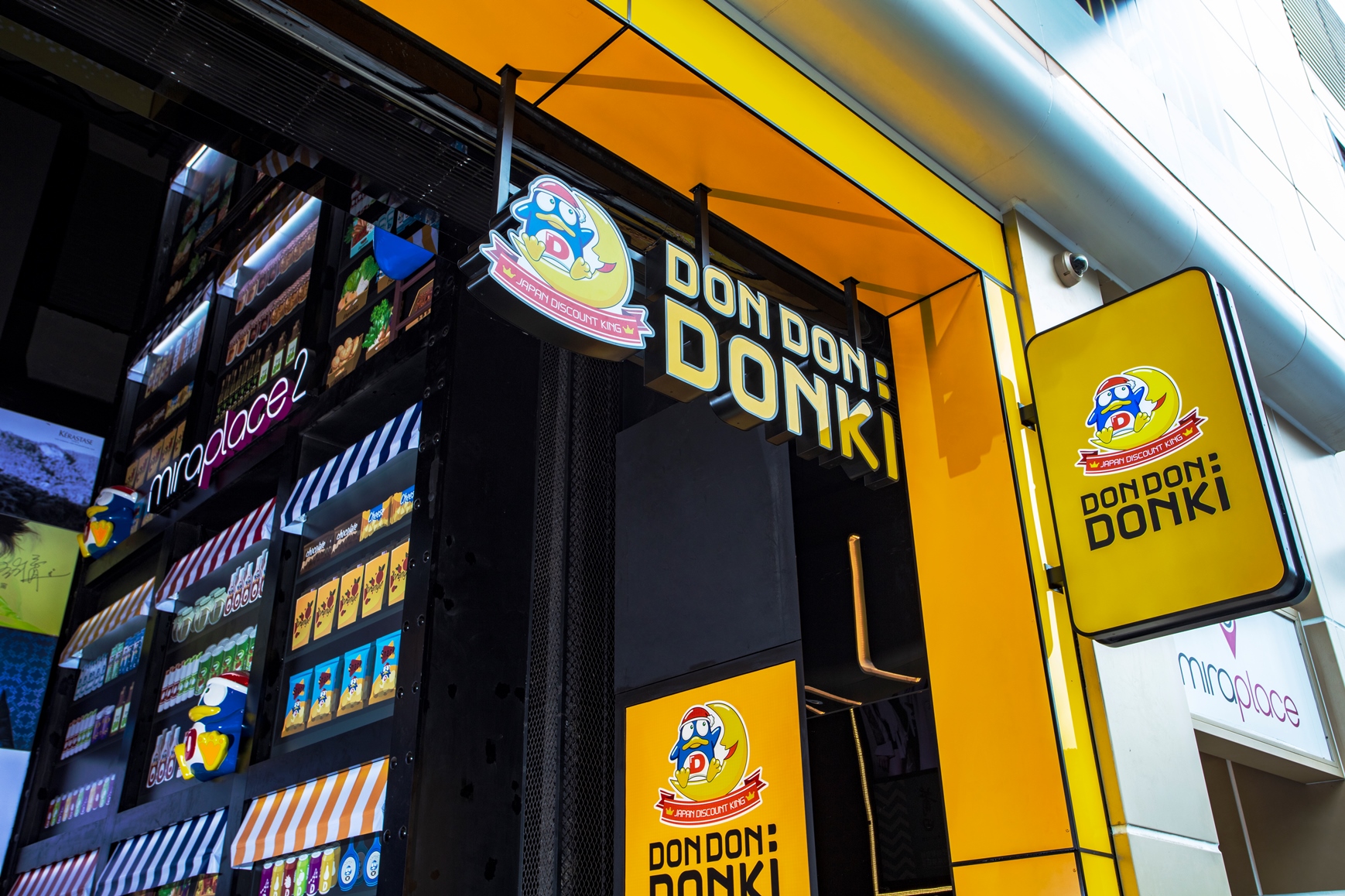
  • Don Don Donki lifting off in Taiwan

    Don Don Donki lifting off in Taiwan

    Japanese discount retailer Don Don Donki is set to make its debut in Taipei. As yet, the company has not revealed any details regarding the location or opening date, however, various sources have confirmed the store will trade 24-seven in the popular shopping destination of Ximendeng.

    New of the company’s Taiwanese debut spread quickly after advertising was spotted to recruit around 400 employees.

    With over 160 branches in Japan, Hong Kong, Singapore, Thailand, and Hawaii, this will be Don Don Donki’s first venture in Taiwan.

    Don Don Donki is a favorite destination for Taiwanese visitors to Japan. The discounter had previously launched a free international shipping promotion on its e-commerce platform last year, proving the brand’s appeal to Taiwanese fans.

    Meanwhile, Don Don Donki’s fifth Hong Kong outlet of the year is expected to open in Central next month in October. Its owner, Japanese group Pan Pacific, has been aggressively expanding within the Asian region in the past year, from Thailand to Malaysia.

  • YouTube Music introduces assistive playlists on Android and iOS

    YouTube Music introduces assistive playlists on Android and iOS

    YouTube Music has added a lot of new features and improvements in the last couple of months, but the most recent one is quite useful for those who’d like to listen to similar songs that made it their favorite playlists.

    As the title says, YouTube Music now features so-called “assistive playlists,” an easy way to provide users with suggestions of relevant songs based on playlist name, existing songs in the playlists, and listening history.

    Google’s algorithm will now know what music you like and suggests songs that are not on your playlists but you might like. The new feature offers up to seven suggestions when editing playlists, but you can add even more when you hit the Refresh button.

    If you missed any of the previous new features introduced by YouTube Music in recent months, here is a quick rundown of the most important ones. First off, we have collaborative playlists that let you create and modify playlists with other YouTube Music users.

    Then, there are the profile page playlists that allow you to browse other listener’s public music playlists and uploaded music videos from their profile page on the music streaming service.

    With the new “Mixed for You” section in the YouTube Music home feed, users can easily find playlists created by Google including Discover mix, New release mix, Your mix, and Liked songs playlists.

    Last but not least, YouTube Music has been improved with programmed mood and genre playlists for those who want to listen to specific tunes. All the new YouTube Music features are now available worldwide on Android and iOS devices.

  • Previous Starbucks executive taking over as Sephora CEO

    Previous Starbucks executive taking over as Sephora CEO

    LVMH has appointed ex Starbuck executive Martin Brok as president and CEO of Sephora. Brok will start his new role on Monday, succeeding Chris de la Puente. Chris will remain a member of the LVMH executive committee and “take on additional responsibilities at a later date.”

    Under Chris’ leadership, Sephora wholesales have tripled and achieved a strong omnichannel presence, according to the company.

    “The appointment of Martin Brok marks a new era for the company as a period of transformation begins for the beauty retail industry, in particular with the rise of online sales.”

    Brok had worked at Starbucks Corporation as president of Europe, the Middle East and Africa since 2016, after holding general management roles at Nike.

  • Tesla Launches Fast Electric Car Charging In Berlin

    Tesla Launches Fast Electric Car Charging In Berlin

    Managers at electric carmaker Tesla Inc on Thursday demonstrated new supercharger equipment on a Berlin research campus, saying they were looking at more target cities to attract potential buyers worried about access to charging.

    “Now, as part of our commitment to make Tesla ownership easy and convenient for everyone including those without immediate access to home or workplace charging, we are expanding out supercharging network into city centers,” said Jeroen van Tilburg, manager Europe of charging infrastructure at Tesla.

    A company spokesman told reporters Tesla would open at least one more inner-city fast-charging site in Germany in 2020, possibly more.

    He stressed that Tesla still believed in the slow workplace and residential charging as the main way to charge vehicles but wanted to offer a quicker option.

    The so-called V3 charger allows Tesla Model 3 cars to charge within five minutes enough to travel 120 kilometers (75 miles). Older Tesla models would receive relevant software upgrades. German policymakers aim to boost the demand for electric cars to cut emissions.

    “We have a lot to make up for in terms of charging infrastructure,” said Germany’s Economy Minister Peter Altmaier at the event.

    He reiterated pledges to speed the roll-out of public charging points and permits for private charging which had hampered sales in the past.

    The latest legislation for a green-led recovery after the coronavirus crisis offers buyers incentives and helps bump up power grids.

    Tesla has chosen a site near Berlin for a new factory due to start operating next year.

    Separately to the event, the Frankfurter Allgemeine Zeitung newspaper said on Thursday the factory had the potential to create 40,000 jobs, citing the economy minister of Brandenburg state.

  • Vietnamese publisher sues Lazada for allowing sales of pirated books

    Vietnamese publisher sues Lazada for allowing sales of pirated books

    Publisher First News has sued the e-commerce platform Lazada, charging it with repeatedly abetting the sales of pirated books and ignoring its warnings. The Ho Chi Minh City-based company announced on Wednesday that it had filed a suit in the District 1 People’s Court against the e-commerce company for allowing merchants to sell fake copies of its bestsellers.

    Its CEO, Nguyen Van Phuoc, said the issue had been raised with Lazada for the last 12 months by sending it documents and evidence of counterfeiting. But the subsidiary of the Chinese e-commerce giant Alibaba did not make any effort to stop the selling of the pirated books, and the issue had in fact worsened, he said.

    The fakes sold on Lazada cost half the original prices, and his company has received hundreds of complaint letters from customers about them, he said. Some of the fake titles include the self-help classic “How to Win Friends and Influence People” by American writer Dale Carnegie and the “Chicken Soup for the Soul” series.

    First News allows customers to trade their fake books for originals, but “we cannot keep doing that forever,” Phuoc said.

    Lazada Vietnam said in a statement on Wednesday that all merchants on its platform are required to comply with local laws and piracy would be punished according to the law. But it did not make any reference to First News’ allegations. In the suit, the publisher has demanded that Lazada remove all fake books and stop allowing their sale in the future.

    First News said last year 686 of its titles were counterfeited and sold on e-commerce platforms. It had organized two public events last year just to furnish evidence against book piracy. It has not revealed its losses due to piracy, but Phuoc said without it the company’s revenues could have been dozens of times higher in the last 15 years.

    First News was established in 1994, and has published or distributed over 2,000 titles so far. Vietnamese publishers have in recent years been grappling with widespread illegal reproduction of books. HCMC-based Tre Publishing House last year discovered a pirated version of its book, “Japanese For Everyone,” being sold on Tiki, a Vietnamese e-commerce platform. The website later suspended the account of the fake bookseller.

    Publishers lament that e-commerce platforms often deny their involvement in the selling of pirated books, claiming they are merely intermediaries who provide trading space and do not store the goods themselves. The Ministry of Industry and Trade requires e-commerce sites to remove all information related to counterfeit goods if they receive complaints backed by evidence.

  • Starbucks China opens first coffee outlet made of containers

    Starbucks China opens first coffee outlet made of containers

    Starbucks has just unveiled a new concept store in China created inside six repurposed shipping containers.

    An identical concept, created by Japanese architect Kengo Kuma, first appeared in Taiwan. As the 800th store in Shanghai, the Starbucks container store helped set a new record for the city – it has more Starbucks stores than any other city in the world.

    The cafe is located at Shanghai’s Wisdom Bay Science Innovation Park, on space which was formerly home to warehouses and container storage yards.

    Today, the area has been gentrified, converting abandoned cargo containers into office spaces as well has housed the nation’s first museum of 3D printing.

    Elements of the Silicon Valley-esque structure have also been replicated inside the store to create ‘cultural coffee experiences’, an art gallery and a wall installation art piece created by a 3D printer.

  • Apple’s patent application could fix a major problem with Siri

    Apple’s patent application could fix a major problem with Siri

    Some Apple iPhone users find themselves struggling with Siri. Besides some of the usual things that we’ve brought up in the past, such as Siri’s inability to understand the questions we’ve asked her, or the incorrect answers that she comes up with (especially when they are related to an inquiry about Apple devices-a category that she should know about), Siri also has a habit of activating accidentally. Last year, we told you that these accidental activations were more likely to occur on the Apple Watch and the HomePod smart speaker.

    According to a new patent application that Apple filed with the U.S. Patent and Trademark Office, the company is working on technology that will keep accidental Siri activations to a minimum. The patent application, titled “Attention Aware Virtual Assistant Dismissal,” uses criteria to determine how interested you are in receiving a response from the digital assistant. To do this, Siri could use cameras to check your gaze when calling out for the digital assistant.

    For example, if you’re looking exactly at your iPhone when calling out for Siri, the iPhone will realize that you did indeed mean to activate the digital assistant by using the “Hey Siri” hotword. At the same time, it increases the odds that you did mean to say “Hey Siri” and not “Tom and Jerry,” or “Very Hairy.” Some claim that the sound of a zipper opening causes Siri to accidentally open, but we’re not sure that the technology expressed in the patent application can determine the motive of a zipper.

    Besides staring at the phone when activating Siri, the length of the stare also plays a part in determining whether an iPhone user really wants help from Siri. For example, let’s say that you’re staring at your phone, execute the “Hey Siri” hotword, and then get distracted by someone before you give Siri a question or task to do. If the iPhone can determine that your intention was indeed to give your digital assistant a task, Siri could be told by the system not to deactivate so that you can give the assistant the task you want her to handle.

    Besides being annoying, accidental Siri activations can also negatively affect the battery running an iPhone. Siri will be more efficient if it deactivates when the user is not engaged with it, if it doesn’t deactivate while being used, or if a task has to be repeated because Siri was accidentally deactivated. Apple notes that by using Siri more quickly and efficiently, power usage is reduced and battery life is improved.

    Apple expressed this in the patent by saying, “Determining, based on data obtained using one or more sensors of the electronic device, whether one or more criteria representing expressed user disinterest are satisfied (and/or whether one or more criteria representing expressed user engagement are satisfied) allows determination of whether a user is engaged with a virtual assistant session. Knowing whether a user is engaged allows intelligent decision making about whether to deactivate the virtual assistant session.

    For example, if the user is not engaged, a device can deactivate the virtual assistant session to save battery and processing power. As another example, if the user is engaged, the device can forgo deactivating the virtual assistant session so the user can continue interacting with the virtual assistant session (and so the virtual assistant session does not deactivate while the user is still interacting with it). In this manner, the user-device interface is made more efficient which additionally, reduces power usage and improves the battery life of the device by enabling the user to use the device more quickly and efficiently.”

    Some will say that Siri has many more issues to work on. In iOS 14, Siri will take up much less of the screen when employed by a user and the assistant will be able to send voice messages. If the patent is approved, at least one annoying and inefficient tendency of Safari could be ended.


  • 7-Eleven Japan to start home delivery from stores

    7-Eleven Japan to start home delivery from stores

    Japanese convenience-store operator 7-Eleven is launching a home-delivery service from its outlets to meet continued demand sparked by the Covid-19 outbreak.

    The service will commence this year initially with 100 Tokyo stores, to be expanded to 1000 from next year. The service will take on other e-commerce operators in the territory such as Amazon with a 30-minutes target delivery time and by accepting late-night ordering, partnering with Seino Group to handle logistics.

    Tests of the service are already being conducted at 39 stores in the Tokyo area within a limited delivery radius. Observers say a full rollout of the service may depend on 7-Eleven’s ability to secure the necessary workforce at a time of labor shortage in the market.

    The news comes as the firm deals with what may be a growth ceiling on its 50,000-store network, while e-commerce continues to blossom in Japan.

  • UOB’s Private Equity Arm Achieves Impact Milestone

    UOB’s Private Equity Arm Achieves Impact Milestone

    The firm has also obtained verification from Ernst & Young for its Asia Impact Investment Fund’s alignment with the World Bank’s impact investing principles.

    UOB Venture Management (UOBVM) has issued its disclosure statement on the Operating Principles for Impact Management, becoming the first signatory of the Impact Principles in Southeast Asia to do so, the bank announced in a statement on Tuesday.

    UOBVM’s disclosure statement demonstrates how it upholds the Impact Principles through its impact investing strategy and approach, in particular for its Asia Impact Investment Fund (AIIF), ensuring that impact considerations are purposefully integrated into key stages of the investment process.

    Launched in 2015 together with Credit Suisse, the $55-million fund invests in high-growth companies from the education, healthcare, and agriculture sectors in Southeast Asia and China. It also focuses on investments that will help to improve financial inclusion, affordable housing, sanitation, clean energy, and water for the region’s low-income communities.

    The Impact Principles provide a clear market standard for investors looking to achieve social, economic or environmental impact alongside financial returns. With this disclosure statement and independent verification, UOBVM enters a new era of transparency for the benefit of impact investors, Nicolas Marquier, Singapore country manager of IFC, said.

    UOB has also opened its second impact fund for subscriptions. The fund has a target fund size range of $100 million and is expected to make equity investments of about $1 million to $15 million each, the announcement said.

    The need for impact investments is even more pressing now with the COVID-19 pandemic disproportionately impacting low-income communities in Asia and pushing more people below the poverty line, Seah Kian Wee, chief executive officer of UOBVM, said.

  • Crypto Finance Opens Singapore Branch

    Crypto Finance Opens Singapore Branch

    Swiss digital investment specialist Crypto Finance has opened a branch in the Lion City. The company sees itself as a provider of services to the banking industry.

    Crypto Finance’s representative office in Singapore opens this month and will be led by the head of Asia, Alisher Tashpulatov, according to a media release on Wednesday.

    Tashpulatov previously worked in the crypto fund business of the firm and was involved in getting a license from the Swiss regulator as a crypto wealth manager. He then opened its Hong Kong office. He is being backed up by the crypto finance team, which has several team members with Asian experience, for instance, CEO and founder Jan Brzezek.

    The Zurich-based group will serve the demand for digital asset products and services, and attempt to bridge the gap between traditional banks and the crypto market.

    I believe that the Singaporean and Swiss business environment and orientation share many characteristics, including respect for diverse cultures and a work ethic that values merit, excellence, self-reliance, and hard work. The two countries share a great rapport, and it is almost intuitive for us as a Swiss business to establish ourselves in a like-minded and innovative country like Singapore, Tashpulatov said.

    Having spent years conquering new frontiers and climbing new peaks within the Swiss market, I am now happy to make a transition into a new, yet familiar, land, he added.

    Crypto Finance’s current activities in Singapore are focused on the areas of business that do not require regulatory supervision, and the firm plans to launch best-fit models of its offering in other Asian business hubs in the near future.

  • Google Maps returns to the Apple Watch

    Google Maps returns to the Apple Watch

    Back in 2017, Google Maps no longer worked with the Apple Watch. The reason why Google pulled it from the Apple Watch reportedly had something to do with the app’s limited capabilities on the watch compared to the iPhone app. At the time that Google made this announcement, it promised that Maps would return to the Apple Watch. And that apparently is what is happening. After a new update, Google Maps is once again available for Apple Watch wearers providing them with directions and the estimated time of arrival.

    Users cannot input a new destination directly on the watch and Google directs wearers to enter a location using the phone app and then moving to Apple Watch. Using Google Maps on Apple Watch will allow those walking, driving, taking public transportation, or riding a bicycle from point “A” to point “B” to receive step-by-step directions and show the Estimated Time of Arrival. The primary screen on the Apple Watch shows the user’s current trip with travel times to other destinations such as work and home. Icons show when a turn needs to be made and also identify the current mode of transportation being used. Haptics help users know when they need to make a turn and there is a complication on the Apple Watch that shows the Google Maps icon and opens the app.

    Live Google Maps are not available on the Apple Watch (although live Apple Maps are). Version 5.5.2 of Google Maps is available for the Apple Watch through the App Store.

  • Bamboo Airways announces first ever Hanoi-Con Dao Island direct service

    Bamboo Airways announces first ever Hanoi-Con Dao Island direct service

    Bamboo Airways will launch the first-ever direct flight from Hanoi to Con Dao Island, a tourism hotspot off the southern Ba Ria-Vung Tau Province, on September 29. There will be two round trips daily.

    The airline will also begin daily flights to Con Dao from the northern port city of Hai Phong and central Vinh Town from September 29. It will use twin-engine Embraer jets with 120 seats on all three routes.

    Nguyen Ngoc Trong, deputy director of Bamboo Airways, said the airline would carry a maximum of 100 passengers on a flight to ensure safety amid the Covid-19 pandemic.

    Vietnam Air Services Company, commonly known as VASCO, a subsidiary of Vietnam Airlines, is the only airline currently operating regular flights to the island, flying from Ho Chi Minh City and the southern city of Can Tho.

    Con Dao has a 3C classification, meaning it can only receive ATR 72 and other similar aircraft. It closes at night since it lacks a runway lighting system.

    Property developer FLC, the parent company of Bamboo Airways, has sought to invest in a lighting system so that the airport could operate at night.

    Con Dao received 400,000 visitors last year.