Tag: asia

  • Stussy launching new store in Japan, Nagoya

    Stussy launching new store in Japan, Nagoya

    American fashion label Stussy has opened a new store in Nagoya, its 46th outlet in Japan.

    Located in Sakae, the store was designed by WP & A and offers Stussy’s full selection of apparel, accessories and footwear, including a limited-edition collection.

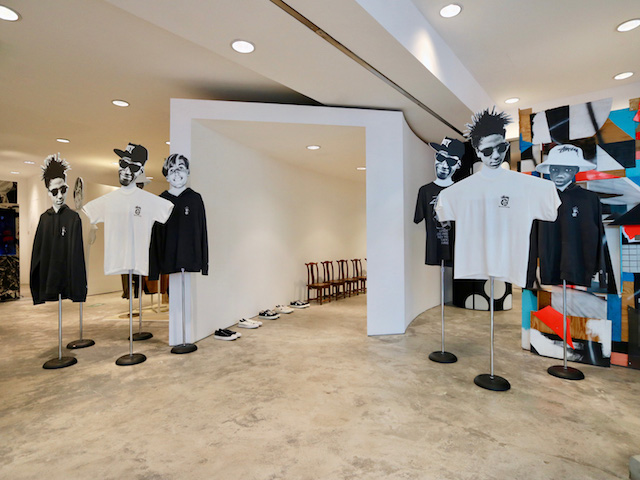
    The store facade features floor-to-ceiling windows with black frames. A small sign showing the brand name is installed at the corner of the store’s front – barely noticeable in images.

    The store interior features wooden and metal shelves together with wood sculptures. The walls are painted in a half-white, half-grey style while two rows of LED lighting are installed on the ceiling. Several greenery corners balance the design.

    Stussy operates more than 60 outlets across more than 10 regions including the US, Australia, Singapore and Taiwan.

  • Mastercard and Asian Development Bank build multi-stakeholder alliance to digitalize supply chains

    Mastercard and Asian Development Bank build multi-stakeholder alliance to digitalize supply chains

    Mastercard and its partners N-Frnds, SGeBIZ and Finastra have formed an alliance with the support of the Asian Development Bank (ADB) to create technology solutions to drive greater digital efficiency across the retail supply chain in Asia and increase wholesalers’ access to credit.

    “These unprecedented times underscore the importance of building an inclusive, sustainable digital economy, including through the application of technology to digitize trade, which can make it easier for small and medium-sized businesses to participate in global supply chains,” commented Michael Froman, Vice-Chairman and President, Strategic Growth for Mastercard. “Innovative partnerships like this one can support the agility and resilience of supply chains, accelerating access to finance and improving efficiency.”

    The global pandemic and accompanying economic impact have severely disrupted supply chains and trade networks, particularly for small and medium enterprises (SMEs) that account for 90% of all global businesses, employ about half of all workers and deliver more than half of GDP.

    The pandemic has also reduced control over cash flow and access to credit by SMEs. Even before COVID-19, the ADB estimated there was a $1.5 trillion funding gap in 2018, with smaller businesses most impacted. The International Chamber of Commerce estimates a potential $2 trillion to $5 trillion shortfall in trade financing through 2021 if demand returns to the global economy.

    As a result, it is vital for the public and private sectors to come together to enable a faster and more efficient shift towards digitalization for SMEs across global supply chains, trade and access to financing. Mastercard, in line with its broader commitment to bring 1 billion individuals and 50 million micro and small businesses into the digital economy, has responded by developing a collaborative market-leading solution with SGeBIZ, Finastra and N-Frnds. The program will start in Indonesia with 500 retailers and aims to build to 5,000 retailers by the end of Q1 2021.

    “COVID-19 has had an adverse impact on the global supply chain and these collaborative solutions are critical to ensuring grocery stores stay stocked, pharmacies have access to medicines and people can buy the daily goods they need,” said Safdar Khan, Divisional President, SEA Emerging Markets Mastercard. “Mastercard is proud to work with like-minded partners to integrate digital payments with the flow of commerce to deliver solutions for SMEs that help them navigate today’s environment and thrive in the future.”

    “ADB has been working closely with the Government of Indonesia in its efforts to alleviate the impact of the coronavirus disease (COVID-19) pandemic, including through the $1.5 billion financing approved in April 2020. Our partnership with Mastercard and its alliance partners in the pilot digital supply chain project will provide critical access to finance to affected MSMEs and immediate assistance to keep the food and essential goods supply chain running,” said Ahmed Saeed, Vice President for East Asia, Southeast Asia and the Pacific, Asian Development Bank.

    The results of the alliance are a technology solution that provides two key benefits:

    1. Wholesaler access to credit: Mastercard will leverage supply chain data from N-Frnds, SGeBIZ’s digital procure-2-pay platform and other sources to partner with Finastra and its Trade Bank customers to automate access to working capital finance.

    The collaboration will increase the digital data available to assess creditworthiness and create new models to evaluate it. Access to the resulting lines of credit will enable wholesalers to react more quickly to upcoming promotions, increase their inventory levels and build their businesses.

    “One of the most fundamental problems for SMEs and micro-businesses across Asia is access to finance,” said Simon Paris, CEO, Finastra. “Without credit, financially excluded businesses become caught in cycles that restrict their capacity to grow and leave them underprepared for the effects of market disruption. Technology is the enabler to tackle financial inclusion challenges. As part of this collaboration, we are able to drive change to bring positive outcomes, through digital transformation and innovative new lending pathways.”

    1. Fully digitalized marketing campaigns: Through integrating digital payments and supply chain data with promotions, FMCG trade spend can be allocated more efficiently with better visibility and inclusion of SME retailers.

    The alliance will leverage N-Frnds’ mobile solution – which optimizes logistics and operations by connecting FMCG companies with wholesalers for placing orders, coordinating deliveries and monitoring inventory levels – to better communicate upcoming promotional efforts between suppliers and wholesalers.

    “We are excited to join N-Frnds, our strategic partner for the last mile in this new initiative to digitalize and streamline trade financing and promotions in traditional markets. We believe that this new collaboration will enable us to lead the transformation of value chains in Indonesia, both by extending credit and ensuring that our promotional spend is significantly more effective and enjoyed by the four million grocery stores in Indonesia,” says Kadir Gunduz, President Director, Coca-Cola Amatil Indonesia.

  • Coronavirus made currencies go wild  – are you insured against sharp movements?

    Coronavirus made currencies go wild  – are you insured against sharp movements?

    COVID-19 has been the single biggest cause for the turbulency we have been witnessing in the markets over the past 7 months. We’ve had a catastrophic few days in March with several record-breaking day point drops, and since, we’re left with an uncertain future and difficult risk management. 

    The biggest issue is that we haven’t encountered social distancing and lockdowns in several generations, and some countries haven’t ever. Whilst most societies are finally getting to grips with controlling COVID-19, the business grants are running dry and we’re beginning to see a rise in unemployment.

    The US is a good example of the economic damage caused by COVID-19. In June, there were many reports suggesting unemployment is rising. These come at the same time that the $600 weekly supplement for jobless benefits came to an end. There were various signals pointing towards an imminent recession. Of course, it already had. In June, the US officially entered recession. 

    Whilst this was stipulated by experts to not be a normal downturn, and was a temporary issue regarding lockdown, it certainly didn’t help the US Dollar. The USD has been devaluing since May, in which it saw an accelerated drop mid-June against the Euro.

    Even in Asian countries where coronavirus has been much better contained, there are economic ramifications from social distancing. In the scenario of there being no direct recession, there’s still the matter of currency, which affects every country, and particularly the international businesses within it. This article will explore the dangers that Coronavirus is having on currency, and why it’s more than just devaluing that’s to worry about.

    Spike in retail investors causing havoc

    COVID-19 has brought on many unexpected economic implications, but one not many saw coming was the rising of retail investors. Research conducted by Paderborn University in Germany found that retail investors increased their activity by 13.9% for every doubling of active Coronavirus cases over a time period of several months – an odd correlation.

    Investors were found to be likely engaged in short selling, suggesting that the economic turbulence itself is what’s attractive to retail investors as they try to capitalise on large swings in prices. 

    Behavioural finance expert Dan Egan claims that there’s a rise in “entertainment investing”. Egan also claims that a lot of this money is what’s been saved from a reduction in spending over summer, with many stores and entertainment services closed or heavily restricted. In fact, the huge influx of retail investors in the Malaysian stock market actually helped recoup almost all of its 2020 losses. This is almost unheard of in a market that’s mostly dominated by investment banks and trading algorithms.

    This is also supplemented with easily accessible investing apps, which make Forex as simple as sports betting. In fact, without sports matches being played, this could be another factor in its popularity. Many Forex companies are offering sign up bonuses, referral schemes and social investing (automated copycat trading, like with eToro). This, whilst it’s a positive development, may cause more unpredictable behaviour in markets such as currency.

    We’ve even seen some of the biggest and most successful quantitative hedge funds struggle with the influx of retail investors. It’s possible that all of the new money and uneducated gambling has glitched the algorithms into making poor judgements. For example, Two Sigma, DE Shaw and RenTech, all of which are consistently successful, all saw losses during Easter on some of their funds.

    The Dollar and CNY Slides

    The short term gains that the US saw briefly in Easter were emotional, short-term dives into a safe haven currency. As time goes by and the long-term economic outlook begins to become more clear, which is one of political instability, vast government spending and rising unemployment, we quickly begin to see the USD slide. Whilst it continues to do so, the most noteworthy observation is its high volatility, along with other currencies. 

    Recently, the selldown has slowed somewhat due to lackluster Chinese economic data, meaning that some have switched back to buying US bonds. The Chinese Yuan is another currency that has been seeing a drop in price since May against the Euro.

    How this affects small businesses

    First and foremost, volatility in currencies affects international small businesses a great deal because of the lack of certainty. We can see the rise in companies dealing with international money transfers as good evidence for these unnerving currency developments, as small companies turn to hedging and cheaper rates offered by fintech alternatives. 

    Dealing in multiple currencies and having international suppliers means that the business is having to buy or convert currency regularly. If you only have a tight gross profit margin, this is being completely eaten into with currency swings. 

    For example, €10,000 worth of European headphones for your American business would have cost $10,752 in May. Today, it costs $11,850. This is over $1,000 more on one order within the space of a few months, and can seriously damage profit margins. After all, this is now 10% more expensive, which could be half of a 20% profit margin. 

    The second way it affects businesses is that if they mainly deal in the USD, they’re being hurt by the declining dollar. For international businesses outside of America, demand from Americans may be hurt as your different-currency services. For example a Spanish SaaS company is now relatively more expensive for USD clients. If goods or services for non-Americans are sold in USD, then the exchange back to base currency is going to be pricey.

    How hedging is saving many businesses

    COVID-19 may have already shook up the markets, but it’s far from the end of it. We’re in the dark regarding the extent of the upcoming volatility, which makes risk management as difficult as it can be.

    The best way to mitigate risk, is to insure against it. Hedging products allow for this in a variety of forms, and is likely why they’re becoming democratised into easily accessible platforms now (i.e. Money Transfer Companies, as mentioned earlier) – the demand is certainly there.

    For example, businesses operating in the USA that deal in EUR would have benefited greatly if they hedged the Euro back in May. Purchasing a forward contract would have meant they receive May’s price (a pre-agreed price based on today’s price) for the Euro for a specific date in the future. For that contract, they will have paid a fee far smaller than the eventual loss that’s been realised. 

    For businesses who aren’t sure which way the currency may swing and feel a Forward contract is, in that instance, merely another gamble, then Option contacts are a perfect replacement. With options, companies have the option of whether or not they want to execute the future transaction at the pre-agreed price, unlike Forward hedging which is a locked-in commitment. This caters to a highly volatile market which isn’t confidentially forecasted, as it’s there if you need it.

    Banks fail at meeting hedging demand

    Most highstreet banks fail to transparently offer hedging products to small business account holders. Many do not offer them at all, whilst others have been in trouble in recent years for mis-selling products. There are exceptions of course, and many banks will hedge for large corporations, but it’s not currently on their radar when it comes to meeting smaller contracts. 

    Even challenger banks, such as Starling, who are marketed as the fintech alternative to the outdated bank, still fail to offer hedging products. This is another reason behind the rise of  Money transfer companies, which have relished in meeting this demand with offering accessible FX services.

    The FX market for a long time catered only to large corporations. There were high minimum transfers, phone calls with brokers and long waiting times. Today, there’s an app – and that’s it. Whilst there’s many to choose from, Money Transfer apps are exceedingly easy to use and are partly responsible for this rise in retail investing. 

    Most have access to the interbanking rate, meaning that currency is offered at ultra competitive rates. This is enough, in this market, to attract users given the devaluing of many currencies. Within this umbrella term, there are specialists that offer hedging products, yet they keep the accessible, user friendly approach. Thus, it’s never been easier to hedge and protect against currency swings. 

    This is a surprise to many who rely on high street banks for all of their financial products: a mortgage, savings account, current account, business account, car loan and so on. There are benefits to using a centralised entity, but when they fail to offer even the most basic FX services, it’s only a matter of time that they’re entirely left behind for fintech alternatives.


  • Burger King unveils ‘touchless’ hamburger ordering concept

    Burger King unveils ‘touchless’ hamburger ordering concept

    Burger King has unveiled a new ‘touchless’ concept store, designed to meet the challenges of business during a pandemic and adapt to the future “new normal”.

    The US store features physically contactless experiences such as mobile ordering and curbside pick-up areas and drive-in and walk-up order areas.

    “In March our in-house design and tech team accelerated new restaurant design plans and pushed the limits of what a Burger King restaurant could be,” said Josh Kobza, COO at Restaurant Brands International.

    “We took into consideration how consumer behaviors are changing and how our guests will want to interact with our restaurants. The result is a new design concept that is attractive to guests and will allow our franchisees to maximize their return.”

    Designed in-house, the store is expected to provide multiple ordering and delivery modes and highlight a physical footprint 60-per-cent smaller than a traditional Burger King restaurant.

    A ‘drive-in’ service allows customers to park under canopies doubling as solar power harvesting panels and place orders by scanning a QR code from the Burger King app. For mobile and delivery orders, customers can pick up their orders at coded food lockers.

    To reduce its physical footprint, the store features a “suspended” kitchen and dining room located above the drive-thru lanes. Orders will be delivered from the suspended kitchen by a conveyor belt system, and each lane has its own pick-up spot.

    “The designs we’ve created completely integrate restaurant functionality and technology, said Rapha Abreu, global head of design at Restaurant Brands International. “We designed the interior and exterior spaces like we had a blank sheet of paper, designing without preconceived notions of how a Burger King restaurant should look.”

    Burger King’s first new design stores will be built next year in Miami, Latin America and the Caribbean.

  • Fintech firm NextPay seeks to raise $100 mln

    Fintech firm NextPay seeks to raise $100 mln

    E-payment company NextPay Holdings plans to raise up to $100 million in the first quarter next year via a private placement. Its CEO, Nguyen Huu Tuat, said that the company is looking for strategic foreign investors and would offer them a 20 percent stake, revealing that it is in talks with several investors from the U.S., Japan, South Korea, and China.

    Last year it had wanted to raise around $30 million from investors, but Tuat said the company has jettisoned the plan and instead now seeks to make a $100 million IPO in 2022 on the Ho Chi Minh City Stock Exchange.

    The company provides mobile points of sale devices and an app for cashless payment. It has 70,000 merchants in Vietnam and aims to increase the number to 300,000 by 2023.

    NextPay allows a customer to pay by a variety of methods such as card, contactless, and QR code by providing a merchant with a pocket-size mobile point of sale device which connects with a smartphone.

    Vietnam is seeing increasing competition in the fintech market as the government seeks to promote cashless payment.MoMo, the most popular e-wallet in the country, last year reportedly raised $100 million from U.S. private equity firm Warburg Pincus following previous investments of $25 million by Standard Chartered and $3 million by Goldman Sachs.

    Vietnam’s fintech market was valued at $4.4 billion in 2017 and is estimated to reach $7.8 billion in 2020, according to market research firm Solidiance.

  • Vietnam advised to restart nuclear energy program

    Vietnam advised to restart nuclear energy program

    With its energy deficit rising every year, several experts are advising Vietnam to reconsider the shelved nuclear power program. Nuclear energy is one of the recommendations made by experts as the Industry and Trade Ministry (MoIT) gathers public inputs for its 2021-2030 National Energy Master Plan.

    Tran Xuan Hoa, Chairman of the Vietnam Mining Technology Association, said that as Vietnam’s net energy imports continue to rise, it is getting harder and harder to find sources that would allow the country to access stable energy sources to meet its socio-economic development goals.

    A restart of the nuclear development program should be included in the national master plan, he said, adding that compared to other types of energy currently available, nuclear energy was “still relatively safer and low-priced”.

    This is the first time that Vietnam is working on a comprehensive national energy master plan. Prior to this, energy plans were made on a piecemeal basis, that is, for each individual energy sector.

    Hoa said Vietnam had in 2016 approved a nuclear power development plan which would build two plants with a designed capacity of 4,000 MW per year in the southern province of Ninh Thuan. Work on the plants was set to start the same year.

    However, in November 2016, the National Assembly decided to suspend all nuclear development until 2030, saying it wanted to allocate capital for coal and gas, modernizing infrastructure to boost socio-economic development and adapting to climate change.

    Nuclear energy is mentioned in the draft master plan released for receiving feedback, but it envisages the development of this energy to begin after 2035. The draft envisages national nuclear power capacity reaching 1,000 MW by 2040 and 5,000 MW by 2045.

    “We have halted nuclear production for many reasons, but a restart should now be considered. Unfortunately, in the short term, the national energy plan has not mentioned anything about nuclear development,” Hoa said.

    Nguyen Anh Duc of the MoIT’s Institute of Petroleum said tapping alternative sources of energy should be a key consideration as coal, oil and gas reserves get depleted.

    Since 2015, Vietnam has shifted from being a net exporter to a net importer of energy. Imports of coal, and oil and gas, two sources of raw materials that account for a major proportion of the country’s primary energy supply, have been rising steadily during this period, an MoIT report has said.

    While Vietnam targets extraction of 50-56 million tons of coal per year, the Vietnam National Coal and Mineral Industries Group (TKV) has only been able to achieve 45 million tons per year as it is having to dig deeper and deeper to access the mineral. The rest is imported to ensure sufficient supply for electricity development, consumption, and production needs.

    Vietnam has spent around $2.6 billion on importing 36.5 million tons of coal in the first seven months of this year, up 50 percent in volume year-on-year, according to Vietnam Customs.

    As for gas, currently most 2020 targets have been met or exceeded, save for liquefied petroleum gas (LPG) production, at only 50 percent; while processing, storage and distribution providers have only been able to meet 25 percent of the country’s petrochemical processing demand this year, Duc said.

    Production is currently at around 9-10 billion cubic meters, but this is expected to decrease after 2023 when output declines at most oil and gas fields being exploited now.

    To resolve this, the government needs to find ways to ease bottlenecks for investment in gas exploitation. “Procedures, legal corridors, and policy mechanisms for the oil and gas sub-sector need to be set out in detail in this comprehensive energy plan to attract investment in exploration in deep and remote waters,” Duc said.

    Vietnam will have to import 1-4 billion cubic meters of liquefied natural gas a year in 2021-2025 to meet growing power demand, the MoIT assessed in a report released last year.

    Hoa said that two years ago, the solar power feed-in-tariff (FIT) was very attractive at a fixed 9.35 cents a kWh. Now, it has decreased to 7.09-8.38 cents per kWh, depending on the type of investment. Given falling renewable energy prices, the national master plan should promote the development of this type of energy over others, he added.

    Data released by national utility Vietnam Electricity (EVN) shows that as of June-end this year, 5,482 MW of solar power capacity had been installed, accounting for 9.5 percent of the country’s power sources. By mid-August, there were nearly 45,300 rooftop solar power projects operating with a total capacity of 1,029 MWp, an output of about 500,692 MWh.

    According to Tai Anh, Deputy General Director of EVN, as long as renewable energy accounts for less than 20 percent of national capacity, the power grid will not need additional investment.

    But if it does, then the system will require many new solutions such as additional storage batteries to maintain balance, and money would have to be set aside to deal with environmental impacts when renewable energy machinery expires, inflating costs, he said.

    “If Vietnam wants to raise its renewable energy capacity, how much we can afford to subsidize and how much the economy can withstand are factors needed to be considered carefully before making an appropriate choice,” he said.

    Dr. Nguyen Ngoc Hung of the MoIT’s Institute of Energy said Vietnam’s new comprehensive national energy plan also needs to set up clear incentivizing mechanisms, especially in terms of energy prices, if the country wants to attract private sector investment.

    “Most businesses dare not invest in coal mines, deeming the risks too great,” he said.

    Nguyen Thuong Lang of the MoIT’s Institute of Commerce said energy prices are set by the Ministry of Finance, and unless businesses are allowed to set prices according to market forces, it would be very difficult to make effective feasibility appraisals of potential energy projects.

    So far, no market price mechanism has been mentioned in the MoIT’s draft energy master plan, he noted. Lang said that the roles of the state and the private sector will have to be redefined and the market allowed to decide prices, which will be more efficient. As Vietnam’s economy transforms rapidly, prices should be allowed to match changes in the country’s economic structure, he added.

    Pointing to the fact that no truly large-scale energy project has been started in the last five years, Hoa said that the reason why businesses do not dare to invest is the lack of a market mechanism, with many energy sectors still having prices set by the Ministry of Finance.

    “Therefore, it is necessary to get the energy sub-sectors to coordinate with the Government, localities and enterprises to resolve this issue,” Hoa said.

    Deputy Prime Minister Trinh Dinh Dung had said at the Vietnam Energy Summit 2020 in July that Vietnam needs another 5,000 MW in power plant capacity by 2025, which will cost it around $7-10 billion each year.

    Vietnam currently relies largely on hydropower and thermal power for its electricity needs, but its hydropower potential is almost fully exploited and oil and gas reserves are running low.

    Coal-powered plants accounted for 36.1 percent of electricity supply last year, followed by hydropower at 30.8 percent, according to the Vietnam Energy Association.

    The MoIT plans to incorporate feedback on the draft National Energy Master Plan and submit its final version to the Government by the end of this year.
  • Uniqlo piping up to open Macau’s largest store ever

    Uniqlo piping up to open Macau’s largest store ever

    Japanese clothing retailer Uniqlo is to open its biggest Macau outlet this month.

    Located at ‘Yellow House’ commercial building near the Ruins of St Paul’s, it is the first store in Macau to feature the UTme! design-your-own T-shirt service. The brand will collaborate with local artists to launch UTme! designs that feature local elements.

    According to the company, the new Macau store will occupy a 1772sqm area and span five stories. The store also houses an exhibition area where community events will take place.

    The Uniqlo Yellow House store is the second store in the city after the Uniqlo The Venetian store in Cotai. The new shop is scheduled to launch on September 30 after the opening was previously postponed due to the Covid-19 pandemic.

  • Deliveroo Supports Riders With New Riders Forum, a First-of-its-Kind Initiative for Any Hong Kong Food Delivery App

    Deliveroo Supports Riders With New Riders Forum, a First-of-its-Kind Initiative for Any Hong Kong Food Delivery App

    Dedicated to listening to rider feedback, and providing a collaborative working environment to deliver more to its riders, Deliveroo today announced the launch of it’s first-ever Hong Kong Riders Forum, an initiative set to take place quarterly with Hong Kong General Manager and the operation Team.

    Since the outbreak of COVID-19, many Hong Kongers have had to cope with job losses across the city, with the current unemployment rate hitting over 6% since April this year. As many struggle to find new ways to make an income, Deliveroo is hard at work to make room amongst its fleet and help offset the rising numbers of unemployed Hong Kongers. Deliveroo has received over 35,000 rider applications in the first half of 2020 – up more than 100% from application numbers in H1 2019. As COVID-19 continues to impact businesses and day-to-day life in the city, rider applications have continued to grow. Deliveroo’s rider onboarding strategy is designed to match estimated growth in demand to rider numbers, to ensure protection of riders’ earnings. Since January, Deliveroo has added over 3,000 riders taking the firm’s total rider fleet from 4,000 in December 2019 to more than 7,000 today.

    With the increase in rider fleet, Deliveroo is dedicated to exploring new ways of listening and communicating with their riders. Being held for the first time in late August, the 2 hour-long Riders Forum was held virtually due to COVID-19, and focused on providing Deliveroo Riders with a space to voice their opinions directly. Throughout the session, riders asked questions about the company and their concerns on their overall delivery experience, provided feedback, as well as the general sentiments of the fleet as they see it, to the company. Issues discussed include orders assignment, restaurant wait time, support given by rider operations and the customer service team, and Deliveroo expansion plan in Hong Kong. Deliveroo’s Rider Forum is the first of its kind among the city’s food delivery apps, a testament to Deliveroo’s commitment to actively engaging with riders and providing a progressive working environment.

    To ensure diversity among the participants in The Riders Forum, Deliveroo has chosen 15 riders who expressed interest in participating in the event. Gathering input from a broad scope of riders and walkers across a range of districts, whether they drive a motorcycle, ride a bike or walk to deliver meals, Deliveroo is committed to hearing from a vast amount of voices. Participants will have the opportunity to discuss issues currently facing the fleet, how to foster stronger communication, and how the overall delivery experience can be improved. After each forum is completed, the discussion notes will then be communicated to the wider fleet of Deliveroo riders. According to the latest monthly rider survey, over 70% of Deliveroo riders are satisfied with how they are able to choose where and when to work with Deliveroo. Deliveroo will continue to make an effort to understand riders’ needs and concerns.

    The Riders Forum initiative is part of Deliveroo’s ongoing commitment to providing new enriching programs that provide support for its riders, which have included first aid training from the Red Cross, and with over 60 riders to be trained later this year. Additionally, Deliveroo has provided its riders with a further fuel discount of ~20%  in partnership with Shell, at all Hong Kong gas stations (aside from Hong Kong Airport), as well as offering special medical benefits to riders and their families through the virtual insurer Bowtie. Earlier this year, Deliveroo launched the Deliveroo Rider Academy, a virtual online learning space with over 700 courses to help upskill riders and their family members.

    Brian Lo, General Manager of Deliveroo Hong Kong, said, “The purpose of the Deliveroo Riders Forum is to allow our riders to share their ideas and experiences directly with me, and the rest of our Deliveroo team, and make appropriate strategic and technical adjustments based on what we hear from our riders. That’s why we’ve taken the steps to introduce an initiative that is the first of its kind in Hong Kong’s food delivery industry. We’re proud to offer some buffers for those who have lost their jobs and are in need of earnings to make a living during their transition period, and to hear from both them and our veteran riders.

    We are always looking for new ways to improve our riders’ engagement, and so, we felt that the best way to do so was to provide them with an engaging and open space. The Deliveroo Riders Forum has been set up to be a place where riders’ voices are not only heard but also empowered. We want our riders to know that we support them and that everyone’s voice counts. I’m looking forward to being a part of this new initiative to regularly meet our rider partners and finding practical ways to incorporate rider feedback into our overarching strategy.”

    Jacky Yan, a Deliveroo cyclist who joined in late February this year and attended the first Riders Forum, said, “I lost my previous job as a buyer for a UK supermarket chain because of COVID-19, but I was able to apply Deliveroo to be a walker (and then became a cyclist later) and earn a living. When Deliveroo informed us that they’d be launching The Rider’s Forum, I was pretty eager to participate in the programme, as I felt it’d be a great opportunity to have my voice heard. While working on your own may come with perks, such as more independence and a flexible schedule, it can also be nice to connect with the management to bounce ideas off each other. The conversation during the first session was very useful covering off the questions we have in mind about the platform’s operations and future plan. I have just started a new full time job last week but I will still be a cyclist delivering Deliveroo orders during weekends or evening time if my schedule allows.”


  • Dh200 airfare to fly Dubai-Manila with Cebu Pacific in September offer

    Dh200 airfare to fly Dubai-Manila with Cebu Pacific in September offer

    At a base fare of Dh200 from Dubai to Manila, the Philippines’ no-frills carrier Cebu Pacific has unveiled a week-long airfare discount blitz on Tuesday (September 1, 2020).

    The move is aimed to boost demand and post-COVID-19 confidence among flyers, especially overseas Filipino workers and their families in the UAE.

    The quoted discounted fare is valid for one-way travel only, inclusive of base fare. It also does not include taxes and fees, “web administration fee”, and fuel surcharge.

    The carrier is known for its “Piso” fare (1-peso, $0.021) offers. But, with the lingering threat from COVID-19, it remains to be seen whether such price-drops would indeed translate to a post-recovery spike in travel demand.

    The airline has also stated that promo fares offered are limited and are non-refundable — but rebookable subject to fees and charges.

    Flight changes, availing of prepaid baggage allowance for check-in baggage and web check-in service can also be done up to 4 hours before scheduled flight. International fare is on a book and buy basis, according to the airline.

    The Philippine economy, like the rest of the world, is reeling from the coronavirus pandemic. Up to 3,000 companies reportedly went bust in the last seven months.

    Quarantine measures remain in place for travelers as the Philippines reported 224,000 COVID-19 infections, with 158,000 recoveries and 3,597 deaths as of September 1, 2020.

  • Alternative payments move mainstream in India

    Alternative payments move mainstream in India

    Alternative payments have moved mainstream in India amid Covid-19, according to GlobalData.

    Payment platforms such as mobile and digital wallets have gained popularity among online shoppers, gradually replacing traditional payments during the pandemic.

    “The adoption of alternative payments has been on the rise since demonetization in 2016,” said Ravi Sharma, lead banking and payments analyst at GlobalData. “The recent Covid-19 outbreak has further accelerated the usage of alternative payments as consumers are increasingly using electronic payments to avoid exposing themselves to disease vectors while merchants are also insisting on the digital mode of payments.”

    GlobalData’s 2020 Banking & Payments Survey found that the share of alternative payments in online transactions in India stands at 54 percent this year, followed by payment cards and cash, which accounted for 30.1 percent and 8.1 percent, respectively.

    Google Pay has been one of the beneficiaries with 9.3 percent share in the e-commerce payments, a significant surge from 3.5 percent share last year.

    “While alternative payment tools were initially available for online payments, they are now being used for in-store payments as well,” Sharma said.

    “With merchants increasingly opting for QR code-based payments due to their cost-effectiveness, alternative payments will disrupt the country’s overall consumer payments space in a big way.”

  • Net New Money Surges at DBS Private Bank

    Net New Money Surges at DBS Private Bank

    DBS’s private banking arm saw net new money inflows surge in the first half of 2020 driven by a diversified range of client segments.

    Net new money inflows surged by 170 percent in the first half for DBS Private Bank which saw assets under management (AUM) climb 9 percent in the same period, according to a report.

    Our business has really gone up to higher than pre-Covid times, said Joseph Poon, group head of the private bank, noting that it was on course to register 7-8 percent AUM growth this year. The rebound has been very strong. We hope we’ll see this growth maintained all the way to the end of the year.

    Although DBS does not break down absolute figures, its private banking business is part of its broader wealth management unit which saw AUMs rise 7 percent year-on-year to S$251 billion ($184 billion).

    The bank has benefited from its traditional markets in the ASEAN or Greater China region and is eyeing further expansion specifically in the Philippines and Thailand where wealthy families are keen on diversification. In the latter market, Poon noted that the bank was on track to double AUM to reach $5.86 billion by 2023.

    Outside of Asia, DBS Private Bank also saw inflows from western markets, especially from family offices looking to establish a presence in Singapore.

    European and U.S. family offices see Singapore as a lighthouse from which they can see the rest of Asia, whether for financial market investments or actual businesses they may want to invest in or partner with, Poon said.

    On investments, the bank is currently advising clients take a barbell approach to focus on growth and income. The «DBS CIO Barbell Portfolio» strategy covers over 50 securities and the bank is also offering a structured note tracking its performance which has delivered net returns of 11 percent, outperforming its benchmark by around 6 percent.

    Also gaining traction at DBS is sustainable investing where the bank has adopted MSCI ESG ratings for the portfolios of its wealth management clients. The bank also created a structured product to provide exposure to the theme and the ESG MSCI Asia Outperformance Note has generated an average alpha of 12.2 percent since its inception in 2018.

    And should Asian investors seek to add exposure to such themes, ample cash holdings await them as DBS saw clients boost allocations to 40 percent during the crisis, up from the traditional 30 percent allocation.

    According to Poon, clients are increasingly cash allocations not only in anticipation of distressed asset opportunities but also to boost liquidity in case of urgent business needs, especially given the high share of entrepreneurs amongst the region’s high net worth individuals.

  • New feature for Google Assistant borrows heavily from Siri

    New feature for Google Assistant borrows heavily from Siri

    Siri Shortcuts is a feature that allows you to create a shortcut to activate certain actions with specific apps.. Here’s a good example. Let’s say that you are totally frustrated with Siri. What you can do is download the Google Assistant app for iOS, found in the App Store. However, if you’ve moved from an Android phone to an iPhone, you might be appalled to discover that you can’t activate Google Assistant by saying a hotword unless you use Siri Shortcut.

    For example, you can set up Siri Shortcut to activate Google Assistant by stating “Hey Siri, O.K. Google.” Sure, it sounds crazy and someone overhearing the command might try to have you committed to Bellevue. But when you break it down, you’re simply activating Siri and then giving Siri the “O.K. Google” verbal shortcut that opens up Google Assistant. Now, Google is said to be working on its own shortcuts feature for Google Assistant that is very similar to Siri Shortcuts.

    For example, if you have Twitter installed on your Android phone you can go into Shortcuts and create a shortcut. When you’re ready to create a new Tweet, say “O.K. Google, new tweet” to start composing. Similarly, you’ll be able to say, “O.K. Google, new Gmail” to create a new email in the Gmail app. Shortcuts also appear in your Assistant Routines menu where you can edit them using a different UI.

    For Android users to take advantage of Assistant Shortcuts, developers will have to improve the functionality of their apps. For example, Shortcuts currently cannot be chained together and they can only get you to a specific screen on an app. Neowin points out that while you can’t open a specific keyword on Instagram, you can open the Explore Tab on the app.

    The new Assistant Shortcuts is rolling out as a server-side update. You can see if you have it on your phone by going to Assistant Settings. There, you can find the aforementioned Assistant Routines menu where Shortcuts can also be found.

  • Yata to launch convenience-store concept in Hong Kong

    Yata to launch convenience-store concept in Hong Kong

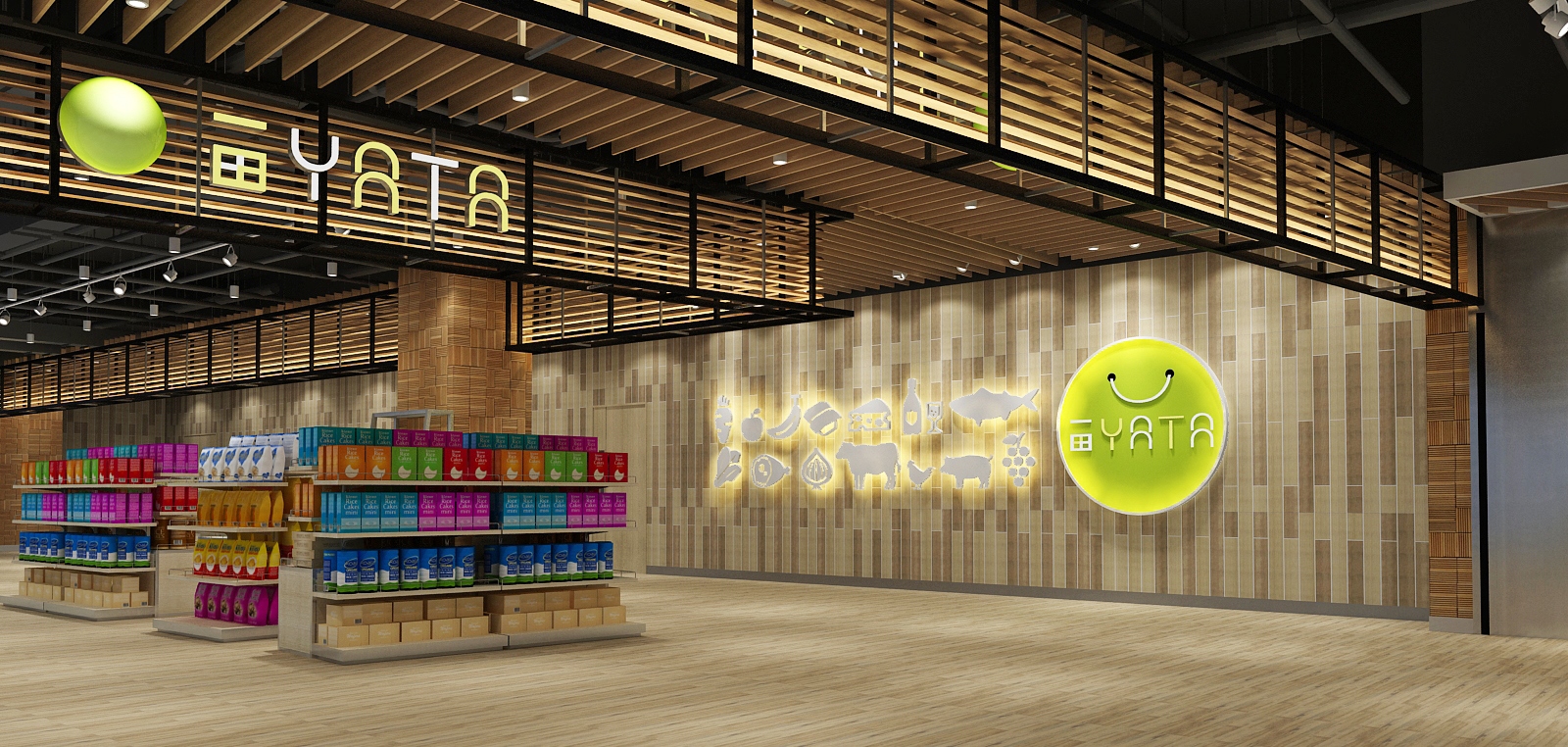
    Japanese-themed Hong Kong department store and supermarket chain Yata is set to unveil its first-ever convenience store format in Hong Kong.

    Dubbed the ‘Konbin by Yata’’ (also Japanese for convenience store), the new format will be smaller than its usual department store standing at 3777sqft.

    Located within Sha Tin’s Hotel Sav, the store will be styled on a ‘quick’ shop, a cook-and-eat concept with an array of Japanese merchandise, self-checkouts, and instant dining spaces for the time-pressed Hongkongers.

    Yata has also formed an exclusive arrangement with Hokkaido convenience store Seicomart to stock more than 70 SKUs of its private-label range.

    Yata’s parent group (historically known as Seiyu Department Store until 2008), is known to have invested US$774,000 into the new concept.

    Yata has reported strong performance in recent times with its sales up 16 percent year on year. Its grocery arm has experienced a 39-per-cent surge during the Covid-19 crisis.

    With restaurant bans and the third wave of coronavirus infection keeping consumers at home, there has been a natural surge and uplift in grocery sales from cooking at home.

    Yata CEO Susanna Wong believes the convenience store will break new even in three years and is predicting an average basket spend of between $6-10.

  • Siam Piwat opens Ecotopia, Asia’s first eco-lifestyle destination

    Siam Piwat opens Ecotopia, Asia’s first eco-lifestyle destination

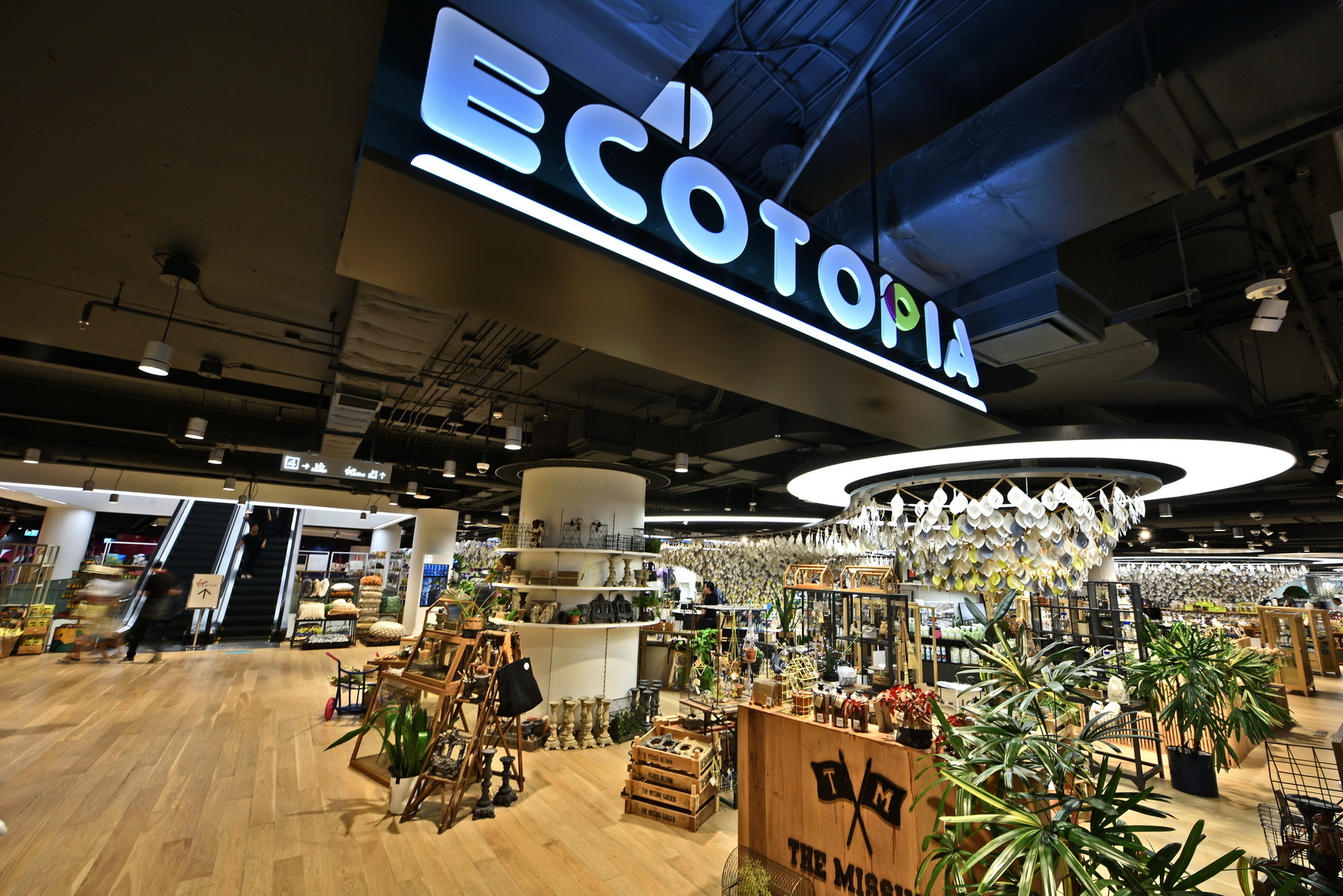
    Siam Piwat has unveiled Ecotopia in Bangkok, which it claims to be Asia’s first eco-lifestyle destination.

    Located at Siam Discovery, the store occupies 2000sqm and features more than 300 brands of eco-friendly and health-oriented products. Ecotopia houses eight different zones.

    A Hygienic zone offers a selection of household products made from natural and biodegradable materials, while the Zero Waste zone is a refiller where customers can take their own containers to refill everyday products or food items.

    Air-purifying plants and gardening tools can be found in a Green zone, while a Healthy zone offers organic food and a Beautiful zone a selection of chemical-free skincare and personal-care products.

    The Up-cycled zone displays products with renewed value through recycling, while a Stylish Zone features fashion items made from organic cotton and fabric scraps, and a clothing swap corner where pre-owned clothes can be exchanged for new garments.

    Finally, a Kind Zone highlights local handicrafts made from natural materials that help generate incomes for local communities.

    At Ecotopia, visitors can join regular eco-friendly workshops to learn how to turn waste into creative art or develop organic gardening skills.

  • CJ Corp unveils plans to open Olive Young up for public investment

    CJ Corp unveils plans to open Olive Young up for public investment

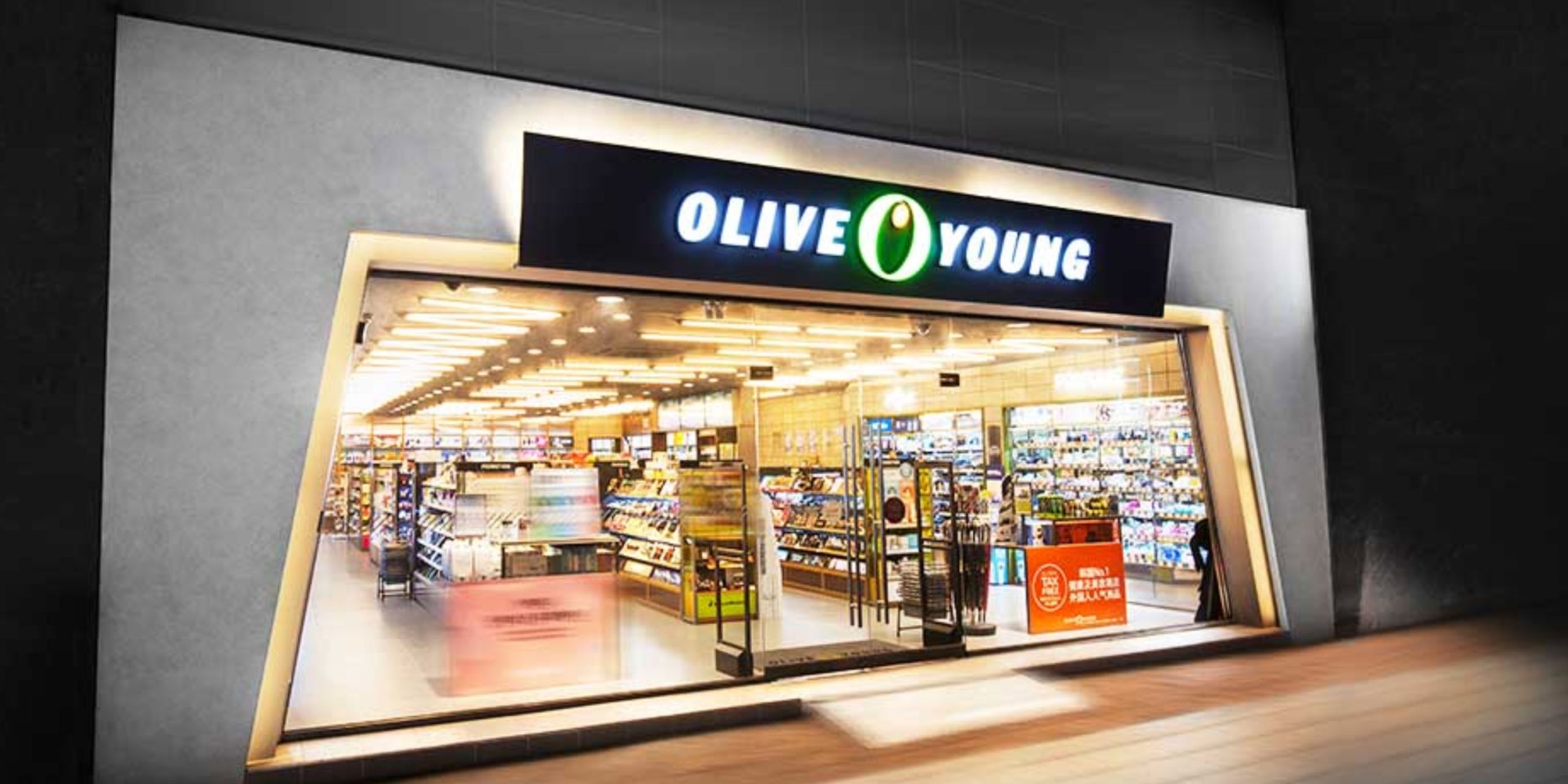
    South Korean health-and-beauty business Olive Young is gearing up for an IPO next year, with the aim to list on the stock market in 2022.

    The business owner CJ Corp is currently recruiting for pre-IPO funders and is looking to sell around 20 to 30 percent of the owner’s family’s stake before it goes public, although CJ Group will not sell any of the 55 percent stakes it holds.

    Olive Young CEO Koo Chang-geun said the pre-IPO sale would not impact CJ Group’s management rights, and that the move would allow the business to pursue growth opportunities into the future.

    Shinhan Investment and Credit Suisse have been listed as joint advisors to the sale, and while there is some chatter that the business could be sold off as a whole, it is more likely that the IPO will be used to secure further funding to boost enterprise value.

    The business has long been one of South Korea’s largest beauty firms, seeing operating income grow 81 percent to US$74 million after $1.65 billion in sales last year.