Tag: asia

  • Google Drive update adds new option to restrict access to folders

    Google Drive update adds new option to restrict access to folders

    Google announced this week that its Drive app is getting an important update that adds the ability to restrict access to folders. Normally, Google reveals new changes to its apps when these changes are rolled out to everyone, but this seems to be an exception.

    This particular update comes as a beta, but it can still be accessed by admins managing Google Drive. But what exactly this update does? According to Google, the latest version of Drive allows shared drive managers to restrict folders to specific users within a shared drive.

    The new feature is meant to offer shared drive managers more flexibility when it comes to keeping relevant content within a single shared drive, while restricting access to shared folders that might contain sensitive information.

    Once the update lands, admins can turn limit access to specific folders. The folders with “limited access” can only be opened by people who have been added to it directly. This means that Google Drive users with general access to the shared drive or shared folder will be able to see the restricted folder in Drive, but they will not be able to open it.

    As mentioned earlier, this feature is only available in beta. However, admins who want to start using it before it reaches “stable” status, can use the form that Google made available in order to express interest in the beta.

    Google says that all eligible customers will receive an email confirmation prior to the feature being enabled in their specified domain. The search giant will start accepting domains into the program in the coming weeks.

    It’s also worth noting that folders with limited access are available in both shared drives and My Drive. This means that shared drive managers will always be able to access folders with limited-access, while folder owners will always be able to access limited-access folders in their My Drive.

    As far as availability goes, this feature is eligible for Google Workspace customers with Business Standard / Plus, Enterprise Standard / Plus, Essentials Starter / Enterprise Essentials / Enterprise Essentials Plus, Education Fundamentals / Standard / Plus / the Teaching & Learning upgrade, and Nonprofits.
  • Inditex books higher sales across all brands during first half

    Zara’s parent, Inditex, booked higher net income and sales across all of its brands during the fiscal first half year.

    The fashion group’s net income surged 10.1 percent to €5.0 billion (US$5.54 billion) as net sales rose 7.2 percent to €18.1 billion, thanks to the spring and summer collections being well received by customers.

    Zara’s net sales increased 5.4 percent to €13.0 billion, while Pull&Bear climbed 7.9 percent to €1.1 billion.

    Massimo Dutti jumped 7.4 percent to €904 million, while Bershka soared 16.7 percent to €1.4 billion.

    Stradivarius surged 16.7 percent to €1.3 billion, and Oysho stood at €368 million, up 6.4 percent.

    The company ended the first half with 5667 stores, with openings in 34 markets.

  • Uniqlo to open 20 flagship stores in Europe, North America and Asia

    Uniqlo to open 20 flagship stores in Europe, North America and Asia

    Uniqlo is aggressively expanding its reach by opening more than 20 flagship stores in Asia, Europe, and North America from this month, taking its worldwide store count to more than 2500.

    In Asia, the Fast Retailing-owned brand will open its largest store in South Korea at the Lotte World Mall and its first overseas roadside store featuring a new design concept in Bangkok, Thailand.

    The new roadside store is based on the brand’s Maebashi Minami Inter Store with the concept that customers can learn about the company from a corporate point of view, beyond being a store where people buy their clothes.

    Meanwhile, in North America, the brand will open its first store in Houston and Dallas, Texas, and six new stores on the West Coast in California.

    In Europe, Uniqlo will debut in Poland and Rotterdam with its first physical stores in the cities, and it will open a second store in Rome Termini Station, Italy. More new flagships are planned for Coal Drops Yard in London, at Scotland, at Copenhagen in Denmark, and at Amsterdam in the Netherlands.

    Moreover, the company will open stores in India, a regional flagship store in Wuhan, China, and five major stores in Japan.

    “In recent years, the concept of LifeWear as ‘the ultimate everyday wear that enriches the lives of everyone’ has resonated with people, and brand recognition and customer base have been expanding in Europe and North America,” said Uniqlo in a statement.

    “The company will accelerate store openings in these regions, driving further growth of its global business.”

  • Amazon and Flipkart found to have breached India’s antitrust laws

    Amazon and Flipkart found to have breached India’s antitrust laws

    An Indian antitrust investigation has found US e-commerce giant Amazon and Walmart’s Flipkart violated local competition laws by giving preference to select sellers on their shopping websites, according to reports seen by Reuters.

    The Competition Commission of India (CCI) in 2020 ordered an investigation into Amazon and Flipkart for allegedly promoting certain sellers with which they had business arrangements and giving priority to certain listings.

    In a 1027-page report on Amazon and a separate 1,696-page report on Flipkart, both dated August 9, the CCI investigators said the two companies were found to have created an ecosystem where preferred sellers appeared higher in search results, elbowing out other sellers.

    “Each of the anti-competitive practices alleged … were investigated and found to be true,” said both reports, which are not public and are being reported by Reuters for the first time.

    “Ordinary sellers remained as mere database entries,” the two reports said in identical conclusions on both companies.

    Amazon and Flipkart, as well as the CCI, did not immediately respond to Reuters queries. They have previously denied wrongdoing and said their practices are in line with Indian laws.

    The two companies will now review the report and file any objections before CCI staff decide on any potential fines.

    The investigation’s findings are the latest setback for Amazon and Flipkart in a country where they continue to face criticism for their business practices from smaller retailers, who say their businesses have suffered in recent years due to deep discounts offered online.

    The investigation was triggered by a complaint from the Delhi Vyapar Mahasangh, which is an affiliate of the country’s biggest trade body, Confederation of All India Traders (CAIT), that represents 80 million retailers.

    In a statement to Reuters, CAIT welcomed the CCI investigation findings, saying it would study the reports and “escalate the matter” with the federal government.

    Amazon and Flipkart are leading players in India’s e-retail market which was estimated to be worth $57-60 billion in 2023, and set to top $160 billion in value by 2028, consultancy firm Bain estimates.

    In the United States, the Federal Trade Commission has sued Amazon alleging the company uses “anticompetitive and unfair strategies to illegally maintain its monopoly power”. Amazon has said that the FTC lawsuit is wrongheaded and would hurt consumers by leading to higher prices and slower deliveries.

    Indian investigators raided certain sellers of Amazon and Flipkart during the probe, following a Reuters investigation in 2021 which was based on Amazon internal documents and showed the company gave preferential treatment for years to a small group of sellers on its platform, and used them to bypass Indian laws.

    The company has denied any wrongdoing but the CCI previously told an Indian court the Reuters special report corroborated evidence it had against Amazon.

    The CCI investigation report on Amazon said preferred sellers on the platform “get the advantage in the (online) listing” and when a customer searches for any product, “his attention is drawn towards” those listings.

    The practice of preferential listings and deep discounting of mobile phones – including selling products below cost price – causes a “catastrophic impact on the existing competition in the market.”

    In the report on Flipkart, the CCI said preferred sellers were provided various services such as marketing and delivery at a “miniscule cost.” They were also enabled by Flipkart to sell phones with deep discounts which amounts to “predatory pricing” and forecloses competition, the CCI said.

    “The anti-competitive practies are not limited to sales of mobile phones. They are equally prevalent in other categories of goods,” both reports said.

    Flipkart and Amazon for months tried to block the investigation through legal challenges in courts, but the Supreme Court in 2021 allowed it to go ahead.

    Last month, India’s commerce minister publicly called out Amazon by saying the company’s investments were often used to cover its business losses.

    Amazon in June last year said it will increase its Indian investment to $26 billion by 2030, including for its cloud business. It is also targeting merchandise exports worth $20 billion from India by 2025.

  • Meta receives permission to train AI on your Facebook and Instagram posts

    Meta receives permission to train AI on your Facebook and Instagram posts

    Meta has received permission from authorities to begin training its AI models on public Facebook and Instagram posts in the U.K. This follows the company’s initial suspension of AI across the region when concerns were raised about how it planned to harvest data.

    Of course, modern AI models today were basically entirely trained on public data from the internet. After these models started gaining popularity the internet has become a lot more strict about what data it is willing to share. Many big websites now block AI from accessing their data unless they’re paid for it. Hence, using public data from Meta’s own social media platforms seems like an easy choice to make.

    But, much like how the EU has been a thorn in Apple’s side, authorities weren’t convinced about letting Meta train its models. After dialog with the U.K.’s ICO (Information Commissioner’s Office) Meta now has official permission. The ICO claims Meta will now make it easier for users to opt out of having their data used to train AI.

    The entire thing stands on unstable moral ground, however. Large parts of the internet are, understandably, very concerned about having their data scraped to train an AI model. Furthermore, the stigma against AI continues to grow as some people lose their jobs to it and others just find it annoying.

    That hasn’t stopped almost every major company today from investing heavily in it, though. Meta AI, for example, is now present in some of Meta’s services like WhatsApp. The company is also working on AI-powered AR smart glasses, something it deems the future of computing.

    Then we’ve also got Google’s Gemini, Samsung’s Galaxy AI and Apple Intelligence. Suffice it to say, AI is here to stay, and that means a lot of your data is going to be used to train it.

    AI definitely has the potential to revolutionize the world but I don’t think people will ever be fully comfortable with being used as data points. I won’t be surprised if some regions outright ban AI models from scraping data from the local population.

  • Thai rice prices dip to one-year low

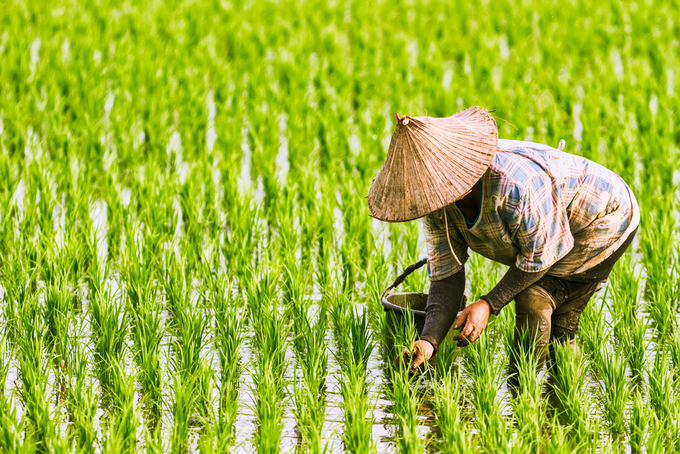
    Thai rice prices fell to their lowest in over a year as bidders were forced to reduce their prices in a recent auction held by Indonesia.

    Thai 5% broken rice was priced at US$550-565 per ton this week, the lowest since July 20, 2023, down from $585 quoted last week.

    A Bangkok-based trader said the market still considers Thai prices too high. However, flash floods have been hurting short-term harvest yields, so prices might improve down the road.

    Another trader said competitors weighed prices down and that Thai bidders lost out to other exporters in a recent auction held by Indonesia due to higher prices.

    There will be demand from African and European customers before October because those orders would be delivered before late December, the trader said.

    Meanwhile, Indian rice export prices extended losses this week to hit an eight-month low.

    Indian 5% broken parboiled rice was quoted at $534 per ton, the lowest since mid-January, and down from the $540 a week earlier.

    According to the Vietnam Food Association, Vietnamese 5% broken rice was offered at $567 per ton on Thursday, down from $575 a week ago.

    A trader based in Ho Chi Minh City said trading activity remains slow while demand is weak.

    Traders said the ongoing floods in northern Vietnam might have an impact on rice production, though rice for export is mostly grown in the Mekong Delta in the south.

  • 2G network shutdown postponed to October

    2G network shutdown postponed to October

    The Ministry of Information and Communications has deferred the shutdown of 2G networks to Oct. 15, saying over three million users have yet to upgrade their devices.

    The shutdown had been planned for Sept. 15. The ministry pointed out that subscribers need phones that support 3G or newer technologies to continue using telecom services after the shutdown.

    The Vietnam Telecommunications Authority said at a meeting Friday that over five million subscribers have upgraded in the last two months, bringing the number of 2G users down to 3.4 million as of Sept. 8.

    Authorities have been nudging 2G users to make the switch for months, even rolling out policies to help them buy new devices and shutting down networks in some areas.

    But typhoon Yagi has stymied the process, with people and businesses focused totally on coping with its aftermath.

    There is also a shortage of phones, especially budget devices, making the switch difficult for many.

    Pulling the plug on 2G will promote the adoption of 4G, which can help familiarize people with digital and online public services, and free up resources for network providers to focus on developing 5G and 6G technologies.

  • Volkswagen offers $20K discount

    Volkswagen offers $20K discount

    German auto brand Volkswagen has cut the prices of three models in Vietnam by VND140-500 million (US$5,700-20,300) this month.

    The Teramont now costs VND2 billion, down VDN500 million, or 20%, from its original price tag.

    The full-size SUV, which is imported from the U.S., has high-end entertainment features such as an 11-speaker audio system and 8-inch screens.

    The Teramont X, which starts at around VND2 billion, comes with a discount of VND99-130 million depending on locality. It is imported from China.

    The Touareg, imported from Slovakia and priced at up to VND3.05 billion, is being sold at discounts of VND134-182 million.

    Volkswagen announced the discounts after major brands such as Honda, Toyota, Nissan, Subaru, and Suzuki all cut their prices.

    Vietnam Automobile Manufacturers Association members’ sales rose by only 1.1% year-on-year in the first seven months to 163,800 units.

  • Banana prices double in Thailand

    Banana prices double in Thailand

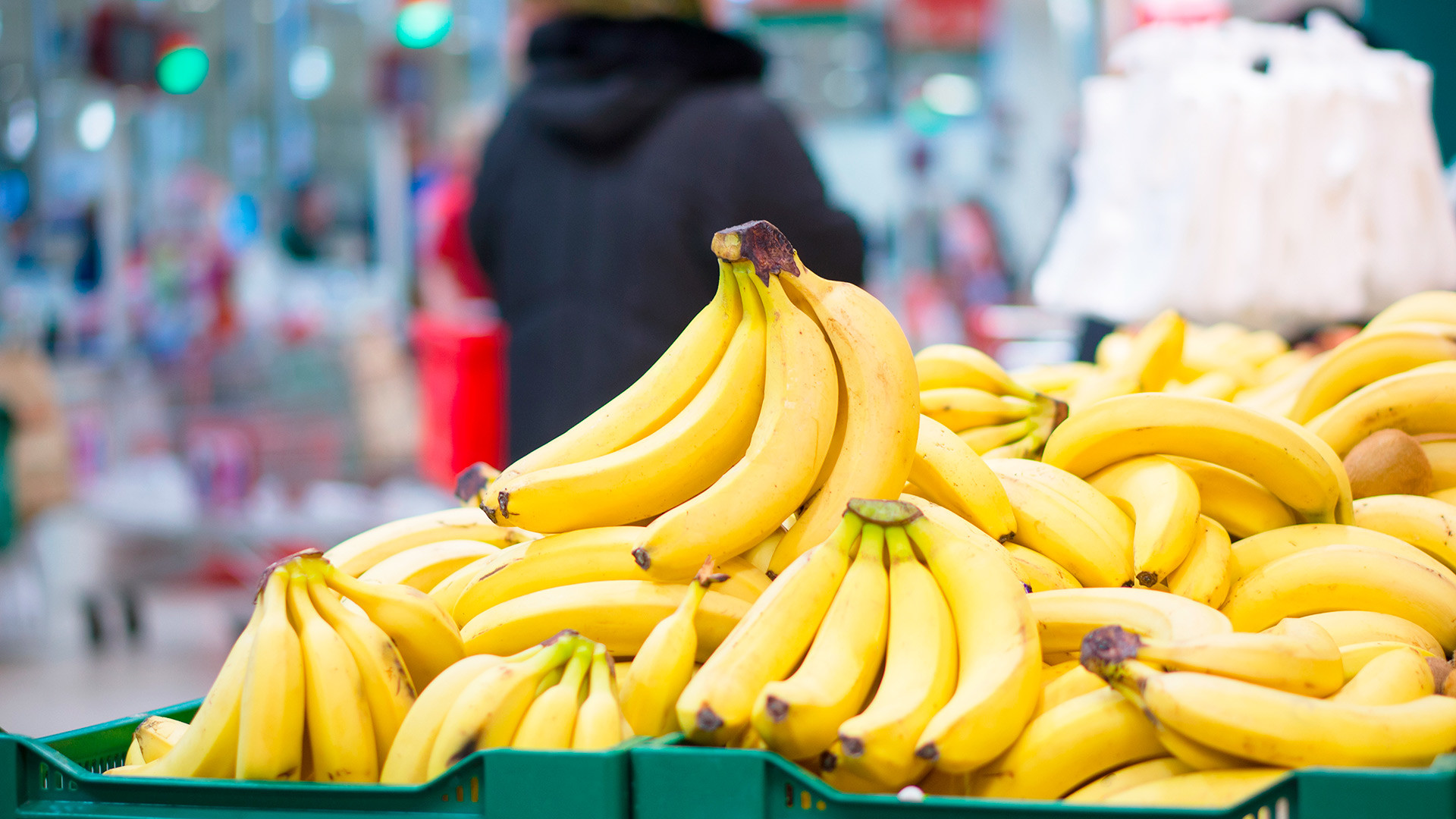
    The price of kluay hom thong banana or “golden bananas” in Thailand has doubled to 30 baht (US$0.89) amid growing demand.

    Somchai Nunual, leader of the golden banana and fruit safety group in Bang Kaew district in Thailand’s Phatthalung province, said the price hike was due to the growing popularity of the fruit, while the lack of rain since the second half of last year has curtailed the supply of bananas to the market.

    Bang Kaew district has been the center of the bananas in the province since farmers discovered the soil in the district is more suited to growing bananas than rubber, rice or oil palm.

    Thailand’s Ministry of Agriculture and Cooperatives predicted that the kluay hom thong banana harvest this year will amount to just 32,000 tons, a massive drop from last year’s 120,000 tons.

    Farmers made an average of 278 baht per 100 bananas last year, up from 243 baht in 2022, according to the ministry. It forecast that banana farmers will pocket 292 baht per 100 fruits this year.

    The kluay hom thong banana is one of Thailand’s main fruit exports, with 80% going to Japan and the rest largely to China and Cambodia.

    Japan allows Thailand a quota of 8,000 tons of the fruit annually, but the actual export volume is only half that because farmers cannot produce enough of the fruit that meets Japanese standards, according to the Internal Trade Department.

  • Philippines probes Grab over alleged sexual assault of Vietnamese passenger

    Philippines probes Grab over alleged sexual assault of Vietnamese passenger

    Philippine regulators have launched an investigation into the alleged robbery and sexual assault of a Vietnamese woman who booked a ride using the Grab ride-hailing app.

    The Philippines’ Land Transportation Franchising and Regulatory Board has requested the firm to explain the incident and given it five days to comply, quoting the agency’s chair Teofilo Guadiz III as saying on Wednesday. If found to be negligent, the firm could be suspended for at least 30 days and face fines.

    The robbery and sexual assault allegedly occurred on Sept. 5 when a Vietnamese woman booked a ride in Parañaque City.

    During the ride, the driver reportedly allowed another passenger to board the car.

    This passenger then reportedly took the woman’s phone and cash, which amounted to 35,000 Philippine pesos (US$623), before raping her inside the vehicle. The driver was arrested by the police on Sept. 7.

    Grab’s Philippine unit said on Thursday that the driver involved in the case has been permanently banned from the platform.

    It has reached out to the victim to offer assistance and will fully cooperate with the Philippine police in the investigation.

  • UPS bolsters healthcare logistics capabilities with cold-chain acquisitions

    UPS bolsters healthcare logistics capabilities with cold-chain acquisitions

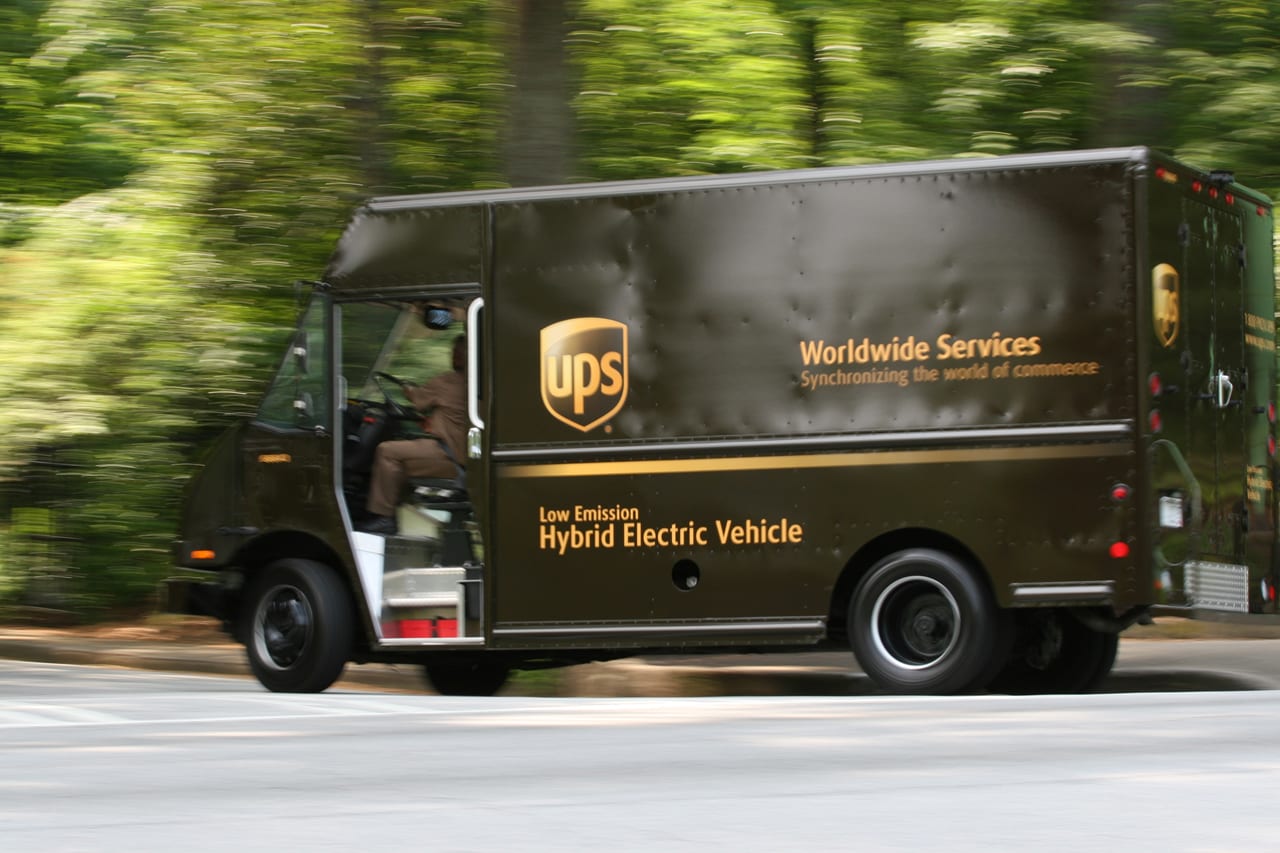
    UPS announced that it has agreed to acquire Frigo-Trans, and its sister company BPL, (together “Frigo-Trans”) industry-leading, complex healthcare logistics providers based in Germany. Once completed, the acquisition will enhance UPS’s end-to-end capabilities throughout Europe for UPS Healthcare customers who increasingly require temperature-sensitive and time-critical logistics.

    “The fast-paced innovation in the pharmaceutical industry is creating the need to have more integrated cold and frozen supply chains,” said UPS EVP and President of International, Healthcare and Supply Chain Solutions Kate Gutmann. “Frigo-Trans will help deepen our portfolio of solutions for our customers and accelerate our journey to become the number one complex healthcare logistics provider in the world addressing their needs.”

    Frigo-Trans’ network includes temperature-controlled warehousing that covers six temperature zones from cryopreservation (-196°C) to ambient (+15° to +25°C); a Pan-European cold chain transportation solution and temperature-controlled and time-critical freight forwarding capabilities.

    The transaction is expected to close in the first quarter of 2025, subject to customary regulatory reviews and approvals. The value and terms of the transaction are not being disclosed at this time.

  • Philippines rice imports up 19% in 8 months

    Philippines rice imports up 19% in 8 months

    Rice imports to the Philippines amounted to 2.8 million metric tonnes (MT) during the first 8 months of this year, 19% higher than he same period last year, data from the country’s Department of Agriculture (DA) showed.

    In its latest report, the department’s Bureau of Plant Industry (BPI) said in August alone, rice from abroad increased to 296,350.9 MT compared to 167,403 MT in July. However, it was still lower than the average monthly arrival of 400,000 MT logged in the earlier months.

    Agriculture Assistant Secretary and spokesman Arnel de Mesa said rice prices have been decreasing. Regular and well-milled rice is sold at around 45 PHP (US$0.8) per kilo and even as low as PHP42, he added.

    According to the report, Vietnam remained the Philippines’ top source of the staple during the period, shipping over 2.17 million MT or around 77% of the country’s total imports in the January-August period. It was followed by Thailand (371,390 MT), Pakistan (156,121 MT) and Myanmar (66,910 MT).

    Last year, inbound shipments of rice totaled 3.6 million MT, down 5.9% from the record-high 3.82 million MT in 2022. The DA projects rice imports for this year will not exceed last year’s volume.

  • Chinese luxury EV maker Zeekr enters Vietnam

    Chinese luxury EV maker Zeekr enters Vietnam

    Zeekr, Chinese conglomerate Geely’s premium electric vehicle brand, will be distributed in Vietnam by transport services provider Tasco.

    Following an agreement signed Monday the EV maker joined the list of auto brands distributed by Tasco, which also includes Lynk & Co and Volvo, two other Geely subsidiaries.

    Tasco has not disclosed when or which Zeekr models will be sold in the market, nor has it confirmed whether it will build charging infrastructure for Zeekr vehicles or outsource this to a third party.

    Zeekr was established in 2021 and is positioned as a luxury EV manufacturer that focuses on driving assistance and safety technologies.

    It targets high-end customers and competes in the premium EV segment, but offers competitive prices. It recently expanded to Europe, the Middle East and Southeast Asia.

    The brand offers seven models in China, all based on Geely’s Sustainable Experience Architecture EV platform.

    Zeekr vehicles sold in Vietnam will be imported from China, where the company has its only plant.

    Other Chinese EV brands that have entered Vietnam within the last year include BYD and Lynk & Co.

    Three others, Omoda, Jaecoo and Aion, are expected to launch in the fourth quarter.

    VinFast, the only domestic producer, dominates the EV market in Vietnam with a wide range of products and the largest network of charging stations.

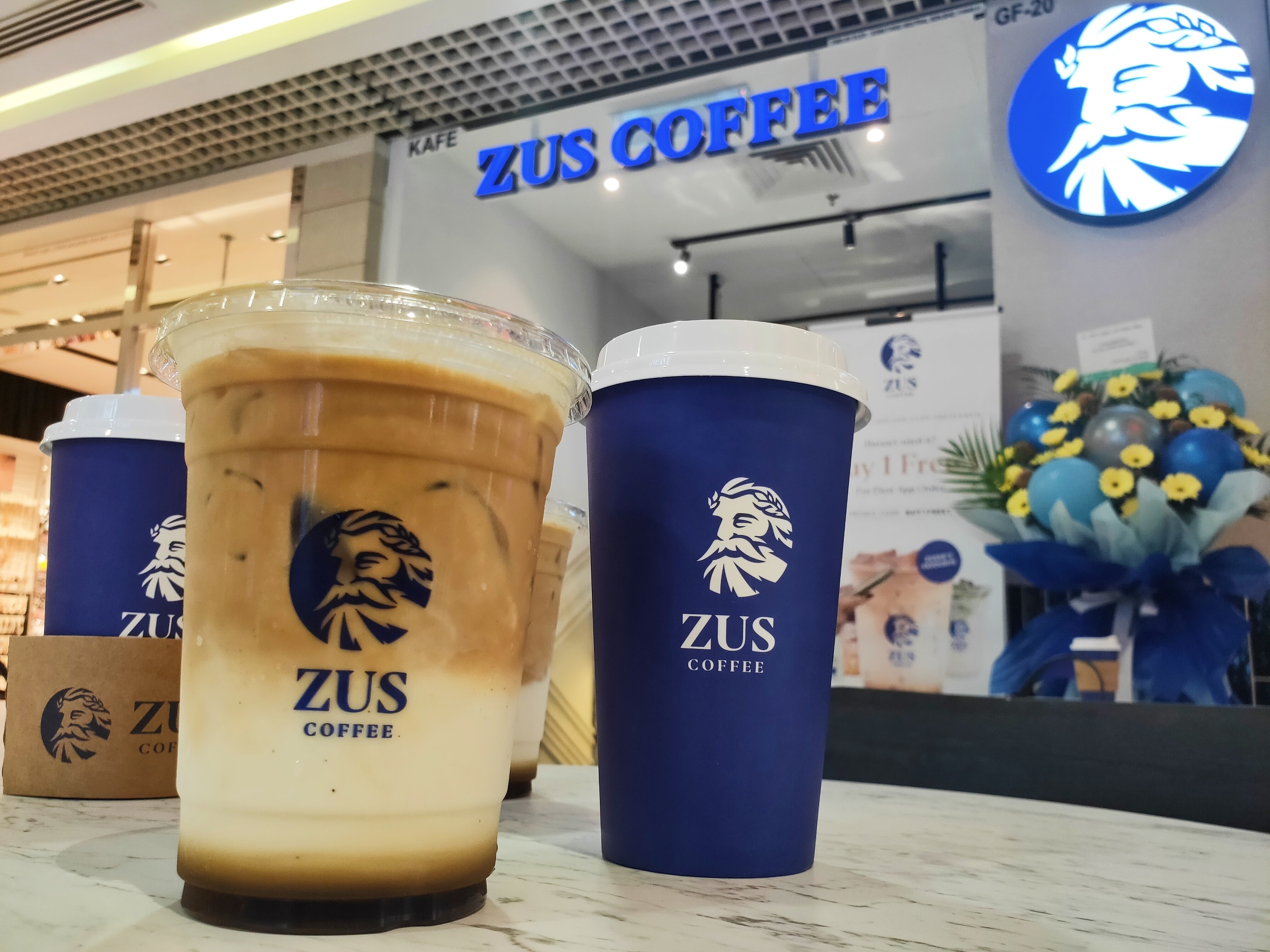
  • Malaysia’s Zus Coffee secures $57m funding, to expand into Singapore, Brunei

    Malaysia’s Zus Coffee secures $57m funding, to expand into Singapore, Brunei

    Malaysian coffee chain Zus Coffee has secured a US$57.27 million (RM 250) investment to support its expansion in Singapore and Brunei this year. The funding was secured from a consortium comprising private equity firm KV Asia Capital, Malaysian pension fund KWAP, and Indonesia’s Kapal Api Group.

    Founded in 2019, Zus Coffee has expanded to become one of Malaysia’s largest coffee chains, with an estimated  550 stores.

    It has also extended its footprint to the Philippines, where it operates 50 stores. This is following a strategic partnership with the Filipino hospitality group Choi Garden Restaurant Company, which acquired a 35 percent stake in the company last year.

    The Edge reports that the investment from KV Asia Capital will be raised in two phases: an initial US$10.7 million (RM 50 million), followed by an additional $42.8 million (RM 200 million) at a later date.

    KV Asia Capital has already invested in several other companies in Southeast Asia. These include the Taguig-based Wildflour Hospitality Group, the Vietnamese logistics firm Bee Logistics, the Indonesian beauty brand Victoria Care, the health food supplement company DXN, and the Malaysian supermarket chain TF Value Mart.

    Ernst & Young Malaysia acted as an adviser for the transaction.

  • Alibaba’s Freshippo launches into Australia with local partner

    Alibaba’s Freshippo launches into Australia with local partner

    Alibaba-owned grocery chain Freshippo will launch its first presence in Australia, in partnership with Ebest, the local online Asian supermarket.

    Freshippo’s items will be available through Ebest’s shopping app and website, with a product selection tailored to the Australian market, including Chinese delicacies such as snacks, juices, tea drinks, and culinary sauces.

    Ebest’s spokesperson says that this agreement will greatly expand their product line, providing Australians with better access to authentic and modern Chinese groceries.

    “The pandemic has driven more consumers to explore ethnic products, diversifying their home cooking either as a lifestyle choice or as a cost-saving alternative to dining out,” the spokesperson said.

    “This trend has encouraged a wider demographic to discover different cultural ingredients and find better deals at grocers that initially served migrants.”

    Australia is Freshippo’s third offshore market after the US and Singapore. Freshippo, founded in 2015 as Alibaba Group’s grocery retail business, now has 400 locations in 30 Chinese cities.

    Ebest, launched in 2020, has become one of Australia’s highest-profile online Asian supermarkets, with more than 50,000 items across 18 categories.

    In June, Ebest launched on Albaba’s e-commerce platform AliExpress, with the goal of “revolutionising the online grocery shopping landscape by bringing in a new era of convenience and accessibility for consumers.”