Tag: asia

  • Korean restaurant chains cry foul over Covid-19 rules

    Korean restaurant chains cry foul over Covid-19 rules

    South Korean restaurant chains are accusing the government of using “discriminatory countermeasures” in the fight against the coronavirus pandemic.

    Recent edicts to prevent the spread of the latest outbreak in the country have seen the closure of buffet and family-style restaurants, while still allowing cafes to operate. Prominent chains CJ Foodville, Shinsegae Food and Elandeats have expressed their dissatisfaction with the discrepancy, which has involved multiple outlet closures and necessitated the dumping of fresh food.

    “The largest number of coronavirus cases was confirmed at Starbucks coffee shop(s), but I don’t understand why restaurant chains are targeted,” a family restaurant worker told the Korea Times. “Starbucks closed its relevant branches for a few days and then they reopened them.”

    The restaurant chains had previously instituted anti-Covid-19 precautions, such as checking the temperatures of customers and enforcing social distancing.

    The Korea Times quoted one CJ Foodville official as saying: “It is our obligation to follow the government’s regulations, but we hope people don’t continue to think that our restaurants are high-risk after things get better.”

  • Microsoft says that Apple’s punishments against Epic will hurt game developers and players

    Microsoft says that Apple’s punishments against Epic will hurt game developers and players

    Microsoft is taking sides in the court battle between Epic Games and Apple. As you might recall, Epic added a screen to its hit game Fortnite that allows players, even those who installed the game from the App Store, to pay for in-app purchases from the developer’s own in-app payment system. Payments made through Epic’s own payment system bypass Apple’s system from which the tech giant takes a cut of 30%. The so-called 30% Apple Tax is being investigated by regulatory agencies in the U.S. and Europe who will determine whether it is anticompetitive.

    For now though, the battle between Apple and Epic is solely over whether Apple has the right to punish Epic by removing Fortnite from the App Store and closing Epic’s developer account. That will leave it unable to provide updates to iOS and Mac users although those who have already installed the game on their iPhone can continue to play. Apple says that it will allow the game to return and give the developer its account back, but only if Epic shuts its in-app payment portal. Epic has sued and seeks a temporary restraining order (TRO) that would block Apple from removing Fortnite and closing Epic’s developer accounts until the issue can be adjudicated.

    Microsoft filed a declaration with the court on Sunday in which a Microsoft senior engineer said that closing Epic’s developer account would prevent it from offering its Unreal Engine. The latter is a game engine for developers and is a framework for the creation of 3D graphics. It is licensed to game developers in return for 5% of sales although that fee is waived if a game is published in the Epic Game Store. Starting last May, Epic waived its portion of the fees for games developed in Unreal Engine until a developer earns his first million dollars. A declaration is a written statement sworn to be true under penalty of perjury by any person who has knowledge about the issues in a court case.

    Kevin Gammill, Microsoft’s general manager for Gaming Developer Experiences, said in the declaration that “If Unreal Engine cannot support games for iOS or macOS, Microsoft would be required to choose between abandoning its customers and potential customers on the iOS and macOS platforms or choosing a different game engine when preparing to develop new games. Gammill went on to say that, “Apple’s discontinuation of Epic’s ability to develop and support Unreal Engine for iOS or macOS will harm game creators and gamers.” And the Microsoft GM points out that there are very few alternative gaming engines with the same functionality and a large number of features.

    Epic says that the punishments imposed by Apple will produce an impact affecting more than the Unreal Engine. Epic’s vice president of engineering, Nicholas Penwarden, says that the developer has received “numerous inquiries and expressions of concern” from companies that have licensed the Unreal Engine.

    Besides filing the suit against Apple, Epic has filed a similar suit against Google. The latter’s Android app storefront, the Google Play Store, also takes a 30% cut of in-app payments for Google. The difference is that while iOS users are locked into using the App Store to find and install apps, Android users are allowed to sideload apps from third-party app stores.

    Apple’s strategy in court is to show that Epic has created this problem by itself and that it can be easily fixed by following the agreement that Apple has all developers sign. Apple has threatened to close Epic’s development account on August 28th. On the same date, the developer will lose access to iOS and Mac developer tools.

  • Top Chinese retailtech enterprises revealed

    Top Chinese retailtech enterprises revealed

    Notable Chinese retailtech firms are small in size, heavy on IT personnel, and largely located around the Beijing-Tianjin-Hebei and Yangtse Delta region, according to a new report.

    The study was released by international audit, tax, and advisory firm KPMG in partnership with the China Chain Store & Franchise Association to identify the top 50 high-growth retail tech enterprises in China. It recognizes firms that work to bring forward digitalization, intelligence and integration.

    The findings showed that consumer technology applications are more concentrated on front-end interaction with consumers, marketing and transactions, consumer operation, and smart technology companies.

    Most of the companies shortlisted for the report had no more than 300 employees.

    Technical personnel accounts for more than 60 percent of human resources in more than half of these firms, and about half of the companies have been operating for less than five years.

    “The association and KPMG have worked together to release the list of China’s leading 50 retailtech enterprises, after spending six months studying the founding team of candidate enterprises on a one-by-one basis over six criteria, namely: technology and business model innovation; empowering reform of the traditional retail sectors; financial health; valuation and capital market recognition; target market acceptance and potentials under market segmentation; team capabilities and corporate innovation mechanism; and business model innovation and sustainability,” said China Chain Store & Franchise Association secretary-general Kevin Peng.

    At the end, 64 representative Chinese retailtech firms were shortlisted, including 50 leading enterprises and 14 emerging enterprises.

    “We hope this list can offer some references to chain stores and retail brands so that their digital transformation journey can be smoother and more successful.”

    “The retailtech industry is treading the same path of evolution as China’s commerce, the two have formed a synergy for mutual growth,” said KPMG China partner and head of consumer retail Jessie Qian.

    “Enterprises in technological innovation and retail industries have worked hard to accumulate a wealth of technological applications and real-life cases, which can serve as a role model for enterprises building their own digital capabilities.”

    “The retail industry is innovating and reforming in the face of digitalization as consumers are changing their lifestyle,” said KPMG China partner and advisory head of consumer and retail sector, Michael Mao. “New retail technologies and the retail businesses are increasingly integrated, as new consumption needs are being explored and new operational models are emerging.

    “During the transformation, retailtech enterprises, especially start-ups, have played an indispensable role and they are upgrading themselves when engaging with their end-users. Many technological enterprises have evolved from software vendors of a single solution to business partners working with their end-users to develop solutions tailored for specific scenarios, others not only provide technical support for hardware and software but also assist retail enterprises in integrating technological transformation at the IT level with internal reform and optimization of organizational structure.”

  • AirAsia.com, Agoda announce strategic partnership

    AirAsia.com, Agoda announce strategic partnership

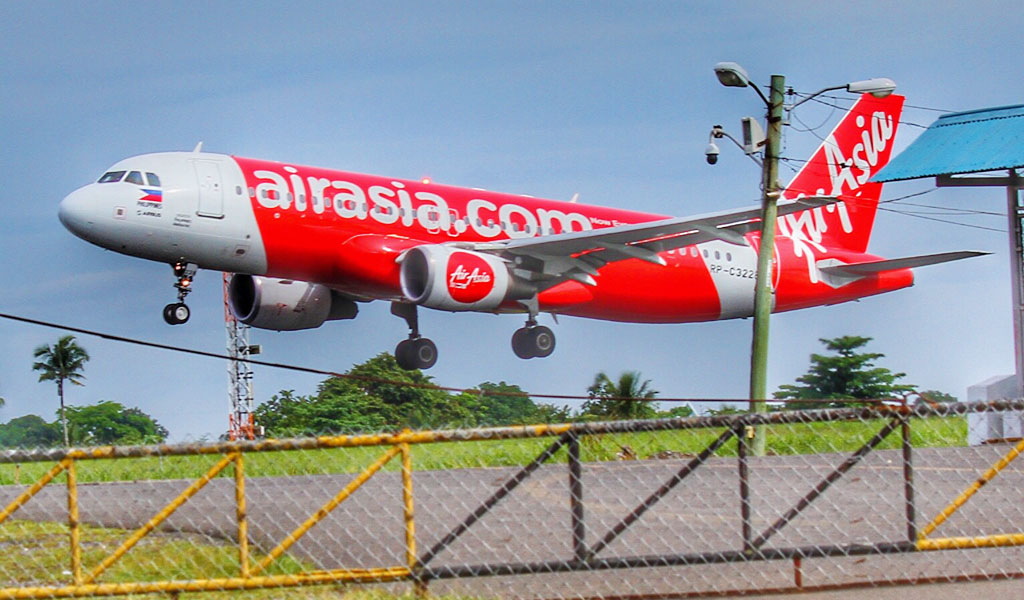
    AirAsia.com, Asean’s fastest-growing travel and lifestyle e-commerce platform, and Agoda, the world’s leading digital travel platform, have announced a strategic partnership to spur travel activity in Southeast Asia and strengthen AirAsia’s super app offering.

    The partnership between the two major online travel service providers in the region harnesses the synergistic strengths of both digital platforms, it said in a statement here, today.

    Through the sharing of flight and hotel inventories, travelers will gain access to a more extensive multi-product selection, enjoy greater convenience and benefit from superior value.

    Initiatives from the collaboration include travel bundles, membership privileges, as well as joint product marketing. Customers of AirAsia.com can now enjoy more variety with over 600,000 Agoda properties, combined with AirAsia’s great value fares by booking through SNAP — offering flight and hotel packages with the best price guaranteed.

    The partnership with Agoda is part of AirAsia group-wide strategy to revitalize travel in anticipation of the reopening of borders in Southeast Asia in the near future, AirAsia Group group chief executive officer (CEO) Tan Sri Tony Fernandes said today.

    “We are taking the opportunity during this downtime to work innovatively with strategic partners like Agoda, so that we can better serve our guests’ travel and lifestyle needs. There are more strategic ventures in development, which we look forward to announcing when the time is right.”

    Agoda CEO John Brown said: “The public’s appetite for travel is still strong, and we believe that our collaboration with AirAsia will help take the hassle out of travel by helping travelers easily find great value deals as they venture out again.”

  • Deutsche Bank Names Vietnam Country Chief

    Deutsche Bank Names Vietnam Country Chief

    He joins from Maritime Bank, a Vietnamese bank where he was CEO for four years before taking up its deputy chairman position earlier this year.

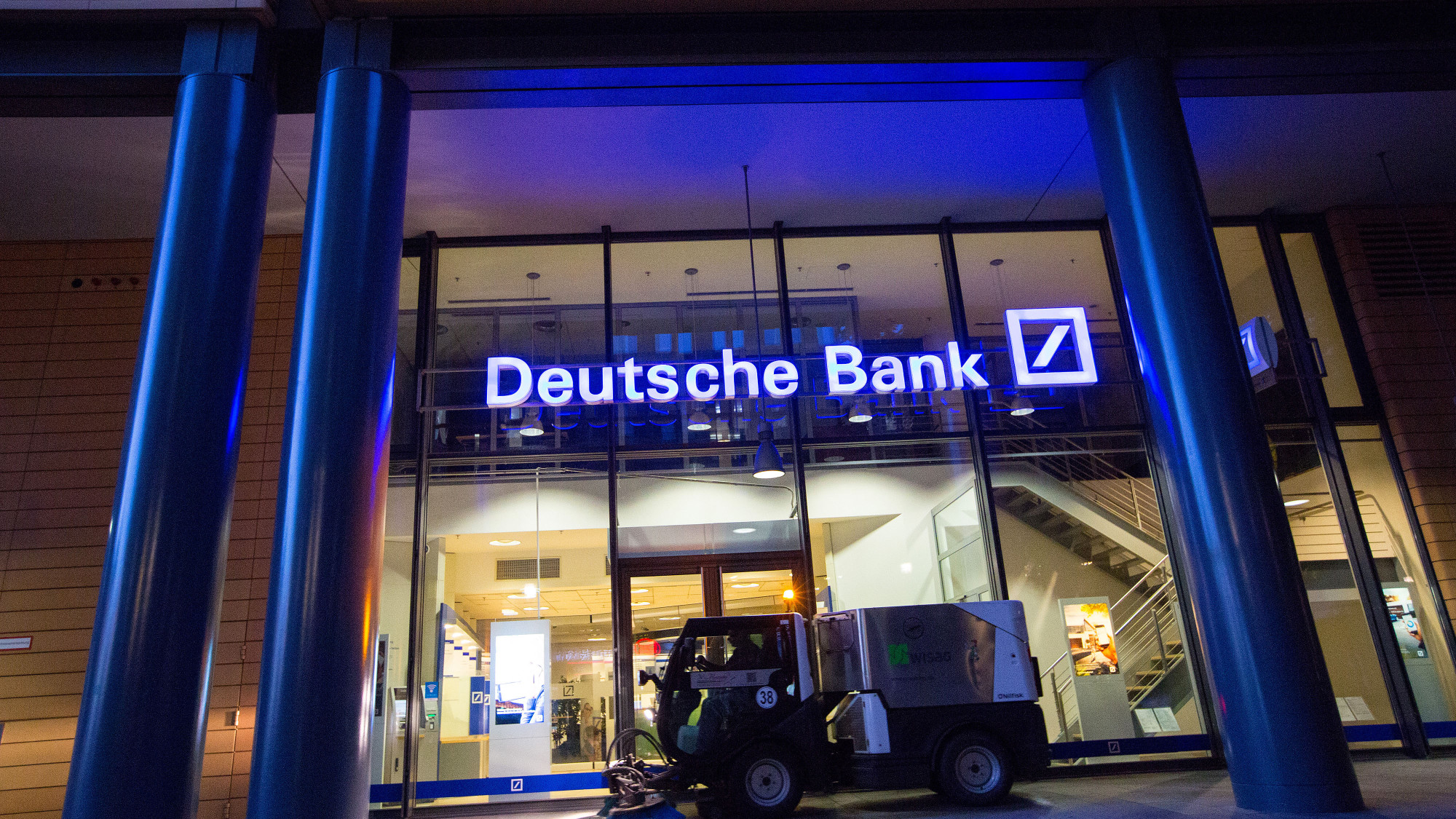
    Deutsche Bank has appointed seasoned banker Huynh Buu Quang to lead the bank’s expansion of its franchise in Vietnam, pending State Bank of Vietnam approval.

    As chief country officer Vietnam, Huang will be based in Ho Chi Minh City. He brings more than 25 years of experience in corporate banking, and has held local and regional leadership roles in Vietnam, Singapore, Hong Kong and Indonesia, across multiple banking functions spanning trade finance and credit risk management.

    Alexander von zur Muehlen, Deutsche Bank’s Asia Pacific CEO called Vietnam «a key growth market» for the bank in ASEAN, in a statement announcing the move.

    Deutsche Bank has operated in the country since 1992. Since 2017, the bank has raised more than $1 billion in debt, loan and equity capital annually for Vietnamese corporates.

    Earlier this year, Deutsche Bank announced that it would increase its investment in Vietnam, with the recently ratified EU-Vietnam Free Trade Agreement expected to boost trade flows.

  • Yum China opens first Taco Bell restaurant in  Beijing QSR

    Yum China opens first Taco Bell restaurant in Beijing QSR

    Yum China has launched Beijing’s first Taco Bell store, in the Liangmaqiao district.

    The Taco Bell Beijing store offers the brand’s nachos and tacos along with exclusive local selections for Chinese customers such as a rice bowl, seasoned bone chicken and taco pizza.

    “The Beijing store reflects Taco Bell’s reputation as a culture-centric, lifestyle brand that provides Mexican-inspired food with bold flavors,” the company said in a statement.

    Taco Bell Beijing features colorful art walls, illustrating local’s landmarks and culture. The restaurant also houses an open kitchen, allowing customers to see food cooking and preparing process. Mobile pre-orders and takeaway are available in this new store.

    “The new store integrates Taco Bell’s signature food and spirit into the local community,” said Joey Wat, CEO of Yum China. “We believe that there is a growing appetite for Taco Bell, and we will continue to review and refine Taco Bell’s service model and offerings for the Chinese market.”

    Since entering the country in 2016, Taco Bell has opened 11 stores across China, including those recently launched in Shenzhen and Ningbo.

  • Alibaba thrives after emerging from virus challenges

    Alibaba thrives after emerging from virus challenges

    Chinese e-commerce giant Alibaba Group’s revenue soared 34 percent to US$21.762 billion in the June quarter as the company emerged strongly from the impact of the Covid-19 pandemic in its home market.

    “Our domestic core commerce business has fully recovered to pre-Covid-19 levels across the board, while cloud computing revenue grew 59 percent year-on-year,” CFO Maggie Wu said in a statement.

    “We delivered a very strong start to our new fiscal year.”

    Net income attributable to ordinary shareholders was $6.736 billion, exceeding analysts’ estimates and justifying the 23-per-cent rise in the group’s stock value so far this year.

    Chairman and CEO Daniel Zhang said the company is well placed to take advantage of the ongoing digital transformation which has been sped up by the pandemic.

    “We mobilized our entire digital infrastructure to support the economic recovery of businesses across a wide range of sectors while broadening and diversifying our consumer base by addressing their changing preferences in a post-Covid-19 environment,” he said.

    The company reported 874 million mobile monthly active users on its Chinese digital marketplaces in June which represented an increase of 28 million, quarter on quarter.

    In Southeast Asia, Alibaba’s Lazada Group achieved more than 100-per-cent quarter on quarter growth in orders, with general merchandise, FMCG, and electronics the driving categories.

  • Blackberries May be Coming Back to Banking

    Blackberries May be Coming Back to Banking

    The banker’s best-loved gadget may be making a return from the dead – thanks in part to the pandemic sending millions of workers into work-from-home arrangements.

    Blackberry smartphones were phased out at banks years ago – Credit Suisse’s finance chief David Mathers was openly unhappy about his boss, Tidjane Thiam, taking his away in 2017. The brand has been left for dead several times after Blackberry left the phone business in 2016.

    Now, a Texan technology start-up plans to roll it out again, on an Android operating system with 5G connectivity, by next June, it said in a statement. The company, Onwardmobility, inked a pact with BlackBerry as well as a Foxconn subsidiary to offer the device in North America and Europe.

    The key draw of Blackberry – a physical keyboard – endeared it to bankers (as well as journalists) – so much so that it was colloquially known as a Crackberry. Blackberry, the company, licensed the brand out to TCL, but the Chinese provider abandoned it earlier this year.

    By that time, financial service firms had decommissioned the technology (after prying them from the reluctant hands of bankers like Mathers). First manufactured by Research in Motion (RIM), the Blackberry was gradually eclipsed by Apple’s iPhone, launched in 2007. Efforts to reinvent with Blackberry with features like a touchscreen, or without the physical keyboard, foundered.

    Blackberry gave up its own software in favor of Android, but ended up ditching phones altogether in favor of security software. The move relegated the Blackberry to zombie status, something Onwardmobility wants to change.

    Enterprise professionals are eager for secure 5G devices that enable productivity, without sacrificing the user experience, Onward CEO Peter Franklin said. The company hopes the increasing number of office staff working from home and cybersecurity needs will spur demand for the devices.

  • Fancl Asia sale could fetch US$1bn for Hong Kong owner

    Fancl Asia sale could fetch US$1bn for Hong Kong owner

    Fancl Asia distributor CMC Holdings is reportedly looking to sell the business in a deal that could be worth as much as US$1 billion.

    According to a Reuters report, Hong Kong-based CMC, owned by Chris Chan, has engaged Morgan Stanley to approach private-equity investors and other prospective buyers for the business, which operates more than 200 stores in Greater China and Southeast Asia. The company effectively accounts for the majority of the Japanese cosmetics company’s brick-and-mortar business outside its home market.

    Fancl Asia achieved pretax earnings of about US$65 million in 2018 and last year, on turnover of between $250 million and $300 million. Asia represents a significant growth opportunity for cosmetics companies, accounting for 53 percent of the world’s skincare market and is projected to achieve 5 percent annual growth in the coming years.

    According to a Reuters source, Fancl Asia will be sold via a two-part auction process, with initial bids scheduled to be received by the end of September.

    Morgan Stanley, CMC, Fancl and Chan all declined to comment to Reuters which did not identify its source due to confidentiality reasons.

    About 80 percent of the sales by Fancl Asia are in Greater China, where retailing has been seriously affected this year due to Covid-19-related lockdowns.

    Sources have confirmed any sale of the business would not affect the distributorship contract with the Japanese skincare specialist brand, which has six years to run in China and 10 in the rest of Asia.

  • Lost Samsung phones can now be found even if offline

    Lost Samsung phones can now be found even if offline

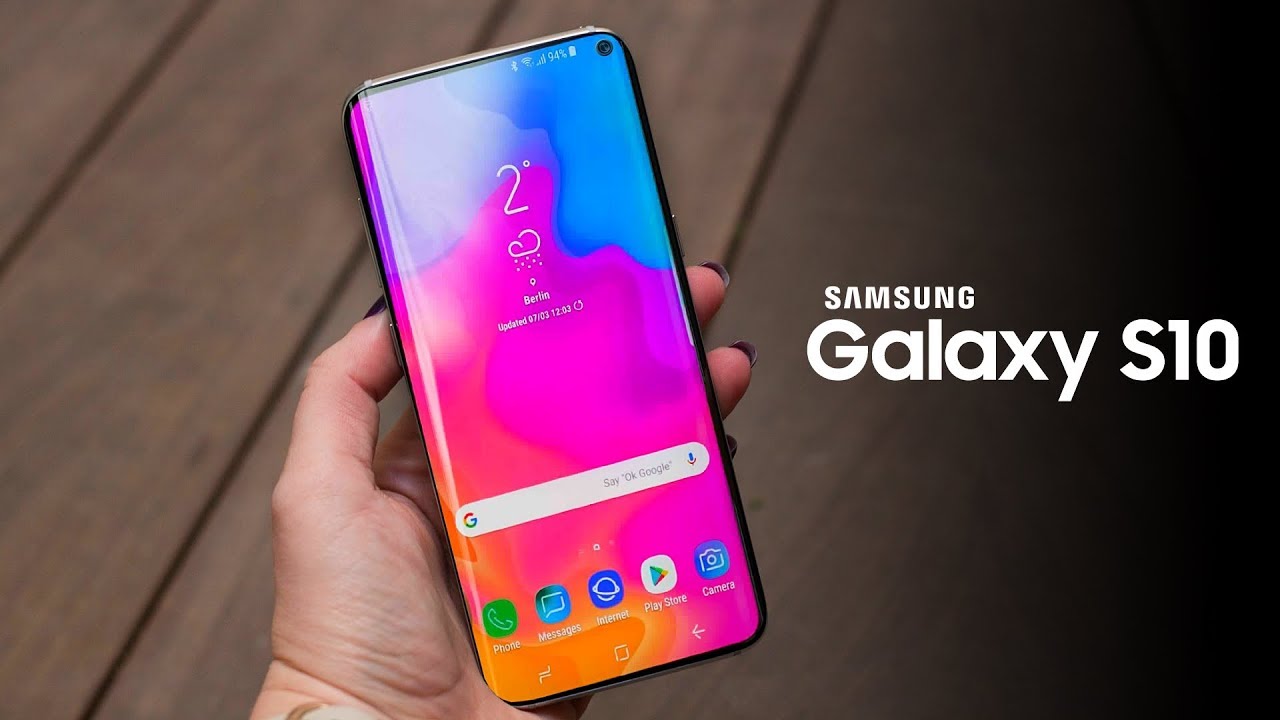
    If you own a Samsung phone and have misplaced the device, the Find My Mobile feature will help you get back together with the handset. And you can even unlock your device with Find My Mobile even if you’ve forgotten your password, PIN, or pattern. The missing device must be signed in to your Samsung account. But what if the missing device is offline?

    XDA’s Max Weinbach disseminated a tweet last night after noticing that Samsung had added a new feature to Find My Mobile; the new feature depends on other Galaxy owners to help find the missing device. According to a screenshot shared by Weinbach, this offline tracking is enabled by going to the Offline finding page and toggling on the switch at the top of the page. According to Samsung, “This will allow your phone to be found by other people’s Galaxy devices even when it’s not connected to a network. It will also allow your phone to be used to scan for lost Galaxy devices that may be nearby. You can also find watches and earbuds if this was the last device they connected to.”

    In other words, if your missing phone is offline, it still will show up on another Galaxy owner’s phone if it is nearby. And that means that if someone else has a Galaxy phone that is lost and offline, it will show up on your phone if the missing device is close to you.

    Apple beat Samsung to the punch as iPhone users running iOS 13 have had the ability to find a missing iPhone that is offline. This is possible as long as the handset is powered on. Using Bluetooth, your missing offline iPhone can be found. To enable this on your iPhone (again, running iOS 13 or later), go to Settings > Tap your name at the top of the screen > Tap on Find My > Tap Find My iPhone > Toggle on Find My iPhone > Enable offline finding > Send Last Location.

  • Porsche Launches Investigation Into Suspected Engine Manipulation

    Porsche Launches Investigation Into Suspected Engine Manipulation

    Volkswagen’s luxury sports vehicle unit Porsche AG has launched an internal investigation into the suspected manipulation of petrol engines, German weekly Bild am Sonntag (BamS) reported. Porsche has informed Germany’s automotive watchdog KBA, the Stuttgart prosecutor’s office, as well as U.S. authorities of suspected illegal changes to hardware and software that could affect exhaust systems and engine components, the paper said.

    “Porsche is regularly and continuously reviewing technical and regulatory aspects of its vehicles,” a Porsche spokesman said. “As part of such internal examinations, Porsche has identified issues and has, just like in the past, proactively informed authorities.”

    The spokesman said that the issues relate to vehicles developed several years ago, adding that there were no indications that current production was affected. The carmaker is working closely with authorities, he said.

    BamS, not citing where it obtained the information, said that engines developed between 2008 and 2013 were the subject of the investigation, including those of the Panamera and 911 models. As part of such internal examinations. Porsche has identified issues and proactively informed authorities.

    The paper also said that apart from discussions with employees, meeting protocols and hundreds of thousands of emails were being examined in search of evidence, adding KBA has launched an official investigation.

  • Wirecard Dupe With Hollywood Methods

    Wirecard Dupe With Hollywood Methods

    The collapsed German fintech’s sacked operating chief went to the extreme – and adventurous – lengths to bamboozle auditors, according to a German report.

    Jan Marsalek – recently added to Interpol’s most-sought fugitives list after going AWOL in June – led more than one life: by day, the 40-year-old Austria was the right-hand-man to Wirecard boss Markus Braun. Out of business hours, Marsalek’s manifold commercial and political pursuits included plans for recruiting 15,000 Libyan militiamen, for example.

    The 40-year-old Austrian’s lives seem to have overlapped, according to a report in Germany’s Manager MagazinMarsalek probably duped auditors from EY by hiring actors in the Philippines and setting up sham bank offices when auditors visited to check on 1.9 billion euros ($2.25 billion) of Wirecard’s money, it said, citing a KPMG forensic report.

    The billions, of course, are missing, Wirecard is in wind-down, Braun and others are being criminally investigated, and Marsalek dropped out of sight after being sacked eight weeks ago. According to media reports, he may be hiding out in Moscow protected by the GRU, Russia’s army intelligence unit. Marsalek’s lawyer didn’t comment to the outlet.

    The Wirecard scandal has spread to German regulator Bafin, which is being sued by Wirecard investors for allegedly overlooking warning signs. Germany’s top finance and economic ministers are also under fire, while lenders like Commerzbank are taking hefty provisions due to their exposure to the Munich-based company.

  • TikTok to battle executive order banning U.S. firms from having transactions with the app

    TikTok to battle executive order banning U.S. firms from having transactions with the app

    Short-form video app TikTok will begin a legal challenge to President Donald Trump’s campaign to ban the popular app in the states. TikTok has over 100 million users in the U.S. and has been installed over 2 billion times worldwide from the App Store and the Google Play Store. Favored by teens, TikTok has given bored kids something to do while stuck at home during the pandemic. Content on TikTok lasts 15 or 60 seconds and includes members lip-syncing to hit songs, dancing, doing comedy bits, and protesting hot button issues.

    An executive order signed by Trump on August 14th ordered TikTok’s Chinese based parent DanceByte to sell off its U.S. operations in 90 days. In his order, Trump said that there is “credible evidence that leads me to believe that ByteDance … might take action that threatens to impair the national security of the United States.” Some U.S. companies that have announced an interest in buying the app’s U.S. operations include Microsoft, Oracle, and Twitter. Apple was rumored to have an interest in TikTik but later denied it. Trump has hinted that any purchase of TikTok by a U.S. company might need to include a payment to the U.S. government adding up to a “substantial portion” of the transaction amount. Considering that TikTok’s value has been estimated at a figure as high as $150 billion, the U.S. portion of the business alone might generate a large sum for the U.S. government.

    TikTok plans on challenging an earlier executive order signed by the president on August 6th that requires Commerce Secretary Wilbur Ross to draw up a list of transactions involving ByteDance that should be banned after 45 days. The order relied on the International Emergency Economic Powers Act and thus deprived it of due process. TikTok also will challenge the White House’s defining TikTok as a national security threat.

    However, even if ByteDance is able to challenge the August 6th order, it will still have to divest itself of TikTok’s U.S. operations or face a ban. That’s because the August 14th order does not face a judicial review. Under the earlier order, U.S. companies could be blocked from advertising on the site, TikTok employees in the states might not be allowed to get paid, and landlords might even be forced to evict TikTok workers from any property they leased or rented to them. Additionally, the U.S. could force TikTok to be defended by attorneys from outside of the country.

    Earlier this month, TikTok said that it might fight back against the Trump administration by arguing that the executive order was rushed out, blindsiding the company. Normally, a company being targeted by the Feds receives a subpoena and has a confidential meeting with the DOJ. Where TikTok plans on filing its lawsuit as soon as Monday is unknown. While the company previously said that it would explore its legal options, employees were said to be considering their own separate lawsuit.

    If TikTok is banned in the U.S., there could be some backlash by users of voting age who might feel compelled to vote this November. Meanwhile, other apps have already started to debut features similar to TikTok. For example, Instagram has already launched Reels, and a new app similar to TikTok called Clash was released months ahead of expectations.

    For those wondering whether the president has the authority to issue the executive orders, White House press secretary Kayleigh McEnany said that a 1977 law allows the president to regulate interstate commerce to safeguard the country from unusual events. McEnany said, “The administration is committed to protecting the American people from all cyber threats.” She noted that apps like TikTok “collect significant amounts of private data on users.”

  • Japan’s Nanamica landing in New York City for US debut

    Japan’s Nanamica landing in New York City for US debut

    Japanese clothing label Nanamica is to open its first international store in New York City.

    Located on Worcester St in the Soho arena, the Nanamica New York store occupies 1200sqft, offering a selection of designer Akumate Nanamica’s lines together with a limited collection from other brands, including a collaboration with The North Face, Purple Label.

    Designed by Taichi Kuma, the store design features a “house of the sea” theme, illustrating the open and relaxing ambiance of the sea, according to the company.

    “With the message of One Ocean, All Lands (the sea is one and the world is connected), we will send it from New York to the world so that the style proposed by Nanamica, a high-dimensional mix of fashion and function, will become a standard for various countries,” the company said in a statement translated from Japanese.

  • The Rolling Stones planning retail store opening on Carnaby St

    The Rolling Stones planning retail store opening on Carnaby St

    Legendary British rock band The Rolling Stones are opening their first flagship store in London next month.

    The RS No. 9 Carnaby exclusive fashion and merchandise store is launching in Soho, a destination famous for its association with 60s-era rock music culture. The shop will open in partnership with music & fashion merchandising label Bravado and jointly curated by the two parties.

    “Soho has always encapsulated Rock ’n’ Roll so Carnaby Street was the perfect spot for our own store,” said the Rolling Stones.

    “We are confident this exciting project that our friends at Bravado have created will be an unrivaled experience for everyone to come to London and enjoy.”

    “With this innovative partnership, the Rolling Stones add yet another cultural touchpoint to their rich legacy,” said Bravado CEO Mat Vlasic.

    “RS No. 9 Carnaby is the result of years of planning and decades of building one of the world’s most recognized brands. It creates a destination where fans can connect and immerse themselves in the music, style and spirit of one of the world’s most iconic and beloved bands.”