Tag: asia

  • Ikea Korea sales growth

    Ikea Korea sales growth

    Ikea’s business in South Korea has reported 32.6-per-cent sales growth over the past fiscal year despite the impact of the coronavirus outbreak.

    The success of the retail business over the period has been attributed to a surge in interest in home furnishings as people remain at home to avoid the pandemic, according to Ikea Korea country retail manager Fredrik Johansson.

    Customer numbers at Ikea stores also increased by 31 percent during the period to 12.3 million people, with online shoppers increasing by 14 percent to 44.7 million.

    The firm has made concerted efforts to market goods at affordable prices and engage in remote sales efforts. It is also about to commence a new sustainable home-furniture marketing campaign to support climate action within Korea, along with strategies to buy back and resell used furniture to replace 20 percent of the firm’s delivery vans with electric vehicles by the end of the next fiscal year.

  • 6ixty8ight expands online into two more SEA countries

    6ixty8ight expands online into two more SEA countries

    Lingerie chain 6ixty8ight is expanding its e-commerce network into Thailand and the Philippines, less than two months after it launched in Japan.

    “With an increasing proportion of customers who prefer to shop online, 6ixty8ight puts e-commerce business as the top business priority,” the company said in a statement.

    The Hong Kong-headquartered brand said it uses online stores as a means to start building brand awareness in new markets before progressing into physical stores. In two months, 6ixty8ight has opened a presence in three new markets in Asia.

    The 6ixty8ight online stores in Thailand and the Philippines will feature a full range of lingerie, homeware, casualwear, and accessories. The brand will also introduce its new collections, including Modern Lace Collection and Summer Styles.

    Founded in 2002, 6ixty8ight operates more than 200 stores across Greater China, South Korea, Singapore, and Malaysia.

  • JD teams with brands to launch an organic alliance

    JD teams with brands to launch an organic alliance

    JD’s online supermarket JD Super has formed an organic alliance with brands trading on its platform.

    More than 10 companies, including domestic and international ones, have joined the alliance, including Milk Deluxe, Bellamy’s, Abbott, Anchor, and Gerber.

    Under the alliance, JD Super and other members will work together with government bodies, channel merchants, and inspection institutes to collectively build an “organic traceability” mechanism, which records information about product life cycles, according to JD.

    “JD hopes to establish an organic industry ecosystem through the optimisation of industry standards for organic products as well a wide range of support for organic brands to grow their appeal among Chinese consumers,” the company said in a statement.

    JD Super will also support the organic alliance’s members with organic labeling and to develop the platform.

  • Apple to opens online sales in India

    Apple to opens online sales in India

    Tech giant Apple will launch an e-commerce store in India next month, according to a report by Bloomberg News.

    The firm will be timing its launch to begin trading in time for India’s busiest spending season, the Diwali festival. It follows CEO Tim Cook’s statement several months ago that Apple will start retailing within the territory next year.

    The firm’s smartphones are currently retailed via third parties within India, including existing online channels under Amazon and Walmart-owned Flipkart.

    Roughly a third of India’s 1 billion wireless subscribers do not use smartphones, representing a huge potential market for industry players in a region offering low pay rates to workers in manufacturing.

    A raft of Apple products are already being produced in southern India.

  • Razer Fintech Eyes New Markets

    Razer Fintech Eyes New Markets

    The firm is said to be exploring opportunities in Southeast Asia and other emerging markets, such as India and Latin America, to grow its fintech business.

    The financial technology arm of Singapore gaming and technology brand Razer said that while awaiting results of its bid for a digital banking license in Singapore, it is currently exploring applying for digital bank licenses in other jurisdictions, it said on Wednesday with its financial results for the first half of 2020.

    Razer Fintech generated $1.8 billion in total purchase value in the first half of the year, representing an increase of 114.3 percent year-on-year, and just shy of the $2.1 billion it achieved across the whole of 2019. This was driven by the onboarding of new merchants and surges in online shopping and digital entertainment consumption activities due to the COVID-19 lockdown, Razer said in the announcement.

    Razer recorded a record high revenue of $447.5 million, with 25.3 percent year-on-year growth for the period, driven by strong growth across its Peripherals portfolio, strong double-digit percentage year-on-year growth for Systems in May and June, and phenomenal growth in the services business.

    In an interview with on Thursday, Razer Fintech chief executive Lee Li Meng said the company is well-positioned to grow its digital banking business and is able to pivot quickly from its digital payments business to being a digital banking platform.

    The company is also looking abroad for more opportunities in this field. «We want to build a global business and leverage on the Razer Inc side of things as they grow alongside the fintech business, Lee said.

    Razer Fintech is one of the largest offline-to-online digital payment networks in Southeast Asia and has processed billions of dollars in total payment value since its establishment in 2018. The company is also is part of a consortium that is vying for one of five licenses in Singapore’s digital banking regime.

  • Citi Names APAC Trade Head

    Citi Names APAC Trade Head

    Citi’s treasury and trade solutions unit promotes its former head of trade finance for Asia Pacific to lead the region’s trade unit. Citi Treasury and Trade Solutions (TTS) appoints Kanika Thakur as its Asia Pacific trade head, effective immediately, according to a statement. Thakur succeeds Vishal Kapoor was named head of TTS for Citi Hong Kong in May this year.

    In her Hong Kong-based role, Thakur reports to Rajesh Mehta, APAC TTS head and Ebru Pakcan, global head of trade.

    A career Citi banker, Thakur joined in 2001 as a management associate in India. Since then, she has also worked in Hong Kong and Singapore within trade across roles such as sales and structuring, product management, and distribution. Prior to her latest appointment, Thakur was the APAC head of trade finance.

    According to the statement, Thakur takes on the role amidst a «new operating environment» of evolving needs such as «shifts in trade flows, reconfiguration of supply chains and [the] advent of new technologies».

    In addition to maintaining our market leadership [in the trade business, Thakur] will also be responsible for charting the course of our future business model in a rapidly changing environment, said Mehta.

    Citi’s trade business generated high single-digit growth in 2019 and has also seen an uptick in activity this year amidst an economically challenging environment, the statement added.

  • Vietnam suffers most phishing attacks on small businesses in Southeast Asia

    Vietnam suffers most phishing attacks on small businesses in Southeast Asia

    Vietnam led Southeast Asia in the number of phishing attacks targeting small enterprises in the first half of this year.

    There were more than 1.6 million attacks on small and medium-sized enterprises with 50-250 employees in the region, up 39 percent from the same period last year, Russian cybersecurity firm Kaspersky Lab said a report it released on Tuesday.

    Vietnam accounted for 464,300, followed by Indonesia (406,200) and Malaysia (269,500). Singapore had the least number of attacks, but the number of cases was up 60.5 percent. On a global scale, Brazil topped followed by Russia, France, Columbia, and the U.S.

    The most common scams included using information about the novel coronavirus as bait, swindling people by offering to sell masks, seeking donations for vaccine research, and offering relief payments.

    The report also mentioned several other common phishing tricks such as evaluating job performance, important announcements from administrators, requesting emergency password checks, and urgent press releases.

    Many companies let employees work from home since the end of March, resulting in a large number of users clicking on an infected link or attachment.

    Vietnam recorded 2,017 cyber attacks on its information systems in the first half of 2020, down 27.1 percent year-on-year, according to the Ministry of Information and Communications’ Department of Information Security.

  • Samsung phone sales down

    Samsung phone sales down

    Samsung Electronics remained the top smartphone vendor in the second quarter of the year despite suffering a sharp decline in sales.

    Samsung sold 54.75 million smartphones in the April-June period to take an 18.6-per-cent market share, according to market researcher Gartner.

    Its second-quarter sales suffered a 27.1-per-cent year-on-year decline, the largest drop among the top five smartphone brands, Gartner added.

    “The Covid-19 pandemic continued to negatively affect Samsung’s performance in the second quarter of 2020,” said Anshul Gupta, senior research director at Gartner. “Demand for its flagship S Series smartphones did little to revive its smartphone sales globally.”

    China’s Huawei Technologies came a close second with an 18.4-per-cent market share after it sold 54.12 million smartphones in the second quarter, down 6.8 percent from a year ago.

    “Huawei’s performance in China helped it avoid a worse quarterly performance,” Gartner said.

    US tech titan Apple was third with a 13-per-cent market share after it sold 38 million iPhones in the second quarter, down 0.4 percent from a year earlier.

    Chinese brands Xiaomi and Oppo took the fourth and fifth spots in the global smartphone sales rankings, respectively, Gartner said.

    The global smartphone sales in the second quarter dropped 20.4 percent year-on-year to 295 million units, according to Gartner, as the Covid-19 pandemic continued to undermine the mobile phone industry.

  • Xiaomi Hires From Credit Suisse for CFO Role

    Xiaomi Hires From Credit Suisse for CFO Role

    The banker replaces Chew Show Zi, who will become president of Xiaomi’s international operations. Chinese consumer electronics company Xiaomi has hired Alain Lam as its new chief financial officer, according to people familiar with the matter.

    Lam was previously the head of technology for Credit Suisse’s investment banking and capital markets group in Asia Pacific. He has over two decades of experience at Morgan Stanley and Credit Suisse, with stints in New York, London, Silicon Valley, and Hong Kong. He worked on more than 140 transactions with an aggregate value of more than $60 billion, including the public listings of Alibaba Group, Google, and Pinduoduo.

    With his appointment, Xiaomi is expected to create new revenue streams from companies in its vast ecosystem and portfolio of startups.

    Founded in 2010, Xiaomi is currently the world’s fourth-largest smartphone brand, and has an established consumer IoT platform, with products ranging from smart air filters to rice cookers.

    Xiaomi has recently been growing its consumer finance unit to compete with other Chinese technology players that have entered the space. Its financial product portfolio includes consumer loans, supply chain finance, fintech, third-party payments, online insurance, and digital banking. Earlier this year, Chinese regulators gave the firm the green light to establish a consumer finance company in Chongqing, from where it is expected to roll out services across the country.

    The company has also been eyeing fintech markets abroad: in December, the smart-device maker also launched consumer lending services in India, currently, it’s the biggest market outside China. The same month, it also announced that it partnered with AMTD Group, SP Group and Funding Societies to apply for a digital wholesale banking license in Singapore. In April, Airstar – the virtual bank it runs with AMTD – rolled out pilot operations in Hong Kong.

    According to the source who leaked the news, Credit Suisse named Allan Chu as a replacement for Lam. An internal note said he will report to Zeth Hung and Edwin Low, co-heads of Credit Suisse’s investment banking and capital markets group in Asia Pacific.

    Chu is a managing director in Credit Suisse’s APAC Investment Banking & Capital Markets Department and the co-head of Corporate Finance, Greater China, responsible for originating and executing corporate finance transactions in the Greater China region.


  • Tmall seeks to boost engagement with Chinese Gen Z luxury consumers

    Tmall seeks to boost engagement with Chinese Gen Z luxury consumers

    High-end Chinese e-commerce platform Tmall Luxury has implemented new features to boost its brands’ appeal for Gen Z consumers in the region.

    The three new features include a daily live streaming service on luxury topics, a content-rich magazine channel featuring fashion news, and an upgraded membership program offering personalized services. The features are a response to the strong spending power for luxury items exhibited by consumers within the Gen Z age group, spending on average US$3600 annually on high-end goods.

    Data collected by Tmall Luxury shows that four-fifths of its user base are below the age of 35, with the number of luxury consumers aged 18–25 age group more than doubling between July 2018 and June last year. The emerging consumer dynamic has attracted top brands in the category such as Valentino and Balenciaga to collaborate with the platform.

    “By providing Tmall’s unparalleled analytics and insights on luxury consumption in China, we empower luxury brands with a deeper and more accurate understanding of local consumer preferences,” said Alibaba VP and GM of Tmall luxury, fashion and FMCG Mike Hu. “These insights allow luxury brands to precisely tailor their communications to Chinese young audiences while staying true to their brand identities.”

    Almost 200 brands have opened flagship stores on the Tmall Luxury platform.

  • Southeast Asia’s largest used car platform unveils experience centre

    Southeast Asia’s largest used car platform unveils experience centre

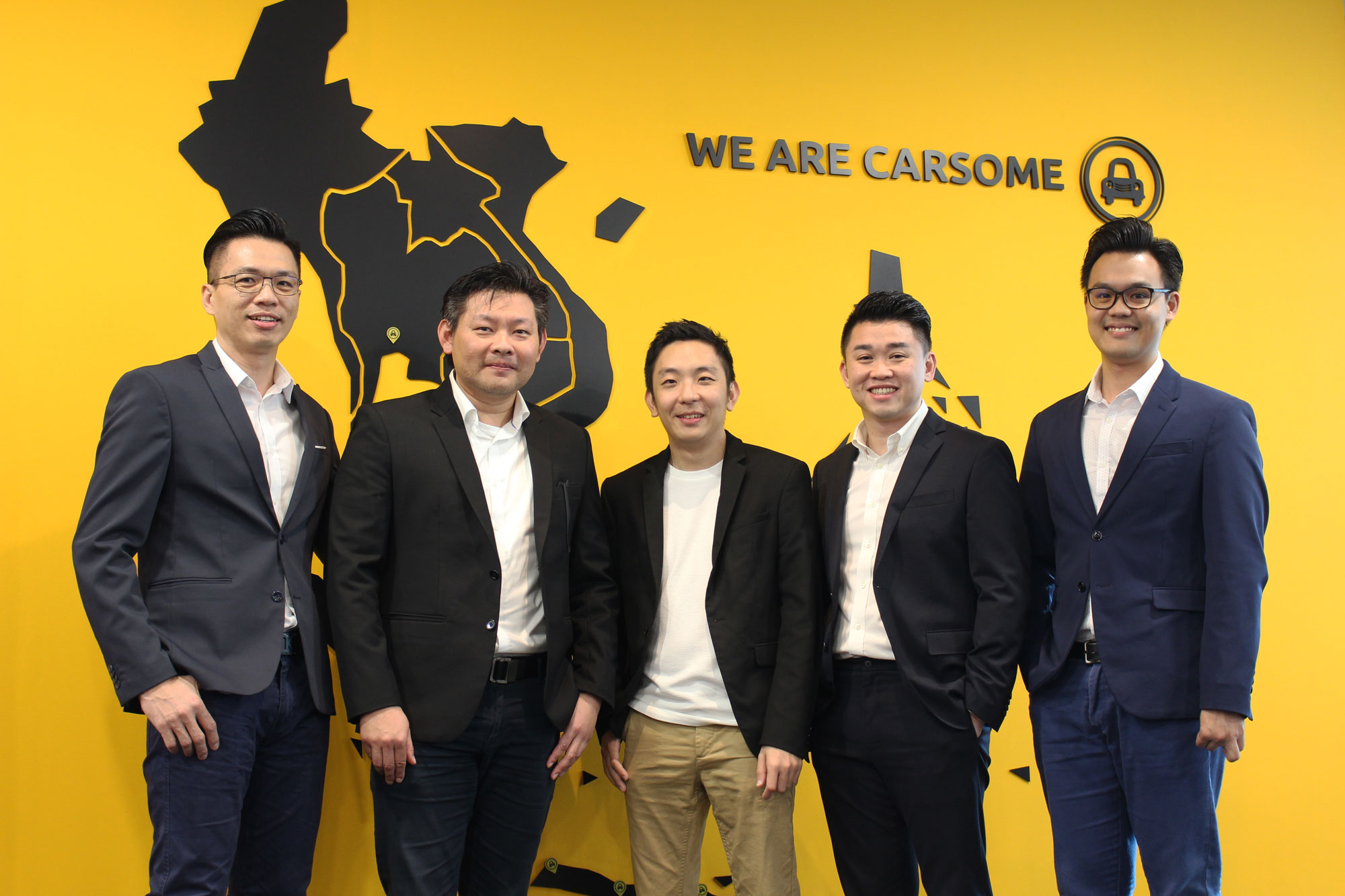
    Southeast Asian online used car trading platform Carsome has launched its new Carsome Experience Centre in Kuala Lumpur.

    The move signals the opening of the firm’s B2C segment, introducing a highly digitized and transparent car-purchasing process, aimed at addressing consumer distrust when buying second-hand cars. The firm works to enhance trust and assurance throughout the industry’s supply chain in the areas of sourcing, financing, retailing, and after-sales services.

    “We want to create an end-to-end trusted experience for consumers when it comes to buying used cars,” said Carsome co-founder and CEO Eric Cheng.

    “Our Car Purchase Preference Survey showed that 70 percent of car buyers want detailed information on car condition; 60 percent appreciate an extended warranty; and 40 percent value test drive experience and money-back guarantee.”

    The firm offers a one-year warranty and five-day money-back guarantee on selected vehicles. The service also features a home-delivery option. Test drives take place in a controlled setting from the Experience Centre.

    “Carsome’s B2B business has solved a persistent issue for used-car dealers when it comes to sourcing inventory,” said Cheng. “With the launch of our B2C segment, we are now creating a new customer-acquisition channel for our partner dealers to remarket and sell more cars through our extensive marketing reach. This is an exclusive, value-added service to our partner dealers, who can now list their cars on Carsome website for free.”

  • Anonymous sources say that more U.S. Apple Stores will reopen this month

    Anonymous sources say that more U.S. Apple Stores will reopen this month

    Besides delaying the release of the 5G Apple iPhone 12 family, COVID-19 has also interfered with Apple’s retail stores. Back in January, Apple started closing retail locations in China.  By the following month, all 42 Apple Stores in the country were closed only to reopen a month later. But as the virus made it’s way west, Apple shut all of its stores outside of China by the middle of March. Quite optimistically, the tech giant at first hoped to reopen them on March 27th. But it wasn’t until May that Apple started turning the lights back on inside its U.S. retail locations.

    But this is 2020 so of course, that wasn’t the end of the story. As May was coming to a close, protesters looted several state-side Apple Stores following the police-related death of George Floyd. What the looters didn’t know was those iPhone units snatched from an Apple Store won’t work. One store in Minneapolis was looted, boarded up, looted again, and boarded up again. Another store in Portland had tall windows smashed on all sides just two days after reopening from the COVID-19 shutdown. At that point, of the 271 U.S. Apple Stores, 140 had reopened.

    Apple plans on reopening a small number of U.S. Apple Stores late this month. These locations had closed due to the uptrend of coronavirus cases in certain markets. People with knowledge of the situation say that for the immediate future, the stores will operate on an appointment-only basis. The sources say that employees have been informed by Apple of its plans; the company says that the stores will each follow local guidelines to determine the maximum number of shoppers allowed inside at one time and the social distancing required. During the peak of the pandemic with most U.S. stores shuttered, some Apple Store employees ended up handling technical support calls from home while others continued to get paid while waiting around for the store they worked at to reopen.

    Apple would surely like to have most of its retail store infrastructure at full strength as it prepares to introduce some new devices for the fall including the first 5G iPhone models, a new tablet, and the next Apple Watch.

  • Vietnam casinos enjoy double-digit revenue growth

    Vietnam casinos enjoy double-digit revenue growth

    Eight casinos in Vietnam saw their combined revenues rise 60 percent from 2018 to VND2.5 trillion ($108 million) last year.

    These eight establishments were licensed before March 2017, when the government began a trial project allowing Vietnamese to gamble in local casinos, according to a recent report by the Ministry of Finance. Earlier, only foreigners were allowed to play at casinos in Vietnam.

    Five of the casinos are in the north, two in the central region, and one in the south. They contributed VND1.34 trillion ($58 million) to state’s coffers last year, up 49 percent year-on-year.

    But not all eight casinos recorded growth. Royal International Corporation (RIC), which operates the largest casino in the northern province of Quang Ninh, for example, saw revenues decline of 45 percent from 2018 to VND97.8 billion ($4.2 million) last year. It also recorded a loss of VND50.4 billion.

    The Aristo International Hotel Casino in the border province of Lao Cai, operated by Australian company Donaco International Limited, saw revenues falling 17 percent from 2018 to AUD21.5 million ($15.4 million) last year. Its profits dropped 44 percent to AUD4.8 million ($3.4 million).

    After March 2017, three more casinos were licensed in Vietnam, including Casino Corona on Phu Quoc Island off Vietnam’s southern coast, which began operation in January last year and was the first casino in Vietnam to allow locals to play.

    Its revenue from casino operations was VND1.38 trillion ($59.5 million) last year. It earned pre-tax profits of VND280 billion, serving 105,000 customers last year, of which 45 percent were Vietnamese.

  • Zalora selects regional chief people officer

    Zalora selects regional chief people officer

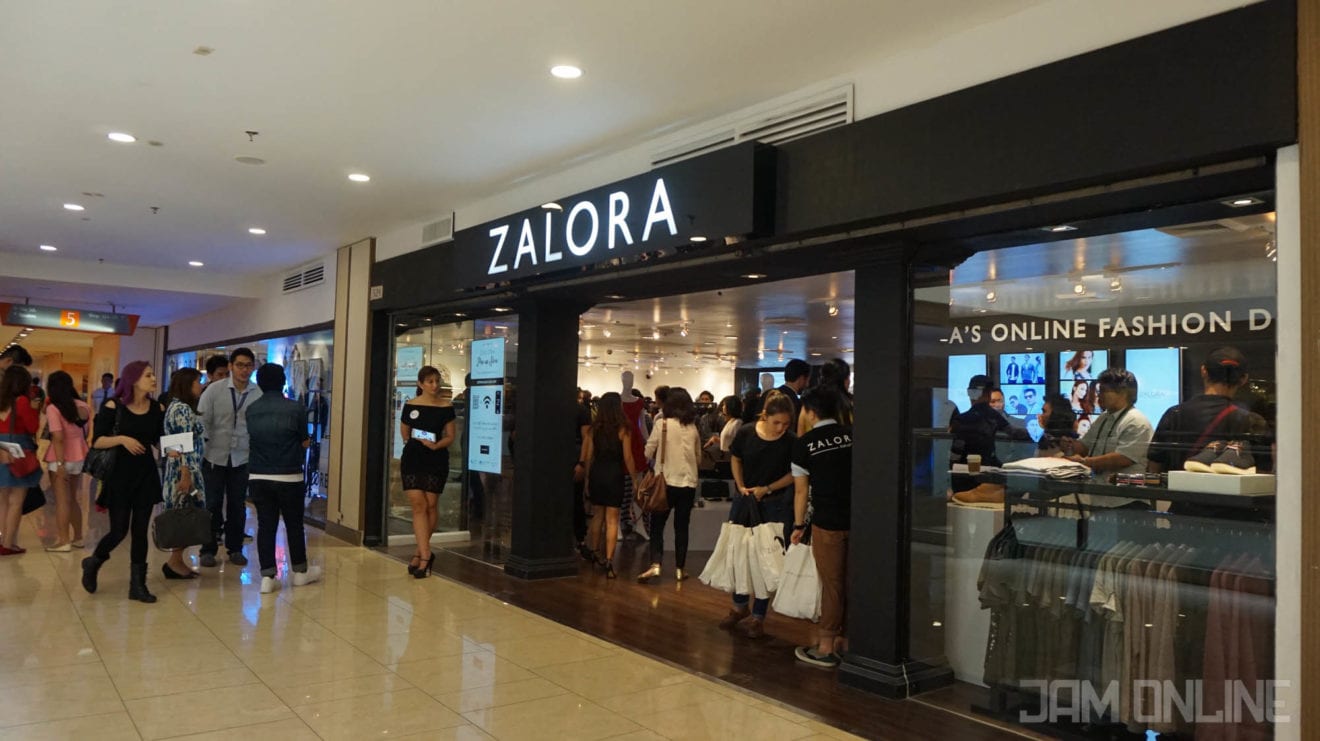
    Online fashion platform Zalora has appointed Louise Pender as chief people officer, essentially a head of HR role.

    With the new role, Pender will oversee “the people and culture teams” across all markets, the online retailer said in a statement. She will also be responsible for human resources functions, including talent acquisition, talent development, workforce planning and strategic business partnering.

    “Louise is a leader with a record of building and empowering high performing teams,” said Gunjan Soni, CEO of Zalora. “Her career has centered around her passion for helping organizations and individuals reach their full potential. Since joining Zalora in March 2016, Louise has championed a number of People initiatives, including diversity and inclusion.”

    She will concurrently head the Legal and Sustainability team, in her existing role as Zalora’s General Counsel, according to the company.

    Prior to Zalora, Louise worked in senior roles at United Group Services and Siemens in Australia, Gate Group Holdings in Switzerland, and Gate Gourmet Inc in the USA. She has more than 20 years of experience in legal and business advice after graduating with a law degree in her native New Zealand.

  • Destination Group launching Boom Boom Burger

    Destination Group launching Boom Boom Burger

    Destination Group is to introduce a new burger joint Boom Boom Burger, as part of a broader expansion plan in Thailand. Located at Sukhumvit Bangkok, the first Boom Boom Burger store is scheduled to open on Tuesday (September 1).

    Besides the burger, Destination Group also has plans to launch a pizza chain soon. Earlier this year, Destination brought the US burger brand Big Boy into Thailand, the brand’s first destination in Southeast Asia. Launching with a delivery service only, it will roll out food trucks and kiosks in Bangkok from October.

    The group aims to open Thailand’s first full-scale Big Boy outlet early next year and then expand to 20 to 25 branches during the next three years, Gary Murray, founder, and CEO of Destination told the Bangkok Post newspaper.

    The expansion plan in Asia will cost Destination about US$25 million, according to the company.

    Destination said it is also finalizing a licensing agreement with a Mexican casual-dining brand.