Tag: asia

  • JD to launch worldwide new products initiative

    JD to launch worldwide new products initiative

    Chinese e-commerce platform JD plans to help 3000 new products around the world become hot sellers, nurturing more than 1000 new global brands this year.

    The details were announced during the JD Worldwide online conference for merchants, which focused on customer growth, developing third-party business and nurturing merchants in order to support the growth of more international retail in China.

    The group also anticipates helping more than 100 suppliers to achieve RMB100 million in sales this year via monthly promotions designated to push new products.

    Last year an average of more than eight new products were sold on JD Worldwide every minute. Customers displayed a greater consumption-ability during this period, and the platform has more young consumers and consumers from lower-tier cities than in previous years.

    According to the firm, JD Worldwide will focus on building a healthy ecosystem for merchants this year with a more comprehensive after-sale service system and special support for those using JD’s fulfillment services.

    During the coronavirus outbreak, JD’s international supply chain system and continuous logistics service have enabled merchants to supply their products to customers without interruption, with some merchants seeing sales increase by more than 90 percent.

    JD currently has more than 1000 international transportation routes to support overseas merchants.

  • China will drive massive global e-commerce transaction growth by 2024

    China will drive massive global e-commerce transaction growth by 2024

    Chinese growth will drive e-commerce transaction values up 43 per cent to US$4.8 trillion by 2024, according to new reporting by Juniper Research.

    The research showed Chinese e-commerce undergoing 62 per cent value growth over the next four years, bolstering global e-commerce value along with emerging markets in Latin America, Africa and the Middle East, among others.

    The report found that improvements in connectivity will enable the rise of e-commerce in new markets, thus urging payment providers to seek fresh revenue streams in emerging regions to offset slow growth in developed markets – with a particular emphasis on the potential of mobile payments that do not require a linked bank account, as mobile handset penetration is rising faster than banking penetration in young markets.

    “The popularity of mobile wallets is having a disruptive effect,” read material released by the firm, “with physical cards becoming less important to the payments market.”

    Accordingly, the research suggests that card networks must be proactive, by looking beyond the card, becoming involved in open banking initiatives and delivering omnichannel experiences for users.

    “Card networks must leverage their ability to invest in, and forge partnerships with, key players to gain scale in new areas, or they will fail to diversify their revenue streams and will be vulnerable to future disruption,” said research author Susannah Hampton.

    Juniper’s findings are published as Strategies for Payment Providers: Industry Trends, Opportunities & Recommendations 2020-2024.

  • H&M to supply protective equipment for hospitals

    H&M to supply protective equipment for hospitals

    Sweden fashion retailer H&M is to supply protective equipment to hospitals as they fight the coronavirus outbreak.

    The company said it reached out to the European Union to understand the needs and offer help, which includes opening up its purchasing operations and logistics capabilities.

    “The coronavirus is dramatically affecting each and every one of us,” said Anna Gadda, head of sustainability of H&M. “H&M Group is, like many other organizations, trying our best to help in this extraordinary situation.

    “We see this is as the first step in our efforts to support in any way we can. We are all in this together, and have to approach this as collectively as possible,” she said.

    Recently, the group also donated US$500,000 to the Covid-19 Solidarity Response Fund created by the UN Foundation to support coronavirus prevention

  • Twitter to verify health experts with priority

    Twitter to verify health experts with priority

    Twitter is taking another step in fighting misinformation and highlighting credible sources of info about the ongoing COVID-19 pandemic. The company explained in a tweet that it is “working with global public health authorities to identify experts” and get them verified as soon as possible. The Twitter verification label signifies that a profile is authentic, trusted, and a source of truth for an individual, business or organization.

    In the past, the process of verification was under attack for giving the blue label to radical groups and individuals. The verification program was suspended in 2017 after it verified the organizer of white supremacist rally in Charlottesville, Virginia and afterward the CEO Jack Dorsey called it “broken”. In the current situation, however, the blue badge can help people discern valid information in the high tide of rumors and speculation moving along with the viral wave.

    According to Twitter, the company has already verified hundreds of accounts but apparently there’s more to be done. In a message to health experts, Twitter explained that it will give priority to “accounts that have an email address associated with an authoritative organization or institution”, and added a link to the “How to update your email address” tutorial on Twitter’s help center.

    The company is working on a public-accessible form to help health experts apply directly for verification. “We’ll likely share a link to an intake form soon for experts to fill out to request verification”, commented Twitter product lead Kayvon Beykpour. Other tech companies offered help in providing fast and reliable information about the health situation as well. Facebook opened its Messenger app to developers to help build new messaging solutions for reporting coronavirus-related info. WhatsApp announced that it is opening an information hub in partnership with the WHO, UNICEF, and UNDP.

  • Coronavirus outbreak is affecting Facebook services too

    Coronavirus outbreak is affecting Facebook services too

    As more countries enact lockdowns due to coronavirus spreading and order population to stay home, wireless service provides are faced with new challenges. YouTube, Netflix and a couple of other important streaming services have already adjusted the quality of their stream to avoid internet congestion across Europe.

    Facebook is one of the companies that registered unprecedented traffic during the coronavirus outbreak. Facebook, Messenger, and WhatsApp have become vital apps for those who must remain home if they want to stay in touch with their friends and family. As such, Facebook announced that it’s struggling to maintain the reliability of its services during the COVID-19 outbreak.

    During this emergency, we’re doing everything we can to keep our apps fast, stable, and reliable. Our services were built to withstand spikes during events such as the Olympics or on New Year’s Eve. However, those happen infrequently, and we have plenty of time to prepare for them. The usage growth from COVID-19 is unprecedented across the industry, and we are experiencing new records in usage almost every day.

    And it’s not just the increased traffic that is putting a strain on all Facebook’s services, but the fact that all of the company’s employees are now working from home makes it even more challenging to maintain stability.

    In that regard, the social network giant announced that it will temporarily reduce bit rates for videos on Facebook and Instagram in those regions that are most affected by the COVID-19 pandemic. Also, the company is now testing and preparing for any issues that might arise in the coming months.

    Unfortunately, the crisis hasn’t reached its peak yet, as more countries are just starting to be affected by the coronavirus outbreak, so we can definitely expect things to get worse in the coming weeks.

  • Apple drops iOS 13.4 and iPadOS 13.4 with some great features and bug fixes

    Apple drops iOS 13.4 and iPadOS 13.4 with some great features and bug fixes

    As expected, Apple today unveiled iOS 13.4 and iPadOS 13.4. Both updates are full of new features for compatible iPhone, iPod touch and iPad models. One of the new features for all three devices is a revamped toolbar for the Mail app. The revision moves the delete icon away from the reply icon to prevent users from accidentally deleting an email they wanted to reply to.

    Also part of the update is iCloud file sharing which allows users to share iCloud Drive folders with others. Any file changes will immediately be seen by those who have access to view it. You can set this feature so that people that you don’t explicitly invite to share the folders with or allow access to, are blocked from viewing what is inside them. You can give some users permission to make changes and upload files while others you can limit to viewing and downloading files.

    A small change to the URL bar in Safari will allow someone to type a new web address instantly in the bar even when another URL is highlighted. Previously, the user would have to tap outside of the highlighted URL to tap in a new website address. The update adds nine new Memoji stickers and makes changes to the TV app affecting how the streaming service is affected (via Wi-Fi or cellular). Those without a plan offering unlimited data can select a Data Saver option that throttles the streaming rate to 600MB/hour.

    With iOS 13.4, Apple is allowing developers to offer universal purchase support. This will allow those sporting an Apple device to purchase one app and have it work on multiple Apple platforms including the iPhone, iPod touch, iPad, Mac, and Apple TV. The new update also includes a new Shortcuts Action for Shazam, and games recently played in Apple Arcade will now appear in the Arcade tab so that the user will be able to continue where he left off even when switching devices.

    CarPlay received a couple of changes including support for third-party navigation apps and in-call information will now appear on the CarPlay Dashboard. And while this will only be of interest to those who can read and write Arabic, the predictive keyboard on iOS devices will now support that language.

    In addition, the update exterminates several bugs including one in the Mail app that listed emails out of order. A bug that used excessive storage for Photos has been fixed as has a bug that showed cellular data as being off when in reality, it was on. And those whose camera viewfinder appeared as a black screen will be happy to know that Apple has taken care of this issue. A bug that prevented the Safari browser from inverting when Dark Mode and Smart Invert are enabled has been fixed, and there are several more issues that Apple has taken care of.

    The update to iPadOS 13.4 adds support for the Magic Keyboard Case on the 12.9-inch and 11-inch iPad Pro models (both the recently launched models and the 2018 versions). Installing the update will add iPad support for the Magic Mouse, Magic Mouse 2, Magic Trackpad, Magic Trackpad 2, and for third-party wireless Bluetooth and USB mouse accessories. The addition of trackpad support will allow those who own a compatible iPad Pro to use Multi-Touch gestures to scroll, zoom in or out, make a “right-click,” tap to click and more.

    The update adds the iCloud Drive folder sharing and the new Memoji stickers. And yes, iPadOS 13.4 also has a list of bugs that the update exterminates.

    To update your iPhone or iPad, go to Settings > General > Software Update.

  • Online-Only Banking Kicks Off in Hong Kong

    Online-Only Banking Kicks Off in Hong Kong

    ZA Bank – one of the eight recipients of Hong Kong’s virtual banking licenses – kicked off operations yesterday, marking the dawn of digital lending in the city.

    The virtual banking arm of China’s ZhongAn Online P&C Insurance began operations, according to a statement, with a focus on offering competitive rates. Hong Kong dollar savings deposits at the digital lender will pay an annual intros rate of 1 percent – well above other traditional competitors which are paying as low as just 0.001 percent.

    ZA Bank continues to lure new customers by paying significantly higher rates for deposits than traditional lenders which shoulder the burden of heavy overhead costs. In January this year, it reportedly offered as high as 6 percent interest rate for 3-month Hong Kong dollar deposits in an initial trial to attract customers – more than double the rate offered by traditional lenders locally.

    Local regulators completed the virtual banking license issuances in April last year and more players are expected to launch in the near-term. This includes Mox which is jointly owned by Standard Chartered, telecom firms PCCW and Hong Kong Telecom, and online travel agency Trip.com. The virtual bank was reportedly undergoing beta testing by staff earlier this month.

    According to one estimate by Goldman Sachs in 2018, 30 percent of Hong Kong’s total banking revenue – or $15 billion – were at risk of being overtaken by digital banks.

  • Chinese consumer trends are changing

    Chinese consumer trends are changing

    Covid-19-induced changes in consumer behavior could prove a new tidal change in the direction of China’s influence, according to new research by market intelligence agency Mintel.

    The report suggests that mass self-quarantine, caused by the outbreak, will leave an indelible shift in how Chinese consumers – and through the country’s influence, Asia-Pacific – behave going forward.

    The research shows that most consumers across Asia-Pacific are active online while they have extra time on their hands, suggesting that brands can use live stream, online, and interactive ways to engage with their customers at home.

    According to the data, three-quarters of consumers across Asia-Pacific agree that they find themselves wanting to learn more about things than they used to, including information on brands as well as social issues – creating an opportunity for brands to offer authoritative expertise. Elderly people, previously reticent to shop online, are now coming to terms with the technology.

    Mintel has pointed out distinct benefits to both consumers and brands in having consumers’ time, technology, and attention. In China, the group has seen live-stream presentations by chefs, gym instructors, club DJs, real-estate agents, new movie releases, performers, farmers, auto dealers and retailers.

    “Even while online shopping has been boosted, and food delivery carries on (despite delivery restrictions), will the slow-it-all-down zeitgeist lead to a furthering of the shift towards consumers seeking more meaningful experiences, rather than just accumulating things?” Mintel asked in a statement. “Based on Mintel’s 2030 Global Consumer Trends, we think so.”

    The group advises that just as in wartime, brands need to keep marketing their products and services while innovating their strategy through changes in the consumer market, including the effect of the epidemic.

    As China now begins its economic reboot and supply chains regain traction, Mintel contends that we will witness a reconfiguration of industries into new consumer behaviours.

  • 7-Eleven Thailand recruits thousands delivery staff

    7-Eleven Thailand recruits thousands delivery staff

    Convenience-store chain 7-Eleven Thailand is recruiting 20,000 workers to make deliveries in the midst of the coronavirus outbreak.

    With many Thai nationals, visitors and residents confining themselves to home in the interests of social distancing, and malls and most shops and entertainment venues closed, 7-Eleven Thailand parent CP All has announced moves to increase delivery services to support those in isolation.

    New staff would be working deliveries from all 7-Eleven locations throughout the country.

    Those eligible for the employment opportunity must be over 18 and ideally have their own vehicles. The firm is accepting online applications for the positions.

    With more than 800 coronavirus cases and climbing, Bangkok has largely shut down its retail sector as department stores, bars, dine-in restaurants and outlets not trading in essential goods have been forced to shut for several weeks.

  • Anta Sports hits sales and profit record

    Anta Sports hits sales and profit record

    Chinese sports shoe retailer Anta Sports has delivered its sixth consecutive year of sales growth, reaching a record US$4.8 billion in 2019, 40 percent up on the prior period.

    Hong Kong-listed Anta Group owns many Chinese and international sports brands, including Anta, Fila, Descente and Kolon Sport.

    Sales of the Anta brand surged 21.8 percent, and for Fila by 73.9 percent.

    Profit attributable to shareholders was a record $757 million, up 30.3 percent, marking the third consecutive year of 30-per-cent-plus growth for the company.

    Anta ended last year with 12,943 stores, 10,516 of those across Mainland China bearing the Anta or Anta Kids banners. Another 1951 Fila stores are located on the mainland and in Hong Kong, Macau, and Singapore and there are 136 Descente stores in China.

    The company said a policy of pursuing “high-quality growth, organic operation, and strong cost management” over recent years had laid a solid foundation for the group to cope with market uncertainties especially in times of challenges posed by the global Covid-19 outbreak.

    “Prior to the outbreak, brands under the group have already realized strategic plans of both online and offline development,” the company said in a statement.

    “In the early stage of the outbreak, the group has also reacted promptly to offset the blow from coronavirus – implementing strict cost management, exercising community marketing, building more flexible supply chains, maintaining on-time logistics and deliveries, and promoting e-commerce innovation are all among concrete moves that Anta Group has made.”

    The company is predicting a “low double-digit” decline in sales for the first half of the current year as a result of the coronavirus crisis impacting retail, but anticipates a return to growth in the second half given the rebounding Chinese economy.

    “Therefore, the group is confident to achieve positive annual growth by the end of 2020.

    “From a long-term perspective, the Covid-19 outbreak will not last for an indefinite period of time and consumers’ needs for health and fitness products will definitely be heightened, which will contribute to the group’s swift recovery after the crisis.”

  • Reliance Retail buys Indian department-store chain

    Reliance Retail buys Indian department-store chain

    Reliance Retail Ventures Limited has bought Indian retailer Shri Kannan Departmental Store for US$20 million.

    “The investment will further strengthen the group’s retail operations and presence in the state of Tamil Nadu and will further enable retail and new commerce initiatives,” said a spokesperson for Reliance.

    With this acquisition, Reliance Retail has started a “new commerce” plan which links producers, traders, small merchants and customers through digital innovation.

    Incorporated in 1999, Shri Kannan Departmental Store operates 29 stores across Coimbatore and nearby areas with a retail area of more than 600,000sqft.

    Reliance Retail is India’s largest retail conglomerate, with more than 4000 stores covering multiple categories. It is a subsidiary of Reliance Industries.

  • Cebu Pacific suspends all flights until April 14 due to COVID-19 lockdown

    Cebu Pacific suspends all flights until April 14 due to COVID-19 lockdown

    Cebu Pacific said Tuesday all flights would be canceled from March 19 to April 14 in compliance with the Luzon-wide lockdown and similar quarantines elsewhere in the country to contain the COVID-19 pandemic.

    The last day of operations will be on March 18 to service flights from Manila, Bangkok, Tokyo, Osaka, Nagoya, Ho Chi Minh, Singapore, Taipei, Bali and Jakarta, the country’s largest carrier said in an advisory.

    “All Cebu Pacific and CebGo flights will be canceled from March 19 until April 14, in support of government regulations on COVID-19,” Cebu Pacific said.

    Philippine Airlines and AirAsia earlier announced flight cancellations due to COVID-19.

    Affected passengers can rebook, refund or store the value of the ticket in a fund, it said.

    Ticket offices will also be closed from March 19 to April 14 for the safety of passengers and personnel, the carrier said. Changes can be done through the “manage booking” portal in its website, Cebu Pacific said.

    Cebu Pacific earlier said the COVID-19 pandemic would “significantly” dent revenues and operating expenses.

  • Malaysia Airlines and AirAsia limit number of flights till March 31

    Malaysia Airlines and AirAsia limit number of flights till March 31

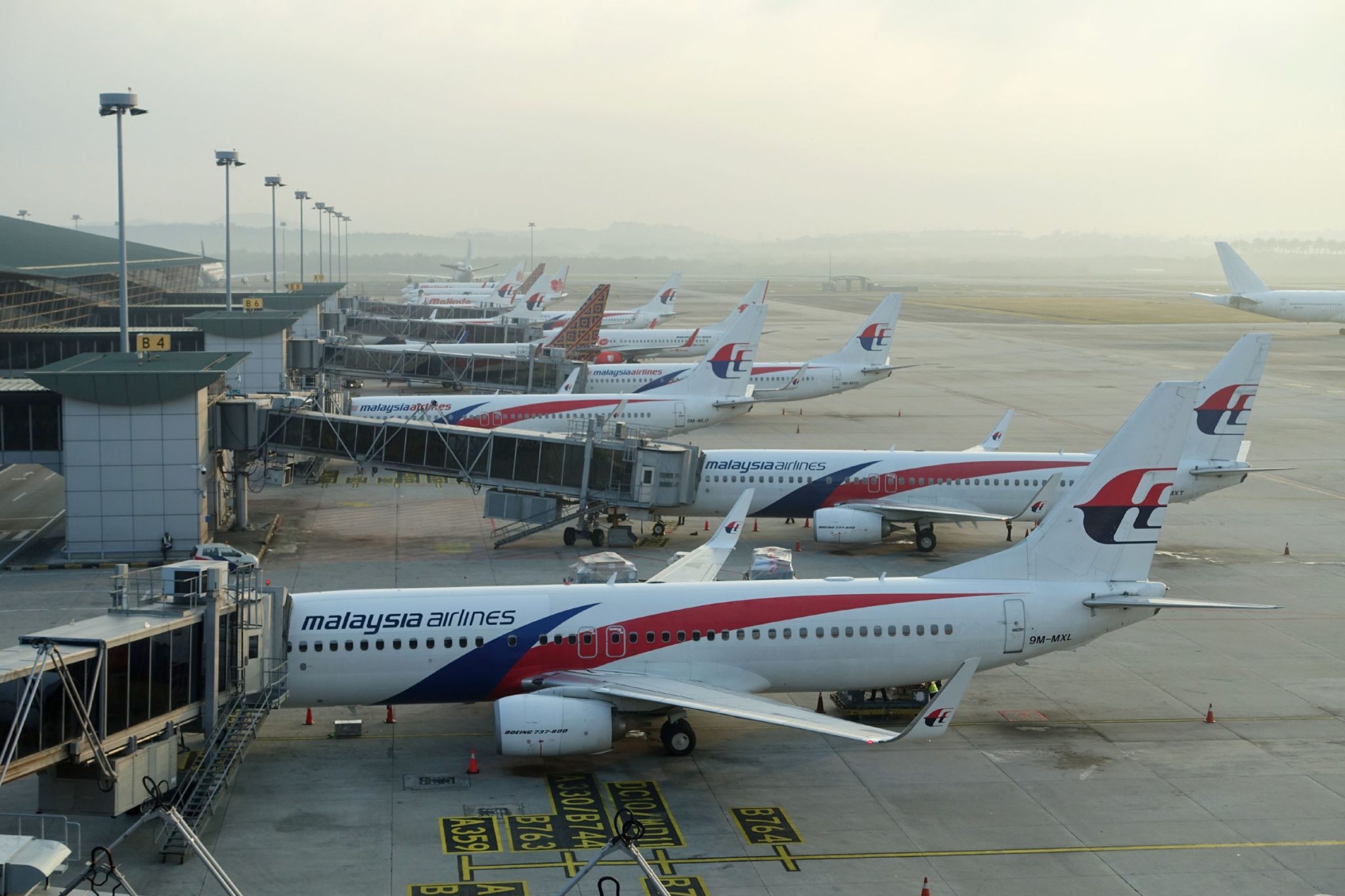
    Malaysia Airlines will significantly reduce its overall network, following the nationwide movement control order from March 18 to 31.

    International flights to India are suspended until the end of the month and flights to the Philippines are suspended between March 21 and 31, following the respective governments’ ban on travel to and from Malaysia.

    Malaysia Airlines group chief executive officer Captain Izham Ismail said the situation has been “rather fluid” since the airline has had to make last-minute cancellations to abide by the restrictions.

    “We are doing our best to re-route passengers via reallocation onto other carriers. We are also adjusting our low-load flights by canceling and merging them to manage costs while managing our customer expectations, ” he said.

    Prior to the order, Malaysia Airlines has suspended services to Saudi Arabia, South Korea, and parts of China (Beijing and Daxing), as well as the Kota Kinabalu-Shanghai route due to border controls.

    The carrier also reduced capacity to Australia and New Zealand due to the self-isolation policy of the two countries.

    To date, the company has canceled over 4,000 flights.

    “Our Global Contact Centre has been at the brunt of this situation with the number of calls peaking at 25,000 daily and up to 2,000 e-mail daily in the past three weeks, ” Izham said.

    He added that it will take the company longer to process refunds due to the sheer volume of requests.

    “I assure them that we are not here to take advantage of the situation. In fact we are one of few airlines that have offered unlimited flexibility in travel date change and waiver of certain fees, ” Izham said.

    Due to the significant capacity cut, Malaysia Airlines and all sister companies under the Malaysia Aviation Group’s back-office operations have also been reduced alongside flight and airport operations.

    A majority of its workforce globally are working from home in line with various governments’ requirements.

    Passengers with bookings may initiate changes online via the Covid-19 waiver assistance form available on the carrier’s website.

    Meanwhile, AirAsia has also significantly cut down its number of domestic and international flights.

    “AirAsia will be operating a limited number of domestic and international flights from today until 31 March, which are subject to change due to the fluidity of the current situation.

    “Affected guests will be promptly notified via email or SMS. AirAsia strongly encourages guests to update their contact details using the “My Bookings” feature on airasia.com to ensure that they receive timely notifications,” the airline said in a statement.

    For further and latest information regarding options and eligibility related to COVID-19, AirAsia guests can visit the Covid-19 Customer Guide on its website.

    A quick look at their booking page shows that there are only two flights a day from Kuala Lumpur to Kota Kinabalu, Kuching and Penang (and vice versa). Flights to other cities and towns including Johor Baru, Kota Bharu, Alor Setar, Kuala Terengganu, Sibu, Miri and Bintulu have all been suspended until April 1.

    Currently, there is one flight a day to Sandakan, Tawau and Labuan from KL but even these routes may be suspended within the next few days.


  • Starbucks Philippines shuts down all stores due to COVID-19

    Starbucks Philippines shuts down all stores due to COVID-19

    Following its temporary closure of stores in Luzon last week, Starbucks Philippines has now extended the shutdown to Visayas and Mindanao.

    In social media posts, the coffee chain said the health and well-being of its partners (employees) and customers remain top of mind and their highest priority.

    The complete closures means no delivery or takeaway services will be offered either.

    “Based on the guidance of local authorities and after much consideration, our stores in Visayas and Mindanao will also close. As such, all Starbucks stores in the Philippines will be temporarily closed”, Starbucks Philippines posted on its Facebook and Twitter account.

    The company said it looks forward to serving customers again as soon as possible, but as of now, it encourages everyone to stay indoors and stay safe and healthy.

    President Rodrigo Duterte declared the whole Luzon under “enhanced community quarantine” on March 16 and some other regions followed suit as the number of cases of coronavirus disease (COVID-19) continued to soar.

    Yesterday recorded the highest jump of COVID-19 in the Philippines with 82 confirmed patients in just a single day making it to 462 in total with 33 deaths while 18 have already recovered.

  • Ex-Pepsi and GIC Heavyweights Join DBS Board

    Ex-Pepsi and GIC Heavyweights Join DBS Board

    A seasoned financier and a consumer goods veteran join DBS’s board in a time of «intense competition for digital and sustainability leadership».

    Anthony Lim and Punita Lai join the board of DBS effective April 1 this year, according to a statement. The two join as part of a «renewal process» that will also see existing board members Nihal Kaviratne and Danny Teoh retiring on 31 March 2020.

    In addition to serving the board, Lim will also become a member of the DBS’s board risk management committee and its executive committee. Lai will become a member of the bank’s compensation and management development committee and, subject to approval, its nominating committee.

    Lim spent nearly two decades with GIC before his retirement in 2017 in senior roles including president of the London office and New York-based president of the Americas. Previously, he was a senior managing director at Bankers Trust Company where he spent more than a decade after a three-year stint with the Monetary Authority of Singapore’s New York-based office.

    Lai joins with 30 years of consumer goods experience with a focus on strategy, marketing and leadership. Her previous experience includes working for Coca Cola in China and PepsiCo in India.

    Lim is a seasoned financial markets professional with extensive global experience, while Lai brings with her a wealth of experience in the consumer goods sector, honed in Asia’s two biggest markets, China and India, said Peter Seah, DBS’s chairman. «Their solid credentials make them strong additions to the DBS Boards at a time of intense competition for digital and sustainability leadership.»