Tag: asia

  • BMW India Shuts Down Chennai Plant

    BMW India Shuts Down Chennai Plant

    BMW Group India has announced a number of measures to restrict employee movement during the novel coronavirus pandemic that’s swept the globe. The automaker has announced that it will be closing the Chennai-based manufacturing facility with immediate effect until March 31, 2020, while employees at The National Sales Company and BMW India Financial Services will work from home during this period. Meanwhile, essential services including security, facility management and healthcare will continue to operate. Furthermore, the German auto giant said that it will keep all its showrooms pan India closed during this period, while aftersales and breakdown services will remain functional albeit with limitations.

    A statement from the BMW Group read, “For the well-being of employees in the midst of the COVID-19 pandemic, work from home has been implemented across BMW Group offices in India with immediate effect. Business continuity is to be ensured across all functions while adhering to all government directives and necessary safety measures. Across the BMW, MINI and BMW Motorrad dealerships in India, staff will work from home to offer services to customers. Aftersales and breakdown services staff will operate as per the local government directives and will be functional with limitations. All showrooms are presently closed and will reopen as per local government advisory.”

    Almost all major automakers including Tata Motors, Mahindra, Maruti Suzuki, FCA India and more have announced plant closures amidst the outbreak. In the luxury space as well, Volvo India had already announced that it has asked its employees to work from home, while Audi India has also shut operations with the closure of the Skoda Auto-Volkswagen facilities across India, while Mercedes-Benz too has closed the Chakan facility, near Pune. The auto industry is estimated to bear a loss of ₹ 15,000 crore every day during this phase, which further adds to the sector’s woes since the past year.

  • Shanghai Fashion Week goes digital with Alibaba

    Shanghai Fashion Week goes digital with Alibaba

    Shanghai Fashion Week is partnering with Alibaba’s B2C marketplace Tmall to hold its first fully digital event due to restrictions on gatherings caused by the coronavirus outbreak.

    The entire roster of runway shows will be streamed online on Tmall from March 24–30. More than 150 international brands and designers will showcase their latest autumn-winter collections via the Alibaba Group digital platforms.

    Readers can watch the opening show of Shanghai Fashion Week here tonight (March 24) at 6pm Beijing time via Taobao Live from your phone or computer watchers of this year’s Shanghai Fashion Week can immediately purchase the items they see on the runway without having to wait for the collections to hit the shelves.

    “We have integrated some of Alibaba’s most advanced technologies to bring a new and elevated experience to consumers,” said Tmall Fashion and FMCG GM Mike Hu. “This partnership with Shanghai Fashion Week allows us to leverage our experience in digitizing brick-and-mortar retail stores and explore a new format for the brand and product launches, bringing together technologies like live-streaming, short-form videos, DingTalk and Tmall Flagship Store 2.0 in a full-chain solution.”

    Covid-19 has forced the cancellation and rescheduling of many global fashion events, including the Milan Fashion Week originally scheduled for February

    Tmall intends for its “cloud launch” format to broaden out the reach and appeal of traditional product-launch events this year. According to material released by the firm, brands will interact with consumers virtually across an extended timeline and physical locations, from warm-up previews to the live broadcast and post-event interviews.

    The platform plans to team up with global brands to launch 360-degree marketing campaigns that cater to Chinese audiences, said Hu.

  • Starbucks Japan launches Smart Lounge railway station concept

    Starbucks Japan launches Smart Lounge railway station concept

    Starbucks Japan has launched a new concept store in collaboration with railway operator JR East.

    The “Starbucks Coffee Takanawa Gateway Station” opened yesterday, introducing its Smart Lounge concept – a store space focused on business use. The store features numerous semi-private and single-seat seats to meet the needs of using a cafe for work purposes as well as a large table used for meetings with multiple people.

    Two fully-private booth-style share offices are provided within the store. Power outlets are available for all seats, and the store also operates a mobile battery sharing service. Wifi is available throughout the premises.

    The cafe also specializes in speedy cashless payment via Starbucks Card and Suica, among other e-payment platforms. Via a dedicated app, it allows customers to settle orders in advance and receive products smoothly at stores, designed to allow more effective use of time and reduction of waiting time at cash registers.

    “Starbucks has more than 1500 stores nationwide and connects with 800,000 customers a day,” said Starbucks Japan head of store development Kazuhiro Ishihara. “Each store has its own personality and expression that reflects the locality and needs of each individual.

    “At the Takanawa Gateway Station, we provide a smart and comfortable experience that suits its location and purpose, and integrates with people’s lives to create a future city that no one has yet seen. We aim to be a store and base that can be created with people.”

    Takanawa Gateway Station is situated in Shinagawa town, a new urban area under development that aims to be a new gateway to Tokyo.

    JR East aims to operate 30 shared office spaces by the end of the financial year.

  • Coronavirus Drags Car Dealers Into Digital Commerce

    Coronavirus Drags Car Dealers Into Digital Commerce

    Auto retailers have been slow to embrace e-commerce, but the coronavirus pandemic is changing that. Online traffic has risen even as in-person showroom traffic has disappeared. Auto dealers are embracing digital tools to close deals without a handshake and arranging for vehicles to be picked up or delivered without requiring customers to come to their stores.

    U.S. new vehicle sales will be hit hard by the pandemic. Demand dropped 13% in the first 19 days of March, according to research firm J.D. Power. In especially hard-hit markets like Seattle, San Francisco, Los Angeles and Chicago, where the virus has spread quickly, demand slumped as much as 22%.

    Moody’s Analytics said on Friday the new and used vehicle markets could slump by as much as 20% from 2019 levels and stay depressed into 2021.

    New and used vehicle markets could slump by as much as 20% from 2019 levels and stay depressed into 2021.

    Based on a survey of some 40 dealers, analysts at Evercore ISI on Monday estimated the March U.S. seasonally adjusted annual selling rate could be 11 million to 12 million vehicles, on par with levels seen during the 2008/2009 financial crisis.

    However, online traffic for the 1,000 U.S. and Canadian dealers served by Roadster, which provides a digital sales platform for everything from financing paperwork to vehicle delivery, was up about 6%.

    “Many dealerships are going to get caught with their pants down,” said Brian Benstock, a dealer in the New York City borough of Queens. “This will be a watershed moment for the dealership industry.”

    Dealers have been doing business online for years, but it has never been a major focus. Only 15% of all transactions are online, according to a November survey of 540 dealers commissioned by the National Automobile Dealers Association. However, they expect online car sales to double by 2025.

    Benstock, who began moving most of his sales online in 2015, said companies like Tesla Inc and retailer Carvana Co, which does all its business online, have begun to change consumer expectations.

    Tesla has always relied on internet orders for its vehicles. It is implementing “touchless deliveries” in many locations, allowing consumers to unlock cars using the Tesla App, sign any relevant paperwork and return it to a drop-off location.

    Carvana, which sells used vehicles, expanded the number of cars it sold to retail customers by 89% in 2019 from 2018.

    Despite a sharp decline in its shares, Carvana has a market capitalization twice that of AutoNation Inc, the largest bricks and mortar U.S. retail vehicle chain. AutoNation started boosting investment in its online selling capability well before the virus shock.

    David Smith, chief executive of dealership chain Sonic Automotive Inc, said most customers still want to visit a showroom to see the cars they are buying.

    “There’s only a small percentage of the market who want to buy their car entirely online and have it delivered,” he said.

    “It’s what people wanted going into this,” she said, citing a Cox January survey that found consumers cited vehicle pick-up and delivery as their top desire.

    Matthew Zappone, general manager of a Chrysler Jeep Dodge Ram dealer outside of Albany, New York, is encouraging his sales staff to use FaceTime to show customers the vehicle features they want to see without visiting the store.

    “If you haven’t been doing it to this point, you’re under-prepared,” Zappone said.

  • Fiat Chrysler Automobile To Produce Face Masks In Asia

    Fiat Chrysler Automobile To Produce Face Masks In Asia

    Fiat Chrysler Chief Executive Mike Manley told employees that the carmaker would help with the production of masks during the coronavirus emergency, a union representative said on Monday.

    Mask production would add to an ongoing effort by Fiat Chrysler (FCA) and rival carmaker Ferrari to find ways to help Italy boost the production of healthcare equipment such as ventilators.

    Manley said one of the group’s plants in Asia would be converted to produce face masks for healthcare workers and would reach a target of one million masks per month in coming weeks, UILM union representative Gianluca Ficco said, quoting a letter sent by the CEO to employees.

    Fiat Chrysler was not immediately available for comments.

    The threat from the coronavirus crisis closed in on the global auto industry on Thursday, as Fiat Chrysler Automobiles NV warned that a European plant could shut down within two to four weeks if Chinese parts suppliers cannot get back to work.

    FCA and Ferrari, both controlled by Exor, the investment firm of Italy’s Agnelli family, are in talks with Siare Engineering, Italy’s biggest ventilator manufacturer, to help it double production of the life-saving machines which are urgently needed in the coronavirus crisis, company officials said last week.

    FCA has temporarily halted most of its plants worldwide in response to the virus spread and a consequent plunge in global auto demand.

    Ferrari has also suspended operations at its two facilities, both located in Italy.

    “We need to use the current plants’ stoppage to equip ourselves with the necessary resources to face the emergency,” Ficco said, adding he hoped that other large companies might follow FCA’s example.

  • Cath Kidston seeks white knight buyer as strategic review ordered

    Cath Kidston seeks white knight buyer as strategic review ordered

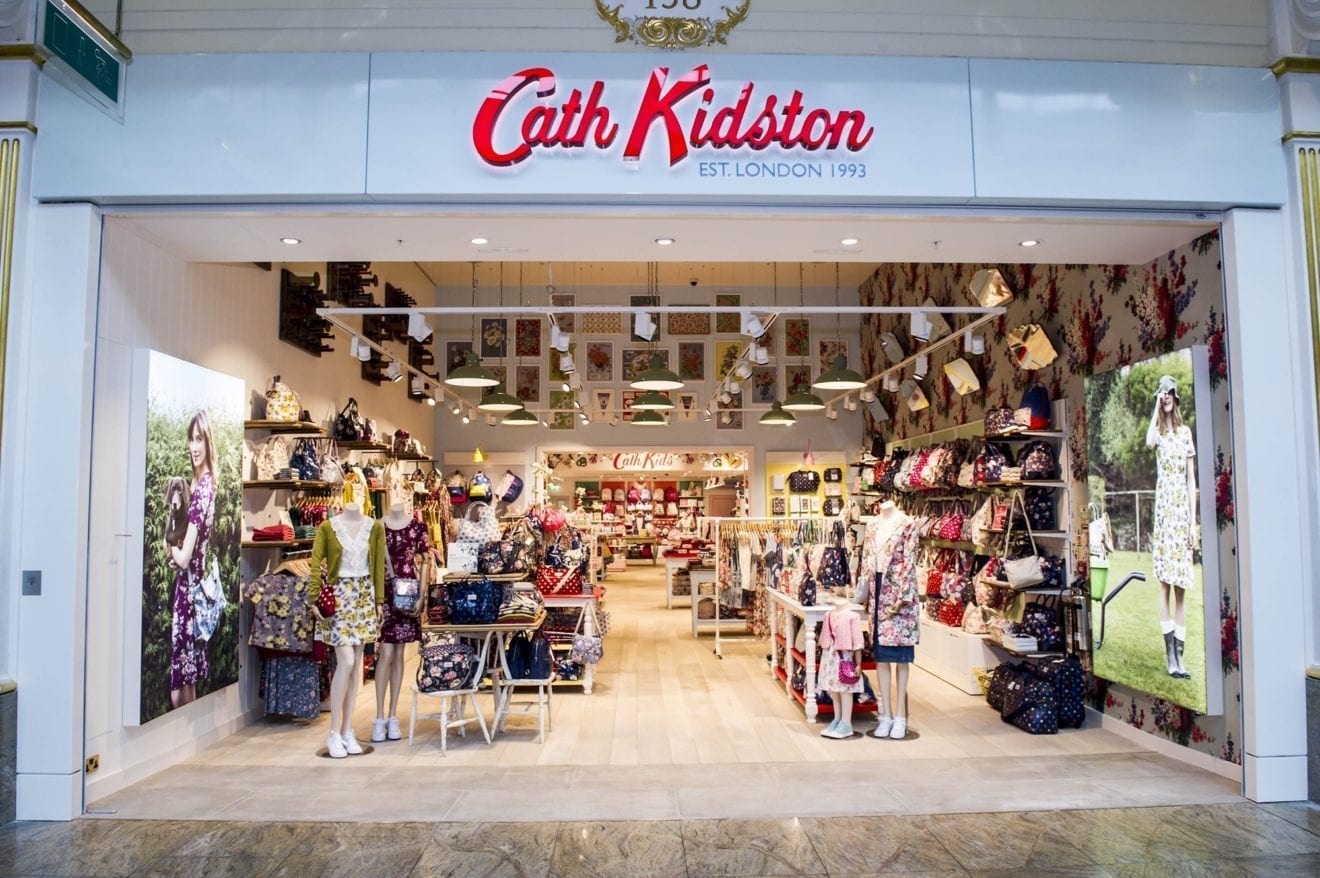
    Cath Kidston has hired external advisers to complete an urgent review of strategic options for the business as it makes a last-minute appeal for a white knight rescuer.

    Owned by Baring Private Equity Asia, the UK-headquartered clothing and homewares retailer was already struggling financially before the advent of the coronavirus which has forced stores to close in multiple markets and seen consumers suspend discretionary shopping.

    The company has about 100 stores internationally, mostly in Asia, and about 60 in the UK with a global payroll of around 2700.

    During the past two full trading years, its losses have totaled around US$31 million and companies invited to submit bids for the business have reportedly been told the company lost a further $13 million in the nine months to last December.

    According to UK media reports, the new CEO Melinda Paraie had achieved some success in turning the company around prior to the advent of the coronavirus crisis. Underperforming stores had been closed, head office staff ranks culled and resources deployed to increasing online sales.

    According to a Sky News report in the UK, potential bidders have been told to submit bids imminently.

    If Cath Kidston collapses, it will follow fellow Asian-owned retail business Laura Ashley, which called in administrators last week. Both brands operate a similar hybrid fashion-homewares retail offer.

  • Yum China reopens most stores, reports recovering footfall

    Yum China reopens most stores, reports recovering footfall

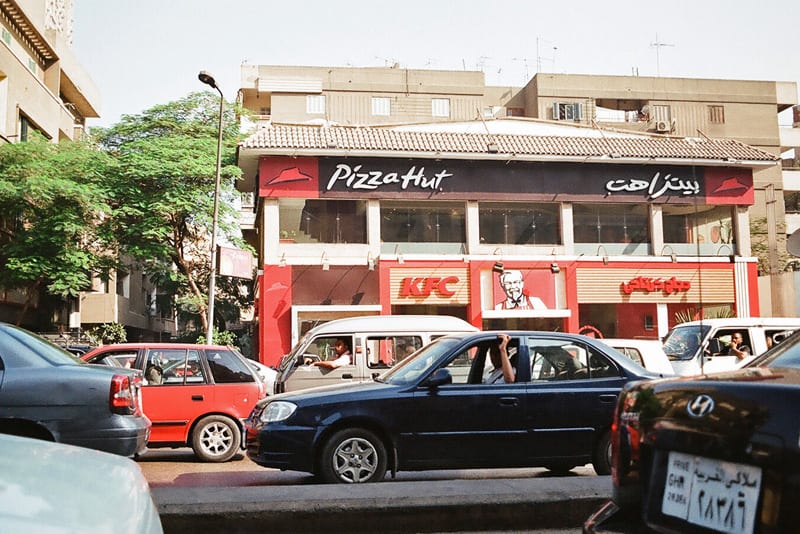
    Yum China says it is witnessing “early signs of recovery” in Mainland China as business gradually resumes and people return to work.

    However, the company, which operates KFC, Pizza Hut and Little Sheep chains, said in an update to shareholders that restaurant traffic remains “heavily impacted” as people continue to implement social-distancing measures.

    Store closures peaked in mid-February when about 35 percent of the company’s network was closed, the remainder offering only delivery and takeaway services. However, trade for those still trading significantly declined. Same-store sales for Yum China were down by between 40 percent and 50 percent year on year during the Chinese New Year holiday period.

    This week, about 95 percent of Yum China’s stores had reopened either fully or partially and about 15 percent of those continued to offer only takeaway or delivery services.

    In its update, Yum China said that while customer volumes were slowly building, they remained well down on pre-outbreak levels.

    “The pace of recovery varies by region and is slower during weekends as people avoid going out. In recent days, same-store sales were down approximately 20 percent. Sales performance fluctuates as the recovery is uneven, and the situation continues to evolve,” the company said.

    Yum China launched contactless delivery in late January, which proved popular and supported the delivery business during a period of lower dine-in traffic. “Delivery sales grew year over year, and its mix as a percentage of company sales approximately doubled.”

    Yum China also launched contactless pick-up and corporate catering services as highly sanitary options for consumers and corporate customers.

    Now that the coronavirus crisis appears to have passed its peak in Mainland China, the company is considering resuming its network expansion program. Currently paused – largely due to a shortage of construction workers and traffic restrictions – the company says it will “continue to monitor the situation and work with local authorities, resuming new store openings when conditions allow”.

    “Despite a challenging start to the year, Yum China is here for the long run, and will ensure that it remains well-positioned for the long-term growth opportunities in China.”

  • JD to issue US$212 million in coupons to boost post-coronavirus economy

    JD to issue US$212 million in coupons to boost post-coronavirus economy

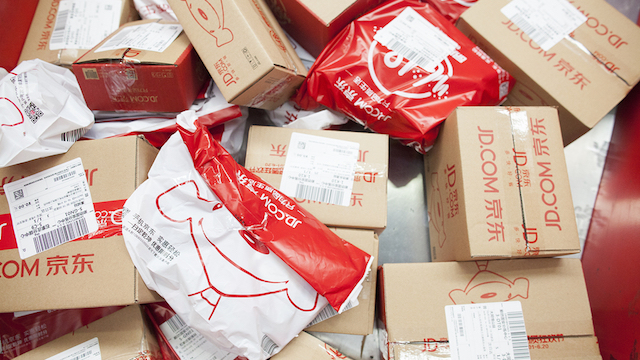
    JD is collaborating with various brands to provide RMB1.5 billion (US$212 million) in promotional coupons to stimulate sales across Mainland China.

    Starting Thursday, the Chinese e-commerce company will start sending out the coupons which cover key online retail categories such as electronics and FMCG.

    The coupons are being issued to stimulate flagging demand caused by the Covid-19 epidemic. The program aims to support brands and merchants in working towards recovering their former sales and operations levels and signals a change in tack in the coronavirus recovery period to focus on restoring economic activity.

    Since the outbreak, JD has leveraged its supply chain, logistics and technology strengths partnering with a variety of stakeholders to fight against the epidemic. The firm has also launched a series of initiatives to support brands and merchants.

  • Cebu Pacific announces policy on rebooking

    Cebu Pacific announces policy on rebooking

    Cebu Pacific flights continue to operate as scheduled. However, they have received rebooking and cancellation requests from passengers due to concerns over COVID-19 so they changed their booking policies to provide passengers with flexibility and peace of mind:

    Passengers traveling to Philippine and international destinations from March 10 to April 30, 2020, who would like to rebook or cancel their flights can avail of the following options:

    Free Rebooking – Rebook flights with change fees waived. Fare difference may apply.

    To rebook the flight, use the “Manage Booking” portal in the Cebu Pacific website.

    Travel Fund – Place the full cost of the ticket in a Travel Fund which can then be used as payment for a future booking. The Travel Fund is valid for 180 days and can be used for bookings as far as 12 months out.

    To avail of the Travel Fund option, they may use the “Manage Booking” portal in the Cebu Pacific website to cancel their booking and store the value in the Travel Fund.

    New flights booked from March 10 to April 30 (regardless of travel date and route) can avail of CEB Flexi for FREE. CEB Flexi enables travelers to rebook their flights up to two times, fare difference may apply. Simply select the “CEB Flexi” add-on during booking.

    Cebu Pacific practices precautionary measures against COVID-19. This includes frequent deep-extensive cleaning and disinfection of aircraft, provision of gloves and disinfectants for our cabin crew, and the use of HEPA air filters in our aircraft to block 99.99% of contaminants and viruses.

    Cebu Pacific is monitoring developments regarding COVID-19, coordinating regularly with government and other stakeholders.

  • Bangkok shopping centres, markets closed for three weeks

    Bangkok shopping centres, markets closed for three weeks

    Bangkok shopping centers and markets were effectively shut down yesterday as the city moved to slow the spread of coronavirus.

    According to a Thaiger report, the closures are in response to a Bangkok government edict to shutter all department stores and markets in the capital for three weeks in a move to slow down the spread of the current coronavirus outbreak.

    “All food stores and restaurants will be allowed to serve only take-home orders while hotel restaurants can serve only hotel guests,” read the official announcement. “The measure will take effect between March 22–April 12.”

    The announcement that Bangkok shopping centers must close was released as the number of confirmed Covid-19 cases in the Thai capital continued to rise. Nationwide there were 599 reported infections as at Monday morning, local time.

    Despite the retail closures, people in the city still have freedom of movement although social distancing is still recommended by the administration.

    Similar measures have been introduced in other international locations – including hard-hit Italy, which remains under national quarantine, Spain and New York City.

  • South Korean malls remain calm despite panic buying worldwide

    South Korean malls remain calm despite panic buying worldwide

    Panic buying is spreading like wildfire among a number of countries as fear of the coronavirus deepens.

    But large shopping malls in South Korea, however, are as peaceful as in the pre-coronavirus era.

    Experts argue that prior experiences in dealing with various epidemics, such as Severe Acute Respiratory Syndrome (Sars) in 2003 and Middle East Respiratory Syndrome (Mers) in 2015, has allowed retailers to maintain a stable supply of everyday necessities at shopping malls.

    Rapid technological advancement in online delivery and distribution systems thanks to the fierce competition among retailers has also helped maintain supply despite the surge in demand, some argue.

    “Despite the coronavirus outbreak, we are maintaining a delivery speed of half a day or one day at the latest. This is top class even on global standards,” said a source familiar with the e-commerce industry.

  • Wirecard Expands E-commerce For Chinese Shoppers

    Wirecard Expands E-commerce For Chinese Shoppers

    Wirecard is expanding its e-commerce offer for Chinese online shoppers by helping European merchants integrate the popular payment method WeChat Pay into their online shop in just a few minutes.

    Chinese customers can now shop online or in the app of these merchants and check out via WeChat Pay, said Wirecard in a statement on Monday. This solution is ideal for European merchants seeking to enter the competitive and growing Chinese e-commerce marketplace. The end-to-end offering also includes logistics and customs support, thanks to SwissPost, as well as consulting and training so that merchants can get up and running as quickly and effectively as possible.

    As e-commerce continues to boom around the world, it is essential for merchants with global aspirations to offer localized payment methods. Our long-standing experience with Chinese payment methods enables us to support merchants that seek to break into the lucrative Chinese e-commerce market, said Christian Reindl, EVP Sales Retail at Wirecard.

    Online merchants that capitalize on this offering will see WeChat Pay integrated into their in-app checkout page. When a user chooses to pay via WeChat Pay, they are redirected to the app or mobile website, where they can easily and quickly carry out the payment.

    The digital financial technology company said the new offering can drive up conversion rates and customer satisfaction for customers in China, where digital payments are commonplace. Wirecard will process all payments and support merchants with the integration, as well as offer virtual workshops and marketing support.

  • Apple limits online sales of iPhone as stocks go down

    Apple limits online sales of iPhone as stocks go down

    Apple has placed restrictions on bulk purchases of its iPhones in some Asian territories after the coronavirus outbreak caused interruptions to supply.

    Customers in Mainland China, Hong Kong, Taiwan, and Singapore are limited to buying two devices of the same model per order. While similar limitations are in place in many other regions, customers in those territories are not being notified of the limitations until check-out.

    The firm issued a warning to investors last month that the coronavirus outbreak had significantly affected its supply chain, stating that it may not meet its quarterly revenue expectations. Apple shut down all of its retail stores outside China 10 days ago, including 52 outlets in Mainland China, Hong Kong and Taiwan.

    Apple suffered a 61-per-cent year-on-year drop in iPhone sales last month, at a time when Chinese factories were largely closed. Many have since reopened as demand for iPhones drops globally with the spread of social distancing and closed retail outlets.

  • Barclays Announces New Heads In Asia

    Barclays Announces New Heads In Asia

    Barclays on Monday appoints a new Vice Chairman of Greater China Banking and Head of Technology in Banking for the Asia Pacific.

    Carrie Chen has been appointed Vice Chairman of Greater China Banking while Sung-Min Chung has been appointed the new Head of Technology in Banking for the Asia Pacific at Barclays. Based in Hong Kong, Chen and Chung will be strengthening senior client coverage and meaningfully broaden Barclays’ client footprint in the region.

    Both of these appointments are a clear demonstration of our continued focus and commitment to invest for growth in the region, said Vanessa Koo, Head of Banking for the Asia Pacific and Greater China at Barclays in a media statement on Monday.

    Chen brings over 15 years of experience in investment banking in China. She joins Barclays from Morgan Stanley where she was a Managing Director in China coverage and has an impressive deal track record in both advisory and capital raising transactions for blue-chip clients across a wide range of sectors including FIG, Industrials and TMT. Before that, Chen was at Bank of America Merrill Lynch, Macquarie Group and McKinsey & Co.

    Chung joins Barclays from iTutorGroup as Group Chief Financial Officer. Previously, Chung was Head of TMT for ZZ Capital International. Prior to that, he was a Director in TMT at Bank of America Merrill Lynch. His experience spans a wide spectrum within the technology space, specializing in cross-border M&A and capital market financings.

  • Link secures its first sustainability-linked loan

    Link secures its first sustainability-linked loan

    Hong Kong Reit Link Asset Management has signed an AU$212 million (US$123 million) five-year sustainability-linked loan with DBS Bank.

    The loan is deliberately structured to incentivize sustainable practices, incorporating a reduced pricing structure with interest cost savings, which Link will be eligible for if it maintains its listing on leading global sustainability indices and achieves certain sustainability milestones. It is also the first sustainability-linked loan by an Asian Reit to be linked to GRESB performance.

    “As we pursue our medium-term goals outlined in Vision 2025 and to create value for our stakeholders and the communities we serve,” said Link CEO George Hongchoy, “we are pleased to ensure the integration of sustainability best practices into our daily operations by introducing our very first sustainability-linked loan with our key relationship bank, DBS.”

    Both Link and DBS are signatories to the United Nations Global Compact, and are listed on the Dow Jones Sustainability Asia Pacific Index and FTSE4Good Index.