Tag: asia

  • 2020 Lamborghini Huracan Evo Rear-Wheel Drive Breaks Cover

    2020 Lamborghini Huracan Evo Rear-Wheel Drive Breaks Cover

    It’s hard to think about how can the Huracan be more engaging for the driver without losing control. Lamborghini seemed to have a similar thought very recently and has introduced an unfiltered, unadulterated version of the supercar with the new Huracan Evo rear-wheel drive. The new Lamborghini Huracan Evo RWD is the newest addition to the Huracan family and keeps that Italian bull only on its hind legs. Admittedly, the Huracan Evo RWD makes less power than the AWD version with the 5.2-litre naturally aspirated V10 belting out 594 bhp, about 29 horses less than the standard Huracan Evo. However, what it promises is a lot of sideways action.

    Essentially, the 2020 Lamborghini Huracan Evo RWD is the no-frills edition of the two-door coupe, which in Italian supercar speak means “more fun.” So, the car misses out on the front axle, the rear steering and gets a power cut. There are some nifty additions though that aim to make the driving experience more seamless and exhilarating. This includes the new P-TCS or Performance Traction Control System that is unique to the 2020 Huracan Evo RWD and lets you slide and skate during acceleration, according to the manufacturer. Lamborghini also says that P-TCS never cuts torque abruptly. Instead, it will feed extra torque before the car gets into a slide and then will back off more gently, in the Sport mode. The system will also allow the car to exit corners more quickly in the Corsa mode, lending more control to the driver.

    Compared to the older Huracan LP580-2, the new Huracan Evo RWD gets about 30 per cent oversteer, as per Lamborghini’s proprietary fun calculator. The car weighs 1389 kg, which is lighter than the AWD version and has a top speed of 3.3 seconds. Visually, the 2020 Lamborghini Huracan Evo RWD is difficult to distinguish from the standard versions but take a hard look and you’ll find a new front splitter and fins in the front intakes while a new diffuser is visible at the rear. The car also wears its own shade of yellow – Giallo Belenus but can be ordered in a plethora of colour and leather options to match your taste.


  • Singapore Fintech Eyes Middle East

    Singapore Fintech Eyes Middle East

    The acquiring business in Dubai is one of the first initiatives the firm has in the pipeline for the Middle East.

    MoovPay has entered into a global’s exclusive partnership with China’s UnionPay International (UPI) for cross-border cashless payment services in the Middle East, the firm announced in a press release on Wednesday.

    As part of the agreement, businesses in the Arab world will be able to use UPI’s range of payment methods, which are commonly used in China, to make payments through MoovPay’s online payment solutions.

    «Our Dubai office will serve as a bridge between the Middle East and Asia Pacific, as well as a springboard for expansion into Europe, helping European merchants tap into both the Middle East and Chinese markets, particularly in e-commerce and mobile applications,» Moovpay CEO Ryan Gwee said about the firm’s ambitions in the region.

  • Samsung ships nearly 7 million Galaxy 5G devices in 2019

    Samsung ships nearly 7 million Galaxy 5G devices in 2019

    Even though 5G services are still in the early stages of development, consumers have already started to invest in 5G devices. Samsung is one of the biggest providers of 5G smartphones, at least according to the numbers revealed today by the South Korean company.

    During 2019, Samsung has shipped no less than 6.7 million Galaxy 5G devices, which accounts for nearly 54% of the global smartphone market. Currently, Samsung offers five 5G-enabled smartphones, including the Galaxy S10 5G, Note 10 5G, Note 10+ 5G, Galaxy A90 5G, and Galaxy Fold 5G.

    Also, Samsung will launch the Galaxy Tab S6 5G, the world’s first tablet to feature 5G support, in the first quarter of 2020. The slate should be initially released in South Korea, but customers in the United States will be able to buy it soon afterward.

    Samsung Electronics’ president TM Roh promised that 2020 will be the year of Galaxy 5G and that his company will slowly bring the technology to more device categories, so expect even more 5G Galaxy devices to arrive in the coming months.

    On a side note, Samsung confirmed that it is now providing network equipment for the 5G commercial service in South Korea and that it’s been selected to offer 5G network equipment for three major US carriers.

  • Disney+ is removing content but not the way that Netflix does

    Disney+ is removing content but not the way that Netflix does

    Disney+ is certainly off to a great start. Back in November, 10 million subscribers signed up in the first 24 hours although some of those were Verizon customers taking advantage of a free year of service. Others might have signed up for a free seven-day trial that everyone gets to use one time to try the service. The video streaming app might not have as wide a range of content as Netflix, but with titles from the Disney Channel, Disney, Pixar, Marvel, Lucasfilm (including Star Wars) and National Geographic, there is something for everyone.

    Just two weeks after its debut on Disney+, The Mandalorian was the most-watched television series in the U.S. on any platform. The episodic series is part of the Star Wars universe and has already had a breakout “star” in Baby Yoda. The series is so important to the service that some Disney+ subscribers have already let their monthly subscription lapse  now that the first season of The Mandalorian has ended. Unlike Netflix, Disney drops its new episodes weekly instead of all at once, and those departing Disney+ say that they will return in the fall when the show’s second season is expected to premiere. By leaving Disney+ and returning for The Mandalorian’s next season, these consumers are saving $6.99 for each month they wait on the sideline.

    Fans of The Mandalorian aren’t the only “things” that are leaving Disney+. Several movie titles have disappeared from the app. Films such as Home Alone, Home Alone 2, The Sandlot, Dr. Dolittle, and Pirates of the Caribbean: On Stranger Tides ended their run on Disney+ once the calendar hit 2020. Unlike Netflix, Amazon Prime and other streamers, Disney removed these movies without making any announcement; the other services provide their subscribers with an advanced warning to give them one last shot at watching a particular film or series before it is removed.

    Disney has been promoting new additions to Disney+ and has never hinted that non-classic content would stay on the service forever. As for classic Disney movies, a spokesman said last year that “there will not be a ‘rotating slate’ of licensed movies each month […] With Disney Plus, beloved classics from the Disney vault will now stream in a permanent home, including Snow White and the Seven Dwarfs, Pinocchio, Cinderella, The Jungle Book, The Little Mermaid, and The Lion King — the entire 13-film Signature Collection — all available on day one.”

    Polygon’s sources say that legacy deals made before the development of the streaming site is the reason for the departure of non-classic titles. Once those deals are completed, the movies removed could return to Disney+ permanently. For example, one of the top movies on Disney+ is Marvel’s Black Panther. In 2026, streaming rights for the film revert back to Netflix where the movie was found before the launch of Disney’s video streamer. Ironically, Disney does own all of the content on Disney+ even though it must abide by previously agreed to contracts with other streamers.

    There remains the possibility that some deals could be renegotiated. That’s how Disney was able to wrest away Star Wars: The Force Awakens from Starz. As it is, besides Black Panther, Netflix is expected to have Star Wars: The Last Jedi, Coco and some other films back in its inventory by 2026. Sure, that seems so far away but before you know it, it will be time for Disney to jettison those titles.

    Speaking of Netflix, as of last month one million of the latter’s subscribers were “stolen” away by Disney+ according to brokerage firm Cowen & Co. And while that might not have Netflix executives quaking in their shoes, a survey conducted by Rosenblatt Securities analyst Bernie McTernan found that 29% of Disney+ subscribers dropped a rival streaming service to join Disney’s offering; 9% specifically left Netflix. Disney’s goal is to hit 60 million to 90 million paying customers worldwide by the end of its fiscal year 2024. At last count, Netflix had 158.3 million global subscribers.

  • DBS Boosts ESG Transparency

    DBS Boosts ESG Transparency

    The bank cited growing interest in ESG investing and said it is committed to enhancing clients’ understanding on this front.

    DBS will adopt MSCI ESG Ratings for its wealth management business, which measures a company’s resilience to long-term, financially relevant environmental, social and governance (ESG) risks, the bank announced in a statement on Friday.

    The ratings cover equities, bonds, and funds, and as of November 2019 are embedded in DBS’ suite of wealth products, advisory and discretionary portfolio services, the bank said, adding that it will also explore leveraging this capability to introduce ESG offerings in retail applications.

    DBS called ESG investing a «growing trend that cannot be ignored,» driven partly by the intergenerational transfer of wealth to sustainability-conscious millennial investors.

    «Encouraged by growing evidence of the correlation between robust ESG practices and strong corporate financial performance, more are expressing interest in incorporating ESG into their decision-making processes,» said Marc Lansonneur, head of Managed Solutions, Balance Sheet Products and Investment Governance, DBS Wealth.

  • New Year’s Eve was WhatsApp’s biggest messaging day in its 10-year history

    New Year’s Eve was WhatsApp’s biggest messaging day in its 10-year history

    It’s hard to believe that it’s been 10 years since people are using WhatsApp. Luckily, the messaging company is here to remind us that WhatsApp was launched on iPhones back in August 2009. One year latest, the app made it to Android and the world will never be the same for the messaging ecosystem.

    Last year, WhatsApp released an interesting infographic that highlights some of the app’s most important milestones since its release. Today, the messaging service announced that New Year’s Eve was the biggest messaging day in its 10-year history.

    On December 31, 2019, between 12 AM and 11:59 PM, people across the globe sent a record-breaking 100 billion messages on WhatsApp, including over 12 billion photos. Also, in case you’re wondering, here are the five most popular WhatsApp features that people are using throughout the year: text messaging, status, picture messaging, calling, and voice notes.

    Today, WhatsApp has more than 1.5 billion users every month and will probably reach 2 billion users by the end of 2020. The app is now present on Android and iOS platforms, but a desktop app is also available since May 2016.

  • AT&T continues to expand its 5G+ network to 10 more cities

    AT&T continues to expand its 5G+ network to 10 more cities

    AT&T is the US carrier that calls its 5G network for business customers 5G+. Until earlier today, the 5G+ service was available in 25 cities, but AT&T announced 10 more cities benefit from 5G+ network coverage starting today.

    Unlike 5G network that runs on the carrier’s 600MHz spectrum, 5G+ runs over ultra-high band mmWave spectrum, which has both benefits and downsides. While 5G+ offers blazing-fast download data speeds, it has issues penetrating buildings.

    Here are the 10 cities that are now partially covered by AT&T’s 5G+ network: Cleveland, OH, Menlo Park, CA, Miami, FL, Miami Gardens, FL, Oakland, CA, Ocean City, MD, Phoenix, AZ, Philadelphia, PA, Redwood City, CA, and San Bruno, CA.

    These add to the 25 cities that already benefit from AT&T’s 5G+ service: Atlanta, Austin, Baltimore, Charlotte, Dallas, Detroit, Houston, Indianapolis, Jacksonville, King of Prussia, Las Vegas, Los Angeles, Louisville, Nashville, New Orleans, New York City, Oklahoma City, Orlando, Raleigh, San Antonio, San Diego, San Francisco, San Jose, Waco, and West Hollywood.

    If you’re not a business customer, you can get 5G data speeds on AT&T’s network in 19 cities: Baltimore, Birmingham, Ala., Bridgeport, Conn., Buffalo, Detroit, Indianapolis, Las Vegas, Louisville, Ky., Los Angeles, Milwaukee, New York City, Philadelphia, Pittsburgh, Providence, R.I., Rochester, N.Y., San Diego, San Francisco, San Jose, Calif., and Washington D.C.

  • Cheese-tea chain Machi Machi to launch in Singapore

    Cheese-tea chain Machi Machi to launch in Singapore

    Machi Machi, the Taiwanese cheese-tea chain which went viral after featuring in a music video of Mandopop king Jay Chou, is set to debut in Singapore.

    Named after Chou’s wife’s pet dog, Machi Machi Singapore will open at 25 Arab Street this month.

    According to the franchise owner, the Singapore outlet will have “no seats”, but is hoped to be launched before Jay Chou’s upcoming Carnival World Tour concert in the city on January 10 and 11.

    The Singapore store will offer its signature drink “God of Cheese Tea” together with other 18 items, including panna cotta, tea with fresh fruit, and the classic milk tea with pearls.

    Machi Machi now has stores in 10 countries including Malaysia, Japan, Korea, Taiwan, China, France, Australia, Canada, Sweden and the UK.

  • Garuda Indonesia is the Most Punctual Airline in the World

    Garuda Indonesia is the Most Punctual Airline in the World

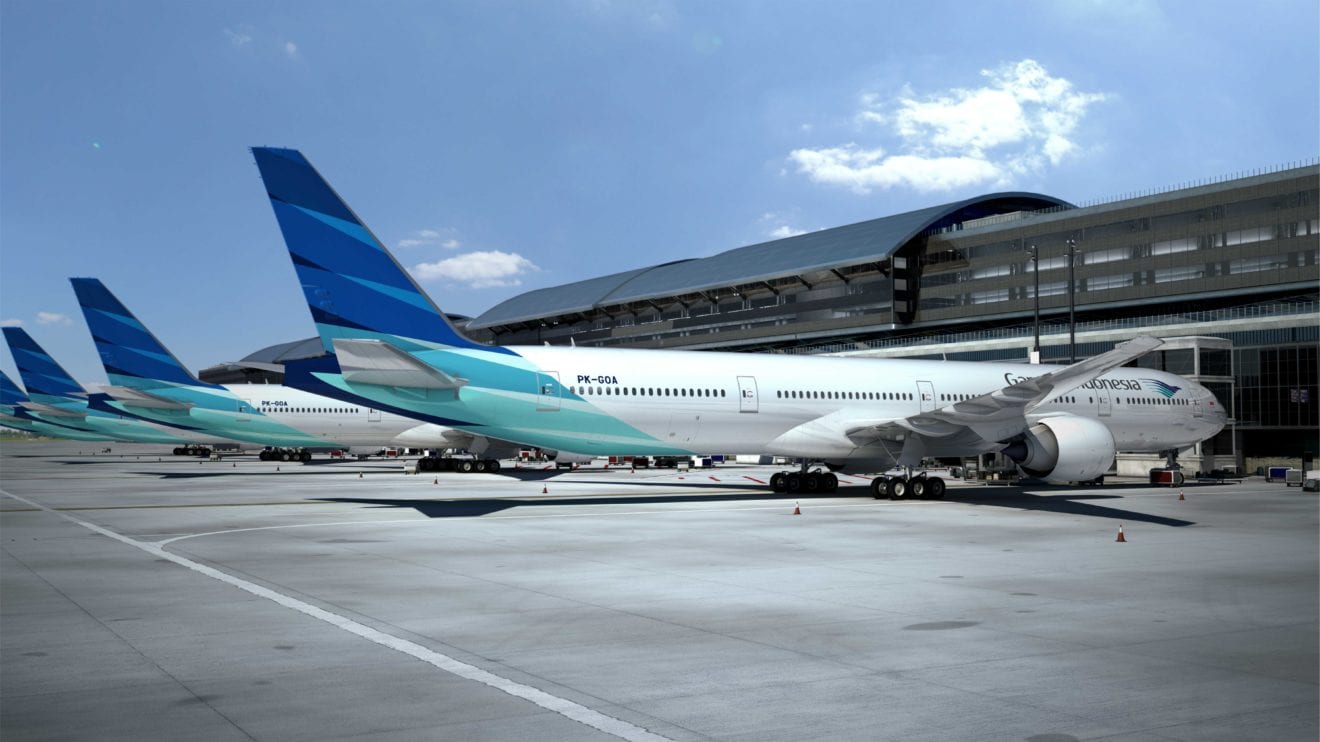
    OAG, the world’s leading provider of travel data and insight, has released the results of its annual Punctuality League 2020, the industry’s most comprehensive ranking of on-time performance (OTP) for the world’s largest airlines and airports. Asia-Pacific airlines dominated the global rankings with nine out of the top 20 most punctual airlines in the world: Garuda Indonesia (1), Skymark Airlines (3), All Nippon Airways (7), Jetstar Asia (8), Singapore Airlines (9), Thai AirAsia (10), Japan Airlines (15), Qantas Airways (18) and Indonesia AirAsia (20).

    Garuda Indonesia takes the top spot globally and regionally with an impressive OTP of 95.01%. Skymark Airlines (OTP 90.12%) ranks in the top three for both the Global Airline and Low-Cost Carrier (LCC) categories. The region’s LCCs performed exceptionally well, with nine carriers ranking in the top 20 for that respective category, including Skymark Airlines (1), Jetstar Asia (2), and Thai AirAsia (3). Solaseed, Jetstar Asia, Thai AirAsia and Indonesia AirAsia all improved their OTPs among ASPAC carriers this year.

    Japanese airport Osaka Itami (ITM) finished as the most punctual Large Airport for a second consecutive year with an OTP of 88.03%. Tokyo Haneda (HND) ranked second in the Mega Airport category with an OTP of 86.60% behind Moscow Sheremetyevo (SVO; OTP 86.87%). Singapore Changi (SIN; OTP 84.03%), Kuala Lumpur (KUL; OTP 75.04%) and Seoul Incheon (ICN; OTP 74.95%) all improved their OTP in the Mega Airport category.

    “Asia Pacific carriers and airports continued to demonstrate exceptional OTP this year, with many LCCs and legacy carriers improving year-over-year performance. The leading performance of Garuda Indonesia, Skymark Airlines, Osaka Itami and Tokyo Haneda on the global stage is commendable,” said Mayur (Mac) Patel, Head of JAPAC for OAG.

  • Taiwan’s Mr Brown coffee shutters stores

    Taiwan’s Mr Brown coffee shutters stores

    Taiwanese cafe chain Mr Brown coffee has shuttered eight outlets in Taipei due to falling customer demand, among other factors.

    The closures include a sizeable store in central Tamsui that will cease trading later this month. Employees at the affected outlets have been reassigned, with others leaving the firm.There have been no reported mass layoffs of staff.

    A representative from Mr Brown coffee, which is a subsidiary of King Car Group, confirmed that falling sales as well as rental costs in some cases influenced the decision to close the stores. Another two outlets may also be closed in the near future. Rising competition in the sector may have played a part in the shift in consumer demand.

  • AirAsia increases some flight frequencies from Cebu, Clark

    AirAsia increases some flight frequencies from Cebu, Clark

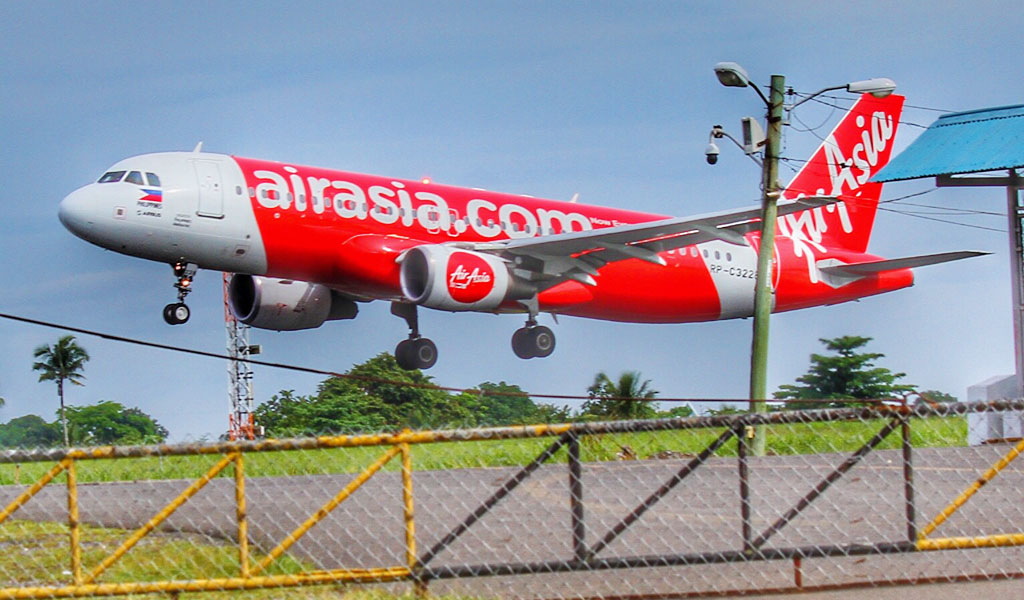
    AirAsia said Friday it was increasing flight frequencies out of its Clark and Cebu hubs to meet travel demand.

    Starting in January, the following will be flown daily from 3 times weekly: Clark to Iloilo (Z2 931) and Iloilo to Clark (Z2 932). The following will be flown 4 times weekly from 3 times: Cebu to Kuala Lumpur (Z2 7110) and Kuala Lumpur to Cebu (Z2 7111), AirAsia said.

    Starting March 29, the following will be flown 4 times weekly from 3 times: Clark to Tacloban (Z2 975) and Tacloban to Clark (Z2 976). Also on March 29, the following will be flown daily from 3 times weekly: Cebu to Puerto Princesa (Z2 543) and Puerto Princesa to Cebu (Z2 544), AirAsia said.

    “We are pleased to welcome the new year with additional flights, offering guests more options when flying with us as they accomplish their travel goals this 2020. Our adjustments are well guided by data, and I am very optimistic about the tourism boost this will bring to our country in the summer months,” said AirAsia Philippines CEO Ricky Isla.

  • Parkson to exit MyTown Shopping Centre in February

    Parkson to exit MyTown Shopping Centre in February

    Malaysian department store chain Parkson will close its outlet in MyTown Shopping Centre, Cheras next month.

    The closure will come fast on the heels of recent shut-downs of Parkson stores at Suria KLCC and M Square Mall in Puchong, and occurs less than three years after the 150,000sqft store started trading.

    “The retail market is very dynamic,” said a Parkson spokesperson in a statement to The Edge Markets. “Store opening and closing is part and parcel of doing business. In Malaysia, shopping malls are mushrooming everywhere and the demographics are ever changing.

    “The retail scene is increasingly competitive; when sales do not meet expectations, we have to cut losses and move on. Similarly, shopper demographics are constantly evolving.”

    The chain has closed several stores over the past two years within its Malaysian market, including stores at Megamall Kuantan, Melaka Mall, Maju Junction and Sungei Wang. It has also closed most of its Vietnam stores.

  • Thai conglomerates in race to buy Tesco Asia

    Thai conglomerates in race to buy Tesco Asia

    Two Thai billionaires are reportedly preparing bids for the Asian operations of UK grocery giant Tesco.

    Citing “people with knowledge of the matter”, Bloomberg has reported that Charoen Pokphand Group, owned by Dhanin Chearavanont, and the Chirathivat family-controlled Central Group are among a group of potential investors in discussions with Tesco over a potential buyout.

    The UK company announced early last month that it was conducting a review of the future of its Asian business after receiving ‘inbound interest’.

    Tesco operates 74 stores in Malaysia and about 2000 in Thailand under Tesco Lotus brand. The combined stores generated £286 million (US$375.8 million) operating profit in the year to last February.

    Bloomberg reports that Tesco will invite formal bids for the business next month and suggests it may fetch as much as US$7 billion.

    The Malaysian and Thai Tesco operations are separate businesses, with Sime Darby holding a 30-per-cent stake in the former.

    The solicitation of bids may not necessarily lead to a sale of the business.

    Retail analytical consultancy GlobalData is among those suggesting a sale would not be in the best long-term interests of Tesco UK, which in recent years has sold or closed all its other off-shore businesses to focus on the UK market, and the Tesco Asia business.

    Hakan Demirci, consumer analyst at GlobalData, says the sale of the Tesco Asia business by its UK parent would prioritise shareholders over sound long-term economic strategy,

    “Tesco’s Malaysian and Thai sectors have been constant sources of sustained success, with profit margins the highest at 6 per cent compared to the UK business’s margins of 3 per cent.

    “Selling its Asian business would be welcomed by Tesco’s shareholders, who would be granted higher returns on their investments if it were to go through. However, these markets were relatively developed and consolidated, with little room for growth in the retail sector.

    He said the Malaysian food and grocery market is set to grow from now through 2022 with a compound annual growth rate (CAGR) of 9.9 per cent. Likewise, the Thai food and grocery market will grow at a smaller, yet still significant CAGR of 4.5 per cent over the same period – representing a significant opportunity for Tesco to expand its business.

    “If these markets were to be sold, Tesco would be left with operations in the UK, Ireland and Central Europe. This would leave the group vulnerable as it loses its benefit of regional diversification, resulting in a less dynamic and flexible company.”

  • Chinese Firms Vie for Singapore Digital Bank Licenses

    Chinese Firms Vie for Singapore Digital Bank Licenses

    Several Chinese fintech firms have submitted a bid to the Monetary Authority of Singapore to operate a digital bank in the city-state.

    By the application deadline on Tuesday, Chinese firms that submitted bids for a digital banking license in Singapore included Bytedance, which operates viral video sharing application TikTok, Yillion Group and Hande Group, which applied as part of a consortium with Singapore wealth management fintech platform iFast Corporation, and the country’s largest online financial platform Ant Financial.

    All three are applying for a digital wholesale bank license, according to several media reports this week. There are up to five licenses on offer – two for full digital banks, and three for digital wholesale banks, in which foreign firms can hold majority stakes and the capital commitment is S$100 million

    We look forward to contributing to the development of the digital banking landscape in Singapore, Ant said, citing an emailed statement.

    For iFast, a license in Singapore would allow it to bring solutions to the small and medium-sized enterprises (SME) market that has been underserved by bank, CEO and chairman Lim Chung Chun said.

    Other firms that have entered the fray include a consortium led by Singapore gaming firm Razer and Grab, which submitted a joint bid with Singtel.

  • Central Group launches Porto de Phuket lifestyle mall

    Central Group launches Porto de Phuket lifestyle mall

    Thailand’s Central Group has launched a new shopping mall, Porto de Phuket, in Phuket.

    Located at Thalang District, the 40,000sqm development is divided into seven highlighted zones, featuring a wide range of stores and Michelin-starred restaurants.

    The Central Food Hall provides service in standalone formats outside for the first time, offering a variety of products and the first Cheese Room in Phuket.

    Restaurant and cafe zone, The Fame, brings together famous restaurants and cafes for hipsters and the chilled, including Suay, serving a fusion of Thai and western food by the iron chef, Russian restaurant Spice House, Wine Connection and French style cafe Lady Coco.

    The third zone, Multi Design House, presents home decoration where individual styles can be found. Visitors can also find vintage furniture and furnishings from Soul of Asia, artwork from local art celebrity Sunthorn Papan at Napas Art Gallery. A Jim Thompson pop-up store will be opened in this zone, featuring ready-to-wear silk men’s and womenswear, bags and wraps. There is also a B2S store, and a Run Lab created by Supersports, which analyses customers’ walking traits and running mannerisms to find the most appropriate style and shape of footwear.

    Healthy Heaven is a zone of relaxation and health, offering different spas such as Let’s Relax, with the first Spa Gallery in the world and wax salon The Strip, which has 10 branches worldwide including New York, London and Singapore. The project also has beauty outlets from Phuket such as Devadiva and Villa Aura.

    Beside Kid Learning Space, Porto de Phuket also opens a Pet Friendly Zone with facilities provided by Phuket International Petcare (PIPC).

    Decorated under the concept of a Tin Mining Factory which recreates the atmosphere of an old tin mine with Sino-Portuguese architecture, food station The Mercado will open early this year.

    Movie theatre, fitness gym, indoor playground, edutainment and an Art Home and Decorative zone are expected to be completed by the end of this year.