Tag: asia

  • Vinamilk acquires majority stake in competitor

    Vinamilk acquires majority stake in competitor

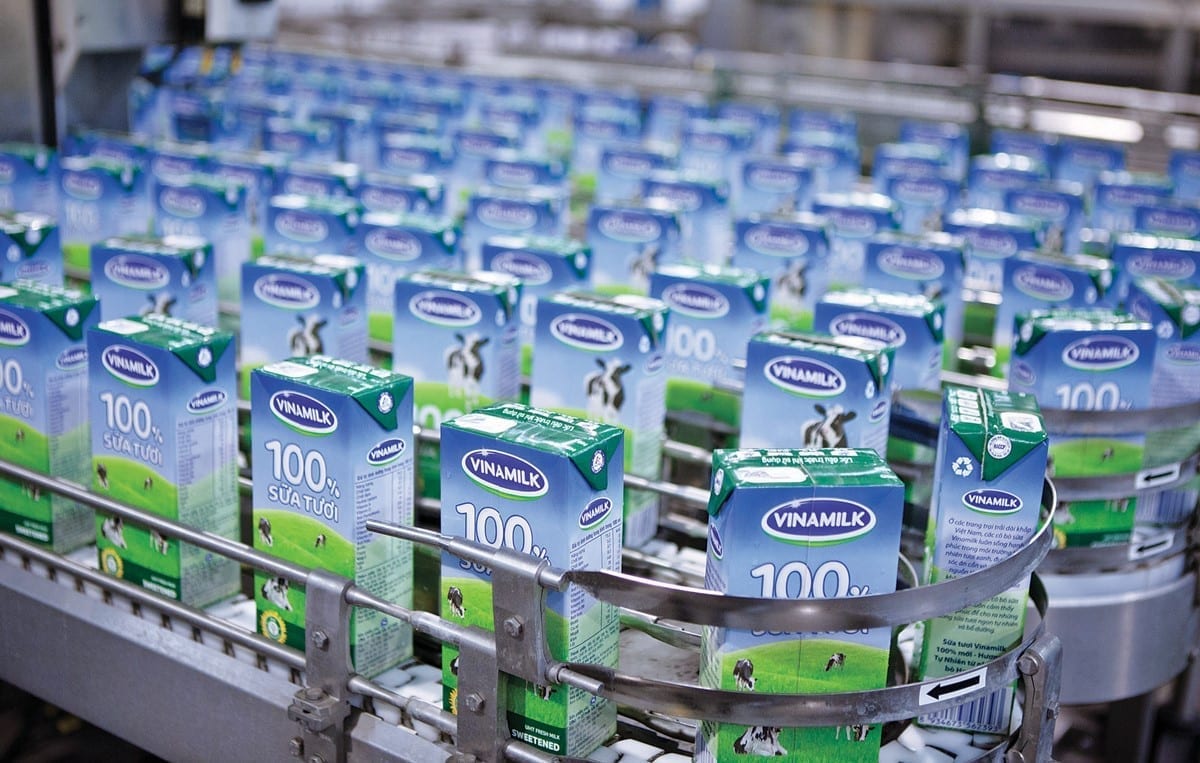
    Vietnam’s biggest dairy company Vinamilk has acquired a majority stake in Moc Chau Milk, entrenching its market dominance.

    Vinamilk, formally Vietnam Dairy Products Jsc, has increased its ownership in GTNfoods from 43.17 percent to 75 percent, the dairy giant said in a recent statement. GTNfoods own a 51 percent stake in Moc Chau Milk, the biggest dairy producer in the north.

    The majority of shares were bought on December 18, when the Ho Chi Minh Stock Exchange recorded almost VND1.8 trillion ($77.54 million) worth of GTN shares being acquired at the price of VND22,800 (98 cents) per share, 5.5 percent higher than market value.

    Vinamilk made the acquisition two days after shareholders of GTNfoods approved the sale. In March, the board of GTNfoods rejected Vinamilk’s proposal to increase ownership.

    Analysts say that the deal will expand the ecosystem of Vinamilk amidst slower growth. Moc Chau Milk accounts for 9 percent of the market, which would take Vinamilk nine years to gain at its current expansion rate, according to stock brokerage Saigon Securities Inc (SSI).

    Vinamilk accounts for over half of the dairy market. In the third quarter, it posted revenues of VND14.29 trillion ($615.58 million), up 4 percent year-on-year, against a target of 7 percent.

    Vietnam’s dairy output rose 6.9 percent to 936,000 tons last year, and is set to rise to one million tons next year and two million tons by 2030, according to the Ministry of Agriculture and Rural Development.

    The firm exports dairy products to 46 markets with 70 percent going to the Middle East.

  • Bamboo Airways targets resourceful foreign investors

    Bamboo Airways targets resourceful foreign investors

    Bamboo Airways plans to sell its shares to foreign investors for VND160,000 ($6.9) per share as part of its IPO next year. The private airline is looking for investors from the U.S., Japan and Europe with experience and resources, it said in a statement Sunday.

    Bamboo Airways wants to make an initial public offering (IPO) next year on a Vietnamese stock exchange at VND60,000 ($2.6) per share to raise $100 million.

    This planned BAV share price is higher than Vietnam Airlines HVN shares at VND34,400 ($1.48), and lower than Vietjet’s VJC shares at VND143,600 ($6.2) at the time of writing.

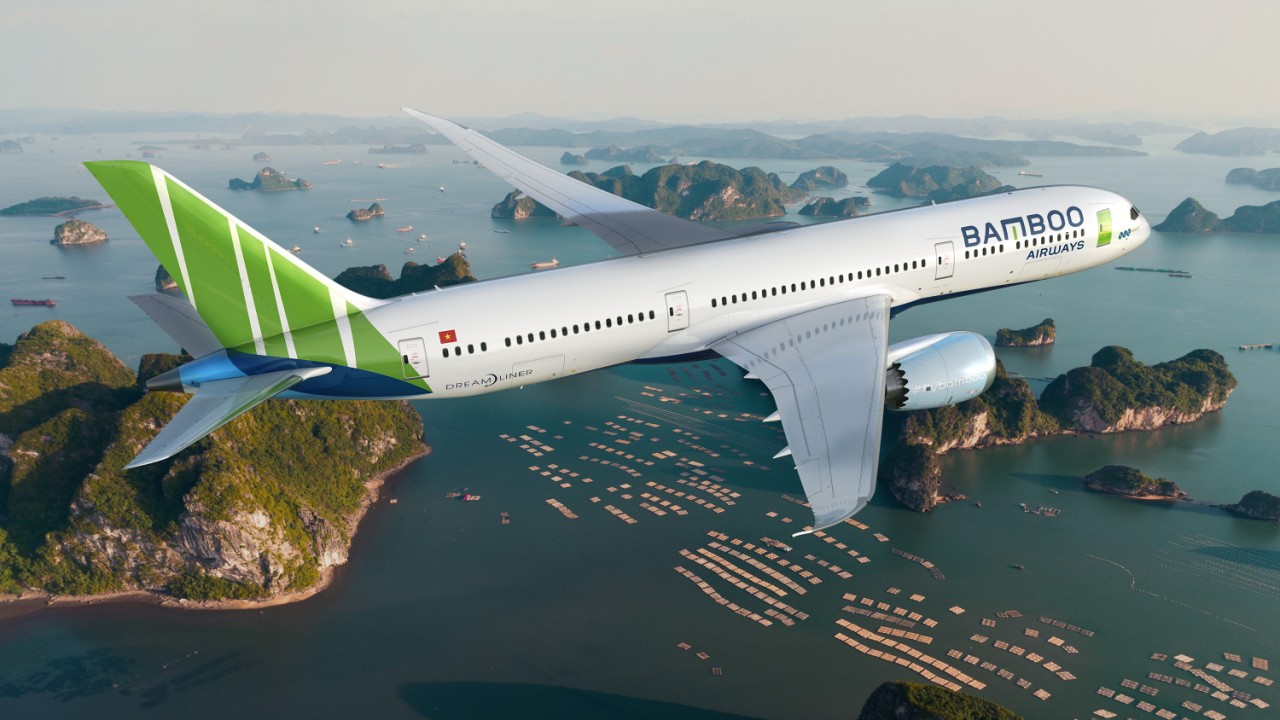
    The airline Sunday became the first private airline in the country to receive a wide-body Boeing 787-9 Dreamliner. The only other carrier using such aircraft is the state-owned Vietnam Airlines.

    Bamboo Airways plans to have a total of four Boeing 787-9s by January as part of a 30-aircraft fleet, most of them narrow-body Airbus A321neo aircraft,

    The airline, which began flying in January, is now operating 34 domestic and international routes. It has conducted almost 20,000 flights to date, carrying almost 3 million passengers.

    Bamboo Airways hopes to acquire 30 percent of the domestic aviation market next year as it flies 85 routes, 25 of them international.

    It also plans to operate 100 aircraft by 2025, carrying 50 million passengers annually.

  • First franchised KFCs open in Chinese gas stations

    First franchised KFCs open in Chinese gas stations

    Yum has announced the opening of its first franchised restaurants in Chinese gas stations, in collaboration with China Petrochemical Corporation (Sinopec) and China National Petroleum Corporation (CNPC).

    The first franchised KFC restaurant has been launched in a CNPC gas station in Yunnan Province while the first one in a Sinopec gas station is set to open its doors, Liaoning Province, next week.

    “The first franchised gas station restaurants represent an important milestone in our long-term strategic partnership with both companies,” said Joey Wat, CEO of Yum China. “Together with Sinopec and CNPC, we are committed to building a successful business model and creating innovation-driven growth together.”

    The partnership with Sinopec and CNPC will enable Yum China to expand its retail network into a previously underserved segment of the market as both companies collectively operate more than 50,000 Chinese gas stations.

    With the partnership, Yum China aims to open more than 100 stores in the next three years and create more opportunities to collaborate in other fields.

  • Deliveroo sets massive growth in Hong Kong despite protests

    Deliveroo sets massive growth in Hong Kong despite protests

    Hong Kong food-delivery service Deliveroo says it achieved well over 100-per-cent year-on-year growth in both revenue and order volume this year.

    During the year, the company expanded to cover 17 out of the territory’s 18 districts and doubled its fleet of 2000 riders to 4000.

    Deliveroo is marking its fourth anniversary in Hong Kong and has launched a new advertising and social-media campaign covering TV, digital, buses and cinema.

    “Moving into our fifth year in Hong Kong, Deliveroo is celebrating nearly half a decade of success and readying ourselves for more innovation and expansion to come,” said Deliveroo Hong Kong GM Brian Lo.

    “The past 12 months brought challenges to the Hong Kong business environment, so for 2020 we are dedicated to bolstering our own strengths in order to continue to help our restaurant partners deliver on their own ambitions.”

    Deliveroo is targeting to work with 9000 partner restaurants in Hong Kong by the end of next year, as well as upping its rider numbers from 4000 to 6500.

  • OCBC Issues Green Loan to Hong Kong Developer

    OCBC Issues Green Loan to Hong Kong Developer

    OCBC furthers its commitment to achieving a S$10 billion sustainable finance portfolio by 2022 with its latest green loan to Hong Kong-based developer Hang Lung.

    Hang Lung secured an HK$1 billion ($128 million) green loan facility from the OCBC to finance commercial property development projects in mainland China. The maiden green loan will be used to support projects that have received «gold certifications» or «pre-certifications» issued by the U.S. Green Building Council of Leadership in Energy and Environmental Design (LEED), which promotes sustainable real estate development in mainland China.

    We are proud to support Hang Lung’s ambition of spearheading green developments in Hong Kong and mainland China, said Tan Wing Ming, regional general manager for North East Asia at OCBC Bank. This green loan is the latest sustainable finance transaction to come out of OCBC Hong Kong Branch and positions the bank well to capture the growing green finance opportunity in the Greater Bay Area.

    According to a statement issued by Hang Lung, the loan was issued under its «Green Finance Framework» which is in line with the industry standard 2018 Green Bond Principles and 2018 Green Loan Principles. Global ESG research and ratings provider Sustainalytics had reviewed and confirmed the framework to be credible and impactful, the statement added.

    The green loan adds to OCBC’s portfolio and its ambitions to build a $7.4 billion sustainable finance portfolio by 2022. According to a recent Bloomberg league table, the Singaporean lender is already a leader in the field, ranking first in green and renewable energy loans in the Asia ex-Japan region at more than $1 billion in 2019 – a 7 percent market share.

  • China Should Boost AI Regulation in Finance

    China Should Boost AI Regulation in Finance

    A regulatory framework specifically designed for artificial intelligence in China’s financial sector and better tech for supervision should be introduced, according to policy advisors from a leading think tank.

    We should not deify artificial intelligence as it could go wrong just like any other technology,» said Xiao Gang, senior researcher at China Finance 40 Forum and the former chief of the China Securities and Regulatory Commission.

    The point is how we make sure it is safe for use and include it with proper supervision.

    A report from the forum based in eastern China’s Qingdao city underlined that technology to regulate «intelligence finance» largely lagged development. Existing technology deployed in the sector to improve sales and investment returns, the report added, ranged from facial recognition to big data analysis.

    Onlookers not only underline the potential tech risks which China could face in the future but also recent track record, most notably a failed attempt to create a sustainable peer-to-peer financial ecosystem. What was originally intended to be a source of financing for entities that lacked access to major state-owned lenders resulted in regulators being forced to shut down large parts of the industry with recent data showing that just 427 P2P platforms remained – a 59 percent drop compared to 2018-end.

    Evaluation of emerging technologies and industry-wide contingency plans should be fully considered, while authorities should draft laws and regulations on privacy protection and data security, the report added.

  • Thai AirAsia X flies to Tbilisi

    Thai AirAsia X flies to Tbilisi

    Thai AirAsia X will operate six Christmas and New Year scheduled charter flights to Tbilisi Georgia from its home base Bangkok Don Mueang airport.

    Bookings are mainly generated by Thai outbound travel agents promoting tour packages to Georgia for the festive season. Flights will use an Airbus A330-300 with 377 seats.

    Based on Airlineroute timetable information, the first flight will take off 25 December from Don Mueang Airport at 1455 arriving in Tbilisi at 2040.

    The remaining five flights depart from 28 December to 6 January.

    According to a report in GT Georgia Today news service, Thai AirAsia X carried out two test flights in October before it was awarded a permit by Georgia’s  Ministry of Economy and Sustainable Development  on 27 November 27

    Wikipedia describes “Tbilisi the capital of the country of Georgia as a cobblestoned old town that reflects a long, complicated history, with periods under Persian and Russian rule. Its diverse architecture encompasses Eastern Orthodox churches, ornate art nouveau buildings and Soviet Modernist structures. Looming over it all are Narikala, a reconstructed 4th-century fortress, and Kartlis Deda, an iconic statue of the “Mother of Georgia.”

  • Lenovo and JD plan to sell US$1.4 billion of B2B products over three years

    Lenovo and JD plan to sell US$1.4 billion of B2B products over three years

    Lenovo and JD have announced a plan to sell US$1.4 billion in enterprise products over the next three years.

    Lenovo will offer its full line of products for enterprise clients via JD’s enterprise-procurement platform. Lenovo and JD will also launch a business-to-manufacturer (B2M) platform to provide enterprise clients with customised products and services.

    “JD is one of Lenovo’s most important retail partners in China. We have maintained a deep strategic cooperation for years,” said Zheng Liu, GM of Lenovo Enterprise Products. “The launch of the B2M platform is an important milestone for the enterprise procurement industry, and it will further take the industry to a new level.”

    Apart from large companies, JD Business customisation will soon be available to small-to-medium sized companies through the B2M initiative.

    More than 2000 of Lenovo’s service stations and its smart-service system will provide customer service to enterprise clients nationwide.

    “The digital transformation has greatly impacted the enterprise procurement sector,” said Chunzheng Song, president of JD Business.

    “As China’s largest retailer, JD is committed to efforts to streamline the procurement process for enterprises of all sizes. The partnership of Lenovo and JD provides a pioneering solution, and we expect to leverage JD’s big data ability to continuously improve the customisation for the traditional enterprise procurement sector.”

    JD has more than 7 million enterprise clients on its platform. Its enterprise procurement business, JD Business, aims to help 100 suppliers surpass $143 million in sales next year and bring together 200 technical partners and 20,000 enterprise service partners on its platform.

  • Vietnam’s Vingroup to complete retail exit by closing VinPro chain

    Vietnam’s Vingroup to complete retail exit by closing VinPro chain

    Vingroup is to complete its exit direct retail businesses, shutting down its electronic business VinPro within this month.

    The closure of Vinpro is considered a sudden decision as the group acquired electronics chain Vien Thong A last year with more than 200 stores to strengthen VinPro’s presence. Recently, Vien Thong A’s website and Facebook page changed branding identity to VinPro.

    “VinPro outlets have very good locations in the Vincom shopping centre system,” said Quang Viet Nguyen, CEO of Vingroup. “It will be very easy to rent these premises after VinPro stops operating, without affecting the operation of Vincom centres.”

    The company has also announced the merger of its e-commerce platform Adayroi with e-payment unit VinID. According to Quang, the merger is not because its e-commerce segment was under pressure of losses as the company’s first goal is to create a platform to support the Vingroup ecosystem.

    “Merging Adayroi with VinID not only helps store data about customer behaviour but also creates a new platform where customer needs are better predicted,” Quang said.

    Earlier this month, Vingroup announced an agreement with consumer products manufacturer Masan Group, to move its VinMart supermarket and convenience-store business into Masan in a new company in which Vingroup will hold a minority stake.

    The company has said it wants to focus on industrial and manufacturing business including its motor vehicle, television, tourism and smartphone businesses. It is also about to launch an airline.

  • Helena Rubinstein ‘is back’ in travel retail channel

    Helena Rubinstein ‘is back’ in travel retail channel

    Uber-premium cosmetics brand Helena Rubinstein “is back” in travel retail, launching this week the first of a series of initiatives tapping into the Chinese market in particular.

    The L’Oreal-owned brand, founded by Rubinstein herself in 1902, launched a three-day experiential pop-up at The Shilla Hotel in Seoul, a stone’s-throw from the giant Shilla Duty Free department store which draws thousands of predominantly Chinese shoppers every day. More than 30 KoLs from China and South Korea were there, on hand to watch one of the brand’s ambassadors, retired Hong Kong actress Cherie Chung open the event.

    It marked the first travel retail Asia pop-up for the brand, which would not have been possible without the support of The Shilla, said Petrina Kho, GM of Helena Rubinstein at L’Oreal Travel Retail Asia Pacific.

    Kho admits Helen Rubinstein has been “pretty quiet” in the marketplace for the past few years,  “but I think that L’Oreal was waiting for us to have all the right products in place first”.

    Kho says Chinese consumers are a big part of the global cosmetics market now and driving strong growth in the premium cosmetics market in travel retail across Asia.

    A spokesman from The Shilla said Helena Rubinstein sales this year are double those of last year, largely driven by the flagship product the Powercell Skinmunity serum which Chinese have embraced despite its premium price point.

    Kho says the premiumisation trend is leading the skincare market growth. “Helena Rubinstein is at the forefront of that because it is the most luxurious skincare brand and obviously the premium-skincare wave is benefiting us.

    “We felt this was the right place to get Helena Rubinstein out, and to partner with The Shilla this year. We want people to know that Helena Rubinstein is back and we want to start engaging with new consumers and our existing consumers.”

    Next year, the brand will be ramping up its activities in travel retail, she says.

    “I can tell you I am extremely excited for 2020. We are just getting started.”

    This week’s pop-up execution included a series of QR code-driven installations describing the history of the brand and sharing the philosophies of its founder, who died in 1965. It also gave visitors an experiential skin test and treatment experience.

    Kho says Chung, and another brand ambassador, fellow famous Chinese actress Faye Wong, are cutting through for Helena Rubinstein because they are well known among more mature consumers. And that demographic is now passing the baton to younger ones.

    “I’ll tell you an experience I had in a home where we were in a store and I saw a mom and daughter shopping. Mom was introducing her daughter to the brand and I thought that was such an amazing moment, because, you know that the brand has crossed the generation and when your mom is introducing something to your daughter, it’s almost like your personal KoL because she’s talking about the efficacy of the brand.”

    Kho describes Faye and Cherie as superstars. “They continue to be extremely healthy. Today the MC asked [Cherie] ‘What are your secrets for beauty?’ She said ‘It’s all about prevention. It’s all about protection, but also make sure that you exercise’.

    “I love that it is such down-to-earth advice. These are strong women and they are extremely empowering. And I think they have that credibility, to tell about their experience about beauty and about empowering themselves.”

  • Ant Financial Invests in Vietnam E-Wallet

    Ant Financial Invests in Vietnam E-Wallet

    Ant is expected to have significant influence and provide technical expertise to the e-wallet, created locally by a small start-up.

    Chinese digital finance giant Ant Financial has acquired a «sizeable» stake in Vietnamese e-wallet eMonkey, «Reuters» reported on Thursday.

    The acquisition, which is below 50 percent, wasn’t publicly reported because of fears over anti-China sentiment in Vietnam, the report said, citing people familiar with the matter.

    Vietnam’s consumer market has immense potential, with a population of almost 93 million and a surging middle class, high internet and smartphone penetration, and a fast-growing liking for e-commerce. The competitive digital payments space in the country is led by Standard Chartered e-wallet Momo.

    While Ant has an office in the country, eMonkey already has the necessary operating licenses and has established partnerships with financial institutions and telecoms, making market penetration easier, the news wire said.

    Ant, a fintech affiliate of e-commerce giant Alibaba, on Thursday appointed company veteran Simon Hu as its new chief executive officer.

    The online finance giant controlled by billionaire Jack Ma started out in 2004 as a way for Alibaba Group to pay for goods. It has since evolved into a $150 billion behemoth covering micro-lending, insurance, credit-scoring, and money-market funds. Ant has a domestic user base of 900 million.

  • Renault Cars To Cost More In India From January 2020

    Renault Cars To Cost More In India From January 2020

    Renault cars are set to get more expensive in India from next month. The French carmaker has announced a substantial price hike across its range which will be effective from January 2020. The company has cited rising input and material cost as the core reason for the price hike and has said that the price increase will vary for different models. The price increase will also include new models like the Renault Triber and Kwid Facelift.

    The increase in prices at the end of every year is a common practice among automakers in India. It’s part of the cyclical price revision in the industry and before Renault, other carmakers like Maruti Suzuki and Hyundai have already announced to increase prices across their product range. Moreover, BS6 and safety norms will be kicking-in as well in 2020 and all the products are expected to get more expensive around that time as well which may moderately affect the sales as well.

    The price increase will also include new models like the Renault Triber and Kwid Facelift.

    Speaking of sales, Renault had witnessed a sales increase of 77 per cent in November 2019 in the domestic market selling 10,882 units, as against the 6134 vehicles which were sold in November 2018. October 2019 also was a growth month for the carmaker, with Renault recording a growth of 63 per cent selling 11, 516 units during the Diwali month as compared to the 7,066 units sold during the same month last year. Renault India’s Year-To-Date (YTD) from April 2019 to November 2019 stands at 76,905 units at present.

  • China Carmakers Getting Ready To Build More, Much More, In India

    China Carmakers Getting Ready To Build More, Much More, In India

    Chinese automakers Great Wall Motor and Changan Automobile are accelerating plans to build cars in India after the initial success of rival SAIC Motor in one of the world’s biggest markets, three sources said. Great Wall, one of the biggest sellers of sports-utility vehicles (SUV) in China, expects to secure a production site in the first half of 2020, likely a General Motors plant in Maharashtra, a source familiar with Great Wall’s plans said

    Buying a factory is seen as the best way to get up and running fast and Great Wall is finalising which SUVs it plans to make in India, including whether to kick off its launch with an electric SUV, the source told Reuters. Great Wall said it would make an announcement next month about its plans for India but declined further comment.A spokesman for GM in Detroit said it was continuing to make vehicles for export at its Talegaon plant in Maharashtra state.”As we have said previously, we continue to explore options to improve utilisation of the plant

    We do not comment on speculation,” he said.Changan, too, is scouting for a production base and has held initial talks with suppliers, sources aware of its plans said

    Both automakers, which produce electric vehicles (EVs) in China, are also considering whether to set up EV battery assembly plants in India, the sources said. Changan declined to comment.The companies see India as a chance to combat slowing sales at home, which fell in November for a 17th month in a row

    While car sales in India are stuttering, the market is expected to become the world’s third biggest by 2026, behind China and the United States, according to consultancy LMC AutomotiveThe Chinese firms also hope to capitalise on gaps left by global automakers such as Fiat Chrysler , Ford Motor and GM which have scaled back plans in a market still dominated by smaller, low-cost cars made by Maruti Suzuki and Hyundai Motor. “It is an opportune time for China’s automakers to enter India. There is currently a gap in competition and it may take a couple of years for some of the established carmakers to bring new products to the market,” said LMC Automotive’s Ammar Master.

    PERCEPTION GAPGM’s retreat from India, for example, could help Great Wall get going quickly and it has been in talks to buy GM’s plant in Maharashtra, two of the sources said. GM stopped selling cars in India in 2017 and has already sold its other plant in Gujarat to SAIC, where the state-owned Chinese automaker now makes the Hector SUV it launched in June under its MG Motor brand. India is part of Great Wall’s planned global expansion into South America, South Africa, Southeast Asia and Australia, and it also plans to export from their to places such as Europe and the United States, said the source who is aware of its plans.”The plant in India is expected to be the biggest for Great Wall outside of China,” the source said.Great Wall has hired a former executive from Maruti Suzuki, India’s biggest carmaker, for its product and business planning, and appointed a former executive from SAIC’s India division as a consultant to liaise with the government

    “For global automakers, India is one of the many markets they are in but for the Chinese it is the first major market outside of home and so the level of investment and commitment will be proportionately high,” said the source.One of the biggest hurdles in India will be fighting perceptions about the quality and reliability of Chinese products and winning over brand-conscious buyers for whom cars are a prestige statement, say analysts

    Chinese smartphone makers such as Xiaomi Corp faced similar perception issues when they launched in India but they now dominate the market

    However, cars remain a significant outlay for most Indians and the Chinese brands will need to make their mark quickly.”Once the likes of Volkswagen and Ford start launching new models in India, the entrants from China could face tougher competition because a lot of buyers in India are still very brand conscious,” said LMC’s Master

    Launched at the end of June it said it had sold more than 13,000 cars by the end of November and plans to sell 24,000 next year.”SAIC has changed the perception about whether a Chinese brand can be made and sold in India,” said Santosh Pai, partner at law firm Link Legal which advises Chinese companies setting up in India

    “Fence sitters are getting in and have realised they can sell in India if the price and strategy is right.”Lessons for Great Wall and Changan from SAIC’s India launch include marketing the brand aggressively, packing the car with features to differentiate it from rivals and giving extended warranties to dispel doubts over reliability, analysts say

    Another advantage for Chinese carmakers in the coming years will be their EV expertise

    With the sale of EVs slowing in China they can deploy some of their existing capacity to India where the government is encouraging clean fuel cars. SAIC, which will soon launch an electric SUV in India, is also scouting for a second manufacturing site and is expected to make a decision in early 2020, said a source aware of its plans. SAIC did not respond to a request for comment though the head of its Indian division said in November it was working on an expansion plan and expected its total sales in India to hit 70,000 in 2021.
  • Volkswagen Takes One-Two Punch In Australia With Fine, Regulatory Proceedings

    Volkswagen Takes One-Two Punch In Australia With Fine, Regulatory Proceedings

    Volkswagen AG took two raps in Australia on Friday as a federal court upheld a fine on the German car maker as part of a global diesel emissions cheating scandal and a regulator started penalty proceedings against one of its financial units.

    The court upheld a record A$125 million ($86 million) penalty imposed by the Australian Competition and Consumer Commission (ACCC) to settle lawsuits brought on behalf of thousands of Australian customers caught up in the emissions issue from 2015.

    The settlement follows revelations that Volkswagen was using prohibited engine-control software to pass pollution tests. The company has already paid billions of dollars in legal costs around the world.

    ACCC Chair Rod Sims told reporters on Friday that the fine imposed on Volkswagen was just a taste of what companies could expect in the future.

    The agency would use its new expanded powers to punish illegal activity with the largest fines possible and penalties of more than A$100 million would not be unusual, he said.

    Volkswagen did not immediately respond to a Reuters request for comment.

    Separately, the country’s corporate watchdog, the Australian Securities and Investments Commission (ASIC), said it started civil penalty proceedings in a federal court against Volkswagen Financial Services Australia Pty Ltd for allegedly not making appropriate checks before giving out 49,380 loans to consumers.

    ASIC alleges that the unit, which operates nationally to provide borrowers with consumer loans to purchase new and used cars, did not make required inquiries into borrowers’ living expenses or if the loans were unsuitable for them.

    These instances of alleged breaches in lending laws occurred between Dec. 20, 2013 and Dec. 15, 2016, ASIC said. The maximum penalty for one contravention equates to A$1.7 million ($1.2 million) in the period till July 31, 2015, and to A$1.8 million for a contravention in the period after that, the watchdog said.

    ASIC said proceedings commence on a date to be determined by the court.

    A spokeswoman for the unit said it takes its compliance obligations seriously and that it was cooperating with ASIC.

  • c is developing an Android replacement since it doesn’t trust Google

    c is developing an Android replacement since it doesn’t trust Google

    You don’t need to be a Chinese smartphone manufacturer cut off from the Google Play services version of Android to start developing an alternative operating system. You can also be a large global social-media company headquartered in the U.S. that seeks to control all personal data and aspires to world domination. The former, of course, is Huawei whose placement on the U.S. Commerce Departments entity list prevents it from accessing the U.S. based supply chain that it spent $11 billion on last year.

    Without being able to include the Google Play Store on its new phones, Huawei’s new handsets cannot run Google’s core Android apps like Search, Maps, Gmail and more. That doesn’t matter in China where most Google apps are banned, but does hurt Huawei’s international shipments. The company developed its own operating system called HarmonyOS as an alternative to the licensed version of Android. Ironically, the OS is not for smartphone use, at least not yet. So for now, Huawei is using an open-source version of Android for its phones.

    Can you guess the second company we outlined in the first paragraph? If you guessed Facebook, you’re 100% correct. The company is building a new campus where it will design new hardware. And to make sure that it is completely self sufficient, Facebook is working on making its own Android replacement; the social media giant has named Mark Lucovsky as General Manager of Operating Systems; Lucovsky was part of the team that developed Windows NT for Microsoft. Facebook also wants to design its own chips and create a new virtual assistant. Currently, its Portal smart display uses Amazon’s Alexa to handle complex tasks thrown at it by users.

    While Facebook will continue to offer Android-based apps, the problem is simply a matter of trust. Ironically, the company that allowed 87 million user profiles to be used without permission (resulting in a violation of a signed FTC consent decree and a $5 billion fine) says that it doesn’t trust that other tech companies like Google will work with it. Facebook’s VP of hardware, Andrew ‘Boz’ Bosworth said, “We really want to make sure the next generation has space for us. We don’t think we can trust the marketplace or competitors to ensure that’s the case. And so we’re gonna do it ourselves.”

    Facebook is also concerned that if it has any issues with Google, it could lead to product delays and other issues. Facebook is said to be is extremely concerned about the augmented reality glasses that it is developing. And by using its own hardware and software in a range of products, Facebook could make it difficult for the government to force it to spinoff some of its acquisitions. For example, if Facebook decides to use the Instagram name on its AR glasses as rumored, it could be harder to request that Instagram be spun off as an independent outfit if it is using Facebook’s parts in such a device.
    Facebook hasn’t proven yet that it can produce a smash hit tech device. Besides the Portal smart display, sales of its Oculus VR headsets are not exactly soaring. Still, the company is taking its self-sufficiency seriously as seen by discussions it reportedly held to acquire Cirrus Logic. The latter makes digital signal audio chips (DSP) for Apple and has a market cap close to $4.7 billion. And that is the problem with Facebook. The firm has billions of dollars available for it to spend on its most devious plans. Consider that the company has a brain-scanning system that uses optical scanning to figure out what words someone is thinking of and turn it into text. And Facebook has been shrinking the size of this down to that of a handheld device and hopes to eventually include it on smartphones.
    But hasn’t that been Facebook’s goal all along? The social media company wants to know exactly what you’re thinking at all times and profit from this knowledge.