Tag: asia

  • Swiss Fintechs to Showcase Expertise at Singapore Fintech Festival

    Swiss Fintechs to Showcase Expertise at Singapore Fintech Festival

    Switzerland Global Enterprise and the Swiss Business Hub ASEAN announced that they will showcase the best of the country’s fintech ecosystem and expertise under its Swiss Pavilion in the upcoming Singapore FinTech Festival 2019.

    Returning for the third year, the Swiss Pavilion will host close to 30 companies involved in cutting-edge innovation in financial services technologies that encompass regulation technology, blockchain solutions, Big Data and analytics, algorithm trading and cybersecurity among others. The Swiss Pavilion, one of the larger national pavilions taking part at the Singapore festival, will present opportunities for co-innovation, collaborations, partnerships, and deal-making.

    The Switzerland Global Enterprise (S-GE) is pleased to showcase the Swiss ecosystem of top financial institutions and leading Fintech players at the Singapore Fintech Festival 2019.  As one of the Top 10 Financial Centres of the world, Switzerland offers the ideal combination of dense and diverse ecosystem in the fintech space, a regulator addressing the needs of the industry and a great pool of talents to create new solutions for the future, said Patrik Wermelinger, Member of the Executive Committee of Switzerland Global Enterprise.

    Besides demonstrating the expertise of Swiss companies to international audiences, the other goal of the Swiss Pavillion is to enable Swiss fintechs to use Singapore as a hub to grow in the Southeast Asia (ASEAN) region, Wermelinger added.

    Interest from Swiss fintech enterprises in Singapore has been growing rapidly. Over the past few years, we have seen escalating interest from Swiss fintech companies to spread their winds into ASEAN using Singapore as a hub.  There is potential for more Swiss-Singapore exchanges and it is my wish to see more of such collaborations.  Together, we can explore more markets and help the financial institutions grow rapidly, said H.E. Fabrice Filliez, Switzerland’s Ambassador to Singapore.

    Switzerland is home to over 1,000 fintech companies, deeply active in Investment Management, Payment solutions, Banking infrastructure and Deposit & Lending. Their interest to a greater presence in Singapore arises from the republic’s fintech cooperation framework and agreements with ASEAN, China, India, Japan, and South Korea.

    Singapore’s annual FinTech Festival is organized by MAS, in partnership with The Association of Banks in Singapore, and in collaboration with SingEx Holdings. The 4th edition of the Singapore FinTech Festival will attract a global array of speakers and exhibitors.

    The upcoming event will carry four major underlying themes that are driving the financial ecosystem: Sustainability and Climate Finance; Future of Finance; Exponential Technologies and FinTech and Beyond.

  • MAS Warns Against Lee Hsien Loong Bitcoin Scam

    MAS Warns Against Lee Hsien Loong Bitcoin Scam

    The Monetary Authority of Singapore warned the public about a website using fabricated comments from Prime Minister Lee Hsien Loong to solicit investments in bitcoin.

    The website not only used fabricated comments but also attempted to impersonate a news page from a local media organization, the Monetary Authority of Singapore (MAS) added.

    The information on the website is highly deceptive and misleading. The statements attributed to PM Lee are completely false, said MAS in a media statement last Friday. The site tries to get readers to provide credit card or bank account information, plus payments into a trading platform, which would automatically initiate trades on the client’s behalf.

    Members of the public are advised to exercise extreme caution and avoid providing any financial or personal information on the forms linked from the website, MAS added. Members of the public who suspect that an investment could be fraudulent or misused for other unlawful activities should report such cases to the police, the regulator said.

    Since last year, MAS has issued at least four consumer advisories on such fraudulent websites that use the names and photographs of ministers and other prominent people in Singapore to solicit bitcoin investments. The ministers included Emeritus Senior Minister Goh Chok Tong and Deputy Prime Minister Heng Swee Keat.

  • Bank of Singapore Expands UHNW Shelf with Senior Hire

    Bank of Singapore Expands UHNW Shelf with Senior Hire

    Continued growth from its ultra-high net worth clients business has led Bank of Singapore to bolster its product capabilities with the addition of a new head of bespoke investments for Greater China and North Asia.

    Kelvin Teo joins the bank in the new Hong Kong-based role to source unique and exclusive investment opportunities for UHNW clients in Greater China and North Asia, particularly with regards to buyout funds and real estate. Teo reports locally to Derrick Tan, Hong Kong branch CEO and global market head of Greater China and North Asia; and functionally to Carolyn Tham, head of UHNW bespoke investments.

    Teo was most recently a Hong Kong-based director of equity capital markets for Credit Suisse. He was responsible for the origination of capital market transaction for corporate and institutional clients. Previously, he had 15 years of experience in investment banking across various areas including IPO, pre-IPO financing, acquisition financing and more.

    Since 2017, the bank’s number of UHNW clients has doubled and assets from the client segment grew nearly 40 percent. The UHNW segment aside, Bank of Singapore is also boosting its Greater China business, which reportedly nearly tripled assets under management in five years.

    Teo’s hire follows a number of senior appointments for the regional business including the hire of Richard Hu earlier this year as market head for Greater China. Last year, the bank also hired Phonda Chan and Anne Song as market heads, alongside Jacqueline Lee as head of risk.

  • Google shuts down service that helped carriers provide better coverage

    Google shuts down service that helped carriers provide better coverage

    Google has shut down a service that was aimed at helping carriers around the world improve their coverage, by providing them with aggregated data from Android devices. The closure comes at a time of heightened concerns about data privacy across the industry.

    Google’s Mobile Network Insights service was launched in 2017 as a free tool for wireless providers around the world that allowed them to see weak spots in their network coverage. The service was “essentially a map showing carriers signal strengths and connection speeds they were delivering in each area.”

    Thee data shared by Google were aggregated and anonymized, meaning that carriers didn’t get information about individual users, but it was still a valuable tool for providers, as they could see stats about the performance of their network in different regions. The platform also displayed stats relating to competitor services, which were not identified by name.

    The data for Google’s Mobile Network Insights was sourced from devices running Android, which totals to about 75% of the world’s smartphones, but was limited only to users who had “Location History Sharing” and usage and diagnostics enabled on their Google accounts. Despite this, Google opted to discontinue the service in April, without citing any formal reasoning behind the decision. Carriers around the world were simply notified of the closure.

    A Google spokeswoman has confirmed for Reuters that the service is now, indeed, discontinued and that changing “product priorities” was the main driving factor behind the decision. However, people with knowledge of the decision claim that Google’s move was motivated by “concerns about data privacy,” and possibly to avoid further scrutiny from lawmakers.

  • Microsoft confirms Gears of War mobile game drops this month

    Microsoft confirms Gears of War mobile game drops this month

    Unveiled more than a year ago, Microsoft’s Gears of War mobile game will be released on August 22, just a few weeks before Gears 5 hits PC and consoles in September. Dubbed Gears Pop!, since it’s a collaboration between Microsoft and Funko Pop!, the game will be available on both Android and iOS devices, Microsoft announced earlier.

    After a brief soft-launch, Gears Pop! will be fully available for everyone around the world with a compatible phone. The game features more than 30 Gears of War characters, ready to take your orders, all brought to life from authentic Funko Pop designs.

    In Gears Pop!, you’ll be building your squad mixing and matching COG and Locust units, use ultimate abilities, as you strive for supremacy on popular Gears maps. You can play against AI opponents to try out new squads before you take on real players.

    Since this is a free-to-play game, expect Gear Pop! to be heavy on in-app purchases, especially if you want to build a pretty solid team of Gears of War heroes and villains. You can still pre-register for the game via Google Play Store and App Store before the game launched on August 22.

  • Volkswagen T-Roc Cabriolet Revealed

    Volkswagen T-Roc Cabriolet Revealed

    Volkswagen is all set to bring in the first crossover convertible in the compact SUV class and it’s the T-Roc that’s going to get this treatment. The T-Roc cabriolet will add to the diversity of the booming SUV segment across the world and of course breathe in some fresh air in that segment. The T-Roc is a popular car and ever since its launch globally, Volkswagen has sold 3.60 lakh units of the car. The Cabriolet is based on the T-Roc Crossover and gets a high-quality soft top which opens in nine seconds, even when driving at speeds of up to 30 kmph. What’s more, the crossover utility vehicle boasts all of the familiar strengths of Volkswagen SUVs: elevated seating along with numerous customization options. The crossover convertible will be showcased at the 2019 Frankfurt Motor Show and will launch subsequently in global markets.

    The T-Roc Cabriolet stands out with its distinctive body style. The strikingly wide front end, prominent lines and tight proportions bring out the SUV looks. The team under Head of Design Klaus Bischoff gave the crossover Cabriolet a powerful yet refreshing appearance. “The T-Roc Cabriolet carries the freedom of design into the driving experience itself. We have redefined the CUV as an emotive lifestyle product that combines power and style in a unique way”, says Bischoff.

    Positioned within the segment under the Tiguan, the T-Roc and the T-Roc Cabriolet both share its design basis: the modular transverse matrix (MQB). The T-Roc Cabriolet is 4,268 mm long, with a wheelbase of 2,630 mm. The vehicle is 1,811 mm wide (without exterior mirrors) and 1,522 mm high. The driver and front passenger are seated at a comfortable 599 mm over the tarmac.

    Inside, the two-door model, the drivers, and passengers can expect a high degree of flexibility and generous open spaces. The same goes for the 284-liter luggage compartment, which is something to be proud of in the compact crossover segment. The versatility of this vehicle concept is also underscored by an optional towing bracket. The soft top itself consists of the linkage, the headliner, an all-over cushioned mat and the outer cover. A total of four cross braces and the front cross strut (the first large cross-member behind the windscreen frame) are mounted between the longitudinal frame of the soft top linkage. The soft top is attached to the cross struts by bolted-on fabric holding rails. This ensures that the soft top does not inflate, even when driving at high speeds. Not only does this have a positive impact on the aerodynamics, but also on the noise levels in the vehicle interior. The interior is quiet thanks to both the sophisticated design of the soft top, as well as to the specially developed window and door seals.

    Passengers in the T-Roc Cabriolet are well-protected thanks to the roll-over protection, which is located behind the rear seats and is extendable and reversible. The system used in the T-Roc springs upwards in the area of the rear headrests within fractions of a second, in response to exceeding a defined lateral acceleration or vehicle tilt.

    The T-Roc Cabriolet gets an option of the next-generation Infotainment system (MIB3), thanks to which it is permanently online – enabling it to offer completely new services and functions. The new system has an online connectivity unit, including an integrated eSIM. This means the Cabriolet can, if desired, be permanently online as soon as the driver has registered it in the Volkswagen system. Information is displayed on the Infotainment system screen, which measures up to 8 inches. When this is used in combination with the optionally available Active Info Display, with its 11.7-inch screen, a completely digital cockpit landscape can be created – what we call the Digital Cockpit. There is also the option to round off the functional equipment with a 12-channel sound system from US-based manufacturer BeatsAudio, with a system output of 400 watts, enhancing the driving experience when the soft top is open.

    Customers can choose between two efficient turbocharged petrol engines with 113 bhp and 147 bhp. The manual six-speed gearbox comes as standard with the 1-liter 3 cylinder unit while the more powerful 1.5-liter gets a 7-speed dual-clutch transmission. The open-top T-Roc is produced at Volkswagen’s Osnabruck location, a plant with a long history of making convertibles. Indeed, the convertible variants of the Beetle and the Golf were also built here.

  • Hyundai India Market Share Hits All Time High

    Hyundai India Market Share Hits All Time High

    Amidst all the gloom in the automobile sector, Hyundai Motor India has found some cheer. The country’s second-largest car manufacturer has been able to increase its market share in July to 19.4 percent. This is the largest share of India’s car market that Hyundai has ever been able to command. That it comes at a time the market is depressed means that overall volumes are of course lower than previous year levels for the sector.

    Yet if you make simplistic percentage correlations, Hyundai lost only 3.8 percent sales in July 2019 at 57,310 units over the same month in the previous year; while market leader Maruti Suzuki saw a much more drastic 35.1 percent year-on-year drop in sales. Hyundai has traditionally held on to between 17 and 18 percent of the market for the past several years. It’s the first time it’s share has crossed 19 percent.

    SS Kim, MD, Hyundai Motor India said, “We have maintained the sales momentum and grew to 1.7% in FY 18-19 vis-a-vis FY 17-18. We sold 5,45,243 units in the domestic market and exported 1,62,105 units in FY 18-19. In July 2019, with the tremendous response for Venue, we sold close to 39000 units, out of which 9585 units sold were of Venue. Despite current market challenges, Hyundai has been the only brand to maintain its leadership position and has increased its market share by 3% registering 19.4% market share in July 2019.”

    H1 data released by Jato Dynamics suggests that Maruti saw its market share erode marginally to settle at 51.07 percent in the first half of 2019 when compared to H1 2018 when it held 51.57 percent of India’s car bazaar. Others who also saw their share drop are Tata Motors (down from 6.49 to 5.90 percent) and Ford (down from 3.07 to 2.66 percent).

    The Tata Tigor and Zest, and Ford EcoSport have been draggers for the respective manufacturers as competition has driven customers elsewhere. Ironically the drag for Maruti off late is coming from the Vitara Brezza – a Diesel-only best selling model that’s been hurt by Maruti’s apparent stance to drop smaller displacement diesels from April 1 2020. Hyundai meanwhile has benefitted at its expense as it’s new Venue subcompact SUV that rivals the Vitara Brezza has two petrol engine options and has now emerged as the market leader in its segment. The Mahindra XUV300 also offers petrol and has therefore benefitted.

    Hyundai is also expected to see a small surge in compact hatchback sales as its new generation Grand i10 Nios drives in alongside the outgoing model which will stay on in the market for some months. It’s Creta continues to perform well and while it may take a slight hit as the Kia Seltos comes to market, Hyundai will pad up for the second generation Creta launch in 2020.

  • How Sustainable Fashion Will Affect Asia

    How Sustainable Fashion Will Affect Asia

    The impact of climate change, plastic pollution and poor working conditions are subjects that are frequently covered by news outlets across the world. The airing of David Attenborough’s Blue Planet series on the BBC brought widespread attention to our need to reduce the amount of waste we throw away, whilst climate activists are increasingly making headlines in their quest to change public opinion.

    A large majority of consumers are continuing to choose to overlook the social and environmental costs of fast fashion, but these factors have affected the way a growing number of people look at fashion. This has seen many consumers looking to move away from “fast fashion” to more sustainable options. These options have included clothing that is more durable, products that are produced in more ethical ways, and even renting products rather than buying.

    Asia Dominates the Fashion Industry

    Whilst many of the world’s most famous fashion houses are based in European capitals like London, Milan, and Paris, the bulk of the work in the fashion industry is undertaken in Asia. Of the top 10 producers of cotton, Asian countries take 6 places, growing approximately 70% of the world’s cotton. In addition, the majority of the worlds garment manufacturing takes place in Asia, with countries including Bangladesh, Vietnam and China producing significant amounts of apparel each year.

    The move towards sustainable fashion will place pressure on these producers of cotton to look for less polluting farming methods and systems that prevent overconsumption of water.

    It’s not just the manufacturing side of fashion that Asia dominates. The Asia-Pacific region makes up 37.1% of the global clothing market, generating over $3 trillion of sales each year. Estimates vary, but some sources claim that over two-thirds of the sales are generated in China alone.

    Clothing For Non-Fashion Businesses

    The prevalence of fast fashion is everywhere, not just within the fashion industry. As well as retailers selling fashion items as part of their main business model, many businesses also use branded clothing as part of their marketing and customer retention strategies, or to create additional revenue streams beyond their main activities. For example, PokerStars uses its Rewards Store to allow its customers to purchase PokerStars branded products with loyalty points. These products include printed t-shirts and caps, featuring the company’s branding in a bid to create a sense of belonging and community amongst its customers.

    Similar approaches have been taken by YouTube vloggers such as BeatTheBush and ADVChina who have clothing stores to sell products to their fans. The huge market for these types of products has opened up opportunities for businesses dedicated to providing retail ready clothing products to brands that do not have fashion retailing as their main aim.

    Recycling Services

    Whilst reducing consumption is a difficult balancing act for businesses that are also looking to increase sales, recycling can help to create a closed loop of consumption. Clothing retailers are beginning to trial recycling schemes where customers can bring back old clothes to be recycled whilst they buy new ones. Some brands have even gone on to offer a discount or rebate to customers that engage in this recycling, but not all have gone this far. It is likely that more retailers will follow suit so as to not be seen falling behind in terms of sustainability.

    The Rise of New Players

    In western countries, sustainable fashion is being driven by smaller brands and startups. These smaller players are finding it hard to make a significant impact, and have remained a niche within the much larger fashion industry. Similar trends are likely to occur within Asia, at least for the time being as the majority of consumers seem happy to trade off improved ethics for lower prices.

    In Summary

    The fashion industry is slowly transitioning to keep up with the demand of consumers looking for improved ethics. However, whilst a small section of the market is looking for sustainable clothing the vast majority of consumers continue to place greater value on price than on ethics. Increases in recycling services and new, smaller players entering the market will be the main areas for the foreseeable future.


  • Big Data and Artificial Intelligence are Set to Transform Accounting and Finance

    Big Data and Artificial Intelligence are Set to Transform Accounting and Finance

    Spreadsheets were arguably the killer app for personal computers, and accounting software is commonly used. However, that hasn’t changed day to day operations of businesses or the lives of individuals. We’ve simply shifted from written ledgers to digital ones, and accounting professionals review reports that haven’t changed much beyond being computer generated. However, Big Data, AI and other technologies are poised to radically alter the financial world. Let’s look at how Big Data and artificial intelligence are set to transform accounting and finance.

    Robo-Advisors

    We’re starting to see more and more robo-advisors popping up nowadays, and people are slowly getting used to them. These robo-advisors can give clients a quick answer regarding the impact of upping their retirement contributions another one percent or whether they should consider diversifying their investments.

    And, they can aid accounting professionals, too. A robo-advisor may flag suspected mistakes in the records for instance, identify unusual patterns for audit or provide deeper insight into a customer’s behavior. All of this could come in handy for accountants. This will allow accounting professionals to handle more clients and provide more value to them.

    They’ll then be able to advise people on how to adjust their spending or alter investing portfolios instead of crunching the numbers. Robo-advisors can also provide basic advice to clients, giving the masses vetted financial advice without the cost of a human financial advisor. The chatbots can handle common customer questions, freeing up customer support staff for more complex problems.

    The Productivity Tools Powered by AI

    Artificial intelligence powered invoice management systems already exist and are poised to change accounts receivable forever. They use digital workflows to streamline the process of generating invoices and tracking payments.

    The AI behind them can learn which accounting codes are most appropriate for each invoice. Supplier onboarding can be done almost automatically via AI. The supplier’s credit score or tax information is vetted, and if approved, the supplier is added to the system. No human involvement is necessary.

    APIs are able to interface with each other, dramatically reducing the amount of paper that needs to be generated and managed. Let the robot find the cheapest supplier while your staff address issues automated systems can’t resolve. Artificial intelligence can read receipts, review expenses relative to company policy and approve most of them. Managers are only involved when the AI notifies them of a possible infraction.

    The monthly and quarterly close process is both faster and more accurate. Then, your business can shift from consolidating and reconciling records to using that information to craft better business strategies.

    The Merger of IT and Accounting

    Only three percent of an organization’s data meets minimal data quality standards. Studies suggest half of all data records have at least one major error. Yet, financial and accounting professionals are increasingly working entirely off digital data. This means CPAs have to set standards for data quality and manage business policies meant to maximize it in addition to meeting accounting standards. Data security and privacy regulations are also the purview of financial professionals, because of the digitization of financial data.

    Financial professionals who can automate various business processes will be able to leverage automation and serve many more clients effectively at a lower overall cost. The ability to mine and make use of masses of data allows financial professionals to provide greater insight than out of the box reports.

    Professionals Forced to Move Up the Food Chain

    As AI takes over the menial tasks like totaling up expenses and checking spending against an established budget, financial professionals must find new roles to fill if they don’t want to lose their jobs. Because AI is taking over the menial tasks, human staff needs to refine their skills. This may mean learning how to use AI capabilities to improve their own productivity or moving into roles AI cannot fill.

    One great thing is that students can now get an online accounting MBA that is up-to-date on Big Data and AI. Getting their MBA online allows them to learn the regulatory and reporting requirements that accounting and finance firms must meet. They’ll learn not only generally accepted accounting principles but also the more advanced skills like budgeting and performance evaluation needed to make use of data.

    This allows them to move into financial planning, risk management, tax planning and other higher-skill positions. And, they must do so since bookkeeping, accounts payable and entry level tax accounting are likely to become automated. Finance professionals will want to be able to do more than report past performance relative to key performance indicators and give actionable advice to improve performance.

    Auditing and Auditability

    Digitalization of the financial audit process dramatically increases its security, because it automatically tracks who accesses what data and when. You don’t have to search through old paper files, because you can quickly search through digital files instead. The fact that all of the information is saved digitally allows for 100 percent financial auditing. This improves the efficiency and accuracy of audits over the traditional samples that were audited.

    Machines to Work with Human, not Against Them

    At the end of the day, machines will have the ability to complement human intelligence and will work best in conjunction with human input. While bank reconciliations could be better handled by machines, there is still much need for emotional intelligence that only humans can provide.

    Machine learning could be used for advanced analysis, while humans can use this flow of data to be better advisors and tailor financial services and solutions to clients based on certain intangibles. If anything, the role of humans will be even greater, as there will always be need for people who can analyze this data and apply them to human needs.

    Conclusion

    Machines have long taken care of the monotonous, repetitive tasks and are now starting to be implemented for more complex operations. Artificial intelligence and Big Data are allowing them to change the way accounting and financial work is done, and we can expect them to start taking a larger role in the future.


  • Crocodile Garments wary of double whammy

    Crocodile Garments wary of double whammy

    Chinese apparel retailer Crocodile Garments has warned investors it expects its annual results to “deteriorate greatly” from last year due to a double whammy.

    On the one hand, there has been a decrease in gains from the revaluation of its investment properties, while on the other retail sales are down due to falling consumer confidence and Hong Kong protests.

    The company has warned that consumers in Hong Kong, where it is listed, and other markets, are spending less due to the global economic downturn and “social chaos”, an apparent reference to the ongoing protests in Hong Kong.

    Last year the company reported a profit attributable to shareholders of HK$162.5 million.

    “If the negative impact of existing social chaos becomes seismic, results of the garment business are possibly foreseen to worsen,” the company said in a stock exchange filing.

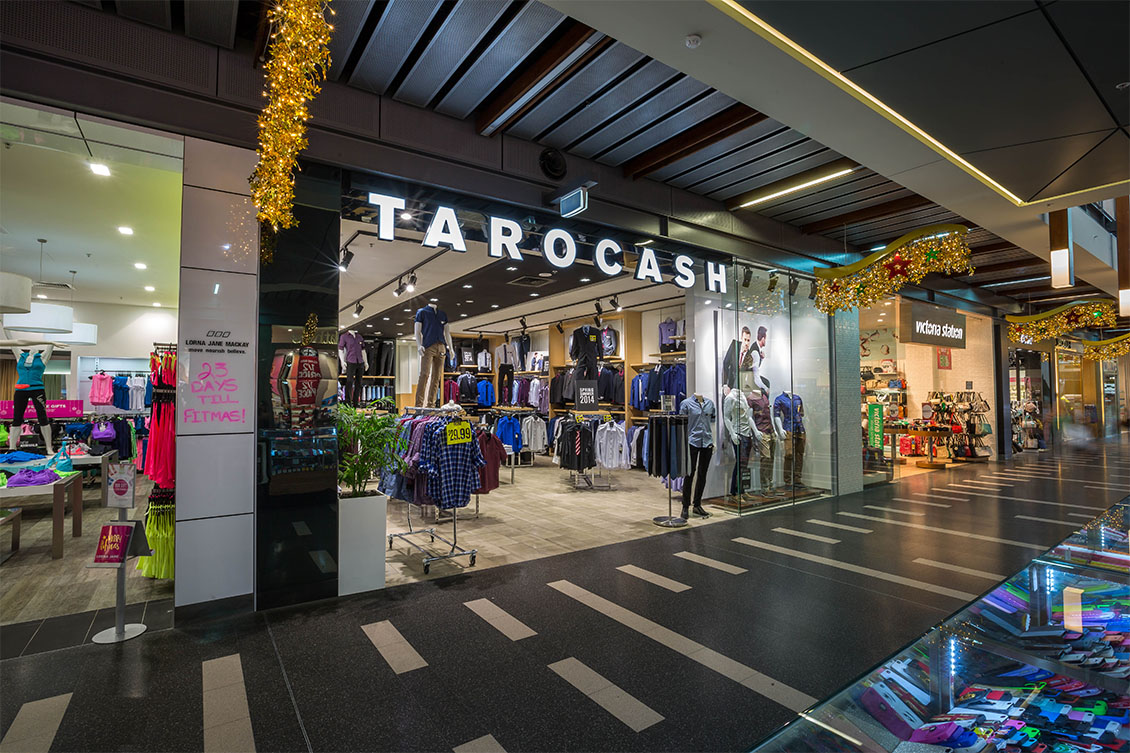
  • Tarocash, owner of YD looking to expand

    Tarocash, owner of YD looking to expand

    Retail Apparel Group-owner The Foschini Group has lauded the Australian retail market and indicated it is gearing up for further expansion throughout Australia and New Zealand.

    The South African retail group, which owns local brands such as yd., Connor, Tarocash, Johnny Bigg, and Rockwear, said topline growth in Australia is in the double-digit, and it’s planning to introduce more of its brands to the region – namely jewelry brand American Swiss.

    TFG chief executive Anthony Thunström told a media roundtable the company sees significant opportunity in the Australian and New Zealand market.

    “Australia has not been in a recession since 1990 – it is almost the polar opposite to SA with unemployment also at record lows,” Thunström said.

    “Retail is not by any means easy there with the high costs around rentals and other operational costs, so there is little margin for error to get it right or wrong.”

    While David Jones-owner Woolworths Holdings has struggled in the Australian market, having recently booked a $437.4 million impairment against the department store due to economic headwinds, The Foschini Group has found success in multiple markets by focusing on delivering a more niche offering.

    Thunström said the business doesn’t dictate from afar what will be successful in the Australian market but instead purchased the business with strong leadership teams in order to allow them to steer the local offering.

    “If we went to Australia or the UK and tried to run the business ourselves, we would end up in tears,” Thunström said.

    “There are too many local nuances.”

    According to Business Report, the retail group said it will inject R500 million ($48 million) into technology in order to get ahead of the changing retail market – having witnessed its online sales increase 57.2 percent over the year to March.

  • International retailers rethink strategy for Black Friday

    International retailers rethink strategy for Black Friday

    The growth of major sales events such as Black Friday, Cyber Monday, and Amazon Prime Day is changing the shape of peak season, according to a new survey from marketing firm Yieldify.

    In a survey of more than 400 US and UK retail marketers, Yieldify found that retailers are anticipating Black Friday revenue this year to be 25 percent higher than 2018, and revenue from the wider holiday season to be 28 percent up on last year.

    Taking a closer look, however, it is clear that attitudes towards the discount-driven event are evolving. Twenty-two percent of pureplay online businesses surveyed said they are opting out of Black Friday altogether, and those that are participating will offer smaller discounts than their omnichannel peers.

    In addition, rather than offering heavy discounts over the Black Friday period, many retailers are looking to spread discounting across the holiday quarter, with price cuts peaking in the weeks leading up to Christmas.

    Eighty-five percent of retailers surveyed said they will offer discounts in the weeks leading up to the Christmas period, and more than half (57.6 percent) will offer discounts across their entire range during the Christmas period – higher than on Black Friday (50.6 percent) or Cyber Monday (44.4 percent).

    US retailers are more likely to favor this approach to discounting, even on Black Friday, with 61.9 percent discounting across all ranges versus just 39.3 percent of their British counterparts.

    “[This] attests to the trends we’ve been seeing in recent years with our clients – what used to be a race to the bottom for discounts has evolved into a more diverse set of approaches to the traditional peak season,” Yieldify chief executive and founder Jay Radia said.

    “With competition stronger than ever, it pays to be different as much as it pays to discount.”

    Shippit joint chief executive and co-founder Rob Hango-Zada recently told Inside Retail that online discounting was beginning to have a negative effect on the industry as a whole.

    “The discounting in online retail is reaching a point of unsustainability, as it’s not triggering offline shoppers to buy online, but online shoppers to pull forward their spend,” Hango-Zada said.

    However, not participating in a broader sales event can be dangerous for retailers with underdeveloped offerings, as it becomes easy to be pushed out of the customers’ mind – if only for a few days.

    “Only those with compelling everyday low pricing and free or flat shipping rates tend to benefit from not partaking in a promotional event,” Hango-Zada said.

  • Gucci makeup line about to launch in Singapore

    Gucci Makeup by Alessandro Michele is set to launch in Singapore next month.

    The new makeup line has its roots in the unassuming harmony of the creative director’s work as first seen on the runway more than four years ago.

    The makeup is designed to “not mask but rather exalt flaws and make them part of the language of beauty,” according to a statement released by the firm. “Defects should be evidenced and not hidden away. Within this language everyone should be able to wear makeup how they want to, whether to reveal your true self, allowing you to be yourself, or as a means to transform, allowing you to be who you want to be.

    Gucci’s three new lipstick collections are diverse formulations, including Rouge a Levres Satin with a satin finish, Rouge a Levres Voile with a sheer finish, and Baume a Levres, a lip balm with a translucent finish.

    Gucci Makeup will be available at Takashimaya Department Store’s Beauty Hall from September 12.

  • VIPShop reaps rewards from a strong apparel focus

    VIPShop reaps rewards from a strong apparel focus

    Chinese discount retailer VIPShop Holdings achieved an 11 percent boost in active customers in the second quarter and a 33-per-cent increase in orders.

    The online company now boasts 33.1 million active customers who collectively lodged 147.8 million orders in the three months to June 30.

    Net revenue for the quarter increased by 9.7 percent year on year to RMB22.7 billion (US$3.3 billion). GMV  rose by 11 percent to RMB35.1 billion and gross profit by 25.9 percent to RMB5.1 billion (US$741.3 million), with net profit attributable to shareholders up 19.3 percent to RMB813.5 million (US$118.5 million).

    Chairman and CEO Eric Shen said VIPShop’s decision to refocus on discount apparel had resulted in “substantial improvement in our financial results and key operating metrics”.

    “We remain committed to executing on our merchandising strategy and further expanding our market share in China’s discount apparel sector. We are confident that we can continue to deliver steady profitability improvement in the future,” Shen said in a statement.

    He added that the strategic acquisition of Shan Shan Outlets would further enhance VIPShop’s ecosystem and allow it to explore opportunities in online-and-offline integration.

    Donghao Yang, CFO, said the company will continue to focus on its merchandising strategy, particularly in apparel–related categories, in which the GMV grew by 19 per cent year on year.

    “The focus on the high-margin apparel category has and will enable us to deliver continuous improvement in our gross margin and overall profitability. Going forward, we will continue to closely monitor the return on investment from all our businesses, especially that of our investment in offline stores. We aim to achieve a balanced top- and bottom-line growth and are committed to delivering long-term, sustainable shareholder return,” he said.

  • Habitat by Honestbee stores planned for more Asian locations

    Habitat by Honestbee stores planned for more Asian locations

    The futuristic Habitat by Honestbee grocery retail format is set for expansion across Asia provided Honestbee can secure court protection from its creditors.

    Honestbee, which has debts estimated in the range of US$180 million, is awaiting a court decision on an application for a six-month reprieve from enforcement actions and legal proceedings from creditors.

    In an interview with Yahoo Finance Singapore, incoming CEO Ong Lay Ann says if the decision goes in the company’s favor a core plank of the restructuring program will be focusing on the high-tech Habitat by Honestbee concept, which has one outlet trading in suburban Singapore. The concept merges cashless grocery store with a restaurant and a testbed for new retail technologies. Customers can shop for groceries and have them home delivered, dine in-store or order food to go.

    “Once we do the restructuring and clean up, the prognosis for the business is actually good, and parts of the business have tremendous potential, like Habitat” Ong Lay Ann told Yahoo Finance.

    “There are plans to open Habitat around the region and we have partners that are working with us to develop in other countries.”

    Ong said the company is in “advanced discussions” with prospective partners in South Korea, Taiwan, and Malaysia and expects stores to begin trading there “within a couple of months”.

    “We will adopt a partnership model, so we will collaborate with potential operators and work with them to develop Habitat in its current form or Habitat 2.0.”

    The 5000sqm Habitat by Honestbee store opened last November in an industrial building in Pasir Panjang.

    “The Singapore store is a proof of concept. It is where we will actually test the technology and make sure the kinks are ironed out before we roll out in other countries,” Ong said.

    Future locations are more likely to be in shopping complexes rather than industrial estates.