Tag: asia

  • New stores openings deliver Lovisa good sales

    New stores openings deliver Lovisa good sales

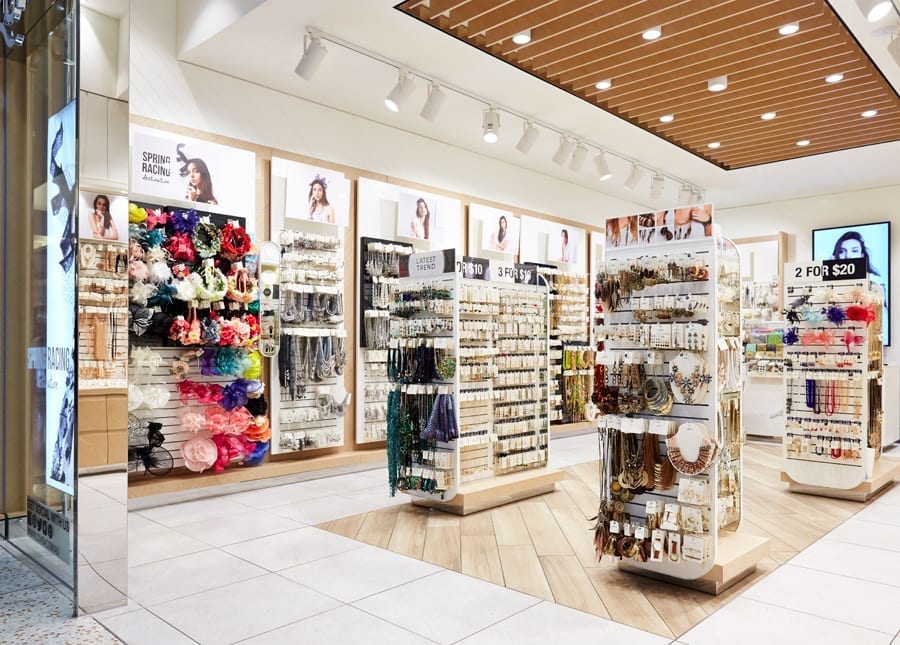
    Lovisa managing director Shane Fallscheer told investors on Thursday he was pleased to deliver a “solid result” for FY19 in one of the more difficult trading environments the fashion jewelry retailer has experienced in recent times.

    Revenue was up 15.3 percent year on year to $250.3 million, thanks to the addition of 64 new stores in FY19. The retailer’s total store count as at June 30, 2019 was 390.

    Same-store sales, however, were down 0.5 percent on the previous corresponding. Fallscheer attributed the weak result to softer trading conditions in the first half of FY19, especially in Australia, and the lack of major trends in the fashion jewelry space, which have helped drive strong same-store sales growth in the past.

    He also noted that Lovisa “overperformed” in FY18 – especially in the first half, when same-store sales increased 7.4 percent – which made it harder to deliver comparable sales growth in FY19.

    The retailer reported an increase of 50 basis points in gross margin to 80.5 percent, thanks to higher USD hedge rates and its focus on inventory management and promotional effectiveness. Gross profit increased by 16 percent to $201.4 million.

    The hiring of several senior executives, the relocation of Lovisa’s third-party logistics hub from Hong Kong to China, the launch of e-commerce capabilities in Australia and New Zealand and continued store rollouts in new territories, however, drove up to the cost of doing business as a percentage of sales.

    The retailer reported a 2.8 percent increase in earnings before interest and tax to $52.5 million and a 3 percent increase in net profit after tax to $37 million.

    Lovisa finished the year with a cash balance of $11.2 million and a strong balance sheet, Chris Lauder, Lovisa’s CFO told investors.

    Looking ahead, the key driver of growth for Lovisa is the continued expansion of stores around the world.

    The retailer currently has 404 stores (it has opened 14 so far in FY20) in around a dozen countries, including Australia, New Zealand, Singapore, Malaysia South Africa, the UK, Spain, France, the US, the Middle East and Vietnam.

    Lovisa’s biggest market is Australia, where it has 154 stores, followed by South Africa with 61 and the UK with 38, but growth is accelerating in the US, Fallscheer said, where it currently operates 28 stores in California, Texas, Florida and Illinois.

    “The eventual size and timing of the store rollout [in the US] will depend on being able to deliver quality stores that meet criteria rather than a [specific] number target,” Fallscheer told investors.

    He noted that Lovisa is beginning to gain traction with US landlords, and that it is targeting “small wins” to offset the higher cost of doing business and currency headwinds in the market, including minimizing markdowns and looking at the price.

    “We constantly review each market, each style and how all of that interacts with each other. We’re constantly looking at the price…as we mature in the US market, there are probably some slight wins there,” Fallscheer said.

    But he admitted, “there’s going to be a gap between price increase and currency decline”.

    Same-store sales growth in FY20 so far is within the retailer’s target range of 3 to 5 percent, Fallscheer said. He attributed this to price gains and increased volumes.
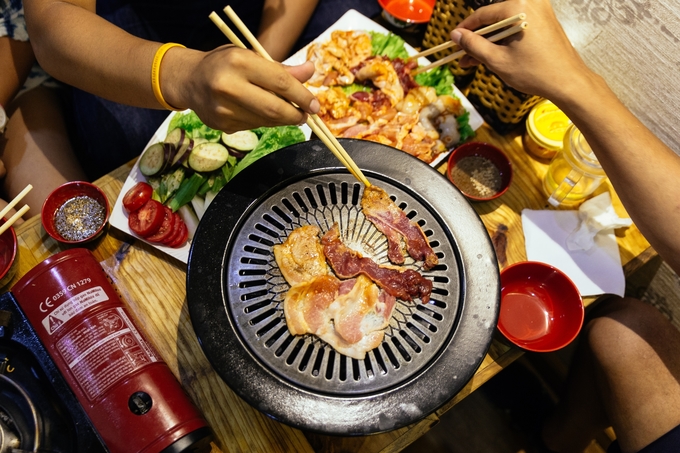

  • Hotpot-restaurant Haidilao plans to open 130 new outlets

    Hotpot-restaurant Haidilao plans to open 130 new outlets

    sales by 59.3 percent to RMB 11.7 billion (US$1.66 billion).

    The staggering expansion program saw the company’s global network grow from 466 restaurants as of December 31 to 593 at the end of June. Of those, 550 are located in 116 cities across Mainland China, the balance in Taiwan, Hong Kong and overseas locations including Singapore, South Korea, Japan, the US, Canada, the UK, Vietnam, Malaysia and Australia.

    Besides expanding its network, the company has been testing new technology including robotics and new generation machinery in its kitchens and robot waiters in 179 restaurants.

    Chairman Zhang Yong said the company was working to optimize the operational management of the business as well as enhance the dining experience of customers.

    In the first half of this year, Haidilao served more than 109 million customers with an average table turnover rate of 4.8 times per day.

    In the first half of the year, the company introduced 187 dishes across regional markets and started selling its own-brand milk tea and soft drinks.

    On the back of store openings, group revenue soared 59.3 percent. Same-store sales rose by 4.7 percent.

    Profit attributable to shareholders rose from RMB646 million to RMB911 million. (US$91,000 to $129,000).

  • KrisShop marks rebranding by taking to the ground

    KrisShop marks rebranding by taking to the ground

    Singapore Airlines’ inflight and online travel retail store KrisShop has revamped its brand and launched a new website.

    To mark the launch, KrisShop is curating a pop-up exhibition in downtown Singapore, divided into several experiential zones, each showcasing a different retail feature of the new site. KrisShop.com now sports a cleaner look with a new interface that includes more intuitive features for swift and smooth navigation.

    KrisShop has also introduced multiple initiatives for convenient payment and pre-order and delivery services, aiming to provide personalised experiences to suit the varying lifestyles of customers. It is targeting both travellers and non-travellers.

    “Over the years, the travel retail industry has experienced a radical disruption driven by digitalisation,” read a statement from the firm on the rebranding. “KrisShop seeks to embrace a holistic omnichannel approach to deliver an integrated shopping experience that engages its customers at every step of the journey – both online and offline.

    “Advancing beyond a retail catalogue, KrisShop.com aims to re-invent itself as the go-to lifestyle e-commerce website that caters to the needs of all shoppers, whether they are travelling or not.”

    In the coming months, the firm will progressively roll out the site’s new features, including multiple payment options, pre-ordering up to 60 minutes before flight, hotel delivery, in-flight entertainment, and self-collection at PopStations.

    “Beyond being a retail e-commerce site, KrisShop seeks to establish itself as a one-stop shopping destination, and is continually evolving to meet the needs and demands of today’s consumers,” said KrisShop CEO Chris Pok. “Leveraging our expertise in retail, we are proud to unveil the new Krisshop.com that aims to modernise the consumer shopping journey.”

    The KrisShop popup is located at Raffles Hotel’s Palm Ballroom, and will be open to the public from August 23 to 24.

  • Miniso signs six new partnerships to fuel expansion

    Miniso signs six new partnerships to fuel expansion

    Chinese discount merchandise chain Miniso has signed cooperation agreements with partners from six new countries and regions – the UK, France, Maldives, Reunion Island, Aruba and Curacao.

    Miniso now operates in more than 90 countries and regions, taking it closer to its target of opening “10,000 stores in 100 countries with 100 billion sales volume” by 2022.

    Miniso has been moving into the European market since last year, opening physical stores in Spain, Germany and Ireland.

    In overseas markets, Miniso has adopted a differentiation strategy with its products, setting up an international commodity department to develop diversified international products ranging from food to kitchen supplies, travel supplies, perfume, dolls, toys and makeup lines.

    The firm also set up a “Europe pavilion” in the exhibition area at its recently held Miniso 2020 Global Spring and Summer New Product Ordering Fair. Nearly 1000 SKUs more in line with European consumption habits and design aesthetics have been developed by the commodity centre team for the European market over the past six months.

    Miniso says it aims to simultaneously promote the upgrading of branding, products and stores across all its markets.

  • Tumi set fire to Samsonite’s Asian growth

    Tumi set fire to Samsonite’s Asian growth

    High-performing travel lifestyle Tumi drove Samsonite Asia sales in the first half of this year, compensating for an unusual decline in the core Samsonite brand’s business regionally.

    For the six months to June 30, net sales of the Tumi brand increased by 11.9 per cent in Asia, as the brand continued to make inroads in key markets across the region. Net sales of the Samsonite brand decreased by 1.3 per cent year-on-year, primarily due to challenging trading conditions in China and South Korea, while net sales of the American Tourister brand fell by 3 per cent.

    Samsonite Asia achieved a 4.8 per cent net sales gain in Japan and 9.2 per cent in India. The group continued to experience challenging market conditions in South Korea, where net sales decreased by 8.7 per cent. Excluding net sales in South Korea and B2B sales in China, Samsonite Asia recorded a net sales increase of 4.6 per cent during the first half.

    Globally, Samsonite had a tough half, impacted by increased tariffs on products imported from China and sold in the US and lower tourist traffic. First-half adjusted net income fell 12.8 per cent year on year to $97 million on sales of $1.756 billion, down 5 per cent.

    CEO Kyle Gendreau said the company’s fortunes improved in the second quarter with most markets showing signs of stability.

    In China, wholesale turnover reduced as the group continued to pursue a direct-to-consumer business model through its own stores and online. Net sales in China increased by 5.1 per cent year-on-year, (and by 11.2 per cent excluding B2B) in the second quarter, compared to an 8.3-per-cent decline in the first quarter.

    Gendreau said the global outlook remains uncertain entering the second half of the year, with US-China trade tensions rising, Brexit still unresolved, economic growth slowing in parts of the EU, the recent events in Hong Kong, and a general increase in political volatility and economic uncertainty impacting consumer sentiment worldwide.

    “Considering these ongoing challenges, we will continue to invest in the business to position ourselves for long-term growth while maintaining our focus on controlling costs, managing working capital, generating cash and strengthening the balance sheet.

    “We will continue to diversify our sourcing base and to renegotiate pricing with vendors to address the recent US tariff increases. In addition, we intend to temporarily reduce advertising spend for the second half of the year to help offset the pressure on our profitability caused by current headwinds.”

    The advertising scale back will spare the fast-growing Tumi brand and direct-to-consumer e-commerce initiatives.

  • Aland to open fashion flagship store in the US

    Aland to open fashion flagship store in the US

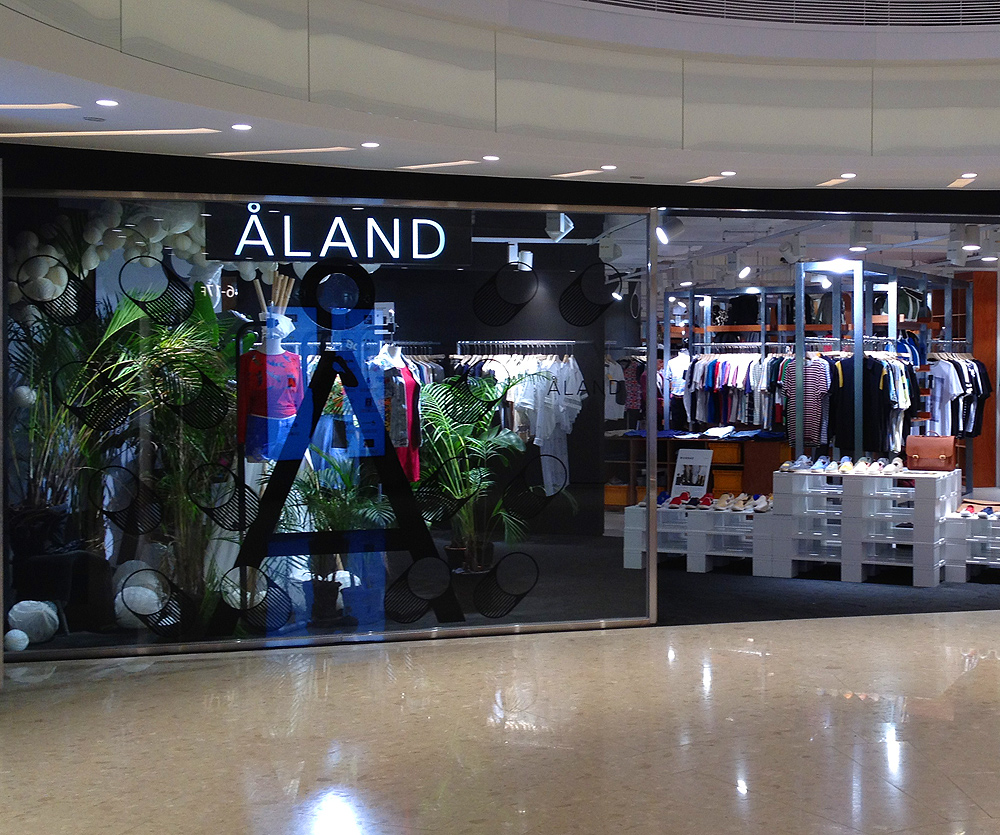
    Mall developer Triple Five announced that Aland’s 10,000sqft outlet will “bring everything that Korean fashion stands for to American Dream; unique designer brands worn by K-Pop stars, K-Beauty and more”.

    The multi-concept store is known for its range of basic retail items through to curated Korean fashion designs. It opened its first US location in Brooklyn last year.

    Aland operates more than 20 stores in its home market as well as in Hong Kong and Thailand.

    “We look forward to opening a flagship location at American Dream, where guests from New Jersey and the New York metro area and around the world can shop for a highly curated selection of affordable basics, as well as learn about rising independent Korean designers,” said Aland’s co-founder Kinam Jung. “While K-Pop has become mainstream cultural phenomena, customers can find popular items worn by BTS, Blackpink, Monster X, and etc. Åland will be the go-to-place for those who love K-Culture.”

    South Korean fashion chain Aland hopes to become a key drawcard of the 3 million sqft American Dream mall when it opens on October 25.

  • Commune launches high-tech AR app in Singapore

    Commune launches high-tech AR app in Singapore

    Furniture-design and lifestyle-brand Commune in Singapore has unveiled a cloud-based, omni-channel furniture retail solution and mobile augmented-reality (AR) app.

    Commune: In Motion is designed to transform the shopping experience and reduce the time taken to serve customers by about 70 per cent. It is the product of a design development process underway since 2016 to discover new values and growth in the evolving digital landscape.

    “The retailers who thrive in the next decade will be those who reimagine and redefine their stores for the digital age,” said CEO Joshua Koh. “Brick-and-mortar retailers have enormous opportunity to leverage the distinct benefits of ‘old fashioned, in-person shopping’ in ways that digital sites can only dream about. The winners of tomorrow will be those who are able to transport the digital world into their stores in a manner that delights customers, builds loyalty and generates brand value,” he said.

    The app enables the integration of online and offline data across various touch points – for example, customers’ browsing behaviour and the management of purchase and delivery orders in real-time – to provide a personalised shopping experience for homeowners and furniture enthusiasts.

    “Commune: In Motion exemplifies Services 4.0 where next-generation services are end to end, frictionless and anticipatory to customers’ needs,” said development partner Infocomm Media’s executive Jane Lim. “Commune has shown us how retail businesses can meet changing customer needs quickly in the digital age by effectively harnessing emerging technology and data.”

    Some of these initiatives undertaken by Commune in Singapore include the development of a VR and 3D space planner, implementation of an e-learning portal for in-house training, and the participation in overseas business missions.

    For Commune, the system aims to further improve business operations and speed up customer-service efficiencies, as well as provide a platform whereby the company can build a better relationship with its customers.

    Commune in Singapore has a vision is to create a seamless, online-offline shopping experience that is more immersive, fun and explorative while encouraging other companies in the industry to embark on similar journeys.

  • Google Hangouts transition for G Suite gets delayed until 2020

    Google Hangouts transition for G Suite gets delayed until 2020

    Google confirmed back in December that it will replace Hangouts with Chat and Meet, and announced that the transition will start in October 2019. However, the search giant revealed that the transition for G Suite has been postponed and that the new deadline is June 2020.

    According to Google, the decision to delay the move is based on the feedback received from many Hangouts users, who apparently need more time to migrate their organizations from classic Hangouts to the new Hangouts Chat.

    That being said, Google has officially postponed the final transition date to no sooner than June 2020, which means that it could happen later, but definitely not sooner. In the meantime, Google will continue to improve the transition experience of classic Hangouts group conversations, and add new Chat features like Read receipts.

    In case you need a more definitive date, Google said that it will provide advance notice once it figures out when it’s the right time to start the final transition of classic Hangouts to Hangouts Chat.

    Also, for those who want to migrate sooner, Google has already kicked off the Accelerated Transition Program, so simply request an invitation and the classic Hangouts will be disabled and you’ll be migrated to Hangouts Chat.

  • Google thinking to remove the ability to message directly on YouTube

    Google thinking to remove the ability to message directly on YouTube

    Google has confirmed it will kill off another of its obsolete chat service – YouTube messages. The decision is probably related to the fact that not many people are using the ability to message directly on YouTube.

    Although it’s a relatively old feature having been launched back in 2017 after one year of testing, Messages on YouTube will no longer be available after September 18. The announcement mentions that since the feature was launched two years ago, YouTube focused on public conversations with updates to comments, posts, and stories.

    Unfortunately, that was not enough to convince users to take advantage of the feature as often as YouTube would’ve wanted. After re-evaluating its priorities, Google has decided to discontinue the messaging option hidden inside YouTube and start focusing on improving public conversations instead.

    Even though the ability to direct message on YouTube will no longer be available after September 18, you will still be able to share YouTube videos by heading to the video watch page, clicking Share, and then tapping the “social network icon” from which you want to share a video.

  • Samsung has responses for Android users to send to green bubble haters

    Samsung has responses for Android users to send to green bubble haters

    Apple iPhone, iPad, Apple Watch and even Mac users know that when they are using the Messages app to communicate with others using the Apple ecosystem, they are sending and receiving iMessages. This is signified by the blue bubble that the conversations are housed in. And iMessages are encrypted from end-to-end.
    But when someone using an Apple device sees their conversation in a green bubble it means that the person on the other side of the chat is probably using an Android device. The green bubble means that the conversation is being handled as a SMS or a text message. Besides the lack of encryption, the special features offered for those chatting via iMessage (such as Animoji) cannot be used. And that doesn’t sit well with many iPhone, iPad, Apple Watch or Mac users.
    If you use an Android device and are sick and tired of getting scolded by your Apple wielding buddies in the middle of a group or individual chat simply because they can’t use iMessage, Samsung has your back. The manufacturer has created a GIPHY page containing more than 30 GIFs that you can use to send back a salvo after taking a hit from a green bubble hater.
    Perhaps one day in the future, people won’t be discriminated against simply because they create a green text bubble instead of a blue one on a device screen. Would Apple ever offer iMessage to Android users? We wouldn’t hold our breathe.
  • AirAsia India to start direct Delhi-Chennai flight from September

    AirAsia India to start direct Delhi-Chennai flight from September

    Budget carrier AirAsia announced a new direct Delhi to Chennai flight. The new flight will be introduced from September 2019. The sale of tickets will begin on 20 September. The tickets can be booked through airasia.com or the AirAsia mobile app.

    “The new daily direct flight between Chennai and New Delhi will help boost our operations in Chennai. We have also increased the frequency between Chennai and various other destinations like Bangalore, Hyderabad and Kolkata,” the airline said in a statement.

    AirAsia will also operate a third daily flight between New Delhi and Kolkata.

    The Bengaluru-headquartered airline is also set to launch additional flights on New Delhi-Kolkata route from 20 September.

    The airline has also increased the frequency and introduced a fourth service on the Delhi-Bengaluru route.

    AirAsia India currently flies to 19 destinations with a fleet of 22 aircraft.

    Air Asia India, which started operations in June 2014, is a joint venture between Tata and AirAsia Berhad. It currently operates 164 flights a day, covering 19 destinations and carrying over 25,000 passengers.

    The budget carrier has already started daily direct flight on the Delhi-Chandigarh route from 1 August onwards. The launch fare on Delhi-Chandigarh route is 1,365, the airline mentioned. The flight would leave from Delhi at 10.40 am every day and would reach Chandigarh at 11.50 am.

    The return flight would depart from Chandigarh every day at 12.50 pm and arrive at the Delhi airport at 1.55 pm, the low-cost carrier said.

  • 7 Ways to Negotiate Personal Loan Interest Rate in the UAE

    7 Ways to Negotiate Personal Loan Interest Rate in the UAE

    If you are in urgent need of money, a personal loan is the way to go. Compared to credit card finance, etc, personal finance is the best option to go for.

    Personal finance will provide you with a higher finance amount, longer repayment tenure, lower interest rate, etc. That is if you are eligible for it.

    However, if you qualify for personal finance, you will want a lower interest rate on the Finance amount. After all, an interest rate is the additional money you pay from your pocket to the bank. And to get that deal, you will have to negotiate with the loan provider.

    Therefore, we have discussed the factors that will help you with the negotiation process. These factors will help you get a better deal on the interest rate.

    Your Credit Score

    A credit score is like a full-body scan of your financial health. It determines whether you are financially capable of repaying the debt.

    Credit scores are marked between 300 – 900 in the UAE. The greater credit score you have, the higher are the chances of you getting a finance amount. Also, if you have a high credit score, you have better chances when it comes to negotiation.

    We have often mentioned the credit score, but do you know how to maintain a good credit score. If you don’t, here is what you should do.

    To maintain the high credit score, you will have to:

    • Stay within the Credit limit
    • Pay your credit card bill on time
    • Avoid paying the Minimum amount of the credit card bill
    • Always pay your bill in full, if possible
    • Manage your debt

    Additionally, you should always keep an eye on your credit score. If you find any suspicious activity in your account, report it immediately. Negligence or procrastination will only damage your credit score.

    Compare the Personal Loan Providers

    Comparing personal finance providers is essential for your financial health. A little effort and research from your end will ultimately benefit you.

    Lenders that provide the lowest interest rate for personal loan in UAE might not always be perfect for you. Make sure to always compare the interest rate, eligibility, repayment tenure, and the finance amount.

    After all, every financial institution has its pros and cons. Therefore: Research. Compare.

    Your Professional Credential

    If your company is listed with the bank and you earn a high income, it makes you a perfect customer. The financial institutions in the UAE consider customers like you a stable candidate. You represent low-risk factors in the eyes of the lender.

    You can definitely use that factor to negotiate a better deal for the personal loan interest rate in uae. Since the lender is assured of your repayment capability, they will offer a better interest rate to seal the deal.

    Healthy Record of Debt Repayment

    Maintaining a healthy record of debt repayment implies that you have always repaid your debt in time. It helps build trust in you, amongst the financial providers. This will end up affecting your credit score in a positive way.

    If you have an unhealthy record in debt repayment, it will cause hesitation amongst the lenders to finance you. Most financial institutions will end up rejecting your application. Even if your application is approved, you will be offered a high interest rate on personal credit.

    Comprehending the Terms and Conditions

    It’s no secret that most customers skim through the fine print due to its length. And that is a big mistake. It is essential that you read and comprehend the terms and conditions associated with the personal loan.

    Reading and understanding the fine print will protect you against any unpleasant surprises in the future.

    Collateral

    It is true that personal credit is collateral-free. However, the lack of collateral affects the interest rate on personal loan. This is due to the fact that the lenders have no way of recovering if the customer is unable to repay the amount.

    Henceforth, you can offer collateral to reduce the interest rate of the personal credit. If the financial institution accepts the collateral, you can enjoy a much lower interest rate, as there is no risk involved.

    Special Offers

    Finance institutions in the UAE often come up with special offers during the festive season. It is due to the fact that many need financial help during the festive season. These offers can often help lift the burden of the festive season in your pocket.

    The special offers during the festive season would often involve lower interest rates in the UAE. Hence why it can be beneficial for you to go for the personal credit during the festive season, if need be.

    Over to You

    If you use the suggestions given above, it won’t be difficult to get a lower interest on the financed amount. Make the most of your privileges. Use the status of your employment and the credit score to score a better deal.


  • Kaufland acquires third Queensland site

    Kaufland acquires third Queensland site

    Kaufland Australia is pressing forward with its Australian expansion with the acquisition of its third Queensland site, in a location that may concern local players.

    On Wednesday, the German retail giant confirmed that it has taken ownership of Morayfield Village Retail Centre at 177-189 Morayfield Road, a suburb of Moreton Bay Region in north Brisbane.

    The property listing on the Commercial Real Estate website indicates that the center is next to Morayfield Regional Shopping Centre, which houses major market players including Coles, Woolworths, Target, Kmart and Big W, with an Aldi store and two additional Woolworths supermarkets also situated in the precinct.

    The 16,690sq m site, described as “a well-established, modern, single-level retail center”, includes a 6,939sq m building which is more than enough for a Kaufland supermarket, which generally occupies a total store area of 4,000 square meters.

    Earlier this month Kaufland announced that it was making its first foray into the Toowoomba region in southern Queensland, along with the purchase of a site at Burleigh Heads on the Gold Coast.

    A spokesperson for the retailer said that it is planning to explore further opportunities in the area.

    “We are committed to long term, sustainable investment in Queensland, and we are delighted to be looking at all sites and opportunities that are available, ” a Kaufland spokeswoman said

    “We look forward to continuing to work together with Moreton Bay Regional Council and all key stakeholders with the goal to deliver high quality, great service, and amazing value to the wider region.”

    Kaufland has advised that its supermarkets will be stocked with local, regional and international products at discount pricing, with each store including a bakery, butcher and liquor areas.

    In March, Kaufland Australia received planning approval for its first three stores in Victoria at Chirnside Park, Dandenong, and Epping as well as its Melbourne headquarters and Australia’s largest distribution center to be located at Mickleham.

    The following month, the retailer was granted development approval to build its first South Australian store in Prospect, an inner northern suburb of greater Adelaide.

  • Lego announces very first Victorian store

    Lego announces very first Victorian store

    The first Lego store in Victoria will be in Westfield Doncaster, according to local rights-holder Alceon Group.

    The announcement follows the opening of Lego stores in New South Wales, as well as the news that more stores will be opened across Queensland and New Zealand in 2019 – with South Australia and Western Australia in 2020.

    “Victoria is home to one of the country’s largest Lego fan communities and, as a result, a strategic priority of our growth,” Alceon Group executive director Richard Facioni said.

    “We look forward to unveiling a truly world-class retail experience at Westfield Doncaster, as the first of a number of Lego certified stores planned for Melbourne.”

    Facioni said recently that the introduction of further stores in key locations would accelerate the reach of the retail concept, and build on the iconic Lego brand.

    Alceon Group is an investment firm that is one of the biggest retail companies in Australia, following its acquisition of Specialty Fashion Group’s Katies, Millers, Autograph, Crossroads and Millers brands, James Packer’s Pretty Girl Fashion group and Pumpkin Patch.

    The company also has a controlling stake in Noni B and recently acquired a stake in ethical fashion brand Ginger & Smart.

  • Domino’s Pizza profit falls on soft Australian performance

    Domino’s Pizza profit falls on soft Australian performance

    While quick-service retailer Domino’s saw revenue and online sales improve over the year to June 30, net profit fell 4.6 percent to $115.9 million, with growth in Australia and New Zealand softer than anticipated.

    However, the business’ efforts in Japan and Europe saw international EBITDA improve to $154.5 million – overshadowing the local result of $127.9 million.

    “Our international operations today account for more than half of our earnings, and they will be the largest driver of our future growth,” Domino’s group chief executive and managing director Don Meij said.

    Global sales grew by 11.9 percent to $2.9 billion, while global online sales grew 18.2 percent over the year to $1.9 billion, processing more than 66 million orders – or more than 2 orders per second.

    According to Domino’s Australia and New Zealand chief executive Nick Knight, in addition to the softer domestic performance the team made some decisions which created short-term headwinds for the business – but which they are confident will result in medium and long-term benefits.

    “We are confident in the progress of our strategic initiatives, including our investment in technology and new marketing campaigns,” Knight said.

    “Our world-first DOM Pizza Checker is already helping to deliver meaningful improvements to the quality of our pizzas, which customers recognize.”

    Australian and New Zealand sales grew 4.6 percent to $1.17 billion, or 2.4 percent on a same-store-sales basis.

    Operations 360, the business’ initiative to deliver performance data to franchisees, allowing the opportunity to learn from mistakes, as well as provide advice and training, has also led to the exit of 22 under-performing franchisees.

    Knight noted that, in some cases, this was due to franchisees having been found to have deliberately underpaid staff.

    Meij said domestic margins were compressed due to an increased number of corporate stores to make up for these exiting franchisees.

    Domino’s is facing a class-action lawsuit from in-store and delivery staff who claim to have been underpaid over a five-year period.

    According to the claim, Domino’s told franchisees to pay delivery drivers and in-store workers under a series of incorrect employment agreements. Domino’s rejects the claim and confirmed in June that it would defend the proceeding.

    While many believe the recent string of retail underpayments are the result of unintentional mistakes, almost 60 percent of the over 200 respondents believe them to be an intentional decision to cut costs.

    Do you think underpayment in the retail and hospitality sector is mostly…

    Domino’s expects same-store-sales growth to grow at a rate of between three and six percent annually over the next three to five years.

    The QSR chain additionally will grow store count by between seven and nine percent annually over the same period,  intending to invest further into the growth of its network.