Tag: asia

  • Netflix to launch Stranger Things mobile RPG in 2020

    Netflix to launch Stranger Things mobile RPG in 2020

    In anticipation of the third Stranger Things season set to debut on July 4th, Netflix announced a brand new mobile game under the successful franchise. Developed in collaboration with Next Games, makers of The Walking Dead games, the free-to-play Stranger Things mobile game will be released in 2020 on Android and iOS platforms.

    According to Netflix, the game will reimagine the Stranger Things universe in the style of an 80’s Saturday morning cartoon. Moreover, the game will feature location-based gameplay elements and Google Maps integration, which will allow players to explore The Upside Down hidden around them.

    We are huge fans of Stranger Things and thrilled to work together with Netflix to bring our shared vision of Stranger Things into life in a mobile game format. Our core focus will be to deliver on Stranger Things’ rich and intense themes like friendship and supernatural adventure, and translate these into snack-sized entertainment on your mobile device.

    We don’t know if the Netflix and Next Games plan to monetize the game or simply use it for more exposure. Either way, we do know that the upcoming Stranger Things mobile RPG will be free-to-play.

  • Tim Ho Wan Singapore launches new Restaurant and menu

    Tim Ho Wan Singapore launches new Restaurant and menu

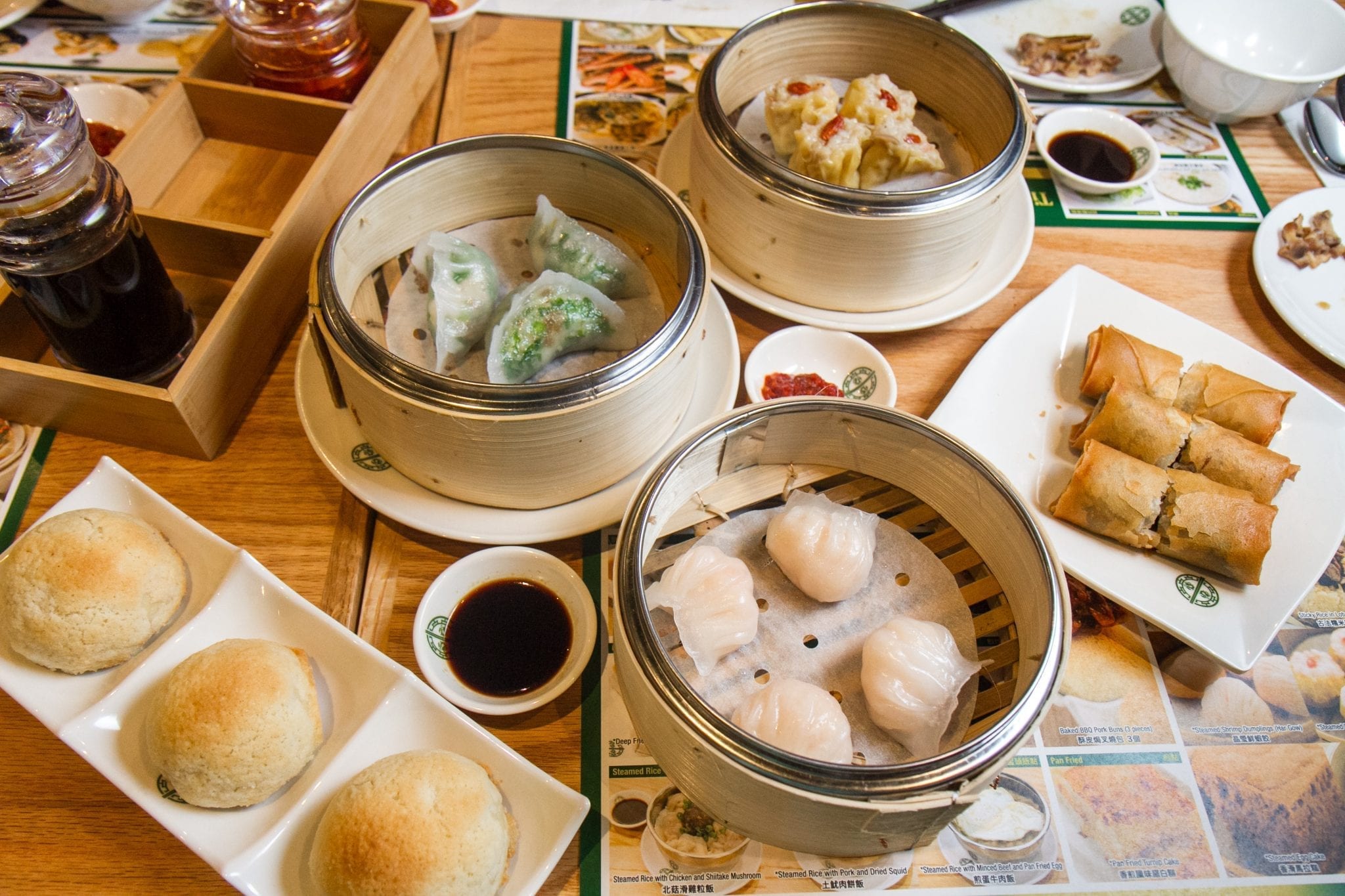
    Tim Ho Wan Singapore has opened its 11th outlet, at Punggol Waterway Point.

    The new 94-seater restaurant coincides with a revamped menu for the eatery, featuring a “refined and upgraded” menu in a modern dining space.

    Tim Ho Wan Singapore is operated by Titan Dining LP – the new master franchise holder in the Asia Pacific.

    The new menu features a limited-edition promotion the Spring Beef Specials, featuring four new beef-centric dishes. There are also upgraded Cantonese classics such as Signature BBQ Pork Bun, Beef Brisket Noodles, Shrimp dumplings, Wonton noodle soup.

  • Lululemon expands beyond apparel Products

    Lululemon expands beyond apparel Products

    Athleisure retailer Lululemon has ventured into a new category, launching a line of gender-neutral personal care products.

    The Vancouver-based retailer unveiled on Tuesday its new line of self-care products which include moisturizer, dry shampoo, deodorant and lip balm.

    The new products will be sold online and in 50 Lululemon stores. It will also be displayed at selected studio partners in North America and on Sephora’s online store.

    The retailer said their partnership with Sephora extends the company’s ability to reach new guests while partnering with an authority in the personal care space.

    “Over the years, we’ve heard the feedback that transitioning from sweat to life isn’t always easy,” said Sun Choe, Lululemon’s chief product officer. “Lululemon has always been in the work of creating solutions for sweaty problems and our selfcare line is an extension of that approach.”

    According to the retailer, throughout the two-year research and development process, the company’s selfcare team spent time with athletes, ultimately recognising a gap in the transition point from sweat to life where sweat-related skin and hair problems exist.

    The products were launched after a successful test earlier this year.

    According to Lululemon, its self care products have also received the Clean at Sephora seal, which certifies that they are free of ingredients like sulfates, parabens and phthalates.

    For the fifth consecutive quarter, the company has beat its forecast, posting a 16 per cent increase in comparable sales and a 20 per cent lift in net revenue to $782.3 million for the first quarter ending May 5.

    The company ended the first quarter of fiscal 2019 with $576.2 million in cash and cash equivalents compared to $966.6 million at the end of the first quarter of fiscal 2018.

    “Lululemon continues to see strong momentum across the entire business,” said Calvin McDonald, company CEO. “I’m inspired by our teams who are executing at high levels.”

    The retailer said for the second quarter of fiscal 2019, they expect net revenue to be in the range of $825 million to $835 million based on a total comparable sales increase in the low double digits on a constant dollar basis.

  • E-commerce platform Shopline Arrives in Malaysia

    E-commerce platform Shopline Arrives in Malaysia

    Hong Kong-based e-commerce hub Shopline has established a Kuala Lumpur office as a first move into the Malaysian market.

    Malaysia is Shopline’s second Southeast Asian market following Vietnam, where it already has a Ho Chi Minh City base and where 98 per cent of internet users reportedly made online purchases in the past year. Malaysia’s internet penetration stands at 78.3 per cent, heading off Indonesia and the Philippines, and will hit an e-commerce market value of $3.91 billion next year.

    The firm, which has more than 150,000 registered users with online stores trading on its platform, shipped merchandise to more than 200 million customers last year. It has successfully raised US$2 million in funding from CDIB Capital Group and Alibaba Hong Kong Entrepreneurs Fund.

    Shopline will bring cross-channel O2O solutions to the Malaysian market, and offers several targeted features to extend retailer’s reach as well as an analytics dashboard and a cloud-based point-of-sale payment system.

  • Bajaj Triumph Alliance To Be Finalised In A Few Months

    Bajaj Triumph Alliance To Be Finalised In A Few Months

    Bajaj Auto Limited and British motorcycle brand Triumph Motorcycles are close to finalising the alliance that will see small displacement Triumph motorcycles to be manufactured by Bajaj and sold in India, and other markets. The alliance between the two motorcycle brands was announced almost two years ago, in August 2017, but now a senior official of Bajaj Auto has confirmed that the discussions between the two brands are at an advanced stage and will be finalised in a matter of months. However, the first Triumph motorcycle to be fully manufactured by Bajaj in India is still some time away, although sources have revealed that the development has been ongoing, and in fact, at an advanced stage, with the designs coming from Triumph’s headquarters in Hinckley and the engine and chassis development handled by Bajaj.

    Bajaj Auto’s Executive Director Rakesh Sharma has now said in an interview that the talks with Triumph are at an advanced stage, and a final agreement is expected to be reached very soon, maybe even before the year is over. So, that could mean we may well see some sort of a concept at one of the motorcycle shows later this year, with possibly a production model sometime by late 2020, or early 2021.

    What remains to be seen is what type of motorcycle the new Bajaj-Triumph alliance will develop. From all indications, and Triumph’s expertise and legacy of modern classic motorcycles, the first model from the alliance could well be a small displacement modern classic – something like a Triumph Bonneville with a 300-500 cc engine. While using Bajaj Auto’s manufacturing facility and supporting supply chain infrastructure, this new model could well be priced very competitively to take on established players like Royal Enfield, the global leader in the mid-size motorcycle space.

    In any case, Triumph has dabbled in building some small displacement prototypes in the past, targeted specifically at markets like India, which were shelved. These include a small Daytona-like sportbike, as well as a small displacement naked roadster, which never saw production. But we can’t rule such models out as well from the Bajaj-Triumph alliance, once manufacturing begins after the first product is launched.

  • BMW 8 Series Gran Coupe Revealed

    BMW 8 Series Gran Coupe Revealed

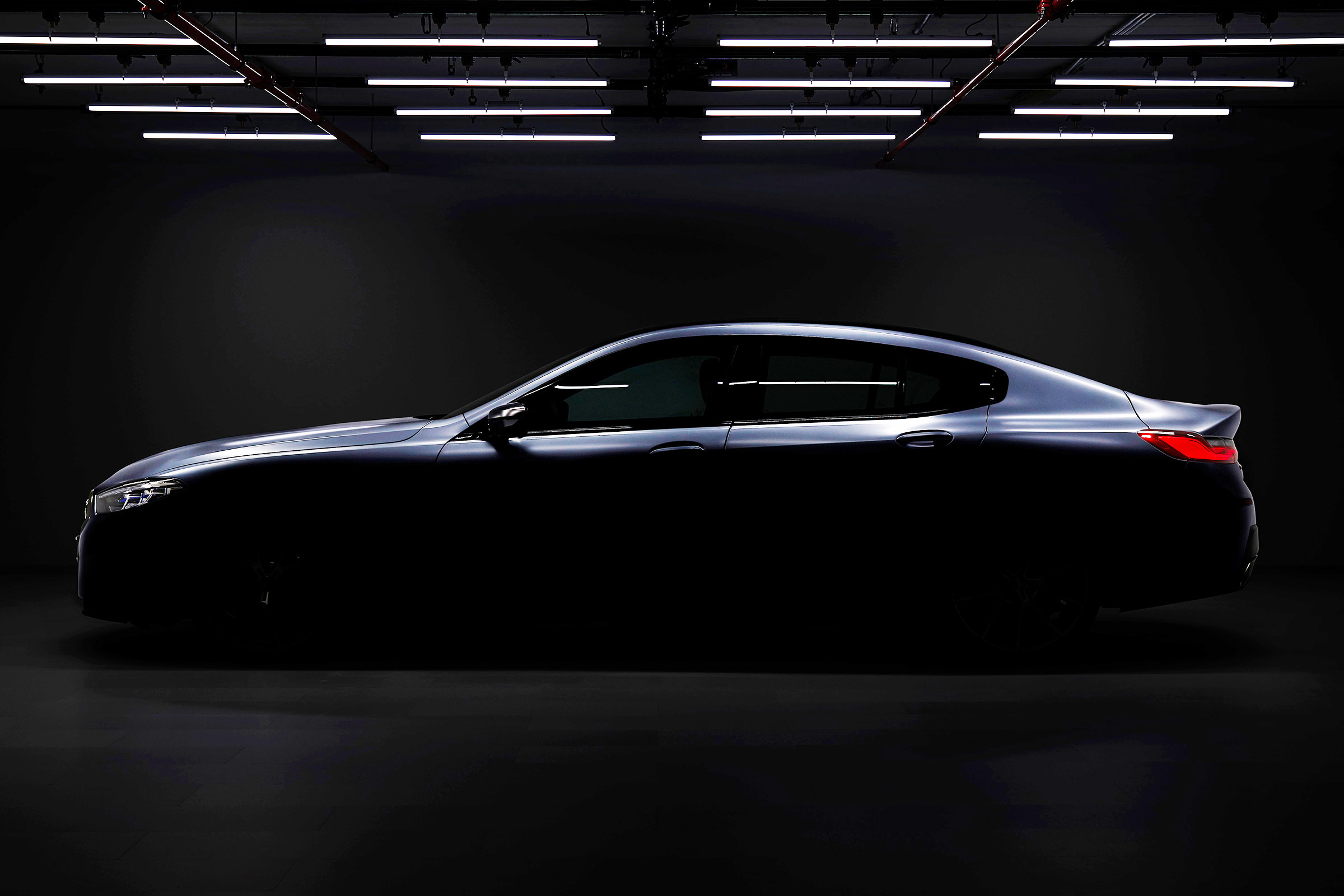
    BMW has revealed the four-door 2020 8 Series Gran Coupe. The 8 Series Gran Coupe will be available in the rear-wheel drive 840i, all-wheel drive 840i xDrive and M850i xDrive models. The new BMW 8 Series Gran Coupe showcases a sweeping four-door body with wide flanks and sharp creased modern lines. In fact, with a rear track of 1671 mm, the 8 Series Gran Coupe stands on the widest rear track of any BMW automobile; a design criteria which required an update of the Plant Dingolfing assembly line in order to accommodate the new, wider platform.

    From the A-pillar, the 8 Series Gran Coupe design differs from that of the Coupe to both increase interior space and deliver a vehicle with strong presence and authority. The windshield features less rake than in the Coupe to allow the roofline to raise to a higher point above the front seats, providing increased headroom for both front and rear passengers. The roof then merges into the rear trunk lid with fin-like transitional lines to create the visual of a long and flowing body. The rear glass is mounted with increased rake to increase the size of the trunk opening and also acts to from a fixed part of the body’s structure to increase torsional rigidity and reduce noise entering the cabin.

    The standard panoramic glass moonroof stretches from the front windshield all the way back to the rear window and the multi-functional antenna is integrated into the rear glass, eliminating the need for the roof-mounted shark fin antenna, thus allowing for a larger glass roof. The 8 Series Gran Coupe gets Icon Adaptive LED Headlights with Laserlight flank the one piece hexagonal BMW kidney grille surround which frames active air intake slats inside. Large openings in either side of the front bumper give the low-slung front end of the BMW 8 Series Gran Coupe an aggressive appearance. Functional Air Breathers let air flow through the front fenders improving both aerodynamics and styling. The Hofmeister kink in the expansive c-pillar ties the flowing side profile lines of the new Gran Coupe to heavily sculptures rear fenders and trunk lid. Slim LED rear lights stand high above trapezoidal twin exhaust pipes.

    An intelligent mix of lightweight materials helps to reduce weight in the BMW 8 Series Gran Coupe. Aluminium construction is used for the doors, hood, roof, front bulkhead, engine subframe and rear bumper support. The trunk lid is made from dent-resistant plastic while the cabin dashboard support is made from magnesium and parts of the center driveline tunnel are made from carbon-fibre reinforced plastic.

    The BMW 8 Series Gran Coupe seats five people and the longer wheelbase and wider rear flanks of the car have allowed for sizable increases in interior space. Front head room increases by 0.2 inches while rear headroom is up by 3.4 inches. Rear legroom increases by a substantial 7.1 inches while rear shoulder room improves by 7.7 inches. The extended centre console in the 8 Series Gran Coupe is unique to the model and continues into the rear space, dividing the individually-styled right and left seats while still allowing for the rear centre seat space to be used when needed. The rear console offers passengers individual right and left climate controls, air vents, storage tray and USB-C ports.

    The standard heated front sport seats feature integrated headrests and are designed with a thinner profile to allow for greater rear knee space. All four main seats offer generous levels of lateral support so that the performance capabilities of the 8 Series Gran Coupe can be enjoyed by all passengers. The rear seats can be folded down in a 40:20:40 configuration allowing for any variation of passengers and cargo on both short and long trips.

    Under the hood the BMW 840i and 840i xDrive Gran Coupe models are powered by the latest iteration of BMW’s TwinPower 3.0 litre inline 6-cylinder Turbo engine which produces 335 horses and 499 Nm of torque allows the rear-wheel drive 840i Gran Coupe to accelerate from 0 to 98 kmph in 4.9 seconds while the added traction of BMW xDrive allows the 840i xDrive Gran Coupe to reach 98 kmph in 4.6 seconds.

    Both vehicles feature an electronically limited top speed of 209 kmph when equipped with all-season tyres and 249 kmph when equipped with performance tyres.  The new 6-cylinder engine features an exhaust manifold integrated into the cylinder head, a twin-scroll turbocharger with quicker response and direct injection technology working at an increased maximum pressure of 350 bar.

    The BMW M850i xDrive Gran Coupe is powered by the latest generation of the BMW TwinPower 4.4-liter eight-cylinder Turbo engine. Power production is rated at 523 horsepower while torque figures stand at 750 Nm between 1,800 – 4,600 rpm which allow this model to accelerate from 0 to 98 kmph in 3.7 seconds.

    Both engines transfer power to the driveline through the latest improved version of the Steptronic Sport automatic transmission featuring a weight-reducing design, a newly developed controller and a wider gear ratio spread. The BMW Live Cockpit Professional in the 2020 BMW 8 Series Gran Coupe combines the latest-generation of the iDrive, featuring a high-resolution digital 12.3-inch instrument cluster display behind the steering wheel and a 10.25-inch centre display diagonally across.

    The system offers many hardware upgrades including new haptic controls on the iDrive controller, an advanced tablet-like touch interface, and stunning visualizations. The multi-modal approach of the iDrive touch controller, large touchscreen center display, cloud-based voice control, and gesture control allow users to interact in the way of their choosing.  Elements of the BMW Live Cockpit Professional are the Navigation Professional system, a hard-drive-based multimedia system with 32 GB of memory and two USB ports, plus Bluetooth interfaces. The driver can be automatically detected and personal settings activated either using the traditional vehicle key or by downloading the driver’s personal settings to the BMW Cloud.

  • Orders treble just 13 days into JD’s 6.18 shopping festival

    Orders treble just 13 days into JD’s 6.18 shopping festival

    Thirteen days into the 20-day 6.18 shopping festival, JD has already achieved a three times the turnover of last year’s event, and double the orders.

    More than 90 per cent of Hong Kong purchases have been conducted through mobile devices, and geographically, consumers from New Territories accounted for nearly 40 per cent of sales.

    The top five categories in sales and volume so far (not in order) are computers, smartphones, household electronics, digital appliances and groceries. JD singled out smartphones and household electronics as the biggest-moving categories compared with last year.

    Electronics attracted the greatest number of Hong Kong consumers with orders showing quadruple growth. Besides smartphones, products like electric fans, vacuum cleaners, air purifiers and dehumidifiers are proving popular.

    Food and beverage is another hot category, tripling in order size, with turnover up 50 per cent. This includes groceries such as instant hotpots, snacks, dried nuts and biscuits.

    Despite the high volumes, JD says the sales and growth rate for the first 13 days were “in line with expectations”.

  • Second generation Apple AirPods had weaker than expected sales in Q1

    Second generation Apple AirPods had weaker than expected sales in Q1

    Apple’s AirPods continue to dominate the true wireless “hearables” category with a larger than 50% market share. However, the second generation of the extremely popular accessory did not add to Apple’s already huge share of this market. According to the information made public by Counterpoint Research, despite launching the latest version of its AirPods during the quarter, “Apple’s market share remained at the same level seen in the last quarter, failing to grow in spite of the launch of its second generation AirPods.” Of course, the new AirPods weren’t announced by the tech giant until March 20th, nearly at the end of the three-month period.

    The second generation AirPods replaced the W1 chip employed on the original version with an H1 chip for improved Bluetooth connectivity. It also lowered the strain on the battery, allowing Apple to promise 50% longer “talk time,” and allows users to switch between devices while listening to music up to two times faster. And Siri can now be summoned by saying “Hey Siri.” The update also added a new carrying case for the AirPods that will charge wirelessly. If the upcoming 2019 iPhone models feature reverse wireless charging as rumored, the new case will be able to sit on the back of one of the new units and power up. Of course, this will come at the expense of the battery inside the host iPhone.

    Counterpoint noted that thanks to sales promotions run to clear out inventory, sales of the first-gen AirPods were higher than expected during the quarter. Sales of the second generation AirPods were weaker than expected. Some of that could be due to confusion among consumers, many of whom expected the new buds to be water-resistant and feature a new grip to keep them firmly planted in users’ ears. Those rumors and others about some sort of health care feature for the accessory and a new Black color option were well publicized prior to the unveiling of the new version. As it turns out, these are features that we will probably see when the third generation AirPods come out later this year. Most likely, many consumers are holding off on purchasing the new AirPods and are awaiting the next version of the device.

    “Apple’s market share remained at the same level seen in the last quarter, failing to grow in spite of the launch of its second generation AirPods. While sales of the first generation AirPods were higher than expected thanks to a variety of sales promotions for stock-outs in the channel in Q1 2019, sales of the new model were weaker than initially expected due to the market’s mixed response.”-Counterpoint Research

    The graphs released by Counterpoint didn’t include any actual percentages, but we can see from the graphs that Apple’s AirPods have a huge lead over the second place Samsung Galaxy Buds. Samsung’s wireless “hearables” were launched earlier this year and were handed out as a bonus to those purchasing a phone from the Galaxy S10 line. That promotion, by the way, is back until June 30th. The Galaxy Buds replaced the Gear IconX in Sammy’s lineup and helped the company leap over Jabra to take second place for the first time. The Jabra Elite Active 65t was third.

    Later this year, we should see two more heavyweights enter the market. Both Amazon and Microsoft are planning to release their own wireless Bluetooth earbuds this year. The former says that its device will be equipped with Alexa and will sound better and cost less than Apple’s AirPods. Microsoft’s Surface Buds will include Cortana integration.

    During the first quarter of this year, Counterpoint says that the size of what it calls the “true wireless wearables” market was 17.5 million units. That is a 40% gain sequentially from the fourth quarter of 2018. That is impressive because Q4 of 2018 included the holiday shopping season.

  • Telegram CEO blames China for cyber attack

    Telegram CEO blames China for cyber attack

    One of the top ten most popular messaging apps in the world is Telegram, available for iOS and Android. Not as widely used in the U.S., the app offers end-to-end encryption and group chats for as many as 200,000 people. The app also can share videos, even those with large file sizes, and documents of any type. A tweet from Telegram CEO Pavel Durov blames China for a cyberattack that hit the Telegram app and affected its subscribers earlier this week.

    Durov says that a large Distributed Denial of Service (DDoS) attack originated from internet addresses inside China. These DDoS attacks sent huge amounts of requests at one time to Telegram, clogging up the app and making it unusable for many subscribers. The executive called it a “powerful,” targeted attack that was related to the protests taking place in Hong Kong. Huge throngs of protestors are complaining about a new law that will allow people in the city to be extradited to China. Durov said that in the past, similarly sized DDoS attacks coincided with protests in Hong Kong,

    Because of the encryption used to hide the content of messages, Telegram is popular among protestors in any country, allowing them to coordinate plans with up to 200,000 people out of the eyeshot of authorities. A DDoS attack on Telegram would prevent the protestors in Hong Kong from making arrangements to gather at a certain place and time.

    The Chinese government denied that it was responsible for the attack. Chinese foreign ministry spokesman Geng Shuang said at a briefing yesterday that he was unaware of the incident.

  • Ecmoho Pharmacie plans US$100 million IPO

    Ecmoho Pharmacie plans US$100 million IPO

    Chinese online pharmacy Ecmoho is seeking to list on the New York Stock Exchange in order to raise US$100 million for expansion.

    According to sources cited by Bloomberg, the IPO may take place as early as this year.

    The company has declined comment on the matter and sources say the exact timing and the target to be raised may yet change.

    Based in Shanghai, Ecmoho distributes supplements and pharmaceuticals online. As well as selling direct it has stores on JD and Alibaba’s platforms.

    Ecmoho launched in 2002 as an online marketing service, transitioning into e-commerce in 2006, before sharpening its focus on the health sector in 2011. It sells products from domestic manufacturers and global brands.

    Besides Mainland China and Hong Kong, the company operates in the US, Europe and Asia Pacific.

  • E-commerce explosion driving worldwide warehouse Expansion

    E-commerce explosion driving worldwide warehouse Expansion

    Global analysis firm ABI Research has found that the global Warehouse Management System (WMS) market will be worth US$5 billion by 2025, growing at a CAGR of 13.9 per cent.

    The period will see a warehouse boom with some 57,000 more distribution centres in operation by then than last year. The continued growth of the e-commerce market and rising customer expectations are putting enormous pressure on warehouses to execute more rapid and flexible deliveries. This is driving investment in warehouse facilities, automation technologies, and warehouse management systems to coordinate and optimise operations.

    “The warehouse is becoming the engine room of the supply chain and is, therefore, a focal point for investment from retailers, manufacturers, and logistics service providers,” said ABI Research principal analyst Nick Finill.

    “As the warehouse technology ecosystem becomes increasingly complex, supply chain operators require more sophisticated management systems that can orchestrate the high volume and variety of intelligent, connected devices and systems within their facilities, as well as the flow of inventory.”

    The firm finds that as the e-commerce boom grows in and extends beyond the established economies of China, Japan, and Korea, the Asia-Pacific will experience the highest growth of warehouse facilities and WMS revenue, becoming the largest market for the software by 2023. The rapid adoption of WMS is also expected in the emerging economies of the Middle East, Africa, and Latin America. Europe and North America will experience strong growth as supply chain operators increase spending on upgraded software systems.

    WMS spending will also vary according to industry verticals. The retail, food and beverage, and manufacturing sectors will be responsible for the highest growth rate as they catch up with more mature verticals, such as logistics service providers.

    ABI’s data suggests AI-driven innovation from WMS market leaders such as JDA Software, High Jump, and Manhattan Associates is enabling substantial flexibility and functionality in WMS and Warehouse Execution Systems, an increasingly important orchestration layer linking high-level management with connected machines. At the device and machine level, greater automation is creating demand for more sophisticated Warehouse Control Systems from major automated material handling solution providers such as Bastian Solutions, Dematic, and Honeywell Intelligrated.

    “The increasing velocity of goods through the supply chain is driving demand for real-time decision making and optimisation,” said Finill. “As the margin for error in the warehouse decreases, AI and ML-enabled WMS solutions are becoming imperative for warehouses that rely on speed, efficiency, and intelligence to remain competitive.”

  • E-commerce giants report record results for 6.18 shopping festival

    E-commerce giants report record results for 6.18 shopping festival

    China’s e-commerce giants JD and Alibaba turned in record-breaking results for the 6.18 shopping festival on June 18.

    Total sales transaction volume during JD’s 6.18 trading reached a new high this year of US$29.2 billion. Key drivers leading to the breakthrough results were new products as well as Chinese consumers’ continued interest in and pursuit of higher quality.

    Alibaba Group’s Taobao and Tmall shattered multiple records during the Mid-Year Shopping Festival, stating a rising demand from consumers in less-developed cities for quality products. More than 200,000 brands took part, using campaigns and tools provided by Alibaba’s core platforms to help more than 110 brands each generate gross merchandise volume in excess of RMB100 million ($14.5 million).

    New products were a strong focus of JD’s retail strategy overall this year. JD has launched an exclusive channel within its platform to socialise and promote these products as well as bring them to market, making them easier for consumers to find, and helping brands to strategically reach new consumers. Consumers from lower-tier cities are also “trading up” showing greater interest in brands traditionally more coveted by consumers in higher-tier cities.

    Transaction volume growth was twice as high in lower-tier cities than the overall growth on JD. The percentage of new users from lower-tier cities was also much higher than the percentage of new users overall. Two campaigns involved participation from more than 100 million users. One was an innovative “birthday red envelope” campaign, which encouraged and rewarded consumers for sharing on social platforms. Another campaign engaged users to share, vote for and win shared rewards for their cities.

    The firm’s recent C2M initiative employs big data and consumer insights, providing insights to brands to adjust their manufacturing and marketing approaches with the goal of providing consumers with products they want before they even know they want them. Transaction volume of new products and C2M products during 6.18 increased 289 per cent compared with the same period last year. One out of every three monitors sold during this year’s 6.18 campaign were C2M products. HP saw a 100 per cent increase in sales of its Zhan 66 laptop, a C2M product, during 6.18.

    Several new brands also launched on JD during 6.18. Most recently, Italian designer brand Prada, as well as Miu Miu and Car Shoe – two sister brands under the Prada Group – launched authorised flagship stores on JD. Farfetch also launched a flagship store on JD during the period, enabling JD consumers to access more than 3000 brands through Farfetch’s network of more than 1000 brand and boutique partners.

    JD also worked with the world’s top hotel brands to empower subscribers of its premium membership program, JD Plus, with exclusive privileges at 15,000 high-end hotels around the world, marking the first time JD Plus benefits can be enjoyed outside of China. During this 6.18, shopping festival JD sold more than 2.8 million JD Plus memberships.

    Technology continues to be key to improving the consumer experience and exceeding expectations during the sales festival. 91 per cent of orders coming from JD fulfillment centers were delivered same-or next-day. During this year’s 6.18, JD’s smart customer service robot fielded more than 32 million inquiries, of which it solved 90 per cent of those independently, freeing up human customer service for more complicated inquiries.

    Flash sales crash records

    Alibaba’s flash sales channel, Juhuasuan, which aids brands in attracting new customers via discounts, added over 300 million new consumers. During the festival. More than 180 products topped RMB10 million ($1.45 million) in sales, and 4700 products achieved sales of more than RMB1 million ($145,000). This was a record-breaking number for brand participation in Juhuasuan.

    The firm’s Taobao live-streaming platform helped generate GMV of more than RMB13 billion ($1.88 billion).

    “The results of the ‘6.18 Mid-Year Shopping Festival’ are encouraging,” said president of Taobao and Tmall Jiang Fan. It has proven to be a celebration that can match the enthusiasm and scale of the ‘11.11 Global Shopping Festival.’ More than 100 brands achieved a new sales record that surpassed the result from last year’s 11.11.

    “We are very pleased to see that our strategy to help brands penetrate the less-developed markets has paid off. Customers in the emerging cities are very receptive to innovative products and promotion campaigns such as programs on the Juhuasuan platform. The number of customers and GMV from third- to fifth-tier cities both hit 100 per cent growth. We believe this group of customers will continue to grow into a strong and sustainable force for brands who are looking at further developing the Chinese market,” he added.

    With an increase in discretionary income, consumers in China’s less-developed areas are quickly becoming a crucial driver of China’s solid consumption. These consumers were a main engine powering this year’s 6.18 Shopping Festival. According to Tmall, 48 per cent of the newly launched products on the platform during the event were purchased by customers outside first- and second-tier cities.

    Demands and preferences from lower-tier cities consumer were diverse, ranging from high-end electric products from Apple to imported fruit, such as durian from Malaysia, and daily necessities, including socks and toothbrushes.

    Tmall’s Luxury Pavilion sales more than doubled from last year, boosted by customers in emerging cities and shoppers born after 1995. Premier brands hit better-than-expected results. Sales of Versace jumped 20 times compared with last year.

    This year, Taobao’s Daily Deals, a channel which allows consumers to order customised products straight from the manufacturers, generated more than 420 million orders. With Alibaba’s big data and IoT technology, the Daily Deals service has effectively digitised the manufacturing industry by initiating a direct manufacturer-to-consumer model.

    Sales generated from consumers in third- and forth-tiers cities on cross-border trade platform

    Tmall Global increased by 153 per cent from a year before. The top five countries on Tmall Global were Japan, the US, South Korea, Australia and Germany.

  • Credit card companies want to get rid of Paper Receipts

    Credit card companies want to get rid of Paper Receipts

    Credit card companies in South Korea are consulting with financial authorities to make issuing paper receipts optional.

    For South Korean credit card companies, issuing paper receipts is a cost they want to phase out following last year’s reduction in transaction fees.

    Card companies argue that issuing paper receipts is not necessary since card users can check their transaction log via smart device applications or on its website.

    KB Kookmin Card Co, for example, plans to introduce a new policy to make issuing credit-card sales slips optional starting next month.

    “Financial authorities are positively considering the idea,” said a source familiar with the credit card industry. “We hope that they will decide on a plan that will ease off the cost.”

  • YouTube TV gives away some freebies to long-time subscribers

    YouTube TV gives away some freebies to long-time subscribers

    YouTube TV is giving fans a bit of recognition for being loyal to the service for a long time. If you’re not a YouTube TV subscriber or just subscribed recently, you’re not be getting this freebie, but don’t be disappointed, perhaps the promotion will be back at some point in the future.

    But right now, many long-time YouTube TV subscribers are getting free Showtime this summer. You don’t have to do anything to get the deal, if YouTube TV thinks you’re subscribed for enough time, you’ll be getting Showtime for no cost until September 5, 2019.

    Showtime subscription costs $10.99/month, so YouTube TV is giving some of its subscribers a little bit over $30 for free for being loyal. It’s not much, but it’s free and those who like Showtime may continue to pay for the service after September 5th.

    Think of it like a 3-month trial rather than the 7-day trial that Showtime typically offers to those who wish to try its service before becoming a subscriber. Unfortunately, it’s unclear for how long you have to be subscribed to receive the freebie, but if you qualify for the promotion, you’ll most certainly be notified by YouTube.

  • Asian expansion contributes to loss for Mulberry

    Asian expansion contributes to loss for Mulberry

    Expansion into Asia has weighed on British luxury bag label Mulberry’s bottom line, but the company is confident the foray will bear fruit.

    Mulberry reported a pre-tax loss of £5 million in the year to March 30, a sharp contrast to a £6.9 million pre-tax profit the previous year.

    The other major contributor to the loss was the collapse of British department store House of Fraser which cost it £2.1 million and worsening the impact of a “challenging” UK domestic market. Sales fell 2 per cent to £166.3 million.

    During the year, Mulberry opened new business subsidiaries in Japan and South Korea along with new stores in New York and Dubai as it focuses on international markets for sustained future growth. Revenue from overseas rose 7 per cent for the year, compensating in part for a 6 per cent drop in domestic sales. Online sales rose 27 per cent

    “The group has delivered results in line with expectations and is making good progress in advancing its international strategy and direct to customer model whilst managing a challenging UK market,” said CEO Thierry Andretta.

    “Looking ahead, we anticipate that international and digital sales will continue to grow whilst UK retail trading conditions are expected to remain uncertain. The group plans to invest further in its new Asian entities during this development phase, enhance its global digital platform and optimise the UK network,” he said.

    Sales in the 11 weeks to June 15 were up 13 per cent.

    Chloe Collins, senior retail analyst at GlobalData, said Mulberry needs to seek new and inspiring ways to attract new customers via increased social media and marketing campaigns.’

    She said Mulberry’s expansion of its lifestyle-product offer – it launched its first eyewear range last year – and its plans to increase the depth in its range of trainers are a wise move to capitalise on the trend for athleisure and competing with the likes of Isabel Marant and Golden Goose.

    “However, it must be careful that this does not distract design focus from its core handbags offer, where developments and upgrades are still necessary to maintain shopper appeal.”

    She said teaming up with fast-growing technology platform Farfetch for a new digital concession in April, will help Mulberry increase its reach and bolster sales, both in the UK and internationally.