Tag: asia

  • Global public cloud spend to 17.5% in 2019

    Global public cloud spend to 17.5% in 2019

    Gartner forecasts worldwide public cloud services market will grow 17.5% in 2019 to reach a total of $214.3 billion, up from $182.4 billion in 2018.

    Cloud system infrastructure services, or infrastructure as a service (IaaS) is forecast to grow 27.5% in 2019 and reach $38.9 billion, up from $30.5 billion in 2018 (see Table 1). The second-highest growth rate of 21.8% will be achieved by cloud application infrastructure services, or platform as a service (PaaS).

    Gartner research vice president, Sig Nag, says “we know of no vendor or service provider today whose business model offerings and revenue growth are not influenced by the increasing adoption of cloud-first strategies in organizations. What we see now is only the beginning, though. Through 2022, Gartner projects the market size and growth of the cloud services industry at nearly three time the growth of overall IT services.”

    Gartner expects that by the end of 2019, more than 30% of technology providers’ new software investments will shift from cloud-first to cloud-only. This means that license-based software consumption will further plummet, while SaaS and subscription-based cloud consumption models continue their rise.

    “Organizations need cloud-related services to get onboarded onto public clouds and to transform their operations as they adopt public cloud services,” said Nag. Currently almost 19% of cloud budgets are spent on cloud-related services, such as cloud consulting, implementation, migration and managed services, and Gartner expects that this rate will increase to 28% by 2022.

    “As cloud continues to become mainstream within most organizations, technology product managers for cloud related service offerings will need to focus on delivering solutions that combine experience and execution with hyperscale providers’ offerings,” said Nag.

    He sees the complementary approach as driving both transformation and optimization of an organization’s infrastructure and operations.

  • 2020 Karma Revero Gets BMW’s TwinPower Turbo Engine

    2020 Karma Revero Gets BMW’s TwinPower Turbo Engine

    Karma Automotive is all set to reveal its all new 2020 Revero luxury electric vehicle at Auto Shanghai 2019 and while there’s one teaser out yet, we didn’t know what the car will be powered by. The company announced that the 2020 Revero will use a BMW TwinPower turbo three-cylinder in-line engine supplied by BMW AG to power an on-board electric generator. BMW AG started working with Karma in 2015 to help develop the onboard generator systems used in the company’s new Revero.

    Karma’s engineering team embarked on a complete redesign of the all-electric powertrain that underpins the new 2020 Revero. After extensive evaluation the team selected the highly-charged BMW engine as the optimal choice to support a new and more powerful high-voltage NMC lithium-ion battery pack and a new, transversely mounted, twin-motor rear drive module (RDM).

    Thanks to this engine the performance of the Revero will be improved too and the car will be able to go from 0-96 kmph in just 4.5 seconds which is a second faster than the model it replaced. The 2020 Revero, along with Karma’s Pininfarina-designed concept car and its all-electric Vision concept car, will form the automaker’s product announcement at Auto Shanghai 2019.

    Bob Kruse, Karma’s Chief Technology Officer said, “BMW AG is a natural fit for Karma’s luxury-tech focus because it is a proven technology leader renowned for conceiving and delivering ground-breaking innovations.”

  • Nepal to shut down CDMA from 2022

    Nepal to shut down CDMA from 2022

    The Nepal Telecommunications Authority (NTA) has reportedly decided to switch off CDMA services in Nepal from 2022.

    The regulator’s Radiofrequency Policy Determination Committee has decided on a policy of CDMA network shutdowns in order to pave the way for refarming spectrum in the 800-MHz band.

    Currently only Nepal Telecom operates an active CDMA service, under the brand Sky. The service is currently available in most areas of the country, but the user base is low due to the preference for GSM services in the market.

    Nepal Telecom had decided in 2017 to stop investing further in both CDMA and Wimax, but has not currently set a date for the network shutdown.

    The operator plans to return its 6 MHz of 800-MHz spectrum to the regulator after the network shutdown.

  • Taobao Leverages Live Streaming to Boost Rural Development

    Taobao Leverages Live Streaming to Boost Rural Development

    Taobao will leverage its livestreaming technology to help incubate 1,000 key opinion leaders in China’s countryside in an effort to boost rural development. By helping farmers go online, Taobao aims to enable farmers to find new markets and customers from their homegrown products.

    Taobao’s target is to boost the livelihood of 1,000 farmer livestreamers from 100 counties in Chinan by helping them each generate over RMB10,000 in monthly income. The idea is to drive online sales of local agricultural products via livestreams conducted by the newly minted rural KOLs – the farmers, themselves. To promote this new initiative, Taobao plans collaboration with countylevel governments to highlight local points of interest and expand the popularity and recognition of various villages participating in the livestreaming.

    “Our rural livestream program aims to empower local livestreamers to boost business for povertystricken areas, while enabling farmers to manage their own livestream e-commerce channels. It’s Taobao’s devotion to poverty relief by leveraging e-commerce and livestreaming via creative digital technologies.” said Chen Lei, director of e-commerce content at Taobao. Last year, Taobao hosted more than 150,000 agriculture-themed livestreams, which drew over 400 million viewers. Taobao innovated the “Live on the Farm” model, featured with agriculture livestreamers, KOLs, and even local government officials from counties to join livestream sessions and promote their local goods. In January 2019, Taobao’s “Live on the Farm” sevenday online sales campaign generated over RMB9.35 million in sales, right ahead of Chinese New Year, a prime gifting period in China.

    Many agriculture livestreamers tasted their first success on the platform last year, including Chen Jiubei, who has helped farmers in her hometown in Hunan province sell up to 2 million kilograms
    of previously unsaleable oranges in just 13 days last winter. Taobao also coordinated with county-level governments to provide a suite of livestreaming marketing services, including seeking out and training livestreamers, as well as identifying local selling points. With more than 60,000 distinct livestreams on agricultural products every month,

    Taobao is committed to driving RMB 3 billion in sales for the sector in 2019. This month, Taobao will roll out livestreams that introduce the source of a range of agricultural products, helping viewers discover the local landscape and customs where their products come  from. In addition, Taobao also plans to partner with CCTV, Hunan Television and Zhejiang Television to develop livestreaming shows that invite popstars and celebrities to participate in poverty-relief activities, aiming to generate more public awareness for underprivileged areas. More on Taobao Livestreaming Taobao livestreaming is an emerging marketing channel that started in 2016 and has rapidly grown into a proven marketing strategy. Powered by advanced technologies from across the Alibaba Group, KOLs and livestreamers provide both indoor and outdoor livestreaming to customers. During these livestreams, they introduce and recommend different products across diverse areas ranging from clothing, cosmetics and jewelry, to agriculture goods and plus-sized clothes. In 2018, 81 livestreamers notched over RMB 100 million in sales, respectively.

    Across all industries and sectors in China, brands and sellers are already transforming their digitalncapabilities to stimulate business development through Taobao livestreaming. L’Oréal’s flagship store experienced a nearly 20% increase in purchases after Viya and Jiaqi Li, Taobao’s most recognized livestreamers promoted the brand’s signature goods via livestream. Among the top female clothing brands, more than 30% of sales are driven by live streaming. In certain industries such as jewelry and jade, flowers and plants, the penetration rate of brands using Taobao livestreaming is close to 50%, bringing great changes to the previous online marketing mix that was adopted.

    Livestreaming serves as an efficient tool to empower traditional industries and drive sales. During the “Double 12 Shopping Festival” in 2018, Taobao organized a 12-day livestreaming event from once-booming industrial belts to rejuvenate traditional businesses with cutting-edge technologies and powerful new modes of retail operation. Livestreamers were everywhere from an agricultural products base in Sichuan and porcelain production firm in Jingdezhen to a home textiles mall in Nantong and leather factory in Haining, bringing a growing number of young customers to forgotten industrial towns. In order to inject more renewed energy into traditional industries, Taobao also launched plans at the recent summit to incubate and develop 10 offline traditional retail markets. The aspiration is to help them reach annual revenues of over RMB 100 million. Other initiatives that are being rolled out to maximize the influence of livestreaming includes developing 10 professional PGC (Professional Generated Content) organizations with over RMB 100 million revenues, creating 10 super programs with more than 100 million views and promoting over 100 regional television stations to collaborate with Tao Live, an app focused on PGC area.


  • Mobitel to invest $50m in 5G this year

    Mobitel to invest $50m in 5G this year

    Sri Lankan national mobile service provider Mobitel has revealed plans to invest $50 million this year to deploy a 5G network and upgrade its network infrastructure.

    The operator, a wholly-owned subsidiary of Sri Lanka Telecom, has commenced 5G trials ahead of a planned rollout.

    While Sri Lanka was the first country in South Asia to introduce 3G and 3.5G technology, Mobitel does not expect it to be the first to introduce 5G, the report states.

    Meanwhile Mobitel has been investing heavily to upgrade its 3G network to 4G, having spent around $100 million to convert around 100 3G base stations. The operator plans to continue the 4G upgrade, with plans to soon switch off its 3G network.

    Mobitel has now invested around $600 million over its 25 year history. But despite heavy investments and foreign exchange losses, the company managed to increase its revenue by around 10% last year.

    Mobitel is the second largest mobile operator in Sri Lanka after Dialog Axiata, with around 22.6% market share.

  • CIMB IB Research expects higher operating costs

    CIMB IB Research expects higher operating costs

    CIMB Investment Bank Research (CIMB IB Research) has retained its “reduce” call on AirAsia Group Bhd as it forecasted the company to face higher operating costs and gearing levels until 2021.

    The research house lowered its target price for AirAsia to RM1.50, from RM1.82 previously, as it expects lower core earnings per share and dividend of 13 sen.

    At 11.00am, AirAsia was trading down 1 sen or 0.38% at RM2.64 with 1.55 million shares transacted. Its market capitalisation stood at RM8.86 billion.

    In a note today, CIMB IB Research analyst Raymond Yap pointed out that AirAsia had sold 79 aircraft to lessor BBAM Ltd Partnership in 2018 and is expected to sell a further 25 planes to lessor Castlelake LP by the third quarter of this year.

    Given this, Yap explained that together with other existing operating lease aircraft, AirAsia is expected to capitalise RM11.8 billion worth of borrowings related to the operating leases in financial year 2019, effectively bringing back to the balance sheet what had previously been off-balance sheet.

    “The impact would be to raise reported gross gearing of 19% in FY18 to 198% on a pro forma basis after MFRS 16.

    “The overall impact to P&L (profit and loss) earnings from the above sale and leasebacks (S&LB) is negative because AirAsia would have to pay for the lessors’ profit margin as well as provide for a higher level of maintenance charges based on lessors’ conditions for lease returns, which tend to be strict. The net result would be a squeeze on AirAsia’s profit margins,” he said.

    Yap added that with the squeeze in profitability, AirAsia will experience greater operating leverage from unexpected changes in fuel prices, exchange rates, competitive dynamics, and airport taxes and levies.

  • Malaysian bakery Lavender Singapore Opens Its Doors

    Malaysian bakery Lavender Singapore Opens Its Doors

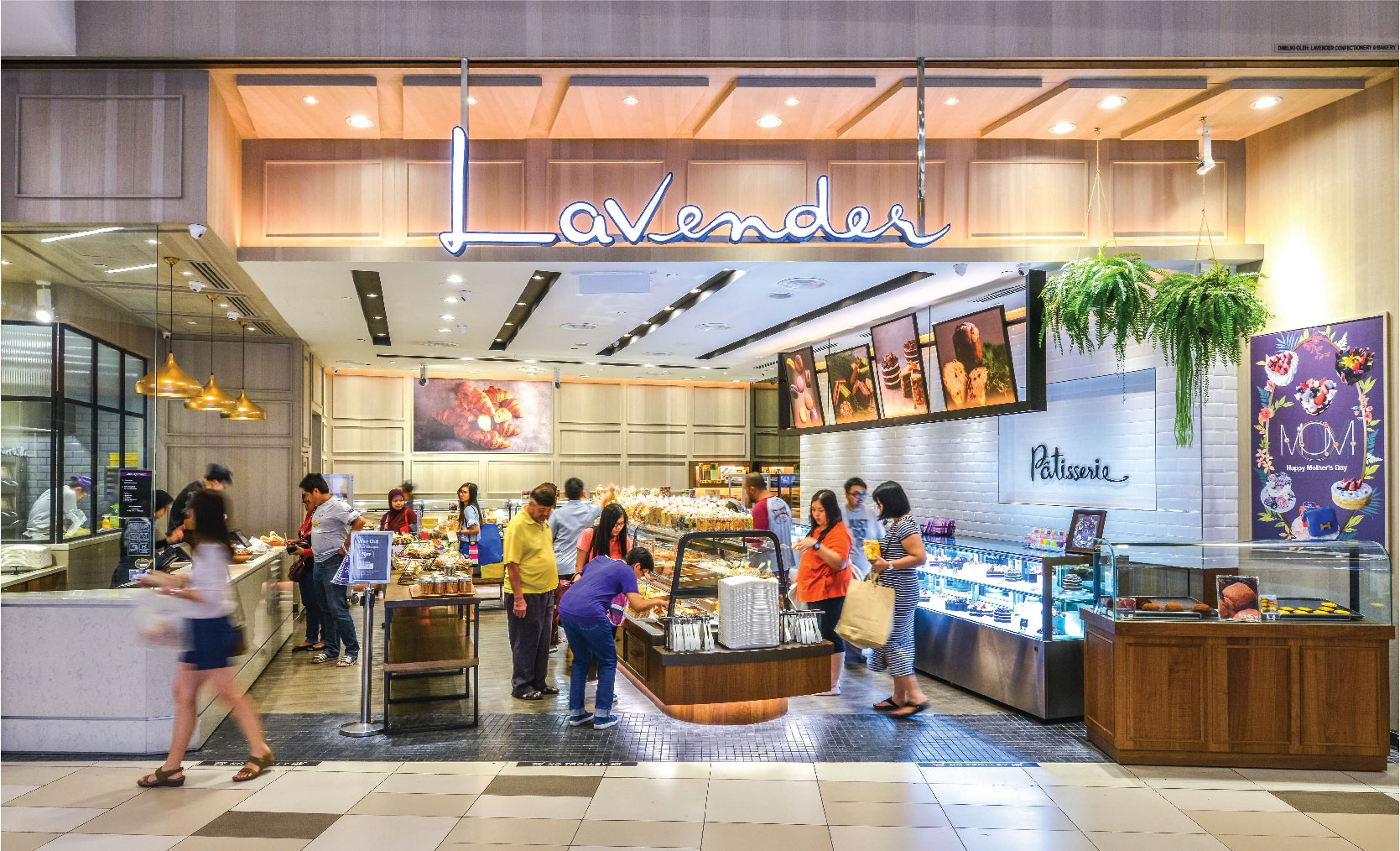
    Malaysian bakery Lavender is opening at Jewel Changi in Singapore this week.

    Set to open on Thursday (April 11), the store will sell Lavender’s buns, French-style choux cream puffs, and house-made pandan kaya.

    Located next to the 40m-high Rain Vortex waterfall, the outlet offers takeaway-only baked goods.

    “We try to stay competitive with prices so all our customers can enjoy our products and taste the difference in quality,” a Lavender bakery representative said.

    “Prices will definitely be different to Malaysia’s as overheads like rent, salaries and material costs will all be in Singapore dollars.”

    Malaysian bakery Lavender has six outlets in Kuala Lumpur and five in Johor Bahru, including a multi-storey flagship at Taman Pelangi.

  • Skechers Opens first duplex store in Singapore

    Skechers Opens first duplex store in Singapore

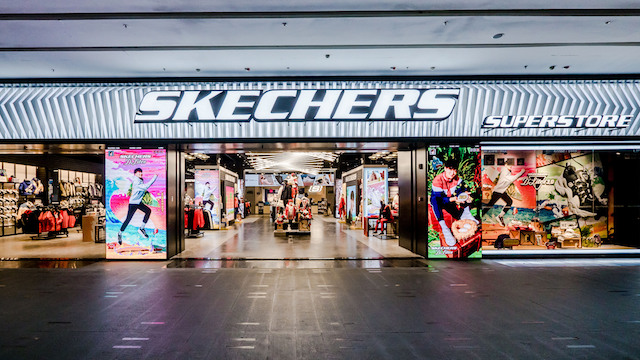
    Skechers Singapore is opening Southeast Asia’s largest and first duplex experiential concept store, at Jewel Changi this week.

    Set to open on Thursday (April 11), the 5000sqft space will incorporate new visual-merchandising and store-design elements with the use of bright lighting and cement panels.

    The space is divided into product categories, including performance, lifestyle and Skechers kids.

    The store also adopts a story-driven design, where key messages behind each product range will be highlighted through visual images and artwork.

    On Level 2 an Instagram-worthy photo zone features thematic displays and images that will be refreshed every season to reflect the keys launches with the Skechers x One Piece collaboration centrestage.

    This will be the first store in Singapore to include a shoe customisation zone with embroidery and heat-press personalisation, and to carry Jewel-exclusive collections including the Skechers SKLX series of training sneakers.

  • 5G Apple iPhone likely to appear next year

    5G Apple iPhone likely to appear next year

    With several Android manufacturers releasing 5G enabled phones this year (and technically the Moto Z3 with the 5G Moto Mod is the first), Apple iPhone users might wonder when they will have the opportunity to buy a 5G iPhone. We don’t expect it to happen this year, and one analyst said earlier this month that it won’t happen next year either. Timothy Arcuri, who hangs his hat at the Union Bank of Switzerland (UBS), believes that Intel won’t have its 5G modem chip available in time for Apple to introduce a 5G phone in 2020.

    Sure, Apple could turn to Qualcomm to provide it 5G modem chips, but the two firms have been battling each other in court over numerous issues ranging from patent infringement to anti-trust violations. A new trial will start soon in San Diego with Apple and its contract manufacturers seeking billions of dollars from the chip maker. Besides, Qualcomm reportedly refused to sell its 4G LTE modem chips to Apple for the iPhone XS and iPhone XR.

    Those familiar with the situation say that Intel has been missing deadlines as it develops the XMM 8160 5G modem chip. In order for Apple to unveil a 5G iPhone next September, Intel would have to deliver sample parts to Cupertino early this summer and a final version of the chip’s design by early next year. But Intel says that it is fully capable of delivering its 5G modem chip to Apple in time for a 5G iPhone to be launched in 2020.

    Last November, Intel said that it expected to start shipping the XMM 8160 5G modem chip during the second half of this year, and it would appear as though no changes have been made to those plans. In a statement emailed to Fast Company, Intel wrote, “As we said in November 2018, Intel plans to support customer device launches in 2020 with its XMM 8160 5G multimode modem.”

    From 2011-2015, Apple used only Qualcomm modem chips for the iPhone. In 2016 and 2017, both Qualcomm and Intel supplied Apple with modem chips for the iPhone. Last year, with Apple and Qualcomm suing each other, Apple stuck with Intel for the part and expects to do the same this year. Apple is known to be a rather demanding customer (Intel has had three project managers handle its modem business with Apple thus far), and the profits from selling Apple these chips is not overwhelming. But Intel needs the revenue to justify the expense of building 10nm and 7nm fabrication platforms in order to keep up with TSMC. The Intel 7560 modem chips used on the 2018 iPhone models were manufactured using the 14nm process. This means that newer modem chips will contain more transistors than older versions, allowing them to have improved performance and consume less power. But this can also backfire as far as Intel is concerned. As part of its deal with Intel, Apple gets to be first in line to have its chips roll off the assembly line. That means other chip orders that might be more profitable to Intel must wait until Apple’s order is completed.

    Other chip makers like Samsung and MediaTek are apparently not being considered. UBS’ Arcuri says that if Intel’s chip isn’t ready for next year as he believes, neither company would be able to fulfill the order in time to deliver the goods for 2020. Meanwhile, rumors that Apple is designing its own 5G modem chips are apparently true. The company reportedly has 1,000 to 1,200 engineers developing such a component. Additionally, Apple has allegedly hired RF engineers from both Qualcomm and Intel who are said to be toiling away in San Diego. Any modem chip designed by Apple would have to be manufactured by a company with production capabilities like TSMC or Samsung. A self-designed 5G modem chip for the iPhone would probably not be found on the device until 2021 at the earliest.

  • Secrets Improving on its Online Ecommerce Offering

    Secrets Improving on its Online Ecommerce Offering

    Australian jewellery retailer Secrets is gearing up for international expansion online, with New Zealand slated to be its next major market.

    Customers in New Zealand can currently order from the Australian Secrets website, and while details are scarce, the retailer said in a statement that it will be launching a New Zealand website mid-year to better cater to the market.

    The business currently has 16 stores across Australia, as well as an online portal.

    It sells man-made diamond alternatives known as a diamond simulant, which are made in laboratories from natural mineral base zirconium oxide. According to Secrets, they possess all the optical qualities of fine quality diamonds – being visibly whiter and brighter than most middle-market stones.

    “Our stones exhibit all the fire, brilliance and scintillation of the rarest diamonds unearthed, which is why women worldwide love the Secrets brand,” Secrets chief executive Mike Parsell said.

    “We believe we offer the world a better beautiful.”

    This also means the products are more environmentally-friendly than mining for natural diamonds, Parsell points out.

    “We do not displace tonnes and tonnes of earth to find a single one-carat diamond. Our stones are conflict-free.”

  • KFC Singapore debuts open-kitchen restaurant at Tampines Mall

    KFC Singapore debuts open-kitchen restaurant at Tampines Mall

    KFC Singapore has launched its first Southeast Asian open-kitchen restaurant at Tampines Mall, revealing how its chicken is prepared.

    The fast-food giant’s Open Kitchen program, also called ‘The Tank’, has already been rolled out in the UK, Ireland, Australia and Japan.

    “With the rollout of the ‘The Tank’ at KFC Tampines Mall and the KFC Open Kitchen program, I hope to proudly share KFC’s heritage and Colonel Sanders’ obsessive passion in cooking the best-tasting chicken,” said Lynette Lee, KFC Singapore GM.

    The chain also plans to host guests on ‘insider tours’ where visitors can watch staff perform Colonel Harlan Sanders’ “7-10-7” technique.

    Beginning today, guided 35-minute tour sessions of KFC kitchens at selected outlets, including Kallang, Waterway Point, Toa Payoh Lorong 6, Jurong Point and Northpoint City, will be available for booking online through KFC Singapore’s website.

    Tours cost $15, including a two-piece KFC chicken meal and a goodie bag. Visitors will get to see the kitchen’s storage area, the chicken breading and preparation stations, and the service counter area.

  • Sephora opening New Zealand Flagship Store

    Sephora opening New Zealand Flagship Store

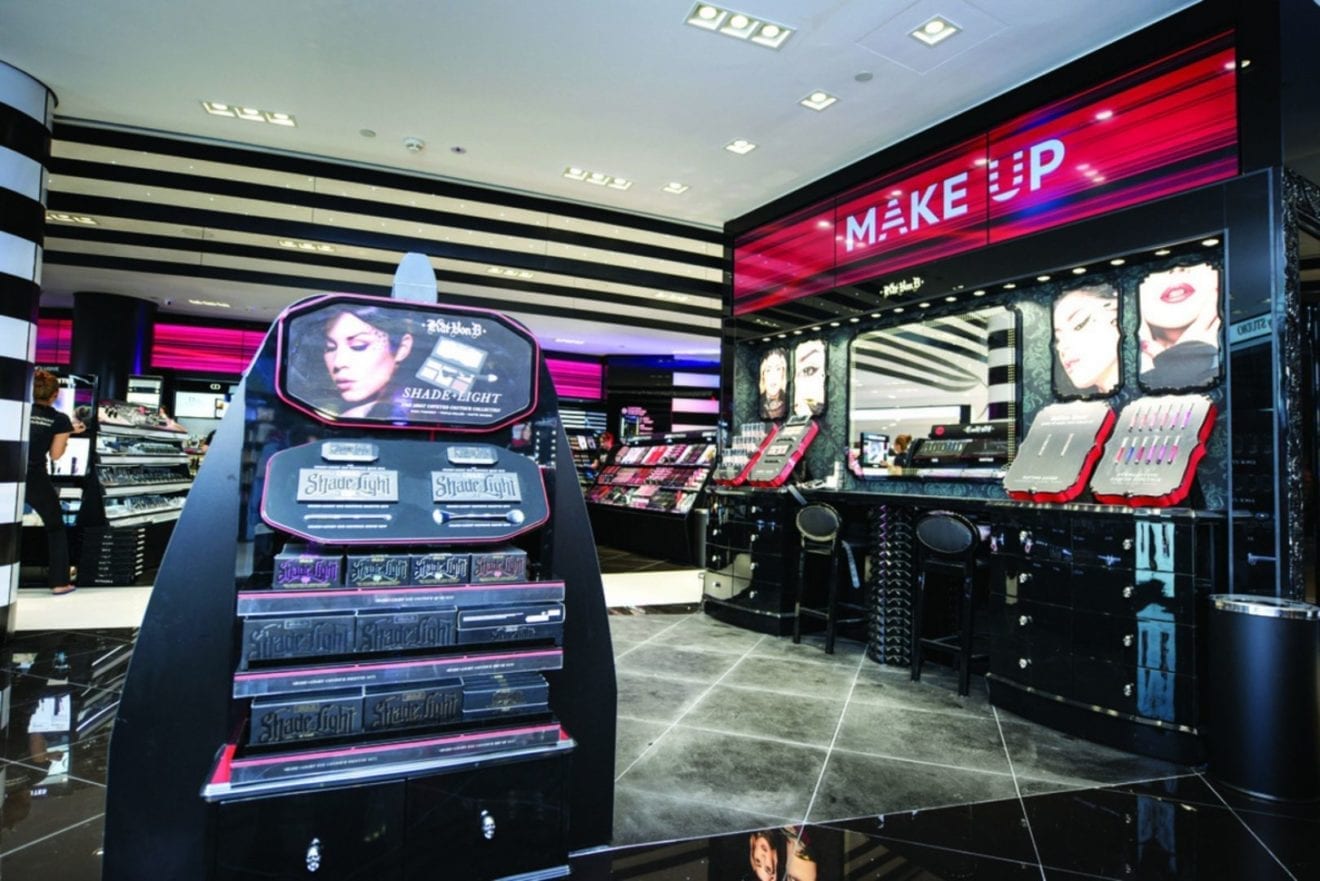
    Sephora is looking to fill a number of retail roles in Auckland, suggesting the beauty retailer is looking to open its first bricks-and-mortar store in New Zealand in the near future.

    Listings for assistant store manager, category coordinator, stockroom manager, supervisor, beauty and studio artists and retail assistants have been uploaded to job site Seek over the last month, claiming the retailer is opening its first New Zealand flagship store this year.

    The most recent listing notes that job seekers should be available and flexible to attend a recruitment event between May 7 and 8, pointing to a relatively quick opening window.

    The store will likely be located on Queen Street, Auckland, and is currently being fit out for the brand’s arrival. An internal elevator, lightning fixtures and elaborate signage are among the changes being made to the site.

    Sephora has been contacted for confirmation, but has not yet responded.

  • Singtel extends VIA mobile wallet alliance

    Singtel extends VIA mobile wallet alliance

    Singtel has announced a further expansion of its emerging cross-border mobile payment alliance via an arrangement with Singapore Changi Airport.

    Subscribers to Thailand’s AIS will soon be able to use their AIS GLOBAL Pay mobile wallets to make payments across all four Changi Airport terminals in their home currency.

    AIS, one of Singtel’s regional mobile affiliates, is the first international member of the VIA Alliance, which launched in October. Other member mobile wallets to be added later this year include K Plus from Thailand’s Kasikorbank and Axiata Digital’s Boost Malaysia.

    Singtel also recently arranged to allow users of mobile wallets within the VIA Alliance to make payments in Japan through a partnership with Tokyo-based NETSTARS.

    Singtel plans to progressively expand the VIA alliance to include its other regional associates Airtel in India, Globe in the Philippines, Telkomsel in Indonesia, as well as more non-operator entities.

    “With Singapore welcoming over half a million visitors from Thailand every year, we are excited to enhance the retail experience for them with the ease, familiarity and convenience of seamless transactions,” Singtel International VP of business Soon Sze Meng said.

    “Having the many merchants in Changi Airport on board VIA will enable Thai travelers to enjoy a wide range of cashless dining and retail options from the moment they touch down, while these merchants will capture new customers and revenue.”

  • Roots Canada Gets It’s First Hong Kong Store

    Roots Canada Gets It’s First Hong Kong Store

    Premium outdoor lifestyle brand Roots Canada has opened its first Hong Kong store this month, at Harbour City.

    The store was opened with Fung Retailing’s Branded Lifestyle Group, its Asian retail partner.

    Roots Canada’s brick-and-mortar debut in the territory coincided with the launch of an online store with Zalora Hong Kong.

    “Opening a store at the largest and most diverse shopping mall in Hong Kong is an important first step in what has the potential to be a multi-store market for Roots,” said Jim Gabel, president and CEO of Roots Canada.

    “Further, with an online store on Zalora, customers can go beyond the physical location to connect with our brand anytime and from anywhere in Hong Kong. Our expansion into Hong Kong is a testament to the continued success of our longstanding partnership with Branded Lifestyle Group.”

    The new Roots retail space brings together “cabin comforts and city conveniences” to create a space that feels like home, the company said in a statement. The store showcases Roots’ character and heritage by immersing shoppers in the more than 40 years of the brand’s stories and products.

    The brand’s collection is curated into four main areas in store, each telling a different Roots story, including a Cooper Beaver Collection that pays tribute to Roots iconic logo the Cooper Beaver, Roots Original Salt & Pepper Sweats, handcrafted leather, as well as seasonally relevant products that embody Roots unique comfortable cabin-meets-city style.

    “Leveraging our strong network and local resources, we are excited to bring the world-renowned Roots brand to Hong Kong,” said Sunny Wong, CEO of Branded Lifestyle Group.

    “The leisure-and-lifestyle-apparel trend continues to gain momentum in Asia, and we believe Roots focus on comfort and style is a perfect fit for the Hong Kong market.”

    Starting from a small cabin in Algonquin Park, Canada, in 1973, Roots has grown to become a global brand with 114 corporate retail stores in Canada, seven corporate retail stores in the US, 117 partner-operated stores in Taiwan, 37 in China and a global e-commerce platform.

    Branded Lifestyle Holdings represents five brands: Hang Ten, H:Connect, Arnold Palmer, Hunter and now Roots. It owns or franchises more than 1000 retail outlets across Greater China, South Korea, Southeast Asia and the Middle East.

  • The Mills Fabrica opens Techstyle X, Next Level Retail

    The Mills Fabrica opens Techstyle X, Next Level Retail

    Hong Kong business incubator and tech springboard The Mills Fabrica celebrated the launch of its first retail store Techstyle X on Saturday at The Mills.

    According to the group, the term “techstyle” covers material and supply chain innovation, wearables merging technology and style, and new retail experiences.

    The new store provides a platform for promising techstyle companies to showcase their products and services, attempting to bridge the gap between traditional long-term and pop-up stores by offering innovative startups a retail space with high traffic and flexible terms.

    Following its grand opening, Techstyle X is offering three experiential zones for its visitors to discover new techstyle innovations. Visitors will get a chance to use the self-serve 3D scanning station, customise their own t-shirts, and explore the latest techstyle innovations.

    The self-serve 3D scanning station allows visitors to obtain their very own digital avatar with key measurements – customers may then order perfect-fitting garments from personalised suits to sustainably-sourced denim jeans.

    Companies are able to rent a display space to launch their products, test the market and share their innovations with the world at the store, allowing customers to witness the latest and upcoming brands in the techstyle industry.