Tag: asia

  • Li & Fung Announces 2018 Annual Results

    Li & Fung Announces 2018 Annual Results

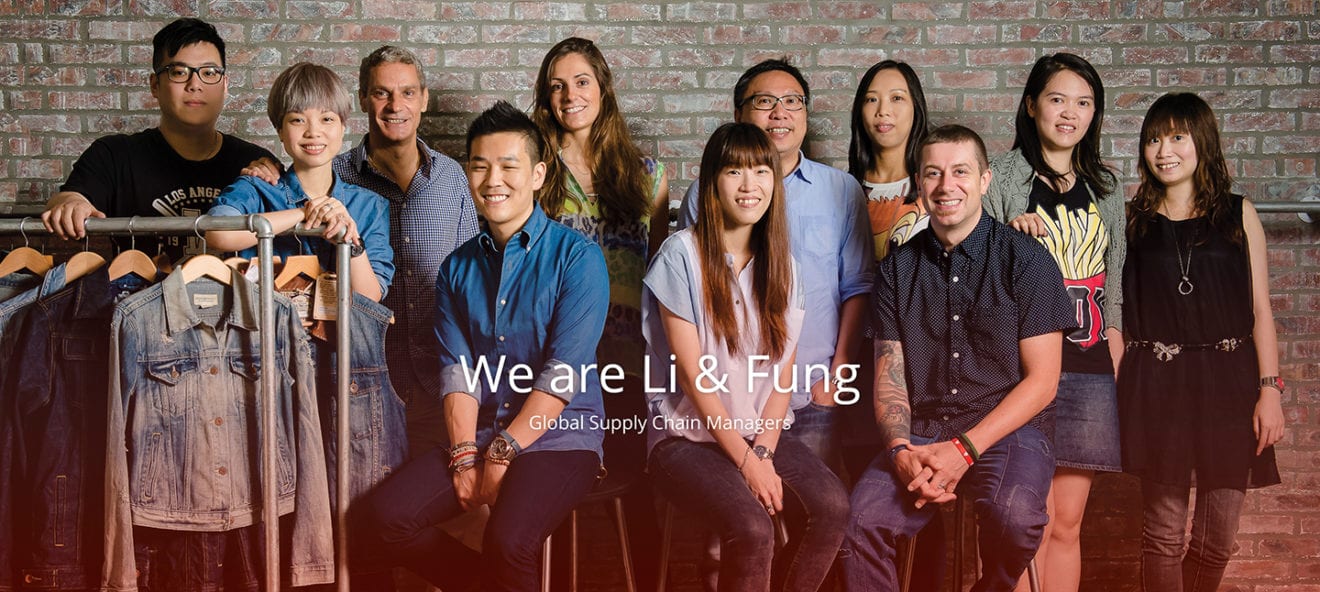
    Li & Fung Limited, the world’s leading supply chain solutions partner for brands and retailers, today announced its annual results for the year ended 31 December 2018.

    For the year under review, the Company was affected by the rapidly changing retail landscape, with record store closures and customer bankruptcies. Owing to the Company’s investments in a speed-enabled supply chain, its customers have been able to reduce their inventory levels, although this produced short-term negative impacts on the Company’s turnover. The ongoing US-China trade war had a minimal impact on Li & Fung’s business due to the company’s diversified sourcing network outside of China.

    On a like-for-like basis and excluding the impact of the strategic divestment of the three Product Verticals in April 2018, which triggered a one-off disposal loss of US$114 million, core operating profit (“COP”) of Continuing Operations decreased by 20% to US$285 million. This was largely due to decreases in turnover and total margin in the Supply Chain Solutions business, as well as continued investment in digitalization in line with the Company’s long-term strategic plan. Turnover decreased by 6.2% to US$12.7 billion, mainly due to customers’ ongoing destocking, customer turnover and bankruptcies. Total margin percentage improved by 0.4% to 10.6%, primarily a result of the increased contribution from the higher-margin Logistics business. Adjusted Profit Attributable to Shareholders decreased 15.9% to US$117 million, excluding gain on remeasurement of contingent consideration payable. Profit attributable to shareholders for Continuing Operations decreased by 26.2% to US$126 million. The Board of Directors has proposed a final dividend of 4 HK cents (2017: 2 HK cents). This brings the full-year total dividend to 7 HK cents per share.

    Spencer Fung, Group CEO of Li & Fung, said: “2018 was a demanding year and we’ve made a fundamental reorganization of our business in line with our Three-Year Plan to build the Supply Chain of the Future. We initiated a structural change with a new management team to focus on our core customers and operational excellence. This includes a new Group President, a new Chief Operating Officer and an entirely new Chief Digital Officer position. We have the right strategy, and now the right structure and people in place. With all three elements in place we have built the right foundation for the future. I am confident that we are on the right track.

    Mr Fung continued, “Group President, Joseph Phi, has a strong track record having organically grown LF Logistics over the past decade. In his new role, Joseph will focus on account management and business development. As a team, we are focused on driving greater productivity in our global production platform by truly leveraging the scale of Li & Fung for our customers, capitalizing on our clear leadership in 3D design, and accelerating the build-out of our end-to-end digital platform. These initiatives are already helping to strengthen relationships with core customers and to convert new customers.”

    The Logistics business continued to grow organically with double-digit increases. With strong demand for in-country logistics services, turnover and COP increased 10.2% and 14.6% to US$1.13 billion and US$86 million respectively. The growth of the Logistics business continued to be driven by strong growth momentum in China; e-logistics growth; accelerating growth in ASEAN across all services; and rapid expansion in the newer geographies of Japan, Korea and India. To further accelerate the pace of its growth, preparation is underway for the potential spin off and separate listing of LF Logistics to take place in 2019 depending on market conditions and other factors.

    In addition, 2018 was a turnaround year for the Onshore Wholesale business in the Americas, Europe and Asia with its turnover increasing by 7.4% to US$1.7 billion with recovery at major US customers and growth in the Asia onshore wholesale business. Furthermore, operating costs as a percentage of turnover improved by 80 basis points.

    Joseph Phi, Group President of Li & Fung, said: “The strong organic growth of LF Logistics is due to active engagement with our people and close collaboration with our customers. At Li & Fung, we are well positioned to integrate logistics with our traditional sourcing and supply chain solutions offering. This provides a faster and more digital supply chain, enabling us to cultivate closer and longer-lasting customer partnerships. We are pursuing market share gain and pipeline conversion as the twin drivers for our growth.”

    Group Chairman, William Fung added, “With ongoing trade uncertainties, we continue to help existing and new customers optimize their production across over 50 countries of export. This provides the best defense against fluctuations in trade policy and mitigates any negative impact from tariff increases. I am confident that our new leadership team and organizational structure will help us drive productivity, strengthen customer relationships and, in turn, grow market share.
  • Lazada Fires Up Growth Of “Super eBusinesses” In Southeast Asia

    Lazada Fires Up Growth Of “Super eBusinesses” In Southeast Asia

    Southeast Asia eCommerce leader Lazada today announced an allen compassing series of products and services that will fire up the growth of its brands and sellers – big or small – to win market share in the region by transforming them into “Super eBusinesses”.

    The offerings, dubbed super-solutions, are aimed at resolving three pain points that brands and sellers face – branding, marketing and sales. These features, which have been rolled out in conjunction with Lazada’s 7th Birthday celebration, are aimed at brands and sellers, of all sizes, to ensure they are well-positioned to ride the eCommerce boom in Southeast Asia.

    “No seller is too small to aspire, and no brand is too big to be a Super eBusiness. That is why we are thrilled to roll out super-solutions to help our brands and sellers become more nimble in digitising their businesses and better reach customers,” said Pierre Poignant, Lazada Group Chief Executive Officer. The “super-solutions” which were unveiled include: – A series of ‘Super’ campaigns in which LazMall brands and sellers can choose to take part to boost

    their brand image and better engage with customers;

    – A new and improved Marketing Solutions Package and Business Advisor Dashboard that can deliver more traffic to their storefronts, and arm brands and sellers with near real-time information to help them make faster and better decisions to sell more effectively and efficiently;

    – New tech tools like Store Builder for brands and sellers to customise their storefronts to differentiate themselves on Lazada, while in-app live streaming, news feed and in-app consumer games can help win the hearts of consumers with higher consumer engagement. (See factsheet for details)

    At the same time, Lazada also formalised cooperation partnerships with 12 leading global lifestyle, technology and fashion companies that will boost collaboration and strengthen their online retail presence. Called Joint Business Partnerships (JBP), these collaborations will enable brands to tap on Lazada’s industry-leading tech and logistics infrastructure, innovation and e-commerce expertise. Lazada today inked Memorandums of Understanding (MOU) with electronics leaders Realme and Coocaa, while the one with Huawei was signed earlier this month. Other brands that are set to join will include several of the world’s biggest FMCG companies.

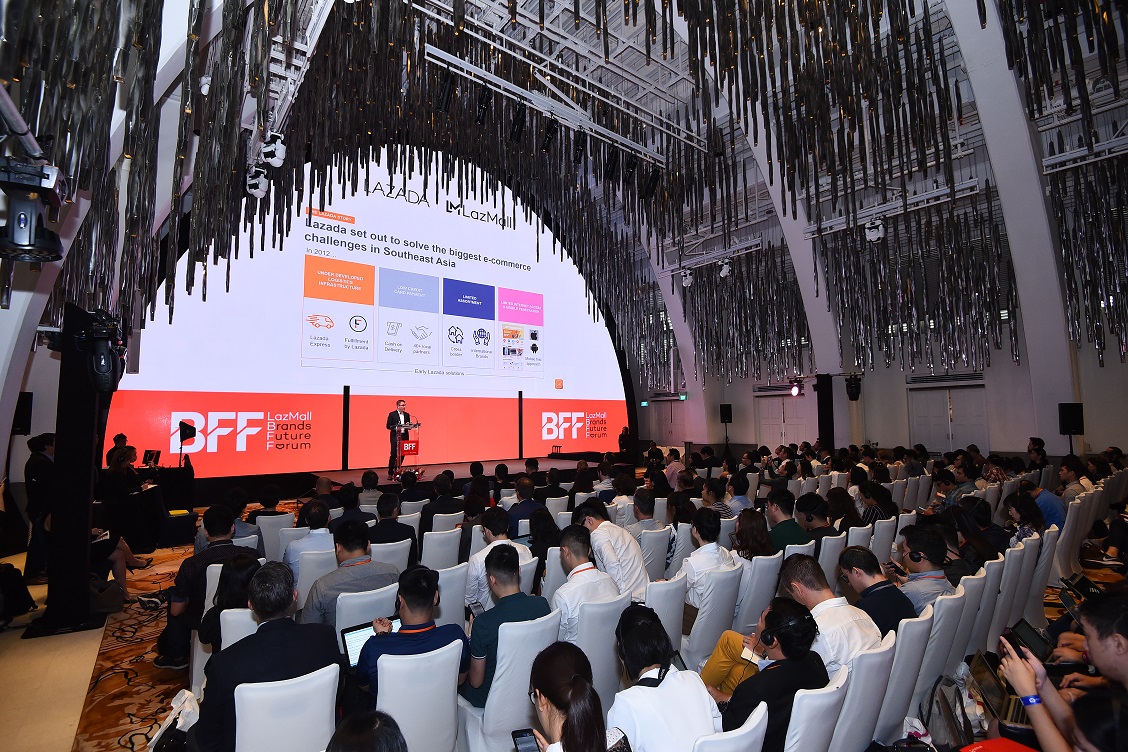
    Backed by Alibaba’s technology and logistics infrastructure, Lazada has been able to launch over the past year industry-leading tech innovations like search-image function, consumer engagement games and in app live streaming to become the region’s only “shoppertainment” platform on which people can watch, shop and play, said Poignant at the inaugural LazMall Brands Future Forum (BFF). The annual summit gathers brands and sellers to discuss growth opportunities and technological advancements that will create

    ‘Super eBusinesses’, shaping the future of Southeast Asia’s eCommerce landscape. Accelerating the growth of Lazada brands and sellers The super-solutions will also make it easier for brands and sellers to open up stores on LazMall. Qualified merchants can now take advantage of the new self-sign up feature, a simplified sign-up process that can now be completed in mere minutes. This is in line with the Lazada’s goal of enabling SMEs to become globally competitive.

    “Since the launch of LazMall in 2018, we have seen tremendous growth among our key pioneer brand partners. We want to extend the benefits of LazMall to even more brands and sellers to elevate their eCommerce operations,” said Lazada Group President Jing Yin. “We want to incubate them so they can grow alongside us and become sustainable and successful e-businesses.”

    Across the region, 60 percent of small and medium enterprises (SMEs) are keen to invest in technologies to achieve sustainable growth in today’s digital economy. Business-oriented tools including online commerce solutions, customer relationship management (CRM) and business intelligence, were identified as the top investment priorities1.

    Further promoting excellence in eCommerce, Lazada also handed out awards to top performing brands that have proven to be shining examples of “eBusinesses”. Five awards were presented to outstanding brands and sellers that have been constantly innovating to drive new ways to reach their customers on

    Lazada. Comprising global and Southeast Asian brands, the winners are Unilever (Best Marketing Innovation), Pampers (Best Social Media Activation), Coocaa (Fastest Growing Brand), Philips (Customers’ Choice Award) and Wardah (Best Product Launch).

    Driving ‘Shoppertainment’ in Southeast Asia Pushing boundaries in eCommerce in Southeast Asia, Lazada is driving ‘shoppertainment’ to provide shoppers with a fun, interactive and entertaining experience. As part of its 7th birthday celebrations, Lazada is hosting a first-of-its-kind concert, called “Super Party”, in Jakarta on March 26, 8 pm (Jakarta time).

    The concert, which features a star-studded lineup including British popstar Dua Lipa, culminates with Lazada’s birthday shopping event on March 27. The one-day sale promises a new online shopping experience that includes a new selection of exciting games for redeeming vouchers and attractive deals for consumers in the region.

  • Tmall Global Unveils New Initiatives to Boost China’s Imports

    Tmall Global Unveils New Initiatives to Boost China’s Imports

    Tmall Global today unveiled two key initiatives that further Alibaba’s plans to bring $200 billion worth of international goods into China over the next five years and help businesses of all sizes enter the China market. The initiatives – the Centralized Import Procurement (CIP) and Tmall Overseas Fulfillment (TOF) – are import solutions offered by Tmall Global to help international brands accelerate their entry into China and capitalize on hot demand for high-quality products.

    As the biggest cross-border platform in China, Tmall Global not only helps brand open up flagship stores on the platform, but also offers direct import services that can help bring international goods, from companies of all sizes sell into the Chinese market, benefiting Chinese consumers with an expanded choice of imported products.

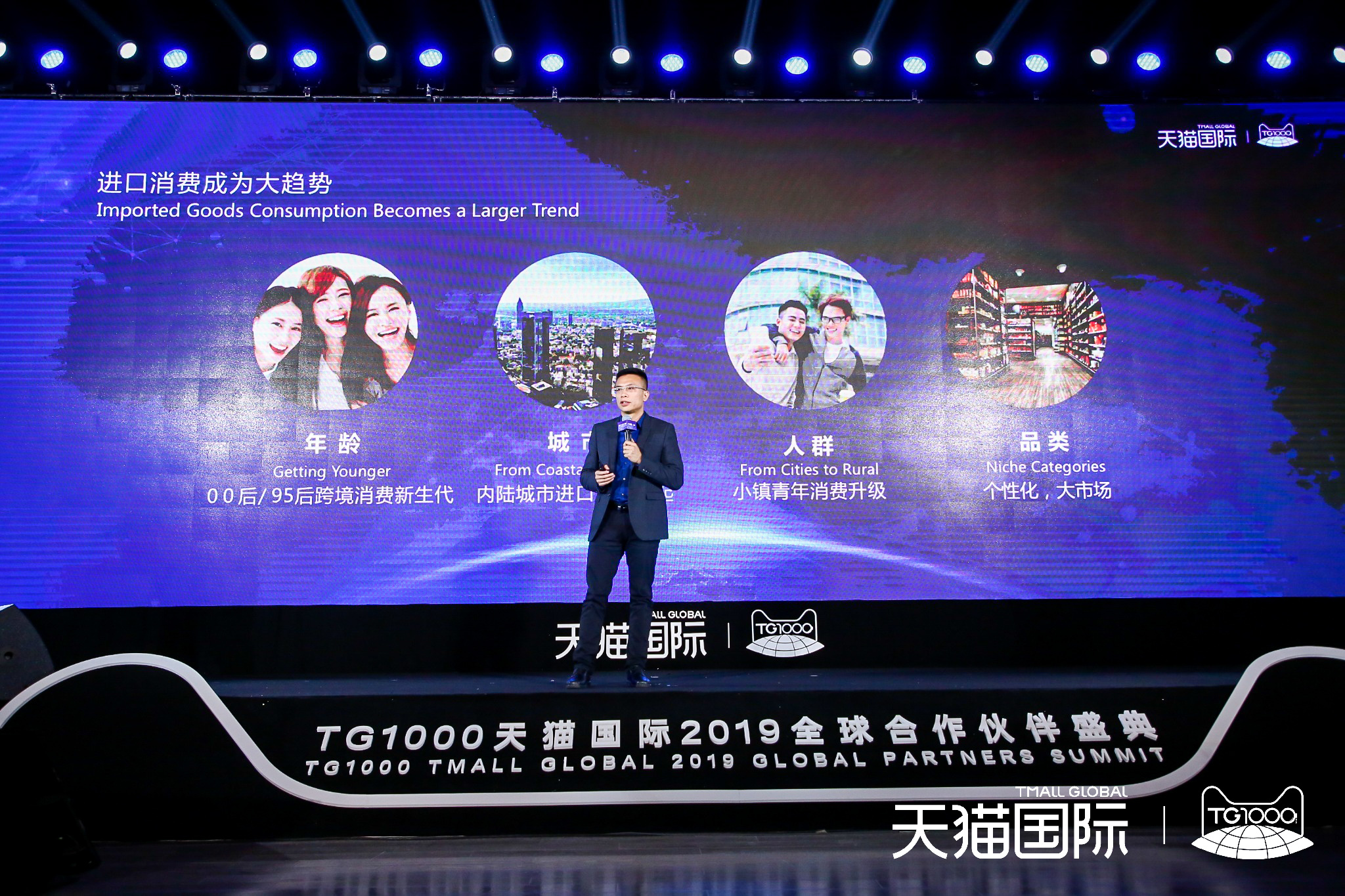
    “These new initiatives on Tmall Global, supported by the entire Alibaba ecosystem and benefiting both current and future partners, are needed enhancements as we strive to meet the rising demand of Chinese consumers for high-quality international products,” said Alvin Liu, General Manager of Tmall Import-Export, at the Tmall Global 2019 Global Partners Summit. At the China International Import Expo in November last year, Alibaba pledged to bring $200 billion worth of international goods into China over the next five years through its platforms.

    Alibaba unveiled the CIP program today as a key part of Alibaba’s new retail business. By leveraging the six procurement centers Alibaba has set up across the globe, the program sources imported goods for all the online and offline outlets within the Alibaba ecosystem, including technology-driven grocery chain Freshippo (also known as

    “Hema” in Chinese), Tmall Supermarket and Intime Department Store. The program is a quick and low-risk way for international brands to enter China, allowing them to reach the nearly 700 million active users on Alibaba platforms.

    TOF is a consignment solution that allows brands to place a small batch of products at one of the TOF centers to be sold on the Tmall Global platform. This gives businesses around the world a chance to try out and fine tune their product assortment before making a full entry into China. TOF centers are currently available in Japan, South Korea and the US, with plans to expand into Europe later this year.

    To support these new initiatives, Alibaba’s smart logistics network, Cainiao, will continue to expand its network of bonded warehouses in China, with an aim to triple its total size to three million square meters in three years.

    “Over the years, Tmall Global has added a full suite of innovative and value-added services to help overseas brands succeed in the China market, including plugging them in to the entire Alibaba economy. The consumer insight from our ecosystem provides Tmall Global partners a complete view of their customers’ engagements even if they do not have operations in China. These market entry and in-market expansion programs are our key differentiators and have created unique benefits for international brands,” said Liu.

    Tmall Global data shows China’s demands for imported goods is gaining strong traction across age groups, regions and categories. Those born after 2000, or

    “Generation Z,” is the fastest-growing consumer group on the platform. The platform is attracting more shoppers in less developed regions, and Tmall Global has successfully propelled the growth of three categories: anti-hair loss products, beautyfrom- within products such as collagen drinks and trendy footwear in 2018.

    China’s “Generation Z” is also fueling demand for pet products and beauty devices. In 2018, the number of pet-related brands on Tmall Global doubled from the previous year, and sales of beauty devices on the platform also quadrupled from a year earlier. Recognizing young Chinese consumers’ love for content, Tmall Global will continue to offer brands a raft of content-generating tools to boost brand awareness. By tapping into Alibaba’s own digital-media channels, such as Taobao Livestream, brands can directly speak to Chinese consumer through multiple touchpoints, including livestream services, videos and testimonials by popular influencers and key opinion leaders.

    According to Chinese data-analytics firm Analysys, Tmall Global is the biggest crossborder platform in China. The platform offers Chinese consumers over 20,000 overseas brands and over 4,000 product categories from 77 countries and regions.

  • China Mobile reports $17.6b profit for 2018

    China Mobile reports $17.6b profit for 2018

    China Mobile has reported a 3.1% increase in net profit for 2018 to 117.78 billion yuan ($17.58 billion) as the company focused on reducing costs and increasing operational efficiency.

    Operating revenue declined 0.5% in reported terms to 736.82 billion yuan, but grew 1.7% after 2017’s results were recalculated using the new IFRS revenue standard..

    Telecommunications service revenue fell a reported 0.4% but grew 3.7% in comparable terms to 670.9 billion yuan.

    The operator’s net profit was also aided by the listing of the company’s tower division China Tower in August last year.

    China Mobile reported a 4.3% increase in its total customer base for the year to 925 million, of which 713 million are 4G customers – a 9.7% increase from 2017. But mobile ARPU fell 8% to 53.1 yuan as a result of strong competition.

    Meanwhile total wireline broadband subscribers increased by 39% to 157 million, of which 147 million were household broadband customers. Household broadband blended ARPU grew 3.2% to 34.4 yuan.

    “2018 was a challenging year for telecommunications operators. Competition amongst peers changed in characteristics as products and services have become homogenized while cross-sector challenges have intensified. The value of traditional telecommunications business rapidly diminished, coupled with multiple challenges from a complex and rapidly-changing policy environment,” China Mobile chairman Yang Jie said.

    “In order to counter market competition, overcome the major obstacles in the ongoing reforms and enhance management, we continued to encourage everyone across the Company to take the ‘Big Connectivity’ strategy even further and implement the integrated development of the “four growth engines”.”

  • Softbank, Chunghwa Telecom partner on AI, IoT

    Softbank, Chunghwa Telecom partner on AI, IoT

    Taiwanese incumbent carrier Chunghwa Telecom has signed an MoU with Japan’s Softbank for collaboration on artificial intelligence (AI) and IoT.

    In a statement, the companies said the technological and commercial cooperation aims to develop use cases for future smart cities in Taiwan.

    It will also involve ST Solutions Taiwan Co. Ltd., a wholly owned subsidiary of SoftBank Corp.

    The pair said they plan to leverage their insights and experiences from the collaboration in AI, IoT and related fields.

    The collaboration will initially focus on such areas as global IoT platforms, smart infrastructure, smart agriculture as well as utilization of high-accuracy location data and big data.

    The partnership with Softbank is Chunghwa Telecom’s latest push in IoT.

    In February, the Taiwanese operator inked a deal with Ericsson to use the Swedish vendor’s IoT Accelerator platform to develop IoT services for its enterprise customers.

    Max Chen, president of mobile business group, at Chunghwa Telecom, was quoted as saying in the statement that the partnership with Ericsson will boost its capabilities in machine learning and IoT operations.

    “As Taiwan’s industry is mainly export-driven, Chunghwa Telecom’s IoT innovation drive will help local industries to expand their international IoT business horizon,” Chen said.

  • Australia to spend $114m to fill more mobile black spots

    Australia to spend $114m to fill more mobile black spots

    The Australian government has allocated A$160 million ($114.1 million) towards extending the national Mobile Black Spot Program for a further two rounds.

    The funding for rounds five and six of the program, which aims to fill gaps in mobile coverage in regional and remote communities, will be used primarily to help improve coverage at public interest premises such as medical facilities, schools and economic centers.

    The additional commitment brings the current government’s funding in the program to A$380 million. So far 1,047 new base stations will be delivered under the program at a total cost of A$760 million. Of these, 682 have been switched on nationally.

    Additional funding is being provided by local and state governments, mobile operators, businesses and community organizations.

    Applications from operators, businesses and local communities for round four of the program recently closed. This round will see 180 new base stations constructed, including 73 which will specifically target public interest premises.

    “Fast and reliable connectivity is essential to ensure regional areas remain competitive with access to the same business and study opportunities as the rest of Australia. We’re ensuring our regions are not left behind,” Australian minister for regional services and deputy leader senator Bridget McKenzie said.

    “All stakeholders are strongly encouraged to submit an application when we open the tender process and take advantage of the additional rounds under this fantastic program.”

  • Docomo trials fiber manufacturing IoT in Thailand

    Docomo trials fiber manufacturing IoT in Thailand

    NTT Docomo and its Singapore subsidiary NTT Docomo Asia have commenced a trial of an IoT monitoring system to improve the manufacturing performance of a synthetic-fibers factory in Thailand.

    In the trial, Docomo Asia is deploying the IoT Solution Platform to visualize the operational status of production operations in the Thai factory.

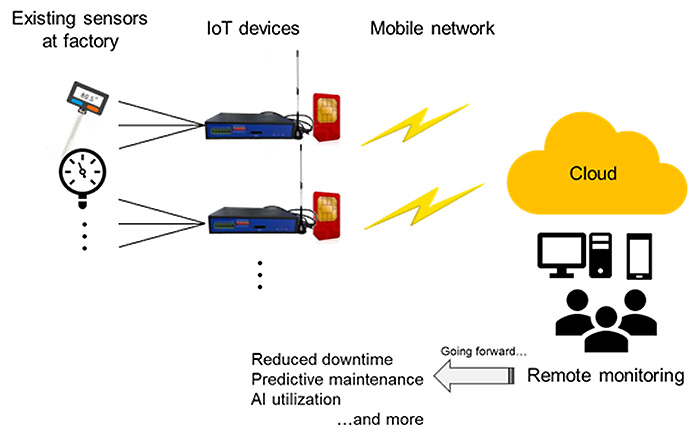
    Docomo said IoT devices equipped with up to 30 different sensors are collecting operational information on the factory floor and then transmitting real-time data to the cloud via a mobile network.

    “Technicians will be able to use PCs, smartphones or tablets to remotely monitor the status of production operations via the platform,” Docomo said in a statement.

    “The IoT Solution Platform enables manufacturers to digitalize their operations and rapidly gather information from factory floors for improved efficiency in production management.”

    It also helps to reduce production downtime by allowing manufacturers to closely monitor the status of their production equipment to detect malfunctions, maintenance needs and so on, the Japanese mobile carrier said.

    NTT Docomo fabric manufacturing IoT trial in Thailand

    Service scheme (Source: NTT Docomo)

    According to Docomo, the platform is already being used by an automotive plastic parts manufacturer and is now being introduced in the textile industry to enable manufacturers to realize more efficient and reliable production operations.

    The trial is part of Docomo’s global IoT initiative launched last July to provide global connectivity, operational support, and consulting to Japanese manufacturers with global IoT operations.

    The trial will be conducted until March 31, and is being conducted in collaboration with Teijin Polyester (Thailand) Limited, a Teijin Frontier subsidiary company that manufactures polyester fibers, filament yarn, chips and more.

    Docomo expects manufacturers of synthetic fibers and other products across Southeast Asia to increasingly adopt the IoT Solution Platform to increase the productivity and quality of their production operations going forward.

  • Lazada and Mastercard Collaborate to Empower Brands and Sellers in eCommerce

    Lazada and Mastercard Collaborate to Empower Brands and Sellers in eCommerce

    Lazada, Southeast Asia’s leading online shopping and selling platform, and Mastercard today announced a five-year partnership to grow the eCommerce ecosystem in Southeast Asia (SEA).

    This comes as Lazada is committed to delivering the best eCommerce offerings that serve the needs of the region’s brands and sellers. This partnership also enables Mastercard to reach new audiences with Lazada’s wide network of users in the SEA region, including those in developing markets. At the same time, merchants will benefit from Mastercard’s solutions.

    Here are some initiatives that Lazada and Mastercard will roll out in this partnership:

    • Develop joint marketing and education campaigns to increase consumer confidence, as well as reward schemes to incentivize the use of digital payments;
    • Lazada will be able to access Mastercard’s regional and global sponsorship platforms to create unique promotions;
    • Mastercard’s data-driven insights will combine offline and online behaviors to help Lazada understand how to drive greater e-commerce growth within the growing base of Internet-savvy and mobile consumers in the region;
    • Lazada will be the anchor merchant for certain new Mastercard solutions in select markets.

    As leaders in their respective fields, Lazada and Mastercard aim to unlock the inherent potential of Southeast Asia’s fast-growing digital ecosystem by creating opportunities on a trusted marketplace platform for brands, sellers and buyers, providing new revenue streams for businesses.

    Mary Zhou, Chief Marketing Officer, Lazada Group, said: “The rapid technological advancements in the region has created new possibilities for businesses and consumers. As we continue to nurture the growth of brands and sellers online, we want to enable them to also future-proof their businesses in the face of an evolving landscape and ultimately help them become more globally competitive. This partnership allows merchants to leverage Mastercard’s data and insights to better reach out to and engage with their consumers.”

    Rama Sridhar, Executive Vice President, Digital & Emerging Partnerships and New Payment Flows, Asia Pacific, Mastercard, said, “The e-commerce boom in Southeast Asia has brought merchants fast-evolving and borderless new opportunities while giving consumers access to a vast world of retail options. Our partnership with Lazada builds open marketplaces and advances digital democratization, bringing more to buyers and sellers in the region. It underscores how imaginative product proposition, advanced analytics and a deep understanding of consumer passion points can converge to deliver game-changing impact across Southeast Asia’s digital economy.”

  • 5G to account for 57% of China tech spend in 2019

    5G to account for 57% of China tech spend in 2019

    Spending on 5G will account for the majority of China’s technology spending in 2019 as the nation continues to spend heavily to ensure it leads the global race to implement the mobile technology, Forrester Research predicts.

    China will spend a total of $256 billion on technology goods and services this year, with 5G spending to account for 57% of this, the research firm said in a new report.

    The nation is best positioned to win the global race to implement 5G after having outspent the US in this area by around $24 billion since 2015.

    Meanwhile China and Japan are set to dominate technology spending in Asia-Pacific, collectively accounting for 60% of the total market. India will be third with anticipated spending of $70 million, Forrester said.

    India, China and the US will also see the strongest growth amid a slowing global technology market. Total growth in spending is expected to slow to 4.5% in 2019, and to 3.8% in 2020.

    The report also found that Asia-Pacific still lags the US and Europe in terms of cloud adoption, because the infrastructure in most Asia-Pacific markets is not mature enough to support cloud solutions.

  • Single-Use Plastic Ban, Food Waste and Local Produce Top Priorities in Centara’s 2019 Sustainability Plan

    Single-Use Plastic Ban, Food Waste and Local Produce Top Priorities in Centara’s 2019 Sustainability Plan

    Centara Hotels & Resorts, Thailand’s leading hotel operator, is focusing on three key sustainability initiatives as part of the company’s recently announced 2019 Sustainability Plan: eliminating single-use plastic products; reducing its food waste footprint; and expanding its support of local farming and produce-growing communities.

    1. No Single-Use Plastic Products by end-2019

    The elimination of single-use plastic items is part of the “Centara Earth Care” programme aimed at encouraging hotel guests and tourists to be proactive about energy saving, waste reduction and sustainable environmental tourism. The sustainability plan covers five types of single-use plastic items, including drinking straws, laundry bags, take-away food containers, fitness centre and poolside plastic bottles, and plastic guest room amenities. They are being replaced with items made from materials designed to minimise environmental impact.

    “Centara strives to operate ethically and sustainably in a balanced manner across the entire portfolio whilst providing an exceptional level of Thai hospitality,” said Thirayuth Chirathivat, Chief Executive Officer. “We are committed to selecting environmentally friendly produce which, in turn, enables us to further incorporate sustainable strategies and development into our products and services, creating shared value at an environmental, social and economic level wherever we operate. We are also committed to ensuring a respectful, safe and healthy environment to the larger society and our future generations.”

    Centara began phasing in its elimination of single-use plastic products in 2018 across all 39 of its operating properties. Under the plan, alternative products which are reusable and made from environmentally friendlier materials, including plant-based, compostable and bio-degradable plastics, will be fully phased in by year-end.

    • Phase I, targeting the elimination of plastic straws, began in August 2018. The single-use plastic straws being eliminated take up to 200 years to decompose; the new bio-straws replacing them decompose within six months. Once the change is fully enacted throughout all Centara properties, the reduction in plastic straw consumption will total nearly 2.2 million straws per year.
    • Phase II, eliminating the use of plastic laundry bags, began in December 2018.  Moving forward, these practices will also become Centara’s standards for all existing and new properties.
    1. Food Waste Reduction

    Centara’s new and continuing food-related sustainability initiatives include:

    • further reducing food waste and minimising each property’s carbon footprint with expanded purchasing of fresh local foods from herb, fruit and vegetable growers
    • making same-day donations of surplus food to charities located near each property
    • providing local farms with pre-separated organic waste for composting
    • transforming waste at select properties into biogas fuel, a blend of mostly methane and carbon dioxide gases which can be used in place of fossil fuels.

    In 2018, Centara supported the Bangkok-based foundation Scholars of Sustenance (SOS Thailand) by making same-day donations of more than 28,000 kilogrammes (kg) of quality surplus food. The donations provided over 86,000 servings to those in need, while the reduction in Centara’s food waste saved over 54,000 kg of GHG equivalent emissions.

    Both Centra by Centara Maris Resort Jomtien and Centara Grand Beach Resort Phuket have biogas machines on-site capable of converting 30-100 kg of organic waste each day into an equivalent number of litres of organic compost and biogas comparable to nearly five kg/day of LPG fuel. Since July 2018, the Cowtec Composting & Biogas Production Machine installed at Centra by Centara Maris Resort Jomtien has been processing organic waste from the property’s kitchens, staff canteens and landscaping works. By the end of 2018, the machine had composted more than 5,700 kg of organic waste and produced 262 kg of biogas equivalent LPG.

    1. Strengthen Local Communities

    Centara’s 2019 Sustainability Plan further expands the company’s support for local communities’ small farms and producers who grow food for Centara hotels and resorts in their area.

    The company attributes much of its carbon footprint reduction to making approximately 70% of total produce purchases from local sources. Beyond the economic benefits to the community, expanding farm-to-table dining enables each property to provide the freshest available food items to guests.

    The company’s ongoing engagement with EarthCheck, the world’s leading scientific benchmarking, certification and advisory group for travel and tourism, continues to yield consequential improvements in key sustainability metrics. To date, 15 Centara hotels and resorts have achieved EarthCheck certification and another four properties are enrolled in  EarthCheck’s Evaluate Plus programme, leading to significant reductions in carbon footprints and greenhouse gas emissions across a number of Centara’s certified properties.

    Most recently, the company’s leadership in environmental sustainability was recognised by the Stock Exchange of Thailand, which awarded Centara Hotels & Resorts (CENTEL) its “Thailand Sustainability Investment (THSI)” designation, an annual recognition for listed companies that operate with responsibility for Environmental, Social and Governance (ESG) aspects.

    Further recognition for properties includes the “Green Hotel 2018 Award” from the Department of Environmental Quality Promotion at Thailand’s Ministry of Natural Resources and Environment, awarded to Centara Grand Beach Resort & Villas Hua Hin and Centra by Centara Maris Resort Jomtien.

  • Industry leaders at Café Asia, Singapore’s largest coffee and tea show welcome the inaugural Restaurant Asia 2019

    Industry leaders at Café Asia, Singapore’s largest coffee and tea show welcome the inaugural Restaurant Asia 2019

    This morning, business leaders and key players from the coffee, tea and bakery industries gathered at the official opening ceremony of the 7th Café Asia 2019, the 7th International Coffee & Tea (ICT) Industry Expo, and the 6th Sweets & Bakes Asiashows at Marina Bay Sands Singapore Expo & Convention Centre. This year, the three shows are held concurrently with the inauguralRestaurant Asia 2019 (RA 2019).

    The official opening ceremony was graced by Guest-of-Honour, Mr Chee Hong Tat, Senior Minister of State, Ministry of Trade and Industry & Ministry of Education.

    Together, the four exhibitions form a dedicated platform to host some 250 exhibitors from 28 countries, who are here to meet the needs of cafes and restaurants all over ASEAN and beyond. The one-stop convenient sourcing hub for the coffee, tea, pastry and the F&B industries is organised to foster new collaborations, explore opportunities, and to present the latest trends and developments to trade professionals and members of the public. Spanning a gross exhibition area of 7,000 square metres, the shows are expected to attract over 10,000 restaurateurs, baristas, café and coffee purveyors, coffee roasters, tea and baking ingredients suppliers, equipment distributors, and members of the public over the next three days.

    Restaurant Asia 2019 presents a dedicated showcase of the latest in cutting-edge restaurant, kitchen and culinary equipment, as well as solutions and supplies that will address the needs of restaurant owners, from front of house reception to the back of house operations. Restaurant Asia will also present its first Restaurant Asia Symposium 2019. Speakers at the symposium themed, Futureproof F&B: The Next Lap, will share invaluable insights on productivity, capability development and leverage on relevant technologies to future-proof the F&B business.

    Among the topics to be presented at the symposium is Menu Re-engineering for Profit Maximisation, led by Mr Chen Xin Shi, Managing Director of the illustrious Han Yuan Academy, a Taiwan-based organisation which provides consultations and classes for restaurateurs and the food & beverage industry. Classes and consultations conducted by Mr Chen are known to have leaders and players of the local and international food & beverage industry flocking into Taiwan for his invaluable insights and knowledge. During the presentation, Mr Chen will share knowledge on actionable steps to increase top-line through an understanding of customers and restaurants’ value perceptions and needs. Through strategic menu design and mixed management, restaurant owners will be able to enhance customer satisfaction and maximise unrealised profits.

    The launch of the inaugural Restaurant Asia expo this morning also bore witness to the signing of the Memorandum of Understanding between restaurant associations in the region to facilitate the forming of the ASEAN Restaurant Association Alliance. Present at the ceremony were representatives of the Cambodia Restaurant Association, the Indonesian Hotel and Restaurant Association, the Malaysian Food & Beverage Executives Association, the Hotel & Restaurant Association of the Philippines, the Restaurant Association of Vietnam and the Restaurant Association of Singapore.

    The MOU is the first step to the associations in ASEAN working towards promoting each other’s events and jointly organising activities for the business benefit of members of the collaborating associations, promoting the industry’s best practices, the creation of strong business relations among members of MOU partners and more.

    A key highlight of Café Asia this year is the inaugural ASEAN Coffee Federation (ACF) Specialty Coffee Auction which will make its debut on the second day of the show. A joint event by the ACF and Conference & Exhibition Management Services Pte Ltd (CEMS), the auction will feature coffee of specialty grade from participating exhibitors of Café Asia and also from ASEAN. All the beans on auction have been graded to meet ASEAN’s very own set of Coffee Standards which focuses on coffee beans cultivated in the ASEAN region. The set of ASEAN Coffee Federation Standards which was announced at Café Malaysia earlier this year, also makes its debut at Café Asia and is an excellent tool to boost the growth of the coffee industry in ASEAN which features key differentiations from existing standards originating from the west. The auction is attractive because the specialty coffee beans offered observe a dedicated process to acquire better quality beans.

    Café Asia’s packed comprehensive programme includes three high-octane National Coffee Championships which will see Singapore’s home-grown baristas, brewers, latte artists, and students contend in the Singapore Latte Art Championship, Singapore Cup Tasters Championship and the Singapore Coffee in Good Spirits Championship. Winners of the respective national titles will represent Singapore on the international stage at the world championships later this year.

    As part of the multi-sensorial and a highly interactive experience promised by Sweets and Bakes Asia 2019, visitors and bread-lovers will get to attend cooking studio workshops and demonstrations at the show. Activities will include hands-on sessions on baking the classic Ham Mayo Bread treat, workshops on baking the soft and fluffy Soufflé Cheesecake, as well as demonstrations on how to bake the all-time favourite flourless Gateau au Chocolat. Coffee cocktail lovers who visit Café Asia will also be feted with three daily demonstrations by coffee experts on how to concoct coffee cocktails using the finest coffee liqueur.

    Café Asia 2019, the International Coffee & Tea Industry Expo 2019, and Sweets & Bakes Asia 2019 are organised by CEMS. Café Asia 2019 and International Coffee & Tea Industry Expo 2019 are hosted by Singapore Coffee Association. The inaugural Restaurant Asia 2019 is organised by the Restaurant Association of Singapore (RAS) in partnership with CEMS.

  • Inmarsat receives $3.3b buyout bid

    Inmarsat receives $3.3b buyout bid

    Satellite operator Inmarsat is in talks to be acquired by a consortium of private equity investors in a deal worth $3.3 billion.

    UK-based Inmarsat is still negotiating with the consortium members over the possible takeover and a binding offer has not yet been received. But the preliminary offer involves cash payment of $7.21 per share.

    The consortium, which includes Apax Partners, Canada Pension Plan Investment Board, Ontario Teachers’ Pension Plan Board and Warburg Pincus International, has until April 16 to submit a binding offer or decline to make one.

    The $3.3 billion offer price is only marginally higher than the price offered by US-based satellite provider EchoStar during its takeover bid for Inmarsat in July last year, which was then worth $3.25 billion.

    At the time, Inmarsat’s board rejected the offer on the ground that it “very significantly undervalued Inmarsat and its standalone prospects.”

    But Bloomberg notes that Inmarsat’s share price has been barely changed over the intervening time – until the price was lifted by takeover speculation – and UK-based stocks have been struggling recently due to public investors’ concerns over Brexit. The publication attributes these factors to Inmarsat’s decision to come to the negotiating table this time.

    The deal values Inmarsat at around $6 billion, and represents a 34% premium on the company’s average share price over the past three months.

  • Tmall Global Unveils New Initiatives to Boost China’s Imports

    Tmall Global Unveils New Initiatives to Boost China’s Imports

    Tmall Global today unveiled two key initiatives that further Alibaba’s plans to bring $200 billion worth of international goods into China over the next five years and help businesses of all sizes enter the China market.

    The initiatives – the Centralized Import Procurement (CIP) and Tmall Overseas Fulfillment (TOF) – are import solutions offered by Tmall Global to help international brands accelerate their entry into China and capitalize on hot demand for high-quality products.

    As the biggest cross-border platform in China, Tmall Global not only helps brand  open up flagship stores on the platform, but also offers direct import services that can help bring international goods, from companies of all sizes sell into the Chinese market, benefiting Chinese consumers with an expanded choice of imported products.

    “These new initiatives on Tmall Global, supported by the entire Alibaba ecosystem and benefiting both current and future partners, are needed enhancements as we strive to meet the rising demand of Chinese consumers for high-quality international products,” said Alvin Liu, General Manager of Tmall Import-Export, at the Tmall Global 2019 Global Partners Summit.

    At the China International Import Expo in November last year, Alibaba pledged to bring $200 billion worth of international goods into China over the next five years through its platforms.

    Alibaba unveiled the CIP program today as a key part of Alibaba’s new retail business. By leveraging the six procurement centers Alibaba has set up across the globe, the program sources imported goods for all the online and offline outlets within the Alibaba ecosystem, including technology-driven grocery chain Freshippo (also known as “Hema” in Chinese), Tmall Supermarket and Intime Department Store. The program is a quick and low-risk way for international brands to enter China, allowing them to reach the nearly 700 million active users on Alibaba platforms.

    TOF is a consignment solution that allows brands to place a small batch of products at one of the TOF centers to be sold on the Tmall Global platform. This gives businesses around the world a chance to try out and fine tune their product assortment before making a full entry into China. TOF centers are currently available in Japan, South Korea and the US, with plans to expand into Europe later this year.

    To support these new initiatives, Alibaba’s smart logistics network, Cainiao, will continue to expand its network of bonded warehouses in China, with an aim to triple its total size to three million square meters in three years.

    “Over the years, Tmall Global has added a full suite of innovative and value-added services to help overseas brands succeed in the China market, including plugging them in to the entire Alibaba economy. The consumer insight from our ecosystem provides Tmall Global partners a complete view of their customers’ engagements even if they do not have operations in China. These market entry and in-market expansion programs are our key differentiators and have created unique benefits for international brands,” said Liu.

    Tmall Global data shows China’s demands for imported goods is gaining strong traction across age groups, regions and categories. Those born after 2000, or “Generation Z,” is the fastest-growing consumer group on the platform. The platform is attracting more shoppers in less developed regions, and Tmall Global has successfully propelled the growth of three categories: anti-hair loss products, beauty-from-within products such as collagen drinks and trendy footwear in 2018.

    China’s “Generation Z” is also fueling demand for pet products and beauty devices. In 2018, the number of pet-related brands on Tmall Global doubled from the previous year, and sales of beauty devices on the platform also quadrupled from a year earlier.

    Recognizing young Chinese consumers’ love for content, Tmall Global will continue to offer brands a raft of content-generating tools to boost brand awareness. By tapping into Alibaba’s own digital-media channels, such as Taobao Livestream, brands can directly speak to Chinese consumer through multiple touchpoints, including livestream services, videos and testimonials by popular influencers and key opinion leaders.

    According to Chinese data-analytics firm Analysys, Tmall Global is the biggest cross-border platform in China. The platform offers Chinese consumers over 20,000 overseas brands and over 4,000 product categories from 77 countries and regions.


  • Netflix CEO leaks that a major redesign is on the horizon

    Netflix CEO leaks that a major redesign is on the horizon

    Remember when watching a movie from Netflix meant going online your desktop computer, ordering the number of videos that you subscribed to, and waited for them to arrive in the mail while you sent back those discs you already viewed? Back then, Netflix spent a lot of money on distribution centers, and its big claim to fame was that you never paid late fees, the bane of procrastinators around the world.

    But once Netflix went digital and launched its mobile apps, the company really took off. And to its credit, Netflix often updates its app to make the whole streaming video content experience more enjoyable for subscribers. According to Mobile Syrup, Netflix CEO Reed Hastings is thinking of releasing a major update that would replace the current grid-like UI with a magazine-style layout. The executive says that the current layout showing small boxes with images from each video in its library reminds him of “classified ads.” Instead, Hastings says that Netflix should be “gloriously laid out” like a magazine in order to spur “visual interest.”

    But even though Hastings wants to see such a change, Netflix vice president of product and studio design Steve Johnson says that the current grid system used by the video streamer has become iconic and makes it easier for people to use Netflix. Johnson said, “What we’re finding is the way that the grid is set up is actually working relatively well around the world.” However, a company’s CEO outranks a VP of product and studio design. So Johnson diplomatically notes that “Now that I’ve said that it’s working, I don’t think it’s working forever. And I think that we need to go deeper and we are going deeper.”

    Netflix is testing is testing a number of UI changes including one that increases the size of movie titles on Friday nights, when the app is used most often. He also said that Netflix could figure out your viewing routine and if you’re in the middle of watching a particular television series, it could start up the next episode immediately when you open the app. Netflix director of TV product innovation, Cameron Johnson, admits that less than 50% of the new features Netflix tries are successful. But he quickly added that the company learns from every test conducted and that keeps improving the service.

  • Xiaomi preparing two in-screen fingerprint Android One phones

    Xiaomi preparing two in-screen fingerprint Android One phones

    The Xiaomi Mi A1 became almost an overnight success when it was released back in September of 2017. So much so, that Xiaomi followed it up with the Mi A2 and Mi A2 Lite last summer. And now, as revealed by XDA Developers, the Chinese brand is preparing a third-generation of the lineup.

    Codenamed ‘bamboo_sprout’ and ‘cosmos_sprout’ – all Android One smartphones include the ‘sprout’ suffix in their codenames – the new devices are expected to launch later this year commercially as the Xiaomi Mi A3 and Mi A3 Lite. From what can be gathered, both smartphones are currently being tested with ‘fod.’ In Xiaomi terms, this stands for an in-display fingerprint scanner, something that would probably be capture the attention of consumers.

    Nowadays, the general consensus is that traditional fingerprint scanners like the ones found on the Mi A2 series are much quicker and precise than in-screen implementations, especially optical in-display ones. But to regular consumers who don’t know too much about tech, the newer solutions are much more futuristic, hence why Xiaomi is probably looking to include them on the Mi A3 lineup.

    The specifications of these two devices remain a bit of a mystery at the moment. However, XDA Developers reports that both smartphones will come equipped with 32-megapixel selfie snappers.These will probably be contained inside small, waterdrop-like notches – almost every phone Xiaomi launches now includes this design feature.

    As for a release date, the Xiaomi Mi A3 and Mi A3 Lite will probably be announced in late May or early June prior to a launch soon after. Pricing hasn’t yet been revealed.