Tag: asia

  • Garuda Indonesia Cancels 49 Boeing 737 MAX Orders

    Garuda Indonesia Cancels 49 Boeing 737 MAX Orders

    Breaking news coming from Jakarta that Garuda Indonesia has canceled their order for 49 Boeing 737 MAX placed a few years ago. This comes after two disastrous 737 MAX crashes and a worldwide grounding of the aircraft for safety reasons. Garuda operates over 70 737NG aircraft. As such, the 737 MAX was a natural addition to the fleet and part of the 737NG replacement plan. At face value, Garuda’s order was worth $4.9 billion.

    Garuda made the following comments upon ordering the 737 MAX:

    The Cancellation

    Garuda Indonesia’s President Director, Gusti Ngurah Askhara Danadiputra, announced the cancellation on Thursday, March 21st. In his comments, he specifically stated that the 737 MAX 8 suffered from bad publicity that spooked travelers from choosing the 737 MAX 8. Specifically, Garuda Indonesia believes there is no longer passenger confidence in the aircraft, so they are cancelling their order.

    This isn’t a major issue for Garuda Indonesia since they only have one 737 MAX 8. Depending on how long the groundings of MAX aircraft last, Garuda could find a new buyer or lessor for that specific aircraft. They could also sell it back to Boeing as part of a deal. Garuda Indonesia is already an Airbus customer. They operate both the A330-200 and 300 widebodies. In addition, Garuda Indonesia has 14 A330-900s on order.

    Cancelling the 737 MAX leaves Garuda with few options for sourcing a narrowbody replacement for their 737-800s. Russia is working on an alternative, however, it seems like Garuda will need an established plane with passenger confidence. In addition, based of Garuda Indonesia’s original order, they will probably go for a fuel efficient plane that carry a similar number of passengers.

    This makes the A320neo the most likely option for Garuda Indonesia. On an order for 50 aircraft, Garuda will probably get some discounts from Airbus that would make the delayed entry, any cancellation fees with Boeing, and increased maintenance and training costs worth it if passengers will still fly with them.

    The A320neo, however, would not be entirely out of place in Garuda’s fleet. Garuda Indonesia operates a low-cost arm called Citilink. Citilink flies over 50 A320/A320neo family aircraft.

    Overall

    In the grand scheme of things, Garuda Indonesia is not a major 737 MAX customer.  Norwegian, SpiceJet, Ryanair, Jet Airways, Lion Air, Flydubai, and Southwest all have over 100 737 MAX aircraft on order. However, if Garuda Indonesia is expressing concern about the 737 MAX, it is likely that other airlines are also concerned about their 737 MAX fleet and orders.

  • Are Indonesian online travel agents dropping AirAsia

    Are Indonesian online travel agents dropping AirAsia

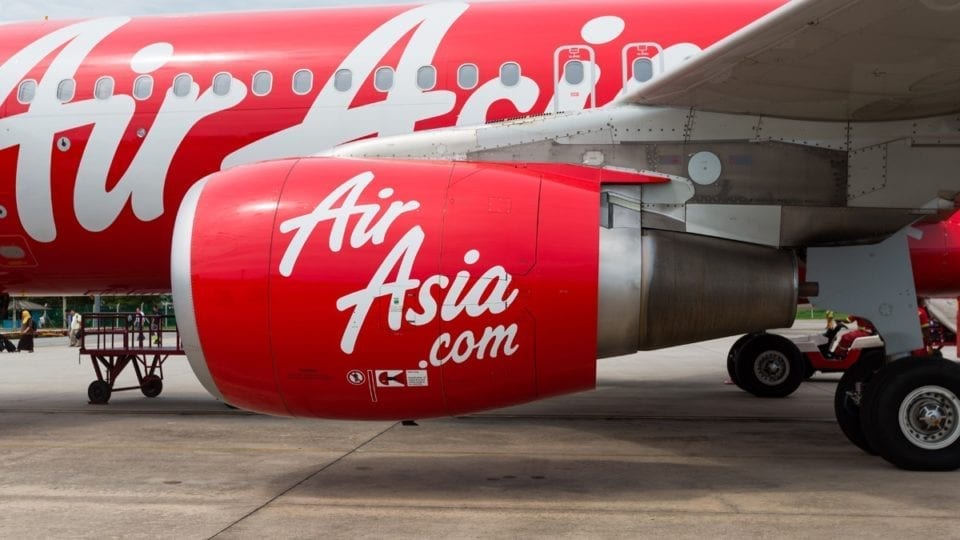
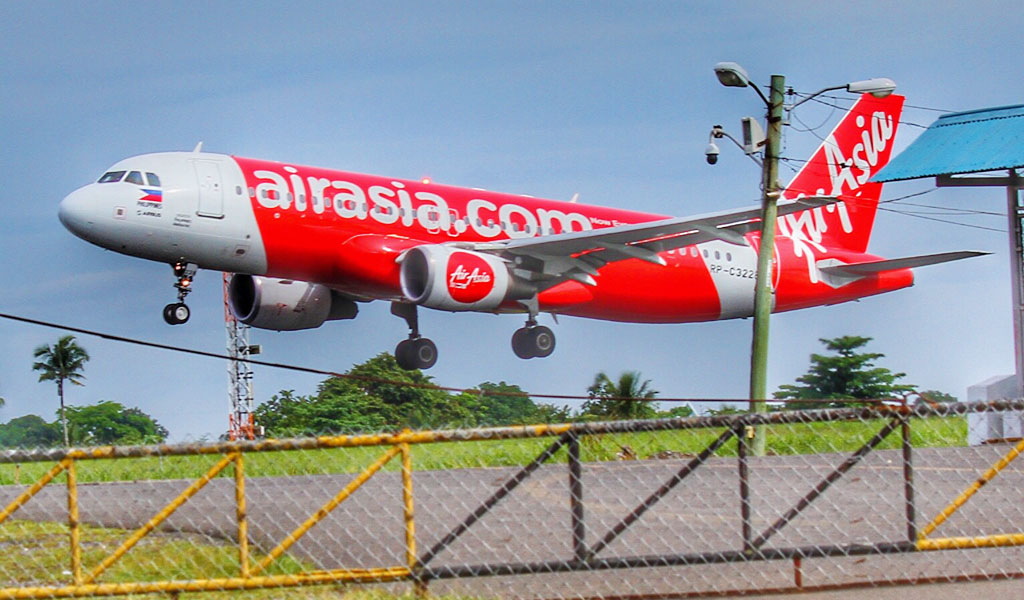
    Following AirAsia’s withdrawal of flights from online travel agent Traveloka, the airline told that it will be placing its focus on enhancing its products and services as well as website and mobile app instead. This comes as online agents are rumoured to be asked by major Indonesia airlines to keep AirAsia’s Indonesia flights out of their platforms. The online agents reported by the travel publication include Traveloka, Tiket.com, Panorama Group, Golden Rama Tours & Travel, and Wita Tour. Traveloka PR director Sufintri Rahayu said that she hopes that AirAsia’s withdrawal is “not a permanent decision” and the company is currently discussing with the airline how to “reach the best outcome for all relevant parties.”

    She added, “We have always done our best to provide an open and fair online platform for all our airline and travel partners, including AirAsia, to sell their services to our customers. We respect and recognise AirAsia’s position as an important regional airline in Southeast Asia. Our faith and goodwill towards AirAsia remain high as ever.”

    Meanwhile, a spokesperson from AirAsia reiterated that it remains “open to dialogue with business partners” but  did not comment further on the alleged bans from various online travel agents. Previously, AirAsia Indonesia president director Dendy Kurniawan called Traveloka out for unexplained disappearance of AirAsia Indonesia flights from Traveloka for the second time in the two weeks. He said that the omission of flights has “hurt” cooperation between AirAsia and Traveloka, adding that Traveloka has “not acted in good faith.”

    Brand impact and sale for AirAsia

    While it remains uncertain how long this saga will last, aviation consultant at CommunicAvia Gerry Soejatman said that it is “unlikely for the withdrawal to impact on AirAsia’s international market”. Even domestically, the impact may not be as high as one would have expected. He explained,

    In Indonesia, AirAsia is perceived to be the airline with the strongest direct selling compared with the others, and its customers are generally quite loyal.

    And while being on online travel agents’ website is a great form of brand recall and point of sale for many travel brands, Construct Digital’s senior internal digital marketer Jan Mascarina suggested tactical campaigns such as awareness activations can help AirAsia elevate their position in Indonesian consumers’ minds. He said, “One way to do this, aside from aggressive media spending, is to maintain a social media presence that speaks local lingos and understands local trends, in order to connect with the very locals they are trying to win business from.”

    In terms of search marketing, AirAsia could consider hijacking competitor keywords. Mascarina said, “AirAsia can bid against searches for competing airlines in the country to keep itself as the first suggestion when users search for airlines.”

    He added with 97% of Indonesian search being powered by Google, this could present a low-hanging fruit for travellers exploring their options. Moreover, AirAsia could also bid against keyword searches “for the very travel site that it now finds itself at odds with, in order to funnel some of the users from these sites into their own website.” Additionally, AirAsia should find ways to engage and grow their current user base through loyalty or referral programs.

    Prantik Mazumdar, managing partner of Happy Marketer, a Merkle Company said if there is one independent airline brand that can fight being dropped from online travel agents’ lists on its own terms, it is Air Asia.

    “AirAsia is a pioneer in data-driven digital marketing and have made huge improvements in the recent past in terms of its mobile-first customer experience to drive bookings and multi-touch customer engagement,” he said.

    To further battle this challenge, AirAsia will need to invest resources in a multi-prong approach to capture more SEM traffic for generic keywords that are usually bid for by online travel agents. It will also need to run location-based dynamic ads to achieve higher relevance and click through rates. An added focus will be needed to improve conversion rates and cost per acquisition through tactical tweaks on landing pages and drive higher bookings through it’s existing customer base by targeting them through personalised offer emails or through custom audience ad messages on social media.

    “AirAsia will also need to now create more local destination related content independently or through syndicates that improve its SEO rankings; experiment with dynamic pricing to improve its average revenue per booking metric and beyond digital, you may also see them innovate through better bundled offerings and new partnerships with hotel chains and new age digital businesses in Indonesia,” he added.

    We have all seen that Tony Fernandes and his team relish a good challenge and I’m sure they will take this head on.

    He added that this could turn out to be a great imperative for AirAsia to further build on it’s own internal full stack marketing capability and reduce it’s reliance on online travel agents.

    Industry players said that one reason for airlines to exert pressure on travel agents may be because they “want to increase fares due to high fuel costs and AirAsia isn’t playing ball.” The article also said that several consumers have take their frustration about rising domestic airfares to an online petition, which has collected near to 400,000 signatures. In an update, it said that the Indonesian National Air Carriers Association and Transportation Ministry have since responded and brought the prices down on some flight routes.

    “Airlines usually sit together to discuss their challenges, but not to set prices, that would be illegal. The Indonesian Competition Commission is looking into those allegations,” Soejatman said.

  • Airasia will soon start selling flight tickets of other airlines

    Airasia will soon start selling flight tickets of other airlines

    AirAsia’s group CEO Tony Fernandes said the Malaysian low-cost carrier’s official website will soon start selling tickets of other airlines, as it looks to generate a new form of revenue. In a Twitter post, Fernandes said that AirAsia.com will be formed as a new company under the open sourcing firm that helps in building software, Red Hat Inc.

    Fernandes is confident that in time, airasia.com will generate as much gross merchandise volume (GMV) from non-AirAsia flight tickets as it does from selling AirAsia flight tickets. As of now, the GMV is $4 billion, he tweeted.

    GMV indicates total sales dollar value for merchandise sold through the ecommerce platform.

    Moreover, in a series of tweets, Fernandes announced that the hotel sales via the website increased 300 percent last week and is going to grow along with activities.

    He added that AirAsia’s loyalty points will help drive more people, because of their database, to the platform, which claims the strongest platform among ASEAN (Association of Southeast Asian Nations).

    “We have a much more powerful database and better knowledge of our customers than OTA,” he said in a tweet.

  • IOT Asia 2019 : Optimise Business Returns With IOT Applications

    IOT Asia 2019 : Optimise Business Returns With IOT Applications

    Asia’s leading platform for Internet of Things (IoT) returns to drive deeper insights into critical developments in the digital sphere, with new highlights on building value chains for Smart Cities and Industrial IoT. Bringing together a diverse spectrum of participants, IoT Asia 2019 aims to facilitate the application of IoT technologies in business communities. Singapore’s champion for the Smart Nation Initiative Dr. Vivian Balakrishnan, Minister for Foreign Affairs will be in attendance as guest-of-honour to deliver his opening address on 27 March 2019 at 10:30 am.

    Jointly organised by SingEx Exhibitions and the Singapore Industrial Automation Association (SIAA), the 6th edition of IoT Asia 2019 will be held at Hall 1, Singapore EXPO, 27-28 March 2019. It will be co-located with Last Mile Fulfilment Asia 2019, which addresses the agenda of disruptive technologies and their applications in the retail fulfilment and logistics space.

    Riding the wave of IoT transformation

    Set to welcome over 6,000 international attendees, IoT Asia 2019 will showcase more than 100 technology companies, start-ups and emerging IoT players with innovative products and solutions to help businesses improve efficiency and increase bottom-line.

    Furthering the agenda of creating collaborations in the IoT community, SIAA will be signing MOUs with the Singapore-German Chamber of Industry and Commerce (SGC) and the Indonesia IoT Association on March 28 to form strategic alliances that impact innovation adoption. These MOUs will reflect the commitment of the countries in supporting the formation of an IoT-centric ecosystem that taps into the strength of shared networks and expertise.

    “IoT trends and emerging technologies are set to reinvent the landscape by driving digital business innovation for a decade. We recognise that the adoption of IoT presents an

    unparalleled opportunity for us to identify the technologies that will impact businesses in multiple industries. In this context, IoT 2019 plays a key role as an enabler of technology adoption; a matchmaker of quality business leads; and a cultivator of skills development and education,” said Mr. James Boey, Executive Director, Industrial & Urban Solutions, SingEx Exhibitions.

    Mr. Terence Teo, President, Singapore Industrial Automation Association, further commented on the impact of technology innovations: “We are at a higher stage of civilisation where it has been exponentially transformed by accelerated technological development. Undeniably, emerging technologies have helped to grow businesses through greater data- driven insights, and as the industry grows at an unprecedented rate, advanced technologies will be required to make sense of the complex bulk of digital data collected.”

    Discover possibilities on Interchange

    IoT Asia 2019 has evolved into an active ecosystem that connects other business and emerging technology communities for cross-disciplinary collaboration and implementation in multiple industries. Launched at IoT Asia last year, the Interchange team has joined hands with De/Centralize, a Blockchain community, to curate conversations with seasoned technologists that examine the intersection of IoT and DLT (Distributed Ledger Technology).

    Through interesting onsite and digital-streaming formats, Interchange will provide companies with an opportunity to identify the possibilities offered by DLT and blockchain- defined perimeters in their enterprise deployment. To facilitate this engagement and to understand why blockchain is a game changer, Interchange will address the challenges and uncover the potential opportunities for cross-disciplinary collaboration. (For details on the Interchange, please refer to Annex A).

    Trending conference topics

    This year’s conference kicks off with a focus on building value chains with key segments on Artificial Intelligence and Blockchain. IoT 2019 will delve into specific industry sectors such as e-commerce and construction with a focus on key areas of application: 1) Superior infrastructure with enhanced security via Blockchain; 2) Advanced data analytics using Artificial Intelligence 3) Data analytics and 4) Enablers

    The conference programme features a stellar cast of international luminaries such as Saadia MUZAFFAR, Founder, TechGirls and former member of Waterfront Toronto’s Digital Strategy Advisory Panel, Canada; and Martin YATES, Chief Technology Officer, South Asia & Emerging Markets, Dell EMC who will take to the Unplugged Stage for a no-holds barred discussion on the implications of smart cities.

    Tackling the hot topic of IoT security is Prof. YU Chien Siang, Chief Innovation & Trust Officer, Amaris AI; and Oliver Meili, Head of IoT Development & Operations, Bosch Software Innovations, among others, while Anthony Burke, Professor of Architecture & Associate Dean of International & Engagement, Faculty of Design Architecture & Building, University of Technology Sydney, Australia; Joelle Chen, Director, Global Partnerships & Marketing, Intelligent Air Solutions, MANN+HUMMEL Group; and Salim Aslam, IoT Solution Architect, Social Innovation Business, Hitachi Consulting, Singapore will share insights on reimagining and redefining a truly intelligent city.

    AI and cyber terrorism: How to manage risks?

    Navigating the IoT security landscape with new technologies like 5G, blockchain and AI adds to existing challenges faced by governments and industries. We pose questions such as “how will future developments of these technologies take shape”, “what are the key considerations and implications for governments and industries”, and “what are the measures to better address security-breach concerns?”

    Join us for an interactive discussion on “Shake-ups in the emerging IoT security landscape,” on 27 March, 3pm at the Unplugged Stage

    What is the future of the workplace?

    Driven by progress in automation, human jobs will not disappear but rather evolve, renew and become more complex. The labour force will therefore have to acquire new skills. What are the new skills that will be in demand in an AI future? Find out how AI and humans are able to co-exist in the workforce and the types of management frameworks that have to be created to ensure successful collaborations between humans and machines.

    Join our discussion ”Human cognitive capabilities and skills that matter for an AI future

    – Will we have what it takes?” on 27 March, 4pm at the Unplugged Stage.

    Behind the design of Singapore’s first integrated “Smart district” At the forefront of Singapore’s Smart Nation push is the Punggol Digital District (PDD), envisioned to be a vibrant district where cutting-edge technology and social innovation transform the way we work, live, learn and play in the future. The first district in Singapore to adopt an integrated masterplan approach – combining a business park, a university and community facilities – PDD aims to create synergies, enable close integration between industry and academia, as well as foster vibrant and strong communities.

    Housing key growth sectors that abide within IoT such as cyber security, artificial intelligence and data analytics, the district will be an ecosystem of open innovation and a conducive test-bed environment, enabling businesses and the community to thrive in a digital economy.

    To learn more about Singapore’s first Smart district, join us on 27 March, 1:20pm at the Centre Stage. 

    For more information on the conference programmes at IoT Asia 2019 and LMFA 2019, log on to www.internetofthingsasia.com and www.lmfasia.com.

  • Yunnan Baiyao Group to Bring Traditional Chinese Medicine to a Global Audience with Manhattan Associates

    Yunnan Baiyao Group to Bring Traditional Chinese Medicine to a Global Audience with Manhattan Associates

    Yunnan Baiyao Group, one of China’s largest pharmaceutical and healthcare companies, has selected Manhattan Associates  Warehouse Management System (WMS) to transform its digital supply chain and power the next phase of its growth strategy. The solution will help the manufacturer optimise its distribution operations and meet rising demand for its products across the globe whilst ensuring compliance with stringent production and traceability regulations.

    Founded in 1971, Yunnan Baiyao has established itself as one of China’s most important pharmaceutical companies, selling a broad range of medicinal and personal care products. Thanks to its unique ability to combine traditional Chinese medicine with new product innovations, the company has doubled revenues over the last five years to CNY24.3 billion (US$3.5 billion) in 2017. With its sights firmly fixed on continuing this trend, it recently set out to modernise its manufacturing and distribution operations.

    The pharmaceutical giant selected Manhattan’s industry-leading WMS solution to help it optimise fulfilment and throughput. The company will initially deploy Manhattan’s WMS in a new distribution centre (DC) adjacent to its toothpaste factory in Kunming, Yunnan province in southwest China. Yunnan Baiyao’s toothpaste is its most important healthcare product and the most popular in the Chinese market with a leading market share. Manhattan’s solution will play a key role in Yunnan Baiyao significantly increasing its toothpaste production to fulfil the growing market demands.

    Xia Feng, General Manager of Yunnan Baiyao’s Engineering System Centre, said, “Manhattan’s WMS will ensure on-time replenishment of our production line, accelerate the shipment of finished goods to our wholesale customers, drive efficiency improvements across our warehouse and factory floor and provide us with the scalability we need for growth. It will also provide real-time visibility of all inventory flows, ensuring we are fully compliant with the Good Manufacturing Practice (GMP) and Good Supply Practice (GSP) codes governing the traceability requirements of pharmaceutical products.”

    Stone Chen, General Manager of Manhattan Associates, Greater China, said, “Yunnan Baiyao is taking the lead in the pharmaceutical sector to replace its legacy systems with state-of-the-art technology that improves the productivity, efficiency, and competitiveness of its manufacturing and supply chain functions. Manhattan’s WMS will play a pivotal role in Yunnan Baiyao’s digital transformation and provide it with the scalable fulfilment platform it needs to be able to fully capitalise on the growth opportunities presented by rising global demand for traditional Chinese medicine.”

  • 2018 Was A Record year for shoe brand Ecco

    2018 Was A Record year for shoe brand Ecco

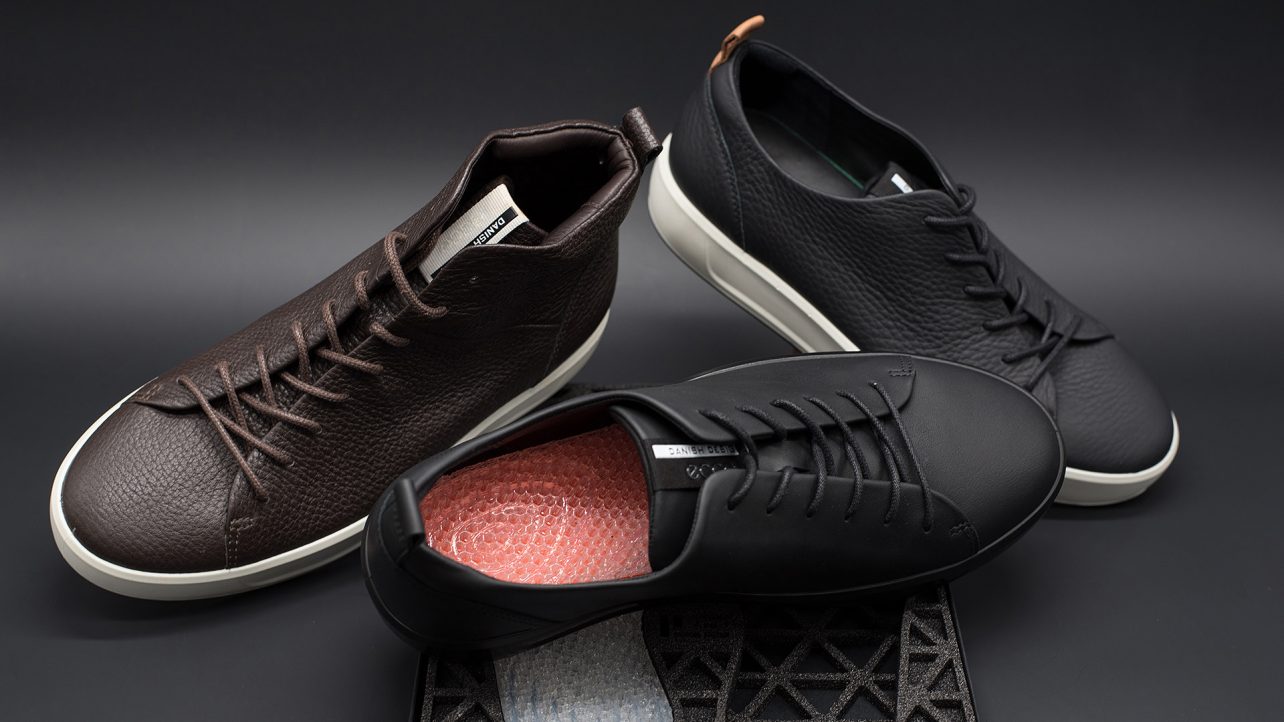
    Shoe brand Ecco reported record sales last year and its highest profit in its 55-year history.

    Net sales reached €1.31 billion (US$1.49 billion) and profit before tax reached €201 million ($228.1 million).

    “It is very satisfactory for the employees to see all their hard work and enthusiasm rewarded with such a good result, particularly when taking into account that the retail industry is going through a disruptive period and is facing many challenges,” said Ecco CEO Steen Borgholm.

    The gains correspond with the launch of several new products last year, within both the firm’s shoe and leather divisions.

    Direct-to-Consumer sales continued the fast growth of previous years, recording a 10-per-cent growth in brick-and-mortar retail and 36 per cent online. In particular, North America and Asia recorded strong overall market growth with 13 per cent and 11 per cent respectively. More than 50 per cent of Ecco shoes were sold in concept stores – online and offline.

    “In a year Ecco connects with millions of consumers,” said Borgholm. “We still have a lot to do to take full potential of this in our marketing, sales, and operating model. Further investments in the development of new products will continue and help us generate a sustainable and healthy growth for Ecco also in the years to come.”

  • Are We ready for gender-neutral changing rooms yet ?

    Are We ready for gender-neutral changing rooms yet ?

    UK fashion retailer Primark has introduced gender-neutral changing rooms in two stores, prompting both criticism and support from online observers.

    The move comes a year after Topshop began integrating its changing rooms.

    The response to Primark’s announcement has lit up social media in the UK, posing the question: Are shoppers ready for gender-neutral changing rooms?

    Primark says its action follows a challenge from transgender shoppers who said they faced difficulties using gendered changing areas. The new arrangement allows all shoppers to change in the same area, albeit in private booths.

    But critics online have suggested that more needs to be done to address privacy and safety concerns, in particular noting that doors would offer more protection than the current curtains.

    One user noted on Twitter that the perceived threat from men changing in neighbouring cubicles was far greater than any concerns from transgender people.

    “Women should not be made to feel unsafe when shopping,” tweeted another. “You don’t even have doors, so any man can walk in on us changing – so wrong will be boycotting!”

    Another shopper had a positive response, highlighting an advantage of the policy: “I am really happy to hear that Primark [has] swapped to gender-neutral changing rooms – as a disabled couple we often need to help each other try clothes on & need to accompany each other into changing rooms,” she tweeted. “We can’t always do that in some stores. It depends on the staff.”

    Primark responded to the mixed response calmly: “It has been our policy for some time that all customers are welcome to use the fitting rooms of their choice in our stores,” said a spokesperson.

    “As part of our latest in-store design, non-gendered fitting rooms, which are commonplace in retail and other markets in which we operate, have been introduced in our new Bluewater and Hastings stores.”

  • Vietnam Retail Steap Climb in Retail Growth

    Vietnam Retail Steap Climb in Retail Growth

    The Vietnam retail sector is forecast to record double-digit growth from 2019 to 2024, according to a report by ResearchAndMarkets.

    While a number of Vietnamese consumers still choose to shop in traditional markets as they can buy ingredients in smaller portions, supermarkets are offering ready-to-cook packages better suited to the daily needs of the average consumer, says the report. Thus, supermarkets and convenience stores are taking an increasing share of the overall food and grocery market.

    Food products, non-food products, and home appliances are also sold in larger supermarkets, offering more range and convenience for local customers under one roof.

    Modern retail outlets also offer private brands/products that can be exclusively purchased in their stores.

    Some newer stores have in-house bakeries and cafes where consumers can hang out and enjoy with family or friends.

    Growth of convenience

    The growing Vietnamese middle and affluent classes and the younger population increasingly value convenience and comfort. That is driving growth in the convenience store market, met by the expansion of companies such as Circle K, which is now expanding across Hanoi after establishing a strong presence in Ho Chi Minh City, FamilyMart, 7-Eleven and GS25, among others.

    The increasing presence of local players, such as Vinmart+, which has nearly 900 stores nationwide, and test stores trading as Bach Hoa Xanh, operated by Mobile World, are helping expand the Vietnam retail market.

    Traditional food-and-beverage retailers still dominate the sector.

    As of last year, traditional retailers accounted for 94 per cent of the retail grocery sales, and the remaining 6 per cent sales were attributed to modern retail.

    According to industry experts, modern retail sales are expected to reach 18 per cent of total food retail sales by 2024.

  • Chinese internet giants bidding on AS Watson

    Chinese internet giants bidding on AS Watson

    Two Chinese internet giants are reportedly evaluating separate bids for a stake in global retailer AS Watson.

    As earlier reported by usg, Singapore sovereign wealth fund Temasek is working with an advisor on options for selling part of its stake in the Hong Kong-headquartered company. The latest reports suggest Temasek is looking to sell a 10 per cent holding for around US$3 billion, which would represent a healthy financial gain on its 2014 investment, when it paid $5.6 billion for 25 per cent stake. Tencent Holdings is considering a bid in partnership with some investment funds.

    Tencent’s rival Alibaba Group has already expressed an interest, although again, this has not been formally confirmed by the company. Temasek is declining any public comment on the prospective buyers have been invited to make presentations this month.

    However the news organisation’s sources have cautioned that Temasek may ultimately opt to retain its stakeholding and there are suggestions that “differences in valuation expectations could make reaching a deal difficult”.

  • Australia’s C/MEO Collective Lifts Off on Tmall

    Australia’s C/MEO Collective Lifts Off on Tmall

    Women’s fashion label C/MEO Collective has started selling on Chinese online marketplace Tmall.

    The move is part of a broader strategy of parent company Australian Fashion Labels to focus on China.

    “China is now really at the forefront of retail innovation and we see localisation of channels as crucial to being relevant in this market,” said Dean Flintoft, Australian Fashion Labels founder and chairman, in a statement.

    Prior to launching on Tmall, C/MEO Collective was already stocked in approximately 300 brick-and-mortar stores across Greater China, along with Australian Fashion Labels’ other brands: Keepsake The Label, Finders Keepers and The Fifth.

    But with more than 700 million people shopping on Alibaba’s retail marketplaces, including Tmall, this represents a significant expansion in reach.

    According to the company’s statement, C/MEO Collective was chosen because it is the brand with the greatest appeal in the China market, thanks to its innovative signature style, premium fabrics and approachable price point.

    “With C/MEO already having gained such strong traction in China via social media and via its marketplace presence, we wanted to respond to the enthusiasm for the brand and make it more accessible to our customer base in China,” said Mei Ping Doery, CEO of Australian Fashion Labels China.

    C/MEO Collective showcased the first of its collections for Tmall at VAMFF in Melbourne on March 8.

    While demand for Australian brands and products in China is most concentrated in areas such as health and wellness, beauty and food, and wine, fashion brands are increasingly seeing success.

    Brands including Seafolly and Lorna Jane have made headway in China through Tmall, and the addition of C/MEO Collective suggests there is a market for more fashion-forward Australian design.

    Australian Fashion Labels was founded in 2007 by Dean and Melanie Flintoft with the introduction of Finders Keepers. The company has since developed C/MEO Collective, Keepsake, The Fifth and Jaggar.

    The brands are available in 1700 stores worldwide, including major department stores, as well as to customers directly through an online retail platform, which ships globally.

  • Global beauty brand Paul Penders Opens in Asia

    Global beauty brand Paul Penders Opens in Asia

    Global beauty brand Paul Penders is rejuvenating its presence in Asia with new products, a new team, and new distributors.

    The brand has been on the market for almost 50 years and sells worldwide. Last year, the company opened locations in India and Singapore to grow sales.

    “With the new partnerships in India and Singapore, we felt it was the right time to expand in Asia with the highest-quality skincare and cosmetics available,” said director of US and Singapore operations Bastiaan Penders. “The Asian market is experiencing both excitement and tremendous growth in vegan skin/hair care for the whole family, and our products are more attractive and suitable than ever for this market.

    “The Asian consumers are more and more aware about the danger of chemicals in personal-use products and are searching for safe products. Many people have allergic reactions due to environmental issues and chemical skincare and they are looking for natural solutions,” said Penders.

    “With our own R&D and independent certifications we can assure all our ingredients are safe to use. Our cosmetics are constantly monitored on safety and comply with the strictest regulations in world-wide. With our presence in Singapore we will be able to better serve distributors, retailers and consumers in Asia.”

    Last year, Paul Penders International launched a manufacturing facility in the Himalayas, where products are now being made under a World Health Organisation-GMP licence using the abundant Himalayan mountain water. Its products feature 100 per cent-pure mineralised snow meltwater filtered down for more than 20 years from Mount Everest. This year, the company has launched a new vegan colour cosmetics line made with the Himalayan mountain water.

    All Paul Penders’ products are cruelty free, certified vegan, Halal and EWG verified.

  • JD Sports to acquire Footasylum

    JD Sports to acquire Footasylum

    JD Sports has launched a takeover bid for UK footwear retailer Footasylum. The offer, which amounts to up to US$119.6 million (£90.1 million) for the remaining shares the business does not already own, represents a 77.4 per cent premium on the closing price of Footasylum shares on the day prior to the announcement.

    JD executive chairman Peter Cowgill said the footwear business was “very complementary” to JD’s existing UK operations, due to its focus on a slightly older consumer, targeting 16-24 year olds.

    “We believe that there will be significant operational and strategic benefits through the combination of the very experienced and knowledgeable management team at Footasylum and our own expertise,” Cowgill said.

    Footasylum directors intend on accepting the offer in regards to the 63 per cent of shares they hold, and plan to recommend shareholders do the same.

    JD Sports has already procured a further 65.6 per cent of the available shares in the business, but requires 90 per cent of shares in order to make the offer final.

    According to GlobalData UK retail research director Patrick O’Brien, Footasylum had seen the wheels coming off of the business since May last year, with a highly promotional market smothering the business’ margins.

    O’Brien said the move appeared to be a defensive move by JD Sports against a potential acquisition by Sports Direct’s Mike Ashley.

    “With Footasylum’s share price so low, it looked like only a matter of time before the hoover of the high street would strike, before JD Sports began building its stake last month,” O’Brien said.

    “But, the deal seems a positive one for JD Sports, which has the clout to restart Footasylum’s expansion and use its sourcing scale to make it more efficient and we expect it to develop what is still a very marketable fascia.”

  • Two-hour on-demand delivery platform has Arrived in Australia

    Two-hour on-demand delivery platform has Arrived in Australia

    Think two-hour delivery is years away for Australian retailers? Wrong. It’s already on offer and customers are ready and willing to pay extra for the service.

    Despite some reports suggesting the service won’t be widely available for another decade, eDelivery just launched its on-demand two-hour delivery platform this year, using cutting-edge technology and Uber-style crowdsourcing.

    “The technology is a world-first. It’s super fast, it costs under $8 an order and from the moment the customer places the order online, it takes two hours to have it delivered to them with our 24/7 delivery service,” says eDelivery CEO Carl Popovic.

    Here’s how it works

    1. Customer makes an order online.
    2. The order is directed to the closest location to be picked, packed and labelled within 45 minutes.
    3. Once the order is ready for delivery, it’s directed to eDelivery for collection through its IT platform that is integrated with the retailer’s.
    4. The order is then directed to the private driver network, a crowdsourced network of self-employed drivers who are fully compliant and trained.
    5. The app technology selects the most suitable delivery vehicle of the order. Orders are batched for delivery every 15 or 30 minutes, depending on their size.
    6. A notification is issued to the closest driver. Driver accepts the order via the app and is directed to the store, where he/she scans each parcel and confirms delivery.
    7. With delivery underway, drivers are given the most direct and quickest path for multiple collections and deliveries.
    8. Customers are given a 10-minute advance SMS delivery notice.
    9. At each delivery point, the driver obtains proof of delivery signature, then goes onto the next delivery.

    What customers want

    Even in the past couple of years, consumer expectations have skyrocketed, particularly in terms of delivery, according to PwC’s 2018 Global Consumer Insights Survey. Nearly a quarter of respondents said they would be influenced to buy from a particular retailer if they offered fast or reliable delivery. More than 40 per cent of online shoppers said they would pay extra for same day delivery or for the option to receive their packages within a one or two-hour window of their choosing.

    “When retailers are up against the likes of Amazon who have excellent delivery services, it’s essential that they can compete with a similar offering,” Popovic says. “Customers don’t want to wait for their purchases for a week or two anymore. It’s just not good enough.”

    Two-hour delivery is particularly useful for retailers in the liquor, chemist, grocery, office supplies, hardware, telco or fast fashion categories. Shoppers who go online to fulfil a prescription don’t want to wait for antibiotics in two or three days’ time, neither do those planning to stock up on bubbly for a party they’re hosting tonight.

    At the moment, eDelivery is in talks with department stores, major electronics retailers and chemists to roll out the service.

    “In today’s world, it’s extremely important to be able to use a crowdsourced environment to complete the delivery process. It’s on-demand, it’s cost-effective, it’s efficient, it’s compliant – it basically ticks all the boxes in order for us to fulfil a two-hour delivery service,” says Popovic.

    “It’s time that Aussie retailers step up their game and give customers what they want.”

  • Big Big Shop partnering up with Circle K

    Big Big Shop partnering up with Circle K

    Shoppers buying goods online from Television Broadcasts Limited’s Big Big Shop will be able to collect their purchases at any Circle K Convenience store across town.

    The click-and-collect service results from a partnership between TVB and Convenience Retail Asia signed this week. Big Big Shop was launched in July last year.

    “Circle K is a perfect match for Big Big Shop which will provide our customers with a convenient click-and-collect service,” said Mark Lee, group CEO at TVB.

    “Location is everything. Circle K has more than 330 stores conveniently located in Hong Kong.”

    Lee said synergising with TVB’s promotional power, Big Big Shop adopts a ‘show-and-sell strategy’ by marketing advertiser-sponsored products on TVB’s prime-time shows.

    “During the eight months’ operation of Big Big Shop, the show-and-sell strategy has proven to be a success in motivating viewers to buy online, notably in the sales of kitchen appliances by German Pool; quality frozen meat and seafood by Gourmet; package tours by Big Line Holiday; and George Lam concert tickets.

    “With Circle K as our logistics partner, we will be able to greatly expand the range of products available at Big Big Shop by including more vendors who don’t necessarily have the delivery capability. The partnership with Circle K will offer an even better shopping experience to our customers. It marks an important step in our e-commerce fulfillment and development of online-to-offline business strategy,” Lee said.

    CRA CEO Richard Yeung said Circle K is committed to providing convenient, efficient and quality services that enable Hong Kong consumers to enjoy better and easier lives.

  • Online electronics retailer EasyTalk fined for TV Commercial

    Online electronics retailer EasyTalk fined for TV Commercial

    Electrical equipment seller EasyTalk has been convicted of five charges under the Product Eco-Responsibility Ordinance.

    The company is the first of seven Hong Kong electronics retailers caught suspected of violating the Product Eco-Responsibility Ordinance (PERO), with the other six to face hearings this month and next.

    EasyTalk Group Company was convicted and fined $6500 at Fanling Magistrates’ Courts yesterday on five charges of contravening PERO when selling a television set.

    Under PERO, which came into effect last August, when distributing regulated electrical equipment, sellers must have a removal service plan (RSP) endorsed by the Environmental Protection Department (EPD) and proactively inform consumers of the sellers’ obligation for the provision of a free statutory removal service as well as the relevant removal terms in writing.

    Moreover, sellers must arrange a free removal service for consumers to dispose of the same type of waste equipment and provide a recycling label and a receipt containing the prescribed wording when distributing regulated electrical equipment.

    A spokesman for the EPD said the organisation received a complaint last August about a customer purchasing a television set from EasyTalk Group through the instant-messaging application WhatsApp. Staff of the company claimed that the EPD would collect the used television set for recycling in several days. However, the customer was later requested to make the removal arrangements himself after the purchase.

    During an investigation, EPD enforcement officers found that the seller not only did not arrange the statutory removal service for the complainant, but also did not have an RSP endorsed by the EPD and did not provide recycling labels as well as a receipt containing the prescribed wording according to the regulation.

    The spokesman reminded all retailers – those with physical stores and those selling online or via apps – that they must not make false statements to consumers or offer them a removal service that is contravening the law, thus avoiding relevant liabilities and charging consumers for the removal service.

    First-time offenders are liable to a maximum fine of between $5000 and $100,000. Upon a second or subsequent conviction, the fine increases to between $10,000 and $200,000.

    Consumers have been urged to contact the EPD immediately if they find any seller not conforming to the PERO regulations.

    “The EPD will take strict enforcement action against sellers who violate the PERO,” he said.