Tag: asia

  • YouTube will now show you the number of views and likes a video has in real-time

    YouTube will now show you the number of views and likes a video has in real-time

    Google is changing the “likes” and “views” counters on YouTube to refresh automatically when a video is viewed. Currently, if you’re watching a video on the platform, the number of likes and views won’t change while viewing the clip. But with this update, those two metrics will rise and show a cool animation of a rolling number counter whether the video is being played or is paused. And the animation will be played even if you switch to another app and return to YouTube.

    Android Police came across this new behavior on YouTube. They couldn’t find any reference to it except for a post on Reddit from back in October from user nonotan who wrote, “I’m watching a video, and I keep getting distracted by an animation where the view counter is rolling over to a new number as if it were a physical click counter. I have not seen this behavior before today, and I’d like to disable it.”

    The same Redditor was so bothered by the effect that he added the following line to his filters, which stopped the animation and the count from advancing in real-time: https://www.youtube.com/youtubei/v1/updated_metadata*.

    Others also had similar posts about the feature, such as Reddit user Reyh, who said, “Distracting indeed and IMHO not beneficial at all. I saw it on Tuesday for the first time, using Firefox. The first few times I only noticed some movement at the bottom left of the videos. I wondered if it was in the video itself. Then I observed the area for a while and saw the new counter animation.”

    It seems that this feature is being tested with the help of a minimal number of YouTube users globally. Those who see the feature will notice the number of views and the number of likes rolling up on the screen to a higher number while they are viewing the video. Google calls this progress and for some of you, it may be.

  • Japan destroys five tons of durian, chili from Vietnam

    Japan destroys five tons of durian, chili from Vietnam

    In October, over five tons of Vietnamese durian and chili were destroyed in Japan for containing a higher dose of pesticide than the country’s standard.

    The batch of 1.4 tons of durian was exported on Oct. 5 by a company in Vietnam to Japan, where it was found to contain 0.03 parts per million (ppm) of procymidone over the Japanese standard of 0.01 ppm, according to a recent report by the commercial counselor of Vietnam in Japan.

    The batch of 4 tons of chili contained 0.2 ppm of tricyclazole and 0.03 ppm of hexaconazole against the standards of 0.01 ppm for both.

    Japanese quarantine authorities destroyed all the produce.

    Procymidone is used to kill unwanted ferns. Tricyclazole kills fungus, and hexaconazole prevents powdery mildew and other diseases.

    Do Van Dung, head of the community health faculty at Ho Chi Minh City University of Medicine and Pharmacy, said that the three pesticides are approved in many countries, and their harmful effects have only been researched on animals.

    It is, therefore, normal for these pesticides to be present on produce exported to Japan, and the fact that they exceeded Japanese standards does not mean that they would harm Vietnamese consumers.

    Some countries, such as Australia, allow a procymidone level in garlic by up to 5 milligrams per kilogram against Japan’s 0.1 mg/kg.

    Ta Duc Minh, the commercial counselor of Vietnam in Japan, said that he has informed Vietnamese authorities to prevent a similar incident.

    Many other developed countries also fail to meet Japan’s standards from time to time as this is a difficult market that requires high quality.

    Japan was Vietnam’s third biggest export market of agriculture, forestry and seafood in the first 10 months, accounting for 7.4% of the total.

    Vegetables and fruits exports rose 6.6% year-on-year to $150 million.

    Durian exports to Japan fell 12.3% year-on-year to $1.3 million.

  • WhatsApp adds new secret code feature to help protect chats

    WhatsApp adds new secret code feature to help protect chats

    WhatsApp has just announced a small, yet important update that further improves the app’s privacy and security aspects. Secret code is a new feature that allows users to secure locked chats and add an extra layer of security.

    Thanks to the new feature, WhatsApp users can now set a unique password different from what they use to unlock their phones to protect locked chats. In addition, the new feature introduces the ability to hide the Locked Chats folder from the chatlist, which means that they can only be discovered by typing the secret code in the search bar.

    This is an optional feature, so you can still choose to have all your locked chats (or some of them) still appear in the chatlist. Another nifty quality-of-life change is the way you can lock chats after the update.

    Previously, in order to lock a chat, you had to visit the chat’s settings. However, with the latest version of WhatsApp, you can simply long press to lock a chat, no need for extra taps.

    According to WhatsApp, the new secret code feature is already rolling out, but it will take months to be available globally, so be patient if you don’t see it on your phone yet.

  • Google Message Router is overloaded leading Gmail to go down on Thursday

    Google Message Router is overloaded leading Gmail to go down on Thursday

    Google first alerted Workspace users Thursday at 11:30 am ET that some Gmail users might see a delay in receiving emails. On DownDetector, the number of reports about Gmail went from 33 at 11:25 am ET to 761 by 1:55 pm. At 5:03 pm ET, Google issued an update that said, “the issue with email delays was mitigated for the majority of affected users at 2:45 PM” and “a few users may have observed delays until the full mitigation was done at 4:15 PM ET.”

    70% of those submitting a report on DownDetector said that the problem was receiving their email in a timely manner. 16% complained about sending email on the platform and 14% said that they could not connect with the Gmail server. One Gmail user on DownDetector with the username “Elizabeth” wrote, “Ah, glad to know that it’s Gmail and it’s not me, I was scared and lost why I couldn’t make one, so I guess I’ll wait whenever Gmail is back working again.”

    Another subscriber to the platform named Michael Hubert wrote, “My emails are not being delivered. it says they are sent but no one is receiving them.” As bad as this sounds, the issue appeared to be limited in scope. After all, 761 reports on DownDetector, while a decent jump from the 33 reports submitted two and a half hours before the peak number, indicates that most people weren’t affected or didn’t know that Gmail was having problems.

    Officially, Google says that the incident started at 11:30 am ET and ended at 4:15 pm ET. The issue lasted for 4 hours and 45 minutes. On the Google Workspace Status Dashboard, the company wrote, “Some Gmail users experienced a delay in sending emails globally for a duration of 4 hours and 45 minutes. Any emails that were delayed after entering our system were auto retried and should have been delivered within a couple of hours after mitigation.”

    As for the cause of the issue, Google wrote, “From preliminary analysis, the root cause of the issue appears to be an overload in Google Message Router (GMR). Google will complete a full incident report in the following days that will provide a detailed root cause.”

  • Gasoline price falls third time in a row

    Gasoline price falls third time in a row

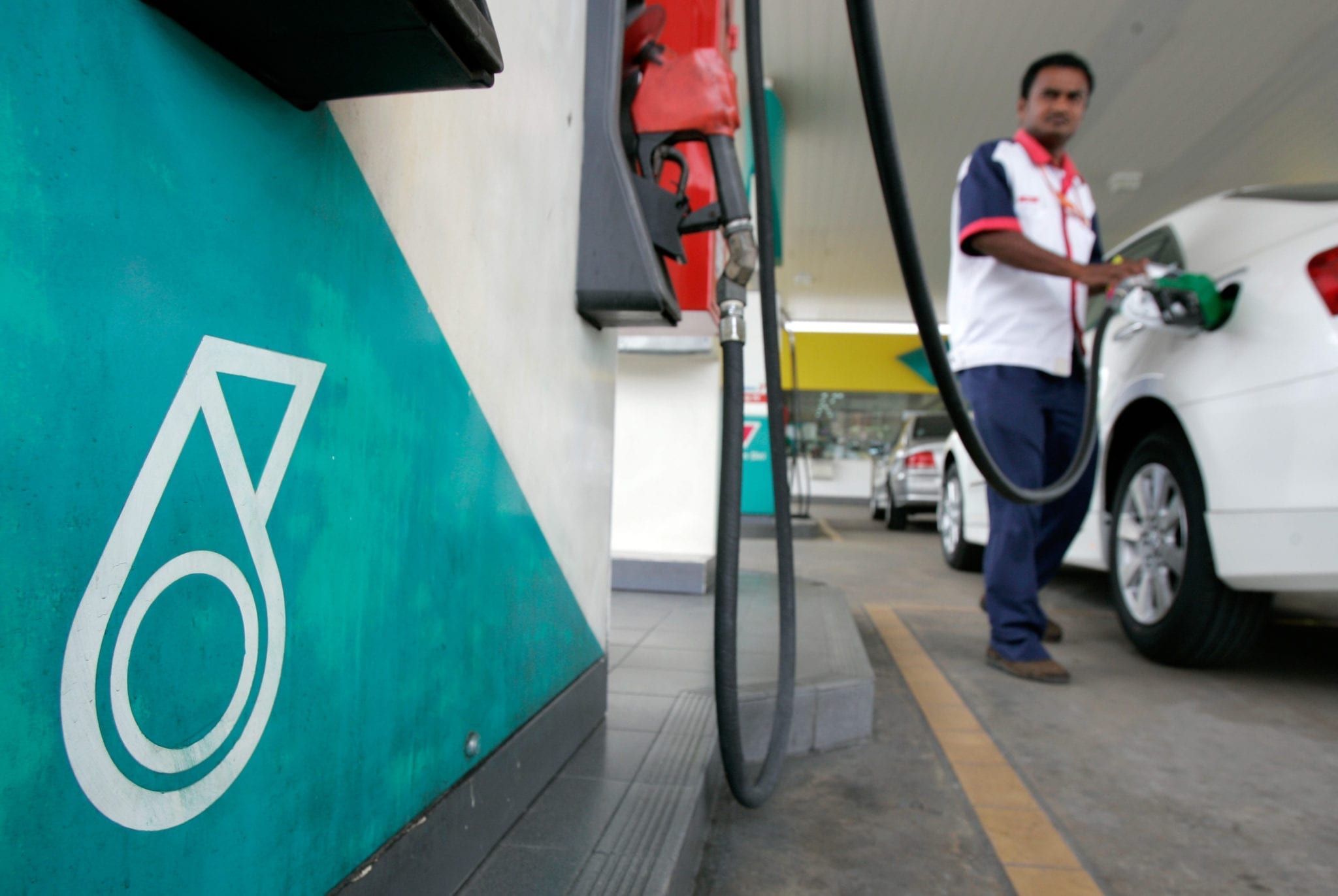
    On Thursday, prices of the popular gasoline RON95 dropped for the third time this month while diesel slid to a four-month low.

    RON95 fell 0.13% to VND22,990 ($0.95) per liter, while biofuel E5 RON92 rose 0.46% to VND21,790.

    This was RON95’s third straight decline this month.

    Diesel declined for the fourth time in a row by 0.44% to VND20,190, lowest since Jul. 21.

    Global oil price was little changed on Thursday as investors remained cautious ahead of expected production cuts by the OPEC+ group, and as weaker-than-expected Chinese factory data underscored slowing growth in the world’s second largest economy.

    Since last Thursday RON92 has risen 0.72% to $91.75 per barrel while RON95 dropped 0.16% to $97.11. Diesel fell 0.5% to $101.94.

  • Vietnam secures title for World’s Best Rice

    Vietnam secures title for World’s Best Rice

    Vietnam has been named the winner of the World’s Best Rice Contest for the second time, with six varieties, including the renowned ST25.

    The six varieties were submitted by two each from three companies: Ho Quang Tri Private Company, Loc Troi and Thaibinh Seed.

    They include the ST25 rice developed by farmer-scientist Ho Quang Tri which won the same contest in 2019.

    The organizer did not give an award for one specific variety this year but instead awarded a country as a whole. Cambodia came second and India third.

    30 rice samples were submitted by more than 10 countries for this contest.

    ST25 rice is the result of 25 years of work by farmer-scientist Ho Quang Cua and his colleagues who cross-bred the premium fragrant rice of Soc Trang Province described as having a sweet taste and a hint of pineapple flavor.

    The World’s Best Rice Contest, hosted by the Philippines this year, is held annually since 2009 by U.S. firm The Rice Trader. Last year, Cambodia claimed the first place.

  • Singapore Airlines’ cargo volume up 7 percent in October

    Singapore Airlines’ cargo volume up 7 percent in October

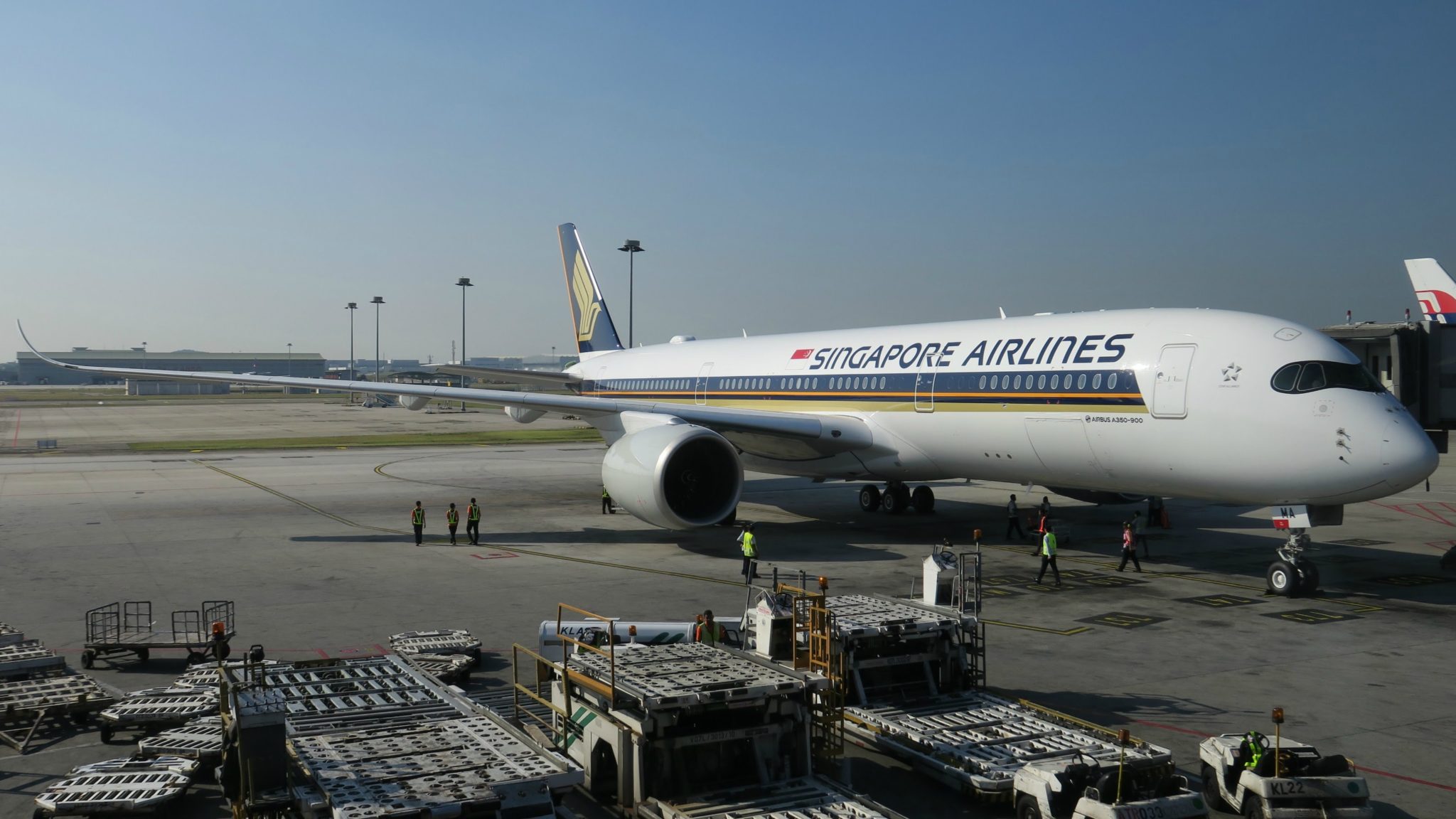
    Singapore Airlines saw cargo loads jump 7 percent year on year in October, on the back of e-commerce flows and freighter charters, according to the company’s latest operating results.

    The carrier’s cargo operations posted a load factor of 56.1 percent, or 3.5 percentage points higher year-on-year, with load factors on routes to The Americas (12.5 percentage points), South West Pacific (9.5 percentage points) and West Asia and Africa (7.8 percentage points), seeing notable gains. Meanwhile, cargo load factors on East Asia routes fell-10.1 percentage points.

    Capacity for the month expanded 23 percent YoY, which was outpaced by 23.5 percent passenger traffic growth, with SIA and Scoot registering 3.1 million passengers in total, up 36.1 percent from the same month a year before.

    As of end-October, the group’s cargo network comprised 121 destinations in 37 countries and territories.

  • Vietnam calls on China to resume import of ornate rock lobsters

    Vietnam calls on China to resume import of ornate rock lobsters

    Minister of Industry and Trade Nguyen Hong Dien has urged China to consider resuming imports of ornate rock lobsters from Vietnam at an early date.

    He made the request Monday at the 12th meeting of the inter-governmental China-Vietnam Economic and Trade Cooperation Committee.

    Exports of the lobsters, one of Vietnam’s major seafood products, to China were stopped two months ago due to that country’s amendments to wildlife conservation laws that now require clear proof of the farming process, including using only second-generation (F2) lobsters raised in farms for breeding and not wild ones.

    Importers in China need to apply for a certification from its Bureau of Fisheries.

    Responding to the request, Chinese Commerce Minister Wang Wentao said Vietnamese ornate rock lobster farms and packing facilities need to register with China Customs.

    Relevant departments in both countries need to inspect and review businesses and aquaculture facilities that export the lobsters to China, he said further.

    He praised Vietnam for its high-quality agricultural products, citing the example of durian fruits, which make up nearly US$2 billion of its exports to China.

    Agricultural products from Vietnam are highly sought-after on Chinese e-commerce sites.

    Wang also said his ministry would help Vietnamese brands establish themselves in the Chinese market and work with Vietnam’s Ministry of Industry and Trade to set up an agency for promoting Vietnamese goods.

    Dien concurred with Wang’s suggestions and expressed Vietnam’s willingness to cooperate in setting up smart customs in Lang Son Province to expedite movement of goods and strengthen bilateral agricultural cooperation.

    China is Vietnam’s biggest trade partner, with their trade valued at $175.6 billion last year. Vietnam is China’s fourth biggest partner.

    The country is also one of the top importers of Vietnam ornate rock lobsters, but the recent legal hurdle has significantly affected their exports.

    In the year to August Vietnam had exported $76 million worth of ornate rock lobsters to China, a 42% year-on-year decline.


  • Google Chat gets a new mobile redesign with bottom navigation bar on Android and iOS

    Google Chat gets a new mobile redesign with bottom navigation bar on Android and iOS

    Google Chat is rolling out a new bottom navigation bar to its Android and iOS apps, making it easier for users to access key features and stay organized on the go. The new navigation bar provides quick access to Home, Direct Messages, Spaces, and Mentions views, streamlining the overall user experience. Here’s how each of the new views work:

    The Home view serves as a central hub for all conversations, allowing users to effortlessly stay up-to-date on important threads. A dedicated filter lets users focus on unread messages, ensuring they don’t miss critical information.

    • The Direct Messages view concisely overviews all one-on-one and group conversations, with pinned conversations conveniently placed at the top for easy access.
    • The Spaces view similarly displays a condensed list of all spaces, along with pinned conversations at the front.
    • The Mentions view acts as a personal notification center, highlighting all messages from conversations and spaces where the user has been mentioned. This feature ensures that users are always aware of relevant discussions and can quickly respond to inquiries or participate in ongoing conversations.
    • The new bottom navigation bar will automatically appear on Android and iOS devices for both admins and end users, eliminating the need for any manual intervention. The rollout will be gradual, taking up to 15 days for all users to receive the update.

      Additionally, the new bottom navigation bar is available to all Google Workspace customers and users with personal Google Accounts. The gradual rollout will commence today for Rapid Release and Scheduled Release domains on Android and iOS devices.

      These updates follow the expansion of the app’s message bubbles to iOS yesterday, which provide a more cohesive messaging experience across all platforms. Now, with the introduction of the new bottom navigation bar, we see how Google is focused on simplifying navigation and enhancing user productivity within the app as well.

  • TikTok obtaining Indonesia e-commerce permit – state media

    TikTok obtaining Indonesia e-commerce permit – state media

    Short video app TikTok is in the process of obtaining an e-commerce permit from Indonesia’s government, state news agency Antara reported, citing the deputy trade minister.

    In September, Indonesia banned e-commerce transactions on social media, a major blow for TikTok, which had pledged to invest billions of dollars in Southeast Asia, including Indonesia, the region’s biggest economy.

    “Before, they (TikTok) were not compliant, they didn’t have the permit. Now they are taking care of it,” Deputy Trade Minister Jerry Sambuaga was quoted saying by Antara on Tuesday.

    He said a partnership with a local firm could be done providing it was in accordance with regulations.

    TikTok, owned by China’s ByteDance, has 125 million active monthly users in Indonesia, a country of more than 270 million people. It has been looking to translate the large user base into a major e-commerce revenue source.

    TikTok did not immediately respond to request for comment regarding the deputy minister’s remarks.

    Reuters reported earlier this month that TikTok was in talks on possible partnerships with several Indonesian e-commerce companies, including GoTo’s e-commerce unit Tokopedia, Bukalapak.com and Blibli.

  • Tabasco teams up with IMG to broaden its offerings

    Tabasco teams up with IMG to broaden its offerings

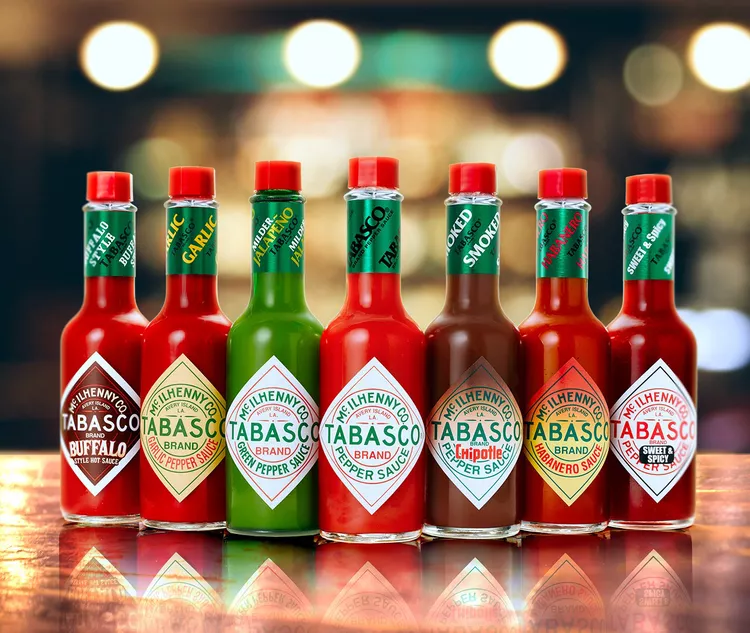
    McIlhenny Company – maker of Tabasco pepper sauces – has partnered with IMG, a global sports, fashion, and media business, to expand the brand into new product and service categories, as well as boost its consumer reach.

    Under the multi-year agreement, IMG will develop a wider range of Tabasco offerings to reflect the brand’s position in the global market. The company will also leverage Tabasco’s global footprint across food and lifestyle categories to encourage more consumers to connect with the brand.

    “Food and flavour can invoke strong human emotions and make powerful connections, as seen by the universal appeal and strong loyalty of the Tabasco Brand,” said Ricky Yoselevitz, SVP of licensing for IMG.

    “We are excited to help people embrace the Tabasco brand lifestyle by weaving these well-loved flavours and iconography into authentic new products and experiences.”

    Established in 1868, Tabasco is a globally recognised food brand sold in more than 195 countries and territories. It is known for its classic bottle with a diamond logo and signature red colour and has been a household name for generations.

    “IMG will bring its signature mix of global strategy and local expertise to leverage the power of the Tabasco brand into untapped product and service categories to help create new and meaningful connection points with our fans,” added Lee Susen, chief sales and marketing officer for McIlhenny Company.

    “We believe IMG will help us unlock new ways to engage with Tabasco sauce lovers worldwide, and we are very excited to welcome them to Team Tabasco.”

  • Magnum rolls out new ice cream flavours

    Magnum rolls out new ice cream flavours

    Premium ice cream brand Magnum is expanding its line nationwide with two new flavours: Double Sunlover and Double Starchaser.

    Double Sunlover combines coconut tastes with a tart mango and passionfruit swirl, all encased in white cracking chocolate and coconut pieces.

    Meanwhile, Double Starchaser mixes double-swirled popcorn and caramel tastes, and it’s covered in cracking milk chocolate with caramelised corn pieces.

    The New Magnum Double Sunlover and Double Starchaser are available in classic packs of 4, with an RRP of $11.50, and sticks with an RRP of $5.40.

    According to the brand, Magnum Double features the “signature cracking chocolate”, sourced from sustainable cocoa beans certified by the Rainforest Alliance.

  • Google Chat expands its message bubbles to iPhones

    Google Chat expands its message bubbles to iPhones

    Google Chat is getting a visual upgrade with the introduction of message bubbles on iOS devices. This feature, which was previously available only on web and Android, makes it easier to differentiate between incoming and outgoing messages, leading to a more streamlined and intuitive messaging experience.

    With message bubbles now available on iOS, users will see each incoming message displayed in a standalone bubble aligned to one side of the chat window, with a solid color background. Outgoing messages, on the other hand, will appear in their own distinct bubble on the opposite side, using a different color background. This visual separation ensures clear and effortless differentiation between messages, enhancing the overall chat experience.

    Message bubbles not only enhance the aesthetic appeal of Google Chat but also promote improved message comprehension and reduced confusion. By clearly distinguishing between incoming and outgoing messages, users can effortlessly follow conversations and quickly identify their own contributions. This feature proves particularly beneficial for group chats, where multiple participants are actively engaging.

    The rollout of message bubbles to iOS devices will be automatic, requiring no action from admins or end users. The update will begin to show up for users today and will gradually roll out over the coming weeks — up to two weeks to be exact — ensuring a seamless transition for all Google Workspace customers and users with personal Google Accounts.

    Message bubbles in Google Chat are one way in which Google is expanding its app features that were previously only present on the Android and web apps, to iPhone. For example, just today Google also brought  its revamped Google Drive scanner and title suggestion capabilities to iOS as well. This expansion to iOS devices further solidifies Google’s commitment to providing a user-friendly and intuitive messaging experience across all platforms.

  • Alipay set to sell its stake in India’s Zomato for nearly $400 million

    Alipay set to sell its stake in India’s Zomato for nearly $400 million

    Chinese payments group Alipay plans to sell its 3.4 per cent stake in Indian food delivery giant Zomato for nearly $400 million through block deals on Indian stock exchanges, according to three sources and a Reuters review of the deal’s term sheet.

    Alipay, owned by Ant Group, will offload its entire 3.44 per cent stake in the deal, the term sheet seen by Reuters showed.

    Bank of America and Morgan Stanley are advisers on the deal, which is likely to be executed later this week on Indian exchanges, said the three sources, who declined to be named as the plan is private.

    Zomato, Bank of America and Morgan Stanley did not immediately respond to a request for comment. Alipay also did not respond outside regular business hours.

    Zomato shares have surged more than 90 per cent this year, after falling by more than half in 2022 when tech stocks struggled around the world.

    Alipay “wants to cash out … the (market) timing is good,” said the first source, referring to the rapid rise in Zomato’s shares in recent months.

    The block deals are set to be executed at US$1.34 per share, a 2.2 per cent discount to Zomato’s close on Tuesday, the term sheet said.

    In October, Japan’s SoftBank sold a 1.1 per cent stake in Zomato, which is India’s biggest food delivery service. Demand for online ordering has rapidly grown in recent years, prompting companies like Zomato to aggressively expand.

    Alipay’s exit from Zomato comes as other Chinese investors have been paring their stakes in Indian companies. In August, China’s Antfin sold a 10.3 per cent stake in Indian financial giant Paytm.

    Tech stocks such as Zomato have staged a rebound after a drubbing last year amid a market meltdown, when investors also raised questions about sky-high valuations of some Indian startups that had made their stock market debut in recent years.

  • South Korea’s retail sales increase in October

    South Korea’s retail sales increase in October

    South Korea’s retail sales increased 6.4 per cent year-on-year in October amid higher demand for food items and daily necessities.

    The combined sales of 25 major offline and online merchants grew to 15.3 trillion won (US$11.87 billion) during the month from last year’s 14.4 trillion won, Ministry of Trade, Industry and Energy (MOTIE) data showed.

    Online sales grew 12.6 percent to 7.95 trillion won attributed to an increase in bulk economy-size purchases and strong demand for travel packages and outdoor autumn season activities-related items.

    Online food products sales rose 23.4 per cent while sales of cosmetic products and living/furniture items increased 21.5 per cent and 16.9 per cent, respectively.

    However, online fashion/clothing sales dropped 3.7 per cent while sporting goods sales slid 4.1 per cent.

    Meanwhile, offline sales climbed 0.5 percent to 7.36 trillion won, led by a 6.8 per cent rise in sales at convenience stores. Sales at super supermarkets advanced 3.1 percent.

    On the other hand, sales at hypermarket chains dropped 4.1 per cent as sales of innerwear and miscellaneous goods fell 10.5 per cent. Home/living, home appliances/culture sales at hypermarkets also declined 5.6 per cent and 1.5 per cent, respectively.

    Sales at department store chains went down 2.6 per cent as sales declined across all categories except women’s casual, which grew 1.0 per cent.