Tag: asia

  • Chanel Korea fined for excessive collection of personal information

    Chanel Korea fined for excessive collection of personal information

    Chanel Korea has been fined for requesting names and contact numbers from waiting customers and their companions.

    The Personal Information Protection Commission announced on Thursday that it had decided to impose a fine of $2.761 on Chanel Korea for violating the Personal Information Protection Act during its 19th plenary meeting.

    Chanel Korea faced criticism for excessive collection of personal information when its boutique in a Seoul department store asked waiting customers and their companions for their names, contact numbers, birthdates, and addresses.

    Chanel Korea argued that it collected these details to prevent proxy purchasing since customers were only allowed to purchase a limited number of items. However, the company received widespread criticism, with people stating that it treated customers as potential criminals.

    The commission concluded that Chanel Korea’s actions violated the Personal Information Protection Act, and the measures taken went beyond the scope of their original purpose of managing waiting customers.

    Additionally, the commission noted that denying services to customers who refused to comply with personal information collection was also considered a violation of related laws.

    An official from the commission stated, “Businesses should collect the minimum personal information needed for their services. This case serves as a reminder that businesses must not refuse services to customers on the grounds that they refused to agree to the collection of personal information.”

  • Yakult opens first coffee store in Japan

    Yakult opens first coffee store in Japan

    Japanese probiotic beverage Yakult has opened its first coffee location in Japan’s Utsunomiya, which doubles as a service centre.

    The Yakult Gohonmaru Cafe & Gallery, which opened last month, has two levels and includes a beauty salon as well as a gallery.

    On the first floor, visitors can try Yakult ice cream, chiffon cakes, and tiramisu with Yakult cream. The upper floor features a beauty salon, which provides facials using cosmetics created from lactic acid bacteria.

    The location also contains spaces for Yakult products and a care centre for Yakult staff.

    The company also intends to open a second place.

  • Tomoro Coffee debuts in China, eyes SE Asian growth

    Tomoro Coffee debuts in China, eyes SE Asian growth

    Indonesia cafe chain Tomoro Coffee has entered the Chinese market, opening in Shanghai’s Qingpu E Link World Industrial Park.

    And the retailer says it is now targeting expansion in Southeast Asia.

    Tomoro Coffee opened its first store in Indonesia in August last year and has since expanded to 200 stores nationwide.

    The Jakarta-based coffee shop is seeking to open 4000 stores in Southeast Asia with 400 new stores in Indonesia next year, World Coffee Portal reported.

    In addition, it is exploring opportunities to open about 500 stores each in Vietnam, Malaysia, Thailand, and the Philippines.

  • Big players opt out of advertising on Instagram after a child predator test fails

    Big players opt out of advertising on Instagram after a child predator test fails

    Two of the major dating app companies – Bumble and Match – have paused their Instagram advertising. The reason is that tests that mimic the behavior of child predators utterly failed and led to ads being served alongside sexually explicit material.

    Other affected include Disney, Pizza Hut, and Walmart. As you know, these giants demand from social media platforms that their ads must not appear next to inappropriate content (for example, hate speech and sexually explicit material).

    The Wall Street Journal has conducted a substantial experiment which they summarize like this: “Instagram’s Algorithm Delivers Toxic Video Mix to Adults Who Follow Children”.

    WSJ “sought to determine what Instagram’s Reels algorithm would recommend to test accounts set up to follow only young gymnasts, cheerleaders and other teen and preteen influencers active on the platform. Instagram’s system served jarring doses of salacious content to those test accounts, including risqué footage of children as well as overtly sexual adult videos—and ads for some of the biggest U.S. brands”, the report say

    In a stream of videos recommended by Instagram, an ad for the dating app Bumble appeared between a video of someone stroking the face of a life-size latex doll and a video of a young girl with a digitally obscured face lifting up her shirt to expose her midriff. In another, a Pizza Hut commercial followed a video of a man lying on bed with his arm around what the caption said was a 10-year-old girl.

    The Canadian Centre for Child Protection, a child-protection group, separately ran similar tests on its own, with similar results.

    Meta said these tests produced “a manufactured experience that doesn’t represent what billions of users see” and declined to comment on why the algorithms compiled streams of separate videos showing children, sex and advertisements.

    Match began canceling Meta advertising for some of its apps, such as Tinder, as early as October 2023. Also, Match has halted all Reels advertising and stopped promoting its major brands on any of Meta’s platforms. “We have no desire to pay Meta to market our brands to predators or place our ads anywhere near this content,” said Match spokeswoman Justine Sacco.

    Robbie McKay, a spokesman for Bumble, said it “would never intentionally advertise adjacent to inappropriate content,” and that the company is suspending its ads across Meta’s platforms.

  • PepsiCo to support Aussie farmers’ greenhouse gas reduction efforts

    PepsiCo to support Aussie farmers’ greenhouse gas reduction efforts

    PepsiCo has unveiled the third year of its Positive Agriculture Outcomes (PAO) accelerator, a global initiative to address critical agriculture challenges while advancing its pep+ (PepsiCo Positive) agenda.

    As part of this program, the company supports eight innovation projects across nine countries, including a project with Australian grain growers to test and validate soil health management practices to reduce greenhouse gas emissions on farms.

    PepsiCo’s PAO accelerator will provide co-investment to local farming communities to accelerate diverse and results-driven positive agriculture projects and funding for ag-tech startups that offer proven products or technology with the potential to scale.

    “With this latest round of projects, we’re not only fostering a powerful network of innovators across global farmland but growing closer to achieving a more regenerative future, with farmers’ insight at the forefront,” said Margaret Henry, VP of sustainable and regenerative agriculture, PepsiCo.

    Since its launch in 2021, the PAO accelerator has supported various projects, including adopting efficient irrigation systems in response to increased drought, developing kilns to turn agricultural waste into fertiliser, and improving soil health.

    PepsiCo said it will continue to offer funding to diverse projects that build resiliency through climate-related analysis, improve soil health, and strengthen farms’ climate resilience.

  • Google Calendar will soon drop support for devices

    Google Calendar will soon drop support for devices

    Google Calendar is a popular app that millions of people use to manage their everyday lives. It allows users to create events, schedule meetings, and set reminders. However, if you are still holding on to an older Android device running Nougat 7.1 or below, your days of using this app on your device are numbered.

    The change was first noticed by AssembleDebug from TheSpAndroid who discovered a new flag in the newest version of the Google Calendar app (v 2023.46.0-581792699-release) called “UnsupportedOperatingSystem__enabled,” which is used to display a message to users who are running an unsupported operating system. The particular message found within this flag informs users that they need to update their device to Android Oreo (8.0) or higher in order to continue using Google Calendar.

    The reason for dropping support for older Android versions is likely due to security concerns. Older versions of Android are more vulnerable to hacks and data loss, and Google wants to make sure that its users are protected. Additionally, newer versions of Android offer a number of new features and improvements that are not available on older versions. As a result, Google is encouraging users to update their devices to the latest version of Android.

    Google announced a similar change earlier this month for Chrome both on desktop and Android, stating that Chrome version 119 on Android would be the last version supported on devices running Nougat and lower. Chrome 120 on Android no longer supports Android Nougat.

    It is important to note that this will most likely not be the last of Google’s apps that will undergo this change. Android Nougat 7.1, released in 2016, is now a seven year old version of the operating system. Although Google has not yet officially announced dropping support for Android Nougat for Google Calendar, the evidence found in the flags suggests that this change is imminent. As a result, users with older devices should start planning to update their devices to newer versions of Android.

  • Mobile World to close 200 unprofitable stores in Q4

    Mobile World to close 200 unprofitable stores in Q4

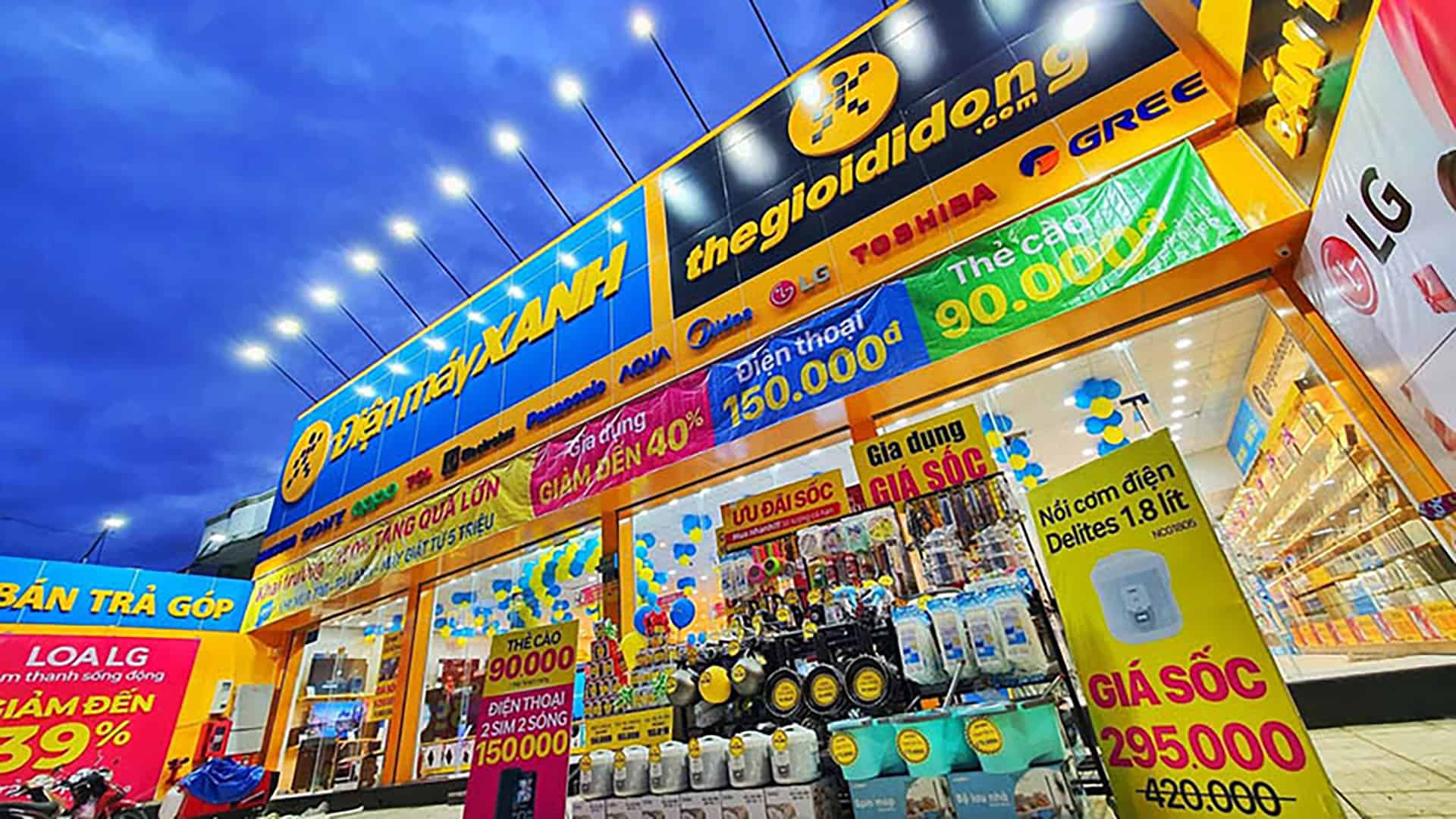
    Leading electronics retailer The Gioi Di Dong (Mobile World – MWG) has said it might close 200 stores with moderate sales this quarter.

    Its October income statement reveals plans to close the underperforming stores to optimize costs.

    It said: “These are stores that have low sales and profit. We will be closely monitoring their performances to adjust appropriately.”

    The company currently has over 5,600 stores, 1,158 of them belonging to electronic goods seller The Gioi Di Dong, 2,281 of them to appliances seller Dien May Xanh, 1,700 to supermarket chain Bach Hoa Xanh, and 540 to An Khang Pharmacy stores.

    Mobile World chairman Nguyen Duc Tai mentioned the possibility of reducing the sizes of the The Gioi Di Dong and Dien May Xanh chains at a recent meeting with shareholders,

    With demand expected to remain low until the economy recovers, it cannot afford to keep underperforming stores open, he told them.

    “Many of MWG’s stores cannot even break even, their performance is much poorer than before.”

    However, he claimed revenues would not be affected since they will merely “move from one store to another.”

    Mobile World’s stores are densely distributed with some situated only a few hundred meters away from each other, he said.

    Gross revenues for October were VND11,190 billion (US$446.3 million), the only month this year in which there saw year-on-year growth.

    The Gioi Di Dong and Dien May Xanh contributed over VND7,800 billion, a 5% decline from a year ago.

    But it was 8% higher than September sales thanks to the launch of the iPhone 15.

    In the year to date the two chains’ revenues totaled VND70,200 billion, 21% down year-on-year.

    But Bach Hoa Xanh’s revenues rose 13% to VND25,300 billion.

    Its October, sales jumped 29% from the previous month to VND3,000 billion, or an average of VND1.7 billion per store.

  • Australian beef production on the rise amid global decline

    Australian beef production on the rise amid global decline

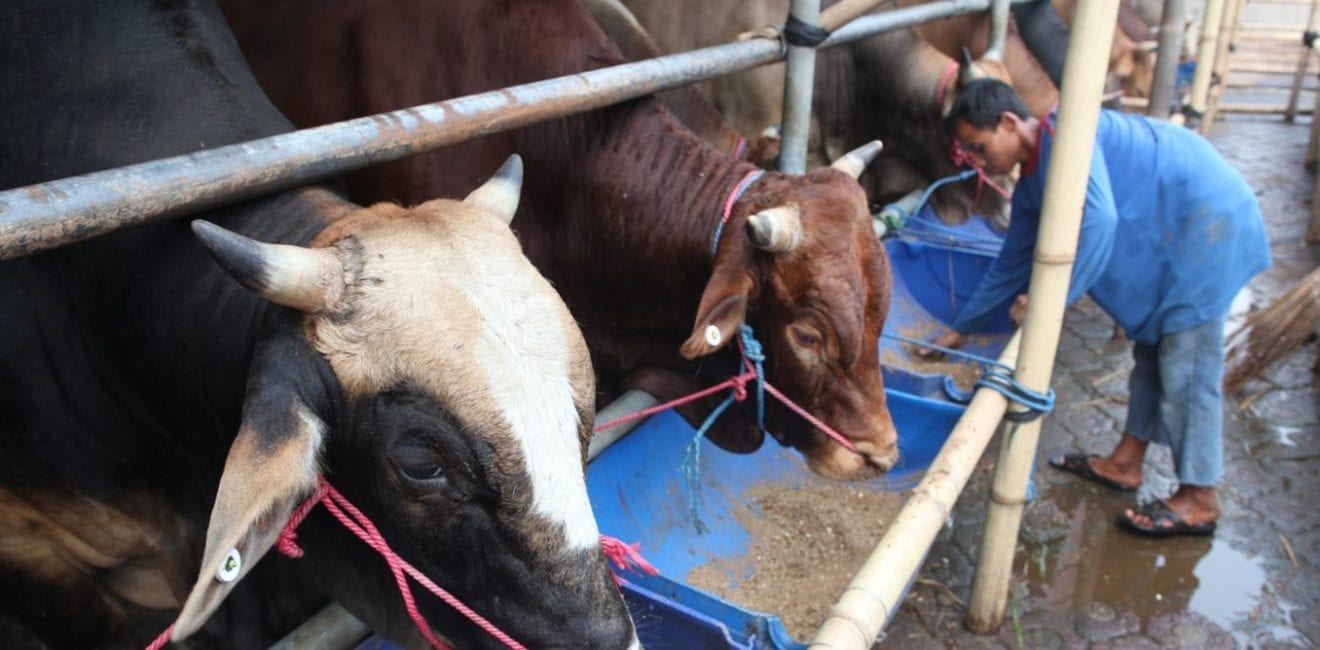
    Despite a global trend of production decline, beef production in the southern hemisphere – including Australia – is on the rise, reports Rabobank in the Global Quarterly Beef Q4 2023.

    However, increases in Australia and Brazil have yet to offset the production declines in Europe and the US.

    The report said Australian cattle prices dropped down 28 percent since June, while New Zealand and Brazil also saw prices fall by smaller amounts.

    Cattle prices in the US were steady, while Canadian prices rose three percent between June and October. The bank expects global beef production across “monitored markets” to decline by one percent year-on-year in 2023, with 2024 following a similar pattern.

    The report also highlights ongoing strong consumer demand in the US, with reduced cattle and beef supplies, while in Asia, weak demand and high inventory levels are putting pressure on the market.

    Moreover, the bank expects North American cattle prices to remain high while Southern Hemisphere prices remain soft.

    Regarding Australia, Rabobank’s senior animal proteins analyst Angus Gidley-Baird believes that the country’s beef sector has reached the bottom of the market.

    “We believe that the producer uncertainty causing prices to drop has eased and, as we head toward summer, producers will be more certain about what stock numbers they will run, returning some stability to the market.”

    However, processing numbers are expected to see some change in the coming months.

    “Abattoirs are believed to have been running strongly for the last seven months, to the extent possible given labor constraints,” says Gidley-Baird.

    “With the holiday season approaching and some cattle still backed up in the system, it is uncertain if plants will shut down at year-end, as is normal, before adding additional shifts in the new year or if they use this period to get through some of the cattle that have built up in the system.”

    Looking ahead, Rabobank expects the ongoing slow global economic recovery to limit consumers’ expenditure and likely curb their spending on beef next year, particularly in Asian countries. Consumers are being more cautious in their purchase decisions, and this trend is expected to continue into next year.

  • US whiskey brand Four Roses Bourbon launches in Australia

    US whiskey brand Four Roses Bourbon launches in Australia

    American bourbon brand Four Roses has launched in Australia, to be sold exclusively by Vanguard Luxury Brands.

    Paul Jones Jr founded the Kentucky Straight bourbon whiskey, which began production and sales in the 1860s and later became a medical whiskey during Prohibition.

    Four Roses has 40 per cent alcohol by volume and is aged for a minimum of five years. It has 10 distinct recipes and is made from the combination of two mash bills and five proprietary yeast strains.

    It comes with a note of crisp fresh fruit with hints of pear and apple and has floral essences with gentle spice and honey.

  • Worst is over for garment, footwear exports

    Garment and footwear exports have slumped from the beginning of this year but the drops slowed in recent months, signaling a slight recovery in the industries, experts said.

    Statistics of the General Department of Customs showed that the export of garments fell by 12.9% to US$27.7 billion in the first ten months of this year, and that of footwear by 18.3% to $16.4 billion.

    The October figures improved from the previous month, with footwear increasing 30.3% to US$1.7 billion. The garment shipments dropped only 0.1% month-on-month to $2.57 billion.

    According to Duong Thuy Linh, Deputy General Secretary of the Vietnam Cotton and Spinning Association (VCOSA), the difficulty was not unique to the garment and textile industry of Vietnam.

    Global exports dropped due to a decrease in global demand driven by geopolitical tensions, rising inflation in major markets such as the US and the EU, and tightened monetary policy in a number of countries. These moves forced global consumers to trim spending.

    Meanwhile, market requirements for sustainability standards were becoming more stringent, along with fierce competition from other exporters such as Bangladesh and Myanmar, resulting in fewer and smaller orders.

    Linh said that many textile companies were forced to narrow the production scale to 50-80% from the end of last year to the second quarter of this year. However, a slight recovery started from July with most producers resuming full capacity.

    VCOSA forecasts that challenges will remain for the garment and textile industry of Vietnam as low consumption demand will persist in 2024.

    The association projected that the export value will be around $40 billion this year, a drop of 10% compared with the previous year.

    Linh emphasized that the worst is over, adding that with efforts of the government and businesses, as well as increased market demand during major year-end holidays, it is expected that the billion-dollar export industry will recover in the near future.

    According to VCOSA, the consumer price index (CPI) for 2023 estimated at 3.2-3.6% will help stabilize inflation, retain people’s income and avoid purse tightening. Lending rates have been reduced to support enterprises, it said, adding that GDP growth projected at 5% is also a great effort of the government to provide a stable environment for businesses so as to maintain production and overcome difficulties.

    Linh pointed out that Vietnam’s garment industry still had a competitive advantage in terms of labor cost. The industry also benefited from new-generation free trade agreements (FTAs) Vietnam signed with major markets.

    Although local producers face difficulties in meeting sustainability standards, there are good signals as several fiber producers meet international standards such as Global Recycle Standard, Oeko-Tex and BCI. They are switching to using organic cotton, natural fibers and renewable energy in production, she said.

    Economic expert Huynh Thanh Dien said that recent forecasts of big organizations like the International Monetary Fund and the World Bank were better for global economic growth, laying the foundation for optimism about the recovery of consumption demand in major markets.

    He went on to say that new trends are emerging in a new economic cycle, thus enterprises are urged to be proactive in grasping these opportunities.

    Major markets such as the EU are strengthening the application of high requirements and standards on green and sustainable development, Dien said, adding that these are challenges but also opportunities for enterprises to make breakthroughs.

  • Malaysian AirAsia X Launching Direct Flights to Kazakhstan

    Malaysian AirAsia X Launching Direct Flights to Kazakhstan

    The airline plans to conduct regular flights four days a week—Tuesdays, Thursdays, Saturdays, and Sundays—using an A-330 aircraft for the Kuala Lumpur-Almaty route.

    AirAsia X, established in 2006, is a segment of the AirAsia Aviation Group. It boasts a fleet exceeding 270 aircraft and operates flights across 400 routes spanning 25 countries.

    AirAsia X ‘s most popular destinations are: Asia (Bali, Sapporo, Tokyo, Osaka, Seoul, Busan, Jeju, Taipei, Kaohsiung, Xi’an, Beijing, Hangzhou, Chengdu, Shanghai, Chongqing, Wuhan, Maldives, New Delhi, Jaipur, Mumbai and Kathmandu), Australia (Sydney, Melbourne, Perth and the Gold Coast) New Zealand (Auckland), the Middle East (Jeddah and Medina) and the United States of America (Hawaii).

    The airline operates in three hubs: Kuala Lumpur, Bangkok and Denpasar, Bali.

  • Gasoline, diesel prices drop

    Gasoline prices went down for the second time in a row Thursday, while diesel declined for the third straight time.

    The popular gasoline RON95 fell 2.17% to VND23,020 ($0.95) per liter.

    Diesel went down 2.87% to VND20,280.

    Starting this week, the government will adjust retail fuel prices every Thursday instead of every 10 days as before.

    Global fuel prices dropped slightly in the last ten days due to a decline in demand caused by economic recessions and rising U.S. crude oil inventory.

    RON92 fell 2.9% to $91.09 per barrel, while RON95 dropped 2% to $97.26. Diesel declined 2.4% to $105.15.

  • Wexco to represent DHL Aviation in Oceania

    Wexco to represent DHL Aviation in Oceania

    DHL Aviation has tapped ECS Group subsidiaries Wexco Group and Wexco NZ to provide GSSA services in Australia and New Zealand starting 1 December 2023.

    The four-year contracts were finalised in end-September, which will see Wexco sell the capacity on board 45 weekly flights, with 550 tonnes of capacity to be filled each week. DHL operates 26 flights from Australia and 19 flights from New Zealand transporting perishable commodities alongside regular horse shipments.

    “The wide variety of perishable commodities alongside regular horse shipments, make DHL Aviation an exciting airline partner and we are therefore all the more delighted to enter into this partnership,” stated Wexco general manager, Richard Valenzuela.

    DHL Aviation connects to many international destinations out of Australia and New Zealand, including Singapore, Seoul, Hong Kong, Bahrain, US, and various European locations. Its Australian flight schedule offers a Melbourne (MEL) to SIN connection, 5 times per week; Sydney (SYD) to SIN operations, 7 times per week; MEL to Auckland (AKL) to Christchurch (CHC), 5 times per week; and SYD–AKL–CHC, 6 times per week. Weekly uplift consists of meat, chilled salmon and other perishable produce to Asia, whilst exports to New Zealand include general cargo, e-commerce, regular horse movements, and perishables, which are predominantly stone fruits.

    Out of New Zealand, DHL flies from CHC via AKL to SYD, 6 times per week, and CHC–AKL–MEL, 5 times per week, connecting with intra-Australian road feeder services where necessary. Main commodities include fish, dairy, general cargo and horses to Australia, and meat, fruit, and seafood to destinations in Asia.

    “DHL operates a fleet of more than 20 Asia Pacific dedicated aircrafts and is committed to ensuring reliable and efficient service performance, in particular when it comes to supporting trans-Tasman trade. We have invested heavily in Oceania over the past five years and partnering with equally driven partners is essential to the success of our challenging growth strategy,” says Nathan Vellasamy, Vice President at DHL Aviation, Air Capacity Sales, Asia Pacific.

    Parent GSSA company ECS Group now represents DHL in more than 20 countries across the globe.

  • Mastercard JV Approved to Begin Domestic Payments Processing in China

    Mastercard JV Approved to Begin Domestic Payments Processing in China

    Mastercard today announced that its joint venture entity, Mastercard NUCC Information Technology (Beijing) Co., Ltd., has received formal approval from the People’s Bank of China (PBOC) and the National Administration of Financial Regulation (NAFR) to commence domestic bankcard clearing activity in China.  

    “We are pleased to have reached this milestone with our local partner NUCC. Mastercard’s deeper participation in the Chinese market will benefit the country, its consumers and its businesses, while simultaneously boosting our company’s mission of connecting and powering an inclusive digital economy that benefits everyone and unlocks priceless possibilities for all,” said Michael Miebach, CEO of Mastercard.  

    In February 2020, the PBOC principally approved the application from Mastercard NUCC to begin formal preparations to set up a domestic bankcard clearing institution in China. Since that time, the JV has established standards, rules, structures and infrastructure in line with local regulatory requirements, and obtained the required certificates for a local switch business.  

    “Mastercard NUCC is committed to being in China as an active partner, working to expand issuance and acceptance of Mastercard-branded products for the benefit of local businesses and consumers. As we ramp up our domestic operations, we look forward to working with customers and partners in China to harness technologies and innovations in a way that empowers local businesses and delivers the best payments experiences to people every day,” said Ling Hai, chairman of the board of Mastercard NUCC and co-president, international markets at Mastercard.  

    In recent years, Mastercard has built a strong cross-border portfolio in China that includes tens of millions of bank cards and millions of acceptance points across the country, helping power connectivity to the global economy and driving cross-border and inbound commerce in China. Earlier this year, Mastercard enabled inbound acceptance via Alipay and Tencent wallets so that international cardholders can pay safely and conveniently like a local at tens of millions of QR payment points when traveling around China.  

  • Embraer E2 jets gain type certification in Singapore

    Embraer E2 jets gain type certification in Singapore

    Embraer’s E190-E2 and E195-E2 have attained type certification from the Civil Aviation Authority of Singapore (CAAS).  Scoot, low-cost subsidiary of Singapore Airlines, is due to operate the E190-E2 from 2024.

    The E190-E2 and E195-E2, considered the world’s quietest and most fuel-efficient single-aisle aircraft, were certified by three key civil aviation authorities in 2018 and 2019, which include the FAA in the US, EASA in Europe and ANAC in Brazil. 

    Embraer and CAE recently announced plans to establish a state-of-the-art E2 full flight simulator and pilot training programme in Singapore, which will commence operations by the end of this year. The full flight simulator is based at the Singapore-CAE Flight Training Centre which is located at SIA Training Centre.