Korea’s mid-sized cosmetics companies suffered losses in the third quarter of this year as they struggled to reorganize their business structures in the face of tough competition at home, industry sources said Sunday. Able C&C, which operates budget cosmetics brand Missha, swung into the red in the July-September period, posting a net loss of 9.4 billion won ($8.3 million), it said.
Its sales dropped 12.1 percent to 73.1 billion won and operating income swung to a loss of 13.2 billion won. The company said fierce competition in the country’s cosmetics industry, combined with its heavy investment in research and development of new products, led to the poor earnings results.
Tonymoly reported a net loss of 3.5 billion won, with 800 million won in operating losses on a consolidated basis during the cited period, according to the company.
Korea’s mid-sized beauty firms’ profitability deteriorated following a diplomatic row between Seoul and Beijing last year, which led to a sharp drop in the number of tourists coming to Korea. Industry watchers said the expansion of online and duty-free channels has hurt the mid-sized companies, which rely heavily on offline stores. Last month, Skinfood was placed under a Seoul court’s receivership after the company said that it is having temporary difficulty securing liquidity due to excessive debt.
“We are making efforts to improve our profitability and strengthen our online business,” an official from Nature Republic said.
Nature Republic reduced the number of its stores to 680 by the first half of this year from 770 in 2015. The company reported 58.8 billion won in sales and 300 million won in operating income in the third quarter of this year.
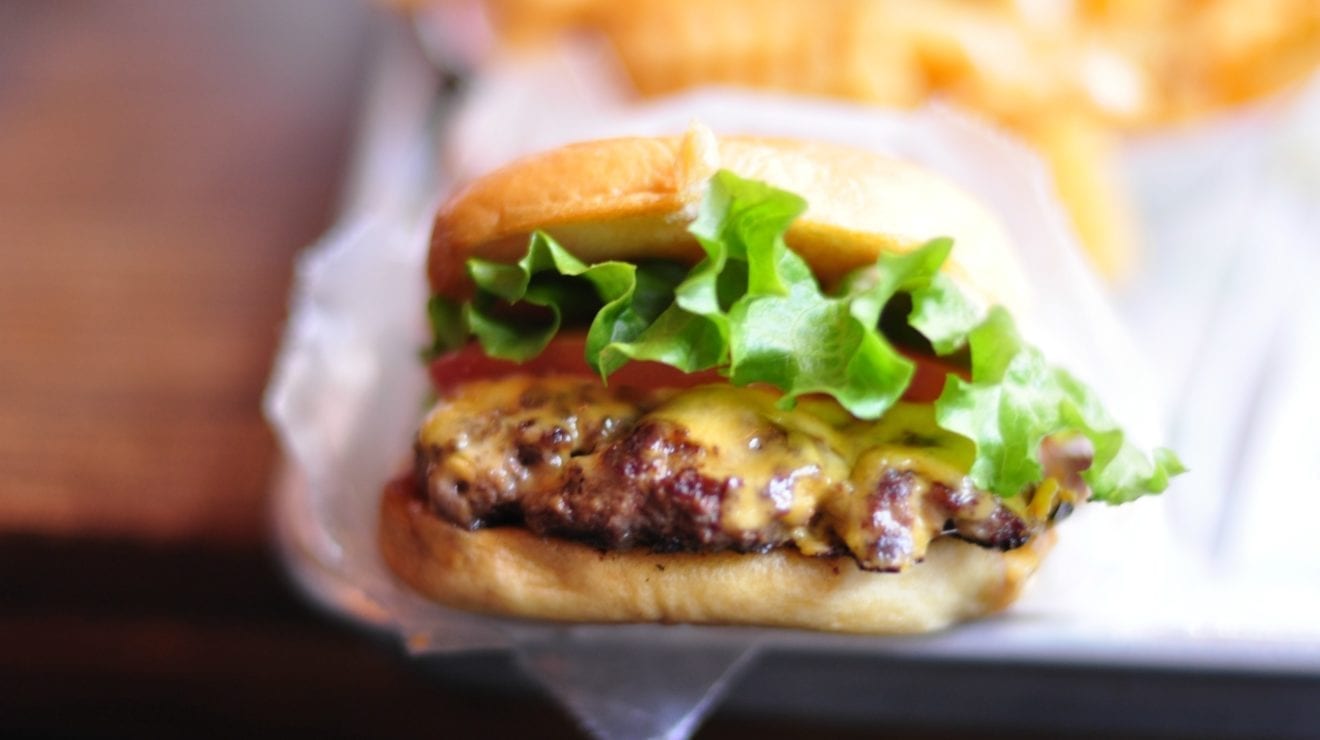
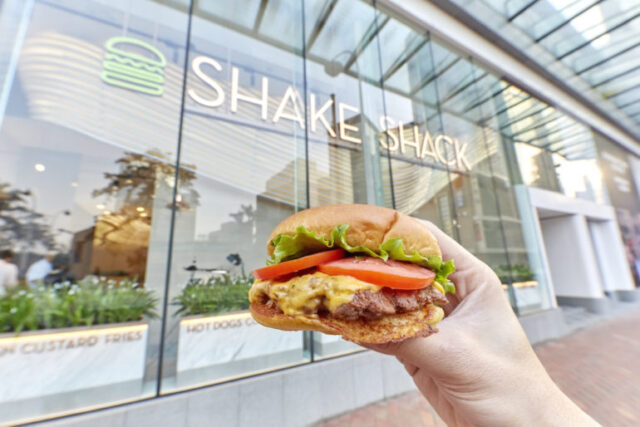
Located at Pacific Place, the new branch will give out 200 Shake Shack tote bags on a first-come-first-serve basis. In addition to the Shack classics and the Hong Kong exclusive milk tea shake, the new store will introduce a selection of local menu items, including a new series of “concrete” (custard desserts) – matcha golden bell, open sesame and queensway crunch.
Shake Shack will launch three holiday shakes – Christmas cookie, chocolate peppermint, and Hazelnut – to celebrate the festive season. All of which are topped with whipped cream and decorated with colourful sprinkles.
The holiday shakes will be available for a limited time at both Pacific Place and ifc mall.
Echoing with Shake Shack’s mission to Stand For Something Good®, the Pacific Place store will donate 5% of sales from its matcha golden bell concrete to the i-dArt programme of Tung Wah Group of Hospitals, a non-profit organisation that promotes social inclusion by encouraging people with differing abilities to participate in art.
Shake Shack is ramping up its effort on global expansion.
In a statement, Randy Garutti, CEO of Shake Shack, said the company entered into licensing agreements to open more than 50 stores in the Philippines, Mexico and Singapore over the next decade.
The company expects to open its first stores in Singapore and Mexico in 2019.
The state auditing agency says Unilever Vietnam should pay over $25 million in back taxes for the 2009- 2013 period. Speaking at a National Assembly session on the draft bill on Tax Administration, State Auditor General Ho Duc Phoc pointed to the Holland-backed personal care products maker Unilever Vietnam as an example of taxes overlooked by the authorities.
Phoc submitted an audit report that says Unilever Vietnam had under-declared its tax dues. The company took the case to the Prime Minister and the National Assembly’s Budget and Finance Committee. After re-examination, the State Audit concluded that the company had under-declared its tax dues by VND584 billion ($25 million).
The auditor general said the company had accepted this figure, but requested that it is not charged for late payment.
“Whether the company is fined will be decided by the General Department of Taxation, not us,” Phoc said.
However, tax department officials as well as Unilever Vietnam representatives saidthat the company had not accepted the above figure despite the parties having discussed the issue many times.
“The determination of the amount of tax arrears arising from errors in calculating the preferential tax rate that applies to Unilever Vietnam for its expansion activities in 2009-2013 is not related to transfer pricing,” said a representative of the General Department of Taxation.
Representatives of the HCMC Taxation Department also confirmed that the decision to collect this sum from Unilever Vietnam has been made, but has not been accepted by the company.
Unilever Vietnam denies having under-declared any tax obligation. Tran Vu Hoai, the company’s vice president of Sustainable Development and Public Relations, said the outstanding tax issue in question is “due to the differences in the stipulations of the Investment Tax Law and the Corporate Income Tax Law for the period before 2014.”
“Such differences in the stipulations of the relevant laws have led to different interpretations, causing difficulties for businesses and relevant agencies in the implementation of the laws,” Hoai said.
The crux of this issue lies in the differences that existed in terms of investment incentives between “new projects” and “expanded investment projects” between 2009 and 2013.
Then, “expanded investment projects” were only entitled to a three-year corporate income tax (CIT) exemption, and a 50 percent CIT reduction in the five following years. Meanwhile, “new projects” could enjoy a preferential CIT rate of 15 percent for 12 years, three-year tax exemption, and a 50 percent reduction over the next seven years.
Tax men and companies are divided over the definition of “new project” and “expanded investment project” as they apply to tax incentives.
Unilever Vietnam has petitioned the Government, the Ministry of Finance and State Audit to find a satisfactory solution in compliance with Vietnamese laws and international regulations.
Unilever Vietnam is not the only company that’s faced this problem. Suntory Pepsico Vietnam Beverage, GE, Piaggio Vietnam and Yamaha Motors have reportedly fought similar battles.
Hoai said the matter is being handled by the Ministry of Planning and Investment, in collaboration with the Ministry of Finance and other agencies.
In September, Prime Minister Nguyen Xuan Phuc assigned the Ministry of Planning and Investment the task of coordinating and working with the Ministry of Finance to resolve such issues for enterprises, in the spirit of ensuring non-retroactivity of the law.
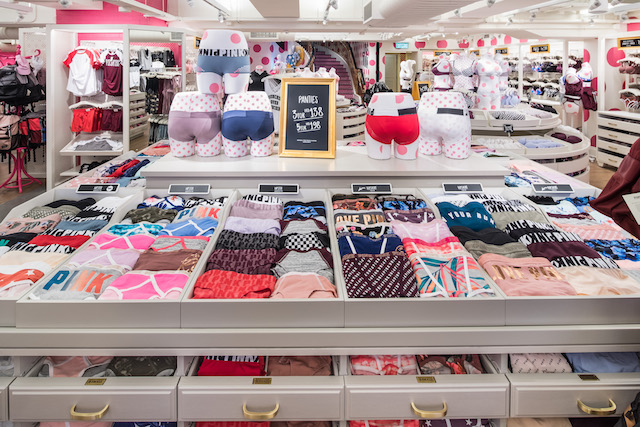
Lingerie brand Victoria’s Secret needs to reinvent itself, says retail analyst Neil Saunders, commenting in the wake of a US$42.8 million loss by its parent L Brands. “The brand is simply not connecting and resonating with consumers in the way that it once did. Its overt sexuality, its focus on airbrushed glamour, and its dark-and-moody stores are completely out of step with the mood of most modern consumers,” said Saunders, MD of GlobalData Retail.
“However, this is not a new phenomenon, Victoria’s Secret has been out of kilter for a long period of time – and has seemingly done very little to bring itself back into line.”
Sales at Victoria’s Secret have fallen in seven out of the last eight quarters, mainly due to its weak diffusion brand Pink, launched in 2002 and aimed at college-aged women.
“In Pink, fashion errors in loungewear have driven a recent deceleration in performance,” the company admitted in its earnings statement.
L Brands’ third-quarter results showed an increase in same-store sales of 4 per cent across the group, to $2.77 billion, but Victoria’s Secret store sales fell by 2 per cent.
The top line was boosted by L Brands’ Bath & Body Works brand. But one-off costs from the closure of Henri Bendel, impairments at Victoria’s Secret and ongoing losses in the La Senza business drove the net loss.
Saunders described the Victoria’s Secret performance as disappointing, “not only with the sales numbers but by the inertia within the business”.
He said much of the brand’s failure to change came down to embedded attitudes within management.
“The recent insensitive comments about transsexuals from chief marketing officer, Ed Razek, in a Vogue interview characterise the problems. Not only are such remarks bad for the brand’s image, but it also earned a sharp public rebuke from the CEO of more incisive rival ThirdLove which has been stealing share from Victoria’s Secret for some time.
“In theory, the departure of Jan Singer as CEO should help herald in changes someone coming in will have fresh ideas about reviving the fortunes of Victoria’s Secret.”
L Brands has appointed John Mehas from lifestyle brand Tory Burch as the new CEO of Victoria’s Secret. He will take up the role early next year.
Pink CEO Denise Landman retired after the release of the L Brands half-year results and she was replaced on October 1 by former Bath & Body Works president for merchandising and product development, Amy Hauk.
“Our new leaders are coming in with a fresh perspective and looking at everything … our marketing, brand positioning, internal talent, real estate portfolio and cost structure,” said CEO Leslie Wexner.
Saunders said Bath & Body Works was a stark contrast to the core brand.
“The company’s wholesome brand image and its focus on small indulgences are paying real dividends – especially in a consumer economy where shoppers have more money to treat themselves. Its strong range development which means assortments are constantly changing encourages regular visits to online and stores. It also means that the company is good at jumping on trends like aromatherapy-based scents and the ongoing popularity of candles. Second, good marketing and promotions help to drive volumes through the business,” said Saunders.
“Both of these things stem from the fact that the BBW team is much more attuned to the market and consumer trends than is the case at Victoria’s Secret. Indeed, the cultures at the two divisions could not be more different, and we believe that Victoria’s Secret should take a leaf out of its sister brand’s playbook as it looks to reinvent itself.”
The ThickShake Factory, a premium thick shake brand that recently completed a century of being operational with more than 100 outlets in India, is planning to expand its footprint in Telangana, Tamil Nadu, Andhra Pradesh, Karnataka, Gujarat, Maharashtra and many more states in the coming few months.
According to a ANI report: The brand, which brings the concept of running a cold dessert beverage quick service business (QSB) for the first time in the country, has won a number of accolades in the recent past, including ‘The Times Nightlife – Best Beverages, 2015 & 2018’, ‘Coca-Cola Golden Spoon Awards 2018’, ‘IMAGES, Most Admired Startup of the Year’, Best Shakes Parlour Award at ‘Indian Restaurant Awards 2018’, ‘Best Business Growth in F&B’, ‘Best Beverages Swiggy Award 2018’, ‘Franchisor of the Year Award, Franchise India 2016’, and many more.
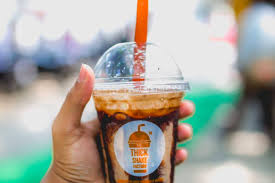
The ThickShake Factory serves over 50 types of shakes with more than 40 topping/ mix-ins. It is famous for their ‘Shape your Shake’ feature where customers can choose what they want from the variety of toppings. The brand brings the best flavours in the form of not just ThickShakes, but a complete range of cold coffee varieties, slushies, chocolate and fruit-flavoured drinks.
The ThickShake Factory has had an excellent journey and has only moved forward since the opening of its first outlet in 2013 with winning ‘Franchisor of the Year’ award twice, one in 2016 and the other in 2018 along with many other awards.
The company has the vision to have over 1,000 outlets pan-India, along with a strong global presence and has created more than 300 jobs so far, mostly at the bottom of the pyramid and the lesser privileged sections of the society. Recognised as one of the fastest growing QSR chains in India, the company’s current business model is such that the outlets which are currently operational, most of them are franchise-operated and some are company operated.
“With each day passing, we at The ThickShake Factory are only going ahead as there is no looking behind. We started with our first outlet in 2013 in Hyderabad and have come a long way from there with more than 100 outlets already. Our main focus is to provide the customers with the thickest and most delicious shakes and hence that’s the only thing in our menu. With over 50 types of shakes on the menu, we have something for everyone to suit their palate. We are excited to serve the tastiest and thickest ice cream based shakes in more cities across India,” M. Yeshwanth Nag, Founder of The ThickShake Factory said.
The founders, M. Yeshwanth Nag and Ashwin Mocherla, were inspired by the global trend of growing appetite for sweet savouries and therefore brought the most appealing range of tastiest ‘Thick’ Shakes to India. The brand never ceases to impress with their heavenly ‘ThickShakes’ through its wide range of offerings.
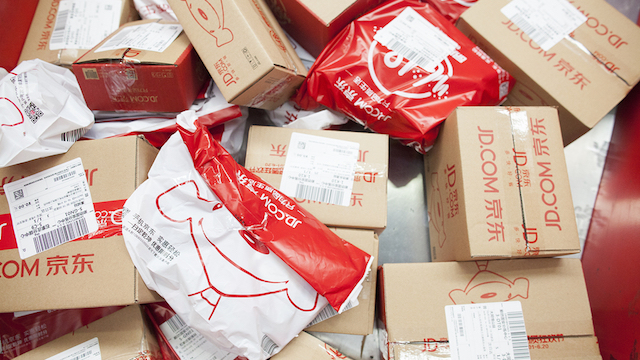
JD sales lept 25.1 per cent in the third quarter, to RMB104.8 billion (US$215.3 billion). “We are pleased to report solid results for the third quarter, with our core JD Mall business driving consistent growth under its highly experienced management team,” said CEO and chairman Richard Liu.
“JD’s commitment to convenient, reliable service and high-quality, authentic products continues to translate into an increasingly loyal user base. Our ‘Retail as a Service’ strategy is also gaining traction as we provide a wide range of partners with innovative retail infrastructure solutions,” he said.
Annual active customer accounts increased to 305.2 million in the year to September 30, from 266.3 million at the same time a year earlier.
Net income from continuing operations attributable to ordinary shareholders for the third quarter was RMB3.0 billion (US$400,000), three times more than for the same period last year.
“JD’s strategic focus on improving customer experience helped drive strong performance across the business,” said Sidney Huang, JD’s CFO. “We will continue our disciplined strategy of investing in key technologies as we focus on optimising operations and driving economies of scale over the coming quarters.”
Among highlights of the quarter was the signing of a raft of major international brands to the JD platforms, including L’Occitane de Provence, House 99, Hera, Salvatore Ferragamo, Furla, Gieves & Hawkes, Kent & Curwen, Cerruti 1881 and D’Urban. JD’s dedicated luxury platform Toplife welcomed John Galliano, Buccellati and Shang Xia among others.
As at September 30, JD had some 200,000 merchants on its online marketplace, and 175,366 full-time employees.
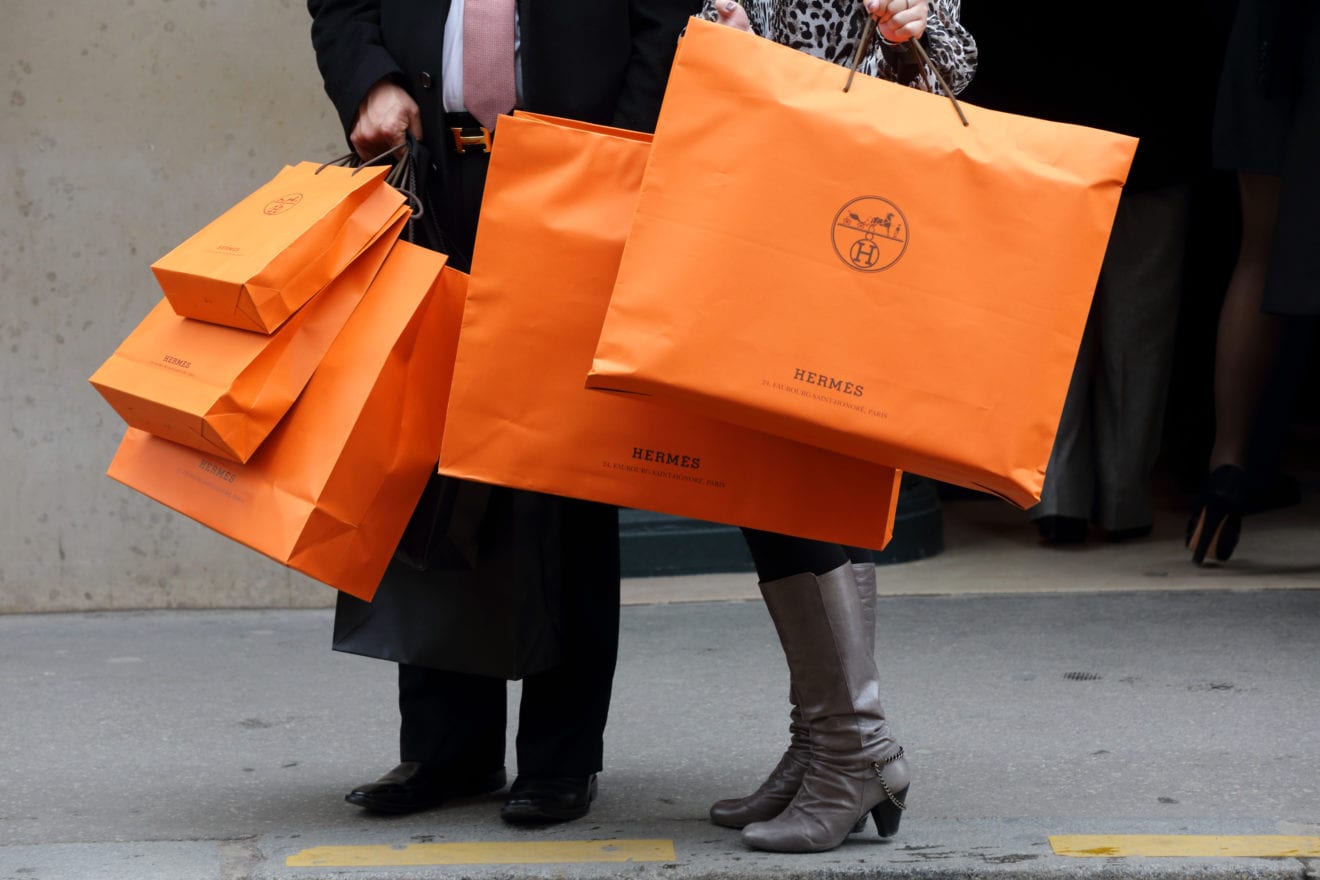
A growing community of Korean women primarily in their 20s to 40s prefer renting high-end goods from subscription services such as Series Eight, The Closet and Reebonz Korea. Asked why they chooses to rent their wardrobe, they said the introduction of luxury goods rental services helped her prioritize living expenses and limit unnecessary spending on personal shopping.
By paying a monthly subscription fee of 79,000 won (US$70), Reebonz customers, for example, can rent up to two bags a month. Customers opting for pricier premium plans are given the option to rent a bag from the most expensive or popular brands for up to 10 days for prices ranging from 9,800 won to 19,800 won.
“Subscription-based business models have not seen much success in the local market compared to other countries. But, because luxury goods’ prices are so high compared to the low purchasing power of Koreans in their 20s and 30s, the (subscription) services are expected to see substantial growth in South Korea,” said Choi Kang-sik, a professor of economics at Yonsei University.
Choi said that with more women wanting to rent luxury goods, rental companies must better communicate with luxury brands in order to bring better products to the table.
“The power of luxury brands will always see an upward trend. The difference, now, will be that consumer groups won’t be women visiting department stores. It will be the luxury rental companies who will be supplying the bags to the original customer base,” he said.
Even though popular American designer rental services such as Bag Borrow or Steal and Rent the Runway launched a decade earlier, designer subscription services garnered attention from local consumers starting in 2016, according to Series Eight CEO Kim Tae-hyun.
Kim, who co-founded Reebonz Korea with current chief Ha Dong-gu, left Reebonz to launch the startup Series Eight under the Value Art Architect Group last year.
On the surface, the two companies share similar concepts with regards to lending customers a hand in renting high-end products.
If Reebonz sticks to a subscription model, Series Eight and its six-member team envisions a shopping platform beyond just a rental service where women can rent high-end bags whenever and for however long they please.
“We essentially did not want to give the idea of pressuring women to pick a bag every month just because they are paying a certain amount. The pressure in itself ruins the shopping experience,” Kim said.
In order for a business to be successful on a subscription-based model, it needs to provide convenience, value for the money and personalized experiences. Consumers will cancel services that do not deliver unique, excellent personalized experiences, according to Choi.
Park Sun-young, juggling being a mom and public relations director at an ad agency in Seoul, appreciates such unique value from subscription services. Unlike her younger colleagues who seem to have time to go shopping, Park would rather save money and time by renting her wardrobe online.
“I think young women may feel it’s weird to rent designer clothing and carry handbags that are ultimately not theirs. But, look inside your closet. How many bags are just sitting on the shelf collecting dust?” Park posed.
“Being a mom and having a job, the rental services make my shopping experience something I look forward to at the end of the night before I go to bed. Just scroll down, look through the catalogue and click order.”
VinFast, a subsidiary of Vietnam’s biggest private firm Vingroup, presented three models and their prices at its maiden show in Hanoi Tuesday afternoon. Its five-seat sedan Lux A2.0 and seven-seat SUV Lux SA 2.0, which had already been revealed to the public for the first time at the Paris Motor Show last month, cost VND800 million ($34,305) and VND1.136 billion ($48,709) respectively.
The smaller hatchback Fadil, presented for the very first time, costs VND336 million ($14,410).
These prices are exclusive of a 10 percent value added tax.
The company said it was announcing favorable prices for the “initial phase.” The original prices of the hatchback, the sedan and the SUV are VND423 million ($18,140), VND1.336 billion ($57,300) and VND1.818 billion ($78,000) respectively, it said.
VinFast surprised industry insiders by completing its first two units, the SUV and the Sedan, within one year.But VinFast did not say for how long the promotional prices will last or how many cars will be produced in the initial phase.
Its first two models are built on frames from BMW. Their components have been engineered by Canadian firm Magna International’s Magna Steyr, while design work was done by Italian design house Pininfarina.
The small hatchback, Fadil, meanwhile, was developed from the background of the Opel Karl Rocks model in the European market. Its structure is almost equivalent to the latest Chevrolet Spark generation.
Attending the exhibition, Prime Minister Nguyen Xuan Phuc said building strong Vietnamese brands means promoting patriotism, self-reliance and self-esteem and building a consumer culture in Vietnam.
“I hope more Vietnamese companies and entrepreneurs follow in the footsteps of VinFast to express an aspiration to dominate the domestic market and reach out to the international level.”
Vietnam’s population is around 93 million, larger than South Korea, but car consumption is only around 300,000 units a year, he said. Previously, Mike Dunne, an independent industry analyst who has spent more than three decades in Asia, said that he doubted VinFast cars would generate much demand in a country with an average income of $2,385 last year.
While there is little doubt the market would grow, it won’t happen fast enough to absorb VinFast’s production, planned at 250,000 vehicles annually, he added.
There are only 358 businesses in the auto industry in Vietnam compared to 2,500 in Thailand, according to the Ministry of Industry and Trade. Over 90 percent of auto parts are imported, it added.
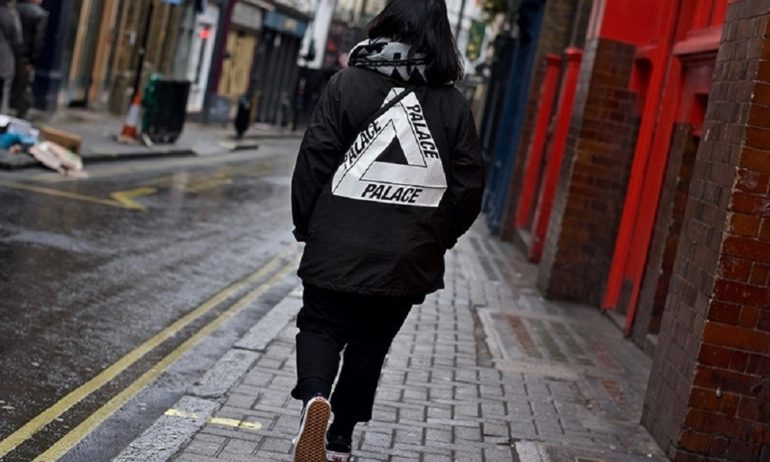
Cult-classic skate brand Palace opened its first store in Tokyo, opting for the Japanese capital to debut its logo-ed fashion and apparel in the archipelago Asian nation.nThe British street label first announced the Tokyo location via Instagram, in a short teaser film featuring actor and comedian Jonah Hill, which was a similar store reveal stint used by Palace to unveil its New York store.
Marking the new Shibuya district store, which took place November 3, the London brand has released a series of fashion items exclusively for the new location.
The Tokyo capsule features pieces referencing Japan, including a Mount Fuji graphic hoodie.
In the mix is also a limited-edition “P.A.L.A.C.E” branded leather card holder, luggage tag and passport cover, as well as “Made in Scotland, Designed in London” rainbow knitwear, in collaboration with fellow Briton Pringle of Scotland.
Founded in London in 2009 by Levent Tanju and Gareth Skewis, Palace has in the last nine years garnered a cult-style following among skaters by toying with industry conventions.
It is known for flipping 90s skate videos upside, promoting the kitschy side of the era’s VHS tapes, as well as its now globally recognised Palace logo, which features on oversized hoodies, sweaters and other streetwear pieces.
It has been in collaboration with Adidas since 2015 and has also previously collaborated with Reebok and Oakley. Most recently, it has teased an upcoming collaboration with Ralph Lauren in Japan.
Palace currently operates locations in London and, since spring 2017, New York’s SoHo neighbourhood.
Palace Tokyo’s official address is 2F & 3F, 5-9-20 Jingumae, Shibuya-ku in Tokyo, Japan.
New data from Bain & Company shows global luxury goods sales will struggle to maintain growth, as the US-Sino trade war and other geopolitical events impact on consumer confidence.
In June, Bain said the personal luxury goods market was “on a tear” this year and would grow by between 6 per cent and 8 per cent at constant exchange rates to reach €276-281 billion. It said the market could reach €390 billion globally in sales by 2025.
But now, Bain has released a more tepid projection of €260 billion and a growth rate of 5 per cent this year.
It has pared back its 2025 projection of personal luxury goods sales to €320-365 billion, slashing €35 to €70 billion off its forecast in just five months.
And it cautioned that even this figure may be under threat saying “socio-political issues, commercial policies, and potential short-term soft recessions could make this road to growth a bumpy one in the short term”.
The Bain & Company Luxury Study was released in Milan in collaboration with Fondazione Altagamma, the Italian luxury goods manufacturers’ industry foundation.
In June, Bain said Mainland China is expected to account for the lion’s share of growth this year. “We forecast this market to grow by 20-22 per cent … Brands are learning how to cater to local consumers, often young and heavily influenced by social media.”
China kept close to its projections, rising 20 per cent, albeit with the year still not over.
“Chinese consumers are leading the positive growth trend around the world. Between 2015 and this year, their purchases in Mainland China contributed twice as much growth as their spending abroad. Their share of global spending has continued to rise (now estimated at 33 per cent of global luxury spend, up from 32 per cent in last year), while the share of Mainland China has also risen to 9 per cent (up from 8 per cent in last year). In Mainland China, luxury sales grew 18 per cent at current exchange rates to €23 billion (20 per cent at constant exchange rates), driven by rising demand rather than by price increases,” the report said.
Claudia D’Arpizio, a Bain partner and lead author of the study, said luxury purchases in Japan softened slightly this year, pushing brands to find new solutions to bring consumers back to stores. However, retail sales still grew at 3 per cent at current exchange rates to €22 billion. “Increased consumption from tourists in Japan is prompting brands to rethink their distribution models.”
Across the rest of Asia retail sales grew 7 per cent at current exchange rates to €39 billion, due to dynamic growth in South Korea, driven by strong local consumption. Brisk growth in other Asian countries – Singapore, Thailand and Taiwan – also contributed while Hong Kong and Macau benefitted from Chinese purchases.
Europe lagged in 2018 due to a strong Euro that impacted tourists’ purchasing power. Local consumption was positive overall, despite mixed country performance, helping to boost retail sales 1 per cent at current exchange rates to €84 billion.
The Americas grew 5 per cent at current exchange rates to €80 billion. “A positive US economy boosted disposable income and overall luxury spending from locals, even as brands remained wary of continued economic prosperity,” the report said. “However, the strong dollar impacted tourists’ spending from Asia and Latin America. Canada and Mexico were strong players in the region, while political uncertainties derailed Brazil’s performance.”
In other areas, there was nil growth, holding at €12 billion, mainly due to stagnation in Middle East brought on by a recent government spending restriction.
Luxury online
The retail channel grew 4 per cent this year, with three-quarters coming from like-for-like sales growth. Wholesale channels grew at only 1 per cent, brought down by high-end department stores still trying to recover, and a slow-down among specialty stores facing tough competition from online.
Luxury shopping online continued to accelerate this year compared with physical channels, growing 22 per cent versus 2017 to €27 billion. The US market made up close to half of online sales – 44 per cent– but Asia is emerging as the new growth engine for luxury online, slightly ahead of Europe. Accessories remained the top category sold online, ahead of apparel; beauty and hard luxury (jewellery and watches) were both on the rise.
Brands are catching up to other online players, comprising 31 per cent of sales, compared to e-tailers (39 per cent) and retailers (30 per cent).
“New technologies are at once enriching the online and mobile shopping experiences, while potentially putting role of physical channels at risk,” said Federica Levato, a Bain partner and co-author of the study.
“The luxury store-opening path is slowing down, leading to channel consolidation in the future. Brands must therefore rethink their physical channels and evolve their role from point-of-sale to point-of-touch, and use new technology to enhance customers’ in-store experiences.”
Luxury consumers getting younger
The report concluded that younger generations are becoming increasingly more important luxury brands. This year, Generations Y and Z contributed 100 per cent of the total luxury market growth, compared with 85 per cent last year. Bain predicts Generation Z, which today comprises just 2 per cent of the market will account for 10 per cent of it in 2025.
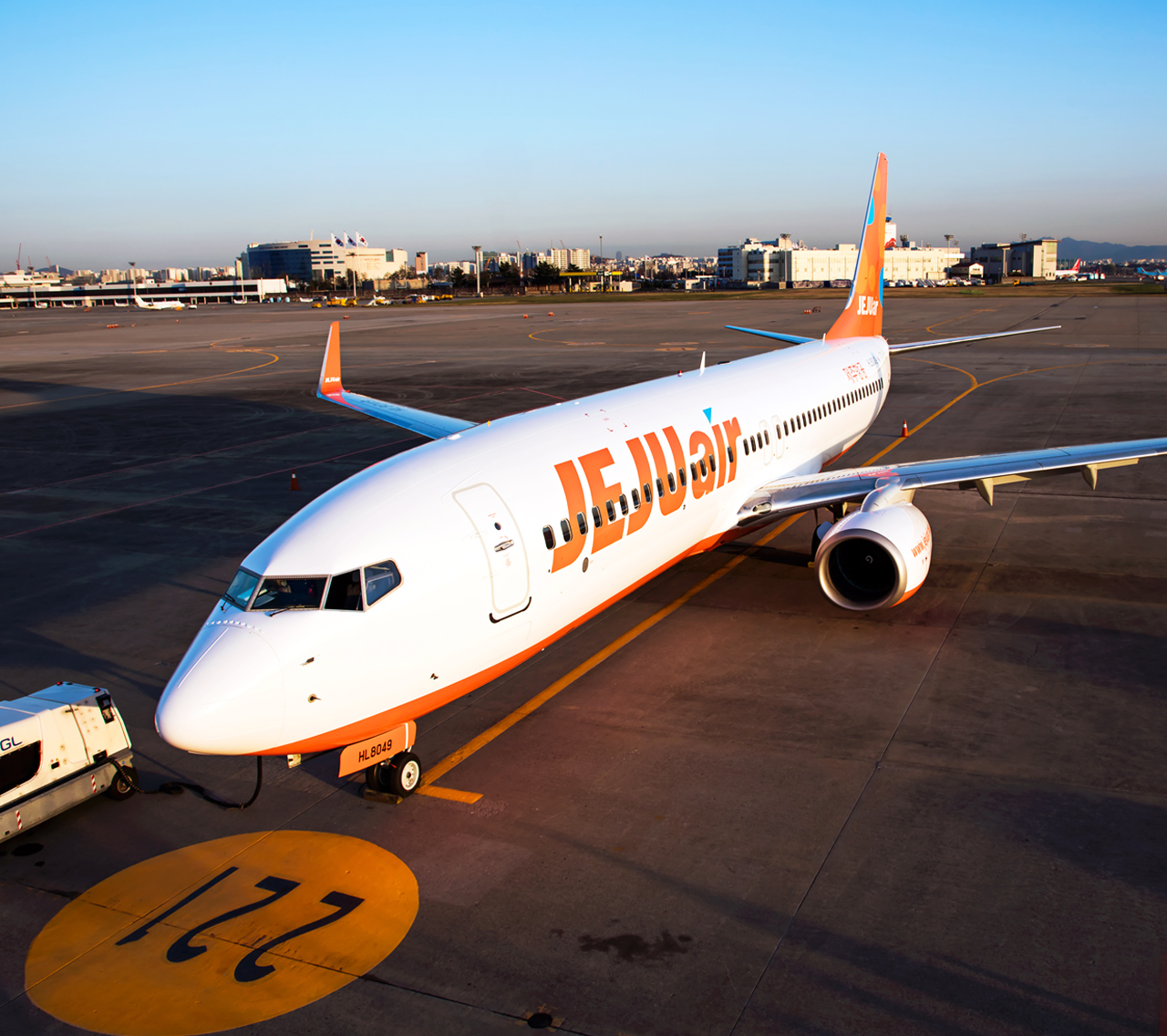
Jeju Air, Korea’s biggest budget carrier by sales, said, on Tuesday, that it inked a $4.4 billion deal for 40 new planes, with the delivery set to begin in 2022. Jeju Air has decided to buy Boeing’s new B737 MAX passenger jets to strengthen its fleet, the company said in a statement.
The low-cost carrier plans to assign the 189-seat B737 MAX on its mid and long-haul routes as they are more fuel efficient than the planes it currently operates, a company spokeswoman said over the phone.
The new jets have a range of some 6,500 kilometers, 1,000 km more than the B737-800NG that the company currently operates.
In the January-September period, net profit jumped 31 percent to 84.86 billion won ($75 million) from 64.61 billion won a year earlier. Operating profit climbed 14 percent to 95.82 billion won from 83.79 billion won during same period. Sales were up 28 percent to 941.93 billion won from 734.78 billion won.
Jeju Air said it is on track to achieve sales of over 1 trillion won this year on the back of a strengthened fleet and profitable routes.
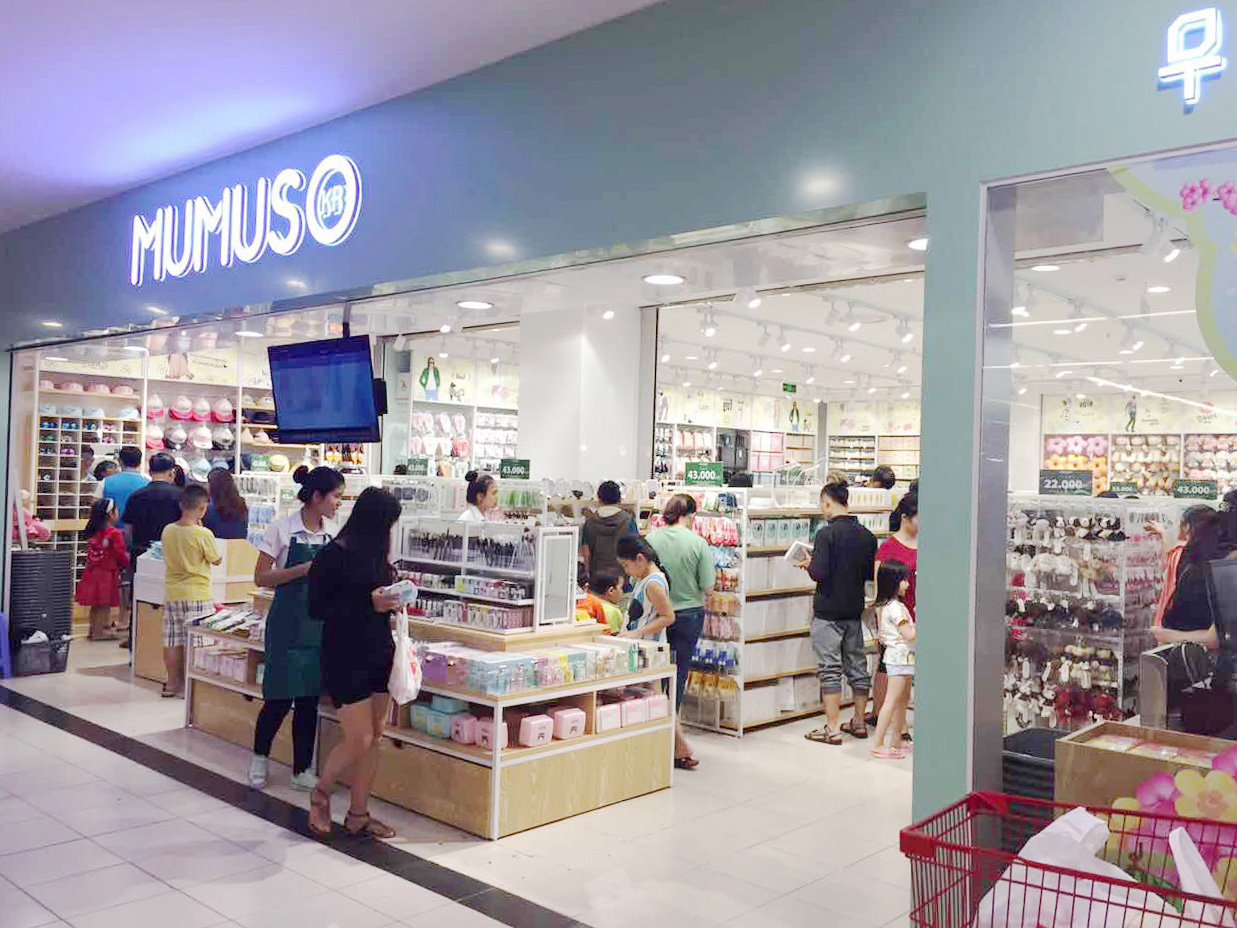
East Asia’s affordable lifestyle brand Mumuso has announced its expansion plans in Kolkata while opening its first store. Mumuso is eyeing the Indian market aggressively with new stores in different parts of the country, a senior executive said.
With a strong presence in over 30 countries across the world, the Korean lifestyle brand Mumuso has entered into the Indian Market and plans to open around 300+ stores by 2022 with an average investment of Rs 80 lakh to Rs 1.2 crore which will be spent towards setting up these company-owned and franchise stores. The brand is planning to open outlets pan India with its market reach in cities likes Kolkata, Hyderabad, Siliguri, Bangalore, Delhi, Mumbai, Surat, Durgapur, Chennai and so on.
Mumuso India — the Indian entity of Mumuso —whose offerings include accessories, stationery, small electronics and lifestyle items, sources these mostly from South Asian nations such as Malaysia, Singapore, China, Indonesia and Korea.
India has seen a sharp rise in the demand for lifestyle products in the recent years. Mumuso has product categories from Health and Beauty, Fashion Home Accessories to Apparel, Accessories, Digital Products and more. The products offered by the brand are not only beautiful, functional, high-quality and affordable but also provides relaxing and pleasant shopping experience to the customer.
Speaking on the occasion, Raunak Agarwal, Managing Director, Mumuso India said, “Our expansion strategy is to set up 300+ outlets all over India along with entering the e-commerce market as online shopping has seen a big boost in India in recent years. We are also looking to source from Indian companies specially apparels and small leather products. The company will look to have 300-odd stores by mid-2022. India, being a fast emerging market for retail industry, we are expecting an escalated growth in a short span of time. Indian market has a big potential, where we believe our creative range of products will enhance the rich experience of customers since it’s an international brand with high quality and valued pricing.”
He added, “There has been a high demand for the trendy and affordable products as far as lifestyle is concerned. People not only look forward to quality and style but also affordability. With Mumuso coming into the picture, people won’t have to travel to different stores for their needs, but just walk into our showroom and get their products. Mumuso brand always adheres to the principle of selling products with reliable quality and affordable price, strictly observes to the borderline of high quality, strives to improve the upper limit of taste and price ratio and provides well-designed products, continuously optimizes the supply chain service system to reduce the cost, creating relaxing and light-hearted shopping experiences for consumers.”
According to the UN World Tourism Organization, Thailand outranks every other nation in Asia when it comes to tourism spend. Last year, it collected $57 billion in international tourism receipts, nearly doubling Macao ($36 billion), Japan ($34 billion), Hong Kong ($33 billion), and China ($33 billion).
Globally, the only countries that out-earn Thailand in terms of tourism dollars are France ($61 billion), Spain ($68 billion), and the United States—which handily takes the gold medal, at $211 billion.
It all comes down to volume. Foreign arrivals could hit 40 million next year, which is more than half the country’s population.
“In Thailand, you’ve got something for everybody,” says Rebecca Mazzaro, a specialist for bespoke outfitter ATJ. “From the private island with the private villa to amazing street food meals that only cost a couple bucks, it has a diversity and variety that exists in few other markets. It’s no surprise lots of people are going—and spending,” she says.
A Coming Luxury Boom
Though gaps in the WTO’s data make it difficult to ascertain the per-visitor spend in each of these countries, given recent and forthcoming developments, that number is likely to be rising.
“There’s no question that historically Bangkok—and Thailand in general—has always been perceived as a value destination,” says John Blanco, general manager of the forthcoming five-star Capella Bangkok. “But there has been a real effort to shift that perception.”
Mastercard’s annual Global Destination Cities Index recently ranked Bangkok as the most-visited city in 2017 for the third year in a row.
The study, based on undisclosed public data sources, rather than cardholder transactions, indicates that travelers shell out $173 for a day in the Thai capital, compared to $537 in Dubai or $286 in Singapore.
This year, it forecasts travelers will spend an additional 14 percent more.
By next year, the city will have gained even more opportunities to spend, such as superlative new resorts from Four Seasons, Rosewood, Mandarin Oriental, and Waldorf Astoria, plus a $1.6 billion Bal Harbour-esque mixed-use retail development called Icon Siam.
“There’s a lot more meat on the bone now,” Blanco says of luxury offerings in the capital.
Dino Michael, global head of Waldorf Astoria Hotels and Resorts, agrees. “We’ve been noticing the upscaling of Bangkok for a few years,” he tells Bloomberg. “The consumer has become more sophisticated; the dining scene has become more sophisticated.”
Among Bangkok’s selling points, he says, are strong infrastructure and airlift, a “depth and breadth of tourists,” and an ingrained culture of hospitality. For tourists and brands thinking about charting the region, Michael adds, “It’s world renown—and an obvious starting point.”
The Pitfalls of Popularity
There may be a price to pay for popularity, particularly on Thailand’s beaches and islands.
Already, throngs of partygoers on commercial yachts have done so much damage to the pristine marine ecosystem of Maya Bay—the picturesque backdrop to Leonardo DiCaprio’s 2000 film The Beach—that the area closed for four months earlier this year to recover.
Unable to bounce back fast enough, it’s now being closed indefinitely. That follows similar measures in nearby Koh Khai and Koh Tachai islands, where coral was being destroyed at devastating rates.
In Phuket, Mastercard’s 12th-most-visited destination in the world, there’s been a sharp decline in the local turtle population, correlated with the rise in beachside pollution. It’s led 70 hoteliers to band together to promote sustainability and encourage better etiquette among travelers.
And in Thailand’s north, the dramatic growth of tourism has led to a sobering spike in unethical wildlife tourism, often centering around elephants and tigers.
The capital, meanwhile, has stayed largely out of the way of these visitor-related troubles—perhaps because it’s hard(er) to justify bad behavior in a city with 40,000 Buddhist temples.
“Of course, red light tourism is alive and well—like it or not,” says Catherine Heald, founder and chief executive of Asia outfitter Remote Lands. “But ultimately, tourism has really lifted the local economy.”
Vietnam’s first private airport near the world-renowned Ha Long Bay is getting finishing touches for a Christmas day opening. The 325-hectare (803 acres) airport at Van Don District, northern Quang Ninh Province cost VND7.7 trillion (more than $330 million) and can handle 2.5 million passengers a year and 1,250 per hour.
It is expected to focus on services to Northeast Asian destinations such as South Korea, Japan, Taiwan, and China and also Southeast Asian ones like Thailand, Malaysia, Singapore and Cambodia.
Domestically, flights will mostly be to southern and central regions.
Dinh Viet Thang, head of the Civil Aviation Authority of Vietnam (CAAV), said the airport could handle the largest of aircraft.
Construction had begun in 2015.
Real estate conglomerate Sun Group, who owns it, is completing licensing procedures now so that the first flight can land on December 25.
It now has gates for four aircraft and the number will be increased to seven by 2030.
According to the CAAV, the private airport will have to follow all regulations in terms of aviation safety and security like all other airports in the country.
Airlines served almost 80 million passengers in the country in the first nine months of this year, up 12.1 percent from a year ago.
The number is expected to cross 100 million for the very first time this year.
As aftershocks of the clampdown on Daigous continue to reverberate through the luxury shopping community in China, e-commerce platforms are rising to fill the gap.
The launch of China’s new e-commerce law, coupled with the 928 Daigou crackdown at the Pudong International Airport in Shanghai, has stirred up uncertainty in the global luxury industry.
In fact, LVMH share prices reportedly fell in early October due to fears of a slowdown in Chinese spending.
Earlier this month, Luxury Society attended the live seminar “Reinterpreting the 300-billion Daigou market” hosted by Tencent media.
During a debate, luxury e-commerce platform OFashion’s CEO Xiao Yu and N5 Venture Capital’s founder Xiao Yiwei shared their insights on how luxury buying will likely evolve in the post-Daigou era.
According to Xiao Yu, the estimated Chinese luxury spending in 2018 is 600 billion RMB and Daigou purchases account for half of that, making it an estimated 300-billion industry.
Without Daigou, what is the next best alternative for Chinese consumers looking to buy authentic luxury goods at lower prices?
First, let’s revisit the 928 daigou crackdown in Shanghai’s Pudong airport and take a look at how China’s 300-billion Daigou industry is in danger.
What Happened During The 928 Daigou Crackdown
September 28 2018 marked an important date in the history of Chinese luxury consumption.
In Shanghai Pudong airport, all passengers returning from Seoul were stopped by Chinese customs for baggage inspection.
Seoul has been a classic shopping destination for Daigous to obtain global brands at a discount. More than 100 passengers from same Seoul-Shanghai flight were found guilty of illegal imports.
It was every Daigou’s living nightmare.
One of them relayed the unfolding events through WeChat text messages. Screenshots of this message thread eventually made its way online.
The messages read,
“In the line to pay my fine”
“I was live streaming in duty free shop during the day, but live streaming fine payment during the night (face palm emoji)”
Source: Sohu, A Daigou’s WeChat record of 928 crackdown got popular online.
Whether as a full-time profession or simply a hobby, the Daigou business is one based on relationships.
In fact, the first clients of most Daigous are generally from his or her own social network.
Since Daigous operate in a legal gray area and rely solely on private transactions, customers often have a hard time verifying the authenticity of their purchases.
Needless to say, seeking redress in the case of fraud is difficult or near impossible.
Within the last decade or so, Daigous have become rather ubiquitous.
Chinese netizens often joke on social media that “everyone has a Daigou friend on his/her WeChat”, or “Daigou is our generation’s best marketing guru”.
Rumors of Daigous making a minimum of $100k USD a year and buying houses while still in college flood the internet, making the Daigou profession both a mysterious and highly coveted one in China.
On September 28, however, this all came to a screeching halt.
Within a night, the image of Daigous as self-made businessmen was reduced to that of illegal importers.
Chinese Luxury Consumers Have Changed
The Daigou business flourished in China largely because of strong domestic demand for global luxury products. This demand is quickly changing.
During the seminar, OFashion’s CEO Xiao Yu offered his observations on shifting consumer tastes by analyzing the purchase data of its platform’s 3 million active buyers.
Here are our major takeaways.
1. Chinese Consumers Love Buying “Hits”
The biggest difference between luxury consumers from China and those from mature markets is that Chinese consumers prefer mainstream “hit” items, while mature market consumers also buy a brand’s long-tail (niche) products.
2. Entry-Level Luxury Sells Best
Out of all the luxury product categories, entry-level items with a price range of 2000-5000RMB (430-730USD) exhibit the strongest sales performance.
3. Consumer Tastes Have Diversified
While Chinese consumers concentrated their research on highly famous luxury brands in the past, they are now much more receptive to niche brands.
Bestselling product styles have also shifted from traditional classics like the Salvatore Ferragamo ballet flat, to streetwear brands.
Additionally, Chinese consumers are now searching more about domestic brands compared to four years ago, when most searches were about established global brands.
4. TheLipstick Effect Doesn’t Quite Apply In China
Considered an entry-level luxury product, lipsticks have been selling like hot cakes in the Chinese market recently.
While the “lipstick effect” – a global economic theory that postulates the correlation between beauty product sales and economic downturns – may hold true in many markets, industry professionals have stressed that it might not necessarily be the case in China.
While China might be in the midst of a lipstick craze, experts have noted that lifestyle brands that are inspiring, soulful, and fun, can still rise to the top of the market quickly.
How Platforms Can Rise To The Challenge
Now with the individual Daigou business in danger, it’s time for luxury cross-border platforms to shine.
As the live seminar’s two speakers noted, inefficiency is still a huge pain point in the cross-border industry.
That said, cross-border solutions aiming to improve efficiency would likely to grow fast.
As the luxury buying business faces tightening controls by regulators, consumers are turning to professional buyers, reliable platforms, or buyer’s platforms — a combination of the former two.
Besides established luxury e-commerce platforms such as Tmall Global, JD’s Toplife, Secoo and VIP, platforms that specialize in serving professional buyers are booming, too.
Tmall Global’s Luxury Direct has turned buyers into consultants and made fashion-consulting service a selling point.
The platform’s “About” page reads, “Our buying team takes orders straight from fashion weeks and selects products from brand official showrooms all across Europe.”
OFashion’s app “Buyer Box”, an app targeting professional buyers, has even a CRM (Client Relationship Management) system for users to personalize a client’s order.




 “In Thailand, you’ve got something for everybody,” says Rebecca Mazzaro, a specialist for bespoke outfitter ATJ. “From the private island with the private villa to amazing street food meals that only cost a couple bucks, it has a diversity and variety that exists in few other markets. It’s no surprise lots of people are going—and spending,” she says.