Tag: asia

  • Vietnam garment exports surge on US-China trade war

    Vietnam garment exports surge on US-China trade war

    Vietnam’s garment exports are set to rise by 14.8 percent this year to $35 billion, an industry official said on Friday. The expected growth is attributed to the fact that U.S. retailers diversify their product sourcing to keep costs under control amid an escalating trade dispute with China.

    The U.S. has already imposed tariffs on $250 billion worth of Chinese goods, and China has responded with retaliatory duties on $110 billion worth of U.S. goods.

    Garments, Vietnam’s second largest export-earner after smartphones, are not yet subject to U.S. tariffs, although some manufacturers have sought to move at least some production to the Southeast Asian country, anticipating potential penalties.

    “We are seeing more and more orders coming in, especially from the United States,” Vu Duc Giang, chairman of Vietnam Textile & Apparel Association, told Reuters.

    Garment exports to the U.S. rose 12 percent in the January-October period to $10.5 billion, while exports to China surged 40 percent to $1.1 billion, according to a government statement released on Thursday.

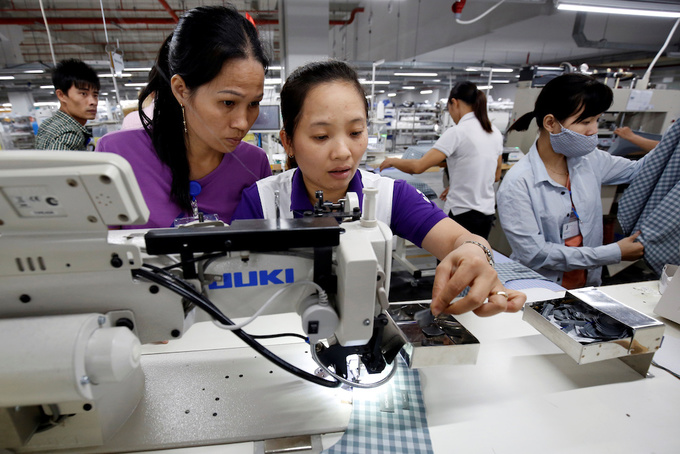
    Ngo Quang Thoa, chairman of Swimax International Joint Stock Co, a contractor which produces swimwear and underwear products for U.S. companies such as Target and Express, said he had received a large increase in orders from the U.S. since January.

    “This is because of the trade war between the U.S. and China,” said Thoa, who added that he expected to see his exports to the U.S. increase by up to 20 percent by the end of the year.

    “Some U.S. clients are already making strategic adjustments to their business plans to diversify their supplies, even though Trump hasn’t targeted Chinese garments in the tariff war yet,” he said.

    Vietnam is home to over 6,000 textile and garment factories which employ around three million people, Thursday’s government statement said.

    Giang, chairman of Vietnam Textile & Apparel Association, told Reuters those figures were likely to grow, thanks to a plethora of Vietnamese free-trade agreements, and not just because of the U.S.-China trade spat.

    Vietnam has signed around a dozen free-trade agreements that will remove or reduce taxes on several imports and exports.

    Foreign investors poured in $2 billion in Vietnam’s garment and textile production in the first eight months of this year, Giang said.

    Most investors were from Japan, South Korea, Taiwan and China, he added.

    “They have been upping their investment in Vietnam for years,” said Giang.
  • CGV to boost its presence in Vietnamese cinema market

    CGV to boost its presence in Vietnamese cinema market

    CJ CGV Vietnam Holdings said Friday it will further expand its presence in Vietnam by maximizing funds from its planned listing in Korea this month. The cinema chain based in Vietnam is scheduled to go public on Seoul’s main Kospi bourse on Nov. 16. It plans to issue 5.71 million shares, with the share price to be set between 18,900 won ($16.80) and 23,100 won, according to the firm and the bourse operator, Korea Exchange.

    “We find great potential in the Vietnamese market, as its population is approaching 100 million and its income and domestic demand have been on a rise, but the entertainment market has not been developed,” chief Shim Jun-beom told reporters.

    Wholly owned by CJ CGV, Korea’s largest multiplex cinema chain, CJ CGV Vietnam Holdings has operated the Vietnamese chain through its subsidiary CJ CGV Vietnam since 2011.

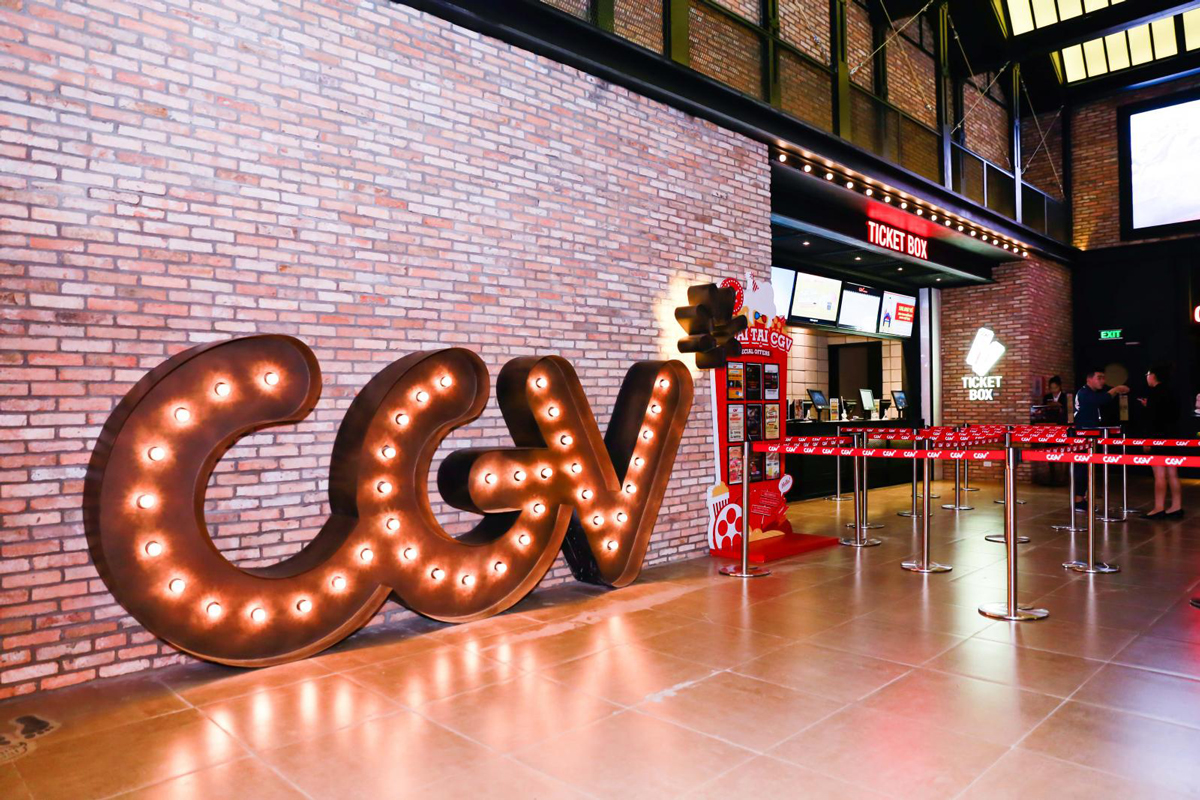
    It now leads the market there with 347 screens at 57 cinemas. In terms of film distribution and advertisement, CJ CGV also occupies the top spot.

    “We expect our market share to grow from the current level of 41 percent to around 60 percent in five years,” he added.

    Last year, sales of the holding firm came to 128.3 billion won, up 22.6 percent from the previous year, and its operating profit rose 4.8 percent on-year to 11.4 billion won.

    It has selected Hanwha Investment & Securities and Shinhan Investment Corporation as its lead managers for the IPO.

    In July, CJ CGV CEO Seo Jung said that the company aims to increase the number of its screens around the world to 10,000 in 11 countries by 2020.

    Currently, the multiplex chain, owned by the food and entertainment conglomerate CJ, is the world’s fifth-largest cinema chain with 3,459 screens around the world.

  • Victoria’s Secret reveales collaborative capsule with Mary Katrantzou

    Victoria’s Secret reveales collaborative capsule with Mary Katrantzou

    Lingerie brand Victoria’s Secret has announced its newest designer collaboration: Victoria’s Secret x Mary Katrantzou. The collaboration marks the second time that Victoria’s Secret has partnered with a luxury brand to create an exclusive range.

    Katrantzou, a London-based fashion designer dubbed the “Queen of Prints”, has designed an exclusive collection for VS that blends a feminine design aesthetic with the brand’s signature sexy and glamorous style.

    Katrantzou commented: “Everything that Victoria’s Secret creates is about a woman feeling confident and empowered – and also having fun with what she is wearing. This collaboration is going to be bold, fun and playful.”

    Katrantzou has also designed a section for the 2018 Victoria’s Secret Fashion Show. The Victoria’s Secret x Mary Katrantzou capsule collection will feature looks from the runway and will be carried in select Victoria’s Secret stores and on VictoriasSecret.com this holiday season.

  • Indonesia Falls in 2019 Ease of Doing Business Ranking

    Indonesia Falls in 2019 Ease of Doing Business Ranking

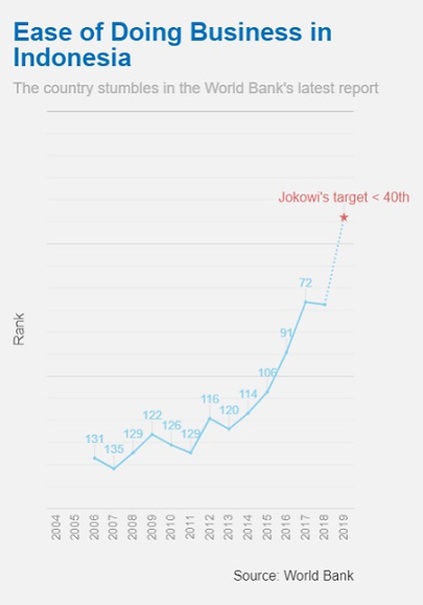
    If President Joko “Jokowi” Widodo wants to see Indonesia join the top 40 countries in the World Bank’s Ease of Doing Business ranking under his watch, he should make sure he wins re-election next year. Indonesia slipped one place to 73rd, behind Greece, the Ukraine and Kyrgyzstan, in the 2019 Ease of Doing Business report, released late on Wednesday. The president has set a target for the country to be in the top 40 by next year, but his second term will be decided in April, while the next report would not be out until next November.

    While Indonesia has made considerable progress in reforming the regulatory environment for businesses since Jokowi took office in 2014, Wednesday’s report reveals the stark realities of the country’s limited capacity to continue with these reforms.

    The country scored 67.96 out of 100 in the report’s aggregate measurement, up by only 1.46 points from last year. Slovenia, a Central European nation of only 2 million people and a $49 billion economy, sits in the coveted 40th place with an overall score of 75.61.

    Indonesia, for one, issued new rules that make starting a business, registering property and obtaining credit, easier for businesses and make it cheaper for them to get electricity. But reform stagnated in areas such as obtaining construction permits, protecting minority investors, paying taxes, trading across borders, enforcing contracts and resolving insolvencies.

    These bottlenecks allow economies like China, Kenya and Kyrgyzstan to overtake Indonesia. China made a leap to 46thplace in this year’s report, from 78th last year. Kenya moved up 19 places to 61st, while Kyrgyzstan went up seven places to 70th.

    Still, the report highlights Indonesia’s success in reforming its judiciary system and making the country a case study for others to emulate. The Supreme Court introduced training programs in 2003 for new and experienced judges, as well as special training for judges presiding over more specialized cases, such as those involving commercial or maritime disputes.

    “Indonesia’s efforts to train judges following judicial reforms bore positive results through a substantial decrease in court backlogs and insolvency case resolution times,” the World Bank said in the report.

  • Auchan products to be sold on Lazada

    Auchan products to be sold on Lazada

    Auchan Vietnam has launched its store on LazMall, a branded shopping mall from Lazada, allowing customers to purchase French products online with rapid delivery. Despite having its own online store, Auchan believes it can expand its reach and boost sales by working with Lazada Vietnam. Customers will be able to choose from Lazada’s same-day delivery, next-day delivery or low-cost delivery options.

    Free delivery applies to customers in Hanoi, Ho Chi Minh City, Hue, Danang, Dong Nai, Ba Ria-Vung Tau, Binh Duong and Long An with orders worth VND99,000 (US$4.24) or more.

    Initially, Auchan products on LazMall will be mainly consumer goods, with the range to expand over time.

    The French retailer will link all of its 21 brick-and-mortar stores with LazMall, so orders will be fulfilled from the nearest Auchan store to customers.

    Lazada was recently ranked the second largest e-commerce platform in Vietnam behind Shopee, which earns a monthly average traffic of 34.5 million visitors.

  • Vietcombank gains preliminary agreements to open US office

    Vietcombank gains preliminary agreements to open US office

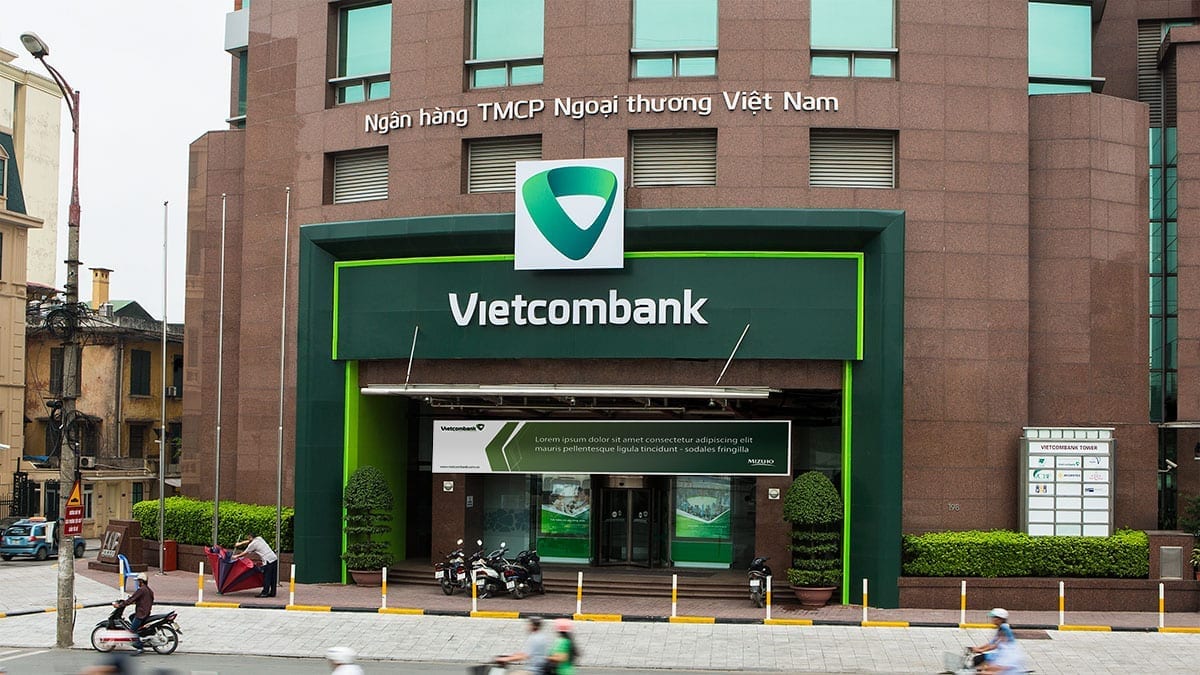
    Vietcombank VCB.HM has made a significant step in becoming the first Vietnamese bank to open a representative office in the U.S. The move by Vietnam’s biggest bank by market value comes as diplomatic ties between Vietnam and the U.S. are on the rise and is part of a push to expand internationally as it aims for a place among the world’s top 300 banking and financial groups.

    Vietcombank has obtained approval from the U.S. Federal Reserve and an agreement in principle from the New York State Department of Financial Services to open a representative office in New York City, it said on its website.

    The State Bank of Vietnam, the country’s central bank, owns 77 percent of Vietcombank. Japan’s Mizuho Bank [MZFGAE.UL] is the second biggest investor with a 15 percent stake.

    “As Vietnam becomes more attractive to U.S. investors, Vietcombank’s representative office … will be an extended arm for Vietcombank in the U.S. to support business development in this very potential market,” it said, adding that it aims to obtain a license and open a New York office as soon as possible.

    The representative office would liaise with prospective clients and banks in the U.S. and engage in other non-transactional activities such as analysis of the banking and financial services market.

    The U.S. is now one of Vietnam’s top trading partners and is expected by some analysts to benefit from the continuing U.S.-China trade conflict, offering an alternative investment and trade destination.

  • Apple profit driven by higher iPhone models

    Apple profit driven by higher iPhone models

    Tech giant Apple Inc. may not have sold as many iPhones during the quarter ending September 30, but the company’s pricier models are driving its profits higher than ever. The California-based company reported it sold about 46,889 iPhones during the quarter, almost the same number of iPhones sold in the previous corresponding period.

    Apple was selling its iPhone ASP at $793 during the quarter compared to the $618 price of the unit in the corresponding quarter a year ago. The company has also introduced the iPhone XS in September at a price starting $999 and the iPhone XS Max which costs about $100 more than the XS model.

    The tech company has posted a 20 per cent increase in its quarterly revenue for the quarter to $62.9 billion, and quarterly earnings per diluted share of $2.91, up 41 per cent.

    International sales accounted for 61 per cent of the quarter’s revenue.

    Apple’s services revenue has seen a 27-per cent increase of $10 billion.

    “We’re thrilled to report another record-breaking quarter that caps a tremendous fiscal 2018, the year in which we shipped our two billionth iOS device, celebrated the 10th anniversary of the App Store and achieved the strongest revenue and earnings in Apple history,” said Tim Cook, Apple’s CEO.

    Cook said with their recently introduced new versions of iPhone, Apple Watch, iPad and Mac, and the company’s four operating systems, they have entered the holiday season with their “strongest lineup of products and services ever.”

    “We concluded a record year with our best September quarter ever, growing double digits in every geographic segment. We set September quarter revenue records for iPhone and Wearables and all-time quarterly records for Services and Mac,” said Luca Maestri, Apple’s CFO. “We generated $19.5 billion in operating cash flow and returned over $23 billion to shareholders in dividends and share repurchases in the September quarter, bringing total capital returned in fiscal 2018 to almost $90 billion.”

    Apple is looking at a revenue of between $89 billion and $93 billion for the first quarter of the 2019 fiscal year, a gross margin of 38 per cent and 38.5 per cent, and operating expenses between $8.7 billion and $8.8 billion.

    Apple’s board of directors has declared a cash dividend of $0.73 per share of the Company’s common stock. The dividend is payable on November 15.

    Neil Saunders, managing director of GlobalData Retail, said the quarter’s results underlines all of the innovation the company has put into its suite of products over the past year.

    “Admittedly, the new iPhone XS and XS Max versions, along with Apple Watch Series 4, were only available at the very end of this quarter, but we still believe they had a positive material impact on sales,” Saunders said.

    Saunders said with the tech giant’s strong release of products, the potential launch of new services, and more sessions being added to better stores, Apple has set itself up for another year of growth.

  • Nissan’s latest Leaf EV available for preorder

    Nissan’s latest Leaf EV available for preorder

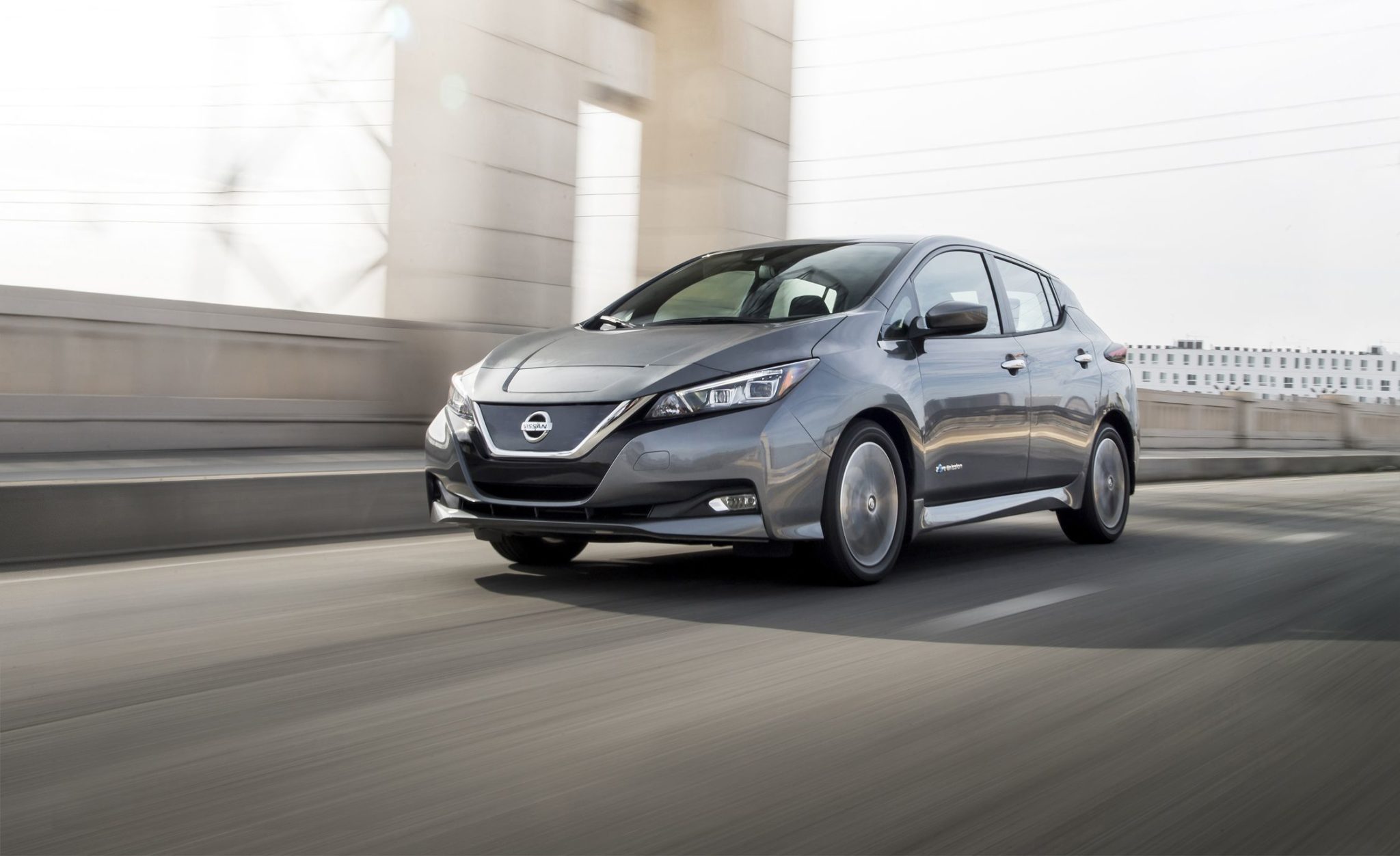
    Nissan Korea Thursday introduced an updated version of its Leaf electric vehicle (EV) at the Daegu International Future Auto Expo, hoping to grow its share of the domestic EV market. The vehicle was released in Japan in September.

    Nissan’s local unit started accepting preorders on Thursday, and the model is expected to be on the roads of Korea in the first quarter of next year.

    The Leaf is not widely known here as Japan’s Nissan is not strong in the domestic market. The car, however, was the world’s first mass produced electric vehicle when introduced 2010. A total of 370,000 units had been sold globally as of October.

    In the latest generation, Leaf comes with advanced performance and smart car technologies, the carmaker said.

    This includes the “e-Pedal,” which enables the driver to accelerate and decelerate with the use of a single pedal. The pedal is linked to a regenerative brake, which produces electricity as it slows the car. The feature is often found in new offerings in the EV market.

    Nissan Korea also says the latest Leaf allows for 360-degree surround view and is capable of maintaining distance with vehicles ahead.

    Performance has been enhanced with a 38 percent increase in horsepower compared to the previous model – now 150 horsepower. Torque is upped by 26 percent.

    Despite multiple improvements, the driving range, important to the success of an electric vehicle, is likely to disappoint Korean consumers.

    The Leaf can travel up to 231 kilometers (143 miles) on a single charge.

    The Kona SUV, from Hyundai Motor, can travel 400 kilometers per charge. GM Korea’s Bolt EV has a 380-kilometer range. The Niro SUV, from Kia Motors, is able to go 380 kilometers on a single charge.

    The exact price hasn’t been announced, but the company said at the event the price will be set under 50 million won.

  • Singles Day 2018 faces delivery challenges

    Singles Day 2018 faces delivery challenges

    Alibaba and its partner retailers will face a massive challenge ensuring flawless delivery of millions of parcels all over China and beyond given the expectations of further growth on Singles Day 2018 next week.

    “As the event grows, the logistics challenge becomes bigger and bigger,” observes retail analyst Pascal Martin, partner at OC&C Strategy Consultants.

    “During last year’s event 812 million parcels were delivered just on Tmall. Observers are betting that this year’s milestone might be more than 1 billion parcels.”

    And, says Martin, although brands don’t like to talk about it, there is also a huge challenge in taking care of large quantities of returned goods.

    “11.11 is a massive test bed for Alibaba’s backbone infrastructure: the network of partners that make it all possible, from payment to delivery to data management, as well as AI and cloud technologies that are put to work to ensure a successful event.”

    Alibaba’s Cainiao Smart Logistics Network says it has upgraded its technology to cope with the expected increased volumes from 11.11 this year. The company boasts more than 30 million sqm of warehousing worldwide and a logistics field force of more than 3 million people.

    Domestically, Cainiao has opened a new robotic warehouse, expanded its Internet of Things (IoT) systems and built out its platform’s last-mile reach. For cross-border deliveries, more than 1000 shipping containers and 51 charter planes are booked, ready to speed orders across the world.

    Cainiao VP Ben Wang says while nobody knows how many orders Singles Day 2018 will generate, the logistics company needs to keep upgrading systems, anticipating growth and seeking higher efficiency, because of customer expectations.

    “It was only five years ago that parcel orders surpassed 100 million for the first time. Back then it took nine days to deliver the first 100 million parcels,” said Wang. “Last year, it took less than three days (2.8 days) to deliver the same number of parcels. Consumers increasingly want faster, better delivery, so that’s what we’re doing. This year, we’re striving to achieve a new high, leveraging the beauty of scale and technology.”

    Delivery “within minutes”

    Cainiao’s preparations this year also reflect the changing demands of logistics in the New Retail era. For the first time, goods ordered during 11.11 will be delivered directly from stores to customers during the Festival – sometimes within minutes. Short-distance delivery services will be available in more than 280 cities.

    “Cainiao is the logistics backbone of Alibaba’s New Retail strategy,” Wang said. “We are providing an online and offline, cross-platform supply-chain solution to merchants and enabling them to cut inventory costs, while increasing operating efficiency, especially around 11.11 ­– the busiest season of the year. Ultimately, consumers will enjoy a brand-new shopping experience, as delivery service will always be on-demand.”

    Martin expects Singles Day 2018 to include more partners, not only online but also offline, leveraging Alibaba’s New Retail ecosystem. For example, Tmall 3000+ convenience stores, Hema and RT Mart supermarkets, Suning and Auchan, will be fully integrated into the event.

    The event will also be expanding beyond China through Lazada, the Southeast Asia online platform owned by Alibaba.

    “We expect to see participation of an increasing number of international brands that are taking advantage of the Tmall Global platform – number one by far among Chinese cross-border platforms – to get introduced to Chinese consumers without any direct presence in China for many of them.”

    And diversification will be another key factor in this year’s event, he says.

    “It’s not just about purchasing products, it’s also increasingly about purchasing a variety of services, from videos on Youku to mobile games on UC, theatre tickets on Taopiaopiao, music on Xiami music, travel on Feizhu, etc… All of this will not happen without challenges.”

    Yet another test, says Martin, is for Alibaba to expand the event beyond its group companies.

    “Right now, most of the non-Tmall companies participating in the 11.11 event are Alibaba Group companies. Getting non-group companies to embark on the 11.11 band wagon will be the next step to sustain continued growth of the event in future years.

    “Finally, to keep the event fresh and exciting, Alibaba will need to continue to surprise increasingly demanding Chinese consumers with entertainment and festivals to delight them around the event. 11.11 has become much more than a commercial fair, it is now a major annual milestone in China’s cultural calendar.”

    Last year’s 11.11 event saw GMV reach 254 billion RMB (US$36.6 billion) including 168 billion RMB on Tmall alone. That turnover represented a 43.5 per cent increase over the 2016 GMV.

    Singles Day 2018 will mark the event’s 10th anniversary.

  • AirAsia Big Loyalty launches ‘BIG Big Giveaway’ Finale

    AirAsia Big Loyalty launches ‘BIG Big Giveaway’ Finale

    AirAsia Bhd’s loyalty programme, AirAsia BIG Loyalty has launched its “The BIG Big Giveaway” year-end finale with over 90 irresistible offers to BIG members beginning today until December 31. Big Loyalty Sdn Bhd, the owner and operator of the loyalty programme, said the offer would be filled with fantastic discounts, free hotel stays, return flights and 50 per cent bonus BIG points for all of shopping sprees during this regional mega sale.

    BIG members in Malaysia, Thailand, Indonesia, Singapore, the Philippines and beyond can enjoy deals by BIG Loyalty’s entire group of partners ― among them are ZALORA, Agoda, Rebate Mango, Grab, Petron, Maybank and Citibank ― that range from travel, lifestyle, airline to financial services.

    Members who convert their credit card points to BIG points during this period could also enjoy 50 per cent more points on top of the everyday conversion rate, so they can accelerate their way to redeeming free flights, hotel stays and tickets to popular attractions to make their holidays free.

    An additional prize to the 50 per cent bonus BIG points reward for shopping from a variety of travel and lifestyle deals, including some 2,000 rooms at First World Hotel, Genting Highlands, will be given away weekly to lucky members.

    The sale is also doubling up the rewards for members who redeem flights from November 11-18 by sending them on a return trip to Siem Reap, Phuket, Langkawi and more.

    In a statement today, AirAsia BIG Loyalty Acting Chief Executive Officer Sereen Teoh said 2018 was a year of big milestones for BIG Loyalty, which included achieving 20 million BIG members and the launch of the world’s first airline points exchange platform called BIG Xchange.

    BIG members in Malaysia who are Visa cardholders also stand a chance to win a share of over 40 million BIG Points, which is equivalent to nearly 600 return flights to Melbourne, Tokyo, Seoul and many more destinations.

    For every RM50 spend on flight bookings via airasia.com or the AirAsia app members will earn one automatic entry, while those who spend RM50 by using Tap to Pay will earn five entries, and the same amount spent overseas with only physical swipes will double their entries to 10.

  • Indonesia Gov’t Considers Reducing Its Levy on Palm Oil Exports

    Indonesia Gov’t Considers Reducing Its Levy on Palm Oil Exports

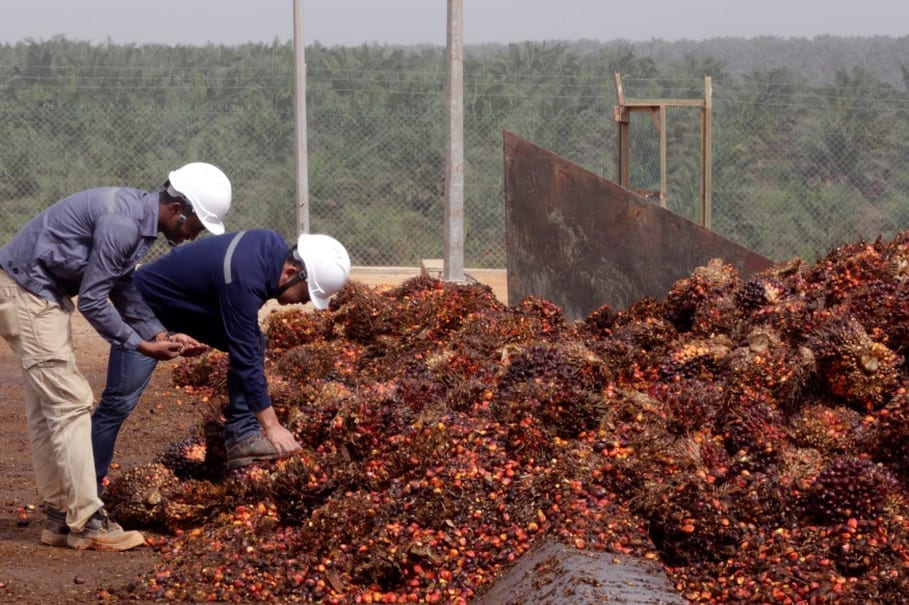
    The government is considering reducing its levy on palm oil exports, Coordinating Economic Affairs Minister Darmin Nasution said on Thursday, as the country pushes to maintain its position in international markets for the commodity.

    Speaking at an industry conference in Bali, the minister said an “adjustment” to the levy was among steps to be taken by the government, although he later said that this was still being discussed.

    “We don’t have final position yet,” Darmin said on the sidelines of the event. “We have to calculate that carefully. We don’t want lowering it only to result in lower prices.”

    Indonesia, the world’s top producer of the commodity, currently imposes a levy of up to $50 per metric ton on various palm oil products.

    The Indonesian Palm Oil Association (Gapki) said last week that it had proposed cutting the palm oil export levy by $20 per ton until prices of the vegetable oil reach $700 per ton.

    The government’s reference price for crude palm oil has stayed below $750 per ton for over a year.

    Darmin said the government would discuss the levy adjustment intensively over the next two months, hoping to reach a decision around year-end.

  • First duty-free space in Hyundai Department Store

    First duty-free space in Hyundai Department Store

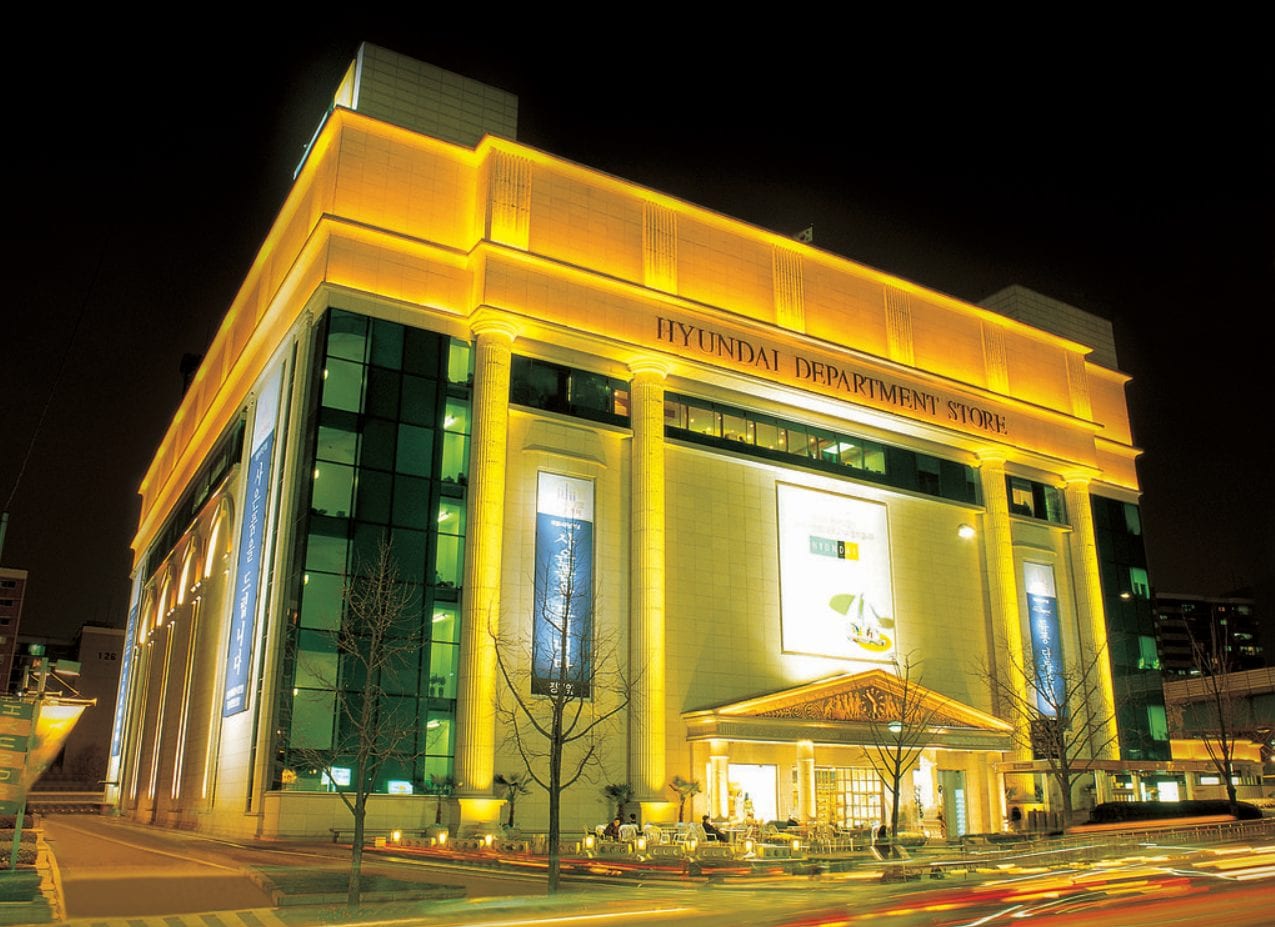
    South Korea’s retail conglomerate Hyundai Department Store Group opens its first duty-free store at its branch in Samseong-dong, southern Seoul, on November 1 as a newcomer into the lucrative duty-free race dominated by two other retail names, Lotte and Shinsegae.

    The new 14,250-square-meter duty-free store will open inside Hyundai Department Store’s Trade Center branch in Samseong-dong, an affluent business district in southern Seoul.

    It will take up three floors at the branch and offer 420 domestic and foreign brands.

    The outlet will be the first to have an official Alexander McQueen store. It will also have a separate foreign fashion zone offering Max Mara and Versace brands.

    Luxury brands will be based on the eight floor, while the ninth floor is reserved for beauty products and fashion stores.

    The 10th floor will have a more various selection of products from character goods to food like red ginseng and dried seaweed that is popular with foreign duty-free shoppers.

    The project is a huge one for Hyundai Department Store, which has been relatively conservative in the last decade regarding business expansions.

    Other department store rivals Lotte and Shinsegae have already established a stable foothold in the duty-free industry.

    In a press conference held at the new store on October 31, Hwang Hae-yeon, president of Hyundai Department Store Duty Free Co., said that it will provide high-quality life-style duty-free store service to consumers by escaping existing business practices and introducing new perspective.

    Hwang said the new store is expected to raise 670 billion won (US$588.2 million) in sales next year and over 1 trillion won in 2020.

    Hyundai Department Store Group will also create a digital-exclusive space to provide differentiated customer experience.

    It will invest 10 billion won to install the country’s largest 37-meter-wide and 36-meter-high light-emitting diode digital signage on the exterior wall of Hyundai Department Store’s Trade Center branch in December.

    The retailer also plans to promote diverse marketing by linking other businesses in retail, fashion, and travel, with its duty-free store to solidify its presence as a comprehensive retailer.

    The new addition will be the fourth duty-free store in the Gangnam area, along with Lotte Duty Free stores in the Lotte World Tower in Songpa District and in COEX and the Shinsegae Duty Free near the Express Bus Terminal.

    Being closer to other duty-free stores has tended to work as an advantage in the past, as tourists, especially those in large groups, can visit all of the different venues in one outing.

    In the past, duty-free stores inside Seoul were mainly clustered the North of the river, but the recent shift toward the Gangnam area suggests that a new duty-free destination could develop in the south of the city.

    Hwang also expressed confidence in the Gangnam location beside COEX as the operation’s “main differentiation point.”

    The venue is located near three high-end hotels, an underground mall, a casino and a convention center that regularly hosts international fairs. SM Town, a well-known destination among K-pop fans that also sells SM Entertainment products, is also nearby.

    The launch of Hyundai’s duty-free store comes at a complicated time: Chinese group tours to Korea – which once accounted for 70 percent of local duty free revenue – haven’t fully recovered after the U.S.-led antimissile system Thaad deployment last year.

    There are mounting concerns that duty-free stores are in fierce competition for commission fees in order to attract Chinese resellers that purchase in bundles.

    “There’s excessive competition in the market now – I want it to normalize and we’re going to try to stay away from [contributing to] it,” said Hwang.

    “There are many challenges, including regulations in China, but things are getting better. Chinese resellers can’t be ignored at the moment but in the long run, our plan is to focus on attracting ordinary tourists.”

  • Tudor Watch starts selling in Japan

    Tudor Watch starts selling in Japan

    Swiss watchmaker Tudor Watch has launched in Japan with a mix of permanent outlets and pop-up stores. The brand started trading on Wednesday in Tokyo and Osaka, and is poised to set up distribution in Nagoya and Sapporo via big-name local retail partners. It is currently riding a wave of popularity in the US and UK, where it has recently relaunched.

    Director of Montres Tudor S.A. Eric Pirson said: “The partners that Tudor selected for this launch are among the most high-profile and prestigious watch retailers in the country. They are offering Tudor a strong presence in their most prominent location. With this presence in the Japanese market, alongside our key openings in the US in 2013, the UK in 2014 and the Korean domestic market earlier this year, Tudor is now truly a global brand that is represented in close to 100 countries worldwide.”

    The launch is well-timed for Tudor’s Rugby World Cup sponsorship in Japan next year, which will serve to raise the brand’s profile in the burgeoning watch market.

  • KT increases fixed-line network speed tenfold, to 10Gbps

    KT increases fixed-line network speed tenfold, to 10Gbps

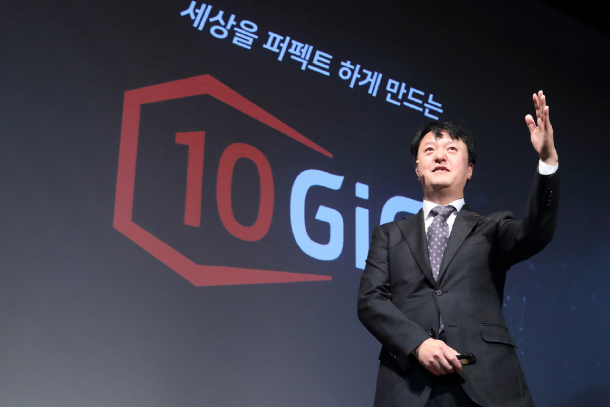
    KT announced Wednesday it will introduce a fixed-line network 10 times faster than its current offerings in Seoul as well as six major Korean cities.  The launch of Korea’s first home internet with speeds of up to 10 gigabits per second (Gbps) comes about four years after the mobile carrier launched wired internet with 1-Gbps speed.

    According to the company, Korea’s largest fixed-line internet service provider, a faster home internet has become a necessity as the number of independent content creators, like YouTubers and dedicated Esports players, has grown explosively.

    “The 10 times faster network will enable creators to air their content in ultra high-definition quality,” said Lee Pill-jai, senior executive vice president for marketing at KT. “It will also make virtual reality and augmented reality content a norm.”

    In a demonstration Wednesday at KT headquarters in Gwanghwamun, central Seoul, the actual download and upload speeds of the new internet service exceeded 8 Gbps whereas the existing internet achieved speeds of less than 1 Gbps. With the new internet, it takes only 30 seconds to download a 33-gigabyte ultra high-definition movie, according to KT. At 1 Gbps, it takes four minutes and 30 seconds.

    “You also need to think of the many devices that will be connected to home internet in the future,” said Park Hyun-jin, head of the wire and wireless business unit at KT. “I personally use five internet-powered devices, but by 2021, an average person will have 13 devices connected to the internet.”

    According to Park, the connection of numerous devices will slow internet speeds and make a 10-Gbps fixed-line a necessity to maintain tolerable internet speeds on each device.

    Faster fixed-line internet will also support the deployment of the high-speed 5G wireless internet nationwide, according to KT.

    “The 5G network is offered as wireless internet through base stations, but 5G network equipment and base stations need to be connected via a wired backbone network,” a spokesperson from KT said. “Having a 10-Gbps fixed-line network as the 5G’s backbone network will increase the stability of the wireless service.”

    The so-called backbone is a part of a computer network that connects other networks.

    According to KT, its 10-Gbps internet will be able to cover about 60 percent of the country by the early half of next year.

    To subscribe to the 10-Gbps internet, it costs 110,000 won ($96) per month, but if users already subscribe to KT for TV services, the monthly fee could be discounted to 77,000 won on a three-year contract basis.

    The company also released 5-Gbps and 2.5-Gbps internet plans, for those wanting faster but affordable home internet.

    To enable users to get a feel for 10-Gbps internet, KT said it will gradually install the network at 80 Starbucks Reserve shops in Korea and six PC rooms operated by AfreecaTV by this year.

  • Brioni opened second store in HK

    Brioni opened second store in HK

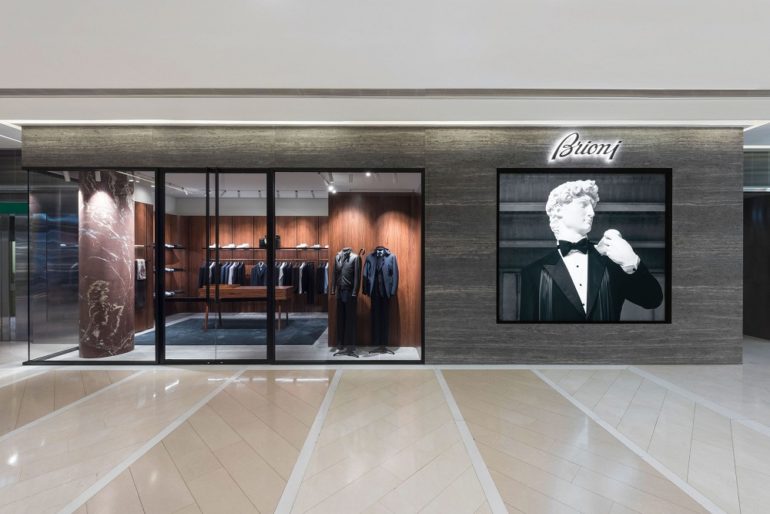
    The Italian brand announced the opening of its second store in Hong Kong. The store is located on level two of the IFC mall at the Central Waterfront. The store interior pays tribute to the brand’s city of origin, Rome, by using Travertine marble. A coloured Italian marble column decorates the store’s entrance and rosewood panels are a reference to a men’s private space.

    The store has dedicated areas for Brioni’s formalwear, leisurewear and accessories.

    To celebrate the opening, Brioni has opened a pop-up exhibition in the oval atrium at the mall. Featuring a 5.5m replica of Michelangelo’s David dressed in a tuxedo, the ‘Masterful Tailoring Meets a Masterpiece’ installation required almost 100 hours of work by a team of specialists led by the brand’s chief master tailor.

    Whilst the bespoke service is a cornerstone of the menswear company’s identity, it also sells ready-to-wear, leather goods, shoes, eyewear and fragrance.

    Brioni’s first store in Hong Kong is located at the Element shopping centre in Kowloon.