Tag: Australia

  • Australia’s TPG to enter local mobile market

    Australia’s TPG to enter local mobile market

    Fast-growing Australian fixed line operator TPG Telecom has bid A$1.26 billion ($944.8 million) to acquire 2×10 MHz of valuable 700-MHz spectrum, and plans to build its own mobile network using the bandwidth.

    TPG has revealed plans to spend A$600 million over three years to deploy a mobile network that covers 80% of the Australian population.

    As well as its imminent 700-MHz holdings, TPG also holds spectrum in the 1.8-GHz and 2.5-GHz bands. The operator plans to deploy a network consisting of around 2,000 to 2,500 sites, and use its extensive 21,000km fiber network as backhaul.

    TPG currently operates as an MVNO over Vodafone Australia’s network, but now plans to invest in deploying its own network. The company estimates it can break even with around 500,000 subscribers.

    CEO David Teoh said TPG expects to have several advantages over incumbent operators Telstra, Optus and Vodafone due to the ability to operate fewer mobile towers and deploy advanced mobile technology on its network, without the requirement to support legacy equipment and networking standards.

    “We believe that our mobile strategy will be complementary to our ongoing fixed line business, with the ability to bundle mobile and fixed services expected to have a beneficial effect on our already low fixed services customer churn,” he said.

    TPG was also recently selected to become Singapore’s fourth mobile operator after bidding S$105 million ($74.8 million) for a license and spectrum, and last week successfully bid S$23.8 million for 10 MHz of 2500-MHz spectrum.

    The Australian 700-MHz auction raised more than A$1.5 billion – significantly higher than the A$857 million reserve price – with Vodafone Australia also securing 2x5MHz of spectrum for A$285.9 million.

    The licenses will commence in April 2018 and expire at the end of 2029.

  • Australia’s nbn trials Nokia’s universal GPON tech

    Australia’s nbn trials Nokia’s universal GPON tech

    Australia’s nbn, the company in charge of rolling out the National Broadband Network, has achieved 102Gbps aggregate speeds during a lab trial of Nokia’s universal NG-PON fiber technology.

    Universal NG-PON (next-generation passive optical network) combines TWDM-PON (time wavelength division multiplexing PON), XGS-PON (10 gigabit symmetrical PON) and GPON (gigabit PON) technology on the same fiber to support blazing fast speeds.

    It is designed to serve as a simple upgrade path to the current fiber technology used in FTTP deployments, saving the time and additional costs associated with laying new fiber.

    During the trial at Nokia’s Melbourne laboratory, nbn tested TWDM-PON with 40Gbps symmetrical, XGS-PON with 10Gbps symmetrical and GPON with 2.5Gbps, achieving aggregate download and upload speeds of over 102Gbps over a single shared access fiber.

    “Our successful trial of NG-PON2 technology with Nokia is another example of our ongoing commitment to continually develop the capabilities and speed of the nbn network,” nbn CTO Dennis Steiger said.

    “While we continue to deploy the nbn network at pace with over 2 million end-users now receiving nbn services and nearly 5 million able to order a service, we also have a very sharp focus on the future. The NG-PON2 trials we have conducted with Nokia have shown us the huge potential this very exciting technology has in terms of helping us deliver on our future bandwidth and capacity requirements.”

    But the current government’s decision to abandon the previous government’s plan to use FTTP for around 93% of connections, in favor of a multi-technology mix incorporating last-mile copper technology purchased from incumbent operator Telstra, complicates the potential upgrade path to the new technology.

  • Jetstar adds low-cost services between Australia and Vietnam this summer

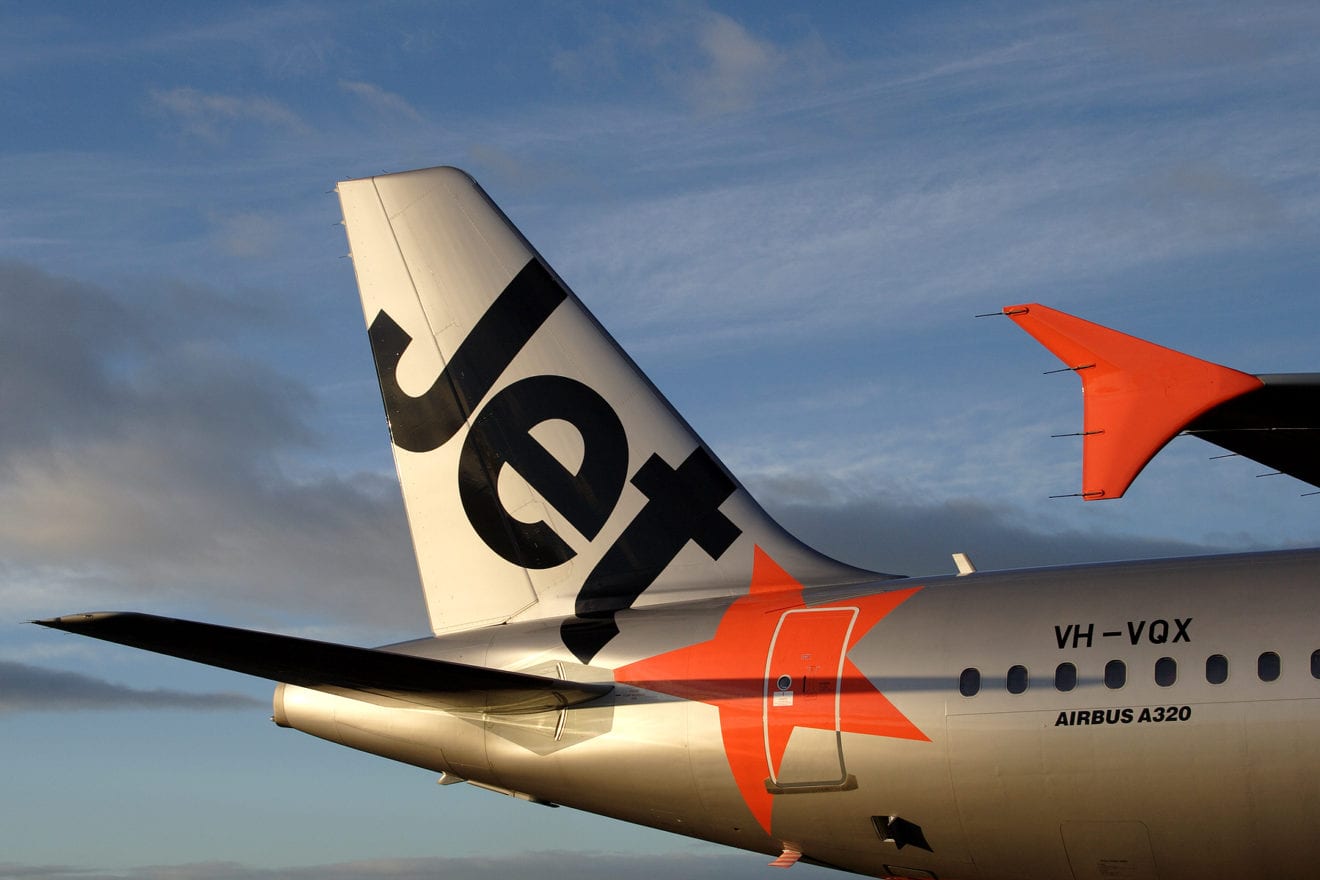
    Jetstar adds low-cost services between Australia and Vietnam this summer

    The Qantas unit hopes to break the monopoly currently held by national carrier Vietnam Airlines, which is also a Qantas partner. Australia’s trade and tourism ministry on Wednesday announced two low-cost direct services from Melbourne and Sydney to Ho Chi Minh City by Jetstar Airways.

    The new services will take off in May this year, Assistant Minister Keith Pitt told a meeting with local media in HCMC.

    Jetstar Airways, a wholly owned subsidiary of Australia’s Qantas Airways, will operate the flights four times a week from Sydney and three times weekly from Melbourne using the Boeing 787 Dreamliner.

    Ticket sales began in January. Flights from Melbourne to HCMC will be launched on May 10, and flights from Sydney will commence one day later, subject to regulatory approval.

    “These flights will stimulate inbound tourism, business and trade to Australia. In the last 12 months, there has been a 21 percent increase in visitors from Vietnam to Australia and we expect to see that grow with the introduction of our low fares on the route,” Paul Rombeek, Jetstar Group’s Global Head of Sales, told the press.

    The new flights from Australia to HCMC by Jetstar Airways would link up to 15 domestic destinations from HCMC thanks to daily services operated currently by Vietnamese domestic partner Jetstar Pacific, Jetstar Group Chief Executive Jayne Hrdlicka said in a statement.

    Jetstar Pacific, 70 percent owned by flag carrier Vietnam Airlines and 30 percent by Qantas, is growing rapidly in an attempt to fend off a competitive threat from domestic budget rival VietJet, she said.

    Vietnam Airlines and Qantas last year said they would invest $139 million to more than double the size of Jetstar Pacific’s fleet to 30 aircraft by 2020.

    Jetstar’s non-stop flights from Australia to Vietnam will break a monopoly of direct services held by Vietnam Airlines, said the report.

    More than 320,000 Australian visitors came to Vietnam last year, up 5.6 percent against 2015. The figure in the first three months this year was over 95,000, up 3.4 percent, according to data of the Vietnam National Administration of Tourism.

  • Consortium contracts ASN for INDIGO cable system

    Consortium contracts ASN for INDIGO cable system

    A consortium consisting of Asian operators, Google and telecommunications infrastructure company Superloop have commissioned a new subsea able system linking Singapore, Indonesia and Australia.

    Singtel, Indonesia’s Indosat Ooredoo as well as Australia’s Telstra and education sector network provider AARNet have joined Google and Superloop’s SubPartners to join the INDIGO cable system.

    The cable system, formerly known as APX West and Central, will be deployed by Alcatel-Lucent Submarine Networks.

    It will span around 9,000km between Singapore and Perth on the west coast of Australia, and onwards to Sydney on the east coast. A ranching unit with two additional fiber pairs will connect Singapore and Jakarta.

    Construction of the cable is expected to be complete by mid-2019. The system will use an open cable two fiber pair desgin, providing consortium members with spectrum ownership and giving them the ability to independently adopt technology advancements and upgrades as required.

    “With internet data consumption growing by 70% in Asia last year alone these sorts of investments in international networks are critical for meeting the needs of connected consumers and businesses,” Telstra group MD for global services and international David Burns said.

    “The construction of INDIGO is timely to meet the rising demand for high-speed broadband between Asia and Australia. This cable system complements our global connectivity that links Asia, the US, Europe, Australia and the Middle East,” Singtel Enterprise VP for carrier services Ooi Seng Keat added.

    Superloop has inherited its membership in the INDIGO consortium via the recent acquisition of subsea cable operator SubPartners for $2.5 million. As part of the acquisition Superloop has provided a guarantee involving the meeting of SubPartners’ construction capex costs for the project.

  • Australia new vehicle sales edge higher in March

    Australia new vehicle sales edge higher in March

    Australian new vehicle sales bounced modestly in March as the timing of the Easter holidays resulted in more selling days compared to the same month last year.

    The Australian Federal Chamber of Automotive Industries’ VFACTS report out on Thursday showed 105,410 new vehicles were sold in March, up 0.9 percent on the same month last year.

    March this year had two more selling day than in 2016.

    For three months to March, sales were running 0.8 percent behind the same period last year.

    Sales of SUVs continued their domination with a rise of 7.9 percent on March last year, giving them 39.4 percent of the entire market. Sales of passenger vehicles dropped 10.7 percent, extending their long decline.

    Sales of light commercial vehicles jumped 11.3 percent, while sales in the heavy vehicle market rose 11.0 percent.

    Toyota Motor Corp retained first place on the sales ladder with 18.6 percent of the market. Mazda Motor Corp had another strong month taking 9.9 percent.

    Hyundai Motor took third spot with 8.3 percent, ahead of Mitsubishi on 7.3 percent. The Holden unit of General Motors took 6.8 percent and Ford held 6.5 percent.

  • Singapore Airlines locks in daily Airbus A350 for Melbourne

    Singapore Airlines locks in daily Airbus A350 for Melbourne

    Singapore Airlines is locking in its advanced Airbus A350 jet for a year-round schedule between Melbourne and Singapore starting May 11, 2017.

    The sleek jetliner has made a number of short-term appearances on the route, but later this year it’ll be running daily as Melbourne-Singapore flight SQ208 and the SQ207 return leg.

    Travellers at the pointy end can relax in the Star Alliance member’s latest business class seat, evolved from that of the  Boeing 777-300ER flagship.

    It’s an “evolutionary, not revolutionary” approach, reported AusBT’s Suzanne Wu from one of the first SQ A350 flights – “and that’s not a bad thing. Not a whole lot was broke, so not a whole lot needed fixing.”

    Melbourne’s SQ218/SQ217 is also running on an A350 until June 30, after which it will revert to the Airbus A380 superjumbo.

    Asian rival Cathay Pacific already has one Airbus A350 on the Melbourne-Hong Kong route as CX104/105, with a second slotting into CX134/135 from October 29, while Thai Airways says its own on-again off-again Melbourne A350 flights should launch before the year’s end.

    April sees Singapore Airlines celebrate 50 years of flying to Australia, and is tipped to debut its newest Airbus A380 – fitted with next-generation first class suites and business class seats – on the Singapore-Sydney route in October 2017.

    The redesigned first class suites will be fewer in number – down the current superjumbo’s 12 to between six and eight – but much larger in footprint, and have been relocated to the upper deck.

    Next year will see Singapore Airlines restart direct flights between Singapore and the USA, with both New York and Los Angeles in line for an ultra-long range version of the A350 dubbed the A350ULR.

    This long-legged jet will carry all-new business class seats compared to the Melbourne A350, but only around 170 seats – some 80 less than the airline’s regular A350-900s – in order to minimise fuel burn and maximise range for the 18-19 hour journey.

  • Telstra launches five new SaaS solutions

    Telstra launches five new SaaS solutions

    Australian operator Telstra is drawing on the investments made through its venture capital arm Telstra Ventures to add five new SaaS solutions for its international enterprise customers.

    The suite of new applications is designed to better help companies as they go through digital transformation by offering solutions that reduce the cost and complexity of utilizing digital applications.

    The new range of applications are designed to improve the way organisations manage interactions with their customers and employees.

    New solutions include Near, a location intelligence platform that provides near real-time information on places, people and products, as well as all-in-one application delivery platform Nginx Plus.

    The new additions to the portfolio also include Panviva, a cloud-based platform that provides real-time process guidance to facilitate staff productivity and reduce human process errors, vArmour, a distributed security system delivering application-aware micro-segmentation, and mobile threat defense platform Zimperium.

    These applications are in addition to DocuSign, Guest Services, Kony, TeleSign and Whispir, which are currently available in the Telstra Applications Portfolio.

    This suite of new applications will be available in select locations in Asia, Europe and North America. Near, Panviva and Zimperium will be available from 30 March, while, Nginx Plus and vArmour will be available in June.

    “Organizations know they need to transform digitally to compete in today’s market, but there are challenges to overcome,” Teltra director of global applications Gianpaolo Carraro said.

    “Recent research commissioned by Telstra found 76% of organisations believed they would be more effective if their technology and network platforms were more flexible and agile, while 67% said their ability to work more collaboratively and effectively is hindered by rigid technology and network platforms.”

  • Vietnam requests Australia roll back ban on shrimp imports

    Vietnam requests Australia roll back ban on shrimp imports

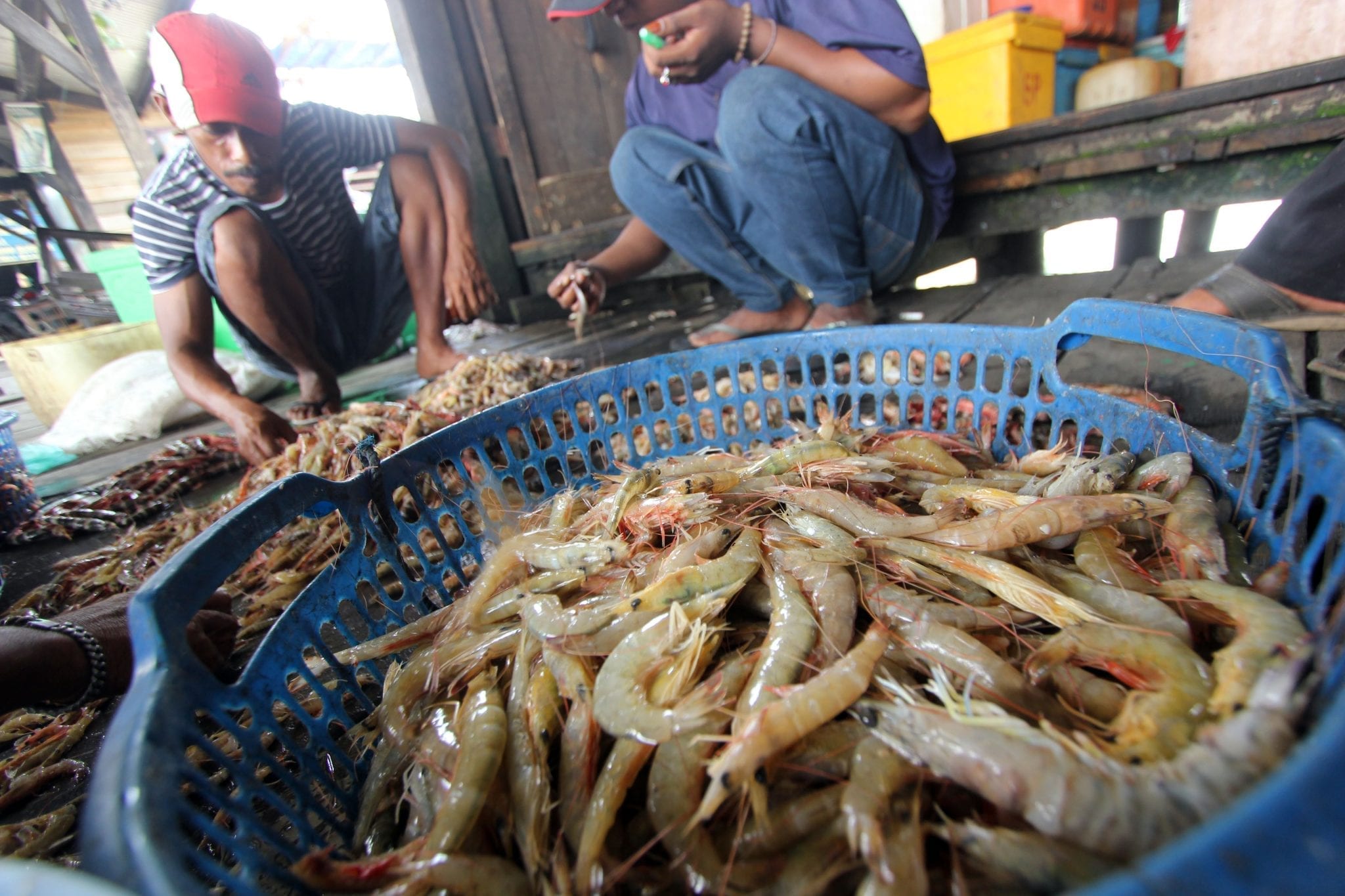
    The Vietnam government contends the ban by the Australian Department of Agriculture on raw imports is ‘causing serious damage’ to the country’s shrimp farmers and exporters, and has requested it be reversed.

    Australian Agriculture Minister Barnaby Joyce announced a six-month suspension on the import of raw shrimp this past January, following an outbreak of white spot disease in the northeast state of Queensland.

    Vietnam Deputy Minister of Industry and Trade, Tran Quoc Khanh, has now asserted the ban has damaged the country’s shrimp farming industry that on average exports roughly US$55 million worth of raw product to Australia annually.

    Deputy Minister Tran recently told Australian ABC news that the ban is not in line with common practices and the spirit of nurturing and enhancing the existing good trade relationship between the two countries.

    The Deputy Minister pointed out that the temporary ban on uncooked shrimp was issued with no advance warning for Vietnamese shrimp exporters to take needed actions to avoid large economic losses.

    In addition, Deputy Minister Tran noted there is no hard evidence as to the cause of the breakout of white spot disease in Queensland and maintained that it is premature to blame Vietnamese exports.

    Ban could contradict WTO rules

    Absent evidence of a causal relationship between Vietnamese shrimp exports and the breakout of the disease, Mr Tran suggested the ban may be in contravention of certain World Trade Organization agreements.

    Australian ABC news reports that the Seafood Importers Association of Australia has taken a position that favours lifting the ban, saying it damages the international trade reputation of Australia.

    Biosecurity failures

    The Australian Department of Agriculture defended the move, saying it was necessary for biosecurity protection of the farm raised fish and seafood industry.

    A spokesperson insisted the ban complied with the provisions of WTO agreements that allow a member to temporarily suspend imports in certain circumstances.

    The spokesperson also argued the decision to suspend shrimp imports would not be in place any longer than necessary to ensure the protection of the domestic aquaculture industry.

    Deputy Minister Tran noted he respected the sovereignty of Australia and the biosecurity concerns, but nonetheless asked the Australian Department of Agriculture to reconsider the propriety of the ban.

    Vietnamese uncooked shrimp products have been exported to many countries around the globe, said the Deputy Minister, without any reports of white spot disease or other biosecurity concerns having arisen.

  • The AirAsia Mega Sale is now on with international flights from $95

    The AirAsia Mega Sale is now on with international flights from $95

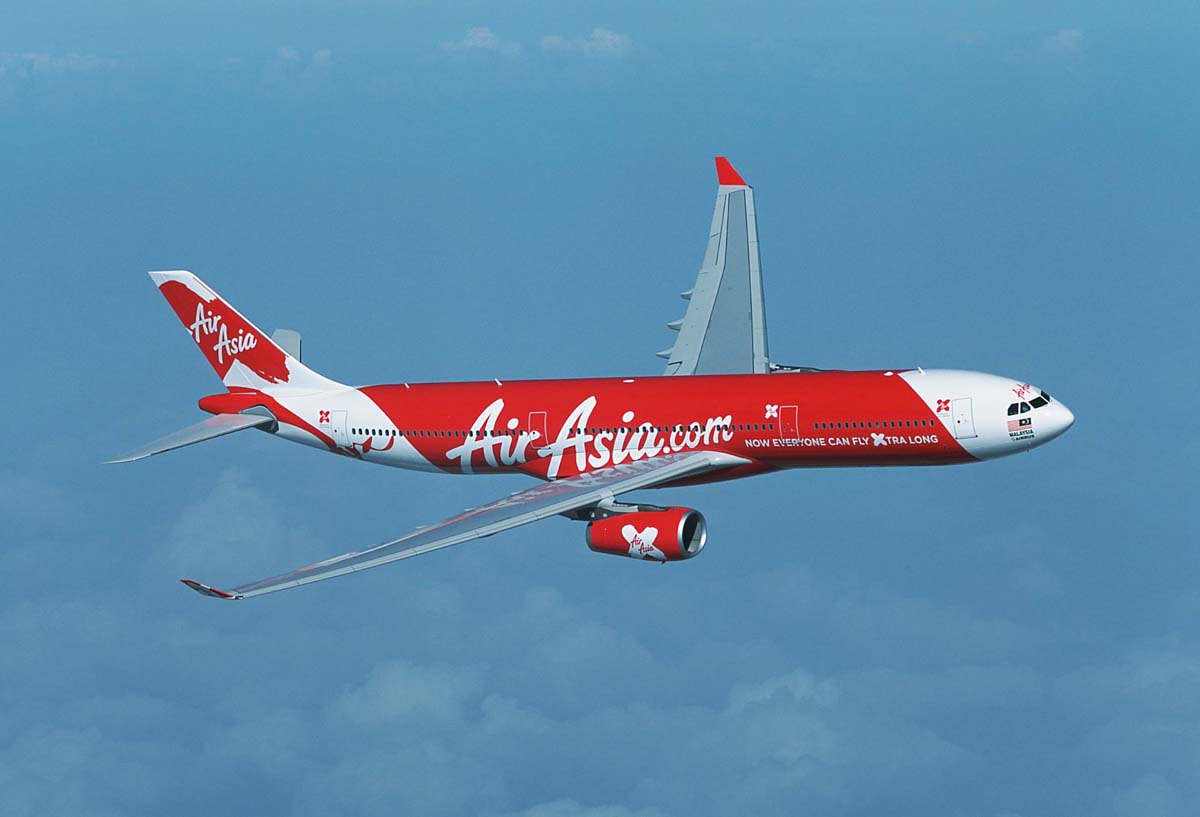
    Asian low-cost carrier AirAsia is at it again with another mammoth sale to dozens of Asian destinations during the Australian winter – so you can escape the cold and looking forward to warmer climes, naturally.

    Prices start from $95 one-way, which is for Darwin to Bali. Followed closely behind are $99 tickets which will get you from Perth to either Bali or Kuala Lumpur one-way.

    To give you an idea of how competitive these fares are, not 10 days ago Jetstar was offering $99 one-way flights to Bali from Darwin and $129 fares to Bali from Perth.

    Other hot fares in AirAsia’s Mega Sale include: Gold Coast to Auckland from $119, Perth to Jakarta from $124, Sydney to Kuala Lumpur from $149, Sydney to Penang from $174 and Melbourne to Singapore from $184. All these prices are for one-way economy tickets.

    Other cities on sale are Seoul, Siem Reap, Shanghai, Tokyo, Hong Kong, Hanoi and Krabi.

    These sale flights are for travel between 1 September all the way to 5 June 2018 – so you have plenty of time to save up the dosh for a big holiday blow-out. Just remember that black-out dates may apply during public and school holiday periods.

    Flights are available departing from Gold Coast, Melbourne, Perth and Sydney. Most flights include a stopover in Kuala Lumpur.

    AirAsia charges a $10 processing fee per flight per person on credit and debit card purchases. You can avoid this by paying with PayPal.

    As a low-cost carrier, this price does not include extras such as checked baggage, on-board meals and in-flight entertainment. These can be purchased during the booking process for an additional fee.

    We found these fares on I Want That Flight which you can tap into by clicking on the search buttons below.

    This AirAsia mega sale ends 19 March 2017.

  • Australia Eyes Indonesian Mining and Tourism

    Australia Eyes Indonesian Mining and Tourism

    Head Of the Indonesian Investment Coordinating Board (BKPM), Thomas Trikasih Lembong, predicted that Australia’s investment in Indonesia could increase up to USD 3 billion (around Rp 40 trillion) throughout the next three to five years. Most of Australia’s investment is predicted to be centered on the mining and tourism sector.

    “That’s the sum total of the projects we are trying to develop. Two-thirds will be in the mining industry and one-third in the tourism sector, lifestyle, and others,” Thomas said on Tuesday, March 7, 2017.

    Thomas explained that Australia’s has an exceptional mining industry. A number of the largest mining companies in the world is owned by Australia, such as EMR Capital, who purchased a gold and silver mine in North Sumatera, and Newcrest, who is currently operating the gold mine in North Maluku.

    In addition, Thomas said that the Indonesian government is really interested in cooperating with Australia in the tourism sector.

    “Many tourists from Japan, China, and Indonesia travel to Australia. They have great taste, management, and good designs. We need that in order to develop Indonesian tourism sector,” Thomas said.

    Currently, according to Thomas, Indonesian and Australian officials are committed to developing both countries’ tourism sector, especially coastal and maritime tourism. Thomas stated that Indonesia owns a varied number of islands and diving tourist destinations.

    “But we don’t have a maritime tourism industry, while Australia has a good reputation in yacht spots,” Thomas said.

    Australian Minister for Trade, Tourism, and Investment Steven Ciobo, stated that Indonesia could develop many tourist destinations in addition to Bali. Ciobo asserted that by having investments reeling in and the development of various infrastructures across regions, the number of tourists entering Indonesia can significantly increase.

  • Garuda Indonesia Increases Flight Frequency of Routes to Australia

    Garuda Indonesia Increases Flight Frequency of Routes to Australia

    National airliner Garuda Indonesia (GIAA.JK) will increase its flight frequency to destinations in Australia during the holiday period from May to October, 2017.

    The company targets its passenger growth from flights to Australia to reach 650,000 passengers this year.

    “Flight frequency from Jakarta to Australia is increased to five times from four times each week, while the frequency for Bali-Australia route is raised to seven times from six times per week,” said M Arif Wibowo, President Director of Garuda Indonesia on Tuesday (3/7).

    He said the addition of frequency on flights to Australia will be adjusted with market demand during the holiday period. Thus the flight frequency will be different each period.

    The addition of frequency is part of Garuda Indonesia’s effort in meeting demands and rising market growth, and is line with the synergy commitment the company has implemented with Tourism Australia. The cooperation has boosted the number of passengers on Australia flights to more than 644,237 passengers in 2016.

  • Telstra forms SDN alliance with VeloCloud

    Telstra forms SDN alliance with VeloCloud

    Australian operator Telstra has entered a strategic partnership with US-based Cloud-Delivered SD-WAN company VeloCloud to help accelerate the adoption of SDN in enterprise networking.

    The partnership, which includes an investment from Telstra Ventures into VeloCloud, will enhance Telstra’s SDN and NFV capabilities in the APAC region.

    As part of the agreement, Telstra’s Chinese joint venture Telstra PBS will add VeloCloud SD-WAN solutions to its product suite.

    Telstra Ventures managing director Mark Sherman said the investment is consistent with Telstra’s overall network strategy, which reflects the increasing role SDN and NFV are playing in enterprise networking.

    “We expect SDN will continue to transform enterprise networking around the world and VeloCloud SD-WAN can help companies achieve more agile and responsive networks as well as reduce costs,” he said.

    “We are excited about the opportunity to work with VeloCloud on solutions for our enterprise customers, particularly in the Asia-Pacific region where their technology can help businesses manage their networks in dynamic environments across multiple locations. Our first step will be to offer VeloCloud technology to customers in mainland China.”

  • Telstra to launch LTE-Broadcast this year

    Telstra to launch LTE-Broadcast this year

    Telstra has announced plans to launch LTE-Broadcast (LTE-B) services this year, and roll out the technology across Australia by 2018.

    The company is working with network vendor Ericsson to enable LTE-B in existing Telstra Media services this year.

    Telstra also plans to launch a 24×7 linear streaming channel using the technology, initially for certain compatible Samsung devices.

    LTE-B is a dedicated technology for broadcasting media over LTE networks for enhanced mobile video services such as mobile TV broadcasting and live streaming video services. The technology is also known as enhanced broadcast multcast services (eMBMS).

    LTE-B is designed to provide a constant bitrate data channel for broadcast content, with the bitrate not decreasing regardless of how many subscribers are watching simultaneously.

    Telstra group managing director for networks Mike Wright said 99% of Telstra’s 4GX-branded sites are already LTE_B compatible, and the operator aims to achieve nationwide coverage by next year.

    “Telstra’s LTE-B product roadmap will include 24 x 7 linear streaming, live sports coverage beyond stadiums, pre-loading of popular content, news clips and games highlights,” he said. “We plan on enabling LTE-B across many devices, and are excited to deliver an enhanced mobile experience to our customers.”

    In line with these ambitions, Telstra is also adopting technologies including session continuity and dynamic switching, and aims to introduce these capabilities to its network by November 2017.

    Session continuity allows for seamless transitions between unicast and broadcast areas during video streaming. Dynamic switching shifts the transmission between unicast or broadcast depending on which technology will deliver a superior experience based on the current number of simultaneous users.

    “This technology will be crucial to improving the LTE-B experience for our customers. For instance, when network capacity becomes limited and multiple users are consuming the same content, the MooD capability can shift the transmission to broadcast,” he said.

    Telstra and Ericsson are also members of the global LTE-Broadcast Alliance, which is holding its first forum at this week’s Mobile World Congress, the annual mobile industry conference held in Barcelona.

  • Telstra taps Ericsson for network evolution

    Telstra taps Ericsson for network evolution

    At Mobile World Congress 2017, Australian operator Telstra announced it has selected Ericsson to support its major “Network of the Future” transformation program.

    Ericsson will supply equipment and services to support the program, which includes a nationwide optical network transformation and expansion.

    The program will also include 5G new radio (NR) trials, the creation of a new Media Delivery Cloud to complement Telstra’s Telco Cloud project and deployment of CAT M1 functionality nationwide to establish Australia’s largest IoT network.

    Under the agreement, Ericsson will deliver a three-year optical transmission network and rollout plan to expand Telstra’s long haul, metro and regional optical networks, supplying and installing converged packet-optical technologies from Ciena.

    Ericsson, Telstra and Qualcomm will meanwhile collaborate on interoperability testing and an over-the-air field trial based on the 3GPP’s expected 5G NR specifications. Telstra is also a member of the group pushing for accelerated 5G NR standardization

    For the IoT initiative, Telstra and Ericsson have now commenced localized CAT-M1 trials in Melbourne and Tasmania in the first stage of a deployment across Telstra’s 4G network, which covers over 98% of Australia’s population.

    “These projects… provide the foundation for Telstra’s Network of the Future program, which is essential to delivering our customers a brilliantly connected future,” Telstra group managing director for networks Mike Wright commented.

    “Our expanded optical network will support important emerging network capabilities such as IoT, 5G and enhanced media delivery. And our move to virtualization through the Telco and Media Cloud projects will enable us to deliver our customers unique and differentiated services to meet their personal and business needs.”

    Telstra said its Telco Cloud network is now delivering live traffic. Telstra first announced its network function virtualization infrastructure (NFVi) program at last year’s Mobile World Congress and the company has now compled the first video call over a virtualized EPG.

  • Indonesian president arrives in Australia

    Indonesian president arrives in Australia

    Indonesian President Joko Widodo has touched down in Sydney ahead of bilateral talks with Prime Minister Malcolm Turnbull and Australian business leaders.

    The president and First Lady Iriana Widodo arrived on Saturday morning in rainy conditions and clutching umbrellas as they greeted Australian officials on the airport tarmac.

    Improving trade and investment ties is expected to be a key focus of Mr Widodo’s two-day state visit to Australia.

    The Indonesian president will meet with business leaders including representatives from Blackmores, Macquarie Bank and BlueScope Steel in the afternoon.

    He will also hold talks with NSW Premier Gladys Berejiklian before a private dinner at Prime Minister Malcolm Turnbull’s Point Piper mansion, overlooking Sydney Harbour.

    The pair will discuss progress on an Indonesian-Australian free trade deal set to be finalised by the end of the year, perhaps as early as August.

    Indonesian trade officials were in Canberra last week for the fourth round of free trade negotiations since March last year.

    ‘Our relationship with Indonesia is growing deeper by the day but it has not yet reached its full potential,’ Mr Turnbull said in an opinion piece in Sydney Morning Herald, pointing out that Australia trades more with Malaysia, Singapore and Thailand compared to Indonesia.

    AAP understands there are no insurmountable sticking points, unlike Australia’s negotiations with the European Union, where agriculture tariffs cuts are proving tricky.

    Australia Institute research director Rod Campbell hopes the two leaders discuss climate change and coal.

    Indonesia is seeking to dramatically boost coal-fired power generation in coming years despite its pledge to cut carbon emissions to 29 per cent from business- as-usual levels by 2030.

    Mr Widodo was due to visit Australia last year but this was postponed after violent protests erupted in Jakarta over comments its Christian governor made about the Koran.