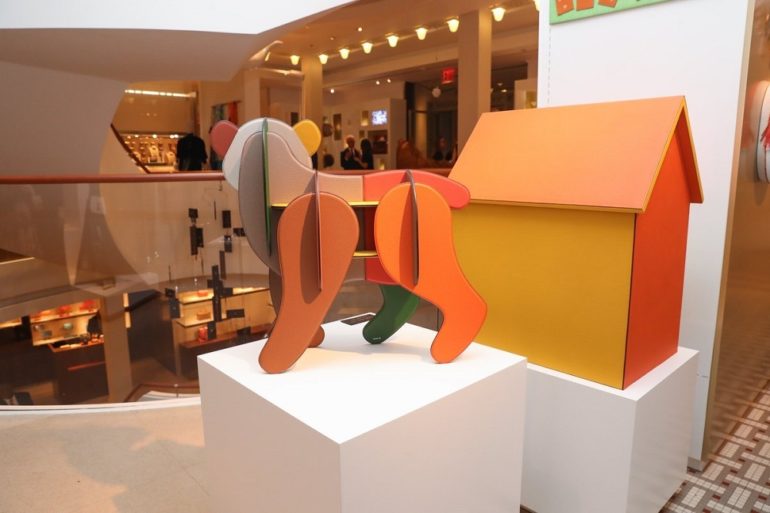
Hermès presents a workshop of metamorphosis for materials and the invention of forms themed from now on till 9th December in Hong Kong. From a giant elephant pouffe to a target mirror, the Landmark Price’s store is transformed with scenography designed by Hong Kong artist Kevin Cheung. Once upon a time, there was a meeting of materials, their inimitable mix, their singular hybridisation. Petit h shares with upcycling product designer Kevin Cheung a passion for slumbering materials, from bamboo to silk, cashmere and many more.
The staging is inspired by daily life and everyday objects. A tree and its bubble-like buds unfurl across the three levels of the store where new petit h inventions appear, paying homage to the diversity of Hermès materials and know-how, and to the dreams that take shape during our daily lives.
Petit h was founded in 2010 by Pascal Mussard, who had the idea of bringing leftover materials from all over the house under one roof and giving them new life through Hermès craftsmanship and know-how.
Godfroy de Virieu, creative director since January 2018, is now leading the dialogue between artisans, designers and artists from all backgrounds.
Together, they create dreamlike, playful, poetic and surprising objects from noble materials as either unique pieces or limited editions.
Petit h permanent home remains in Paris, in the Hermès store at 17 rue de Sèvres, as well as Hermes.com.
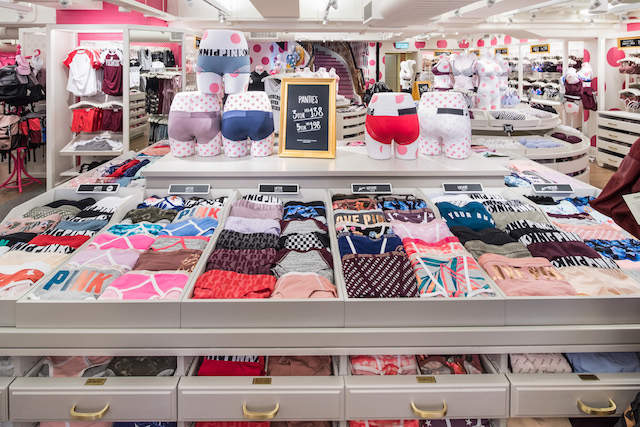
Lingerie brand Victoria’s Secret needs to reinvent itself, says retail analyst Neil Saunders, commenting in the wake of a US$42.8 million loss by its parent L Brands. “The brand is simply not connecting and resonating with consumers in the way that it once did. Its overt sexuality, its focus on airbrushed glamour, and its dark-and-moody stores are completely out of step with the mood of most modern consumers,” said Saunders, MD of GlobalData Retail.
“However, this is not a new phenomenon, Victoria’s Secret has been out of kilter for a long period of time – and has seemingly done very little to bring itself back into line.”
Sales at Victoria’s Secret have fallen in seven out of the last eight quarters, mainly due to its weak diffusion brand Pink, launched in 2002 and aimed at college-aged women.
“In Pink, fashion errors in loungewear have driven a recent deceleration in performance,” the company admitted in its earnings statement.
L Brands’ third-quarter results showed an increase in same-store sales of 4 per cent across the group, to $2.77 billion, but Victoria’s Secret store sales fell by 2 per cent.
The top line was boosted by L Brands’ Bath & Body Works brand. But one-off costs from the closure of Henri Bendel, impairments at Victoria’s Secret and ongoing losses in the La Senza business drove the net loss.
Saunders described the Victoria’s Secret performance as disappointing, “not only with the sales numbers but by the inertia within the business”.
He said much of the brand’s failure to change came down to embedded attitudes within management.
“The recent insensitive comments about transsexuals from chief marketing officer, Ed Razek, in a Vogue interview characterise the problems. Not only are such remarks bad for the brand’s image, but it also earned a sharp public rebuke from the CEO of more incisive rival ThirdLove which has been stealing share from Victoria’s Secret for some time.
“In theory, the departure of Jan Singer as CEO should help herald in changes someone coming in will have fresh ideas about reviving the fortunes of Victoria’s Secret.”
L Brands has appointed John Mehas from lifestyle brand Tory Burch as the new CEO of Victoria’s Secret. He will take up the role early next year.
Pink CEO Denise Landman retired after the release of the L Brands half-year results and she was replaced on October 1 by former Bath & Body Works president for merchandising and product development, Amy Hauk.
“Our new leaders are coming in with a fresh perspective and looking at everything … our marketing, brand positioning, internal talent, real estate portfolio and cost structure,” said CEO Leslie Wexner.
Saunders said Bath & Body Works was a stark contrast to the core brand.
“The company’s wholesome brand image and its focus on small indulgences are paying real dividends – especially in a consumer economy where shoppers have more money to treat themselves. Its strong range development which means assortments are constantly changing encourages regular visits to online and stores. It also means that the company is good at jumping on trends like aromatherapy-based scents and the ongoing popularity of candles. Second, good marketing and promotions help to drive volumes through the business,” said Saunders.
“Both of these things stem from the fact that the BBW team is much more attuned to the market and consumer trends than is the case at Victoria’s Secret. Indeed, the cultures at the two divisions could not be more different, and we believe that Victoria’s Secret should take a leaf out of its sister brand’s playbook as it looks to reinvent itself.”
New data from Bain & Company shows global luxury goods sales will struggle to maintain growth, as the US-Sino trade war and other geopolitical events impact on consumer confidence.
In June, Bain said the personal luxury goods market was “on a tear” this year and would grow by between 6 per cent and 8 per cent at constant exchange rates to reach €276-281 billion. It said the market could reach €390 billion globally in sales by 2025.
But now, Bain has released a more tepid projection of €260 billion and a growth rate of 5 per cent this year.
It has pared back its 2025 projection of personal luxury goods sales to €320-365 billion, slashing €35 to €70 billion off its forecast in just five months.
And it cautioned that even this figure may be under threat saying “socio-political issues, commercial policies, and potential short-term soft recessions could make this road to growth a bumpy one in the short term”.
The Bain & Company Luxury Study was released in Milan in collaboration with Fondazione Altagamma, the Italian luxury goods manufacturers’ industry foundation.
In June, Bain said Mainland China is expected to account for the lion’s share of growth this year. “We forecast this market to grow by 20-22 per cent … Brands are learning how to cater to local consumers, often young and heavily influenced by social media.”
China kept close to its projections, rising 20 per cent, albeit with the year still not over.
“Chinese consumers are leading the positive growth trend around the world. Between 2015 and this year, their purchases in Mainland China contributed twice as much growth as their spending abroad. Their share of global spending has continued to rise (now estimated at 33 per cent of global luxury spend, up from 32 per cent in last year), while the share of Mainland China has also risen to 9 per cent (up from 8 per cent in last year). In Mainland China, luxury sales grew 18 per cent at current exchange rates to €23 billion (20 per cent at constant exchange rates), driven by rising demand rather than by price increases,” the report said.
Claudia D’Arpizio, a Bain partner and lead author of the study, said luxury purchases in Japan softened slightly this year, pushing brands to find new solutions to bring consumers back to stores. However, retail sales still grew at 3 per cent at current exchange rates to €22 billion. “Increased consumption from tourists in Japan is prompting brands to rethink their distribution models.”
Across the rest of Asia retail sales grew 7 per cent at current exchange rates to €39 billion, due to dynamic growth in South Korea, driven by strong local consumption. Brisk growth in other Asian countries – Singapore, Thailand and Taiwan – also contributed while Hong Kong and Macau benefitted from Chinese purchases.
Europe lagged in 2018 due to a strong Euro that impacted tourists’ purchasing power. Local consumption was positive overall, despite mixed country performance, helping to boost retail sales 1 per cent at current exchange rates to €84 billion.
The Americas grew 5 per cent at current exchange rates to €80 billion. “A positive US economy boosted disposable income and overall luxury spending from locals, even as brands remained wary of continued economic prosperity,” the report said. “However, the strong dollar impacted tourists’ spending from Asia and Latin America. Canada and Mexico were strong players in the region, while political uncertainties derailed Brazil’s performance.”
In other areas, there was nil growth, holding at €12 billion, mainly due to stagnation in Middle East brought on by a recent government spending restriction.
Luxury online
The retail channel grew 4 per cent this year, with three-quarters coming from like-for-like sales growth. Wholesale channels grew at only 1 per cent, brought down by high-end department stores still trying to recover, and a slow-down among specialty stores facing tough competition from online.
Luxury shopping online continued to accelerate this year compared with physical channels, growing 22 per cent versus 2017 to €27 billion. The US market made up close to half of online sales – 44 per cent– but Asia is emerging as the new growth engine for luxury online, slightly ahead of Europe. Accessories remained the top category sold online, ahead of apparel; beauty and hard luxury (jewellery and watches) were both on the rise.
Brands are catching up to other online players, comprising 31 per cent of sales, compared to e-tailers (39 per cent) and retailers (30 per cent).
“New technologies are at once enriching the online and mobile shopping experiences, while potentially putting role of physical channels at risk,” said Federica Levato, a Bain partner and co-author of the study.
“The luxury store-opening path is slowing down, leading to channel consolidation in the future. Brands must therefore rethink their physical channels and evolve their role from point-of-sale to point-of-touch, and use new technology to enhance customers’ in-store experiences.”
Luxury consumers getting younger
The report concluded that younger generations are becoming increasingly more important luxury brands. This year, Generations Y and Z contributed 100 per cent of the total luxury market growth, compared with 85 per cent last year. Bain predicts Generation Z, which today comprises just 2 per cent of the market will account for 10 per cent of it in 2025.
As aftershocks of the clampdown on Daigous continue to reverberate through the luxury shopping community in China, e-commerce platforms are rising to fill the gap.
The launch of China’s new e-commerce law, coupled with the 928 Daigou crackdown at the Pudong International Airport in Shanghai, has stirred up uncertainty in the global luxury industry.
In fact, LVMH share prices reportedly fell in early October due to fears of a slowdown in Chinese spending.
Earlier this month, Luxury Society attended the live seminar “Reinterpreting the 300-billion Daigou market” hosted by Tencent media.
During a debate, luxury e-commerce platform OFashion’s CEO Xiao Yu and N5 Venture Capital’s founder Xiao Yiwei shared their insights on how luxury buying will likely evolve in the post-Daigou era.
According to Xiao Yu, the estimated Chinese luxury spending in 2018 is 600 billion RMB and Daigou purchases account for half of that, making it an estimated 300-billion industry.
Without Daigou, what is the next best alternative for Chinese consumers looking to buy authentic luxury goods at lower prices?
First, let’s revisit the 928 daigou crackdown in Shanghai’s Pudong airport and take a look at how China’s 300-billion Daigou industry is in danger.
What Happened During The 928 Daigou Crackdown
September 28 2018 marked an important date in the history of Chinese luxury consumption.
In Shanghai Pudong airport, all passengers returning from Seoul were stopped by Chinese customs for baggage inspection.
Seoul has been a classic shopping destination for Daigous to obtain global brands at a discount. More than 100 passengers from same Seoul-Shanghai flight were found guilty of illegal imports.
It was every Daigou’s living nightmare.
One of them relayed the unfolding events through WeChat text messages. Screenshots of this message thread eventually made its way online.
The messages read,
“In the line to pay my fine”
“I was live streaming in duty free shop during the day, but live streaming fine payment during the night (face palm emoji)”
Source: Sohu, A Daigou’s WeChat record of 928 crackdown got popular online.
Whether as a full-time profession or simply a hobby, the Daigou business is one based on relationships.
In fact, the first clients of most Daigous are generally from his or her own social network.
Since Daigous operate in a legal gray area and rely solely on private transactions, customers often have a hard time verifying the authenticity of their purchases.
Needless to say, seeking redress in the case of fraud is difficult or near impossible.
Within the last decade or so, Daigous have become rather ubiquitous.
Chinese netizens often joke on social media that “everyone has a Daigou friend on his/her WeChat”, or “Daigou is our generation’s best marketing guru”.
Rumors of Daigous making a minimum of $100k USD a year and buying houses while still in college flood the internet, making the Daigou profession both a mysterious and highly coveted one in China.
On September 28, however, this all came to a screeching halt.
Within a night, the image of Daigous as self-made businessmen was reduced to that of illegal importers.
Chinese Luxury Consumers Have Changed
The Daigou business flourished in China largely because of strong domestic demand for global luxury products. This demand is quickly changing.
During the seminar, OFashion’s CEO Xiao Yu offered his observations on shifting consumer tastes by analyzing the purchase data of its platform’s 3 million active buyers.
Here are our major takeaways.
1. Chinese Consumers Love Buying “Hits”
The biggest difference between luxury consumers from China and those from mature markets is that Chinese consumers prefer mainstream “hit” items, while mature market consumers also buy a brand’s long-tail (niche) products.
2. Entry-Level Luxury Sells Best
Out of all the luxury product categories, entry-level items with a price range of 2000-5000RMB (430-730USD) exhibit the strongest sales performance.
3. Consumer Tastes Have Diversified
While Chinese consumers concentrated their research on highly famous luxury brands in the past, they are now much more receptive to niche brands.
Bestselling product styles have also shifted from traditional classics like the Salvatore Ferragamo ballet flat, to streetwear brands.
Additionally, Chinese consumers are now searching more about domestic brands compared to four years ago, when most searches were about established global brands.
4. TheLipstick Effect Doesn’t Quite Apply In China
Considered an entry-level luxury product, lipsticks have been selling like hot cakes in the Chinese market recently.
While the “lipstick effect” – a global economic theory that postulates the correlation between beauty product sales and economic downturns – may hold true in many markets, industry professionals have stressed that it might not necessarily be the case in China.
While China might be in the midst of a lipstick craze, experts have noted that lifestyle brands that are inspiring, soulful, and fun, can still rise to the top of the market quickly.
How Platforms Can Rise To The Challenge
Now with the individual Daigou business in danger, it’s time for luxury cross-border platforms to shine.
As the live seminar’s two speakers noted, inefficiency is still a huge pain point in the cross-border industry.
That said, cross-border solutions aiming to improve efficiency would likely to grow fast.
As the luxury buying business faces tightening controls by regulators, consumers are turning to professional buyers, reliable platforms, or buyer’s platforms — a combination of the former two.
Besides established luxury e-commerce platforms such as Tmall Global, JD’s Toplife, Secoo and VIP, platforms that specialize in serving professional buyers are booming, too.
Tmall Global’s Luxury Direct has turned buyers into consultants and made fashion-consulting service a selling point.
The platform’s “About” page reads, “Our buying team takes orders straight from fashion weeks and selects products from brand official showrooms all across Europe.”
OFashion’s app “Buyer Box”, an app targeting professional buyers, has even a CRM (Client Relationship Management) system for users to personalize a client’s order.
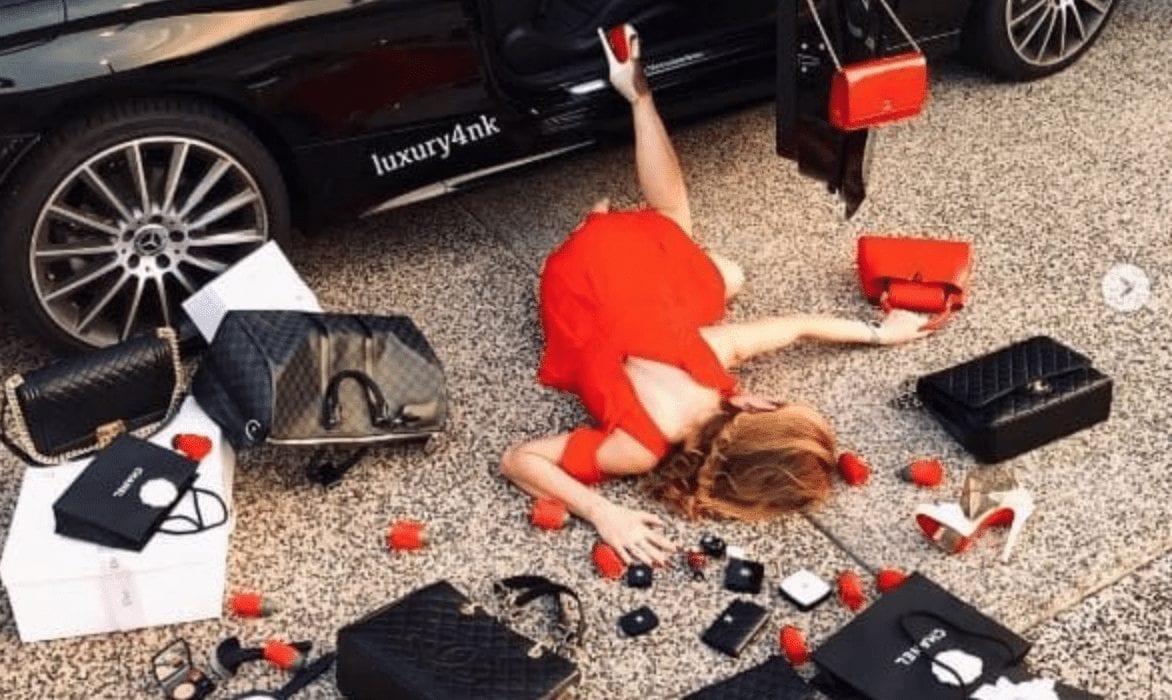
The Falling Stars Challenge, a meme that has rocketed through Asia, features people posing as if they’ve fallen out of their luxury cars, with the luxury contents of their luxury bags spilling out on the pavement for all to see. The expensive goods are meticulously arranged so followers can admire the makeup, jewelry, shoes and other items that have oh-so-embarrassingly been laid bare.
But the meme has become democratized, spreading from its beginnings as a way to take the humble out of humblebragging.
It now encompasses any number of chosen identities, becoming a way to display the physical items and pursuits most closely associated with oneself.
It’s popular among beauty and photography bloggers, fitness and food enthusiasts, and artists of all sorts.
Hospital workers have shown off the tools of their trade, while others, with a touch of self-deprecation, have offered their more accessible collections of yoga mats, junk food and trash. They don’t even need to fall out of cars.
The challenge originated in Russia and has spread throughout Asia, especially in China, where thousands of people have participated on Weibo, a popular social network.
Even rigid government departments have joined in.
The Consular Protection Center of China’s Ministry of Foreign Affairs posted a photo that showed a worker falling into a pile of paper.
A police school photographed a fallen officer surrounded by bullets.
The challenge has spread beyond Russia and China, with tens of thousands of posts from various countries appearing on Instagram.
Fashion brands need to put their foot down and take action to prevent “a race to the bottom” in terms of discounts as they threaten the survival of the whole fashion retail eco-system, Farfetch Chief Executive and Founder José Neves said.
Online and offline retailers are resorting so much to promotions there are only two months in the year during which there aren’t any: September and February.
“So, the system is really crumbling,” Neves said. “The industry needs to think very strategically about how they are going to avoid a race to the bottom in terms of promotions and discounts.”
He recommended that fashion brands turn into concessions those wholesale accounts, both online and offline, that do the most visible and damaging discounts.
He suggested brands follow the example of Chanel, which last week, announced it was going to turn into concessions its wholesale distribution accounts in the United States with department stores such as Bergdorf Goodman, Neiman Marcus, Bloomingdale’s, Saks Fifth Avenue and Nordstrom.
Chanel said the move was intended to better control interaction with its customers.
“The cycle of discounts is getting earlier and earlier,” Neves remarked. “If you speak to the CEO of any brand they will all say the same thing: we don’t let them do that, we shout at them, if you do it next time, we will stop working with you. And guess what, next season it is the same thing again and again, so their threats are useless. This is a preoccupation for the whole industry. People know what is happening. People talk about it and no-one does anything.”
Heavy discounts at department stores started with the 2008-2009 financial crisis and have never really stopped since.
Retailers have a herd mentality: if one discounts, the others follow. And no big department store will stop doing discounts by its own initiative for fear of losing business to rivals.
Neves foresaw that the only way for the industry to get out of this conundrum was for brands to step in and take concrete action.
However, on a brighter note, Neves foresaw solid growth in demand for fashion in the medium to longer term, in part because consumers increasingly feel they need to invest in fashion to differentiate themselves and look good on their social media accounts.
He also predicted consumers would have more disposable income due to changing spending patterns.
“People are not buying cars anymore because they have Uber, they are not buying houses because they were priced out of the property market in most big cities because they need a 40 percent deposit and they will never be able to save that much. They do not buy holiday houses because they have Airbnb, so there is more disposable income to buy fashion,” Neves said.
In September, Farfetch completed an initial public offering in New York that raised its profile and gave it a cash pile of more than $1 billion. Neves said its funds would be used to finance growth, win market share and make acquisitions “on an opportunistic” basis.
Neves said Farfetch would only make acquisitions in areas in which it did not have expertise. In July, Farfetch acquired CuriosityChina, a marketing firm specialized in WeChat, the popular Chinese social media.
In terms of geographic spread, Neves said India and South East Asia were among those regions Farfetch wished to expand into, but for now, the company needed to consolidate its recent expansion efforts which stretch from China, Japan and South Korea to Mexico, Russia, Brazil and the Middle East.
“At the moment, it is a pause in oxygen for strategy,” Neves said. “But eventually, we will be in every major luxury market in the world.”
China’s massive Singles’ Day shopping spree provided a huge boost to Korean retailers, with some companies posting their highest sales figures ever. Since 2009, Chinese retail giant Alibaba Group has transformed Singles’ Day, which falls on Nov. 11, into an online shopping festival with large discounts offered for 24 hours.
Other ecommerce giants like JD.com soon followed suit, making Singles’ Day into a Chinese version of Black Friday, although much bigger.
At Alibaba, the number of transactions on Nov. 11 has steadily increased since the event began in 2009.
Despite concerns that the ongoing trade war between the United States and China may have put a break on the income growth of middle-class Chinese consumers this year, Singles’ Day once again broke records.
Chinese shoppers purchased a total of 213.5 billion yuan ($30.6 billion), worth of goods on Sunday, a 27 percent surge from last year’s record. The year-on-year growth rate was slower than last year’s 39.3 percent.
Over 40 percent of shoppers made purchases from international brands, said Alibaba.
Among the countries that sold products to Chinese customers on Sunday, Korea ranked third after Japan and the United States.
Korea placed at No. 3 on the list in 2016, but fell two ranks last year after the deployment of the U.S.-led terminal high altitude area defense (Thaad) antimissile system. The incident soured relations between the two countries and provoked a boycott movement against domestic brands in China.
The exact volume of Korean goods purchased on Sunday was not disclosed, but it was evident that the shopping spree had an impact on local companies, as some of them reported record-breaking figures on Monday.
Food company Nongshim, famous for Shin Ramyun instant noodles, set a new record for Singles’ Day revenue since it launched online sales in China in 2013.
The company sold 5 million yuan worth of instant noodles at ecommerce website Taobao on Sunday. This was a 25-percent increase compared to last year’s Singles’ Day and 10 times the average sales made at the Chinese ecommerce website per day.
The No. 1 best seller for Nongshim was a multipack of its eight most famous noodle brands, including Shin Ramyun, Neoguri and Kimchi Ramyun.
“We organized huge promotional events ahead of Singles’ Day, as well as collaborating with [social media influencers in China] to air live videos of cooking Shin Ramyun,” the company said.
Eland Group’s Chinese office sold 444 million yuan worth of fashion goods through ecommerce website Tmall.
Based on sales records, the fashion group focused on presenting a wide array of outerwear like coats and jackets. A padded jacket from its kid’s brand, Paw in Paw, sold over 20,000 units during Singles’ Day.
Beauty companies also did well. At LG Household & Health Care, cosmetics sales increased 50 percent compared to last year’s Singles’ Day. Daily necessities jumped even higher by 73 percent year on year. Its brand, The History of Whoo, LG’s biggest success in China, sold 23 billion won ($20.2 million) worth of products, a 72 percent increase year on year.
Although LG did not disclose the entire sales volume, the company spokesman said that “this year has set a record for Singles’ Day.”
Rival Amorepacific unexpectedly set positive records as well. The company has been struggling after it lost Chinese consumers in the Thaad row. On Sunday, it generated 37 percent more sales compared to Nov. 11 last year. Several products from brands like Sulwhasoo and Laneige that were prepared for the Singles’ Day promotion sold out.
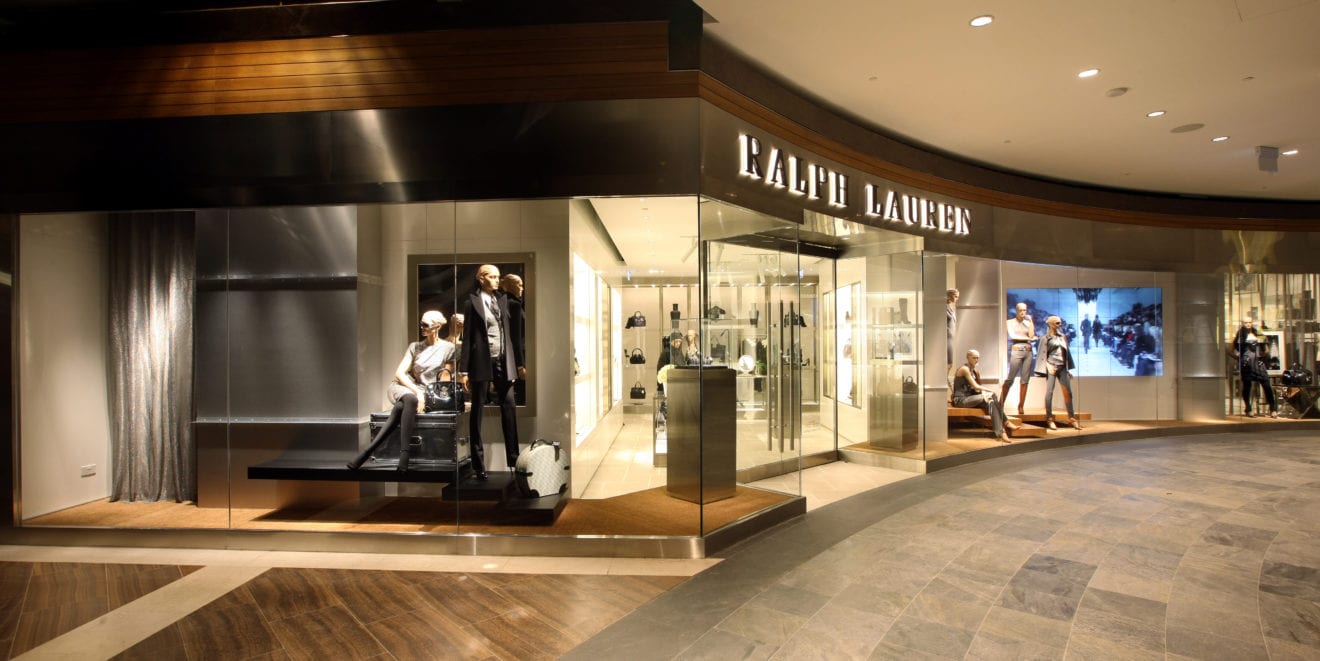
As Ralph Lauren pulls out all the stops to celebrate its 50th anniversary, its second-quarter results do not reflect the upbeat note of the festivities. Indeed, if anything the Ralph Lauren results are rather anemic and are characteristic of a brand that is still not entirely confident about its place in the fashion world or its future direction.
While growth of 1.6 per cent in overall revenue and a 1.4 per cent uplift in North America are positive, the decline of 0.8 per cent in Europe is disappointing as is the flat comparable-sales result. This mixed bag shows that the brand is only firing gently on some cylinders rather than powering ahead.
While in growth, Ralph Lauren’s North American division is still underperforming. The relatively flat revenue result, which is underpinned by an anemic 1 per cent increase in comparable sales, comes against the backdrop of a robust consumer economy where spend on luxury and higher-end goods is increasing. It has also been delivered at a time of elevated marketing spend. That Ralph Lauren could not engineer a better performance underlines the fact that the brand has a lot more work to do to connect and resonate with consumers.
One of the unresolved issues at Ralph Lauren is in having a clear brand proposition that is carefully targeted at customers. While numbers show that general brand perception of Ralph Lauren has improved over the past year, the number of people agreeing that it, or its sub-brands, are ‘made for people like them’ has remained flat. This is worrying and underlines that there is still a lot of repositioning and redefining required before Ralph Lauren can deliver better numbers.
None of this should suggest the company has been inactive or passive; it has not. With the Polo brand, for example, a lot of new items have been introduced and products have been enhanced with embellishments such as embroidery and added functionality. These have helped to drive some better numbers and suggest that the company is innovating, but the improvements are hampered by a lack of progress on overall brand perception, especially among younger shoppers. It will clearly take time for the various changes to drive overall perception.
One area of progress is on the digital side of the business, where comparable sales in North America rose by 9 per cent. While this is below the overall rate of growth for online luxury, it is a sign of progress and is a reflection of the various investments Ralph Lauren has made in its digital channels – including the marketing efforts on social media. Ralph Lauren now needs to apply this thinking to driving traffic in stores, where North American sales fell by 1 per cent on a comparable basis.
Outside of North America, performance in Europe was poor. While total revenue fell by 0.8 per cent, comparable sales slipped by 4 per cent. Part of this is down to inventory issues at outlet stores and part is the result of lower consumer confidence in key markets like the UK. Even so, it is disappointing given the various investments, including in digital, that Ralph Lauren has made in the region.
Overall, Ralph Lauren is gently moving in the right direction. However, the brand vision remains rather murky. It needs to be simplified and retooled so that it is clear and compelling. A young brand like Maine’s Kiel James Patrick is the perfect example of a well-curated and authentic lifestyle label that Ralph Lauren needs to emulate. Ralph Lauren has yet to prove it is up to this task.
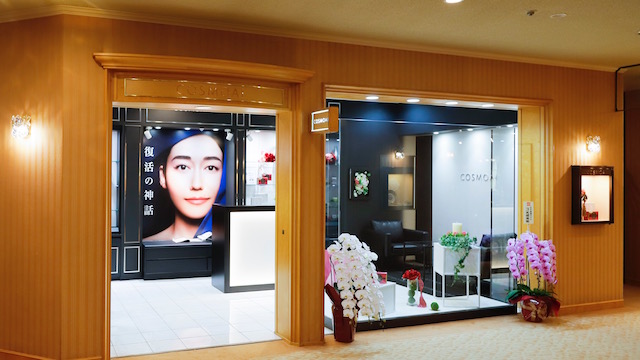
Japanese skincare brand Cosmoai has opened its Tokyo flagship store at Imperial Hotel Tokyo. The new store covers an area of 59sqm and showcases the company’s signature products to business and mid- and upper-class customers. It is the second Cosmoai store in Japan following its first flagship store in Nagoya.
Cosmoai’s CEO Takayuki Inoue said the store provides an opportunity to introduce Tokyo customers to premium product lines and enable them to try them out.
Cosmoai specialises in skincare solutions and enabling anti-aging skin repair and revival. Coinciding with the new store is the launch of a new hair care product, 18-Hair Care EX, a pill taken orally that addresses the problem of hair loss and improves hair health.
The company’s products are now available in Tokyo, Nagoya and Hong Kong and online.
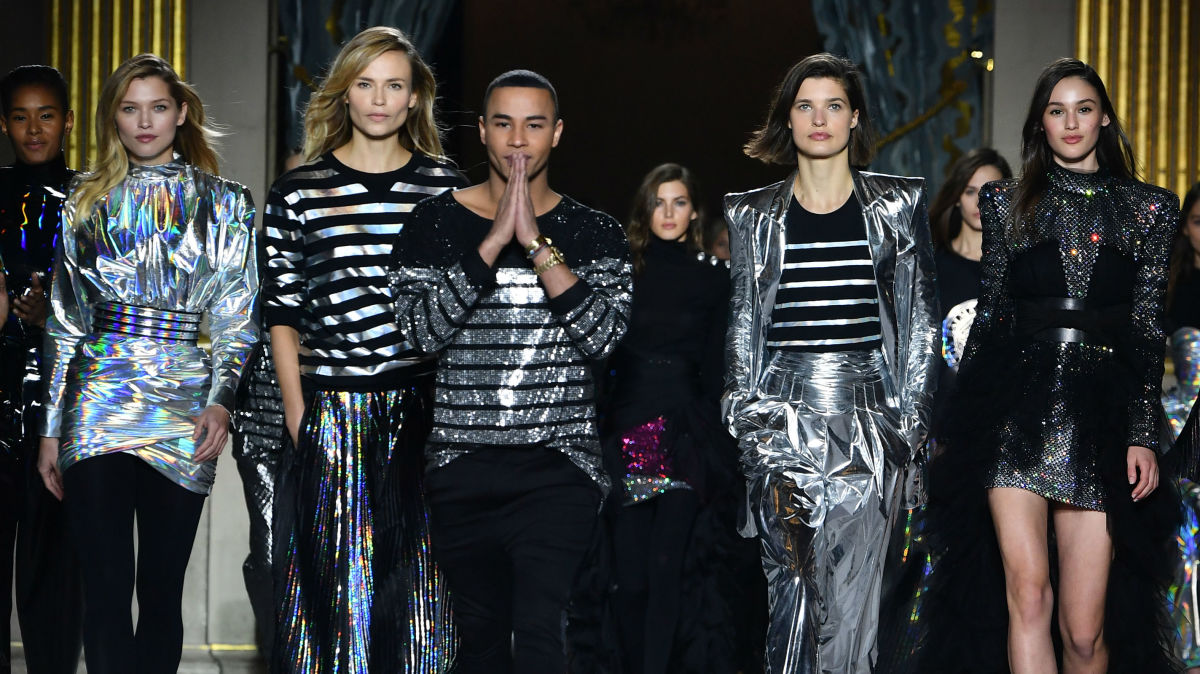
Balmain is returning to the couture calendar for the first time in 16 years. Leading the charge is Olivier Rousteing, who has been at the creative helm of the house since 2011 and is widely credited with boosting the brand’s profile through his Balmain Army – an inner circle of internationally famous poster girls, including Kim Kardashian West and a handful of Victoria’s Secret models.
Speaking at WWD’s Retail & Apparel CEO Summit, the French designer said that he is “looking to bring back the Parisian DNA” by reviving the couture division.
The January haute couture shows will premiere his inaugural Balmain output as a couturier, but, he revealed, he has his sights set on accessories, fragrance and cosmetics too.
Indeed, the Balmain expansion plan is firmly underway.
In May 2017, Rousteing partnered with L’Oréal Paris on a collection of Balmain lipsticks that he had designed himself.
He said the collaboration was rooted in three things: “First, the savoir faire, which means couture to me. Second, diversity, because this is a topic that is really important to me. And third, modernity.”
As with his Victoria’s Secret collaboration the same year, and his H&M collaboration in 2015, Rousteing welcomed the chance to make his creations available to a wider audience through lower price points.
“A lot of people love Balmain but can’t afford it, and with the lipstick they can get into the Balmain universe in an affordable way,” he said.
“I create a world that is expensive because with Balmain it’s luxury, but if you think of my ideas and ideologies it’s more than a price on the clothes,” he explained.
Though couture does not support the affordable aspect of the business model, it will certainly expand Balmain’s world and, crucially, underline all of Rousteing’s efforts with real craftsmanship and integrity.
Market expansion service provider DKSH Thailand has announced plans to double the scale of its Thai luxury and lifestyle business within two years. The firm has picked up three international brands this year, with another Italian lifestyle brand to be added to its portfolio next year.
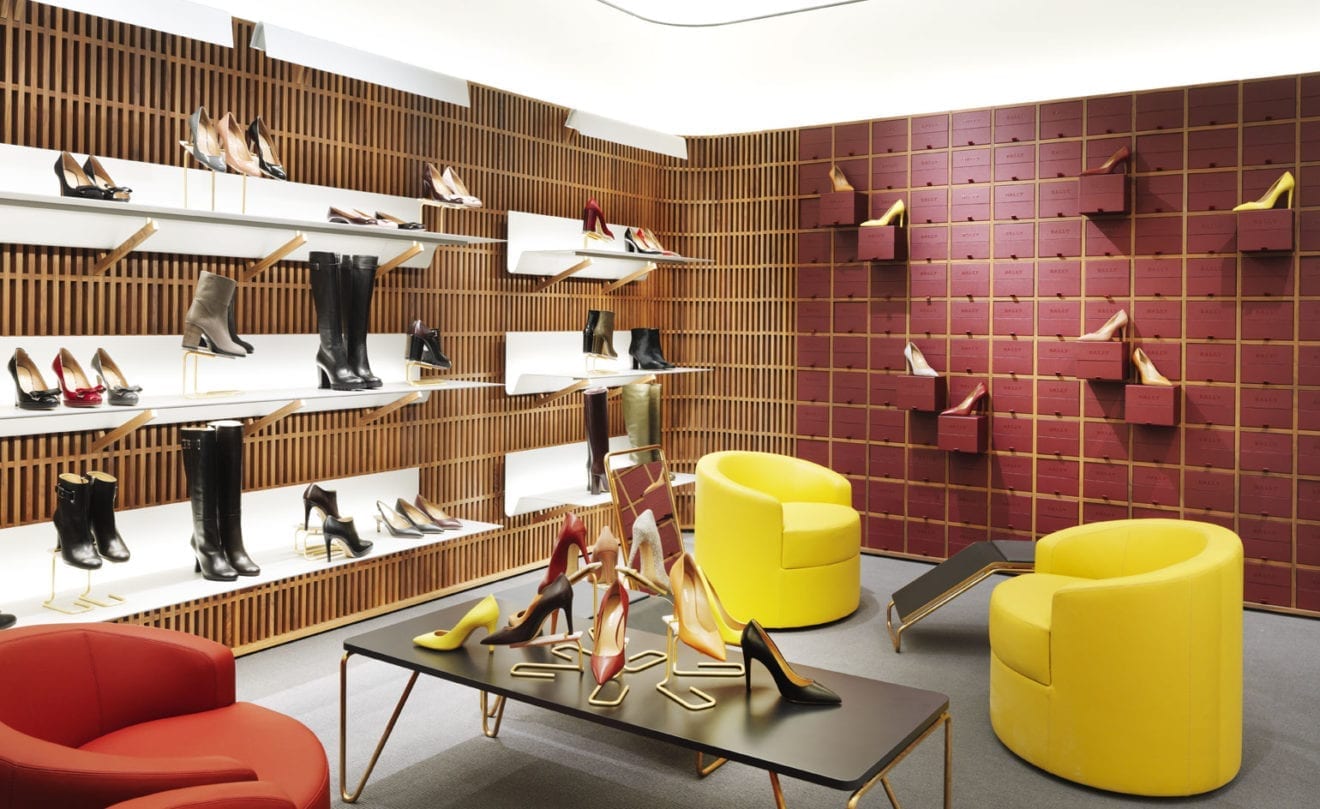
Included in the expansion is a THB30 million (US$913,800) investment in a new 200sqm flagship Bally store in Thailand, opening at Iconsiam on Friday (November 9).
DKSH regional VP of luxury and lifestyle business Franck Giacobini said luxury and lifestyle is picking up again and sales are strong.
“DKSH’s luxury and lifestyle business in Thailand will strengthen in the next few years because the country has a young population with high spending power.”
He added that DKSH will allocate a huge investment to the Thai market, considering the country’s high-end retail complexes and strong tourism.
President of DKSH Thailand Douglas Humphrey added: “DKSH has been in Thailand for over a century. Our consumer product business in Thailand is the biggest market for the DKSH network globally. We will continue to invest here in terms of people, capability and supply chain in the coming years.”
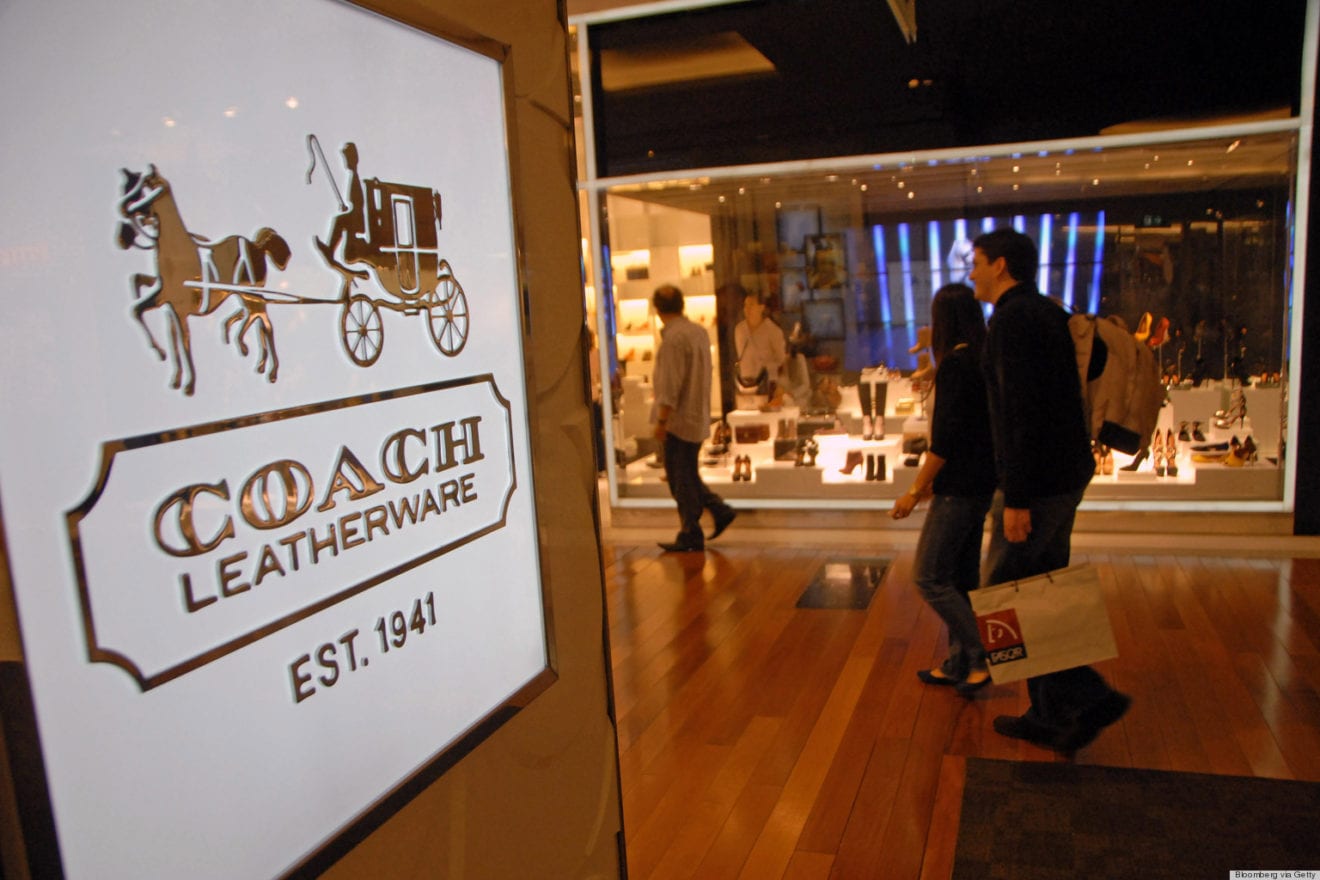
One year into its major push to become an American luxury conglomerate, things appear to be moving in the right direction at Tapestry, which recently posted first-quarter results that topped expectations across the board. The firm — parent of Coach, Kate Spade and Stuart Weitzman — said its Q1 sales advanced 7 percent to $1.38 billion, driven mostly by the flagship Coach brand but also helped by Kate Spade, which it acquired in 2017.
“Results were driven by continued growth at Coach, where global comparable store sales rose 4 percent, led by outperformance in digital, and reflected our compelling offering across categories and channels,” said Tapestry CEO Victor Luis. “Kate Spade contributed to our overall performance, as we made continued progress on our integration efforts, including the realization of synergies and the execution of strategic initiatives.”
Trends at Stuart Weitzman, improved from the prior quarter, according to Luis, but results continued to be negatively impacted by development and delivery delays, which pressured sales and margins.
“Production levels and shipments have now stabilized, reflecting the investment in talent and processes, as well as added manufacturing capacity. As a result, we remain on track to achieve profitable sales growth in the holiday quarter,” Luis added.
Overall, the company reversed the prior year’s losses, posting profits of $122 million, or 42 cents per diluted share. Adjusted profits were $142 million, or 48 cents per share, topping analysts’ bets for 45 cents per share.
By brand, net sales at Coach rose 4 percent to $961 million, Kate Spade’s sales surged 21 percent to $325 million, and Stuart Weitzman fell 1 percent to $95 million.
“Our first-quarter performance and progress on our strategic priorities to date give us confidence in our ability to achieve the goals we’ve set out for fiscal 2019,” said Luis.
“We continue to expect to deliver strong revenue and operating income growth, while making investments to support our long-term vision and drive a return to both double-digit operating income and earnings-per-share growth in fiscal 2020.”
To that end, the firm lifted its profit outlook for the fiscal year and now projects earnings per diluted share in the range of $2.75 to $2.80, compared with the previous range of $2.70 to $2.80. It continues to expect revenues to increase at a mid-single-digit rate to $6.1 billion to $6.2 billion.
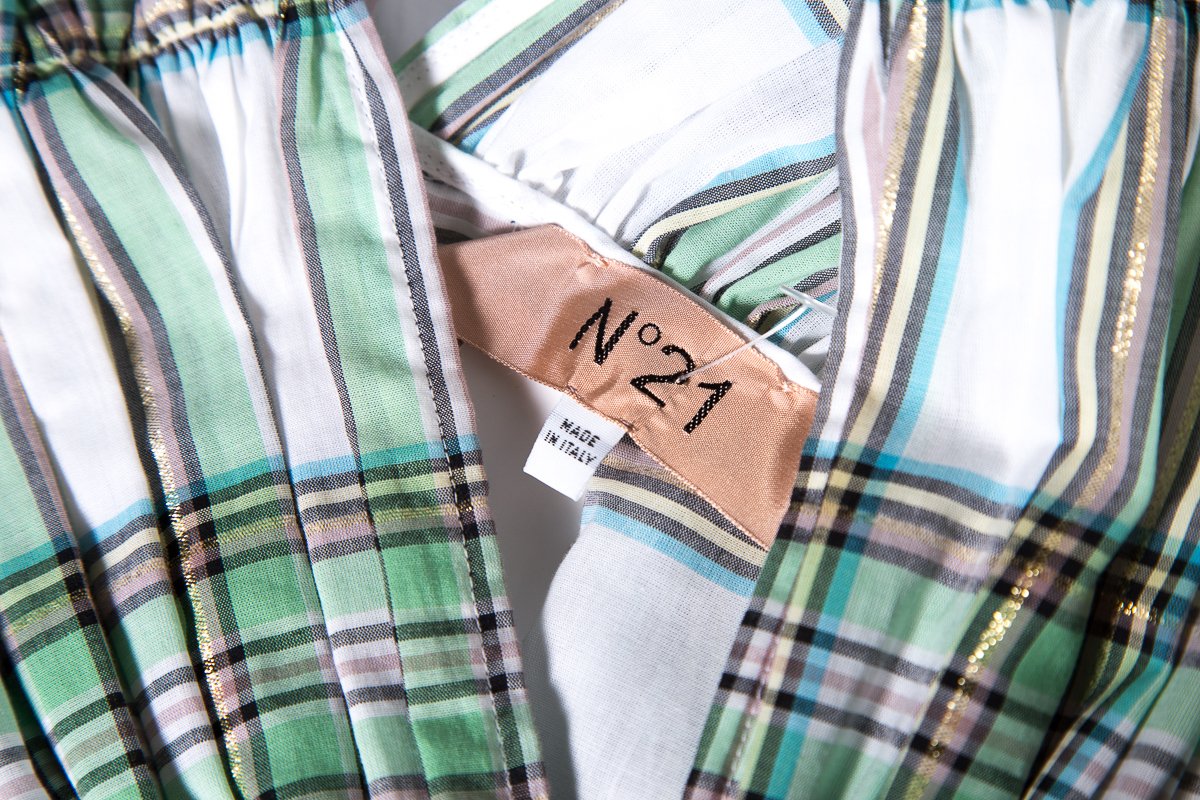
N°21 has major expansion plans in South Korea. The Italian fashion label designed and led by Alessandro Dell’Acqua has signed a distribution agreement with Lee & Han, a Korean distributor managing a broad portfolio of lifestyle brands, and plans to open 18 stores in the country in the next five years.
N°21 had already opened a series of retail corners in the country, but it is now stepping up the pace of its growth.
The first stage of N°21’s expansion strategy was the opening of a flagship store of over 300 square metres, the brand’s largest, in the Cheongdam district of Seoul, a hub for fashion labels.
The store extends on two levels and showcases N°21’s ready-to-wear, footwear and accessories collections for men and women.
The store’s interior design replicates that of N°21’s Milan flagship: the chromatic contrast of black and white on the marble floor, the polycarbonate and raw concrete ceilings, and plenty of mirrors, steel and aluminium.
The store’s façade is entirely black, riffing on that of the label’s Omotesando store in Tokyo and of its new Milanese headquarters.
The South Korean partner chosen by N°21 to support its expansion the country is a shareholder and licensee of Converse and Kappa, and is very active in the multibrand retail business (with Han Style, Han Style Men, Han Style Kids and Han Style Shoe) and as an exclusive distributor of international fashion labels like Delvaux, Giambattista Valli, Emilio Pucci, Nina Ricci, MSGM, Mr & Mrs Italy, Premiata, and others.
N°21 is distributed by the Gilmar group in over 600 multibrand stores worldwide, and in Asia it currently operates monobrand stores in Tokyo, Hong Kong and Beijing.
In 2016, the latest year for which figures are available, N°21 generated a revenue of €52 million, up 117% compared to 2015.
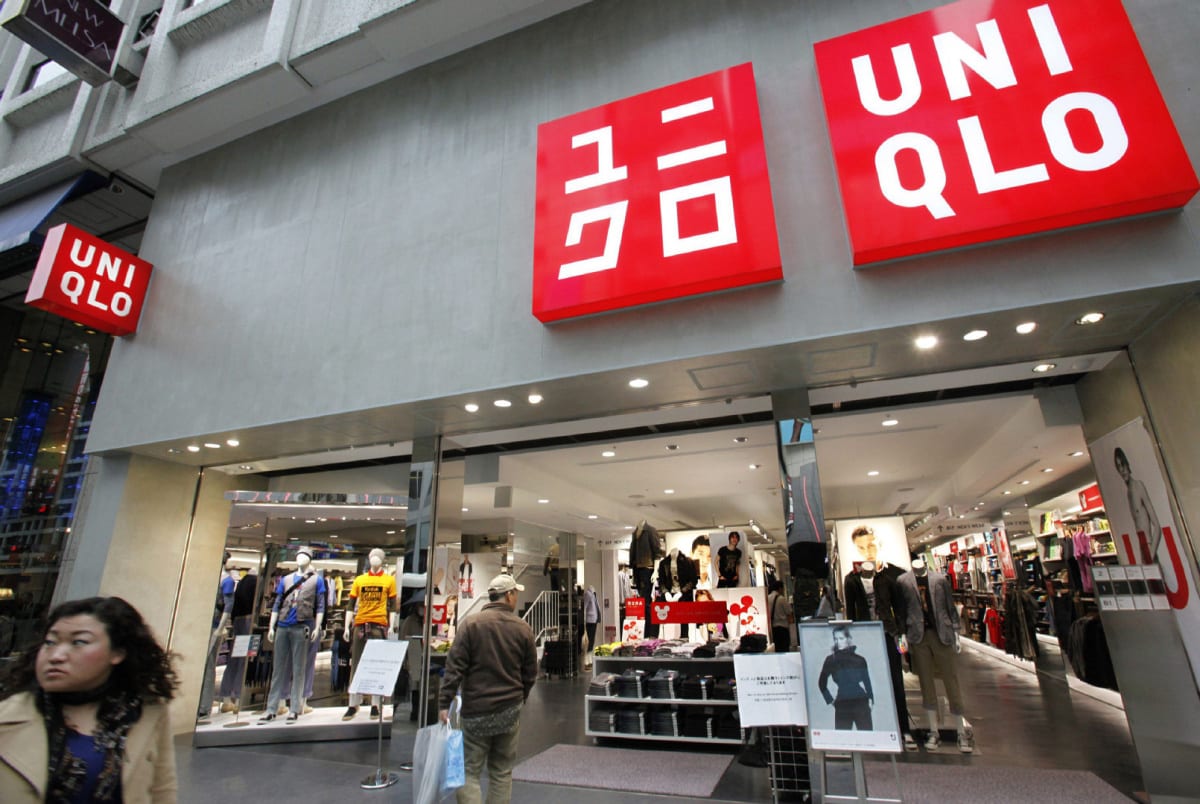
Uniqlo’s parent, Fast Retailing, has acquired a 35 per cent stake in Hanoi-based women’s fashion brand Elise. Elise, which has more than 100 stores across the country, is said to have received tens of millions of dollars from the deal – a figure much higher than its entire charter capital.
This is Fast Retailing’s first significant move into Vietnam since it announced it would launch its Uniqlo brand in Ho Chi Minh City next year.
The store will be operated by a joint venture between Fast Retailing and Mitsubishi Corporation.
Vietnam is one of the markets Uniqlo is counting on to double its store network in Southeast Asia and Oceania to around 400 by 2022.
Uniqlo’s arrival in Vietnam will intensify competition for foreign brands as Zara and H&M who have already successfully launched there.
According to German firm Statistics Portal, Vietnam’s fashion revenue will annually grow 22.5 per cent from 2017 to 2022, and its clothing sales will surge to an estimated US$245 million this year.
Another fashion group from Japan, Stripe International, has reportedly bought NEM, a Vietnamese fashion brand which targets female office workers.
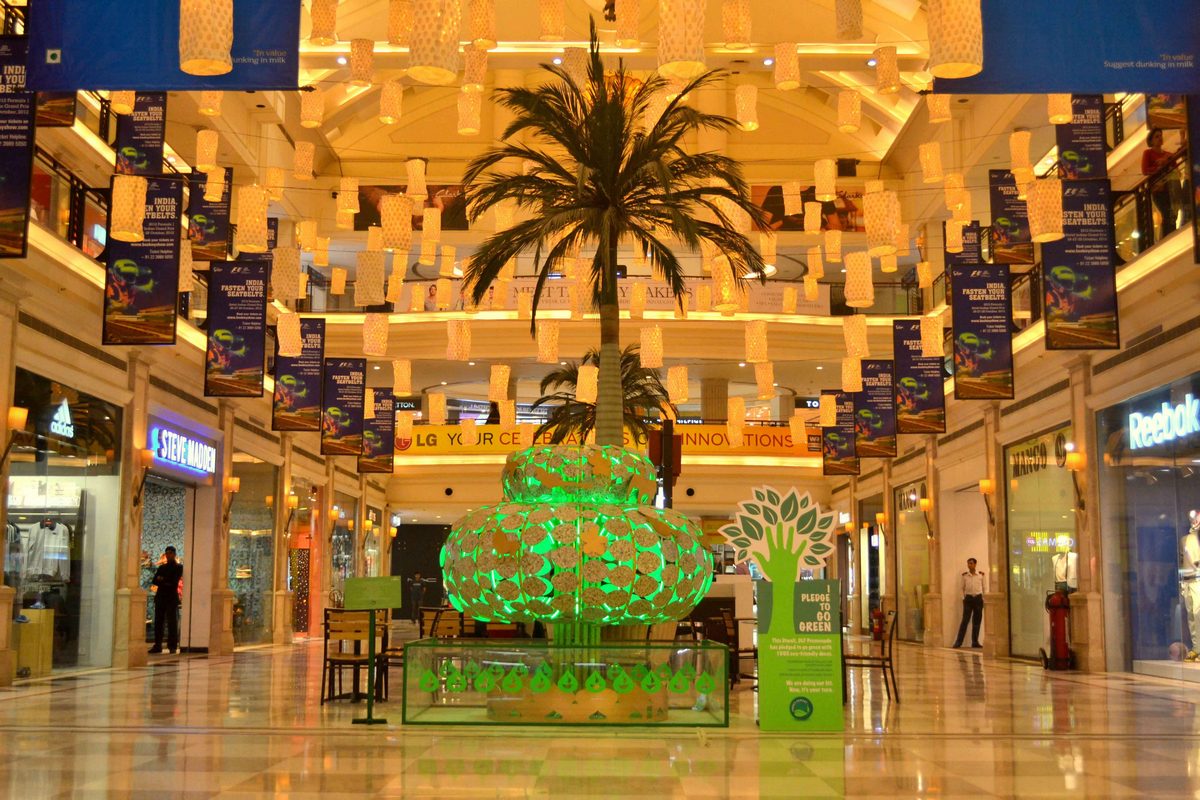
DLF Emporio is a name to reckon with in the evergrowing luxury retail space in India and the credit for its successful journey, spanning 10 years, goes to Dinaz Madhukar – a stalwart in the hospitality sector in India. Madhukar has over 24 years of operational experience with The Taj Group of Hotels, India’s largest luxury hospitality chain, as General Manager where she led multiple functions. Currently, she is responsible for providing executive leadership and management of DLF’s Vasant Kunj Retail Complex including DLF Emporio and DLF Restaurants – including the iconic Set’z. In addition to this, she is responsible for the management of DLF’s hospitality vertical, which includes The Lodhi. She also looks after the brand’s spanking new luxury addition to the capital – The Chanakya.
Sharing the secret recipe of success, Dinaz Madhukar’s, EVP, DLF Luxury Retail & Hospitality says, “Luxury, in its very essence, thrives on exclusivity and personalized experiences. Technology, has proven to be a strong ally for the luxury brands and engagement with the audience has become more direct. We use the social and digital media to introduce disruptive content and creative campaigns to connect with our patrons, which leads to a direct impact on footfalls and sales.”
In an exclusive interview with Shopping Centre News, Madhukar talks about the journey of DLF Emporio over the past 10 years, the challenges, expansion plans and the future of luxury malls in India.
DLF Emporio has successfully completed 10 years of operations. Tell us about the journey been so far?
When DLF Emporio started operations in Delhi in 2008, there was no antecedence on how to do it right. At that time no other real estate brand had forayed into the luxury retail terrain. For DLF Emporio, therefore, there was neither an example nor a benchmark; however, ten years of successful operations undoubtedly is a coup for the brand.
In many ways, DLF Emporio remains a case study for the luxury retail spaces, across India. The mall is today globally synonymous with Indian luxury retail and has been catalytic in putting India back on the global luxury retail map. The Indian luxury retail trail, begins with DLF Emporio and goes on to set higher expectations for their next luxury project, The Chanakya. This young one-year-old property is wisely curated given its compact nature and is poised to cater to the niche and discerning young and mature digitally savvy audiences.
What, according to you, are the key elements that determined the success of DLF Emporio?
The success of every business depends on understanding the pulse of your customers and pre-empting and adapting to the change in dynamics of the everevolving market space.
DLF Emporio has been very cognizant of creating bespoke customer and retailer experiences in keeping with aggressive marketing and promotion plans of its retail partners, and I think keeping pace with and supporting the marketing needs of each retailer and guest, is what has worked for us.
The marriage of hospitality services with luxury retail has been key to best attend the needs of both the retail partner and our guests.
If you were to look at the annual brand properties created by DLF Emporio right from the luxury shopping festival, to couture weddings, down to the shopping fiesta, every event property is focused at addressing and pushing targeted business goals of our retail partners, while showcasing the best of luxury fashion and hospitality to our loyal customer base. The idea is to continually support both our retail and customer audiences with winning propositions for each.
In the past 10 years, how have you seen the fashion luxury market evolving in India?
The Indian luxury retail industry has been on a growth trajectory ever since we opened our doors in 2008. We have actually seen the customers’ taste maturing over the years. When the luxury brands came into India it was more of a sellers’ market; however, today we see a conscious buyers’ market where subtlety and self-astuteness guide govern purchase behaviour. Our guests have always veered towards quality and craftsmanship, and today you will see a significant acceptance and slant towards bespoke merchandise and limited-edition products. The guests today adhere to the ‘less is more’ adage when it comes to investing in luxury.
India has always been a great purveyor of luxury. The initial luxury patrons were the royalty and today the most decadent luxury products are consumed by not just HNI’s but also top CXO’s, young, mature and astute entrepreneurs. We have also seen the emergence of the young start-up communities egging their ways into the Unicorn universe; these are also voracious consumers of luxury.
The trend now is slowly shifting from product and brand focused luxury to experiential luxury consumption. You do see brands reflecting this shift with their new verticals and product innovations. Earlier, technology was restricted to corporate corridors in the silicon valleys, however, technological disruptions are now becoming a norm across luxury brands. These tech-luxe disruptions are focused on capturing eyeballs and mind space of the more assertive, highly demanding and seriously articulate, young Millennials, who live their lives on, and consumer information on virtual and social mediums.
How has the brand mix at the mall changed over the years?
The brand mix has remained broadly the same. In fact, we have had to request some brands to give back some proportion of their spaces to us in order to pave room for new brands. As the market and the consumer evolved, we have seen an epic change in the kind of ranges and products that the brands started introducing in the mall.
Monograms have made way for subtle luxury, and limited editions are becoming more coveted. The propensity to own, gave way to the intent to own curated, one-of-a-kind, products.
What are the new brands that you are introducing this year?
We have already introduced first-comers of luxury in India, including names like Berluti and Molton Brown. Polo by Ralph Lauren has also launched its store at DLF Emporio. We have added a global luxury porcelain art creator like Lladro to our brand mix, which makes the DLF Emporio luxury retail proposition even more exciting. India will continue to be a lucrative market for global luxury brands given its discerning customer mix and penchant for curated luxury.
Do you see luxury shopping in India evolving in the future?
2018 is turning out to be a massive year in the world of luxury retail in India. The retail industry has depicted a future forward and a very positive growth, and we see this trend continuing. Luxury is no longer the bastion of a few but fast becoming the remit of the successful first-generation entrepreneurs, the affluent corporate and the young and the aggressive successful start-up landscape.
Older brand narratives are finding vibrant new platforms. Brands are re-inventing storytelling and showcasing disruptive innovations. The luxury shopper is now, an ever-expanding universe with audiences across various luxury access points, looking to fulfil varied and differentiated needs. You will now see a more exuberant and new age evolution of the luxury retail sector with global brands jostling for consumer’s minds space and share of wallet.
And what steps are you taking to keep consumers coming to DLF Emporio for the next ten years?
DLF Emporio has always been a forerunner in the luxury retail sector. We were the first to foray into luxury retail, and we have been agile enough to keep on top of our game. A decade is a long time, and we have successfully completed our milestone, replete with challenges, learnings and substantial deep dives into our customer’s buying behaviours and mindsets.
For any brand to stay relevant it must appeal to the core interests of its customers and guests. We have kept the brands more than relevant, by offering unique experiences, the best in luxury brand offerings and superlative service experiences in a genuinely luxurious environment. We are committed to elevating our customer and brand experience with many more luxury retail disruptions in the near future.