Retail News CRM

Tag: Brand

  • LVMH confirms launch of multi-brand fashion site

    LVMH confirms launch of multi-brand fashion site

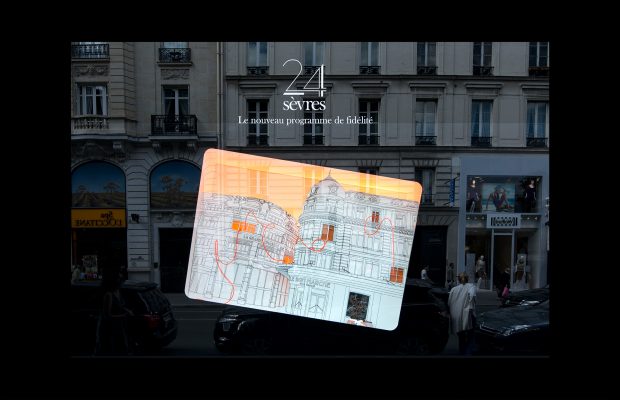
    LVMH is launching a multi-brand e-commerce website inspired by its exclusive Parisian department store Le Bon Marche, as the world’s biggest luxury goods group steps up the digital side of its business.

    The new website, named “24 Sevres” after the Rue de Sevres location of Le Bon Marche in the chic 7th arrondissement, will offer fashion, cosmetics and luggage products from LVMH’s own portfolio as well as brands from outside the group.

    Overall more than 150 labels, including 20 of LVMH’s own stable such as Louis Vuitton, Dior, or Fendi, will be featured.

    The size of the investment amounted to several million euros and marks the biggest digital initiative taken by LVMH since it hired former Apple music executive Ian Rogers in 2015 to craft its digital strategy and capitalise on the luxury sector’s online sales expansion.

    LVMH, controlled by French billionaire Bernard Arnault, said the new site would go live on June 6 in more than 70 countries.

    Competing with established rivals such as Yoox Net-a-Porter , MyTheresa, Matchesfashion.com or LuisaViaRoma, it echoes the high-end positioning of the Le Bon Marche store.

    It will give international clients “very Parisian choices” in the selection of exclusive products, Rogers told Reuters.

    “The idea is to be attractive with unique products, not necessarily have a huge offering,” said Rogers.

    E-commerce is still a relatively small part of the global luxury goods market, representing 7 percent of industry sales, but this is expected to rise to 12 percent of industry sales by 2020, according to the Boston Consulting Group.

    Luxury goods companies face a dilemma over trying to reach young Internet-savvy shoppers while preserving the sense of exclusivity that drives up the value of their products.

    LVMH has already tapped into the increasing importance of online social media by setting up LVMH Luxury Ventures to invest in start-up luxury goods projects.

    Until now each LVMH brand has had its own separate digital strategy, with some brands such as Fendi and Kenzo putting significant resources into this area while other brands such as Celine had no E-commerce website of their own.

    The new website will complement the offering available on the respective websites of the LVMH brands, Rogers said.

    Big fashion brands such as Prada, Gucci or Valentino will be sold on the site as well as Maison Margiela, seen as a more cutting-edge label, or others such as Kitsune or APC.

    LVMH’s online sales of €2 billion ($2.2 billion) last year equated to 5.3 percent of overall group revenues.

  • China Southern Airlines issues open invitation to brands

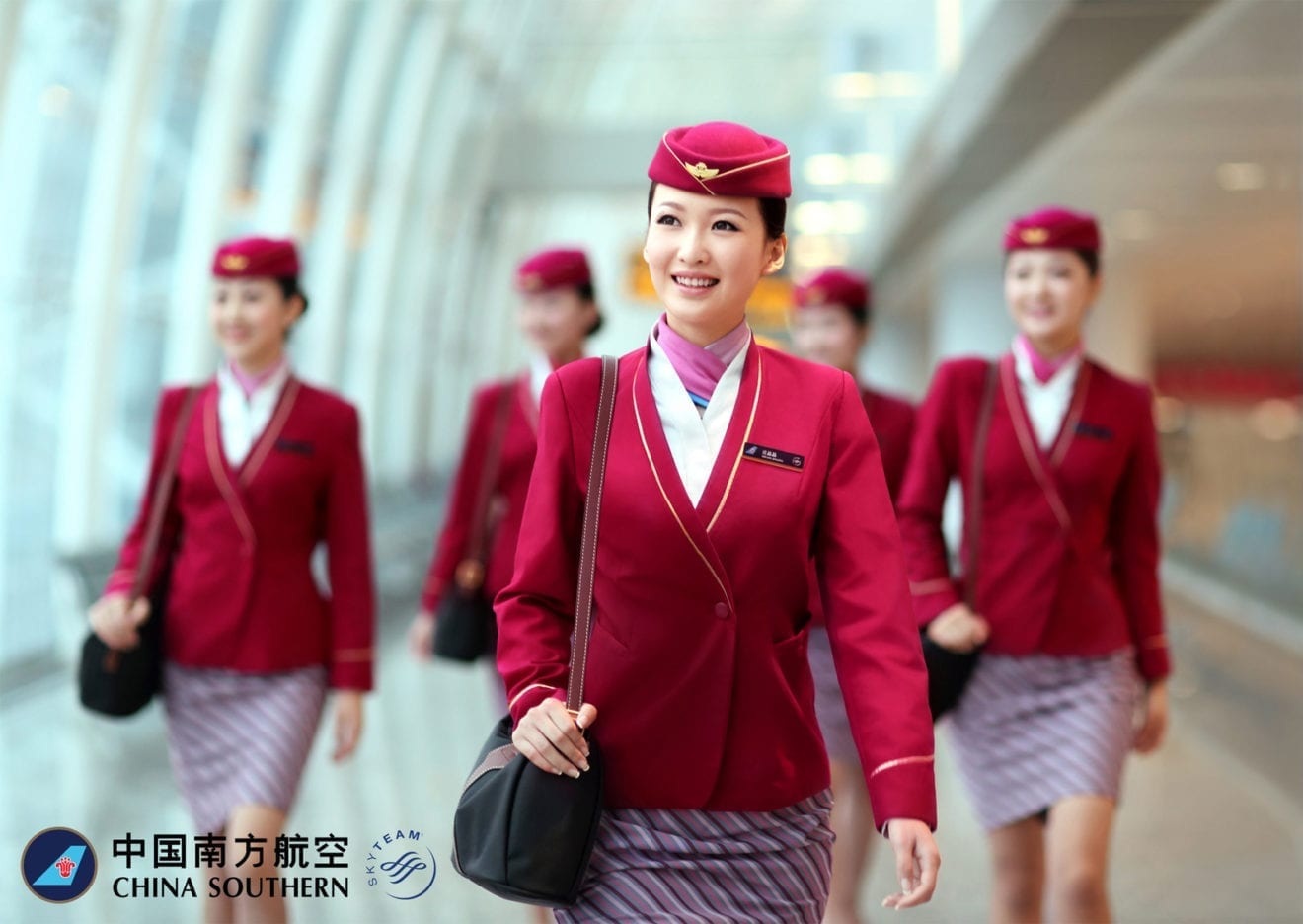
    China Southern Airlines issues open invitation to brands

    Li Jianhua, President and CEO, Guangzhou China Southern Airlines (CSN) Inflight Duty Free says it has enjoyed double-digit sales growth in recent years driven by innovation in its product portfolio as well as the introduction of duty free exclusives and a pre-order service.

    “We have redeveloped our products and pricing for specific buyer groups,” said Jiianhua. “But we still need more luxury brands to enter the market to appeal to a new generation of consumers in China.”

    She also implored brand owners in the audience to come forward to begin conversations with CSN, whilst promoting the huge potential of the China inflight market.

    Jianhua charted the company’s rise to success to become ‘the largest airline in Asia by fleet and passengers’ as the carrier claims. Jiianhua highlighted that CSN launched its first inflight retail programme in 2001 and it very quickly began to play a very important role for the airline, not just from a customer engagement perspective, but from a revenue generation standpoint.

    She pointed out that the company wants to extend its global reach, identifying that Southeast Asia represents 31% of the company’s current route quota and with Japan & Korea accounting for 28%.

    She also pointed out that she believes the company has great potential, especially considering that Chinese overseas visitors reached 122m in 2016. As the company expands its route reach and takes advantage of the growing number of passengers Jianhua insists that inflight retail will be available on ‘every international flight’.

    Skincare represents 30% of China Southern’s inflight business.

    She noted that research from Fortune Character suggests that Chinese consumption continues, but has slowed down in recent years and high-end consumers now tend to make more ‘rational’ decisions.

  • Brandline – Bring Your Brands to Life

    Brandline – Bring Your Brands to Life

    Consumers are exposed to more than 3000 messages a day. The real question now is, what will make your brand stands out? As consumers only spend a few seconds in front of retailer shelf, are the in-store messages targeted properly and relevant? Hence, design solutions that boost the traffic and sales potential in retail environments are sorely needed.

    As the expert in merchandising and in-store communication, HL Display Thailand has the most innovative design and ideal solutions to create a more desirable shopping experience and brand awareness that includes

    • Creating a place where the consumers want to shop
    • Developing impulse buying and customer loyalty
    • Making differentiation from competition
    • Increasing basket size and footfall

    Communicate the brand values and product benefits with Brandline™, the collection of shelf liners, highlighters and accessories, specifically designed to create highly effective on-shelf communication and segmentation. Extending the message areas with additional accessories such as lighting is also reinforcing brand awareness and instantly adding positive disruption visually.

    https://www.youtube.com/watch?v=DUECYwjKfjA

    Health and Beauty category for instance, is a category characterized by many new products introductions coupled to variety of pack sizes and shapes. State of the art message conveyer, cosmetic front rails, sample tester holder, lighting accessories are becoming a must have in store environment, and this is when Brandline™ becomes even more important than ever.

    For further information, Bangkok based HL Display Thailand can be directly contacted during office hour at +66 2276 2445 with the attention to Mr. Thanasun Sakchuenyod, or e-mail to [email protected] or [email protected]. Visit the company website at www.hl-display.com/asia

  • Nike And Jordan Brand have opened a huge store in China

    Nike And Jordan Brand have opened a huge store in China

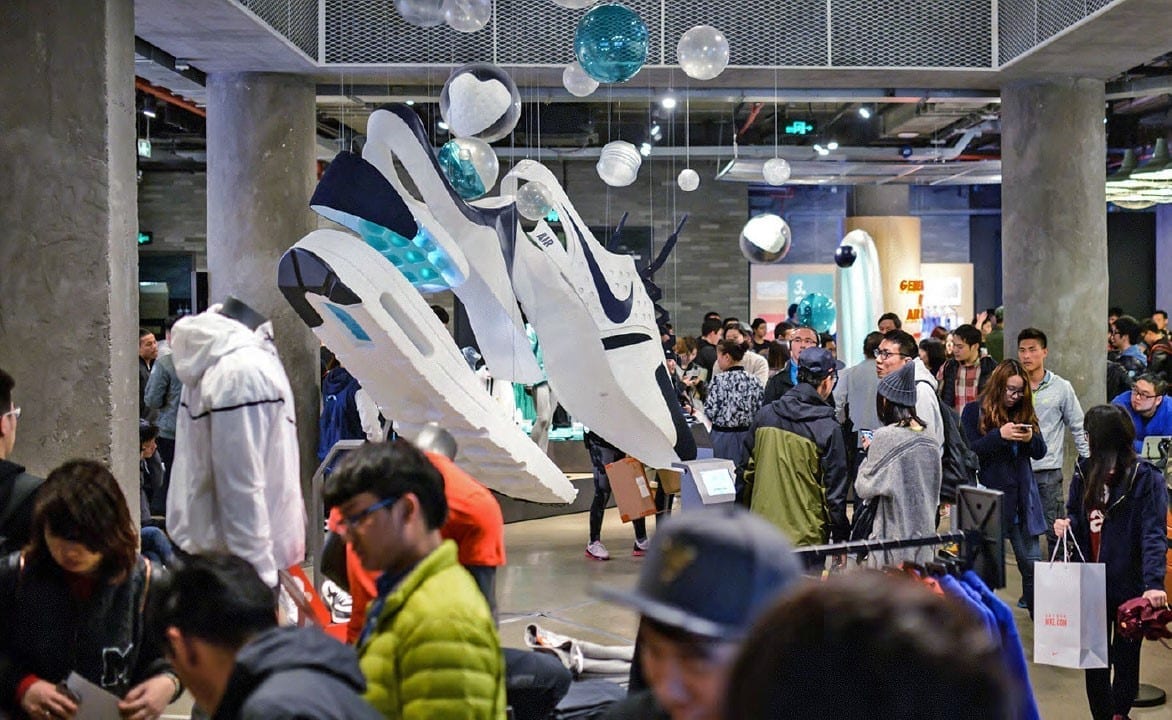
    Jordan Brand and Nike came together to open up a humongous store dedicated to basketball. China will now hold a 6,550-square-foot store located in Beijing’s EC Mall. The store will feature some of Nike basketball and Jordan brand’s latest basketball products with opportunities for personalized store experiences with NIKEiD. The space will also feature trailing zones for custom products which is called Nike+Basketball trial zone.

    “Our new Nike and Jordan Basketball Experience Store demonstrates Nike’s commitment to the sport and culture of basketball in China, and how we’re continuing to lead the future of sport retail,” said Dennis van Oossanen, Nike’s VP of direct to consumer efforts in Greater China.

    The store will also include huge appearances from athletes, in-store events and much more.  Check out the gallery below of the 6,550-square-foot store.


  • Marikina-made shoes a hit in Indonesia

    Marikina-made shoes a hit in Indonesia

    Filipino fashion retail brand Rusty Lopez recently opened its newest store in Jakarta featuring comfortable sandals and casuals made from Marikina, the Philippines’ shoe capital known for producing durable and high-quality footwear.

    According to a recent report of the Department of Trade and Industry’s Philippine Trade and Investment Center – Jakarta, the store in Sogo Lippo Mall Puri located in the St. Moritz Central Business District is the brand’s 9th outlet following the opening of stores in Seibu Grand Indonesia, Sogo Emporium Pluit, Sogo Central Park, Sogo Alam Sutera, Lotte Shopping Avenue, Metro Plaza Senayan, Metro Gandaria City, Metro Taman Anggrek.

    In a statement, Philippine Commercial Attaché to Indonesia Alma Argayoso said the sales of the newest collection during the opening were brisk. The other stores also received positive feedback.

    “It is exciting to bring to the Indonesian market the Philippines’ world-famous Marikina-made shoes. This affirms our belief on the potential of fashion retail products in Indonesia, Southeast Asia’s biggest economy,” Argayoso said.

    The first overseas store of Rusty Lopez opened in Jakarta on March 6, 2016 at the Seibu Department Store of Grand Indonesia Mall and featured carefully selected designs suited to the Indonesian market.

    DTI noted that increased interest in Philippine-made shoes abroad helps revive the local shoe industry and is expected to open more opportunities for small enterprises to generate employment within their communities.

    As part of the DTI’s Industry Promotion Group, the Philippine Trade and Investment Center (PTIC) in Jakarta will continue to support and assist Filipino homegrown brands in globalizing their products and accessing regional markets by continuously looking for potential partnerships.

    Aside from Rusty Lopez, other Filipino fashion retail brands in Indonesia include Karimadon, Penshoppe, Gingersnaps and Ann Ong Jewelry.

  • YLKI Protests Indecent Bikini-brand Snack

    YLKI Protests Indecent Bikini-brand Snack

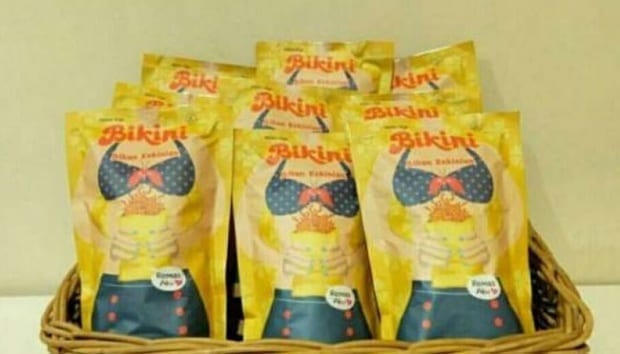
    Chairman of Executive Committee of the Indonesian Consumers Organization Foundation (YLKI) Tulus Abadi protested on a Bikini-brand snack product. Tulus said the brand sold in social media is considered as indecent.

    “That is a snack (fried noodle) product with a non-educational, even indecent, brand name”, Tulus said Wednesday, August 3, 2016.

    Recently, information of the Bikini snack circulates through chain messages. The product shows a woman’s body from shoulder to hip with just wearing a bikini. The worst part is the package has “remas aku” (squeeze me) slogan written on it.

    YLKI protested the circulation of the product and asked to recall the product from the market. Tulus requested the National Drug and Food Agency of Indonesia (BPOM) to reprove the manufacturer and demand to shut down any form of sales through social media.

    “Online selling, particularly via e-commerce Olx.com and Bukalapak.com, must be immediately stopped. Consumers must not purchase the product, especially the children,” said Tulus.

  • Golden opportunity: why now’s the time for brands to move in Myanmar

    Golden opportunity: why now’s the time for brands to move in Myanmar

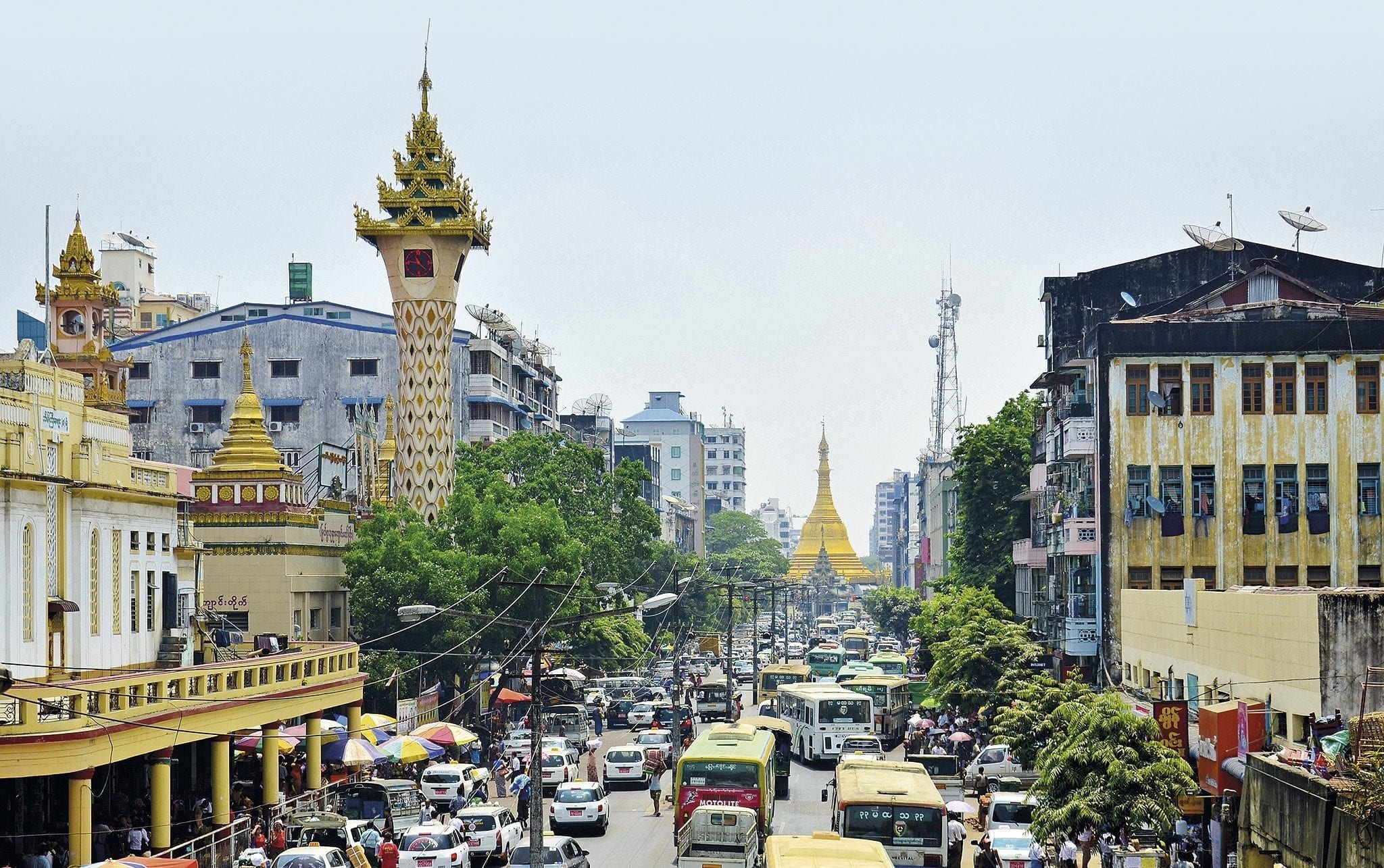
    In the street outside Yangon’s Shwedagon Pagoda, a Buddhist monk reaches into the folds of his burgundy robes for his mobile phone. He cuts a somewhat incongruous figure, tapping his screen against a backdrop of golden spires, with a steady stream of pilgrims and traffic all around. But this blend of ancient tradition with digital connectivity is now the way of modern Myanmar.

    The pace of change here is on a scale unseen in other fast-growth Asian markets. Just three years ago, buying a mobile SIM card meant handing over $2,000 in cash on the black market; now, there are now three competing networks and a SIM costs just $1.50. Ownership of mobile phones has already shot up to more than 50 per cent – a fact all the more remarkable given that only a third of people here have mains electricity in their homes.

    It is this prevalence of mobile connectivity right at the beginning of Myanmar’s growth curve that is proving such a strong accelerant of change. Mobile connectivity won’t just enable growth, it will direct it, leading entire business sectors – from banking to retailing – to leapfrog stages of development.

    The International Monetary Fund has predicted Myanmar will have the world’s fastest-growing economy this year, with GDP growth of 8.6%. Since the country embarked on a programme of ‘disciplined democracy’, investment has been increasing. The smooth transition to a civilian-led government earlier this year is giving many more businesses the confidence to invest and expand here.

    Economic growth and urbanisation are giving rise to social mobility, and with that, the world’s newest, youngest middle class. Myanmar is home to 51 million people, more than half of them aged under 30. By 2020, Boston Consulting Group anticipates that 10 million will be middle-class or affluent. These people won’t necessarily be wealthy by global standards, but they will have disposable income that puts fashion, fragrance and home appliances within reach. Later, they will be in the market for cars and overseas holidays.

    For brand owners, this represents unprecedented opportunity, and there is a clear early-mover advantage to be had. WPP’s global BrandZ study tracks the way consumers feel about different brands around the world. Some brands are so little understood by consumers, they are a ‘clean slate’ in consumers’ minds. In Myanmar, where shoppers have had little choice about where they shop and the brands they buy, about a third of all brands fall into this ‘clean slate’ category – double the global average.

    That means now is the time for brands to start making an impression, not just on people who are ready to buy, but also on those who are on their way up. Ford and Chevrolet are already here; Coca-Cola, KFC and Pizza Hut are among the other international brands to have launched in Myanmar.

    Consumers in Myanmar are open to trying new products and new brands, but while global brands can serve as shorthand for quality or safety, they are not a badge of honour and do not instantly command a premium. People are embracing the opportunities that digital connectivity offers, but do not seek an express route to ultra-modernity. The languorous pace of life here is seen as something to be treasured; thoughtfulness and self-control are admired, and modest attitudes to spending and thrift can make indulgence seem decadent.

    Brands need to be respectful of tradition, and understand that parents and grandparents are highly influential. BrandZ analysis shows that the strongest brands in Myanmar project idealism and a sense of adventure, but steer clear of individualism and rebellion. They also help consumers navigate what is becoming a sea of choice, emphasizing not just the features of a product but the difference it can make to the consumer’s life. This involves working closely with the traditional retail trade – local ‘Mom and Pop’ shops – which account for the vast majority of sales here. These stores are not just distribution points but trusted sources of information and advice.

    Norwegian mobile phone network Telenor has demonstrated how global brands can achieve local resonance. Its TV campaign reflects the importance of family as a young woman in the city calls her mother in the countryside for urgent cooking advice; she wants to cook ‘nan gyi thohk’ noodles from her home-town to impress her mother-in-law. The ad has been so popular that nan gyi thohk is now ‘the Telenor dish’.

    Similarly, the isotonic drink 100PLUS, from Malaysia, has established a powerful connection with consumers in Myanmar by reflecting what it feels like to be in a hot climate with so much that needs to be done.

    For now, access to television is higher than mobile penetration, but only just. Mobile internet is where consumers are increasingly getting their information, and going online in Myanmar means going on Facebook. Even President Htin Kyaw is a subscriber. Media plans need to be mobile-friendly, if not mobile-first.

    Success in this market requires a nuanced approach both to business and communications. The Buddhist monk on his phone appears to be straddling very distinct worlds; in fact, he is integrating the two in a uniquely Burmese way.


  • First-ever Myanmar Study Highlights Factors for Brand Success & Future Game Changers

    In a nascent marketplace where local brands hold their own against foreign competitors, Apple has emerged as the most differentiated brand whereas local telecom player MPT ranks as the most loved. Brands like mobile provider Telenor have also earned recognition for innovation, despite being a recent market entrant.

    Myanmar’s rapid transformation also means businesses need to ready themselves for game-changing scenarios propelled by technology and infrastructure advancements. Myanmar is set to become the first country in the world to go straight to smartphone as part of its “leapfrog” development. Key changes affecting marketing and brands include the rise from almost zero mobile penetration to nearly 50% in just a couple of years. Technology will likely direct a new generation of digital growth, from retail to banking to social communications.

    The Spotlight on Myanmar findings are based on everyday buying decisions such as coffee, soft drinks as well as long-term purchase decisions around mobile service and handset sectors. Research shows that the most effective messages come from brands that put their products and benefits front and centre. Key differentiators behind the strongest brands are those that project idealism, desirability and a sense of adventure.

    BrandZ research in Myanmar includes 1,660 consumer interviews and covers 42 key international and regional brands that are already building a sense of meaningful difference in Myanmar, based on either their global profile or their local activity. Findings show that:

    • Apple is the most differentiated brand in Myanmar followed by Coca-Cola and Samsung. Apple indexed 232, where the average brand indexes at 100.
    • Mobile network Telenor is the most innovative brand in the survey, indexing 125, with rivals MPT and Ooredoo coming second and third respectively.
    • MPT is the most loved brand in the survey, indexing 129, nine points ahead of Samsung and 11 points ahead of Telenor and Huawei.
    • Samsung’s brand proposition scored the highest at129, ahead of Apple on 125 and MPT on 118.
    • Huawei scored highest on brand power -a brand’s ability to boost sales or gain market share due to consumers’ predisposition to choose this brand over another – indexing 436, significantly higher than its global average score of 81. Huawei performs better in Myanmar than it does in its home market, China, on this measure.

    “There are huge opportunities for international brands to be successful in Myanmar, if they get their cultural message right and understand the diversity of the country, particularly in the border areas. Our teams have identified comparisons with the India of 30 years ago and indeed some aspects of rural India today. Also valid are comparisons with Indonesia, which also has a large population that lives off the land as well as a huge range of different climatic regions,” said David Roth, CEO at The Store, EMEA and Asia.

    The report also highlighted a number of key trends that will change how brands and agencies should approach this market, now and in the next few years, including:

    • Rapid improvement in infrastructure. It has taken just three years to build a national mobile network; other changes including the arrival of greater electrification and improved transportation links will happen much faster than would be expected in many markets.
    • e-tailing is coming. Despite the current poor retail infrastructure, the rapid growth in e-commerce in other developing markets acts as an indicator that the speed will be similar in Myanmar.
    • The world’s first mobile-only market. Consumers are increasingly looking to mobile for both information and entertainment. While TV is important, brands need to consider Myanmar as not just a mobile-first environment but also a mobile only market.
    • Sell the effect, not the spec. Consumers are new to choice in Myanmar so they will navigate the new landscape differently. Brands need to focus on how the product will meet their needs and make it easier to compare functions and prices.
    • Appreciate the diversity of Myanmar. This is not a homogenous nation. Although 88% of the urban population is Buddhist, there is a huge range of ethnic, climatic and cultural variety, which will be particularly critical in the personal care sector.

    “BrandZ’s first research in Myanmar will help international and regional marketers understand the challenge of building strong brands in this new market. Experience in other fast emerging markets shows that first mover advantage and the loyalty it engenders in consumers can last for decades. Myanmar is a long-term commitment but one that will pay off for the brands that get it right,” said Doreen Wang, Head of BrandZ, from Millward Brown.

  • Dtac plans major prepaid brand revamp

    Dtac plans major prepaid brand revamp

    Thailand’s Dtac has announced a major prepaid brand revamp and introduced new promotional tariff plans as  part of efforts to attract at least 1 million digital consumers to its prepaid subscriber base.

    As part of the revamp, Dtac will replace its Happy prepaid brand as it moves to bring all its prepaid brands under the Dtac umbrella.

    The operator has allocated 200 million baht ($5.7 million) this year towards marketing the Dtac prepaid brand.

    Dtac has also introduced plans offering unlimited internet access and free calls within Dtac networks for 29 baht ($0.83) per day.

    Prepaid customers will also be offered free YouTube streaming from midnight to 8am and 24 hour music streaming.

    Around 80% of Dtac’s 25.5 million subscribers are prepaid customers, with the wide majority using the operator’s 3G network, statistics provided by the company show. Around 68% of Dtac’s prepaid customers own a smartphone.

  • Brand building shifts from billboard to online

    Brand building shifts from billboard to online

    From billboard and television, the Philippine market is slowly shifting to online in brand building, capitalizing on the growth of mobile penetration and the use of electronic commerce.

    According to leading global market research and insights company TNS, brands in the Philippines have leveraged on the social media-savviness of the Philippine market in pushing their brands which are now using Facebook twice as much in the previous year to push their products.

    Anne Rayner, global head of Communications Research, in a press briefing said electronic commerce is picking up and growing three times as fast as the global average.

    Rayner said 81 percent of brands on Facebook in the Philippines use this medium to market their products, which is almost double than the 47 percent global penetration.

    In the Philippines, Rayner said, 11 percent of purchases are now made via mobile.

    The study also showed that almost two thirds of product research (62 percent) is happening online in the Philippines – and much of this is happening in-store while people shop.

    “This highlights just how vital it is for retailers and businesses to understand which touchpoints are most important to driving sales, as it may not be those in the physical store,” Rayner said.

    Rayner clarified though that the Philippines remains a TV-heavy market but that studies would indicate a shift to mobile as half of the population are connected.

    “This has allowed them to increasingly watch videos on their smart phones during peak TV times in the early evenings. In one year, the Philippines emerged from the most TV-heavy market to just in the top 10. Brands should embrace on how to reach consumers,” Rayner said.

    “In the Philippines, it’s all about mobile and Facebook is very critical. Social media now looks like TV,” she added.

    When it comes to customer relations management, Rayner said, Filipinos prefer social media rather than call centers such that it would be better to set up service centers to handle after-sales.

    Rayner also said billboards in the Philippines are overused and brands should use them for deliberate, specific strategies on top of other media, depending on the products.

    A study done by TNS a few years ago showed that the Philippines was a country of billboards, but Rayner said this has changed.

    “Studies show that from telcos to infant nutrition, billboards are not a good value for money, just because brands become visible (through billboards) does not mean they are impactful. Billboards just become wallpapers,” Rayner added.

    Car dealerships, for example, use TV and billboards to drive sales.

    E-commerce in the Philippines in 2015 grew nine percent, three times faster than the global average, with 20 percent of Filipinos buying through ecommerce, half of which are via mobile.

    Rayner said the Philippines has overcome the accessibility challenge in e-commerce but trust issue remains a hurdle.

    She said most e-commerce purchases are for travel.

    According to Rayner, growth of e-commerce in the Philippines is hampered by the fact that most fast-moving consumer goods are purchased on last-minute, where Filipinos go to their old reliable retail outlets for their purchases.

    The TNS study revealed thaton average, Filipinos use five different touchpoints before making a purchase. Touchpoints are the different ways that consumers interact with a business.

    From traditional methods like customer service call centers to newer interactions like social media, the array of touchpoints now available for businesses has completely changed the marketing landscape.

  • Does Your Brand Need a Store in China to Succeed?

    Does Your Brand Need a Store in China to Succeed?

    As brands speculate about continued economic buoyancy in China, the necessity of having physical stores has come under increasing scrutiny. The unrelenting enthusiasm for e-commerce shown by Chinese consumers has also given cause for questioning the relevance of physical retail.

    Luxury and fashion brands have scaled back on their original optimistic plans to store expansion in China. Most notably, Louis Vuitton announced the closure of several Chinese stores last November. Also Walmart, has this week, launched a major brand repositioning to offer e-commerce solutions to Chinese consumers.

    Pessimism about store space is becoming endemic. Dangdang.com, a local online bookseller similar to Amazon, has launched an audacious plan to create actual bookstores based on the idea they will receive free-rent in increasingly vacant shopping malls in big cities.

    When a store, is not just a store

    Looking at the importance of a store presence in China requires a specific cultural lens. A key starting point for most, if not all, foreign brands is that they are not inter-generational. That is, the reputation and trust of the brand has not been passed down through family legend. Instead, brands are initiating relationships from scratch with a fresh generation of consumers.

    Taking the case of luxury, consumers have experienced the brand as a personal form of development. A key moment of truth in their relationship with brands is formed through store experiences –the physical inspection and feeling of products.

    When interviewing Chinese consumers, the key difference that strikes me is how emotional the store experience and service are in the stories they tell about their favourite brands. Often, they become aware of a brand through peer recommendation, but their loyalty and ultimate advocacy is created through their retail experience.

    Forgoing or not maintaining a retail presence is like introducing a ‘circuit breaker’ at the most crucial stage of brand adoption. Stores, irrespective of economic forecasts, must be seen as a symbolic, practical and emotional stepping stone for new consumers in China.

    In one particular interview with in Chengdu, the thriving city in the Western part of the country, a Chinese entrepreneur was describing to me that one of his favourite brands was Tod’s (which he could not pronounce, and jokingly called it “potato slices” because it was the closest Chinese word he could find).

    Despite having extreme difficulty in engaging with the brand at the official level, he has become a Tod’s aficionado based on his experience at the store – that he described as “like the home I imagine I would live in Italy”.

    For him, the brand was the retail experience, it was enough to cement this loyalty and enthusiastic promotion to a large group of businessmen, who like himself, were ‘finding their feet’ with luxury brands.

    Beyond a transaction point: Chinese stores as brand equity

    From a broader strategic point of view, brands need to see stores in a wider cultural perspective. Beyond a point of transaction and sales number, stores are the clearest and most uncompromised expression of your brand to new consumers in China.

    In the context of ‘face’, retail presence in new malls and as part of the new middle class’ weekend walkabouts is essential to suggest status and respect to Chinese consumers.

    Once again, using Chengdu and luxury as an example: The way foreign brands were perceived in terms of their premium offering was directly related to their presence in two of the city’s new mall developments –meaning Burberry and Michael Kors enjoyed almost equal rating as early-arriving European brands.

    Adding to perceptions is the way that Chinese consumers share their recommendations with others in-person and online is almost always footnoted with a proof point on quality. Invariably, this is described as the look, feel, or physical appearance of the product materials – the fabric of the dress or the sheen of the casing. In this initial peer-to-peer introduction to brands, physical inspection at a store is an essential part of the purchase journey.

    Forgoing or not maintaining a retail presence is like introducing a ‘circuit breaker’ at the most crucial stage of brand adoption. Stores, irrespective of economic forecasts, must be seen as a symbolic, practical and emotional stepping stone for new consumers in China. Something that e-commerce, or lack of stores, can not address.

  • Sheinside in controversial rebrand

    Sheinside in controversial rebrand

    Chinese language on-line style retailer Sheinside admits its change of brand name identify to SheIn has drawn controversy within the on-line world.

    Sheinside lately adopted She In Shine Out as its new slogan, and dropped ‘aspect’, from the top of its web site URL and model identify. However promoting the idea was no ‘shoe in’…

    “It has sparked a quite heated dialogue amongst eCommerce friends,” conceded Chris Xu, the CEO.

    “Some may marvel why SheIn determined to vary its area identify at such a key second. As is understood to all, the area identify is sort of distinctive.”

    Xu says the change was aimed toward enhancing the consumer expertise of its on-line clients. It’s simpler to recollect, simpler to sort and simpler to look.

    “As soon as customers entry the web site, they’ll discover it a lot simpler to recollect the area identify.”

    The corporate additionally consider the brand new identify “cultivates, respects and strengthens shopper model loyalty”.

    “The start line of all modifications is to consolidate shopper loyalty and model consciousness. These are intangible belongings they usually play an indispensable half in company methods.

    In fact, altering a model identify gained’t change issues in a single day. SheIn has made infinite efforts to make the method a clean one.”

    SheIn went to the market to decide on its new slogan in a three-phase aggressive on-line ballot which noticed She In Shine Out adopted by an awesome majority. There was an analogous course of to undertake a brand new emblem.

    “SheIn is able to current a brand-new search for our clients and we see a shiny future for SheIn,” concluded  Xu.

  • Chinese language FMCG manufacturers dominate in China

    Chinese language FMCG manufacturers dominate in China

    In its newest annual research of China’s most chosen FMCG manufacturers, Kantar Worldpanel has revealed that all the prime 10 manufacturers have Chinese language origins.

    Grasp Kong leads the best way as probably the most profitable Chinese language FMCG model.

    The 2015 Model Footprint rating reveals the manufacturers which are being purchased by the most individuals most frequently in 35 nations, throughout the meals, beverage, well being and wonder and homecare sectors. It makes use of a metric referred to as Shopper Attain Factors which measures what number of households around the globe are shopping for a model (its penetration) and the way typically (the variety of occasions buyers purchase the model). Kantar Worldpanel says the methodology offers a real illustration of customer selection.

    CHINA FMCG BRANDS TABLE 1

    Grasp Kong, which heads the league in China, has seen its merchandise purchased a mean of eight.eight occasions a yr by 90.2 per cent of city Chinese language households. The in depth protection of the manufacturers has helped Grasp Kong to safe the highest spot within the rating for the third yr in a row. The highest three gamers, Grasp Kong, Yili and Mengniu, have been chosen by Chinese language consumers greater than 1 billion occasions final yr. Among the many prime 10 manufacturers, Shuanghui, Vibrant and Haday have superior within the rating.

    Rising stars

    Danone’s Mizone is the rating’s prime riser, rising its CRP by greater than 20 per cent yr on yr, including 7.9 million new households to its shopper base. With constant communication in recent times on day by day restoration, along with geographic and vary enlargement, Mizone emerged as the highest riser in 2014. It joins Bluemoon, Julebao, Sanquan and Area 7, as China’s prime 5 quickest rising manufacturers by CRP in 2014.

  • Garrett Popcorn opens second HK store

    Garrett Popcorn opens second HK store

    Garrett Popcorn has opened its second store in Hong Kong at the Festival Walm Mall in Kowloon Tong.

    Lance Chody, Chairman and CEO of Garrett Popcorn Shops, said the shop complements its first store located at the IFC Mall shop.

    “We like to say that Garrett Popcorn is Happy Food and we hope that our launch in Festival Walk will make our Hong Kong customers as happy as our popcorn makes us,” said Olivia Huynh, VP APAC Operations at Garrett Popcorn Shops.

    The gourmet popcorn brand is popular throughout the US and many places in Asia including Bangkok, Singapore, Seoul, Kuala Lumpur and Tokyo.

    Signature Flavors include: Caramel Crisp, Cheese Corn, various Nut Caramel Crisps, Buttery, Plain and the famous Chicago Mix, which blends Caramel Crisps’ sweetness with Cheese Corn.