Tag: Business

  • Malaysian businesses expect slower growth in third quarter

    Malaysian businesses expect slower growth in third quarter

    Businesses expect growth to slow in the third quarter due to lower confidence levels after recording positive business performance in the second quarter of the year, according to the Statistics Department.

    The department’s Business Tendency Statistics for the third quarter 2018 which presents statistics on business performance based on a survey conducted on a quarterly basis – said the second quarter of the 2018 was positive with an overall net balance of +3.6%, mainly contributed by services sector (+22.0%).

    As for the third quarter, overall business performance is expected to grow at a slower pace with confidence indicator of +6.0% compared to the +7.8% in the previous quarter.

    On a sectoral basis, services sector is expecting their business performance to continue to grow in the third quarter of 2018 with confidence indicator of +16.5% as compared to +8.6% in second quarter of 2018.

    Other sectors such as industry and wholesale and retail trade which are also of the expectations of their business situation improving albeit at a moderate rate with smaller confidence indicators at +2.1 % and +3.6% respectively.

    However, the construction sector expects their business situation to be less bullish with a confidence indicator of -7.7%.

    “Majority of the respondents in all surveyed sectors which was 45.1%, anticipated that their gross revenue to increase while 44.4% expected unchanged. In contrast, 10.5% of the respondents foresee a decrease in gross revenue,” said chief statistician of Malaysia Datuk Seri Dr Mohd Uzir Mahidin.

    On another note, business performance is expected to continue to grow for the period of July to December 2018 based on a net balance of +11.6%, supported mainly by services sector that was most optimistic with a net balance of +25.3% as compared to +15.3% for the period of April to September 2018.

  • Business optimism in Malaysia soars in Q2

    Business optimism in Malaysia soars in Q2

    Business optimism in Malaysia rose 24 percentage points (pp) to 52% net as at the end of the second quarter (Q2) of 2018 versus 28% in Q1 after the change in the new federal government, according to Grant Thornton International Business Report.

    This near doubling in business optimism was the highest among the Asean countries.

    Grant Thornton Malaysia’s country managing partner Datuk NK Jasani said the results indicated that Malaysian businesses are upbeat and confident with the outlook of country’s economic landscape.

    “The outcome of the 14th General Election has contributed to this significant increase of confidence among Malaysian businesses and the results can been seen in various sectors.”

    He opined that the government should now emphasize on business transparency and have business friendly budget to continue this positive momentum.

    Business owners are confident about their business performances over the next year, with many having positive outlooks for revenue, employment and also investments. A net 56% of businesses are expecting an increase in revenue over the next 12 months, an increase of 22pp from Q1.

    The report finds that a net 26% of businesses owners are expecting to hire more employees, an increase of 12pp from Q1.

    Apart from that, business owners are expecting to increase their level of investments. 66% plan to increase their investment in technology; 44% in plant & machinery; 24% in research and development; and 22% in new buildings.

    Lesser business owners have cited the economic uncertainty as a constraint to their business growth, a decrease from 44% in Q1 to 32% in Q2.

    However, there is growing concern on the lack of skilled workers, energy costs and exchange rate fluctuations.

    Access to skilled workers is seen as the biggest constraint to growth by Malaysian businesses at 46%, an increase of 14pp from Q1.

    Concerns have also increased for exchange rate fluctuations, driven by the prospect of further US Federal Reserve rate increases this year.

    Jasani said with many businesses across Asean still borrowing in US dollars, fears over rate rises could easily blow business confidence off course.

    “For the emerging economies, including Asean, it is not an easy situation for businesses. However, action can be taken to reduce the risks associated with a reliance on US dollars. One option is to hedge and lock in a more predictable exchange rate for a period of time.”

  • Instagram Shopping Business expanded to stories

    Instagram Shopping Business expanded to stories

    Instagram is bringing its successful shopping feature to Instagram Stories.

    Of the 500 million daily users of Instagram, over 300 million use Instagram Stories everyday, which is a significant consumer base for retailers to push into.

    “Brands have always been early adopters of stories, they create some of the most viewed and engaging content on the platform,” reads Instagram’s press release announcing the feature.

    “From Adidas and Aritzia to Louis Vuitton, people have been able to shop from their favorite brands around the world, and now you can shop these businesses in Instagram Stories.”

    According to Facebook IQ research, “more than one in three self-reported daily active Instagrammers surveyed… said they have become more invested in a brand or product after seeing it on Instagram Stories.”

    The feature will work much like the current Shopping feature in that a shopping bag icon will appear over products that can be purchased.

    Clicking on the icon will give you more information about the product, which includes a link to an e-commerce platform where the product can be purchased.

    The coming Instapocalypse

    The move comes less than three months after the Instagram Shopping feature was initially launched in Australia, which Showpo’s chief marketing officer Mark Baartse sees as an intention to monetize the platform.

    “If you look at the sponsored tags and the shopping in photos, and now in stories, these are organic and they’re given away for free,” he said.

    “What we’re almost certainly going to see [is what] we saw with Facebook several years ago.

    “Organic reach was broad, and then it got narrower and narrower, where now organic reach is effectively zero.

    “Businesses are getting massive reach on Instagram, and influencers are taking often large sums of money which Facebook and Instagram doesn’t see any revenue from.

    “I don’t think they’re going to be happy with that long term, nor are their shareholders.”

    Baartse sees a coming ‘Instapocalypse’, when Instagram will make an algorithmic shift to will limit organic reach for business or sponsored posts.

    “At some point they’re gonna say ‘well, these sponsored posts are doing to have limited organic reach, and as a result, you need to pay to promote those posts.

    “It’s going to be bad news for influencers.”

  • How updating Privacy Settings will affect Businesses

    How updating Privacy Settings will affect Businesses

    You may have suddenly started receiving privacy updates from all the internet sites, apps and services you use. That’s because the European Union’s General Data Protection Regulation becomes law on May 25, 2018. It’s the clearest statement yet from any regulator on what consequences companies could face in dealing with their customers’ personal data.

    The regulation has been introduced to counter the power and prevalence of data collection and online surveillance techniques. It contains strict new rules of data protection, and severe penalties for breaches.

    The regulations apply to the data processing activities of any business that is a data processor (like US-based Amazon Web Services or India-based Habiledata) or data controller (like Ebay and Facebook) with an establishment in the EU.

    It also applies to any processor or controller, wherever they are located, that is processing the personal data of EU residents. This is regardless of where that data is processed and is irrespective of whether payment is required.

    By forcing non-EU companies to comply, the EU is ensuring that EU and non-EU businesses compete on the same terms.

    How it will affect businesses

    Australian businesses will not be forced to comply with or fall foul of the new data regulation merely because they maintain websites accessible in the EU. However, those with an office in the EU, or whose website is aimed at or tracks the data of EU residents, will be affected.

    These include businesses with an EU footprint, for example retailer Harvey Norman operates in Ireland, Croatia and Slovenia. It also covers data processors in Australia whose business includes EU or EU based clients, and startups which trade globally.

    Australian businesses may benefit from the fact that the new rules are consistent with the Australian Privacy Principles. Both promote transparency and accountability in information handling and require businesses to notify of any privacy breaches.

    By contrast, businesses in countries where data handling requirements are less comprehensive (notably the US) will have to make changes to become compliant.

    Nevertheless, the new EU law will impose new burdens on Australian businesses. For example, the EU laws specify encryption and pseudonymisation – where personally identifiable information is replaced by one or more pseudonyms – to ensure data is not identifiable.

    The new EU law will also change the standard practices of online businesses by outlawing pre-ticked boxes, required consent and bundled consent. Businesses must now seek (in clear and plain language), and individuals must give, active, specific, free and informed consent to each purpose for which their data is collected.

    The data law also require all businesses to demonstrate that they have procedures for notifying regulators and customers of data compromises: within 72 hours in the case of high risk breaches and without undue delay in all cases.

    How it will affect consumers

    The EU law includes new or enhanced rights for individuals. Many have no equivalents in other jurisdictions, including Australia.

    People have a right to demand that businesses erase and cease disseminating personal information, and to halt its processing. However, this “right to be forgotten” is balanced against the public interest in the information remaining available.

    The right to data portability in the legislation enables individuals to obtain personal information they have given by consent to one controller in a “structured, commonly used, machine-readable format” and transfer it to another. This will make it easier for customers to switch between businesses.

    However these rights impose regulatory burdens on businesses. It may be technically and organisationally difficult without sophisticated and expensive data handling processes.

    For businesses that rely on things like cloud backup and third party customer support, deleting or making copies of transferable data will be difficult.

    The commercial value of data is such that some companies may simply try to avoid the consequences of the new EU laws by processing information outside the EU, and applying different standards of data protection to customers depending on their location. Facebook has done this.

    On the other hand, given how complex double standards can be to apply in practice, they may simply make the EU rules the new normal of global privacy. In that case businesses should be using it as an opportunity to build more sustainable business models in the emerging era of respect for privacy.

  • Carriers take M&A route to woo enterprise cloud business

    Carriers take M&A route to woo enterprise cloud business

    Revenue growth for carriers will be of critical importance in 2018, according to Craig Wigginton, global telecommunications sector leader for Deloitte.

    “Revenue yield on data services (revenue per bit consumed) continues to decline as consumers use more and more data, with static or declining monthly bills. Hence it is critical to identify rapid investment opportunities across the telecom portfolio—including 5G, IoT, and cross-industry partnerships (such as mHealth and mPayments), as well as a host of other growth opportunities,” Wigginton said.

    One avenue that many operators are pursuing with interest is enterprise cloud. Given that enterprises are a demanding lot,  operators are ramping up on infrastructure to support demand for cloud services.

    The Technology Business Research (TBR) 4Q17 Carrier Cloud Benchmark revealed a 15.7% year-to-year growth in 4Q17 is largely due to strategic acquisitions and alliances, investments in new data centers, and portfolio expansion in growth segments such as SaaS and hybrid cloud.

    Cloud revenue growth is being limited, however, due to pricing pressures and growing demand for solutions from webscale cloud providers such as Amazon Web Services (AWS). Carriers are cognizant of these trends and are becoming more focused on supporting hybrid and multi-cloud environments by launching new orchestration platforms.


    “All benchmarked companies sustained year-to-year Cloud as a Service revenue growth in 4Q17 as significant opportunity remains for carriers to target businesses seeking greater cost savings, scalability and efficiency by migrating traditional infrastructure and applications to the cloud,” said Steve Vachon, an analyst in TBR’s Telecom Practice.

    “Though cloud revenue growth is being limited by pricing pressures from webscale providers, carriers are relying on the value proposition and convenience offered by the bundling of their cloud solutions with other network offerings, such as SD-WAN, security and mobility services, to attract customers.”

    Operators are revamping their go-to-market strategies to counter disruption from webscale providers such as AWS, Google and Microsoft. Competition will intensify over the next several years as webscales seek to play a larger role within the European and Asian cloud markets by investing in additional data centers in those regions.

    Amid demand for solutions from webscales in the cloud market, most carriers are offering access to these companies to complement their existing cloud portfolios and to support hybrid and multi-cloud environments. Carriers are also integrating webscale cloud platforms to enhance adjacent portfolio segments such as Internet of Things and unified communications.

  • Philippines franchise business matching event planned next month

    Philippines franchise business matching event planned next month

    The latest Philippines franchise business matching event is scheduled for Manila in May.

    Organised by VF Franchise Consulting on May 14 at the Philippines Chamber of Commerce and Industry, the event will showcase leading international franchise brands from the US, Hong Kong, Singapore, Taiwan and Japan.

    Executives from Little Caesars, Presotea, First Code Academy, The Edge Learning Centre Sureclean, Mennya Kokoro, and Pronto, will attend to meet with potential franchisees and investors.

    “These franchise brands represent a broad spectrum of segments, including food and beverage, education, and services,” said VF Franchise Consulting CEO Sean T Ngo.

    “The Philippines has nearly 95 million people and one of the fastest growing GDP per capita in Asia. US News recently ranked the Philippines as the number one country for investment based on a survey of more than 6000 business decision makers. The franchising sector in Philippines is also the largest in ASEAN, with more than 2000 franchise systems, and is expected to grow by 10-15 per cent each year for the next five years,” said Ngo.

    Franchise sales in the Philippines contribute about 25 per cent of all retail sales and added more than 1.5 million jobs to the Philippines economy.

    “We have had fantastic meetings last year in Manila, and look forward to even better meetings this year given the broader spectrum of franchises in food and beverage, education and services.”

    F&B franchises

    Bill Schreiber, VP of international development with Little Caesars says pizza is widely accepted in the Philippines.

    “When you look at the number of restaurants that exist in the market, it shows how much the people of the Philippines love pizza. After doing research on the market, Little Caesar’s strongly believes that our pizza has a place in the market and we know from other countries that we do business in, that our hot and ready product offers all of our customers great convenience, quality and value.

    “When customers realise that they can get a high quality pizza in their hands in one minute or less, they realise how convenient that is. We are proud to be able to bring our great tasting pizza to the Philippines.”

    According to Jackson Kah, Presotea’s international franchise manager, Filipinos have the same sweet-tooth habits like other Asian country and bubble milk tea is definitely a preference.

    “With Presotea entering the Filipino market, we will be able to fulfill the craving for bubble milk tea with healthier, brew-to-order, teas for the more sophisticated tea drinkers.”

    This year’s business matching will also include franchises from Japan: Mennya Kokoro and Pronto. Mennya Kokoro is known for its no-soup, dry-ramen noodle dishes that are hugely popular in Japan and has recently been franchised in Indonesia and Thailand. Pronto, also hailing from Japan, is an Italian-themed cafe and bar concept with a diverse menu of fusion Italian and Japanese dishes. There are currently more than 300 Pronto units in Japan and it has recently been franchised to Shanghai, China.

    Education opportunities

    The Philippine franchise business matching event will also include brands outside food.  Asian consumers are continuing to invest in education for children between the ages of four and 18.

    Michelle Sun, CEO and founder of First Code Academy, says that since her company launched in 2013, it has grown to be the leading K-12 coding education brand in Asia with a presence in six different cities in the region.

    “We continue to see great potential for coding education regionally. The Philippines has a rapidly growing technology sector, driven by government initiatives, and has one of the highest penetration rates of social media regionally. There is a lot of opportunity to fill the gap in Stem education for its future generation.”

    Duc Luu, CEO of The Edge, adds: “The Edge sees the rising trend in education industry in the Philippines, especially in the market of test preparation. Over the last 10 years, we have proven to students and parents that we provide the best experience in Asia to help students enroll in the best universities in the US and the UK.”

    Another company to participate is Sureclean. Its CEO and founder Alvin Tan says the World Bank projects the Philippines to remain the fastest-growing economy in Asean – which means the need for good quality hygiene in various premises such as schools, hospitals, offices and residences will also grow.

    “With a tried-and-proven business system with evergreen demand, training and marketing support, Sureclean’s franchise program is an ideal opportunity to tap into this fast growing economy.”


  • Japan’s Rakuten teams with electric utilities for MNO business

    Japan’s Rakuten teams with electric utilities for MNO business

    As part of its plan to become the country’s fourth mobile carrier, Japanese e-commerce giant Rakuten is teaming up with a handful of local electric utilities to leverage the latter’s infrastructure and facilities to build its own 4G mobile network in Japan.

    The e-commerce firm signed an agreement last week with Kansai Electric Power Co that enable Rakuten to utilize the utility firm’s transmission towers, utility poles, telecoms towers and other facilities and equipment for its planned 4G network.

    At present, Rakuten operates as a mobile virtual network operator (MVNO) leasing network capacity from market leader NTT Docomo. The company announced last December its intention to enter the mobile network operator (MNO) business and has applied to Japan’s Ministry of Internal Affairs and Communications for a mobile license to build its own 4G network operating on the 1.7-GHz and 3.4-GHz bands.

    If the frequency band allocation is granted, Rakuten said, it plans to make use of Kansai Electric Power’s transmission towers, utility poles, telecoms towers and other infrastructure in and around Japan’s Kansai region for its base station locations.

    As well as Kansai Electric Power, Rakuten also signed similar agreements with Chubu Electric Power Co and TEPCO Group in March, in a bid to build its mobile network in the most efficient way.

    Rakuten, which plan to invest up to ¥600 billion ($5.6 billion) to build the mobile network, said it will also consider similar tie-ups with other electricity utilities to achieve nationwide service coverage, as it prepares for entry into the MNO business.

    Rakuten launched its MVNO business under the Rakuten Mobile brand in October 2014.  As of January 2018, Rakuten Mobile has over 1.5 million MVNO subscribers.

  • Delivering your business ideas to China

    Delivering your business ideas to China

    In 2018, the estimated global spend for online shopping will reach almost $2.5 trillion.  That number may seem enormous but it’s actually proportionate to a growing global population which has an increased access to the internet and smartphones. Of the 1.4 billion people living in China, 52.2 per cent of the population have internet access and 83 per cent have smart phones.

    Australia Post recently released our latest e-commerce market update, where we revealed the opportunity value for cross-border trade with China is almost $500 billion USD. From health supplements to formulas, skincare and cosmetics, fashion and wine, there is a significant demand for Australian made products. These categories have seen demand from Chinese consumers skyrocket, because of their premium quality, natural ingredients, safe and strict manufacturing standards, and critically, the ecosystem they are delivered in.

    The success of that ecosystem comes from the major partnerships Australia Post has built with leading Chinese companies and government agencies like China Post, Alibaba and JD to support the growing strength of cross-border trade for Australian businesses.

    Our e-commerce journey with China started many years ago, when Australia Post formed a joint venture with China Post, Sai Cheng Logistics International. Sai Cheng has 13 bonded and non-bonded warehouses spread across China, and offers a range of domestic and cross-border supply chain solutions including third party logistics, warehousing, commercial freight and last mile delivery. Our online and physical footprint is also growing every day, where we deliver thousands of Australian-made products to China and other international markets each year, thanks to our committed team and strong support from our partners and customers.

    Whilst Australia products are trusted and reliable, the challenge for businesses lies in navigating through new markets. Understanding local consumer expectations, finding the right supply chain partners, delivery expectations and knowing the customs and cultural processes, as these often differ from the market in Australia.

  • Retail News Asia Honoured with the “Best Global Retail News Platform 2018” Award

    Retail News Asia Honoured with the “Best Global Retail News Platform 2018” Award

    Retail News announced today that it has been named the Best Global Retail News Platform 2018 in the AI Business Excellence Awards. Hailed as the “Internet’s highest honor” by KPMG, EY, PwC and Deloitte, The Business Excellence Awards, is the leading international awards organization honoring excellence on the Internet. The judging panel is compromised of the three directors here at AI Global, they have a combined total of 40 years of work within this industry and know it very well.

    The reason why AI uses an in-house judging panel is because they fully understand the process and also know what our standards are in terms of award winners.  They have been judging the award programs for the past 8 years. AI’s judging panel works very closely with a research team which is comprised of 4 researchers who are in charge of gathering information for each case study and presenting each case file to the judges. This is the 6th year of the Business Excellence Awards, hosted by Acquisition International, and you can view all the details of last year’s awards on their homepage.

    Launched over 8 years ago, AI has rapidly risen to and now has a circulation of 108,000 people in over 170 countries and regularly attracts editorial submissions from some of the biggest players on the global corporate landscape.

    AI is a monthly magazine that seeks to inform, entertain, influence, and shape the global corporate conversation through a combination of high quality editorial, rigorous research and an experienced and dedicated worldwide network of advisors, experts and contributors.

    Alongside the monthly issue AI hosts annual award programs which aim to highlight and provide recognition to the companies and individuals who have worked hard to get where they are today. The AI awards are only given 100% based on merit and not based on the judgment of a number of votes received.

    RetailNews is committed to providing both local and global retailers with the latest breaking retail news throughout the Asian market. This on a daily base. We have resources for everyone from the independently owned business owners, online-only retailers, and major chains expanding their reach throughout the Asian market, says Sven – founder of Retail News.

    We Are Stronger Together

    You can quickly and easily search for the latest breaking retail news by country, or come here to keep an eye on the latest local, global and seasonal trends.

    On Retail News you can network, engage, and share invaluable information with other retailers. Our retailers come from a wide range of industries and expertise, meaning that whatever the question may be—we have you covered!

    We are extremely honored with this recognition and my team has been working extremely hard the last 3 years to bring us to a level where we are operating now, Sven added. With nearly 8 million visitors a month, 23 daily retail updates, Retail News is believed to be the Retail industry leader.

  • Common Myths About Doing Business in Indonesia

    Common Myths About Doing Business in Indonesia

    Some claims are so ingrained that even those who have lived in Indonesia for a length of time have trouble differentiating between what is true and false. The rumors shared through the expat community are not usually spread with bad intentions, but perhaps are based on misguided and outdated information. Many of these myths can be (and are) easily debunked below.

    The Local Shareholder Myth

    One of the most common misconceptions about doing business in Indonesia is that a local shareholder is required for starting a company. In reality, many business lines are open to full foreign ownership.

    Foreign investors are allowed to set up 100 percent foreign-owned trading and real estate companies in Indonesia. In the hospitality industry, that means hotels with three or more stars classification can be fully controlled by a foreign business entity. However, it’s the lesser rated hotels that requires percentage ownership with a cap at 67 percent for foreign holdings and the remaining stakes held by Indonesian shareholders.

    Foreign shareholding depends on your business classification. The document regulating restricted industries is the Negative Investment List or Daftar Negatif Investasi (DNI), and it is revised every three years. The purpose of the DNI is to protect local companies, especially smaller and aspiring businesses, from foreign competition.

    Business through Partnerships

    Another common misconception in Indonesia is that partnerships, specifically marital partnerships, allows business in Indonesia to be more conducive. Whether these partnerships are purely to secure residence permits, company registration or simply for further insight into the Indonesian business culture; it’s all speculative. And, although Indonesians do have a smaller capital requirement when starting a company, asset control is a huge issue–especially if the expat partner in question doesn’t legally hold any.

    For local perspective, it is oftentimes wiser to turn to a professional consultant or lawyer as regulations in Indonesia can change overnight and the information from a “trusted” advisor might become outdated or simply untrue. And, there are alternatives to partnerships for all other issues such as visas and company establishment,.

    Indeed, building a company under a local spouse’s name might seem like a good idea, but it carries high risks.

    Unsecure nominee agreements is one of the diciest ways of starting a business anywhere. As a foreigner in Indonesia, you would not have any legal claims to your business should the marriage go south.

    There are non-financial ways to contribute since paid up capital can be in the form of money or other assets. A personal nominee is only based on good will whereas professionally pledged shareholding agreements keep your assets safe.

    The Question of Marriage

    In Indonesia, religion plays a significant role. Foreigners who wish to marry an Indonesian partner often think they are required to convert to their future spouse’s religion, but there are ways around this statute. Most foreigners who change their faith do it because it is the wish of their spouse or their spouse’s family and they do it by choice, and perhaps a bit of obligation.

    Weddings conducted abroad are currently recognized in Indonesia. It takes a little bit of time and paperwork, but your marriage can be acknowledged by the Indonesian government. However, dual citizenship is not recognized in Indonesia so any move to change citizenship must be scrutinized with a fine-toothed comb.

    Land and Property Ownership

    The Basic Agrarian Law No. 5 Year 1960 dictates that foreigners are not allowed to own freehold land in Indonesia. The same law stipulates that foreigners can only obtain land under the following rights: Hak Guna Bangunan – Right to Build, Hak Guna Usaha – Right to Cultivate, and Hak Pakai – Right to Use.

    It is common practice among foreign investors to buy land or real estate using a local nominee, but this is a high risk maneuver that would waive any legal protection over your investment. Human relations have a tendency to change and there is no guarantee that your nominee won’t take over your land or property. The safest option to invest in property in Indonesia is through a foreign-owned company, which would allow legal ownership of the property.

    Conclusion

    Conducting business in Indonesia may seem arduous. Most businesses that struggle in Indonesia struggle for the same reason anywhere in the world–for lack of demand, high competition or poor management.

    The real issue here is red tape, so be prepared to invest a lot of time into your business venture. Seek advice from experienced people who have a proven track record in the relevant industry and try to ignore hearsay and horror stories. Investors entering Indonesia face entry barriers, but these obstacles are some of the reasons why the competition is relatively low. Opportunities abound, and playing it wisely can provide some lucrative rewards.

  • Some words from Jack Ma for successful start up business

    Some words from Jack Ma for successful start up business

    Jack Ma has some blunt advice to startups: “If it’s hot, forget it.”

    “By that time everyone is doing it. It’s too late,” Ma told attendees of the Jumpstarter 2017 finale at the Hong Kong Exhibition and Convention Centre last night.

    Ma, who shared the stage with Hong Kong chief executive Carrie Lam, was on hand to present US$1 million in funding to winning startups from medical, agricultural and energy sectors.

    Ma encouraged startups to pursue their dreams.

    “The advice is first you should be optimistic – a great entrepreneur is optimistic for the future. And you have to answer what problem will you solve. What way can you solve it which is different? Why are you better than anyone else?

    “The second is that you have to find a group of people who can work together. Those people who have the same ambition. Those people coming to join you not just because it is a job, but because they believe in you and they believe in the mission.

    “And the third is: What price are you going to pay for it. You don’t ask “What can I get?” You ask “What can I give?”. If you have a great idea, you may have to wait 10 years. If you think I will win this in three years, prepare for five years.”

    Ma said when he conceived Alibaba 18 years ago and went out to raise money from venture capitalists, he was rejected by all of them.

    “The first money I got from a capital fund was $50,000. I thought this would last 10 months. We even counted every cent we spent. But it lasted only four months. We were almost bankrupt.”

    He also warned startup founders to be patient.

    “Today if you are only a tractor, don’t try to put a Boeing 747 engine inside. It will destroy you. You should find the people who suit the company. I have hired a lot of vice presidents from big companies – they almost destroyed my company. I only had $5 million and a guy came in with a marketing plan $12 million. I said: How can you have $12 million? He said: “I have never made a plan below $20 million.

    “Find the right person,” said Ma.

    Tax breaks

    He urged governments if they cannot fund startups, why not reduce the tax to them.

    “I’m doing that,” interjected Lam, who has met with Ma four times since her election in July and enjoyed wide-ranging discussions on technology and business.

    Both people said they were “very optimistic” about Hong Kong’s future as a base for startups.

    Ma said that although the city is not a large market, Alibaba is interested in the talent that the city offers. Its capital and technology also appealed.

    “The reason why Hong Kong has been so successful in the past 50 years is because Hong Kong is very open-minded, and accommodates all kinds of cultures. [Hong Kong] should also welcome people from all over the world,” he said.

    “Young people in Hong Kong, don’t focus your eyes only on Hong Kong. America, Europe, anywhere there is opportunity, go there and build something and bring ideas back.”

    Lam said Hong Kong needed to review immigration policies to encourage entrepreneurs to come to the city.

    “We need more time to nurture local talent and [in the meantime] we need to bring in outside talent. Hong Kong remains very attractive to a lot of expatriates and people from the mainland,” she said.

  • Wines and spirits hiccup for LVMH luxury business

    Wines and spirits hiccup for LVMH luxury business

    It has been a bubbly nine months for the LVMH luxury business – with the exception of its wines and spirits division, which was hampered by supply constraints.

    Revenue grew by 14 per cent for the period to reach €30.1 billion (US$35.4 billion).

    With organic revenue growth of 12 per cent, the third quarter continues the trend for the year, says the group. The revenue increase was despite a negative currency impact of 5 per cent and a positive structural impact of 7 per cent, reflecting the integration of Christian Dior Couture.

    All business groups recorded double-digit organic growth, with the exception of wines and spirits where growth was 8 per cent. Champagne volumes were up 4 per cent, with particularly strong demand in Europe and Japan. Hennessy cognac had a volume increase of 9 per cent despite a third-quarter decline related to limited supply.

    LVMH’s selective retailing business group had organic revenue growth of 12 per cent. Online sales grew at a steady pace, and DFS had sustained growth, particularly in Hong Kong and Macau. The T Galleria store in Cambodia has also developed well, says the group.

    Organic growth of 14 per cent was recorded by the fashion and leather goods business group. It attributes this to innovation, such as the launch of Louis Vuitton’s first smartwatch.

    “The qualitative development of the distribution network continues, as illustrated by the opening of the Maison Louis Vuitton Vendome in Paris, which brings together under one roof all the savoir-faire of the maison,” says the group.

    Highlights during the period included Fendi opening stores in the US and Rimowa being consolidated. Donna Karan was sold at the end of last year.

    There was also 14 per organic growth in perfumes and cosmetics. Perfumes benefitted from the launch of the eau de parfum Miss Dior. Guerlain rolled out Mon Guerlain fragrance internationally, and Fenty Beauty by Rihanna had an “exceptional” start.

    Watches and jewellery had 13 per cent organic revenue growth, with Bulgari achieving “a remarkable performance” with the rapid growth of its signature jewellery collections Serpenti, Diva and B.Zero1.

  • Tourism market offers opportunities for start-up businesses

    Tourism market offers opportunities for start-up businesses

    Vietnam’s tourism market offers huge opportunities for start-up companies if they promptly seize technological trends to create special and unique tourism products, heard a workshop in Ho Chi Minh City on July 20.

    A report delivered at the workshop, jointly organised by the Saigon Innovate Hub (SiHub) and the Start-up Vietnam Foundation (SVF), showed that tourism has been identified as a spearhead economic sector in the near future, with the target of luring 17-20 million international tourists and serving 82 domestic holidaymakers by 2020.

    Nguyen Quoc Ky, Director General of the Vietravel Company, underlined the need for research and development of start-up companies in tourism to secure domestic market share.

    Participants stressed that amid the technological boom, start-up companies need to grasp the market’s trends and continuously innovate to offer highly competitive products, otherwise they will be merged or closed.

    Sharing the view, SVF Managing Director Pham Duy Hieu said start-up companies should enable staff members to show their creativeness, thus offering products that can satisfy, even surprise customers.

    At the workshop, delegates discussed measures to develop Vietnam’s tourism, including incentives to lure tourists and investment in infrastructure, building overseas tourism promotion offices and promoting regional connection.

    In 2016, Vietnam’s tourism sector welcomed 10 million foreign arrivals and served 62 million domestic holidaymakers, representing 4.3-fold and 5.3-fold increases from the figures in 2001, respectively.

  • HCM City tax department to monitor social media businesses

    HCM City tax department to monitor social media businesses

    The Ho Chi Minh City Department of Taxation has said recently that its data center is checking Facebook accounts used for conducting business, with a view to determining any tax obligations.

    Not all individual Facebook accounts, however, have to pay tax on their business. Those that are conducting “non-professional” business on an irregular basis and with low turnover will not have to pay tax.

    Only those with large sales and unpaid taxes are targeted, according to the head of the city’s tax department.

    Upon completing the checks, the department will submit plans to the city’s People’s Committee to coordinate with other departments to collect e-commerce business management taxes, including business Facebook accounts.

    At a meeting between city leaders and the department in February, the Department of Industry and Trade proposed collecting taxes from Facebook businesses.

    The Department of Tax Policy under the General Department of Taxation (GDT) is also studying the management of taxes on business activities conducted via social networks such as Facebook, YouTube, and Zalo.

    According to experts, collecting sales tax from Facebook business is not an easy task. Every organization and individual can now own multiple accounts on social networks for their business.

    Sales are mainly made in cash, so it is difficult to monitor. In addition, some people only do business via Facebook as a seasonal job or to earn more income, which also challenges tax management.

    The department’s current solution is to require people doing business on social networks to provide information such as their name, address, telephone number, and personal tax code, in order to control their business activities more strictly.

    In 2015, revenue from e-commerce in Vietnam reached $4.1 billion, an increase of five-fold compared to 2012, according to the latest data from the GDT. It is expected to reach $10 billion by 2020, accounting for 5 per cent of total retail sales in the country. E-commerce will therefore play a significant role in Vietnam’s retail sector in the future.

  • Bisnis Travel Indonesia teams up with Zurich Indonesia

    Bisnis Travel Indonesia teams up with Zurich Indonesia

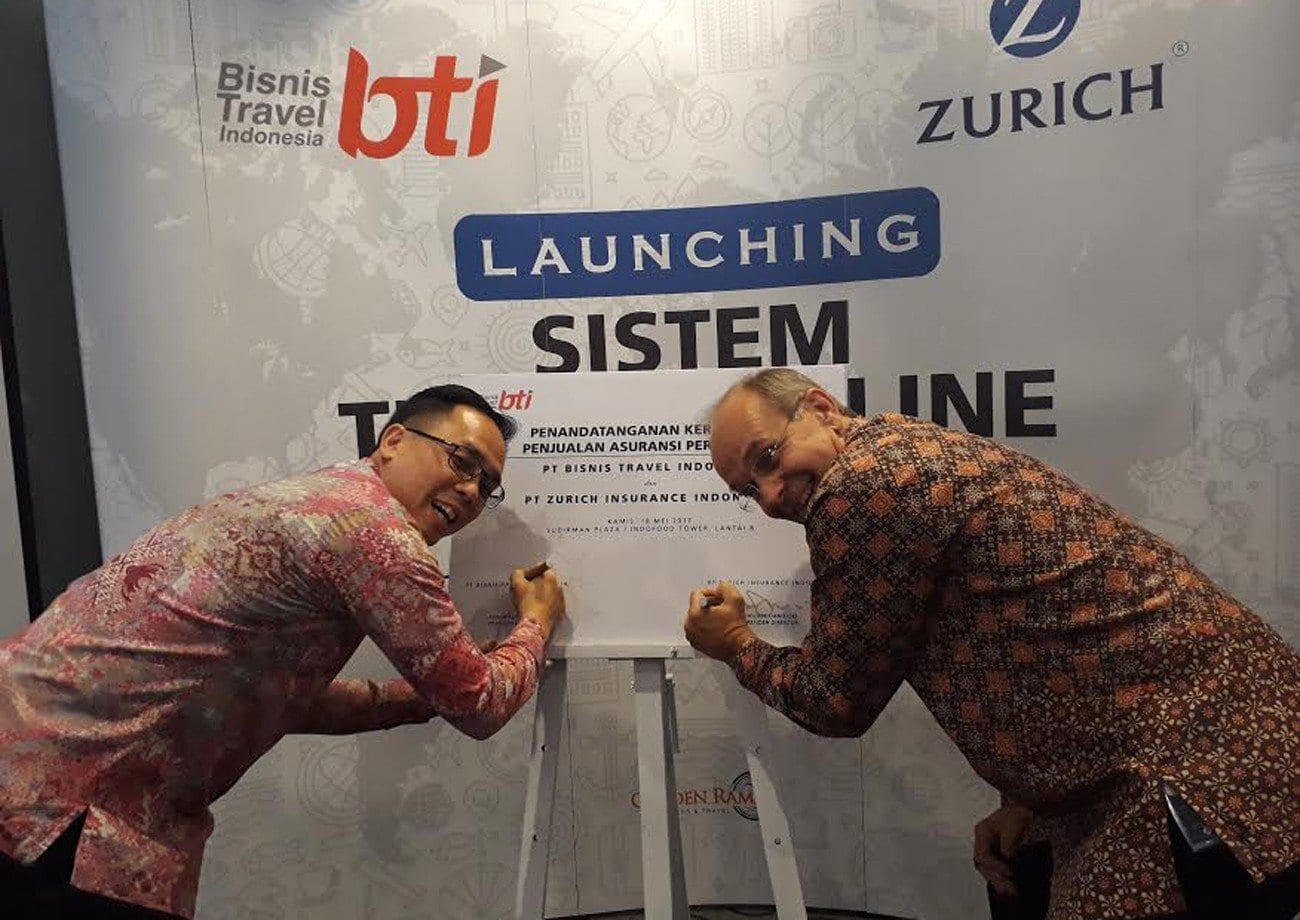
    Online travel portal Bisnis Travel Indonesia (BTI) is teaming up with Zurich Indonesia, the local unit of a Switzerland-based insurance company, by including Zurich Indonesia’s travel insurance on BTI’s list of products.

    Previously, BTI’s offered its members included airline tickets, hotel reservations and tour packages.

    “Through the partnership with Zurich, we want to expand options for our members,” BTI’s president director Johan Kurniawan told reporters during the partnership signing ceremony in Jakarta on Thursday.

    With the agreement, BTI’s portal will provide its members with three travel insurance products from Zurich Indonesia: Zurich Domestic Travel, Zurich Umrah/ Haj Travel and Zurich Passport.

    BTI aims to sell up to 600 travel insurance policies through its portal this year, Johan added.

    BTI is an online travel portal powered by Golden Rama Tours & Travel, a travel company established in Indonesia in 1971.

    About 90 percent of the portal’s members are individual travel agents, while the rest are office-based travel agents.