Tag: car

  • Vietnamese automaker acquires South Korean retail chain

    Vietnamese automaker acquires South Korean retail chain

    A THACO spokesperson said that the agreement will be signed this week. South Korean retail giant E-mart, owned by the Shinsegae Group, will stop operating its outlets in the country. Under the buyout deal, THACO will operate the chain as a franchisee and pay a royalty to E-mart.

    The South Korean established the E-mart Vietnam Co. in 2014 after three years of doing market research in the country.

    It opened its first megamarket in HCMC’s Go Vap District at the end of 2015, covering an area of 12,000 square meters. The megamarket consists of a shopping area, restaurants and a kids’ playground.

    It hiked its charter capital by 62.5 percent to VND2.7 trillion ($117.8 million) in 2018.

    The E-mart Vietnam management board said 95 percent of products it sold were domestically produced.

    Rumors had surfaced at the end of last year that E-mart will exit the Vietnam retail market, but the company denied them.

    South Korean newspaper The Korea Times cited the retail giant as saying it was selling its Vietnam operations due to difficulties in expanding the business. It had planned to open a second megamarket in HCMC’s Tan Phu District in mid-2018, but the plan was not realized.

    THACO has announced plans to open 10 supermarkets in Vietnam by 2025.

  • Burry Of ‘Big Short’ Fame Reveals $530 Million Bet Against Tesla

    Burry Of ‘Big Short’ Fame Reveals $530 Million Bet Against Tesla

    The family office run by “Big Short” investor Michael Burry has disclosed a short position against Tesla Inc worth more than half a billion. Scion Asset Management said in a regulatory filing on Monday that it had bearish put options on 800,100 shares in Tesla as of the end of the first quarter that was worth $534 million. Put options give investors the right to sell shares at certain price in the future.

    One of the investors profiled in the book “The Big Short’ and the film of the same name for betting more than a billion dollars against the U.S. housing bubble, Burry has been skeptical of Tesla’s sky-high valuations.

    In February, he tweeted “my last Big Short got bigger and Bigger and BIGGER,” referring to Tesla’s surge in market capitalization. “Enjoy it while it lasts,” he said.

    Powered by strong sales and its first annual profit, Tesla shares jumped more than eight times last year and hit a record high of $883 per share in January. But they have since fallen as hedge fund managers raise concerns that it is overvalued.

    The shares closed at $576 per share on Monday, valuing the electric car maker at around $555 billion.

    Burry also said last year that the green regulatory credits which Tesla has relied on to generate profits will dwindle as Fiat Chrysler increases sales.

    Stellantis, formed through the merger of Italy’s FCA and France’s PSA, said this month it expects to achieve its European carbon dioxide emissions targets this year without environmental credits bought from Tesla.

    Scion, which does not hold external capital, also lifted its exposure to energy last quarter, adding 530,000 shares in Golden Ocean Group, 323,823 shares in SunCoke Energy and 225,000 shares in Occidental Petroleum.

  • Android Automotive Will Be In 10 Cars By End Of 2021

    Android Automotive Will Be In 10 Cars By End Of 2021

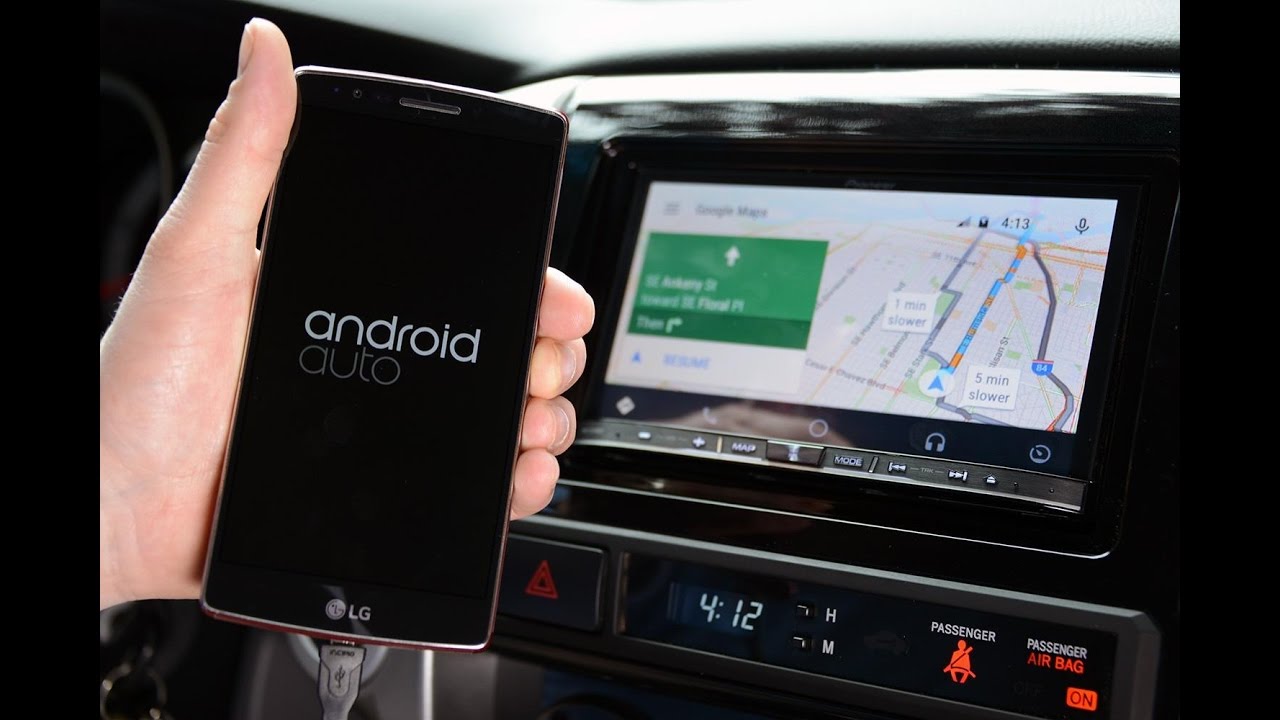
    Google has already announced at wireless Android Auto is soon going to be going to a legion of cars by mainstream manufacturers. At Google IO 2021, it also announced a new digital car key feature that works via NFC and ultra-wideband. It is also saying that we will see 10 new models based on its Android Automotive operating system by the end of the year. Android Auto and Automotive are different. Android Auto is a technology that basically allows the user to beam and mirror the smartphone interface and features using the infotainment system onto the car, while Android Automotive is a full car operating system based on Android.

    Google has partnered with GM and Renault in addition to its existing partnership with Volvo and its electric subsidiary Polestar. It has also added Nissan and Ford to the list. Overall there will be more than 10 car models. This means the new GM Hummer EV — yes, it will be based on Google’s new car operating system.

    After facing a strict fine in Italy, Google is also making it easier for third-party app developers to bring their navigation, EV charging, parking and media apps directly to the car interface. Android for Cars App Library is being extended to support the Automotive OS. This way developers can make one app that works both with the core Android OS for gadgets like phones and tablets and Android Auto. It also means that one app can work across different makes and models. This wasn’t possible earlier which added friction to the process of bringing new apps to Android Automotive.

    Google is working with a bunch of  Early Access Partners — Parkwhiz, Plugshare, Sygic, Chargepoint, Flitsmeister, SpotHero and many more to bring their apps to Android Automotive. Already third-party apps like Spotify support Cars App Library for Android Auto, now with that being extended to Automotive, that app should be presumably coming to cars using Android Automotive.

    Android itself is based on Linux and 2 years ago, Google modified it further to work on cars as an alternative and more scalable option to Android Auto which was running on the phone but the interface of the phone was being beamed on to the car using a USB connection or a combination of wifi and Bluetooth. This mean core Google features like Maps, and Assistant were embedded inside the car on a system level.

    The first cars based on this system were the Polestar 2 and the Volvo XC40 Recharge which is also coming to India later this year.

  • Electric Cars Expected To Be Launched In India In 2021

    Electric Cars Expected To Be Launched In India In 2021

    Electric cars are the future, and the year 2021 will offer the slightest glimpse of the electric vehicle (EV) revolution. Though EVs represent a very small percentage of global car sales, several automakers have already made massive investments in electric mobility foreseeing the demand it could create in the coming years. As India is moving towards e-mobility, there has been substantial investment in electric vehicles (EVs) by domestic and global auto majors. The models like the Tata Nexon EV and MG ZS EV have received a decent amount of success in the Indian EV market. Other automakers too are planning to enter into the electric vehicle space in India. On that note, we list down the EVs that are expected to go on sale in the Indian market this year.

    Tesla Model 3:

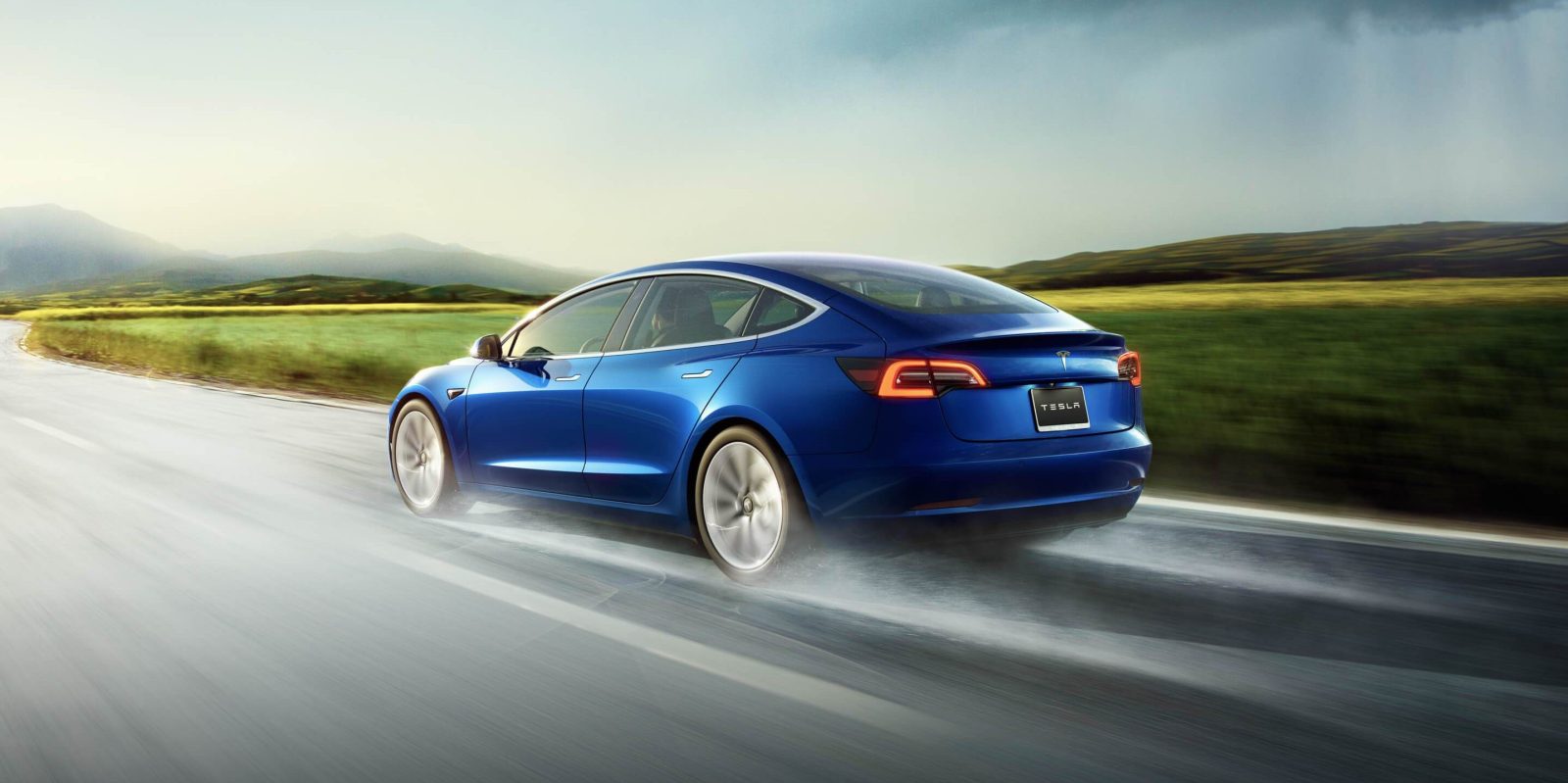
    Tesla is all set to roll out its first electric car, the Model S, in the country this year. The EV maker will set up India headquarters in Mumbai’s Lower Parel location while the production base will be established in Karnataka. The American EV maker will start its sales operations with the Model 3 which is the most affordable offering in its line-up. The Tesla Model 3 will come to India as a completely built unit (CBU) model. The car is rumored to be priced somewhere ₹ 55 lakh in the country. The Tesla Model 3 has a range of up to 500 kilometers and a top speed of 162 kmph. It can even do 0-100 kmph in 3.1 seconds.

    Volvo XC40 Recharge:

    Volvo Car India revealed the new XC40 Recharge electric SUV in the country a couple of months ago. It will be the first all-electric offering from a Chinese-owned Swedish carmaker. The company will start accepting pre-bookings for the electric SUV next month, while deliveries will commence in October 2021. The Volvo XC40 Recharge will come to India as a completely built unit (CBU) model. The electric SUV comes with a dual-motor powertrain with 150 kW electric motors on each axle that converts to 402 bhp and 660 Nm of peak torque. The electric motors are powered by a 78 kWh battery pack that offers an approximate range of up to 418 km. It can achieve 0-100 kmph in 4.9 seconds.

    Audi e-Tron:

    Audi India has confirmed the arrival of the e-Tron alongside the e-Tron Sportback in the country this year. It will be the German carmaker’s first all-electric offering in India. The electric SUV was previously slated to go on sale last year, which was delayed due to the COVID-19 pandemic. Both the Audi e-Tron and the e-Tron Sportback share the same underpinnings, but the latter gets the coupe-like sloping roofline and a redesigned rear profile. Both the EVs come with two electric motors that develop 355 bhp and 561 Nm of peak torque. In the boost mode, the power output increases up to 408 bhp and 664 Nm. The EVs use a 95 kWh battery pack that offers a range of about 452 km on a single charge and can be fully charged in eight and a half hours using a regular charger.

    Mahindra eKUV100:

    Mahindra is all set to launch the eKUV100 in the Indian market in the coming months. The Indian carmaker has already announced prices of the EV at the 2020 Auto Expo, which costs ₹ 8.25 lakh (ex-showroom, India). While the eKUV100 will be targeted at fleet operators, the EV will also be offered for private buyers. Visually, the car looks identical to its petrol counterpart. However, we expect minimal changes on the production-spec version including possibly a revised grille, along with reworked headlamps and taillights. The Mahindra eKUV100 will use a 40 kW electric that belts out about 53 bhp and 120 Nm of peak torque. A single-speed transmission will be sending power to the front wheels. The car will come with a 15.9 kWh lithium-ion battery and is expected to offer a range of 120 km on a single charge.

    Porsche Taycan:

    The all-new Porsche Taycan electric sports car will be introduced in India this year. It is the first fully-electric sedan from the Stuttgart-based luxury carmaker, which will be based on the Porsche Mission E Concept that was showcased in 2015. The new Porsche Taycan will sport two permanently excited synchronous electric motors that can churn out a maximum of 600 bhp and will a range of over 500 km thanks to its high voltage lithium-ion batteries. The EV will get 800-volt chargers with fast charging capability, which can offer a 400 km range in 15 minutes of charge time. The carmaker claims that the EV can sprint from 0-100 kmph in under 3.5 seconds.

    Tata Altroz EV:

    The Altroz EV will be the next electric vehicle from the Indian automaker’s stable, which was showcased at the 2019 Geneve Motor Show. The fully electric version of the premium hatchback is expected to go on sale in India this year. Like its ICE derivative, the EV version will also be built on the all-new Agile Light Flexible Advanced (ALFA) Architecture. Tata Motors has already confirmed that all its future electric vehicles will use the Ziptron powertrain technology. So, the Altroz EV will get a Lithium-ion battery with IP67 certification.

    Mercedes-Benz EQS:

    It was last month that Mercedes-Benz revealed the EQS electric sedan in the global market. The electric sedan has been listed on the official India website, suggesting it could be launched in our market later this year. The luxury electric sedan will be available in two trims – EQS 450+ and EQS 580 4MATIC. The EQS 450+ is the base variant that features a single electric motor on the rear axle for a total of 328 bhp and 568 Nm of peak torque. The EQS 580 4MATIC is an all-wheel-drive (AWD) range-topping trim and gets an electric motor on both front and rear axles. Total output in combination here is 516 bhp and a whopping 855 Nm of peak torque, good for a 4.1 seconds sprint to 100 kmph from a standstill.

  • Mahindra Rolls Out M-Protect COVID Plan For Farmers

    Mahindra Rolls Out M-Protect COVID Plan For Farmers

    Mahindra & Mahindra’s Farm Equipment Sector on Sunday officially announced the rollout of the ‘M-Protect Covid Plan’ for the Indian farmers. With this new customer-centric initiative, the company intends to support Indian farmers in these testing times as the entire nation battles with the second wave of the coronavirus pandemic. The plan aims to safeguard new Mahindra tractor customers and their families against the possibility of contracting COVID-19. This plan will be available on Mahindra’s entire range of tractors purchased in May 2021.

    Under the M-Protect covid plan, Mahindra will provide its customers with a health cover of ₹ 1 lakh through a unique COVID Mediclaim policy covering the customer in case they contract COVID-19 with home quarantine benefits. It will also offer financial support by providing pre-approved loans to support medical expenses incurred during COVID-19 treatment. Moreover, customers’ loan with insured under ‘Mahindra Loan Suraksha’ in case of loss of life.

    Commenting on the development, Hemant Sikka, President, Farm Equipment Sector, M&M Ltd., “At Mahindra, we care about our customers and the community at large and have taken a series of initiatives to help those most in need to overcome the challenges related to COVID. Our new ‘M–Protect Covid Plan’ is a new initiative in that direction targeted at farmers, as we stand by them to drive positive change even in these tough times. With M-Protect we are privileged to serve and support them to reduce the impact of a COVID-related eventuality. With M-Protect we hope our farmers continue to have a healthy life.”

    Shubhabrata Saha, Chief Executive Officer, Farm Division, M&M Ltd. said, “May and June are important months for the livelihood of the farming community and COVID-19 has brought in several challenges. Our new M-Protect Covid Plan is intended to ease farmers’ worries as we support them in these crucial farming-related months. Through M-Protect we will offer health, financial and insurance-related protection to bring relief to the farmer during these challenging times, safeguarding them and more so their families. I would like to thank our channel partners for the immense support they’ve extended to our farmer customers.”

  • Porsche Expands Customisation Project Division For One-Off Model Requests

    Porsche Expands Customisation Project Division For One-Off Model Requests

    It’s not the first time we are seeing Porsche offering customization options and it’s also a common trend among premium car buyers. But now Porsche is expanding its Exclusive Manufaktur program along with the Tequipment and Classic divisions. Now this will give the chance to its customers who want to make their Porsches exclusive and one-off. This service will be offered across range and not just for sports cars or SUVs or any specific model. And there is something for classic Porsches as well, but we’ll come to it in a bit.

    Porsche has extended the range of products and services in the divisions in a way that customers can modify their vehicles to bespoke one-off units. This is an interpretation of the Sonderwunsch program, which literally translates to “special request,” Porsche’s customization from the 1970s. To be precise, it is offering exterior wrap options, individual starting numbers, prints on the floor mats, illuminated door entry guards, and logo projectors in the vehicle doors among others. The unique part about this program is that the option is not limited to just new models. Yes! The personalization also extends to used vehicles and also on the table is customizations for off-road use.

    The Tequipment division in Porsche’s gallery also offers a range of accessories and retrofit options for individual customer vehicles. Now coming to classic vehicles, Porsche is currently focusing on spare parts supply and factory restorations in a bid to keep them in working condition. Now obviously, handling projects which are too radical are best for aftermarket, but the carmaker will be accepting all those projects that it finds sensible and feasible. Also, Porsche will archive every one-off request and keep them in the database.

  • Ministry says no to cuts in auto registration fees

    Ministry says no to cuts in auto registration fees

    The Ministry of Finance has rejected a proposal to reduce auto registration fees by half, saying it is not necessary for the current setting.

    The proposal was made by the Vietnam Automobile Manufacturers Association (VAMA), seeking support for manufacturers amid the Covid-19 pandemic.

    However, the Ministry of Finance said that the government had already implemented different measures to support businesses and citizens last year, including extending the deadline for payment of taxes and land use fees and incentives on special consumption tax for cars manufactured or assembled locally.

    “After reviewing the proposal, the Ministry of Finance sees that lowering registration fee is not suitable with the current setting,” it said.

    Last year, the government had provided a 50 percent discount on the registration fees for cars produced domestically.

    The move lowered the government’s revenues by VND6 trillion ($260 million).

    The Ministry of Finance also denied VAMA’s request to lower the production of cars under an import tax incentive program.

  • Renault Introduces New Nouvelle Vague Brand Strategy

    Renault Introduces New Nouvelle Vague Brand Strategy

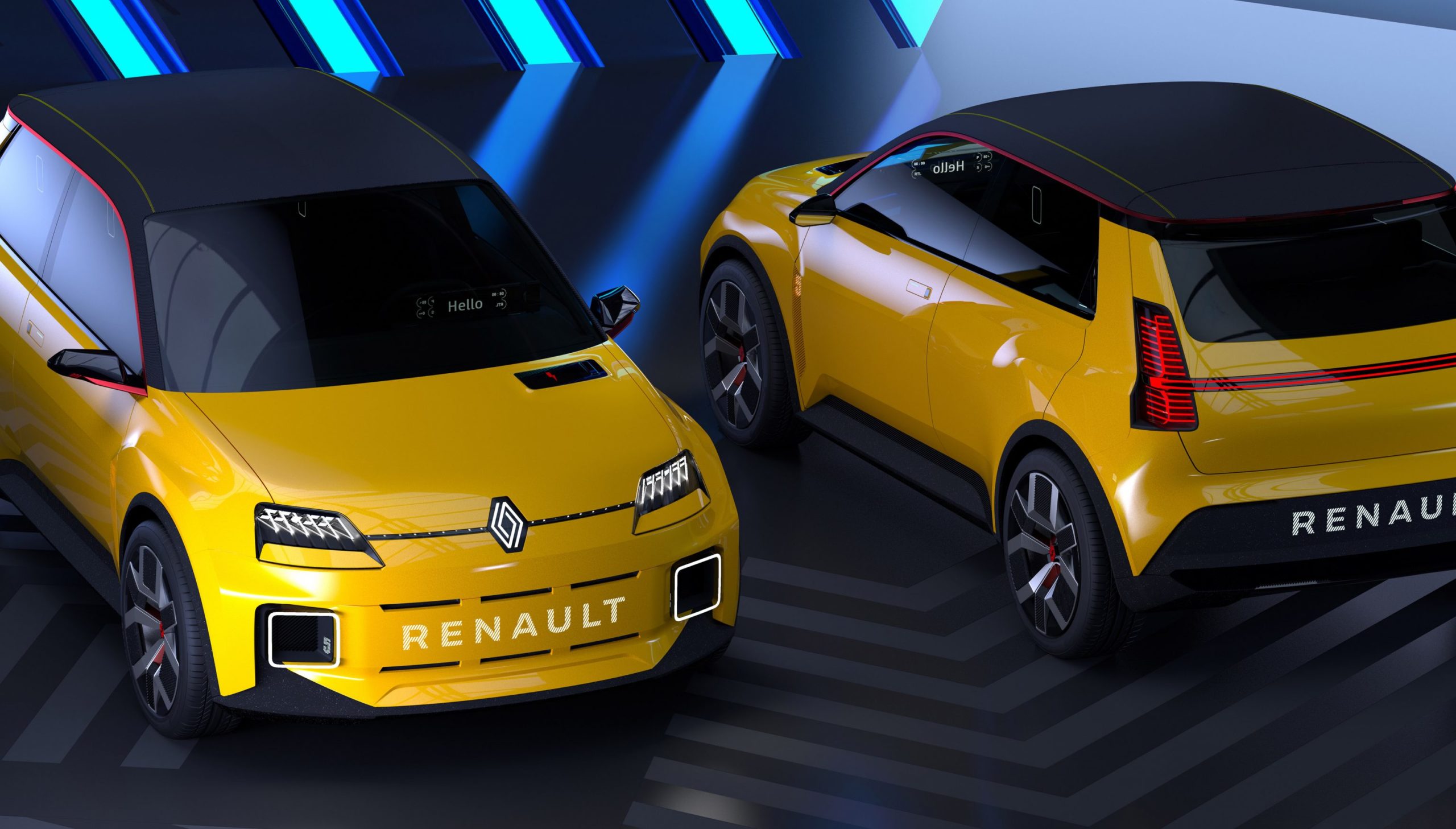
    Renault is gearing up to give it’s brand a new direction. The French carmaker has adopted “Nouvelle Vague” strategy targeting to maximize its number of electrified vehicles by 2030 in a bid to move towards sustainable development. More than 2000 engineers from five companies will work on cybersecurity, artificial intelligence, data processing, software, and microelectronics. Then, Renault’s Re factory in Europe will recycle or upcycle up to 1.20 lakh units every year. Nearly 80 percent of those recycled materials will be reused in new batteries.

    By 2030, Renault is targeting to become world’s best automotive manufacturer when it comes to the percentage of recycled materials in new vehicles. The company will also introduce seven electrified models in C and D segments. It has also unveiled the new Arkana coupe SUV that marks and the new-generation Megane E-TECH Electric. The company has also announced that the E-TECH Hybrid technology will continue to power upcoming C and D segment vehicles. Renault has been leading in the EV segment in Europe with almost 4 lakh vehicles sold to date. In Europe, France, Spain, Italy, Germany, and the United Kingdom – will continue to be its key markets. The company will also try and increase local dominance in Brazil, Russia, Turkey, and India.

    The brand has also unveiled its new logo and the Megane will be the first model to wear it. The latest iteration was created in 1992 and Renault felt that it began to look a little dated, even though it was reworked in 2015. The new brand logo adores a streamlined design, with neither typogram nor brand signature. The new logo is an open-ended shape and Renault says that it reflects the brand’s openness and transparency. It was co-designed with Landor & Fitch consultants and will be phased in on all Renault brand vehicles and across the Renault network. By 2024, the entire Renault range will sport the new logo.

  • Julian Thomson Steps Down As Jaguar’s Director Of Design

    Julian Thomson Steps Down As Jaguar’s Director Of Design

    Julian Thomson, Design Director at Jaguar, has resigned and will be leaving the company at the end of this month. An internal memo revealed that he will leave Jaguar for exploring other exciting opportunities. He took over the reins at Jaguar Design after Ian Callum’s departure in 2019 and was tasked with establishing the future strategic design direction for the brand. He worked on production models, updated models and concepts cars as well. He was responsible for the design of various cars from Jaguar such as XK, XF, XJ, F-TYPE, XE, F-Pace, E-Pace, and Jaguar’s first-ever electric vehicle – the I-Pace as well. We have reached out to Jaguar Land Rover for a comment on the same, and the company is yet to respond.

    Thomson also served as the head of design at Lotus and was the brains behind the design of the famous Lotus Elise. He was appointed as Chief of Exteriors at the Volkswagen Group’s Concept Design Centre in Barcelona in 1998 and worked on production and concept vehicle design for various brands under the Volkswagen umbrella such as Audi, Bentley, Seat, and VW itself. Julian joined Jaguar in 2000 as Advanced Design Director and also served as Advanced Design Director for Land Rover between 2006 and 2008.

    Thomson studied Mechanical Engineering at Hatfield University before completing an MA in Automotive Design at the Royal College of Art. He began his automotive industry career in 1984 as a designer at Ford in Dunton, England, before moving to Lotus Design in Norwich in 1986. In the recent past, Former JLR CEO, Professor Ralf Speth moved to TVS Motor Company as the chairman while Wayne Burgess, yet another designer who had worked with Jaguar before was appointed as the Head of Vehicle Design at Ola Electric.

  • Volvo’s Global Sales Increase By 97.3% In April

    Volvo’s Global Sales Increase By 97.3% In April

    Volvo Cars achieved its 10th consecutive month of sales growth, as the company’s global sales increased by 97.5 percent in April compared with the same month last year. In April, Volvo Cars sold a total of 62,724 cars, up from 31,760 cars in the same period last year. The growth was mainly driven by strong demand in the US and Europe, in combination with a recovery from a sales drop in April last year related to the Covid-19 pandemic. In China, where sales returned to growth around this time last year, the company reported a steady increase of 11.6 percent.

    Sales in the January-April period landed at 248,422 cars, up 51.8 percent compared with the same period last year. Sales of Volvo Cars’ Recharge line-up of chargeable models, with a fully electric or plug-in hybrid powertrain, remained strong in Europe during the month of April, representing 42.0 percent of the company’s overall sales in Europe. Globally, Recharge cars accounted for 24.3 percent of the total sales volume.

    In the US, sales increased by 185.5 percent in April compared with the same month last year, mainly driven by strong demand for the XC90 and XC60. Total sales reached 11,036 cars, an increase from 3,866 in the same period in 2020, when many states implemented stay-at-home orders due to the pandemic.

    European sales grew to 25,816 cars for the month of April, up 178.0 percent compared with the same period last year. The increase was mainly driven by markets that have started to recover after last year’s pandemic-related shutdowns, as well as strong sales increases in the UK, Sweden and Germany.

    China, Volvo Cars’ biggest market, reported solid sales growth in April, with total sales reaching 16,435 cars. The increase was led by high demand for the locally assembled XC60 and S90 models.

    In April, the XC40 was the top-selling model, with sales of 19,833 cars (2020: 5,708), followed by the XC60 with total sales of 17,925 cars (10,908 units) and the XC90 with 9,371 cars (4,425 units).

  • Volkswagen Expects Chip Supply To Remain Tight In Coming Months

    Volkswagen Expects Chip Supply To Remain Tight In Coming Months

    Volkswagen expects semiconductor supplies to the car sector to remain tight in coming months, the head of the carmaker’s namesake brand was quoted as saying on Saturday.

    “I think the situation will remain tense,” Ralf Brandstaetter, CEO of the Volkswagen brand and member of the carmaker’s management board, told German news agency dpa.

    He said a fire at a factory operated by automotive chip maker Renesas Electronics Corp, as well as snowstorms in Texas that have hurt factory production, had effectively idled output.

    “The impact will certainly be felt in the coming months,” Brandstaetter said, adding Volkswagen’s procurement task force was busy around the clock dealing with the issue which remained at the top of the agenda of Volkswagen’s management board.

    Volkswagen AG has been unable to build 100,000 cars due to the shortage, CEO Herbert Diess said in March, adding the group would not be able to make up for the shortfall in 2021.

    Brandstaetter said the situation was expected to ease somewhat in the second half of the year.

    Wayne Griffiths, president of Volkswagen’s Spanish brand SEAT, said last month the challenges caused by the shortage were likely to intensify in the second quarter.

  • Intel To Invest $600 Million To Expand Chip, Mobileye R&D In Israel

    Intel To Invest $600 Million To Expand Chip, Mobileye R&D In Israel

    Intel Corp said on Sunday it will invest another $600 million in Israel to expand its research and development (R&D) and confirmed it was spending $10 billion on a new chip plant. The announcement was made during a one-day visit to Israel by Intel Chief Executive Pat Gelsinger as part of a European tour that included Germany and Belgium last week. Intel is investing $400 million to turn its Mobileye unit headquartered in Jerusalem into an R&D campus for developing self-driving car technologies. Another $200 million will be invested in building an R&D centre, called IDC12, in the northern port city of Haifa next to its current development centre.

    Intel said the “mega chip design” facility will have a capacity of 6,000 employees. Gelsinger, on his first European tour since taking charge of the company in February, in a statement issued on Sunday predicted: “a vibrant future for Intel and Israel for decades to come”.

    In recent years, Intel has bought three Israeli tech companies – Mobileye in 2017 for more than $15 billion, artificial intelligence chipmaker Habana in 2019 for $2 billion, and Moovit a year ago for $1 billion. During his brief visit, Gelsinger met with Intel and Mobileye management and Israeli Prime Minister Benjamin Netanyahu. Israel’s Finance Ministry in early 2019 said Intel would get a $1 billion grant to build an $11 billion chip plant, although at the time Intel would not confirm the amount.

    On Sunday, Intel said the investment would be $10 billion and the first phase of construction has begun. Its current Fab 28 plant at the company’s Kiryat Gat site produces 10 nanometres (nm) chips. Intel has not disclosed whether the new plant will produce smaller chips, which can increase efficiency, but in March it said it was building two 7 nm chip plants in Arizona for some $20 billion.

    Intel Israel’s exports grew to a record $8 billion in 2020 from $6.6 billion in 2019, accounting for 14% of total high-tech exports and 2% of Israel’s GDP. Intel is the largest employer of Israel’s high-tech industry with nearly 14,000 workers.

  • Huge Rise In Coronavirus Cases Hit India’s April Fuel Demand

    Huge Rise In Coronavirus Cases Hit India’s April Fuel Demand

    Indian state refiners’ local fuel sales in April declined due to state-level restrictions aimed at stemming a rampant second wave of coronavirus infections, preliminary data shows. The deadly second wave topped 400,000 new daily cases for the first time on Saturday.

    Authorities reported 401,993 new cases in the previous 24 hours, the highest daily count globally, after 10 consecutive days over 300,000. Deaths from COVID-19 jumped by 3,523, taking the total toll in India to 211,853.

    “Overall fuel demand is down by about 7% from pre-covid level of April 2019,” said A.K. Singh, head of marketing at refiner Bharat Petroleum Corp.

    “We were near pre-covid level in March but new restrictions and covid wave-2 has temporarily reduced demand equivalent to about 10% of March demand for both personal mobility and industrial goods movement,” Singh told Reuters.

    He said the local fuel consumption will ‘start to look up’ in June, by when second wave of coronavirus is expected to weaken.

    Analysts are expecting India’s demand for transportation fuels to witness a sharper slump in May due to more impending restrictions.

    Declining fuel sales will reduce crude intake by refiners. The country’s top refiner Indian Oil Corp is operating refineries at an average 95% capacity.

    State companies – IOC, Hindustan Petroleum Corp and BPCL – own about 90% of India’s retail fuel outlets.

    State retailers’ fuel sales in April declined from their sales in March and April 2019 levels, while posting a sharp rise from the year ago month when there was a nation-wide lockdown.

  • Volkswagen’s CEO To Step Aside At Skoda

    Volkswagen’s CEO To Step Aside At Skoda

    Volkswagen boss Herbert Diess is stepping down as head of the supervisory boards at subsidiaries Seat and Skoda to focus on building up a stronger software-development team, a person familiar with the matter said on Thursday.

    Volkswagen declined to comment.

    Handelsblatt had reported the news earlier.

    At Seat, Diess would be succeeded by current technology head Thomas Schmall and at Skoda by Murat Aksel, head of procurement on the Volkswagen board, the source added.

    Volkswagen has been heavily focused on regaining lost ground in the fast-growing field of software-heavy electric cars, where United States and Chinese manufacturers are seen as having a lead.

  • Ford To Decide On India Investment Plan In Second Half Of 2021

    Ford To Decide On India Investment Plan In Second Half Of 2021

    Ford Motor Co expects to firm up capital allocation plans for India in the second half of 2021, a senior executive said in an email to staff, as the automaker overhauls its strategy in a loss-making market. Dearborn, Michigan-based Ford has tasked senior executive Steven Armstrong with evaluating investment plans for India in his new role as transformation officer, South America, and India, the automaker said in a separate statement this week.

    “We have a lot of work to do as we continue to assess our capital allocations in the market,” Dianne Craig, president of Ford’s International Markets Group (IMG), said in an email to staff on Wednesday, referring to India.

    “While we expect to have an answer in the second half of this year, the appointment of Steven…will help focus our efforts and speed up the process,” she said.

    IMG includes India, where the company employs more than 16,000, and 100 other markets.

    Ford India head Anurag Mehrotra will report to Armstrong, who previously headed the Changan Ford joint venture in China and will take on his new role from May 1, the company said.

    Confirming that the company expects to reach a capital allocation decision in the second half of the year, a Ford India spokesman said that the country is an important market and a source of global powertrains for its Ranger SUV.

    Ford has said previously it will allocate capital consistent with its plan to generate consistently strong cash flows and achieve an 8% company adjusted EBIT (earnings before interest and tax) margin.

    The automaker beat Wall Street’s first-quarter profit estimate late on Wednesday, telling investors all its markets under IMG were profitable except for India.

    CEO Jim Farley, who is overseeing an $11 billion global restructuring of Ford, wants to boost profits in India but the country is a lower priority than some other markets, sources said previously.

    Ford is not the first western automaker to struggle to win over India’s frugal buyers and turn a profit in a market dominated by Suzuki Motor Corp’s and Hyundai Motor’s extensive line-up of mainly low-cost cars.

    General Motors exited the domestic market in 2017 after 20 years, while Harley-Davidson Inc packed up last year after a decade of unsuccessful efforts to gain a foothold.

    Ford entered India 25 years ago but has a less than 2% share of the passenger vehicles market in the world’s second most populous nation, where car penetration is lower than in the U.S. and China.

    A tie-up with domestic automaker Mahindra & Mahindra, now called off, would have ended most of Ford’s independent operations in India but allowed it to launch new vehicles faster, at a reduced cost, and with lower investment.

    The two companies planned to develop at least three new SUVs and share powertrains.

    Ford will now need to pick vehicles from its global portfolio to sell in India, or develop new ones, a source said.

    The joint venture would have also helped Ford tackle low plant utilization in the country, which remains one of its biggest problems, the person added.

    Two years ago Ford used only around 60% of its total annual production capacity of 440,000 units across two Indian plants, with the pandemic reducing it to as little as 20% last fiscal year.