Tag: car

  • Luxury Brand Genesis Gears Up To Make Its Foray Into The European Market

    Luxury Brand Genesis Gears Up To Make Its Foray Into The European Market

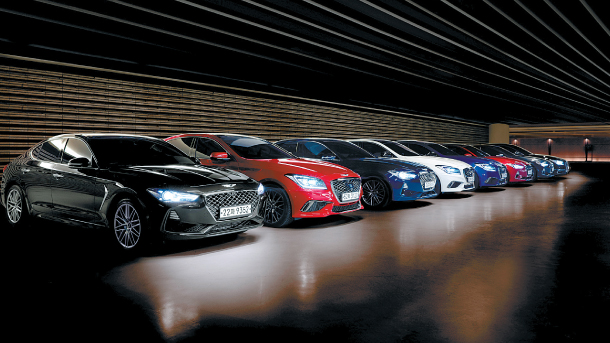
    Last year in September, Hyundai Group’s premium car brand- Genesis hired Dominique Boesch as its first Managing Director for the European market and now the company is all set to make its foray into the market. Genesis took to Twitter through its European handle to share the news and the tweet read, “The Genesis journey continues. All roads lead to Europe. Get ready to join us on this thrilling new adventure.”

    Dominique Boesch had joined Genesis from Audi AG where he held the role of Sales Director in France before serving as Managing Director in Korea, Japan, and China, respectively, over his twenty-year tenure. After more than 10 years in Asia, Boesch returned to headquarters as head of European sales, and, most recently, he was leading the brand’s future Global Retail Strategy.

    In Europe, Genesis will go against the likes of Mercedes-Benz, BMW, Audi, and Jaguar Land Rover among others. Genesis hasn’t revealed any plans about its product line-up or models it will launch initially to start its operations with. It also showcased the electrified G80 at Auto Shanghai 2021 and it will be the brand’s first EV. It will go on sale alongside the conventional G80, GV70 crossover, and the GV80 SUV in the global markets, and the same is expected even in Europe.

  • Ford Plans To Set Up A New Battery plant Near Detroit In 2022

    Ford Plans To Set Up A New Battery plant Near Detroit In 2022

    Ford is planning to open a battery development center near Detroit by the end of 2022 according to a report published by IANS. The American carmaker says that it wants to control the key technology for electric vehicles and the 2,00,000 sq.ft. will be equipped to design, test, and even for small manufacturing of battery cells and packs. The lab will also be used to develop electronic controls and other items and Ford is planning to move its operations in-house.

    Going ahead, the company wants to manufacture its battery packs on a large scale in a bid to make sure that enough batteries are manufactured to accelerate the transition from conventional combustion engines to electric vehicles. “We now see that the market is going to develop very quickly, and we will have sufficient scale to justify having greater levels of integration. We will no longer take an approach of hedging our bets and planning around the uncertainty of how fast that will play out,” Hua Thai-Tang, Chief Product and Operations Officer- Ford told IANS.

    The move comes at a time when the global auto industry is racing to control supplies including precious metals needed to make batteries and individual cells that form big battery packs to run as many as 300 new electric models coming out in the next two years. Ford’s new CEO – Jim Farley plans to take a turn from Ford’s previous path of buying technology and batteries from supply companies. That said, the company is still open to join hands with suppliers, universities and start-ups for the technology.

    Ford has already discussed the transition to battery power with the Biden administration. The company is already in a trade secret fight with its battery suppliers like SK Innovation, and LG Energy Solution. The U.S. International Trade Commission decided in February that SK stole 22 trade secrets from LG Energy and so it should be barred from importing, making or selling batteries in the United States for 10 years. So the decision gave SK four years to make batteries for Ford. SK is in contract with Ford to make batteries for an electric version of Ford’s F-150 pickup, the nation’s top-selling vehicle. The dispute was settled earlier this month when SK Innovation agreed to pay $1.8 billion along with an undisclosed royalty.

  • Porsche To Build EV Battery Cells Factory In Germany

    Porsche To Build EV Battery Cells Factory In Germany

    In a bid to speed up its e-mobility drive, the German carmaker Porsche is reportedly planning to set up a factory to produce battery cells for electric vehicles. This plan was confirmed by the company’s CEO to a local German newspaper. The European carmakers are looking to ramp up production of the electric cars to meet stringent environmental rules in the European Union. Moreover, they are also aiming to reduce their dependence on battery suppliers in Asia.

    In an interview with a local newspaper, Oliver Blume said that “Battery cells are a key technology for Germany’s automobile industry which we must also have in our own country.” He also said the carmaker wants to play a pioneering role in this step.

    He also confirmed that the battery cell factory would be built in the Swabian town of Tuebingen, Germany. Moreover, the company will purchase EV batteries from its parent company, which plans to build half a dozen battery cell plants across Europe. Volkswagen also intends to expand infrastructure for charging electric vehicles across the globe.

    Blume further said, “But there will also be a segment for high-performance battery cells. It’s a Porsche domain. Just as we developed high-performance internal combustion engines, we now want to be at the forefront of high-performance batteries.”

  • Tesla To Setup India Headquarters In Mumbai

    Tesla To Setup India Headquarters In Mumbai

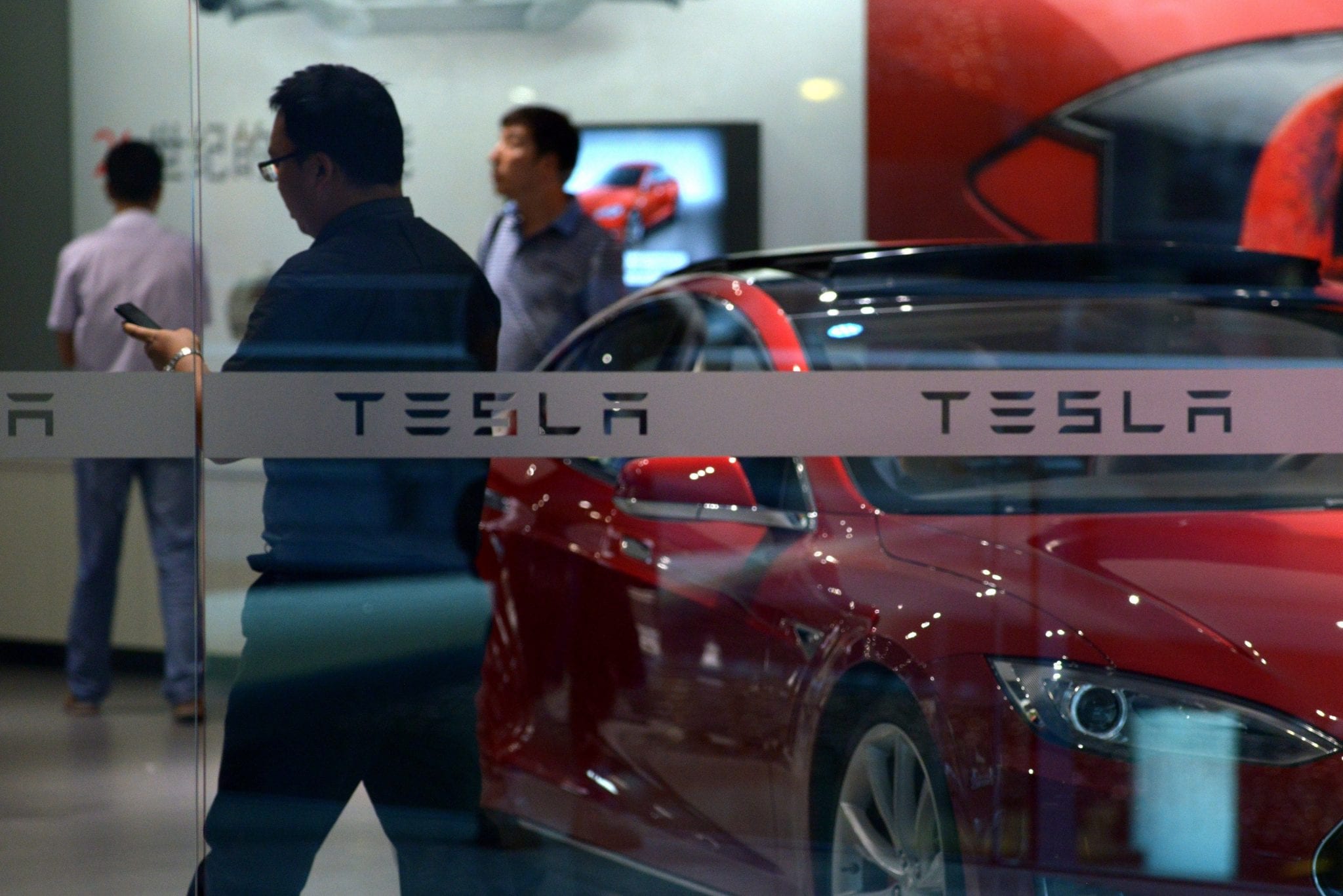
    Tesla is all set to roll out its first electric car in India this year and the American EV manufacturing company has started establishing its base in our market. It had registered itself in Bengaluru earlier this year and according to it is now setting up its office in Lower Parel-Worli area in Mumbai. The company will be establishing its production base in Karnataka and is evaluating a few ready commercial projects in Lower-Parel for a 40,000 sq ft office.

    Tesla has started hiring for top positions from IIM Bengaluru alumni. Manuj Khurana has been appointed as Head – Policy and Business Development for India operations. The company has also hired Nishant Prasad as Charging Manager who will head Tesla’s supercharging, destination charging, and home charging business. He was earlier head of Charging Infrastructure and Energy Storage at Ather Energy. And finally, Tesla India has Chithra Thomas as its country HR Leader, who was earlier working at Walmart and Reliance Retail. “Tesla India is moving full speed ahead with building a local team. We are excited to see the progress. Hoping to see you (Musk) in India when Tesla delivers the first cars,” Tesla Club India said in a tweet on Wednesday.

    Last week, Union Road Transport and Highways Minister Nitin Gadkari invited Tesla to start manufacturing EVs in India. During his address at The Raisina Dialogue 2021, he said that it is a golden opportunity for the company to start manufacturing in India. Gadkari also added that Indian EV makers are also improving the quality of their models and local manufacturing means they are able to price their products at a competitive price. Similarly, Tesla will also benefit if it engages in local manufacturing.

  • New-Generation Skoda Octavia Launch Delayed Due To The COVID-19 Lockdown In Maharashtra

    New-Generation Skoda Octavia Launch Delayed Due To The COVID-19 Lockdown In Maharashtra

    The new-generation Skoda Octavia was slated to go on sale towards the end of this month in the country. However, in light of the lockdown imposed in the state of Maharashtra, the launch has been indefinitely delayed. Zac Hollis, Director – Sales and Marketing, Skoda Auto India confirmed the development in a tweet. The automaker will be rescheduling the launch as the current situation improves. The new-generation Octavia was originally slated for launch in 2020 but was delayed due to the pandemic. We expect Skoda to announce a new launch date once the situation improves in the state.

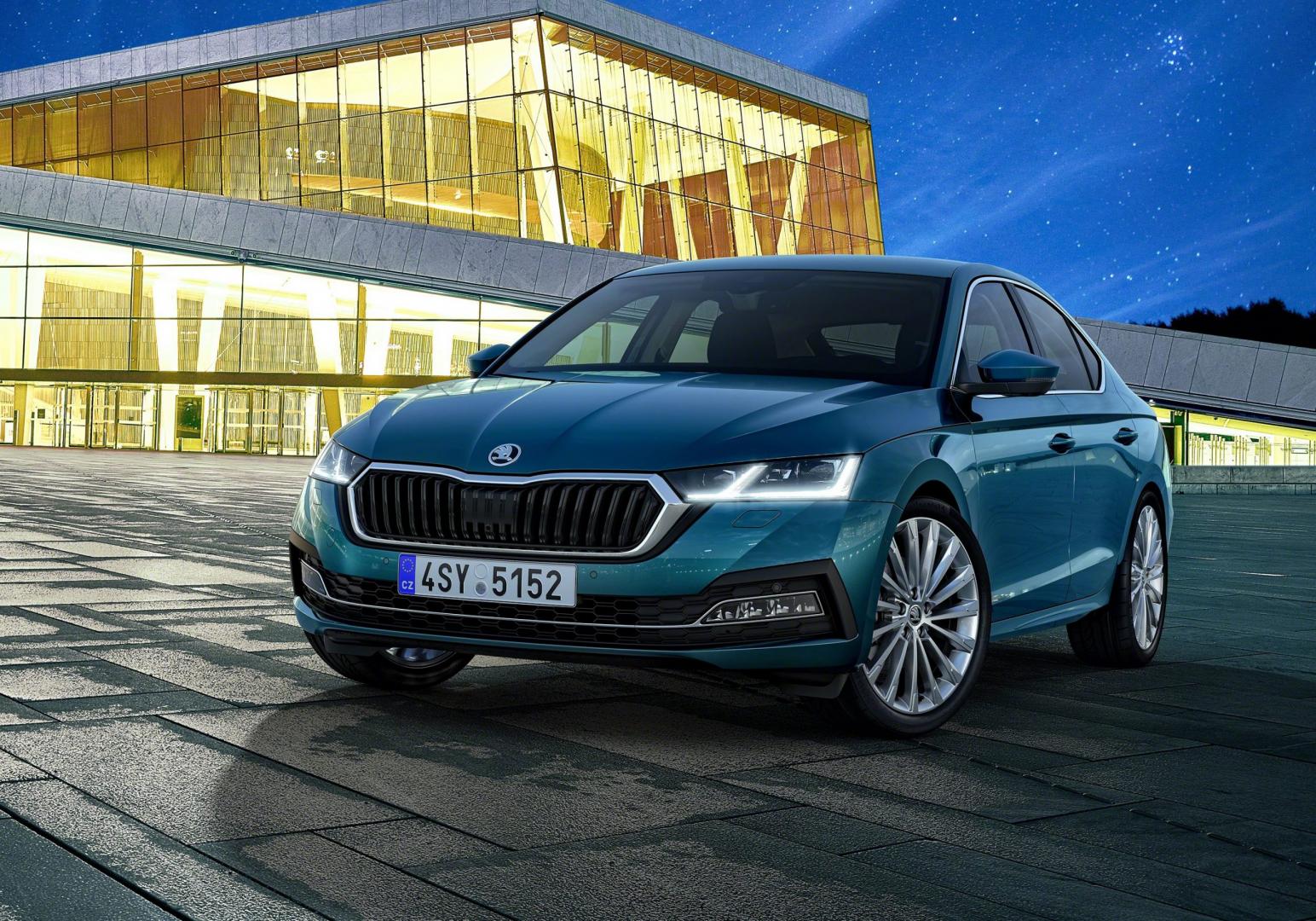
    The 2021 Skoda Octavia has got plenty of upgrades over its predecessor. The sedan is longer by 19 mm at 4689 mm, and wider by 15 mm at 1829 mm. The design language has seen notable improvements and the model gets a new chrome grille, new headlamps with Matrix LED technology, a new bumper design and a sculpted bonnet. The bot-lid now gets more prominent Skoda lettering along with the LED taillights with the signature pattern.

    The cabin of the new-generation Skoda Octavia will be feature-laden and will come with a two-spoke multi-function steering wheel sporting knurled scroll wheels and a new control button. The model also gets a 10.25-inch digital instrument console and a 10-inch touchscreen infotainment system. The lower variants will sport an 8.25-inch display. Other features will include Trizone Climatronic, keyless entry, electric parking brake, acoustic side windows, and more.

    The India-spec fourth-generation Skoda Octavia is likely to get the 2.0-litre TSI with 188 bhp and 320 Nm and it will be offered only with the DSG automatic transmission. Skoda could also offer the Karoq’s 1.5-litre TSI four-cylinder petrol engine that develops 148 bhp and 250 Nm. Details though are yet to be confirmed.

    Maharashtra continues to be one of the worst affected states in terms of COVID-19 cases, with the second wave of the virus harsher than ever. The state reported over 67,468 new cases in the last 24 hours (at the time of filing this report). Maharashtra also reported its worst Covid-19 related death tally in a single day after recording 568 fatalities in the last 24 hours. In light of the growing cases, the Maharashtra government announced a statewide lockdown from April 22, after 8 pm, and will be in effect till 7 pm on May 1, 2021.

  • Tesla Apologises After Customer Protested At Autoshow, To Share Car Data With Chinese Regulator

    Tesla Apologises After Customer Protested At Autoshow, To Share Car Data With Chinese Regulator

    Tesla Inc apologised to Chinese consumers for not addressing a customer’s complaints in a timely way, and said it would launch a review of its service operations in the world’s biggest auto market. The unusual public apology from Tesla followed criticism in state media, and an incident at the Shanghai auto show that got wide attention in China’s social media. An unhappy customer by clambered atop a Tesla at the auto show to protest the company’s handling of her complaints about malfunctioning brakes. Videos that went viral on Monday showed a woman wearing a T-shirt emblazoned with the words “The brakes don’t work” and shouting similar accusations while staff and security struggled to restore calm.

    The trouble for Tesla in China overlapped with new questions in the United States about the safety of the company’s Autopilot partially-automated driving systems. Police in Texas are investigating a fatal crash involving a Tesla Model S that hit a tree and burst into flames. Rescuers found victims in the passenger and rear seat, not the driver’s seat. Federal regulators are investigating the crash, and have a total of 24 probes underway of accidents involving Teslas operating on Autopilot.

    Tesla sells roughly 30% of its cars in China, made at its Shanghai factory. But it has faced occasional criticism over issues such as complaints of battery fires. Monday’s incident led state broadcaster CCTV to call for an investigation of reported brake problems on Tesla cars, while China’s anti-graft watchdog weighed in with a commentary saying such disputes should be resolved within the rule of law. “Individuals should not take extreme measures, and enterprises should not be arrogant and unreasonable,” the Central Commission for Discipline Inspection said late on Tuesday.

    On Wednesday, a representative at Tesla’s store in Zhengzhou, where the protesting customer came from, told local state media the automaker will share data related to the brake incident with local market regulators for investigation.

    Tesla said on Monday that the woman was a vehicle owner who had been involved in a collision earlier this year. It cited “speeding violations” for the crash, adding in a social media statement that it had been negotiating with her about returning the car, but the talks had stalled over a third-party inspection.

    Last month, Tesla came under scrutiny in China when the military banned its cars from entering its complexes, citing security concerns over cameras in its vehicles, sources said.

    That prompted founder Elon Musk to say that if Tesla used cameras to spy in China or anywhere, it would be shut down. Earlier this month, Tesla said cameras in its cars are not activated outside of North America.

    The woman whose protest started it all will be detained for five days, Shanghai police said on Tuesday.

    Police said the woman and a female accomplice – identified only by their surnames, Zhang and Li – “caused chaos” at the trade fair on Monday when they arrived at the Tesla display “to express their dissatisfaction due to a consumer dispute.”

    Zhang was ordered detained for “disrupting public order,” while Li received a warning, police said. Zhang and Li could not be contacted for comment.

  • Car imports from China increase sixfold

    Car imports from China increase sixfold

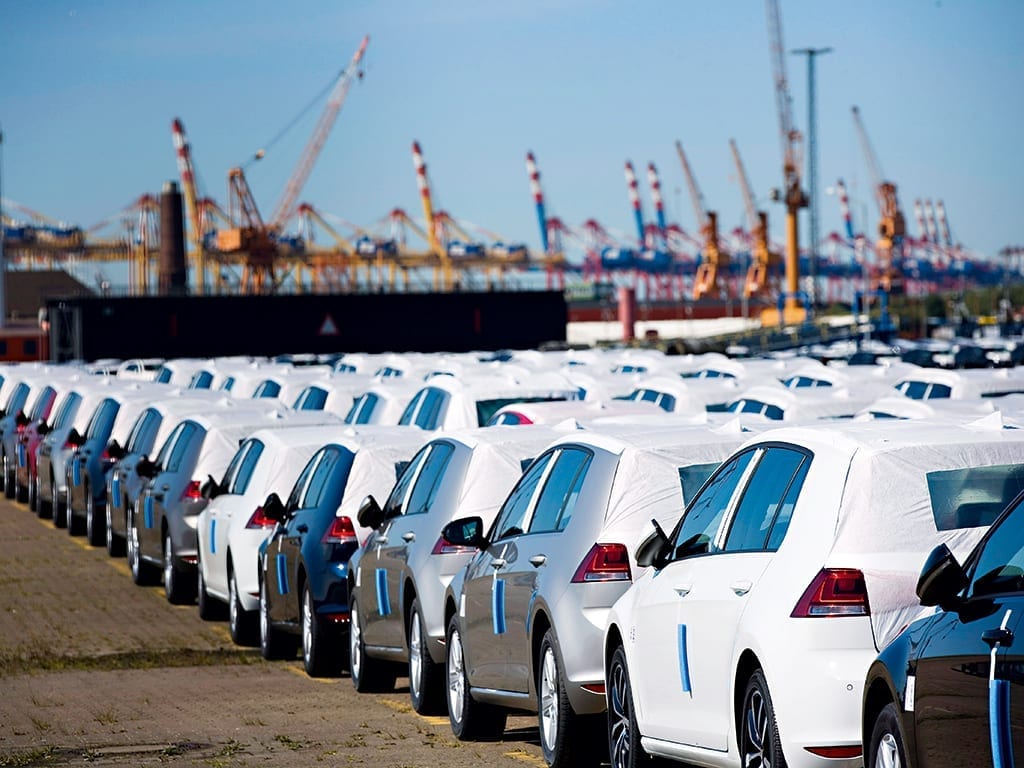
    Vietnam imported 3,945 completely built-up (CBU) cars from China in Q1, six times over the same period last year, according to the General Department of Vietnam Customs.

    Despite the surging number of cars imported from China, the country was the third-largest car supplier of Vietnam, after Thailand and Indonesia.

    Up to 80 percent of the completely built-up (CBU) cars imported to Vietnam in Q1 were from Thailand and Indonesia. The number of imported cars from Thailand was 19,300 units, up 56 percent year-on-year, while those from Indonesia stood at 8,950 units, down 26 percent year-on-year.

    Thailand and Indonesia have always led the list of Vietnam’s car suppliers ever since the ASEAN Trade in Goods Agreement (ATIGA) took effect in 2018, owing to the zero import tariff. Meanwhile, imported Chinese cars are dealt an import tariff of 47-70 percent.

    Vietnam imported around 35,300 CBU cars in Q1, a year-on-year increase of 31.1 percent.

    Auto sales rose by 36 percent year-on-year between January and March to 70,952 units, according to Vietnam Automobile Manufacturers Association (VAMA).

  • Tesla Drives On Autopilot Through A Regulatory Grey Zone

    Tesla Drives On Autopilot Through A Regulatory Grey Zone

    The fatal crash of a Tesla with no one apparently behind the wheel has cast a new light on the safety of semi-autonomous vehicles and the nebulous U.S. regulatory terrain they navigate. Police in Harris County, Texas, said a Tesla Model S smashed into a tree on Saturday at high speed after failing to negotiate a bend and burst into flames, killing one occupant found in the front passenger seat and the owner in the back seat.

    Tesla Chief Executive Elon Musk tweeted on Monday that preliminary data downloaded by Tesla indicate the vehicle was not operating on Autopilot, and was not part of the automaker’s “Full Self-Driving” (FSD) system.

    U.S. federal road safety authority has yet to issue specific regulations or performance standards for semi-autonomous systems such as Autopilot, or fully autonomous vehicles (AVs).

    Tesla’s Autopilot and FSD, as well as the growing number of similar semi-autonomous driving functions in cars made by other automakers, present a challenge to officials responsible for motor vehicle and highway safety.

    U.S. federal road safety authority, the National Highway Traffic Safety Administration (NHTSA), has yet to issue specific regulations or performance standards for semi-autonomous systems such as Autopilot, or fully autonomous vehicles (AVs).

    There are no NHTSA rules requiring carmakers to ensure systems are used as intended or to stop drivers misusing them. The only significant federal limitation is that vehicles have steering wheels and human controls required under federal rules.

    With no performance or technical standards, systems such as Autopilot inhabit a regulatory grey area.

    The Texas crash follows a string of crashes involving Tesla cars being driven on Autopilot, its partially automated driving system which performs a range of functions such as helping drivers stay in lanes and steer on highways.

    Tesla has also rolled out what it describes as a “beta” version of its FSD system to about 2,000 customers since October, effectively allowing them to test how well it works on public roads.

    Harris County police are now seeking a search warrant for the Tesla data and said witnesses told them the victims intended to test the car’s automated driving.

    Adding to the regulatory confusion is that traditionally NHTSA regulates vehicle safety while departments of motor vehicles (DMVs) in individual states oversee drivers.

    When it comes to semi-autonomous functions, it may not be apparent whether the onboard computer or the driver are controlling the car, or if the supervision is shared, says the U.S. National Transportation Safety Board (NTSB).

    California has introduced AV regulations but they only apply to cars equipped with technology that can perform the dynamic driving task without the active physical control or monitoring of a human operator, the state’s DMV told Reuters.

    It said Tesla’s full self-driving system does not yet meet those standards and is considered a type of Advance Driver Assistance System that it does not regulate.

    That leaves Tesla’s Autopilot and its FSD system operating in regulatory limbo in California as the automaker rolls out new versions of the systems for its customers to test.

    NHTSA, the federal body responsible for vehicle safety, said this week it has opened 28 investigations into crashes of Tesla vehicles, 24 of which remain active, and at least four, including the fatal Texas accident, occurred since March.

    NHTSA has repeatedly argued that its broad authority to demand automakers recall any vehicle that poses an unreasonable safety risk is sufficient to address driver assistance systems.

    So far, NHTSA has not taken any enforcement action against Tesla’s advanced driving systems.

    White House spokeswoman Jen Psaki said NHTSA is “actively engaged with Tesla and local law enforcement” on the Texas crash.

    The NTSB, a U.S. government agency charged with investigating road accidents, has criticized NHTSA’s hands-off approach to regulating cars with self-driving features and AVs.

    “NHTSA refuses to take action for vehicles termed as having partial, or lower level, automation, and continues to wait for higher levels of automation before requiring that AV systems meet minimum national standards,” NTSB Chairman Robert Sumwalt wrote in a Feb. 1 letter to NHTSA.

    “Because NHTSA has put in place no requirements, manufacturers can operate and test vehicles virtually anywhere, even if the location exceeds the AV control systems limitations,” the letter said.

    REVIEWING REGULATIONS

    NHTSA told Reuters that with a new administration in place, it was reviewing regulations around AVs and welcomed the NTSB’s input as it advanced policies on automated driving systems.

    It said the most advanced vehicle technologies on sale required a fully attentive human driver at all times.

    “Abusing these technologies is, at a minimum, distracted driving. Every State in the nation holds the driver responsible for the safe operation of the vehicle,” NHTSA told Reuters.

    NTSB also says NHTSA does not have any method to verify whether carmakers have adopted system safeguards. For example, there are no federal regulations requiring drivers to touch the steering wheel within a specific time frame.

    “NHTSA is drafting rules on autonomous vehicles, but it has been slow to regulate semi-autonomous vehicles,” said Bryant Walker Smith, a law professor at the University of South Carolina. “There is a growing awareness that they deserve more scrutiny priority and regulatory action.”

    New York has a law requiring drivers to keep at least one hand on the wheel at all times but no other states have legislation that could prevent the use of semi-autonomous cars.

    When it comes to AVs, 35 states have enacted legislation or state governors have signed executive orders covering AVs, according to the National Conference of State Legislatures.

    Such rules allow companies such as Alphabet’s Google and General Motors, among others, to test their Waymo and Cruise vehicles on public roads.

    But regulations differ by state.

    AV regulations in Texas state that vehicles must comply with NHTSA processes, though there are no such federal regulations. The Texas Department of Public Safety, the regulator charged with overseeing AVs, did not respond to a request for comment.

    Arizona’s transport department requires companies to submit regular filings to verify, among other things, that vehicles can operate safely if the autonomous technology fails.

    While most automakers offer vehicles with various forms of assisted driving, there are no fully autonomous vehicles for sale to customers in the United States.

    RED FLAGS

    Concerns about the safety of autonomous driving technology, however, have been mounting in recent years and Tesla has warned about its limitations.

    In February 2020, Tesla’s director of autonomous driving technology, Andrej Karpathy, identified a challenge for its Autopilot system: how to recognize when a parked police car’s emergency flashing lights are turned on.

    “This is an example of a new task we would like to know about,” Karpathy said at a conference during a talk about Tesla’s effort to deliver FSD technology.

    In just over a year since then, Tesla vehicles crashed into police cars parked on roads on four separate occasions and since 2016 at least three Tesla vehicles operating on Autopilot have been in fatal crashes.

    Tesla says it has used 1 million cars on the road to collect image data and improve Autopilot, using machine learning and artificial intelligence.

    U.S. safety regulators, police and local government have investigated all four incidents, officials told Reuters.

    At least three of the cars were on Autopilot, police said. In one of the cases, a doctor was watching a movie on a phone when his vehicle rammed into a police trooper in North Carolina.

    Tesla did not immediately respond to a request for comment.

    Accidents and investigations have not slowed Musk’s drive to promote Tesla cars as capable of driving themselves.

    In a recent Tweet, Musk said Tesla is “almost ready with FSD Beta V9.0. Step change improvement is massive, especially for weird corner cases & bad weather. Pure vision, no radar.”

    Tesla also says it has used 1 million cars on the road to collect image data and improve Autopilot, using machine learning and artificial intelligence.

    Tesla’s Karpathy said he has ridden in his Tesla for 20 minutes to get coffee in Palo Alto with no intervention.

    “It is not a perfect system but it is getting there,” he said in a “Robot Brains” podcast in March. “I definitely keep my hands on the wheel.”
  • Used automobile import quotas fail to attract interest

    Used automobile import quotas fail to attract interest

    The auction of import quotas for used cars at low tariffs under a free trade deal has been canceled after it failed to attract interest.

    Under the Comprehensive and Progressive Agreement for Trans-Pacific Partnership, a certain number of used cars can be imported annually, and the Ministry of Industry and Trade auctions the right to import them.

    This year, the quota was for 72 vehicles, and the deadline for bidding was March 31, but no bids were received for them.

    The auction was first held last year, and two importers won the quota for 66 cars.

    According to a car dealership, enterprises are not interested in bidding since they have to comply with stringent import regulations.
    “Car dealerships prefer buying cars that are manufactured locally since the procedures are a lot less complicated.”

    The annual quota will increase to 150 by 2034. The ministry said the auction would continue to be held next year.

  • New GTX Brand Joins The Volkswagen ID. Family

    New GTX Brand Joins The Volkswagen ID. Family

    We knew it would happen sooner or later but Volkswagen is all set to bring in a sporty top-of-the-range model to its electric vehicle range – the new ID.4 GTX. The car will be unveiled on April 28 and the company has already teased the logo. Similar to GTI and GTE, it stands for its own product brand.

    We’ll know more about the car itself, but we know a few details for now. Volkswagen says that the GTX models will impress when it comes to performance and design. An additional electric motor on the front axle brings the all-wheel-drive into the ID. Family. The additional motor switches on intelligently within a few milliseconds when very high performance or strong traction are required. In the new “Traction” driving mode, it is even permanently activated.

    Klaus Zellmer, Board Member for Marketing and Sales at the Volkswagen brand said, “Now the X is building the bridge to the mobility of the future. Sustainability and sportiness are not mutually exclusive but complement each other intelligently. ”

    The new product brand for the ID. Family gives the ACCELERATE corporate strategy a further boost. Volkswagen wants to become the most desired brand for sustainable mobility. The goal is to increase the share of pure electric cars in Europe to 70 percent of sales by 2030. Volkswagen wants to become climate neutral by 2050; around 16 billion euros will be invested in e-mobility, hybridization and digitization by 2025.

  • Nissan To Focus On Fuel-Sipping Technology And Electrification In China

    Nissan To Focus On Fuel-Sipping Technology And Electrification In China

    Japan’s financially challenged Nissan Motor Co is expected to show off a new “must-succeed” car and explain its green-car strategy for China at the Shanghai auto show which starts on Monday, two company officials told Reuters. The car Nissan plans to show off at the motor show is the significantly redesigned X-Trail sport-utility vehicle (SUV). A similar SUV called the Rogue hit the U.S. market last year. The new X-Trail will be available in China later this year.

    The new car is powered by a fuel-sipping three-cylinder, petrol-powered turbo engine, which one of the sources said might face an uphill battle in gaining acceptance in China where similar technologies have proven unpopular.

    The car is a “must succeed, a must-win car for us,” one of the two sources said. Both sources spoke on the condition of anonymity because they are not authorized to speak with reporters.

    In addition to the X-Trail’s China debut, Nissan’s chief operating officer Ashwani Gupta is expected to tell reporters in Shanghai virtually from Japan on Monday that Nissan’s green car strategy is two-pronged: the company will focus on fuel efficiency-enhancing petrol-electric hybrid technology, as well as battery-electric cars to make its lineup of vehicles in China greener.

    Nissan will focus on fuel efficiency-enhancing petrol-electric hybrid technology, as well as battery-electric cars to make its lineup of vehicles in China greener.

    In January, Nissan said all its new vehicles in key markets, including China, would be electrified by the early 2030s, as part of its efforts to achieve carbon neutrality by 2050.

    The strategy comes as regulatory pressure in China grows on carmakers to slash emissions.

    China is a key pillar of Nissan’s turnaround strategy, which involves focusing on producing profitable cars for China, Japan and the United States, rather than chasing all-out global growth pursued by ousted boss Carlos Ghosn.

    The company is scrambling to slash its production capacity and model line-up by a fifth and to cut fixed costs by 300 billion yen ($2.8 billion). Nissan aims to achieve a 5% operating profit margin and a sustainable global market share of 6% by the end of fiscal year 2023.

    It wasn’t immediately clear how much detail Nissan plans to share on its China strategy on Monday.

    The two sources said Nissan nonetheless plans to start taking “pre-orders” in China for its upcoming electric Ariya SUV before the end of this year.

    Nissan also plans to launch a hybrid “e-Power” version of the Sylphy compact car this year and an e-Power X-Trail as early as next year.

    A company spokeswoman said Nissan plans to showcase in Shanghai the redesign X-Trail crossover, as well as the introduction of Nissan’s e-power petrol-electric hybrid technology to China. She declined to comment otherwise.

  • Bentley’s 2021 Pikes Peak Race Car Unveiled

    Bentley’s 2021 Pikes Peak Race Car Unveiled

    Bentley has revealed its 2021 Pikes Peak Racecar. The Continental GT3 Pikes Peak, designed and built to compete for the Time Attack 1 record at this year’s Pikes Peak International Hill Climb, will be the first competition, Bentley, to run on renewable fuel, ahead of a goal to offer sustainable fuels to Bentley’s customers around the world.

    The modified Continental GT3 racer, based on Bentley’s race- and championship-winning car, will power its way through the 20 km course running on biofuel-based gasoline. Various blends of fuels are currently being tested and evaluated, with possible Greenhouse Gas (GHG) reductions of up to 85 percent over standard fossil fuel. This first step marks the start of a longer program that will investigate both biofuels and e-fuels for their potential to power the Bentleys of past and present in a sustainable way.

    Bentley’s ambitious and transformational Beyond100 program will see the brand become the world’s leading sustainable luxury mobility company, with the entire Bentley model range offered with Hybrid variants by 2023 ahead of Bentley being BEV-only by 2030. The adoption of renewable fuel for this project signals the start of a long-term ambition for Bentley, initiating a research and development program that aims to offer renewable fuels to Bentley customers in parallel to Bentley’s electrification program. This two-strand strategy is set to maximize the pace of Bentley’s progress towards outright carbon neutrality, as part of its Beyond100 journey.

    To break the record, the car will have to complete the nearly 5,000 ft climb, which includes 156 corners, at an average speed of more than 126 kmph to cross the finish line in less than nine minutes and 36 seconds. To help achieve this ambitious target, Bentley has once again turned to three-time Pikes Peak champion and former “King of the Mountain’ Rhys Millen (NZ) – who holds individual class records. It was with Millen that Bentley captured its two existing Pikes Peak records – the Production SUV record attained in 2018 with a Bentayga W12, and the outright Production Car record scored in 2019 with a Continental GT.

    With the start line at 9,300 ft, the course climbs to 14,100 ft – where the air is 1/3 less dense than at sea level. This environment means that the Continental GT3 Pikes Peak features modifications both to its aerodynamics package and its engine, turning it into the most extreme iteration of a Continental GT – ever.

    The biggest rear wing ever fitted to a Bentley dominates the rear of the car, sitting above a highly efficient rear diffuser that surrounds the transaxle gearbox. This rear aerodynamic package is balanced by a two-plane splitter at the front, flanked by separate dive planes.

    The biggest rear wing ever fitted to a Bentley dominates the rear of the car, sitting above a highly efficient rear diffuser that surrounds the transaxle gearbox.

    The engine is Bentley’s proven racing power unit, developed from the 4.0-litre turbo V8 fitted to the Continental GT V8. For the Continental GT3 Pikes Peak, engine modifications together with the use of carefully selected biofuel will ensure the engine develops significant horsepower despite the rarefied conditions it will operate in. Short side-exit exhausts will ensure the car sounds as dramatic as it looks.

    Further modifications include cooling air scoops in place of the rear windows, and the obligatory stopwatch mounted to the roll cage next to the steering wheel, to allow Rhys Millen to keep track of his sector times up the mountain.

  • Auto sales make recovery in Q1

    Auto sales make recovery in Q1

    Auto sales rose by 36 percent year-on-year in the first quarter to 70,952 units, with all categories of vehicles achieving double-digit growth.

    Passenger vehicles and commercial vehicles were up 34 percent and 43 percent, according to the Vietnam Automobile Manufacturers Association (VAMA).

    Truong Hai Auto Corporation, or Thaco, which assembles several brands of cars and trucks, led the market with a 37 percent share, followed by Toyota (20.2 percent) and Mitsubishi (10.7 percent).

    Hyundai Accent was the best-selling car in the first quarter with 4,804 units, followed by Mitsubishi Xpander (4,602) and VinFast Fadil (4,148).

    Last year sales had fallen by 8 percent to 296,634 units as the Covid-19 pandemic badly affected the economy, hitting people’s incomes and discretionary spending.

  • Renault To Partly Idle Spanish Plants Until End Of September Over Chip Shortage

    Renault To Partly Idle Spanish Plants Until End Of September Over Chip Shortage

    French carmaker Renault has started negotiations with unions to extend the partial idling of three of its four factories in Spain until the end of September as a preemptive measure in case a global semiconductor shortage lingers. Carmakers around the world have been impacted by the shortage of chips used in engine management and driver-assistance systems, which come mainly from Asia, especially Taiwan.

    Renault had already partly idled its Spanish plants in response to the shortage, on the expectation that chip supply would return to normal in the second half of the year.

    It is now proposing further stoppages at factories in Palencia and Valladolid for a total of between 31 and 39 days, a company spokesman said on Tuesday, as a precautionary measure in case the shortage extends into the third quarter.

    That would involve putting up to 9,000 workers on furlough, he said. The actual idling will depend on future chip supplies.

    The UGT union said in a statement Renault intended to cease output at the factories at its key European production hub for one to three days a week between April and late September.

    The COVID-19 crisis has driven up demand for chips used in consumer electronics such as laptops and phones, and manufacturers are struggling to keep up.

    Some Chinese suppliers have also been hit by U.S. sanctions imposed under former President Donald Trump.

    Renault is due to disclose first-quarter revenues next week and may update its sales projections. The company at this point expects it may sell 100,000 fewer cars in 2021 because of the chip shortage, a spokesman reiterated on Tuesday.

    The group said last month it would start producing five new hybrid SUV models in its “second home” Spain in 2022-2024.

  • Mercedes-Benz Global Sales Up By 22.3% In Q1 2021

    Mercedes-Benz Global Sales Up By 22.3% In Q1 2021

    Mercedes-Benz cars sold 590,999 passenger cars globally in the first quarter of 2021 driven by China and US retail sales as well as strong demand for plug-in hybrids and all-electric vehicles. This marks a jump of 22.3 percent in sales globally compared to the same period last year. In Europe, one in four cars sold by Mercedes-Benz and smart was an xEV.

    Globally, plug-in hybrids and all-electric cars made up about 10 percent of overall sales, with approximately 59,000 units and thereof more than 16,000 all-electric vehicles sold. The EQA too has been well received after it was launched in January this year. The company already has 20,000 orders for the EQA. Given the strong start, the company is looking to bring in 3 new models the EQS, EQB, and the EQE this year.

    The current worldwide shortage of supply in certain semiconductor components affected deliveries in the first quarter and will continue to affect sales in Q2. The company monitors the situation closely and is in constant contact with the suppliers.

    Sales of Mercedes-Benz in the Asia-Pacific region rose 46.6 percent due to the continuing strong sales development in China: where a new record was achieved with 222,520 cars delivered in Q1. In January, sales in China almost reached the milestone of 100,000 vehicles within a single month. In the Europe region, brand deliveries were despite ongoing lockdown measures in many markets at the beginning of the year slightly above Q1 2020. In Germany, Mercedes-Benz sold a total of 54,446 cars down by 15.4 percent while sales in the North America region totaled 88,318 units showing strong growth of 12.5 percent.

    In India, the company recorded a growth of 34 percent over Q1 202