Tag: car

  • Volkswagen Takes Aim At Tesla With Own European Gigafactories

    Volkswagen Takes Aim At Tesla With Own European Gigafactories

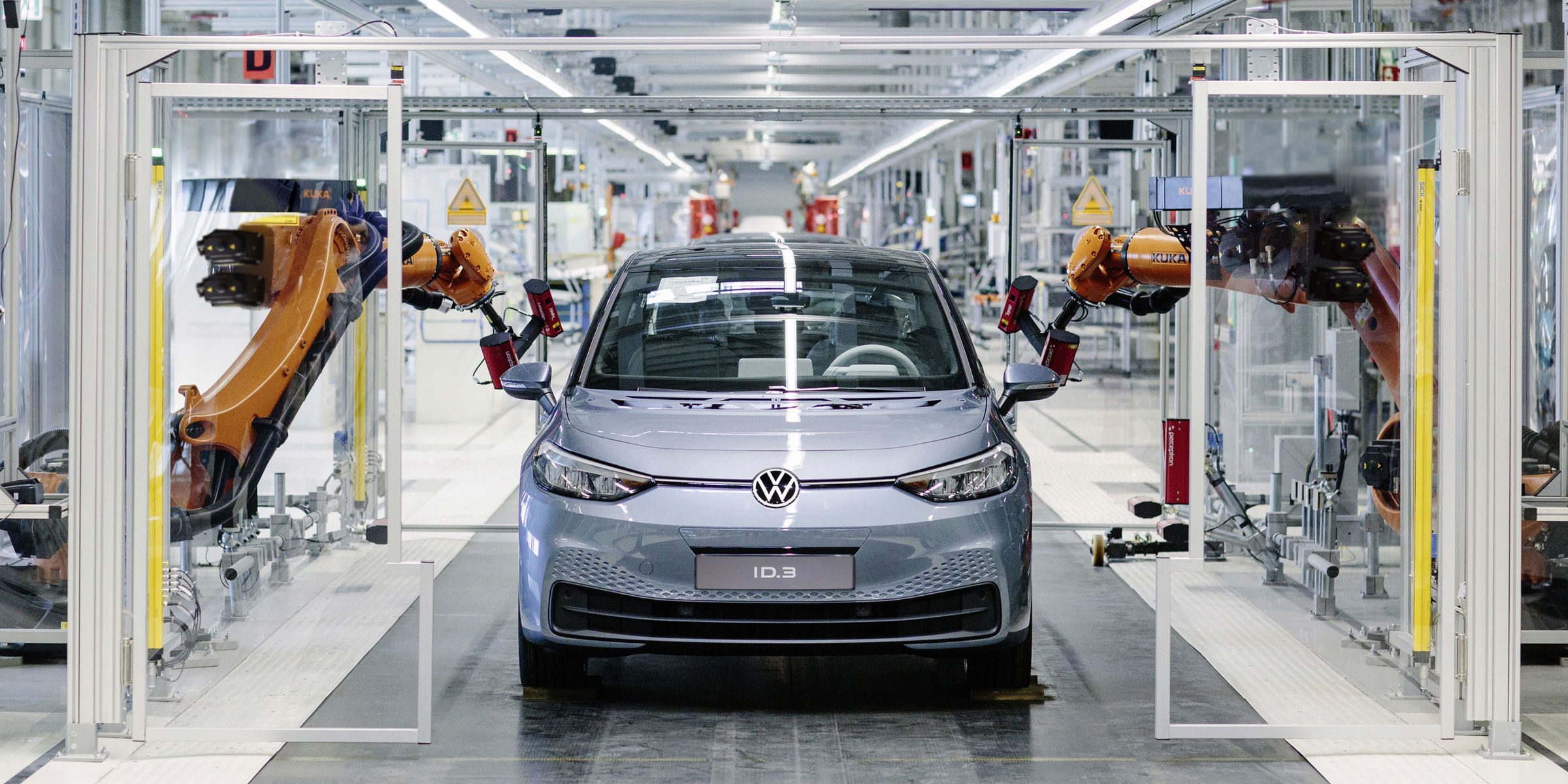
    Volkswagen plans to build half a dozen battery cell plants in Europe and expand infrastructure for charging electric vehicles globally, accelerating efforts to overtake Tesla and speed up mass adoption of battery-powered cars. The world’s No. 2 carmaker, which is in the midst of a major shift towards battery-powered cars, said on Monday it wants to have six battery cell factories operating in Europe by 2030, which it will build alone or with partners.

    “Our transformation will be fast, it will be unprecedented,” Chief Executive Herbert Diess told Volkswagen’s Power Day, which also featured the CEOs of BP, Enel and Iberdrola in an effort to match some of the buzz of Tesla’s Battery Day last September.

    “E-mobility has become core business for us,” he added.

    Volkswagen, whose shares rose as much as 3.8%, did not specifically say how much the plan will cost. It said in December that it planned to spend 35 billion euros ($41.7 billion) on e-mobility as a whole by 2025.

    The group had been laggard on electrification until it admitted in 2015 to cheating on U.S. diesel emissions tests and had to deal with new Chinese quotas for electric vehicles. It now has one of the most ambitious programs in the industry.

    Volkswagen said the European factories will have a joint production capacity of up to 240 gigawatt hours (GWh) a year, adding the first 40 GWh would come from Sweden’s Northvolt, with production starting in 2023.

    As part of the deal, Volkswagen will raise its 20% stake in Northvolt and also take over the Swedish firm’s stake in a planned battery cell venture in the German city of Salzgitter, which will form the second factory from 2025.

    This will be followed by a factory in Spain, France or Portugal in 2026 and a site in Poland, Slovakia or the Czech Republic by 2027. Two more plants will be set up by 2030.

    While the first two factories are already reflected in Volkswagen’s financial planning, the group is currently in “deep discussions” about how the subsequent plants fitted with financial targets, board member Thomas Schmall said.

    Volkswagen is also working on a major expansion of charging infrastructure, a lack of which is still seen as a big barrier to the mass adoption of battery-powered cars. Via existing efforts and partnerships with oil major BP as well as top European utilities Enel and Iberdrola, Volkswagen aims to operate about 18,000 public fast-charging points in Europe by 2025.

    This represents a five-fold expansion of the existing fast-charging network, Volkswagen said, adding it would invest 400 million euros in the initiative.

    In North America, Volkswagen targets 3,500 fast-charging points by the end of 2021 via its Electrify America unit, while in China, the world’s largest car market, the group aims for 17,000 by 2025.

    In China, where Volkswagen last year acquired 26.5 percent of battery maker Guoxuan High-tech Co Ltd, the carmaker now aims to sell more than 2 million electric vehicles a year by the end of the decade.

    Shifting to design, Volkswagen unveiled plans to have a new unified prismatic battery cell from 2023, which will support cost cuts generated by the higher level of in-house cell production and could impact its current suppliers.

    South Korean battery makers’ shares, including in LG Chem, whose unit LG Energy Solution makes batteries for Volkswagen, and SK Innovation, fell as much as 5.8% and 5.3% respectively on Tuesday after the news.

    Electric vehicle makers, including Tesla, are using cylindrical battery cells, which resemble flashlight batteries and are relatively inexpensive and easy to manufacture.

    Prismatic cells, which resemble a thin hardcover book, are housed in a rectangular metal case and are more expensive. Pouch cells, another alternative, are thinner and lighter, and resemble a flexible metal mailing envelope.

    “On average, we will drive down the cost of battery systems to significantly below 100 euros ($119) per kilowatt hour,” Schmall said. “This will finally make e-mobility affordable and the dominant drive technology.”
  • Samsung To Develop Autonomous Driving Chip For Google’s Waymo

    Samsung To Develop Autonomous Driving Chip For Google’s Waymo

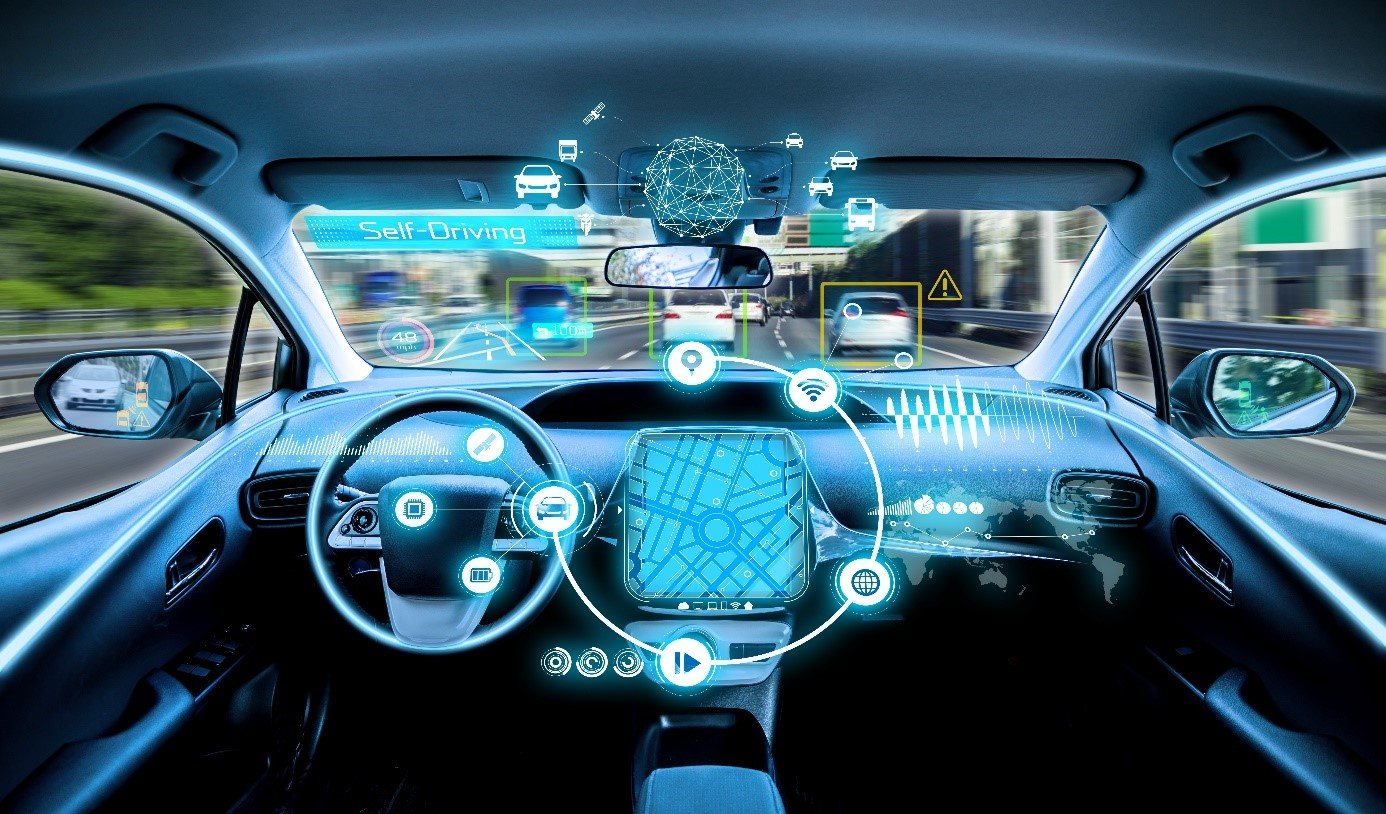
    Samsung Electronics recently won a project for Google parent Alphabet’s autonomous driving unit Waymo to develop chips for next-generation self-driving cars, South Korean media reported on Monday.

    Samsung will develop a chip that computes data collected from various sensors installed in autonomous vehicles or centrally controls functions by exchanging information with Google data centers in real-time, South Korean newspaper Herald Business reported, citing an unnamed industry source.

    The project is expected to be carried out by Samsung’s logic chip development division System LSI’s Custom SOC Business Team, it added.

    Samsung Electronics declined to comment regarding client company matters. Alphabet did not have an immediate comment.

  • GM Builds Pickups Without Certain Modules Due To Global Chip Shortage

    GM Builds Pickups Without Certain Modules Due To Global Chip Shortage

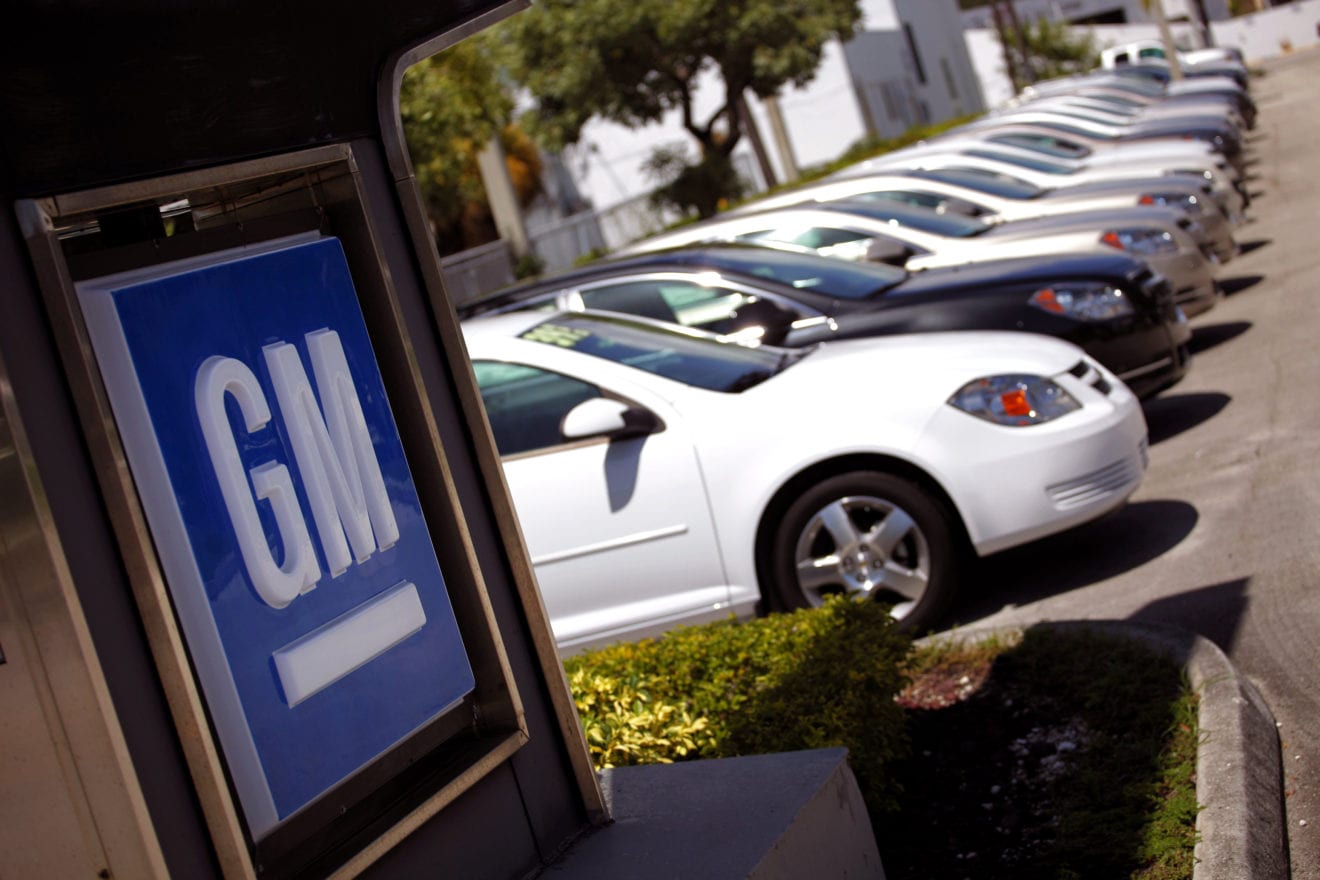
    General Motors Co said on Monday that due to the global semiconductor chip shortage the U.S. automaker is building certain 2021 light-duty full-size pickup trucks without a fuel management module, hurting those vehicles’ fuel economy performance. The lack of the active fuel management/dynamic fuel management module means affected models, equipped with the 5.3-litre EcoTec3 V8 engine with both six-speed and eight-speed automatic transmission, will have lower fuel economy by one mile per gallon, spokeswoman Michelle Malcho said.

    Malcho emphasized all trucks are still being built, something GM has repeatedly stressed it would try to protect as pickups are among GM’s most profitable models. She declined to say the volume of vehicles affected. “By taking this measure, we are better able to meet the strong customer and dealer demand for our full-size trucks as the industry continues to rebound and strengthen,” Malcho wrote in an email.

    The change runs through the 2021 model year, which typically ends in late summer or early fall, she said. Malcho said it would not have a major impact on the Detroit automaker’s U.S. corporate average fuel economy (CAFE) numbers.

    “We routinely monitor our fleet for compliance in the U.S. and Canada, and we balance our portfolio in a way that enables us to manage unforeseeable circumstances like this without compromising our overall (greenhouse gas) and fuel economy compliance,” she said.

    GM’s fleetwide fuel economy in the 2018 model year was 22.5 miles per gallon and was projected to rise to 22.8 mpg for 2019, according to a report by the Environmental Protection Agency. To meet federal CAFE requirements, automakers like GM often use credits from either earlier years where they faced less stringent rules and performed better than the requirements or buy credits from other automakers.

    GM said last month the chip shortage could shave up to $2 billion from this year’s earnings. It subsequently said it expected global chip supplies to return to normal rates by the second half of the year. The shortage, which has hit automakers globally, stems from a confluence of factors as carmakers, which shut plants for two months during the COVID-19 pandemic last year, compete with the sprawling consumer electronics industry for chip supplies.

  • Honda Confirms Participation At EICMA 2021

    Honda Confirms Participation At EICMA 2021

    Honda has become one of the first motorcycle brands to confirm participation in the 2021 edition event of one of the world’s most well-known motorcycle trade shows. The EICMA event, held every year in Milan, Italy, is scheduled to take place between November 23-28, 2021. But this year’s event may not see participation from many brands, and it’s still some time away to actually see which way the COVID-19 situation blows, in Europe, as well as across the world. BMW Motorrad has already announced that it won’t be attending any motorcycle shows going forward, and the confirmation from Honda is actually a strong statement, considering the EICMA is possibly the most important two-wheeler event around the world.

    “It is a concrete and conscious approach to protect the value of the event, the public and the whole sector of reference involved, with the structure of EICMA S.p.A. and the manufacturers committed to facing up to the complexity of the organization of the event in a context in continuous development,” Honda said in a statement.

    “The path towards EICMA 2021 is distinguished by a reasonable expectation and a more flexible vision compared to the past. Sharing this new orientation therefore implies a surplus of compactness by all the players involved and the positive confirmation of Honda, together with the other significant names which have already assured their presence, go in exactly this direction. We hope that we can soon communicate other confirmations.”

    “The common objective is that we can once again gather around our passion for the products of this industry and re-conquer the freedom to do what EICMA has been doing for over one hundred years: creating opportunities for companies and offering the public visitor experiences which are increasingly exciting and thrilling.”

    The 2020 edition of the EICMA had to be canceled due to the COVID-19 pandemic. BMW Motorrad has announced that it will focus on its own small motorcycle events and customer events, and will not participate at the EICMA show. With the global economy under pressure, it’s still a matter of speculation of how many brands will eventually turn up at the 2021 EICMA show. But this year’s event is likely to be smaller than before, and it’s still uncertain how the COVID-19 situation pans out over the next few months. Even though vaccination drives are going on around the world, audience participation at the EICMA 2021 is likely to be significantly lower than in previous years.

  • Nissan Appoints Guillaume Cartier Chairperson Of The AMIEO Region

    Nissan Appoints Guillaume Cartier Chairperson Of The AMIEO Region

    Nissan Motor announced Guillaume Cartier as its new Chairperson for the Africa, Middle East, India, Europe and Oceania (AMIEO) region. Effective April 1st, Cartier will lead all Nissan operations in the region, which covers more than 140 markets across four continents with a population of around 3.8 billion people, representing more than 30 percent of global vehicle sales.

    With over 25 years’ experience at Nissan and in the Alliance in global and regional leadership positions, Cartier will lead the new region as the Nissan NEXT transformation plan continues to gather pace and with key models in Europe including Qashqai and Ariya launching soon, and as the brand continues to grow in the AMIO markets, thanks to a powerful vehicle line-up ranging from the iconic Patrol to the recently launched Magnite in India.

    Cartier said: “I am thrilled to be leading this culturally rich and diverse region into a period of unprecedented change for the automotive industry and with a refreshed range of Nissan models and technologies coming to the market.”

    Currently Vice-Chairperson of the AMIEO region and AMI President, Cartier first joined Nissan in 1995 as after-sales manager and went on to hold a number of senior management positions in the Alliance, including AMI Chairperson, head of the Global Datsun Business Unit, Executive Officer and Senior Vice President for Mitsubishi Motors, and Senior Vice President for Sales and Marketing in Europe. Cartier will report to the vice-chief performance officer and chief quality officer, Christian Vandenhende. Cartier will replace Gianluca De Ficchy, who served for three years as Chairperson of Nissan Europe and latterly of the expanded AMIEO region.

  • BMW Group Invests In Innovative Method For CO2-Free Steel Production

    BMW Group Invests In Innovative Method For CO2-Free Steel Production

    The BMW Group announced that it is investing in an innovative method for CO2-free steel production developed by American startup Boston Metal, through its venture capital fund, BMW i Ventures. Over the coming years, Boston Metal plans to expand the new method for steel production on an industrial scale. The investment is part of the BMW Group’s far-reaching sustainability activities aimed at significantly reducing CO2 emissions across the supplier network.

    With its versatile properties, steel is one of the most important materials in car production and will be no less important for future vehicle generations. Even with the dynamic ramp-up of electromobility, steel will remain an important building material for car bodies and many components. BMW Group press plants in Europe process more than half a million tonnes of steel per year.

    The blast furnaces used in conventional steel production generate carbon dioxide. The startup Boston Metal uses electricity for its new technology, which, by means of an electrolysis cell, produces molten iron that is later processed into steel. If electricity from renewable energies is used for this process, then steel production is carbon-free. The young company will build demonstration facilities for this process over the next few years and further develop it for use on an industrial scale.

    The BMW Group established close contact with Boston Metal already last year in the context of its own research activities and through the BMW Startup Garage. The company is now investing in the startup as part of its i Ventures activities.

    To safeguard reserves of raw materials, the BMW Group has set itself the goal of further increasing its percentage of recycled raw materials, so-called secondary material, by 2030 and using raw materials multiple times in a circular economy.

    All steel waste produced at the press plants – for example, when doors are punched out – is either reused through a direct material cycle or sent back to the steel producer via steel traders and processed into new steel. The use of secondary material reduces CO2 emissions substantially compared to primary material, conserves natural resources and also reduces the amount of energy needed for production.

  • Volkswagen To Cut Up To 5,000 Jobs

    Volkswagen To Cut Up To 5,000 Jobs

    Carmaker Volkswagen plans to cut up to 5,000 jobs in Germany by offering early or partial retirement to older employees in a move that could cost 500 million euros ($598 million), the Handelsblatt newspaper reported on Sunday.

    The newspaper quoted a spokeswoman confirming that the company had agreed on the plan with the works council to open partial retirement to those born in 1964, while also offering early retirement to older employees.

    Handelsblatt cited company sources as saying Volkswagen was putting aside 500 million euros for the plan as it would compensate the employees who leave by topping up their pension, although it would save billions in the longer term.

    The newspaper said Volkswagen is also extending a hiring freeze until the end of the year. It had previously only been in place until the end of the first quarter. External hires can only be made in areas like information technology and software.

    The Volkswagen Group said in January it would cut overhead costs by 5% and procurement costs by 7% over the next two years.

  • Kia Teases Its First Dedicated Electric Vehicle The EV6

    Kia Teases Its First Dedicated Electric Vehicle The EV6

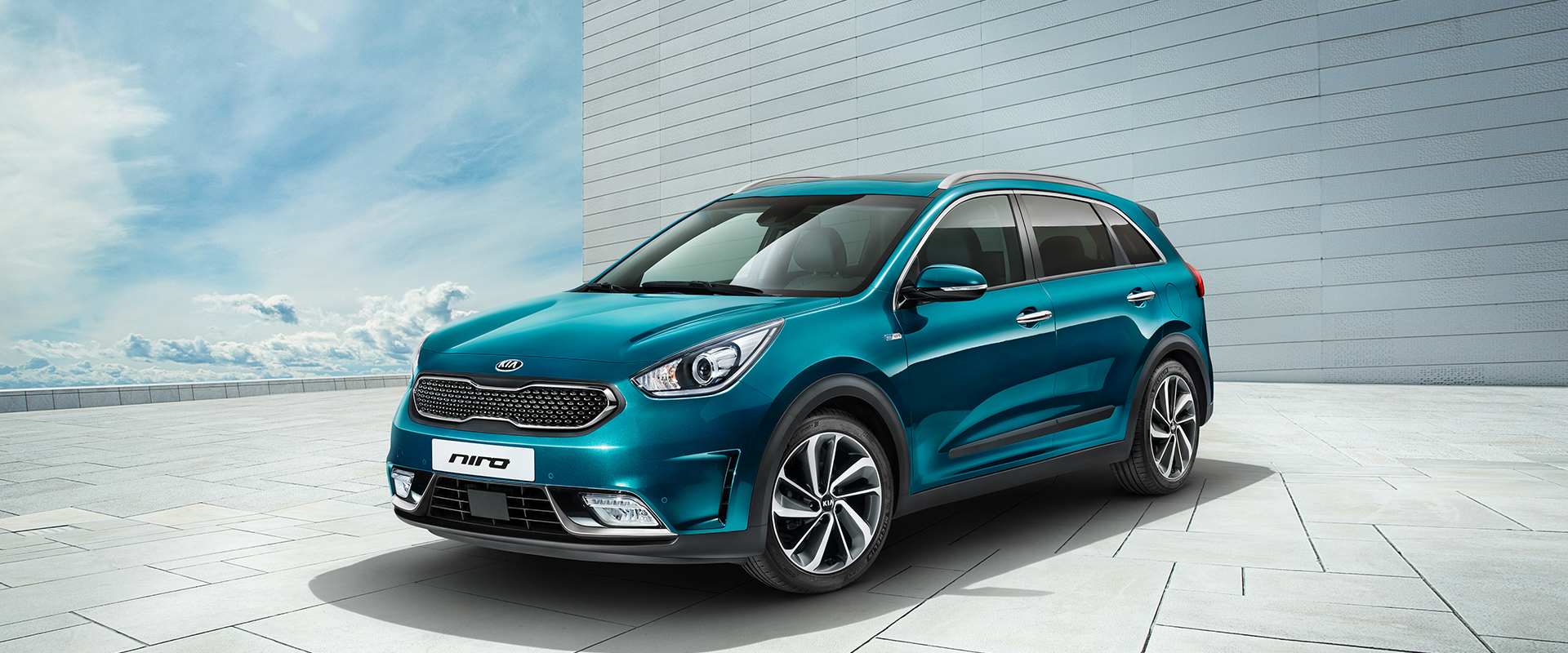
    Kia has revealed the first official images of the EV6 – its first dedicated battery electric vehicle. Now, we have to tell you here that it’s not the company’s first EV, because if you remember, it already has the e-Niro and the Soul EV in its all-electric portfolio. The EV6, however, is built on a platform that has been developed specifically for electric vehicles. The new platform Electric-Global Modular Platform, or E-GMP, will see Kia build next-generation electric cars under a new design philosophy that embodies Kia’s shifting focus towards electrification.

    The teaser images give us an idea of what to expect in terms of design. It is sleek and the coupe-like roofline integrates well into the rear spoiler. The silhouette also points out at a slight ducktail too. The front end is sleek and modern and it looks like the EV6 has a short overhang. The headlights are slim and the LED pattern gives it a unique look.

    Karim Habib, Senior Vice President and Head of Kia Global Design Centre said, “EV6 is the embodiment of both our brand purpose, ‘Movement that inspires’, and our new design philosophy. It has been designed to inspire every journey by offering an instinctive and natural experience that improves the daily lives of our customers, and provide user ownership that is simple, intuitive, and integrated.”

    As part of the company’s brand transition, Kia’s new dedicated battery electric vehicles will be named according to a new naming strategy. All of Kia’s new dedicated BEVs will start with the prefix ‘EV’ which makes it easy for consumers to understand which of Kia’s products are fully electric. This is followed by a number that corresponds to the car’s position in the line-up.

  • Maruti Suzuki Records 19.3% Production Growth In February 2021

    Maruti Suzuki Records 19.3% Production Growth In February 2021

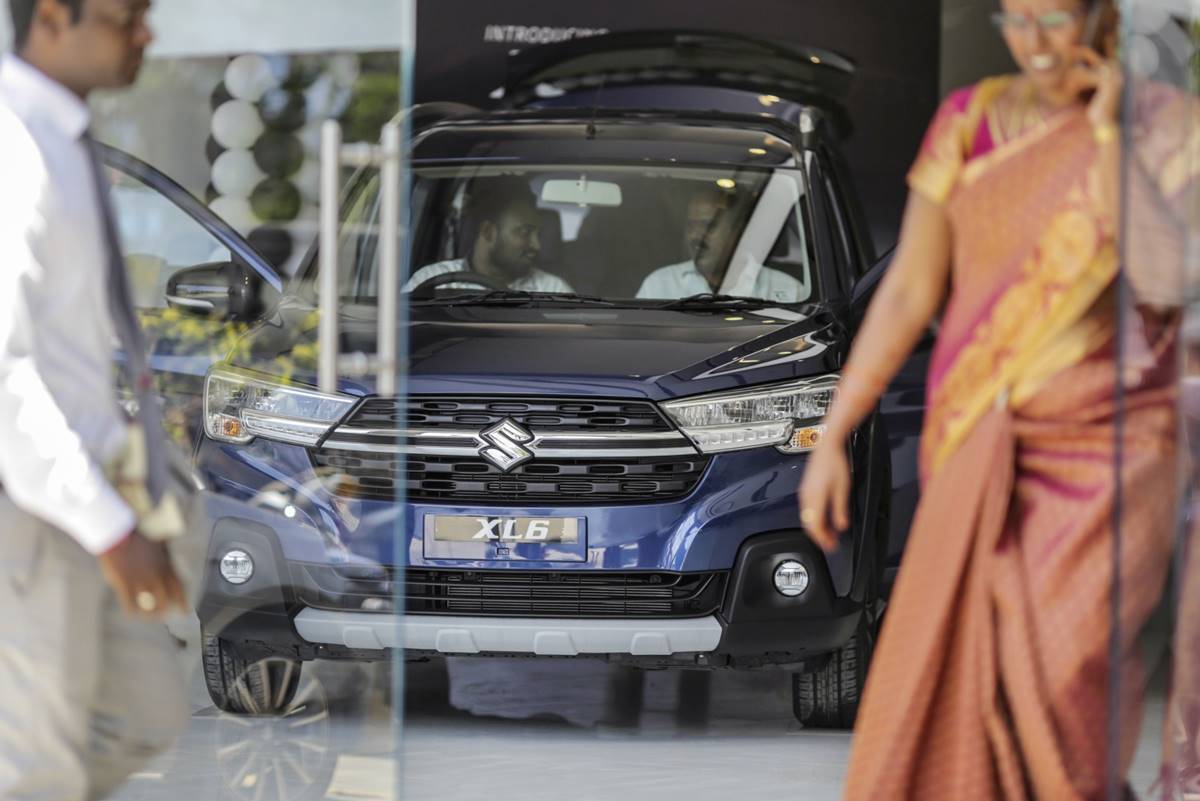
    Maruti Suzuki India has announced production figures for the month of February 2021. India’s leading carmaker said its total production increased by 19.3 percent to 1,68,180 units in February against 1,40,933 units produced in the same month last year. The numbers recorded last month are slightly better than what the automaker posted in February 2020. The total number of passenger vehicles manufactured last month were 1,65,783 units in comparison to 1,40,370 units in the corresponding month last year, witnessing a growth of 18 percent.

    The Indo-Japanese carmaker manufactured 1,60,975 units in January 2021 as against 1,68,180 units, witnessing a marginal month-on-month (MoM) growth of 4 percent. The production of mini hatchbacks – Alto and S-Presso in February 2021 decreased marginally by 4 percent to 28,213 units as compared to 29,676 units produced in the same month last year. However, compact vehicles such as WagonR, Celerio, Swift, Dzire, Ignis, Baleno, and the Glanza saw production growth of 21.22 percent with 91,091 units against 75,142 units manufactured a year ago. The Maruti Suzuki Ciaz compact sedan saw a decline in production by 34.13 percent to 1,943 units as compared to 2,950 units manufactured in February 2020.

  • Volvo Cars Reports 29.1% Sales Growth In The First Two Months Of 2021

    Volvo Cars Reports 29.1% Sales Growth In The First Two Months Of 2021

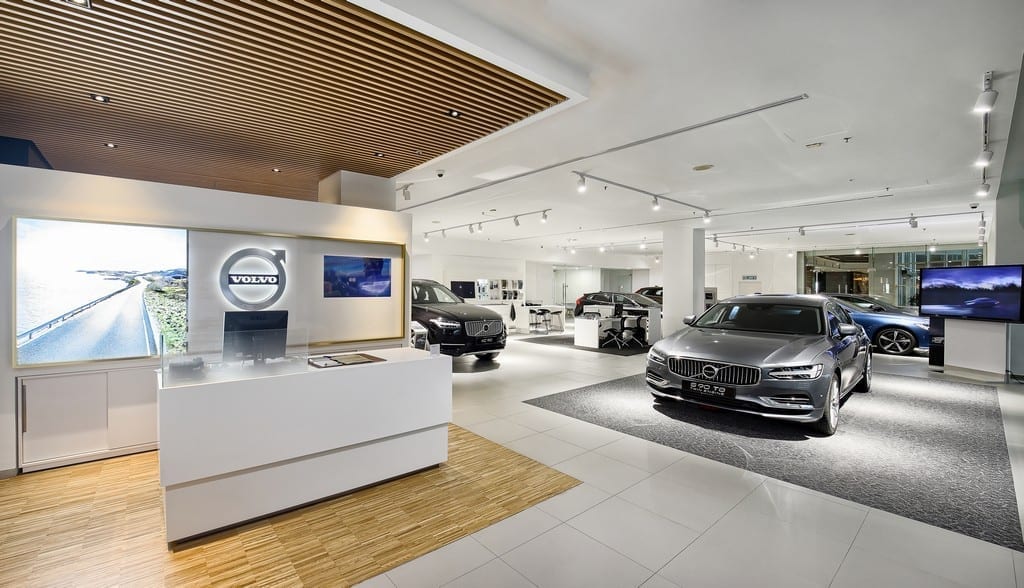
    Volvo Cars’ global sales performance remained strong in February after the company posted a 29.1 percent growth for the first two months of the year, compared with the same period last year. Total sales during the period amounted to 110,383 cars as US, Europe and China reported a growth in volumes. The sales increase was driven by an ongoing recovery from the Covid-19 pandemic in China compared to last year, a solid performance on the US market, and increased sales in Sweden.

    For the month of February, Volvo Cars sold a total of 50,795 cars, up 27.8 percent compared to the same month last year and the company’s best February sales performance ever.

    For the month of February, Volvo Cars sold a total of 50,795 cars, up 27.8 percent compared to the same month last year

    Its Recharge line-up of chargeable models, with a fully electric or plug-in hybrid powertrain, continued to grow in popularity among customers and accounted for 26.6 percent of all Volvo cars sold globally in February. In Europe, Recharge cars represented 44 percent of the overall sales volume.

    In China, Volvo Cars sold 29,243 cars in the first two months, up 160.6 percent year-on-year, as the company managed to more than recover lost sales due to Covid-19 shutdowns last year.

    US sales continued to grow year-on-year and reached 17,315 cars in January and February, up 23.7 percent compared with the same period last year. The strong increase was led by the brand’s premium SUVs which accounted for 80 percent of total sales. The company’s European sales grew 5.5 percent in the first two months of 2021 to 48,784 cars, compared to the same period last year, driven mainly by increased sales in Sweden.

  • VinFast to produce batteries for electric cars in Vietnam

    VinFast to produce batteries for electric cars in Vietnam

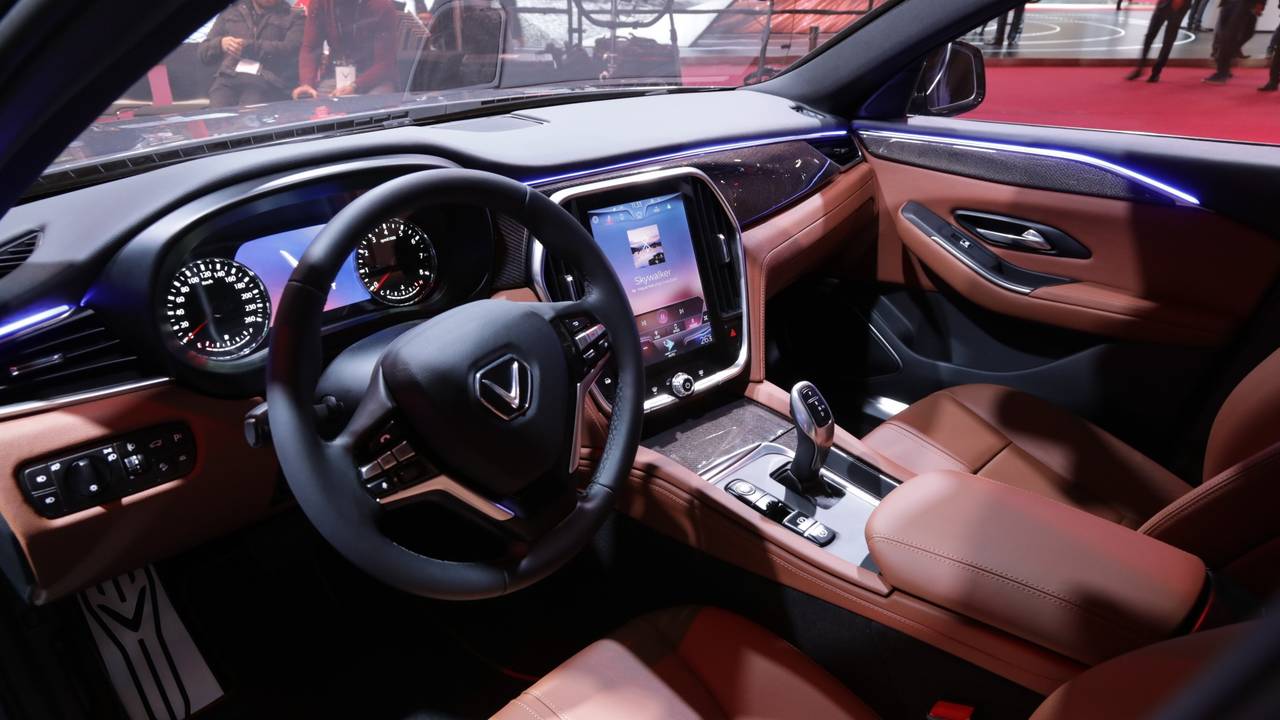
    Automaker VinFast has signed a memorandum of understanding on strategic cooperation with Taiwan’s ProLogium Technology Co.. Ltd. on production of batteries for electric cars in Vietnam.

    Under the MoU signed Wednesday, the two parties will set up a joint venture to manufacture solid-state batteries for electric cars. The joint venture will be licensed to use ProLogium’s patented solid-state battery pack assembly technology.

    This is a strategic step for VinFast in mastering battery technology for electric vehicles, laying a foundation for its research and development of smart and advanced electric vehicles in the future.

    Founded in 2006, ProLogium is the world’s leading solid-state battery maker. In 2017, ProLogium became the first company in the world to have a test line for solid-state battery technology for automotive applications.

    Its solid-state batteries have passed safety tests in Europe and China, which are the world’s largest electric vehicle markets.

    It is also cooperating with large electric cars manufacturers to test a new battery technology and expects to deploy it for mass-production in 2023-2024.

    By using solid-state batteries, VinFast electric cars will be able to go longer distances, reduce charging time, and increase the total number of times they can be charged.

    VinFast’s partnership with ProLogium is a part of its plan to become a global smart electric car brand.

    In January, VinFast introduced three new electric self-driving car models. It is also setting up electric charging stations nationwide, aiming at 40,000 charging ports for electric bikes and cars by the end of 2021.

    VinFast sold 31,500 cars in Vietnam last year. Since entering the auto industry three years ago the company now has a plant in the northern province of Hai Phong and R&D centers in Australia, Germany and the U.S.

  • Ford recalls nearly 2,500 vehicles to update engine software

    Ford recalls nearly 2,500 vehicles to update engine software

    Ford Vietnam has issued a recall order of 2,470 Ranger and Everest vehicles to update the software in the transmission control module (TCM) and powertrain control module (PCM).

    The recall program will begin on March 16 this year and last until March 15, 2023.

    The affected vehicles were produced between September 2019 to February 2020 in Thailand and imported by Ford Vietnam for distribution in the local market.

    According to the company, the issues could cause problems for transmission oil pumps, which can lead to torsional vibrations while the engine accelerates and decelerates and lead to transmission malfunction, increasing the risk of collision.

    Authorized dealerships will provide free inspection and repair and the whole process will take about two hours to complete.

    Ford Vietnam said it will still carry out the replacement for drivers of Ford Ranger and Ranger Raptor models imported to the country by the Ford Motor Company.

    Ford sold 24,663 vehicles last year, accounting for 8.7 percent of total car sales, according to the Vietnam Automobile Manufacturers Association.

  • Volkswagen’s Market Value Crosses 100 Billion Euro Mark For The First Time Since 2015

    Volkswagen’s Market Value Crosses 100 Billion Euro Mark For The First Time Since 2015

    When the market value of Germany’s Volkswagen briefly rose above the 100-billion-euro mark on Wednesday for the first time since 2015, the boss of the normally staid carmaker took to Twitter, Elon Musk-style, to crow about it.

    VW shares soared as much as 6% after investment bank UBS raised its price target on the stock by 50% and said the company’s new electric vehicle platform was set to challenge Tesla’s dominance in the battery electric vehicle (BEV) market.

    Herbert Diess, chief executive of VW Group, highlighted the UBS note on Twitter and shared the market capitalization milestone.

    “The market has been waiting for our #BEV-ramp-up and wanted to see some proof points,” Diess posted.

    Traders reacted with comparisons to Tesla chief Elon Musk who frequently uses Twitter to talk up products developed by his companies, cryptocurrencies or other buzzing technologies.

    The comparison, at least for now, must end there.

    Diess sent his first tweet using the “@Herbert_Diess” handle less than two months ago and has since tweeted 51 times. While he has managed to amass almost 25,000 followers in this time, Musk can boast of 48.3 million.

    “The sheer fact that he started his own account apart from the official VW account tells me, that between the lines he wants to express: We are here,” a Germany-based trader said.

    Though unrelated and more a market-moving tweet, another trader highlighted instances of a probe by the U.S. Securities and Exchange Commision on Musk’s tweet in 2018 that he was considering taking Tesla private at $420 a share.

    But despite recent share price gains — up 20% this year — VW’s market capitalization is just one-sixth that of Tesla. Shares trade 7.5 times 12-month forward earnings; possibly its role in the EV transition is not fully priced.

    Despite recent share price gains – up 20% this year – VW’s market capitalisation is just one-sixth that of Tesla

    Tesla meanwhile trades at 160 times 12-month forward earnings, levels many consider bubble-like.

    On the market capitalization gap, UBS said VW’s only takes into account its EV business out to 2025, and doesn’t price its cash flow-rich legacy business, indicating there is room for the share price to rise.

    It added that VW would likely “master” the transition to close the volume gap with Tesla in 2022.

    At 300 euros, UBS has the most bullish price target on VW. Analysts’ median price target on its shares was 191 euros, according to Refinitiv data.

    Preferred shares, which are listed in Germany’s benchmark DAX index, hit January 2018 highs on Wednesday, while ordinary shares rose as much as 5.6% to their highest since July 2015, two months before the diesel scandal broke.

    VW closed 4.7% higher at 185.18 euros per share on the day, taking its market value to 99 billion euros.

  • GM Extends Vehicle Production Cuts Due To Semiconductor Chip Shortage

    GM Extends Vehicle Production Cuts Due To Semiconductor Chip Shortage

    General Motors Co said on Wednesday it was further extending production cuts at three North American plants and adding a fourth to the list of factories hit by the global semiconductor chip shortage. The extended cuts do not change GM’s forecast last month that the shortage could shave up to $2 billion from this year’s earnings. GM Chief Financial Officer Paul Jacobson subsequently said chip supplies should return to normal rates by the second half of the year and he was confident the profit hit would not worsen.

    The U.S. automaker did not disclose the impact on volumes or say which supplier or parts were affected by the chip shortage, but said it intends to recover as much of the lost output as possible.

    “GM continues to leverage every available semiconductor to build and ship our most popular and in-demand products, including full-size trucks and SUVs,” GM spokesman David Barnas said. “We contemplated this downtime when we discussed our outlook for 2021.”

    The chip shortage, which has hit automakers globally, stems from a confluence of factors as carmakers, which shut plants for two months during the COVID-19 pandemic last year, compete against the sprawling consumer electronics industry for chip supplies.

    Consumers have stocked up on laptops, gaming consoles and other electronic products during the pandemic, leading to tight chip supplies. They also bought more cars than industry officials expected last spring, further straining supplies.

    GM said Wednesday it would extend downtime at plants in Fairfax, Kansas, and Ingersoll, Ontario, to at least mid-April, and in San Luis Potosi, Mexico, through the end of March. In addition, it will idle its Gravatai plant in Sao Paulo, Brazil, in April and May.

    The automaker did not disclose the impact on volumes or say which supplier or parts were affected by the chip shortage

    The Detroit automaker had previously extended production cuts at three North American plants into mid-March and said vehicles at two other plants would only be partially built. Following Wednesday’s cuts, forecasting firm AutoForecast Solutions estimated GM could lose more than 216,000 units globally due to the shortage.

    Ford Motor Co said last month the lack of chips could cut company production by up to 20% in the first quarter and hurt profits by as much as $2.5 billion. It had previously cut production of its top-selling F-150 pickup truck. Stellantis said Wednesday the chip shortage could weigh on 2021 results.

    Some automakers, including Toyota Motor Corp and Hyundai Motor Co, avoided deeper cuts by stockpiling chips ahead of the shortage.

    Industry officials and politicians have pushed U.S. President Joe Biden’s administration to take a more active role in dealing with the chip shortage.

    Last week, Biden said he would seek $37 billion in funding to supercharge chip manufacturing in the United States. An executive order also launched a review of supply chains for such critical products as semiconductor chips, electric vehicle batteries and rare earth minerals.

    Complicating matters was a severe winter storm in Texas last month that killed at least 21 people and led to the shutdown of several chip plants. Semiconductor industry officials said customers would face knock-on effects in several months.

  • Volvo Cars Initiates First Ever Over-The-Air Software Update On XC40 Recharge

    Volvo Cars Initiates First Ever Over-The-Air Software Update On XC40 Recharge

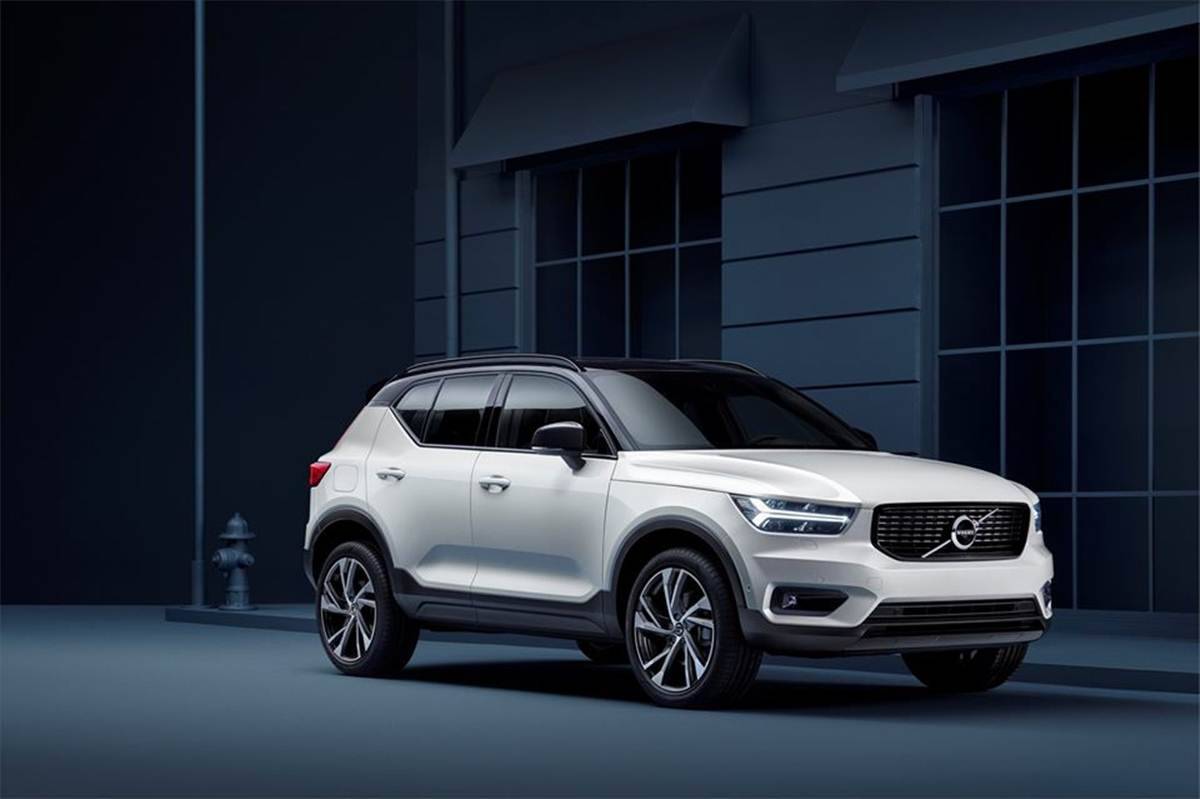
    Volvo Cars is rolling out its first ever over-the-air (OTA) software update on the XC40 Recharge, the company’s first fully electric car. Starting soon, XC40 Recharge drivers in Europe will receive a range of updates, including new features, bug fixes and stability improvements to the car’s infotainment and propulsion systems. The introduction of OTA updates means that customers no longer have to visit a workshop in order to enjoy the latest software and new, updated features on their electric Volvo.

    It also means that a new Volvo is no longer at its finest when it leaves the factory, but keeps improving over time as additional OTA updates are launched.

    The update is available automatically and XC40 Recharge drivers only have to accept the download and installation.

    “The benefits of over-the-air updates are obvious,” said Henrik Green, chief technology officer. “Yesterday you still had to drive to the workshop in order to get the latest updates to your car. Today you simply click OK and your electric Volvo takes care of the rest. It couldn’t be easier.”

    Features included in this latest software update are a new base software for the car’s main electronic systems, an increase in charging speed and an improved driving range.

    There are also updates to the Android Automotive operating system that powers the car’s infotainment system, as well as an important safety-related propulsion bug fix.

    Finally, the software package also includes updates to a variety of items such as Bluetooth connectivity, climate timers, the car’s digital owner’s manual and the 360-degree camera. The update is available automatically and XC40 Recharge drivers only have to accept the download and installation.