Tag: car

  • Maserati Grows Presence In APAC and Enters Cambodia

    Maserati Grows Presence In APAC and Enters Cambodia

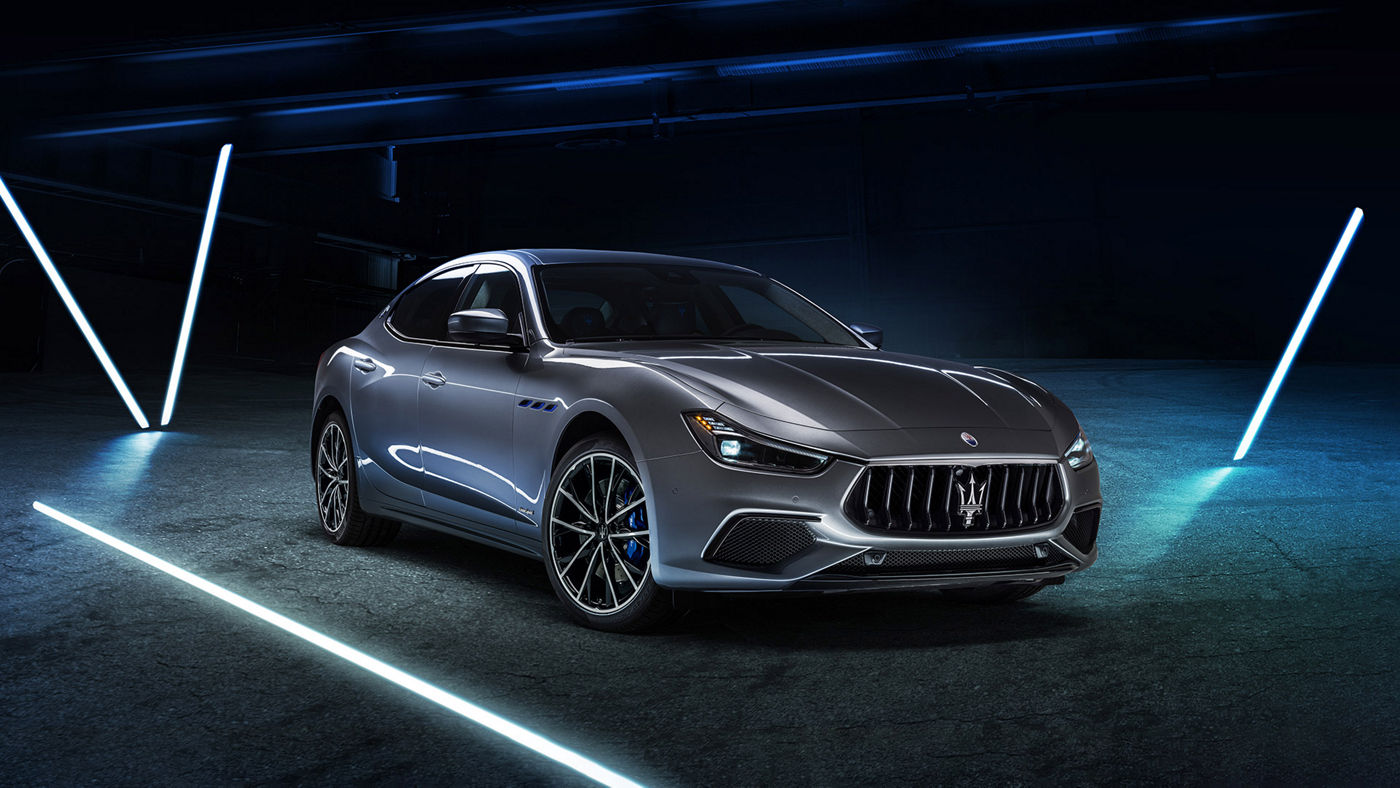
    Maserati has announced the opening of a new market in Asia Pacific as the brand enters Cambodia. Maserati is represented in Cambodia by HGB Group. The showroom is situated in Cambodia’s capital Phnom Penh. The facility includes a showroom of 610 sqm displaying the Maserati product line-up and a workshop of 1.760 sqm equipped with 3 work bays.

    Bernard Loire, Chief Commercial Officer Maserati, said, “Selecting the right partner and having great products are the foundations for success across the region. Maserati is entering in a period of intense changes with revolutionary new cars, innovations, and projects. Now for us, the focus is strongly on the future, including hybrid and electric models.”

    Maserati’s complete range will now be available in Cambodia in addition to more than seventy markets internationally. The company already has partners in Singapore, Malaysia, Thailand, Vietnam, and Indonesia in the South Asian market.

    Cambodia is a very promising market for Maserati as the luxury car market is estimated to grow at a Compound Annual Growth Rate of 14 percent from 2017 to 2020.

  • November auto sales achieve year record

    November auto sales achieve year record

    Auto sales in November hit 36,359 units, the highest monthly number this year as Vietnam continues to contain Covid-19.

    The figure exceeded that of last year by 22 percent, making November the third month to record year-on-year growth in 2020 after February and October as Covid-19 caused sales to slump in other months, according to data from Vietnam Automobile Manufacturers Association (VAMA).

    Passenger cars accounted for 79 percent of sales, commercial vehicles nearly 20 percent, and special-purpose vehicles for the rest, data shows.

    However, auto sales in the first 11 months still fell nearly 14 percent year-on-year due to deep plunges recorded in April and August after two major Covid-19 outbreaks.

    Local brand Truong Hai Auto (Thaco) retained the top spot in the first 11 months with a 35.5 percent share of the market as sales rose two percent to 84,858 units.

    It was followed by Toyota with 59,394 units, down 16 percent and Mitsubishi with 24,387 units, down nine percent. Ford and Honda rounded off the top five.

    Last year, auto sales had risen 11.7 percent from 2018 to 322,322 units, according to VAMA.

  • Baidu is considering designing and building electric vehicles

    Baidu is considering designing and building electric vehicles

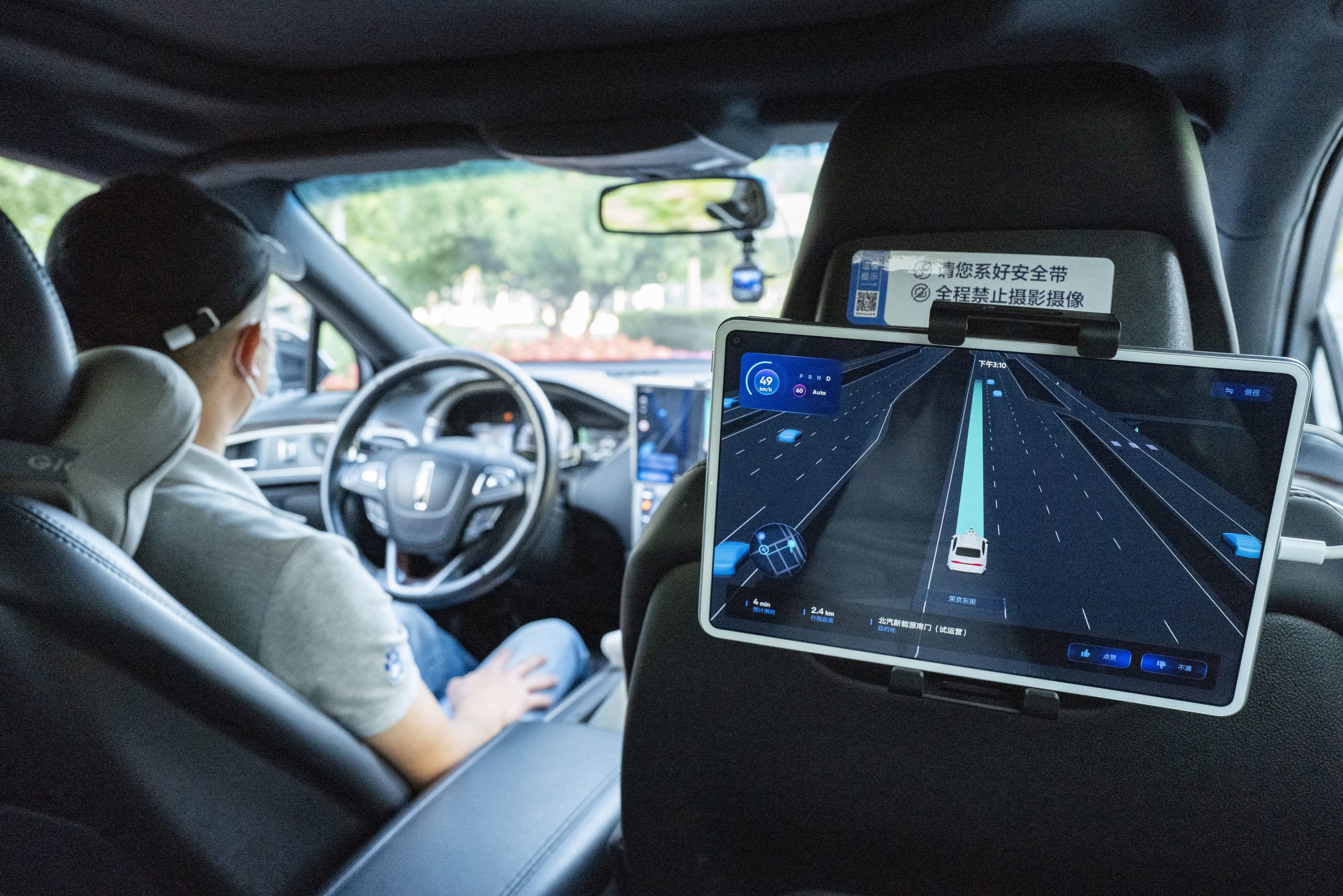
    China’s Baidu is considering making its own electric vehicles and has held talks with automakers about the possibility, three people with knowledge of the matter said, the latest move in a race among tech firms to develop smart cars.

    The search-engine leader, which also develops autonomous driving technology and internet connectivity infrastructure, is considering contract manufacturing, one of the people said, or creating a majority-owned venture with automakers.

    The initiative would be a step up from internet peers such as Tencent Holdings, Amazon, and Alphabet Inc., which have also developed auto-related technology or invested in smart-car startups.

    Baidu has held preliminary talks without reaching any decisions, with automakers including Zhejiang Geely Holding Group Guangzhou Automobile Group Co. and China FAW Group Corp.’s Hongqi, on a possible venture, the people said.

    They declined to be identified as the talks are private.

    Baidu declined to comment. GAC said it has a strategic partnership with Baidu and that any further cooperation was subject to discussion. Geely said it was not familiar with the matter. FAW did not respond to a request for comment.

    Baidu established the autonomous driving unit Apollo in 2017. The unit mainly supplies technology powered by artificial intelligence and work with automakers such as Geely, Volkswagen Group, Toyota Motor, and Ford Motor Co.

  • Amazon Unveils Zoox Self Driving Robotaxi

    Amazon Unveils Zoox Self Driving Robotaxi

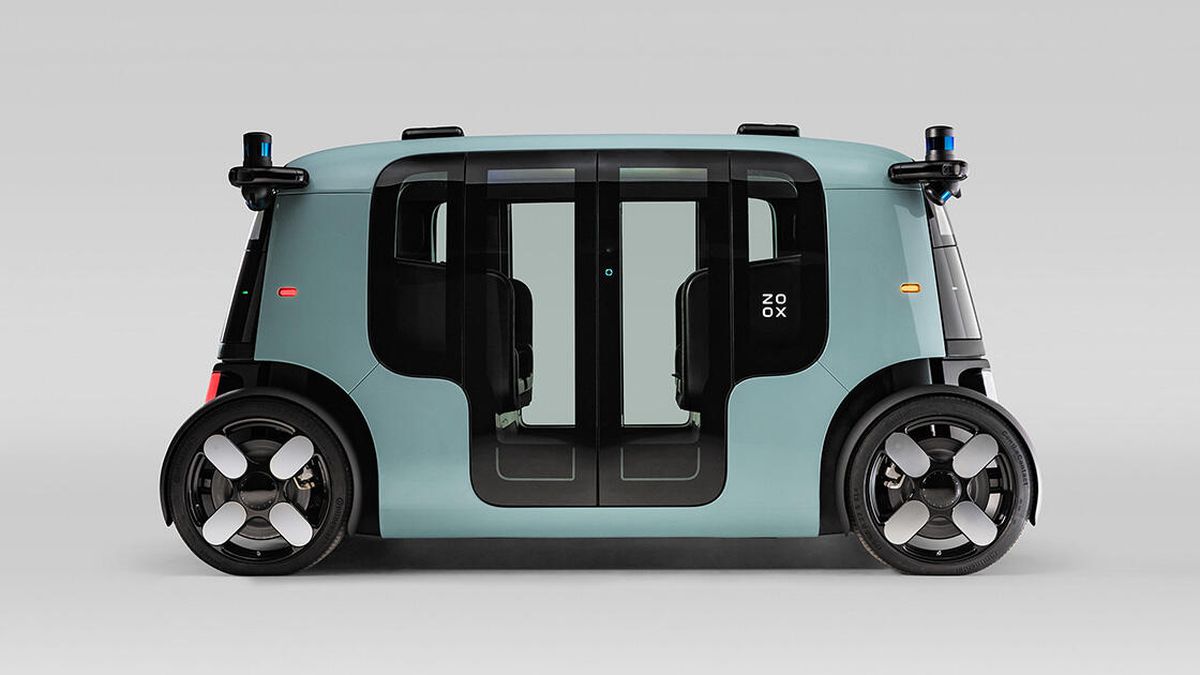
    Amazon could become the fourth major player to have a self-driving robotaxi service after Waymo, Cruise, and AutoX. Amazon’s Zoox comes out of stealth after releasing prototypes six years ago. The most striking thing about Zoox is that its car has a level of fit and finish that goes beyond what Waymo or Cruise have unveiled. And presumably, this will be the basis of a ride-hailing service that Amazon will launch to take on the likes of Uber, Waymo, and Cruise.

    The vehicle is quite different as it has a carriage-style four-wheel all-electric powertrain that can set up for people. It is just 3.63 meters long which makes it smaller than the Origin robotaxi by Cruise.

    Zoox is different because it can drive both forward and backward and side to side — in other words, it has bi-directional capabilities. This allows the car to handle tight curbside pickups” and tricky U-turns, something which AutoX has also shown off. It is also the fastest autonomous vehicle of its kind as it travels at 120 kilometers per hour — a Waymo robotaxi can only do 72 kilometers per hour.

    As far as the autonomous tech goes, this vehicle marries 6 LiDAR arrays as well as multiple radar sensors and cameras providing a 270-degree field of view, with the vehicle having no blindspots. It even has sensors for redundancies and can see objects up to 150 meters away.

    The interior is also unique. It gets really comfortable bench seats that face inward with the passengers surrounded in textured fabric. It also features a radical new system for airbags alongside cupholders and wireless charging mats. The ceiling draws inspiration from the Rolls-Royce Ghost with its starry sky pattern and each seat even gets a touchscreen for controlling music, AC, and their route plus ETA.

    It is also an EV that is powered by a 133 kWh battery and can have up to 16 hours of continuous use. This is in the league of Tesla battery packs which is very impressive.

    Amazon is the secretive player in the self-driving space. It has used for robotaxis and self-driving vehicles for the sake of its infrastructure and logistics business. But then it also holds a massive investment in Rivian and Aurora who just bought Uber’s ATG unit.

    The big news here is that Zoox is out of stealth and it has a very very impressive self-driving vehicle which seems more fleshed out than even Waymo.

  • Volkswagen adopts new sales model in Mainland

    Volkswagen adopts new sales model in Mainland

    Volkswagen AG is launching another sales model in China that will see the automaker open showrooms in city centres for electric vehicles (EV) and offer fixed prices.

    The move marks a departure from the conventional sales system used by the wider industry in China.

    Last week, Volkswagen’s joint venture with SAIC Motor opened its first showroom under this system in the eastern city of Hangzhou, according to a social media post. The store, named “ID. Store X”, sells its ID. range of family cars.

    The German automaker said customers can order vehicles at a fixed price directly through the company website, phone app or from authorized dealers. The stores are invested and operated by selected dealers, not the automaker.

    The dealers get a commission from vehicle sales and do not need to maintain the car inventory, Volkswagen said.

    Traditionally automakers including Volkswagen, GM and Toyota set the official price, but dealers are expected to keep an inventory of vehicles and often allowed to offer discounts or price them higher depending on the demand for the models.

    The German automaker’s new attempt still differs from Tesla’s direct sales model that bypasses dealers entirely. Tesla’s model allows the US carmaker to manage the process from production to pricing to sales to delivery while adding operational costs of running the wholly-owned stores.

    Showroom strength is becoming an important differentiator for EV makers in the world’s biggest auto market, as they line up model launches. Tesla currently has over 150 showrooms and service centres in China while Nio has 189 stores. Xpeng had 116 and Li Auto has 45 showrooms, as of the end of September.

    SAIC-Volkswagen said it would open 40 ID. Store X stores in 29 Chinese cities in the next 18 months. Volkswagen’s other venture with FAW Group has yet to announce a detailed sales plan for EVs.

    Volkswagen said last month that it will launch eight ID. family models in China by 2023 with its local partners SAIC and FAW.

    Sales of electric, plug-in hybrid and hydrogen-powered vehicles in China are forecast to rise to 20 percent of new car sales by 2025 from just 5 percent now, the State Council said last month.

  • Fiat To Electrify 60 Percent Of Its Cars By 2021

    Fiat To Electrify 60 Percent Of Its Cars By 2021

    The automobile industry is changing dramatically for the first time in a century. Volkswagen has already announced that it is stopping all motorsports activities to focus on electrification efforts before this Honda also announced in September that it was going to be focusing on electrification and sustainability which perpetuated its exit from F1. Now, Fiat has joined the bandwagon and its head for EMEA has said that 60 percent of its vehicles will be electrified by the end of 2021. This includes the Fiat, Lancia and Abarth brands.

    Fiat’s approach is a different one, however. Its electrification efforts amount to multiple new hybrid models, unlike the traditional plug-in electric models. It already makes a hybrid version of 500, the Panda and the Lancia Y. It also has a couple of cars incoming — 500X and Tipo, apart from this, there is also a new Fiat 500 electric and Fiat E-Ducato coming in.

    Fiat feels that adding more hybrids and plug-in cars are a necessity for it in Europe. It has also been forced to make this move as it has been lagging behind in its electrification efforts and also been forced by the European Union’s Emission requirements to buy emission credits.

    For this, it has partnered with the big daddy of all-electric cars – Tesla – the world’s highest-valued automotive company for complying with the CO2 emission for the EU. It is also highly dependent on Tesla’s ability to scale up its operations and production in the EU.

  • Korean cars find few takers in Southeast Asia, sustained by Vietnam market

    Korean cars find few takers in Southeast Asia, sustained by Vietnam market

    Out of 185,595 South Korean cars sold in Southeast Asia last year, Vietnam accounted for 59 percent. While the Vietnamese auto market only ranks fourth in size in the region, its contribution to the sales of Hyundai and Kia, two major Korean brands, has been remarkable. Since 2018 Vietnam has accounted for more than half of all South Korean car sales in Southeast Asia.

    Sales of Hyundai and Kia in Vietnam in the first 10 months of 2020 rose to 82,129 units for a 31 percent market share.

    Hyundai topped the market with sales at 57,039 vehicles, followed by Japan’s Toyota with 49,950.

    Hyundai vehicles are made by TC Motor at its plant in the northern province of Ninh Binh while Truong Hai Auto (Thaco) makes Kia at its factory in the Chu Lai industrial zone in the Southern Quang Nam Province.

    According to the Korea Automobile Manufacturers Association, South Korean cars had a 5.2 percent share of the regional market in 2019. The figure for Japanese cars was 74.3 percent or 2.63 million units last year.

  • BlackBerry and Amazon Team Up On Vehicle Data And Software Platform

    BlackBerry and Amazon Team Up On Vehicle Data And Software Platform

    Canadian technology specialist BlackBerry and e-commerce titan Amazon have developed a cloud-based software platform designed to help automakers and suppliers standardize vehicle data and speed deployment of new revenue-generating features and services, the companies said on Tuesday.

    BlackBerry and Amazon Web Services (AWS) said the new intelligent vehicle data platform, called IVY, will compress the time to build, deploy and monetize in-vehicle applications and connected services across multiple brands and models, making it easier for automakers to collaborate with a wider pool of developers to accelerate the development of apps and services.

    Carmakers have been reluctant so far to share with outside technology providers much of the data generated by their vehicles. IVY is designed to complement and run simultaneously with new digital vehicle architectures developed by Volkswagen, General Motors and others.

    The platform is built on BlackBerry’s QNX, a vehicle operating system in 175 million vehicles worldwide, according to John Wall, head of BlackBerry Technology Solutions.

    “The biggest challenge that most carmakers have in getting applications in the vehicle or monetizing their data is that there is no standardized way to access the data,” Wall said.

    One goal of BlackBerry and AWS is to establish IVY as a standard platform across the auto industry, as Apple and Google have done in mobile phones through their iOS and Android platforms.

    Without that standardization, Wall said, automakers “can’t really establish an ecosystem” or leverage the broader community of app developers. IVY is expected to be installed on the first production vehicles in the model year 2023, said AWS executive Sarah Cooper. BlackBerry and Amazon declined to say which companies will be the first to use IVY.

  • Hyundai Motor To Launch Dedicated EV Platform In Major Push Into Electric Cars

    Hyundai Motor To Launch Dedicated EV Platform In Major Push Into Electric Cars

    South Korea’s Hyundai Motor Group said on Wednesday it will introduce an electric vehicle-only platform early next year that will use its own battery technology to cut production time and costs.

    The plan underscores efforts by the world’s No.5 auto group to become a major player in the global EV market, as car makers around the world are pouring billions of dollars of investment to improve battery technology, which keeps EV prices high compared with combustion engine models.

    Market leader Tesla said in September it aims to halve the cost of its EV batteries and bring more production of the key auto component in-house to lower EV prices to $25,000 each.

    Hyundai expects its dedicated Electric Global Modular Platform (E-GMP) will allow it to use its own battery module technology across various EV models and cut the number of components by 60%.

    “E-GMP will be highly effective in expanding the Group’s EV leadership position as it will enable the company to enlarge its EV line-up over a relatively short period through modularisation and standardisation,” it said in a statement.

    An electric vehicle based on E-GMP will offer driving range of 500 kms (310 miles) or more on a single charge, an improvement of at least 23% from the Kona EV, the longest driving range model among Hyundai’s EV lineups.

    Hyundai Motor and its sister company Kia Motors together aim to sell 1 million EVs in 2025 to become the world’s third-largest seller of EVs.

    It has promised 23 new EVs including 11 all-electric models by 2025 and plans to introduce a family of EVs under the Ioniq brand from early next year to spearhead its near-term transition toward EV production.

  • China Grants Tesla Green Light To Start Selling Shanghai-Made Model Y SUV

    China Grants Tesla Green Light To Start Selling Shanghai-Made Model Y SUV

    Tesla Inc has obtained permission to start selling its Shanghai-made Model Y sports utility vehicle in China. The Ministry of Industry and Information Technology published the approval on its website on Monday.

    Tesla, now sells its Model 3 electric cars in China and has been building new car manufacturing capacity in Shanghai to make its Model Y SUVs. It applied for the Shanghai-made Model Y SUV sales permission earlier this month.

    It started delivering vehicles made in its Shanghai factory last December and sold more than 13,000 vehicles in China in October.

    The company has started exporting China-made Model 3 cars to Europe and said last week it plans to also start making electric vehicle chargers in China in 2021.

  • Hyundai To Pay $ 54 Million Penalty In US For Defective Engines

    Hyundai To Pay $ 54 Million Penalty In US For Defective Engines

    The Hyundai Group had issued one of its biggest recalls three years back in the United States, Canada and South Korea. The recall included 1.19 million cars in the US and over 1.14 lakh units in Canada. The vehicles were recalled because of machining errors during vehicle manufacturing that could have led to “premature bearing wear within the engine,” as pointed out by the National Highway Safety Traffic Administration.

    The Hyundai Sonata and Santa Fe models which were manufactured between 2011 and 2014 were impacted and in a service campaign, engines of these units had to be replaced, free of charge. But the matter hasn’t ended here. The Korean carmaker is now paying a penalty and will have to overhaul its manufacturing plants.

    The company has said that it will be paying a cash penalty of $54 million and will be making a further investment of $40 million to improve the safety standards in its operations. The investment will be used to develop a safety field test and inspection laboratory in the US along with setting up the new IT system for batter safety data procurement and analysis and potential safety issue identification.

    Brian Latouf, chief safety officer, Hyundai Motor North America said, “Customer safety is our highest priority and we are taking immediate action to enhance our response to potential safety concerns. We value a collaborative and cooperative relationship with the U.S. Department of Transportation and NHTSA, and will continue to work closely with the agency to proactively identify and address potential safety issues.” Along with Hyundai, some models of Kia Motors were impacted as well and both carmakers agreed to pay a civil penalty of $ 210 million.

  • Petrol, Diesel Prices Hiked Again Across Metro Cities

    Petrol, Diesel Prices Hiked Again Across Metro Cities

    The oil companies on Sunday, yet again, increased the fuel prices across all the metro cities resulting in a hike of 21 paise and by up to 31 paise in prices of petrol and diesel, respectively. As the price hike continues, the petrol rates on Saturday surpassed the ₹ 82 mark, while diesel breached the ₹ 72 mark in the capital city. With newly revised prices, customers in Delhi will have to shell out ₹ 82.34 per litre for petrol and will have to pay ₹ 72.42 for a litre of diesel. The fuel prices differ from state to state, which depends on the value-added tax (VAT) levied by the state government.

    In the last ten days, petrol price has gone up by ₹ 1.28 per litre and diesel rate has increased by ₹ 1.96 in the national capital. Petrol and diesel rates remained static since September 22 and October 2, respectively. The OMCs started revising rates of auto fuels from November 20 onwards.

    In Mumbai, petrol prices surpassed ₹ 89 mark as it is retailing at ₹ 89.02 per litre against ₹ 88.81 per litre on Friday. Diesel, on the other hand, is retailed at ₹ 78.97 per litre, seeing a hike of 31 paise. In Kolkata, the retail price of petrol went up by 20 paise to Rs 83.87 per litre from ₹ 83.67 a litre and diesel increased to ₹ 75.99 per litre. In Chennai and Bengaluru, petrol retailed at ₹ 85.31 and ₹ 85.09 respectively. On the other hand, diesel retailed at ₹ 77.84 in Chennai and ₹ 76.77 in Bengaluru.

    Oil marketing companies (OMCs) have been revising the retail rates of petroleum products since November 20, 2020. The 58-day hiatus in petrol price revision and 48-day status quo on diesel rates were preceded by no change in rates between June 30 and August 15 and an 85-day status quo between March 17 and June 6.

    Indian Oil Corporation, Bharat Petroleum Corporation, and Hindustan Petroleum Corporation are the three major oil marketing companies in India. The oil marketing companies revise petrol and diesel rates daily and make necessary changes to align the petroleum prices with global benchmark and dollar-rupee exchange rate.

  • Transport Ministry Plans To Introduce Uniform PUC Certificate With QR Code For All Vehicles

    Transport Ministry Plans To Introduce Uniform PUC Certificate With QR Code For All Vehicles

    The Ministry of Road Transport and Highways (MoRTH) is planning to introduce uniform pollution under control (PUC) certificate for all vehicles across the country. As per the report in ETAuto, the transport ministry will soon be made uniform PUC certificates throughout the country and will come with QR code bearing important details. The QR code on the uniform PUC certificates will have specifics of the owner, vehicle and emission status. The ministry of transport issued a draft notification proposing these changes on Friday and has pursued suggestions and objections of the stakeholders.

    The transport Ministry has already proposed the changes in the Central Motor Vehicle Rules and will have the provision for a system generated SMS to the registered mobile number of the owner before getting the PUC done. This system will also help in reducing vehicle thefts which can be detected when taken to testing centres for procurement of a PUC certificate.

    According to the report, officials said that uniform format of the PUC certificates has been proposed for linking the PUC database with the national register. The government has also planned to provide a rejection slip for the first time, specifying the reason for rejection. The rejection slip will also include where the engine emission values exceed the limits set under the CMVR.

    Under the proposed modifications in the law, if the enforcement officer has a reason to believe that a vehicle is not fulfilling the provisions of the emission standards, he can direct the owner or person-in-charge for conducting a test at any authorised PUC testing stations. The communication needs to carried out to the owner or person-in-charge of the vehicle in the form of writing or electronic modes.

    Do note, if the driver or person-in-charge of the vehicle fails to submit the vehicle compliance certificate, he/she shall be liable for plenty under the provisions of Motor Vehicle Act. The owner can face up to three months of jail or up to ₹ 10,000 fine and cancellation of driving licence for three months.

  • Elektrobit Unveils New Software Platform For Next-Gen Vehicle Electronics Architectures

    Elektrobit Unveils New Software Platform For Next-Gen Vehicle Electronics Architectures

    Elektrobit (EB), a global supplier of embedded and connected software products for the automotive industry, announced EB xelor, an industry-first software platform designed to streamline the development of next-generation automotive electronics architectures based on high-performance computing (HPC). The EB xelor platform provides car makers and Tier 1 suppliers with a secure, stable, and easily upgradable software foundation for connected and intelligent vehicles, allowing them to focus less on automotive infrastructure and more on innovation.

    EB xelor brings together production-proven software from EB, open-source and third-party software, plus tools and services that are absolutely critical for HPC environments but won’t necessarily differentiate one vehicle from another. By choosing EB xelor, car makers and Tier 1s can save the time, resources, and staff required to source and integrate these elements on their own. Based on its experience with car makers on production projects involving software for HPC architectures, EB conservatively estimates savings of up to 30 per cent in overall engineering costs.

    EB xelor integrates a high-performance functional safety software stack based on Linux and Adaptive AUTOSAR, a real-time and safety software stack based on Classic AUTOSAR using EB tresos- a hypervisor- plus software for HPC updates and platform health management capabilities. It also includes tools and services to automate builds and facilitate integration. The EB xelor platform is optimized for HPC environments using leading system-on-a-chip (SoC) devices from NXP and Renesas. Car makers can then add their own vehicle-specific software on top of these stacks.

    Maria Anhalt, Chief Technology Officer at Elektrobit said, “With EB xelor, EB draws upon its decades of expertise to do the heavy lifting for the car maker. We’re providing pre-integrated, production-proven software that will jump-start the process.”

    While EB xelor is a new product, it is based on software and technology used in vehicles on the road today.

  • Ford’s New CEO Tackles Warranty Costs In Bid To Boost Profit

    Ford’s New CEO Tackles Warranty Costs In Bid To Boost Profit

    Quality is once again Job One at Ford Motor Co. Taking a page from the automaker’s ad slogan of the 1980s and ’90s, Ford’s new chief executive, Jim Farley, is aiming to rein in rising warranty repair costs that are a key reason why the Dearborn, Michigan, automaker’s financial performance in North America has lagged that of its archrival, General Motors Co.

    As part of its new effort to cut warranty costs, Ford has told suppliers it will charge them upfront for half the cost of a warranty problem. Suppliers might get some of the money back if they resolve problems more quickly. “What we are striving for is to fix the issues as fast as possible so that those adjustments are as small as possible,” Kumar Galhotra, president of the automaker’s Americas and International Markets group, told Reuters. “They’re more incentivized to work with us.”

    Ford North America’s chief operating officer, Lisa Drake, who is responsible for the quality and vehicle launches, said in the same interview supplier contracts have always allowed such debits. “We were never doing it and frankly, it was probably one of the reasons that we became a bit more uncompetitive,” she said. The move to charge parts makers upfront has some supplier executives worried.

    Ford says that warranty repair costs is one of the key reasons why its financial performance in North America has lagged.

    “They push their suppliers so, so hard that it causes the supply base to be weak in the knees,” said one executive, who asked not to be identified.

    But for Ford investors, action to shrink the U.S. automaker’s outlays for vehicle defects is overdue. Ford’s warranty costs for the first nine months of 2020 were more than $2 billion higher than those of GM.

    Industry officials blame the automaker’s higher costs on the introduction of several major vehicle platforms and powertrains, as well as the fallout from the Takata airbag recall that has now also hit GM.

    Bad parts from suppliers account for about one-third of Ford’s warranty costs, Drake said. The rest stem from design and manufacturing issues, Galhotra said.

    “Warranty recovery is increasingly seen as a revenue source” by the automakers, said Ann Marie Uetz, a Foley & Lardner attorney who works with auto suppliers. “Oftentimes, it can feel like a bit of a grab.”

    To attack internal quality problems, Ford has reconstituted teams that track the quality of inbound parts at its plants. These teams were previously disbanded as cost-cutting moves. Farley is pushing executives to resolve quality issues that linger beyond 30 days.

    Ford’s quality gap compared with GM has worsened during the past three years. Warranty claims have ballooned almost $2 billion since 2017, Credit Suisse analyst Daniel Levy said.

    In 2012 and 2013, Ford’s warranty claims as a share of sales were below 2% every quarter, according to industry publication Warranty Week. But at the end of 2018, warranty costs topped 3% and hit 4.3% in the second quarter of this year as overall sales slid due to the coronavirus shutdown.

    Ford investors are focused on the launches of the redesigned and lucrative F-150 pickup truck.

    For the first nine months of 2020, Ford’s warranty costs totaled $3.87 billion, while GM’s were $1.68 billion, according to regulatory filings.

    “It can be fixed,” Warranty Week editor Eric Arnum said of Ford. “They just have to make the effort.”

    Ford investors are focused on the launches of the redesigned and lucrative F-150 pickup truck, and the new and highly anticipated Bronco SUV, but reducing what it spends on repairing vehicles at dealers could provide a big boost to the bottom line.

    “We’re targeting a fully competitive level of warranty spend on coverages and that’s got lots of zeroes next to it,” Farley said on an Oct. 28 earnings conference call, citing a need to be “punitive” with suppliers who ship faulty parts.

    Galhotra said Ford is applying lessons it learned from the mistakes made in last year’s costly introduction of the redesigned Ford Explorer SUV to keep its current launches on track.

    Part of the quality push involves reducing the complexity of the automaker’s vehicles, Farley said.

    For example, the proximity key for the F-150 truck unlocks all four doors, but Farley said consumers only use it for the front doors, meaning Ford can eliminate two sensors – a manufacturing cost savings and a potential reduction in warranty risk.

    Ford also plans to use data gathered from vehicles to catch problems faster – in minutes rather than months in some cases – and fix them with over-the-air software updates, Farley has said.

    Credit Suisse analyst Levy said investors are hopeful Farley can change things, but he will have to prove it.

    “There was a track record already of Ford underperforming and I think this is a frustration for investors,” he said.