Beauty brand 3INA, following its success in the Chinese platform Xiaohongshu, launched in Hong Kong yesterday. Since the 3INA customer is the Millennial, the digital platforms have been a large part of the brand’s marketing and selling strategy. Social media and influencers have been key to its success.
Launched in 2016 by Eve and Pablo Rivera, the very first 3ina makeup store was opened in London in February last year. Offering professional grade European-made cosmetics at an accessible price tag, 450 products across six categories, and trend-savvy products launching every four weeks, the British beauty brand was an instant hit.
Hong Kong people will enjoy 3INA colorful mood at its first flagship store in T.O.P This is Our Place in Mong Kok with an assortment of over 700 products.
3INA already has 27 stores in over nine countries around the world, including Australia, Belarus, Greece, Italy, India, Malta, Spain, South Africa, UK, and now Singapore.
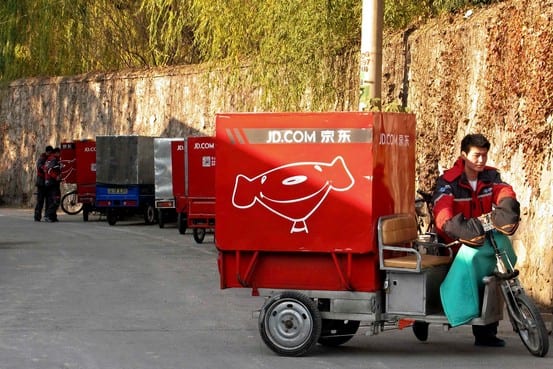
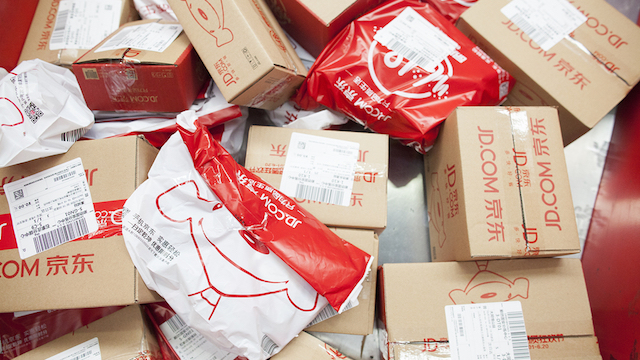
Chinese e-commerce company JD is opening its logistics network up to consumers to send parcels around the country, marking the first entry by an e-commerce company into the parcel delivery business. The new JD parcel delivery service announced enables users of the company’s app in Beijing, Shanghai and Guangzhou to send items intra-city and throughout Mainland China, using the same fast and reliable delivery service JD offers with online purchases. The company, which will expand the program to include high-value items like luxury products and high-end consumer electronics, as well as more diverse options based on delivery timing, aims to eventually make residential and business deliveries for shippers from anywhere to anywhere within Mainland China in the future.
JD is the only large-scale e-commerce company in the world to operate a nationwide in-house logistics network, down to the last mile. The company says its network, powered by its proprietary supply chain management technology, is able to deliver more than 90 per cent of orders same- or next-day, and reaches 99 per cent of China’s population.
The new JD parcel delivery service includes a range of competitively priced options, including same-day delivery between different cities; same-day intra-city delivery; standard next-day or two-day delivery and next-day delivery between cities.
“Depending on the delivery option chosen, packages may be sent by high-speed rail or air,” the company said in a statement. “Individual shippers can use the same JD app they use for shopping to schedule a pickup by one of JD’s full-time logistics staff, and have a parcel delivered thousands of miles away at the speed they choose. They will even be able to select JD’s luxury ‘white glove’ delivery service if they want to make the delivery extra special.”
Zhenhui Wang, CEO of JD Logistics says the JD parcel delivery service marks the next step in leveraging the nationwide logistics network that JD has built over the past decade, to expand the range of services offered to its customers.
“JD is known throughout China for the fastest and most reliable delivery, and we are confident that users will appreciate the convenience of this new service.”
The program has already begun user trials with multiple ways for customers to request pickups. In addition to the JD app, shippers can request pickups on a JD Delivery mini program in WeChat, China’s largest social network operated by JD’s partner Tencent, and a JD “Delivery Team” WeChat account.
JD unveiled the parcel delivery service at its 2018 Global Smart Supply Chain Summit held in Beijing today. Other initiatives announced at the summit – part of JD’s Global Smart Supply Chain Network Strategy – include JD’s smart warehouse management system initiative, an expansion of the company’s green initiatives, and the formation of a new energy union with 20 industry partners.
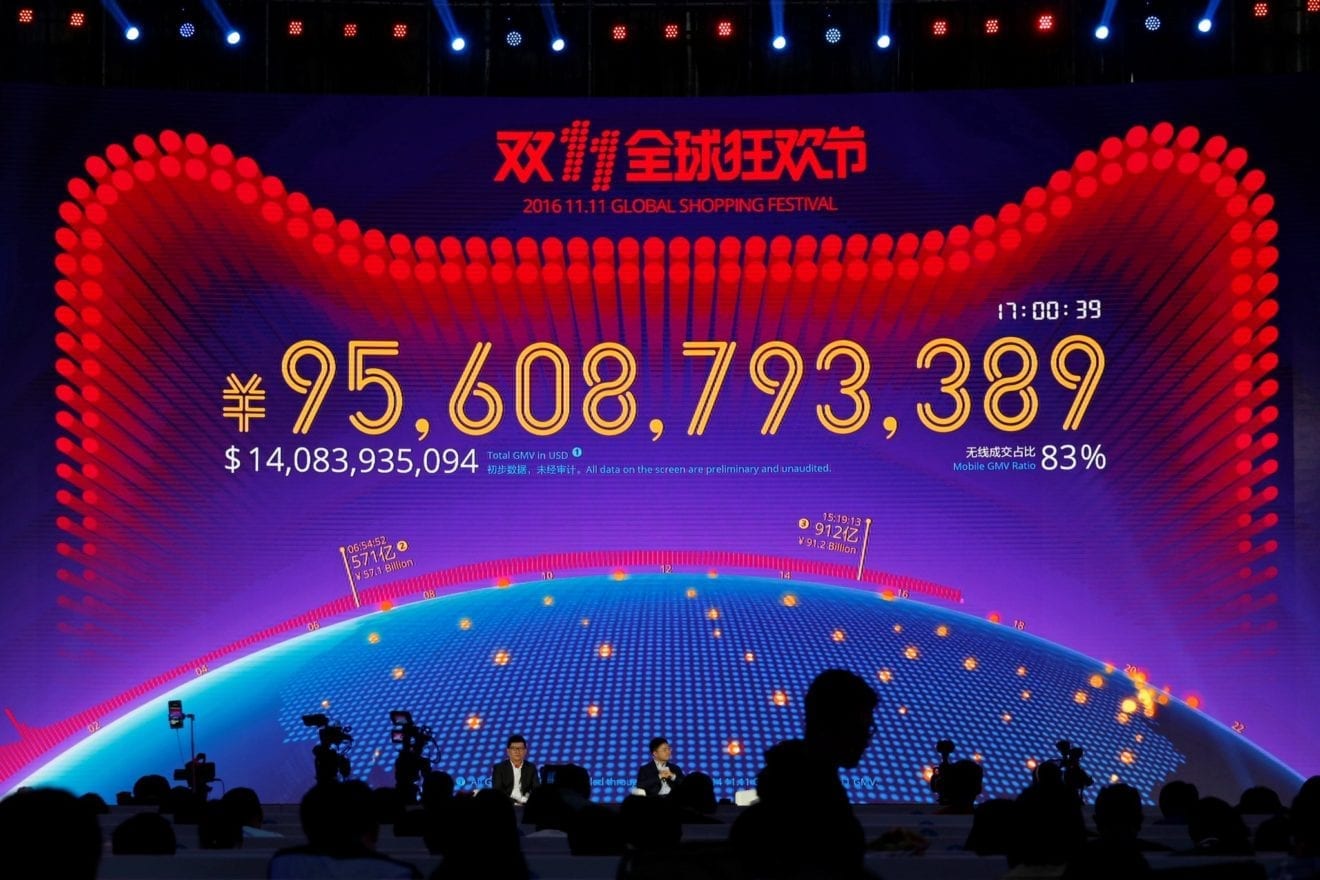
Alibaba Group Holding Limited (NYSE:BABA) today officially kicked off the 2018 11.11 Global Shopping Festival in China’s capital, promising this year’s mega-event will be the largest-ever in terms of scale and reach.
Businesses within the Alibaba ecosystem will jointly offer hundreds of millions of consumers an enriching experience that supports their pursuit of high-quality products, entertainment and fast, reliable services. The Festival will also demonstrate the enthusiasm of consumers and brands embracing Alibaba’s New Retail strategy – the convergence of online and offline retail through technology.
“This year marks the 10th anniversary of 11.11. On the back of China’s explosive digital transformation, the Festival’s astounding growth over the past decade has powered the steady growth of quality consumption sought by Chinese shoppers. The evolution also showcases the development of the Alibaba ecosystem over time expanding well beyond e-commerce,” said Alibaba Group CEO Daniel Zhang.
Zhang conceived 11.11 as a concept a decade ago, turning “Single’s Day” on the Chinese calendar into the world’s largest annual shopping event. The first 11.11 in 2009 brought in US$7.8 million in gross merchandise value (GMV). Total GMV generated in 2017 was US$25.3 billion. Over the past decade, China’s number of Internet users has risen to 802 million and 98% of them are mobile1. Alibaba has captured the hearts and minds of these Chinese consumers and expects to keep leading the way in retail innovation.
“Over the last two years, we have pioneered the concept of New Retail to accelerate the digital transformation of the offline. We are excited by the impressive results achieved to date and will continue to be the driving force innovating for merchants and customers in the coming decades. We aim to become both the number-one business partner for brands and the number-one shopping destination for consumers,” Zhang added.
This year, 500,000 items will be available for pre-order on Tmall from October 20. Customers can enjoy additional promotional coupons on Mobile Taobao and Mobile Tmall. Specifically, the 2018 11.11 Global Shopping Festival will have the following features made possible by New Retail and interactive initiatives:
Brand Innovation Tmall will continue to give brands access to new digital capabilities – 180,000 brands from China and around the world will participate in this year’s celebration. 200,000 smart stores in China across the apparel, fast-moving consumer goods, beauty products, automobile and home décor industries will help boost traffic to offline and online shopping destinations. Tmall Global provides 3,700 categories of imported goods from 75 countries and regions on its platform.
International Consumers Tmall World, AliExpress and Lazada will bring the event to hundreds of millions of overseas users, making 11.11 a truly global event. Lazada will host its first 11.11 Shopping Festival across six countries in Singapore, Malaysia, Thailand, Indonesia, the Philippines and Vietnam, offering more engaged consumer experience and the biggest discounts of the year from LazMall and Lazada marketplace.
Participation of Local Services Ele.me’s on-demand platform will provide delivery services for select Starbucks stores across 11 Chinese cities, including full-service coverage in Beijing and Shanghai. In addition, 150,000 merchant partners of Koubei will offer half-price discounts on catering, beauty and hair salons and karaoke bars.
New Opportunities for Small Merchants 200,000 mom-and-pop stores powered by Alibaba’s Ling Shou Tong (which translates as “retail integrated”) will provide online sales promotions, along with augmented reality-based red packets that offer discounts at 3,000 “Tmall Corner Stores.” Rural Taobao will also bring coupons to its services in 800 counties across 29 provinces in China.
Dining and Supermarket Hema supermarket will designate 11.11 signature stores featuring a number of promotions. RT-Mart will complete the makeover of its nearly 400 stores, fully equipping them with New Retail capabilities.
Star-studded Entertainment Tmall Collection’s “See Now, Buy Now” Fashion Show will be broadcast live on ten platforms including Taobao, Youku, Weibo and Toutiao on October 20, starting at 6pm in China. This will provide millions of customers the opportunity to buy their favorite items on the spot and vote for their favorite looks to create a trend report. In addition, the signature countdown Gala will be held on November 10 in Shanghai’s Mercedes Benz Arena, featuring renowned stars.
The Hyundai Santro is back with a bang. And as if to proclaim that this nameplate still commands the kind of strength it used to, the small car has already garnered over 14,000 bookings. Sources have shared with carandbike that the small car has notched up 14,208 bookings within the first 9 days of pre-bookings having been opened for a token of ₹ 11,000, on October 10 2018. This is even though the variants and prices are not known, and customers have shown a preference for the top spec (Asta) manual variant followed by the top spec (Sportz) AMT version.
These are pan-India bookings, but sources have shared with carandbike that a large chunk of the bookings are from the southern states, with Tamil Nadu, Andhra Pradesh, Telengana, Karnataka and Kerala accounting for just under half the total bookings so far. The above figure does not include bookings taken on Dussehra (celebrated on October 18 in Western India, October 19 in North India), and so the overall number is expected to shoot up with Dussehra bookings and then more so over this weekend too. Bookings are only open online, and not at dealerships since there is no car in showrooms as yet that people can see. But a number of dealers have shared with carandbike that many potential customers have been visiting their showrooms, and then making the bookings online with their help.
The Hyundai Santro has bagged over 14,000 bookings in just 9 days
Hyundai had opened online pre-bookings for the Santro the day after it unveiled the car to media at its Chennai plant. At the time, the Hyundai India MD, YK Koo had also announced a price protection for the first 50,000 customers. and had pretty much guaranteed that the prices announced at launch will be hiked soon after. At that preview we had the chance to see and drive the car, and have told you plenty about it. What we have been unable to do is share our pictures and videos. And while that remains embargoed until launch day – i.e. October 23 2018 – a lot of leaked pictures have already emerged that show the car’s exterior and interior in fairly good detail.
The 2018 Hyundai Santro will get a 6.5-inch touchscreen infotainment system
We know there will be a base version – most likely the Era variant, followed by the Magna variant, the fairly well-loaded Sportz trim and the top spec Asta. All variants will sport a driver-side airbag and ABS (anti-lock braking) as standard equipment. The Asta will have dual airbags standard. The Sportz will also get the 7-inch touchscreen with Apple CarPlay, Android Auto, MirrorLink and Voice Commands. The car’s cabin will be finished in a dual-tone palette of beige and black. On the outside, buyers will have 7 colours to choose from, though only the green will get a special interior package in its Asta trim.
Under the hood, the new Hyundai Santro features a 1.1-litre four-cylinder petrol engine that comes from the company’s Epsilon engine family. The motor is capable of churning out a maximum of 68 bhp and develop a peak torque of 99 Nm, and Hyundai says that it’s already BS-VI ready. Additionally, the 2018 Santro will also come with a factory fitted CNG kit, which can hold up to 8 kg of gas, and offer a reduced power output of 58 bhp, while developing the same 99 Nm of peak torque. Transmission duties are taken care of by a 5-speed manual gearbox in both the versions, however, the petrol trim also gets an optional 5-speed automated manual transmission (AMT) unit. The AMT unit is developed by Hyundai in-house and uses an electric actuator instead of a hydraulic, which is controlled by a separate electric unit. The petrol engine offers a mileage of 20.3 kmpl, while the fuel efficiency of the CNG version is yet to be revealed.
Onshore China, and its rapidly growing billionaire population, is a target for most private banks in the region. UBS has arguably the best-established franchise in the competitive onshore market. Chinese regulators require foreign banks such as UBS to obtain licenses in each jurisdiction that they operate. UBS opened branches in both Beijing in 2014 and Shanghai in 2016 offices, amidst much fanfare and presumably at great cost.
Due for Interview Next Week
A female relationship manager at Switzerland’s biggest bank this week was detained at the airport in Beijing, according to a source familiar with the matter. The authorities allegedly held the UBS banker on grounds of illegally soliciting business, the source told.
The relationship manager may have violated stringent Chinese onshore regulations, which declare illegal the marketing and sale of offshore financial products.
The banker will be interviewed by Chinese authorities next week, according to information obtained. She has however received back her passport, which had been confiscated. The reasons for her detention remain unclear.
Strong Message
The Swiss bank will not comment on the detention of one of its bankers, but said that it had very stringent rules set for its bankers. «This is a strong message from the regulator that it will not tolerate fly in banking,» says one senior banker at another Swiss finance firm. The practice of «flying in» bankers, ostensibly for legitimate onshore reasons ranging from client meetings to golf trips – was one favored by many banks in capital controlled markets such as Taiwan and India.
It was, however, abandoned as banks – Swiss wealth managers in particular – ran into trouble with regulators in these onshore jurisdictions.
«Breached Lines»
«Chilling» is how another senior manager at a European bank described the developments. «The fact that it is a UBS banker – and not one at a smaller shop – is indicative of how determined the regulator is,» he explains.
A head of Taiwan business at another private bank says, «the line continues to be breached several times in onshore markets,» but it is likely there will be systemic reluctance among both bankers and their banks after the latest incidence.
Hands-Off in China
What this means for banks that have made deep investments in the China onshore market and are under considerable pressure to «move out of investment phase» is unknown. For the savvier ones, this is likely to be an inflection point.
«It is certainly hands-off China for the moment and we will implement no-fly restrictions in any case where it is ambiguous whether the purpose of the visit is strictly onshore,» confirms the senior manager.
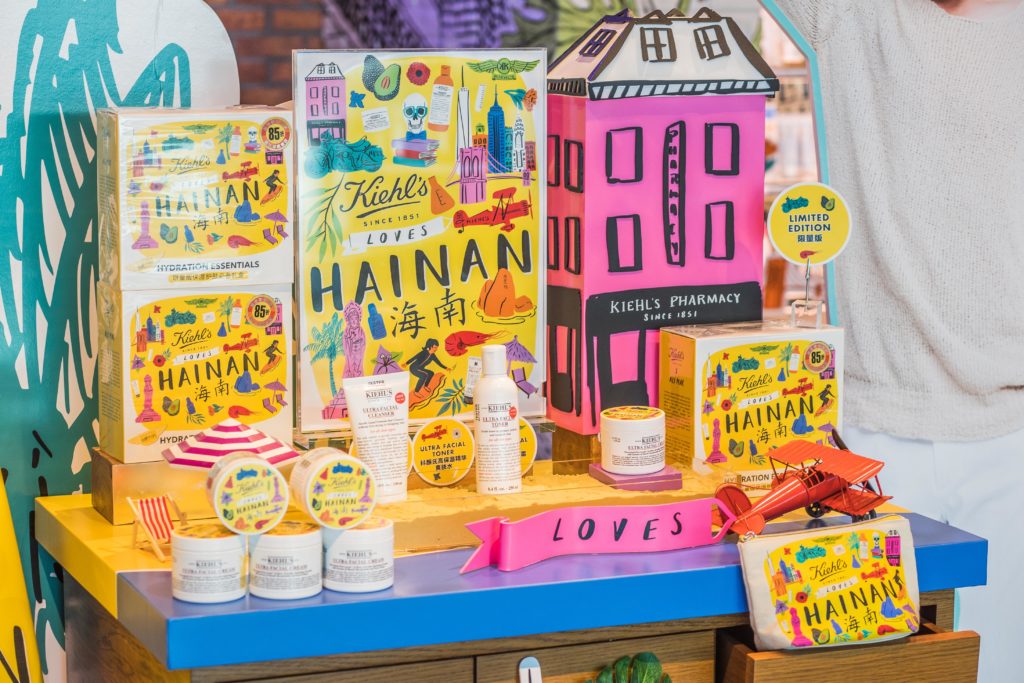
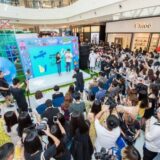
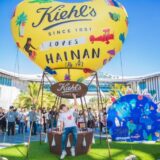
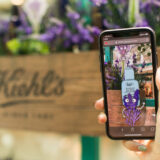
L’Oréal-owned skincare brand Kiehl’s is leveraging star power and immersive digital technologies for the third edition of its annual ‘Kiehl’s Loves’ campaign, titled ‘Kiehl’s Loves Around the World 2018’. The campaign was officially launched in Hainan last month with an influencer-driven mega event and an immersive pop-up featuring augmented reality (AR) technology and digital retailtainment – a first for the brand.
In another first, Kiehl’s has appointed some of the region’s top celebrities to front the campaign, which will run in nine locations across Asia Pacific travel retail: Hainan, Bangkok, Jeju, Seoul, Beijing, Shanghai, Hong Kong, Macau and Taiwan.
These celebrities will serve as “adventurers” in the travel-themed campaign, each representing a specific location.
South Korean singer Hwang Chi-Yeul has been chosen as the campaign’s “global explorer”, representing Kiehl’s home city of New York.
Joining him as local “city hosts” are Chinese singer Wang Ziyi (representing Hainan), Chinese actor Dong Zijian (Beijing), Chinese fencing athlete turned singer and actor Dong Li (Shanghai), Taiwanese singer and actress Emma Wu Ying-chieh (Taiwan), and Hong Kong Cantopop singer and songwriter Pakho Chau (Hong Kong).
Kiehl’s Loves is a global campaign that celebrates the countries and cities served by Kiehl’s worldwide.
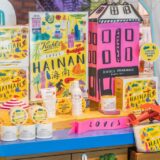
Following in its annual tradition of working with internationally acclaimed artists, this year Kiehl’s has teamed up with New York-based graphic designer and illustrator Ali Mac to create limited-edition packaging for Kiehl’s products.
Ali Mac has designed artwork for more than 50 international Kiehl’s locations, combining symbols of the brand’s heritage with visual icons that are characteristic to each city’s local culture and DNA.
Besides product packaging, the fun and colourful artwork will also be featured on travel-themed items such as totes bags, pouches and luggage tags.
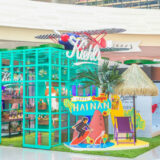
Kiehl’s Loves Around the World 2018 kicked off in Hainan, China, with an immersive pop-up store that ran from 1–29 September at China Duty Free Group’s Sanya International Duty Free Shopping Complex.
Located at the level 1 concourse, the pop-up was designed to highlight Kiehl’s bestselling products using AR technology to create a disruptive, engaging experience.
It comprised a number of themed areas – a nature room, an adventure room and a Kiehl’s 1851 apothecary – with digital touchpoints to engage shoppers.
Scanning the QR code on WeChat called up AR features that illustrated product information and directed users to the Kiehl’s e-commerce site and the Kiehl’s store on level 2 of the shopping complex, driving O2O (offline-to-online/online-to-offline) conversion.
A digital photo booth also provided photo opportunities and encouraged sharing on social media. Thanks to AR technology, shoppers could find out more about the products via WeChat.
On 22 September, L’Oréal Travel Retail Asia Pacific and China Duty Free Group (CDFG) celebrated the campaign launch with a high-profile promotional event, attended by key opinion leaders (KOLs) and media from China.
Global campaign ambassador Hwang Chi-Yeul and Hainan ambassador Wang Ziyi made special appearances at the event, where they played games and interacted with their fans.
Thanks to their participation in Chinese reality shows, both singers have amassed a significant following in China, with more than five million Weibo fans each.
Terry Chua, CDFG-Sunrise Group Merchandising Director of Perfumes & Cosmetics, commented: “Kiehl’s Loves Around the World is a 360 campaign. It has targeted communications on WeChat, and they have invited celebrities and KOLs which appeal to the younger generation – the Millennials and Generation Z. On top of that, it’s important that we have sufficient stocks to cater to demand and are well prepared in terms of design and safety, so that customers can have an enjoyable experience when they come to the Kiehl’s pop-up and leave with nice memories. This kind of continuous investment in brand building will continue to keep Kiehl’s at the top of the consumers’ minds.”
Following Hainan, the Kiehl’s Loves Around the World 2018 campaign will continue its travel retail roll-out this month in Seoul.
A similar consumer engagement event will take place downtown, with another appearance by global ambassador Hwang Chi-Yeul.
L’Oréal Travel Retail Asia Pacific General Manager of Kiehl’s Adele Zhang told The Moodie Davitt Report that China and Korea were natural choices when it came to selecting the locations for hosting events as they both have very good travel retail shopping environments and are very advanced in engaging millennial consumers.
“We believe that travel retail is a great showcase to promote the brand and to engage customers. Of course, we have some constraints in the airports with space etc., but with downtown duty free shops we have more flexibility.” she said.
The Kiehl’s Loves campaign taps into the demand for exclusive gifts in travel retail and creates a Sense of Place, a trend that has been pioneered by Kiehl’s for years, Zhang said.
The digitalisation of the campaign, through e-commerce and digital/social media, allows Kiehl’s to reach out to millennials and better engage them, she added.
The use of AR technology to highlight the brand heritage also helps to create memorable experiences.
Looking ahead, Zhang is looking to continue the strong growth of Kiehl’s and make it a leading skincare brand.
“Kiehl’s is not a media-driven brand, and we don’t invest heavily in above-the-line. The brand relies on two things: word-of-mouth and high-quality, effective products. Kiehl’s can be categorised as a lifestyle brand, and it originates from New York so it’s perceived as a fun and hot brand, so I think we can do something different from other brands.
“We hope to make Kiehl’s a brand that is desired by young people. When they think about brands with high-quality products and 100% natural ingredients, we want Kiehl’s to be at the top of their minds,” she said.
View the gallery below for photos of the event (8 images) :
Kiehls Loves Hainan CDF Mall 1 1
黄致列在科颜氏全球第一家Kiehls Loves快闪店 1024×682
Kiehls Loves Hainan Pop up Exterior 1 edited 1024×682 1
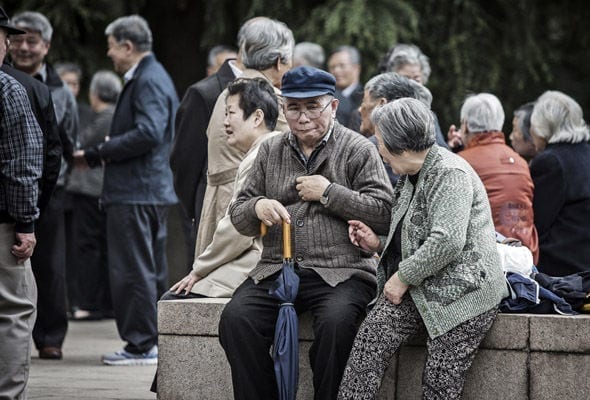
Walimai, the safe-product retail channel that utilizes the WaBi token, has announced its strategic partnership and ecosystem integration with HiNounou, a connected healthcare and intelligent data platform. The partnership is set to provide millions of Chinese senior citizens with access to safe, trusted goods and services, including insurance and health products.
The partnership merges the respective ecosystems of both parties, allowing participants of either service to use their loyalty tokens on both platforms. It also allows for Walimai cross-promotion on the HiNounou service, which targets one of Walimai’s key demographics — senior citizens. Powered by AI, IoT, blockchain, and genomics, HiNounou’s platform and ecosystem features leading insurers AXA and Ping An, who are offering their first dedicated ‘insurance as a service’ products for Chinese senior citizens.
Current data indicates China has 1.3 billion citizens over 60, equal to 17 percent of the world’s total population. According to state projections by China’s Office of the National Working Commission on Aging, more than 25 percent of the population will be over 60 by 2030. China faces an enormous challenge in sustaining the provision of healthcare, pensions, and viable insurance, against the background of national productivity concerns and a variety of social and welfare-related issues.
The Walimai-HiNounou alliance creates a unique, safe, and trusted environment, which gives seniors the opportunity to access a rich ecosystem of trusted services tailored to them, ensuring a healthier and more active daily life.
“Our Walimai partnership is another important step in creating an integrated ecosystem of products and services focused on the well-being of seniors at home to live longer, healthier, and happier,” said Charles Bark, CEO, HiNounou. “The partnership creates cross-ecosystem interactivity for the WaBi and HiNounou tokens, enabling seniors to seamlessly transact across an extensive range of trusted products and services.”
“By linking WaBi in the HiNounou ecosystem, we can provide our selection of verifiably authentic imported goods to one of our main target consumer groups, and help improve their health,” said Alexander Busarov, CEO, Walimai and WaBi. “This is hugely empowering for the elderly. We provide easy access to products and services, stimulating both the mind and body, across a variety of activities and interests, allowing seniors to stay engaged in society and lead more rewarding lives.”
The WaBi token can be used to acquire products and services on the HiNounou platform, customized to the needs of seniors, such as insurance, supplements, nutritious foods, wellness classes, and more. HiNounou users will also be able to use the HiNounou token to make purchases through the Walimai safe product retail channel.
Walimai’s anti-counterfeiting technology and blockchain-based data platform ensure goods are safe and authentic, while customer data is kept secure, which helps limit fraudulent activity and reduce seniors’ exposure to unwanted risks. HiNounou leverages high-tech robotics and healthcare applications to improve the quality of life for seniors, potentially extending the working life of many elderly citizens.
HiNounou has risen to be one of the most promising companies in the healthcare industry. Recognized for its innovation by major names such as Bayer and Intel, HiNounou technology has been showcased at events worldwide (including CES ASIA 2018 and European Economic Congress), had its CEO and founder Charles Bark named one of France’s top 3 AI entrepreneurs in China by President Emmanuel Macron, and struck partnerships with major industry names such as ZTE, AXA, and Ping An.
Chinese-American fashion designer Vera Wang and Chow Tai Fook, the jeweller, have collaborated on a fine jewellery collection to launch this week in China. Hong Kong will follow. The Vera Wang Love collection targets modern Chinese brides with a penchant for diamonds, casting pieces in 18K gold and platinum – including engagement rings, wedding bands, and fine fashion items in precious stones. The diamonds used are traceable and nano-inscribed for individual identification.
Vera Wang said the sophistication, quality, technical capabilities and vast consumer reach of Chow Tai Fook enabled her to create both wedding and fashion signature pieces at the highest quality from the attainable to the most exclusive.
Kent Wong, Chow Tai Fook’s MD, added: “The intrinsic value of “traceable” marks carried by T Mark diamonds perfectly aligns with Vera’s design philosophy, resulting in beautiful, modern pieces of jewellery.”
The Vera Wang and Chow Tai Fook collection debuts October 19 at Chow Tai Fook stores in Shanghai, further expanding to Beijing, Chengdu, Hong Kong and other cities later.
JD.com, China’s largest retailer, the World Wide Fund for Nature (WWF) and The China Children and Teenagers’ Fund (CCTF) are partnering to launch a second annual Green Planet-Sustainable Week, raising awareness about sustainable consumption in the world’s most populous nation. The seven-day program, which kicked off this week, will reinforce JD’s commitment to help the retail industry develop more sustainably, reducing the impact of China’s booming consumption on the environment.
For the event, JD will promote pollution reduction through the use of reusable shopping bags, created from the fabric of discarded apparel in response to a call from WWF to reduce pollution caused by plastics. The bags, which are also regularly used in JD operations, will be distributed free during the event and include RFID Chips that can be scanned as coupons in offline stores through JD’s partners.
JD’s Green Planet-Sustainable Week also kicks off a new clothing drive for the company’s recycling program. Taking advantage of its nationwide in-house logistics network, which covers 99% of China’s population, JD will collect both used and unused clothing from customers either to be sent to recycling facilities or distributed to those in need. Proceeds will be donated to lower-income families, people with disabilities and charity groups. Last year, a similar drive led to the collection of nearly 400,000 items, or 20 tons, of clothing, from 150 million people in four cities. This year’s program will expand to cover 47 cities.
Customers will be able to trade in major appliances for recycling as well, by third-party companies through JD’s platform. The appliances will be disassembled, after which parts will be used for repairs, helping to reduce the waste generated by household appliances as well as pollution created by their production. Working with JD’s charity affiliate, JD Foundation, the participating companies will donate a portion of any proceeds to support charitable activities on behalf of customers, while customers are eligible for payment for their used devices, plus coupons from JD in exchange for the trade-ins.
Meanwhile, all logistics information for tracing donations and trade-ins are available through JD.com’s proprietary supply chain management technology.
“The spectacular rise of Chinese consumption has been a major force behind the country’s incredible economic story but has also contributed to unprecedented environmental challenges,” said Zhonghao Jin, Head of Market Practice, WWF China. He believes this week’s activities will help “raise consumer awareness and accelerate the mainstreaming of sustainable consumption.”
Libo Ma, head of the CSR department at JD.com disclosed the company is in the midst of an effort to convert its entire vehicle fleet to new energy vehicles while being involved in other efforts to reduce emissions. The company is also is developing biodegradable packaging to further reduce waste in the supply chain.
Alibaba Cloud, the cloud-computing arm of Alibaba Group, and the Ministry of Tourism and Wildlife of the Republic of Kenya today agreed to explore a strategic collaboration to deploy Alibaba Cloud’s technology to support the Kenya Wildlife Protection Project. The first project under the collaboration in discussion will take place at a designated area inside the Tsavo East and West National Parks, one of Kenya’s oldest and largest protected area with over 13,500 square kilometres.
Leveraging Alibaba Cloud’s powerful computing, artificial intelligence (AI) and Internet of Things (IoT) capabilities; the project will work to protect the park’s endangered elephants, rhinoceroses and lions. “It is our great honour to support the Kenyan government and make a contribution to the country’s wildlife conservation efforts. The collaboration underscores the positive impact that technology, including cloud computing, AI and IoT, can have on the planet and on wildlife protection.” said Simon Hu, Senior Vice President of Alibaba Group and President of Alibaba Cloud. “We look forward to joining our global partners and stakeholders in improving the protection of Kenya’s wildlife and vital ecosystems through technology innovation.” “Wildlife is the main attraction to tourists visiting Kenya. Among the key species attractions are the elephant, rhino, giraffe, and buffalo among others.
Currently, Kenya has a population of about 35,000 elephants, and about 42% of this population (12,843) elephants occur in the Tsavo ecosystem. In addition, the ecosystem also provide critical habitat for rhinos, giraffe and lions among other species. It is therefore important for the Government of Kenya to use technology to protect wildlife and their habitats in the Tsavo ecosystem”.
As a country, we are indeed happy to embrace such technology from Alibaba Group to enhance our wildlife security and protection, said Dr. Margaret Mwakima, Principal Secretary from the Kenya’s Ministry of Tourism and Wildlife. Both parties will explore using a wide range of features connected to Alibaba Cloud’s IoT platform for the project. Animal tracking sensors, infra-red trap cameras, smart weather stations, ranger devices and wide-area drones are among the technologies that will be considered to be installed to collect real-time data of the movements and general health of the animals.
The platform would then analyse the data and predict their behaviour and travel routes, alerting the command center about potential risks or dangers, such as illegal poaching and human-animal conflicts. This could help direct the deployment of ground teams to act more quickly and better manage the park. In addition, both parties will explore ways to combine the local operator’s GSM telecommunications network with government-licensed satellites to build the infrastructure, which could make data transmission more intelligent and less costly, achieving near real-time updates. Advanced hardware would be used as well, such as light-weight solar-powered trackers that are easier for the animals to wear.
The project in Tsavo is only the first step in exploring the partnership between Alibaba Cloud and the Kenyan Government. The parties have agreed to explore the potential to expand the protection project to more parks across Kenya, and, ultimately, build a nationwide, digital ecological protection platform. Both parties will also explore cooperation in staff training and the development of educational-tourism opportunities in Kenya. This latest initiative follows the visit of Jack Ma to Africa earlier in 2018, as well as the company’s support of a fund to support entrepreneurs in the region.
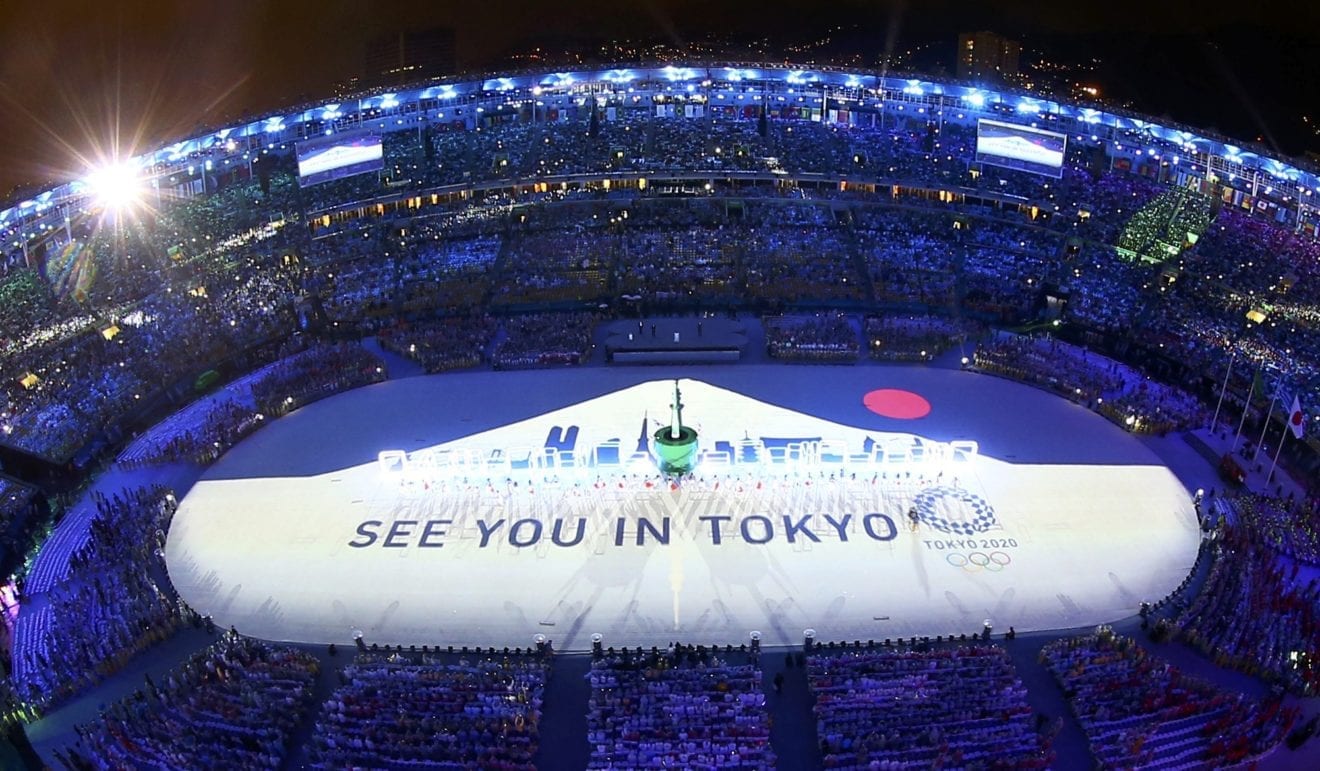
Olympic Broadcasting Services (OBS) and Alibaba Cloud, the cloud computing arm of Alibaba Group, announced the launch of OBS Cloud, an innovative broadcasting solution that operates entirely on the cloud, to help transform the media industry for the digital era. Set to be in place for Tokyo 2020, the OBS Cloud aims to offer all the necessary cloud components, in specialized configurations, that can support the extremely demanding content production and delivery workflows of the broadcasting of the Olympic Games.
Tokyo 2020 will be a game-changer for broadcasters as it showcases new possibilities for the industry by presenting solutions on the cloud. The use of cloud technologies has been gradually adopted for content creation and distribution purposes in broadcasting, however the extremely demanding requirements for volume, speed and latency that are inherent in live sports broadcasting of major events have kept the use of the cloud at a very low level, despite its multiple advantages. Apart from providing inherent flexibility and scalability, the use of the cloud may also help with the limited time frame that broadcasters have to set up, test and commission their on-premises systems. Traditionally, broadcasters of the Olympics have only been able to implement and test their equipment upon arrival at the International Broadcast Centre (IBC) in the host city, and the physical space dedicated to broadcasters on site has always been in high demand.
As the host broadcaster, OBS can now provide most of the visual and audio assets of the Olympic Games to all Rights Holding Broadcasters (RHBs) through the new cloud platform efficiently, effectively and securely. Broadcasters can also set up their own content creation, management and distribution systems on OBS Cloud, a solution that has been optimized to address the particular needs of the most demanding live multi-sport workflows.
The proprietary OBS Cloud leverages Alibaba Cloud’s services featuring best-in-class technology infrastructure to create an optimal media broadcasting environment for all RHBs of the Olympics. The OBS Cloud which will run on the most advanced Intel® Xeon® scalable processors, offers a suite of solutions including super computing capabilities, high-speed connectivity directly from the IBC, easily accessible cloud storage considering the demanding Olympic requirements, real-time monitoring, live video and audio broadcasting services and media processing.
Also announced today was a partnership aimed at advancing the digital transformation of the Olympics and delivering volumetric content over the OBS Cloud for the first time at the Olympic Games Tokyo 2020. Intel, also an Olympic TOP Partner, will collaborate with Alibaba and OBS to explore a more efficient and reliable delivery pipeline of immersive media to RHBs worldwide that will improve the fan experience and bring them closer to the action via Intel’s volumetric and virtual reality technologies.
Additionally, the live media service on OBS Cloud allows RHBs to experiment with new program ideas in a secure sandbox environment or conduct interactive event broadcasts, accelerating the digitization of the coverage during the Games.
After the Games, RHBs will also have the flexibility to move their deployment home or keep the asset within the OBS Cloud for future Olympic events.
“We are very pleased that Alibaba Cloud has come up with this innovative and powerful approach to Olympic broadcasting. As the host broadcaster of the Olympic Games, we at OBS see ourselves as a leader in transforming the media industry,” said Yiannis Exarchos, CEO of OBS. “Tokyo 2020 will be an opportunity for the International Olympic Committee to champion digital transformation in the media industry, as well as empowering broadcasters around the world with a cloud platform that delivers new possibilities for how the Games are enjoyed by fans around the world.” Joey Tan, General Manager of Global Strategic Accounts and Sports Business Unit, Alibaba Cloud said, “The future of the Olympic Games is in cloud technology and Alibaba Cloud is fully committed to contribute to the digital transformation of the Olympic Games through innovation. This partnership with OBS is an exciting initiative to expand the reach and accessibility of the Olympic Games content and ultimately stimulate a rethink on how the media industry operates in a digital era. We are excited to create a new standard in broadcasting and a more enjoyable experience for audiences around the world during Tokyo 2020.”
Jay Sankar, CTO and Head of Product of Intel Sports, commented, “Sports fans today are seeking more immersive and engaging experiences. Intel’s partnership with Alibaba Cloud and OBS is aimed at delivering these ground-breaking experiences to Rights Holding Broadcasters and fans in a seamless, efficient manner over the OBS Cloud, powered by the most advanced Intel Xeon Scalable processors”.
The partnership between Alibaba Group and the International Olympic Committee began in January 2017 when the two parties signed a long-term strategic agreement that will help transform the Olympic Games for the digital era. Alibaba is now serving as the official “Cloud Services” and “E-Commerce Platform Services” partner.
CK Hutchison Holdings Limited (“CK Hutchison”) announced a strategic alliance with China’s leading image processing and social sharing platform, Meitu Inc. Striving to combine beauty with social media, Meitu will partner with CK Hutchison’s retail division, A.S. Watson Group, and Hong Kong telecom subsidiary, 3 Hong Kong, to build a brand-new business model integrating social media and retail. This cooperation will bring together the many facets of user experience, user system, technology research and development, precision marketing, and big data with business strategy.
Leveraging Meitu’s artificial intelligence technology and CK Hutchison’s expertise in retail and telecom, the alliance will bring a refreshing and interactive online and offline shopping experience to customers of the millennial generation. Canning Fok, Group Co-Managing Director of CK Hutchison, said, “This partnership further enhances our customer connectivity, improving CK Hutchison’s online and offline interaction with customers. Meitu users can try beauty products virtually on their mobile phone and get product recommendation through advanced artificial intelligence. In addition to expanding the customer base in China and Hong Kong, Watsons aims to provide the best shopping experience for its patrons. 3 Hong Kong customers can design personalised products and enjoy a new, onestop mobile shopping experience through our cooperation with Meitu. We are confident of this partnership and believe that it will create a three-way win for customers, Meitu and CK Hutchison.”
Bryan Cheng, Chief Operating Officer of Meitu, added, “With a huge number of female online users from Meitu and strong female customer base from CK Hutchison, the partnership can further improve the value of Meitu’s user platforms while combining beauty with social media, strengthening the connection and interaction with our customers as well as making them look more beautiful.”
Meitu and CK Hutchison’s 3 Hong Kong will partner to introduce “MeituDIY” customization service to Hong Kong, and 3 Hong Kong’s customers will be the first to experience this onestop value added service to create personalised products. After editing photos through the Hong Kong version of the Meitu app, users can print their photos directly on mobile phone cases, clothes, umbrellas, cloth bags, cups and mouse pads, creating unique personalised products and presenting them as gifts to relatives and friends.
CK Hutchison’s Watsons Hong Kong will take the lead in introducing Meitu’s “Magic Mirror” which offers around 600 makeup products from international makeup brands. Backed-up by big data technology, customers can try different makeup looks, download the previews, try-on products while enjoying the online and offline shopping experience anytime, anywhere. “Magic Mirror” offers a variety of fashionable makeup styles recommended by beauty advisors, helping customers to choose their favourite makeup style for work or dating.
Meitu’s “Magic Mirror” will first be launched in Watsons Hong Kong’s Mongkok Bank Centre and Cameron Road branches in late-October this year, and then will be introduced to around 30 more Watsons stores in the first half of 2019. With Meitu’s facial recognition and AI analysis technology, users will be able to apply real time makeup virtually. Through big data technology, Watsons can recommend the right products based on customers’ habits and behaviour in the Meitu app, which will eventually enhance customer connectivity.
Meitu’s BeautyCam app has also been upgraded with the feature of making product recommendations via skin analysis, helping to match users with the right products that are available at Watsons. This feature will be activated in Mainland China by late-October this year while Hong Kong users can enjoy the feature in the first quarter of 2019. The BeautyCam app is a professional one-stop-solution for beauty enthusiasts to know the needs of their skin, and at the same time effectively increase the transaction value of Watsons customers.
Furthermore, Watsons China will begin its cooperation with Meitu Social Media in lateOctober, enabling the retailer to get closer to their target customers by delivering tailor-made messages. The cooperation not only helps Watsons reach the right audience, but also helps bring an innovative social media experience to them.
Watsons China will launch an official account on Meitu social media in November this year. When customers edit their photos using features like “face-lift” and “acne-removal”, Watsons will recommend products that suit each customer’s needs. This allows the retailer to match customers with the right products available at its stores, driving consumer conversions. Through Meitu social media, Watsons can interact with users by encouraging word-of-mouth recommendations on Watsons products. As a result, users can browse hot items and related information online.
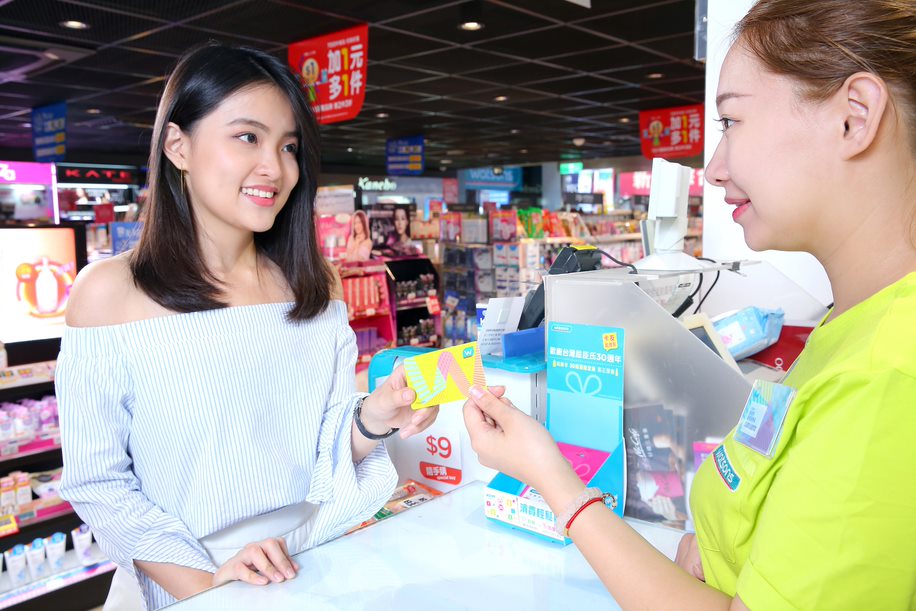
The cooperation between Watsons China’s loyalty programme and Meitu will bring mutual benefits to both parties, riding on the collective network of Meitu’s 350 million monthly active users and quality customers from Watsons online and offline channels. The strategic alliance unfolds opportunities in recruiting new loyalty members, and brings more transaction by recommending the right products according to big data and user habits and behaviours in the Meitu app. To attract more new members, Watsons China will promote their joint membership card through its online and offline platforms while the Meitu app will encourage its users to become Watsons members.
According to customs statistics, Vietnam’s footwear exports in the first nine months of this year were worth $11.74 billion, a 10.2 percent year-on-year increase. Its exports to China in the period have risen by 28.5 percent, to Japan by 14.7 percent, and to the U.S. by 13.5 percent. Vietnam is the second biggest exporter of footwear to the U.S. behind China, shipping 404 million pairs of shoes last year.
The upward trend is likely to continue, too, as rising wages in China increase the cost of goods produced there and the country is thus directing more of its manufacturing resources toward higher-priced goods like electronics.
Adidas CEO Kasper Rorsted told last May that his company is shifting sourcing of footwear from China to Vietnam.
Vietnam has in fact overtaken China as its top supplier, with Vietnamese factories producing 44 percent of its shoes by volume last year and Chinese manufacturers supplying 19 percent, according to Adidas.
This would help shield the company from potential tariffs or supply chain disruptions if President Donald Trump’s trade war with China continues to escalate, a fact its competitors also seem to be taking notice of.
Vietnam may see export orders surging as footwear importers shun China to avoid high U.S. tariffs and choose the Southeast Asian nation instead, local media quoted Diep Thanh Kiet, vice chairman of the Vietnam Leather, Footwear and Handbag Association (Lefaso), as saying.
“Vietnam’s leather and footwear export can reach $19.5 billion or slightly higher this year depending on the situation,” he said. Vietnam’s footwear exports were worth $14.65 billion last year.
Skoda has said its new, coupe-styled Kodiaq GT SUV will become its flagship model in China. The midsize SUV, shown in pictures for the first time, will increase Skoda’s SUV range in China to four when it goes on sale later this year. The new model reshapes the design of the Kodiaq seven-seat SUV to give it more of a coupe profile to the rear and make it look more sporty and dynamic, the brand said.
The new model reshapes the design of the Kodiaq seven-seat SUV to give it more of a coupe profile to the rear of the car. Skoda said the Kodiaq GT will be its flagship model.
China is Skoda’s biggest market, accounting for about a quarter of the brand’s global sales, the Czech automaker says. This year Skoda launched the China-only Kamiq small SUV to sit below the Karoq. The Kamiq sits on the low-cost PQ platform and is priced to rival Chinese offerings outside the country’s biggest cities.
Skoda has said it wants to double its Chinese sales to 600,000 a year by 2020, largely through its SUV launches. A fifth SUV is to be added in 2019, CEO Bernhard Maier said in March without providing details.
Skoda’s vehicle sales in China rose 2.5 percent last year to 325,009, according to company data. That puts that country ahead of the automaker’s No. 2 market of Germany at 173,300 and the Czech Republic in third at 95,000.
Skoda has said the Kodiaq GT would not be sold in Europe. “I would love to do so,” Maier said in March, “but we do not have any production capacity.”
Technology available in the Kodiaq GT includes the VW Group’s Virtual Cockpit with its customizable digital dials, as well as wifi connection, adaptive cruise control, and blind spot detection.
The car will be sold with a 2.0-liter turbo gasoline engine with either 186 hp or 220 hp. The higher power model comes with all-wheel drive and a seven-speed dual-clutch transmission as standard.
The Kodiaq GT will be revealed at the Guangzhou auto show next month.
In a world where customer preferences are ever-changing and they always want to try out something new, loyalty is everything to retailers. That is why A.S. Watson Group, the world’s largest international health and beauty retailer, is further investing in its loyal customers to give them unparalleled levels of rewards. Last month, the Group announced it is rolling out new VIP loyalty programmes worldwide to enhance customer connectivity and plans to extend to all of its 24 markets by early 2019.
With 130 million loyalty members across the globe currently, the new VIP programme is an additional and invitation-only tier of membership which aims to reward and retain top customers. Malina Ngai, Group Chief Operating Officer of A.S. Watson Group, says, “We appreciate our customers, no matter how much they spend in our stores, and we know they love to feel valued. Our existing loyalty programmes reward everyone with great offers, but our VIP programmes thank our most loyal customers for shopping with us with amazing benefits and even more tailored rewards.” Getting Closer with Customers Since 2010, A.S. Watson Group has invested in CRM programmes in all of its key operating markets in Asia and Europe. Since that time, the Group has grown incredibly fast to an amazing 130 million members worldwide.
The Group understands that great products, prices and service are not enough to remain close to customers. Customers are increasingly making decisions based on how retailers connect with them and make them feel. Data insights and analysis of existing CRM programmes show that around two thirds of customers who qualify as “VIP members” in a year continue as such the following year.
These VIP members spend up to eight times more than average members each year, and this year the newly qualified VIP members’ spending saw a year-on-year double-digit increase. Now, the Group is launching VIP programmes around the globe to connect with its VIP members more closely and reward these highly valuable customers, offering an extra layer of advantages, many of which are personalised to the individual, such as exclusive invitations to product previews, members only Zumba dance events, family movie days, early access to sales and promotions and more bonus points.
Moreover, there are a variety of additional benefits that are tailored to what’s valuable to the lifestyle of the local customer. Examples of this can be seen with free health and wellbeing classes offered to some VIP customers, such as invitations to fitness training classes for Watsons China and invitations to yoga in the sky and cooking classes for Watsons Malaysia VIP members.
Other additional benefits include free movie tickets with Watsons Thailand, free exclusive gifts with purchases and sample boxes with The Perfume Shop in the UK and opportunities to be brand ambassadors and invitation to exclusive beauty workshops and shopping nights with ICI PARIS XL. Using Data Technology to Enhance Customer Connectivity In line with the launch of the Group’s CRM programmes in 2010, A.S. Watson has established a CRM function and focus on building CRM capabilities.
This year, the Group launched DataLab which unites over 100 CRM experts around the world to share insights and best practices. With four billion customers each year and 30 million items sold every day around the world, A.S. Watson Group collects on average 4,300 terabytes of customer data every three years.
To convert such enormous amounts of data to a useful tool which helps build closer relationships with customers, DataLab is using the latest technology to extract vital customer insights. This will help A.S. Watson better understands its VIP members, and provide more personalised, exclusive offers; all of this is done to achieve even stronger customer connectivity. Malina added, “We’re continuously investing into data technology and in doing so have launched DataLab, which does not only help us generate customer insights that are useful in enhancing retention and increase customer spending, but also enables the Group to make smarter decisions, blending science, experience and intuition. With cutting-edge data technology, we are turning transactions to interaction and that is how we are staying connected with our customers.”