Tag: China

  • Huawei pushing into public cloud market

    Huawei pushing into public cloud market

    Huawei is entering the public cloud market, placing the company in competition with AliCloud, AWS and other major global public cloud providers.

    At the Huawei Global Analyst Summit in Shenzhen yesterday, Huawei said it will work with industry partners to promote ten scenario-specific cloud services covering HPC Cloud, SAP Cloud, IoT Cloud and other common scenarios.

    “Cloud technology is becoming the new growth engine as digital transformations accelerate,” Huawei president of cloud business unit and IT product line Zheng Yelai said at the event.

    “Huawei has continued to step up its R&D, one result culminating in the cloud service offering. Huawei has become the preferred partner for many of the world’s top customers and will continue to provide high-quality cloud services with our partners as we persist in building a healthy ecology in the sector.”

    The vendor is establishing a dedicated cloud division with 2,000 staff and last month launched 54 full-stack public cloud services in ten categories. Huawei said since the launch it has attracted customers in China, Europe, North America, Latin America and the South Pacific.

    Huawei is also working with operators including China Mobile, Deutsche Telekom and Telefonica to provide tailored public cloud services to their respective customers.

  • China still on radar for Lotte Group

    China still on radar for Lotte Group

    A Lotte Group executive says the retail giant will continue to invest in its China business despite diplomatic tensions.

    Chinese authorities last month closed dozens of Lotte stores following inspections, ramping up pressure on South Korea’s fifth-largest family-run conglomerate after it agreed to provide land for the US Terminal High Altitude Area Defence (THAAD) missile system outside Seoul.

    South Korea and the US say the system is designed to thwart North Korea’s nuclear missile threat, but Beijing says the system’s radar can also reach far into China. This led to Chinese state media calling for a boycott of Lotte businesses.

    “We plan to continue to invest in our China business and continue to strengthen it,” executive Hwang Kag-gyu says. He is the head of Lotte Corporate Innovation Office and is regarded as the second-highest executive next to chairman Shin Dong-bin.

    “It has been 20 years since Lotte entered the China market. We believe the China business is still in an investment period,” he says.

    Out of 99 Lotte hypermarkets in China, 75 have been closed by Chinese authorities. Hwang says the company is working to fix the problems raised by Chinese regulators.

    China is Lotte’s biggest overseas market, generating more than 3 trillion won (US$2.7 billion) in annual revenue in 2015. It is also one of four strategic markets along with Indonesia, Russia and Vietnam that Lotte has been focussing on.

  • L Catterton Asia launches beachwear platform

    L Catterton Asia launches beachwear platform

    Australian swimwear brand Seafolly and Colombian beachwear brand Maaji are the first signings for a global lifestyle platform launched by L Catterton Asia.

    Based in Singapore, L Catterton Asia is an arm of private equity firm L Catterton, formed last year through a partnership between Catterton, LVMH and Groupe Arnault. It will be the controlling shareholder of the combined business, with the Maaji and Seafolly founders as minority shareholders.

    It is the first step in the aggregation of the fragmented swimwear/beachwear industry.

    Seafolly was founded in 1975 by Peter and Yvonne Halas, and has been led by Anthony Halas since he became CEO in 1998. He has built the business across international markets in Europe, North America and Asia. L Catterton Asia acquired a controlling interest in the brand in December 2014, and now it is sold in 41 countries (there are four stores in Singapore) as well as online.

    Maaji was founded by sisters Manuela and Amalia Sierra in 2002, and has a presence in more than 54 countries.

    “With this unparalleled combination of Maaji and Seafolly we look to grow our portfolio and create the largest independent house of beach lifestyle brands,” says L Catterton Asia chairman/managing partner Ravi Thakran. “This combination will drive many synergies, including geographic expansion, retail rollout and product sourcing.”

    L Catterton Asia’s goal is to preserve each brand’s DNA and heritage, while enabling the brands to enhance their global growth.

    Previously known as L Capital Asia, L Catterton Asia was launched in 2009 and manages more than US$1.6 billion across two private equity funds, and more than US$2 billion including co-investments. It has offices in Singapore and Mauritius, with further regional advisory presence in Hong Kong, Mumbai, Shanghai and Sydney. Its investments include Charles & Keith, Crystal Jade, Pepe Jeans Group and YG Entertainment, which promotes Korean singers and entertainers like Big Bang and Psy.

  • China’s healthy snack trend creates opportunities

    China’s healthy snack trend creates opportunities

    China’s healthy snack trend is creating massive opportunities for FMCG companies and retailers according to a new report from research house Mintel.

    While snacking is often thought of as an indulgent and convenient alternative to traditional meal times, many Chinese consumers are now focusing on their health. Mintel’s report reveals that four in 10 urban Chinese consumers eat more nuts and seeds today compared to six months ago. Pointing to the rise in popularity of these healthy snacks, 58 per cent of consumers say that nuts and seeds taste good and 44 per cent say they are convenient to eat, while only 9 per cent say nuts and seeds are unhealthy.

    It seems that nuts are high in demand in China as product launch activity is also on the rise. Mintel Global New Products Database (GNPD) reveals that 17.5 per cent of snack products launched in China between 2014 and 2016 were nuts, compared to 15.3 per cent of those launched globally.

    The healthy snacking trend is contributing to the growing popularity of nuts and seeds in retail channels as well. In China’s retail snack market, nuts and seeds is the largest category, with a retail value of RMB263.7 billion (US$38.3 billion). Mintel forecasts the segment will grow at a CAGR of 10.7 per cent in value between 2015 and 2020, reaching RMB345.6 billion.

    Ching Yang, senior food and drink analyst at Mintel, said Chinese consumers have become more aware of the health benefits of nuts and seeds.

    “Now, it seems that  eating nuts and seeds is no longer something to do to kill time while chatting with friends, but part of the overall pursuit of a healthy and trendy lifestyle. Therefore, companies should consider packing up the traditional nuts and seeds bulk products in favour of branded products that are positioned as a healthy snack. We’re seeing a number of the nuts brands thriving when leveraging this consumer trend.”

    Mintel research reveals that six in 10 consumers associate a healthy snack with ‘all-natural’, while 42 per cent associate it with ‘fortified with additional nutrients’. One third of Chinese consumers associate healthy snacks with ‘high in protein’, and the demographic skews towards male consumers aged 25-29 (42 per cent). What’s more, 41 per cent of Chinese consumers aged 40-49 associate healthy snacks with ‘low in salt’.

    According to Mintel GNPD, one quarter of snack products launched in China between 2014 and 2016 were meat- or seafood-based snacks. In line with this, Mintel research reveals that 48 per cent of consumers think meat/seafood-based snacks taste good and 46 per cent think they are filling.

    On the other hand, the growth rates of traditional sweet snacks, such as sugar confectionery, ice cream and biscuits, are relatively slow. Mintel research indicates that 26 per cent of urban Chinese consumers are eating less chocolate confectionery today compared to six months ago, while 23 per cent are eating more. However, 63 per cent of Chinese consumers are eating more fresh fruits and vegetables as snacks, and 42 per cent are eating more dairy-based snacks.

    Yang added: “Chinese consumers have rising awareness of their sugar and fat intake. Therefore, more consumers are switching to fresh fruits and vegetables or dairy-based foods for snacking. This suggests a growing opportunity for food and drinks brands that enjoy a healthy perception (e.g. dietary supplements, cereals and yogurt) to tap into the snacking occasion by developing snack format products. Our research shows that Chinese females are concerned with calories, while Chinese males care about protein. With this in mind – and the fact that  the average sodium level in China’s meat snacks is lower than the global average and the level is decreasing over time – the ‘reduced sodium’ claim is still rarely seen on meat snacks and, therefore, could be leveraged to meet consumer needs.”

    Imports gain favour

    Finally, imported snacks are gaining popularity among urban Chinese consumers. According to Mintel research, as many as four in 10 urban Chinese consumers are interested in buying imported products they’ve never tried before across a variety of purchase channels that specialise in selling imported snacks. Of these same urban consumers, while 34 per cent have bought snacks from imported food stores, 28 per cent have bought at local stores when travelling and 19 per cent have bought from foreign shopping websites. In addition, though 75 per cent of consumers have bought snacks from any e-commerce site, physical retail channels are still the most popular purchase destination (96 per cent).

    “As consumers continue to look for new and different flavour experiences, international snacks have become a sector that many consumers are gravitating towards,” said Yang. “E-commerce is an especially important channel for international snacks. It not only allows consumers to easily access foreign products, but also provides a less costly channel for international players to enter the Chinese market.

    “However, one of the challenges for consumers is deciding what products are good and worth the higher cost, especially for consumers living in tier-one cities as they are more likely to shop online. A product targeting mainstream consumers could use regular retail channels in order to reach more consumers, especially in the lower tier cities,” Yang concluded.

  • Supply chain group Tigers launches new e-shop marketplace supporting brands entering china

    Supply chain group Tigers launches new e-shop marketplace supporting brands entering china

    Supply chain group Tigers has launched a new marketplace, called eShop, to support brands entering the rapidly expanding China and Southeast Asia e-commerce markets.

    The digital marketplace, part of Tigers’ suite of e-commerce products, offers a one-stop shop solution, from marketing, to taking payments, managing the supply chain, order fulfilment, and returns.

    Up-and-coming Italian designer workout wear Gr1ps, and award-winning golf simulator OptiShot Golf are amongst the first Tigers eShop customers in China, Hong Kong, and Malaysia.

    “Tigers eShop offers a cost-effective, scalable enterprise solution for companies of all sizes,” said Andrew Jillings, chief executive officer and group managing director, Tigers.

    “We can provide fiscal representation to SMEs wanting to enter the China market that do not have a presence there.”

    “The logistics industry has the desire to adopt technology, but few providers are offering a real solution that ultimately services every e-commerce business.

    “Rather than being a one-size fits all, Tigers’ IT systems, which work on a cloud-based operating platform, are flexible enough to meet a large variety of demands.”

    Gr1ps, founded in 2011, designs innovative functional training products and has been recognised as a pioneer in Brazilian Jiu Jitsu and Mixed Martial Arts apparel. “Tigers eShop forms a core part of our sales strategy in acquiring new clients in the Asia market, and increasing brand awareness and exposure through Tigers’ network,” said Katty Fung, chief operating officer, Gr1ps.

    “We look forward to bringing our brand values, of quality and attention to detail, to larger sports and lifestyle communities with this expansion.”

    OptiShot Golf is a golf simulator platform designed by two fans of the game, which allows players to practice and play on replicas of major championship courses, as well as play in global online tournaments, with real clubs and real golf balls.

    “China is an important market for us and the Tigers eShop is an exciting opportunity for us to grow our presence there,” said Kevin Johnston, president and chief operating officer (COO), OptiShot Golf.

    Tigers, which has been operational in Greater China since 1969, has 17 offices across the country and specialises in e-commerce fulfilment, transportation, and supply chain solutions.

    The Hong Kong headquartered supply chain specialist has 65 offices and 32 omni-distribution hubs across China, the USA, Germany, the United Kingdom, the Netherlands, Switzerland, Australia, Malaysia, India, and South Africa.

    Tigers plans to open more eShops across a number of strategic locations.

    “Tigers will continue to focus on our two main assets, our technology and our people,” said Jillings.

    “We are privileged to be working with exciting brands like Gr1ps and OptiShot Golf. They are both dynamic groups with great products and they embrace the online retail space.

    “There is always a learning curve working with companies like these.”

    Tigers can trace its founding origins back to 1888 in the Cape of Good Hope, South Africa, where their South African subsidiary was first founded.

  • China Unicom parent seeks private investment

    China Unicom parent seeks private investment

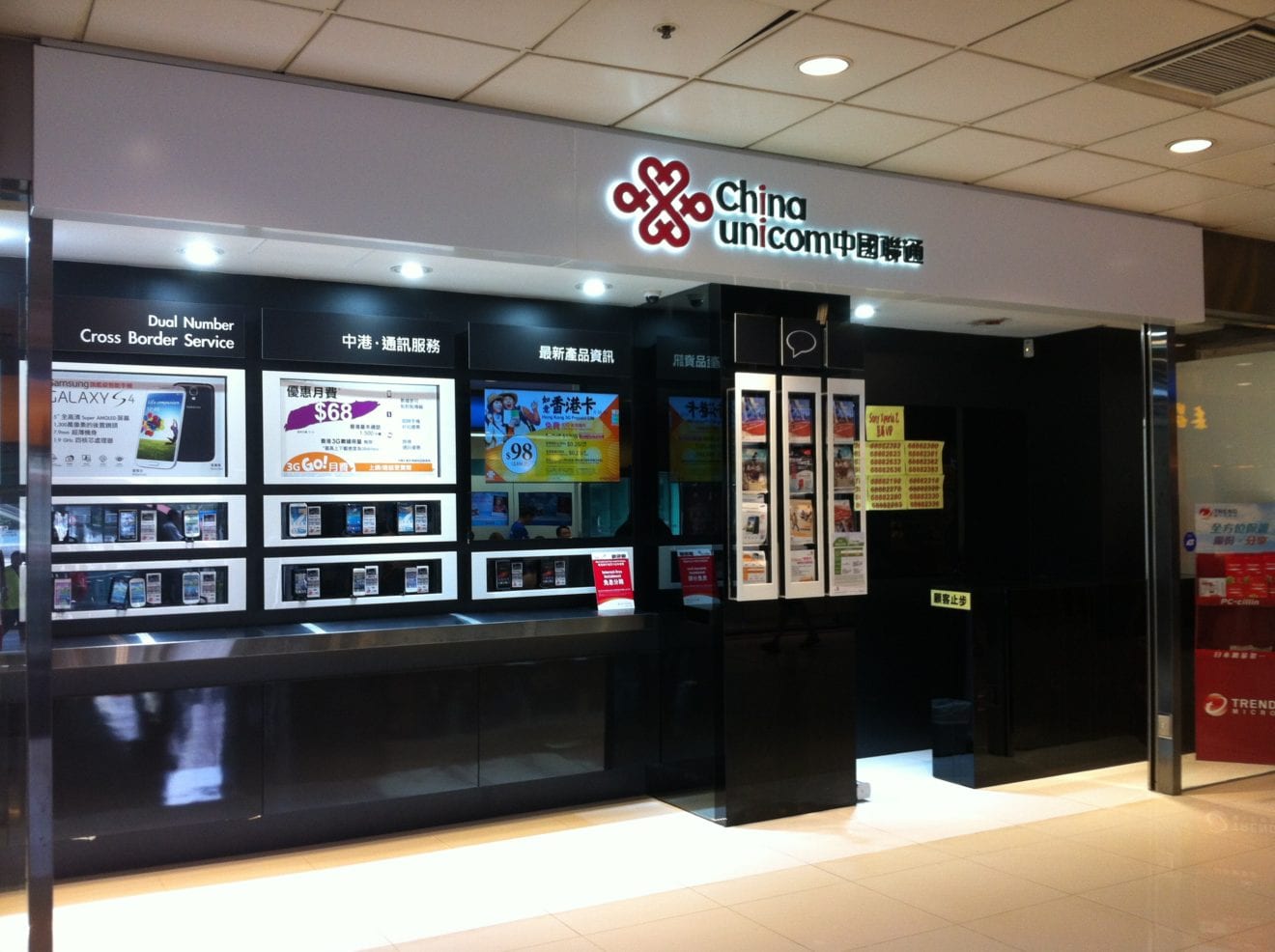
    China Unicom’s parent company China United Network Communications plans to open up to private investors in response to government pressure to reform the ownership structure and competitiveness of the market’s big three operators.

    The company plans to welcome in a strategic private sector investor as part of a pilot designed to evaluate having subsidiary China Unicom operate more like a private company.

    China Unicom itself is listed on the Hong Kong stock exchange along with rivals China Mobile and China Telecom, but China United Network Communications owns a controlling 75.9% stake in the company.

    As the least profitable of China’s big three operators – Unicom reported a 94.1% slump in net profit for 2016 – the government has selected Unicom to pilot the mixed ownership reform model.

    The operator has already taken steps towards becoming a leaner, more competitive company. Unicom cut its planned capex budget to 45 billion yuan ($6.52 billion), from 72.1 billion yuan last year, to ensure it has the resources needed to fund its 5G rollout once the technology launches.

    The pilot of a mixed ownership model forms part of the government’s wider plans for state-owned enterprise reform. The government has previously announced that substantial reforms will be needed across seven industries including the telecoms sector.

  • King Power Group plans THB10 billion expansion

    King Power Group plans THB10 billion expansion

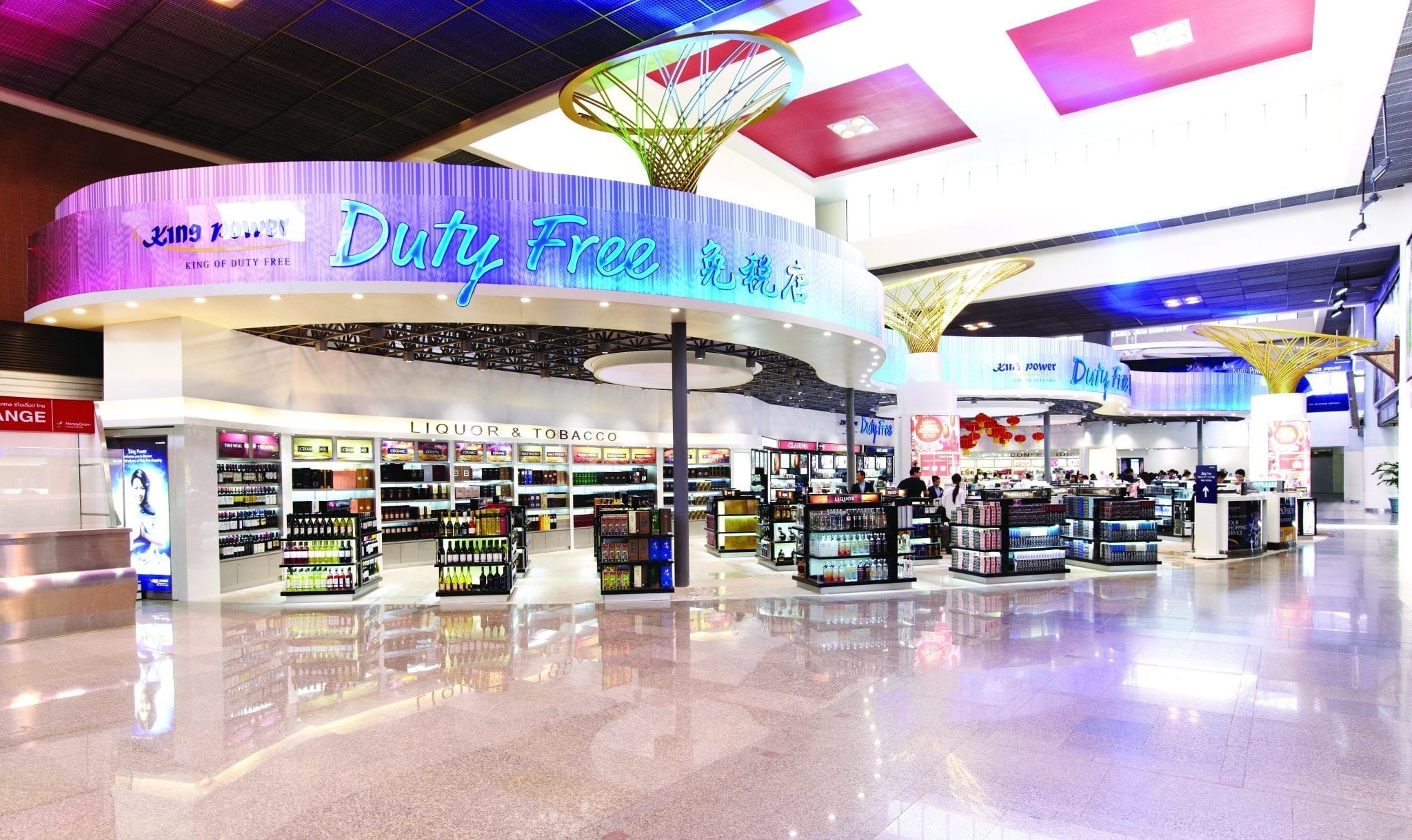
    Thai duty-free giant King Power Group plans to spend THB10 billion (US$290.4 million) for business expansion over the next five years.

    CEO Aiyawatt Srivaddhanaprabha says the budget will be used to open five branches in Thailand and overseas, bringing its total to 14 by 2021. The stores are planned for downtown in major tourist destinations, with Chiang Mai one location being considered.

    The group will also join the bidding for a duty-free shop concession at U-Tapao International Airport, which serves Pattaya and Rayong.

    King Power is also studying opportunities to open and manage duty-free shops at such Asean airports as Myanmar and the Philippines.

    “King Power is set to become a top-five duty-free chain within five years,” says Srivaddhanaprabha. “Expansion both overseas and domestically will help grow our sales by 20 per cent to reach 130 to 140 billion baht in five years, on a par with leading duty-free brands in the US.”

    The company is the world’s seventh-largest duty-free chain, with its sales of THB75 billion last year missing its target by THB11 billion because of weak spending by Thai tourists and a drop in Chinese tourists. Tourists from China, Thailand and other Asean countries contributed about 75 per cent of its total sales last year, and the group is aiming for sales of THB92 billion this year.

    “Chinese tourists have rebounded, but are not back to normal yet,” says Srivaddhanaprabha.

    King Power will allocate THB400-500 million to promote its business this year, and has already pegged THB100 million to place its logo on three Thai AirAsia (TAA) jets and put advertising inside more than 40 TAA aircraft. The group hopes the tactic will raise the number of shoppers at its branches by 20 per cent this year.

    Meanwhile, King Power is ready to bid for a new licence to run a duty-free shop at Bangkok’s Suvarnabhumi airport when its present licence expires in 2020.

    It will also allocate about THB2.5 billion to renovate its Rangnam branch in Bangkok, which will be closed for renovation from next month.

  • Carrefour China opens 27th store

    Carrefour China opens 27th store

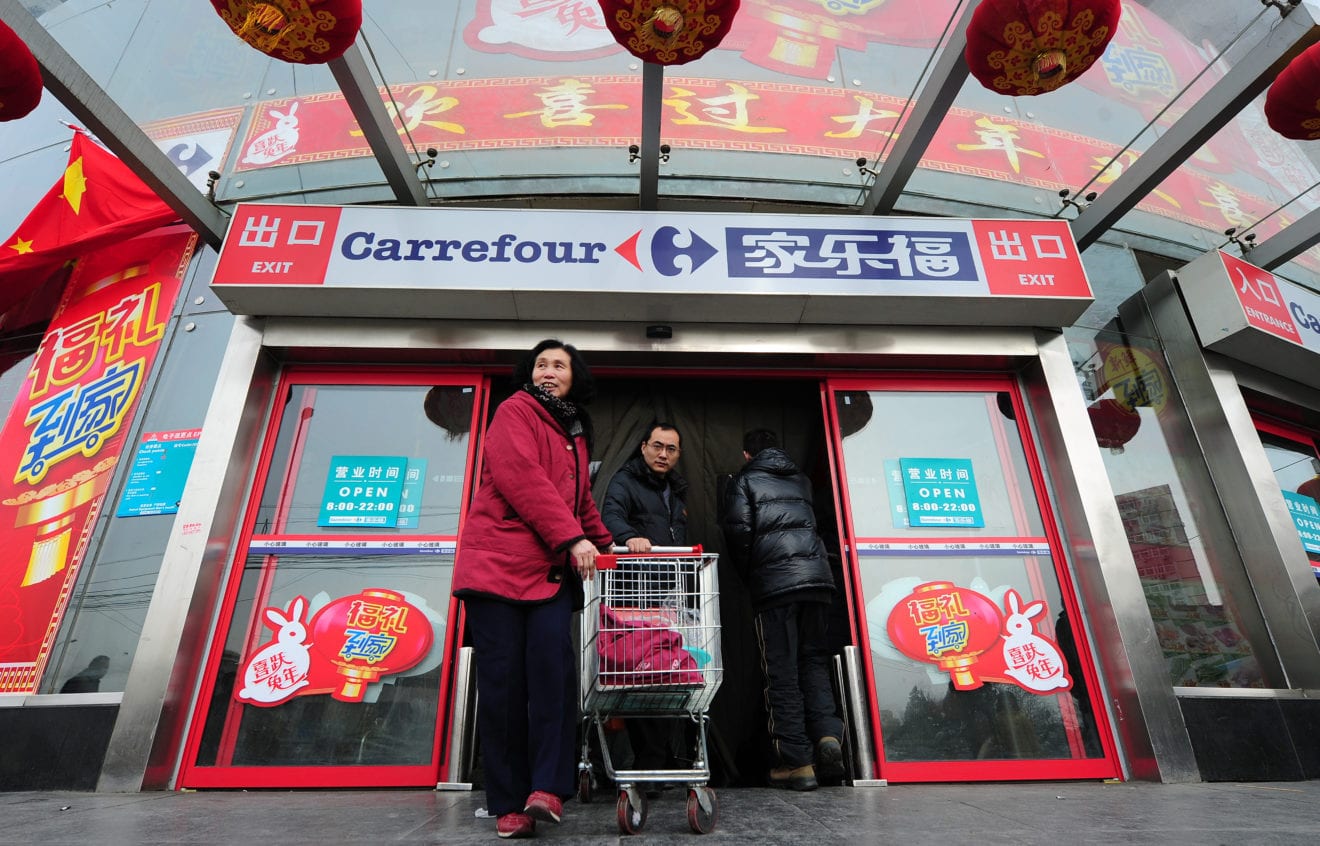
    Carrefour China has opened its 27th Easy Carrefour Store in Shanghai.

    On Long Dong Avenue, the 332 sqm store offers more than 4000 items.

    The French multinational retailer opened its first convenience store under the Easy banner in 2004.

    Meanwhile, Carrefour China has launched an app that allows customers to shop online, receive discount coupons, check their loyalty accounts, win gifts and find store information such as opening hours and how to get to them. The app is available for Android and iOS.

  • Toyoda Gosei to Exhibit at Auto Shanghai 2017

    Toyoda Gosei to Exhibit at Auto Shanghai 2017

    Toyoda Gosei Co., Ltd. will exhibit a broad range of products and technologies that contribute to improved vehicle environmental performance and comfortable vehicles at Auto Shanghai 2017. The show will be held in Shanghai, China from April 19 to 28. Toyoda Gosei’s exhibition booth is located at 4BA101 on the 2nd Floor in Hall 4.

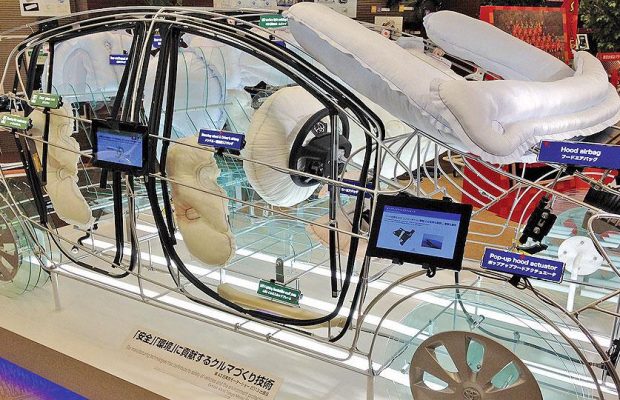
    Prominently displayed will be a wire mock-up car fitted with Toyoda Gosei products that contribute to improved safety and environmental performance. These include various airbags for full 360° coverage to protect vehicle occupants from impacts on all sides, millimeter wave radar compatible emblems, lightweight plastic fuel filler pipes and automotive LED products. The wire mock-up makes it easy to see and understand the features and location of these products on a vehicle.

    Also on exhibit will be the company’s highly designable radiator grilles that can accommodate diverse user design preferences and multifunction console boxes that provide greater convenience.

    Toyoda Gosei has 13 subsidiary companies in the China region and is actively developing its business there. The company will continue to expand its operations in the region to meet the needs of customers in the growing Chinese market.

  • Nissan premium brand Infiniti global sales rise 18 percent in January-March

    Nissan premium brand Infiniti global sales rise 18 percent in January-March

    Nissan Motor’s premium brand Infiniti sold 67,367 vehicles globally in the first three months of 2017, up 18 percent from the same period a year prior, showed a press release seen on Thursday.

    Globally, Infiniti sold 28,406 vehicles in March, up 14 percent.

    The brand’s performance in the first three months of this year was led by its U.S. unit. In the United States, Infiniti sold 43,561 vehicles over January-March, up 33 percent. U.S. sales volume in March rose 33 percent to 18,266 vehicles.

    In China, the world’s biggest auto market on which Infiniti has focused to gain momentum, the brand sold over 10,000 vehicles, up 4 percent, in the first quarter of the year. Its sales increased 6 percent in March to 4,050 vehicles.

  • China Telecom, Huawei hold NB-IoT symposium

    China Telecom, Huawei hold NB-IoT symposium

    China Telecom and Huawei co-hosted a symposium in Shenzhen yesterday aimed at exploring the potential of narrowband IoT (NB-IoT) technology in smart city applications.

    The symposium attracted participants from the China Academy of Information and Communications Technology (CAICT) as well as representatives from industries including water, gas, smart meters and other fields.

    Attendees were told that the wide coverage and massive simultaneous connection capabilities of NB-IoT meke it ideally suited for deployment in smart city areas including water and gas management, street lighting and car parking.

    “NB-IoT-based Smart Water and Smart Gas are the main components in Smart City, fully exhibiting the informatization level in the public service provisioning sector of a city,” China Telecom GM of government and enterprise Sun Jian commented.

    “China Telecom and Huawei have initiated together pilot NB-IoT applications on Smart Water and Smart Gas with industry partners, including Shenzhen Water and Shenzhen Gas. Through comprehensive cooperation on standards formulation, technological research, network construction, service development, business model exploration, and associated aspects, all parties wish to jointly promote informatization construction for water and gas industries.”

    Huawei president of marketing and solutions Zhang Shunmao added that Huawei is currently shipping 200,000 NB-IoT capable chips per month, and expects to increase this to 1 million per month in the future.

    This year the company is also scheduled to deploy more than 30 NB-IoT networks for Smart City applications – particularly for public service provisioning – in over 20 countries this year.

    Separately, IoT provider Thinxtra has announced a partnership with Hong Kong wireless technology company Victory Concept to develop IoT devices for Asia-Pacific enterprises to implement using the low-power-wide area (LPWA) Sigfox network.

    Thinxtra recently announced plans to deploy a Sigfox network throughout Hong Kong by June. The devices will also be compatible with Sigfox networks in 32 countries worldwide.

    “The Thinxtra network will offer companies and researchers in Hong Kong the chance to create new products and services based on IoT. We believe that Hong Kong has the potential to be a world-leading IoT design and manufacturing hub,” Thinxtra Asia MD Murray Hankinson said.

    “With the skills and facilities to provide a reliable supply of high-quality, low-cost devices in Hong Kong, Victory Concept is helping us create the right conditions for IoT innovation to flourish here and spread around Asia Pacific and to the world.”

  • Hyundai, Kia China sales down 52 pct in March

    Hyundai, Kia China sales down 52 pct in March

    Hyundai Motor, Kia Motors sold 72,032 vehicles in China in March, down 52.2 pct from year earlier. Hyundai Motor China sales 56,026 vehicles in March, down 44.3 percent from year earlier.

    Kia Motors China sales 16,006 vehicles in March, down 68 percent from year earlier.

  • DHL eCommerce expands presence in South China

    DHL eCommerce expands presence in South China

    DHL eCommerce plans to further increase its presence in South China through the introduction of its e-commerce logistics services in the Fujian province.

    The company has also announced the expansion of its Shenzhen Distribution Center and Hong Kong Distribution Center to manage a capacity of 81 million shipments a year.

    “With exports expected to make up 75% of China’s e-commerce turnover three years from now, a strong and reliable logistics framework has to be set in place to meet growing needs,” said Zhi Zheng, Managing Director, Greater China, DHL eCommerce. “Manufacturing and export hubs like Fujian will be the center stage of all future growth of e-commerce exports in China. DHL’s expertise in international shipping and fulfillment, along with our global network and strong e-commerce expertise will play a fundamental role in connecting China’s e-tailers with online markets across the world.”

    Zheng added: “We are expanding our presence in South China to better service merchants here, and provide them with the opportunity to tap on the massive cross-border opportunity. This underpins our growth strategy for South China where we will focus on growing our outbound e-commerce trade and continue to expand our offerings across Tier 2 and 3 cities.”

  • Vietnam beats China in product reputation ranking, but scores below most ASEAN peers

    Vietnam beats China in product reputation ranking, but scores below most ASEAN peers

    Made in Vietnam products score low in almost all product attribute categories. Vietnam has been ranked 46th on the Made in Country Index 2017 released by Germany’s Statista Market Research Co, which asked more than 43,000 people in 52 countries and territories to look at goods produced in 49 countries and the European Union as a group.

    Vietnam hit an index score of 34, while China took the 49th position with a score of 28, said the survey.

    However, it stood behind most Southeast Asian countries in the survey, except for the Philippines, which ranked 47th.

    The index features 10 categories: high quality, high security standards, very good value for money, uniqueness, excellent design, advanced technology, authenticity, sustainability/eco-friendliness, fair production and status symbol.

    Vietnam scored low in all categories but “very good value for money”, where it made it to the top 10, standing in eighth place. “Made in China” products claimed the top spot as voted by over a third of respondents.

    Even “in Vietnam itself, ‘Made in Vietnam’ does not have a good reputation”, the survey said.

    Vietnamese consumers like products from Japan the most. Other products most preferred in Vietnam come from Denmark, Australia, the Netherlands and South Korea.

    “Made in Vietnam” products are found popular in Ecuador and the United Arab Emirates, where they rank 10th and 20th, respectively.

    Germany tops the Made-In-Country Index, scoring 100 points, while Switzerland and the EU are runners-up, scoring 98 and 92, respectively. Iran sits at the bottom of the pile.

    In most countries, products from Germany, the U.S. or Japan are the most favored.

    Specifically, in 13 of the 52 responding countries, Germany has the best image as a manufacturing country. The U.S. holds this status in eight countries, while Japan claims seven.