Tag: China

  • The World’s Biggest Fashion Retailer is Betting Big on China

    The World’s Biggest Fashion Retailer is Betting Big on China

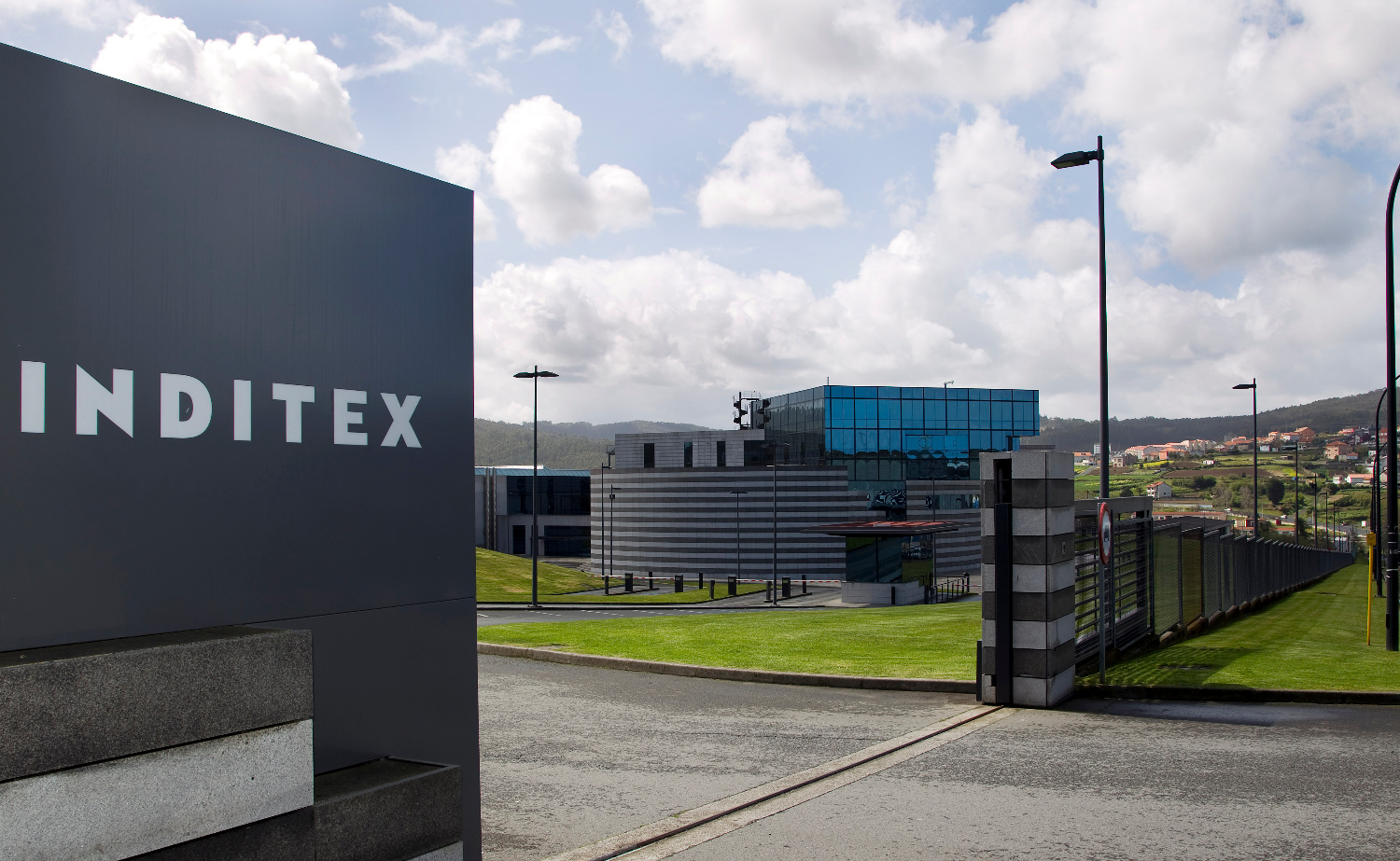
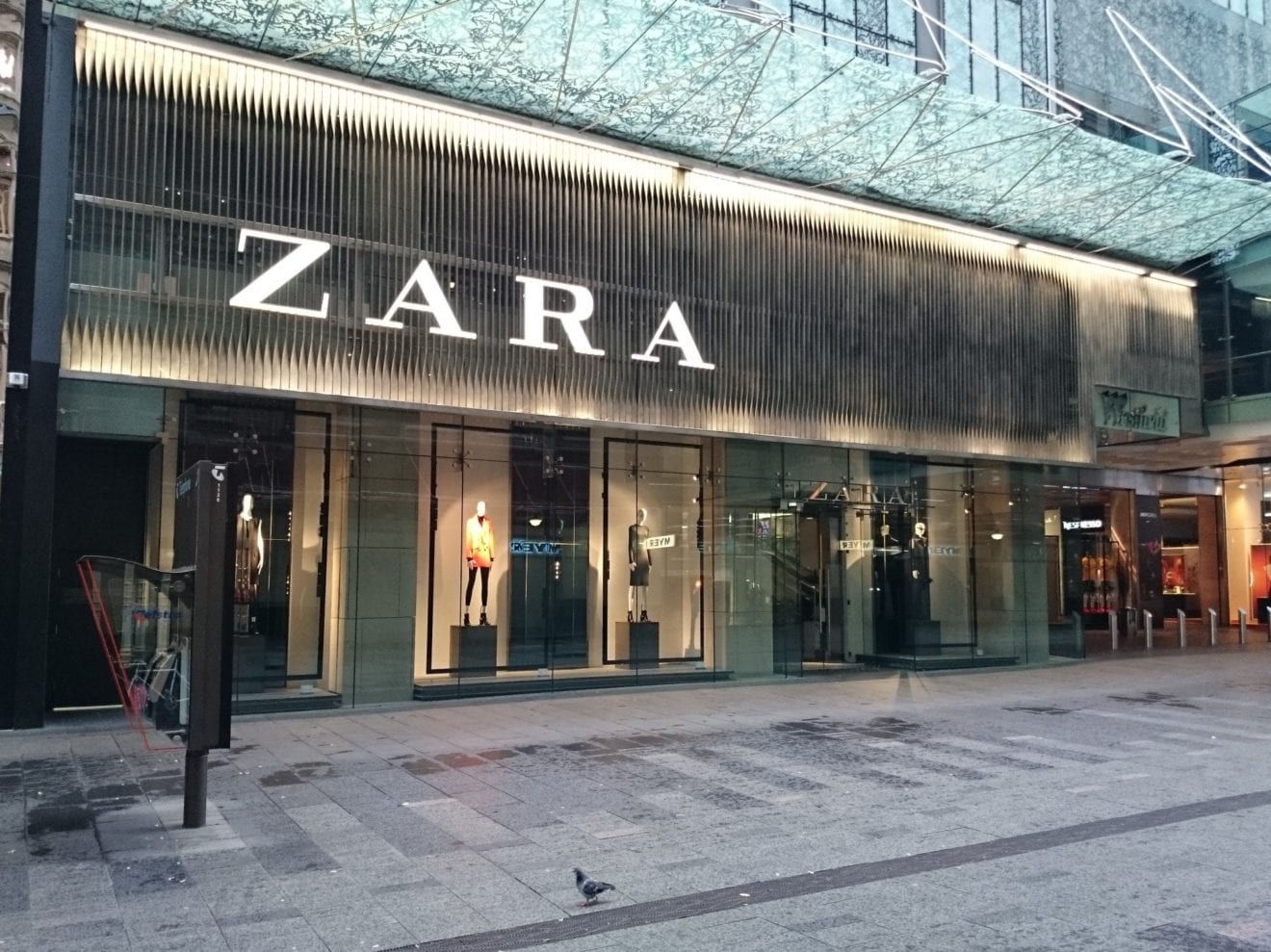
    Spain’s Inditex, owner of the Zara chain and the world’s biggest fashion retailer, is optimistic about long-term growth in China despite the slowing economy, as demand for its affordable fashion stays robust.

    Inditex, whose Zara brand has lured shoppers this season with a minimalist straight-cut look, teaming muted colors with ankle boots and trousers, makes about 7 percent of its sales in China, analysts estimate.

    Western luxury brands like Burberry and Hugo Boss are suffering from cooling Chinese demand, but mid-market names like Adidas and Zara are faring better.

    “We have no doubt that in China the fashion appetite is large, our brands are better and better known and we are still feeling very optimistic (over a five-year view),” Chief Executive Pablo Isla told analysts on Thursday.

    The group made a sprightly start to the Christmas season as its on-trend offerings allowed it to adapt better than rivals.

    Sales from Nov. 1 to Dec. 3 rose 15% in local currencies, suggesting a slight slowdown in same-store sales from the previous three months. But analysts said it was still a strong performance given rivals like Top Shop have had a slow start to Christmas trading due to mild weather.

    “We can say that Inditex is trading just as strongly in the fourth quarter to date as it did in the third,” Societe Generale analyst Anne Critchlow said.

    In the nine months to end October, net profit rose by a fifth to 2.02 billion euros ($2.2 billion) on sales up 16% to 14.7 billion.

    Isla said newer brands like Zara Home, Bershka and Stradivarius had performed particularly well.

    Gross margin, a closely-watched measure of profitability, slipped slightly to 58.8%, as the strong dollar pushed up prices of garments sourced in Asia, though this affects Inditex less than its peers.

    Inditex sources more goods in or near Europe, helping it adapt more quickly to fashion tastes and speedily deliver new ranges.

    Inditex shares, up 37% this year, were down 1.5% by 1037 GMT, versus a 0.7% fall in the European retail sector.

    Many market watchers have flagged the rich valuation of the stock, trading at around 34 times 2016 projected earnings, according to Reuters data, versus 24 times for rival Hennes & Mauritz hmrzf .
  • Qianhai Chow Tai Fook mall opens in Shenzhen

    Qianhai Chow Tai Fook mall opens in Shenzhen

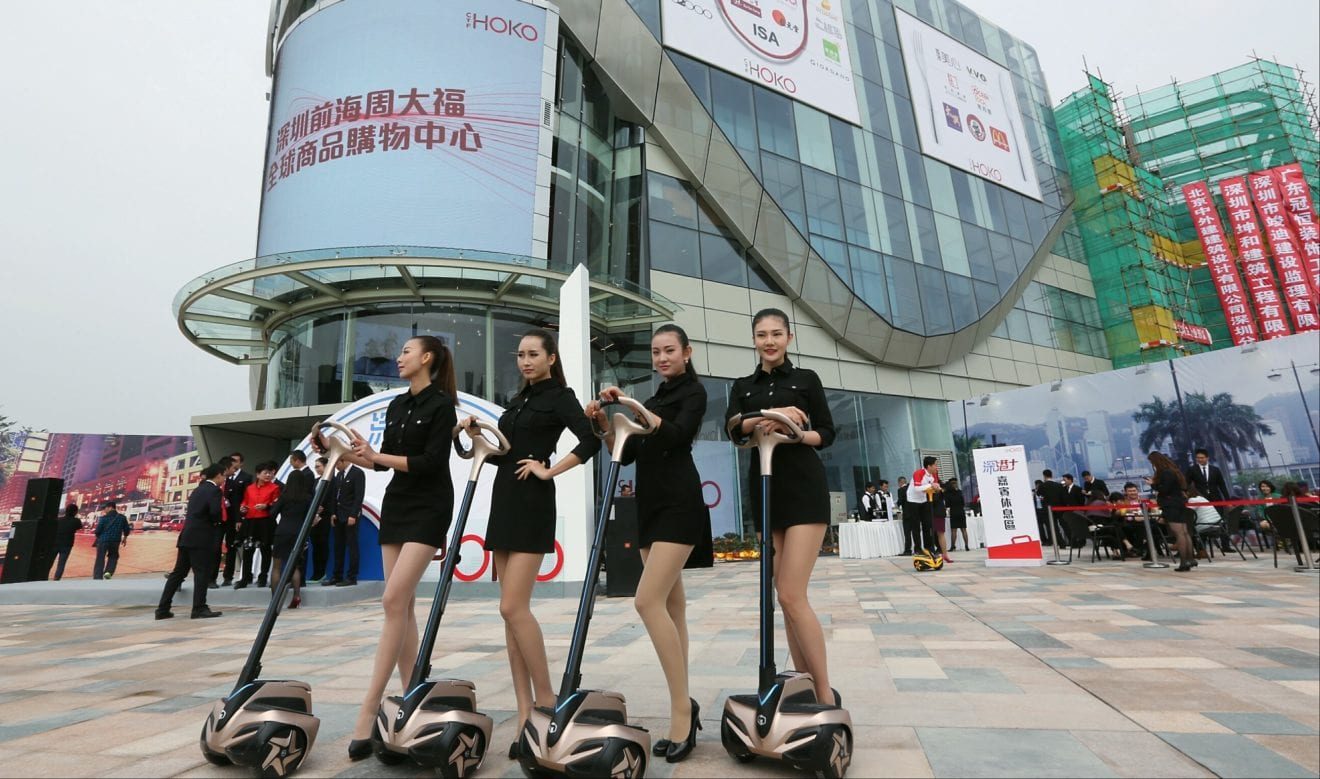
    The new Qianhai Chow Tai Fook mall opened its doors in Shenzhen on Monday – selling Hong Kong sourced goods to mainlanders at prices said to be cheaper than in Hong Kong.

    Officially named the Qianhai Chow Tai Fook Global Goods Shopping Center, the 19,000 sqm mall is a joint venture between jeweller Chow Tai Fook and two investment partners.

    A total of 21 retail brands opened stores in the first phase of the development opened yesterday, including beauty products chain Sa Sa, fast fashion brand Giordano and CRCare. They are joined by a range of food and infant formula retailers.

    More stores will join the development when stage two opens next summer.

    The HK$423 million shopping centre has been built inside the Shenzhen special economic zone, taking advantage of tax concessions and allowing mainlanders to buy Hong Kong sourced goods without crossing the border.

    Shenzhen has a population of 20 million creating a huge potential catchment for the development.

    Adrian Cheng Chi-kong, executive director of the Qianhai Chow Tai Fook mall, said it will not be competing with the border shopping mall planned for the Hong Kong side of the border, explaining the two properties will cater for different clienteles.

  • Apple’s Next Chinese Retail Store Opens in Nanning on December 12

    Apple’s Next Chinese Retail Store Opens in Nanning on December 12

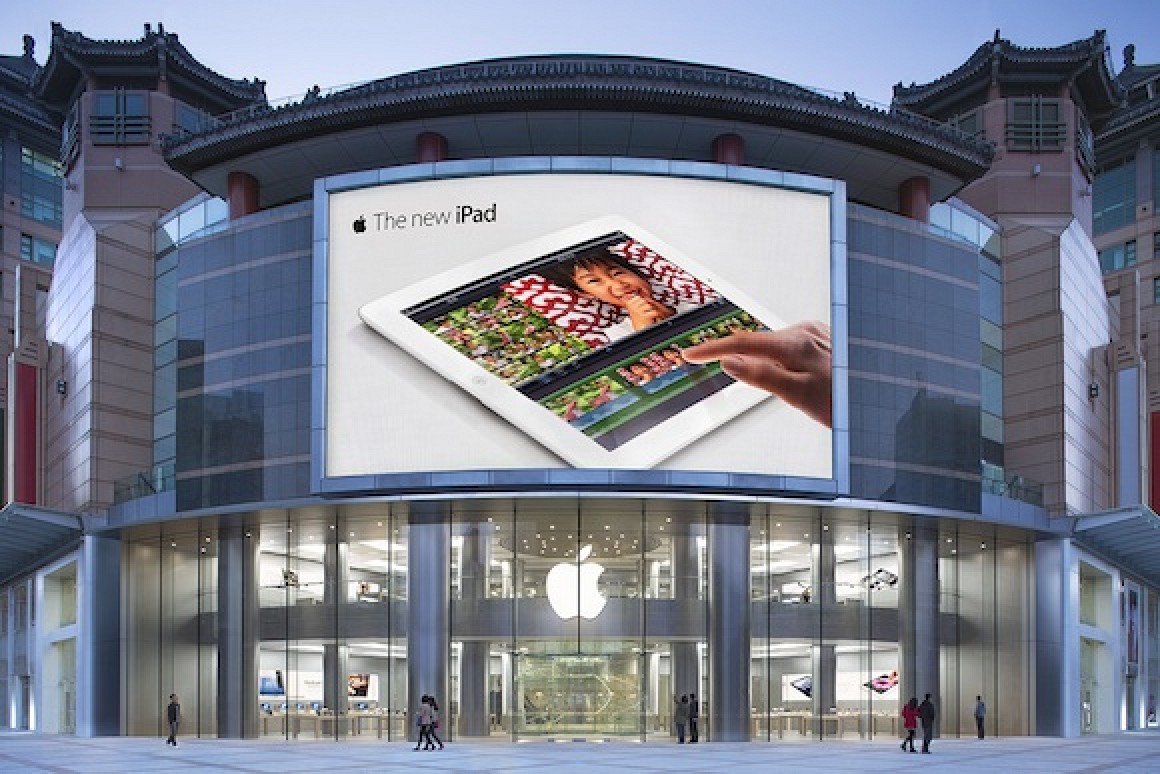
    Apple has announced that its 28th retail store in China opens Saturday, December 12 at 2:00 p.m. local time. The store will be located in the MixC shopping mall at 136 Minzu Avenue in Nanning’s Qingxiu District.
    The new store will be open between 10 a.m. and 10 p.m. local time on Monday-Thursday and Sunday, with extended hours on Friday and Saturday, and offer traditional Apple Store services, including the Genius Bar, Workshops and JointVenture.Apple has aggressively expanded its retail footprint in China under the leadership of Angela Ahrendts, having opened new stores in Beijing on November 28, Chengdu on November 21 and Dalian on October 24. Apple has also opened retail stores in Chongqing, Hangzhou, Hong Kong, Nanjing and Tianjin over the past year.

  • Postal Savings Bank of China has raised investment

    Postal Savings Bank of China has raised investment

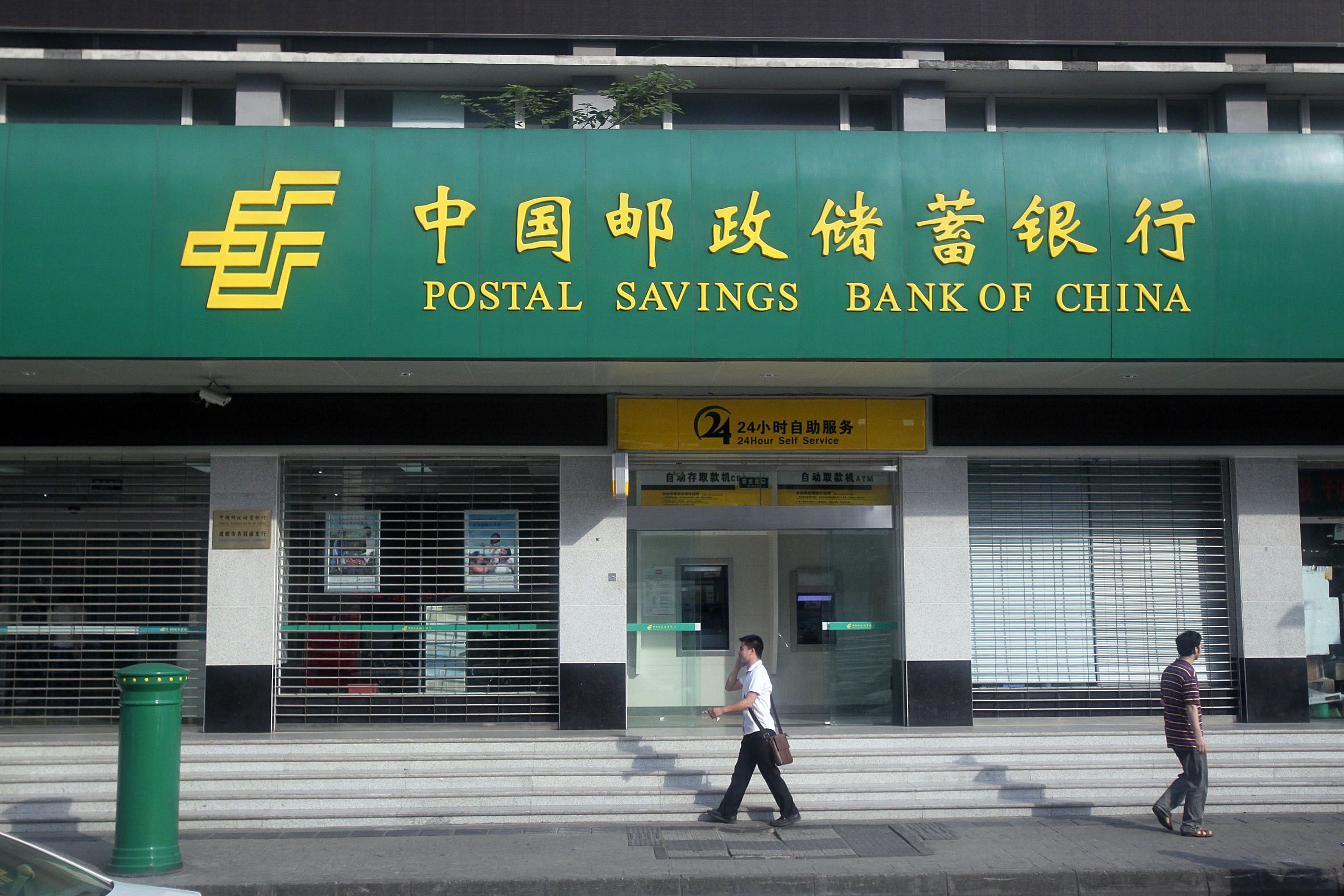
    Postal Savings Bank of China has raised $7bn from a global group of 10 investors including JPMorgan, an affiliate of Alibaba, and Temasek, valuing the state-owned lender at $41bn ahead of a float that could come as soon as next year.

    The sale of 17 per cent equity marks the largest private fundraising by a Chinese financial institution, and its international collection of investors will be seen as a signal Beijing is more open to outside funds to help with its slow-moving plans to reform its state-owned enterprises.

    Postal Savings Bank is China’s biggest unlisted lender and its sixth largest commercial bank in terms of assets. It has more than 400m retail customers and nearly 40,000 branches, many of them in rural areas where until recently the only alternative was putting money under the mattress.

    A similar pre-float sale of a $17bn stake last year in the retail operations of Sinopec was sold largely to domestic investors — so-called friends and family — in spite of interest from international groups, denting hopes at the time that China was serious about bringing in outside expertise and funding.

    Lu Jiajin, Postal Savings Bank president, on Wednesday described the placement as an “example of mutually beneficial co-operation between China and the world”.

    He added: “This indicates that the world has . . . confidence in China’s financial systems and [the] stability and profitability of China’s banking industry”.

    The international investors are UBS; JPMorgan; Singapore’s Temasek investment fund and DBS, the city-state’s biggest bank; Canada Pension Plan Investment Board; and the IFC arm of the World Bank.

    CPPIB is committing $500m. Mark Machin, head of international business and president of Asia for CPPIB, said the investment met the fund’s strategic goals of investing in less-developed regions of China and increasing exposure to the Chinese consumer.

    Chinese banks have come under pressure in a rapidly shifting landscape, and face challenges including rising bad loans and competitive pressures from the country’s interest rate liberalisation agenda.

    Hong Kong-listed shares in the country’s big four state-backed banks — ICBC, Bank of China, China Construction Bank and Agricultural Bank of China — have dropped at least 17 per cent this year.

    “This isn’t a sector bet, it’s an investment in this bank,” said Mr Machin, adding that Postal Savings Bank’s focus on consumer lending helped isolate it from some of the bad loan issues faced by corporate lenders.

    Ant Financial, the payments affiliate of Alibaba; rival internet Chinese giant Tencent; China Telecom; and insurer China Life have also committed funds.

    A filing with the Hong Kong stock exchange showed China Life is putting up $2bn and its stake will not be more than 5 per cent — implying a valuation of $41bn for Postal Savings Bank.

    Pre-IPO funding rounds are increasingly being used as a way of establishing baseline valuations and demonstrating support for a company before it approaches the public markets.

    JPMorgan said its agreement with Postal Savings Bank covered “multiple levels of collaboration” between the two sides.

    An executive at one of the companies involved in arranging the deal said: “They have reached out to strategic partners who can help them professionalise rather than just have passive investors”.

    Mr Lu said Postal Savings Bank wants to establish itself “as a 100-year bank with steady operations and excellent risk management”.

  • Lenovo launches Moto 360 (2nd Generation)

    Lenovo launches Moto 360 (2nd Generation)

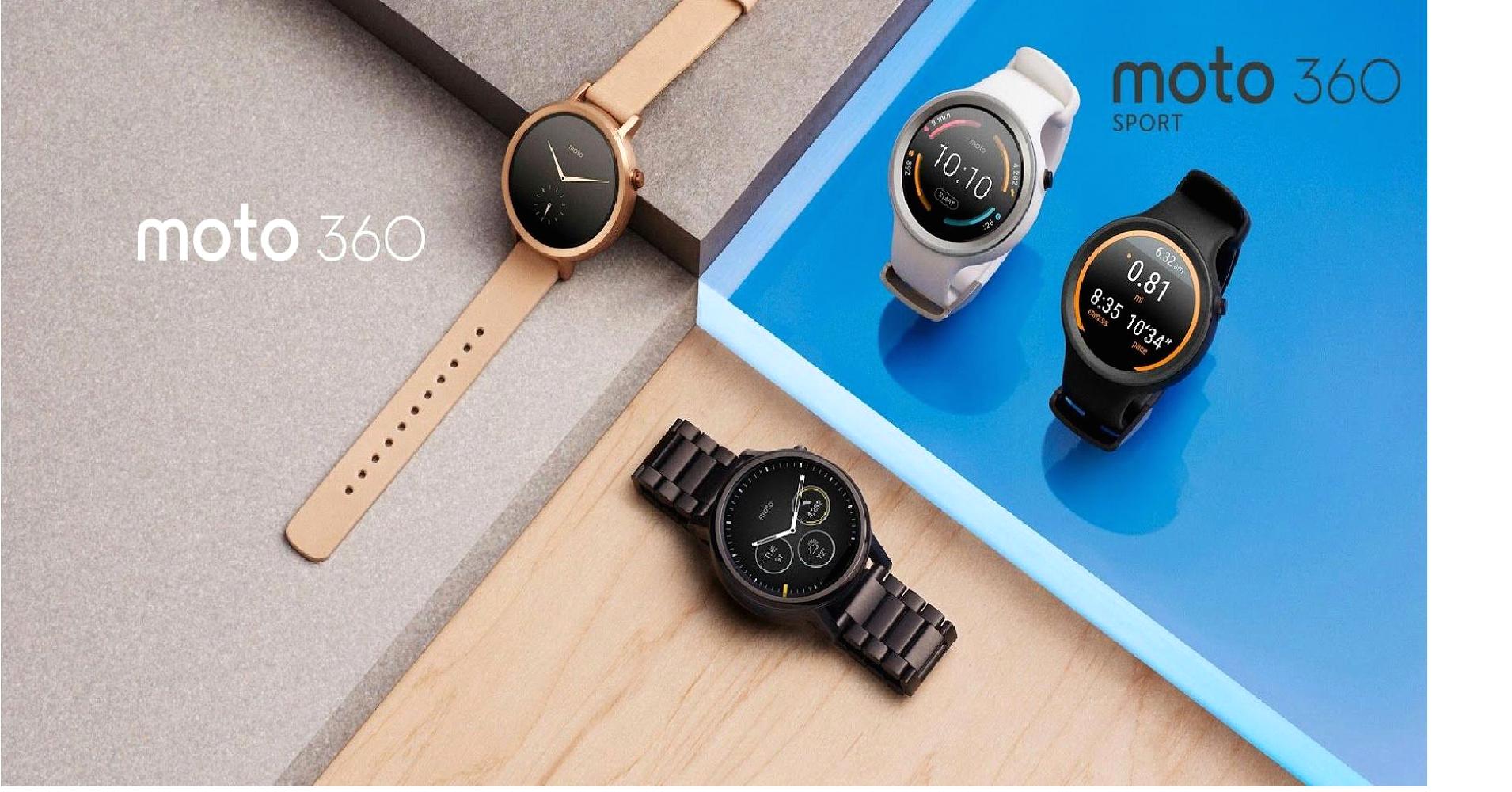
    Lenovo is bringing the new Motorola Moto 360 smartwatch to the local market, making it the first time that the Chinese company is launching a Motorola product in Singapore.

    The second generation Moto 360, which was announced at IFA 2015 in September, is available in two sizes and will go on sale from Dec 15 at retail stores Newstead and Challenger, and from online retailer Lazada.

    The 46mm silver and cognac leather version will retail at $549. The 42mm rose gold and blush leather model is retailing at $499, while the 42mm black and black leather model is priced at $479.

    The circular device is one of the latest smartwatches to run Android Wear. It comes with 4GB of storage, and the larger version houses a 400 mAh battery, while the smaller one has a 300 mAh battery.

    Lenovo, which bought Motorola Mobility in 2014, had previously focused on launching its own devices for the local market.

  • Huawei Mate 8 goes on sale; sold out in China on first day

    Huawei Mate 8 goes on sale; sold out in China on first day

    The Huawei Mate 8 finally went on sale in China on Dec. 9 after its unveil on Nov. 26 and seems to have sold out at many Chinese retailers on its very first day. The flagship phone will be unveiled to the international market at the Consumer Electronics Show (CES) at Las Vegas, Nevada in January 2016.

    The Huawei Mate 8 carries a 6-inch LCD display and is available in RAM configurations of 3 GB and 4 GB. In China, the 3 GB/32 GB model of the Mate 8 costs CNY 2,999 (AU$644 or US$470) while the 4 GB/64 GB model comes in at CNY 3,699 (AU$795 or US$580).

    There is also a 4 GB variant with 128 GB internal storage capacity. This model costs CNY 4,399 (AU$ 946 or US$690). And finally, the premium and exclusive champagne edition comes with hefty price tag of CNY 6,888 (AU$ 1,473 or US$1,075), reports GSM Arena.

    The smartphone is available at over 2000 retail outlets across China. Users can also visit Huawei’s official online store, Vmall Mall, JD.com, Suning Tesco, Gome and Amazon, among other online retailers. International availability and pricing details are expected to be announced at CES 2016.

    Huawei is believed to be manufacturing one million units of the Huawei Mate 8 per month, according to earlier reports. The company is hopeful its latest flagship will surpass the previous records set by Mate 7, which sold seven million units in one year.

    The all-metal Huawei Mate 8 sports the latest Kirin 950 octa-core processor with a Mali T880 GPU; a 4000 mAh battery and a 16 MP rear camera with LED flash. The device runs on the latest Android 6.0 Marshmallow OS.

  • Carrefour opens 4th distribution center in China in Wuqing

    Carrefour opens 4th distribution center in China in Wuqing

    The grand opening ceremony of Carrefour supply chain in China-North-West China distribution center is held in Wuqing Economic Development Area, Tianjin municipality. The foundation of the center is expected to become the overpass of Carrefour China’s supply chain in northern China, which can form the radiation of Beijing-Tianjin-Hebei integration economic cycle and Shandong, Shanxi and other provinces’ logistics and distribution network, increase the distribution efficiency, support the business of stores, and boost the regional economics.

    The northern distribution center of Carrefour launched this time has superior geographical location, which is located in ProLogis modern international distribution park, Wuqing economic development area, Tianjin municipality, covers an area of 39,000 square meters. Carrefour northern distribution center will utilize the Voice Picking System, achieving 99.997% in its picking accuracy rate. The tray utilize 100cm*120 standard operating procedure to reduce packaging and labor costs and improve efficiency; moreover, the center is equipped with professional temperature controlled room which sustain temperatures of 18-22 degrees for the storage of alcohol, chocolate and milk powder.

    To reply to the supply chain strategy development needs of Carrefour in China, the establishment of northern China distribution center will cover more than 30 stores in northern China, greatly improve the company’s northern China supply chain system to provide more high-quality, convenient products and services for numbers of consumers.

    After the establishment of the distribution center in Eastern, western and northern region, Carrefour is planning to set up 2 new distribution centers in North-East Territory and South Territory of China. It is estimated that by the end of 2016, Carrefour will complete the establishment of 6 modern distribution centers in China, and cover more than 200 hypermarkets in China to fully support the emerging industry such as E-commerce of Carrefour, “easy Carrefour” convenience stores.

  • Inditex optimistic about push into China

    Inditex optimistic about push into China

    Intidex, the parent company of fast fashion chain Zara, has revealed a sales increase of 16% year-on-year to 14.74bn (£10.6bn) over the first nine months of its financial year. Despite a dip in the economy, the Spanish group has said that it remains optimistic about its China prospects.

    The group’s profits, which include a 20% increase to £2.02bn, come not long after founder Armanocio Ortega surpassed Bill Gates as the world’s wealthiest man.

    Though luxury fashion retailers such as Burberry and Hugo Boss have experienced difficulties in the Chinese market, Inditex is positive about its expansion overseas.

    “We have no doubt that the fashion appetite in China is large, our brands are better and better known. We are still feeling very optimistic,” said Chief Executive Pablo Isla.

    During its first three fiscal quarters, the group added 136 new stores to its estate making a total of 230, the same amount as the same time last year.

    Zara had the most openings with 60 new stores, as well as 44 Zara home sites and 26 new branches for lingerie brand Oysho.

    In addition, Zara’s e-commerce platform is being extended to all of the European Union, Taiwan and Hong Kong, while a website for Zara Home has debuted in Australia.

  • Price Of Illegally Poached Ivory Halves In China

    Price Of Illegally Poached Ivory Halves In China

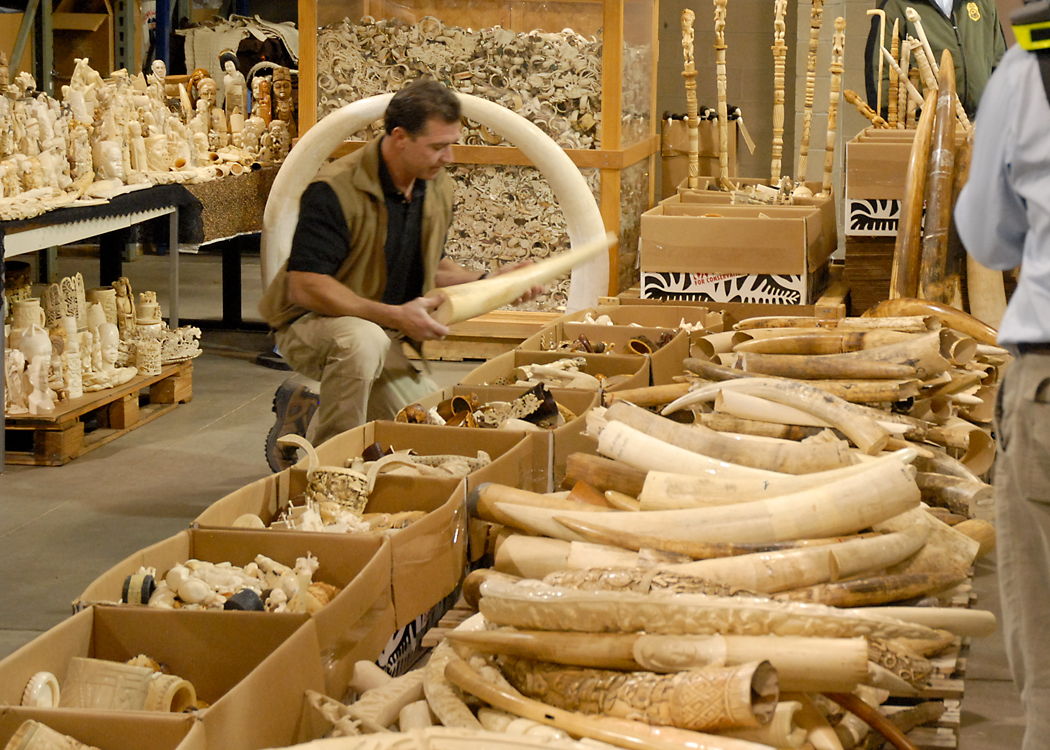
    The price of elephant ivory in China has fallen by almost 50 percent over the past 18 months, likely due to a shrunken demand in the country for illegally poached tusks, the Wildlife Conservation Network wrote this week in a blog post.

    Raw ivory in Beijing went from costing an average of $2,100 per kilo (about $955 per pound) in 2014 to $1,100 (or about $500) by November, ivory researchers Lucy Vigne and Esmond Martin revealed in a study scheduled to be released by Save the Elephants in early 2016. The price drop reflects China’s significant decrease in demand for the commodity, believed to be a result of the government’s explicit commitments to cut down on ivory trade and prevent illegal elephant poaching.

    Elephant poaching typically involves killing the animal, hacking off its tusk and discarding its carcass, The New York Times wrote in a gruesome report.

    Historically, China has considered ivory ornaments and carvings to be status symbols, and the country is still widely believed to be the world’s largest ivory consumer. But activists have long urged China to impose strict legislation on the ivory trade.

    Chinese authorities announced in May a commitment to phase out the country’s domestic ivory industry. In September, the United States and China also announced a deal to carry out “nearly complete bans” on ivory imports and exports. To show its dedication, mainland China destroyed almost 7 tons of ivory to show the country’s dedication to ban the wildlife crime, according to the World Wide Fund.

    Demand for ivory within the country also seems to have diminished. Vigne and Martin, who traveled across eight Chinese cities to conduct their research, said they “didn’t see a single person buying an ivory item during weeks spent surveying the ivory retail outlets.” The researchers also noted that many ivory retail outlets had cut back on floor space for displays of ivory items.

    Other countries have also ramped up their efforts to prevent illegal elephant poaching. Last year, the Obama administration announced that it would prohibit all commercial trade of elephant ivory. And in October, Tanzania arrested a number of high-level ivory traffickers accused of smuggling at least 4,200 pounds of elephant tusks from East Africa to East Asia.

    But despite the fallen demand for ivory in China, Save the Elephants founder Iain Douglas-Hamilton said the world still had a long way to go to stop the African elephant poaching business. Indeed, the number of elephants in Africa fell from 26 million in 1800 to about 400,000 in August. At least 65 percent of the continent’s forest elephants were poached between 2002 and 2013, WildAid reported last year.

  • Alibaba Group Acquires Major Hong Kong Newspaper

    Alibaba Group Acquires Major Hong Kong Newspaper

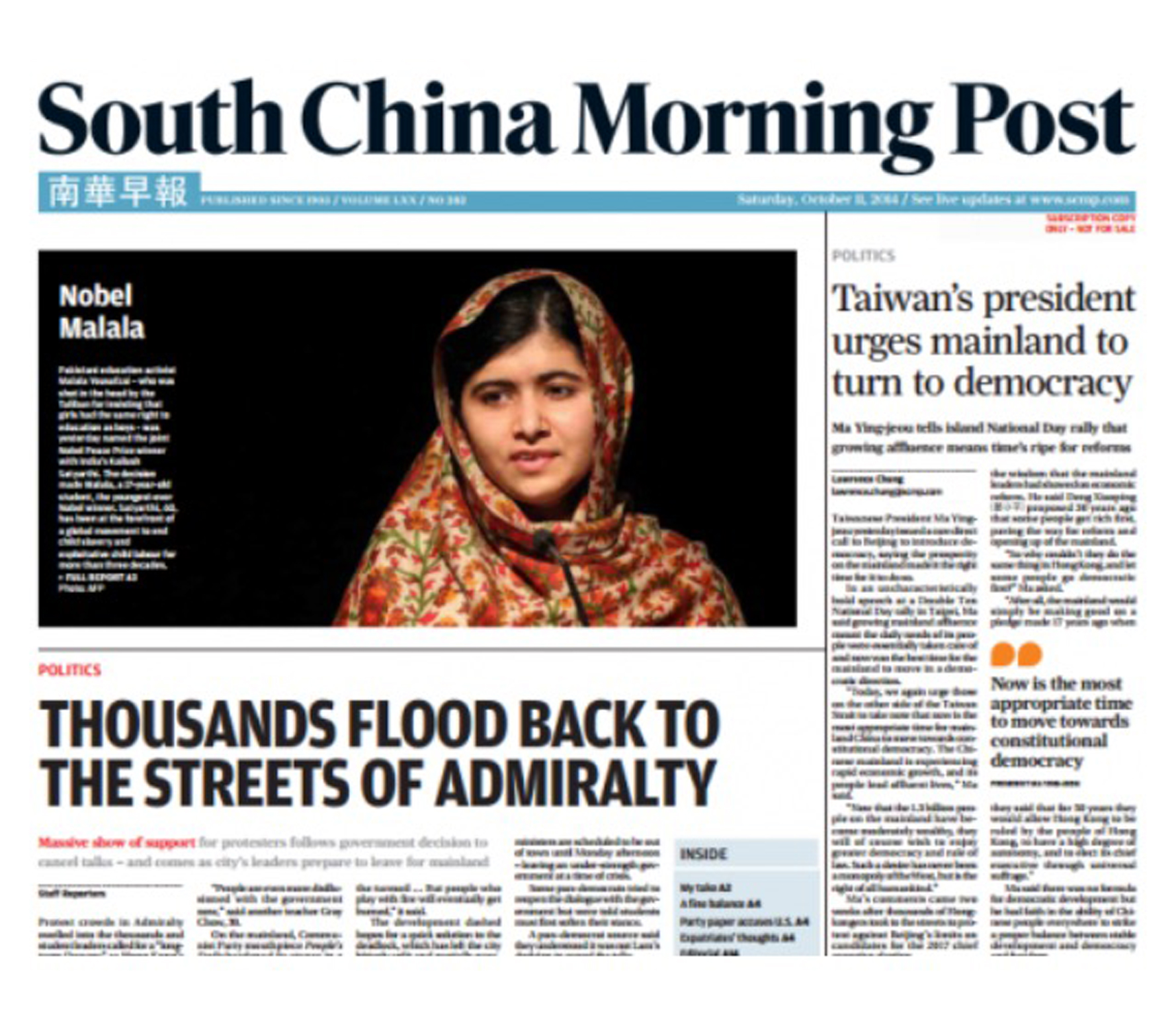
    The Alibaba Group has announced that will acquire the South China Morning Post, one of Hong Kong’s most influential English language newspapers, and other media assets of SCMP Group Limited.

    The move is reportedly part of an effort to improve China’s image in the West and combat what company executives call the “negative” portrayal of China in the Western media.

    “The South China Morning Post is unique because it focuses on coverage of China in the English language. This is a proposition that is in high demand by readers around the world who care to understand the world’s second largest economy,” said Joseph Tsai, executive vice chairman of Alibaba Group.

    The South China Morning Post has long reported on subjects that state-run publications have been forbidden to cover, such as political scandals and human-rights violations. The paper has a relatively small circulation (at about 100,000). Despite the paper’s size, it has significant influence in the West because of its proximity to China and English language format. However, critics have recently taken aim at the paper, claiming that it has become increasingly pro-Beijing.

    The acquisition is an ambitious move that sees Alibaba taking a significant stake in print journalism, with an eye to developing its digital potential.

    “Like many print media the SCMP faces challenges amid the dramatic changes in the way news is reported and distributed. But these changes play to Alibaba’s strengths, which is why we believe the two companies complement each other well,” said Tsai in an open letter to the readers of the South China Morning Post.

    As part of the changes, Alibaba will remove the pay wall on SCMP.com, allowing readers to access content for free on the internet and mobile.

    Other assets included in the acquisition are SCMP’s magazine, recruitment, outdoor media, events and conferences, education and digital media businesses. Besides the flagship South China Morning Post, other titles include SCMP.com and related apps, and Nanzao.com and Nanzaohinan.com, as well as the Hong Kong editions of Esquire, Elle, Cosmopolitan, The PEAK and Harper’s Bazaar.

    The acquisition represents a relatively minor investment on the part of Alibaba, with SCMP valued at an estimated US$100 million, a drop in the ocean compared with Alibaba’s multi-billion yearly revenue.

    It’s unclear at this point what degree of editorial control Alibaba will exercise over the controversial publication. While Hong Kong operates with a relatively free press, at least compared with mainland China, some are concerned that Alibaba will seek to water down the paper’s political stance to curry favour with Chinese leadership and advance its (Alibaba’s) own agenda, which is reportedly closely aligned with the Communist Party.

    Willy Lam, a political commentator and former editor at the South China Morning Post, said an Alibaba takeover would most likely exacerbate a trend at the paper toward self-censorship on sensitive political issues, reported the New York Times.

    The company has been quick to address this. “Some have suggested that ownership by Alibaba will compromise the SCMP’s editorial independence,” said Tsai. “This criticism reflects a bias of its own, as if to say newspaper owners must espouse certain views, while those that hold opposing views are ‘unfit’.

    “In fact, that is exactly why we think the world needs a plurality of views when it comes to China coverage. China’s rise as an economic power and its importance to world stability is too important for there to be a singular thesis.

    “In reporting the news, the SCMP will be objective, accurate and fair. This means having the courage to go against conventional wisdom, and taking care to verify stories, check sources and seek all viewpoints. These day-to-day editorial decisions will be driven by editors in the newsroom, not in the corporate boardroom,” said Tsai.

    “Alibaba and Jack Ma have done a good job maintaining good relations with the power structure and not getting involved in politics,” Orville Schell, a director at the Asia Society, told the New York Times.

    “But buying a newspaper, particularly in Hong Kong, could be hazardous,” he said, adding, “China is always tempted when things go wrong to take control.”

  • Autos drive solid China retail sales report

    Autos drive solid China retail sales report

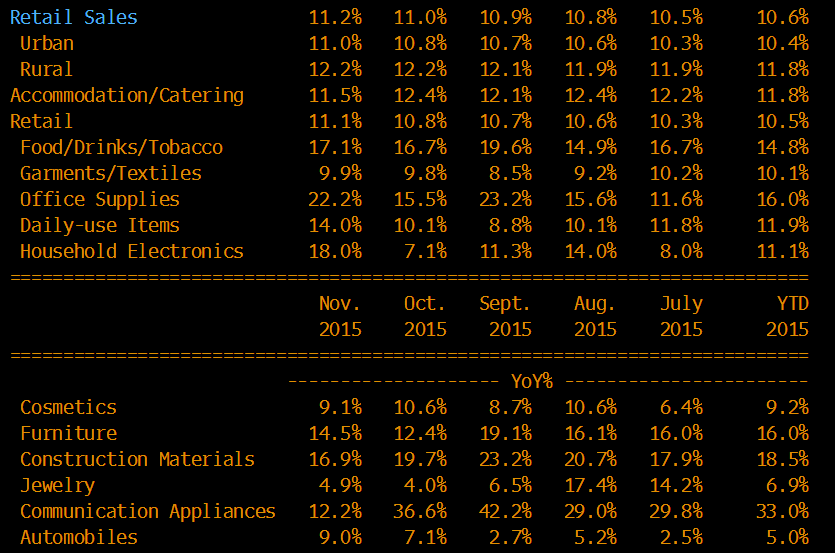
    Retail sales rise 11.2% y/y in November vs 11.1% expected

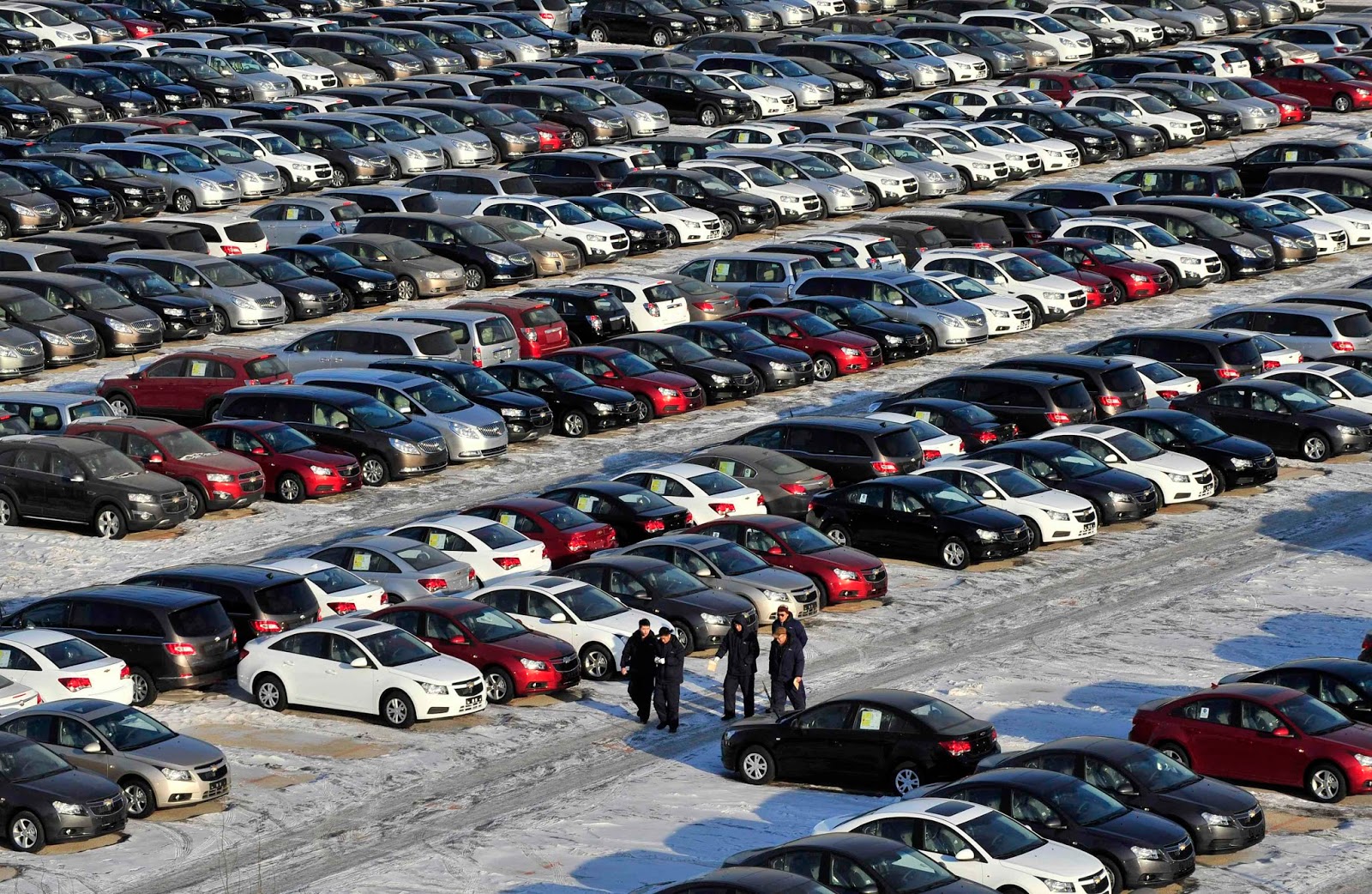
    Chinese retail sales were slightly stronger than estimates as auto sales picked up. Vehicle sales climbed 9% y/y in November compared to 7.1% in October.

    A strong automotive sector also boosted industrial production.

    The strength in auto sales and manufacturing was likely due to a sales cut tax in September for small and medium-sized cars.

  • Moiselle flies in customers as sales slide

    Moiselle flies in customers as sales slide

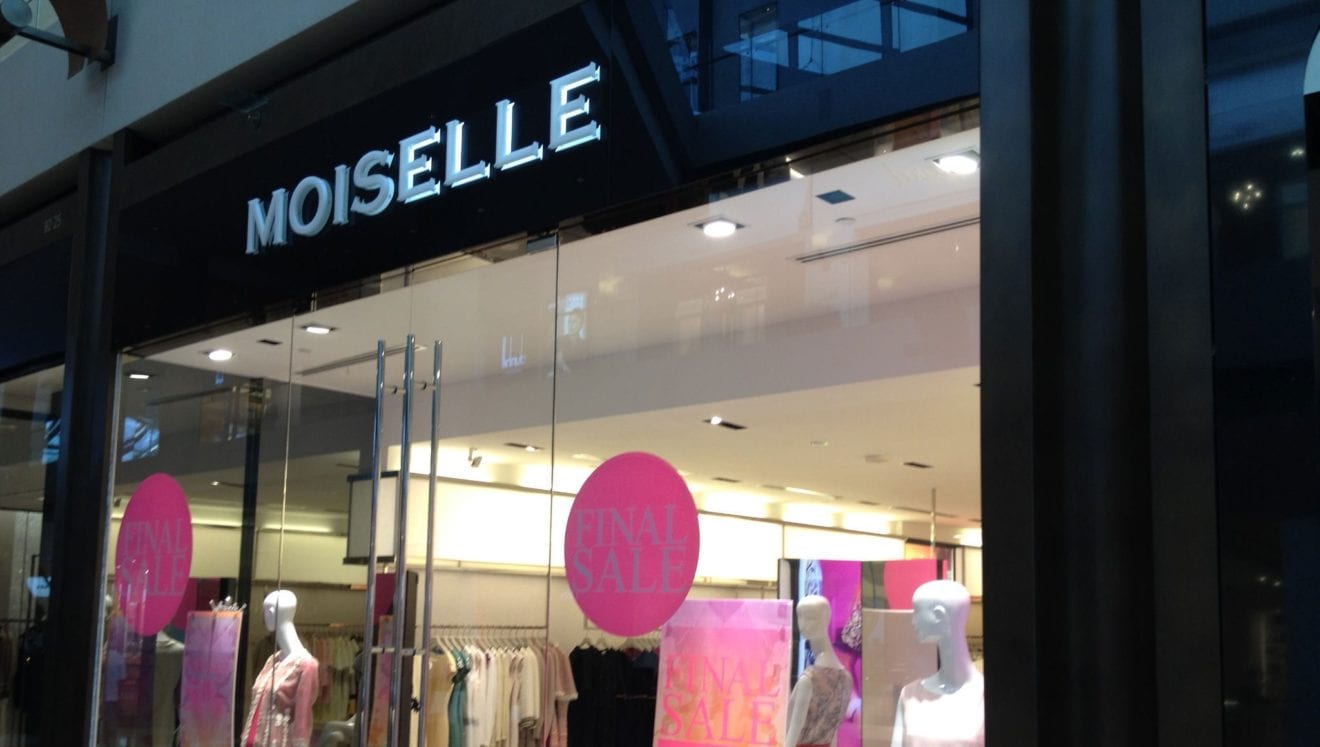
    Hong Kong luxury fashion retailer Moiselle has revealed a raft of innovative strategies to restore flagging sales.

    Hit by a $31.9 million loss for the first half of the trading year due to declining spending by Mainland Chinese tourists, Moiselle is introducing new ranges and even flying in loyal customers for exclusive product displays.

    The company has reigned in its store openings and is putting the squeeze on landlords to reduce rents.

    Last week Moiselle revealed its sales had fallen by 21 per cent to $161.2 million mainly due to weak consumer sentiment and sluggish retail sales in its Hong Kong home market, which accounts for 55 per cent of its turnover. Gross margin fell from 82 per cent in the first half of last year to 76 per cent in the latest period.

    The group operated 92 retail stores and counters in Hong Kong; first- and second-tier cities of China; Macau, Taiwan and Singapore as at September 30 – three fewer than at the end of March. It closed five stores in hong Kong during the six month trading period.

    Moiselle – which sells under the Moiselle, Mademoiselle, Coccinelle and French-influenced Germain brands – has shifted focus to a more tailor-made sales model in Hong Kong, targeting members of its VIP customer club, and has formed partnerships with several Mainland Chinese online shopping websites.

    The organised shopping visits by customers from Mainland China, Taiwan and Singapore to its product showrooms in Hong Kong target its most loyal customers with high spending power. The tours began in May and started generating income in July.

    Meanwhile, Moiselle forged ahead with a strategy of diversifying its product offer to target different segments of the high-end and upper middle markets for women’s fashion apparel and accessories. It expanded its Moiselle and Germain ranges into menswear. It launched European accessories labels Sequoia and Coccinelle into the apparel market through exclusive distribution agreements to add impetus to its business development.

    In its stock exchange filing, Moiselle said it did not expect Hong Kong’s retail market to turn around “any time soon”.

    “China’s economy has shifted to a lower gear and the growing trend towards a higher proportion of the Mainland Chinese visitors with weaker spending power in Hong Kong seems irreversible. Moreover, the Hong Kong dollar, which is pegged to the greenback, is poised to enter a phase of appreciation against many other currencies as the US Federal Reserve Bureau looks set to raise the benchmark interest rate in the foreseeable future. These developments are likely to weigh on both the shopping tourism and average purchase value in Hong Kong, where the group derives most of its revenue.”

  • Modern Beauty Salon Holdings posts profit plunge

    Modern Beauty Salon Holdings posts profit plunge

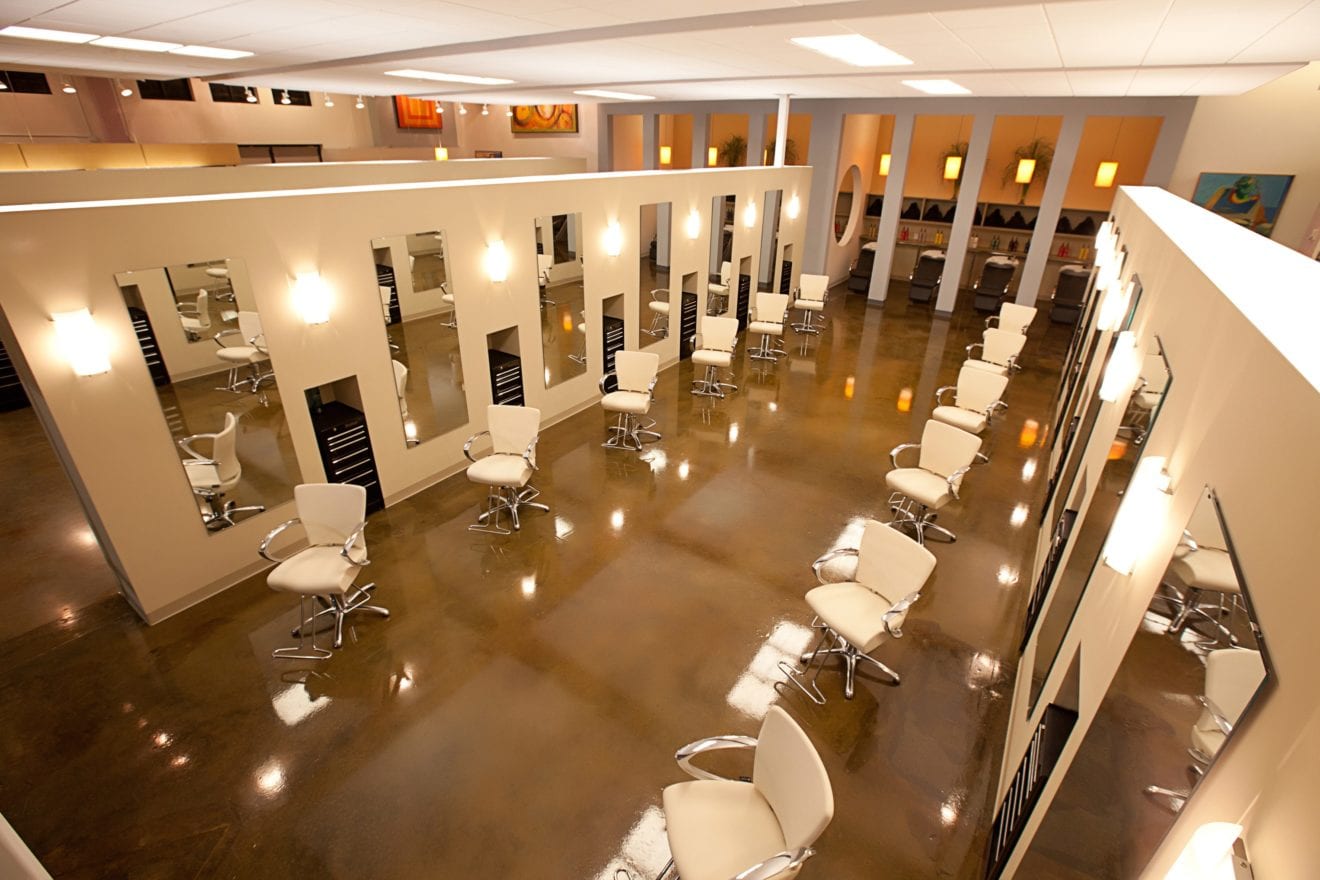
    Modern Beauty Salon Holdings has reported an 87.4 per cent plunge in first half profits as consumers restrain their discretionary spending.

    Modern Beauty runs 42 service centres in Mainland China, Hong Kong and Taiwan, 16 in Singapore and three in Malaysia. The company’s 17 retail stores trade under the banners Pen and Be Beauty Shop across Hong Kong, Kowloon and the New Territories.

    Modern Beauty Salon

    Group revenue across the markets fell 12.2 per cent to HK$402.7 million year on year, while gross receipts from the sale of prepaid beauty packages decreased from $387.5 million to $350.4 million. That produced a profit attributable to shareholders of just $5.7 million, compared with $45.5 million for the same period last year.

    The company said a volatile financial market and weakened Hong Kong economy made people more conservative on their spending.

    “Our beauty, slimming and wellness service business in Hong Kong was inevitably affected. Nevertheless, leveraging on our excellent service management that facilitate greater quality assurance, our management is confident of the further prospects of our business.”

    The company says despite the retarded economic growth in Mainland China, it still believes the beauty, slimming and wellness market there will continue to prosper with a growing demand because “as a larger portion of the population moves up to the bourgeoisie”.

    “Our brand name has secured a presence in the Mainland China with a solid foundation that we have established for years in Beijing, Shanghai and Guangzhou. Plans to open more stores in the Mainland China are afoot.”

    In Singapore and Malaysia, receipts from sales of prepaid beauty packages amounted to $37,768,000, while revenue from services rendered amounted to $55,673,000, down 35 per cent and 36.6 per cent respectively.

    “The drops are mainly due to the new government policies in Singapore and Malaysia. For Singapore, from June 2015, if a local person’s aggregate interest-bearing outstanding balance on all credit cards and unsecured credit facilities exceeds 24 times his monthly income for three consecutive months, his credit lines will be suspended. This means that he will not be allowed to charge new amounts to his existing credit cards and/or unsecured credit facilities. For Malaysia, from April 2015, a GST of six per cent was imposed on local services providers, including beauty services. These policies have hurt the local consumption sentiments significantly.

    “The group will continue to carry out its local business development prudently and we believe that the local people will accustom to the new policies and the consumption sentiments will recover as time goes by.”

    Modern Beauty says it plans to launch an eCommerce website during the next six months.

  • Geox plans 350 China stores with Hong Kong partner

    Geox plans 350 China stores with Hong Kong partner

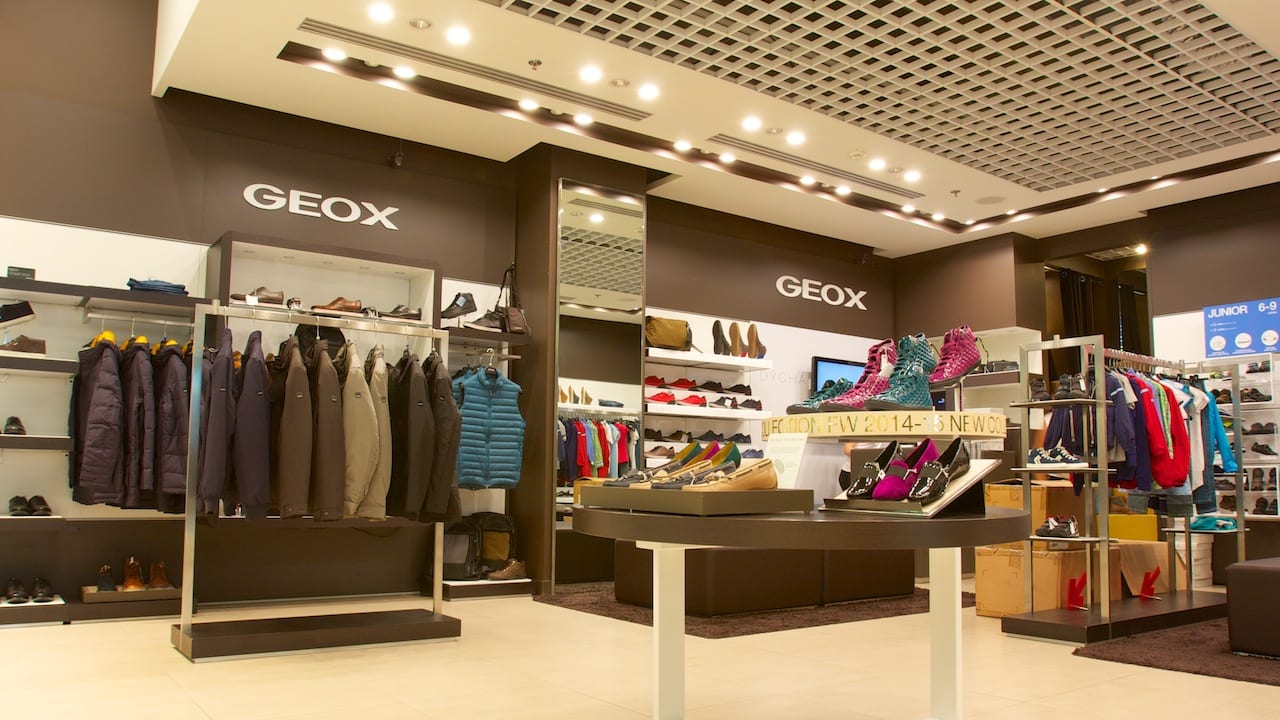
    Italian shoemaker Geox has signed a distribution agreement with Hong Kong listed Pou Sheng International to set up 350 stores in Mainland China by 2020.

    The two companies will target China’s rising middle class – 109 million newly affluent, quality-conscious and brand-happy Chinese consumers.

    Geox is one of the leading brands worldwide in the lifestyle footwear market, listed on the  Milan stock exchange and Pou Sheng is one of the leading retailers in China in the lifestyle and sportswear market, retailing brands such as Converse, Rockport and Keds with 4586 retail outlets and another 2691 sub-distributors across China.

    The Geox agreement includes the exclusive distribution of Geox adult collections in China and the opening of 350 new stores in the first five years – including mono brand stores and  shops-in-shops in high end footwear specialist retailers, shopping malls and department stores.

    Mario Moretti Polegato, chairman and founder of Geox, said the strategic agreement is aimed at “developing properly our brand distribution in China where, in our directly operated stores in Shanghai and Beijing, Geox has already demonstrated to have strong potential”.

    “I believe the partnership with Pou Sheng is extremely relevant as it merges the Geox mission of improving everyday life of our endorsers, through our breathable innovations, with a partner whose enlightened mission is providing services and products that promote high quality of living and healthy lives and whose goal is to be the customer’s number one choice and the brand’s best partner in China through the strongest and most innovative multichannel retail network”.

    Geox CEO Giorgio Presca describes China’s emerging middle class as “definitely the best thing” that could have happened to his company.

    “On one hand, the rise of the middle class will boost the economy. On the other, it is the perfect thing for brands like us.”

    Geox is already expecting same-store sales growth in China of 17 per cent or more this year – its highest growth rate globally. But China still comprises just two per cent of its total sales.

  • AccorHotels announces strategic partnership with Luneng Group

    AccorHotels announces strategic partnership with Luneng Group

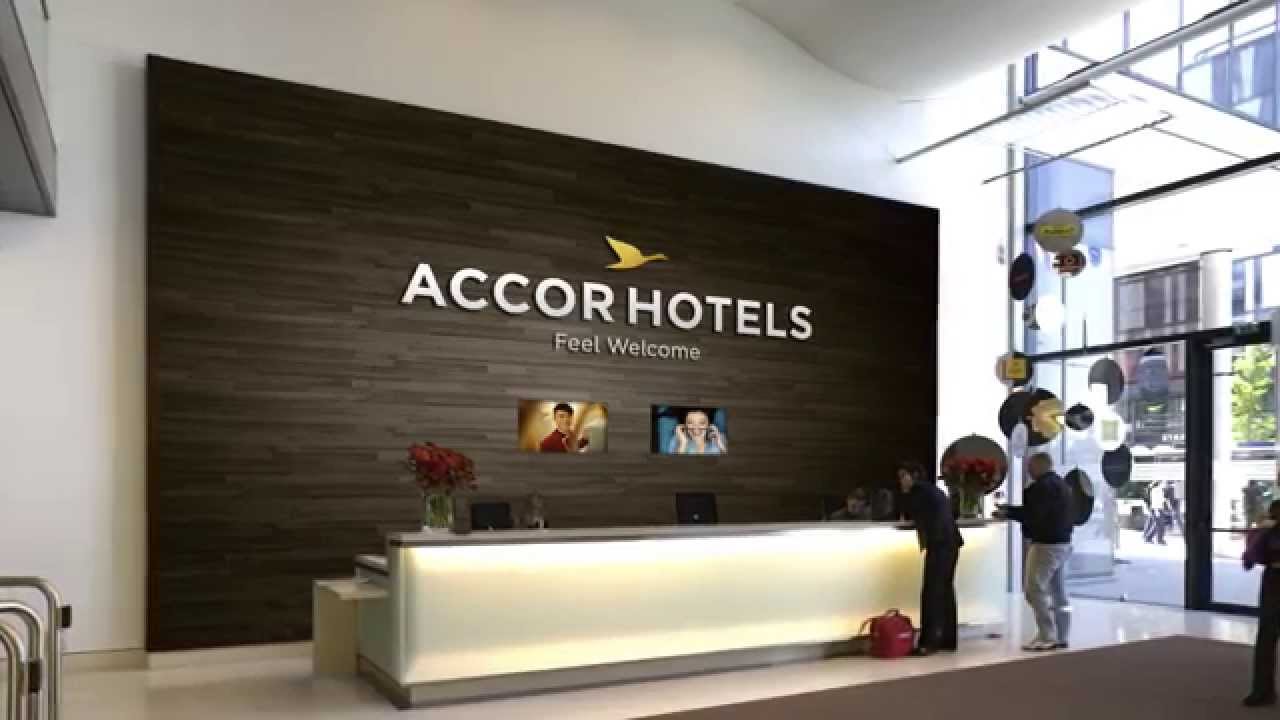
    AccorHotels, a leading international hotel operator, is further strengthening its presence in northern China with the announcement of the signing of three hotels in Beijing with Luneng Group.

    The three projects, two of them new build hotels, are expected to add a total of 525 rooms to AccorHotels’ network in Greater China when they open in 2017 and 2018.

    The three hotels include the 300-room Pullman Beijing Luneng, a 150-room MGallery Beijing Luneng both of which are set to open in Q4 of 2018 and the 75-room Mercure Beijing Luneng, a renovated project slated to open in Q4 of 2017.

    “We are very excited to collaborate with Luneng Group, one of the leading real estate developers in China, for a batch of three projects in the metropolitan city of Beijing,” said Paul Richardson, Chief Operating Officer, AccorHotels Greater China. “This unprecedented, strategic partnership in the city involves three distinctive brands that will enable us to better cater to our guests’ needs while further strengthens our presence in the luxury and upscale segment which continues to be one of the key growth engines for AccorHotels’ expansion in China.”

    Mr Zhou Tao, General Manager of Luneng Group Hotel Management Company (middle left) and Mr. Wayne Li, Vice President Development & Executive Director of AccorHotels Greater China(middle right)signed on service contract.

    Located in northeast Beijing’s cosmopolitan Shunyi district, Pullman Beijing Luneng forms part of a mixed-use project that blends a combination of residential, retail and office development. The newest member to join the upscale Pullman family, the hotel is a short walking distance to the Golf Country Club and Olympic Water Park and is just five minutes’ drive away from the Qiaobo Ski Stadium, making it a perfect option for leisure travelers.

    MGallery Beijing Luneng, meanwhile, is located in the exclusive district of Grasse Town, an upscale villa development in Tongzhou. Nestled in high-end villas and an old canal with several golf and saddle clubs in close proximity, the hotel is a 15 minute drive to the Beijing International Airport, Tongzhou New Town, Beijing New National Exhibition Center and the Oriental Universal Studio.

    Also located in Shunyi district is the Mercure Beijing Luneng, a stunning renovation project adjoining to a shopping mall and the International School of Beijing. The hotel features two restaurants, a lobby lounge as well as several meetings and events spaces for corporate functions and meetings.

    The addition of these three hotels highlights AccorHotels’ solid growth pace in Beijing where its portfolio currently stands at 14 hotels across 6 brands. Notably, the signing of Pullman Beijing Luneng and MGallery Beijing Luneng, in particular, serves as the latest testament to the company’s commitment to bringing the most authentic and highest-standard French hospitality to travelers visiting the China capital.

    A wholly-owned subsidiary of the State Grid Corp of China, Luneng Group is among the country’s Top 100 real estate companies tapping both residential and commercial property development.