Tag: China

  • New Valentino Shanghai IFC mall

    New Valentino Shanghai IFC mall

    Luxury fashion brand Valentino has opened a new boutique in Shanghai.

    The new Valentino Shanghai IFC Mall boutique features 490 sqm of retail space.

    Valentino Shanghai IFC mall 5


    It was developed by creative directors, Maria Grazia Chiuri and Pierpaolo Piccioli, together with British architect Sir David Chipperfield.

    Valentino Shanghai IFC mall 3


    Valentino says the store “perfectly represents the core values of the Maison: luxury, elegance and Italian craftsmanship.”

    Valentino Shanghai IFC mall 2

    The store concept combines old and new, heritage and style co-exist in the idea of a new future that is not nostalgic, but full of memories.

    Valentino Shanghai IFC mall 4

    The Shanghai IFC mall store carries womenswear, menswear and accessories.

    Valentino Shanghai IFC mall 1

    IFC Mall in the Pudong financial district is one of the premium retail destinations in the city.

  • Sa Sa plans new store concepts

    Sa Sa plans new store concepts

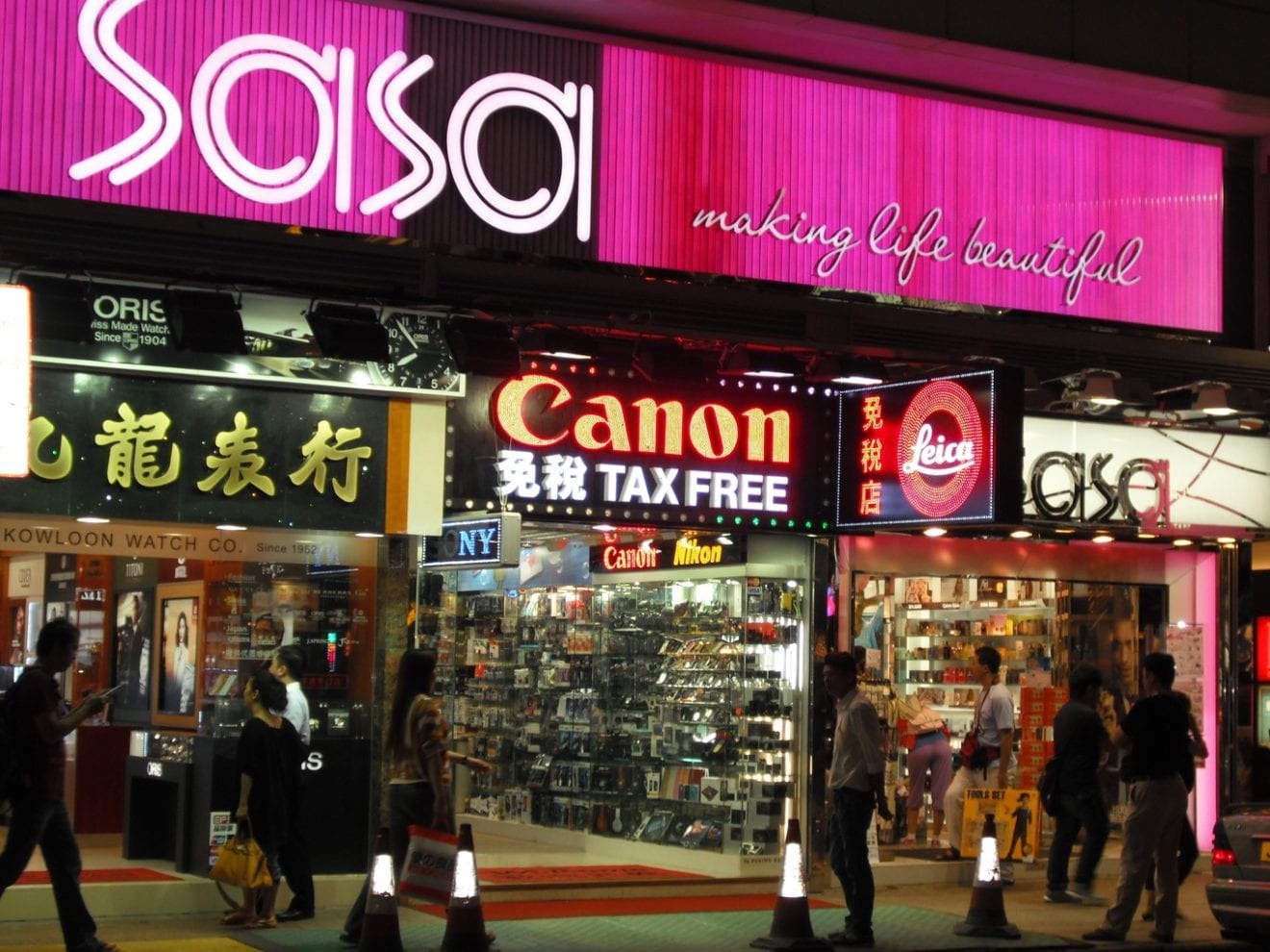
    Hit by falling sales in the tourist downturn, Hong Kong beauty retailer Sa Sa plans new store concepts and diversification to restore growth.

    Reporting a 10.6 per cent decline in sales to HK$3.778 billion in the first half of the current year, and a 55 per cent plunge in profit to $153 million, Sa Sa revealed a strategy to “develop other businesses beyond traditional operations”, including tapping the opportunities of O2O and cross-border eCommerce.

    “The group’s O2O initiatives will initially launch in Hong Kong and gradually extend to mainland China. For the China market, the O2O initiatives will significantly broaden product offerings in its physical stores through online sales and cross border fulfillment. The group aims to use different channels and to leverage a variety of online partners to increase online exposure, including operating physical stores to promote O2O in Free Trade Zones, and cooperating closely with major China online operators, all with their unique positioning and correspondingly different opportunities,” the company said in its interim report.

    New store concepts are also on the drawing board.

    “The group’s strategy for new store concepts includes introducing more trendy and lifestyle concepts to attract young and trend-setting customers, much improved product display, and more emphasis on enhancing the shopping experience.”

    Sa sa says it also aims to place more emphasis on the unique shopping experience with Sa Sa through improved product displays, while changing the mindset of its beauty consultants to one that is more receptive to consumer preferences.

    “In addition, the group will substantially strengthen its online marketing efforts, including the use of social media channels to improve interactivity.”

    Hong Kong & Macau

    Sa Sa says its first half year was marked by pressure from a series of negative factors in the retail market of Hong Kong during the first half of the year. Retail sales in Hong Kong and Macau decreased by 11.1 per cent to $3.010 billion.

    “The cosmetics market in Hong Kong continues to face strong headwinds due to the slowing of mainland China tourist arrivals, their reduced spending, and weak local consumption sentiment. The one-visit-one-week policy for mainland visitors is gradually taking its toll on the market, while the strength of the Hong Kong dollar and depreciating yuan will continue to make shopping overseas more attractive for both mainland China and local consumers. Intensifying competition within the cosmetic industry is a further challenge, with ongoing discount and promotion programmes having an ongoing impact on profitability,” the company reported.

    “Although rental pressure is expected to moderate in a slowing market, rental reductions still lag behind weak sales performance. In the face of these challenges, The group rationalised its retail network from 287 to 281, a net decrease of three stores each for both “Sasa” stores and single-brand counters.”

    Mainland China

    In Mainland China, the stores’ profitability continued to improve, but weak operational and product management led to a decline in turnover, as well as an increase in the inventory provision. Overall turnover for Mainland China operations decreased to HK$148.9 million, a decrease of 8.7 per cent in local currency terms, while same store sales growth in local currency decreased by 9.8 per cent for the period. Loss for the period amounted to HK$24.5 million. The group has recognised the need for more management resources to improved management, and is currently using external management resources on a contract basis to allow for more time to develop its own management structure and training. The group is also seconding experienced staff from Hong Kong to improve attractiveness of product offerings and inventory management.

    Taiwan

    Turnover in the group’s Taiwan business decreased to HK$130.2 million during the period, representing a drop of 2.2 per cent in local currency terms. Same store sales fell 8.7 per cent in local currency. The number of mainland China consumers in Taiwan is expected to increase in view of the country’s enhanced infrastructure and retail space, and the introduction of unlimited visa quotas for high-end Mainland Chinese tourists who have greater spending capacity. The group has already opened stores in tourist locations to tap the potential of increasing in mainland Chinese tourist arrivals.

    Singapore & Malaysia

    Flat sales across the Sa Sa Singapore network has prompted a rethink of the brand’s local network.

    In the first half year, Sa Sa reported turnover of HK$112.8 million (S$20.445 million) in Singapore, remaining flat in local currency terms over the same period last year.

    “The group will continue to build scalability and profit potential by closing inefficient stores and opening stores in new malls with good potential,” the company said in its interim trading statement.

    Meanwhile, turnover for Sa Sa Malaysia was HK$141.9 million, an increase of 2.5 per cent in local currency terms over the same period last year. However, same store sales decreased 8.5 per cent in local currency.

    “Sales and profit growth were restrained by the implementation of GST [on April 1], which adversely impacted store productivity during the transitional period. This effect is expected to be normalised in the second half.”

    Chairman’s view

    Chairman and CEO Dr Simon Kwok put on a brave face on the results:

    “Sa Sa has a long track record of delivering outstanding success in all economic climates and in the face of the most severe headwinds and difficulties. We firmly believe that in spite of the current difficult business environment we are now facing, we can still turn challenges into opportunities and further consolidate our competitive advantages. The flexibility of our business model, with an ability to rapidly adapt to new circumstances, markets and trends, will continue to support our position as a leading provider of beauty products in the Asia Pacific. We also believe that the resilience and adaptability of our loyal staff and the forward vision of our outstanding management team will ensure that we deliver sustained, satisfying growth for many years to come.”

  • Philippines Welcomes Chinese Smartphone Huawei Expansion

    Philippines Welcomes Chinese Smartphone Huawei Expansion

    Chinese telecommunications equipment maker is extending its reach to Southeast Asia’s retails sector.

    Huawei has launched its first experience store at the SM Mall in Manila. This new experience store represents another major step of the overseas market expansion of Huawei and the company continues to develop and grow its brand influence.

    With an area of 110 square meters, the Huawei experience store adopts a full-white minimalist design representing the “Huawei and I” idea, which aims to establish a better interaction between Huawei and its end users. In this store, users can experience Huawei’s Android watch and Google’s Nexus 6P smartphone made by Huawei.

    Charles Wu, head of the Philippines region of Huawei, said at the store opening ceremony that they launched new technologies to help users improve their quality of life. Their existing devices are widely used by users every day. Huawei provides end-to-end solutions and they introduce new products to the market with their technologies.

    Jojo Vega, Huawei’s consumer business manager, said that consumers in the Philippines show great interest in Huawei’s products. The company is now more confident and believes its stronger platform can attract more consumers and promote more interactions.

    Huawei now has 40 branded retail stores and 32 simple sales outlets in the Philippines. The company plans to increase the number of its branded stores to 60 in the country by the end of 2015.

  • AirAsia pushes new regional schedules, secondary hub growth

    AirAsia pushes new regional schedules, secondary hub growth

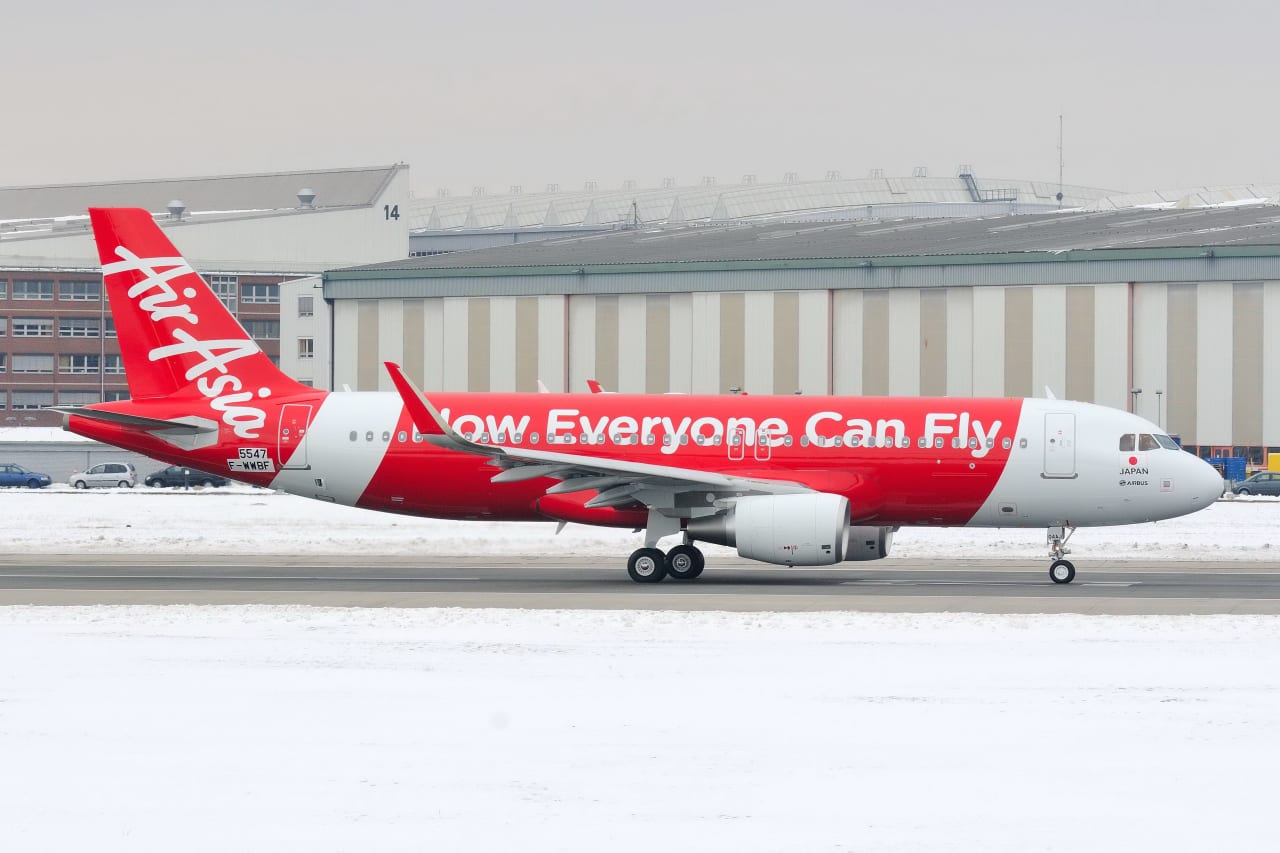
    Malaysia-based low cost carrier AirAsia Berhad plans to launch its latest direct flight between tier-two Chinese city Guangzhou and Langkawi, Malaysia at the end of January 2016.

    The choice of tourist destination Langkawi for the group’s latest international route underlines the company’s strategy to develop services on less heavily serviced routes. The schedule will see 4X-weekly Airbus A320 departures.

    AirAsia CEO Aireen Omar said the airline is focused on expanding its connectivity into China, especially second-tier cities such as the recently launched Changsha-Kuala Lumpur service.

    This secondary city approach is echoed by the AirAsia Group’s introduction of flights from Changsha-Bangkok operated by Thai AirAsia; a Krabi (Malaysia)-Guangzhou (China) service by AirAsia; and a Wuhan (China)-Kota Kinabalu (Malaysia) service, also by AirAsia.

    Additionally, the Thai subsidiary has introduced new international schedules from its newest regional hub at Thailand’s U-Tapao International Airport to Macau, Singapore, and is reportedly looking at new routes to India.

    “We will continue to add more aircraft orders as we go further because we are not only growing in Malaysia, but also in Thailand, Indonesia, the Philippines, India and hopefully in Japan,” Omar said.

    AirAsia is scheduled to take delivery of its first Airbus A320 neo aircraft from the 2016 second half, which Omar said will be used to expand existing regional business as well as act as fleet replacements.

  • A mobile app enables Chinese consumers to buy from overseas retail websites

    A mobile app enables Chinese consumers to buy from overseas retail websites

    15 million consumers have posted reviews to Red, which has sold $110 million worth of products in its first six months.

    Nearly 600 million Chinese consumers connect to the Internet via mobile devices, and many of them are part of China’s emerging middle class that craves foreign goods. A startup has sold more than $100 million in six months by letting those consumers shop for imported products via a mobile app.

    The app, called Red, was launched in January 2014, but at that time did not sell any products, only allowing consumers to review foreign products. Since then, some 15 million consumers have written reviews of products from overseas brands, says Charlwin Mao, who created Xingyin Information Technology Co., Ltd., the operator of Red, in Shanghai two years ago.

    Mao, 31, who received his MBA from Stanford University, named the app Red after Stanford’s school colors.

    As Chinese consumers came to learn about foreign products, they wanted to buy them, Mao says. That led him in December 2014 to add e-commerce capabilities to the app, enabling consumers to buy some of the items that others review. In the following six months Chinese consumers bought 700 million yuan ($110 million) worth of goods through the app. Mao says many items sell out in two hours because he offers only items that are hard to find in China.

    “China has a huge demand for imported brands, but many consumers lack information about overseas brands. For example, many oversea products’ descriptions are written in foreign languages and are hard for Chinese people to understand,” Mao says. “My solution was to develop an app that enables China’s younger-generation shoppers to discover the best global products from peer reviews, not from salespeople.”

    Today, he says, about 15 million users write about 1 million posts every month and they lead others to respond, such as by “liking” 20 million posts per month. 82% users are under 30 years old and 90% are female, according to Mao.

    Most of those posting content to Red are Chinese consumers traveling abroad or Chinese living overseas. China’s Minister of Commerce, Gao Hucheng, said in a recent press meeting that more than 100 million Chinese visited other countries in 2014 and they bought more than 1 trillion yuan ($157 billion) worth of products during their trips.

    Red offers about 10,000 products. It owns about 80% of the merchandise it sells, with the rest being sold by outside merchants through the Red app. Popular categories on Red include cosmetics and fashion. There are products on Red from U.S. supplements retailer GNC Holdings Inc., No. 164 in the Internet Retailer 2015Top 500 and fashion boutique Otte as well as from Japanese brands Panasonic, Casio and Kose.

    Red operates a warehouse inside of a cross-border e-commerce free trade zone in the city of Zhengzhou, where imported products can be stored, then pass through an expedited inspection by  Chinese customs after an online shopper places an order. Red’s customers typically receive their orders in two to three days.

    Companies that sell products through online communities like the one Red created are appealing to investors, Zhu Xiaohu, managing director of GSR Ventures, said at a recent cross-border conference in Guangzhou. GSR has invested in Red as well as in LightInTheBox Holding Co. Ltd., a Beijing-based company that sells Chinese products online to consumers outside of China. “E-retailers, like LightInTheBox, need to invest a lot of money on ads to get new users,” Zhu said. “Now many investors like companies selling through an online communities because these companies can generate traffic without pouring money into marketing.”

    Mao says his company has raised tens of millions in funding and is now seeking a Series B infusion of capital.

  • Bauhaus posts loss as margins squeezed

    Bauhaus posts loss as margins squeezed

    Fashion retailer Bauhaus has reported a net loss of HK$26.6 million for the first half year after sales tumbled in key markets.

    In Taiwan, where it has 95 stores and counters, stagnant retail sentiment and weak consumption presented great challenges, with same-store sales tumbling 18 per cent.

    In Mainland China, where the group has self-managed shops in Beijing, Shanghai, Guangzhou, Nanjing and Suzhou and a franchise network focusing on the second-tier cities, turnover dropped by 4.9 per cent to about $58.4 million and same store sales slipped two per cent.

    And in Hong Kong and Macau, same store sales declined by seven per cent in the first half year.The two territories account for about 73 per cent of the locally listed company’s sales through 90 stores, less than half its total network of 228.

    The group’s turnover is mostly from its major in-house labels like Salad, Tough and 80/20, and licensed brands including Superdry.

    Bauhaus opened seven new stores in  in Hong Kong and Macau in the six months to September 30 as it “continued to enrich its shop portfolio to be more attractive, efficient and competitive”.

    “However, retail performance in many sectors across the region deteriorated, possibly due to less spending from both inbound tourists and local citizens as a result of the growth slowdown in Mainland China, strong local currency and volatile finance markets. In addition, the operating costs in the region still remained high in general, particularly rentals, further cutting profit margin of the retailers.”

    Profit before tax in the two territories dropped by 57.2 per cent to about HK$24.1 million (compared with $56.3 million in the same period last year).

    Bauhaus said in its half yearly results filing that gross profit across the whole business decreased by about 11.1 per cent to $353.9 million, with gross margin declining by two percentage points to about 60.5 per cent.

    “Global economic performance was weaker than expected during the six months. The slowdown of growth in Mainland China together with the strengthening US dollar, which in turn resulted in a strong Hong Kong dollar against most Asian currencies, gradually had an obvious negative impact on inbound tourism and local retail consumption,” the company said.

    However, the group says its sales and results are greatly affected by seasonality, with the first half of the year traditionally less important than the second.

  • Korea’s Coffine Gurunaru plans China foray

    Korea’s Coffine Gurunaru plans China foray

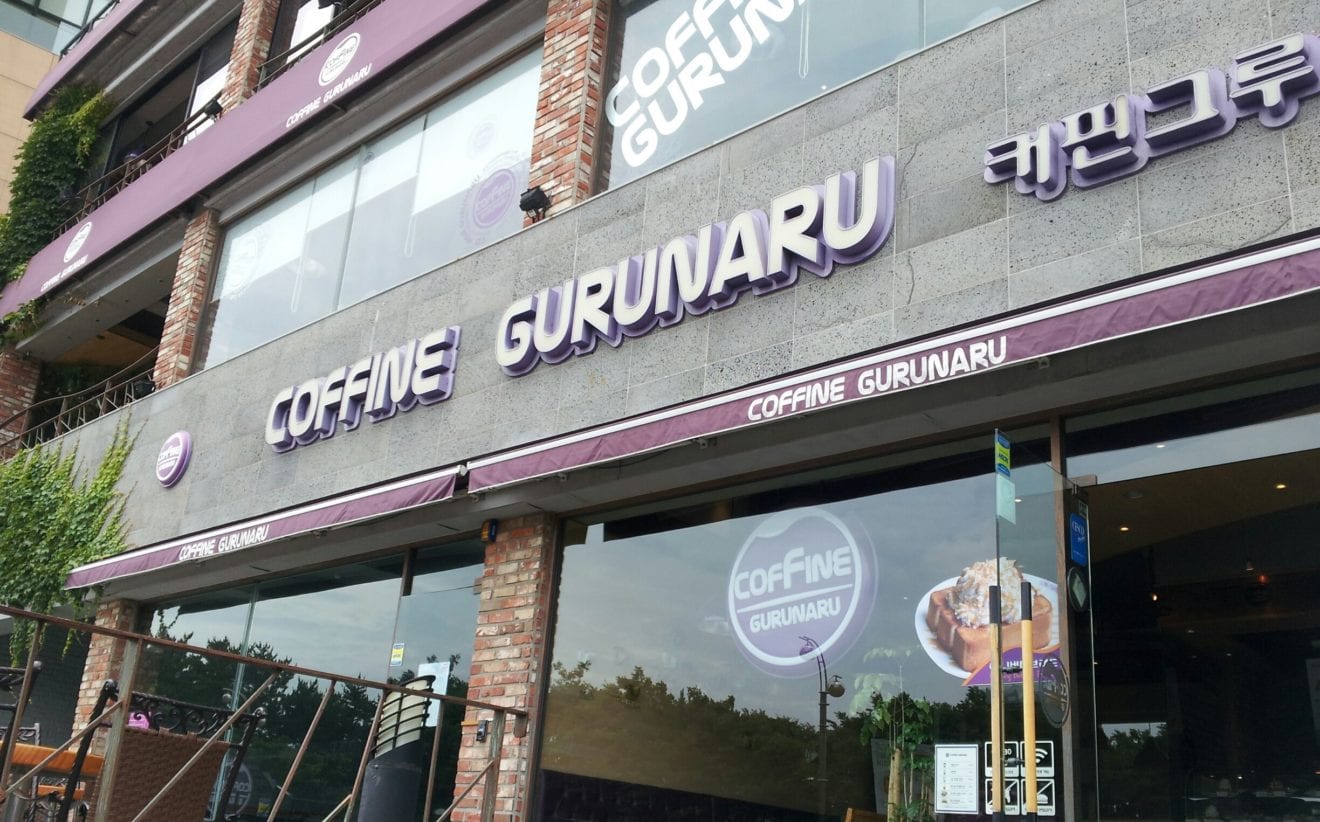
    Korean coffee franchise Coffine Gurunaru is to open one of its largest stores in Hainan, China in the first stage of a planned China rollout.

    The new store is in the middle of Lan Kwal Fong St, the main street of Hainan, and is described as “exceptionally large in size” for a coffee franchise.

    Hainan, sometimes referred to as the ‘Hawaii of the East’, is a major holiday destination for Mainland Chinese.

    Management of Coffine Gurunaru say the extraordinary size of the cafe is relative to the size of the development where it will be located. The world’s largest resort group, Mission Hills, owns resorts, golf courses and shopping malls. It is building the world’s largest K-town in Hainan, where Coffine Gurunaru will open its Chinese flagship.

    The interior will be designed to be “modern and natural”, says a spokesman for the coffee house.

    Korea’s Coffine Gurunaru

    Coffine Gurunaru is a compound name combining coffee and wine. It was the first coffee house in Korea to offer both coffee and wine. Founded in 2007, it has about 120 stores in South Korea, including franchised stores.

    The cafes’ interiors, including the chairs and walls, are decorated in a cheerful purple, intended to refer to the color of wine.

    Besides beverages, the stores serve a range of salads, panini sandwiches, signature cupcakes and honey bread.

    Coffine Gurunaru has not disclosed how many stores it will open in China, but has confirmed it will build a network.

    Korea’s Coffine Gurunaru interior

  • Jumei doubles sales, but still in the red

    Jumei doubles sales, but still in the red

    Jumei International, the Chinese online retailer of beauty products, has reported a sales increases of 99.9 per cent – but it still posted a quarterly operating loss.

    In the quarter to September 30, net revenue reached RMB1.9 billion (US$305.5 million). Total net GMV increased by 35.6 per cent to RMB2.3 billion (US$358.7 million), driven primarily by a 30.8 per cent rise in the number of active customers and a significant 89.5 per cent boost in total orders.

    But gross profit as a percentage of net revenues decreased to 26.2 per cent (from 38 per cent)in the same period of 2014, primarily due to the company’s shift in strategy from beauty product marketplace sales to merchandise sales that started in September 2014, and inventory optimisation activities for Jumei Global.

    The net loss attributable to Jumei’s ordinary shareholders was RMB86.9 million (US$13.7 million), compared with net income attributable to Jumei’s ordinary shareholders of RMB120.0 million in the same period of 2014.

    Leo Chen, founder and CEO of Jumei, appeared upbeat about the results however.

    “Our third quarter net revenue growth continues to be strong… driven by Jumei Global and rapidly shifting consumption patterns in China as consumers upgrade their tastes, preferences and expectations for products. We continue to strengthen our position as a leading import cross-border eCommerce platform in China and are pleased to see both active customers and number of orders grow rapidly while maintaining a high repeat purchase rate,” he said.

    “We continue to add world renowned brands such as Shiseido and KOS to our Jumei Global platform. This is the first time these Japanese beauty groups have directly authorised a cross border eCommerce company in China to carry their merchandise. This means that going forward, new products by both brands will be launched simultaneously in Japan and on Jumei Global in addition to those already on offer in Jumei’s domestic platform. Chinese consumers will now be able to access international beauty trends at the same time they take place in the brand’s home markets.”

    In the fourth quarter of 2015, the company says it expects total net revenues to be between RMB1.83 billion and RMB1.93 billion, representing a year-over-year growth rate of 80 to 90 per cent.

  • Alibaba launches Taiwan, Hong Kong venture funds

    Alibaba launches Taiwan, Hong Kong venture funds

    China’s Alibaba has announced two venture funds to help entrepreneurs with projects who can leverage the resources of Alibaba’s ecosystem.

    A HK$1 billion (US$130 million) venture fund – named Entrepreneurs Fund for Hong Kong – will be managed by venture capital firm Gobi Partners.

    A second – Entrepreneurs Fund for Taiwan – will have initial capital of NT$10 billion (US$316 million) and be managed by CDB Capital, a division of China Development Industrial Bank (CDIB).

    As well as cash, the two new funds will offer 200 internship opportunities annually for graduates and final year students of local tertiary educational institutions. Successful applicants will be able to work for between six and 12 months at Alibaba Group companies in Mainland China.

    Andrew Lee, the former CFO of EnTie Bank will act as executive director of the Taiwan fund, with directors including Charles Yen, co-founder and principal of the AAMA Taipei cradle program and Joseph Tsai, senior EVP of Cathay Financial.

    The fund will be headed by Cindy Chow as executive director. Other directors include Dr Allan Zeman, founder and chairman of the Lan Kwai Fong Group, and Savio Kwan, an independent business consultant who served as president and COO of Alibaba from 2001 to 2003.

    The funds are intended to help entrepreneurs and position Hong Kong and Taiwan as business hubs engaged regionally and globally, with a mandate to invest in qualifying companies in the startup, growth and expansion phases. Selected ventures will be able to leverage the platforms in the Alibaba ecosystem to offer products and services to mainland China and globally, given that Alibaba operates in eCommerce, logistics, mobile platforms, cloud computing and financial services.

    Said Joseph Tsai, executive vice chairman of Alibaba Group: “At Alibaba, our mission is to make it easy to do business anywhere. We are passionate about fostering entrepreneurial spirit and hope the resources provided by the fund will help unleash potential for innovation and entrepreneurship.”

  • China’s Online Retail Giant Dangdang Set to Open 1000 Real-world Bookstores by 2018

    China’s Online Retail Giant Dangdang Set to Open 1000 Real-world Bookstores by 2018

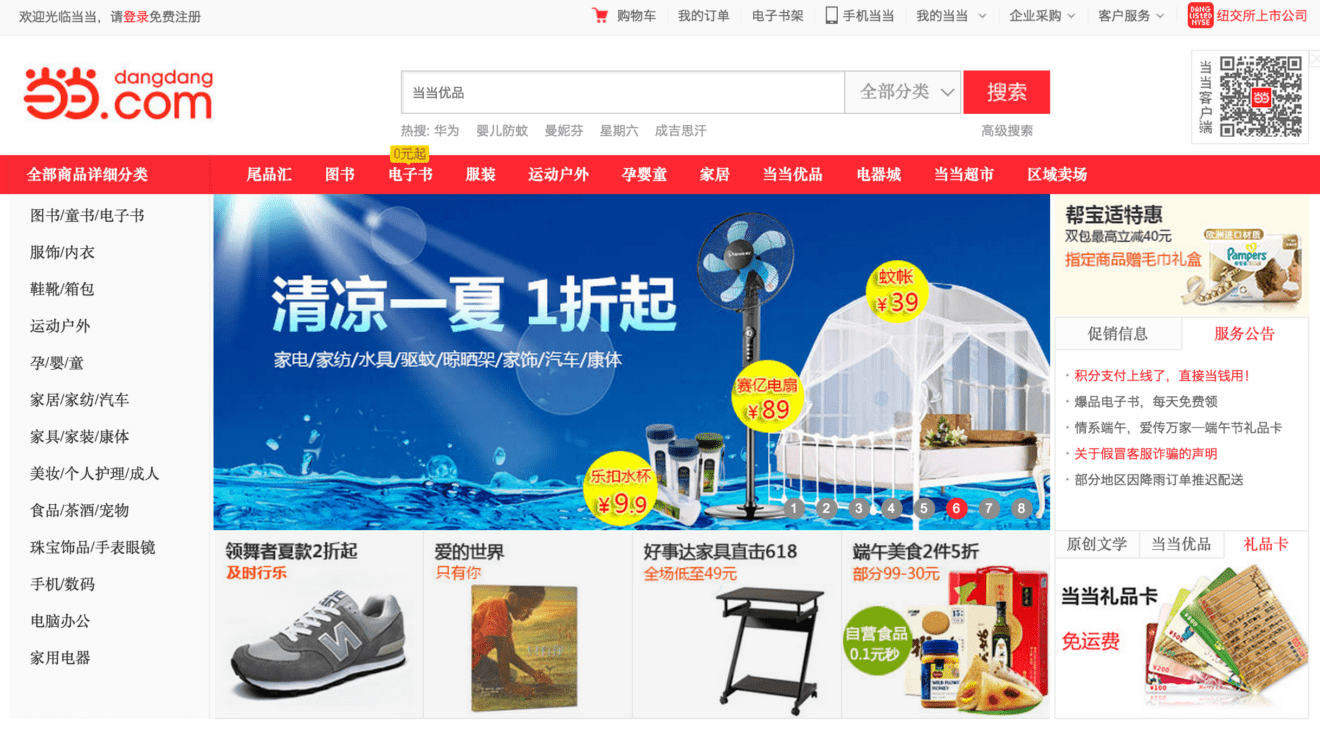
    Dangdang, a Chinese online retail giant, is eyeing to open 1,000 real-world bookstores within three years.

    The ambitious plan is contrary with the recent trend in which everything moves to go online. With the advent of online bookshops, several traditional ones have either cut back their activities or declared bankruptcy.

    Yi Yali, a traditional bookstore owner, shared that “the bookstore business has been in a decline since 2010 due to rising costs. This includes expensive human resources and rents.”

    It was between 1997 and 2010 when “real bookstore business reached its peak with its rapid growth,” Yi said, adding that a number of “featured bookstores have emerged at that time.”

    However, for Ying Changlong, General Manager of Shenzhen Publication and Distribution Group, the conventional bookstore business has not yet entered the so-called “sunset” industries.

    “It is the failure of business strategies rather than the fall of brick-and-mortar bookstore industry itself,” Ying said. “The biggest challenge for traditional bookstore lies in its single form, which makes it hard to build strong ties with customer. As such, bookstore operators need to be more creative.”

    One of the most successful business models is the one utilized by the Taiwan-based Eslite and Beijing-based SDX Joint Publishing Company. The two team up with other retailers like art galleries and coffee shops to create a “one-stop cultural shop.”

    Dangdang.com assistant executive Zhang Wei remarked that the firm wants to follow this scheme.

    “Our bookstores in the first- and second-tier cities will be as large as one to two square kilometers, and they will become a cultural complex with sales of books and other related products with higher profit,” Zhang said. “Meanwhile, we will team up with renowned shopping malls in an attempt to substantially cut bookstores management costs.”

    Simultaneously, the bookstore will also combine its online and offline businesses with its customer services.

    The first offline bookstore, occupying 1,200 square meters, is set to be launched in Changsha City next month.

  • China’s Slowdown Is Killing Its Luxury Market

    China’s Slowdown Is Killing Its Luxury Market

    Many investors are unfamiliar with the Chow Tai Fook Jewellery Group, but it is in fact the world’s largest publicly traded jewelry chain.

    The company reported its first half profit for 2015 plunged 42 percent due to weak demand in Hong Kong and Macau and an economic slowdown, Macau Daily Times noted.

    Chow Tai Fook’s net income fell to HK$1.56 billion ($201 million) for the six-month period ending in September. In the same period a year ago, the company’s net income was HK$2.69 billion. Sales for the six-month period fell 4.1 percent from a year ago to HK$28.1 billion, while same-store sales fell 18 percent in Hong Kong and Macau, but rose 0.1 percent in mainland China.

    The company warned investors back in early November that its profits are expected to decline due to the weakness in Hong Kong and Macau, along with an unfavorable sales mix of lower-margin gold products and unrealized hedging losses.

    Is Tiffany Winning Where Chow Tai Fook Is Failing?

    Tiffany & Co. reported its third quarter results on Tuesday. Commenting on the Asia-Pacific region, the company said that total sales rose 6 percent in the third quarter and comparable store sales rose 2 percent. Total sales and comparable store sales in the year-to-date period rose 6 percent and 4 percent, respectively.

    On a constant-exchange-rate basis, Tiffany said that it saw “healthy sales growth” in China, but sales declined again in Hong Kong and Macau.

    Tiffany also announced a total sales and comparable store sales growth in Japan of (FX-neutral) of 34 percent and 24 percent, respectively. According to a report by Bloomberg, Tiffany is “eating Chow Tai Fook’s breakfast” as Chinese tourists accounted for a “significant” portion of the growth Tiffany experienced in Japan.

    Bloomberg also noted that Chinese goods don’t have a “particularly good” reputation among Chinese shoppers, which might also explain why Tiffany is seeing success in a region where Chow Tai Fook “should be cleaning up.”

  • Vertu eyes China

    Vertu eyes China

    Luxury phone brand Vertu says its new Hong Kong investor will allow the brand to embark on its next growth phase – into Mainland China.

    Vertu will continue to operate its global business from its UK Headquarters with new partner, Godin Holdings, a Hong Kong based company backed by a group of international investors. This move will support accelerated growth for Vertu and maximise its ‘Luxury Tech’ market leadership position.

    Since shipping its first phone in 2002, Vertu had sold around 450,000 devices worldwide, with an average selling price of around £5000 per handset last year.

    “Godin brings with it a significant understanding of the world’s fastest developing luxury market, China, as well as an ability to help with the technical development of a future range of industry leading Vertu products,” the company said in a statement.

    Vertu runs 70 of its own boutique retail stores and is sold through 430 partner stores in 66 countries. It is not yet clear if the brand will expand in China through its own store network of partner with an existing retailer.

    The new investment has led to a management shakeup with CEO Massimiliano Pogliani stepping down after three years

    As part of the new investment, a number of changes have taken place within Vertu’s management, replaced by Billy Crotty. Justine Rouch, COO and Davide Vassena, VP product and marketing, have both also left the company.

    Crotty says the company has a clear vision for the next phase of its growth.

    “Vertu is regarded as the clear leader in the luxury mobile category; a company with a strong USP, brand equity, product roadmap and established retail network; the ‘Handmade in England’ aspect of Vertu is appreciated globally as a particularly valuable, fundamental brand strength.

    “Godin Holdings’ investment will allow Vertu to maintain its leadership position within the luxury technology industry and to expand its already world class product portfolio.

    “Mainland China is a key market for Vertu, alongside its other pan-Asian and European business. All in all, the Godin team are perfectly placed to offer both investment into the company, as well as mobile technology industry expertise and contacts. Godin believes that significant growth opportunities lie ahead for Vertu, within specific markets as well as through new product developments.”

    A key part of Vertu’s future is the launch of Vertu Club, explains Crotty.

    “Vertu Club will be the umbrella for the evolution of our on-device and off-device services. Our aim is to ramp up the already very close relationship we enjoy with our customers through Concierge, Life and Certainty apps, in order that it can inform, to an ever increasing degree, not only the portfolio of services we offer, but the manner in which we do so, in order that we create a world class personal service, unattainable in any other format than that which can be achieved by being a member of the Vertu Club.”

  • China’s QKL Stores’ sales decline

    China’s QKL Stores’ sales decline

    Nasdaq-listed Chinese supermarket chain QKL Stores says its revenue fell four per cent in the last quarter, its profit by 4.5 per cent.

    “Our third quarter results generally met our levels of expectation,” said Zhuangyi Wang, chairman and CEO.

    “The variety, value and freshness of our products continue to resonate with our customers driving sales higher. This store growth was also driven by in-store promotional events such as store anniversary celebrations.”

    But he said sales and profit were impacted by “a challenging environment” for retail businesses, mainly due to the rising costs and the emerging eCommerce channel.

    “However, we are still confident on the domestic needs because of the urbanisation of the third and fourth tier cities that we will achieve a fundamental improvement in the consumer purchasing power during the process.”

    Third quarter revenue totalled $58.6 million, down from $61.1 million in the same quarter last year. Gross profit was $9.8 million, down from $10.3 million.

    “We look forward to the upcoming holiday season as we have a number of exciting marketing initiatives planned,” said Wang.

    “Our balance sheet is healthy with a strong cash position, low level of debt and stable flow of cash from operations. We continue to make progress with our store operations and that can result in greater sales and profits over time.”

    Based in Daqing, China, QKL Stores is a regional supermarket chain company operating in Northeastern China and Inner Mongolia. It operates 45 supermarkets, hypermarkets and department stores – two less than at the same time last year.

  • Jacob Delafon China opens first store

    Jacob Delafon China opens first store

    Jacob Delafon, a leading French fashion bathroom brand, has launched its brand in China and opened its first store there.

    The new Jacob Delafon China showroom opened on Tuesday, November 17 in Shanghai.

    Bruno Chenesseau, kitchen & bath design director of Jacob Delafon Europe, Middle East and Africa, said given the company is based in Paris, “we were naturally inspired by the city”.

    “By its architecture, its atmosphere, its unique diversity and above all, by the elegant and audacious Parisian style. It is a truly creative playground,” he said.

    The heritage of the Jacob Delafon brand helps the design team to “jump out of the box” and present a more elegant lifestyle.

    “Jacob Delafon speaks the same language with French fashion trend, and is inspired from the elegant and independent Paris ladies,” said Chenesseau.

    “Then, from these observations, Jacob Delafon created three brand “universes” of collections. The Presqu’ile collection is inspired by the flea markets, a perfect mix between bric a brac and eclecticism. The Terrace collection takes place in an industrial loft with refined lines. And the Stillness collection is the modern reinterpretation of an Haussmannian apartment. The brand spreads these different universes throughout our design, which makes Jacob Delafon’s products so unique and recognisable among others.”

  • Perfect Shape plans more China stores

    Perfect Shape plans more China stores

    Listed slimming and beauty services chain Perfect Shape plans more stores as demand soars in Greater China.

    Perfect Shape provides slimming and beauty services and sells slimming and beauty products in Hong Kong, the Mainland and Macau. The company provides medical beauty services under the brand name of Dr Face, including injection treatments such as Botox, Restylane and Sculptra, as well as laser treatments for hair removal, skin rejuvenation and depigmentation. The company operates more than 60 stores or service centers.

    In the six months to September 30, the group recorded revenue of HK$457.1 million, up 41 per cent year on year. Profit attributable to shareholders was $75.1 million, up $4.1 million year on year.

    The company says combined Hong Kong and Macau revenue soared 85.9 per cent, with Macau sales up 134 per cent.

    The company attributes its success to tapping into the high technology beauty segment in Hong Kong soon after listing in 2012, which is now bearing fruit.

    “Moving forward, management remains optimistic about the group’s prospects in the principal markets of Hong Kong and the PRC, despite modest economic growth anticipated on both sides of the border,” the company said in its stock exchange filing.

    “While the group’s development in Hong Kong remains promising, its business prospects in the PRC shows even greater potential. With an increasingly large number of people who are obese, and generally more and more individuals who are overweight, the need for slimming services will continue to rise. And given that there is a growing middle class, particularly women who care about their appearance, the demand for high technology beauty and slimming services will grow further.”

    Perfect Shape plans to replicate its high tech model in the Mainland market, and thereby provide one-stop services to local customers.

    “Part of the group’s development road map will involve further expansion of its store and business network in Greater China in the coming period. In addition, we will invest still more in our workforce, including enhancing the service quality delivered by our frontline staff through ongoing training and information sharing.”