Tag: China

  • Chow Tai Fook Opens Luxury Flagships Across Four Markets in Ten Weeks

    Chow Tai Fook Opens Luxury Flagships Across Four Markets in Ten Weeks

    Chow Tai Fook rolled out a new fleet of luxury-format stores across four international markets within ten weeks, betting on high-end Chinese design to capture affluent consumers. The retail push included a 10,000-square-foot global flagship on Canton Road in Hong Kong’s Tsim Sha Tsui shopping corridor.

    The Canton Road site puts the Chinese jeweller on the same strip as European luxury houses Hermès and Louis Vuitton. That opening followed an aggressive start to the year in Southeast Asia, where the company secured prime retail real estate inside Bangkok’s Siam Paragon shopping mall in January.

    High-Street Real Estate and Prime Malls

    Securing ten thousand square feet on Canton Road represents a major capital commitment in one of Asia’s most expensive retail districts. The scale reflects an explicit repositioning by the group toward higher margin, design-led jewellery lines rather than relying purely on mass-market gold volume sales.

    In Bangkok, the Siam Paragon opening targeted both local Thai wealth and returning Chinese tourists. By late March, the company widened the rollout to additional regional commercial hubs, completing four market debuts in under two and a half months.

    Shifting from Mass Retail to Global Luxury

    Traditional gold jewellery chains across Greater China have long competed on retail footprint density and weight-based pricing. Chow Tai Fook’s shift toward oversized flagships and upscale mall locations mirrors the playbook of European heritage brands, aiming to elevate average transaction values.

    Competing jewellers across Asia face rising raw material costs and cautious consumer spending in mainland department stores. Placing large-format stores in premier tourist precincts allows the brand to test international appetite for contemporary Chinese fine jewellery outside its domestic core.

    RetailNews Asia will track the sales performance across these new flagship sites as the group reports its upcoming quarterly store productivity metrics.

  • ByteDance Secures $29.6 Billion Loan After Strong Bank Demand

    ByteDance Secures $29.6 Billion Loan After Strong Bank Demand

    ByteDance secured a $29.6 billion syndicated loan after lenders offered commitments well above the company’s initial borrowing targets. The Chinese technology group originally sought a $20 billion facility before expanding the final size to meet institutional demand.

    Upsizing the Debt Facility

    Lenders lined up to back the transaction, prompting the owner of TikTok and Douyin to take on nearly $10 billion more than planned. The facility ranks among the largest corporate loans raised by a private technology firm globally.

    Strong participation from regional and global banks enabled the expansion. The company has routinely tapped debt markets to manage working capital, refinance existing obligations, and finance server infrastructure across its consumer platforms.

    Lending Demand Across Asia

    Large-scale technology refinancings in Asia have drawn steady interest from commercial lenders seeking investment-grade corporate credit. For ByteDance, expanding the facility secures balance sheet liquidity without requiring immediate equity dilution or public market listings.

    Syndication records will detail the breakdown of participating institutions and the repayment timeline across the multi-billion-dollar tranches.

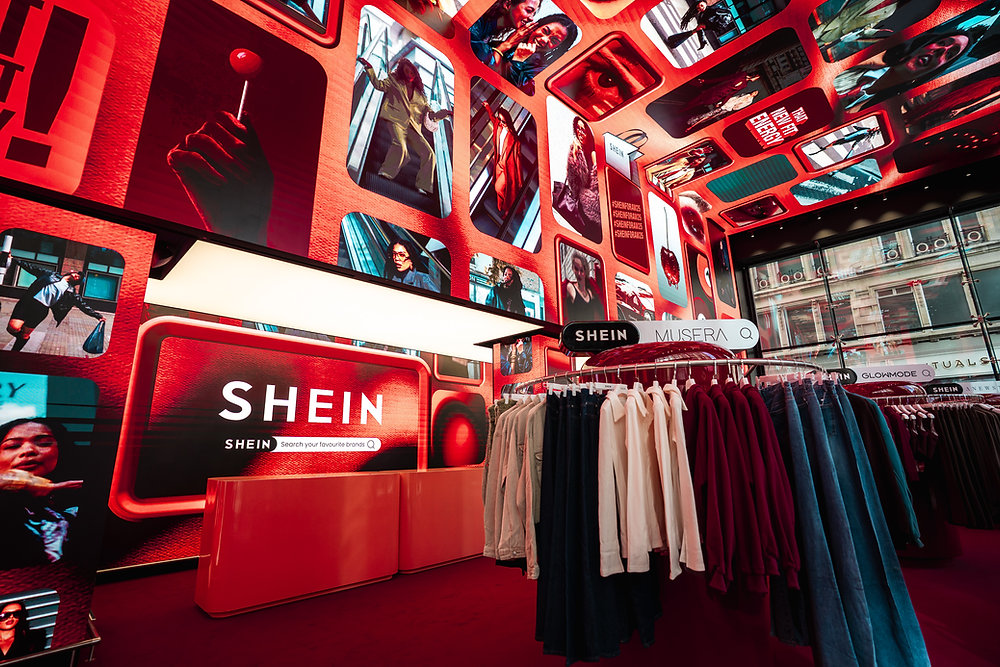
  • Shein Shares Close Flat in Hong Kong After Raising US$1.7 Billion

    Shein Shares Close Flat in Hong Kong After Raising US$1.7 Billion

    Shein shares closed broadly flat on their Hong Kong debut after opening at HK$48.56, raising US$1.7 billion in an offering that valued the retailer at US$26.5 billion.

    The listing price matched the initial offer level after early trading saw the stock drop as much as 10 per cent to HK$43.8. The final valuation sits well below the nearly US$100 billion private valuation the company achieved in 2022.

    Management allocated 40 per cent of the IPO proceeds to technology infrastructure and another 40 per cent to global brand expansion. The remaining funds will cover corporate responsibility programs and general corporate needs. The public debut follows years of regulatory hurdles after Shein abandoned listing attempts in New York and London before securing Chinese regulatory approval in July.

    Tariffs and the End of Tax Exemptions

    The company built its business on exporting small, low-value parcels directly from mainland China to consumers overseas under duty exemptions. More than 90 per cent of Shein’s 2025 revenue came from inventory held in central Chinese warehouses.

    That channel has narrowed quickly. The United States removed its duty exemption on commercial imports valued under US$800, leaving Shein’s China-origin shipments facing import tariffs between 10 and 87.5 per cent. The European Union has also increased charges and tightened controls on low-value e-commerce packages.

    To counter border duties, Shein now imports bulk containers into regional hubs and operates 18 fulfillment warehouses across Europe. Shipping containers once rather than millions of individual parcels daily forces the group to absorb higher local storage and handling costs.

    Slowing Sales and Margin Pressures

    Top-line momentum has dropped sharply over the past three years. Revenue grew 41.1 per cent in 2023, 20.7 per cent in 2024 and 8 per cent in 2025 to US$41.8 billion. First-quarter revenue in 2026 reached US$9.05 billion, up just 1.1 per cent from the prior year.

    Profitability shrank over the same stretch. Net income fell 38.7 per cent in 2025 to US$2.06 billion. The company posted a net loss of US$99 million in the first quarter of 2026, compared with a US$395 million profit a year earlier, weighed down by a US$328 million fair-value charge on convertible preferred shares.

    RetailNews Asia views the shift toward onshore inventory as a fundamental change in Shein’s cost profile. Moving inventory closer to Western consumers erodes the asset-light advantage that allowed Chinese cross-border platforms to outprice established domestic department stores and apparel chains.

    To broaden its customer reach, Shein acquired US apparel brand Everlane for roughly US$100 million, alongside earlier deals for Missguided and an equity stake in Forever 21. Investors will track whether second-quarter operating margins recover as these acquired brands integrate with its third-party marketplace platform.

  • Tencent-Backed Enflame Draws 4,073 Times Retail Demand in Shanghai IPO

    Tencent-Backed Enflame Draws 4,073 Times Retail Demand in Shanghai IPO

    Shanghai Enflame Technology drew 4,073 times retail subscription for its public offering on Shanghai’s STAR Market, raising 6.12 billion yuan ($860 million) to expand production of domestic artificial intelligence chips.

    Individual buyers lodged seven million orders totaling 5.98 trillion yuan, taking up the retail tranche of an issue priced at 142.18 yuan per share. The sale of 43 million shares represents 10 percent of the company’s enlarged equity base.

    Anchor Customer And Rising Shipments

    Founded in 2018, Enflame develops AI accelerator hardware designed for cloud infrastructure and large data centers. Tencent Holdings owns 20 percent of the business and generated 84 percent of Enflame’s total revenue in 2025, up from roughly 38 percent a year earlier.

    The company builds processor cards deployed in chatbots, recommendation systems and generative computing workloads. SWS Research estimates Nvidia commanded 55 percent of China’s AI accelerator market in 2025, while Enflame captured 1.7 percent of local shipments.

    The Final Dragon Reaches Public Capital

    Enflame is the last of China’s four emerging AI chip startups, known locally as the four little dragons, to complete a public listing. Peers Moore Threads, Biren Technology and MetaX Integrated Circuits reached the market earlier, with Moore Threads gaining 425 percent on its trading debut last December.

    While local computing platforms continue to substitute imported silicon, profitability remains unproven across the cohort. Enflame cut its net loss to 1.2 billion yuan in 2025 from 1.5 billion yuan in 2024. For the first half, the company projects a loss of 600 million yuan against anticipated revenue between 10.6 billion and 11.5 billion yuan.

  • BYD Launches Flagship Sealion 08 SUV in China from $33,890

    BYD Launches Flagship Sealion 08 SUV in China from $33,890

    BYD launched its flagship Sealion 08 SUV in China on Wednesday, priced between 229,900 yuan ($33,890) and 279,900 yuan across eight variants. The mid-to-large model offers battery electric and plug-in hybrid options with five- and six-seat configurations.

    Plug-in hybrid editions run from 229,900 yuan to 269,900 yuan, pairing a 55.843-kilowatt-hour battery with a fuel tank for up to 1,650 kilometers of combined range. Rear-wheel-drive hybrid versions deliver 400 kilometers of battery-only range under CLTC testing, while all-wheel-drive models offer 350 kilometers. Fuel consumption on a depleted battery sits at 4.6 liters per 100 kilometers under NEDC benchmarks.

    Fast charging and hardware specs

    Pure electric versions cost from 239,900 yuan to 279,900 yuan and use a 115.072-kilowatt-hour battery pack. The rear-wheel-drive electric variant delivers up to 900 kilometers of CLTC range with a 370-kilowatt motor, while the twin-motor all-wheel-drive edition offers 800 kilometers. Both powertrains incorporate BYD’s second-generation Blade Battery and flash-charging hardware that lifts battery charge from 10 percent to 70 percent in five minutes.

    Measuring 5,115 millimeters in length with a 3,030-millimeter wheelbase, the SUV includes active rear-wheel steering that tightens its turning radius to 4.95 meters. Dual-chamber air suspension and BYD’s DiSus-A body control system come standard, alongside God’s Eye 5.0 driver-assistance software for urban navigation.

    Defending volume in premium family segments

    The vehicle arrives as domestic competitors crowd China’s family SUV segment, directly targeting rivals such as Xpeng’s G9L and Great Wall Motor’s Wey V8X. BYD is using the Ocean lineup to push its namesake badge into higher price bands, bridging the gap between mass-market commuter cars and dedicated luxury nameplates like Denza.

    Sales momentum for the Sealion badge showed signs of plateauing before this release, with August deliveries dipping 8.86 percent year-on-year to 48,559 units. The series delivered 275,974 vehicles in the first eight months of the year, representing just over 10 percent of the carmaker’s total group volume. Dealerships will watch whether the 08 variant can reverse that monthly slip as deliveries ramp up through the final quarter.

  • TikTok Shop Doubles US Livestream Sales as Live Commerce Chases China Model

    TikTok Shop Doubles US Livestream Sales as Live Commerce Chases China Model

    TikTok Shop doubled its livestream shopping sales in the United States during the first half of 2026, exporting a commercial format pioneered across Asian digital marketplaces. The platform increased its live broadcast sessions by more than 60 per cent over the same period as total broadcast hours climbed 80 per cent.

    The expansion reflects an aggressive push by parent company ByteDance to replicate the live selling ecosystem that dominates Chinese retail. US live shopping sales are forecast to reach nearly $20 billion this year, up 35 per cent from 2025, according to eMarketer estimates. That total remains a fraction of China, where livestream retail sales are projected to top $1.1 trillion in 2026 after Alibaba launched Taobao Live a decade ago.

    Platform fees and broadcaster competition

    Merchant adoption has widened across social channels and dedicated auction platforms. Live selling specialist Whatnot reached a $20 billion valuation after generating $8 billion in global sales in 2025, mostly in the US market. Established television retailer QVC now broadcasts more than 200 hours weekly across seven TikTok channels following its recent corporate restructuring.

    Monetisation rules are tightening as volumes rise. TikTok takes a base commission fee of 6 per cent on merchant sales plus processing fees, while Whatnot charges between 4 per cent and 8 per cent. Sellers also face higher customer acquisition hurdles as algorithmic feeds demand longer daily broadcast schedules to sustain viewer traffic.

    Exporting the Asian super app playbook

    Western platforms are attempting to reconstruct an engagement habit that developed naturally inside Asian super apps such as WeChat and Taobao. While Asian consumers routinely combine entertainment, messaging and direct checkout inside single applications, legacy US retailers like Amazon, Walmart and eBay still operate primarily as utility search engines. Bridging that structural divide requires merchants to convert social viewers into buyers directly on video feeds.

    The test for ByteDance is whether livestream gross merchandise value can sustain its growth rate as US platform fees rise and competition for creator airtime intensifies into the fourth-quarter holiday trading period.

  • K11 Musea First-Half Sales Jump 40 per Cent on Luxury Tenant Overhaul

    K11 Musea First-Half Sales Jump 40 per Cent on Luxury Tenant Overhaul

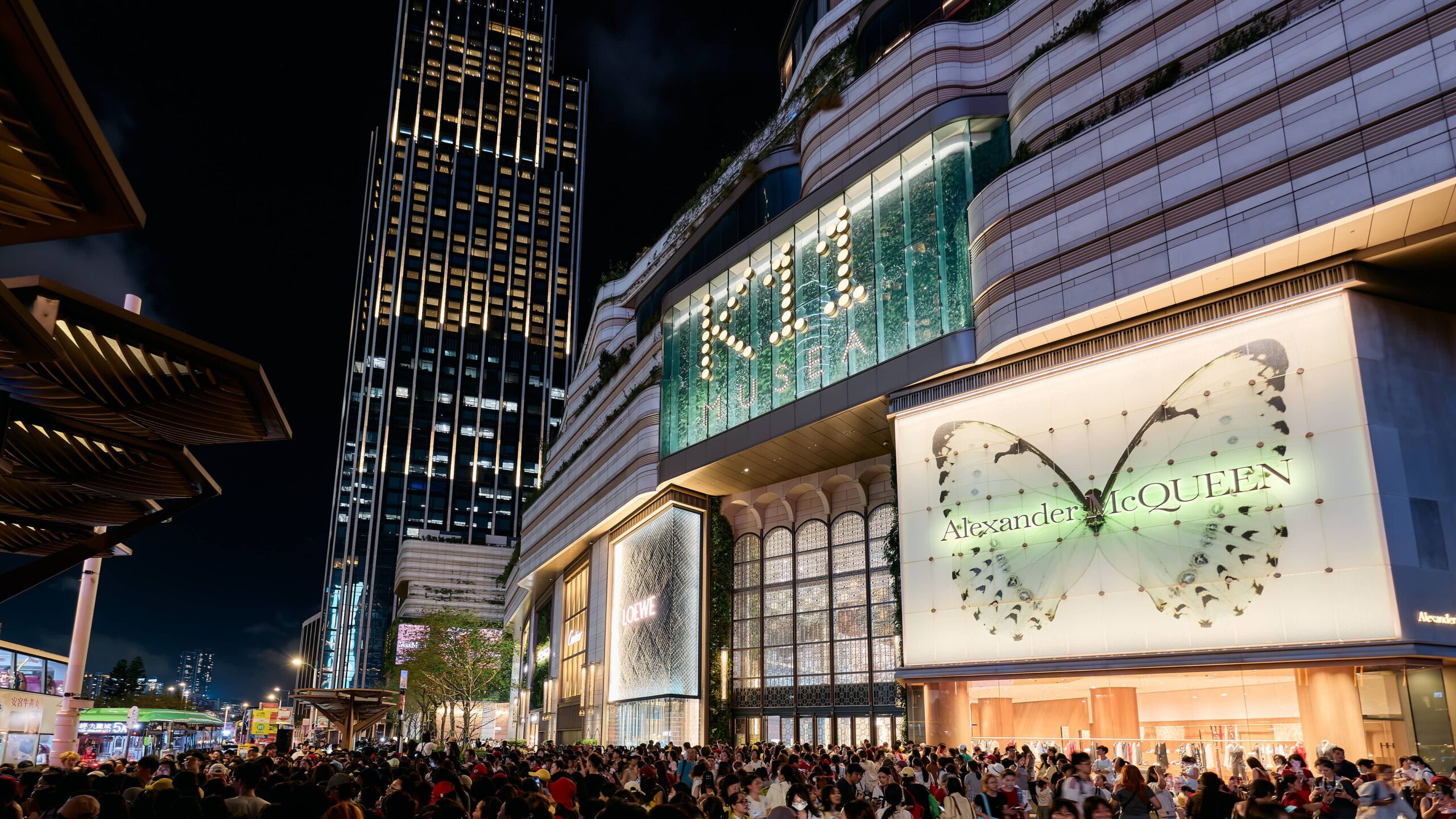
    Hong Kong retail complex K11 Musea increased first-half revenue by 40 per cent year-on-year, posting record sales for the period following a sweeping overhaul of its tenant roster.

    Newly introduced brands at the Tsim Sha Tsui waterfront destination averaged sales gains of more than 30 per cent, parent company New World Development said.

    The landlord initiated the first phase of its brand repositioning in the second half of 2024. That phase will wrap up by the end of this year, clearing space for flagship retail formats designed to generate higher revenue per square foot.

    Watches and Jewellery Drive Member Spending

    Hard luxury delivered the sharpest gains. Loyalty member spending on watches and jewellery climbed 80 per cent year-on-year during the first six months, while outlays on international luxury labels rose 20 per cent.

    Recent openings include boutiques from Miu Miu and IWC Schaffhausen, alongside a duplex flagship for Max Mara. Running label Hoka and Chinese outdoor brand Kailas also opened locations at the property over the summer.

    Tourist retail spend climbed 50 per cent year-on-year across the summer holiday period, supported by targeted arts and cultural exhibitions. Loyalty club spending continued that pace into August, rising 30 per cent.

    Landlords Shift Floor Plans to High-Yield Tenants

    Hong Kong shopping malls are aggressively reallocating square footage toward top-tier luxury labels and high-margin outdoor apparel to capture higher average basket sizes from mainland visitors. Rather than relying on volume foot traffic alone, operators are filtering tenants by direct sales productivity, a metric Horace Lam, chief executive of K11 Hong Kong, identified as the primary filter for new leases.

    Prada will open a new boutique at K11 Musea in the coming months, alongside an unannounced international yoga apparel brand scheduled to make its debut before the upgrade concludes.

  • BYD Adapts Japanese Kei Car Platform for European Electric Microcars

    BYD Adapts Japanese Kei Car Platform for European Electric Microcars

    BYD will develop compact electric cars for Europe using vehicle architecture and battery technology adapted from its Racco microcar sold in Japan for 2,145,000 yen.

    The plan uses the structural layout of the Japanese mini-vehicle to anchor a new line of small urban cars tailored to export markets. While the Japanese Racco measures 3.40 metres long and 1.48 metres wide, the export derivatives will be larger to match European consumer preferences and safety standards.

    Underfloor Battery Integration

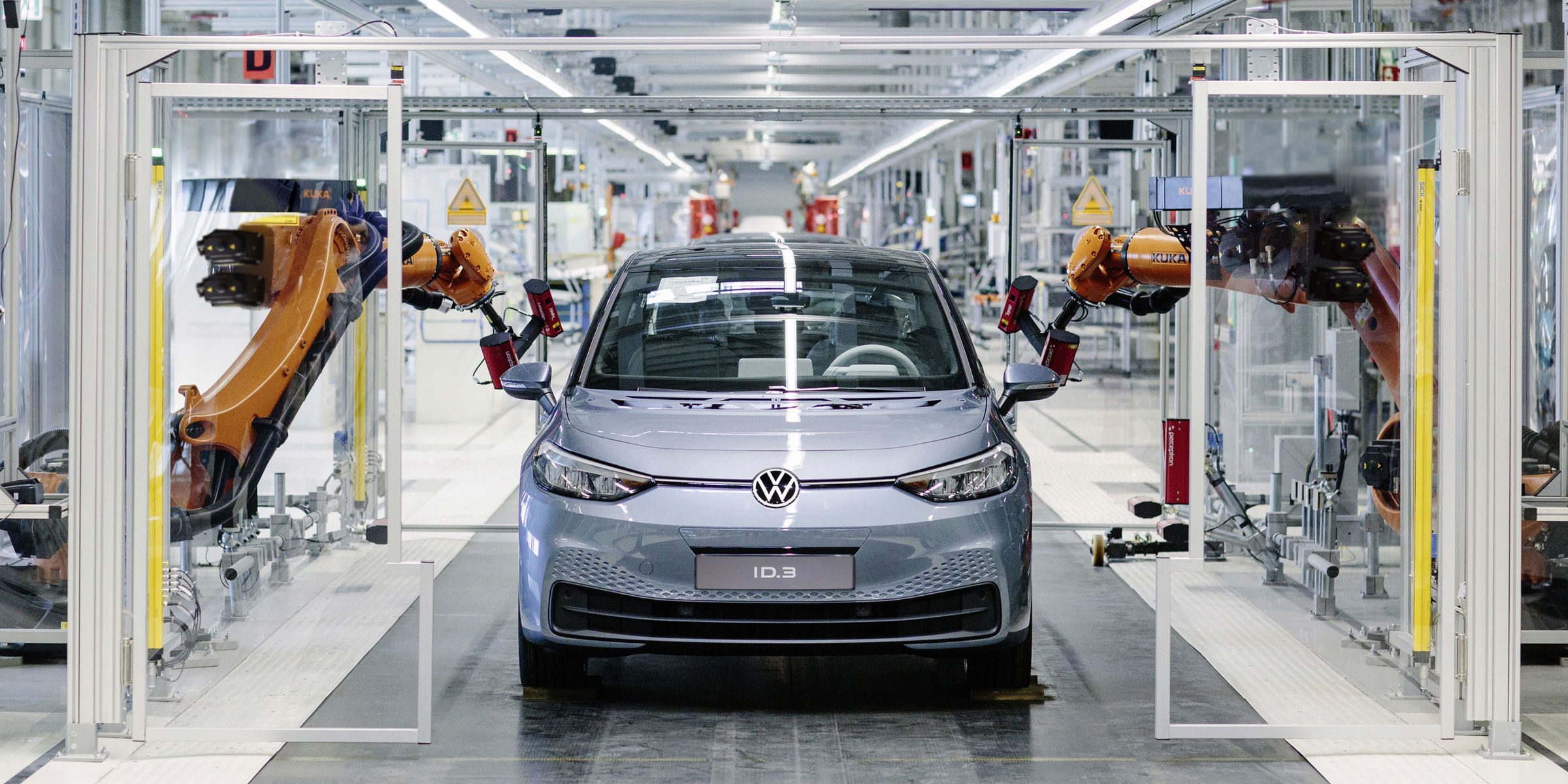
    Central to the export project is the X-Pack battery format developed for the Racco. The design packs the motor inverter and primary control units directly inside the underfloor battery housing rather than mounting them separately in a traditional front motor bay.

    That unit combines with BYD’s lithium iron phosphate Blade cells in a cell-to-body structure where the pack functions as a load-bearing chassis component. By eliminating standalone control housings and shortening internal wiring runs, the company cuts manufacturing costs and frees up passenger space inside short-wheelbase bodies.

    In Japan, the Racco runs on a 36 kilowatt-hour pack and a 47-kilowatt front-axle motor, delivering a range of 320 kilometres. The European variants will use scaled versions of the same integrated platform to hit higher cruising speeds while keeping overall vehicle length under 4.20 metres.

    Positioning Below The Dolphin Surf

    Staying under the 4.20-metre threshold allows BYD to target the European Union’s proposed M1E small-vehicle classification, which is expected to carry regulatory incentives. The planned models will sit below BYD’s existing 3.99-metre Dolphin Surf hatchback.

    European legacy brands have struggled to build profitable electric city cars below the 20,000-euro mark because small battery packs carry high fixed component costs. BYD’s transfer of Japanese kei-car packaging gives the Shenzhen carmaker a direct shortcut into entry-level pricing in Western markets.

    Production of the new compact models could feed into BYD’s passenger car assembly plant in Szeged, Hungary, where trial production began earlier this year.

  • China Orders Automakers to Curb Overseas Price Cuts as Exports Surge

    China Orders Automakers to Curb Overseas Price Cuts as Exports Surge

    China ordered domestic automakers to halt volatile overseas price cuts and deceptive marketing across foreign markets on Tuesday, after passenger car exports reached 5.18 million units through July.

    Shipments of electric and plug-in hybrid vehicles jumped 129 per cent to roughly 2.77 million units over the same seven-month period.

    Jointly released by the Ministry of Commerce, the Ministry of Industry and Information Technology, and the State Administration for Market Regulation, the 20-article rulebook targets predatory pricing practices that damage brand reputations abroad. The agencies directed manufacturers to set export prices based on production costs and local supply, avoid abrupt discounts, and give foreign dealerships full autonomy over retail pricing. Sales incentives, customer gifts, and financing promotions must also comply transparently with host-market laws.

    Rules for Dealerships and Data

    Beyond showroom floors, the guidelines govern physical factory investments, which currently span more than 80 countries. Auto groups setting up regional assembly plants must adhere to local workplace safety, intellectual property protections, after-sales requirements, and labor standards.

    The policy also places strict limits on software and vehicle intelligence. Companies running connected-car or autonomous-driving systems abroad must handle consumer privacy and cross-border data transfers in accordance with local regulations.

    Exporting Domestic Competition

    Prolonged price wars inside China squeezed dealer margins and triggered aggressive showroom discounting over the past two years. By extending regulatory supervision overseas, Beijing is stepping in to prevent state-backed and private manufacturers from exporting those destructive discounting tactics into Southeast Asia, Europe, and Latin America.

    Passenger new energy vehicle shipments reached 540,000 units in July alone, capturing 58.8 per cent of total passenger exports, as manufacturers attempt to outpace the 8.32 million total vehicles China exported worldwide in 2025.

  • Kering Redirects up to €300 Million to Asia as Regional Sales Grow 12 per Cent

    Kering Redirects up to €300 Million to Asia as Regional Sales Grow 12 per Cent

    Kering has reallocated up to €300 million in capital toward Asia-Pacific markets as regional sales growth of 8 to 12 per cent outpaced softer Western demand across its fashion portfolio.

    Asian territories now generate nearly half of total group revenue, led by Greater China at 20 to 25 per cent, Japan at 8 to 10 per cent, and the rest of Asia-Pacific contributing 10 to 15 per cent.

    Where the Revenue Comes From

    Direct-to-consumer flagship boutiques in cities like Shanghai and Tokyo anchor the group’s regional retail network, capturing full-margin sales. Wholesale partnerships with upscale department stores account for 35 to 40 per cent of total volume, while digital commerce platforms generate 15 to 20 per cent. The standalone eyewear division adds between €1.5 billion and €2 billion annually across all licensed and owned lines.

    Yves Saint Laurent proved the strongest performer in the region. The label expanded at annual rates of 25 to 30 per cent in Asian markets between 2019 and 2023, lifting global house sales from €3.18 billion in 2022 to an estimated €3.7 billion by 2024.

    Brand Performance and Capital Shifts

    Gucci remains the conglomerate’s largest single cash generator, producing roughly €9.5 billion in 2024 revenue. Its share of group intake fell from 52 per cent in 2022 to 48 per cent, prompting management to divert capital toward faster-growing labels and regional retail upgrades.

    Bottega Veneta generated between €1.8 billion and €1.95 billion with gross margins reaching 68 per cent, driven by leather goods demand. Balenciaga showed signs of recovery with projected growth of 5 to 8 per cent after revenues contracted 15 per cent during 2023.

    European luxury groups spent the past two years reassessing their heavy reliance on flagship labels in Asia. While rivals like LVMH diversified early across jewellery and hospitality, Kering’s concentrated bets on fashion houses make regional retail productivity critical to its bottom line.

    Management continues to review smaller portfolio brands generating under €200 million annually, with further divestment decisions expected as capital shifts to primary retail hubs.

  • Star Leap Overhauls Beauty Sourcing as Global Markets Fragment

    Star Leap Overhauls Beauty Sourcing as Global Markets Fragment

    Hong Kong supply chain distributor Star Leap has revamped its cosmetics procurement model to target regional divergences across Southeast Asian, European, and American beauty retail markets.

    The company confirmed that global demand patterns no longer align across key consumer territories, forcing wholesalers to match stock directly to local channel mechanics rather than relying on global brand awareness.

    Shifting Channel Demands Across Regions

    Market dynamics are splitting along regional lines. In Vietnam and across wider Southeast Asia, multinational cosmetics labels face stiff competition from domestic brands, producing a price-sensitive consumer base with distinct SKU preferences.

    Western territories show different retail drivers. United States retailers are tying physical store sales directly to artificial intelligence tools and virtual testing setups, while European buyers are shifting purchasing budgets toward South Korean and Japanese beauty imports at the expense of traditional domestic lines.

    Matching Inventory to Local Channels

    Distributors must balance unit costs against shelf-life constraints and regional stock velocity. Star Leap tracks purchasing costs, batch codes, and SKU assortments against specific distribution channels to prevent unsold stock sitting in secondary markets.

    Cross-border beauty logistics across Asia Pacific historically relied on moving excess inventory between territories when domestic demand slowed. Rising import compliance standards and the rapid growth of domestic Southeast Asian brands have largely closed those secondary arbitrage routes.

    Procurement teams are now locking in smaller, localized batch orders as retailers prepare their mid-year stock allocations across Asian department stores and regional e-commerce platforms.

  • Chagee Same-Store Sales Fall 16.1% in China as Network Shifts Direct

    Chagee Same-Store Sales Fall 16.1% in China as Network Shifts Direct

    Chagee posted a 16.1 per cent drop in same-store gross merchandise value across Greater China for the second quarter, marking its fifth consecutive quarter of double-digit declines at home.

    Total revenue for the Nasdaq-listed tea chain edged up 2.5 per cent year on year to RMB3.4 billion (US$503.3 million) in the three months ended June 30, while operating income jumped 387.6 per cent to RMB524.7 million. Total gross merchandise value fell 5.5 per cent to RMB7.66 billion, weighed down by a 9 per cent contraction in Greater China to RMB7.16 billion.

    Network shifts to corporate stores

    Chagee is responding to cooling domestic demand by buying back franchised outlets and running them directly. In Greater China, company-operated stores jumped from 164 to 624 over the past twelve months, while franchised locations declined from a peak of 6,836 in September 2025 to 6,616.

    Those company-owned outlets made up 11.6 per cent of the total network at the end of June but generated 27.5 per cent of overall revenue. Direct-store revenue climbed to RMB940.6 million, offsetting an 18.1 per cent fall in franchise revenue to RMB2.47 billion. Meanwhile, active members fell from 50 million in the first quarter to 47.1 million.

    China’s beverage chains are grappling with the aftermath of an aggressive 2025 delivery platform price war that drove cup prices down to single digits. While rivals like Mixue and Heytea rely heavily on deep discounting and sheer store density, Chagee is attempting to lift unit margins by consolidating ownership of its best locations.

    Overseas footprint doubles

    Outside China, gross merchandise value rose 114.3 per cent to RMB504 million. Chagee expanded its international footprint to 399 stores from 208 a year earlier, with initial momentum in new territories including South Korea, where its first three Seoul locations sold more than 16,000 cups in three days.

    Yet existing international stores are feeling the same demand pressures as domestic sites. Overseas same-store GMV declined 15.1 per cent during the quarter, steepening from a 12 per cent drop in the first three months of the year.

    Investors will watch whether the pace of franchise buybacks can stabilize network revenue before international same-store sales deteriorate further in the third quarter.

  • Shein Targets US$1.7 Billion Hong Kong Listing After Shifting Focus to China

    Shein Targets US$1.7 Billion Hong Kong Listing After Shifting Focus to China

    Shein will debut on the Hong Kong stock exchange on Tuesday, seeking to raise US$1.7 billion after abandoning earlier plans to list in New York and London.

    The listing values the fast-fashion group at US$26.5 billion, down from its peak valuation of more than US$100 billion in 2022. That drop follows years of regulatory hurdles in the West and an extensive effort to secure approval from Chinese market authorities.

    Supply Chain Commitments and Regulatory Clearances

    Founded in Nanjing in 2012, Shein shifted its corporate headquarters to Singapore in late 2021 as part of an attempt to position itself as a global retail player. That strategy ran into resistance from Chinese regulators, including the China Securities Regulatory Commission, which reviews foreign-registered businesses with substantial domestic operations.

    Founder Sky Xu responded by taking direct charge of regulatory relations in China. Xu made a rare public appearance at a February business forum in Guangdong province, pledging a US$1.5 billion investment to expand the company’s supply chain network across the region.

    The company also opened a research and development centre in Nanjing. In its Hong Kong listing prospectus, Shein confirmed that mainland China remains the central anchor of its logistics network and accounts for nearly 80 per cent of its total workforce.

    Western Market Pressures Reshape Listing Strategy

    Attempts to secure listings in the United States and the United Kingdom unraveled under heightened political and regulatory scrutiny. US lawmakers pushed for supply chain audits under the Uyghur Forced Labor Prevention Act, while trade policy shifts eliminated the US$800 de minimis customs exemption that originally accelerated Shein’s cross-border parcel volumes. European authorities introduced comparable parcel handling charges.

    Former executive chairman Donald Tang stepped down ahead of the Hong Kong filing after his previous public remarks claiming American corporate values drew criticism from Chinese officials.

    For retailers across Asia, Shein’s pivot illustrates the limits of cross-border corporate restructuring when manufacturing remains concentrated in southern China. Regional e-commerce operators face a tighter compliance environment globally, leaving Hong Kong as the primary capital market for Chinese-rooted digital exporters.

    Trading begins on Tuesday on the Hong Kong exchange, where investors will test Shein’s revised pricing against slowing margins in overseas markets.

  • Shein Shares Drop 8 per Cent in Hong Kong Debut

    Shein Shares Drop 8 per Cent in Hong Kong Debut

    Shares in Shein fell 8 per cent on their first day of Hong Kong trade on Tuesday, valuing the online fast-fashion retailer at roughly US$24 billion.

    The morning price of HK$44.60 represents a steep reset from the company’s peak valuation of nearly $100 billion in 2022. Hong Kong’s benchmark Hang Seng Index slipped 0.6 per cent over the same session.

    Shein turned to Hong Kong after regulatory pushback from Chinese authorities blocked earlier listing attempts in New York and London. The public offer sold about 6.6 per cent of the company’s enlarged share capital. Cornerstone investors took roughly one-fifth of the shares on offer, leaving just 5 per cent freely tradeable under a six-month lockup agreement.

    Valuation gap with regional rivals

    Investor appetite remained muted throughout the sale. The retail portion was subscribed 5.63 times and the international tranche 2.59 times, trailing the hundreds-fold subscriptions common in Hong Kong’s technology and robotics listings.

    Saxo market data shows Shein listed at 15 times forward earnings. That multiple is more than double the valuation of PDD Holdings, the owner of Temu, giving Shein a premium price tag despite heightened geopolitical friction and slower earnings visibility across major Western markets.

    RetailNews Asia notes that the muted debut reflects how quickly cross-border e-commerce economics deteriorated once Western customs loopholes vanished. For years, Chinese discount retailers expanded into the US and Europe by relying on tax exemptions for low-value parcels. Now that both jurisdictions levy duties on direct-shipped goods, margins across the entire ultra-fast fashion export sector are compressing simultaneously.

    Tariffs squeeze operating margins

    Policy changes in Shein’s largest markets dismantled its core cost advantage. The US repealed its duty exemption for packages under $800 last year, and the European Union instituted collection fees on small consumer shipments.

    Higher customs duties, tariffs and logistics expenses across Europe and the Middle East dragged Shein’s net income down 39 per cent last year, pushing the business into an operating loss in the first quarter. To compensate earlier venture backers who bought in at higher price points, Shein agreed to disburse $3.5 billion in cash payments and execute share adjustments for select preferred stockholders.

    Management has turned to acquisitions and marketplace fees to diversify revenue. The company purchased American clothing label Everlane in May, adding to earlier takeovers of British brand Missguided and French fashion label Pimkie.

    Attention now turns to Shein’s upcoming first-half financial report, where the company projected operating profit margins will fall below first-quarter levels.

  • Asia Air Cargo Rates Diverge as Transpacific Prices Surge 30 Percent

    Asia Air Cargo Rates Diverge as Transpacific Prices Surge 30 Percent

    Air cargo rates from China to the United States climbed 30 per cent year-on-year ahead of the peak shipping rush, driven by steady semiconductor and e-commerce shipments.

    By contrast, rates on the China-to-Europe corridor rose 12 per cent over the same period, slowed by the European Union ending its de minimis tax exemption on July 1.

    The price split reflects an uneven recovery across Asian export corridors. While air space out of Taiwan remains tight on artificial intelligence hardware, and outbound demand from South Korea, Malaysia and Singapore holds firm, outbound volumes from mainland China and Hong Kong have cooled. Pricing data from the TAC Index shows transpacific air freight maintaining a sharp premium, supported by technology shipments alongside higher jet fuel expenses caused by Persian Gulf shipping disruptions.

    Ground Bottlenecks and Route Shifts

    Airlines and forwarders face wide gaps in aircraft fill rates across the region. Dedicated freighter aircraft operate at roughly 65 per cent average load factors, compared with only 36 per cent for passenger aircraft belly hold space, according to IATA figures cited in the Journal of the Air Transport Research Society.

    Freight forwarder Dimerco Express Group noted that cross-border shippers altered transport modes to bypass tight air lanes, diverting freight between China, Vietnam and Thailand onto road networks and utilizing rail corridors into Europe. Early tariff front-loading by retail importers also pulled seasonal volumes forward into earlier quarters.

    Capacity limits on the ground often matter more than available aircraft. At regional transshipment hubs such as the Maldives’ Velana International Airport, which handled nearly 89,000 tonnes of cargo in 2025, warehouse throughput and labor deployment govern holiday processing speeds rather than runway slots.

    Shifting Asian Supply Chain Flows

    For consumer brands and electronics manufacturers across Asia, these fragmented lane dynamics mean freight procurement can no longer rely on broad regional averages. Shippers managing supply chains out of Taipei or Penang face sustained space premiums that do not match the softer spot rates available out of southern Chinese export hubs.

    Carriers are adjusting winter flight schedules to manage the uneven demand. Velana International Airport expects flight movements to rise 12 per cent during the 2026/27 winter schedule, supported by new scheduled freighter operations including Raya Airways’ weekly service from Penang.