Tag: China

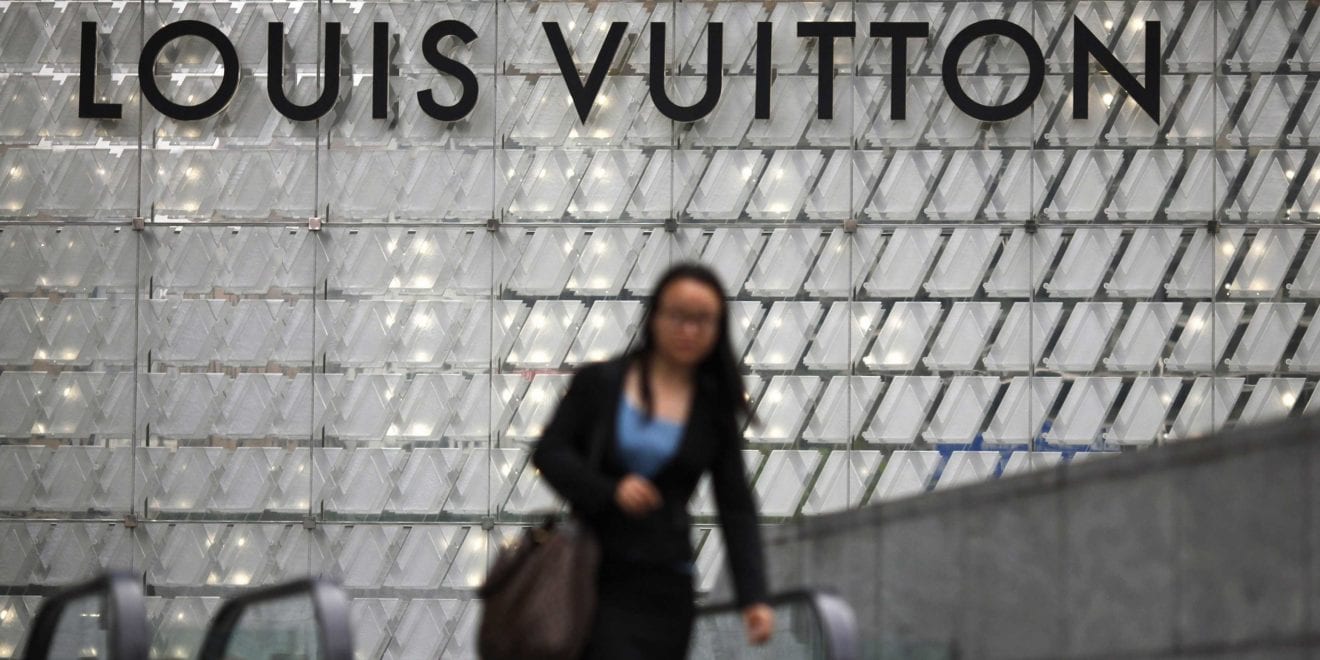
  • Louis Vuitton Exits Chinese Province After Sales Drop and Trademark Dispute

    Louis Vuitton Exits Chinese Province After Sales Drop and Trademark Dispute

    Louis Vuitton closed its retail footprint in a Chinese province after local store sales dropped and a trademark dispute sparked consumer backlash against the French luxury house.

    The pullout follows intense public scrutiny in China over the brand’s legal enforcement of its intellectual property, which prompted pushback from shoppers and weakened foot traffic across regional department stores.

    Reassessing Regional Footprints

    Luxury groups in mainland China are reviewing their exposure to lower-tier provincial markets where operating costs outpace store revenue. Falling retail demand across secondary cities has pushed European fashion houses to trim underperforming storefronts and redirect capital toward flagship flagships in tier-one hubs.

    Shopper sentiment in the affected province turned sharply against the brand during the legal dispute. Local consumers shifted spending away from the label, accelerating management’s decision to shut down operations in the territory entirely.

    Consolidation in Core Hubs

    European luxury labels previously expanded across provincial capitals to capture rising domestic wealth outside Beijing and Shanghai. That expansion model now faces pressure as consumer spending concentrates in top-tier commercial centres and duty-free zones such as Hainan.

    LVMH continues to review its retail network across Greater China, with future store renewal deadlines and regional lease expiries determining where the group will prune or retain square footage.
  • China Shifts Property Market to Completed Homes in Broad Policy Overhaul

    China Shifts Property Market to Completed Homes in Broad Policy Overhaul

    China ordered local governments on Friday to prioritise sales of completed homes over presales, overhauling the housing model to halt a property downturn that has dragged on domestic consumer spending.

    The joint directive from the housing ministry, the natural resources ministry and the National Financial Regulatory Administration targets newly transferred residential land alongside parcels sold without construction planning permits.

    Rules on land and developer financing

    Projects on newly transferred plots must adopt the finished-home sales structure, while sites with existing permits are encouraged to make the transition. Two accompanying notices from financial regulators cleared commercial banks to issue revised development loans and gave securities authorities room to back mergers and restructurings among listed property firms.

    The policy overhaul directly attacks the off-plan financing structure that left millions of buyers waiting for unfinished apartments and froze household balance sheets across mainland cities. “The policies announced today are stronger than what the market expected,” said Zhang Zhiwei, chief economist at Pinpoint Asset Management, noting that weak domestic demand stemmed largely from real estate distress.

    Impact on consumer confidence and household wealth

    Property accounts for the bulk of Chinese household wealth, making housing stability essential for any rebound in retail sales, automotive purchases and consumer services across second-tier and third-tier markets. For consumer brands operating in China, weak property valuations have consistently translated into cautious discretionary spending and higher promotional discounting over the past two years.

    Municipal governments must now issue local execution timetables for the finished-home rules, with developers waiting for commercial banks to publish specific loan quotas under the updated development guidelines.

  • Miniso First-Half Revenue Rises 22% to $1.7 Billion on China and US Gains

    Miniso First-Half Revenue Rises 22% to $1.7 Billion on China and US Gains

    Miniso lifted its first-half revenue 22.4 per cent to RMB11.5 billion (US$1.69 billion) as Chinese domestic demand rebounded and foreign store openings accelerated. Second-quarter revenue rose 17 per cent to RMB5.81 billion (US$856.4 million) in the three months to June 30.

    Domestic sales supplied the momentum. Mainland China revenue climbed 26.2 per cent during the six months, marking the company’s fastest first-half expansion rate in three years. North American operations posted a 37 per cent top-line increase over the same period, while the Top Toy pop-culture unit grew revenue 32.7 per cent.

    Global Store Count Nears 8,700

    Network growth continued across offshore territories. Miniso finished June with 8,674 stores worldwide, adding 769 doors in 12 months. International locations accounted for almost half of all net-new store openings during the year.

    New market entries pushed the retailer’s footprint to 113 countries and territories after opening its first store in Switzerland. Top Toy also moved past mainland borders, adding storefronts in Taiwan and the US. Domestic registered members reached 130 million, up 31 per cent year on year, while US loyalty members doubled to roughly 5.8 million.

    IP Formats and Capital Allocation

    Value retailers across East Asia face margin pressure from discount e-commerce platforms, pushing operators to rely on licensed intellectual property and larger destination shops to protect transaction values. Miniso has shifted toward branded character goods and blind-box toys to lift average basket spend rather than relying solely on cheap household consumables.

    Founder and chief executive Guofu Ye said the group will keep directing capital toward proprietary IP lines and large-format retail sites while pursuing regional localisation.

    Capital management plans remain active following the June rollout of a HK$2 billion (US$255 million) share buyback program, which runs alongside Ye’s personal commitment to increase his equity stake in the business.

  • Chagee Second Quarter Profit Jumps to $68.5 Million as Overseas Sales Surge

    Chagee Second Quarter Profit Jumps to $68.5 Million as Overseas Sales Surge

    Chagee posted a net income of RMB464.8 million ($68.5 million) for the second quarter, up from RMB77.2 million a year earlier as international expansion lifted returns.

    Net margin climbed to 13.6 per cent from 2.3 per cent in the prior-year period. Total revenue rose 2.5 per cent to RMB3.4 billion ($503.3 million) for the three months ended June 30, supported by an 8.5 per cent increase in store count to 7,639 locations worldwide.

    Overseas Momentum Offsets Domestic Softness

    Operating income surged 387.6 per cent to RMB524.7 million after the chain cut operating expenses by 10 per cent. While gross merchandise value dropped 9 per cent in Greater China, sales across eight international markets jumped 114.3 per cent.

    Seoul provided an early spark for that overseas push. Three teahouses in the South Korean capital sold over 16,000 drinks during their first three days, driven by more than 46,000 mobile app downloads recorded ahead of the launch.

    The divergence between domestic and overseas performance reflects the intense discounting battle among premium tea brands inside mainland China. Rivals such as Nayuki and Heytea have faced margin erosion at home, prompting operators to look abroad where pricing power remains intact and consumer demand for Chinese milk tea formats is expanding rapidly.

    Member Retention and Sales Outlook

    Loyalty membership reached 257 million registered users by the end of June. Repurchase rates among active loyalty users held above 43 per cent during the period.

    Management reported that same-store sales declines moderated in July, with comps projected to swing into positive territory in August.

  • China Sovereign Bond Yields Drop to 1.69 per Cent as US Gap Widens

    China Sovereign Bond Yields Drop to 1.69 per Cent as US Gap Widens

    China’s 10-year government bond yield fell to 1.692 per cent on Monday, widening the policy divergence with the United States as domestic economic growth slowed.

    The yield sits near a 12-month low after July retail sales, industrial output, and fixed-asset investment all missed analyst forecasts.

    Brokerages including Great Wall Securities project the 10-year yield will drop further to 1.65 per cent. The slide reflects rising domestic calls for borrowing cost cuts to counter deflation and a prolonged property slump.

    In contrast, long-term borrowing costs in the United States remain elevated. The US 30-year Treasury yield hovered near a two-decade high of 5.304 per cent. Federal Reserve Chairman Kevin Warsh indicated at the Jackson Hole symposium that inflation control remains the primary focus over employment, while eliminating forward policy guidance. US Treasury Secretary Scott Bessent pledged to double a bond buyback programme, yet investors continue demanding higher yields for long-dated American debt.

    Foreign Inflows and Diverging Policies

    Overseas investors purchased 9.5 billion yuan ($1.4 billion) in Chinese government bonds in July, logging their third consecutive month of net buying. Total foreign holdings in China’s nearly 200 trillion yuan debt market stand at approximately 4.3 trillion yuan, representing roughly 2 per cent of the market.

    A stronger yuan alongside lower local yields has helped attract offshore capital seeking insulation from volatile global equities. While the US central bank confronts energy price pressures and heavy fiscal debt issuance under the Trump administration, Beijing faces the opposite challenge of stimulating dormant consumer demand.

    Capital Flows Across Asian Markets

    For corporate borrowers and retailers across Asia, the widening interest-rate spread alters funding strategies. Chinese issuers are leaning harder into yuan-denominated debt to capture ultra-low domestic borrowing costs, while dollar-denominated debt servicing grows heavier.

    Markets now watch whether the People’s Bank of China will deliver an official policy rate cut before the third quarter ends, testing the projected 1.65 per cent floor on sovereign yields.

  • Hong Kong Retains Top Billionaire Spot in Asia with 106 Ultra Wealthy

    Hong Kong Retains Top Billionaire Spot in Asia with 106 Ultra Wealthy

    Hong Kong held its position as Asia’s top billionaire city with 106 ultra-wealthy residents last year, ranking second globally behind New York’s 164.

    The city lost two billionaires over the period even as its aggregate billionaire net worth rose, according to data from research firm Altrata.

    San Francisco, London, Singapore and Los Angeles took the third through sixth spots globally. Beijing placed seventh with 61 billionaires, while Shenzhen and Dubai tied for eighth place with 43 each.

    AI Gains Shift Wealth Creation

    New York added 12 billionaires during the year as the artificial intelligence investment boom propelled technology fortunes higher. Global billionaire numbers recorded their fastest pace of expansion since 2020, with the United States and mainland China remaining the only countries holding multiple cities in the top 15 rankings.

    Hong Kong and London were the only hubs in the top 15 to register declines in billionaire headcount. A prolonged downturn in Hong Kong’s real estate sector and relatively limited exposure to direct AI equity gains curbed new entries.

    Asian Hubs Draw Inbound Capital

    Banking and finance accounted for the largest share of global billionaire fortunes at 19.6 per cent, more than double the proportion held by business and consumer services. Across the worldwide cohort, the average age stood at 71, with men representing 86.9 per cent of the total.

    For luxury operators, private banks and commercial landlords across Asia, the shifting balance between property and technology fortunes alters where discretionary capital flows. Both Hong Kong and Singapore continue to draw high proportions of foreign-born billionaires, particularly from mainland China and India, supporting prime retail footfall and asset management inflows despite broader market volatility.

    Attention now turns to whether mainland China’s expanding tech sector can push Shenzhen and Beijing past European wealth centres in Altrata’s next census.

  • Twelve Chinese Food and Beverage Brands Reach $63.4 Billion Valuation

    Twelve Chinese Food and Beverage Brands Reach $63.4 Billion Valuation

    Twelve Chinese food and beverage brands expanded their collective brand valuation to $63.4 billion this year, according to valuation data from consultancy Brand Finance.

    The gain reflects steady domestic volume and pricing power across packaged food, dairy, and drinks makers in China. Brand valuation measures the net economic benefit that a brand owner achieves by licensing the name in the open market.

    Domestic Scale and Category Strength

    Consumer staples manufacturers across the country have focused on product differentiation and distribution depth in lower-tier cities. Brand Finance tracks consumer enterprises globally, applying royalty relief methodology to calculate future revenue attributable to brand equity.

    Chinese producers have converted local consumer familiarity into commercial resilience. Direct control over supply chains and rapid adaptation to retail trends helped the 12 brands maintain their valuation trajectory.

    Shifting Competition Across Asian Aisles

    For multinational food groups operating in East Asia, the strength of domestic Chinese labels presents a persistent competitive hurdle. Global conglomerates face rivals that command supermarket shelf space while dominating live-commerce channels and local delivery apps.

    Several Chinese packaged goods producers have also expanded distribution across Southeast Asia, placing products directly into supermarkets in Singapore, Malaysia, and Thailand.

    Investors and retail operators now look to upcoming quarterly financial filings from Chinese consumer staple producers to see whether higher brand value translates directly into operating margin expansion.

  • Lululemon Launches Wellbeing Garden Activation in Shanghai

    Lululemon Launches Wellbeing Garden Activation in Shanghai

    Lululemon launched its Wellbeing Garden activation in Shanghai on October 10, bringing its global Wellbeing for All campaign to mainland consumers. The project anchors community gatherings around physical movement and mental wellness across the city.

    The Canadian athletic apparel maker designed the installation to merge mindfulness exercises with product shows. Shoppers and fitness participants can access instructor-led sessions, interactive wellness spaces, and product trials on site.

    Community Building in China

    Experiential retail remains central to how international sports brands build customer loyalty in Tier 1 Chinese cities. Rather than relying solely on conventional store formats, sportswear labels deploy outdoor pop-ups, run clubs, and yoga sessions to keep foot traffic connected to physical stores.

    Lululemon has built its mainland presence around store ambassadors and free community workouts. The Shanghai garden activation extends that playbook by creating a dedicated destination outside standard shopping mall footprints.

    Competition in Premium Activewear

    Mainland China continues to attract intense competition among premium athletic and outdoor brands. Global names face rising domestic sportswear labels that are expanding their own lifestyle and technical apparel ranges.

    The Shanghai activation runs as retail operators across China watch fourth-quarter foot traffic patterns and community participation figures closely.

  • China Finds High Nitrite Levels in Malaysian Edible Birds Nests

    China Finds High Nitrite Levels in Malaysian Edible Birds Nests

    Chinese regulators discovered nitrite levels averaging 4,400 milligrams per kilogram in edible bird’s nests imported from Malaysia, sixty times higher than the national safety limit.

    The Zhejiang Provincial Administration for Industry and Commerce tested blood-red cubilose across 491 dealers before issuing the health alert. Under national rules, nitrite content cannot exceed 70 milligrams per kilogram. Investigators found that dealers applied chemical dyes to standard nests to sell them as rare blood-red varieties, generating elevated concentrations of nitrite, a compound linked to cancer risks.

    Tainted stock pulled from shelves

    Beijing Tongrentang Co. Pulled all edible bird’s nests from its retail counters in mainland China and overseas locations. The traditional Chinese medicine merchant enacted the withdrawal two days after Zhejiang officials issued their findings.

    Bird’s nests rank among the most expensive luxury food items in Asia, commanding prices up to 10,000 US dollars per kilogram in markets across China, Hong Kong and the United States. Premium wellness retailers face immediate margin disruption when quality failures occur in products sold specifically for health maintenance.

    Export supply lines under pressure

    Malaysia operates as the world’s largest supplier of edible bird’s nests and ships 95 per cent of its output directly to China. The test results in Zhejiang expose supply chain weaknesses in cross-border trade for unrefined animal secretions, putting pressure on upstream processors to prove product purity before goods clear Chinese customs.

    China’s State Food and Drug Administration has not issued a nationwide directive on imported cubilose, leaving retail buyers waiting for central border inspectors to set updated testing protocols.

  • China Beauty Market Targets 6 Percent Annual Expansion Through 2028

    China Beauty Market Targets 6 Percent Annual Expansion Through 2028

    China’s beauty market will expand at a 6 percent compound annual growth rate between 2024 and 2028, according to projections from consultancy McKinsey. The forecast follows a 3 percent expansion recorded in 2023 across the country’s cosmetics and skincare sectors.

    A 2025 survey showed that 75 percent of beauty executives are pushing to increase sales despite softer volume growth caused by inflation and cautious household spending. Retailers face rising customer acquisition costs across domestic e-commerce channels alongside extended product lifecycles.

    Squeezed Margins and Price Pressures

    Downward pricing pressures intensified over the past year across Chinese retail platforms. Consumers increasingly hunt for value, forcing brands to adjust promotional calendars and discount structures to defend shelf space.

    Foreign and domestic beauty brands are rethinking their operating models in response. Companies such as Changsha-based S’Young International are expanding integrated operations hubs to manage distribution and localization more efficiently.

    Shift Toward Capability Hubs

    International brands previously treated mainland China primarily as a volume driver for global sales. Today, rising domestic competition and fragmented digital channels require dedicated local research, formulation and supply chains within the market itself.

    The critical metric for brand managers in the coming quarters is whether average selling prices stabilize across major retail platforms before margins erode further.

  • Zhipu AI Launches GLM-5.3-Flash After Stealth Trial on 100,000 Domestic Chips

    Zhipu AI Launches GLM-5.3-Flash After Stealth Trial on 100,000 Domestic Chips

    Beijing-based Zhipu AI launched its open-weight model GLM-5.3-Flash on Wednesday after running the system across a cluster of 100,000 domestic Chinese chips. The release followed an unannounced trial on platforms including OpenRouter and OpenCode, where the system processed 62 trillion tokens under the test alias Ox Alpha before its formal unveiling.

    Shares tied to the startup rose following the disclosure. Zhipu confirmed that the entire test deployment operated on domestic silicon rather than foreign hardware imports.

    Traffic Across Developer Marketplaces

    The stealth evaluation generated heavy traffic across international developer hubs over the past week. Users tested the then-unidentified Ox Alpha across code generation and complex task routing, driving sustained compute volume across the 100,000-chip array before Zhipu claimed ownership of the checkpoint.

    Releasing the architecture as open weights allows enterprise clients and independent software developers to download, modify, and host the model on their own infrastructure. That deployment model lowers operating expenses for commercial software firms looking to integrate natural language tools without paying continuous per-token API charges to proprietary providers.

    Domestic Compute Strategy

    Building massive cluster capacity on domestic processors addresses direct supply constraints that Chinese technology groups face under ongoing hardware export restrictions. Large tech firms across the mainland have traditionally relied on foreign graphics processors to train top-tier foundation models, but local alternatives are now taking on larger workloads.

    The performance of the 100,000-unit setup provides an operating template for other Chinese software developers seeking to decouple their deployment pipelines from foreign accelerators. Market attention now turns to downstream enterprise adoption rates and independent performance benchmarks against competing commercial models over the current quarter.

  • Global Carton Tape Demand to Grow up to 6 Percent Annually Through 2035

    Global Carton Tape Demand to Grow up to 6 Percent Annually Through 2035

    Global demand for clear polypropylene carton tape will expand by 4 to 6 percent annually through 2035 as e-commerce fulfillment and regional trade drive carton sealing volumes across major markets. Online retail parcels now account for 35 to 45 percent of worldwide consumption, with China supplying approximately two-fifths of total volume through export channels.

    Coated biaxially oriented polypropylene film with acrylic or hot-melt adhesives remains the dominant sealing choice for corrugated cardboard boxes across automated warehouse systems. Retail platforms including Amazon and Alibaba have expanded individual parcel shipments, while product returns create recurring re-packaging cycles that reinforce baseline tape use.

    Feedstock Pressures and Production Shifts

    Manufacturing footprints are adjusting to feedstock availability. Output capacity is migrating toward Southeast Asia and the Middle East, where raw polypropylene film supplies are more accessible. Polypropylene feedstock represents 55 to 65 percent of total manufacturing expenses, leaving standard tape margins exposed to raw material price swings.

    Cross-border distribution also faces trade friction. Import tariffs on finished tape currently range from 5 to 15 percent depending on the jurisdiction and existing bilateral pacts. Standard commodity tape remains highly price-sensitive, prompting large fulfillment operators to switch suppliers frequently to protect packing margins.

    Private Label and Specialty Growth

    Large retailers and third-party logistics operators are turning to contract manufacturing to secure supply. Private-label formats now make up 20 to 30 percent of global volume, giving logistics groups tighter cost control over warehouse consumables.

    Specialty formats are outpacing standard stock. High-adhesion variants, reduced-plastic rolls with 15 to 25 percent thinner gauges, and low-noise unwind tapes are expanding at 7 to 10 percent annually. Foodservice and institutional packaging represent another 20 to 25 percent of demand, where strict food-contact compliance and low-odor formulations command higher pricing from delivery platforms and catering operators.

    Industrial packaging buyers are also testing paper and water-activated tape alternatives to meet corporate plastic reduction targets, though synthetic polypropylene films retain the cost advantage on automated packing lines. Market indicators project the global tape index to reach between 145 and 160 by 2035 against a 2025 baseline.

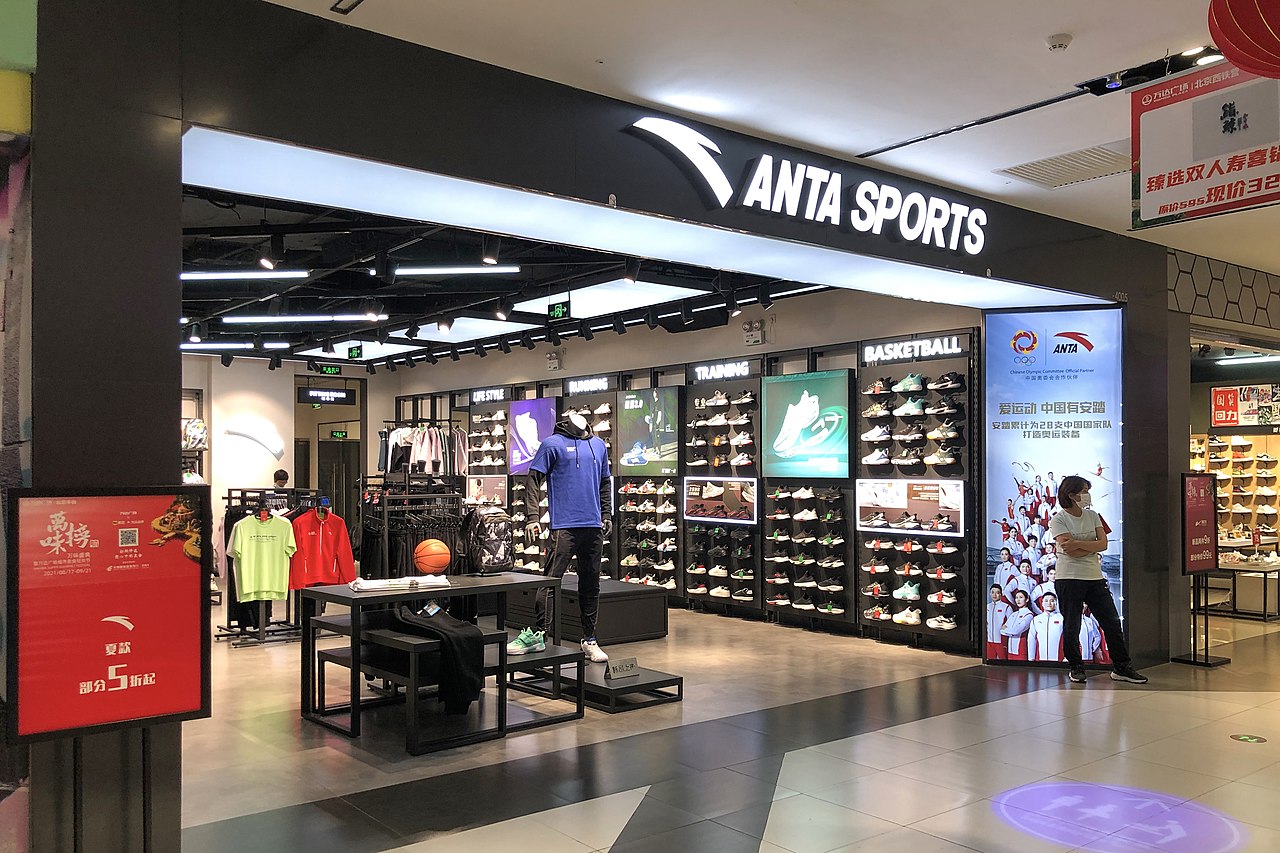
  • Anta Sports Lifts First-Half Revenue 12.9% to $6.1 Billion

    Anta Sports Lifts First-Half Revenue 12.9% to $6.1 Billion

    Anta Sports lifted first-half revenue 12.9 per cent to RMB43.51 billion ($6.1 billion) for fiscal 2026. Strong demand across the company’s outdoor portfolio drove the top-line gain.

    Revenue at the core Anta brand rose 4.8 per cent year on year to RMB17.77 billion ($2.64 billion). Sportswear line Fila added RMB15.05 billion ($2.24 billion), a 6.1 per cent increase over the six-month period.

    Outdoor labels outpace core brands

    Specialty outdoor and niche sports apparel carried the bulk of the group’s sales growth. The division covering Descente, Kolon Sport, Jack Wolfskin and female activewear label Maia Active surged 44.2 per cent to RMB10.69 billion ($1.59 billion).

    Spending on product development increased alongside the broader business. Anta allocated approximately RMB1.11 billion ($164.95 million) to research and development during the half.

    Chairman Ding Shizhong said the company will keep investing in product innovation, brand equity and regional retail upgrades. It also plans to build global management capabilities.

    Leadership reset at the flagship unit

    The financial update follows an executive change at the group’s main commercial division. Anta brand chief executive Xu Yang stepped down in July, citing personal family reasons. Directors placed co-chief executive Lai Shixian in charge of the flagship label on an interim basis.

    Market trends show a broader split in Chinese sportswear retail. Mainstream sneaker and apparel sales face stiffer price competition and saturated footprints. Meanwhile, premium outdoor lines continue to capture higher consumer spending in tier-one and tier-two cities.

    Beyond its directly run portfolio, Anta remains the controlling shareholder in Amer Sports, owner of Arc’teryx, Salomon, Wilson and Atomic. Focus now turns to how quickly interim chief Lai Shixian adjusts retail distribution for the core Anta brand ahead of the winter selling season.

  • Hundreds of Asian Corporate Heavyweights Report Earnings in Peak Week

    Hundreds of Asian Corporate Heavyweights Report Earnings in Peak Week

    About 370 constituents of the MSCI Asia Pacific Index will report financial results this week, testing consumer demand across China and the resilience of hardware supply chains.

    The reporting group represents roughly 30 percent of the benchmark’s more than 1,200 member companies. Corporate updates from heavyweights across transport, consumer retail, energy, and component manufacturing will land over five consecutive trading sessions.

    Consumer and Automotive Focus

    Automotive manufacturer BYD Co. Leads the consumer batch as price competition across the electric vehicle sector shapes domestic delivery numbers and regional export margins. At the high end of retail, heritage jewellery brand Laopu Gold Co. Presents numbers that reveal how affluent shoppers in mainland shopping hubs are allocating capital.

    For retail and brand operators across Greater China, performance figures from domestic leaders provide a direct gauge of discretionary spending power. Previous reporting cycles showed shoppers trading down in mass categories while allocating funds toward premium gold assets and domestic electric mobility brands.

    Hardware and Industrial Benchmarks

    Technology components and infrastructure suppliers also feature heavily in the schedule. Optical transceiver maker Eoptolink Technology Inc. Reports alongside energy group PetroChina Co., offering detail on corporate spending in artificial intelligence architecture and baseline energy consumption.

    Investor attention centres on operating margins and forward order guidance across both consumer platforms and hardware exporters as balance sheets post through Friday.

  • Lanvin Group Narrows First-Half Loss to €34.6 Million as Store Closures Bite

    Lanvin Group Narrows First-Half Loss to €34.6 Million as Store Closures Bite

    Shanghai-based Lanvin Group narrowed its first-half adjusted EBITDA loss to €34.6 million as store closures and restructuring outpaced a 12.9 per cent revenue drop to €100.8 million.

    The New York-listed luxury group cut its adjusted EBITDA loss from €52.2 million a year earlier, achieving its first period since listing where operating cuts exceeded top-line decline. The prior-year base excludes Italian tailor Caruso, which the company sold in February to Abu Dhabi-backed MondeVita.

    Management closed 23 directly operated stores during the six months to June 30, bringing its active boutique network down to 151 sites. Over the past 18 months, the company has eliminated 74 stores from a peak of 225, cutting its physical footprint by a third to curb overhead.

    Mixed fortunes across four fashion houses

    St John overtook the namesake maison to become the group’s largest revenue contributor, generating €35.5 million. While that represented a 10.5 per cent decline in euros, sales fell roughly 5 per cent in US dollars, helped by a 31 per cent jump in e-commerce. Chief commercial officer Mandy West, promoted in March, will roll out two capsule collections during the second half.

    Austrian skinwear label Wolford delivered €31.0 million, down 6 per cent. Direct-to-consumer sales slipped 2 per cent while e-commerce expanded 22 per cent, lifting gross margin four percentage points to 60 per cent following the resolution of earlier supply chain bottlenecks. Marco Pozzo took over leadership of the brand in February.

    Revenue at flagship house Lanvin slid 17.9 per cent to €22.9 million, making it the group’s third-largest unit. Barbara Werschine took charge as chief executive in May following stints at Hermès and Eric Bompard, while designer Peter Copping presented his winter 2026 collection in Paris. Footwear brand Sergio Rossi remained the weakest unit, tumbling 28.6 per cent to €10.9 million after artistic director Paul Andrew departed in January and the business phased out third-party manufacturing contracts.

    Asset-light transition across global operations

    Chinese luxury groups that expanded through European acquisitions have spent the past two years paring down overhead to adjust to weaker global wholesale demand. Greater China generated 8.1 per cent of Lanvin Group’s sales last year, leaving the company heavily exposed to European and American department store channels where foot traffic has softened. Trimming company-owned real estate while shifting brands toward licensing mirrors the defensive posture adopted by mid-tier European fashion houses.

    Chairman Zhen Huang expects the broader corporate transformation to wrap up before the end of the year. The group is now preparing second-half wholesale deliveries and expanding asset-light franchise partnerships across Sergio Rossi and Lanvin.