Tag: China

  • Octopus’ retail management solutions now implemented in Asus stores across China

    Octopus’ retail management solutions now implemented in Asus stores across China

    Octopus Retail Management (Octopus), the retail technology provider used by leading businesses to make retail smart and personal, today announced that its cutting-edge point-of-sale (POS) suite of solutions has been successfully implemented in Asus locations across China.

    Octopus’ solutions have been rolled out for Asus stores across 16 cities in China — including Beijing, Shanghai, Guangzhou, Shenzhen and Hangzhou, among others — creating a connected infrastructure and eliminating the complexity of managing its network of stores. Octopus’ smart retail technology gives Asus real-time visibility over the cloud to monitor sales, run promotions and manage inventory more efficiently.

    Importantly, Octopus’ customizable solutions have been integrated with the Alibaba iStore system, including Customer Relationship Management (CRM) integration and payment integration.  This seamless integration allows Asus to drive omnichannel sales and enhance the customer experience both in store and online.

    “The retail space is transforming rapidly. We wanted a retail software solution that would integrate with Alibaba CRM and allow seamless promotions and inventory management across our network of stores in China. Partnering with Octopus will enable us to achieve that and deliver an enhanced shopping experience for our customers,” said Wu Rui, Project Director at Asus.

    “We are proud to be selected by Asus to deliver our software solutions to drive their retail business forward,” said Ong Whee Shiong, Managing Director of Octopus. “More than ever, customers expect retailers to provide a personalized and seamless shopping experience across all channels. Octopus’ smart retail technology will enable Asus to manage their store network across China to enhance their business productivity and drive store experiences that exceed their customers’ expectations.”

  • Orders treble just 13 days into JD’s 6.18 shopping festival

    Orders treble just 13 days into JD’s 6.18 shopping festival

    Thirteen days into the 20-day 6.18 shopping festival, JD has already achieved a three times the turnover of last year’s event, and double the orders.

    More than 90 per cent of Hong Kong purchases have been conducted through mobile devices, and geographically, consumers from New Territories accounted for nearly 40 per cent of sales.

    The top five categories in sales and volume so far (not in order) are computers, smartphones, household electronics, digital appliances and groceries. JD singled out smartphones and household electronics as the biggest-moving categories compared with last year.

    Electronics attracted the greatest number of Hong Kong consumers with orders showing quadruple growth. Besides smartphones, products like electric fans, vacuum cleaners, air purifiers and dehumidifiers are proving popular.

    Food and beverage is another hot category, tripling in order size, with turnover up 50 per cent. This includes groceries such as instant hotpots, snacks, dried nuts and biscuits.

    Despite the high volumes, JD says the sales and growth rate for the first 13 days were “in line with expectations”.

  • Telegram CEO blames China for cyber attack

    Telegram CEO blames China for cyber attack

    One of the top ten most popular messaging apps in the world is Telegram, available for iOS and Android. Not as widely used in the U.S., the app offers end-to-end encryption and group chats for as many as 200,000 people. The app also can share videos, even those with large file sizes, and documents of any type. A tweet from Telegram CEO Pavel Durov blames China for a cyberattack that hit the Telegram app and affected its subscribers earlier this week.

    Durov says that a large Distributed Denial of Service (DDoS) attack originated from internet addresses inside China. These DDoS attacks sent huge amounts of requests at one time to Telegram, clogging up the app and making it unusable for many subscribers. The executive called it a “powerful,” targeted attack that was related to the protests taking place in Hong Kong. Huge throngs of protestors are complaining about a new law that will allow people in the city to be extradited to China. Durov said that in the past, similarly sized DDoS attacks coincided with protests in Hong Kong,

    Because of the encryption used to hide the content of messages, Telegram is popular among protestors in any country, allowing them to coordinate plans with up to 200,000 people out of the eyeshot of authorities. A DDoS attack on Telegram would prevent the protestors in Hong Kong from making arrangements to gather at a certain place and time.

    The Chinese government denied that it was responsible for the attack. Chinese foreign ministry spokesman Geng Shuang said at a briefing yesterday that he was unaware of the incident.

  • Ecmoho Pharmacie plans US$100 million IPO

    Ecmoho Pharmacie plans US$100 million IPO

    Chinese online pharmacy Ecmoho is seeking to list on the New York Stock Exchange in order to raise US$100 million for expansion.

    According to sources cited by Bloomberg, the IPO may take place as early as this year.

    The company has declined comment on the matter and sources say the exact timing and the target to be raised may yet change.

    Based in Shanghai, Ecmoho distributes supplements and pharmaceuticals online. As well as selling direct it has stores on JD and Alibaba’s platforms.

    Ecmoho launched in 2002 as an online marketing service, transitioning into e-commerce in 2006, before sharpening its focus on the health sector in 2011. It sells products from domestic manufacturers and global brands.

    Besides Mainland China and Hong Kong, the company operates in the US, Europe and Asia Pacific.

  • E-commerce giants report record results for 6.18 shopping festival

    E-commerce giants report record results for 6.18 shopping festival

    China’s e-commerce giants JD and Alibaba turned in record-breaking results for the 6.18 shopping festival on June 18.

    Total sales transaction volume during JD’s 6.18 trading reached a new high this year of US$29.2 billion. Key drivers leading to the breakthrough results were new products as well as Chinese consumers’ continued interest in and pursuit of higher quality.

    Alibaba Group’s Taobao and Tmall shattered multiple records during the Mid-Year Shopping Festival, stating a rising demand from consumers in less-developed cities for quality products. More than 200,000 brands took part, using campaigns and tools provided by Alibaba’s core platforms to help more than 110 brands each generate gross merchandise volume in excess of RMB100 million ($14.5 million).

    New products were a strong focus of JD’s retail strategy overall this year. JD has launched an exclusive channel within its platform to socialise and promote these products as well as bring them to market, making them easier for consumers to find, and helping brands to strategically reach new consumers. Consumers from lower-tier cities are also “trading up” showing greater interest in brands traditionally more coveted by consumers in higher-tier cities.

    Transaction volume growth was twice as high in lower-tier cities than the overall growth on JD. The percentage of new users from lower-tier cities was also much higher than the percentage of new users overall. Two campaigns involved participation from more than 100 million users. One was an innovative “birthday red envelope” campaign, which encouraged and rewarded consumers for sharing on social platforms. Another campaign engaged users to share, vote for and win shared rewards for their cities.

    The firm’s recent C2M initiative employs big data and consumer insights, providing insights to brands to adjust their manufacturing and marketing approaches with the goal of providing consumers with products they want before they even know they want them. Transaction volume of new products and C2M products during 6.18 increased 289 per cent compared with the same period last year. One out of every three monitors sold during this year’s 6.18 campaign were C2M products. HP saw a 100 per cent increase in sales of its Zhan 66 laptop, a C2M product, during 6.18.

    Several new brands also launched on JD during 6.18. Most recently, Italian designer brand Prada, as well as Miu Miu and Car Shoe – two sister brands under the Prada Group – launched authorised flagship stores on JD. Farfetch also launched a flagship store on JD during the period, enabling JD consumers to access more than 3000 brands through Farfetch’s network of more than 1000 brand and boutique partners.

    JD also worked with the world’s top hotel brands to empower subscribers of its premium membership program, JD Plus, with exclusive privileges at 15,000 high-end hotels around the world, marking the first time JD Plus benefits can be enjoyed outside of China. During this 6.18, shopping festival JD sold more than 2.8 million JD Plus memberships.

    Technology continues to be key to improving the consumer experience and exceeding expectations during the sales festival. 91 per cent of orders coming from JD fulfillment centers were delivered same-or next-day. During this year’s 6.18, JD’s smart customer service robot fielded more than 32 million inquiries, of which it solved 90 per cent of those independently, freeing up human customer service for more complicated inquiries.

    Flash sales crash records

    Alibaba’s flash sales channel, Juhuasuan, which aids brands in attracting new customers via discounts, added over 300 million new consumers. During the festival. More than 180 products topped RMB10 million ($1.45 million) in sales, and 4700 products achieved sales of more than RMB1 million ($145,000). This was a record-breaking number for brand participation in Juhuasuan.

    The firm’s Taobao live-streaming platform helped generate GMV of more than RMB13 billion ($1.88 billion).

    “The results of the ‘6.18 Mid-Year Shopping Festival’ are encouraging,” said president of Taobao and Tmall Jiang Fan. It has proven to be a celebration that can match the enthusiasm and scale of the ‘11.11 Global Shopping Festival.’ More than 100 brands achieved a new sales record that surpassed the result from last year’s 11.11.

    “We are very pleased to see that our strategy to help brands penetrate the less-developed markets has paid off. Customers in the emerging cities are very receptive to innovative products and promotion campaigns such as programs on the Juhuasuan platform. The number of customers and GMV from third- to fifth-tier cities both hit 100 per cent growth. We believe this group of customers will continue to grow into a strong and sustainable force for brands who are looking at further developing the Chinese market,” he added.

    With an increase in discretionary income, consumers in China’s less-developed areas are quickly becoming a crucial driver of China’s solid consumption. These consumers were a main engine powering this year’s 6.18 Shopping Festival. According to Tmall, 48 per cent of the newly launched products on the platform during the event were purchased by customers outside first- and second-tier cities.

    Demands and preferences from lower-tier cities consumer were diverse, ranging from high-end electric products from Apple to imported fruit, such as durian from Malaysia, and daily necessities, including socks and toothbrushes.

    Tmall’s Luxury Pavilion sales more than doubled from last year, boosted by customers in emerging cities and shoppers born after 1995. Premier brands hit better-than-expected results. Sales of Versace jumped 20 times compared with last year.

    This year, Taobao’s Daily Deals, a channel which allows consumers to order customised products straight from the manufacturers, generated more than 420 million orders. With Alibaba’s big data and IoT technology, the Daily Deals service has effectively digitised the manufacturing industry by initiating a direct manufacturer-to-consumer model.

    Sales generated from consumers in third- and forth-tiers cities on cross-border trade platform

    Tmall Global increased by 153 per cent from a year before. The top five countries on Tmall Global were Japan, the US, South Korea, Australia and Germany.
  • Toys“R”Us Asia brings smiles to kids and families in China through their record-breaking Children’s Day Toy Festival

    Toys“R”Us Asia brings smiles to kids and families in China through their record-breaking Children’s Day Toy Festival

    Celebrating Children’s Day with families and kids across China, through a vast offering of experiential offsites, special promotions and exclusive toy ranges, Toys”R”Us Asia announces a record-breaking Y-o-Y sales growth of over 25% in China, on the first weekend of June.

    The strong business results for Toys”R”Us Asia in China on June 1 can be attributed to millions of happy in-store customers, as measured through a record-breaking number of transactions. Kids and families got to enjoy a significant increase in exclusive product ranges offered through Toys”R”Us China’s vast network of over 180 permanent stores and over 100 experiential offsites, set up specifically to celebrate Children’s Day.

    Nicholas Green, Managing Director of Toys“R”Us China, said, “Toys“R”Us is the ultimate destination for kids of every age. Our top priority is to support families with fun and interactive shopping experiences so they can access the very best products for entertainment and learning. The recent record-breaking business results for Toys“R”Us China over the weekend of International Children’s Day is a strong sign that customer demand in this market is on the rise and is a testament to the company’s success and growth, both in the offline and eCommerce space. We plan to open over 50 new stores in China in 2019 alone, and we are confident that our offering to customers will only continue to strengthen.”

    Andre Javes, President and CEO of Toys“R”Us Asia, commented, “In the coming year, Toys“R”Us Asia is planning to open over 65 stores across Greater China, Japan and South East Asia, to meet the growing demand for imaginative and educational play. We will be rolling out even more immersive experiences and inspiring content to showcase the infinite possibilities of toys – offering up the most relevant toy choices for every development stage of childhood.”

    At the end of the previous fiscal year, Toys”R”Us Asia posted strong business results, as well as growth in their STAR CARD loyalty program and several investments in new stores, store renovations, eCommerce and IT infrastructure.

  • Kerry Logistics Continues Winning Streak at 2019 AFLAS Awards withBest 3PL and Best Logistics Service Provider

    Kerry Logistics Continues Winning Streak at 2019 AFLAS Awards withBest 3PL and Best Logistics Service Provider

    Kerry Logistics Network Limited (‘Kerry Logistics’; Stock Code 0636.HK) proudly continued its winning streak at the 2019 Asian Freight, Logistics and Supply Chain Awards (‘AFLAS’) by receiving the titles of Best 3PL for the fourth year running and the Best Logistics Service Provider – Air Freight for the fourth time. The awards presentation ceremony was held on 17 June 2019 in Hong Kong.

    Robert Berger, Executive Director – Fashion & Lifestyle of Kerry Logistics (Hong Kong), said, “We are thrilled to win the titles again and deeply grateful to the AFLAS organisers and readers of Asia Cargo News for their votes of confidence. Kerry Logistics has been steadily expanding its global network coverage and broadening its range of international freight and logistics solutions, working hard to help its customers to respond to the changes in the international logistics landscape. Leveraging our established network in Asia to take advantage of the booming intra-Asia trade, we are set to continue our business growth in Asia. The AFLAS accolades prove the industry’s trust in us and that, in times of trouble, we are the logistics provider for our customers to call on.”

    Aimed to commend top industry players for demonstrating leadership and consistency in service quality, innovation, customer-relationship management, and reliability, the AFLAS is presented annually by Asia Cargo News, the shipping and supply chain industry news platform for the Asia-Pacific region. The recipients of the awards were determined through the nominations and voting by over 10,000 Asia Cargo News readers, representing the consensus of the regional logistics industry.

    Kerry Logistics has been named the Best 3PL by AFLAS since 2016, and has previously won the Best Logistics Service Provider – Air Freight title in 2015, 2017, and 2018. In the ranking published by Transport Topics and Armstrong & Associates, Inc. for 2019, Kerry Logistics places sixteenth among the Top 50 Airfreight Forwarders and seventh among the Top 50 Ocean Freight Forwarders.

  • Alibaba management shakeup not Ended yet

    Alibaba management shakeup not Ended yet

    The most significant Alibaba management shakeup since founder Jack Ma revealed he would step aside next September 10 sees high-profile CFO Maggie Wu take on a new role.

    Wu will take over responsibility for strategic investments by the group, charged with finding new growth streams for the technology and retail giant as its growth in the e-commerce sector begins to slow. She will oversee a team focused on investment, taking over that responsibility from executive vice-chairman Joe Tsai.

    The Alibaba management changes were revealed via the company’s official WeChat account by CEO Daniel Zhang.

    “To guarantee innovation, invest in our future, Alibaba is undertaking an organisational upgrade,” he said.

    Wu has been Alibaba’s CFO for six years.

    In other changes, Alibaba said its supermarket chain Freshippo – also known as Hema and now numbering 160 stores – will become a standalone business. DingTalk, the group’s enterprise software business unit, will be merged into the Alibaba Cloud business unit.

    These changes come ahead of a planned IPO in Hong Kong later this year which could raise as much as US$20 billion in fresh capital for expansion via investment.

  • Antipodes and Alibaba form strategic partnership

    Antipodes and Alibaba form strategic partnership

    New Zealand skincare brand Antipodes has announced a strategic partnership with Chinese e-commerce giant Alibaba.

    Announced at the Alibaba E-commerce Expo in Auckland last week, the partnership will see the two companies work together to bring a targeted range of skincare products to Chinese consumers via Alibaba’s Tmall Global e-commerce platform.

    Antipodes has been working with Alibaba to access the China market for the past five years, and it recently co-developed a product with the company, which has debuted exclusively on Tmall.

    “This is such a special product,” Elizabeth Barbalich, the founder and CEO of Antipodes, said about the Kiwi Seed Gold Luminous Eye Cream.

    “[I]t is made using 23K gold, a formulation that is soft and dissolvable. This means it is absorbed straight into the skin to calm, soothe and illuminate, instead of sitting on the skin’s surface as a 24K gold product would.”

    Antipodes has developed a devoted following both at home and abroad for its high-performance, organic skincare products. And Chinese consumers have responded well to its “green” reputation.

    “We have worked with Antipodes for more than five years and over this time the brand has developed a number of ‘hero products’ popular with Chinese consumers,” Maggie Zhou, Alibaba Group’s managing director of Australia and New Zealand, said.

    “With New Zealand’s pure and green image, Kiwi products continue to grow in popularity with Chinese consumers and on Alibaba’s marketplaces.”

    Tmall is a premium online retailer for the China market. The company has been seeking the best local brands to partner with via its Australia and New Zealand operations recently.

  • Operation Octopus cracks down on counterfeit dolls in claw machines

    Operation Octopus cracks down on counterfeit dolls in claw machines

    Hong Kong Customs has conducted a territory-wide operation to combat counterfeit dolls in claw machines.

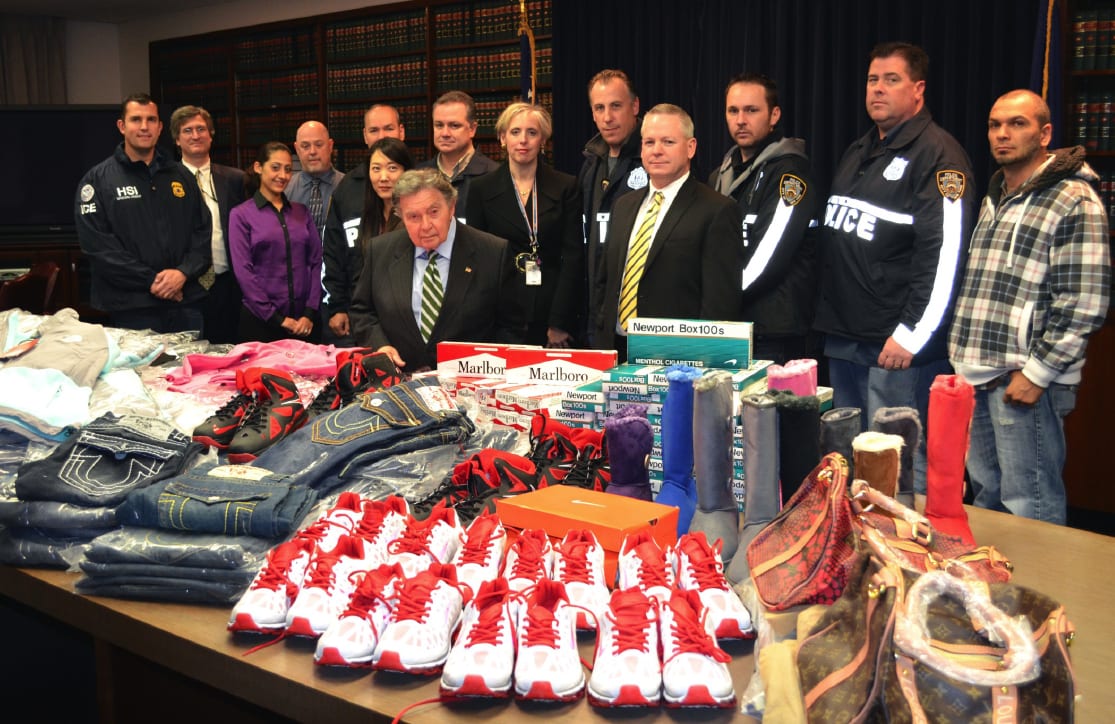
    Codenamed “Octopus”, the operation proceeded from June 5–13 and resulted in the seizure of about 2700 suspected counterfeit dolls and other relevant items with an estimated market value of about HK$300,000 (US$38,322).

    Customs had earlier received information alleging that the presence of counterfeit dolls in claw-machines shops was widespread in the market. Officers later conducted patrols in different districts.

    After further investigation with the assistance of a trademark owner, Customs officers raided six claw-machine shops in Chai Wan, Lam Tin, Mong Kok, Tuen Mun and Tin Shui Wai as well as a storage facility in San Po Kong. Some 2700 suspected counterfeit dolls and other suspected counterfeit goods, 15 claw machines and five token changing machines were seized.

    During the operation, three men and three women were arrested, including three shop owners and three staff members, aged between 26 and 50.

    The investigation is ongoing.

    Divisional commander (IP general investigation) Peggy Tam told press that Customs would continue to step up inspection and enforcement to fight against the use of counterfeit goods for the purpose of trade. She reminded consumers to check with the trademark owners or their authorised agents if the authenticity of a product is in doubt.

    She also reminded traders to be cautious and prudent in merchandising since the possession of counterfeit goods for any purpose of trade is a serious crime and offenders are liable to criminal sanctions.

    Under the Trade Descriptions Ordinance, any person who sells or possesses for the purpose of trade any goods with a forged trademark commits an offence. The maximum penalty upon conviction is a fine of HK$500,000 ($63,870) and imprisonment for five years.

  • L’Occitane profit rose after Restructuring

    L’Occitane profit rose after Restructuring

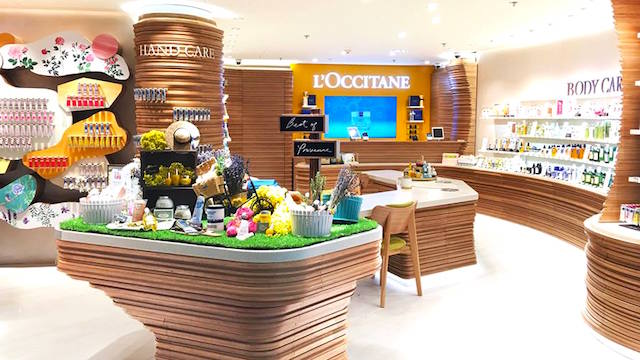
    Hong Kong-listed beauty-products retailer L’Occitane is reaping the benefits of a restructure with profit up 21.8 percent last financial year to €117.6 million.

    And chairman Reinold Geiger says even better results are in the pipeline. “The group now operates as a multi-brand entity, where unique brand identities are celebrated and common values shared — respecting nature, creating authentic and genuine experiences, promoting entrepreneurship, and bringing a human approach to beauty,” he said in a statement.

    “The group encourages its brands to stay agile and autonomous, yet synergies are also being identified and capitalized. With the material improvements delivered by the core L’Occitane en Provence brand, combined with the largely accretive consolidation of Elemis, the group expects to see enhanced profitability in 2020 and beyond.”

    Group net sales were €1.427 billion for the year to March 31, up 8.7 percent at constant exchange rates. Gross margin remained high at 83.2 percent and operating profit rose by 6.9 percent.

    L’Occitane’s Hong Kong net sales were €137 million, an increase of 9.9 percent year on year, or 8.6 percent at constant exchange rates. However, same-store sales fell 2.6 percent.

    “Macroeconomic uncertainties continued to erode consumption sentiment, reflected in a marked downturn in the Hong Kong retail market after the first quarter of {last year}, notably in the average ticket value,” the company said in its earnings review. “Meanwhile, the increase in mainland tourist traffic brought by new infrastructure did not uplift Hong Kong retail sales.”

    Sales in China reached €178.1 million, an increase of 11.9 percent, or 12.1 percent on a constant-exchange-rate basis.

    “Sales momentum in China was dynamic throughout the whole year,” the company said. “Sell-out sales remained strong even though trading with seven fewer stores than last year, posting a growth of 9.6 per cent at constant exchange rates, and with same-store sales growth at 6.9 percent. The marketplace channel continued to drive growth, with impressive performances recorded during key festivals such as Singles’ Day, Chinese New Year and Women’s Day. Sell-in sales also posted encouraging results, with the growth of more than 30 percent, thanks to the launch of JD and dynamic B2B sales.”

    In Japan, net sales rose 1.5 percent to €222.1 million, however in the local currency, the growth was just 0.1 percent. “The flattish performance was due to a sluggish retail market. Nonetheless, retail sales of L’Occitane en Provence grew at a low single-digit rate as compared to last year, thanks to the new stores opened, the large-scale “Balloon Journey” marketing event and successful face care campaigns during the year.”

    Taiwan net sales of €38.2 million represented a decline of 3.2 percent at reported rates, or 2.7 percent at constant exchange rates.

    “The Taiwan retail market remained competitive,” the company said. “The decrease in sell-out was largely explained by the negative 2.7 percent same-store sales growth, together with the typhoon hits and poor weather during the summer season. Web sell-out channel, however, recorded double-digit growth, thanks to the revamped own e-commerce platform as well as the development of the marketplace.”

    Most other markets remained static for L’Occitane, with the exception of Brazil, where sales fell by 4 per cent, and the US, where they soared 35 per cent.

  • Cosmetics, holiday season bouy China retail sales growth

    Cosmetics, holiday season bouy China retail sales growth

    The rate of China retail sales growth rose for the second consecutive month in May, buoyed by the holiday season.

    According to government data, retail sales rose 8.6 percent, which followed 8.3 percent growth in April and 7.2 percent in March.

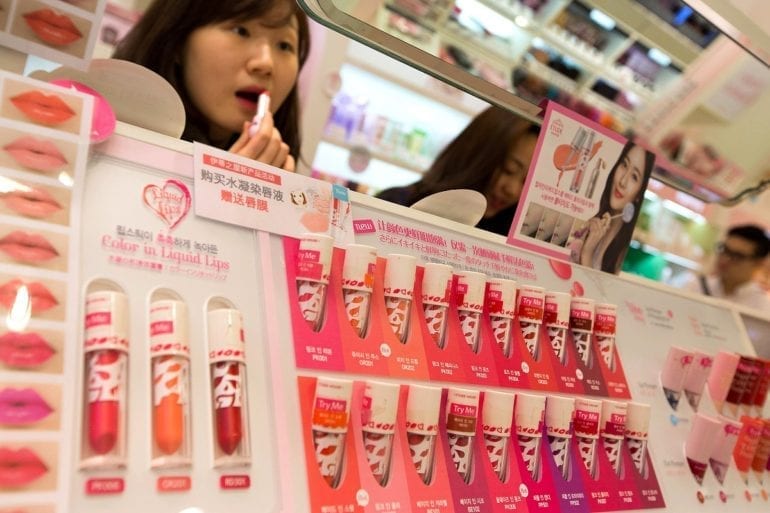
    The strongest-performing categories were cosmetics, where sales rose by 16.7 percent, food up 11.4 percent, beverages up 12.7 percent, and daily goods, up 11.4 percent.

    The weakest categories included apparel and footwear, down 4.1 percent, and jewelry, down 4.7 percent.

    Despite efforts by the Chinese government to encourage consumers to upgrade home appliances, that sector remained subdued, growing at 5.8 percent in May and 6.4 percent year to date.

    The growth rate encouraged Jeffries Hong Kong equity analyst Summer Wang to express confidence in Chinese retail companies.

    “We stay bullish on function-led premiumization and content-driven consumption,” she said in a  research note.

    May’s China retail sales growth exceeded the consensus of analysts by about half a percentage point. Excluding inflation, the growth rate was estimated at 6.4 percent in May, following 5.1 percent in April.

    Urban sales rose 8.5 percent, while rural sales were up 9 percent.

    Sales of goods online grew by 21.7 percent in May and now account for 18.9 percent of total China retail sales.

  • Alibaba management shakeup sees CFO promoted

    Alibaba management shakeup sees CFO promoted

    The most significant Alibaba management shakeup since founder Jack Ma revealed he would step aside next September 10 sees high-profile CFO Maggie Wu take on a new role.

    Wu will take over responsibility for strategic investments by the group, charged with finding new growth streams for the technology and retail giant as its growth in the e-commerce sector begins to slow. She will oversee a team focused on investment, taking over that responsibility from executive vice-chairman Joe Tsai.

    The Alibaba management changes were revealed via the company’s official WeChat account by CEO Daniel Zhang.

    “To guarantee innovation, invest in our future, Alibaba is undertaking an organisational upgrade,” he said.

    Wu has been Alibaba’s CFO for six years.

    In other changes, Alibaba said its supermarket chain Freshippo – also known as Hema and now numbering 160 stores – will become a standalone business. DingTalk, the group’s enterprise software business unit, will be merged into the Alibaba Cloud business unit.

    These changes come ahead of a planned IPO in Hong Kong later this year which could raise as much as US$20 billion in fresh capital for expansion via investment.

  • Costco China to launch in August

    Costco China to launch in August

    US-headquartered warehouse-club retailer Costco Wholesale will open its first physical store in Mainland China in August.

    Costco China’s first location will be in Shanghai’s Minhang district, offering memberships to family and corporate consumers at RMB299 (US$43). The firm’s membership strategy has been largely successful in most markets, with an 88-per-cent renewal rate globally.

    “Costco is good at building a loyal shopper base through its paid membership program with low prices and a select number of stock-keeping units,” said Kantar Worldpanel China GM Jason Yu on Costco China’s debut. “The question is whether they can replicate this in China easily.”

    The group will prove strong competition for Walmart China’s Sam’s Club, a premium goods retailer targeting high-end buyers and which has been accelerating store expansion for the past two years, with a target of reaching 40 locations in the territory by next year.

    Costco now has 773 warehouses worldwide and operates e-commerce sites in several international markets.

    Costco has also announced plans to launch in New Zealand, with the first store scheduled to open in 2021.

  • China to become world’s largest grocery market by 2023

    China to become world’s largest grocery market by 2023

    China is set to overtake the US to become the world’s largest grocery market by 2023 in value terms, according to new forecasts.

    Studies from international researcher IGD Asia have shown the country’s total market size will reach RMB11.0 trillion (US$1.8 trillion), more than Asia’s next four largest grocery markets (India, Japan, Indonesia and South Korea) combined.

    “China will not only retain its position as Asia’s largest grocery market by 2023, it will also overtake the US to become the world’s largest,” said IGD head of Asia Pacific Nick Miles. “The market is expected to have a CAGR of 5.5 per cent, on par with Sri Lanka and Thailand, but slower than markets such as India, Vietnam, Indonesia and the Philippines, where the economy is growing faster.

    “Less than half of grocery sales in China currently go through traditional trade and as the market continues to mature, we expect traditional trade to continue losing share to modern trade. As the total market size expands, traditional trade will still grow, but at a much slower pace over the next five years (forecast CAGR of 0.8 per cent), compared with the growth rate of modern trade (forecast CAGR of 8.5 per cent).”

    Development of modern trade in China over the next few years will be largely driven by ongoing store expansion, according to IGD’s research, as well as strong performances from the online and convenience channels.

    “Convenience will be the fastest-growing physical store channel, driven by Alibaba and JD transforming traditional mom-and-pop stores, retailers opening smaller format stores and both local and overseas players expanding their networks through partnerships,” said Miles. “Online and offline integration will drive online growth. As the fastest-growing channel, we forecast online to contribute up to 11 per cent of sales in 2023.”

    Hypermarket share will decline

    Meanwhile, IGD forecasts that hypermarkets will see their share of China’s total grocery retail market reduce from 22 per cent last year to 18 per cent in 2023, while the market share of supermarkets will remain steady, close to 20 per cent.

    IGD research has also found that China’s leading grocery retailers will grow at varying rates to 2023. E-commerce giants such as JD and Alibaba are set to see significant growth from both online and offline channels and become the second- and third-largest grocery retailers in China respectively. Meanwhile, retailers with nationwide networks such as Sun Art, Yonghui, Walmart, CRV and Carrefour will benefit from ongoing expansion, partnerships with e-commerce and tech companies, improved efficiencies, and investment in small formats. Regional players such as NGS and Wumart will continue to focus on profitability.

    “With such strong market growth to 2023, trading in China has vast potential, whether supplying directly to physical stores or via online marketplaces,” concluded Miles. “However, there are huge changes taking place that suppliers need to consider. Online giants are reshaping China’s retail landscape with their strong logistical and technical capabilities, so suppliers should understand this new path of purchase and design meaningful ways to reach their shoppers. Expansion through local partners will also remain a key route to market in China, so customer strategies must take into account the strong alliances forming between e-commerce players and bricks and mortar retailers.

    “There’s also a huge RMB1.7 trillion ($245.57 trillion) growth opportunity in convenience and online in the next five years, which can be captured by understanding trends and retailer strategies and allocating resources accordingly. But we would also urge suppliers not to neglect traditional trade, which will still account for about one-third of FMCG sales in 2023. As the channel modernises, it will provide new ways to reach new shoppers.”