Tag: China

  • The Motorola One Vision Will be Announced Soon

    The Motorola One Vision Will be Announced Soon

    Motorola has released a total of three Android One smartphones since 2017 – the Motorola One, One Power, and Moto X4 – but soon this list could expand with the launch of the Motorola One Vision.According to one Twitter user with a seemingly solid track record, the Motorola One Vision will make its official debut at an event held in São Paulo, Brazil on May 15th. To further back up his claim, an official-looking invite to the event was provided.

    Brazil isn’t typically the first place manufacturers head to for device announcements, but for Motorola it’s nothing out of the ordinary. Since mid-2014, the Chicago-based brand has been the second-largest smartphone vendor in Brazil behind Samsung. Most of this success is down to the budget Moto G and Moto E lineups, but from the look of things Motorola now wants to increase its sales in the mid-range segment.

    As specified by recent leaks, the Motorola One Vision should arrive equipped with a large 6.2-inch display that boasts a tall 21:9 aspect ratio and a small cut out in the top corner. It’s unclear at the moment what kind of selfie camera the latter will house, but rumor has it the smartphone will come equipped with a 48-megapixel sensor on the rear that’ll be paired with a dedicated depth sensor.

    On the internal side of things, the One Vision looks set to be Motorola’s first smartphone with a Samsung processor in side. Specifically, the Exynos 9610 that was recently used inside the Galaxy A50 was rumored. Performance-wise, this should be on par with the Snapdragon 660.

    Also to be expected is stock Android 9 Pie and a decent 3,500mAh battery. Additionally, 3GB of RAM and 32GB of storage are expected, although variants with 4GB of RAM and either 64GB or 128GB are said to be on the way too.

    Lastly, regarding the pricing and availability, the Motorola One Vision will apparently be sold in both Blue and Gold and could potentially be sold in the US in addition to Europe, Latin America, and China. The smartphone’s pricing currently remains a mystery, but this device could potentially replace the original Motorola One which means a $399 price tag seems likely.

  • Vodafone’s reveal keeps the pressure on Huawei

    Vodafone’s reveal keeps the pressure on Huawei

    In this week’s news is yet another story about Huawei and security as European telecommunications operator and regulators continue to scrutinize the gear in advance of 5G deployments. This one is historical though. Apparently Vodafone found security flaws in Huawei gear its Italian unit bought back in 2011 and 2012.

    In the technical sense, this is hardly a surprise. Vulnerabilities and patches are an ongoing part of pretty much all software development, and in this case the problem came with the telnet protocol. There was a day when telnet was a thing for everyone, but these days it’s more a diagnostic thing. According to Vodafone, the flaw would not have been accessible via the internet and was quickly patched. All vendors have processes to handle exactly this sort of thing, and all have done so many times. So the fact that it happened eight years ago in this case is news today only because it was Huawei.

    But the pressure to block Huawei from 5G deployments continues unabated. The contention is that because China requires all its companies to help its national security apparatus and Huawei (like every major Chinese company) has deep ties to that apparatus. On the one hand, it’s easy to envision spies doing this sort of thing. On the other hand, it’s very hard to imagine such deliberate vulnerabilities remaining undetected for long in a suspicious world.

    The most recent development came a few days ago when KPN decided Huawei gear was fine for radios and antennas, but not when it comes to the gear in its core 5G network. They’ve got a deal in place, but with an exit clause in case regulators or lawmakers act to ban Huawei entirely. That seems to have emerged as the consensus response of European telcos to all this pressure, a way to keep Huawei in the mix while still mollifying critics and covering themselves legally.

  • Zwilling Shanghai flagship store Gets Rewarded

    Zwilling Shanghai flagship store Gets Rewarded

    Shanghai flagship store wins international retail design accolade. The Zwilling Shanghai flagship store has been selected as one of the world’s three best retail store designs in the annual EuroShop RetailDesign Awards.

    The store blends retailing with cooking classes and a restaurant, with a focus on traditional western and eastern themes combined with “a puristic and understated interior”.

    The store’s achievement was announced at a function in Shanghai coinciding with the C-star retail industry trade show. Organised by research and training company EHI and Messe Dusseldorf the awards select three stores out of 71 nominees, with all three equally recognised. The other winners this year were L&T Sport in Osnabruck in Germany and Jigsaw’s The Shop at Bluebird in London.

    Of the Zwilling Shanghai store, the judges said “dynamic changes in colours, materials and music provide contrast to differentiate individual areas of the store”.

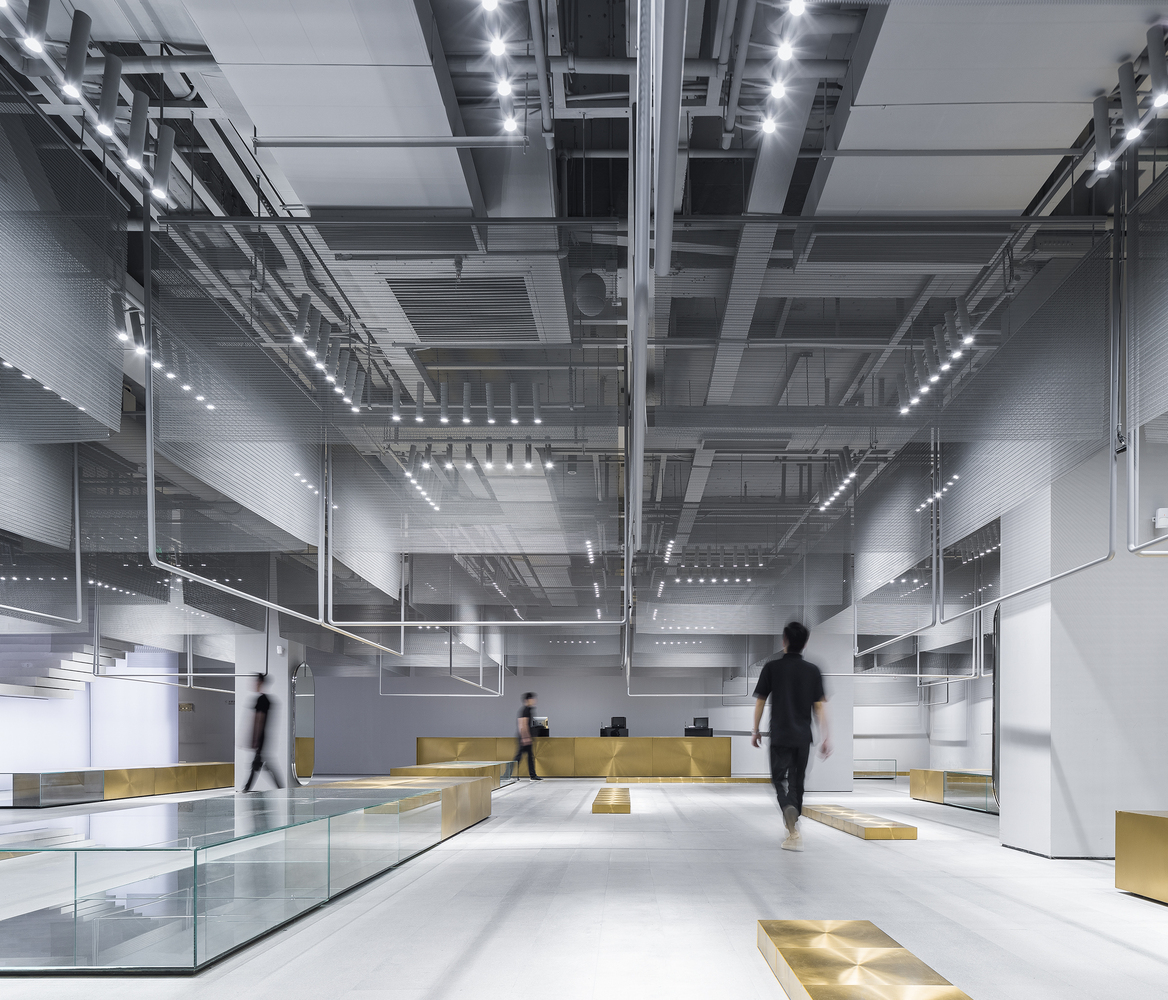
    “Bathed in light, the ground floor features light oak and dark walnut, a sand-coloured terrazzo floor, and steel and brass frames, which all serve as a backdrop for the products, providing a warm, Mediterranean atmosphere. Dedicated to various food concepts, the upper floor is characterised by varying floor heights and seating.”

    With tabletops made of blue glass and lighting elements made of brass, the store’s overall design is reminiscent of Shanghai’s Art Deco heritage.

    A 36-metre-long wooden table with teal velvet chairs adds a rustic touch to a fine-dining area, where visitors are invited to enjoy a meal.

    “The customer encounters the brand’s product world authentically – through a culinary adventure or hands-on cooking school experience.”

    Surfing in the city

    L&T Sport’s store, created by German fashion house Lengermann + Trieschmann, features 5000sqm of retail space over five floors. One of the store’s main attractions is the Hasewelle, a wave pool where surfers can test the latest boards right there in the store. Polygonal lines form the basis of the store design. The railings, whose lines are shaped in accordance with this design, are staggered across the floors in such a way that each floor and each position provides a new view of the Hasewelle pool.

    In order to integrate the individual sporting goods brands into the design, the store refrains from the usual shop-in-shop brand solutions. Members can train in high-altitude conditions in an 800sqm Premium City-Gym. Separated from the store by nothing more than glass walls, the gym is part of the sporting goods store while also serving as an extension of its core business.

    A cabinet of curiosity

    The Shop at Bluebird is owned by British fashion company Jigsaw and specialises in high-end brands from the worlds of fashion, beauty, art and design. The concept store’s diverse offerings are housed in a heritage-protected 19th-century historical coach house on Floral Street in Covent Garden, London.

    “Striking, opulent decor and design elements combine to create a ‘cabinet of curiosity’,” the judges said.

    An atrium filled with natural light and a cobblestone floor creates an open-air ambience in the middle of the store. A custom-made, cube-shaped installation with 20 reflective surfaces hanging from the ceiling creates an artistic effect by reflecting and distorting its surroundings.

    “The design concept plays with geometric forms and curved lines, combining traditional and modern elements harmoniously. Wallpapers in coordinated colours and textures complement the multifaceted aesthetic, consisting of elegant Art Deco patterns and floral Victorian motifs.”


    The Zwilling Shanghai flagship store has been selected as one of the world’s three best retail store designs in the annual EuroShop RetailDesign Awards.

    The store blends retailing with cooking classes and a restaurant, with a focus on traditional western and eastern themes combined with “a puristic and understated interior”.

    The store’s achievement was announced at a function in Shanghai coinciding with the C-star retail industry trade show. Organised by research and training company EHI and Messe Dusseldorf the awards select three stores out of 71 nominees, with all three equally recognised. The other winners this year were L&T Sport in Osnabruck in Germany and Jigsaw’s The Shop at Bluebird in London.

    Of the Zwilling Shanghai store, the judges said “dynamic changes in colours, materials and music provide contrast to differentiate individual areas of the store”.

    “Bathed in light, the ground floor features light oak and dark walnut, a sand-coloured terrazzo floor, and steel and brass frames, which all serve as a backdrop for the products, providing a warm, Mediterranean atmosphere. Dedicated to various food concepts, the upper floor is characterised by varying floor heights and seating.”

    With tabletops made of blue glass and lighting elements made of brass, the store’s overall design is reminiscent of Shanghai’s Art Deco heritage.

    A 36-metre-long wooden table with teal velvet chairs adds a rustic touch to a fine-dining area, where visitors are invited to enjoy a meal.

    “The customer encounters the brand’s product world authentically – through a culinary adventure or hands-on cooking school experience.”

    Surfing in the city

    L&T Sport’s store, created by German fashion house Lengermann + Trieschmann, features 5000sqm of retail space over five floors. One of the store’s main attractions is the Hasewelle, a wave pool where surfers can test the latest boards right there in the store. Polygonal lines form the basis of the store design. The railings, whose lines are shaped in accordance with this design, are staggered across the floors in such a way that each floor and each position provides a new view of the Hasewelle pool.

    In order to integrate the individual sporting goods brands into the design, the store refrains from the usual shop-in-shop brand solutions. Members can train in high-altitude conditions in an 800sqm Premium City-Gym. Separated from the store by nothing more than glass walls, the gym is part of the sporting goods store while also serving as an extension of its core business.

    A cabinet of curiosity

    The Shop at Bluebird is owned by British fashion company Jigsaw and specialises in high-end brands from the worlds of fashion, beauty, art and design. The concept store’s diverse offerings are housed in a heritage-protected 19th-century historical coach house on Floral Street in Covent Garden, London.

    “Striking, opulent decor and design elements combine to create a ‘cabinet of curiosity’,” the judges said.

    An atrium filled with natural light and a cobblestone floor creates an open-air ambience in the middle of the store. A custom-made, cube-shaped installation with 20 reflective surfaces hanging from the ceiling creates an artistic effect by reflecting and distorting its surroundings.

    “The design concept plays with geometric forms and curved lines, combining traditional and modern elements harmoniously. Wallpapers in coordinated colours and textures complement the multifaceted aesthetic, consisting of elegant Art Deco patterns and floral Victorian motifs.”
  • La Chapelle sales Slump Again

    La Chapelle sales Slump Again

    La Chapelle sales slumped 21 per cent in the first quarter to RMB2.372 billion (US$352 million) as the Hong Kong-listed fashion retailer continued its restructuring.

    The troubled retailer has closed 1877 loss-making and inefficient stores in the past year, leaving it with 9540 at the end of March, and representing the shuttering of one in five directly operated outlets.

    Net profit attributable to shareholders plunged 94.4 per cent to RMB9.751 million (US$1.44 million).

    In a shareholder update, La Chapelle said weak consumer confidence and the continued overall negligible growth of apparel spending compared with the second half of last year had also impacted on sales in the March quarter.

    According to the National Bureau of Statistics data, Mainland China sales of shoes, hats and apparel grew by just 3.3 per cent year on year, a rate five percentage points less than the growth rate of all consumer goods sales.

    “Furthermore, the Chinese New Year holiday of 2019 was 11 days earlier than that of 2018, which had an adverse effect on the sales of winter products for the first quarter. The revenues of the ladies’ apparel brands such as La Chapelle, Puella, 7 Modifier as well as La Babite for the first quarter had a year-on-year decrease of 26.65 per cent, 29.76 per cent, 22.91 per cent and 23.06 per cent respectively, which is mainly due to the decrease in direct-sale stores, the change in numbers of ultimate consumers, and the increase in proportion of sales of obsolete inventories,” the company said.

  • Chinese KFC restaurants struggles as chicken prices Increases

    Chinese KFC restaurants struggles as chicken prices Increases

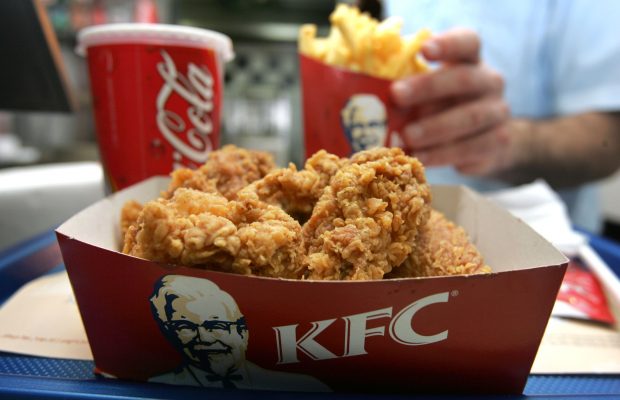
    Chinese KFC restaurants have begun serving parts of chickens not used before in response to rising costs.

    According to Yum China CEO Joey Wat, the KFC brand introduced new chicken cuts in the first quarter from “a part of the chicken that we somehow have not used in the last 30-some years”. The cut is a portion between the wing and the breast.

    The elevated poultry costs are largely attributed to a spin-off effect from the impact of African Swine Fever on the pork market as well as the current trade war with the US.

    The costs have seen KFC’s operating margin reduced to 18.7 per cent from the previous 20.6 per cent, despite a rise in same-store sales of 5 per cent. KFC has faced commodity inflation of 5 per cent in the first quarter, according to the company’s earnings call.

    “We expect poultry inflation to weigh on margins for the rest of the year,” said Yum China CFO Jacky Lo.

    Wat stated that the chain may be turning to new technology to save its declining margins in the hope that such technology can provide “another way to cut out chicken.”

    The brand may also introduce “some sort of ingredient” other than chicken “that probably has not been used before.”

  • Suning.com’s Online Sales Soars

    Suning.com’s Online Sales Soars

    Suning.com’s first-quarter online sales soared 40.87 per cent as the company’s smart-retail strategy continues to drive the rapid growth.

    Operating income of RMB 62.2 billion (US$9.2 billion), represented a 25.44 per cent increase on the same period last year. First-quarter net profit was RMB 136 million.

    In a statement, Suning.com said during the first quarter of this year, the overall domestic consumer market in Mainland China still exhibited potential for growth.

    “Despite the softer market environment, Suning’s online and offline businesses maintained relatively rapid growth.”

    Off-line, Suning continued its large-scale expansion, its network comprising 9758 self-owned stores and 2571 franchise stores as at March 31. A standout was the Redbaby store, whose sales increased by 15.7 per cent year on year.

    “In the online market, with the enhanced industrial synergy and the improved efficiency brought by resource integration, the growth rate of Suning’s sales clearly outpaced the industry average,” the company said.

    During the quarter, the company set up five major product groups including household appliances, consumer electronics, FMCG, clothes and accessories, and international items to streamline product management.

    In the FMCG sector, Suning strengthened its brand and achieved dual online-offline growth through centralised procurement, purchasing directly from the manufacturer and strategic cooperation, which helped grow its network of offline stores.

    “In the same period, Suning has further optimised the supply chain management of online and offline stores through the acquisition of 37 Wanda stores, marking a significant success for Suning’s all-categories product portfolio operational strategy.”

  • Gome profit warning issued to Shareholders

    Gome profit warning issued to Shareholders

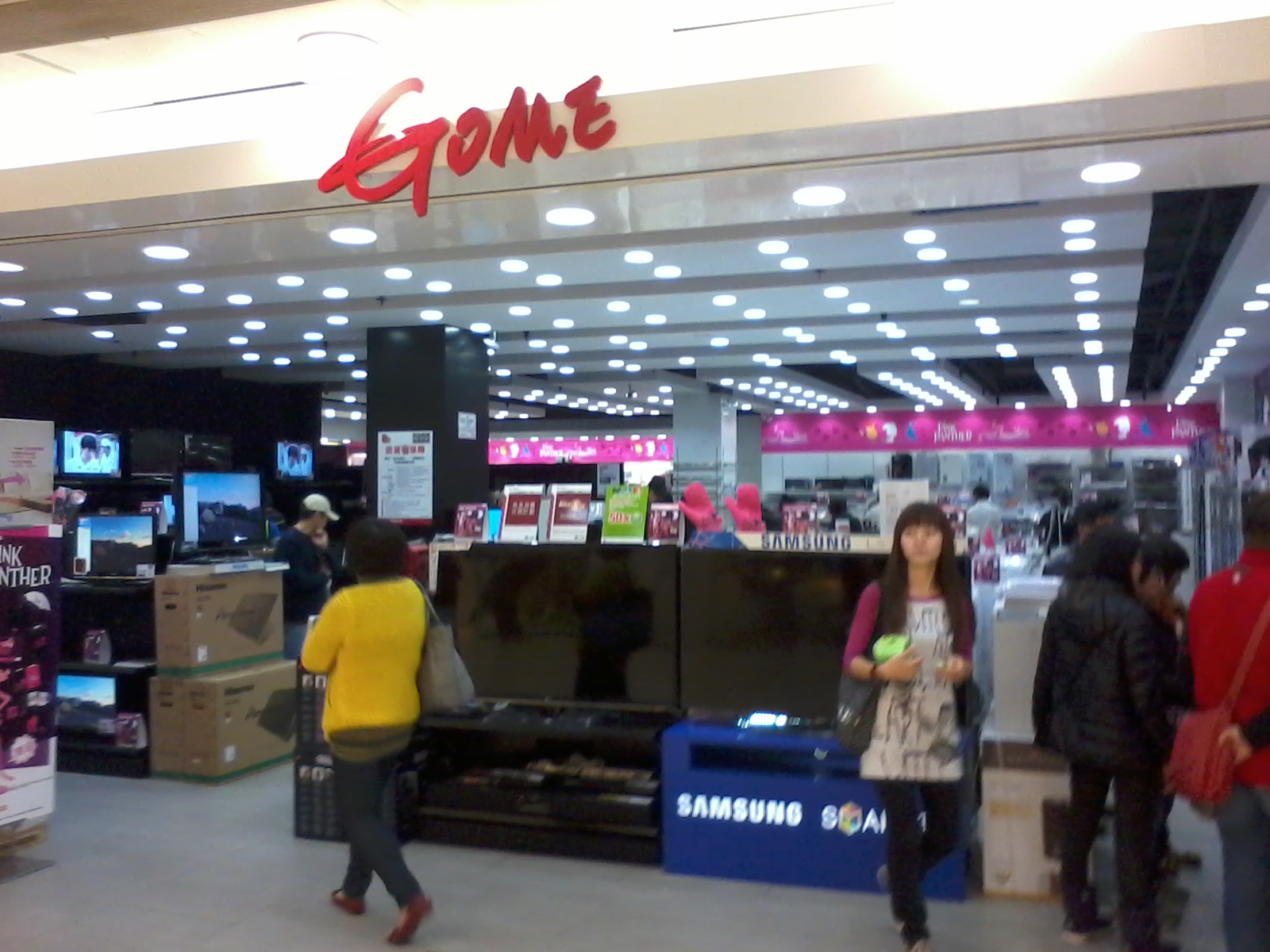
    Another Gome profit warning has been issued as the company’s massive restructuring program continues.

    However the group says the reforms are beginning to show results and while a loss is anticipated for the latest quarter, it will be less than that of the previous period.

    According to a stock exchange filing, Gome says its loss attributable to owners is expected to range somewhere between RMB20 million (US$3 million) and RMB90 million ($13.4 million), as compared with a profit of RMB113 million for the corresponding period last year. The loss will be “significantly reduced” compared with the loss for the December quarter, the company said. Last full year, Gome lost RMB4.887 billion ($728 million).

    The group says it continued to actively pursue its transformation into an integrated home solution, service solution and supply chain provider based on its strategy of ‘Home • Living’. It expects the group’s total GMV for both online and offline to grow about 5 per cent year on year for the March quarter.

    Of that, GMV from Me Shop is expected to grow by more than 200 per cent, service GMV by more than 30 per cent, GMV from smart products by more than 50 per cent; and GMV from new businesses such as home solution and integration of kitchen cabinets with electrical appliances, by more than 100 per cent.

  • Low-cost imports challenge Furniture Retailers

    Low-cost imports challenge Furniture Retailers

    The furniture retailing industry may face a tough trading environment in 2019-20 with revenue expected to decline by 3.3 per cent during the period, according to IBISWorld analysts.

    Mounting internal and external competition is expected to continue to threaten the viability of furniture operators in the current year, with revenue expected to decline to $890.0 million as the industry continues to struggle with a challenging operating environment.

    Bao Vuong, IBISWorld senior industry analyst, said the rising volume of low-cost furniture imported into New Zealand is also forecast to hinder the industry’s performance in the current year.

    “The availability of low-cost furniture imports is projected to heighten industry competition,” Vuong said.

    Industry revenue is also likely to be suppressed by slower growth in residential building construction, which will reduce retail demand for furniture items.

    An IBISWorld furniture retailing industry report last year showed it has faced a tough trading environment over the past five years, with revenue growth stifled by increasing competition.

    Within the industry, players typically compete on the basis of price and product range.

    External competition comes from a range of other operators that sell furniture as part of their operations, including department stores, auction websites and online-only players.

    In the next five years through 2023-24, IBISWorld analysts forecast the furniture retailing industry to be operating within a challenging environment .

    “Mounting internal and external competition is projected to continue threatening the viability of operators over the period,” analysts said.

    The report also showed softer real household discretionary income growth could hinder retail demand for furniture products during the period.

  • Four Bidders shortlisted in Metro China sale

    Four Bidders shortlisted in Metro China sale

    Germany’s Metro has shortlisted four prospective bidders for its China business, including two of Mainland China’s largest retail groups.

    The Metro China sale has been in planning since last September, with formal bids invited in March as the German retail giant looks to quit the challenging market.

    Metro AG has invited Suning Holdings, Yonghui Superstores, Wumart stores and Meicai to submit bids before a deadline of late May, early June. Some of the bids may be lodged in partnership with private equity investors.

    Meicai is an unexpected inclusion in the shortlist. A local startup that acts as a conduit between farmers and restaurants, Meicai was founded by Liu Chuanjun, a local entrepreneur in 2014. According to a Bloomberg News report last October, the startup last year raised at least $600 million in a funding round led by Tiger Global Management and Hillhouse Capital, which would have valued the business then at about $7 billion.

    The Metro China sale is expected to net the Germany owner about $1.5 billion. The cash-and-carry business has 95 stores and reported $3 billion last financial year.

  • China Unicom brings 9 investors to IoV subsidiary

    China Unicom brings 9 investors to IoV subsidiary

    China Unicom said a group of automobile OEMs have invested in its Internet of Vehicle (IoV) unit China Unicom Smart Connection Technology.

    Nine strategic investors, including major automobile companies FAW, Guangzhou Automobile Group and Dongfeng Motor Group, among others have picked up a combined 31.2% in Smart Connection Technology.

    The financial terms of the transaction were not disclosed.

    Following the introduction of strategic investors, Unicom now directly owns 68.8% of shares in the IoV unit, the Chinese telco said in a company statement.

    The divestment of stakes is part of the 5G business strategy of Unicom, which aims to launch commercial 5G services in 2020.

    Unicom said the new investors have strong strategic synergy with Smart Connection Technology in fields such as automobile manufacturing, industrial internet, technology and resources, and capital investment.

    The tie-up will enable Smart Connection Technology to secure better industry resources and competitive advantages to provide connected vehicle and service operation solutions and tap the business opportunities brought by 5G, the company added.

    Smart Connection Technology, established in 2015, provides services to major automobile OEMs in both domestic and international markets. According to Unicom, Smart Connection Technology has an over 70% share of the IoV market in China.

  • China Telecom formally signs Philippines JV agreement

    China Telecom formally signs Philippines JV agreement

    China Telecom has formally signed the agreement to create Mislatel, the joint venture that will become the Philippines’ third mobile operator, committing to invest $5.4 billion in the venture.

    The agreement with local conglomerate Udenna Corporation was signed last week in Beijing.

    China Telecom teamed up with Udenna Corporation, consisting of businesses owned by local tycoon Dennis Uy, to jointly submit an application in the Philippines’ new major player selection process in 2018.

    A company owned by Uy, also known as Mislatel, was granted a congressional telecommunications franchise in 1998, and the joint venture plans to use this franchise to operate.

    The joint venture’s entry in the market had the support of president Rodrigo Dutertre, but doubts were raised over the validity of this franchise due to Mislatel’s failure to launch services within the required window. But in February, the Philippines’ senate approved the transfer of the franchise to the joint venture.

    But due to delays receiving the required approvals to operate, Mislatel last week revealed plans to postpone its planned launch date from late 2020 to early 2021.

  • Fast-food chain Jollibee Plans China Rollout

    Fast-food chain Jollibee Plans China Rollout

    Filipino fast food chain Jollibee may open its first location in China within the next five years.

    The firm already has a presence in the territory, where it operates the Dunkin’ Donuts franchise. It also operates eight stores in Hong Kong.

    JFC president and CEO Ernesto Tanmantiong told that the firm is currently looking for a location where there is a high Filipino population, with a view to attracting the local market afterwards.

    “We build the base and slowly cross over to the mainstream market, which is the local market,” said Tanmantiong. “We have done that successfully in Hong Kong and in Singapore.”

    The firm took legal action against a copycat restaurant in China, JoyRulBee, earlier this year.

    Jollibee will open its first store in Rome and Spain shortly while exploring other markets.

  • Forever 21 China Closes Down Online Stores

    Forever 21 China Closes Down Online Stores

    Fashion retailer Forever 21 will close its Chinese e-commerce website amist indications of possible physical store closures to come.

    While an April 25 notice on the brand’s home page confirms the e-commerce shutdown, the retailer has declined to issue any official comments, despite the confirmed shuttering of one physical outlet and major discount sales reportedly underway in other stores. It has been operating in the territory since 2011.

    Tmall and JD have released statements indicating that the fashion retailer will cease trading on their platforms from today onward.

    The brand’s last remaining store in Taiwan closed last month, while stores in other markets have reportedly been closing down as well, including France. Forever 21’s multi-storey flagship in Hong Kong closed in 2016, with the space being taken over by Victoria’s Secret. It opened a smaller store on Mong Kok in its place.

    A report in Retail Dive suggested that the possible withdrawal accords with a slowing retail environment within China for international goods, pointing to the withdrawal of Amazon from the territory after investing in the market for 15 years.

    “Overall this is a big and tough market to compete for non-Chinese brands, given strong domestic competition and unique consumer demands,” said China practice lead at global public policy consultancy Access Partnership Xiaomeng Lu. “Domestic e-commerce giants such as Alibaba, JD.com, and Pinduoduo compete fiercely against each other as well as edge out smaller brands.

    “Chinese customers are used to shopping on apps, expect low-cost same-day shipping, and tend to have little brand loyalty.”

    The report also quotes Euromonitor International analyst Arianna Zhai as commenting “Alibaba and JD alone have taken about 70 per cent market share. The strong presence and different strategic positions of both e-commerce retailers leave limited room for others.”

    “The reasons for the shutdown of operations are unclear, but it is likely that Forever 21 has struggled to cut through in what is an increasingly competitive market,” said GlobalData Retail MD Neil Saunders. “Although the Chinese retail market is still growing strongly and offers enormous potential, the proliferation of Western and indigenous brands means it can be hard to stand out from the crowd. There are also concerns that activity is slowing down, although growth remains well above that available in Western markets.”

  • C-star Shanghai sets records for Exhibitors

    C-star Shanghai sets records for Exhibitors

    C-star – the China spin-off of the world’s largest retail show, the triennial EuroShop in Germany – is underway in Shanghai this week. This year’s event, the fifth, features a record 138 exhibitors at the Shanghai New International Expo Centre in Pudong, with exhibits including shopfitting and store furnishings, retail technology, store design and visual merchandising, lighting, and catering and refrigeration.

    A parallel retail forum features an international line-up of speakers covering trends, technology and design, among other topics.

    C-star was the first international spinoff of EuroShop and while still a shadow of the German event, which boasted 2400 exhibitors from 60 countries and 113,000 visitors the last time it was held in 2017, the Shanghai event is growing in stature each edition. The number of exhibitors this year is up 30 per cent. After the success of C-star, organiser Messe Dusseldorf has since launched another event focused on technology, EuroCIS, and its latest new venture, In-store Asia in Mumbai, India.

    Elke Moebius, global head of retail & retail technology with Messe Dusseldorf, and director of EuroShop, EuroCIS, C-star and In-store Asia, says the company wants C-star to become “the most influential retail event in China”.

    “Our decision to come to China was absolutely the right one,” she told the opening ceremony yesterday.

    “We have succeeded in distinguishing C-star from other events.”

    Messe Dusseldorf (Shanghai) GM Marius Berlemann says with mobile and ‘smart’ retail solutions developing quickly the internationalisation of the retail industry is following suit.

    “This presents even more opportunities for global investors and corporations to flourish in China’s retail industry, and our goal as the organiser is to build the bridge and bring the world of retail together.”

    A key feature of this year’s C-star event is the ReTailor Hub where creative solutions are shown in a real-life environment. Exhibitors include apparel-store Elf Sack, cosmetics-brand Fox Fairy, food-and-beverage brand Rio (which has a robot on site mixing and serving cocktails) and unmanned store concept 24 Jian. These exhibits are complemented by retail technology and equipment suppliers showcasing instore solutions including customer-flow analytics, interactive smart displays and virtual fitting systems.

    C-star’s Brand Zone offers a premium stage for exhibitors to present their newest and most promising products and solutions to a global audience.

    This year, exhibitors include design house Malherbe Paris, Storymaker, Hideki Azuma, Onewedesign, MPlus and Koscar sharing new store concepts and smart retail solutions.

    C-star 2019 continues today and tomorrow in Shanghai.

  • Shandong Ruyi seeks $500m

    Shandong Ruyi seeks $500m

    Chinese textile and retail investment company Shandong Ruyi will list an IPO for its recently acquired The Lycra Co in the hopes of raising around US$500 million.

    The group is currently exploring a listing in the US as it works with Goldman Sachs, according to those familiar with the prospective deal.

    Progress has been slow for Shandong Ruyi since regulatory delays held up its $2 billion purchase of Lycra for more than a year, which it finally completed in January. Plans for the IPO are now at early stages and are subject to significant changes before listing, which is scheduled for sometime within the next three years.

    Shandong Ruyi has previously been reported as having ambitions to become “the LVMH of China” and has acquired numerous overseas fashion brands. It is now focusing on consolidating its holdings rather than pursuing new deals.

    Shandong Ruyi Investment Holding is the largest textile and apparel company in China, and ranks among the Top 100 Chinese multinational enterprises. It is headquartered in Jining, Shandong and operates 13 domestic industrial parks.