Tag: China

  • Tigers is strategic logistics partner for K&N Filters in China

    Tigers is strategic logistics partner for K&N Filters in China

    Tigers is working with K&N Filters, a high-performance automotive air filter and air filtration manufacturer, which is expanding operations in China, the world’s largest automotive market.

    Hong Kong-based Tigers is providing logistical support through its Chinese network of offices and facilities to USA-based K&N Filters as they grow their presence in the region.

    “Working closely with international brands like K&N Filters as a strategic logistics partner is always a pleasure for Tigers as we are specialized in global logistics and supply chain solutions,” said Laura Crow, Managing Director – China, Tigers.

    “China is a very strong market for Tigers and we are working with K&N Filters by fulfilling both its B2B and B2C orders in the region, providing marketing and trading services, as well as offering our specialist local knowledge.”

    As part of K&N Filters expansion plans in China, the manufacturer recently launched the ‘Revolution. Powering the Future’ strategy conference in Chengdu, China, to showcase the brand and product solutions to the Chinese market.

    “K&N Filters is committed to providing Chinese car owners with high-quality product performance and is continuously developing a localized product series that is more suitable for the Chinese market,” said William Wu, General Manager – China, K&N Filters.

    “Working with Tigers is the perfect match for expanding our operations in China due to Tigers’ extensive knowledge of the Chinese market and their modern approach to global logistics.”

    K&N Filters supplies air filters and air filtration systems to championship-winning teams in most forms of motorsports around the world, including NASCAR and Supercross to achieve more horsepower and brake performance limits.
  • ZTE, China Telecom launch 5G industrial service platform

    ZTE, China Telecom launch 5G industrial service platform

    ZTEChina Telecom and industrial equipment company Zhejiang Supcon have jointly developed a 5G-enabled industrial service platform designed to allow specialists to remotely assist on-site maintenance personnel.

    The Plantmate service platform allows on-site maintenance personnel to use augmented reality glasses equipped with high definition cameras to send real-time high definition images back to specialists over 5G.

    These specialists can then diagnose and troubleshoot problems remotely, communicating with on-site personnel over voice and video as well as a shared digital whiteboard.

    Users will also be able to access the maintenance specialist team at Zhejiang Supcon’s Hangzhou headquarters to obtain remote consultation and technical guidance for the company’s equipment and instruments.

    The three companies have announced plans to deepen their 5G cooperation in the industrial feed in the future to help jointly promote the implementation of a 5G industrial internet.

  • SoftBank JV to invest $125m in Project Loon

    SoftBank JV to invest $125m in Project Loon

    Japan’s SoftBank has announced that its joint venture HAPSMobile will invest $125 million in Google’s Project Loon to advance the use of high-altitude vehicles to carry mobile base stations.

    HAPSMobile, the joint venture between SoftBank and US-based unmanned aerial vehicle systems company AeroVironment, was established in 2017 to conduct network equipment research and development for the high-altitude platform station (HAPS) business.

    Under the agreement with Google, Loon has been given the right to invest the same sum in HAPSMobile at a later date.

    The two companies have also agreed to actively explore commercial collaborations to accelerate the development of high altitude network connectivity solutions, such as the network of stratospheric balloons that Loon is trialling to deliver internet access to unserved areas of the world.

    Potential areas of collaboration being negotiated include enabling flight vehicles from each party to connect and share the same network connectivity in the air, as well as the establishment of a wholesale business that would allow HAPSMobile to utilize Loon’s vehicle and technology, and allow Loon to utilize HAPSMobile’s in-development unmanned aircraft.

    Other possibilities include a jointly developed communications payload that is adaptable to multiple flight vehicles, a common gateway or ground station that could be deployed globally and used by both companies to provide connectivity over their platforms, and adapting Loon’s fleet management system and temporospatial SDN for use by HAPSMobile.

    “Building a telecommunications network in the stratosphere, which has not been utilized by humankind so far, is uncharted territory and a major challenge for SoftBank,” SoftBank CTO Junichi Miyakawa said.

    “Working with Alphabet’s subsidiary Loon, I’m confident we can accelerate the path toward the realization of utilizing the stratosphere for global networks by pooling our technologies, insights and experience. Even in this current era of coming 5G services, we cannot ignore the reality that roughly half of the world’s population is without Internet access. Through HAPS, we aim to eliminate the digital divide and provide people around the world with the innovative network services that they need.”

    “We see joining forces as an opportunity to develop an entire industry, one which holds the promise to bring connectivity to parts of the world no one thought possible,” Loon CEO Alastair Westgarth added.

    “This is the beginning of a long-term relationship based on a shared vision for expanding connectivity to those who need it. We look forward to what the future holds.”

  • China’s Luckin Coffee Looking at The USA

    China’s Luckin Coffee Looking at The USA

    China’s Luckin Coffee has filed for a US IPO seeking to raise up to US$800 million.

    For the time being, the IPO is officially indicated by a $100 million placeholder figure, however knowledgeable sources have disclosed the actual amount sought may be more than $500 million and up to $800 million, with the company’s valuation estimated at $4–5 billion, far higher than has been reflected in previous statements.

    Within the last few weeks the company secured a further $150 million in equity funding, ahead of the IPO.

    If the public listing is successful, it will make the Beijing-based cafe chain the largest US IPO by a Chinese company so far this year.

    China’s Luckin Coffee has undergone “expansion on steroids” in an effort to displace Starbucks as the biggest operator in the nation. This year, the firm plans to more than double its current network of 2370 stores, despite still operating at a loss following the ambitious growth spurt.

    Luckin’s net loss to shareholders was $475.4 million last year against a total revenue of $125.27 million. However the firm insists the future is bright – a prospectus released by China’s Luckin Coffee suggests that coffee consumption in China will rise to 15.5 billion cups by 2023 compared with the 8.7 billion cups consumed last year.

    “The big question for the brand long term is if, when it rolls back discounts, enough customers stick around,” said Shanghai-based principal at China Market Research Group Ben Cavender. “But the company has completely rewritten the rules for the coffee business in China and has impacted Starbucks as well as a host of smaller players.”

  • Meituan Scaling down Ella Supermarket Outlets

    Meituan Scaling down Ella Supermarket Outlets

    Chinese food-delivery website Meituan has closed three of its Ella Supermarkets in Jiangsu, almost halving its network of outlets.

    The business initiative, which sells fresh supermarket produce online for fast home delivery, has just four remaining locations in Beijing and Wuxi.

    The closures were reportedly put down to mismanagement, and stand in stark contrast to the company’s stated plans to open 20 outlets within last year.

    Its shortcomings are reflected by competing brands, however, with rival groups Yonghui Super Stores, 7Fresh and SuFresh also performing under par. Alibaba’s Hema offering is an exception with reportedly strong trading.

  • Alibaba Celebrates its 15th Ali Day

    Alibaba Celebrates its 15th Ali Day

    Alibaba employees across the world joined together to celebrate Ali Day, an annual event honoring the tenacity and fighting spirit of their colleagues and their families during the Severe Acute Respiratory Syndrome crisis in China 16 years ago.
    During the height of the outbreak in May 2003 in China, one employee was thought to have contracted the deadly virus. The entire staff was ordered to self-quarantine at home. But instead of putting the business on hold, everyone, including family members, pulled together to keep the operation afloat.
    Such determination and dedication prompted Alibaba Group founder Jack Ma in 2005 to declare May 10 as “Ali Day.” More than just a day of merriment, Ali Day is about paying tribute to employees and their family members, whom Ma often calls the company’s “biggest pillar.” It also underscores Alibaba’s values, placing “customers first, employees second and shareholders third.”
    This year, offices across all time zones held their own celebrations. Our main Xixi Campus in Hangzhou was transformed into a giant carnival, with musical and dance performances by employees throughout the day. There was a playground for children, arts-and-crafts corners and magic shows.
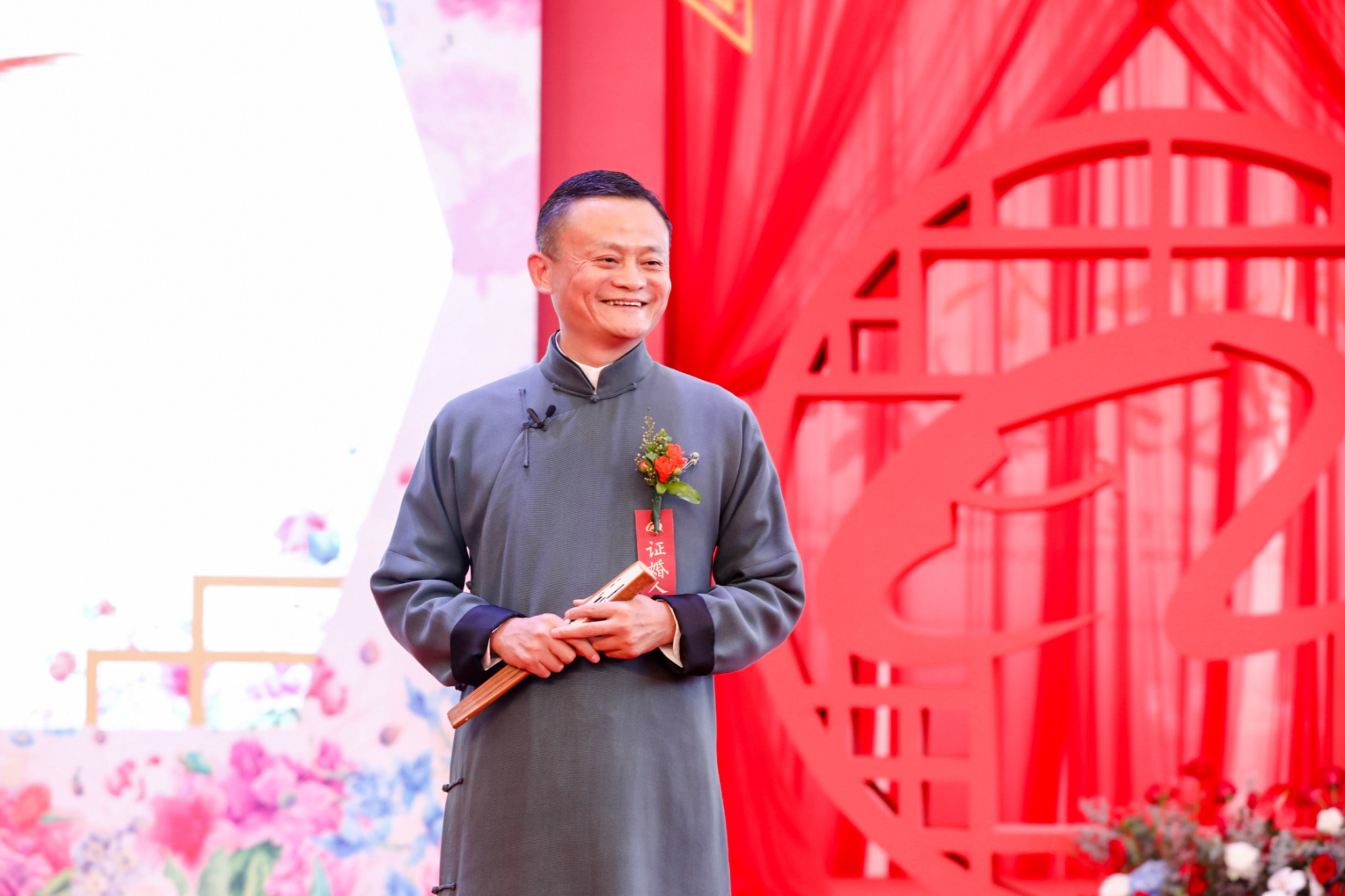
    The highlight of each Ali Day is the “wedding,” or a celebration of Alibaba couples who married over the previous year. This year was no exception, with 102 pairs of newlyweds, dressed in crimson traditional Chinese attire, receiving sage advice from Ma, himself, who presided over the ceremony. The number 102 symbolizes the minimum number of years Ma has said he wants Alibaba to last, spanning three centuries.
    On Ali Day, executives personally extend their gratitude to family members of Alibaba employees. This year, Alibaba Group Vice Chairman Joe Tsai invited the entire New York staff and guests to a New York Liberty WNBA basketball game. In Hangzhou, Alibaba CEO Daniel Zhang and Chief People Officer Judy Tong answered questions from employees’ family members.
  • Food brands team up on Tmall in New Zealand

    Food brands team up on Tmall in New Zealand

    Some of New Zealand’s most popular food and beverage brands now have direct access to Chinese customers through a new flagship on the online marketplace, Tmall.

    The online flagship, which opened last week, is the result of a joint venture between Tmall Fresh and New Zealand Food Basket Ltd, a consortium of 18 food and beverage brands.

    “It will significantly improve our reach and shorten the supply chain in a way that each brand couldn’t achieve alone,” Nicola O’Rourke, chairperson of the consortium, said.

    Nine brands were available for sale at launch – Babich, Vogel’s, Rockit, Future Cuisine, Pāmu, Zealong, Fiordland Lobster and Oha Honey – while the remaining nine brands are set to begin selling on the marketplace in June.

    They include Zespri, Sanford, Lewis Road Creamery, Kāpiti, Sealord, Alliance, Shott Beverages, Wild Catch and Cherri.

    Tmall is owned and operated by Alibaba, China’s biggest e-commerce company, with nearly 700 million monthly active users.

    The flagship store is expected to boost awareness of the brands in a market where demand for New Zealand products is high, but it can be difficult for even big companies to get cut-through.

    “Together, we want to help these brands deepen their engagement with the Chinese consumer, so shoppers in China can gain a greater appreciation of the premium high-quality products that New Zealand offers,” Maggie Zhou, Alibaba’s managing director for Australia and New Zealand, said at the signing ceremony in Shanghai last week.

    According to New Zealand’s official data agency, Stats NZ, in 2018, China was the country’s single-biggest export market, accounting for around one in every five dollars of sales of goods and services.

    At $16.6 billion, New Zealand’s export to China for the year ended September 30, 2018, was $2.6 billion more than Australia and nearly double the sales to the US.

  • Rent growth boosts CapitaLand Retail China

    Rent growth boosts CapitaLand Retail China

    Stronger rental growth and lower operating expenses boosted CapitaLand Retail China Trust’s income by 10.7 per cent in the first quarter. According to CapitaLand Retail China Trust Management Limited (CRCTML), the manager of  CRCT, net property income reached RMB198.9 million for the three months to March 31, up from RMB179.6 million in the same period a year earlier.

    “China’s economy expanded at an encouraging pace of 6.4 per cent during the quarter, with consumer demand showing signs of improvement,” said Tan Tze Wooi, CRCTML’s CEO. “The fiscal stimulus rolled out by the Chinese government, which include business and individual tax cuts, is expected to boost consumer sentiments. These developments bode well for CRCT, which has sustained its growth momentum into the new year through proactive asset management and value enhancement initiatives.

    During the quarter sales by CRCT’s tenants increased 9.8 per cent year on year, while shopper traffic grew 14 per cent. Portfolio occupancy remained high, at 97.4 per cent at the end of the period.

    “This strong foundation will anchor CRCT’s performance as we forge ahead with our tenant remix strategy to draw more popular concepts,” he said.

    Core income available for distribution to unitholders was S$24.9 million, 4.9 per cent higher than the first quarter of last year and 8.2 per cent higher than the fourth quarter of last year, with distributable income from joint ventures increasing 115.9 per cent year-on-year. The total distributable amount to unitholders was S$25.9 million.

  • CapitaLand divests StorHub self-storage business for S$185 million

    CapitaLand divests StorHub self-storage business for S$185 million

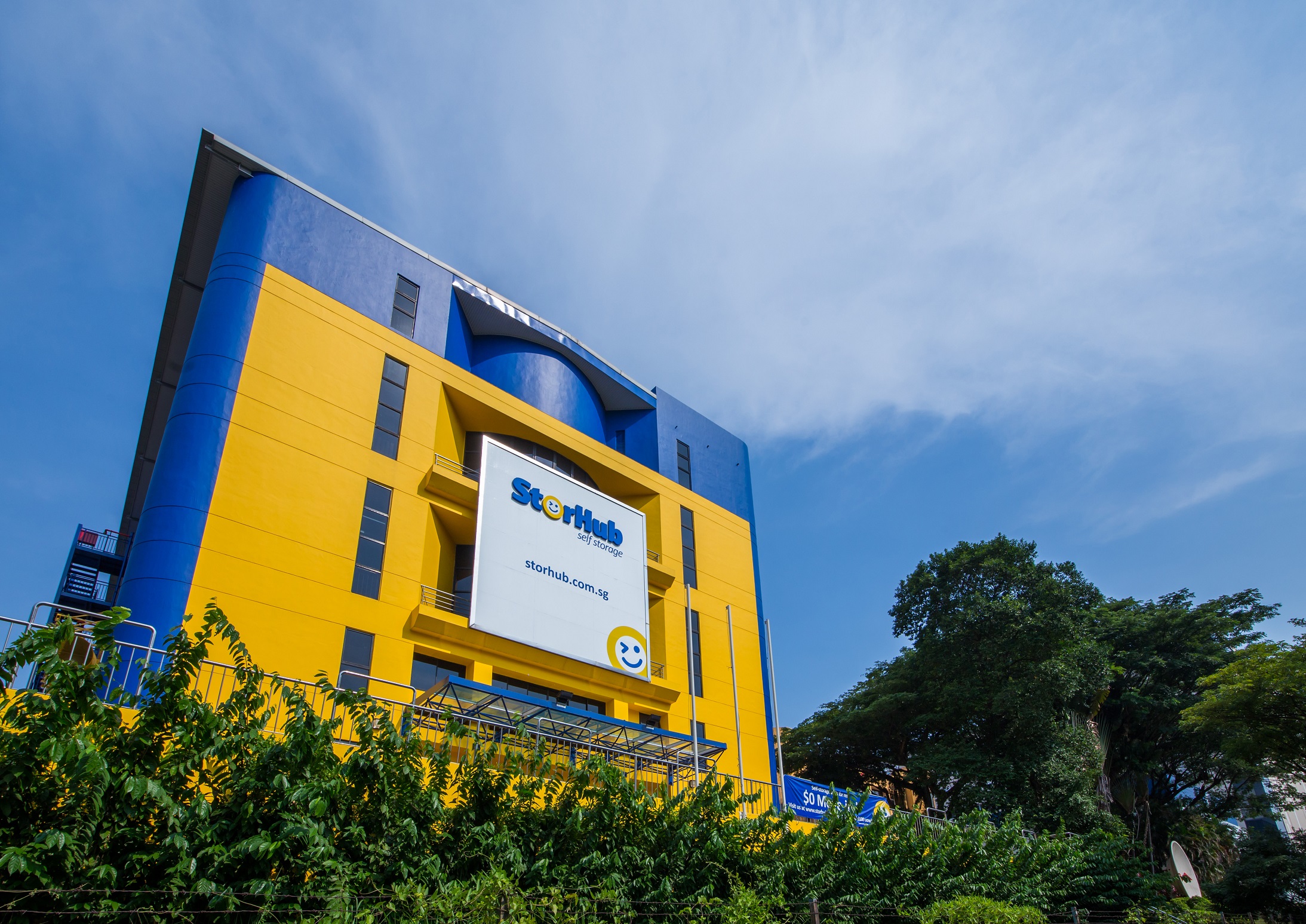
    CapitaLand announced today that it has divested its interests in a group of companies that own and manage the Group’s self-storage business StorHub to an unrelated third party.  The transaction is based on an agreed value of S$185 million for StorHub’s portfolio of properties.

    StorHub is one of Singapore’s largest self-storage networks, with a presence in China.  Its portfolio comprises 12 storage facilities – 11 in Singapore and one in Shanghai – with a total lettable area of approximately 800,000 square feet.

    Mr Jason Leow, President & Chief Executive Officer of Singapore & International, CapitaLand Group, said: “The divestment of StorHub is in line with CapitaLand’s disciplined approach towards capital recycling.  Our portfolio optimisation allows us to prioritise our capital allocation to our core markets and sectors.  In 2018, CapitaLand divested S$4 billion worth of assets and deployed S$6.11 billion into new investments.  We will stay disciplined in recycling our assets for reinvestment and capital redeployment, with an annual divestment target of at least S$3 billion.”

  • 500 million users have joined Alipay Ant Forest initiative, planting 100 million trees

    500 million users have joined Alipay Ant Forest initiative, planting 100 million trees

    Alipay Ant Forest, an initiative that has inspired hundreds of millions in China to adopt a greener lifestyle and contribute to the environment.

    Since its launch in August 2016, Alipay Ant Forest has:

    • Attracted 500 million users to engage in low carbon emission activities on the platform and grow their virtual trees in the Alipay app.
    • The virtual trees, nourished by “green energy” originating from users’ green activities, have been turned into 100 million real trees planted in China’s most arid areas.
    • The trees planted cover a total area of 1.4 million mu (933 square kilometers), equivalent to 130,000 soccer pitches.

    Eric Jing, Chairman and CEO of Ant Financial said: “I am very proud of the popularity of Alipay Ant Forest, which embodies our belief that technology should be used for social good. We are grateful to our many users and partners who have helped plant 100 million trees and advance a shared vision of sustainable and inclusive development.”

    “Alipay Ant Forest is an open platform, where all of our stakeholders, including consumers, philanthropic institutions, and eco-system partners, can collectively explore and implement ways to harness technology for a sustainable future,” he said.

    A mini-program on the Alipay app, Alipay Ant Forest promotes a greener lifestyle and encourages users to engage in low-carbon activities, such as paying utility bills online and commuting by walking or cycling instead of driving.

    This behavior is counted and converted into virtual “green energy” that can then be used to grow virtual trees in Alipay Ant Forest within the Alipay app. With enough energy points, a virtual tree can be converted into a real tree and planted by Alipay Ant Forest and its philanthropic partners in areas suffering from desertification. In turn, this tree-planting initiative inspires users to further adopt low-carbon and environmentally-friendly lifestyles, forming a virtuous cycle.

    Here’s a video explaining how this works.

  • Producers of flexible and punch-hole AMOLED displays Facing Roadblocks

    Producers of flexible and punch-hole AMOLED displays Facing Roadblocks

    Flat panel display producers in China are eager to start selling flexible AMOLED displays, and AMOLED displays with punch-holes. At this year’s China Information Technology Expo 2019 (CITE), which wrapped up earlier this month, companies like BOE Technology, Visionox, Tianma Microelectronics, Everdisplay Technology and China Star Optoelectronics Technology (CSOT) displayed their flexible screens for use in foldable phones. Also showing off its flexible AMOLED panels was Royole, which uses the screens for its own foldable FlexPai smartphone.

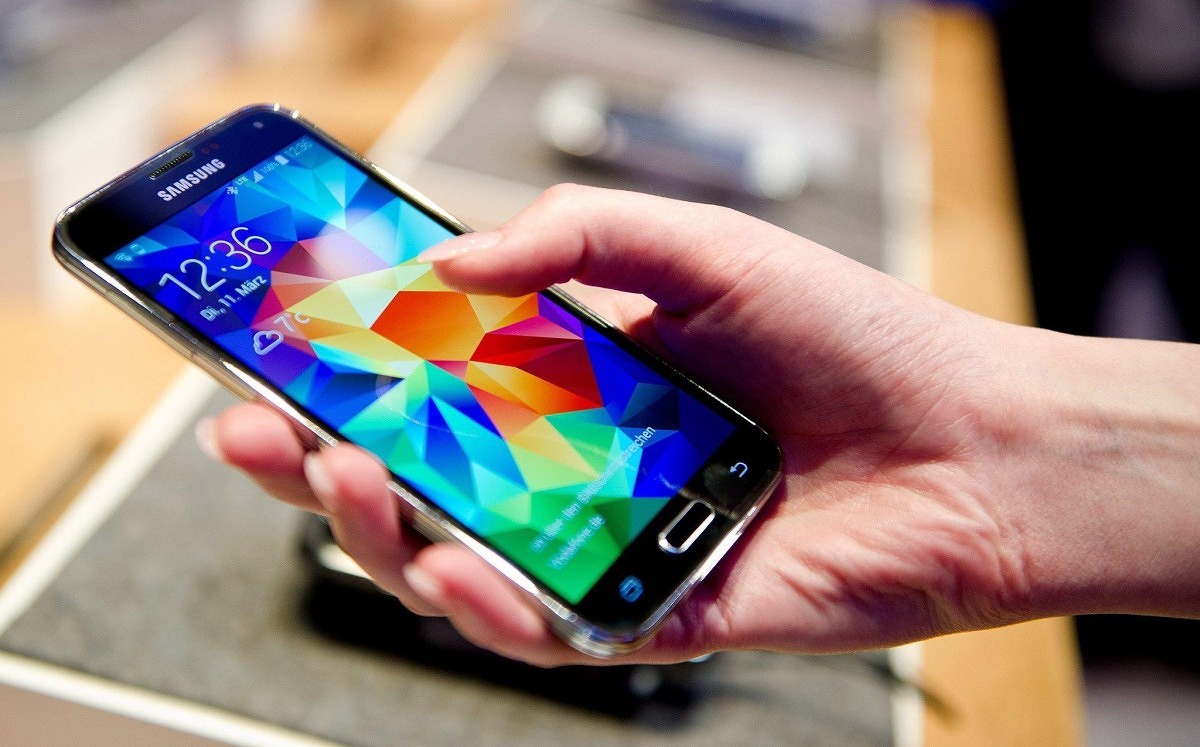
    All of these manufacturers are monitoring what is going on with Samsung and its Galaxy Fold device. Earlier today, the company delayed the U.S. launch of its foldable phone by at least one month due to issues with the interior display and the hinge. The Huawei Mate X outward folding device is expected to launch later this year. Other companies that could release a foldable phone in 2019 include Oppo, TCL, Motorola and Xiaomi.µ

    Meanwhile, companies turning out smartphone displays in China are now offering punch-hole panels with resolutions as high as 1080p (Full HD). The punch-hole is a small opening punched into a display allowing a front-facing selfie camera to be housed inside a phone’s screen. Some phones, like the Samsung Galaxy S10+, have two punch-holes in the screen for a dual selfie camera setup. The use of the punch-hole allows phone manufacturers to offer handsets with a high screen-to-body ratio and thin bezels without the use of a notch.

    CSOT is said to be shipping through hole and blind hole panels to Samsung. The latter has a punch-hole that goes completely through the display to the other side, while the latter has a hole that is drilled down to a certain depth. The company also showed off its self illuminating displays, while Tianma exhibited a back-lit smartphone panel. Both of these depend on mini-LEDs as a source of light. These are light emitting diodes that are smaller than 100 micrometers.

  • Toyota Establishes Research Institute In China To Study Hydrogen

    Toyota Establishes Research Institute In China To Study Hydrogen

    Japan’s Toyota Motor said on Sunday it was setting up a research institute in Beijing in partnership with Tsinghua University to study car technology using hydrogen power and other green technologies that could ease environmental problems in China. The initiative, outlined by Toyota’s President and Chief Executive Akio Toyoda in a speech at Tsinghua University, is part of the Japanese carmaker’s efforts to share more technology with China as it seeks to expand its business in the country by beefing up manufacturing capacity and distribution channels, a source close to Toyota said.

    The Tsinghua-Toyota Joint Research Institute will conduct research into cars and new technology to solve environmental problems in China, including reducing traffic accidents, Toyota said in a statement.The institute will “cooperate in research not only related to cars for Chinese consumers, but also in research related to active utilization of hydrogen energy that can help solve China’s energy problems,” the company said.

    The move dovetails with Toyota’s announcement this month that it would offer carmakers and suppliers around the world free access to nearly 24,000 patents for electric vehicle technologies.

    Executive Vice President Shigeki Terashi told Reuters earlier this month that the automaker intended to become a tier 2 supplier of hybrid systems and that it had already received enquiries from more than 50 companies.

    Later on Monday, Toyota said that it had started to supply fuel cell vehicle parts to Chinese commercial vehicle maker Foton and SinoHytec, without giving financial details of the deal. The company said in a statement that it hopes to cooperate with more companies in China to promote fuel cell vehicle penetration in China.

  • JD takes major stake in Five Star Appliances

    JD takes major stake in Five Star Appliances

    Chinese online retailer JD is to buy nearly half the shares in electrical goods retailer Jiangsu Five Star Appliance, for US$189 million. Jiayuan Chuangsheng currently holds 93 per cent of the Five Star business and after divesting a 46 per cent stake to JD will remain its largest shareholder with 47 per cent.

    Analysts say the investment will allow JD to boost its online profile and provide consumers with a network of about 300 Five Star Appliance storefronts, in much the same way as archrival Alibaba is building physical retail networks in Mainland China, blurring the boundaries between online and offline retailing.

    With stores primarily located in central and southern China, Five Star Appliances has annual sales of about US$2.7 billion.

    Last year, JD accounted for nearly 40 per cent of China’s home appliance sales, making it the largest retail in the space. Partnering with a brick-and-mortar retail network is likely to boost sales for both parties and protect JD from fast-growing Suniung.com which now accounts for 30 per cent of the market. Tmall is also building a share of the appliance sector, its sales now nudging 25 per cent.

  • FCC may ban China Mobile from US market

    FCC may ban China Mobile from US market

    The chairman of the US FCC has urged the agency to reject China Mobile’s applications to provide telecom services in the US market on national security grounds, in the latest salvo in the telecom trade war between China and the US.

    Federal Communications chairman Ajit Pai has released a statement urging his fellow FCC executives to vote for an order that would deny China Mobile’s application during the scheduled vote at its May Open Meeting.

    “Safeguarding our communications networks is critical to our national security. After reviewing the evidence in this proceeding, including the input provided by other federal agencies, it is clear that China Mobile’s application to provide telecommunications services in our country raises substantial and serious national security and law enforcement risks,” Pai’s statement reads.

    “Therefore, I do not believe that approving it would be in the public interest. I hope that my colleagues will join me in voting to reject China Mobile’s application. ”

    The draft order proposed by Pai would stipulate that China Mobile has not demonstrated that its application is in the public interest, but more importantly it would assert that “China Mobile is vulnerable to exploitation, influence, and control by the Chinese government.”

    China Mobile first applied back in September 2011 for a license to provide facilities based and resale telecommunications services between the US and overseas destinations.

    After a long review of the application, agencies within the US government’s Executive Branch recommended in July 2018 that China Mobile deny that application, citing “substantial national security and law enforcement risks that cannot be resolved through a voluntary mitigation agreement.”

    The proposed objection comes the month after Chinese vendor Huawei revealed it was taking the US government to court over an order banning federal agencies from buying its products due to national security fears.

  • Amazon to close China mainland store

    Amazon to close China mainland store

    Amazon China is about to stop selling local goods to local shoppers. According to multiple financial-news services, the global e-commerce giant is about to announce the closure of its dedicated Mainland China store, however Chinese consumers will still be able to order goods from Amazon’s global store.

    The dedicated Amazon China platform will close in July, meaning shoppers will no longer be able to buy goods listed by third-party local suppliers.

    According to “people familiar with the matter” quoted by Bloomberg, exiting the intensively competitive Mainland China market will allow Amazon to shift its focus to more lucrative businesses selling imported goods to Chinese and developing its successful cloud services operation.

    The withdrawal comes 15 years after Amazon entered China, purchasing local online store Joyo.com for US$75 million. Seven years later it rebranded the site under its own banner.

    The company estimates it will take about three months to close down its mainland fulfilment centres and delist local vendors as appropriate.

    With Alibaba and rival JD accounting for a combined 82 per cent of the Mainland China online market, there was little room for Amazon to eke out a commercially viable market share within a reasonable time frame.

    Michael Pachter, an analyst at Wedbush Securities, said Amazon was pulling out of the Chinese domestic market, “because it’s not profitable and not growing”.

    “The domestic Chinese online retailers just have huge advantages that Amazon can’t compete with.”

    Amazon has yet to officially confirm the China plan.