Tag: China

  • Hamley’s set to be sold to Indian Toy Retailer

    Hamley’s set to be sold to Indian Toy Retailer

    Toy retailer Hamleys is set to have its fourth owner in 15 years since it was taken private by an Icelandic investor.

    According to multiple Indian news media reports, Reliance Retail is in the final stages of negotiations with China’s C.Banner International, which has been trying to find a buyer since last October, after three years of ownership.

    C.Banner bought the business in 2015 for US$130 million, but has struggled to produce a profit. The company reportedly lost $15.6 million in 2017 on sales down 2.5 per cent to $86.5 million.

    Sources in India are speculating Reliance Retail will pay between $36 and $50 million, representing a substantial loss for C.Banner on exiting the brand.

    Reliance Retail, a subsidiary of the giant Indian conglomerate Reliance Industries, is in acquisition mode as it tries to expand its business by 30 per cent annually for a decade, an ambition on a scale probably only realisable in India right now. As at the end of last year it operated 9907 stores across 6400 Indian cities with a combined retail area of more than 21 million sqft. Its retail licenses and partnerships include Marks & Spencer, Diesel, Steve Madden and Kenneth Cole.

    “Due diligence for the Hamley’s deal is at an advanced stage,” a source told Money Control, itself a subsidiary of Reliance Industries. “Reliance Retail is aggressively pursuing the deal.”

    Reliance Retail is already the Indian licensee of Hamley’s and operates 50 stores under the banner, representing the toy brand’s largest market by store numbers. There are plans to open 150 more.

    Toy retailer Hamley’s was founded in 1760 as Noah’s Ark. It has about 129 stores globally, including a Regent Street, London flagship and stores in China, Germany, Russia, South Africa and the Middle East. A foray into Vietnam in 2015 ended in failure, however the company still sells toys online there.

    If the acquisition proceeds, it will help boost Reliance Retail’s portfolio. “Reliance can scale up Hamley’s business with its capabilities in supply chain management and strong distribution network.”

  • Yonghui boosts stake in Chinese grocery Zhongbai

    Yonghui boosts stake in Chinese grocery Zhongbai

    Dairy Farm Group-backed Yonghui Superstores is to boost its interest in Central Chinese regional supermarket chain, Zhongbai Holdings.

    According to a stock exchange filing in Shanghai, Yonghui is offering RMB8.10 per share to take its stake in the company from 30 per cent to 40 per cent. The deal is worth RMB559 million (US$83.3 million) and the shares will be bought from a state investment fund.

    Zhongbai, based in Wuhan, has 1255 stores, mostly in central China, including supermarkets, convenience stores, neighbourhood fresh-produce shops, foodmarkets and a premium grocery concept.

    Dairy Farm Group has a 20 per cent stake in Yonghui and has continued to invest in the business to maintain that shareholding as other investors, including Tencent and JD have invested in the retailer’s growth. Jardine Matheson executive chairman Ben Keswick is Yonghui’s chairman.

    Yonghui currently has just a single store in Hubei province, which means the investment will give it instant critical mass in the region. The company has more than 950 supermarkets in 22 Chinese provinces, its strongest representation in Guangdong.

  • First 5G smart hotel launched in China

    First 5G smart hotel launched in China

    InterContinental Shenzhen, Shenzhen Telecom Engineering and Huawei have signed a strategic cooperation agreement to create the world’s first 5G smart hotel.

    By introducing the hotel industry’s first end-to-end 5G network with integrated terminals and cloud applications, the project will enable InterContinental Shenzhen to provide guests with an innovative luxury experience and open the door for digital transformation of entire hotel industry through 5G technology.

    Shenzhen Telecom is deploying Huawei’s 5G network equipment in the InterContinental Shenzhen to achieve continuous indoor and outdoor 5G coverage, which will serve as the platform for a new generation of hotel services.

    Guests will experience 5G hotel applications through 5G smartphones and customer-premises equipment (CPE) terminals, including 5G welcome robots, 5G cloud computing terminals, 5G cloud games and 5G cloud virtual reality (VR) rowing machines.

    For the project’s kick-off ceremony, Shenzhen Telecom and Huawei jointly deployed a 5G Digital Indoor System on the hotel’s first floor and in the presidential suites.

    In the hotel lobby, guests can access the 5G network through CPEs or their smartphones to experience high speed 5G downloads and uploads. Service efficiency is improved with 5G intelligent robots that provide services including guest information, destination guidance, and delivery.

    The presidential suites covered by the new network provide guests with 5G hotel services such as cloud VR rowing machines, cloud games and 4K movies.

    Dr. Peter Zhou, chief marketing officer of Huawei Wireless Solution, said: “5G is here – from the 4K ultra high-definition live broadcast of CCTV’s Spring Festival Gala early this year to today’s 5G entertainment and business transformation of the InterContinental Shenzhen’s presidential suites, 5G technology has penetrated into different industries.”

  • AuMake in trading halt

    AuMake in trading halt

    Shares in daigou-focused retailer AuMake have been placed in a trading halt pending an announcement on an acquisition and related capital-raising.

    The company, which last month extended its bricks-and-mortar presence beyond Sydney, has requested the halt be lifted before the open of markets on Wednesday April 17, or when its anticipated announcement is released to the market.

    AuMake sells Australian skin care, supplements and milk formula to Chinese tourists and personal exporters.

    It has 17 stores across Sydney, Brisbane, and Auckland and is aiming for a bigger bite of the $2 billion cross-border commerce market.

    In February the company announced it had halved its losses after more than doubling its sales in the space of a year, with its internal sales forecast upgraded 30 to 40 per cent in March after it flagged the expansion of its stores.

  • DBS Partners Sinosure for BRI Projects

    DBS Partners Sinosure for BRI Projects

    DBS Group has signed a cooperation agreement with China Export & Credit Insurance Corporation, adding to the list of banks that are partnering Sinosure for projects under the Belt Road Initiative.

    DBS Group Holdings on Monday announced that it has partnered with Sinosure, the only state-funded Export Credit Agency conducting export credit insurance business in the People’s Republic of China. It joins OCBC Bank, who last week announced a similar partnership agreement.

    «Through signing the cooperation agreement with Sinosure, we will strengthen our partnership and increase the depth of our business with mainland China by facilitating project finance, and investment and trade opportunities especially with partners in ASEAN. We look forward to helping companies capitalize on the numerous business opportunities offered under BRI,» said DBS Singapore Country Head Shee Tse Koon.

    Under the cooperation agreement, DBS and Sinosure will collaborate on projects under the Belt and Road Initiative, especially those from ASEAN, by leveraging each other’s strengths in trade and investments and in-market experience.

    Sinosure will provide credit insurance for DBS’ mid and long-term financing activities for projects in the fields of marine engineering, infrastructure construction, energy, chemicals and textiles, aerospace, as well as services and technology.

  • China raids Ericsson after license fee complaints

    China raids Ericsson after license fee complaints

    Last Friday, Chinese investigators raided Ericsson’s offices in Beijing after receiving complaints about the licensing fees that Ericsson charges phone makers.

    Amid the background of increased global tension over Chinese vendors’ 5G technology being banned by the US and other countries, officials from China’s State Administration for Market Regulation (SAMR) are looking into Ericsson’s patent licensing practices after receiving complaints.

    In an email to FierceTelecom, an Ericsson spokesman confirmed that the company was under investigation by SAMR.

    “Ericsson can confirm that the Chinese SAMR has formally initiated an investigation due to complaints against Ericsson’s IPR licensing practices in China. Ericsson is fully cooperating with the investigation and will refrain from further comments while it is ongoing.

    “At Ericsson, we license our industry leading patent portfolio on FRAND (Fair, Reasonable and Non-Discriminatory) terms and conditions and have always been committed to these FRAND principles.”

    Last month Ericsson claimed to have 49,000 patents, while Huawei counted 87,805 in its 2018 annual report.

    The Wall Street Journal said that roughly 20 SAMR officers raided Ericsson’s Beijing offices on Friday. Earlier this year, Chinese mobile phone makers complained about Ericsson’s licensing practices. Chinese media reports implied that licensing fees paid to Ericsson would increase with the rollout of 5G technologies and services.

    China’s People’s Posts and Telecommunications News said in an online report that Chinese smartphone vendors were concerned that Ericsson would impose 5G patent fees on top of the current fees for 3G and 4G technologies.

    China-based Huawei is battling Apple as the world’s second-largest smartphone maker behind Samsung.

    Last month, Huawei filed a lawsuit against the US government challenging a recently passed law that bans federal agencies from buying Huawei products.

    Huawei was the top vendor globally in the wireless packet core (WPC) market last year while rivals Ericsson and Nokia rounded out the top-three spots. A February report by Dell’Oro said that Huawei was the largest global equipment service provider last year with more than a 30% market share.

  • Tmall Reinforces Go-to Platform Status for Product Debuts

    Tmall Reinforces Go-to Platform Status for Product Debuts

    Alibaba Group’s Tmall today announced it will launch a dedicated gateway for customers to discover new products through the Taobao mobile app, looking to cement its position as the “go-to” platform for such launches.

    From Wednesday, customers clicking on the “Tmall” icon in their Taobao app will be directed to the “Tmall New Products” channel, which includes a full array of new features, such as Tmall’s “Most Sought-after New Items,” “The Next New Things,” “Limited Editions” and “New Flagships.” Working with brands and key opinion leaders, the channel will provide customers with in-depth information and recommendations on new products.

    Tmall has long been an effective platform for showcasing new products, a one-stop shop for consumers to find the hottest new items online, and a creative, experiential channel to interact with and learn more about new products.

    The new channel for product launches is powered by Tmall’s already impressive suite of marketing tools, such as “Hey Box” and the Tmall Innovation Center (TMIC). In the past year, 82% of new products tailored by TMIC became a top-three “hot” item in its category within 30 days of launch. TMIC has also reduced the product development cycle by half, to an average of nine months.

  • Rebecca Feng buys LK Bennett

    Rebecca Feng buys LK Bennett

    UK-based affordable-luxury fashion-brand LK Bennett has been sold to its Chinese franchise partner Rebecca Feng.

    Rebecca Feng, who operates the label’s business in China under a franchise agreement, competed with several interested buyers following the fashion retailer’s entry into administration last month, including founder Linda Bennett.

    The purchase reportedly places stores in Britain and Ireland in some danger of closure, which could affect up to 500 staff. It will also involve a review of the firm’s operations in Europe and the US, which filed bankruptcy proceedings earlier this month. The firm has some 200 locations globally.

    The brand was founded by Bennett in 1990 with the vision of bringing “a bit of Bond Street luxury to the High Street”. Initially known for its signature ‘kitten heels’ favoured by celebrities, the label grew to become a destination for feminine footwear. Ready-to-wear collections were introduced in 1998 establishing LK Bennett as a fashion house offering complete wardrobe solutions for all occasions.

    All of the label’s collections are designed in house with a theme that combines signature detailing with strong colours, distinctive prints and a flattering fit.

  • Selected unveils Future You store concept

    Selected unveils Future You store concept

    Retail design agency Dalziel & Pow has created an elevated retail experience for Bestseller Fashion Group China’s “Selected” brand.

    The new premium Future You store concept is to be launched initially in a series of stores in Beijing, delivering a space “ready to connect, change, and dress the future consumer”. The design is an attempt to raise Selected’s profile as the destination for on-trend, quality workwear, as well as building an aspirational lifestyle model around the brand.

    Integrating a dynamic, hyper-connected experience to impress China’s digital natives, the store includes projections, kinetic signage and a live social media feed behind the cash desk to evoke a sense of change and “newness”. A “magic mirror” within the fitting rooms area allows customers to swipe through products to find their perfect outfit, which once chosen can then be shared via WeChat.

    Integrated throughout the store on the perimeter rails are pocket-sized screens, called “Debriefs” which showcase bite-sized snippets of product information, education on materials and fashion inspiration.

    The design language for the store was developed to create a feeling of “one space”, a concept designed for people and not for genders; a fluid space creating flow between categories and reflecting the fact that Chinese couples often shop together. A single product rail flows through the whole store, symbolically unifying the space.

    Selected’s fitting rooms form a key architectural feature as well as a social space, as is the cash desk. There are also separate shop-in-shop areas for Chinos and Denim, enhanced by miniature screens detailing fit and fabric qualities.

  • Singapore retail sales plunge due to Chinese New Year

    Singapore retail sales plunge due to Chinese New Year

    Singapore retail sales plummeted 10 per cent year on year in February – but the sudden drop was largely due to the timing of Chinese New Year celebrations.

    After excluding motor vehicles from the figures, sales dropped by a slightly higher 10.7 per cent.

    Chinese New Year fell in the middle of the month last year, and early in the month this year, resulting in a shifting of some seasonal spending back into January this time around. Figures combining January and February sales in both comparable periods were not released.

    According to Statistics Singapore, sectors such as food retailers, apparel & footwear, supermarkets & hypermarkets, department stores, furniture & household goods, and medical goods & toiletries registered declines in retail sales of between 10.4 per cent and 24.8 per cent this year.

    Sales of watches & jewellery, optical goods, and books fell by between 7.2 per cent and 9.2 per cent.

    Statistics Singapore estimated total retail sales in February this year at $3.3 billion, with online retail sales comprising about 5 per cent of those.

    Sales of food & beverage services decreased 2.3 per cent year on year. The total sales value of food & beverage services in February was estimated at $855 million, compared to $875 million in February last year.

  • Greater China and South Korea drive Massive Uniqlo sales

    Greater China and South Korea drive Massive Uniqlo sales

    Heavy discounting necessary to offload winter stock has hit Uniqlo sales. Parent Fast Retailing has struggled with a shortage of popular winter items in the past, and overcompensated last winter by ordering too much inventory ahead of what proved to be an unusually warm season.

    As a result, the Japanese retailer’s first-quarter profit took a hit which in turn impacted of first-half results issued yesterday.

    The company reported declines in both revenue and profit in the first half of the current financial year, with revenue totaling ¥491.3 billion, (US$4.397 billion) down 5 per cent from the previous corresponding period, and operating profit totaling ¥67.7 billion ($606 million), down 23.7 per cent from the previous year. Same-store sales fell 9 per cent, however online sales, which now account for 9.9 per cent of Uniqlo sales in Japan and 20 per cent in China, rose 30.3 per cent.

    The weak first quarter for Uniqlo sales was in part compensated for by a double-digit increase in sales and profit in China, which helped the brand turn in a better-than-expected rise in operating profit to ¥68 billion ($609 million) for the three months to February.

    The company said it now expects an operating profit of ¥260 billion for the financial year through August, compared to its previous forecast of  ¥270 billion in January. The revised outlook would still be a record high and represent a 10 per cent year-on-year rise.

    Uniqlo re-stated its medium-term vision of becoming the world’s number one apparel retailer.

    “In pursuit of this aim, we are focusing our efforts on expanding Uniqlo International and our GU casual fashion brand,” said Tadashi Yanai, chairman, president and CEO of Uniqlo. “We continue to increase Uniqlo store numbers in each country in which we operate, and open global flagship stores and large-format stores in major cities around the world to further develop Uniqlo as a global brand.”

    He said that within the company’s international division, Greater China and Southeast Asia are entering “a new stage of growth as key drivers of operational expansion”.

    Uniqlo Greater China generated double-digit growth in both revenue and profit in the first half of the year despite the dampening effect of the mild winter weather.

    “Within that region, our operation in Mainland China continued to report strong growth in revenue and profit of approximately 20 per cent year on year. Uniqlo South Korea also reported increases in both revenue and profit. Uniqlo Southeast Asia & Oceania generated significant rises in both revenue and profit thanks to strong increases in same-store sales in every single one of the region’s markets.

    Meanwhile, the company plans to open more GU stores in Japan, while expanding the brand’s international presence, primarily in Greater China and South Korea.

  • China’s Coffee Consumption Keeps Growing

    China’s Coffee Consumption Keeps Growing

    China’s coffee craze has gained pace with the growth rate in consumption on premise 25 per cent higher last year.

    According to research from Mintel, China’s on-premise coffee market value reached RMB64.7 billion (US$9.6 billion) last year, up 7.5 per cent on the year prior, when the growth rate was 6 per cent. It is predicting growth to resume to 6 per cent annually from this year until 2023.

    However, while sales by value are thriving, Mintel estimates that the number of on-premise coffee house outlets shrank by 2 per cent as fewer new stores opened than closed. But that is half the decline of a year earlier.

    “Like many industries across China, the on-premise coffee market is not immune to the influence of New Retail,” said Belle Wang, associate food and drink research analyst at Mintel.

    “The quick expansion of New Retail coffee businesses across the country has stimulated more coffee consumption among consumers, resulting in strong sales volume. With the growing momentum of New Retail coffee shops, and an increasing number of international and domestic brands entering the market, consumers today have more options when it comes to coffee. As such, the industry will see positive growth rates over the next two years.

    “However, this growth will slow down, largely due to Chinese consumers’ traditional behaviour of drinking tea and the country’s thriving tea shops,” said Wang.

    Mintel expects positive volume growth in the next two years, at 0.6 per cent from last year to this year and a further 1.2 per cent between this year and next, to reach an estimated 74,000 coffee houses by 2020.

    Convenience versus traditional

    When it comes to choosing where to get their caffeine fix, more Chinese consumers today are purchasing coffee from convenience stores than traditional coffee house chains. Mintel’s research reveals that 52 per cent of Chinese consumers (survey sample of 3000) buy coffee at convenience stores compared to just 44 per cent who purchase it from a traditional coffee-house chain.

    About 23 per cent of consumers who drink on-premise coffee at least once a month have done so at new retail coffee houses.

    “Our research shows that more on-premise coffee users get their coffee from convenience stores than from traditional chain coffee houses. This is perhaps due to Chinese consumers associating convenience stores with a full range of breakfast options. Convenience stores are also viewed as easily accessible and more affordable. Given this upward trend, other coffee vendors could introduce unique features, like providing various food and coffee pairings, in order to compete,” said Wang.

    “While New Retail coffee is experiencing a lot of growth at the moment, consumer engagement remains low – partially because they are still relatively new. However, there is an opportunity for New Retail coffee houses to catch up in terms of popularity by offering aggressive discounts and delivery service.”

    That said, big discounts alone will not be sufficient, as discounting is neither the best nor a sustainable strategy for a long-term business plan. There needs to be other merits such as offering healthy mix-and-match meal deals,” Belle added.

    Latte the top choice

    Mintel’s research reveals the favourite coffee beverages consumed in China’s coffee craze. More than half of on-premise coffee consumers order lattes (54 per cent) or cappuccinos (52 per cent). These are followed by mocha (45 per cent), Americano (38 per cent), flavoured coffee (36 per cent), espresso (26 per cent) and cold-brew coffee (23 per cent).

    A relatively new concept in China’s coffee craze is coffee mixed with plant-protein milk, with 22 per cent of on-premise coffee consumers ordering it.

    “Lattes and cappuccinos are the most popular drinks in coffee houses as they are generally very palatable due to their creamy texture and rich dairy flavour. Furthermore, as they are usually widely available, they are often a first step into coffee appreciation,” said Wang.

    “Once consumers fully appreciate these basic beverages, they are more likely to try non-milk based drinks, like an Americano or cold brew coffee. However, only offering basic coffee selections makes it difficult to stand out in the homogenous coffee marketplace and attract more coffee consumers.

    “As such, coffee houses can take inspiration from tea shop drinks by making their offerings more visually appealing and ‘instagramable’ in order to draw attention and pique consumer interest,” Belle concluded.
  • Comvita Honey wholly acquires China joint venture

    Comvita Honey wholly acquires China joint venture

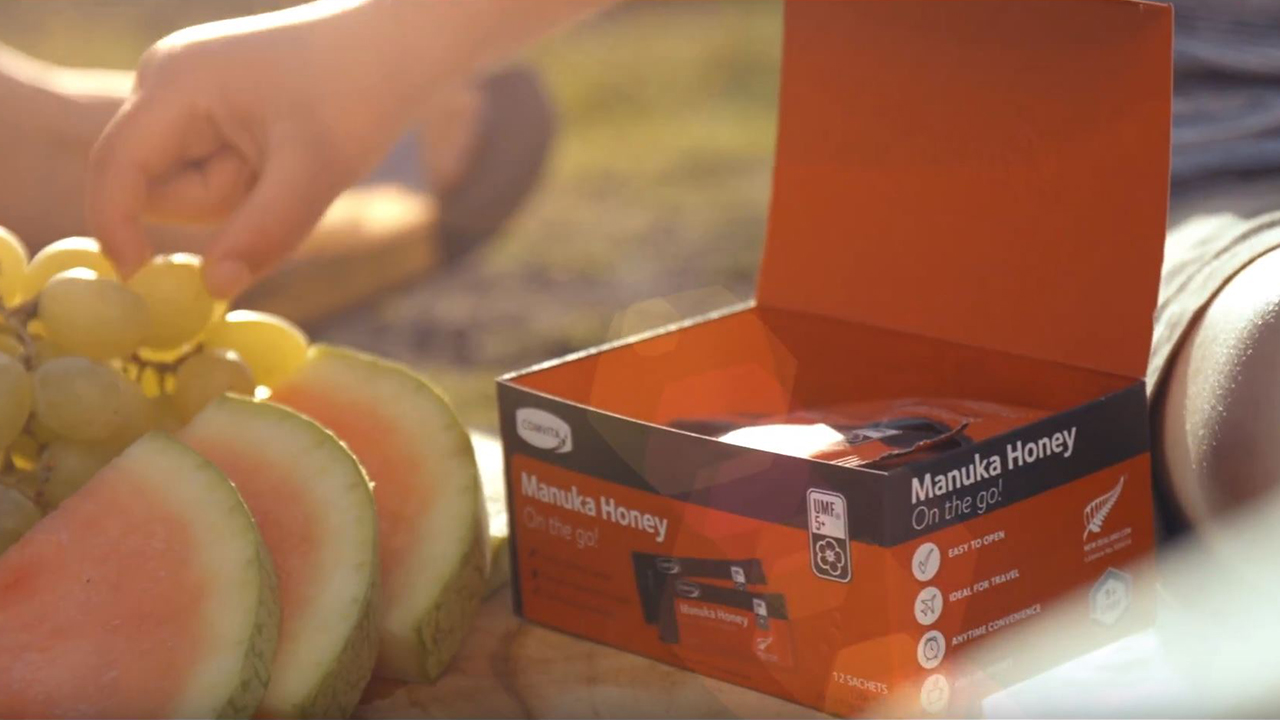
    New Zealand honey business Comvita has entered into a conditional agreement to acquire the remaining 49 per cent of its China joint venture, Comvita Food Ltd and Comvita China Limited.

    The acquisition will be funded through the issuing of 4.05 million new shares, as well as a payment of $3.19 million.

    “This completes the ‘final piece of the jigsaw’ with respect to our China Strategy, which we have been working on for a number of years,” Comvita chief executive Scott Coulter said.

    “Our goal has been to gain full control of our brand across all key channels into China. This acquisition significantly strengthens our direct to China business, the key building block in our China strategic plan.”

    According to Coulter, China remains Comvita’s strongest consumer base, with its success in the region underpinned by its efforts to get closer to the Chinese consumer.

    This was initially done through a distribution relationship for 12 years, before the business entered a 51 to 49 per cent joint venture in 2017. This acquisition is the culmination of that effort.

    “China is moving into a direct trade and a formalised cross border e-commerce model, to ensure both consumer protection and fairness in taxation between online and offline ‘players’ are in place,” Coulter continued.

    “This acquisition will provide Comvita with much more flexibility to optimise sales and channel profitability in this fast evolving environment.”

    For the remainder of the year, the brand issued three goals for the China market: to achieve price harmonisation between its channels and markets, to supply key cross border e-commerce platforms directly, and to build its e-commerce and marketing capability in the region.

    Comvita chair Neil Craig noted that while the recent period had been tough on shareholders due to the execution of the brand’s strategy in China impacting its short term earnings, the brand now expects revenue from its consolidated China business to be greater than $200 million in sales annually.

  • Michael Hill Sales Suffers

    Michael Hill Sales Suffers

    Jewellery retailer Michael Hill’s revised operating model is showing some encouraging signs, with sales falling at a slower rate in the March quarter compared to prior periods.

    Over the three months to March 31, 2019, total sales fell by 0.8 per cent to $117.5 million, and same-store sales fell by 1.5 per cent to $110 million.

    When compared to the 11 per cent decrease in same-store sales in Q1, and 2.9 per cent fall in Q2, Q3 suggests the jewellery retailer’s operations are stabilising.

    “We are particularly encouraged by the early results achieved from our new integrated customer-led retail operating model, which was introduced in March and saw some same store sales growth for the month,” Daniel Bracken, Michael Hill International chief executive,  said.

    The business indicated it would shift its business model toward a “more sophisticated and integrated” customer-led experience in February, in order to better personalise the shopping experience for its customers.

    “We have already seen the potential for the new integrated model to lift customer engagement and sales, as well as improve operational efficiencies,” Bracken said.

    “This is an exciting time for the company as we continue to deliver on our strategic initiatives and make fundamental improvements to the way we operate.”

    Michael Hill’s same-store sales in Australia fell 3.4 per cent in the quarter, with conditions remaining challenging for retailers, to $61.8 million – compared to the $64 million seen in the same period of 2018.

    While one store was opened during the period, three were closed. The retailer ending the period with 71 stores trading.

    In New Zealand, same-store sales fell 6.3 per cent to NZ$24.73 million ($23,42 million), with the end of March seeing an overall slowdown in consumer sentiment and spending in the region. One store was closed, leaving a total of 52 stores trading across New Zealand.

    E-commerce sales over the period contributed 2.9 per cent, or $12.5 million, of the business’s total sales over the nine-month period to March 31, 2019. This reflects a 53 per cent increase on the same nine-month period the previous year.

  • Ted Baker Boost Store Network in China with JV

    Ted Baker Boost Store Network in China with JV

    Fashion brand Ted Baker has formed a joint venture to expand its network in Mainland China, Hong Kong and Macau.

    A new company will take over the three Ted Baker China stores already operating in Hong Kong and the six on the mainland. It will operate all Ted Baker future stores, concessions and online channels in the three geographical markets.

    Ted Baker will invest about RMB30 million (£3.4 million) in the new venture, which will be co-owned with Shanghai LongShang Trading Company (LS). LS will assign its rights under the JV to a newly incorporated Hong Kong investment vehicle to be wholly owned and formed by LongGoal Holdings and Infra-Apparel Group.

    Lindsay Page, acting CEO of Ted Baker, said the company is excited about the growth potential for the brand across China.

    “Over recent years we have invested in introducing the Ted Baker brand to Chinese customers, and we are confident that the creation of this JV will build on this platform and deliver meaningful long-term growth. In LongGoal and Infra-Apparel, we have extremely capable partners that bring local market expertise to our brand and already well-established design, buying and merchandising skillset.”

    Page said the brand firmly believes China has the long-term potential to become one of the largest single global territories for the Ted Baker brand.

    The Ted Baker China JV will have six directors, evenly split between Ted Baker and the JV Partner. The JV is expected to break-even in the 2021/22 financial year.

    In a statement, Ted Baker said LongGoal and Infra have a wealth of experience in digital marketing, e-commerce operations and building successful joint ventures in China.

    Infra-red has expanded the Golfino brand to 60 stores across China during the last five years and has strong digital-marketing and e-commerce operations experience.

    LongGoal is the current distributor of Gant, operating more than 165 directly owned and 25 sub-franchised locations in China, along with 44 directly owned and franchised Bebe stores.

    The new joint venture will be focusing on expanding the Ted Baker brand into tier 2 and 3 Chinese cities.

    Chen Xiaoling, chairwoman of LongGoal, said Ted Baker’s global lifestyle appeal has resonated well in China, and the company is confident in its ability to grow it further and faster.

    “In more than 20 years, LongGoal has amassed an infrastructure and presence in more than 65 cities, which presents a strong, compelling and proven platform that Ted Baker China can leverage. The transformational JV we’ve forged brings together a leading brand, strong management team and unparalleled opportunity to expand Ted Baker into cities that desire its fresh vision of style,” she said.

    Jing Yin, co-founder and chairwoman of Infra, described Ted Baker as an amazing brand that her company has admired for a long time.

    “[Ted Baker] has already demonstrated its relevance and appeal in the Chinese market. Our knowledge and experience in building fashion brands through stores, concessions and online should prove invaluable to Ted Baker and we look forward to working together.”

    The new venture is condition on approval from Chinese regulatory authorities.