Tag: China

  • China, Hong Kong, Kowloon Team Heads Change at UBS

    China, Hong Kong, Kowloon Team Heads Change at UBS

    Following a realignment of its senior regional management last week, Swiss bank UBS has now rejigged its middle management, or country team heads as they are referred to at the bank.

    Kenny Wai, country team head for Kowloon, has resigned from the bank after seven years with UBS having previously been a desk head for both the Hong Kong and China International markets. In May 2018, Wai was made country team head for Hong Kong when Adeline Chien was promoted to a larger role as head of Hong Kong. Prior to UBS, Wai worked variously in compliance and as a client advisor, most recently at Merrill Lynch.

    His responsibilities will be taken up by Wai Man Chiu who joined UBS last year from Hang Seng Bank where she led a team of 30 colleagues. When she assumed the role of country team head at UBS, several members of her team from Hang Seng followed her to the Swiss bank. Most notable amongst them were desk head Jonathon Yeung and client advisors Aubrey Cheung, Connie Chan, and Raymond Yung.

    According to an internal memo seen from Marina Lui, the newly appointed head of wealth management China, she confirms the resignation of Wu Ya Ju, country team head of China International. Wu had been with UBS since 1996, starting as a client advisor with the bank. She is believed to be retiring from the industry. Also retiring is Philip Mak, country team head Hong Kong Domestic.

  • Over 1 million Xiaomi Mi 9 units have already shipped worldwide

    Over 1 million Xiaomi Mi 9 units have already shipped worldwide

    Just over one month after the Mi 9 flagship was first announced, Chinese smartphone brand Xiaomi has today revealed that it has already shipped over one million units of its latest premium device.

    The majority of these devices were undoubtedly supplied to consumers in China, where Xiaomi conducts roughly 60% of its business and where the smartphone was made available to purchase just days after its unveiling. Europe, however, is becoming increasingly important for Xiaomi – sales surged over 415% in the region last year – and likely played a big role in the phone’s short-term success.

    The Xiaomi Mi 9, which retails at just €449 across Europe, offers a variety of impressive features such as a large 6.4-inch AMOLED display manufactured by Samsung, Qualcomm’s Snapdragon 855, up to 128GB of storage, and as much as 8GB of RAM. The smartphone also includes a 3,300mAh battery, support for extremely fast 20W wireless charging, and Android 9 Pie straight out of the box.

    Alongside the Mi 9, Xiaomi also sells two other devices in the form of the cheaper Mi 9 SE and the more expensive Mi 9 Explorer Edition. The sales figures for these two models weren’t broken down, but Xiaomi did confirm that they push the total number of Mi 9 sales to 1.5 million units, an even bigger achievement for the low-cost brand.

  • Apple cuts the prices of its devices in China

    Apple cuts the prices of its devices in China

    Earlier this year, there were quite a few reasons why Apple decided to cut the wholesale price of the 2018 iPhone models in China. First, the strength of the U.S. Dollar against the Chinese Yuan forced Apple to price the ‘more affordable’ iPhone XR higher than the premium-priced Huawei Mate 20 Pro in China. When the dollar is stronger against the Yuan, it means that Apple gets fewer dollars back when it converts the Yuans it receives from sales of its products in China. At this point, Apple has a choice; it can keep pricing the same and suffer the consequences, or it can lower its prices in China and take a hit to its margins.

    In addition, a rise of Chinese nationalism hurt iPhone sales as consumers in the country protested the U.S.-China trade war and the U.S. government’s treatment of Huawei. There was the overall sluggishness in the smartphone market due to high prices, lack of innovation and high penetration rates for smartphones. Lower sales in China of iPhone models forced Apple to cut its revenue guidance for the fiscal first quarter, leading to a selloff in the company’s stock. At the time, Apple CEO Tim Cook said, “If you look at our results, our shortfall is over 100 percent from iPhone and it’s primarily in greater China.” As it turned out, Apple ended up shipping 20% fewer iPhone units to China during the three month period, and its overall revenue in the market declined by 28% or $5 billion.

    Caixin reports today that Apple has made another bold pricing move in China, this time slashing prices of certain devices in the company’s own online and physical stores by as much as 6%. The affected products include iPhones, iPads, AirPods and Macs. For example, in China’s version of the Apple Store, the 64GB iPhone XR is now priced at 6,199 Yuan (equivalent to $924 USD at current exchange rates), a 4.6% decline from the 6,499 Yuan that the phone was listed at just a few days ago. The price cut took 500 Yuan ($74.50 USD) off the prices of the iPhone XS and iPhone XS Max.

    This is why Apple cut its prices in China today

    However, unlike the previous price cut in China, this time the reason has nothing to do with the supply-demand balance. Starting today, new regulations dropped the value-added tax (VAT) for manufacturers in China to 13% from 16%. This gives Apple some leeway to lower the pricing of Apple devices in the country. Still, consumers in China often find better pricing for the company’s products online. Prices for the iPhone XS Max and iPhone XS declined by as much as 2,000 Yuan ($298 USD) last month on these sites due to tepid sales of the phones. E-commerce firms in China such as Tmall and JD.com have now cut their prices on the 2018 iPhone models twice this year.

    It wasn’t until 2009 that a Chinese wireless provider offered the Apple iPhone to consumers. Before the iPhone 3GS became available from China Unicom, iPhone models could only be purchased from the black market.

  • CapitaLand sells stake in CapitaMall Wuhu

    CapitaLand sells stake in CapitaMall Wuhu

    CapitaLand Retail China Trust (CRCT) and CapitaLand will divest their combined 100 per cent interests in CapitaMall Wuhu to an unrelated third party.

    Located in Wuhu city in China’s Anhui Province, CapitaMall Wuhu is a five-storey shopping mall of around 45,000sqm that has been closed since the third quarter of last year, following the exit of its anchor tenant.

    “The divestment of CapitaMall Wuhu is in line with our proactive asset-management strategy to optimise CRCT’s portfolio and enhance returns,” said CRCT Management Ltd CEO Tan Tze Wooi.

    “As our 51-per-cent stake in CapitaMall Wuhu accounts for less than 1 per cent of CRCT’s asset size, its sale is expected to have minimal impact on CRCT’s core business. The sale proceeds will provide CRCT with greater financial flexibility to take advantage of market opportunities. We remain on the lookout for strategic opportunities to reconstitute and strengthen our portfolio.”

    The transaction between the firms’ respective subsidiary and associate is based on the company’s adjusted net asset value – including (but not limited to) its interest in CapitaMall Wuhu of RMB210 million (US$31.25 million).

    After taking into account the estimated fees, taxes and other related expenses, it is estimated that the net proceeds from the divestment would be RMB90.6 million ($13.48 million). The net divestment proceeds may be used for reducing existing debt and/or financing general corporate or working capital requirements.

    CapitaLand Group’s president Lucas Loh commented: “The sale of CapitaMall Wuhu will unlock capital that can be redeployed to core assets in cities where CapitaLand enjoys scale and competitive advantage. We will stay disciplined in our capital-recycling efforts and continually review opportunities to optimise CapitaLand’s portfolio, which includes divestment of assets that are non-core or have limited growth.”

    The divestment of CapitaMall Wuhu is expected to be completed in the second half of this year.

    Following the divestment, CRCT’s portfolio will have 10 malls in seven Chinese cities, while CapitaLand’s retail network in China will comprise 51 malls in 21 cities.

  • Meet Alipay’s Western Expansion Partner: RiverPay

    Meet Alipay’s Western Expansion Partner: RiverPay

    Alipay is one of the dominant forces in Chinese mobile payments solutions, but its ultimate goal, like with any payments company, is global expansion. You’ve recently covered some of Alibaba’s expansion into the UK through their partnership with Barclaycard, but there’s an unknown partner I want to introduce you to that’s giving Alipay access to over 12,000 store locations and over 30,000 points of sale in the U.S., Canada and Europe.

    Meet RiverPay: Alipay’s authorized payment service partner that connects global merchants with over 1 billion Alipay users around the world, especially Chinese travelers abroad. (69% of whom used mobile payments last year, according to Nielsen.)

    All of RiverPay’s merchant customers are adopting Alipay as a payment option, including top luxury retailers like Saks Fifth Avenue, Hudson’s Bay, Dolce & Gabanna and Prada. With payments integration in less than two weeks and compatibility with over 80 percent of mainstream enterprise resource planning systems, RiverPay can help merchants adopt Alipay fast without interruption to cashiering systems.

  • Alibaba Launches “Fliggy Buy” Shopping Channel with Merchants

    Alibaba Launches “Fliggy Buy” Shopping Channel with Merchants

    New service offers convenience to Chinese travelers, advances “Global Fun” strategy Hangzhou, China, March 26, 2019 – Fliggy, the travel service platform of Alibaba Group, has launched its Fliggy Buy service, which offers overseas merchants a new solution to capture opportunities presented by the growing purchasing power of Chinese outbound travelers.

    The service offers a new shopping channel for Chinese travelers to browse and buy goods on Fliggy before reaching their destination, picking them up in stores after they arrive. It also advances Alibaba’s “Global Fun” strategy, which promotes international travel for Chinese tourists by working with industry players to give the tourists a richer experience while abroad.

    Merchants on Fliggy Buy will include duty-free and tax-free stores, both overseas and within mainland China, internationally renowned brands, specialty local stores and an increasing range of shopping destinations. Furla Hong Kong and Laox of Japan have already joined this channel, and more merchants are expected to join.

    “Fliggy is committed to making it easy to conduct travel business in the digital era. The launch of Fliggy Buy represents our latest move to work with merchants targeting the vast numbers of tourists from China to develop innovative solutions, and offer them targeted customer traffic. Our aim is also to embrace the potential of digital technology and provide a holistic travel experience encompassing food, accommodation, transportation, sightseeing, shopping and entertainment,” said Roman Zhu, Head of Fliggy Buy at Fliggy.

    Through Fliggy Buy, Chinese customers can access detailed information and buyers’ reviews about products, presented in their own language, prior to an overseas trip. This helps them understand features and compare prices across different merchants before committing to a purchase. They can ensure the items they want, especially limited editions, are in stock before the trip and make reservations online, as well as seek online customer service. Buying from duty-free and tax-free stores is an added benefit.
    Chinese travelers using this service can choose from a range of products, including cosmetics, suitcases, bags and alcohol offered by popular merchants. After selecting a pickup store, as well as inputting their personal information and completing payment, consumers can then pick up their goods at their leisure, allowing them more time to explore and experience the destination.

    “Duty-free and tax-free stores are our focus during the first phase of rollout, as they are the most visited shopping and consumption venues amongst Chinese outbound tourists. Our next step is to enrich the product categories on Fliggy Buy and recruit more overseas merchants to include high-end luxury brands, household electronics sellers, as well as pharmacy and cosmetics stores, assisting them to reach more Chinese consumers,” Zhu said.

    With users visiting 192 countries and regions in 2018, outbound travel is an important part of Fliggy’s business. Fliggy’s insights show an upward tendency of Chinese travelers spending overseas, as the average spending of these travelers grew 9% year-on-year in 2018. As a platform operator, Fliggy is dedicated to helping merchants and associations working in the tourist industry worldwide to build direct relationships with Chinese consumers.

    As a key component of the Alibaba Economy, Fliggy is committed to promoting Alibaba Group’s “Global Fun” initiative. Global Fun together with Global Buy, Global Sell, Global Pay and Global Delivery are the five core aspects of Alibaba Group’s globalization strategy to realize its long-term vision of serving two billion consumers around the world and supporting 10 million businesses to operate profitably on its platforms by 2036.

  • Volvo XC40 full-electric variant to debut later this year

    Volvo XC40 full-electric variant to debut later this year

    Volvo will reveal the full-electric version of the XC40 before the end of the year, the company told at a safety event here last week. Officials declined to provide additional details. Adding a battery-powered version of the compact SUV to the lineup is a crucial step for Volvo, which wants full-electric cars to account for half of its global sales by 2025.

    The XC40 will be the first battery-driven model from the Swedish brand and the second full-electric vehicle from the Volvo Car Group. The first was the Polestar 2, which the group’s electrified performance brand debuted in February and revealed to the public at the Geneva auto show this month.

    Both full-electric vehicles will be on the road by 2020.

    In addition, both models will use the Compact Modular Architecture (CMA) that Volvo developed with Chinese sister brand Geely. CMA also underpins the 01, 02 and 03 from Lynk & CO. The trio of Lynk & CO cars accounted for more than 120,000 combined sales in China last year. The upstart brand, which is co-owned by Volvo Cars and Zhejiang Geely Holding, plans to open stores in five European cities next year.

    The XC40, which was the 2018 European Car of the Year, is Volvo’s No. 2-selling model globally after its large sibling, the XC60.

    Last month Volvo said the XC40 would also get two plug-in hybrid powertrain options, starting with a T5 Twin Engine variant and followed by the T4 Twin Engine.

    Volvo CEO Hakan Samuelsson said he expects plug-in hybrids to account for up to 25 percent of global sales in the model lines that offer them. Currently about 10 percent to 15 percent of Volvo’s global sales come from plug-in hybrids. The powertrain is offered in the XC90 and XC60 SUVs, V90 and V60 station wagons and the S90 and S60 sedans.

  • Fat Brands China to open six stores More

    Fat Brands China to open six stores More

    Fat Brands China has announced the development of six new co-branded Fatburger and Buffalo’s Express restaurants throughout Shanghai with Bloomfield.

    The new locations will build on Fat’s existing presence in China, where the company currently operates multiple successful locations in both Beijing and Shanghai.

    “When expanding internationally, it’s important to identify a partner we can trust with our iconic brand,” said CEO of Fat Brands Andy Wiederhorn. “Markets such as Shanghai, where demand and crowds are large, magnifies this need even more. We’re thrilled to open more restaurants with the Bloomfield team. They’ve done an excellent job maintaining the integrity of our brand while providing a deep understanding of the Chinese consumer.”

    Fat Brands currently owns seven restaurant brands that have more than 300 locations open and 200 under development around the world.

  • Oppo request patent on new slider design

    Oppo request patent on new slider design

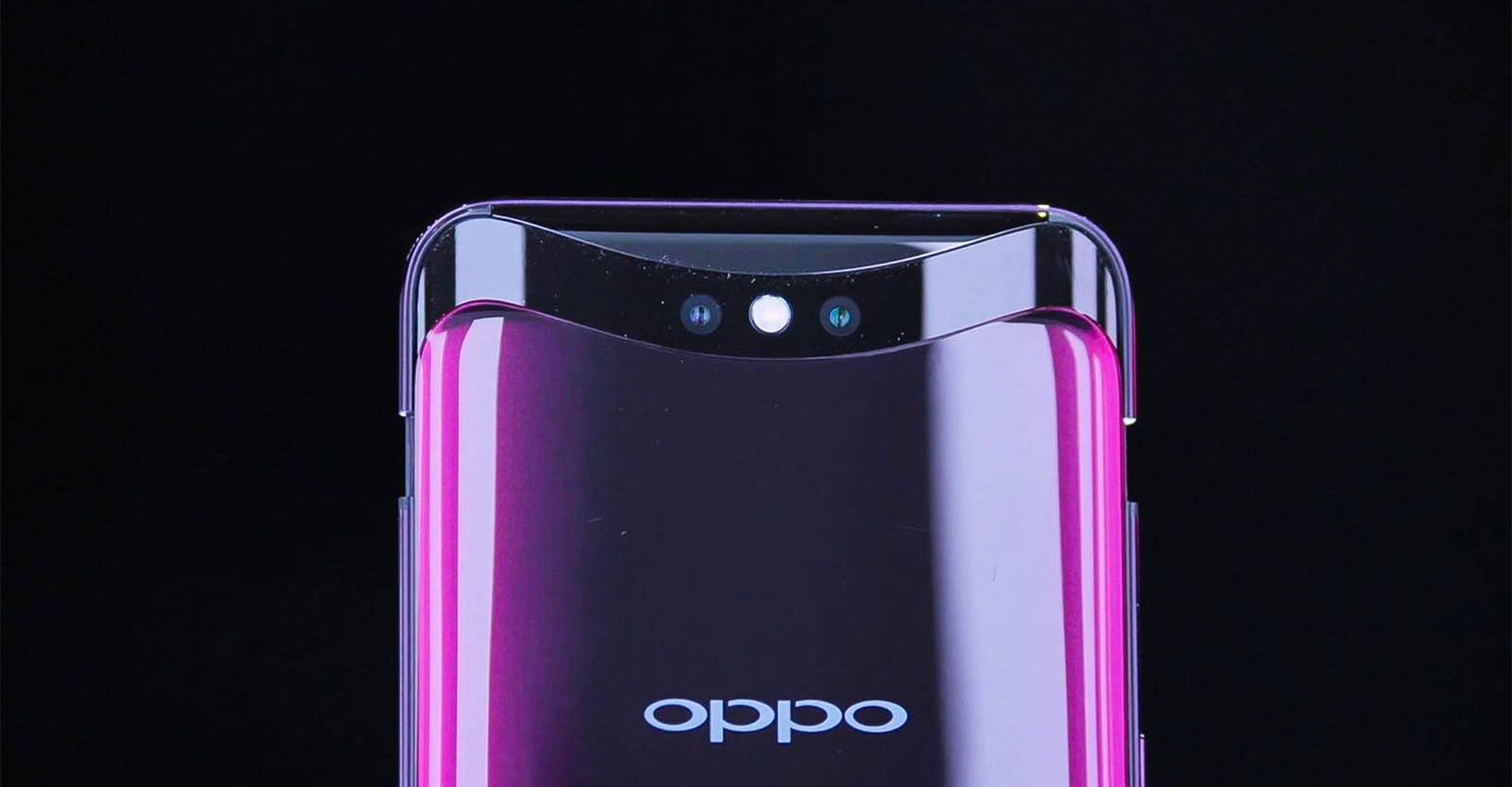
    The European Union Intellectual Property Office (EUIPO) has published a patent awarded to Chinese phone manufacturer Oppo. The company’s Oppo Find X was the first smartphone to feature a slider design; the slider hides the front-facing camera and dual rear cameras until needed. Now, Oppo’s new slider design includes dual cameras that are mounted on the back of the phone, never hidden from view. Meanwhile, the slider holds a pair of front-facing selfie cameras.

    Just the other day, we showed you a case render for a phone called the Oppo Reno, which will be unveiled on April 10th. To give the phone a high screen-to-body-ratio without relying on a notch (which is really the reason for all of the sliders, punch-holes, pop-up cameras and side panels we’re seeing on new handsets these days), the Oppo Reno uses a wedge that mechanically rises from the top of the device.

    The illustrations that accompany the patent show a phone using the newly patented slider, but also don’t show a fingerprint scanner. This could be related to the fact that the patent has nothing to do with that feature, or it could indicate that Oppo plans on equipping a phone using the patented new slider design, with an in-display fingerprint scanner.

    The patent was initially filed in January, was registered and published today. It expires on January 30, 2024.

  • Huawei profit grows 25.1% Last Year

    Huawei profit grows 25.1% Last Year

    Huawei has reported a solid 25.1% increase in net profit for 2018 despite the continuing political challenges the vendor has been facing in the US and other markets.

    The Chinese vendor reported a net profit for the year of 59.3 billion yuan ($8.83 billion), on the back of a 19.5% increase in revenue to 721.2 billion yuan.

    Sales in the vendors’ core carrier business declined slightly to 294 billion yuan, but consumer business revenue surged 45.1% from 2017 to reach 348.9 billion yuan as Huawei carved out a higher share of the global smartphone market.

    Enterprise revenue also grew 23.8% to 74.4 billion yuan, due to demand for the company’s cloud, big data, AI and IoT solutions.

    Commenting on the results, Huawei rotating chairman Guo Ping appeared confident that the company can weather the impact of decisions by regulators in markets including the US, Australia and New Zealand  to restrict the vendor from providing equipment to segments of their respective markets over national security concerns.

    “Through heavy, consistent investment in 5G innovation, alongside large-scale commercial deployment, Huawei is committed to building the world’s best network connections,” he said.

    “Throughout this process, Huawei will continue to strictly comply with all relevant standards to build secure, trustworthy, and high-quality products. As we work towards this goal, we have been explicitly clear: Cyber security and user privacy protection are at the absolute top of our agenda.”

    He added that the company is “confident that the companies that choose to work with Huawei will be the most competitive in the 5G era, and countries that choose to work with Huawei will gain an advantage for the next wave of growth in the digital economy.”

  • China Mobile Hong Kong holds 5G experience showcase

    China Mobile Hong Kong holds 5G experience showcase

    China Mobile Hong Kong (CMHK) and property company Sino Group have jointly held what they are calling Hong Kong’s first in-mall 5G experience showcase at the Olympian City 2 mall.

    The Future is Now 5G Experience Showcase, which was held over four days ending yesterday, comprised six experience zones intended to introduce ad demonstrate 5G technology.

    These zones were based around concepts including autonomous vehicles, smart glasses and a machine that purports to be unbeatable at janken (also known as rock paper scissors) by using 5G leased lines and a sensory system to detect gestures as they are thrown.

    Other zones highlight the speed improvement between 4G and 5G, the potential of 5G technology in smart city development and a start-up exhibition based on IoT technology.

    “Out of Hong Kong’s many mobile carriers, CMHK is the first network provider to receive the 5G trial permit, and has succeeded in engineering Hong Kong’s first end-to-end 5G network testing as well as the first Commercial Equipment Field-Testing of 28GHz 5G base stations,” CMHK chairman Dr Li Feng said.

    “In the future, CMHK will continue to adhere to the concept of ‘4G changes lives, 5G changes society’ by presenting “5G+ Project” in three agendas: firstly, to complement the existing 4G network with 5G infrastructure; to promote 5G with new networking technology; and develop more comprehensive 5G ecosystems to maximize the value of 5G.’

  • Is Asia the Art Market’s New Frontier?

    Is Asia the Art Market’s New Frontier?

    Despite pre-opening jitters over the state of the Chinese economy, Art Basel Hong Kong has already reported brisk sales at its seventh edition, which opened to the public today.

    With the region’s growing wealth and appetite for art, art fairs like Art Basel Hong Kong, which opened to the public today, are big business, drawing collectors from China and across Asia, as well as farther afield. Of the 80,000 visitors expected at the Hong Kong Convention and Exhibition Centre, 40,000 are coming from abroad, Art Basel said.

    The Art Market, a report jointly published by Art Basel and UBS earlier in March noted that art fairs are highly important in Asia, with between 92–97 percent of HNWI collectors from Hong Kong and Singapore having purchased from an art fair in the past.

    It’s not just China—it’s Singapore, it’s Malaysia, it’s Taipei. It’s not one market, Artnet quoted New York-based dealer Sean Kelly as saying about the fair, which has 242 galleries from 35 countries participating through the weekend.

    Increasingly, the market’s center of gravity does feel as if it is being pulled eastward,» Artnet reported from the exhibition floor, while Artnews reported «high energy» at the fair and quoted a dealer as saying, The quality of this fair is now on par with the great European fairs. It is highly sophisticated.

    Swift Sales

    The Art Newspaper also reported swift sales among the 107 galleries – 75 percent of which are Asian – at the Art Central fair concurrently taking place just around the corner from Art Basel. Here at we’re meeting a lot of Australian and Chinese collectors. Hong Kong is a very good market, a dealer exhibiting from the Philippines was quoted as saying.

    Art Basel reported that sales already concluded include a significant work by Andy Warhol at White Cube for $2.85 million, a work by Alice Neel for $1.7 million at David Zwirner, and a painting by George Condo at Almine Rech Gallery for between $1.2 million to $1.4 million. David Zwirner sold its entire booth, including four new sculptures by Carol Bove for $400,000 to $500,000 each, on Wednesday, the first VIP day.

    China Dominates

    We previously reported that the global art market grew by 6 percent in 2018, reaching total sales of $67.4 billion – its second-highest level in 10 years.

    Asia’s has recorded a growing share of world imports of art and antiques in the past decade, which mirrors the growing regional wealth. In particular, sales in China reached $12.9 billion in 2018. China accounted for 45 percent of all art imports into Asia (compared to 17 percent in 2000), with 95 percent of these imports going into Hong Kong, according to «The Art Market» report.

  • Vietnam to end plastic scrap imports from 2025

    Vietnam to end plastic scrap imports from 2025

    Vietnam will not import plastic scrap from 2025 and will deal with the scrap consignments stuck at ports, the government has said. It has ordered the Ministry of Natural Resources and Environment to work with other government bodies to eliminate unnecessary procedures which are delaying their delivery.

    Customs data shows almost 21,600 containers of scrap remain uncleared at ports as of February 22, 44 percent of them for more than three months.

    The government instructed the environment ministry to issue environmental safety certificates to eligible containers so that their importers could use them to manufacture products. All imports of plastic scrap as feedstock would cease on December 31, 2024, it said.

    Prime Minister Nguyen Xuan Phuc ordered to scrap imports temporarily last July, saying Vietnam must not become a dumping ground for other countries’ scrap, leaving thousands of containers stuck at ports for months.

    His orders followed a surge in imports in the first six months after China banned imports of certain wastes.

    But steel, paper and plastic industries have expressed concern since they need to import metal, paper and plastic scrap as feedstock.

    Vietnam imported 9.2 million tons of scrap last year, up 14 percent from 2017, according to Vietnam Customs.

  • Daimler To Develop Smart Brand Together With Geely

    Daimler To Develop Smart Brand Together With Geely

    Daimler on Thursday said it will develop its next generation of Smart electric vehicles in China through a joint venture with rival Geely, deepening an alliance between the two carmakers.

    Daimler said it will build next generation Smart vehicles at a purpose built factory in China, and share its expertise in manufacturing, engineering and design with Geely.

  • Mister Donut China to close down Stores

    Mister Donut China to close down Stores

    Mister Donut China will soon be no more, Japan’s largest donut chain calling time there after losses mount.

    All 10 remaining Mister Donut stores in Shanghai will close their doors on April 1, victims, the company says, of rising labour costs and other overheads.

    Mister Donut China launched in 2000, its parent the Japanese cleaning services company Duskin foreseeing huge potential for sweet treats in the fast-growing economy. While it expanded quickly at first, rising competition and costs saw the company begin to trim its store network in recent years.

    After Mister Donut China announced it was closing via its Chinese website, a Duskin spokesperson told the Nikkei that while the company was leaving for now, it may pursue other opportunities in Chinese food retailing in the future.

    “China’s desserts market holds the promise of further growth. This is without a doubt an attractive region.”

    In Asia, Mister Donut will continue to operate in Thailand, Taiwan, the Philippines and Indonesia.