Tag: China

  • Australia’s C/MEO Collective Lifts Off on Tmall

    Australia’s C/MEO Collective Lifts Off on Tmall

    Women’s fashion label C/MEO Collective has started selling on Chinese online marketplace Tmall.

    The move is part of a broader strategy of parent company Australian Fashion Labels to focus on China.

    “China is now really at the forefront of retail innovation and we see localisation of channels as crucial to being relevant in this market,” said Dean Flintoft, Australian Fashion Labels founder and chairman, in a statement.

    Prior to launching on Tmall, C/MEO Collective was already stocked in approximately 300 brick-and-mortar stores across Greater China, along with Australian Fashion Labels’ other brands: Keepsake The Label, Finders Keepers and The Fifth.

    But with more than 700 million people shopping on Alibaba’s retail marketplaces, including Tmall, this represents a significant expansion in reach.

    According to the company’s statement, C/MEO Collective was chosen because it is the brand with the greatest appeal in the China market, thanks to its innovative signature style, premium fabrics and approachable price point.

    “With C/MEO already having gained such strong traction in China via social media and via its marketplace presence, we wanted to respond to the enthusiasm for the brand and make it more accessible to our customer base in China,” said Mei Ping Doery, CEO of Australian Fashion Labels China.

    C/MEO Collective showcased the first of its collections for Tmall at VAMFF in Melbourne on March 8.

    While demand for Australian brands and products in China is most concentrated in areas such as health and wellness, beauty and food, and wine, fashion brands are increasingly seeing success.

    Brands including Seafolly and Lorna Jane have made headway in China through Tmall, and the addition of C/MEO Collective suggests there is a market for more fashion-forward Australian design.

    Australian Fashion Labels was founded in 2007 by Dean and Melanie Flintoft with the introduction of Finders Keepers. The company has since developed C/MEO Collective, Keepsake, The Fifth and Jaggar.

    The brands are available in 1700 stores worldwide, including major department stores, as well as to customers directly through an online retail platform, which ships globally.

  • Starbucks opens 30,000th store, somewhere in China

    Starbucks opens 30,000th store, somewhere in China

    Starbucks has opened its 30,000th store – launched in Shenzhen, China.

    The new Starbucks Reserve Shenzhen Bay Mix City location in the largest growth market for Starbucks globally serves to demonstrate the continued momentum in the firm’s global growth agenda. The new store is inspired by Shenzhen harbour, the spirit of the city as a technology hub, and the modern life of its community.

    Starbucks first opened in China in 1999, and has since grown to more than 3700 stores in its 20 years in the market.

    “The opening of Starbucks’ 30,000th store is a proud moment for all Starbucks partners,” said the firm’s president and CEO Kevin Johnson. “Over the past 48 years we have worked to build a different kind of company based on a mission grounded in the human experience, the world’s finest coffees, and a constant of pursuit of doing good.

    “Starbucks now serves more than 100 million customer occasions across 78 markets around the world. It all started with our first store in Seattle, Washington, and today we celebrate the 30,000th store that just opened in Shenzhen, China.”

    Starbucks drives net new store growth of 6–7 per cent annually, including a variety of different formats.

    Recently three new Starbucks Reserve roasteries opened in Milan, New York and Tokyo, along with a first-of-its-kind coffee sanctuary in Bali, Indonesia. A second ‘signing store’ providing employment opportunities for the deaf and hard of hearing also launched recently in Washington, DC.

    As Starbucks celebrates its 30,000th store, the company’s more than 380,000 employees deliver the brand experience to more than 100 million customers weekly across 78 markets around the world.

  • Sigma confident of turnaround plan

    Sigma confident of turnaround plan

    Pharmaceutical retailer Sigma Healthcare’s net profit fell 33.1 per cent to $37 million in FY19, down from $55 million in the prior corresponding period.

    Total revenue also decreased in the year to January 31, 2019, falling 2.9 per cent to $3.98 billion, compared to $4.09 billion in FY18.

    The business declared a final dividend for FY19 of 2 cents per share, and Sigma chairman Brian Jamieson stated the business remained committed to returning a high proportion of its NPAT to shareholders.

    Sigma also shared with investors further details about Project Pivot, the turnaround initiative it unveiled after dropping its Chemist Warehouse contract in September 2018, including over $100 million of efficiency gains to be enacted over the next two years.

    “Whilst a large proportion of the cost savings come from extracting costs incurred to directly deliver services to, additional cost savings will come from a restructure of functional areas within Sigma, and changes within our DC network,” Sigma chief executive and managing director Mark Hooper said.

    “This work has already commenced with plans and timeframes communicated to our DC team members in March.”

    As part of these changes, Sigma will cut staff and close three distribution centres, in Shepparton, Newcastle and Launceston, by October 2019.

    The retailer recently refused an offer to merge with Priceline owner Australian Pharmaceuticals Industries on the grounds that it undervalued its long term prospects, and that the $60 million of savings the combined company was forecasted to make was not as efficient as its own $100 million savings plan.

    API countered this claim last week, stating that the cost savings Sigma cites are uncertain and unclear, and that the company has so far released little information in regards to its restructure.

    “While the Sigma Board is not philosophically against industrial consolidation, the assessment of management, the Board and our advisors was united – this proposal was not in the best interest of Sigma shareholders,” Jamieson, the company’s chairman, said.

    “Our Project Pivot review and the cost efficiencies to flow from it, along with the structural reforms we are implementing to provide step change to our operations, give us great confidence in the direction we are heading and the future of our business on a standalone basis.”

    Sigma has reaffirmed its EBITDA guidance for FY20 of $55-60 million, with the savings of Project Pivot not likely to come into effect immediately. Hooper had previously stated it was unlikely EBITDA would return to FY19 levels until FY23.

  • Metro China For Sale

    Metro China For Sale

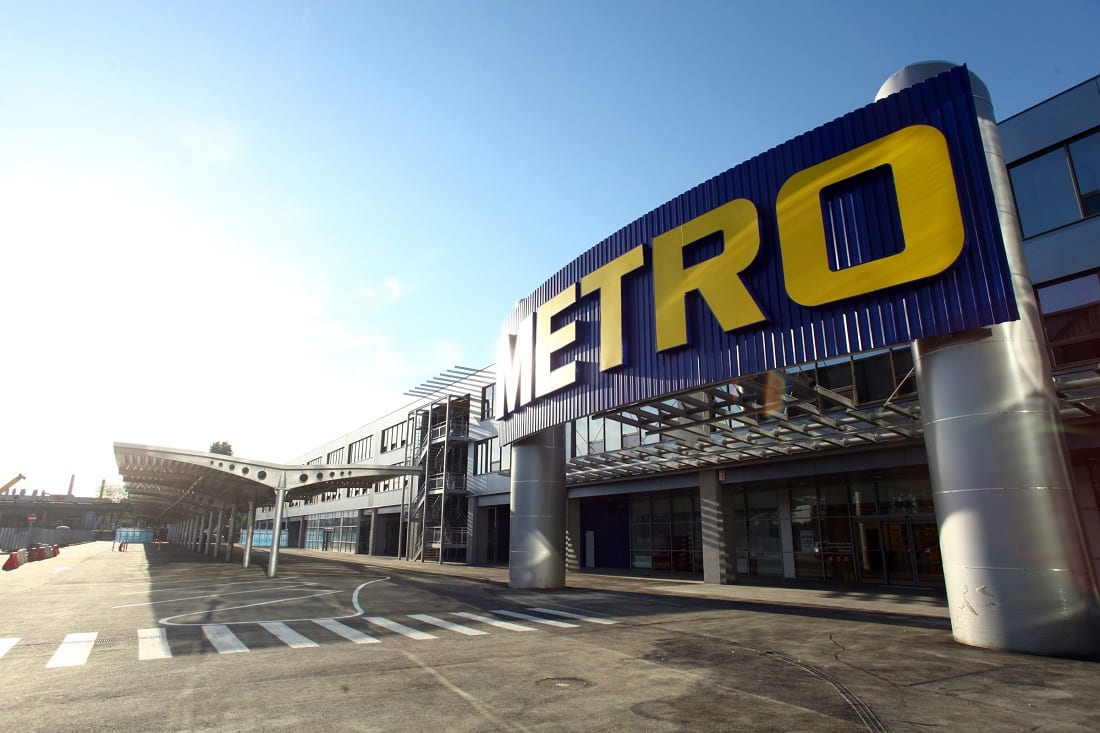
    German wholesaler Metro has called for bids for its China operations.

    The firm was reported last September to be considering exiting its Metro China retail business as part of a plan to focus on wholesaling activities worldwide. The sale is partially in response to the emerging strength of e-commerce in China.

    According to industry insiders, Metro is seeking a deal in a deal that would value the business from US$1.5–2 billion, covering 95 stores in the territory as well as real estate assets in several major cities. Some observers have estimated the Metro China business to be worth up to $3 billion.

    Several local retail chains and private equity firms are expected to be among potential bidders, although none of the named firms responded to requests for comment for a report. E-commerce giant Alibaba has previously held talks with Metro over a possible stakeholding in the business and tencent has been linked to a bid.

    First-round bids should emerge next month.

    In related news, the firm announced the opening of a new warehouse in Yangon last week, aiming to serve local professional customers in the fast-growing hospitality and tourism sectors in the region. Metro Myanmar will not run wholesale stores but provide a virtual shopping experience for customers through its e-commerce and delivery systems.

  • The Galaxy S10 has helped Samsung triple its market share in China

    The Galaxy S10 has helped Samsung triple its market share in China

    Samsung has been the number one smartphone manufacturer for years. It dominates key markets such as North America and Europe, while also remaining a strong player across Asia. In China, though, the situation is pretty different. Despite the company’s best efforts, over the past few years Samsung has seen its market share drop to a measly 1%. But thanks to the recent release of the Galaxy S10 lineup, things seem to be improving.

    The Samsung Galaxy S10 has accelerated growth in China

    According to reliable industry insider Ice Universe, Samsung’s market share in China has almost quadrupled since the beginning of the year, going from just 1% in early January to an impressive 3.6% during the tenth week of 2019 (March 4th to March 10th). The primary source of this growth is the recently-announced Galaxy S10 lineup.

    The new flagship series, which launched globally on March 8th, has reportedly been outperforming last year’s Galaxy S9 lineup by massive margins in China. In fact, the number of Galaxy S10/S10+ units sold within the first two hours of pre-orders was allegedly equal to double the number of Galaxy S9/S9+ devices sold during the first day.This impressive performance has also extended to a number of key global markets. In both the US and the UK, the Galaxy S10 series set new pre-order records for Samsung. The most popular model proved to be the Galaxy S10+, despite its higher price.

    10 million Galaxy S10 units could be shipped this month alone

    Although predictions do vary by analyst, the overall consensus appears to be that Samsung’s Galaxy S10 trio will achieve sales of between 40 and 45 million units by the end of 2019. Around 20 million of these should ship by the very end of June. If this is successfully achieved, the new lineup will have outperformed last year’s Galaxy S9 duo, which sold 19.2 million units during the same period. In regards to short-term performance, recent forecasts have suggested the Galaxy S10, Galaxy S10+, and Galaxy S10e are on track to ship a combined 10 million units by the end of this month alone.

    Things are looking positive for Samsung in China

    As a result of intense competition from local brands, Samsung revamped its mid-range strategy late last year. The South Korean giant started implementing a number of new designs and focused heavily on its mobile cameras. Additionally, it promised to make flagship features more accessible by introducing them to consumers via the new Galaxy A-series. So far this year, the company has introduced the public to the Galaxy A10, A20, A30, and A50. These represent some of the company’s best value-for-money offerings in years and help cater towards a range of consumers in the budget segment.

    Eventually, these four devices will be joined by the Galaxy A40, Galaxy A60, and Galaxy A70. As indicated by their respective names, these will target consumers with slightly larger budgets and should help cover any remaining price points that Samsung doesn’t yet have covered. Lastly, Samsung’s new Galaxy A series should be completed by the Galaxy A90. This device will act as the most expensive model but should still cost less than the Galaxy S10e. In fact, a rumor floating around leads us to believe that it may be some sort of budget flagship powered by the Snapdragon 855. The smartphone is also rumored to include a bezel-less display paired with a unique pop-out camera mechanism which will remove the need for separate front and rear cameras thanks to its ability to rotate.

  • Huawei adopts Open Rack for cloud data centers

    Huawei adopts Open Rack for cloud data centers

    Huawei has revealed plans to adopt the Open Compute Project’s (OCP) Open Rack standard for rack and power delivery architecture for its new public cloud data centers worldwide.

    The Open Rack initiative seeks to redefine the data center rack to significantly reduce energy consumption, while driving operational efficiency by reducing the time it takes to install and maintain racks.

    Huawei will be joining major hyperscale internet companies such as Facebook, Google and Microsoft in adopting the Open Rack standard, which is designed to integrate the rack into data center infrastructure.

    This marks the first OCP standard adopted by Huawei since the Chinese vendor joined the project last year. The vendor is also contributing to a number of OCP projects including rack and power, system management and server projects, and has developed an OCP-based compute module.

    “Huawei’s strategic investment and commitment to OCP is a win-win,” commented Kenneth Zhang, general manager of FusionServer within the Huawei Intelligent Computing Business Department.

    “Combining Huawei’s extensive experience in Telco and Cloud deployments together with the knowledge of the vast OCP community will help Huawei to provide cutting edge, flexible and open solutions to its global customers. In turn, Huawei can leverage its market leadership and global datacenter infrastructure to help introduce OCP to new geographies and new market segments worldwide.”

  • Jury decision means Apple must pay Qualcomm millions

    Jury decision means Apple must pay Qualcomm millions

    Earlier today, we updated a story to tell you about a ruling made by Judge Gonzalo Curiel of the U.S. District Court for the Southern District of California. The judge said that Qualcomm is obligated to pay Apple nearly $1 billion in rebated royalties that it promised to pay Apple as long as the company didn’t attack the chip maker in court or to regulators.

    But another legal decision involving Qualcomm and Apple was announced today. A jury sitting in federal court in San Diego today, awarded Qualcomm the $31 million it was seeking from Apple after finding that the latter infringed on a trio of Qualcomm patents. That works out to $1.41 for each iPhone sold without a license for the Qualcomm technology used inside each device. Despite the award, when you consider the $1 billion that Qualcomm will have to rebate to Apple, the latter ended up approximately $969 million in the black.

    The $31 million that was awarded to Qualcomm covers a trio of patents. One allows a phone to connect to the internet as soon as it is booted-up. Another helps conserve the amount of battery power consumed by the graphics processor when in use, and the third covers how traffic flows between the app processor and the modem on a handset. As you might imagine, Qualcomm was happy with the jury’s decision while Apple said it was disappointed with it. Apple and Qualcomm still have a number of court battles remaining. For example, next month a trial will start up in San Diego that will deal with billions of dollars in royalties.

    “Today’s unanimous jury verdict is the latest victory in our worldwide patent litigation directed at holding Apple accountable for using our valuable technologies without paying for them. The technologies invented by Qualcomm and others are what made it possible for Apple to enter the market and become so successful so quickly.”-Don Rosenberg, general counsel, Qualcomm

    “Qualcomm’s ongoing campaign of patent infringement claims is nothing more than an attempt to distract from the larger issues they face with investigations into their business practices in US federal court, and around the world.”-Apple

    Qualcomm could be forced the way it sells chips to phone makers

    Qualcomm is also awaiting a couple of key rulings that could change the way chips are sold to smartphone manufacturers in the future. The court battle it had with the FTC earlier this year revealed why many phone manufacturers hate dealing with the chip maker. Qualcomm’s “no license, no chips” policy has infuriated these handset vendors because each of them end up paying for the Qualcomm chips used in its phones, and a license that is based on the number of phones each manufacturer ships whether it contains a Qualcomm chip or not.  Qualcomm also has been accused of not licensing its standards essential patents in a fair, reasonable and non discriminatory manner. These are patents that cover technology that a device must include in order to meet technical standards.

    On March 26th, the International Trade Commission (ITC) is expected to make another important ruling involving Qualcomm. In this case, an ITC judge originally ruled that while Apple had infringed on a Qualcomm patent, it would be against the public interest to give Qualcomm the iPhone sales and import ban in the U.S. that Qualcomm was seeking. But ITC regulations call for a review of that decision by the entire commission, and the result of that review will be announced a week from this coming Tuesday.

    Depending on how this all shakes out, Qualcomm could end up with a whole new method of selling chips to smartphone manufacturers. And if it shows remorse and promises to reform, it just might be able to win back Apple’s business. From 2011-2015, Qualcomm was the exclusive supplier of modem chips for the iPhone. In 2016 and 2017, Qualcomm and Intel both supplied Apple with this component. Intel was the sole supplier of modem chips for the 2018 iPhone models, and is rumored to be the sole source of 5G modem chips for the 2020 iPhones.

  • Kia Partners With Amazon To Sell Charging Stations For Electric Vehicles

    Kia Partners With Amazon To Sell Charging Stations For Electric Vehicles

    Kia Motors America (KMA) in partnership with Amazon Home Services has announced a new program for its plug-in vehicle customers. The program will see Amazon sell and install electric vehicle charging stations at the customers house or office. The tie-up makes Kia, the second automaker after Tesla in America to offer the service online with the electric charging network. The manufacturer says the process of purchasing and installing a charging station will be as easy as buying other products on Amazon.

    Speaking about the new initiative, KMA – Car Planning and Telematics, Executive Director, Orth Hedrick said, “Home-charging can’t get any easier than this. Being able to order a Level 2 charger and installation through Amazon further demystifies and simplifies the experience for new Kia EV and PHEV owners. It’s just another example of how we’re constantly striving to provide the very best vehicles and customer experience.”

    Kia Motors has been actively working on improving its charging infrastructure in the US as it adds more electric cars to its portfolio. The company currently retails the Soul EV, Niro EV1, Niro PHEV and Optima PHEV, among other models in the country. Customers will find recommended Level 2 or 240-volt charging units selected by Kia on Amazon, along with information about home charging installation and customer reviews. The site also gives customers the cost for the installation and will schedule a licensed electrician for the same, if needed. The charging stations are backed by Amazon’s Happiness Guarantee plan. Kia’s vehicles in the US are offered with a 10 year/160,000 km warranty cover and roadside assistance.

    Kia and Amazon have set up a new ‘Charge my Kia’ portal for the sale of the electric charging stations. While buyers can purchase the Bosch 40-amp station that is available in partnership with the manufacturer, there are other charging stations available as well from companies like Chargepoint and Juicebox.

  • China Unicom profit spikes 457.8% in 2018

    China Unicom profit spikes 457.8% in 2018

    China Unicom has reported a more than five fold growth in net profit for 2018 as a result of strong data revenue growth and benefits from the company’s mixed ownership reform program.

    The annual results show a 457.8% spike in net profit to 10.19 billion yuan, contributing to what the operator called a “V-shaped rebound in profit” following its financial woes in 2016, when the operator’s annual profit shrank by nearly 95%.

    Operating revenue grew 5.8% to 290.88 billion yuan, with service revenue up 5.9% to 260.68 billion yuan.

    Mobile service revenue for the year grew 5.5% from the prior year to 165.1 billion yuan, with mobile data revenue jumping 13.7% to 104.8 billion yuan.

    China Unicom meanwhile recorded total 4G net additions of 45.05 million for the year, taking its total 4G subscriber base to 220 million. This represents 70% of the operator’s total mobile customer base, an eight percentage point increase from 2017.

    Total fixed broadband subscribers meanwhile increased by 4.3 million to more than 80 million, but fixed broadband revenue declined to 42.3 billion yuan due to intense competition and ongoing mobile substitution.

    The operator’s results represent the first full year of implementation of the mixed ownership reform program, which has involved opening up investment in a Chinese mobile operator to private investors for the first time.

    As part of the program, at the direction of the Chinese government, Unicom sold a 35% stake in the company to a group of 14 investors in 2017.

    “Looking ahead, the mixed-ownership reform has powered up the company with differentiated advantages, bringing invaluable opportunities for development,” China Unicom chairman and CEO Wang Xiaochu said.

    He said the company plans to continue to pursue growth based on its “Five New” operating strategy.

    “We intend to unleash more institutional benefits brought by New Governance, activate greater internal vibrancy with New DNA, achieve better efficiency and returns with New Operation, tap into the broader blue ocean with New Energy, and put together greater synergetic advantages with New Ecology.”

  • Huawei ready to replace Android if it loses legal battle

    Huawei ready to replace Android if it loses legal battle

    Huawei is being attacked from all sides, and even though the Chinese company seems to have been cornered, it still has the will to fight. Huawei recently sued the United States, as a means to fight a ban that prevents its telecom equipment from being purchased and used by government institutions.

    The same ban prohibits major US government contractors from using Huawei equipment, a major blow for the Chinese company’s local telecom business. Although the legal battle between Huawei and the US is just beginning, the former has everything prepared in case of a negative outcome.

    Huawei’s executive Richard Yu said in a recent interview with Die Welt that his company already has its own operating system ready to replace Android and Windows.

    We have prepared our own operating system, if it turns out we can no longer use these systems, we will be ready and have our plan B. Huawei started working on its proprietary ecosystem seven years ago, following a US investigation that also targeted ZTE. According to Yu, Huawei will continue to use Google and Microsoft operating systems, but if the legal battle intensifies, it won’t hesitate to switch to its own ecosystem.

    The bad news for fans of the Chinese brand is that not even Huawei believes in the success of its own ecosystem. A Huawei spokesperson was cited saying that the company doesn’t expect to use its “backup systems” and that it doesn’t actually want to use them.

  • Hyperscale operator capex jumped 43% in 2018

    Hyperscale operator capex jumped 43% in 2018

    New data from Synergy Research Group revealed that hyperscale operator capex reached over $32 billion in Q4, outperforming the first three quarters of the year, which had themselves set records.

    Full-year hyperscale capex jumped 43% to almost $120 billion. Meanwhile telco capex was over double that of hyperscale operators, but notably telco spending remained at the same level as the previous two years. The top five hyperscale spenders in 2018 were Google, Amazon, Microsoft, Facebook and Apple. Coincidentally their aggregate 2018 capex was almost identical to the capex of the top five telco spenders – China Mobile, AT&T, Verizon, NTT and Deutsche Telekom.

    The hyperscale data is based on analysis of the capex and data center footprint of 20 of the world’s major cloud and internet service firms, including the largest operators in IaaS, PaaS, SaaS, search, social networking and e-commerce.

    Outside of the top five, other leading hyperscale spenders in 2018 included Alibaba, Tencent, IBM, JD.com and Baidu. Much of the hyperscale capex goes towards building, expanding and equipping huge data centers, which have now grown in number to 439.

    The telco data is based on tracking and analysis of the world’s 40 largest telcos, which in aggregate account for 85% of the communications services market.

    “The hyperscale operators are quickly becoming the capex kings of the IT world,” said John Dinsdale, a chief analyst at Synergy Research Group. “On average hyperscale operator revenues are growing by 20% per year driven by expansion of cloud services, e-commerce, social media and online advertising; and it is notable that the leading players are investing an ever-increasing share of their revenues into capex. This is in stark contrast to telcos who are seeing neither revenues nor capex growing. We do not see these trends changing any time soon.”

  • Greater China Club Presents  ‘A Taste of Guangdong Nostalgic Dining Experience’  at Chinese Dining Room Man Hing

    Greater China Club Presents ‘A Taste of Guangdong Nostalgic Dining Experience’ at Chinese Dining Room Man Hing

    Greater China Club’s classic Chinese dining room Man Hing is presenting ‘A Taste of Guangdong Nostalgic Dining Experience’ from 3 C 22 April 2019. A nostalgic menu of popular Cantonese dishes from the 1960s C 70s is being curated by veteran guest chef brothers Heung Chung-Kin and Heung Chung-Tat, bringing combined experience of over 90 years in classic Guangdong cuisine.

    Both in their 60s, the master chef brothers have a celebrated track record of cooking for Hong Kong’s rich and famous dating back to 1968.

    Elder brother Chef Chung-Kin, 67, helmed Chinese kitchens from The Oceania Restaurant, Furama Hotel and Grand Hyatt in Hong Kong to ANA InterContinental Tokyo, Grand Bay Hotel Zhuhai and Four Seasons Macau before becoming a tycoon’s personal chef.

    Younger brother Chef Chung-Tat, 60, rose to Head Chinese Chef at Great Eagle Hotel, Royal Garden Chinese Restaurant and exclusive Club Vendome at luxury Kowloon development Imperial Cullinan.

    “This vintage menu is a tribute to their vast knowledge of the roots of Guangdong cuisine, with a nostalgic menu recalling beloved Cantonese specialties from a charming era before Hong Kong became a global cosmopolitan powerhouse,” said Eric Ting, Founder and CEO of Bird Kingdom Group, managing company of Greater China Club.

    Guests can embark on a classic culinary journey back in time in the presentation of over 70 exquisite Guangdong favourites, from appetisers and soups to main courses, desserts and dim sum C many that once graced celebratory banquets but are rarely served today, requiring lengthy preparation and intricate skills.

    Once-popular starters include Deep-fried Chinese Egg Pudding with Yunnan Ham (HK$158), Crispy Chinese Milk Puddings Served with Sugar (HK$158) and Tossed Pork Intestines with Homemade Sauce (HK$138).

    Among soups, Braised Partridge Soup with Bird’s Nest (HK$188 per person) is a classic favourite combining partridge’s high nutritional value as a source of iron, selenium, vitamin B, potassium and magnesium with bird’s nest nutrients restoring health and helping chronic cases of cough and asthma. Also on the menu is Braised Fish Head Soup with Egg and Barbecued Pork (HK$148 per person); Double-boiled Winter Melon with Conpoy and Chinese Ham (HK$138 per person); and Double-Boiled Vegetarian Shark Fin Soup stuffed in Whole Pigeon (HK$488).

    Traditional main course favourites from the bygone era range from Sautéed Prawns stuffed with Chinese Ham and Bamboo Shoot (HK$288) to banquet classics Signature Crispy Chicken in Traditional Method (HK$588, limited supply daily), Sautéed Pork Stomach with Olive Kernel and Bell Pepper (HK$298, limited supply daily) C a classic test of slicing technique selecting most tender sections of eight stomachs per dish.

    Braised Pomelo Peel with Shrimp Roes (HK$188) has a uniquely soft, melt-in-your-mouth texture; and rare Braised Dried Giant Garoupa Skin with Thick Sliced Abalone in Oyster Sauce (HK$488, limited supply daily) is a tradition from Manchu Han imperial feasts, cooked with precious dried giant garoupa skin from Malaysia that costs over HK$50,000 per 9kg.

    1960s and 70s specialties extend to Sautéed Soft Shell Turtle Skin with Green Bell Pepper and Celery (HK$368); Deep-fried Caul Fat Rolls Stuffed with Shredded Pork and Eel (HK$188); Steamed Fresh Crab Claw in Superior Soup (HK$288, limited supply daily); Pan fried Shrimp Toast in Traditional Style (HK$288) and Braised Vegetarian Pockets Stuffed with Mushrooms and Vegetables (HK$168).

    Main dishes extend to Sliced Noodles with Crabmeat in Superior Soup (HK$88 per person), a Guangdong classic using deep-fried diamond shaped wonton wrappers; Fried Rice Noodles with Pork Liver, Barbecue Pork, Pork Stomach, Fish Maw and Chicken Kidney (HK$188); and Egg Noodles with Shrimps, Sliced Pork, Fish Maw, Squid and Barbecued Pork in Soup(HK$188).

    Among classic Guangdong dim sum are Steamed Buns Stuffed with Chicken, Black Mushrooms, Barbecued Pork, Shrimps and Salty Egg York (HK$68); Steamed Seafood Dumpling Stuffed with Superior Soup (HK$88 per person); Steamed Shrimp Dumplings with Chinese Celery (HK$68) or Steamed Shrimp Dumplings with Bamboo Shoot (HK$66); and the street-food staple, Pork Lard Buns in Traditional Style (HK$58).

    Completing the traditional menu are beloved retro desserts C from Cantonese Sponge Cake (HK$48) and Red Bean Rice Flour Pudding (HK$48) to Baked Egg Custard Pudding with Sago and Lotus Paste (HK$48).

    Greater China Club’s ‘Classic Guangdong Nostalgic Dining Experience’ continues a tradition of inviting guest chefs to showcase novel, authentic and exquisite regional Chinese cuisine, following previous presentations by star chefs from Beijing, Hangzhou and Chaozhou.

    Greater China Club is located at Unit A, 10/F, D2 Place One, 9 Cheung Yee Street, Lai Chi Kok, Kowloon, Hong Kong. It opens from Monday to Thursday, Sunday and Public Holidays, 12:00 noon to 12:00 midnight and Friday and Saturday, 12:00 noon to 1:00 am.

    Greater China Club offers Corporate and Individual memberships entitling members to exclusive offers at the Club’s dining outlets, waived service charges and exclusive benefits.  Priced HK$18,888 for corporate membership with 3 nominees and exclusive benefits, including 10% discount on food consumption at Umai and Rustico, 3 bottles of Champagne (HK$1,080 each), HK$15,000 cash vouchers which can be used at all restaurants under Bird Kingdom Group; and HK$6,888 for individual members with exclusive benefits, including 10% discount on food consumption at Umai and Rustico, 1 bottle of Champagne (HK$1,080), HK$5,500 cash voucher can be used at all restaurants under Bird Kingdom Group, while monthly membership fees (which can be used for spending in the Club) are HK$600 and HK$300, respectively.

    Members enjoy special benefits, but the Club is also open to guests and tourists at D2 Place, a revitalised industrial building now buzzing with eclectic bars and restaurants, named after its MTR exit at Lai Chi Kok.

  • Fung and JD launch Hong Kong’s first AI checkout

    Fung and JD launch Hong Kong’s first AI checkout

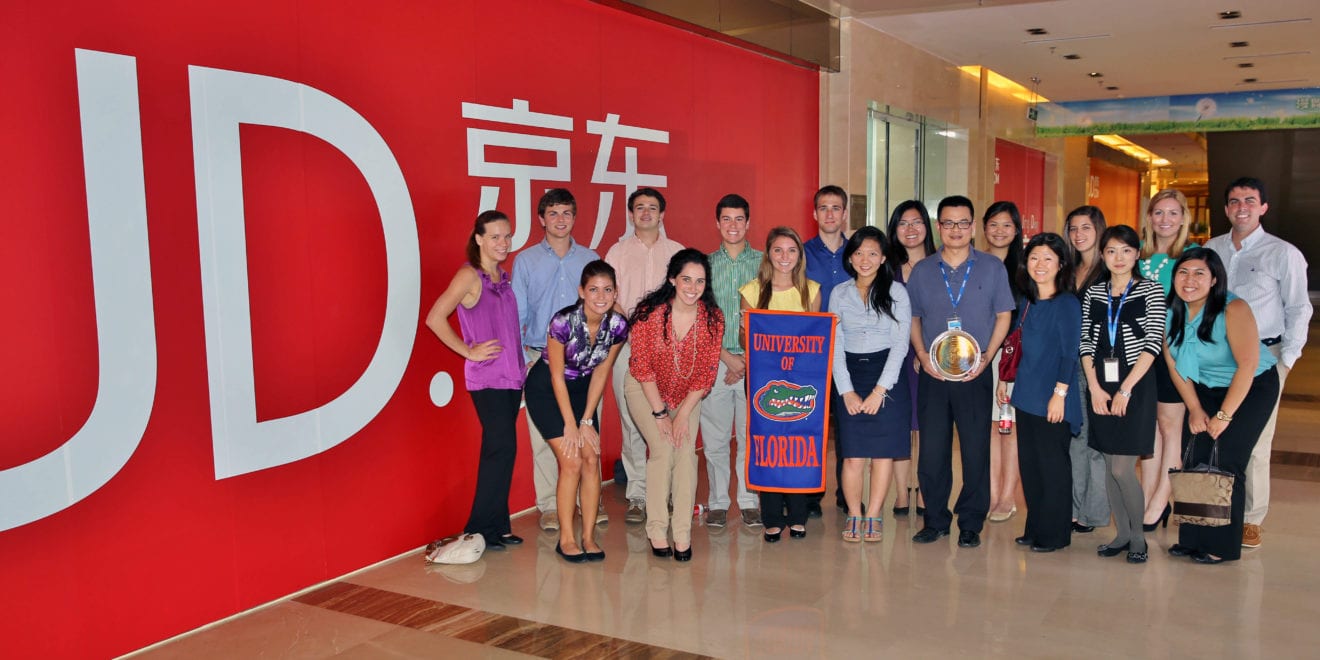
    JD has partnered with Fung Retailing Group to unveil Hong Kong’s first AI checkout solution in a retail store environment.

    The AI-powered checkout technology is a result of a strategic deal between the firms signed last year. It represents the first AI checkout experience featuring image recognition technology in the territory. This technology is currently installed at the AI Retailing Zone in two Circle K stores in Hong Kong.

    Designed to make the checkout experience as easy and hassle-free as possible, customers can complete checkout using the AI-powered solution in just four seconds with three simple steps, including placing the products on the counter, scanning, and paying via Octopus card.

    The advanced AI algorithm enables the checkout counter to recognise up to five products within one second with an accuracy rate of more than 97 per cent, reducing the overall checkout time by 30 per cent.

    “This is an important milestone for Fung Retailing as the first in the industry to unveil the first AI-powered checkout pilot experience in a convenience store environment,” said group MD Sabrina Fung.

    “This underscores our ongoing commitment to experiment with new technologies like AI and to build partnerships like the one with JD to enhance the end-customer experience, further transforming the future of retail for Greater China.”

    “AI will continue to play a critical role in transforming the retail landscape,” said JD VP Dr Bowen Zhou.

    “Retailers who are able to capitalise on this trend, will have a competitive edge among their peers. Leveraging Fung Retailing’s offline retail expertise and JD’s leading retail technology, this pilot project represents a critical first step in collectively realising our vision for smarter and more convenient retail.”

  • Barclaycard partners with Alipay to help UK merchants increase sales from booming Chinese tourism

    Barclaycard partners with Alipay to help UK merchants increase sales from booming Chinese tourism

    Barclaycard, which processes nearly half of the UK’s credit and debit card transactions, today announced a new agreement with Alipay, the world’s leading payment and lifestyle platform, which will allow retailers to accept Alipay transactions in stores across the UK.

    Building on a successful pilot over the past two years, the new agreement will enable UK retailers to take full advantage of the growing volume and buying power of Chinese visitors. In addition to the UK’s 393,000 Chinese residents and 95,000 Chinese students, tourists from China represent an increasingly important customer segment for retailers. VisitBritain is expecting 483,000 visits from China in 2019, up 43 per cent on 2017, with Chinese visitors expected to spend more than £1 billion this year, up 50 per cent, moving it well into the UK’s top 10 tourism market. The increase in market size is also demonstrated by the fact that the number of Alipay users in the UK has doubled in the last year.

    By accepting Alipay, the world’s most-used app in 2018 outside of social apps according to App Anni, retailers will be able to capitalise on the growing appetite of Chinese tourists to use mobile payments over cash while abroad. According to a 2018 survey conducted by Nielsen, the vast majority (93 per cent) of Chinese tourists said they would likely spend more in a store that accepted mobile payments. In addition, among the merchants surveyed that had adopted Alipay, nearly 60 per cent said that they had clearly seen growth in both foot traffic and revenue[5].

    The new agreement will enable UK retailers to accept in-store Alipay payments without replacing their existing point-of-sale system, allowing them to take advantage of the boom in Chinese tourism without disrupting their existing customer experience[6]. Retailers will also benefit from being at the fingertips of hundreds of millions of highly-engaged Alipay users, who will be able to search for outlets near their location to find out details such as opening hours, directions, and whether there are any discounts available.

    Alipay serves over one billion users worldwide together with local e-wallet partners, and this new agreement offers its Chinese users travelling in the UK the familiar mobile payment and lifestyle experience they enjoy at home, as well as Alipay’s competitive foreign exchange rate.

    Feedback from retailers has been incredibly positive; Barclaycard is already in discussions with around 70 clients interested in becoming early adopters.

    Rob Cameron, CEO, Global Head of Payment Acceptance at Barclaycard, said:

    “Thanks to the significant investments we’ve made in our platform, our clients have access to a growing range of payment types, each of which can help them increase market share by meeting the needs of new customers.

    “Our new agreement with Alipay gives retailers a vital tool to help them seize the revenue opportunity posed by the growth of Chinese visitors to the UK. At the same time, Alipay users will benefit from a more convenient and familiar in-store payments process – enhancing their overall shopping experience.”

    Roland Palmer, Head of Europe, Middle East and Africa at Alipay, said:

    “Alipay is excited to announce that it will be working with Barclaycard to provide visitors from China with the mobile payment experience that they are already familiar with. Through this strategic partnership, Alipay will now be able to offer many more UK merchants the opportunity to connect and engage with a growing number of Chinese visitors. This is another step forwards in our vision to offer Chinese tourists a seamless travel and payment experience when travelling overseas.”

  • Le Saunda sales plunge with 30 per cent

    Le Saunda sales plunge with 30 per cent

    Le Saunda sales plunged 30 per cent in the fourth quarter as the embattled shoe retailer struggles to attract customers.

    According to a stock exchange filing, sales at Le Saunda’s self-owned stores fell by 29.9 per cent in the quarter, with same-store sales declining 17.4 per cent.

    That followed a cull of 161 stores over 12 months across Mainland China, Hong Kong and Macau.

    Sales by the group’s e-commerce business fell by 4.1 per cent, compared with the same period last year.

    Le Saunda has 526 stores remaining across its three markets, with 464 of them self-owned and 62 franchised on the mainland.

    The company said it expects the group to record a net loss attributable to shareholders for the 2018-19 financial year, primarily attributable to the decrease in sales, and a declining gross profit margin. Le Saunda did not give an estimate for the loss.