Tag: coffee

  • Asia Coffee-Vietnam market tepid ahead of new crop season, low supplies in Indonesia

    Asia Coffee-Vietnam market tepid ahead of new crop season, low supplies in Indonesia

    Coffee trading remained subdued in Vietnam this week due to a lack of beans, with traders awaiting the new crop season that starts next month.

  • Vietnam coffee chain Trung Nguyen Legend makes international debut

    Vietnam coffee chain Trung Nguyen Legend makes international debut

    Vietnam-based coffee chain Trung Nguyen Legend is expanding its footprint in the international market opening its first store in China.

    The coffee shop, which is situated at 699 Nanjing Street in Shanghai, has been in the works since 2018 and intends to provide Chinese clients with a variety of coffee products as well as serving fresh coffee drinks, including the Robusta obtained from one of Vietnam’s well-known highland regions, Buon Me Thuot.

    Trung Nguyen Legend sees the store as a place for artistic and cultural coffee “where the three most prevalent world coffee civilisations come together”. Customers can experience the three coffee cultures the company has identified and showcases in its flagship Vietnam stores: Ottoman, Roman and Zen.

    The Shanghai location recreates a Vietnamese-themed coffee shop, through its architectural style, display graphics, and menus that combine elements of Vietnamese and local culture.

    The store features some well-known designs and traditional materials from Vietnam, such as ceramics, bamboo and rattan kitchenware, volcanic rock, red basalt soil, and typical conical motifs of Vietnamese culture.

    A renowned household name in Vietnam since its establishment in 1996, Trung Nguyen Legend FMCG products are available in more than 60 countries. The brand claims China is its second-largest market in the online coffee business, and Legend’s G7 has become the most well-known instant coffee brand due to its distinctive flavour.

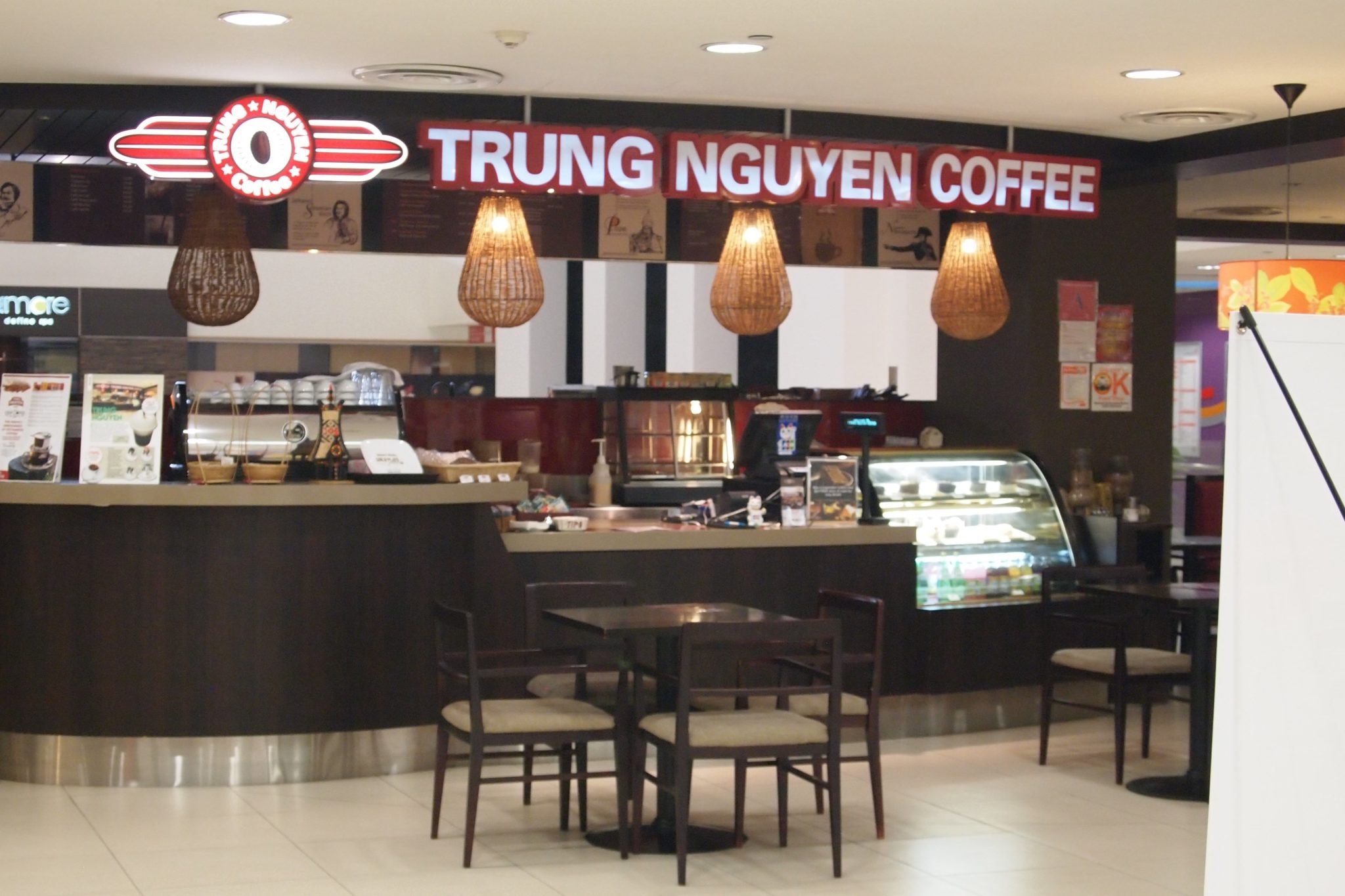
    The Trung Nguyen brand has appeared on cafes outside Vietnam before, with stores in Singapore prior to the advent of the Legend brand extension. This is the company’s first foray as a premium cafe brand.

    Research from Statista shows the number of coffee chains entering China has increased in recent years, with their market share likely to grow. Starbucks is by far the largest fresh-ground coffee seller in China, with more than 5000 locations across the country.

  • Flash Coffee, Ageless Galaxy Streetwear to launch capsule collection

    Flash Coffee, Ageless Galaxy Streetwear to launch capsule collection

    Tech-powered coffee chain Flash Coffee has collaborated with lifestyle brand Ageless Galaxy Streetwear to unveil the ‘Push’n Boundaries’ collection.  The collection features five items including three streetwear-style tees, a metal pin and a sticker pack. These will be sold in Singapore, Indonesia, Thailand, Taiwan, Hong Kong and South Korea.  According to Flash Coffee, the partnership was the idea of Ageless Galaxy CEO Tamish Aswani and Flash Coffee’s CEO and co-founder David Brun

    The collection features five items including three streetwear-style tees, a metal pin and a sticker pack. These will be sold in Singapore, Indonesia, Thailand, Taiwan, Hong Kong and South Korea.

    According to Flash Coffee, the partnership was the idea of Ageless Galaxy CEO Tamish Aswani and Flash Coffee’s CEO and co-founder David Brunier. Both seek to empower people to push their boundaries in everything they do by developing a collection that embodies the philosophies of both brands.

    The two companies say the tees in the collection are made with 100 per cent cotton. The white, and black and white, tees go well with a variety of outfits, while the striking yellow long-sleeve tee has ink that changes colour when exposed to sunlight, turning from white to pink.

    Launched in 2020, when Asia’s coffee industry was hit by the first Covid-19 pandemic, Flash Coffee has operations in six markets across Asia – Singapore, Indonesia, Thailand, Taiwan, Hong Kong, and South Korea. The Singapore-headquartered chain has received investment from Rocket Internet, Delivery Hero, White Star Capital, Global Founders Capital and Conny & Co.

    Ageless Galaxy, which was established in 2013, is an Indonesian lifestyle brand offering streetwear clothes inspired by outer space exploration. The brand opened its first brick-and-mortar store in Jakarta in 2020.

  • Taiwan’s Miracle Coffee to launch in Singapore

    Taiwan’s Miracle Coffee to launch in Singapore

    Miracle Coffee will launch a 90-day pop-up café kiosk at the ArtScience Museum in Singapore’s Marina Bay Sands by the end of September 2022, ahead of a brick-and-mortar store launch in the museum’s lobby next year.

    Miracle Coffee said the kiosk will only serve beverages, including an exclusive for the location called Kaya Cloud. Further menu items and prices for the Singapore outlet are yet to be announced.

    Miracle coffee currently operates three stores in Taipei, Taiwan, and one in Shanghai, China.

    “I am thrilled to team up with Marina Bay Sands to bring Miracle Coffee to my home, Singapore. Since this is our first time setting up a pop-up for Miracle Coffee, we wanted a scenic location that can stage the intimate scene of coffee lovers revelling in a smooth cup of coffee while soaking in views of my beautiful city. There is no other location that is more suitable than the iconic ArtScience Museum,” said JJ Lin.

  • Starbucks projects profit growth from tech, stores, workers spending

    Starbucks projects profit growth from tech, stores, workers spending

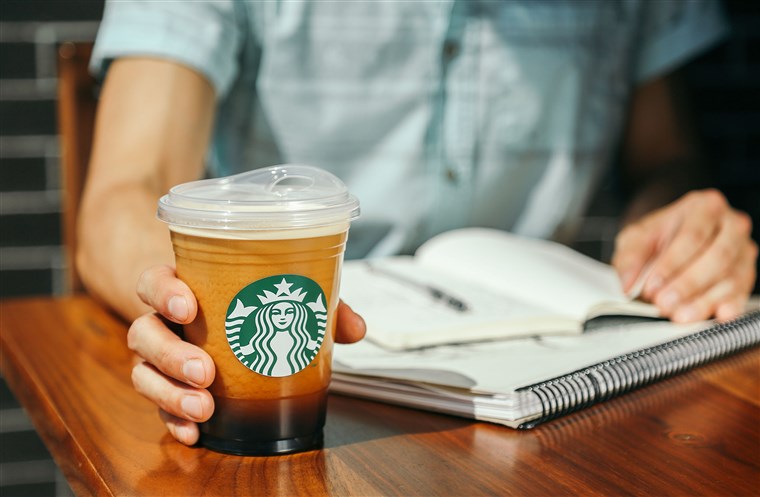
    Starbucks Corp projects profits to grow between 15% to 20% per share over the next three years, a significant increase from previous guidance based on spending plans of $2.5 to $3 billion over the same period on technology, new stores and renovations, the coffee chain said on Tuesday.

    The company is introducing technology to speed up production of its increasingly popular cold beverages and send digital orders away from busy locations as it seeks to prevent U.S. cafes from being overwhelmed by orders and improve working conditions for employees, it announced during its Investor Day event.

    The Seattle-based company expects to return $20 billion to investors via share buybacks and dividends from fiscal 2023 to 2025. Wall Street analysts had largely expected earnings updates to be in line with previous guidance of 10 to 12% growth.

    A surge in digital orders, which now make up nearly a quarter of all orders, has helped the coffee chain gain market share during the COVID-19 pandemic but has also led to barista burnout and strained the physical capacity at older stores.

    The company is exploring “load balancing” technology that can send orders to stores that have capacity to actually fulfill them – instead of to stores already being slammed by drive-thru customers, for instance, Chief Technology Officer Deb Hall Lefevre said in an interview with Reuters.

    “REINVENTION” OF STARBUCKS SINCE PANDEMIC

    The pandemic changed customer behavior, leading to a deluge of mobile, delivery and drive-thru orders, as well as an increase in cold beverages and customized coffee drinks.

    Calling it a “reinvention,” the company laid out a sweeping plan spearheaded by interim Chief Executive Officer Howard Schultz, who will be replaced by Laxman Narasimhan in April.

    The plan includes new equipment to heat food faster with less plastic waste, new store designs with larger shelves for orders and additional employee benefits.

    A new system for iced coffee drinks shaves nearly a minute off the time it takes to make a Mocha Frappuccino, down to 35 seconds. Baristas would no longer need to haul a bucket of ice to the station every hour because the ice will be automatically fed into the new equipment.

    Another machine, which brews hot coffee one cup at a time instead of in bulk batches and eliminates paper filters, is being tested in Minneapolis locations and could be rolled out next year.

    Starbucks is on pace to reach 45,000 stores by the end of fiscal 2025 – or nearly eight new stores per day – it said. That includes a net new 2,000 new U.S. stores and some delivery-only locations.

    In China, it plans to nearly double the number of stores to 9,000 – or one new store nearly every nine hours.

    UNION BACKDROP

    Employees at 236 stores voted to join a union over the past year, out of Starbucks’ nearly 9,000 corporate-owned U.S. locations. Conversely, 52 stores voted against unionizing, according to National Labor Relations Board data.

    Frank Britt, brought in by Schultz to lead the company’s transformation strategy, said workers know how to solve the company’s problems because they are on the front line.

    “A lot of the concerns the partners have, whether they’re affiliated with the union or not, are valid concerns. We agree, there’s a trust deficit,” he said in an interview.

    Union members have been holding protests this week to bring attention to their demands. Billie Adeosun, a Starbucks employee since 2015 who works at a unionized location in Olympia, said on Monday higher wages were a top priority.

    The company has lifted pay to an average of nearly $17 across non-unionized U.S. locations. Starbucks says the law prohibits it from offering increased benefits to unionized workers without bargaining over them.

    “We know that these benefits or higher wages… wouldn’t even exist without unions,” said Adeosun, who makes $15 an hour. “We’ve been able to shine a spotlight on this company and show that they’re not the liberal company they claim to be.”

  • % Arabica launches its first store in South Korea

    % Arabica launches its first store in South Korea

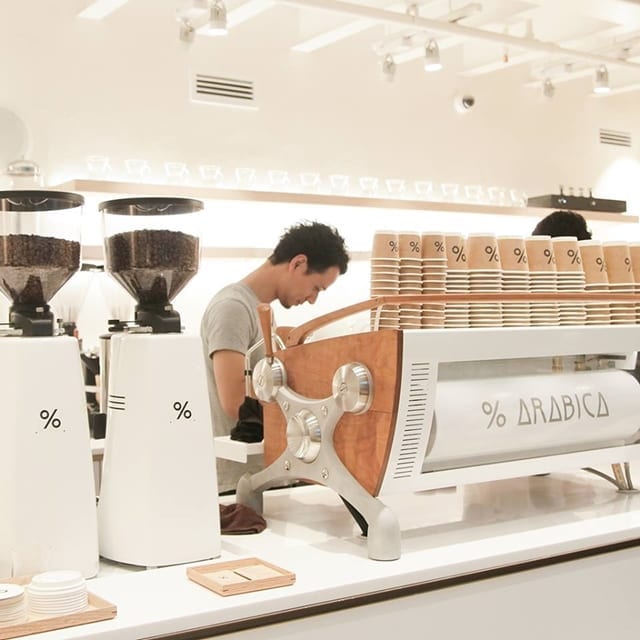
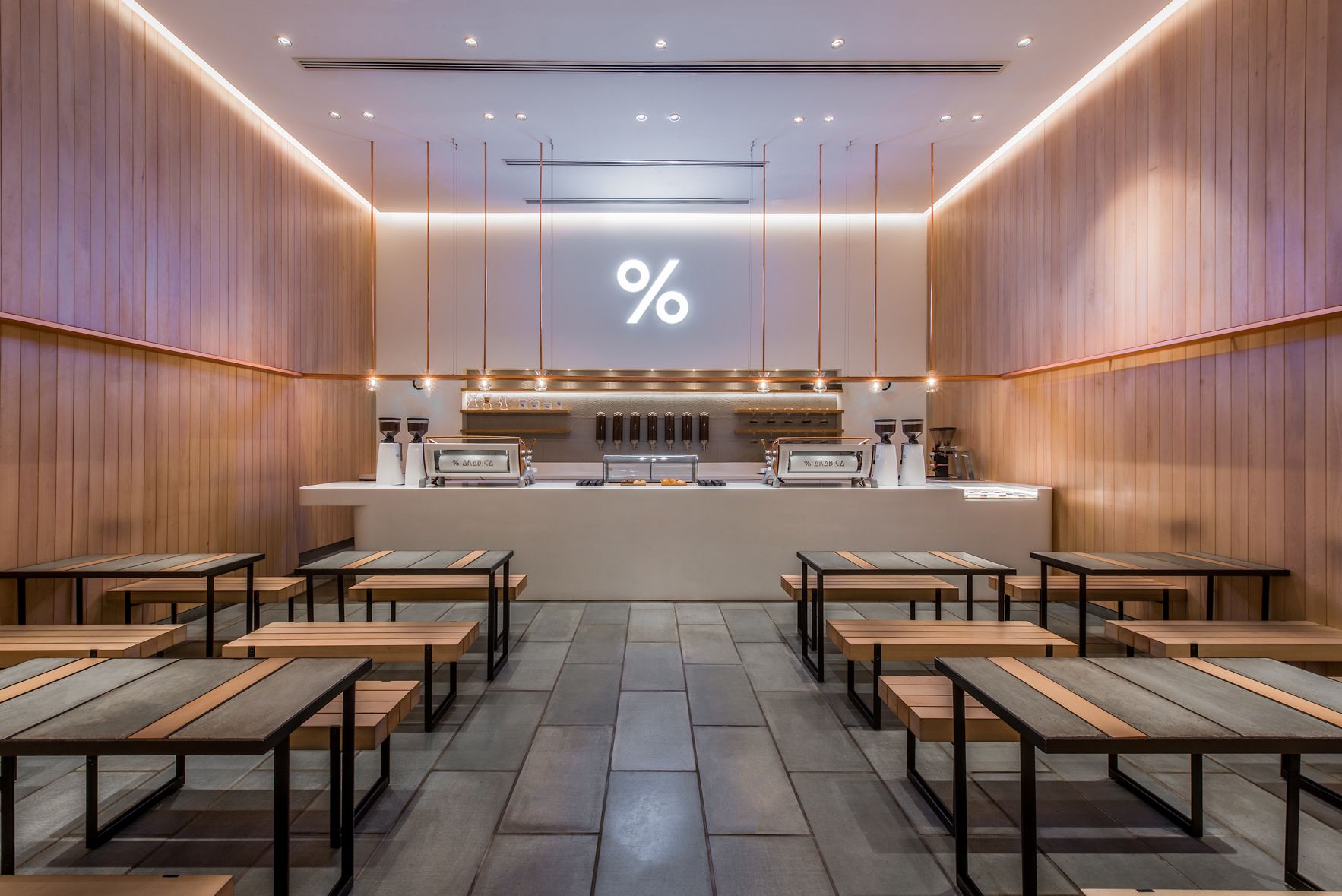
    Japanese boutique coffee group % Arabica has made its debut in South Korea with a store in Seoul.

    Located at Starfield Library, the store is % Arabica’s 125th location globally following recent first-time launches in Bali and Taiwan in August 2022.

    Opening its first store in Kyoto, Japan, in 2014, the boutique coffee group currently operates across 19 countries, with 86 stores in Asia.

    According to % Arabica’s website, the group will also soon open stores in Vietnam and the Philippines, as well as Canada, Mexico and Spain.

    World Coffee Portal forecasts the South Korean branded coffee shop to exceed 30,000 outlets by 2025. Ediya Coffee is the market leader with approximately 3,500 outlets.

  • Brisbane coffee brand Aromas Coffee Roasters sold

    Brisbane coffee brand Aromas Coffee Roasters sold

    Queensland-based Aromas Coffee Roasters has been acquired by local Indigenous-owned company SupplyAus Holdings for an undisclosed sum.

    Aromas Coffee Roasters boasts a 47-year history, serving more than 300 locations in the state, while SupplyAus was co-founded by Adam Williams, a Wiradjuri man, and Shane Andrews, a descendant of the Mununjali people in 2018.

    SupplyAus CEO, Adam Williams, told Business News Australia, that this was a “major step to inspire other Indigenous entrepreneurs to have a go”.

    “Buying a legacy brand like Aromas shows Indigenous kids and young people that even the biggest brands are within our reach.”

    With the acquisition, the company plans to integrate some of Aromas Coffee’s operations with its own coffee portfolio – Dhuwa Coffee, which is sold in 900 Woolworths stores.

    “That’s something we are good at with the rest of our brands, so to be able to roll that through with Aromas is something we are looking forward to.”

    Alongside, the company is currently exploring opportunities to invest in indigenous employment with the rollout of its own Aromas Cafe and also grow the brand internationally.

    SupplyAus now owns and operates a range of brands, including Bunji Workwear, SupplyAus Medical, Jingeri Office National and Aromas Coffee Roasters.

  • Aeon to bring Japan’s Komeda’s Coffee to Hong Kong

    Aeon to bring Japan’s Komeda’s Coffee to Hong Kong

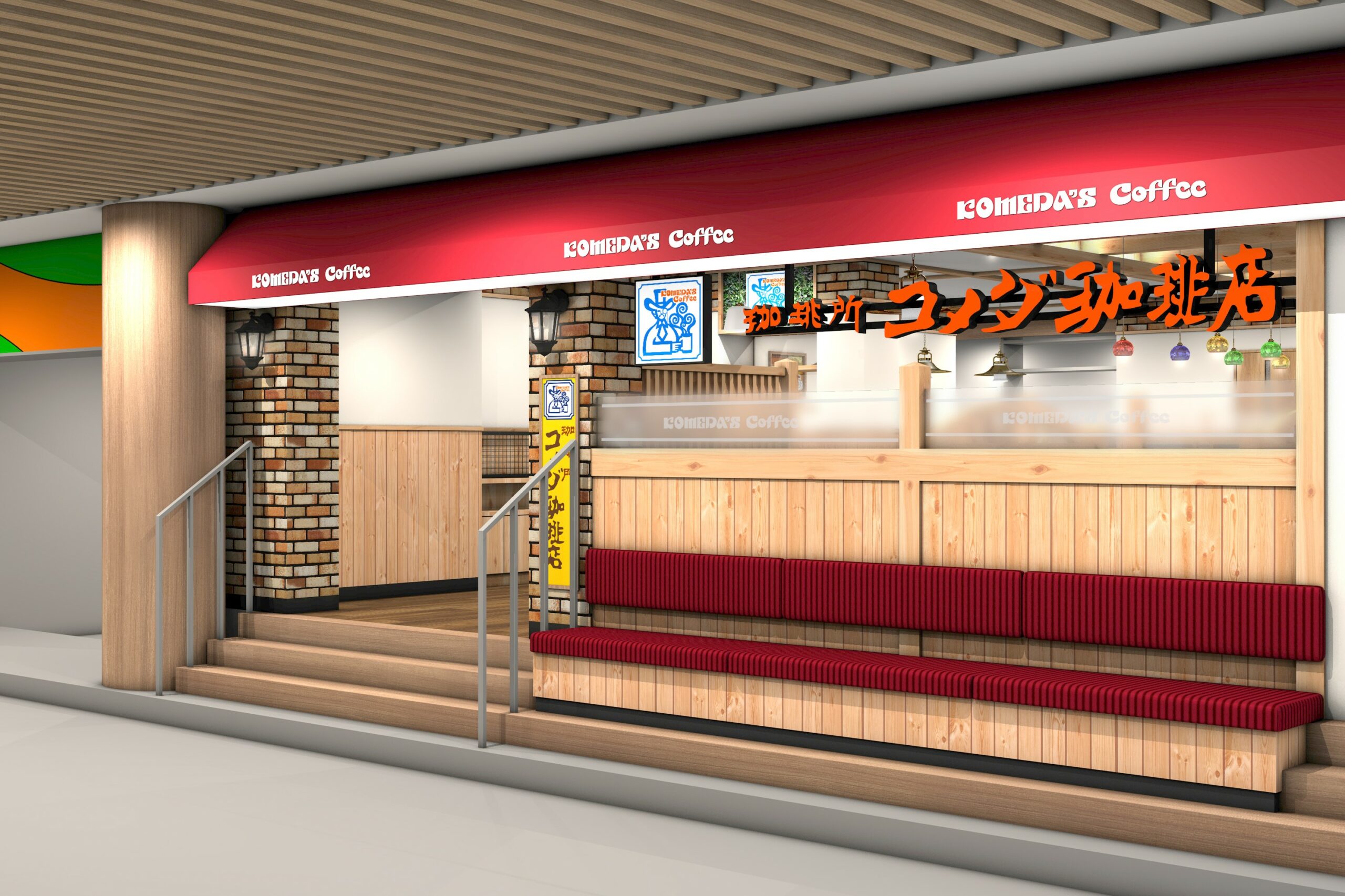
    Aeon Hong Kong is set to open the territory’s first Komeda’s Coffee store next month after securing the regional franchise rights to the Japanese cafe chain earlier this year.

    Aeon Hong Kong said the Komeda’s Coffee store will be situated inside Aeon Style Huangpu and adopt Japanese traditional architecture. Komeda’s Coffee was founded in 1968 in Nagoya, considered the home of Japan’s cafe culture. As of last May, the chain has 33 international stores across Taiwan and Shanghai.

    “This new strategic cooperation is the first time that Aeon Hong Kong has joined hands with a well-known Japanese coffee chain, which may accelerate Aeon Hong Kong in the format of restaurant chain stores,” said Isao Sugawara, MD of Aeon Hong Kong.

    Established in 1985, Aeon Hong Kong operates 10 general shopping department stores, two independent supermarkets, 43 independent Living Plaza by Aeon, 25 Daiso Japan, one Bento Express by Aeon and four independent stores in densely populated areas of Hong Kong.

    The group said will continue to further expand the network of small specialty stores and deepen the strategic cooperation with Daiso.

    The first half of the year saw a 4.2 per cent growth in the group’s Hong Kong business revenue, reaching US$300 million, despite the Covid-19 disruption. The loss from this business shrank to $9.7 million from more than $13.5 million the year before.

  • Starbucks appoints Laxman Narasimhan as its next CEO

    Starbucks appoints Laxman Narasimhan as its next CEO

    Starbucks today announced that Laxman Narasimhan will become the company’s next chief executive officer and a member of the Starbucks Board of Directors. Narasimhan will join Starbucks as incoming ceo on October 1, 2022 after relocating from London to the Seattle area and will work closely with Howard Schultz, interim ceo, before assuming the ceo role and joining the Board on April 1, 2023.

    Narasimhan brings nearly 30 years of experience leading and advising global consumer-facing brands. Known for his considerable operational expertise, he has a proven track record in developing purpose-led brands. Building on companies’ histories, he has succeeded in rallying talent to deliver on future ambitions by driving consumer-centric and digital innovations. Most recently, he served as chief executive officer of Reckitt, a FTSE-12 listed multinational consumer health, hygiene and nutrition company, where he led the company through a major strategic transformation and a return to sustainable growth.

    “Laxman is an inspiring leader. His deep, hands-on experience driving strategic transformations at global consumer-facing businesses makes him the ideal choice to accelerate Starbucks growth and capture the opportunities ahead of us. His understanding of our culture and values, coupled with his expertise as a brand builder, innovation champion, and operational leader will be true differentiators as we position Starbucks for the next 50 years, generating value for all our stakeholders. On behalf of the entire Board, I am thrilled to welcome Laxman as Starbucks next ceo,” said Mellody Hobson, Independent Starbucks Board of Directors chair.

    During the transition period, Narasimhan will be fully immersed in the company, spending time with Schultz and the management team, partners and customers and gaining in-depth exposure to the brand, company culture, and Reinvention plan. This will initially include Starbucks store immersions, visiting manufacturing plants and coffee farms, connecting with partners around the globe as well as Starbucks long term business partners.

    Schultz will remain in the role of interim ceo during this transition period, following which he will continue as a member of the Starbucks Board of Directors. He will remain closely involved with the company’s Reinvention and act as an ongoing advisor to Narasimhan.

    “When I learned about Laxman’s desire to relocate, it became apparent that he is the right leader to take Starbucks into its next chapter. He is uniquely positioned to shape this work and lead the company forward with his partner-centered approach and demonstrated track record of building capabilities and driving growth in both mature and emerging markets. As I have had the opportunity to get to know him, it has become clear that he shares our passion of investing in humanity and in our commitment to our partners, customers, and communities. The perspectives he brings will be a strong asset as we build on our heritage in this new era of greater well-being. I greatly look forward to our partnership over the coming months and years,” said Schultz.

    “Starbucks commitment to uplift humanity through connection and compassion has long distinguished the company, building an unrivaled, globally admired brand that has transformed the way we connect over coffee. I am humbled to be joining this iconic company at such a pivotal time, as the Reinvention and investments in the partner and customer experiences position us to meet the changing demands we face today and set us up for an even stronger future,” said Narasimhan. “I look forward to working closely with Howard, the Board, and the entire leadership team – and to listening and learning from Starbucks partners – as we collectively build on this work to lead the company into its next chapter of growth and impact.”

    Previously, Narasimhan held various leadership roles at PepsiCo, including as global chief commercial officer, where he was responsible for the company’s long-term strategy and digital capabilities. He also served as ceo of the company’s Latin America, Europe and Sub-Saharan Africa operations, and previously as the ceo of PepsiCo Latin America, and the cfo of PepsiCo Americas Foods. Prior to PepsiCo, Narasimhan was a senior partner at McKinsey & Company, where he focused on its consumer, retail and technology practices in the U.S., Asia and India and led the firm’s thinking on the future of retail.

    Narasimhan is also a trustee of the Brookings Institution, a member of the Council on Foreign Relations, served as a member of the UK Prime Minister’s Build Back Better Council, and is a member of Verizon’s Board of Directors. He holds a degree in Mechanical Engineering from the College of Engineering, University of Pune, India. He has an MA in German and International Studies from The Lauder Institute at The University of Pennsylvania and an MBA in Finance from The Wharton School of The University of Pennsylvania.

  • The Coffee House owner reports loss of $12 mln

    The Coffee House owner reports loss of $12 mln

    Seedcom Joint Stock Company, owner of The Coffee House and delivery company AhaMove, reported a loss of VND287 billion (US$11.96 million) for the first half, a 11% rise year-on-year.

    Seedcom CEO Nguyen Hoanh Tien said that the losses stemmed from two reasons, the first being the intensified investment and expansion into the B2B segment with omni-channel sales management solution Haravan, specialized F&B sales solution iPOS and a new unit to distribute consumer goods, CPG.

    Depreciation in the retail segment, the result of store development in recent years, was the other reason, he said.

    “By the second half of this year the financial results will certainly be better when business results are more positive.”

    The company’s chairman, Dinh Anh Huan, said Seedcom seeks to grow by 500% in 2022-25 and begin generating profits next year.

    Established in 2014, Seedcom also owns Giao Hang Nhanh (delivery), Juno, Hnoss (fashion), and Kingfoodmart (supermarket).

  • Ediya Coffee to open in Guam this year

    Ediya Coffee to open in Guam this year

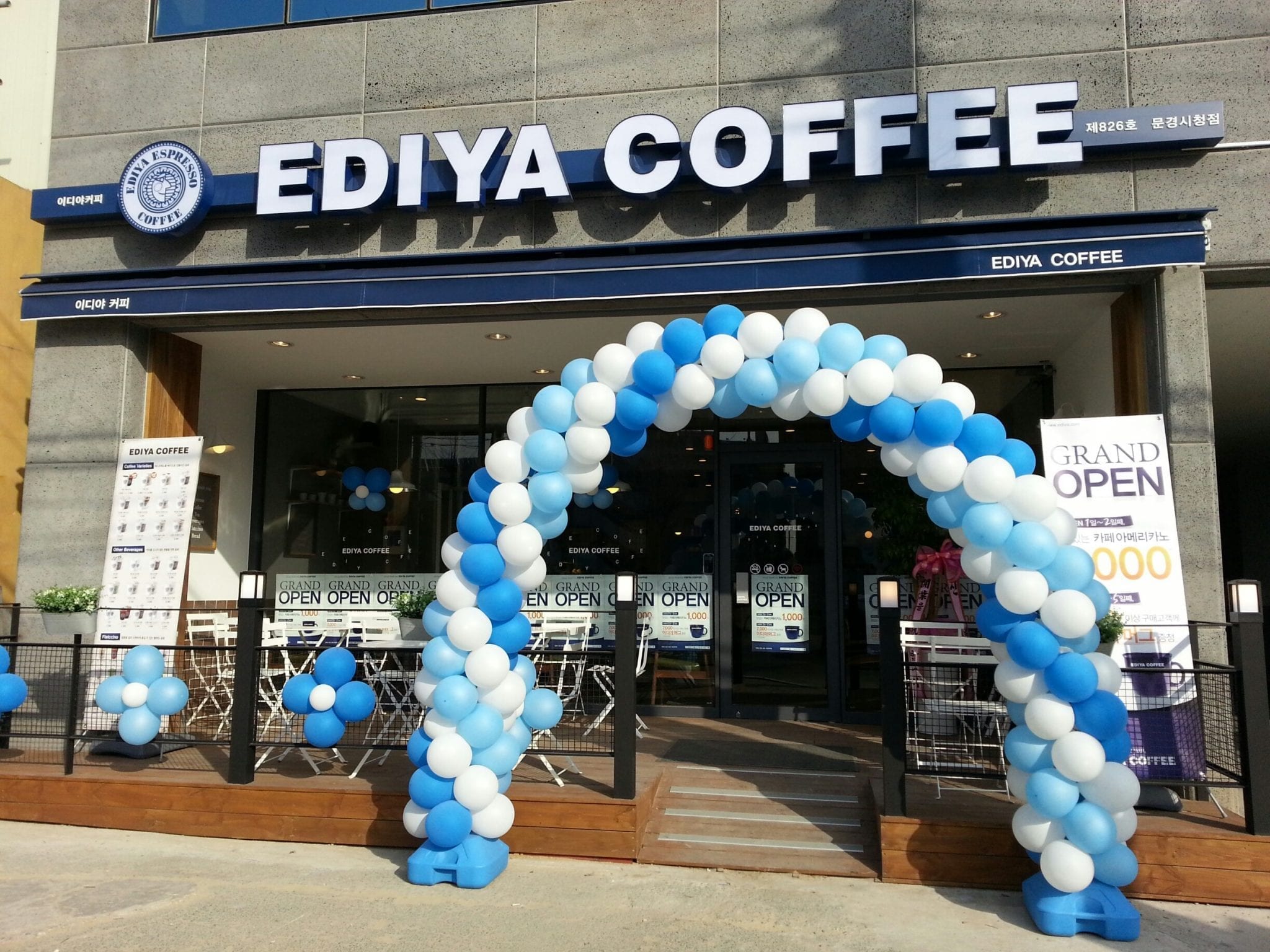
    “Ediya Coffee will open an Ediya Coffee store in Guam, the U.S. autonomous territory, in December this year,” said Chairman Moon Chang-ki on Aug. 23. This is the company’s first overseas store. Ediya currently operates about 3,000 coffee shops in Korea.

    Chairman Moon said, “We will make it possible to taste Ediya Coffee anywhere in the world through Dream Factory, its own production base established in Pyeongtaek, Gyeonggi Province 2020.

    Chairman Moon Chang-ki of Ediya Coffee speaks at a press briefing held at the Ediya Dream Factory in Pyeongtaek, Gyeonggi Province, on Aug. 23, 2022.
    Meeting with reporters at Ediya Dream Factory, he said, “The Guam store has not been able to confirm the opening date due to a lack of electricity and other facilities, but it will open within December. The interior of the store is finished.”

    Introducing the Dream Factory as “the cradle of Ediya’s dream,” Chairman Moon said, “We built a production facility on a 4,000 pyeong (13,223㎡) site for the dream of allowing people to taste Ediya coffee wherever they go around the world.”

    He also said that the company purchased an additional 4,000 pyeong of land near the plant and now has a production base of 8,000 pyeong (26,446 square meters).

    Chairman Moon said, “The Taegeukgi (the Korean national flag) is hung in front of the Dream Factory. I will try until the day comes when everyone in the world can enjoy our Korean coffee.”

    Dream Factory, which Ediya Coffee first unveiled on the same day, is a production base established in 2020 at a cost of about 40 billion won.

  • 7-Eleven doubles coffee prices as it caves in to inflation

    7-Eleven doubles coffee prices as it caves in to inflation

    7-Eleven’s $1 coffees and Slurpees are set to become the latest victims of Australia’s cost of living crisis, as the service station chain buckles under the pressure of inflation.

    In another blow for Aussies, coffee prices will be bumped up at 7-Eleven stores across the country to address the retail company’s rising operational costs.

    A regular cup of coffee at the service station will double in price as of Tuesday, October 4, becoming $2, while large coffees increase to $3 and super cups to $3.50.

    Those wanting to save some extra coin, however, can bring their own reusable cup in-store to save 50c on their morning cuppa.

    The service station’s $1 coffee isn’t the only caffeine hit you’ll be forking out more for, with the price of iced coffees and ice cream coffee melts set to rise to $3 along with the store’s hot chocolates.

    The price hike is the first in over a decade, with the retail store’s regular-sized coffee remaining at $1 since 2009.

    As for Slurpees, a small will become $1.00, a large will move to $1.50, a super to $2.50 and a mega will become $4.50.

    7-Eleven CEO and managing director, Angus McKay, said it was no longer possible for the retail company to absorb costs.

    “Although this is the first price change in more than a decade, a single $2 gold coin for a regular coffee remains among the best value offers in the industry,” Mr McKay told NCA NewsWire on Monday.

    “We will continue to provide our customers with great value and great quality, while ensuring our prices are sustainable for our store owners, our suppliers and our communities,” he said.

    Along with encouraging customers to use a reusable cups, Mr McKay said people could expect further announcements in the next few weeks which will target the company’s sustainability goals.

    “Our new offer is fair value for our community, store owners and suppliers, and we’ll keep working to make it better,” he said.

    Victoria, NSW, ACT, QLD and Western Australia are home to 720 7-Elevens, with more than 450 small family-owned businesses in the service station franchise network.

    The popular drinks add to a growing list of items becoming increasingly unaffordable, with petrol, energy and food costs putting thousands of Aussies under pressure.

    The annual inflation rate jumped to 6.1 per cent in the year to June, the highest level in more than two decades.

    Treasurer Jim Chalmers has warned Australians that the “confronting” figure will get worse before it gets better.

    “It’s going to be a difficult time ahead; we expect it to get higher,” he said in July.

    “It will get tougher before it starts to ease.”

  • Russian duo hail Stars Coffee as successor brand to Starbucks

    Russian duo hail Stars Coffee as successor brand to Starbucks

    A restaurateur and rapper duo unveiled Stars Coffee on Thursday, reopening the chain of coffee shops in Russia formerly owned by Starbucks Corp, the latest major company rebranding after a months-long Western corporate exodus from the country. At a packed launch in central Moscow, rapper Timati presented the new brand, whose logo features an image of a woman with a star above her head, alongside co-owner and restaurateur Anton Pinskiy, before shops start opening on Friday. Banned from using the

    Banned from using the Starbucks logo, Timati said they had sought to find some continuity, namely the circular shape and “female gender”, which he said contrasted nicely with the brown, cigar-like “masculine colour” in the new logo.

    “People’s perceptions may be different,” said Pinskiy. “But if you compare, then apart from the circle, you won’t find anything in common.”

    Starbucks declined to comment on the similarity of the logo and name, but referred to an earlier statement in which it said the company had made the decision to exit and no longer had a brand presence in the Russian market.

    Since Starbucks had its own resource and production base, Timati said the duo had to find new suppliers, but they had encountered no problems.

    Stars Coffee imports beans from Latin America and Africa, Pinskiy said, with suppliers of other items based in Russia.

    “We just found other suppliers, found the right roasters, and because the baristas mixed it all correctly, we have a product that we think will be competitive,” he said.

    Seattle-based Starbucks, which helped popularise takeaway coffee in a traditionally tea-loving society, said it would exit Russia after nearly 15 years in late May.

    Starbucks had 130 stores in Russia, operated by its licensee Alshaya Group, with nearly 2,000 employees in the country. Pinskiy said shops would gradually reopen throughout August and September.

    Wider Trend

    Global franchise operator Alshaya, established in Kuwait, had lost interest in doing business after Starbucks pulled its brand from Russia, Timati said. Alshaya did not immediately respond to a request for comment.

    “We won the tender – there were a lot of participants – acquired it and made our own brand,” he said.

    The deal mirrors a wider trend among Western brands, which has been changing the country’s retail and corporate landscapes as the conflict in Ukraine enters its sixth month.

    Renault sold its majority stake in carmaker Avtovaz to a Russian player for just one rouble, while McDonald’s Corp, whose restaurants have now become Vkusno & tochka, did not disclose a figure.

    Both of those deals included buyback options, but Pinskiy said that didn’t apply to Starbucks due to the franchise model it operated under in Russia.

    He declined to disclose figures concerning the deal with Alshaya. “We have invested as much as we paid them,” Pinskiy said. “This is (an) expensive pleasure.”

    The pair said they were interested in more acquisitions, but gave no further details.

    While the partnership may appear unlikely, Timati, one of Russia’s most famous rappers, co-founded the Black Star Burger chain in Russia, which sells a “Timati Burger”.

    He is also known for his support of the Kremlin and in 2015 released a track containing the lyrics “President Putin is my best friend”.

    Pinskiy, who earlier this month told Russian reporter and political activist Ksenia Sobchak that he had never tried coffee in his life, has a string of restaurants in his portfolio, including a joint project with Timati, REDBOX, which serves Pan-Asian cuisine.
  • % Arabica makes its Taiwan debut

    % Arabica makes its Taiwan debut

    Japanese boutique coffee group % Arabica has made its debut in Taiwan with a store in Taipei. The Elephant Mountain store is the second % Arabica outlet to open this month following the launch of store in the lobby of the new United Overseas Bank head office in Bangkok, the group’s fourth in the Thai capital.
    The boutique café group now operates 120 stores across 18 countries, including 61 in its largest market, China, and four in its native Japan.
    According to % Arabica’s website, the group will soon open stores in Vietnam, South Korea, Canada, Mexico, Spain and the Philippines.
    In July 2022 Lucky Ace International Ltd., which operates the group in China, was reported as seeking to raise $300m to support its expansion plans in the country.
    World Coffee Portal estimates the Taiwanese branded coffee shop market exceeds 2,500 outlets and forecasts it will reach 3,200 outlets by 2025. Louisa Coffee is the coffee-focused segment leader with approximately 520 outlets.
  • Highlands Coffee posts first loss in 8 years

    Highlands Coffee posts first loss in 8 years

    Highlands Coffee chain lost VND19 billion ($812,069) last year, its first loss since 2014, VnExpress has learned.

    Its sales plunged by nearly 20 percent to VND1.7 trillion, which still made it the largest coffee chain in Vietnam, its earnings report, recently acquired by VnExpress, shows.

    It is not listed on the stock market, and typically such companies do not make public their financial reports.

    Highlands faced many issues with landlords who accused it of delaying rent payments of over VND1 billion for up to six months.

    It had admitted at the time, when social distancing restrictions were still in place, that it was facing financial difficulties.

    Highlands Coffee was established in 1999 to sell packaged coffee. It started opening cafes in 2002, and now has 522 of them, according to its website.

    It was acquired by the Philippines’ Jollibee Foods in 2012.