Tag: Digital
-

Amazon launches Kindle Kids Edition
Amazon just announced the Kindle Kids Edition, an e-reader geared towards children. Though the internet giant has sold Fire tablets marketed under the Kids Edition label, this is the first time Kindle e-readers have gotten the same treatment. The bundle is available for pre-order now.The Kindle Kids Edition comes with the base 10th-generation Kindle, along with one of four colorful, kid-friendly covers and a two-year replacement guarantee. The e-reader is a good match for kids with its portable size and month-long battery life. This model also comes with special software features for younger readers, such as Achievement Badges for reaching reading goals, Word Wise for automatic definitions of more difficult words, and an enhanced book search designed for kids.The bundle also includes one free year of FreeTime Unlimited, Amazon’s all-in-one subscription for children’s content. The subscription gives access to a curated selection of books, movies, TV shows, audiobooks, and more content, as well as powerful parental control features. Recently, Amazon also announced that the service will also start working on Echo devices, Fire TV sticks, and Fire TVs.Given that FreeTime Unlimited normally costs about $3 a month for Prime members, the free subscription adds a good deal of value for potential buyers. The Kindle Kids Bundle is set to start shipping at the end of October. -

Digital Payments to Cross $1 Trillion in Southeast Asia by 2025
Technology has made financial services more accessible to users in the region, and it is projected to expand further to reach 100 million Southeast Asians with limited access to financial services today, according to a report published by Google and partners.
The adoption of digital payments in Southeast Asia has reached an inflection point and is expected to grow from $600 billion today to cross $1 trillion by 2025, according to the «e-Conomy Southeast Asia» report published on Thursday by Google, Temasek and Bain & Company.
The surging levels of digital payments adoption and usage are in line with other Internet economy sectors such as ride-hailing and e-commerce, and will account for almost half of all money spent in the region by 2025, the report said. In addition, e-wallets are expected to grow even faster, from $22 billion in 2019 to $114 billion in 2025.
Access to basic financial services remains poor because the adoption and usage of financial services business models enabled by technology are still limited in Southeast Asia, the report says. Only 104 million of the region’s 400 million adults are «banked,» meaning they have full access to financial services. There are 98 million underbanked – with a bank account but limited access to credit, investment and insurance. The remaining 198 million are «unbanked.» Small and medium enterprises also face large funding gaps.
The report explained this as a result of high costs in a region lacking physical infrastructure, as well as the absence of public registers, identification systems and reliable credit information. In addition, tight regulations have stifled competition and innovation. However, it said that payments, remittance, lending, investment and insurance are ripe for transformation.
For digital financial services to grow, governments and policymakers have an active role to play in providing supportive regulations. «The biggest drag on investment levels is the uncertainty surrounding regulations and the risk that entire business models may suddenly become unviable,» the report said.«e-Conomy Southeast Asia is a multi-year research program that looks at the internet economy in the region’s six largest markets: Indonesia, Malaysia, the Philippines, Vietnam, Thailand and Singapore. The report notes that the internet economy has, for the first time, crossed the $100 billion mark – a 39 percent increase from $72 billion in 2018.
-

Hong Kong Millennials Drive Digital Banking Delays
While most new recipients of Hong Kong digital banking licenses were planning to begin operations by 2019-end, higher priorities are in play for the city’s millennials – the key demographic for the sector – causing lenders to delay their launches.
Some players were believed to be launching brand and marketing campaigns as early as this month before formally launching their services. The Hong Kong Monetary Authority previously said that digital banking launches could be expected in the fourth quarter of 2019 at the earliest.
This form of banking service is mainly aimed at the youth, millennials, and many of them are out on the street these days joining the protests, citing an unnamed source with direct knowledge. It will be difficult to launch a brand campaign around them and attract their interest when their priority is clearly not having another bank account. The source added that the digital banks will now instead launch in early 2020.
-

More ASEAN Cooperation Needed for Digital Economy
More cooperation between ASEAN regulators is needed for the region to fully benefit from the growth of the digital economy. While technology is inherently borderless, the regulation governing it is not. This can create challenges for global businesses operating global technology estates, said John Hsu, APAC chief information officer for HSBC. The best way to manage this is by governments, regulatory authorities and businesses working together through regional cooperation.
Southeast Asia’s digital economy was valued at $31 billion in 2015 and is projected to reach $200 billion by 2025, according to research by Google and Temasek, but HSBC notes that there are still issues to be addressed during the growth process such as data localization, cloud computing, AI and cybersecurity.
In a speech at the ASEAN-EU Business Summit in Bangkok, the bank outlined four recommendations to build an effective relationship between stakeholders.
Firstly, create holistic regulations for all companies irrespective of business model. Secondly, build activity-based regimes and avoid two-tier regulatory regimes to prevent arbitrage.
Thirdly, the bank highlights the need to regionally implement various digital economy initiatives including the ICT Masterplan 2020, the DIFAP, and the «Framework on Digital Data Governance» in order to strengthen «credibility as a production base of choice for global businesses. Finally, it also recommends global coordination wherever possible.
Policymakers should consider how they can create a coordinated regulatory regime where all sizes and types of companies are able to innovate at pace and regulators have sufficient oversight and enforcement capabilities, Hsu added.
-

Is the Chinese digital sector monopolized by a few companies?
There has been quite a lot of discussion about the Chinese digital reality. Almost everybody is aware that most of the Chinese online ad revenue share is occupied by either Tencent or Baidu.
The international commerce market is also largely dominated by companies like Alibaba, which creates the understanding that a monopoly of sorts is present in the country. However, it’s not like we can judge these Chinese enterprises based on our understanding of Western ideals.
Things like culture are one of the main key points that need to be focused on, but as a benefit of the doubt, let’s try and look at the operations of these companies as something similar to how they’d be dealt with in the Western world.
Examples of possible monopolies
Let’s take Tencent as an example for the gaming and telecommunications industries. Right now, the company is poised to take 13% of the global gaming market share, which already speaks volumes about the company’s market share in China alone.
It is currently considered that in terms of gaming, Tencent has around 60-70% of the Chinese market share. And when it comes to telecommunications all we need to do is consider WeChat, which is basically a necessity in China. With this one product, Tencent occupies around 40-50% of the market share thanks to foreign media also having a small breakthrough thanks to amended regulation.
But the question here is whether or not this needs to be regulated. Would the government consider artificially deflating the profit capabilities of some of their best-performing companies in order to open up opportunities for newer companies, or would they much rather keep these companies in their best shape as they drive more and more innovation as well as jobs for the local population?
We’ve already encountered similar “suggestions” in the Western world, where the government in both the United States and the European Union were considering to somehow fine Google for their alleged monopoly on the search “industry”.
The US could not find anything resembling the issue, while the EU fined the company for prioritizing platforms that were owned by Google. For example, the research showed that the company would first display their own products in the search arch, and only later display everything else, which was a clear breach of guidelines.
It’s hard to apply that example to industries like gaming and telecommunications, but the point is easily understood.
How monopolies can be dealt with
Naturally, it would not necessarily be within the interests of the Chinese government to artificially deflate their best-performing corporations in order to free up space for smaller companies. One such reason is that the Chinese market is a very attractive opportunity for foreigners, which would fill the gap immediately, thus lowering the opportunity for Chinese nationals.
The best way to do this is to conduct nation-wide research first, to determine if the local populace would be open to more options in various industries, or if they like this centralized style of doing business. Because in most cases, these large Chinese corporations are B2B aggregates for B2C businesses.
A great example of this would be the latest survey in Finland where, according to Сasinopånett EU, is a monopoly on the betting industry from the government itself. But we can just as easily draw a parallel between these two nations.
In Finland’s case, it’s within the interest of the population to have a privatized industry so that the market is based on competition, which is calculated through customer satisfaction and improved consumer spending.
In China’s case though, restricting a company like Alibaba within the ramifications of a maximum market share it could have, would lower its competence on the global market. However, restricting Tencent could indeed see more advantageous options appear for telecommunications.
The difficulty in concocting a universal law for every industry is that exceptions will have to be made for the advantage of the economy. This is mostly because China focuses a lot on export, therefore prioritizing its performance on the global markets, rather than the local one.
Should the universal law against monopoly be implemented, China’s GDP will most surely be damaged as these companies will start failing to perform well on a global level.
Is China full of monopolies?
The immediate answer would be that yes, the country has clear signs of monopolies in various industries. This is determined by how fast and effectively large corporations can “get rid” of competition by lowering prices to a point where other options aren’t even considered by the consumers.
In a sense, controlling the Chinese monopoly requires global laws, rather than local ones, which would require years of negotiation in itself.
Sources:
https://casinopånett.eu/nyheter/finnene-vil-ha-slutt-pa-landets-spillmonopol/
-

Maybank Considering Digital Banking License
Maybank Singapore is considering to apply for one of the five digital banking licenses to be unveiled in Singapore. The final decision depends on having a value proposition.
Maybank Singapore is in talks with its head office in Malaysia on the matter, and the bank’s decision lies in coming up with a new value proposition, said Alvin Lee, Head of Community Financial Services Singapore and Group Wealth Management, Maybank.
The bank is open to all options are on the table, whether to go solo through the existing Internet-only bank framework, or to apply for the digital full-bank license, or the digital wholesale bank license with a partner. «We are definitely in internal discussions on whether we should be in or out,» said Lee, who was quoted.
As Maybank’s current license already allows it to establish a digital bank, other factors such as finding the right partner to complement its strengths and weaknesses could be pivotal.
«We can be the ‘fin’ and we look for a ‘tech’ partner – or something like that,» Lee said, adding that such partnership would require the bank to work with a regional player and not just one that operates solely in Singapore.
Space Is Heating Up
The digital full-bank license will allow it to provide a wide range of financial services and take deposits from retail customers, while the digital wholesale bank license will allow it to serve SMEs and other non-retail segments.
With applications due to open by the end of this week, various non-bank players have signaled interest. They include tech unicorn Grab, fintech firm iFast Corporation, peer-to-peer lender Validus Capital, e-wallet player Liquid Group, and gaming firm Razer. Meanwhile, OCBC is in talks with Singtel on applying for a digital banking license.
-

Singapore Airlines launches new mobile app
Singapore Airlines has launched a new mobile app for Android and iOS smartphones.
The app, based on a ground-up rebuild and all-new underlying technical architecture, is designed to significantly enhance booking and check-in flows, and improve transaction time by up to 60%.
In addition to significant improvements in existing functions, the new app introduces several entirely new features, including:
• ‘Capture & Discover’ – a new search function that uses image recognition as well as speech and natural language processing to identify user intent, match it to a Singapore Airlines destination, and present relevant destination content and fair deals.
• ‘Translation Assistant’ – a feature that uses real-time language translation by voice to help travelers communicate better when they are overseas.
• ‘Measure Your Baggage’ – to help travelers determine if the size of their bag is within cabin baggage limitations.
Amongst the many improvements in existing functionality, real-time information such as boarding gate details, the destination’s weather, and currency, and baggage belt information have been added to the “My Trips” function.
The new app also sees enhancements such as a newly designed KrisFlyer account dashboard and the introduction of an ‘Inbox’ feature, which stores push notifications as well as KrisFlyer messages for easy reference.
“Singapore Airlines has been investing heavily to enhance our digital capabilities. With new user interface designs and insourcing of developer and customer experience talent, we are working to provide faster and more customer-centric products and services to improve the customer experience,” said Senior Vice President Sales and Marketing, Mr Campbell Wilson. “The launch of our new app follows many other digital innovation initiatives, such as KrisPay, the world’s first blockchain-based airline loyalty digital wallet, and the progressive redesign of our website and its underlying architecture. Improvements to our mobile app will not stop here and we will continue to invest our efforts to add value to our customers’ experience.”
The new app will be available for download progressively, following the beta launch that began in October 2018. For Android users, the new app is being released by countries progressively between July and September 2019, while iOS users may download the new app from the App Store in September 2019. The beta version will continue to be available for download in the meantime.
-

Starbucks buys stake in retail-technology startup Brightloom
Starbucks Coffee Company has announced a deal with Brightloom (formerly Eatsa), a San Francisco and Seattle tech company that is working to create a best-in-class end-to-end digital customer experience platform for the restaurant industry.
Starbucks is granting Brightloom a software license to select components of Starbucks’ proprietary digital flywheel software. In connection with the licensing agreement, Starbucks will take an equity stake in Brightloom and receive a seat on the company’s board of directors.
Brightloom will combine its existing technology assets with software licensed from Starbucks’ digital flywheel. The combination will lead to the development of a cloud-based software solution for the restaurant industry that will connect customers to their favorite restaurant brands – particularly valuable given the recent hypergrowth of mobile ordering and third-party delivery platforms.
Brightloom plans on making the software solutions available to Starbucks’ global license partners and will open this platform up to the entire restaurant industry of merchants. Starbucks will continue to drive software development of the Starbucks digital flywheel for all its company-operated markets.
“We’re delighted to partner with Brightloom and drive a broad innovation agenda that extends relevant customer experiences from brick-and-mortar to a digital-mobile customer connection,” said Starbucks CEO Kevin Johnson.
“At Starbucks, we have experienced first-hand the power that comes through digital customer connections that are relevant to the customer. The results we’ve seen in customer loyalty and frequency within our digital ecosystem speak for themselves, and we’re excited to apply these innovations toward an industry solution that elevates the customer experience across the restaurant industry.”
-

Amazon launches new Kindle Oasis e-reader
Two years after launching the second-generation model, Amazon is refreshing the Kindle Oasis lineup with a third e-reader. We’re not sure about Amazon’s naming convention, but the US retailer has decided to call the device the all-new Kindle Oasis.
If you already own a previous generation Kindle Oasis, read further if you’re wondering whether or not it’s worth to upgrade to the new model. First off, the all-new Kindle Oasis includes Amazon’s best Paperwhite display. It has a 7-inch size, 300ppi and features a new color adjustable front light. The latter will allow users to adjust the color tone from cool to warm depending on the environment.
The third-generation Kindle Oasis features a thin and light design, especially created for one-handed use. The device includes dedicated page turn buttons, as well as the most recent e-ink technology to enable fast page turns.
Furthermore, the new e-reader is IPX8 rated to protect against immersion in up to two meters of water for up to 60 minutes. But it’s also been designed to withstand accidental drops.
Potential customers can pre-order the all new Kindle Oasis starting today for $250 for the 8GB, and $280 for the 32GB model. The ereader is available in two color options – Graphite and Champagne Gold, and will ship on July 24.
-

OCBC Eases Digital Onboarding With Instant Approvals
The bank’s consumer banking products can now be applied for, approved and used instantly. OCBC Bank is making getting a card or loan more accessible and convenient by enabling digital applications and instant approval and use of its key consumer banking products. The bank said that by leveraging national data repository MyInfo as well as its own real-time digital KYC and credit assessment systems, it can offer customers bank cards, OCBC ExtraCash personal loans, and OCBC EasiCredit lines instantly.
This is a natural progression of our pursuit of the new digital – to provide instant, embedded and frictionless access to all our products and services for the convenience of customers, enabling them to start a banking relationship with us seamlessly and instantly, Dennis Tan, OCBC Bank’s Head of Consumer Financial Services Singapore, said in a statement.
He added that the bank would extend instant approval to secured lending products such as home and car loans in the near future.
This is the latest in a series of digital innovations OCBC Bank, Singapore’s longest-established bank, has rolled out to enable instant, hassle-free and secure access to its core products. According to the bank, OCBC 360 accounts have grown three-fold since digital applications and instant approvals were allowed for bank accounts in June 2018, with one in three OCBC 360 accounts now acquired digitally.
I expect that one in every two OCBC Bank customers to be on-boarded digitally by 2020, Tan said.
To apply for a banking product, one should select the «Use MyInfo» option, log in using SingPass and allow OCBC to retrieve personal details, such as proof of income and home address. There is no need to submit any additional documentation – the customer only needs to review the pre-filled fields of the application form and submit it for instant approval.
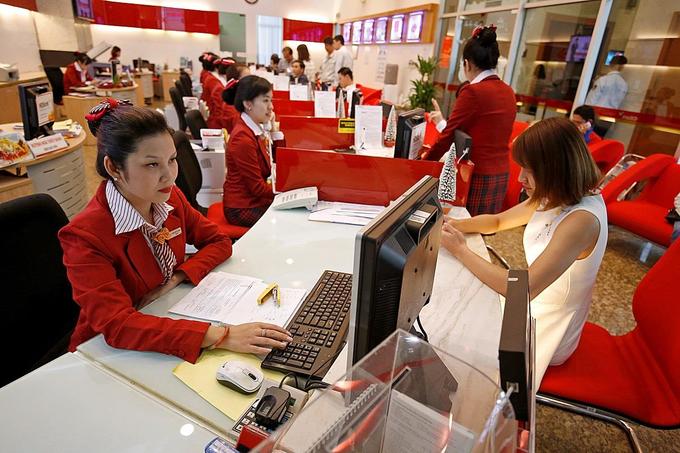
According to the bank, its agents acquire the majority of their customers at public roadshows, so digitalizing card applications is crucial in alleviating customer pain points, which include the hassle of paper applications, waiting days for approval and receiving the physical card.
-

Airasia keen to buy digital platforms to boost digital business
Airasia Group Bhd is keen to acquire digital platforms abroad to boost its digital business segment.
AirAsia Group chief executive officer Tan Sri Tony Fernandes said: “For sure…some will be M&A (merger and acquisition), some will be joint-ventures.”
Asked which country the group was eyeing, he said: “Wait and see.”
Fernandes was speaking to reporters after launching a brand new rooftop at AirAsia RedQ here, tonight. Also present was AirAsia executive chairman Datuk Kamarudin Meranun.
Going forward, Fernandes said digital business would become a large part of the group’s revenue.
“But I don’t want to make any prediction but many years ago I said ancillary income will be a big part of our business, and it became 25 percent. I believe digital will be much bigger,” he added.
Commenting on the new rooftop, Fernandes said the idea was to drive integration between the staff from different departments toward an exciting digital future.
“Digital is more about department working closely together. We are on a very exciting journey turning Airasia into more than just an airline,” he added.
-

Credit growth limited at 15% for best banks in 2019
HÀ NỘI The State Bank of Vietnam (SBV) has assigned a credit growth limit to each commercial bank in 2019, with priority given to those who met Basel II’s capital safety and risk management standards ahead of schedule.
According to the current regulation, the SBV sets a credit growth limit for the entire year for each bank – depending on its health – to ensure the credit growth target of the entire banking system during the year (14 per cent for 2019).
This year, the highest credit growth limit of 15 per cent was assigned to the group of banks which met the Basel II’s standards earlier than the SBV’s deadline of 2020. The remaining banks, meanwhile, were allocated a lower rate of below 12 per cent.
Last year, most banks were assigned higher credit growth limits, ranging from 14 per cent to 16 per cent.
The credit growth target of the entire banking system and of each bank has tended to slow in the past two years. Experts attributed the slowdown to the SBV’s policy changes. Previously, due to the underdevelopment of the local stock market, banks, which should act only as intermediaries in the monetary market, had to function to fund medium- and long-term capital for the economy.
However, the SBV has tried to gradually change the role of banks so as to make them fund only short-term capital for the economy through the provision of working capital loans for businesses and households.
To make the change, the SBV required banks to lower the ratio of short-term funds for medium and long-term loans from 45 per cent in 2018 to 40 per cent since early this year.
Experts have also agreed with the credit growth slowdown, saying it was necessary to improve banks’ credit quality and risk management.
Nguyễn Xuân Thành from Fulbright University Vietnam said currently, the pressure on credit growth to support economic growth was not so high, so the allocation of a credit limit to each bank depending on its health was reasonable. Accordingly, banks should only boost credit in case of good control of risks, in order to ensure sustainable growth.
To offset the revenue reduction from lending activities, banks said they plan to increase profits through cutting operating costs and promoting digital services.
Đỗ Minh Phú, chairman of TPBank, said digital banking would play a major role in reducing operating costs and increasing the cost-to-income ratio (CIR) efficiency, contributing to improving the bank’s profits this year.
Phú said the biggest costs in banking operations were the costs of network investment and development, along with the costs for personnel, which could be solved by the application of digital banking. Attracting customers to non-credit services and service fee collection was also becoming a trend.
Sharing the same view, Nghiêm Xuân Thành, chairman of Vietcombank, said that 2019 would be the year of digital banking for Vietcombank. In the past three years, the bank had focused on investment and implementation of a new core banking system to boost service development and shift the revenue structure instead of relying heavily on credit.
Developing digital banking combined with retail banking in a potential market of 95 million with a high percentage of young people means commercial banks were quickly accumulating a customer base and large payment needs, Thành said.
The focus on digital banking combined with retail banking has also helped some banks, like Vietcombank, Techcombank and HDBank, increase their number of individual customers rapidly in recent years, which has also contributed to raising the banks’ current account savings accounts (CASA) significantly.
Reports showed some banks last year raised CASA to 28-30 per cent in the total structure of deposits. The large proportion of low-interest rate deposits has helped banks reduce mobilisation and operating costs, increasing profits and improving marginal interest in lending.
-

Ted Baker Boost Store Network in China with JV
Fashion brand Ted Baker has formed a joint venture to expand its network in Mainland China, Hong Kong and Macau.
A new company will take over the three Ted Baker China stores already operating in Hong Kong and the six on the mainland. It will operate all Ted Baker future stores, concessions and online channels in the three geographical markets.
Ted Baker will invest about RMB30 million (£3.4 million) in the new venture, which will be co-owned with Shanghai LongShang Trading Company (LS). LS will assign its rights under the JV to a newly incorporated Hong Kong investment vehicle to be wholly owned and formed by LongGoal Holdings and Infra-Apparel Group.
Lindsay Page, acting CEO of Ted Baker, said the company is excited about the growth potential for the brand across China.
“Over recent years we have invested in introducing the Ted Baker brand to Chinese customers, and we are confident that the creation of this JV will build on this platform and deliver meaningful long-term growth. In LongGoal and Infra-Apparel, we have extremely capable partners that bring local market expertise to our brand and already well-established design, buying and merchandising skillset.”
Page said the brand firmly believes China has the long-term potential to become one of the largest single global territories for the Ted Baker brand.
The Ted Baker China JV will have six directors, evenly split between Ted Baker and the JV Partner. The JV is expected to break-even in the 2021/22 financial year.
In a statement, Ted Baker said LongGoal and Infra have a wealth of experience in digital marketing, e-commerce operations and building successful joint ventures in China.
Infra-red has expanded the Golfino brand to 60 stores across China during the last five years and has strong digital-marketing and e-commerce operations experience.
LongGoal is the current distributor of Gant, operating more than 165 directly owned and 25 sub-franchised locations in China, along with 44 directly owned and franchised Bebe stores.
The new joint venture will be focusing on expanding the Ted Baker brand into tier 2 and 3 Chinese cities.
Chen Xiaoling, chairwoman of LongGoal, said Ted Baker’s global lifestyle appeal has resonated well in China, and the company is confident in its ability to grow it further and faster.
“In more than 20 years, LongGoal has amassed an infrastructure and presence in more than 65 cities, which presents a strong, compelling and proven platform that Ted Baker China can leverage. The transformational JV we’ve forged brings together a leading brand, strong management team and unparalleled opportunity to expand Ted Baker into cities that desire its fresh vision of style,” she said.
Jing Yin, co-founder and chairwoman of Infra, described Ted Baker as an amazing brand that her company has admired for a long time.
“[Ted Baker] has already demonstrated its relevance and appeal in the Chinese market. Our knowledge and experience in building fashion brands through stores, concessions and online should prove invaluable to Ted Baker and we look forward to working together.”
The new venture is condition on approval from Chinese regulatory authorities.
-

Shiseido and Alibaba Collaborating to Please Chinese Customers
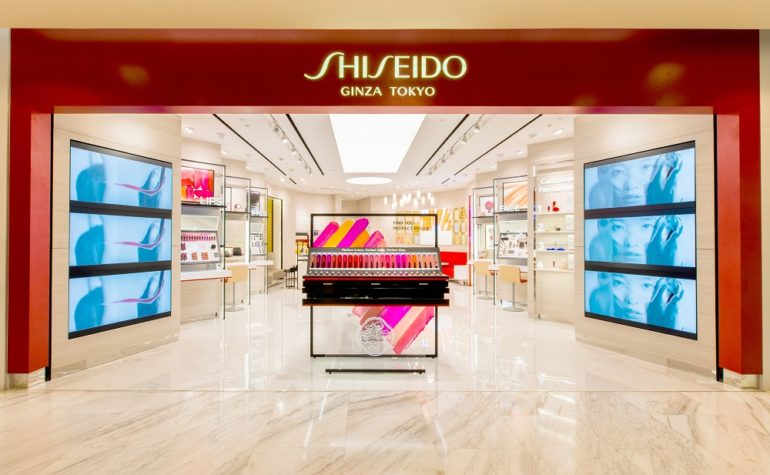
Japanese cosmetics giant Shiseido on Sunday become the world’s first multinational cosmetic company to open a dedicated office in Hangzhou to work with Alibaba Group and co-create products specifically tailored for Chinese consumers.
The Shiseido and Alibaba office, within walking distance of the Alibaba Xixi headquarters, will house a team of around 20 Shiseido employees by next year. The purpose is to tighten collaboration with Tmall, Alibaba’s B2C marketplace and better position Shiseido in China, said the makeup company’s China region CEO Kentaro Fujiwara.
“China is Shiseido’s biggest and most-important market [outside of Japan]. By combining Alibaba’s strengths in digitisation and consumer engagement with Shiseido’s world-class standards in research and development, we can create products that can precisely capture the appetite of the Chinese consumer,” he said. “I hope this unprecedented collaboration will pave the way for further innovations for the entire [Shiseido] group.”
According to Shiseido, its China business saw the fastest acceleration in 2018 with sales growth of 32.3 per cent year-on-year to RMB 11.6 billion (US$1.73 billion). China accounted for 17.4 per cent of Shiseido’s total net sales last year, making it the profitable country market, following its home market Japan. Shiseido said it expects e-commerce to generate 40 per cent of its China sales by next year.
“Without a doubt, whether it be e-commerce or digital innovation, Alibaba is the leader. Alibaba is one of the most important strategic partners for Shiseido China as well as for the entire group,” said Fujiwara.
Mike Hu, president of Tmall’s fast-moving consumer goods division, said Shiseido’s leadership position in the industry and its quick adaptation to digital transformation is a common value shared by Alibaba.
“Our primary mission is to enable others, and we are always eager to work with the world’s leading companies to help them bring their best products into the China market in the most effective and efficient way. This definitely includes Shiseido, a reputable brand that is synonymous with high standard and high quality,” he added.
“The opening of the Shiseido and Alibaba office represents an important and historical milestone of our long-term collaboration,” Hu said.
One of Shiseido’s cosmetics brands, Za, opened a Tmall flagship store in September 2011. Since then, 12 flagship shops and 15 major brands also launched on the platform. Fujiwara said there is a plan to bring Shiseido’s mother-and-baby product brand into China later this year via Tmall.