Retail News CRM

Tag: Digital

  • Xiamen Airlines takes on board EzyCustoms

    Xiamen Airlines takes on board EzyCustoms

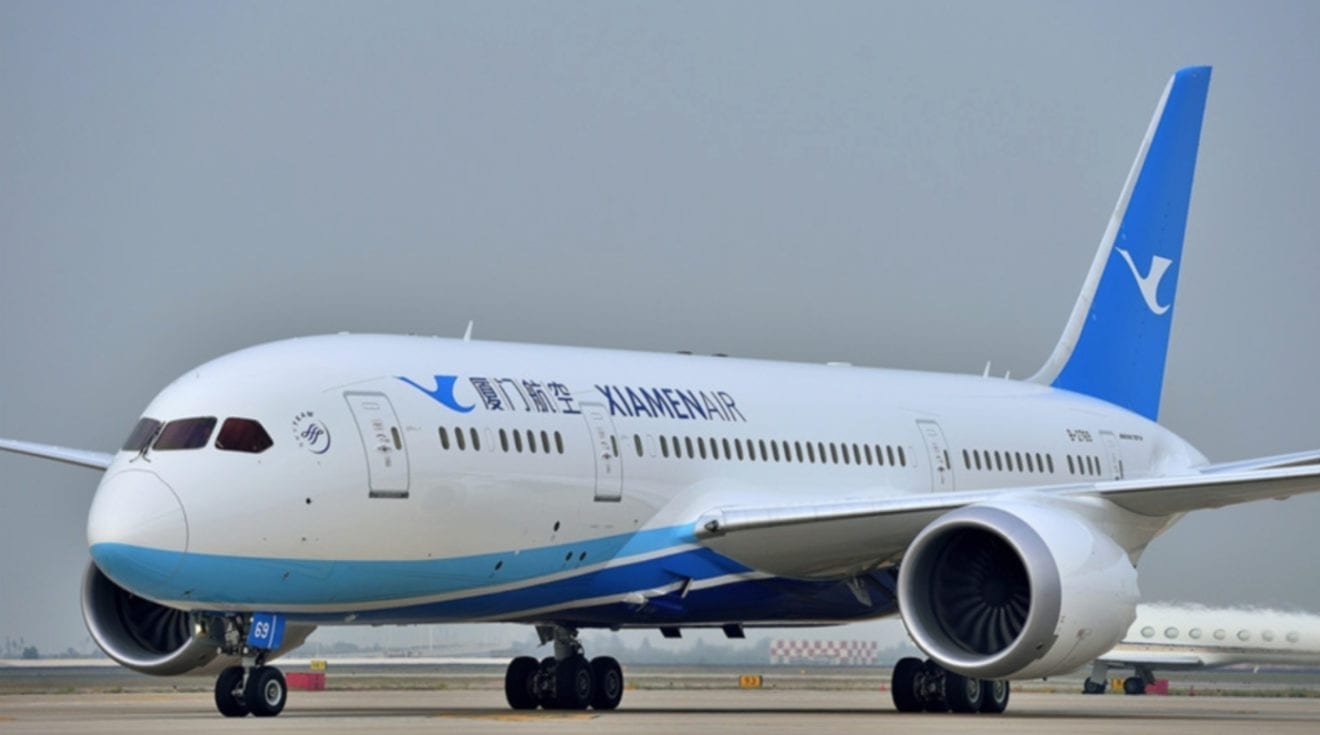
    Global Logistics System (HK) Co., Ltd (“GLS”) welcomes Xiamen Airlines to the EzyCustoms service after the successful implementation of this single platform with multi-Customs integration.

    Xiamen Airlines is extending its network to Canada from July 2016.  The airline is looking for a reliable partner that provides a solution to enable its full compliance with the Canada Border Service Agency (CBSA) Advance Commercial Information (ACI) requirements.

    The ACI programme requires air carriers to electronically transmit air conveyance and cargo information (including supplementary cargo reports where applicable) to the CBSA prior to the arrival in Canada. This requirement allows the CBSA to effectively identify threats to Canada’s health, safety, and security prior to the arrival of cargo and conveyance in Canada.

    EzyCustoms is a one stop web-based multi-Customs clearance platform that fully compliant with the diverse ACI requirements.  It complies with different Customs authorities including: the European Union (EU) Customs, the US AAMS and the ACE (scheduled to start by the end of 2016), the Canada CBSA, as well as the other customs authorities in India, Bangladesh and the Philippines.  At present, a number of China carriers are clients to EzyCustoms service.

    Tony Sham, CEO of Global Logistics System (HK) Co., Ltd said: “GLS is pleased to welcome Xiamen Airlines joining the EzyCustoms community. As an experienced and expert service provider in the industry, we are grateful to be appointed by Xiamen Airlines to fulfil the application, registration and the certification with CBSA.  We look forward to seeing EzyCustoms performs proficiently in the airline’s operations, and to extending our other EzySuite service to Xiamen Airlines in the near future.”

    Yang Gaorong, General Manager of Cargo at Xiamen Airlines said: “Thanks to the GLS support to the implementation of EzyCustoms in Xiamen Airlines.  As EzyCustoms not only fully complies with the ACI requirements in Canada, but also with customs authorities in the other regions around the world, we are better placed with quality assurance while the airline continues to grow.  In addition, we choose to co-operate with GLS as we share the same language and time zone, we can obtain support swiftly.”

  • AsiaSat, Digital Magic to create UHD content

    AsiaSat, Digital Magic to create UHD content

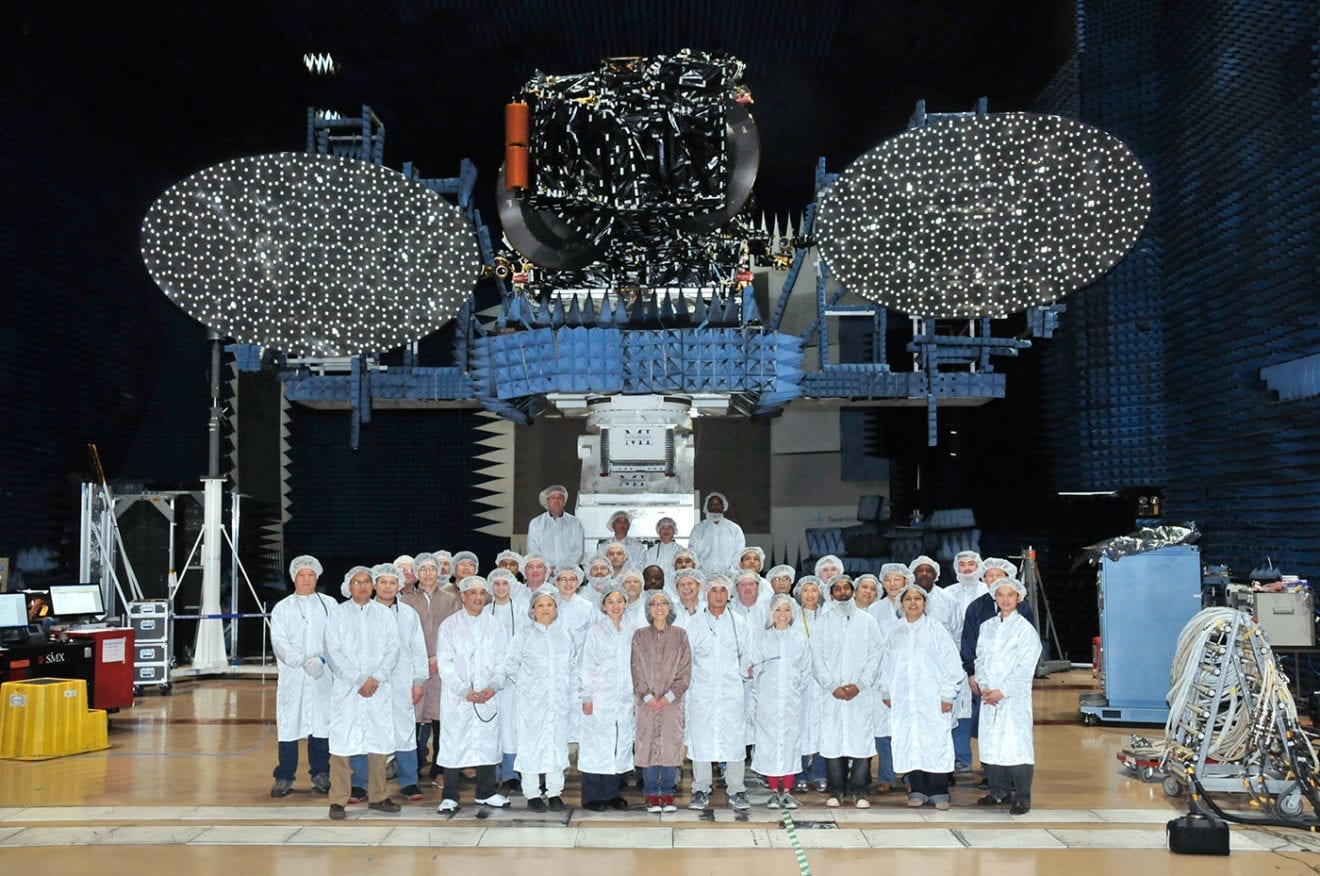
    Asia Satellite Telecommunications (AsiaSat) is collaborating with Digital Magic, a provider of advanced imaging solutions to co-produce UltraHD (UHD) content for AsiaSat’s UHD channel 4K-SAT, on AsiaSat 4.

    The co-production includes a knowledge-based UHD mini-series on satellite communications to provide an easy-to-understand introduction to topics such as how a satellite works, how it serves people and how it is used in broadcasting high quality content.

    “Compelling content is the key to drive UHD viewership. Creating original content is the first step of our collaboration with Digital Magic,” said Sabrina Cubbon, VP of marketing and global accounts of AsiaSat.

    “Digital Magic is an industry renowned content producer in UHD and VR. We look forward to developing more together for our audience in Asia,” said Cubbon.

    Percy Fung, production director of Digital Magic said initial content viewing among youth has suggested that this is a meaningful attempt to broaden public interest and knowledge in space and communications.

    “We are delighted to partner with AsiaSat, Asia’s UHD satellite broadcasting pioneer to create original, insightful content to educate and inform our viewers in the region,” said Fung.

    AsiaSat’s 4K-SAT channel is currently broadcasting a variety of full UHD content. Major TV operators in the Asia-Pacific have access to it via AsiaSat 4.

  • Telcos should follow teenagers’ digital lifestyle

    Telcos should follow teenagers’ digital lifestyle

    Only 12% of teenagers feel service providers understand their lifestyle and offer services to match it, according to a study from Amdocs.

    Conducted by Vanson Bourne , the study surveyed 4,250 respondents aged 15-18 from the United Kingdom, United States, Canada, Brazil, India, Germany, Russia, Mexico, Philippines, and Singapore.

    Among those polled, 30% report experiencing bad customer service from their CSP over the past year, and 46% say they will not use that CSP again. A third of respondents then shared this information with families and friends.
    Findings also show that 43% of teenagers believe their smartphone makes them smarter and “cooler”; 52% check their social media accounts first thing in the morning; and over 30% say they would probably not meet someone again if they lacked a Facebook or WhatsApp account.

    Almost half of respondents say they prefer using emojis (47%) and posting photos (45%) to sending emails as emojis express how they feel more clearly than words.

    Teens require constant internet connectivity, with respondents saying they are more likely to feel anxious and alone if separated from the internet (56%) than when separated from their family (52%. The value of internet access is so significant that the majority (55%) strongly believe fast internet access to be a human right.

    A majority stream movies (53% streaming; 17% downloading), TV (51% versus 11%) and music (47% versus 29%); and they are typically doing so for free with less than a third saying they ever pay for any content.

  • Intel India debuts three digital literacy projects

    Intel India debuts three digital literacy projects

    In a bid to bridge the digital divide in India, Intel has launched three projects to accelerate digital literacy at the grassroots level.

    Intel India aims to reach out to the population in rural areas, upskill citizens in tier two cities and beyond and encourage innovation at the local level.

    The chip manufacturing company will partner with state governments and the central government to set up 100 digital learning centers at Common Service Centres (CSCs) in rural areas. The company will work with state governments that are active on the Digital India program.

    “We are thrilled to see the progress made through our collaboration with the government of India on various initiatives like ‘Digital India’ that are bringing technology and innovation mainstream in India,” Robby Swinnen, General Manager, Intel Corporation (Asia-Pacific & Japan) said in a statement.

    Building on the momentum of its “Ek Kadam Unnati Ki Aur” initiative to accelerate access to technology in non-urban India, Intel India e-launched its latest “Unnati Kendra at Common Service Centre” (UK at CSC) in Karnal, the first in Haryana. The ‘UK at CSC’ will serve as the common access digital learning centers for people of the state.

    Intel India is working with the government to open a network of up to 100 ‘UK at CSC’ facilities across 10 states this year, with 10 such facilities already set up in the state of Telangana. The “Digital Unnati” website, set up in collaboration with the CSC e-Governance Services India Ltd, will enable Village Level Entrepreneurs (VLEs) to learn how to assemble a PC online and upskill their technology know-how.

    In addition, the Intel and Government of India’s Department of Science & Technology (DST) Innovate for Digital India Challenge will be launched later on in the year. The challenge supports local innovation and entrepreneurship and is a nationwide competition inviting technology solutions to solve real problems faced by citizens.

    “Intel India is fully committed to achieving the realization of a truly Digital India and has been supporting this vision by fostering innovation and upskilling of the non-urban population,” sums up Debjani Ghosh, vice president, sales and marketing and director, Intel South Asia.

  • Airtel Digital TV powers HD offerings with Harmonic solution

    Airtel Digital TV powers HD offerings with Harmonic solution

    Airtel Digital TV has deployed a compression headend solution from Harmonic in an effort to substantially improve the HD viewing experience for its customers.

    The high-density, scalable and HEVC-upgradeable video infrastructure solutions from Harmonic is expected to help Airtel Digital TV increase bandwidth efficiencies and significantly improve video quality while lowering operating expenses.

    The deployment is also expected to enable Airtel Digital TV to expand its DTH HD portfolio to over 50 premium channels, making it one of the largest HD offerings in India today.

    “Harmonic’s compression solution allows Airtel Digital TV to deliver superior video quality at low bit rates while adapting to next-generation video compression standards such as HEVC,” said Dan Taylor, general manager in India at Harmonic.

    “Our video infrastructure solutions help customers like Airtel Digital TV reduce OPEX and drive new business growth by simplifying the launch of additional HD channels,” said Taylor.

    At the heart of the headend solution is Harmonic’s Electra X2 advanced media processor, which promises high-quality, low-bandwidth MPEG-2 and MPEG-4 encoding of SD and HD video content for live DTH services.

    The Electra X2 media processors support a wide range of video formats and codecs for satellite delivery, including HEVC, simplifying operations and future upgrades for Bharti Airtel.

    At Airtel Digital TV, the Electra X2 media processors will be integrated with Harmonic’s ProStream 9100 stream processor and ProView 7100 integrated receiver-decoder (IRD), and controlled by Harmonic’s NMX video network management solution.

  • Malang city expected to go intl through digital technology development

    Malang city expected to go intl through digital technology development

    The Minister of Trade, Thomas Lembong, expects Malang to go global, thanks to its digital technology-based development, and by introducing the world to its potential, especially in creative products.

    “Malang must go global. I believe Malang and its people can go global in the digital age through internet and social media,” Lembong said here on Friday (April 1).

    He added that the potential that Malang city offers, particularly in culture, creativity and innovation, should be introduced to the world through digital technology.

    Moreover, the community of Malang City is a creative community, he said.

    “Malang has creative people with modern ways of thinking. I wonder if the creative industries are well developed here?” Lembong said.

    According to the minister, the use of digital technology in everyday life in Malang can act as a strong resource to face regional and international economic competition.

    A life style based on digital technology is key to development in the 21st century when competition is more about human resources.

    “Any modern city should attract innovation and be inspirational. I can see that Malang will be very good in these aspects,” he said.

    In accordance with the governments program of Nawacita (the nine goals), it will build or revitalize 5,000 traditional markets by 2019.

    The Ministry of Trade prioritizes the development of local markets which are older than 25 years, and those which were destroyed by fire, natural disasters and post-conflict.

    In addition, the markets which are located in disadvantaged areas and border areas that lack trading facilities, or those with a huge trade potential, will also be developed.

    Since 2011-2016, the Ministry of Trade has revitalized or built 43 markets in East Java province with a budget of Rp250 billion.

  • Indosat Ooredoo, Lintasarta and IBM to Collaborate on the Cloud to Drive Indonesian Digital

    Indosat Ooredoo, Lintasarta and IBM to Collaborate on the Cloud to Drive Indonesian Digital

    Indosat Ooredoo, one of Indonesia’s largest telecommunications and services provider, and IBM today announced they will develop and deliver solutions on the https://www.ibm.com/cloud-computing to help businesses streamline processes and improve productivity. This significant five year partnership, valued at about of $200 million, will help better serve customers in the world’s fourth most populous country.

    Indosat Ooredoo and IBM will build an integrated command center to serve local clients of both companies by monitoring and managing their operations and information technology, and building IT skills and capabilities in Indonesia. IBM will also help Indosat Ooredoo transform its own IT operations, improving overall client experience and supporting the rapid development of new telecommunications services in the country.

    Cloud-based Services for Indonesian Businesses

    IBM & Indosat Ooredoo’s subsidiary, Lintasarta, will jointly develop and deliver cloud-based solutions, powered by IBM Cloud, to help Indonesian businesses drive innovation and agility, streamline their processes and improve productivity. Indonesian clients of Indosat Ooredoo and IBM will be able to access jointly developed cloud-based solutions built on IBM’s Cloud platform — IBM Bluemix — accelerating collaboration and automation of software delivery and infrastructure changes. Clients also will have access to IBM MaaS360, a cloud-based enterprise mobility management platform.

    “This collaboration shows how IBM’s expertise, technology and services can help Indosat Ooredoo and Lintasarta lead market change in Indonesia while also transforming their existing operations,” said Martin Jetter, senior vice president, IBM Global Technology Services. “Indonesia has one of the world’s most rapidly growing economies, and the use of smart mobile devices is becoming pervasive, opening up enormous opportunities for local businesses – so we are excited to be working with Indosat Ooredoo and Lintasarta to help clients tap into the power and flexibility of cloud-based solutions and digitally transform their businesses.”

    Digital & Operational Transformation

    Indosat Ooredoo and IBM also announced a related five-year technology services agreement to deliver digital and operational transformation to all aspects of Indosat Ooredoo’s operations to support the rapid development of new services that are easier to access, less complex and more affordable to use.

    IBM will upgrade Indosat Ooredoo’s IT infrastructure and deliver a range of application management services, including a test environment that will improve time to market for the development of new customer-facing services and applications.

    “Our customers in both telecommunications and IT services are going to benefit from this relationship through improved access to world class offerings and services,” said Alexander Rusli, President and CEO of Indosat Ooredoo. “We will be able to bring a greater range of higher value services to market more rapidly, with the confidence of knowing that we are collaborating with one of the world’s largest and most innovative technology companies. This landmark alliance will reshape the local market and help Indonesian customers and organizations tap into the most advanced technology available anywhere in the world.”

    “Working together, Lintasarta and IBM will accelerate the adoption of cloud-based solutions in Indonesia, helping local organizations increase their efficiency and ability to rapidly expand,” said Arya Damar, President Director of Lintasarta, an Indosat Ooredoo subsidiary that will help build the joint data center. “By combining the global innovation, delivery capability, and expertise of IBM with the local infrastructure, market knowledge and relationships of Lintasarta, we are providing the most advanced path to digital transformation for our clients.”

  • Peruri expands operation to digital security business area

    Peruri expands operation to digital security business area

    The Indonesia state-owned money printing company Peruri has expanded operation to digital security business area in preparation to enter the era of integrated smart security to be competitive and able to keep pace with the modernization.

    “In order to have greater competitiveness in digital era we are expanding our wings to digital security that we could provide an integrated smart security service,” President Director of Peruri, Prasetio, said here, Thursday.

    The expansion is prompted by the rapid advancing technology that necessitated change in the world economic system that forces Peruri to continue to expand from service to business model, he said.

    “We are not only strengthening our core business of money printing , but we are also expanding operation to digital security business area through our subsidiary Peruri Digital Security by providing solution such as Certificate Authentication and Smart Card,” he said.

    Peruri also has a strategy in entering the era of integrated smart security, which is centered in transformation of company including transformation of human resources, business , structure and system as well as culture, according to him.

    “With the transformation we hope Peruri could continue to chalk up positive growth in the coming years,” he said.

    In a bid to achieve the positive growth, this year Peruri will be focused on market expansion, promoting reputation and strengthening competitiveness, he added.

    The strategic steps include reorientation of market from formerly focused only on domestic market to global market, and restructuring parent and subsidiaries to be more effective in marketing, he said.

    “Another strategic step is reorganization to be in line with the 2016 company budget working plan and long term business road map,” Prasetio said.

    With the strategic steps and preparation made ahead of the era of integrated smart security, the company is set to contribute significantly to the countrys economic development, he said.

    Peruri chalked up around Rp3.051 trillion in income in 2015 or more than doubling income of Rp1.39 trillion in the previous year.

    Its net profit rose to Rp284 billion or an increase of more than ten times from Rp23.49 billion in 2014.

    The company signed a memorandum of understanding to improve synergy with a number of state construction companies including construction companies — Adhi Karya, Amarta Karya, Brantas Abipraya, Hutama Karya, Istaka Karya, Pembangunan Perumahan, Nindya Karya, Perum Perumnas, Waskita Karya and Wijaya Karya.

    It also signed MoU with state-owned telecommunication company to develop digital business.

  • Brands now targeting online and stores differently

    Brands now targeting online and stores differently

    In order to steer clear of the war between online and offline retailers, consumer brands may soon ensure that their products on e-commerce platforms such as Flipkart and Amazon are different from those retailing at traditional brick-and-mortar outlets. For example, Taiwan-based BenQ, manufacturer of LCD monitors and projectors, has already diversified its portfolio.