Retail News CRM

Tag: Digital

  • Vietnam to digitize medical records for all citizens

    Vietnam to digitize medical records for all citizens

    The electronic system can be shared by healthcare providers across the countries to save time and money. The Vietnamese government has announced a plan to spend VND5 trillion ($220 million) on an ambitious project to create a nationwide system of electronic medical records.

    Under the plan, the government will still issue paper-based records to patients first but these will gradually be replaced by a digital system, built and run by the welfare agency Vietnam Social Security.

    The system, which will store personal medical records for all citizens, can be shared by health care providers to save time and money.

    Vietnam, like many other developing countries, is dealing with the double burden of infectious and non-infectious diseases, said Luong Ngoc Khue, a senior health official, adding that among non-communicable diseases, cancer has emerged as an alarming problem.

    Online personal health records can make it more efficient for doctors to make early diagnosis as well as easily monitor symptoms.

    The Vietnamese government has also announced a plan to issue electronic healthcare cards to all citizens to certify their rights to medical services anywhere, according to the government’s online news portal. With the new system, electronic healthcare registries in all 63 cities and provinces will be synced.

    Vietnam Social Security is in charge of developing a plan to sync health, social security and unemployment insurance into one single card.

  • AXA Financial Indonesia seeks new customers from digital platform

    AXA Financial Indonesia seeks new customers from digital platform

    Life insurer AXA Financial Indonesia, part of the AXA Indonesia Group, launched a digital tool to expand its customer base on Monday.

    The tool provides easy access to information for several purposes, namely creating a children’s education fund, retirement fund, business capital and tourism or pilgrimage fund.

    AXA Financial Indonesia chief agency officer Nina Ong said the tool and products were directed at modern dynamic citizens, ages 25 to 45 years old.

    The company expects the tool to help attract 20 percent to 30 percent of such citizens as its new clients and expand its customer base, which is now served by about 14,000 agents.

    AXA Financial Indonesia’s move is part of an overall strategy by the insurance industry, which has continued to report low insurance penetration despite Indonesia’s status as the largest economy in Southeast Asia.

    Data from the Financial Services Authority (OJK) shows that the insurance penetration ratio stood at 2.63 percent only, as of September, below the ratios in Malaysia, Singapore and Thailand at over 5 percent.

    AXA Financial Indonesia booked Rp 1.44 trillion (US$108.03 million) in total revenue in the first nine months of 2016, a more than sixfold increase compared to the same period in 2015, supported by positive results in its investments.

  • Singapore leads Asia by digital readiness

    Singapore leads Asia by digital readiness

    Singapore leads the way in Asia in terms of possessing the requrired building blocks to ensure business success in a connected world, according to the Economist Intelligence Unit.

    The EIU’s “Connecting Capabilities” report includes the first ever Asian Digital Transformation Index, a quantitative ranking of 11 Asian markets and three global comparators using 20 indicators across three key categories relevant to business performance — digital infrastructure, human capital and industry connectedness.

    The EIU has surveyed more than 850 businesses and 94% said a country’s infrastructure is important to their organization’s digital transformation, reinforcing the fact that access to high quality telecommunications and technology services is vital for business success.

    Singapore’s strong performance is primarily due to its well-developed digital infrastructure, as well as a highly supportive and coordinated set of government policies in support of infrastructure development, business use of technology and entrepreneurship.

    The city state ranks behind Japan in industry connectivity, which is broadly, the ability to draw on resources external to the organization such as digital partnerships with other companies, networks or communities.

    Recruiting the right talent is a challenge in Singapore, which ranked fourth on human capital. Building talent pools with advanced digital skills and expanding data sharing to enrich its firms’ digital partnerships are key areas for improvement.

    While several Asian countries are performing well, a comparison with the other three markets United States, Australia and the United Kingdom shows the region as a whole is behind when it comes to digital infrastructure and human capital.

    “In the EIU survey, 87% of companies globally agreed digital transformation will be important to their organization over the next three years, but if your business lacks access to the necessary infrastructure, skills and ideas, then it would be difficult to take full advantage of the opportunities created by digital technology,” Telstra group MD for international Paul Tyler said.

    “In this regard, 55% of companies in Singapore say the country has been only ‘somewhat successful’ in providing an environment for digital transformation,” said Tyler.

  • Nokia launches a digital assistant for telcos

    Nokia launches a digital assistant for telcos

    Nokia has announced the launch of MIKA, the first digital assistant customized for the telecommunications industry.

    MIKA (multi-purpose intuitive knowledge assistant) is designed to provide voice-activated access to information for telecoms engineers, to reduce the time needed to find essential information needed to maintain complex multi-technology network environments.

    MIKA is powered by the Nokia AVA cognitive services platform, and provides access to the AVA knowledge library of best practice gathered from Nokia’s network projecs around the world.

    The platform combines augmented intelligence with automated machine learning based on Bell Labs learning algorithms.

    “Finding the right information is a daily challenge for telco engineers tasked with boosting network quality,” Nokia head of global services Igor Leprince said.

    “MIKA taps into the power of the Nokia AVA platform to provide quick and accurate answers, avoiding time wasted on fruitless searches. MIKA is customized to support the specific needs of telecoms, and can deliver recommendations based on experience from networks around the world.”

    Nokia also introduced a new predictive repair service, which will enable operators to reduce costs by predicting hardware failures and recommending replacements up to 14 days in advance. The vendor said the service can achieve up to 95% accuracy.

    Predictive repair will be available to operators using Nokia’s 3G and 4G equipment.

  • Higher attrition rate seen among digital consumers

    Higher attrition rate seen among digital consumers

    Customer retention dropped by 7% in 2016 compared to one year previously, a study from Verint Systems shows.

    This research was commissioned by Verint from June 23 to July 20, 2016 in association with Opinium Research. Interviews were conducted among 24,001 consumers in Australia, Brazil, India, France, Germany, Japan, Mexico, Netherlands, New Zealand, South Africa, United Kingdom and United States.

    Results show that consumers who prefer to do business through digital channels are more likely to swap providers than those that engage with businesses through human touch interactions, such as those that take place by phone via the contact center or in-store.

    Across all sectors, 57% of consumers have been with their service providers for more than three years. Banks led in terms of customer retention, with 73% of consumers reporting they have been with their provider for more than three years, whereas only 8% said they have been with their bank for less than a year.

    Mobile operators ranked second best, with 63% of consumers remaining with their provider for more than three years.

    Japanese companies had the highest retention rates of all countries surveyed—an average of 64% of consumers have been with their providers for more than three years.

    French and American companies also fared well, with 60% of French consumers and 55% of American consumers  staying with their providers for more than three years.

    The study also shows a clear link between communication channel preferences and retention. Consumers who prefer to engage with organizations digitally are more prone to switching providers.

  • Indonesian mall integrates tech in the shopping experience

    Indonesian mall integrates tech in the shopping experience

    Supermal Karawaci, one of the largest mall entertainment center in Western Jakarta, has launched an interactive mobile application that would allow retailers to offer personalized content and engage with customers better.

    The 125,000-square-meter retail destination in Banten Province, West of Jakarta has over 1,000 retail stores and outlets, three cinemas and the largest Timezone arcade in Southeast Asia.

    The app, which was built on the shopper engagement platform of Singaporean technology firm Sprooki, is integrated with Supermal Karawaci’s touchpoints and mobile apps. Using location and contextual data, retailers would be able to offer individualized content such as vouchers, special offers, event alerts and store information.

    The system allows social sign-in and content sharing on platforms, including Facebook, which has more than 76 million users in Indonesia as of end 2016 and projected to grow to 86.4 million by end of 2017, according to eMarketer. The service will also be available in both English and Bahasa.

    Pipih Tjandra, Supermal Karawaci Marketing and Leasing General Manager, said the Sprooki platform would help keep the shopping hub at the cutting edge of technology, which customers had come to expect.

    “Supermal Karawaci works every day to be in tune with what today’s consumers want and expect through innovative marketing strategies. By implementing the Sprooki platform, our mall will be one of the first shopping precincts in Indonesia to incorporate a data-driven mobile platform to improve shopper experience, helping our tenants to increase in-store traffic and sales,” he said in a news release.

    Pablo Amante, Sprooki’s Head of Marketing, said in an email interview that the Indonesian market is ready to start adopting location-based and engagement technologies to help retailers and business to engage their shoppers, making the Indonesian retail industry much more competitive.

    The latest report from eMarketer shows that the number of smartphone users in Indonesia will rise from 55 million in 2015 to 92 million in 2019 and would be the third largest smartphone market in the Asia-Pacific.

    According to Lee Kang, the Vice Chairman of the Indonesian Cellular Phone Association (APSI), number of smartphone users in Indonesia has been growing between 30 and 50 percent each year and this growth momentum will remain intact due to the availability of affordable 4G smartphones on the Indonesian market and further development of Indonesia’s 4G network.

    “Based on these figures, retailers, shopping malls, and all companies focused on engaging their customers through mobile will see in our software a powerful tool to optimize their sales and marketing strategies, based on real data about their customers’ behavior,” Amante said.

    Cloud-based platform

    The Sprooki software is a cloud-based platform that analyzes physical and digital shopper behavior detected inside and outside stores. The platform is an analytics and contextual engine that algorithmically analyzes digital and physical data and predicts what shoppers are most likely to respond to, offering shoppers most relevant products at the best moments and locations.

    “Mall’s retailers benefit most from Sprooki platform, which gives them the possibility of engaging mobile shoppers in context and personalized ways; driving footfall to their stores; rewarding their top customers; making data and insights actionable through integrated reporting and predictive recommendations, and all these by using only one platform, saving time and efforts, so retailers and malls can focus on their marketing and sales strategies,” Amante explained.

    The software can be integrated either in mobile apps or websites. In these environments, consumers are always able to opt out or not sign in. The challenge, however, is to provide highly targeted and relevant content in a way that shoppers appreciate the added value of having access to these offers, campaigns or rewards.

    “When our customers provide to its shoppers with contextual and personalized offers, general response by consumers is very positive, as the shopping experience is different for each one and it’s relevant according to their likes and what they are looking for,” Amante added.

    While this is the first implementation of Sprooki technology in Indonesia, its customers are already spread across Southeast Asia.

    Amante said some of its customers include the 313@somerset iconic mall at Orchard Road in Singapore where the company implemented Sprooki Campaigns module, which allows shoppers to access to exclusive offers and coupons through vouchers. At Far East Organization /Shop Far East Asia (Singapore), it has also implemented Sprooki Rewards, a module that allows the mall to offer a card-less loyalty program to its shoppers.  In Vietnam, the technology allows location-based features and beacon technology to work both outside and inside the Crescent Mall to collect strategic data, providing a unique experience to shoppers.

    At this stage, Supermal Karawaci shoppers are exploring this new way of access to exclusive offers, and the response has been more than positive, with a high rate of voucher downloads since its launch last December 15.

    “Sprooki is delighted to enable Supermal Karawaci with the most advanced technology for engaging with customers and understanding their behavior. Our mobile platform will give the precinct’s retail tenants an effective way to drive frequency of visits and increase sales conversions,” said Sprooki CEO and Co-founder Michael Gethen in a media statement during the launch.

    Retail challenges ahead

    Sprooki is confident that location-based, data-driven mobile services are the present and the future for the retail industry.

    “After the struggles that retailers have suffered in the last years due to the e-commerce and online shops, the game is again on for big retailers and shopping malls that want to bring shoppers back to the physical stores. And the only way to make this happen is by providing a new shopping experience, based on offering what the digital world already offers (personalization, analytics, related purchases, recommendations, rewards, etc.),” Amante said.

    Shoppers nowadays also expect more from their brands in terms of product offerings, customer services, efficiency, and engagement. That is the reason why features such as ‘click and collect’, digital voucher redemption, scan receipts, faster and easier payment methods are raising, in order to meet consumers’ expectations.

    Taking a look at the region and the challenges that retailers are facing in Southeast Asia, Sprooki sees a lot of opportunities.

    “Retailers nowadays have a big gap in terms of what they know about their shoppers, and how they behave in their shopping journey. Even the most advanced retailers that work already with big data haven’t found an effective and sustainable way to manage all these data without the need of investing a lot of money and time,” Amante said.

    Sprooki today is currently based in Singapore, and has offices in Hong Kong and Australia, with local contacts in Indonesia, Malaysia, Philippines, and Vietnam.

  • Digital transformation and what it means for Indonesia

    Digital transformation and what it means for Indonesia

    Digital transformation will attain macroeconomic scale in Indonesia over the next 2-3 years, according to new predictions from IDC.

    The analyst firm says this will change the way enterprises operate and reshape the global economy. IDC calls this as the dawn of the DX Economy.

    “As digital transformation reaches macroeconomic levels, a DX economy will emerge and will become the core of what industry leaders do and operate,” says Mevira Munindra, research manager, Consulting of IDC Indonesia.

    “Essentially, to succeed, Indonesian enterprises must begin to think of the relevancy of their business in 10 years, and how they should react in the face of disruptive forces,” Munindra explains.

    Munindra also revealed the strategic top predictions that will unfold in 2017 and beyond and make the biggest impact to organisations in Indonesia:

    1. By 2019, 50% of IT organisations will create new customer-facing and ecosystem-facing services to meet the business DX needs.

    2. By 2018, lack of vision, credibility, or ability to influence will keep 80% of IT executives from attaining leadership roles in enterprise DX.

    3. By 2020, Indonesian firms will use open innovation to allocate expertise to 15% of new projects, aiming to increase their new product introduction success rates by over 50%.

    4. By 2020, nearly 20% of operational processes will be self-healing and self-learning — minimising the need for human intervention or adjustments.

    5. By 2018, online brand ambassadors and social media influencers will have more marketing power than traditional digital advertising, although this will subside through 2019 and beyond.

    6. By 2019, digital transformation investments will double, drawing funds away from store capital and profoundly changing the retail industry.

    7. By 2019, only 30% of manufacturers investing in digital transformation will be able to maximize the outcome; the rest are held back by outdated business models and technology.

    8. By 2019, cloud adoption will reduce infrastructure spend by 25% among top-tier banks.

    9. By 2019, 20% of local and regional governments will use IoT to turn infrastructure like roads, street lights, and traffic signals into assets instead of liabilities.

    10. By 2017, 90% of Indonesian cities will fail to take full advantage of Smart City data and digital assets due to a lack of process, project management, and change management skills.

    “In Indonesia, Digital Transformation is still not adequately represented within the enterprise, and this disparity in leadership will lead towards a delayed response towards market changes that will adversely impact business,” says Sydev Bangah, country manager at IDC Indonesia.

    “Timing is critical, and archaic thinking of riding-out trying economic times is no longer relevant, and should be addressed with process-led innovation,” Bangah  adds.

  • Bitcoin penetrates deeper into Indonesian market

    Bitcoin penetrates deeper into Indonesian market

    Bitcoin, a cryptocurrency that uses cryptography to make transactions anonymous, has penetrated deeper into the Indonesian market even though there is currently no legal umbrella for the currency’s use in the country.

    Bitcoin Indonesia currently has 250,000 members, up from 80,000 at the end of 2015, with a daily transaction value of Rp 20 billion (US$1.48 million).

    Bitcoin Indonesia business development manager Suasti Atmastuti Astaman said it was natural to see such a positive trend as Bitcoin had successfully gained global trust, especially following the recent Russian government’s decision to legitimize Bitcoin as an official currency at the end of November 2016.

    “Bitcoin’s value completely depends on supply and demand in the market. At present, as more and more countries have relaxed their stances on digital currency, including the United States, China and Russia, more and more people are putting their trust in it. That’s why Bitcoin’s value has been rapidly surging,” Suasti said.

    However, Suasti also said the Indonesian government might need more time to learn the know-how of Bitcoin, while waiting for its real impact in other countries that had legitimized the digital currency. “So, if someone asks when will Indonesia make Bitcoin an official currency, only God knows,” she said.

    As of Monday, Bitcoin was priced at $1,018 with a market capitalization of $16.36 billion, seeing an annual increase of 151.7 percent, according to CoinMarketCap.

  • Bright prospects seen for digital banking

    Bright prospects seen for digital banking

    Nguyễn Thanh Trúc in District 1 has just paid her monthly electricity bills via internet banking.

    “I have used the service for more than one year. This is a very convenient service and helps me save time from going to electricity bill collection points,” she said.

    In fact, more and more Vietnamese consumers are turning to computers, smartphones and tablets to do business with their banks. They have opted to make deposits online or online payments of electricity and water bills and even buy gold on their smartphones, according to experts.

    There is huge potential to develop digital banking in Việt Nam.

    According to a report discussed at a workshop held recently in HCM City, Việt Nam posts an internet growth rate of 9 per cent a year, ranking 15th in the world. The number of internet users accounts for 52 per cent of the country’s population.

    About 44 per cent of customers at commercial banks have used digital services.

    The fourth industrial revolution and Government policy to encourage credit card payment instead of cash have enlarged digital banking potential in the country.

    In the past, along with growth in internet and mobile device use, commercial banks in Việt Nam have been expanding and developing internet banking on mobile devices to offer better services to customers.

    To attract customers to use the Internet and mobile banking services, banks have launched promotions.

    LienVietPostBank, for instance, discounts 30 per cent of the transaction value to customers who pay bills for TV services or discounts VNĐ20,000 to customers who pay electricity or water bills using Ví Việt app until January 31.

    Similarity, at Viet Capital Bank, customers using the Payoo app to pay their TV bills of HanoiCab and MyTV Cần Thơ will be given back 30 per cent of the transaction value until January 31.

    Many banks, including VietinBank and VPBank, are offering bonus interest rates to customers who make online deposits.

    Banking finance expert Cấn Văn Lực said technology is the key to shorten the distance between banks and customers as well as help save big costs compared to traditional transaction methods.

    “Banks themselves also understand that if they do not invest in digital technology, they will be left behind. Customers today can actively perform transactions anytime, anywhere, via computer or smartphone with all types of products and services that they can conduct at a traditional banking branch,” Lực said.

    A general director of a joint stock bank, who did not want to be named, said: “A digital banking project can cost some millions of US dollars, but in the long-term, this investment is still cheaper than expanding branch networks.”

    Faster, more convenient and more secure electronic payment transactions were the targets that commercial banks were aiming for in the digital banking competition, he said.

    Lực said digital banking was certainly going to be a new way of banking for all banks.

    Transactions using digital technology would contribute 40 per cent of banking revenue in 2018, up 32 per cent compared to 2014, he said.

    “One of the factors in developing digital banking is to build trust and confidence among consumers about the security of online transactions,” he added.

    Online shopping boom

    Online shopping has been popular worldwide and Việt Nam is keeping up with the trend thanks to its active Internet use, according to a recent KPMG International’s survey.

    Chong Kwang Puay, managing partner and consumer markets lead of KPMG in Việt Nam and Cambodia, said with its high Internet penetration rate, Việt Nam would see online shopping surge soon.

    According to the survey, 18 per cent of consumers in Việt Nam and Cambodia purchased goods from an online-only retailer, such as Amazon, Lazada and Nhommua. Some 10 per cent purchased from the website of a retail shop, and only 3 per cent purchased directly from a manufacturer or brand’s website.

    The number one reason consumers gave for shopping online is the convenience of shopping. This is followed by having the ability to compare prices, or to find online sales or better deals.

    To gain consumer trust, companies and brands are recommended to improve online security and privacy protection. Most respondents (26.5 per cent) consider customer data and information protection to be of utmost importance, and 20.4 per cent consider food and product safety as the most important attributes.

  • Digital native Gen Z prefers to shop in-store

    Digital native Gen Z prefers to shop in-store

    Despite being the first “digitally native” generation, Generation Z – people born from the late 1990s through 2010 – still prefer to shop in bricks-and-mortar stores, according to a new study released IBM and the National Retail Federation.

    Though this generation grew up not knowing the world before cellular phones, smartphones, and other digital devices, the study found that 67% of Generation Z shop in a bricks-and-mortar store most of the time, with another 31% shopping in-store sometimes, indicating that 98% of Gen Z shop in the store.

    “Just as Millennials (born between 1980 and 2000) overtook Generation X (born from the mid-60s to early ‘80s), there’s another big buying group retailers need to plan for, and it’s even larger: Generation Z,” NRF President and CEO Matthew Shay said.

    “They appreciate the hands-on experience of shopping in a store. Technology is constantly evolving but some shopping habits remaining the same, retailers need to be agile enough to serve both needs.”

    The study, conducted by the IBM Institute for Business Value is based on findings from more than 15,000 consumers aged 13-21 from 16 countries. It estimates the global Gen Z population to reach 2.6 billion by 2020.

    It said retailers should consider this post-Millennial generation important because it has access to $44 billion in buying power, with 75% saying they spend more than half of the money that is available to them each month.

    This generation is also demanding: 52% of Gen Z consumers will transfer loyalty from one brand to another if the brand’s quality is not up to par. They care the most about retailers getting the basics right, with 66% saying product quality and availability are the most important factors when choosing one brand over another; 65% focus on value.

    “Retailers need to create more interactive engagement around their brands to serve the “always on,” mobile-focused, high-spending demographic,” the study noted.

    The study also found 74% of respondents spend their free time online, with 25% online five hours or more each day. Around 73% of Gen Z use their phones primarily to text and chat socially with family and friends, but members are willing to extend their conversations to brand relationships.

    For example, 36% would create digital content for a brand, 42% would participate in an online game for a campaign and 43% would participate in a product review.

    They also have no patience for hard-to-use technology and demand a seamless mobile/digital experience. Sixty-two percent will not use apps or websites that are difficult to navigate and 60% will not use apps or websites that are slow to load.

  • Online marketing essential for enterprises in digital era

    Online marketing essential for enterprises in digital era

    Despite a large number of Internet users, investment for online advertisement in Việt Nam remains modest, a conference heard on Thursday.

    The Institute for Brand and Competitiveness strategy co-ordinated with the Việt Nam Internet Association and Việt Nam Digital Communication Association to organise a conference on building enterprise branding in the digital era in Hà Nội.

    Over the past decade, the Internet boom has had a significant impact on marketing activities, as well as the building and positioning of brands in the market.

    Internet has also created stronger brand awareness than ever before and increased the number of people who know brands. According to the Institute for Brand and Competitiveness strategy, Việt Nam ranks 16th among the top 20 countries with the highest number of Internet users, with nearly 50 million people, of which, 60 per cent are young.

    The Internet has become a popular source of advertising to users who want to search for product information. Seventy-three per cent of Vietnamese consumers seek out information on the Internet before making purchase decisions.

    Most consumers in Việt Nam choose products and services based on brand identities.

    Therefore, experts advised businesses to make changes to their business operations, adjusting brand identity to avoid falling behind compared to rivals.

    To build brands in the digital era, businesses need to increase interaction in different environments, including the online environment, said Nguyễn Quốc Thịnh, an advisor for the National Trademark Programme.

    “Businesses should not skip electronic branding, a strong interactive environment with low associated costs,” said Thịnh.

    Enterprises need to rethink the way they build their brands, not just their logos or advertising in the media, he said.

    Currently, the application of the Internet in general, and digital technology in particular, to create and develop brands is still limited.

    Data from Cimigo, a market research firm, showed that investment for online advertising in Việt Nam was only US$15 million in the past year.

    Meanwhile, according to statistics from TNS Media Vietnam, the cost of online advertising accounts for less than 5 per cent of the total advertising costs, while 95 per cent of advertising spending is still through television, newspapers, magazines, even though these forms are more expensive.

    Vũ Xuân Trường from the Institute for Brand and Competitiveness strategy said that many businesses were paying attention to profits and business strategy, while their strategies for branding remained “vague”.

    Therefore, businesses need a better strategy in branding in the digital era. In particular, businesses should focus on social networks due to their widespread use.

    Experts said that businesses need to take advantage of opportunities afforded by the Internet to build their brands. Enterprises also need to increase connections with consumers, while ensuring the quality of goods and services.

  • As Vietnamese banks digitise, customer service key

    As Vietnamese banks digitise, customer service key

    Customers must be at the centre of banks’ attention as they make a move towards digital transformation in an effort to adapt to a changing landscape of financial innovation and disruptive technologies.

    This was said by head of Retail Banking at VP Bank, Sandeep Deobhakta, at a conference held in Hà Nội on Thursday, titled, ‘The Future of Finance in Việt Nam 2017.’

    Deobhakta, who has been holding this position since May 2015, said customers in Việt Nam are very open to new technologies and the nascent retail banking industry in Việt Nam can also adopt these technologies faster than other markets if they put customers first.

    In the future, traditional banks might lose business to companies that employ disruptive innovations if they failed to deliver better, simpler and faster solutions to customers, Deobhakta cautioned.

    VP Bank has been working with Timo, Việt Nam’s first mobile-only bank, giving customers better solutions to manage their money, bills and the ability to top up their mobile cards through the Timo app. At Timo Hangouts, one can forget about a typical bank branch and instead enjoy a coffee as one opens an account and uses bank services.

    Timo has about 4,000 customers in the HCM City and opened a Timo Hangout in Hà Nội last October, looking to attract more than 100,000 users by next year.

    Việt Nam has a huge untapped market for financial innovation, with only 20 per cent of the population having bank accounts and 3 per cent owning credit cards, Foo Boon Ping, managing editor of The Asian Banker, said at the conference.

    “The stable GDP growth of around 6 to 7 per cent, low wages, a large population with a high savings and strong innovative approach are crucial factors that will accelerate the financial and industrial development in the Vietnamese market,” he said.

    “Digital transformation is driven by real business needs to transform to become more cost efficient and to serve your customers as their behavior and preferences change,” he added.

    There are only about 36 fin-tech companies in Việt Nam, with most focusing on providing consumers and merchants with online and digital payment solutions.

  • Laos teams with Microsoft on digital transformation

    Laos teams with Microsoft on digital transformation

    The government of Laos has teamed up with Microsoft to advance the adoption of emerging technologies for sustainable economic development, with focus on projects with social impact.

    At a Government Solution Day event held in collaboration with the Laos Ministry of Post and Telecommunications (MPT) and attended by key government officials and partners, Microsoft showcased how the government can use technology to digitally transform and support economic development.

    Vivek Puthucode, GM for the public sector for Microsoft Asia-Pacific, said the benefits of the digital economy remain out of reach for many in emerging markets despite the enormous untapped opportunities across various industry sectors.

    “As part of Microsoft’s National Empowerment Plan, our approach is to work closely with governments and public sector agencies to support them in overcoming challenges and building more cloud-enabling environments to accelerate their competitiveness, productivity and modernization of operations through trusted technology,” he said.

    This cloud-based, digital transformation roadmap is especially aimed to enable emerging markets, such as Laos, harness the power of technology to embark on a digital transformation journey, aligned with their national priorities.

    “Embracing trusted technology, particularly the power of emerging ICT, will be key to enabling Laos’ growing economy to take a giant leap forward, propelling our nation into a digital enabled community and economy,” said Dr. Thansamay Kommasith, minister of post and telecommunications of Lao PDR.

    “Government Solution Day affirms our vision to drive inclusive growth, a smart government, and transform the way both public and private sectors operate – not only by ensuring accessibility of tools, but also by establishing the right processes and building the digital skills of our citizens,” he added.

    Besides having access to the right tools, people must also know how to use them, according to Michelle Simmons, Microsoft APAC’s GM for new markets in Southeast Asia.

    “Looking ahead, what will be critical for Laos to thrive is digital literacy. We are working with the government to not only deliver educational programs, but also to support the educators themselves with the right resources to impart science, technology, engineering, and mathematics (STEM) skills to local youth, preparing them for jobs of the future,” she said.

    Microsoft had previously inked a memorandum of understanding (MoU) with the Ministry of Education and Sport in Laos to develop a holistic plan to leverage technology for education, covering a range of programs that will support the development of 21st century skills and employability of students.

  • Korea braces for next industrial trends in 2017

    Korea braces for next industrial trends in 2017

    Korean businesses’ quest to step closer to future industries is expected to accelerate in the New Year, regardless of the political scandal, the ongoing investigations into dubious business-political ties and the looming presidential election.

    The year 2016 was an opportunity for general consumers to familiarize themselves with the innovative concepts of technologies. And the year 2017 is likely to see some of these technologies become reality.

    The convergence of the automotive industry with technology will speed up along with a transition to green cars, amid the growing competition in the battery market and the rising price of oil.

    Devices including smartphones and home appliances operated by artificial intelligence will come to the fore, with virtual reality and augmented reality technologies becoming mainstream in the tech world.

    The shifting technologies are also expected to affect the retail market with consumers looking for products that offer experience and value beyond a simple price benefit.

    Go player Lee Se-dol at a press conference at the Four Seasons in Seoul on March 12, 2016

    AI to be next big thing in the tech industry

    Artificial Intelligence, which astonished the world in a match with the top Go player Lee Se-dol, is expected to become the next big thing in the smart device and appliances industry in 2017.

    The nation’s largest tech company Samsung Electronics, which acquired the AI startup Viv Labs in October, seeks to recover from the note 7 debacle with its new AI-based smartphone Galaxy S8, which is set to be unveiled early this year. Viv Labs is the US tech firm set up by Apple’s Siri developers.

    Samsung Electronics’ Vice President Rhee In-jong said in October, “Galaxy S8 will be Samsung’s first platform, which adopts AI-based voice recognition technology,” adding that the technology has reached close to the level of the understanding humans.

    Korean tech firms — both smartphone makers and mobile carriers — are spurring AI development as the technology will ultimately be used to connect and control all home appliances and electronics.

    Samsung is set to unveil more advanced AI-based home appliances, which can be connected via Wi-Fi technology and controlled through smartphones, at the upcoming Consumer Electronics Show in January.

    LG Electronics is also slated to unveil AI-based home appliances, which adopt deep learning technology at the upcoming show. The deep learning technology enables products to provide customized services and functions by learning users’ habits and surroundings.

    The nation’s largest telecom carrier SK Telecom is also upgrading its AI-based speaker NUGU after first launching it in August. This device figures out users’ taste to recommend music, control home appliances and provides customized information such as weather and schedules based on their preferences.

    Market consulting firm IDC predicted that the global AI market would grow 55 percent on average annually from $8 billion in 2016 to $47 billion in 2020.

    Journalists and participants wear the Samsung Gear VR headset at the company‘s flagship Galaxy S7 launch event in Barcelona in February 2016.

    AR, VR to gain bigger presence

    Virtual reality and augmented reality technologies are geared to gain a bigger presence in the tech world in 2017, building upon the landmark developments made in 2016.

    VR is a technology that completely immerses users in computer-generated virtual worlds via a head-mounted display, while AR technology overlays, or augments, digital images onto a person’s view of the world.

    The year 2016 saw the release of next-generation VR headsets such as the HTC Vive, the Oculus Rift and Sony’s Playstation VR, which prompted the emergence of thousands of VR video games and mobile apps.

    The explosive popularity of AR-based mobile game Pokemon Go also highlighted AR’s potential to appeal to the masses on the mobile platform.

    The two cutting-edge technologies are geared to further advance and draw closer to the public in 2017 as the price of VR headsets further drop to boost the VR gaming sector, and as AR technologies are embraced by more industries.

    “After several years of hype, the operative reality behind virtual, augmented and mixed digital worlds is set to manifest more fully in 2017,” IHS Markit said in a recent outlook report.

    The firm expects AR and VR technologies will “advance significantly as Facebook, Google and Microsoft consolidate their existing technologies into more exhaustive strategies.”

    According to tech market intelligence company IDC, worldwide revenues generated by the AR and VR market will jump from just $5.2 billion in 2016 to more than $162 billion in 2020, as the two technologies expand their applications across diverse industries and services.

    IDC predicts that revenues generated by VR systems will surpass that of AR-related revenues until 2017, due to rising consumer uptake of VR-based video games and paid contents.

    After 2017, AR revenues will grow bigger as AR technology finds mass applications across areas such as healthcare delivery, product design and management tasks, it said.

    Just about every major tech company in the world has already entered the race to secure its place in the approaching era of VR and AR technologies. In the lead is Facebook-owned Oculus, Google and Microsoft, with Apple and Samsung Electronics working to catch up.

    Kia’s EV autonomous vehicle Soul

    Auto industry to face unprecedented race

    It was a tough year for the auto industry in Korea with an emissions scandal, strikes, low demand and negative growth.

    With the auto market expected to continue negative growth next year, carmakers will face unprecedented competition in the industry where automotive and technology are converging rapidly.

    South Korea’s largest automaker Hyundai Motor conducted a survey on the most anticipated technology next year. Almost 76,000 of 320,000 voters picked the autonomous driving technology. Although self-driving cars won‘t populate the road next year, most of the major carmakers and tech companies are putting all-out efforts to commercialize the self-driving technology.

    The debut of US electric automaker Tesla Motors and Chinese electric car maker BYD Auto will likely boost the EV market in South Korea, giving customers more choice in this growing segment. Tesla is set to open its flagship store in Korea and BYD officially launched its Korean office in Jeju Island in October.

    Backed by growing popularity, sport utility vehicles will remain as the silver lining for the sluggish auto market, which is expected to decline 1.2 percent on-year.

    Domestic carmakers, especially Hyundai Motor Co and Kia Motors Corp, will face fierce competition in 2017 in the Korean market as imported cars expand its market share. Currently, imported carmakers take up 13 percent of the total market.

    Outside Korea, South Korean automakers will struggle to thrive in mature markets, like the US and EU where analysts expect a zero growth next year, and in China where they saw disappointing sales figures in 2016. China’s auto market is expected to grow 4 or 5 percent in 2017 while other developing markets, like Russia and East Europe, will recover from the 2016 slump.

    China looms over Korean battery makers

    For Korea’s major battery makers — Samsung SDI and LG Chem — concerns over their performance in the Chinese market are likely to persist next year amid the neighboring country’s stricter rules on providing battery certification.

    The two companies have been dealt with a blow after the Chinese government suspended subsidies for electric vehicles using batteries produced by the two firms earlier this year. The two were excluded from the subsidy list as they failed to acquire the battery certification amid tightened regulations in China’s alleged protectionism moves.

    Unless China changes its policies, the Korean battery makers are unlikely to see improvement in their business there, the companies said.

    “While (the company) had anticipated the EV battery certification process will resume in the third quarter, (the Chinese government) did not carry it out. It is difficult to project an accurate timing,” a Samsung SDI official said in the third quarter’s conference call.

    LG Chem shared a similar view.

    “The biggest variable for the company’s sales growth for next year is China. If the status quo continues next year, the automotive battery business growth rate will be around 30 percent. If (the certification issue) is solved, the growth rate will possibly jump up to 60 percent.”

    Amid the higher threshold to the Chinese market, Korean battery makers are seeking to sustain their top position in the global ESS market next year.
    LG Chem topped the global ESS market share with 21 percent this year, standing at No.1 for two years straight, followed by Samsung SDI with 19 percent.

    “Amid the three-party competition of LG Chem, Samsung SDI and BYD Auto in the market, Tesla has risen as the new competitor. As the supply amount of the two Korean companies is projected to surpass 2 gigawatt hours next year, the two are likely to make up half of the market in total,” SNE Research forecasted.

    LG Chem has made aggressive ESS moves with supplying ESS for California’s largest power company SCE and other European companies.
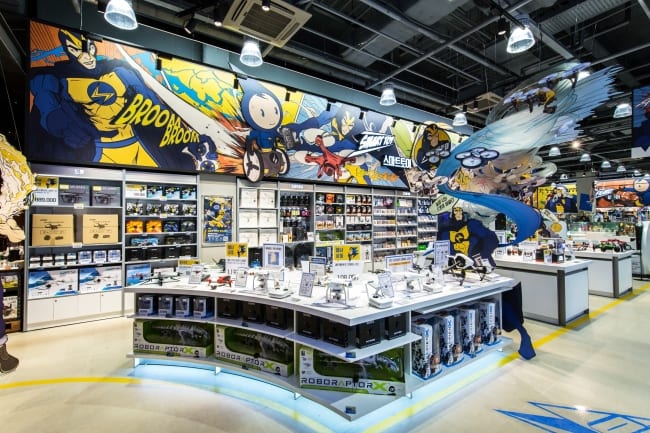
    Experience-focused electronics retailer Electromart at Starfield Hanam

    ‘YOLO’ trend to rule retail in 2017

    In 2016, the retail sector saw consumers shifting their focus to stores and products that offer value and experience, rather than simply low prices.

    Despite the stagnant economy, brands saw consumers reaching for premium and healthy products, packing newly opened malls offering experience-based stores.

    In “Trend Korea 2017,” Seoul National University consumer studies professor Kim Nan-do dubbed this the “YOLO,” or “you only live once,” trend.

    “Consumers who used to think of restraint as a virtue are now enjoying and challenging themselves each moment, and spending money on simple, clear value,” he said.

    The most notable examples of YOLO spending can be found in travel, with consumers facing record-low interest rates choosing to spend money on meaningful experiences rather than saving it away. All retail sectors, meanwhile, have seen consumers choosing to open their wallets and enjoy the “here and now.”

    For example, consumers are buying more decorative products for the home to create better surroundings for themselves. According to the online open market Auction, sales of products like sculptures and music boxes from January to November rose by over 200 percent on-year. Hobby-related products such as classical guitars and model buildings and model airplanes also nearly doubled on-year.

    The Samsung Fashion Research Institute saw “selfness,” or the importance of brands‘ personalities matching those of consumers, to be a major factor moving the fashion industry in 2017.

    Starfield Hanam, a shopping mall featuring stores that allow consumers to experience products as well as buy them, saw nearly 2 million shoppers each month since it opened in September. Starfield Hanam’s popularity during a year when department stores struggled to maintain sales indicated that consumers are visiting and spending money at places that have an element of entertainment, rather than simply shopping options.

    “In an ‘experience economy,’ it will become more important for brands to find new marketing strategies that can satisfy the now-focused experience consumption of the YOLO consumers,” Kim wrote.

  • Rampant growth of DDoS attacks in 2016

    Rampant growth of DDoS attacks in 2016

    The threat of IoT botnets was realized in 2016 and popularized by Mirai, according to a study by Neustar.

    Mirai and similar types of malware compromise IoT device credentials to enrol them into botnets, which are activated by command and control servers.

    As these code assemblies are published, new developments continue to emerge, such as persistent device enrolment, which enables botnet operators to maintain control of a device even after it is rebooted.

    The study also reported that the frequency of DDoS attack mitigations by the company increased 40% in 2016 compared to the same period of time in 2015, according to a study released by the company.

    “With DDoS attacks predicted to become even more complex and ferocious in 2017, increasingly digital organizations within Asia-Pacific will be exposed to more frequent and severe cyber-attacks,” said Robin Schmitt, general manager for APAC at Neustar.

    Multi-vector attacks, which combine attack vectors to confuse defenders and supplement attack volume, also increased 322% and accounted for 52% of the attacks mitigated by Neustar. UDP, TCP and ICMP comprise the three most popular attack vectors, which were leveraged in more than 50% of attacks.

    The report also showed that DNS-based attacks increased 648% with many attackers leveraging DNSSEC amplification to generate massive volumetric pressure.