Retail News CRM

Tag: Digital

  • Wanda Partners With Microsoft Accelerator To Empower Digital Transformation

    Wanda Partners With Microsoft Accelerator To Empower Digital Transformation

    Wanda Group, one of the Fortune Global 500 List companies, is tapping into the resources of Microsoft Accelerator to enable the next wave of digital transformation of the retail industry and commercial properties in China.

    For the past four and a half years, Microsoft Beijing Accelerator has accelerated 140 startups in China with alumni in the areas of hybrid cloud, IoT, big data, artificial intelligence, etc. These startups have strong strengths in technology innovation. Combining Wanda Group’s customer resources and Microsoft Accelerator’s alumni, startups will be empowered to do more for digital transformation in China.

    “As an entrepreneur myself, I’ve seen many technology startups face the same challenges. They focus on technology innovation and product development without much customer insight and user data,” said Hanna Lavy, head of Microsoft Global Accelerator Program. “Partners like Wanda Group can provide in-depth business insights and rich customer data to startups. Microsoft Accelerator looks forward to working with Wanda Group to enable startups to transform retail companies and commercial properties into digital businesses.”

    “Wanda Group and Microsoft share the same views on digital technology and business. Cloud computing, big data, IoT and artificial intelligence are the main drivers of the digital transformation of business,” said Jennifer Feng, Deputy GM of IT Center at Wanda Group.” Wanda Group has rich insights and user data as the leader of commercial property and retail business in China and we will partner with Microsoft to bring startups closer to end customers. Microsoft Accelerator will also provide qualified startups to be enlisted as vendors for Wanda Group. ”

    As the world’s largest commercial property enterprise, Wanda Group has opened 189 Wanda Plaza projects in China and plans to open 50 more in 2017. Three years ago, Wanda Group began its fourth business model transformation from commercial property to modern services with the result of forming four sub business groups including Commercial Properties, Cultural Industry Group, Internet Technology Group and Financial Group. Digital transformation is at the core of Wanda Group.

    Wanda Group IT embarked on enabling digital transformation of Wanda Group three years ago. For the past three years, Wanda Group IT has developed Wanda Building Information Modeling(BIM) System and Wanda Intelligent Building Management System in this endeavor with the adoption of Microsoft Azure and HDInsight big data analysis. Wanda BIM system seamlessly integrates the end-to-end information management process from project bidding to delivery for commercial property developers, designers, builders and supervisors.


  • Rule change in the battle against pirates

    Rule change in the battle against pirates

    The growth of high speed broadband in Asia has changed the nature of video piracy, with downloads giving way to streaming over IP and requiring a new “360 degree” response.

    That’s the view of Roger Harvey, regional sales director for security vendor Irdeto in Asia-Pacific, who has seen the proliferation of “IP boxes” which allow users to access thousands of global television channels illegally.

    Irdeto recently commissioned a global consumer online piracy survey and found that while 78% of APAC consumers are aware that sharing pirated video is illegal, 61% still choose to watch it. This is significantly higher than the US, where the latter figure is 32%, and Europe, 45%.

    Part of the reason that piracy is lower in the US is because subscription video on demand (SVOD) models are inexpensive and easy to use, while pirate sites are often infected with malware.

    While Asia’s broadband is getting faster, content providers in the SVOD space are not as advanced, meaning that people turn to pirates more often to find what they want to watch.

    “Broadband has created a massive shift in piracy and how you deal with it,” says Harvey.

    “Five years ago you had people trying to break encryption systems, but these systems are so much more advanced, but what you have now is the broadband speed which makes it easy to take the content in the clear and put it over the internet.”

    The shift to “linear” viewing to viewing on demand has also changed the technical infrastructure and the devices people are using to view content, and each of these devices has their own digital rights management (DRM) technology which needs to be understood by service providers.

    “These days you need some sort of watermarking on content so you can trace the source,” says Harvey.

    “And once you have that you can deploy 360 degree security. And that means scouring the web using our crawlers, finding the content and then taking it down at the source.”

    Irdeto was the first western vendor to have an agreement with Alibaba, where it has succeeded in shutting down thousands of online advertisements for pirate devices from dozens of suppliers on the Alibaba platform.

    The company also works with Google, and with many subscription television providers such as Australia’s Foxtel, where the 360 approach helps minimize revenue leakage.

  • Security issues challenge the digital future

    Security issues challenge the digital future

    A panel discussion at CommunicAsia2017 titled “Diversifying Your Business Model Through Creative Partnerships” veered straight into the critical subject of security at the outset.

    Juniper Networks’ CTO Kireeti Kompella declared that security issues will “only going to get worse unless we do something about them.”

    Failure to develop effective security solutions will hold back the development of the upcoming 5G digital landscape before next generation networks can begin to deliver new services through creative collaboration, he said.

    “We all know about SDN (Software Defined Networks), but I talk about the Self-Driving Network or the Self-Defending Network,” said Kompella, describing a network in which security was embedded and automatic.

    He said the sheer scale of the IoT means that human intervention cannot effectively counter the growing number of security threats and intrusions.

    “Humans are going to lose if you don’t have Artificial Intelligence on your side,” he said.

    Beyond security, Ericsson’s Magnus Ewerbring, CTO, Asia-Pacific, named “integrity” in addition to security as one of the key issues for the industry in the IoT era. By this he means issues around trust, privacy, fraud and data protection.

    “IoT will be both consumer and industrial, and security is important, but integrity will also be key,” he said, adding that “traditional operators enjoy integrity, trust and faith” from their customers.

    The panel, comprising representatives from carriers, vendors, and analysts, then wrestled with ongoing challenges to the traditional carriers’ business models.

    Whether they are providers of “dumb pipe or smart pipe,” and while internet giants like Facebook are highly dependent on them, Facebook and other OTT players were not significant sources of revenue for carriers.

    Rohit Talwar, futurist speaker, Fast Future, told the conference that many carriers “like to find a reason not to innovate” and were too focused on “boxes.”

    “Facebook and Google don’t want boxes,” he said. “They want the people who create intellectual property. They are selling people who create IP.”

    Helen Wong, director of network product technology & strategy for Asia Pacific, Verizon, countered by saying that the new technologies of virtualization and cloud-based services-by their very nature-meant that carriers are finding partnerships which were “beyond boxes and vendors.”

    Mike van den Bergh, CMO, PCCW Global, said his company actively collaborates with new players in areas from tap-and-go payments to smart housing.

    “They all deliver revenue to us,” he said. “Everything in the cloud is part of wider partnerships to deliver next generation services.”

  • How brands use short videos for marketing in China

    How brands use short videos for marketing in China

    As the luxury industry discusses Snapchat’s marketing possibilities and, more recently, Instagram’s latest filter feature, brands looking toward the China market are facing a completely different short video industry. It’s one that has witnessed rapid development thanks to the popularity of smartphones and upgraded communication networks in China.

    In March this year, Kuaishou, a popular short video app, was on the receiving end of a US$350 million investment from Tencent, and Alibaba put RMB 2 billion toward the transformation of Tudou from a large, formerly popular online video platform to a short video community. Also, Yixia Technology, owner of Miaopai and Xiaokaxiu, both popular short video apps in China, has already spent RMB 2 billion to encourage short video content creators and producers by building several video creation bases and providing professional studios.

    Short videos are perfect for young, tech savvy consumers who take their phone with them everywhere and use it to access social media or to fill in short breaks in the day between other activities.

    But which short video apps are the most popular in China? Who are the viewers of these short videos? How can brands market to them? What should brands take into consideration when launching short video campaigns?

    China’s short video apps

    Similar to short video platforms like Viddy and Instagram, there are numerous short video platforms and apps in China where users can record real-time short videos and share them with friends. As for users, there were 153 million regularly watching China’s short videos in 2016. This is estimated to reach 242 million by 2017, an increase of 58.2 percent.

    CIWEEK, an internet content magazine, released a list of their top 10 short video apps in China in the first half year in 2016 and Kuaishou, Miaopai, and Meipai were the most popular.

    Of these, there are actually two types of short video platform in China:

    1. Comprehensive platforms: professional short video platforms

    These platforms, such as Meipai, Miaopai, and Xiaokaxiu, provide a one-stop user experience. Users can use various shooting tools, effect settings, and formats while filming or editing a video. They also offer a community for users to share their videos with friends. Short videos uploaded on those platforms can also be shared with WeChat friends, WeChat Moments, and Weibo.

    2. Content recommendation: news apps

    These platforms, such as Toutiao, NetEase, Tencent News, and Yidian Zixun, focus on suggesting popular or professional short videos. These platforms were originally news-based and mass communication oriented. They have millions of viewers and short videos recommended on these platforms can get huge amounts of traffic.

    Who are the viewers?
    The main users of China’s short video apps are young. Most of them belong to the post-90s generation. According to a report published in March 2017 by JIGUANG, a big data provider, users ages 16 to 25 make up 39.7 percent of the total, while users aged 26-35 are at 33.3 percent. Meanwhile, over half of the users are female, making them 69.4 percent of the total number of users.

    In terms of regions, 66.9 percent of the total come from third-tier and below third-tier cities in China. The top 3 provinces for viewer numbers are Guangdong, Henan, and Shandong.

    How are brands using short video?
    Short video is becoming a new favorite marketing tool for brands for several reasons. Short videos can be used for various types of promotional materials, such as product reviews, product seeding, promoting brand culture and more. With interesting and meaningful content, short videos can deliver specific brand messages to a target audience while avoiding the annoyance that longer videos may cause. The production cycle of short videos is quick with great flexibility, which works well with brands’ marketing plans and budgets. Through audience interactions with short videos, brands can better understand their preferences, rapidly improve their user experience, and come up with effective marketing plans quickly. Integrated campaigns launched on short video platforms can be creative and diverse.

  • Asia ahead of the digital engagement curve

    Asia ahead of the digital engagement curve

    Asian economies are more digitally engaged relative to their global peers at similar stages of development, according to Deloitte.

    The company’s second edition of its Voice of Asia series shows that Asian economies are leveraging digital technologies to help them leapfrog development hurdles, resulting in them winning the race on connectivity.

    Asia has become the center of global economic growth and by embracing digital, it will continue to lead global economic growth over the coming decade.Ric Simes, Deloitte Australia Economist explained that, “digital technologies have been synonymous with rapid and evolving change over the past four decades. While we have made significant progress, we are only at the tip of the digital iceberg when it comes to what’s possible in the future. When applied on a global scale, we can see that Asian economies and societies are at the forefront of this revolution. Asia is leading the way in how digital developments can enable individuals, businesses and governments to do things differently and, often, more efficiently.”

    As the fastest growing region in the world and a significant driver of global economic growth over the past decade, Asia is assuming the digital leadership position in the 21st century. According to the Deloitte digital engagement indices for government, business and consumers, Asian economies are ahead in digital engagement terms, with almost all Asian countries above the world average.

    Government and business engagement is high relative to the rest of the world, with individual engagement about average. The Deloitte digital engagement index scores each countries’ Networked Readiness Index (NRI) against GDP per capita, showing that every country in Asia apart from Myanmar has above average levels of digital engagement for the level of their economic development.

    Singapore and Hong Kong are world leaders, while the large population bases in countries such as China, India, Indonesia and Vietnam have considerable opportunities for the future. In middle-income countries in Asia, governments have been able to maintain strong growth agendas based on policies in areas such as trade, infrastructure and savings. Today, these countries are pursuing growth agendas with digital taking a leading role.

  • Time for ocean shippers to digitize is now

    Time for ocean shippers to digitize is now

    Digitization is rapidly transforming the ocean container shipping industry, according to INTTRA, a neutral electronic transaction platform, software and information provider for the ocean shipping industry.

    In a new whitepaperBlueprint 2032: How Technology Transforms Ocean Container Shipping – INTTRA reports that the pace of technology innovation is accelerating as businesses seek new and more efficient ways to optimize.

    “Digitization is now a competitive necessity,” says John Fay, CEO of INTTRA. “We’ve reached a tipping point in the global shipping industry when information technology is now the primary means for CEOs and their companies to achieve and increase long-term profitability. We are enabling shippers to rethink processes, and to digitize their operations through our unique position as a neutral service provider.”

  • The Body Shop rolls out £10m digital transformation strategy

    The Body Shop rolls out £10m digital transformation strategy

    L’Oréal-owned cosmetics brand The Body Shop has launched a £10m, three-year digital transformation strategy in a bid to revamp its online appeal and boost the e-commerce channel.

    As part of the strategy, the British retailer has launched in 11 countries a new mobile-first e-commerce site which integrates content and commerce. The countries where the site is now live include the UK, US, Canada, France, Germany, Brazil and Indonesia, with 20 further countries expected to be added throughout the year.

    Given the scale of the business, The Body Shop has given regional variations to its new platform, which means its presence will be adapted to each relevant market according to consumer preferences for merchandising, payment and delivery fulfillment.

    The new website has a live appointment booking service for in-store consultations and a personalised skincare diagnostic tool. A click & collect functionality is also expected to launch later in the year.

    The Body Shop was founded in 1976 and quickly became a retail favourite with its colourful range of body butters, but in recent years it has struggled to remain relevant in a highly competitive market.

    The £10m investment to expand its global e-commerce footprint comes after the retailer saw a 19% increase in online sales in 2016 – double than the prior year’s figure. The share is expected to reach 20% this year.

    “With the successful launch of a responsive, content-rich digital platform, we have established a strong foundation to support our future innovation agenda and global rollout,” said chief digital officer Harriet Williams.

    “The Body Shop is a big business, operating in a large number of countries with both franchise and non-franchise markets. The platform needed to strike the right balance between global brand consistency and local relevance, being flexible enough to meet the needs of each individual market.”

    The Body Shop sells its nature-inspired products in more than 3,000 stores in 66 countries.

  • Oracle, Fujitsu launch public cloud services in Japan

    Oracle, Fujitsu launch public cloud services in Japan

    Fujitsu and Oracle Japan have launched Oracle Cloud Platform services, including Oracle Database Cloud Service, via a Fujitsu data center, a first for Japan.

    Oracle and Fujitsu have a long history of collaboration when it comes to processors, servers, and software. This synergy now extends to the data center, where Oracle’s cloud services will be available locally to Japanese customers backed by Fujitsu.

    Fujitsu has the largest number of Oracle-certified Oracle Cloud engineers in Japan, and offers a coordinated portfolio of services to assist in the deployment and operations of Oracle Public Cloud, to help organizations build new modern cloud-based solutions and transition their enterprise systems, including mission-critical operations, to the cloud.

    Fujitsu and Oracle formed a strategic alliance in July last year, based on a strategic collaboration to deliver enterprise-grade, world-class cloud services to customers in Japan and their subsidiaries around the world.

    Together with making Oracle Public Cloud services available from Fujitsu’s robust and reliable data center in Japan, can now be used as part of Fujitsu Cloud Service K5, Fujitsu’s public cloud service.

    “The Oracle Cloud Platform running in Fujitsu’s Japan datacenter alongside Fujitsu Cloud Service K5 DB powered by Oracle Cloud is a natural continuation of the three decade history Oracle and Fujitsu have working together to help customers achieve competitive advantage,” said Edward Screven, Chief Corporate Architect, Oracle.

    “By combining Fujitsu’s system integration expertise with Oracle’s cloud services, Fujitsu and Oracle will accelerate the transition of our joint customers’ enterprise systems to cloud.”

    Oracle Cloud offers a complete range of public cloud services across SaaS, PaaS, and IaaS. Oracle Cloud Platform, which includes Oracle’s analytics, application development, data management, and integration services, has experienced steady growth, adding thousands of customers in fiscal 2017.

  • Maritime industries need to gear-up for digital transformation

    Maritime industries need to gear-up for digital transformation

    Singapore’s port and maritime industries need to gear up to deal with digitalization and disruption of global transport supply chains – that was the message of Khaw Boon Wan, Coordinating Minister for Infrastructure and Minister of Transport at the official opening of Sea Asia 2017.

    The role of hub ports such as Singapore, the world’s largest container transhipment hub, are set to change as digitalization takes a hold.

    “The landscape is changing rapidly digitalization is disrupting and transforming the global transport supply chains,” Khaw said.

    “The lines between e-commerce, shipping and supply chains are blurring, for example Amazon is looking at having its own shipping and logistics operations. Freight forwarders will also have noticed Maersk and CMA CGM partnerships with Alibaba to allow shippers to book space on containerships online.”

    The downside to disruption is that there would be winners and losers, and Singapore would have to “gear up” to be on the right side of that dividing line.

    Painting a picture of the new landscape Khaw said: “Nearer to home we are seeing the rise of multi-modal logistics infrastructure and the growth of other hubs in Asia fuelled by e-commerce. These trends have also sparked talk about the emergence of new trade routes and even a multi-hub network in the longer term where no single hub will enjoy superior connectivity.”

    Exactly how these developments will pan out no-one knows but the Minister said Singapore had ensure it was ready for transformation.

    “Superior connectivity will be measured in multi-modal terms and maybe as much digital as physical,” he stated.

    While digital disruption has loomed large over many sectors such as taxis, hotels and retail, Singapore Maritime Foundation chairman Andreas Sohmen-Pao highlighted that goods and commodities will still require ocean shipping.

    “I know there has recently been plenty of talk about the challenges facing the maritime industry buts lets remember this industry is a cornerstone of the modern global economy even as we advance into an era of modern technology the vehicles that provide our Uber rides, the steel that holds up our Air B&B houses, and the goods that arrive in our Amazon boxes have typically spent some of their life on a ship,” Sohmen-Pao said in his opening speech.

  • Global vendor revenue from cloud hits $32.6b in 2016

    Global vendor revenue from cloud hits $32.6b in 2016

    Vendor revenue from sales of infrastructure products (server, storage, and Ethernet switch) for cloud IT, including public and private cloud, grew by 9.2% year over year to $32.6 billion in 2016, IDC estimates.

    Vendor revenue for the fourth quarter meanwhile grew at 7.3% year-on-year to $9.2 billion, the research firm said.

    Cloud IT infrastructure sales as a share of overall worldwide IT spending climbed to 37.2% in 4Q16, up from 33.4% a year ago. Revenue from infrastructure sales to private cloud grew by 10.2% to $3.8 billion, and to public cloud by 5.3% to $5.4 billion.

    In comparison, revenue in the traditional (non-cloud) IT infrastructure segment decreased 9.0% year over year in the fourth quarter. Private cloud infrastructure growth was led by Ethernet switch at 52.7% year-over-year growth, followed by server at 9.3%, and storage at 3.6%.

    Public cloud growth was also led by Ethernet switch at 30.0% year-over-year growth, followed by server at 2.4% and a 2.1% decline in storage. In traditional IT deployments, storage declined the most (10.8% year over year), with Ethernet switch and server declining 3.4% and 9.0%, respectively.

    “Growth slowed to single digits in 2016 in the cloud IT infrastructure market as hyperscale cloud datacenter growth continued its pause,” said Kuba Stolarski, research director for Computing Platforms at IDC.

    “Network upgrades continue to be the focus of public cloud deployments, as network bandwidth has become by far the largest bottleneck in cloud datacenters. After some delays for a few hyperscalers, datacenter buildouts and refresh are expected to accelerate throughout 2017, built on newer generation hardware, primarily using Intel’s Skylake architecture.”

    From a regional perspective, vendor revenue from cloud IT infrastructure sales grew fastest in Japan at 42.3% year over year in 4Q16, followed by Middle East & Africa at 33.6%, Canada at 16.6%, Western Europe at 15.6%, Asia/Pacific (excluding Japan) at 14.5%, Central and Eastern Europe at 11.6%, Latin America at 9.9%, and the United States at 0.1%.

  • Digital Free Trade Zone For Malaysian E-commerce Growth

    Digital Free Trade Zone For Malaysian E-commerce Growth

    The announcement of the much-anticipated Digital Free Trade Zone (DFTZ) by Prime Minister Datuk Seri Najib Tun Razak today comes amidst a time where businesses in Malaysia are encouraged to capitalise on this initiative to boost the Digital Economy in the country. First-ever and a pilot programme, we foresee the DFTZ to benefit local SMEs and entrepreneurs, and pave the way to a more global market for them.

    With the implementation of a DFTZ in Malaysia, the comprehensive approach, covering fulfilment, global supply chain, payment gateways, training and employment prospects, will set a conducive platform to cement Malaysia as a digital hub in the Southeast Asia region, as well as to encourage traditional brick-and-mortar businesses especially local SMEs to transition onto the e-commerce sphere, and trade across ASEAN countries and soon, the world.

    Furthermore, the Government’s introduction of a Digital Free Trade Zone exemplifies an intention to impart knowledge and equip entrepreneurs with the knowledge and know-hows of e-commerce complementing the vast facilities that the trade zone will stand to offer. Resonating this intention, 11street’s owned training programme which is recognised by the Malaysian Digital Economy Corporation (MDEC) aims to help e-entrepreneurs understand the basic rudiments of online business, sharing with them the effective strategies that will propel their businesses to a different height and be competitive in the global market.

    In conclusion, the Digital Free Trade Zone is shaping up to be a boon to local SMEs. The trade zone will serve as gateway to the ASEAN market and allow local products to tap into a wider market. We at 11street will continue to support to initiatives to evolve e-commerce in Malaysia, so as to open up opportunities for a better e-commerce climate for both e-commerce platforms and also entrepreneurs.

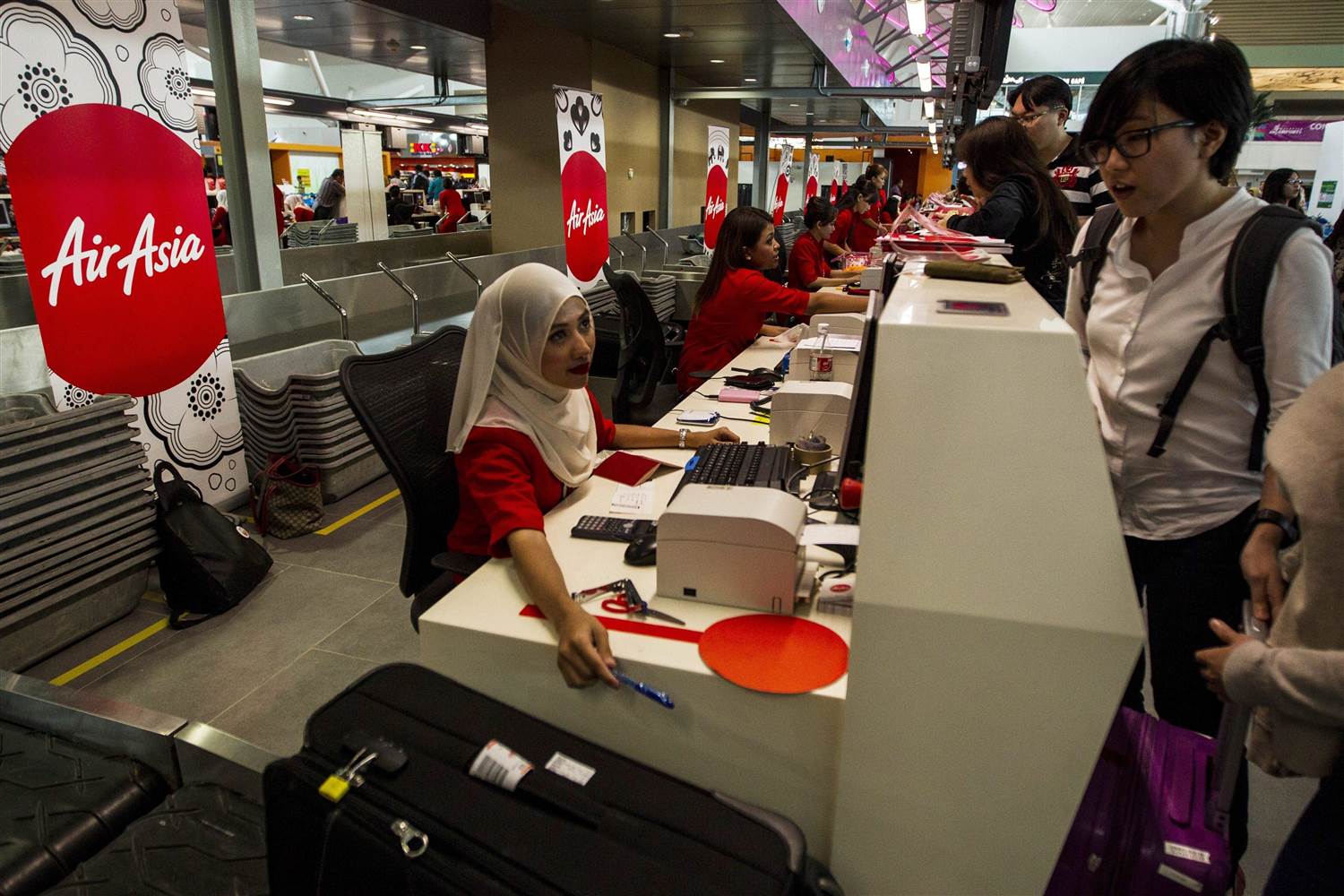
  • AirAsia plans to go fully cashless; stresses on digitisation

    AirAsia plans to go fully cashless; stresses on digitisation

    “I think cash is old fashioned,” said AirAsia Group CEO Tony Fernandes, as he introduced plans of making all in-flight purchases on AirAsia flights cashless.

    From demonetisation to flights, going cashless seems to be the norm. Notably, airlines in the United States started going cashless for in-flight transactions as early as 2009. Even in India, airlines offer customers the option of paying for purchases using cards.

    “I would like all our in-flight sales to be electronic,” Fernandes elaborated. “So you can just use your mobile phone to pay for food, WiFi, etc.”

    He said that AirAsia hopes to launch this service by April-May and that this exercise is a part of digitising the airline. “All our cabin crew will have a mobile phone. When you go on to an Air Asia plane, they will know you,” he added, giving examples of the digitising that the carrier aims to embrace.

    “Transacting in different currencies on international flights can get cumbersome, making it harder for the customer,” Nikunj Shanti, Chief Data Officer, Group Digital, AirAsia, told. “What we are trying to do is make it faster and easier.”

    “This could also give us better information in terms of stock control, etc, so that we are stocking the right goods on the plane,” Shanti said. “Right now, it’s all manual. If we get this information digitally, we can apply learning algorithms and classification algorithms and put better products on the plane.”

    “This digital revolution is a chance for ASEAN and AirAsia to move up the economic value chain,” Fernandes said, clarifying that he doesn’t think the digitising will lead to loss of jobs. “We are already training our sales agents and guest services to become more knowledge-based. We are already anticipating that.”

    Social media platforms

    AirAsia is also personalising its website. “That’s step one. By next month, when you log-on, we will know about you, where you flew, etc,” Fernandes said. Purchasing of tickets from social media platforms is another aspect.

    “Three per cent of our sales come from Facebook. You can buy tickets from Line, WeChat,” he added.

    Hackathon event

    Airvolution 2017, a hackathon for participants from across the Asia-Pacific region, was organised by AirAsia at their headquarters in Kuala Lumpur. This was the first such event organised by the carrier, which also tied into its aim of becoming a digital airline.

    The event saw participation from 20 teams from Singapore, Australia, Malaysia, Hong Kong, Thailand, the Philippines, Sri Lanka, Indonesia, Australia and four teams from India.

    The 18-hour hackathon involved giving the teams a problem statement on how they will profile AirAsia customers based on their digital social footprints to improve their experience.

  • Singtel announces tie-up with polytechnics to help F&B businesses go digital

    Singtel announces tie-up with polytechnics to help F&B businesses go digital

    Singtel has announced a new initiative with the two Singapore-based polytechnics — Nanyang Polytechnic (NYP) and Singapore Polytechnic (SP) — in Singapore to help F&B and retail businesses go digital.

    First, it will collaborate with the NYP – Singapore Institute of Retail Studies (SIRS) to help these SMEs hire digital professionals who will offer their expertise in e-commerce, retail analytics and digital marketing solutions such as SEO and Search Engine Marketing.

    These digital professionals will comprise of professionals, managers, executives and technicians (PMETs) who have been re-skilled.

    SMEs which sign up for this scheme will be able to claim up to 90 per cent in government subsidies.

    In addition, they can also seek additional support on social media marketing, online merchandising and analysis of online consumers from students and lecturers at the NYP’s Customer Experience and Analytics Centre.

    Next, Singtel will work with an integrated team of business, IT and communication students from SP to help F&B owners showcase their offerings on the 99% SME website — a portal set up by DBS and Singtel in 2015 which provides digital tools and resources to SMEs to boost productivity.

    Additionally, the SP students will help these businesses adopt Singtel’s Connected Restaurant solution. This solution offers an online reservation and pick up service.

    SP students will also offer recommendations and develop a suite of solutions to boost businesses’ products and digital and marketing capabilities.

    “Through the 99% SME movement, our collaboration with Nanyang Polytechnic and the Singapore Institute of Retail Studies are three-fold. First, it helps SMEs improve productivity, reduce costs, gain new revenue and scale their businesses,” said Andrew Lim, Managing Director, Business Group, Group Enterprise at Singtel, in an official press statement.

    “Second, PMETs are being re-skilled and re-employed while using their skills to help SMEs in their digital journey. Third, the students will acquire deep skills and develop entrepreneurial spirit, which prime them for their career development in the digital field.”

    Last week, Singtel and Lazada announced the launch of 99% SME e-marketplace – a dedicated portal hosted on Lazada Singapore’s website for SMEs to advertise their offerings and tap on a wider online customer base.

  • SMEs to get more help in going digital

    SMEs to get more help in going digital

    The Government is committed to getting its hands dirty to help more small and medium enterprises (SMEs) transform digitally to stay in business amid disruptive technological innovations.

    The Info-communications Media Development Authority (IMDA), the government agency leading the charge, will play sector “chief information officer” to SMEs, providing customised help from funding and consultancy to approving tech products and participating in joint pilots.

    This will be available under a new scheme dubbed SMEs Go Digital, targeted at the 200,000 SMEs in Singapore.

    During the debate on his ministry’s budget yesterday, Minister for Communications and Information Yaacob Ibrahim said: “It will help raise SMEs’ overall level of digital readiness by giving them step-by-step advice on the technologies to use at each stage of their digital journey.”

    The kitty is $80 million over four years from April under this scheme which was first announced two weeks ago by Finance Minister Heng Swee Keat.

    SMEs Go Digital aims to defray up to 70 per cent of the cost of technology purchase, capped at $300,000 per SME.

    It will replace a seven-year-old iSprint scheme, which provided similar subsidies and basic tech advice, benefiting some 8,000 SMEs.

    SMEs Go Digital aims to be more comprehensive than iSprint by also helping SMEs with more advanced needs such as cybersecurity, data analytics and artificial intelligence through a new SME Digital Tech Hub to be set up by September.

    In reponse to Dr Yaacob’s announcement, nominated MP Thomas Chua, who is president of the Singapore Chinese Chamber of Commerce and Industry, voiced concern about the prospect of disparate technologies being implemented by different firms.

    Specifically, supply chains that connect buyers and sellers must be interoperable.

    COMMON LANGUAGE

    “Applying a standardised system for the industry is like learning a common language to facilitate communication… If not, the transfer of large masses of data could cause system errors,” said Mr Chua.

    To this, Dr Yaacob said IMDA will adopt a sectorial approach to ensure systems talk to one another and to accelerate the pace of transformation, especially for the deployment of more sophisticated systems.

    Specifically, IMDA will partner influential companies to pilot sector-specific solutions that have the potential to scale up.

    It will start with sectors such as retail, food services, logistics and cleaning.

    For instance, IMDA has partnered retail store Robinsons to integrate some 200 SME suppliers on a common e-procurement platform for better sales planning and inventory management.

    IMDA has also partnered StarHub to target 1,000 SMEs in the food and beverage business, offering them a comprehensive automation package including broadband services, retail analytics, digital ordering and payment systems. StarHub is working with the Tampines Merchant Association for this.

    While recognising that SMEs’ digital needs vary widely across and within sectors, Dr Yaacob noted that his ministry is open to feedback to fine-tune the new scheme.

  • The Trade Desk launches in Indonesia to capitalise on digital ad potential

    The Trade Desk launches in Indonesia to capitalise on digital ad potential

    The Trade Desk has launched into Indonesia, a market it believes has huge potential for growth in programmatic ad trading. The company has launched alongside partnerships secured with Unruly, Grapeshot, Spotify, Tapad and Mobilewalla.

    Matt Harty, SVP of Asia and Australia at The Trade Desk, told The Drum that with Zenith numbers claiming that Indonesia will be in the top 10 ad markets in the world within the next three years, it was important to establish local operations.

    “It’s compelling stuff, there’s a huge growth in middle class and it’s a boat I can’t see us wanting to miss. Boston Consulting figures suggest there will be 141 million Indonesian middle class by 2020, adding 8 or 9 million consumers buy big ticket items each year. I don’t think other markets will see a demand for 9 million new bikes each year, as first time buyers. It couldn’t be more exciting as a market,” he said.

    The office, which will be located in Jakarta’s central business district, will be the sixth for the ad tech company in Asia Pacific region. The office will launch with two members of staff, with the Singapore office still acting as its regional headquarters.

    The timing of the launch has been set to ensure that brands and agency planners have strategies in place ahead of Ramadan, which takes place in late May this year. Harty said that after taking a year to work out the Indonesian market last year, ahead of launch, a key learning was how important it was to plan ahead of the religious holiday.

    “Last year was the first year of real scale doing business in Indonesia, but from Singapore. We were taken by surprise about key things around Indonesian planning, so now we have boots on the street and are very well prepared and we time to be in place for Ramadan,” he added.

    The office marks one of the first new Asian markets for the company since it publicly floated on the stock markets last year. The company hit the headlines after its IPO was widely considered to have been a success.